Top Things to Do and See in Bulgaria
Bulgaria packs a surprising amount of variety into a relatively compact country. Roman ruins you can touch, caves with poetic nicknames, medieval fortresses on clifftops, turquoise waterfalls in the forest, a Soviet-era monument that looks like it was designed for a sci-fi movie, and a UNESCO coastal town with Byzantine church ruins between wooden houses. Most of these are free or nearly free, and several can be combined into day trips. This is what's genuinely worth your time.
The prices shown here are meant as a rough guide and can vary over time. While I update exchange rates regularly, local prices are typically refreshed only when I revisit the destination.
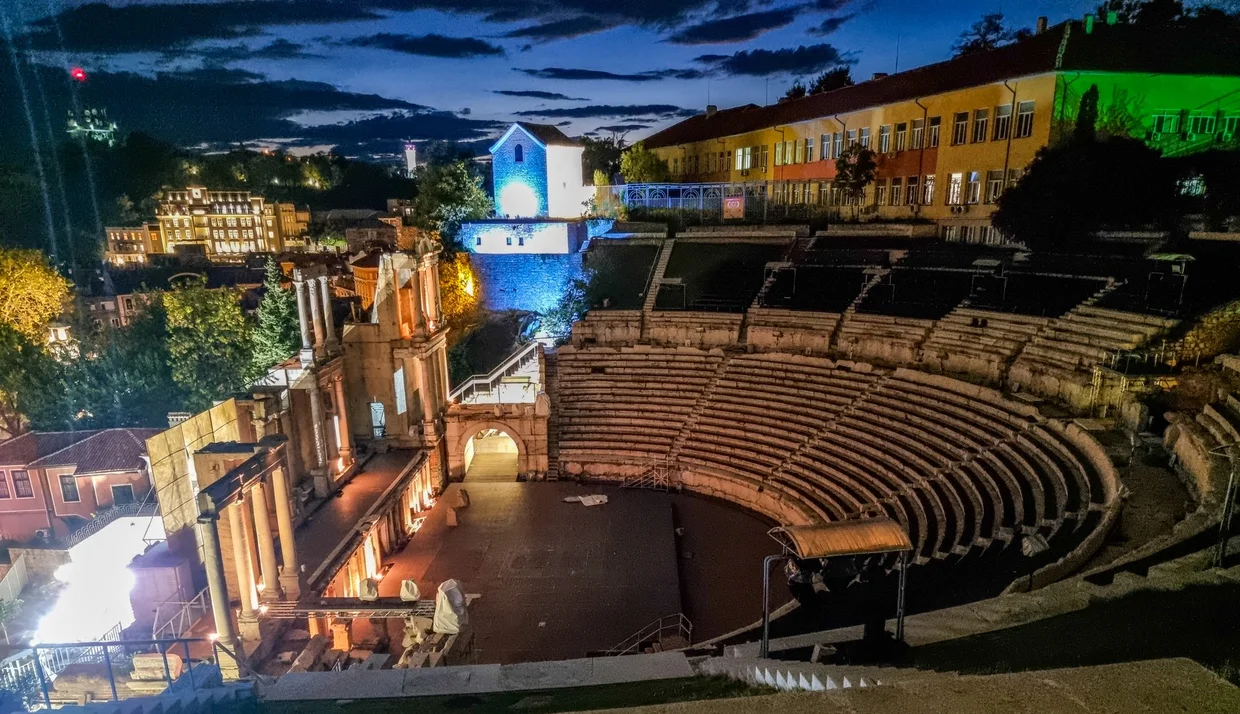
Plovdiv Roman Amphitheater
This is the moment that made Plovdiv click for me. A beautifully preserved 2nd-century Roman amphitheater, tucked into the hillside of the Old Town, still used for concerts and performances. You approach it through narrow cobblestone streets between colorful Revival-era houses, and then suddenly there it is: 7,000 seats carved into a slope with modern Plovdiv spread out below. No dramatic entrance, no long approach. You walk through a gap between buildings and the ancient world just appears. It's one of the best-preserved Roman theaters in the world, and the fact that it sits casually in the middle of a living city rather than behind a fence in a field makes it special. Visit in the evening if you can; the night lighting is spectacular.
How to Get There
In the heart of Plovdiv's Old Town, on the southern slope of Nebet Tepe hill. Walk up from the main pedestrian street (Knyaz Alexander I) through the cobblestone streets. Signposted from the center.
Notes
- Still used for live performances in summer; check the schedule and catch a show if you can
- The approach from the Old Town streets is part of the experience
- Evening visits with the night illumination are worth timing for
- Combine with a walk through the Old Town and the Ethnographic Museum nearby
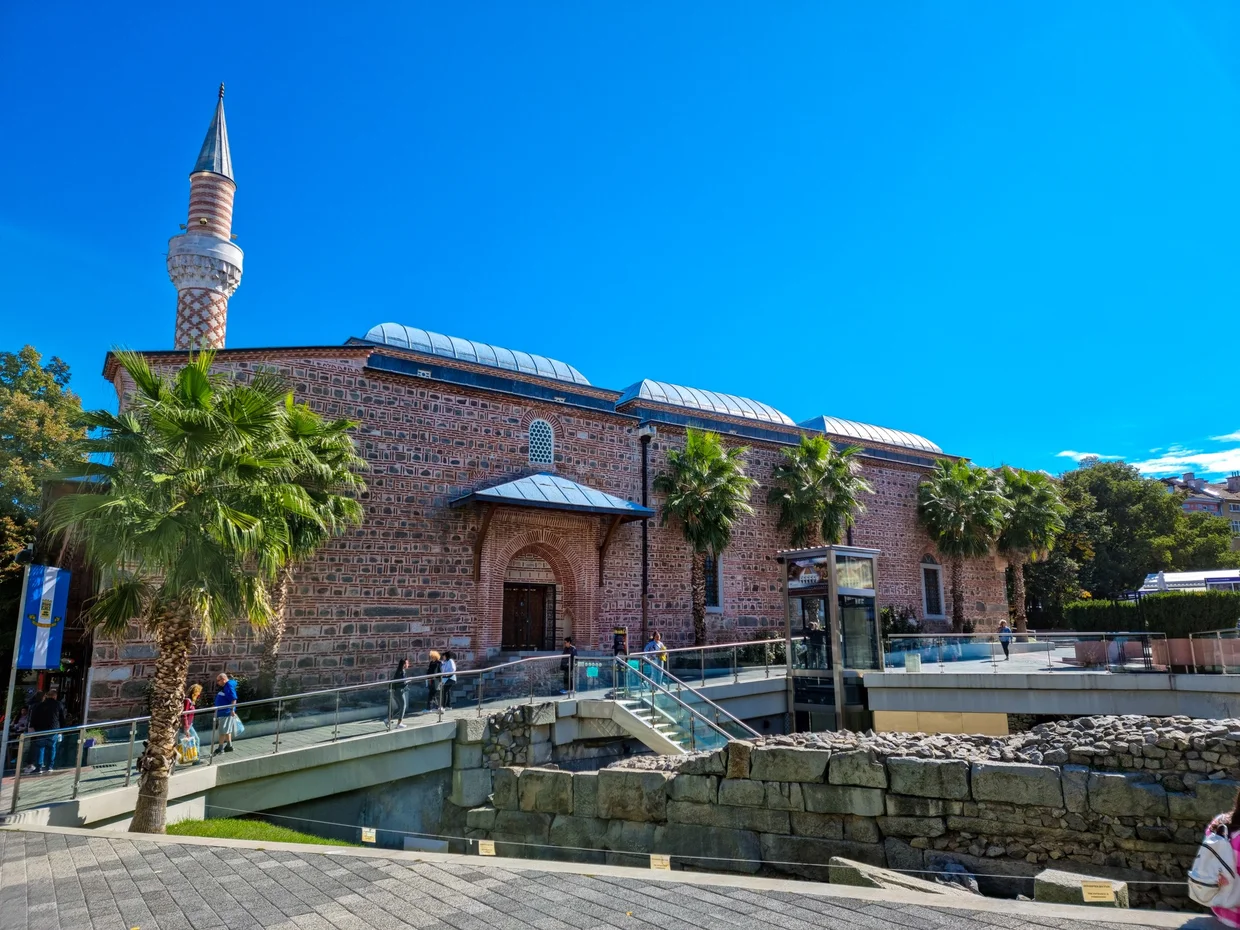
Plovdiv Old Town
Plovdiv's Old Town is a maze of cobblestone streets climbing across three hills, lined with colorful Revival-era houses from the 18th and 19th centuries. These timber-framed buildings with overhanging upper floors, painted walls, and ornate facades give the neighborhood a distinctive character unlike anywhere else in Bulgaria. The area is largely car-free (except for residents and hotel guests), which makes it quiet and walkable. Beyond the houses, you'll find small museums, art galleries, churches, and hidden courtyards. The Ethnographic Museum, housed in a stunning Revival mansion, is worth a stop. Fair warning: the cobblestones are uneven and the hills are steep. Your legs will complain. Wear proper shoes and take it slow. The reward is one of the most atmospheric historic neighborhoods in southeastern Europe.
How to Get There
Walk uphill from the main pedestrian street in Plovdiv center. Multiple entry points from Knyaz Alexander I street and from the area around the Roman amphitheater.
Notes
- Wear comfortable shoes with good grip; the cobblestones are uneven
- Early morning or late afternoon light is best for photography
- The Ethnographic Museum and Balabanov House are worth entering
- At night the streets empty out and the atmosphere is magical
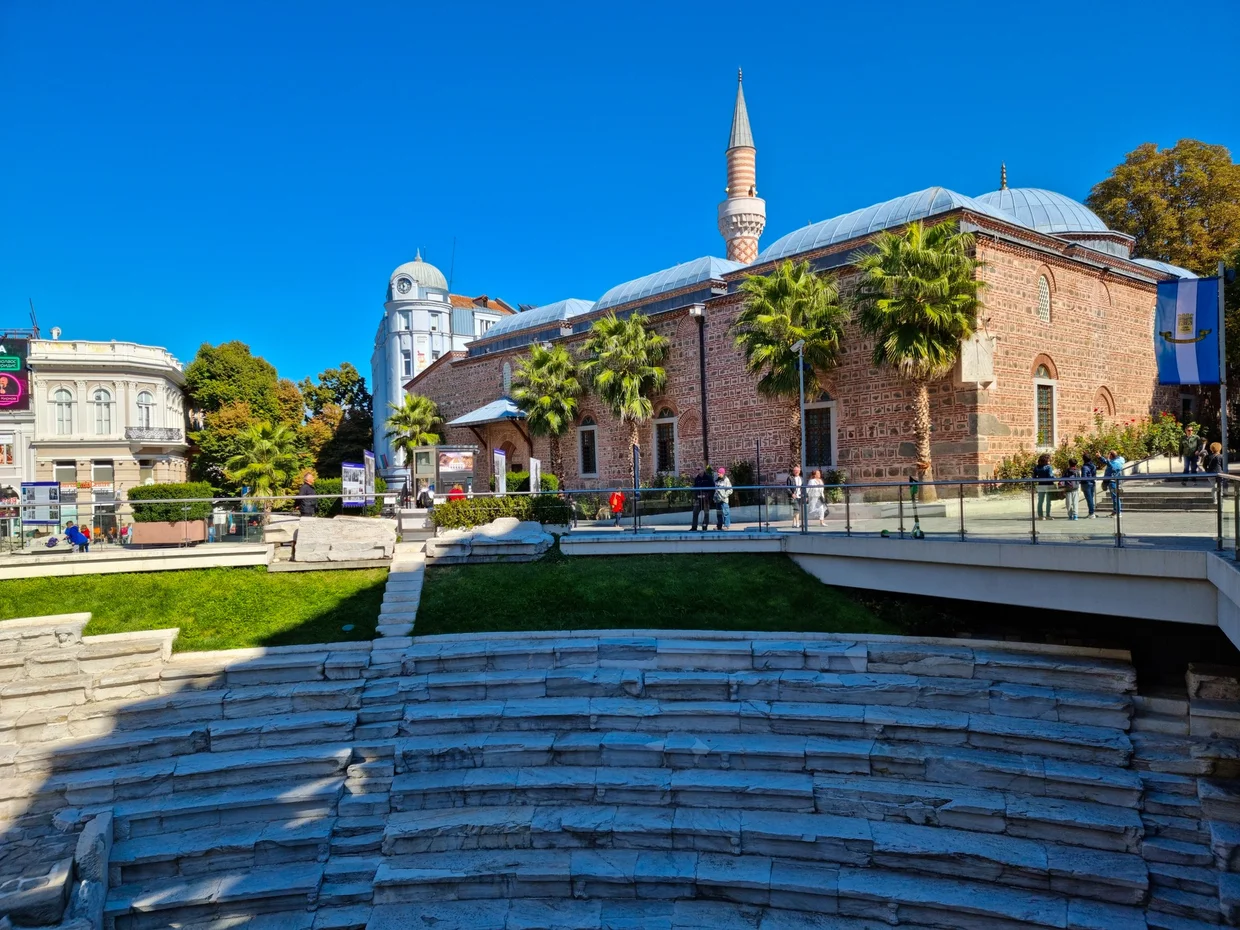
Plovdiv Roman Stadium
This is one of those things that makes Plovdiv feel surreal. A 2nd-century Roman stadium, built during the reign of Emperor Hadrian, sitting right underneath the main pedestrian street. The stadium originally seated 30,000 spectators and hosted athletic games. Today, a section of the curved seating rows is excavated and visible below street level, with the Dzhumaya Mosque and modern shopfronts above it. You can walk down to the exposed section for free and stand on stones that are almost 2,000 years old while people shop for shoes ten meters above you. At night, the stadium is illuminated and the contrast with the lit-up mosque and modern buildings is striking. It's the most casual encounter with ancient history I've ever had.
How to Get There
On the main pedestrian street (Knyaz Alexander I) in Plovdiv center, next to the Dzhumaya Mosque. Impossible to miss once you're on the pedestrian street.
Notes
- Free to visit, accessible from the main pedestrian street
- The night illumination makes it worth a separate evening visit
- Glass panels in the pavement above let you see more of the stadium from street level
- Right next to the Dzhumaya Mosque, easy to combine
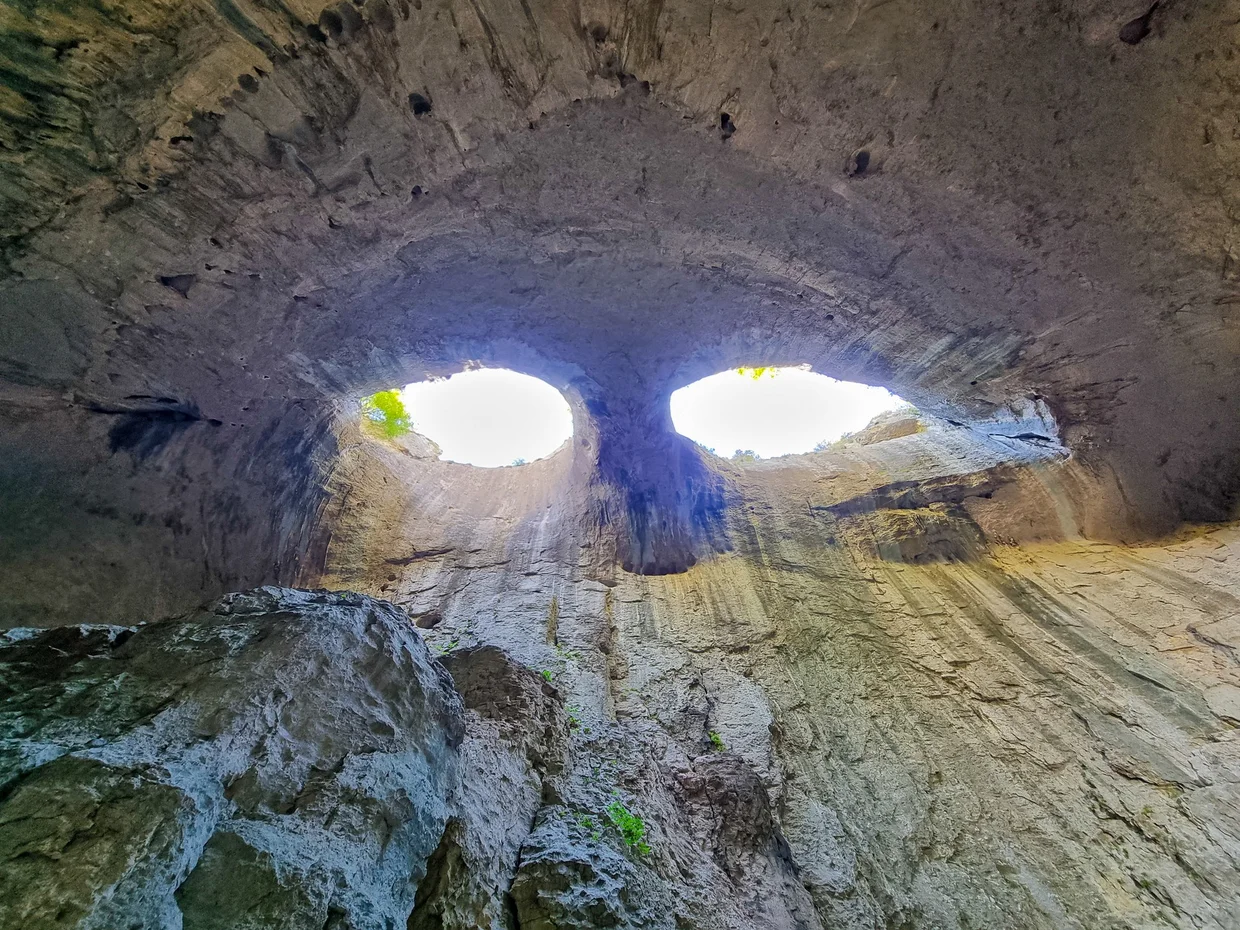
Prohodna Cave (Eyes of God)
Prohodna is a massive karst cave in north-central Bulgaria, famous for two holes in its ceiling that look exactly like a pair of eyes staring down at you. They call it the "Eyes of God," and the name is earned. The main chamber is over 45 meters wide and the two eye-shaped openings let in shafts of light that give the whole space an almost sacred atmosphere. Depending on the time of day, the light changes the mood completely. The cave is a walk-through tunnel (you enter from one side and exit the other), so it's accessible and easy to visit. The whole thing takes maybe 20 to 30 minutes, including stopping to look up and take it in. It's free, it's unforgettable, and it's one of the best things I did in Bulgaria. Combine it with the nearby Krushuna Waterfalls for a full day.
How to Get There
Near the village of Karlukovo, about 130 km northeast of Sofia and 150 km northwest of Plovdiv. Best reached by car. There's a small parking area at the trailhead, and the walk to the cave entrance takes about 5 minutes.
Notes
- Free entrance, no tickets needed
- Best light in the morning or early afternoon when the sun illuminates the "eyes"
- The cave floor can be slippery; wear shoes with grip
- Combine with Krushuna Waterfalls (about 15 km away) for a full day trip
- Easy to reach by car, very limited public transport options
Krushuna Waterfalls
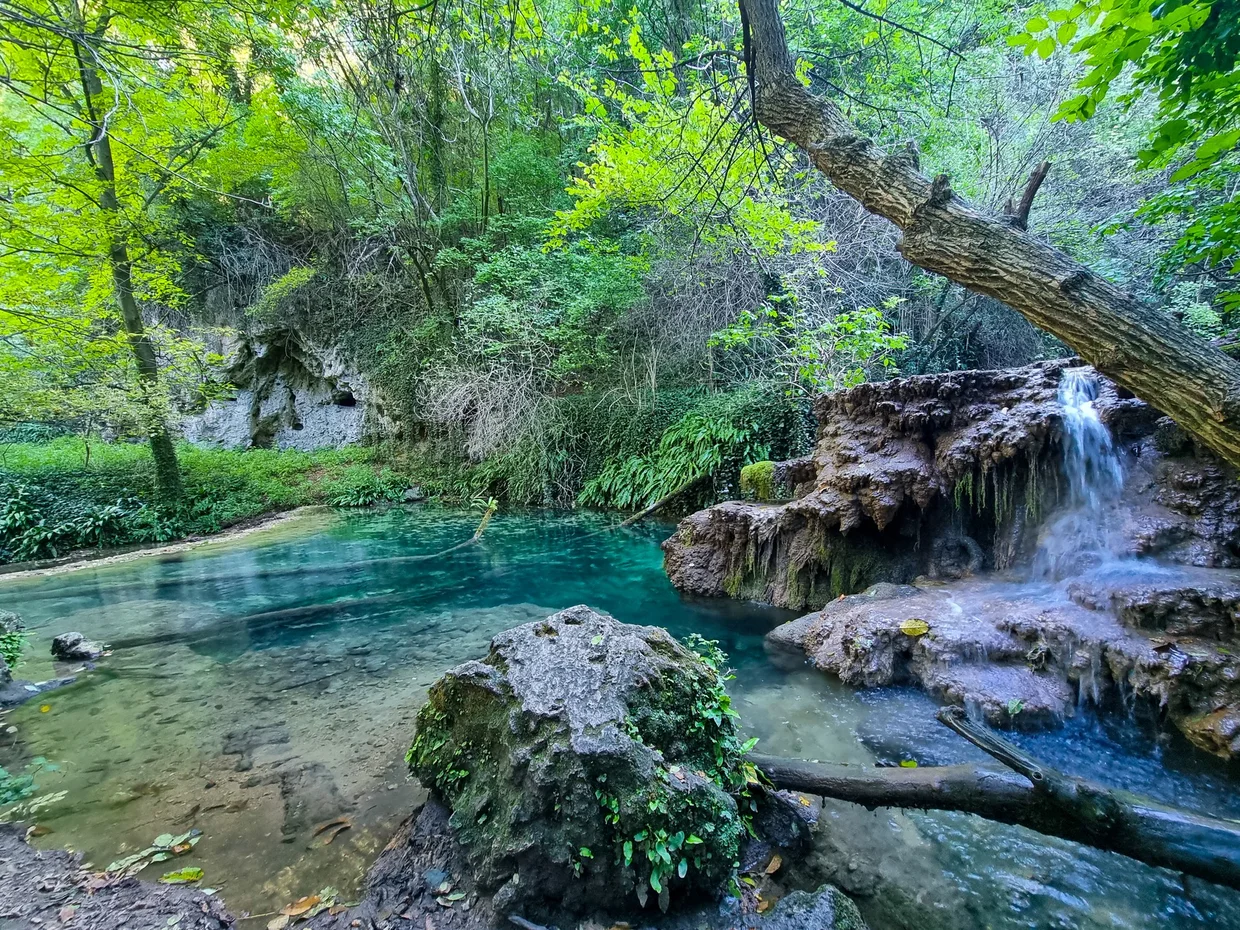
A series of cascading waterfalls and turquoise pools in the forest near the town of Letnitsa. The water has that unreal blue-green color you normally associate with tropical places, and the mossy rocks and overhanging trees give the whole area a fairy-tale quality. A trail follows the waterfalls upstream through the forest, crossing small bridges and passing pools at different levels. The main waterfall is about 20 meters high. The whole walk takes an hour or so at a comfortable pace. It's not a major destination on its own, but combined with Prohodna Cave (about 15 km away), it makes an excellent day trip from either Sofia or Plovdiv. The colors are best after rain when the water volume is high.
How to Get There
Near the village of Krushuna, about 140 km northeast of Sofia. Best reached by car. A small parking area is available near the trailhead. The walk from the parking to the first waterfall takes about 15 minutes.
Notes
- Small entrance fee
- Trail can be slippery, especially near the waterfalls; proper shoes recommended
- Best visited after rainfall when water volume and colors are most vivid
- Combine with Prohodna Cave for a full day trip
- Limited facilities; bring water and snacks
Nessebar Old Town
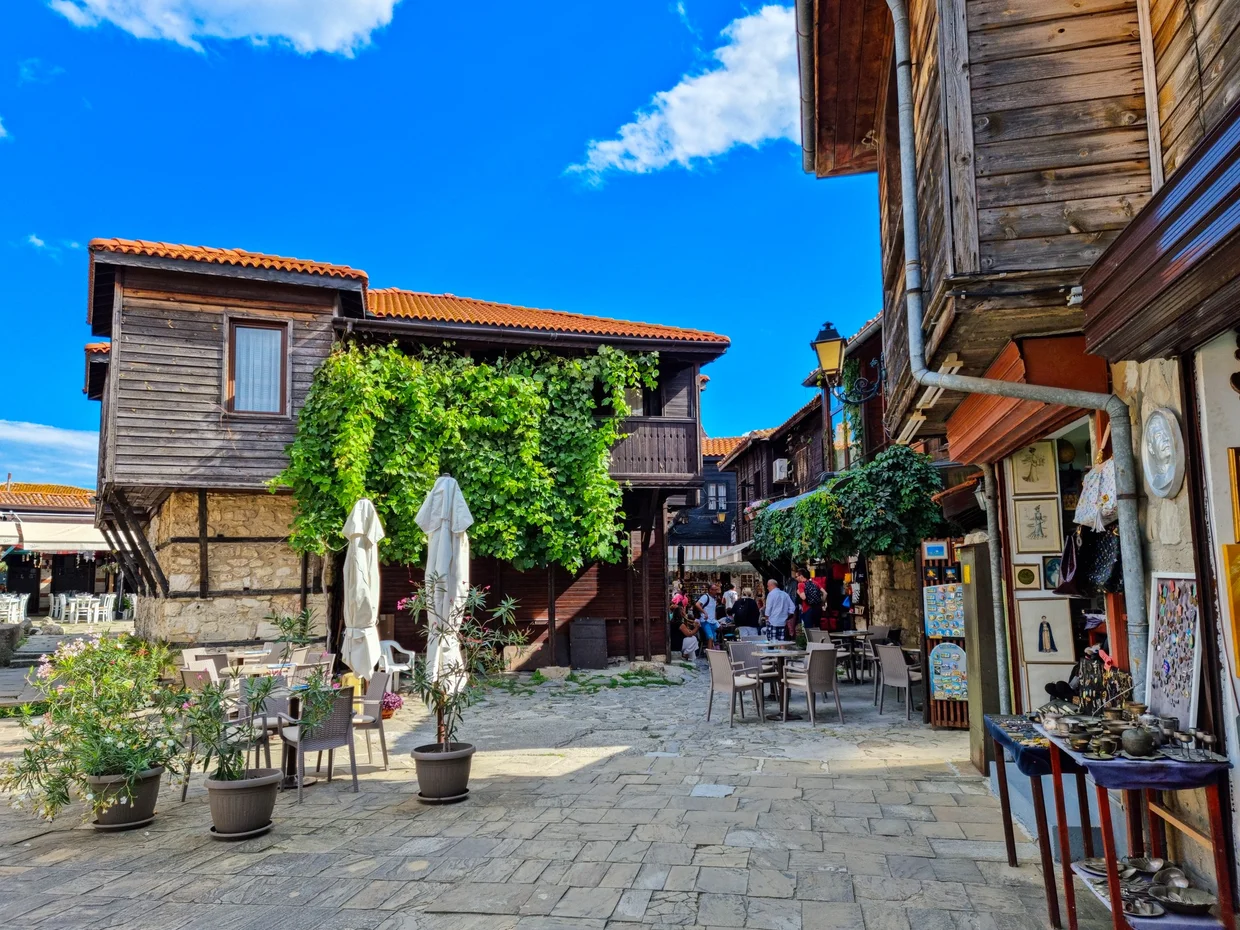
Nessebar sits on a narrow peninsula connected to the mainland by a thin causeway, and its old town is a UNESCO World Heritage site that packs 3,000 years of history into a very small area. You'll find ancient church ruins from the Byzantine era mixed in with 19th-century wooden houses, cobblestone streets, and sea views from almost every angle. The Church of Saint Sophia and the Church of Christ Pantocrator are the most striking ruins, their stone arches standing open to the sky. Between the ruins, the town is a mix of charming guesthouses, restaurants with sea views, and (inevitably) souvenir shops. Visit in the shoulder season or early morning to avoid the day-trip crowds from Sunny Beach. The peninsula is small enough to walk end to end in 15 minutes, but allow a couple of hours to explore properly and have a meal by the water.
How to Get There
Connected to the mainland (and Sunny Beach) by a causeway. Buses run regularly from Sunny Beach and Burgas. By car, there's a parking area at the entrance to the old town on the mainland side.
Notes
- Free to walk around; individual museums and churches have small entry fees
- Early morning or evening is best, when the day-trip crowds have gone
- The old town empties out beautifully at night
- Great for photography, especially the church ruins at golden hour
- Restaurants on the waterfront side have the best views
Ovech Fortress
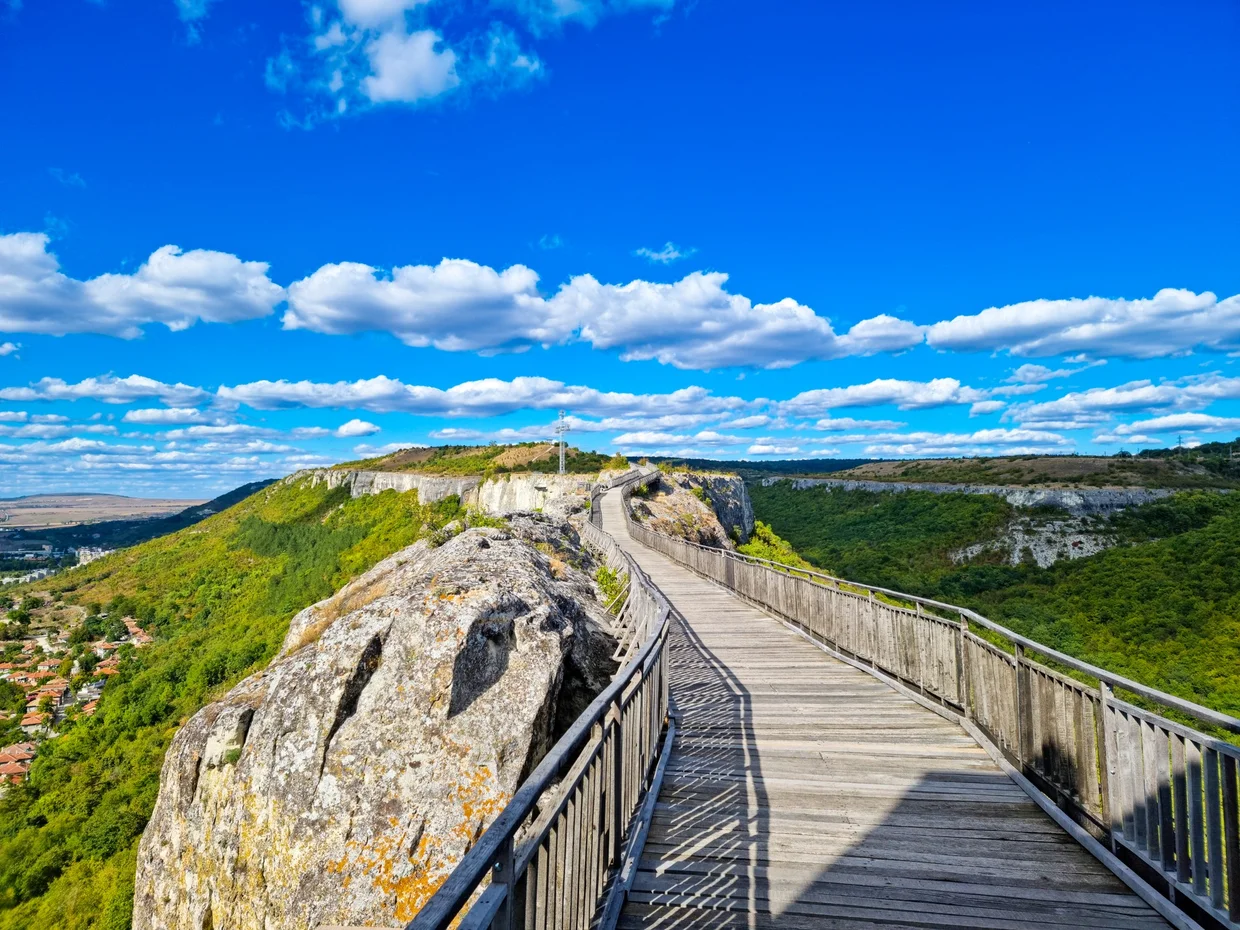
A medieval fortress perched on a flat-topped cliff near the town of Provadia. The fortress has been used since the 3rd century and saw action through the Bulgarian Empire, Byzantine, and Ottoman periods. What makes it worth the detour is the setting: the cliff drops away on all sides, giving you panoramic views over the town below and the green rolling hills beyond. A reconstructed bridge spans a narrow gap between two cliff faces, and walking across it with nothing but air below feels like a scene from a fantasy movie. The fortress ruins themselves are modest (stone walls, a gate, some foundations), but the combination of history and landscape is powerful. It's free to enter and rarely crowded. Allow about an hour for the visit, plus the climb up.
How to Get There
On the outskirts of Provadia, about 50 km west of Varna. Drive to Provadia and follow signs to the fortress. A short but steep walk from the base leads to the entrance.
Notes
- Free entrance
- The climb up involves steep stone steps; wear proper shoes
- Not suitable for anyone with a fear of heights (the bridge and cliff edges are exposed)
- Best on a clear day for the panoramic views
- Easy to combine with Pobiti Kamani if you're driving along the northern route
Pobiti Kamani (Stone Forest)
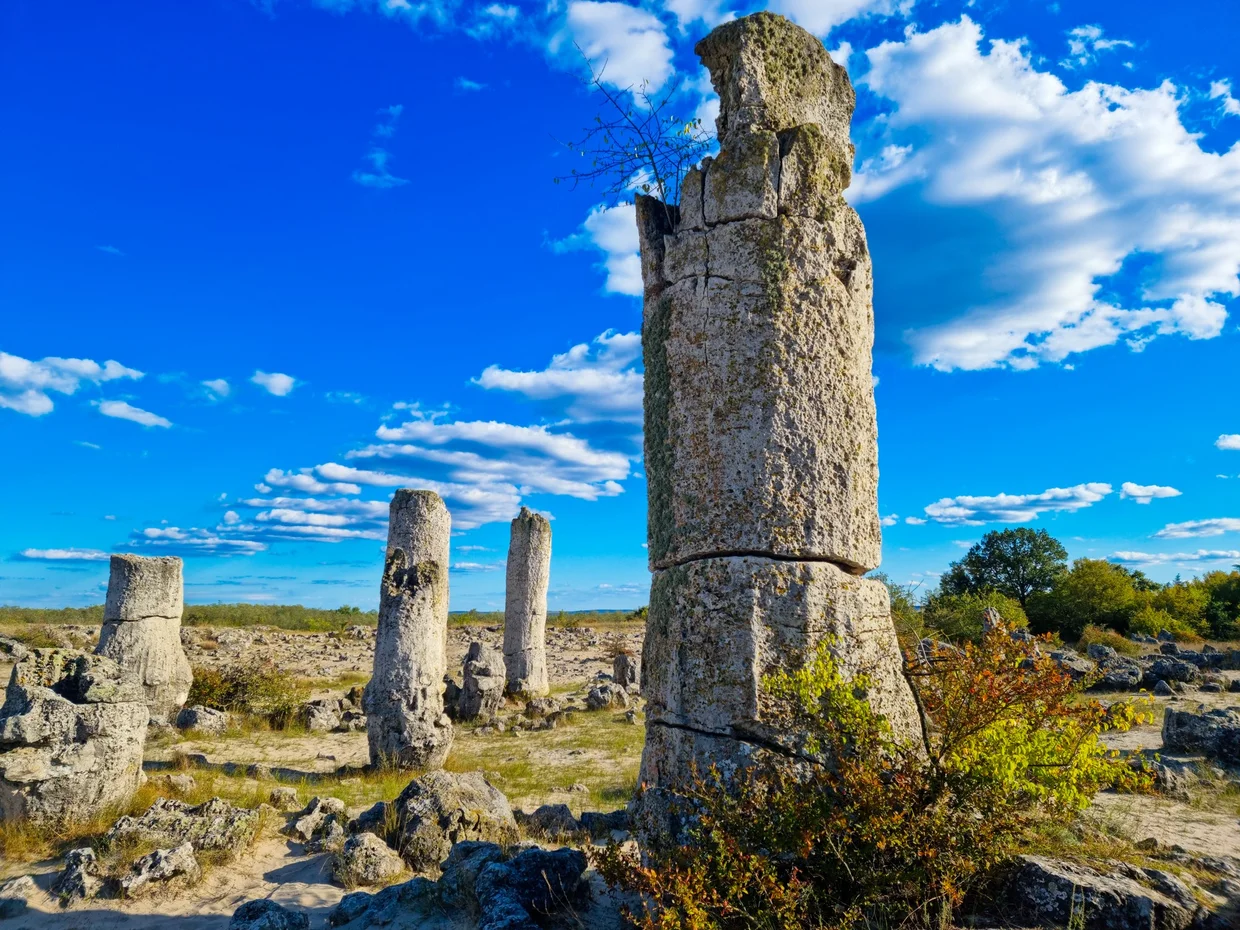
One of Bulgaria's strangest sights. A field of stone columns, some over seven meters tall, scattered across a sandy landscape near Varna. They look like the remains of a lost civilization, but they're natural formations (probably). Scientists have been arguing about how they formed for over a century. Some say they're natural limestone concretions, others suggest they're hollow tubes created by ancient gas vents. The debate is part of the charm. Whatever made them, walking among these pillars in the open landscape feels otherworldly. The site is small enough to explore in an hour, and there's a short loop trail. It's not a full-day destination, but it combines well with a visit to Ovech Fortress or a day on the northern coast.
How to Get There
About 18 km west of Varna, just off the main road to Sofia. Well-signposted. Small parking area at the site.
Notes
- Small entrance fee
- Best in the afternoon when the light makes the columns glow
- Bring water; there's no shade and it gets hot in summer
- Easy to combine with Ovech Fortress (about 40 minutes' drive)
- There's a small parking lot at the entrance
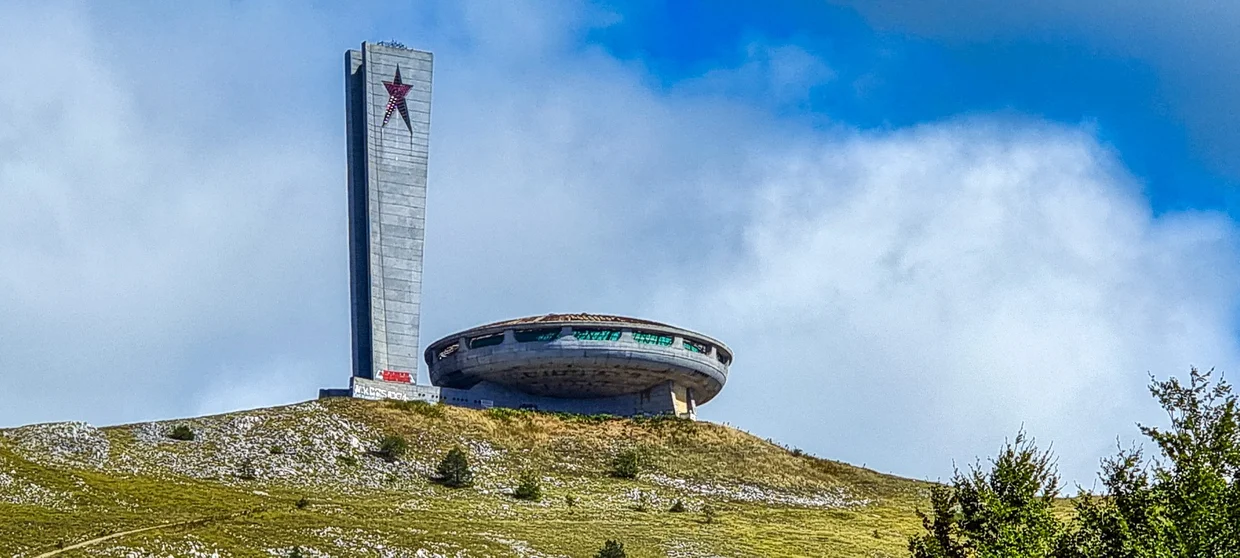
Buzludzha Monument
A massive, saucer-shaped concrete monument perched on a 1,441-meter mountaintop in the Balkan range. Built in 1981 as the House-Monument of the Bulgarian Communist Party, it looks like a brutalist UFO landed on a peak and stayed. The building has been abandoned and crumbling since the fall of communism in 1989. The interior once held giant mosaics of communist leaders and a massive red star on the tower, but decades of neglect and vandalism have taken their toll. The building is fenced off and officially closed to visitors, though there are ongoing (and slow-moving) debates about restoration. Even from the outside, the scale is impressive: the main disc is 70 meters in diameter and the tower rises 70 meters above it. The drive up through mountain roads is beautiful, and the combination of the crumbling monument, the exposed mountaintop, and the sweeping views makes this one of the most memorable stops in Bulgaria.
How to Get There
In the Balkan Mountains, about 25 km from Kazanlak and 170 km from Sofia. Best reached by car via the mountain road from Shipka Pass. The road is paved but steep and winding. No public transport to the summit.
Notes
- The building is fenced off; you can view it from outside but not enter
- The mountain road is steep and narrow; drive carefully
- Weather at the summit can be very different from the valley; bring a jacket
- Best on a clear day for the views; fog and clouds can obscure everything
- Can be combined with a visit to the Valley of the Roses or Shipka Pass
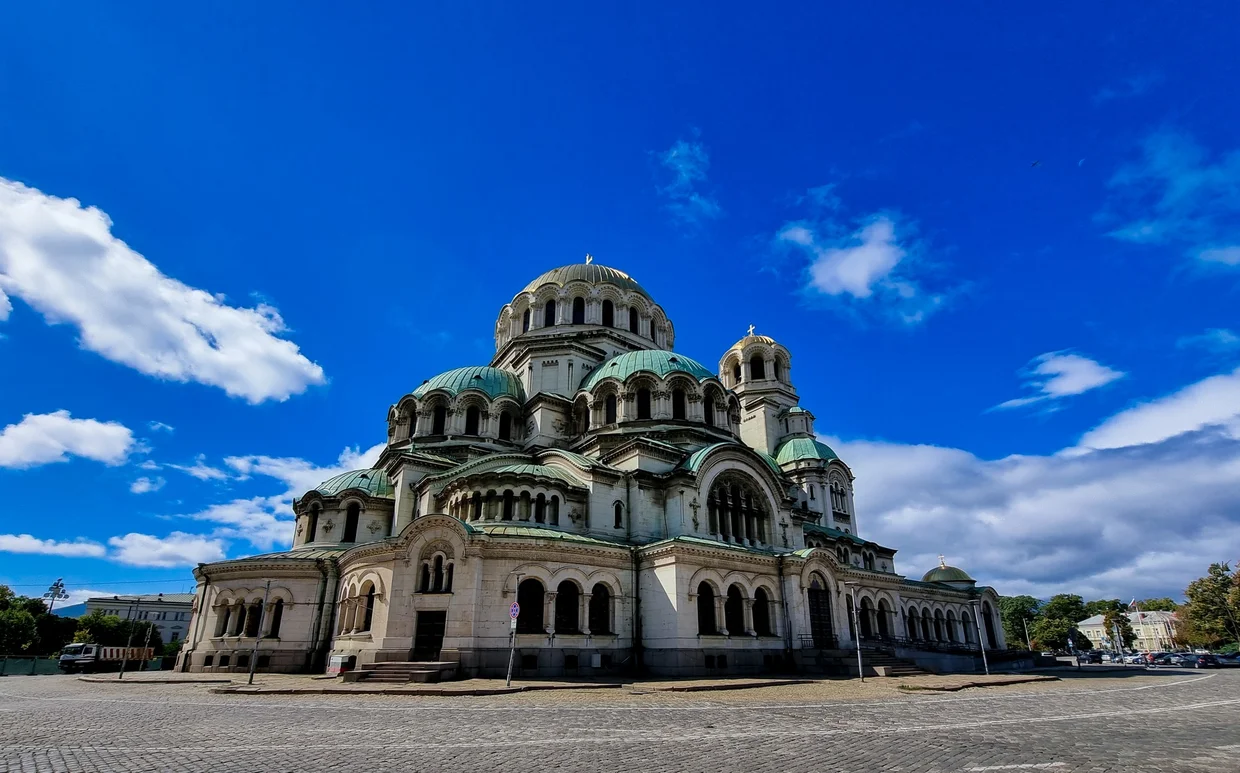
Alexander Nevsky Cathedral
Sofia's most iconic landmark and one of the largest Eastern Orthodox cathedrals in the world. The gold-domed exterior is imposing, especially when the sun hits it. Inside, the cathedral is dark, incense-heavy, and covered in murals and icons. The crypt below houses a collection of Orthodox icons spanning several centuries, which is worth seeing if you're interested in religious art. The cathedral was built in the early 20th century as a memorial to Russian soldiers who died liberating Bulgaria from Ottoman rule. It's impressive as a building, but Sofia as a city didn't grab me the way Plovdiv did, and the cathedral, while beautiful, is more of a "see it, appreciate it, move on" kind of stop rather than something that kept me lingering. Still, if you're in Sofia, it's the one thing you shouldn't skip.
How to Get There
In the center of Sofia, on Alexander Nevsky Square. Walking distance from most Sofia hotels and easily accessible by metro (Sofiyski Universitet station).
Notes
- Free to enter the main cathedral; the crypt icon gallery has a small fee
- Photography inside is restricted (no flash)
- The square in front is a popular gathering spot and hosts a weekend flea market
- Best photographed in the morning when the sun illuminates the gold domes
Published September 2025.