A Continent Disguised as a Country
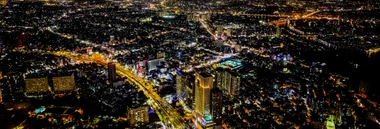
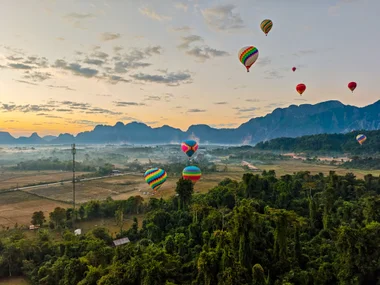
China is 9.6 million square kilometers of everything. Deserts in the northwest that stretch wider than most European countries. Subtropical rainforests in the south. The Tibetan Plateau, the highest on earth, where the air is thin and the sky is a shade of blue that doesn't exist at sea level. Rice terraces carved into mountainsides over centuries. Megacities with 20 million people where subway systems are newer and cleaner than anything in Western Europe. And then, an hour outside those cities, villages where daily life hasn't changed much in generations.


It's the world's most populous country, the oldest continuous civilization still standing, and a place that will exhaust your vocabulary for "big." The Great Wall isn't one wall, it's thousands of kilometers of overlapping fortifications built across dynasties. The Yangtze is the third-longest river on the planet. The high-speed rail network is longer than every other country's combined. China doesn't do things at normal scale. It never has.
You could spend months here and leave with the feeling that you've barely started. Which is accurate. Most travelers see Beijing, Shanghai, maybe Xi'an, and think they've "done China." They've seen the lobby.
Why China
The scale is unlike anything else. I don't mean this as a travel brochure platitude. I mean that the physical size and diversity of China breaks your mental model of what a country is. You can fly four hours and land in the same country but a completely different climate, cuisine, language dialect, and cultural world. From Harbin's ice festivals at -30°C to Hainan's tropical beaches at 30°C. From the Gobi Desert to the karst peaks of Guilin. From Tibetan monasteries to Shanghainese skyscrapers. No single trip captures it. No ten trips capture it.


The history runs deep. Five thousand years of continuous civilization. That's not marketing. The Terracotta Army was buried in 210 BC and discovered by a farmer digging a well in 1974. The Forbidden City was the seat of power for five centuries. The Great Wall was built, rebuilt, and extended across multiple dynasties spanning over two thousand years. And these are just the famous ones. Every province, every city, every town has layers of history that most of us never get to. Temples from the Tang Dynasty. Song Dynasty gardens. Qing Dynasty villages still inhabited.

The food alone justifies the trip. Chinese food as most Westerners know it doesn't exist in China. What exists instead is dozens of distinct regional cuisines, each as complex and developed as entire national food cultures elsewhere. Sichuan's numbing spice. Cantonese dim sum. Xinjiang's lamb skewers and hand-pulled noodles. Yunnan's mushroom obsession. Shanghainese soup dumplings. Hunan's pure chili heat. The variety is staggering, and the quality at street level is extraordinary. More on this below, because it deserves its own section.
It's affordable. Outside of Shanghai's luxury hotels and Beijing's tourist-trap restaurants, China is remarkably good value. Street food costs next to nothing. Trains are cheap even in first class. Mid-range hotels are clean, modern, and well-priced. Your biggest expenses will be internal flights and entrance fees to major attractions, and even those are reasonable by Western standards.
The infrastructure is world-class. The high-speed rail network is the best on the planet. Not arguably. Objectively. Trains that hit 350 km/h, run on time, and connect cities across a country the size of Europe. Metro systems in major cities are modern, clean, and cheap. Airports are new and efficient. Whatever you've heard about China being "difficult" to travel, the transport infrastructure is not the difficult part.

56 ethnic groups. China is not one culture. The Han majority makes up about 92% of the population, but 56 officially recognized ethnic groups bring distinct languages, traditions, clothing, architecture, festivals, and cuisines. The Uyghurs in Xinjiang, the Tibetans on the plateau, the Miao and Dong in Guizhou, the Dai in Yunnan, the Mongolians in Inner Mongolia. Each group has a cultural identity that is genuinely distinct. China's diversity is one of its least understood qualities from the outside.
Best Time to Visit
China is too big for a single "best time." What works in the south doesn't work in the north, and what works at sea level doesn't work at 4,000 meters.
Spring (April to May) is the sweet spot for most of the country. Temperatures are mild, skies are often clear, and the crowds haven't peaked yet. Cherry blossoms and rapeseed fields turn entire landscapes yellow and pink. This is probably the best window if you're covering multiple regions.

Autumn (September to October) is equally good, maybe better. Clear skies, comfortable temperatures, and fall foliage in the northern and central regions. The first week of October is Golden Week, China's biggest national holiday. Avoid it unless you enjoy sharing the Great Wall with two million other people on the same day. Seriously. Avoid it.
Summer (June to August) is hot and humid in the south and east. Beijing hits 35°C with thick humidity. Shanghai is worse. The southwest (Yunnan, Guizhou) is more comfortable and gets monsoon rain that keeps things green. Tibet is best in summer: warmer, clearer, and more accessible. Northern regions like Inner Mongolia and Heilongjiang are pleasant.
Winter (November to March) is cold in the north. Beijing in January averages -3°C. Harbin drops to -20°C and hosts its famous ice festival, which might be great but for me is not worth the frostbite. The south stays mild: Yunnan, Guangxi, and Hainan are comfortable year-round. Hong Kong and Macau are pleasant in winter. Tibet is brutally cold and many areas close.
The simple answer: pick your region first, then check the weather for that region. Or pick your date and then find a region where it's pleasant at that time. China doesn't have a universal season. It has twenty climates stacked on top of each other.

The Regions
Trying to summarize China's regions is like trying to summarize Europe's countries in a few paragraphs. It's going to be incomplete. But here's a start.
The North (Beijing, Tianjin, Hebei, Shandong) is where imperial China lives. Beijing alone has the Forbidden City, the Temple of Heaven, the Summer Palace, and multiple Great Wall sections within day-trip distance. It's politically and culturally the center of the country. The food is hearty: dumplings, noodles, roasted duck, and lamb. Winters are harsh, summers are hot and humid.


The East (Shanghai, Jiangsu, Zhejiang, Anhui) is where old money and new money collide. Shanghai is China's most cosmopolitan city, a skyline that makes Manhattan look modest, a colonial waterfront, and a food scene that ranges from street-level soup dumplings to some of the best restaurants in Asia. Suzhou and Hangzhou are nearby with classical gardens, canals, and West Lake. The Huangshan mountains in Anhui are the landscape that inspired centuries of Chinese painting.


The Southwest (Sichuan, Yunnan, Guizhou, Guangxi, Tibet) is where the landscapes become absurd. Yunnan alone has snow-capped mountains, tropical jungles, gorges deeper than the Grand Canyon, and more ethnic diversity than most countries. Guilin's karst peaks are the ones you've seen in every Chinese painting ever. Sichuan has pandas, ancient irrigation systems, and food so spicy it requires its own pain threshold. Tibet is Tibet. There's no adequate summary.


The South (Guangdong, Fujian, Hainan) is subtropical, trade-oriented, and food-obsessed. Guangzhou (Canton) is where Cantonese cuisine comes from, and eating there is a pilgrimage. Fujian has tulou, the massive circular earthen buildings that look like fortresses. Hainan is China's tropical island, sometimes called "China's Hawaii," though the comparison flatters both.


The Northwest (Xinjiang, Gansu, Qinghai) is Silk Road territory. Deserts, oases, Islamic architecture, hand-pulled noodles, and a landscape so vast and empty it recalibrates your sense of distance. The Mogao Caves near Dunhuang have Buddhist art spanning a thousand years. Kashgar's old town feels closer to Central Asia than to Beijing, because geographically and culturally, it is.

Central China (Hubei, Hunan, Jiangxi, Henan) is less visited by international tourists but deeply significant. The Yangtze flows through here. Zhangjiajie's sandstone pillars inspired the floating mountains in Avatar. The Shaolin Temple is in Henan. Changsha in Hunan is where the food is so spicy that even Sichuan residents raise an eyebrow.


What to Pack
Layers. Unless you're staying in one region, you'll encounter temperature swings that make packing a guessing game. A compressible down jacket handles cold snaps. A light rain shell handles sudden downpours. Both pack small.
Comfortable walking shoes. You will walk more than you expect. The Forbidden City alone is a multi-hour trek. The Great Wall is literally a mountain hike. Temple complexes, old towns, and city streets all demand real shoes.
A VPN (pre-installed). Google, YouTube, WhatsApp, Instagram, Facebook, Twitter, and most Western social media and messaging apps are blocked in China. Install a VPN before you arrive. Once you're inside the firewall, downloading one becomes significantly harder. This is non-negotiable if you want to stay in touch with anyone outside China or use Google Maps. Or:
SIM card. Another option is using a foreign travel SIM or eSIM. Many of them route their traffic through places like Hong Kong or Singapore rather than mainland China. Because of that, your connection usually bypasses the Great Firewall entirely, meaning Google, WhatsApp, Instagram, etc. work normally without a VPN. This can be the simplest solution if your phone supports eSIM, but check the details carefully. Not all travel SIMs do this, and some still route through mainland networks.
Toilet paper. Many public restrooms don't provide it. Carry a pack of tissues at all times. This is not a budget-travel tip. It applies to tourist sites, train stations, and even some decent restaurants. Squat toilets are common outside of hotels and shopping malls.
A power bank. Your phone runs everything: navigation, translation, payment, train tickets, hotel check-in. If it dies, you're effectively stranded. Keep it charged.
Sunscreen and a hat. The sun at altitude in Yunnan or Tibet is brutal. Even in lower-elevation cities, summer sun is aggressive.
Motion sickness medication. If you're heading to mountainous regions. The roads in Yunnan, Guizhou, Sichuan, and Tibet are switchback after switchback, often for hours. Beautiful, but your stomach needs to cooperate.
Medication you rely on. Bring enough for your entire trip. Pharmacies exist everywhere, but finding specific Western medications can be hit or miss, and the packaging is entirely in Chinese.
Preparation
Install WeChat before you arrive. WeChat is not just a messaging app in China. It's the operating system of daily life. People use it to chat, pay, book taxis, order food, scan QR codes, check into hotels, and share contacts. As a tourist, you won't use all of these features, but having it installed means locals can contact you, restaurants can send you digital menus, and you have at least a basic bridge into how things work here. Setting up WeChat Pay as a foreigner has become easier recently, but it's still not seamless. Link an international credit card if you can.
Get Alipay working. Together with WeChat Pay, Alipay covers nearly all payments in China. Cash is increasingly rare in cities. Some vendors literally can't make change because they haven't handled cash in months. Alipay now allows international credit cards for tourist accounts. Set it up before you go. Having at least one mobile payment method is close to essential.
Download offline maps. Google Maps works poorly or not at all in China, even with a VPN. Amap (Gaode) or Baidu Maps are the local standards but they're entirely in Chinese. Apple Maps actually works reasonably well in China and has English labels. Download offline maps for your regions. The Trip.com app (formerly Ctrip) is also useful for booking trains, hotels, and flights in English.
Learn some basics. "Ni hao" (hello), "xie xie" (thank you; sounds different in every part of China, but it's still universally understood), "duo shao qian" (how much?), "ting bu dong" (I don't understand). Mandarin has four tones, and getting them wrong changes the meaning entirely. But any attempt is appreciated. Most people outside major tourist zones speak zero English. Zero. Not "limited." Zero. Even in very touristy areas, neither hotels nor "international travel agencies" won't speak in English to you. A translation app with offline Chinese downloaded is your lifeline.
Book trains in advance. High-speed rail tickets can sell out, especially around holidays and on popular routes. The Trip.com app lets you book in English. You'll need your passport number. Pick up tickets at the station or use the e-ticket with your passport. The booking system is efficient once you understand it.

Carry some cash anyway. Despite the mobile payment revolution, you'll encounter situations where cash is the only option: small rural vendors, some taxis, temple entrance fees, and anything that involves a human with a cash box and no QR code. Keep a few hundred yuan on hand.
Photocopy your passport. Hotels are required to register foreign guests, and they'll need your passport. Having a photocopy (or a clear photo on your phone) speeds this up and serves as backup if anything happens to the original. I also needed it for most reservations (tours, attractions etc.)
Customs & Etiquette
Tipping is not expected. In fact, it can be confusing or even awkward. China is not a tipping culture. Don't tip at restaurants, taxis, or hotels. The exception is some high-end international hotels and tour guides, where a small tip is appreciated but not required.
Noise levels are different. Public spaces in China are louder than what most Westerners are used to. Restaurants are loud. Train stations are loud. People talk on speakerphone in public. It's not rude by local standards. It's just the ambient volume. Adjust your expectations rather than your frustration.
Tea culture is real. If someone offers you tea, accept it. In business meetings, casual visits, and even some shops, tea is offered as a matter of hospitality. Don't refuse. You don't have to drink the whole cup, but accepting the gesture matters.
Chopsticks have rules. Don't stick chopsticks vertically into a bowl of rice. It resembles incense sticks at a funeral and is considered bad luck. Don't point at people with chopsticks. Don't tap them on the bowl. When not eating, rest them on the chopstick rest or across the top of your bowl.
Giving and receiving with both hands. Business cards, gifts, money. Use both hands. This is a sign of respect, similar to Vietnam, Japan, and Korea. But it is not that common everywhere. The bigger the shop, the more guests, the more international the crowds, the less you will see it.
Face matters. The concept of "face" (mianzi) runs deep. Don't publicly embarrass someone, don't directly criticize in front of others, and don't push someone into a corner where they have to say no directly. Indirect communication is the norm. A "maybe" or "that's difficult" often means "no." A "yes" sometimes means "I heard you" rather than "I agree."
Bargaining is expected in markets. Not in malls, supermarkets, or restaurants. But in street markets, souvenir shops, and with some taxi drivers (if not using an app, but better use an app), negotiation is normal and expected. Start at 30-40% of the asking price and work toward the middle.
Dress is casual but modest. Nobody expects formal wear, but covering shoulders and knees is respectful at temples and religious sites. In cities, anything goes. Chinese fashion in major cities is as varied and trend-conscious as anywhere in the world.

Visa
China's visa situation has been easing in recent years, but it's still more involved than most Southeast Asian destinations.
Transit visa exemption (72/144 hours). Many nationalities can enter visa-free for 72 or 144 hours when transiting through specific cities (Beijing, Shanghai, Guangzhou, Chengdu, Chongqing, and others). You must have a confirmed onward ticket to a third country (not the country you arrived from). This is genuinely useful for short visits. 144 hours is six days, enough for a solid introduction to one city.
Visa-free entry (expanding). As of early 2026, China has been steadily expanding its visa-free entry agreements. Several European countries, Australia, and others now qualify for visa-free stays of 15 to 30 days. This changes frequently. Check the latest policy for your specific nationality before booking.
Standard tourist visa (L visa). If you need one, apply at a Chinese embassy or consulate, or through a visa service center. You'll need your passport, a completed application form, a passport photo, proof of accommodation, and a flight itinerary. Processing takes 4 to 7 working days. Fees vary by nationality.
Tibet requires a separate permit. You cannot visit Tibet independently. You need a Tibet Travel Permit, which is arranged through a registered tour agency. You must have a guide and a pre-arranged itinerary. This is non-negotiable and applies to all foreign visitors. Plan this well in advance.
Hong Kong and Macau are separate. They have their own immigration policies. Many nationalities can enter Hong Kong and Macau visa-free for 30 to 90 days without a Chinese visa. Entering mainland China from Hong Kong or Macau requires a Chinese visa or qualifying for a transit exemption.


What to Skip
Package tours that rush through the highlights. "Beijing-Xi'an-Shanghai in 7 days" tours exist, and they're exhausting. You'll spend more time on buses and in gift shops than actually experiencing anything. China's scale demands either more time or fewer destinations. Pick one.
Jade and tea scam shops. If a friendly English-speaking stranger approaches you near a tourist site and suggests visiting a "tea ceremony" or a "special jade factory," it's a scam. Every time. You'll end up in a high-pressure sales environment paying ten times the value for mediocre product. This is one of the most common tourist scams in China and it's remarkably smooth. The people are genuinely charming. The tea is genuinely good. The prices are genuinely absurd.
The overcrowded sections of the Great Wall. Badaling is the most visited section near Beijing. It's also the most commercialized, the most crowded, and the least atmospheric. Mutianyu is better: restored but less packed. Jinshanling and Simatai are wilder, quieter, and far more rewarding. The wall was not built to be experienced in a crowd. Find a section where you can actually breathe. But: any part of the wall is better than no part of the wall. Badaling is convenient and if that's your only option, go for it!

Tourist-trap restaurants around major sights. Same principle as everywhere: if the menu has photos in six languages and a greeter pulling you in from the sidewalk, the food will be either mediocre or at least overpriced. Walk five minutes in any direction. Find where the locals eat. Sit down. Point at what they're having (indirectly).
Trying to see "all of China." I said this about Vietnam, and I'll say it louder here. China is roughly the size of Europe. You wouldn't try to see all of Europe in two weeks. Give China the same respect. Pick a region, go deep, and accept that you'll need to come back. I don't think it's even possible to see all of China in a normal lifetime, unless you dedicate your travel time exclusively to China.
What Not to Skip
The Great Wall, done properly. Not Badaling (unless, see above). A less-visited section where you can walk in relative quiet along a structure that stretches across mountains as far as you can see. Jinshanling to Simatai is one of the best hikes in the country. The wall is genuinely one of the most impressive things humans have ever built, and it deserves more than a selfie at a crowded lookout point.

The food in Chengdu or Chongqing. Sichuan cuisine is one of the world's great culinary traditions, and eating it at the source is a different experience from eating it abroad. Hotpot in Chongqing. Dan dan noodles in Chengdu. Mapo tofu that actually numbs your face. Rabbit heads if you're brave. The street food alone is worth the flight. I have a dedicated page about Chongqing.


A high-speed train ride. Even if you're only going one stop. The experience of sitting in a smooth, quiet train doing 350 km/h across the Chinese countryside is worth it as a standalone experience. Beijing to Shanghai in 4.5 hours. Chengdu to Chongqing in 1 hour. The network is extraordinary.
A night market. Not the sanitized, tourist-oriented ones (though those can be really fun too). A real local night market where vendors sell grilled skewers, stinky tofu, fried noodles, candied fruit on sticks, and things you can't identify but should try anyway. The atmosphere is as much the point as the food.

West Lake in Hangzhou. It's the lake that inspired a thousand poems and paintings, and it actually lives up to them. Rent a bike, circle the lake, stop at temples and tea houses. On a misty morning, it looks exactly like those scroll paintings you've seen in museums. Because those painters were sitting exactly where you're standing. I must admit I haven't been there yet.

What to Eat
Chinese food is not one cuisine. It's a collection of regional food traditions so distinct that a Cantonese person eating Sichuan food for the first time is having as foreign an experience as you are. Here's a starting guide, and it barely scratches the surface.
Peking duck (Beijing). The iconic dish. Roasted until the skin is lacquered and crispy, carved tableside, and eaten in thin pancakes with scallion and hoisin sauce. The skin is the star. A good Peking duck place will have been doing this one dish for decades.
Hotpot (Chongqing/Sichuan). A bubbling pot of chili-and-peppercorn-laced oil at the center of the table. You cook raw ingredients in it: thinly sliced meat, tofu, mushrooms, leafy greens, organs if you're adventurous. The Sichuan peppercorns create a numbing sensation (ma) on top of the chili heat (la). Together, it's called mala, and it's addictive. Chongqing hotpot is spicier. Sichuan hotpot is more aromatic. Both will make you sweat.
Dim sum (Guangzhou/Hong Kong). Small dishes served in bamboo steamers, traditionally with tea. Har gow (shrimp dumplings), siu mai (pork dumplings), char siu bao (BBQ pork buns), cheung fun (rice noodle rolls), egg tarts. Eaten for brunch, ordered from carts that roll past your table. The Cantonese have elevated this into an art form.
Xiaolongbao (Shanghai). Soup dumplings. A thin skin wrapped around seasoned pork and a burst of hot broth. You bite a small hole, sip the soup, then eat the dumpling. Burning the roof of your mouth is a rite of passage. The best ones have skins so thin they're nearly translucent.
Hand-pulled noodles (Lanzhou/Xinjiang). Lanzhou beef noodles: a clear broth, hand-pulled noodles made to your preferred thickness, thin slices of beef, chili oil, cilantro, and white radish. Simple, perfect, and eaten for breakfast across northern China. Watching the noodle-maker stretch the dough is half the experience.
Mapo tofu (Sichuan). Silky tofu in a fiery sauce of chili bean paste, fermented black beans, Sichuan peppercorns, and minced pork. Served over rice. Looks simple. Tastes like controlled chaos. The numbing-spicy combination is the defining flavor of Sichuan cuisine.
Jianbing (street food, nationwide). A savory crepe made on a round griddle, spread with egg, topped with crispy wonton crackers, scallions, cilantro, and various sauces. Folded and handed to you in a bag. Costs about one yuan. This is what millions of Chinese people eat for breakfast, and it's one of the best street foods in the world.


Costs
China is surprisingly affordable for what you get, especially compared to Japan, Korea, or Western Europe. The value for money on food and transport is excellent.
The prices shown here are meant as a rough guide and can vary over time. While I update exchange rates regularly, local prices are typically refreshed only when I revisit the destination.
The biggest budget items are intercity transport and entrance fees to major sights. Food and local transport are remarkably cheap. The gap between "budget" and "comfortable" travel in China is smaller than in most countries, because even the comfortable option is affordable by Western standards.


Safety & Health
China is one of the safest countries in the world for travelers in terms of personal safety. Violent crime against tourists is essentially non-existent. The risks are practical, not dramatic.
Air pollution. In northern cities, especially Beijing, Tianjin, and cities in Hebei, air quality can be genuinely bad. Check the AQI (Air Quality Index) before outdoor activities. On bad days, the sky turns grey and your throat will let you know. An N95 mask helps. The situation has improved significantly in recent years, but bad days still happen, particularly in winter.

Traffic. Chinese traffic is intense. Cars, e-bikes, scooters, and pedestrians coexist in a system that appears chaotic but has its own logic. Crossing the street requires the same approach as Vietnam: walk steadily and predictably. Drivers will go around you. Sudden stops or direction changes are what cause problems.
Altitude sickness. If you're heading to Tibet, Qinghai, or parts of western Sichuan, altitude sickness is a real concern. Lhasa sits at 3,650 meters. Symptoms include headache, nausea, dizziness, and shortness of breath. Acclimatize slowly. Don't fly directly to high altitude if you can take the train (which ascends gradually). Drink water. Avoid alcohol for the first few days. If symptoms worsen, descend.
Food safety. Same rules as anywhere in Asia: eat where the locals eat, choose places with high turnover, drink bottled or boiled water. Tap water is not safe to drink anywhere in China, but every hotel room has an electric kettle and most places provide bottled water. Street food from busy vendors is generally safe. Your stomach might need a day or two to adjust.
Petty theft. Rare but not zero. Crowded metro stations, tourist sites, and busy markets are the main risk areas. Keep your phone secure and your bag zipped. Compared to many European cities, the risk is lower.
Hospitals. Major cities have excellent hospitals, including international clinics with English-speaking staff. In smaller cities and rural areas, medical facilities are more basic. Travel insurance with medical evacuation coverage is wise, especially if you're heading to remote regions.
The Great Firewall. Not a safety issue, but a practical one. Without a VPN or a foreign SIM/eSIM, you cannot access Google, WhatsApp, or most Western services. If you rely on these for communication or navigation, a VPN/foreign SIM is essential. Set it up before you enter China.
Getting Around
High-speed rail is the best way to travel. China's HSR network is over 45,000 km long, the largest in the world. Trains are fast, punctual, comfortable, and affordable. Beijing to Shanghai in 4.5 hours. Chengdu to Chongqing in 1 hour. Guangzhou to Shenzhen in 30 minutes. Second class is perfectly comfortable. First class is spacious. Business class is luxurious and still cheaper than a European equivalent. Book through Trip.com or at station ticket windows with your passport.
Domestic flights cover the distances that even high-speed rail can't manage efficiently. Beijing to Kunming, Shanghai to Chengdu, anything involving Xinjiang or Tibet. Flights are reasonably priced, and China's domestic aviation network is extensive. Delays are common, especially in summer (thunderstorms) and during holidays.
Metro systems exist in most major cities and are uniformly excellent. Clean, cheap, well-signed in English (in larger cities), and fast. Beijing, Shanghai, Guangzhou, Chengdu, Chongqing, Shenzhen, and many others have networks that rival or exceed European equivalents.
Didi is China's Uber. It works well in all cities. The app has an English interface. Payment by international credit card is possible but can be finicky. Having WeChat Pay or Alipay linked makes it seamless. Use it for taxis, especially when you can't communicate your destination verbally.
Buses connect everything, including places trains don't reach. Intercity buses vary from modern coaches to vehicles that have seen better decades. For reaching remote scenic areas, mountains, and small towns, buses are often the only option. Schedules can be loose. Patience helps.
Rental cars are not recommended for most visitors. You need a Chinese driver's license or a temporary one obtained at a local traffic bureau. Traffic patterns, road signs (mostly in Chinese), and driving culture make self-driving stressful. If you want to explore by road, hire a driver. It's affordable and saves you the headache.
Walking and cycling. Chinese cities are often more walkable than they appear on a map, at least in the old quarters and tourist areas. Shared bikes (Meituan, Hello Bike) are everywhere, unlocked via app, and cost almost nothing. Great for short city trips when the metro doesn't quite get you there.


Destination Info
Published March 2026.