The Island That's Fine, Actually
I'm gonna be real with you here. Cyprus is not the island that's gonna make you rethink your life. It's not gonna ruin all other islands for you. It's not the Mediterranean's best-kept secret. It's a warm, pleasant, historically interesting island with good food and friendly people, and it does exactly what it promises without any dramatic plot twists. And sometimes that's exactly what you need.

Cyprus sits at the very eastern end of the Mediterranean, closer to Syria and Turkey than to Greece, even though it's culturally and politically Greek (well, the southern part is). It's the third-largest Mediterranean island after Sicily and Sardinia, it's been conquered by basically every civilization that ever passed through the region, and it's currently split in two: the Republic of Cyprus in the south (EU member, euros, Greek-speaking) and the Turkish Republic of Northern Cyprus in the north (recognized only by Turkey, Turkish lira, Turkish-speaking). There's a UN buffer zone running through the middle of the capital, Nicosia, which makes it the last divided capital in Europe. Heavy stuff for a place where the main activity is eating halloumi by the sea.
I only spent time in the southern, Greek Cypriot part, so that's what this page covers. Can't speak on the north.

The British legacy is everywhere. They drive on the left. The electrical plugs are UK-style. English is spoken fluently by almost everyone. The legal system is based on English common law. You'll see red telephone boxes in some towns, which feels like a glitch in the matrix when you're surrounded by palm trees and 25-degree weather in January. It makes Cyprus one of the easiest Mediterranean islands to navigate as an English speaker, which is part of its appeal. No language barrier, familiar infrastructure, warm weather. It's basically the path of least resistance for a winter sun trip.
And that's kinda the thing. Cyprus is the "reliable winter escape" of the Mediterranean. It won't dazzle you. It won't change your perspective on island travel. But when it's 5 degrees and grey at home and you just want sunshine, ruins, good food, and zero hassle? Cyprus delivers. Every single time.
Paphos
Paphos is the cultural anchor of western Cyprus and the part of the island that's gonna give you the most "wow, this place has layers" moments. The entire town is a UNESCO World Heritage Site, which sounds impressive until you realize that the actual archaeological park is just... right there, next to the harbor, casually sitting between a bunch of fish restaurants and the sea. No grand museum entrance. No dramatic gates. Just centuries of history, open air, Mediterranean breeze.

The Kato Paphos Archaeological Park is the star. It contains a collection of Roman villas with mosaic floors that are genuinely jaw-dropping. The House of Dionysus has floor mosaics from the 3rd and 4th centuries AD depicting scenes from Greek mythology, and the level of detail and preservation is wild. Colors still vivid after 1,700 years. These aren't fragments behind glass in a museum. They're full room-sized floors, outdoors, under protective roofing, and you walk right alongside them. It's one of those places where the casualness of the experience makes it more impressive, not less.

The Tombs of the Kings is a short drive north of the harbor and it's the other big archaeological hit. Despite the name, no kings were actually buried here. It was a necropolis for wealthy citizens and officials from the 4th century BC onward. But the scale is royal. Underground tombs carved into solid rock, with peristyle courtyards surrounded by Doric columns, all open to the sky. You climb down into these tomb complexes and it feels like you've walked into a miniature underground temple. Some of the tombs are massive, with multiple chambers and corridors branching off in different directions.


The atmosphere is kinda eerie and beautiful at the same time. Dead palm trunks, overgrown vegetation reclaiming the stone, the sea glinting in the background. It's one of those sites that photographs can't fully capture because so much of it is about the feeling of being underground in a 2,400-year-old carved chamber with nobody else around.
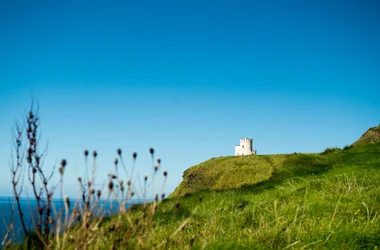
The Paphos Lighthouse sits on a hill above the archaeological park and gives you a nice panoramic view over the whole area. It's a quick detour, nothing major, but the combination of the white lighthouse, green grass, and blue sky is pretty satisfying.

Just south of Paphos along the coast road, you'll hit Petra tou Romiou, better known as Aphrodite's Rock. According to Greek mythology, this is where Aphrodite, goddess of love, emerged from the sea foam. In reality, it's a pebble beach with some big rock stacks and genuinely great sunset light. Is it worth a special trip? If you're driving past, absolutely pull over. The light here in the late afternoon is really something.


Avakas Gorge
If Cyprus has a single spot that punches way above the island's weight class, it's Avakas Gorge. This narrow limestone canyon on the Akamas Peninsula is the one place on Cyprus that made me go "okay, this is actually spectacular." The walls rise up to 30 meters on either side, narrowing to a point where you can almost touch both walls at once, with wedged boulders overhead and sculpted, water-carved sandstone that looks like it belongs in a Utah slot canyon, not a Mediterranean island.

The hike starts from a parking area near the coast and follows a riverbed (dry in summer, shallow water in winter and spring) into the gorge. It's about 3 kilometers each way, and the first stretch is easy walking through scrubby Mediterranean landscape. Then the walls start closing in, the light gets filtered, the temperature drops, and suddenly you're in a proper slot canyon that has no business being on Cyprus.

The narrow sections are the highlight. You're scrambling over boulders in a stream, looking up at walls that seem to lean inward, with chockstones jammed between the cliffs high above your head. The rock has been carved into swirling, organic shapes by thousands of years of water flow. Ferns and moss cling to the shaded walls. It's genuinely beautiful in a raw, unpolished way that the rest of Cyprus doesn't really deliver.


A word of warning: the gorge is periodically closed by the forestry department due to weather conditions, and you should take those closures seriously. The riverbed you're walking through is exactly that: a riverbed. After heavy rain, water levels can rise rapidly and turn the narrow sections into a trap with no easy way out. In March 2026, 31 hikers had to be rescued after getting caught by rising water, with rescuers deploying ropes and life jackets to get them out. The gorge was closed from December 2025 through at least spring 2026 because of this. So before you go, check the weather forecast and look up whether the trail is currently open. If there are closure signs at the entrance, respect them. When I showed up, there were signs saying the entrance was prohibited, roads near the parking area were closed off, and finding a spot to park was a whole ordeal. I was about five minutes from giving up and driving back to Paphos. Then I saw someone walking out of the gorge looking very alive and very happy, so I figured the signs were either outdated or more of a suggestion than a rule. I ignored them, walked in, and it turned out to be the highlight of my entire time on Cyprus. But I got lucky with the conditions. Don't assume you will too.
Practical note: wear shoes that can get wet. In winter and spring, you're wading through shallow water in the narrow sections. In summer the riverbed is dry but the rocks are still slippery. Flip-flops are a no. The gorge is in a protected area (Akamas Peninsula), so there's no infrastructure inside. No railings, no steps, no signs. That's part of what makes it good.
Cape Greco
Cape Greco is the southeastern tip of Cyprus, a national forest park where the coastline turns dramatic. Sea caves, natural rock arches, turquoise water, cliff edges. It's the most photogenic stretch of coast on the island and the place where Cyprus actually looks like the Mediterranean you imagined.

The sea caves are the main attraction. These are wave-carved grottos and tunnels in the white limestone cliffs, accessible by short trails from the coastal path. The water inside them is that ridiculous shade of turquoise that looks fake in photos but is somehow real in person. You can swim into some of them if the sea is calm, though jumping from the cliffs (which people definitely do) is officially not recommended.


The Love Bridge is a natural rock arch that juts out over the sea. It's become one of Cyprus's most photographed spots, and yeah, you're gonna see couples posing on it. The arch itself is genuinely cool though, especially with the sun behind it.

There's also a modern sculpture on the clifftop that catches the light nicely, and various walking trails along the coast. The whole area is compact enough to cover in a half-day, and if you're based in Ayia Napa or Protaras, it's right on your doorstep.


Troodos Mountains
The Troodos Mountains are Cyprus's interior highland, and they're a solid change of pace from the coastal flatness that dominates most of the island. The highest peak, Mount Olympus (yes, another one), reaches 1,952 meters, and the landscape up here is pine forests, stone villages, mountain streams, and the kind of quiet that the coast doesn't know.

I'll be straight: the Troodos aren't the Alps. They're not the Tramuntana. They're pleasant mountain scenery, not dramatic mountain scenery. But what makes them worth a visit is the contrast. You leave the dry, flat, hot coast and within an hour of driving you're in a cool, shaded, green world that feels like a completely different country. In winter, there's even skiing (barely, but technically yes).
The waterfalls are the main draw for day visitors. Millomeri Falls and Caledonia Falls are both accessible via short forest hikes, and while they're not massive, they're pretty in a gentle, mossy, "this is nice" kind of way. After the dry coast, seeing actual flowing water surrounded by ferns and trees feels like a minor miracle.


The painted churches of the Troodos are a UNESCO World Heritage Site, a collection of Byzantine churches scattered across the mountain villages with interiors covered in medieval frescoes. From the outside they look like ordinary stone barns. Inside, every surface is painted with vivid biblical scenes from the 11th to 16th centuries. It's a fascinating contrast, and if you're into religious art or Byzantine history, these are genuinely significant.
The mountain villages themselves are quiet, charming, and a good place to try traditional Cypriot food that hasn't been adjusted for tourists. Omodos is the most visited, known for its monastery and cobbled square, but the smaller villages like Kakopetria and Platres are more authentic.
Larnaca
Larnaca is where most people land (the main international airport is here), and a lot of visitors treat it as the place they pass through on the way to somewhere else. That's fair. Larnaca is not gonna make any "best cities in the Mediterranean" lists. But it has a few things worth your time, especially if you're spending a night before or after your flight.

The Kamares Aqueduct is the surprise hit. This Ottoman-era stone aqueduct on the edge of town, built in 1747, has 33 arches stretching across a flat landscape, and when the light is right (golden hour, obviously) it's genuinely photogenic. Most tourists don't know it exists, which means you'll probably have it to yourself.

The Larnaca Salt Lake is right next to the airport and becomes a flamingo hangout from November through March. Yeah, flamingos. In Cyprus. It's one of those things that sounds made up until you're standing there watching hundreds of pink birds wading around in a shallow lake while planes land in the background. During summer, the lake dries up completely and turns into a vast, cracked white plain.


The Finikoudes beach promenade is pleasant for an evening walk, lined with palm trees, cafes, and the kind of Mediterranean waterfront energy that works best after sunset when everything gets a bit softer and the fairy lights come on.
What to Do
There are many things to experience, to see and to do in Cyprus. This here is just my personal highlight. For a more comprehensive and detailed overview, visit my dedicated what to do in Cyprus page.
Paphos Archaeological Park
The Kato Paphos Archaeological Park is a UNESCO World Heritage Site containing Roman villas with mosaic floors that are genuinely stunning. The House of Dionysus, House of Theseus, House of Aion, and... see more
Tombs of the Kings
A necropolis dating from the 4th century BC with underground tombs carved into solid rock. Despite the name, no actual kings were buried here, just wealthy citizens and officials. The most impressive... see more
Avakas Gorge
A narrow limestone canyon on the Akamas Peninsula that's the single most impressive natural sight on Cyprus. The walls rise up to 30 meters, narrowing to sections where you can nearly touch both sides... see more
Cape Greco Sea Caves
The southeastern tip of Cyprus with a national forest park featuring sea caves, natural rock arches, and turquoise water along eroded white limestone cliffs. The sea caves are wave-carved grottos... see more
Petra tou Romiou (Aphrodite's Rock)
The mythological birthplace of Aphrodite, goddess of love, who according to legend rose from the sea foam here. In practice, it's a pebble beach with dramatic rock stacks and genuinely excellent... see more
Troodos Waterfalls
The Troodos Mountains have several waterfalls accessible via short forest hikes. Millomeri Falls and Caledonia Falls are the most popular. Neither is massive, but after the dry coast, seeing flowing... see more
Larnaca Salt Lake & Flamingos
A salt lake right next to Larnaca airport that becomes a flamingo habitat from November through March. Hundreds of greater flamingos feed in the shallow waters, and the sight of pink birds wading... see more
Kamares Aqueduct
An Ottoman-era stone aqueduct built in 1747 with 33 arches stretching across a flat landscape on the edge of Larnaca. It supplied water to the city until 1939. Most tourists don't know it exists,... see more
Omodos Village
A mountain village in the Troodos foothills known for its Timios Stavros monastery, cobbled central square, and wine production. Omodos is the most visited of the Troodos villages, which means it's a... see more
When to Go
Cyprus is one of those places where the "best time" depends entirely on what you want. But I'll say it plainly: if you're coming for sightseeing, hiking, and ruins without melting, winter is the move. That's the whole pitch of Cyprus as a destination, and it delivers.
November to March is when Cyprus makes the most sense. Temperatures hover between 15 and 22 degrees on the coast, which is T-shirt weather for anyone escaping a northern European winter. It rains a bit, sure, but "a bit" by Cypriot standards is still drier than most of Europe's summer. The archaeological sites are empty. The gorges have water flowing through them. The flamingos are at the salt lake. Hotel prices drop hard. This is the season I came, and I'd do it again. The trade-off: a lot of the tourist-oriented restaurants and bars shut down for winter. The resort strips in Ayia Napa and Protaras feel borderline ghost-town. Even in Paphos and Larnaca, you'll find places closed or running reduced hours. There's not much going on in terms of nightlife or atmosphere. You're here for the weather and the sights, not for the scene. If that's fine with you, it's perfect. If you need buzzing restaurants and busy streets to feel like you're on vacation, winter Cyprus might feel a little quiet.
April to May is shoulder season and genuinely lovely. Wildflowers everywhere, warm but not hot, the sea is starting to warm up, and prices are still reasonable. If you want warm weather and swimming, late May is the sweet spot.
June to September is proper summer. We're talking 35 degrees, no rain whatsoever, and a coast packed with package tourists. If all you want is beach and sun, it works. But sightseeing in the Paphos ruins at 2 PM in August? You're gonna have a bad time. The Troodos Mountains are the escape valve when the coast gets unbearable.
October is the tail end of summer, still warm enough for swimming but the crowds are thinning. It's a solid month if you can swing it.
How Long to Stay
Five days is the sweet spot. Two days for the Paphos area (archaeological park, Tombs of the Kings, Aphrodite's Rock), one day for Avakas Gorge and the Akamas Peninsula, one day for Cape Greco and the southeast coast, and one day for either the Troodos or just relaxing.
A week gives you breathing room. Add Larnaca, the Troodos mountain villages, a winery visit, and a lazy beach day. Cyprus isn't big, but trying to cram everything into three days turns a relaxing island into a stressful road trip.
More than a week? You're probably gonna get a little restless. Cyprus is pleasant but not deep enough to fill two weeks with new experiences. If you have more time, consider combining it with a few days in another destination.
Where to Stay
Cyprus is compact enough that you can base yourself in one spot and day-trip to most of the island. Paphos is the strongest all-round base for sightseeing, with the archaeological sites, Avakas Gorge, and Aphrodite's Rock all nearby. Larnaca works if you want to be near the airport and don't mind a longer drive to the west coast. Limassol splits the difference geographically but is the least interesting town of the three. Ayia Napa and Protaras are for beach-focused trips and Cape Greco access.
Paphos
The strongest base for a first visit. Paphos puts you next to the island's best archaeological sites (the park and Tombs of the Kings are walkable or a short drive), close to Avakas Gorge and the Akamas Peninsula, and within easy reach of Petra tou...
District map available here.
Activate Full Experience Mode to load the neighborhood map and inspect the best base visually.
Food
Cypriot food is Greek food's slightly different cousin. The foundation is the same (olive oil, grilled meat, salads, dips, bread), but there are a few local twists that make it its own thing.
Halloumi is the national cheese and it's everywhere. Grilled, fried, in salads, in sandwiches, with watermelon, with eggs, basically with everything. Fresh halloumi made on the island is a completely different experience from the rubbery stuff you get vacuum-packed at a supermarket in northern Europe. It squeaks when you bite it. It has actual flavor. It's the single food item that Cyprus does better than anywhere else, and yeah, you're gonna eat a lot of it.
Meze is the Cypriot dining format, and it's essentially "we're gonna bring you 15 to 20 small dishes over the course of two hours and you're gonna eat until you physically can't anymore." It starts with dips (hummus, tahini, tzatziki, taramosalata), moves through salads and halloumi, then grilled meats, and ends with fruit. The portions are relentless. The price is usually fixed per person (20 to 30 euros). Saying "that's enough" is treated as a polite suggestion that the kitchen will ignore.
Souvlaki and kebabs are the everyday street food. Good, reliable, cheap. A souvlaki pita with all the fixings for 4 to 5 euros is the default quick lunch.
Commandaria is a sweet dessert wine that's been produced in Cyprus for literally thousands of years. The Knights Templar were fans. It's rich, sweet, amber-colored, and served after meals. You can visit Commandaria-producing villages in the foothills of the Troodos.
The coffee situation is Greek/Turkish-style (thick, strong, served in a small cup with grounds at the bottom), plus standard espresso everywhere. Ordering a "medium sweet" (metrio) is the way to go unless you want it unsweetened (sketo) or syrupy (glyko).
Zivania is the local spirit, a clear grape-based pomace brandy that's basically Cypriot grappa. It's strong (45% and up), served cold, and it creeps up on you. Locals drink it with meze as a matter of course. You'll probably be offered some whether you ask for it or not.
Getting Around
You need a car. Full stop. Cyprus has intercity buses, but they're infrequent, don't serve most of the interesting places (good luck busing to Avakas Gorge), and the island is spread out enough that relying on public transport means missing most of it. Car rental is cheap by European standards, the roads are good, and driving is straightforward once you get used to being on the left side.
Speaking of which: they drive on the left. British legacy. If you've never driven on the left before, Cyprus is actually a decent place to learn because traffic is light outside the cities and the roads are wide. The main challenge is roundabouts, which feel backwards, and rental car turn signals, which you're gonna accidentally swap with the windshield wipers for the first three days. Everyone does it.
The highway network connects Larnaca, Limassol, Paphos, and Nicosia, and it's fast and well-maintained. Mountain roads in the Troodos are winding but good. The road to Avakas Gorge is partially unpaved for the last stretch, but any rental car can handle it.
Parking is easy almost everywhere. Even in the towns, you'll find spots without much trouble. This is not a Palma-style parking nightmare.
Costs
Cyprus is mid-range. Cheaper than Greece's popular islands in summer, roughly on par with southern Spain or Portugal. The euro makes price comparison easy for European travelers. Winter prices are noticeably lower than summer, especially for accommodation.
The prices shown here are meant as a rough guide and can vary over time. While I update exchange rates regularly, local prices are typically refreshed only when I revisit the destination.
The biggest bargain on Cyprus is the archaeological sites. The Paphos park costs 4.50 euros and you could spend half a day in there. The Tombs of the Kings is 2.50. For the quality of what you're seeing, these are some of the best-value historical sites in the Mediterranean.
One thing that surprised me: the main cities (Limassol, Larnaca, Paphos) have solid malls with decent brand selection and pricing that's reasonable for an island. If you wanna do some shopping, Cyprus isn't a bad place for it. You're not paying the markup you'd expect on, say, a Greek island or in Sardinia. It's not a reason to visit, but it's a nice bonus if you're there anyway.
What to Skip
Ayia Napa in party mode. Ayia Napa is Cyprus's answer to Magaluf: a strip of clubs, bars, and foam parties aimed at young Brits and Scandinavians looking to drink cheap and dance until sunrise. If that's your thing, go for it. If it's not, there's nothing else there for you. The beaches near Ayia Napa are actually great, but you can access them from Protaras or Cape Greco without dealing with the party infrastructure.
Nissi Beach in summer. Looks gorgeous in photos, and it is. But in July and August it's so packed with sunbeds and bodies that you can barely see the sand. If you've seen one overcrowded Mediterranean beach, you've seen them all.
Guided "traditional village" tours. The ones that bus you to a village, show you a "traditional house," let you taste some halloumi, and charge you 60 euros. You can do all of this yourself with a rental car and a village taverna for a fraction of the price and ten times the authenticity.
The Paphos waterfront tourist restaurants. The harbor in Paphos is lined with restaurants competing for your attention with almost identical menus, aggressive touts, and mediocre food at inflated prices. Walk two streets back from the harbor and the quality goes up while the price goes down. Classic tourist trap setup.
What Not to Skip
Avakas Gorge. The single most impressive natural sight on the island. The narrow sections with the carved walls and wedged boulders are genuinely spectacular. Wear proper shoes, bring water, and give it at least half a day.
The Tombs of the Kings. Underground carved tombs with Doric columns, 2,400 years old, and you basically have the place to yourself. The atmosphere is something no photo can capture.
Paphos Archaeological Park. The Roman mosaics alone are worth the trip to Paphos. 4.50 euros for one of the most significant archaeological sites in the eastern Mediterranean.
Flamingos at Larnaca Salt Lake (winter). If you're there between November and March, drive to the salt lake and watch hundreds of flamingos doing their thing. It's free, it takes 20 minutes, and it's weirdly magical.
A proper meze dinner. Not the tourist version at a harbor restaurant. Find a taverna in a village or ask your accommodation for a recommendation. The full meze experience, with two hours of dishes arriving one after another, is the best way to understand Cypriot food culture.
Petra tou Romiou at sunset. The mythology is fun, but the real reason to stop here is the light. Late afternoon sun on the rock stacks and pebble beach is one of the prettiest sunset scenes on the island.
Common Mistakes
Coming in August for sightseeing. Cyprus in August is 35 degrees with zero shade at most archaeological sites. If ruins and gorges are your priority, winter or spring is the way to go. Summer Cyprus is a beach destination, period.
Skipping the car. The bus network connects the main cities, but everything interesting (Avakas Gorge, Cape Greco, the Troodos villages, Petra tou Romiou) requires a car. Trying to see Cyprus by bus is technically possible but practically miserable.
Only staying on the coast. The Troodos Mountains and the interior villages are a completely different Cyprus. The painted churches, the mountain air, the village tavernas serving food that hasn't changed in decades. It's worth at least a day trip.
Expecting dramatic beaches. Cyprus has nice beaches. Some have clear water and fine sand. But if you're comparing to the calas of Mallorca, the coast of Sardinia, or the Ionian islands of Greece, you might find them a bit... ordinary. The coast is pleasant, not spectacular. Set your expectations accordingly and you'll be fine.
Forgetting about the left-side driving. It'll feel weird for the first hour and then you'll adjust. But do pay attention at roundabouts and when pulling out of parking spots. Those are the moments when muscle memory from right-side driving kicks in and tries to get you killed.
Overplanning the north. Some people try to squeeze in a day trip to Northern Cyprus. You can cross the border in Nicosia on foot, and it's an interesting experience. But trying to see the whole north in one day on top of a southern Cyprus itinerary is exhausting and spread too thin. If you want both parts, plan separate days.
Not trying zivania. It sneaks up on you, yes. But it's part of the culture, and passing on it means missing a key piece of the Cypriot dining experience. Just maybe don't have five glasses before driving mountain roads.
Destination Info
Published March 2026.