The Quiet Country That Runs Europe
Luxembourg is easy to overlook. It's wedged between France, Germany, and Belgium, smaller than most people's commuting radius, and nobody plans a trip around it. That's part of what makes it good. The country is one of the wealthiest in the world per capita, a founding member of the EU, home to European institutions that shape the lives of 450 million people, and yet it feels like a very well-maintained small town that happens to have a medieval fortress and a gorge running through the middle of it.

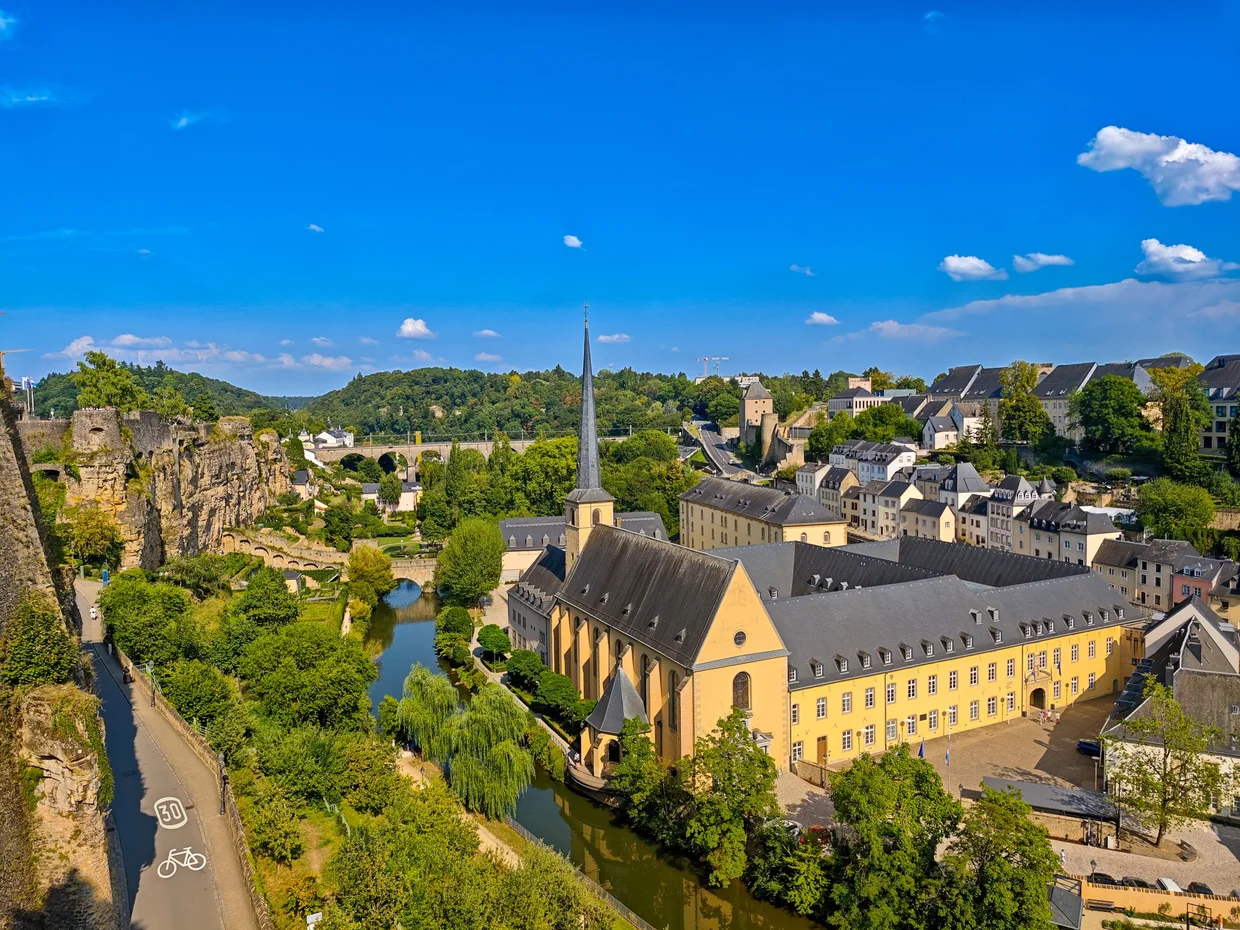
Luxembourg City is where the country concentrates its contradictions. A modern financial center on a plateau, glass towers for banks and EU institutions, looking down at the Grund, a valley neighborhood with cobbled streets, a river, and an abbey that hasn't changed its mind about anything in centuries. You can walk from one end of the old town to the other in twenty minutes, but the vertical dimension, the cliffs, the bridges, the layers, gives it a visual punch that cities ten times its size can't match. You keep turning a corner and finding another view down into a gorge that has no business being in the middle of a capital city.
Beyond the capital, the country unfolds into rolling hills, dense forests, ruined castles, and the Moselle wine valley along the German border. It's the kind of landscape that doesn't photograph as dramatically as it feels when you're standing in it. Quiet, green, and surprisingly varied for a country you can drive across in under an hour.
Three languages are spoken here: Luxembourgish at home, French in government and restaurants, German in newspapers and schools. Most people switch between all three mid-sentence without noticing, and English is widely understood. It's a polyglot country in a way that feels completely natural rather than showing off.
Luxembourg City
The old town sits on a rocky ridge above two river valleys, the Alzette and the Petrusse, and the views from the edges are the first thing that gets you. The Chemin de la Corniche, sometimes called "Europe's most beautiful balcony," is a walkway along the cliff edge looking down into the Grund and across to the Kirchberg plateau. It's free, always open, and the view at sunset is worth rearranging your evening for. This is not a place where you need to rush from sight to sight. The sights are the spaces between things.
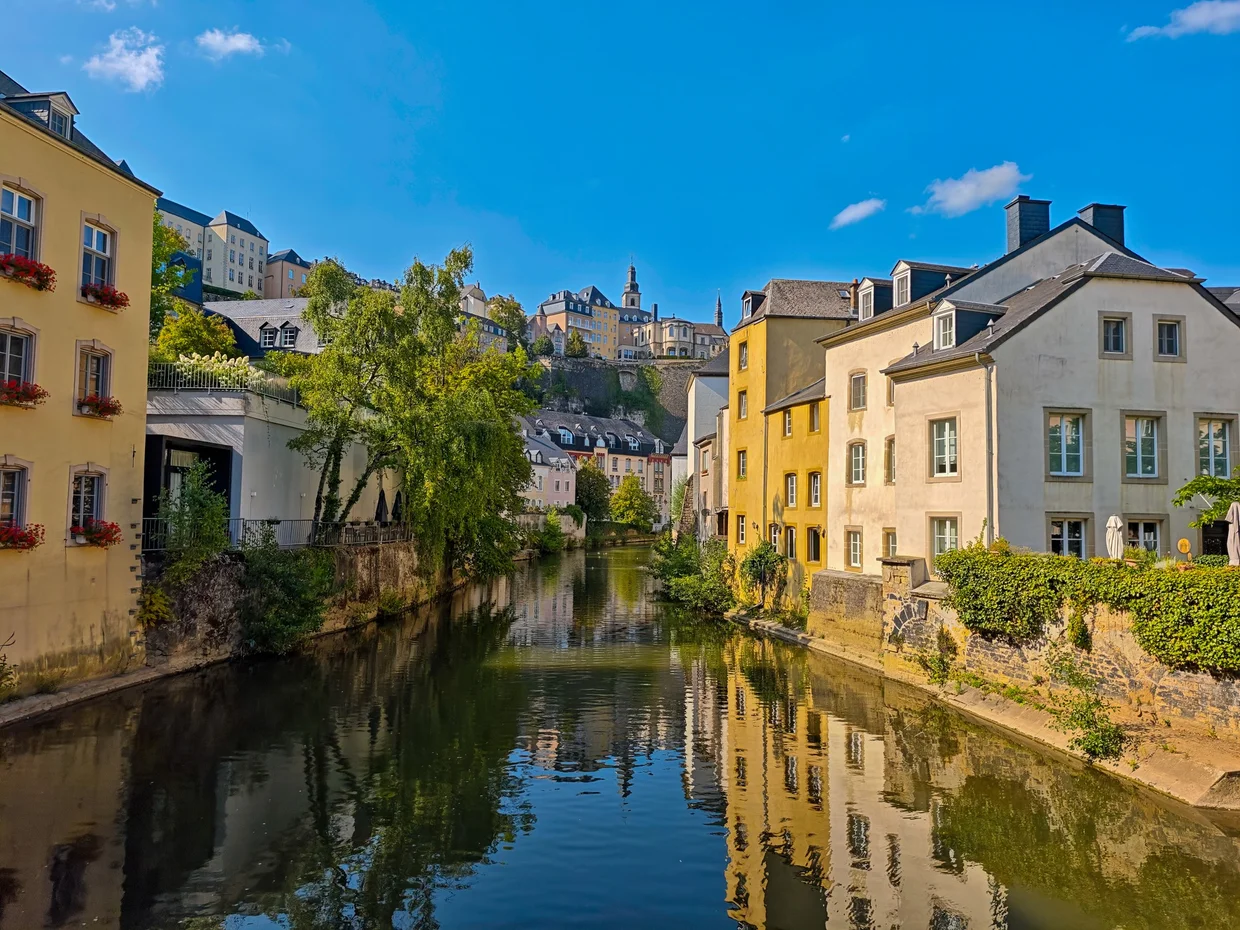
The Grund is the valley neighborhood below the old town, reachable by elevator (free, glass-walled, slightly surreal) or by walking down the winding streets. It sits along the Alzette, with Neumunster Abbey as its anchor, and has a handful of restaurants and bars that fill up on warm evenings. It feels medieval in the best sense: small, quiet, stone everywhere, the river running through. In the morning, before anyone else shows up, it's one of the most peaceful places in any European capital. The kind of place where you sit with a coffee and realize you have nowhere to be and that's fine.


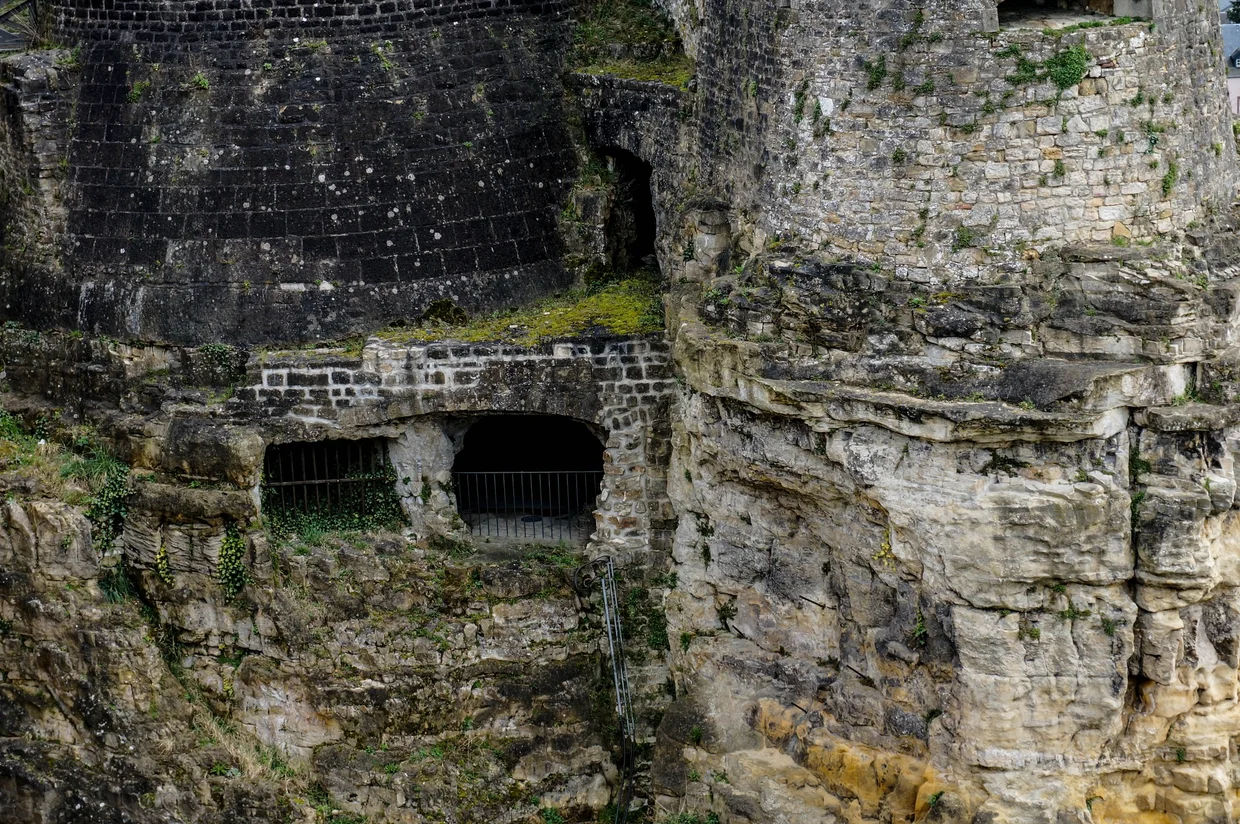
The Bock Casemates are tunnels carved into the cliff below the old town, part of the fortress that once made Luxembourg one of the most fortified cities in Europe. They're worth the small entrance fee. The tunnels are cool, dark, and the windows carved into the rock face offer framed views of the valley that feel like they were placed there by a photographer rather than a military engineer. The fortress was dismantled in 1867 but the casemates survived because destroying them would have collapsed the cliff. Practical reasons for preserving beautiful things. Very Luxembourg.

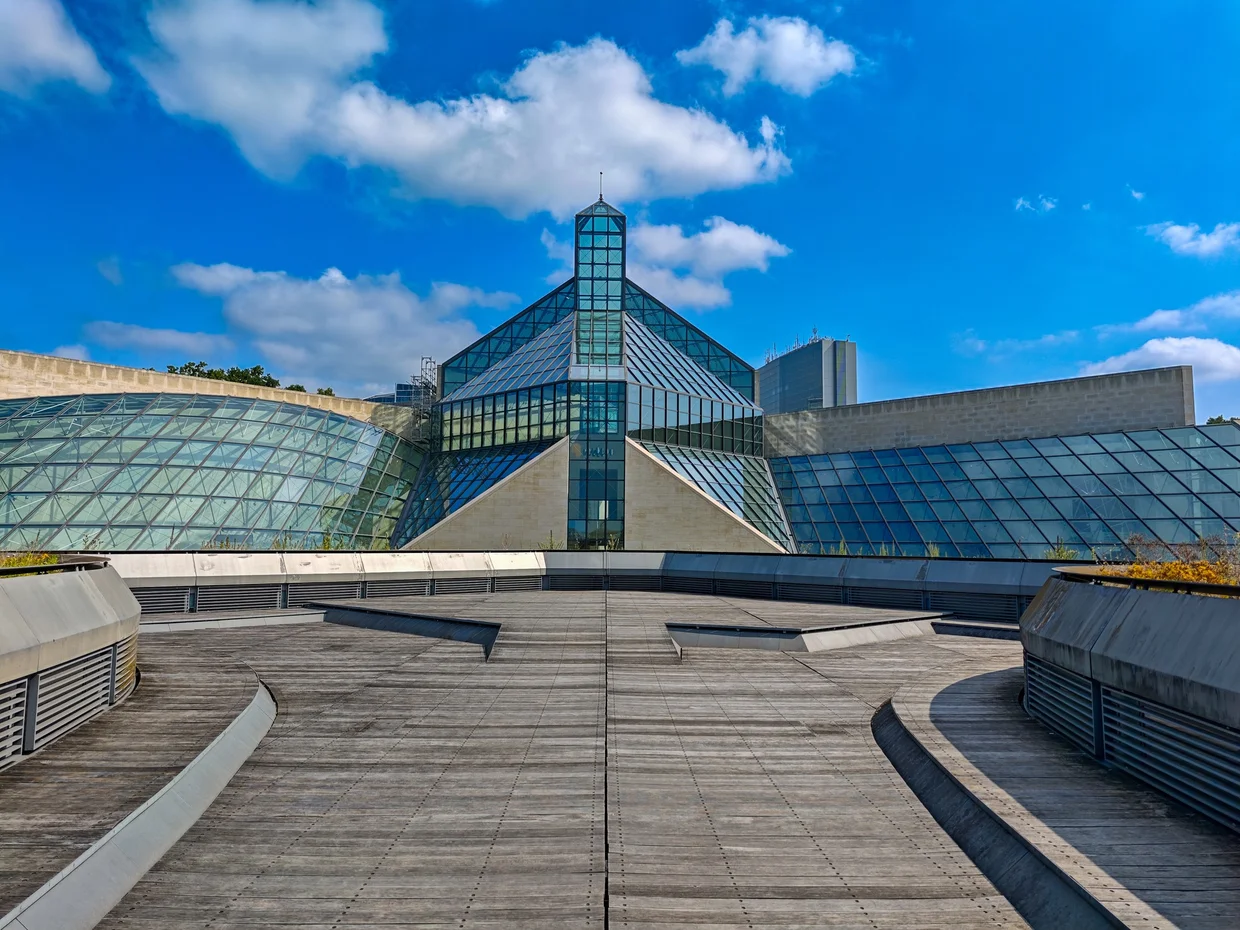
The Kirchberg plateau, northeast of the old town, is where modern Luxembourg lives. The European Court of Justice, the European Investment Bank, the Philharmonie, and the MUDAM museum of modern art are all here. MUDAM, designed by I.M. Pei, is worth visiting for the building as much as the collection. The whole plateau is clean, spacious, and architecturally ambitious in that quiet Northern European way where nobody raises their voice about it. Medieval fortifications and glass institutions, ten minutes apart by free bus. That's the whole country in one contrast.

Place d'Armes is the central square and the default meeting point. Cafes on every side, a bandstand in the middle, pleasant without trying too hard. Place Guillaume II, a block away, is larger and hosts markets. The Grand Ducal Palace is on a nearby street and looks like a large townhouse rather than a seat of power, which feels very Luxembourg. You can visit the interior in summer. It's modest by royal standards, which is also very Luxembourg.
Beyond the City
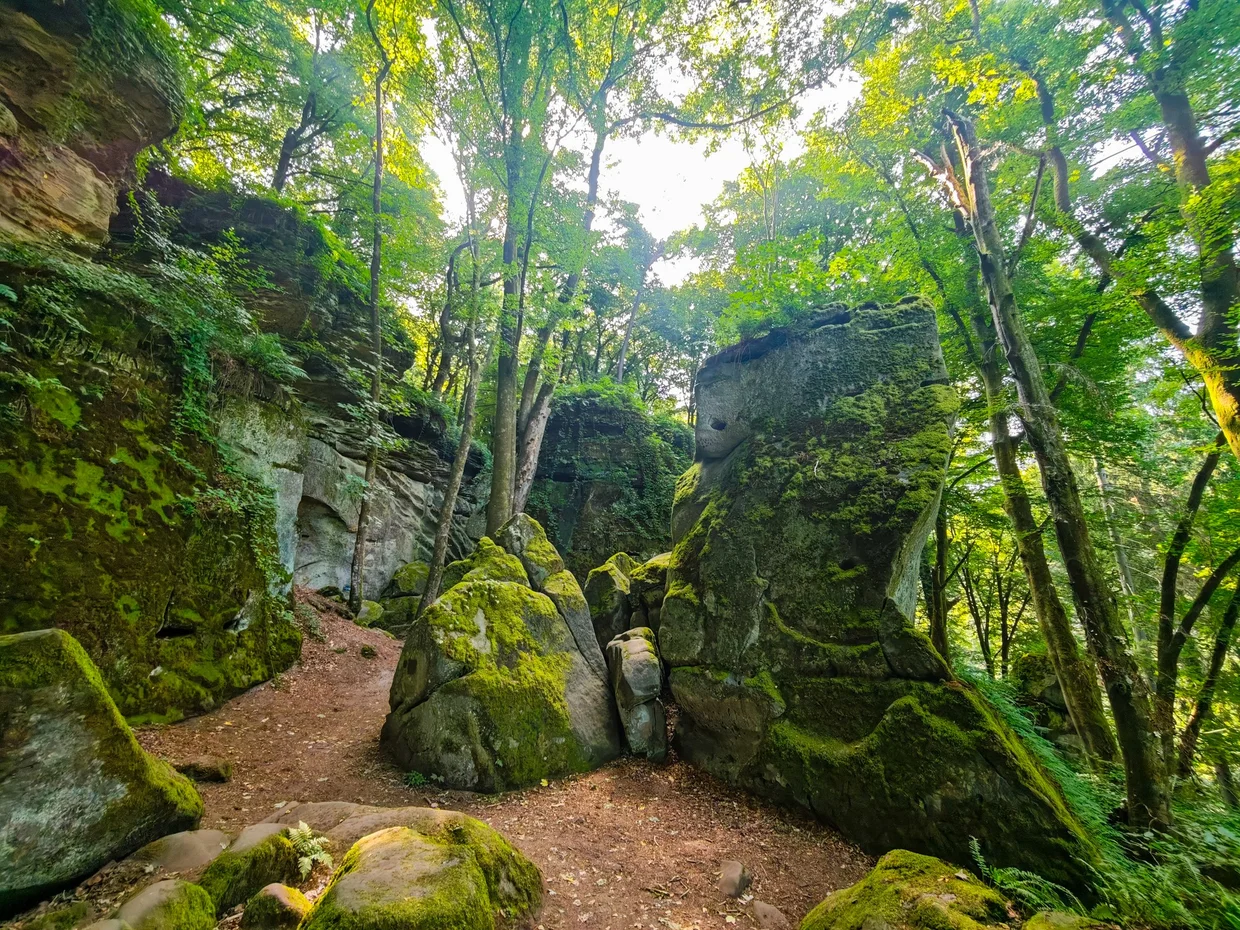
The Mullerthal region, marketed as "Luxembourg's Little Switzerland," is east of the capital and has sandstone rock formations, forested trails, and narrow gorges that feel disproportionately dramatic for a country this small. You don't expect to squeeze between moss-covered boulders three stories high in Luxembourg, and yet here you are. The Mullerthal Trail is a 112-kilometer long-distance route, but shorter loops of a few hours are easy to find and just as good. The Schiessentumpel waterfall is the postcard shot. It's small, but the stone bridge arching over it makes it work.

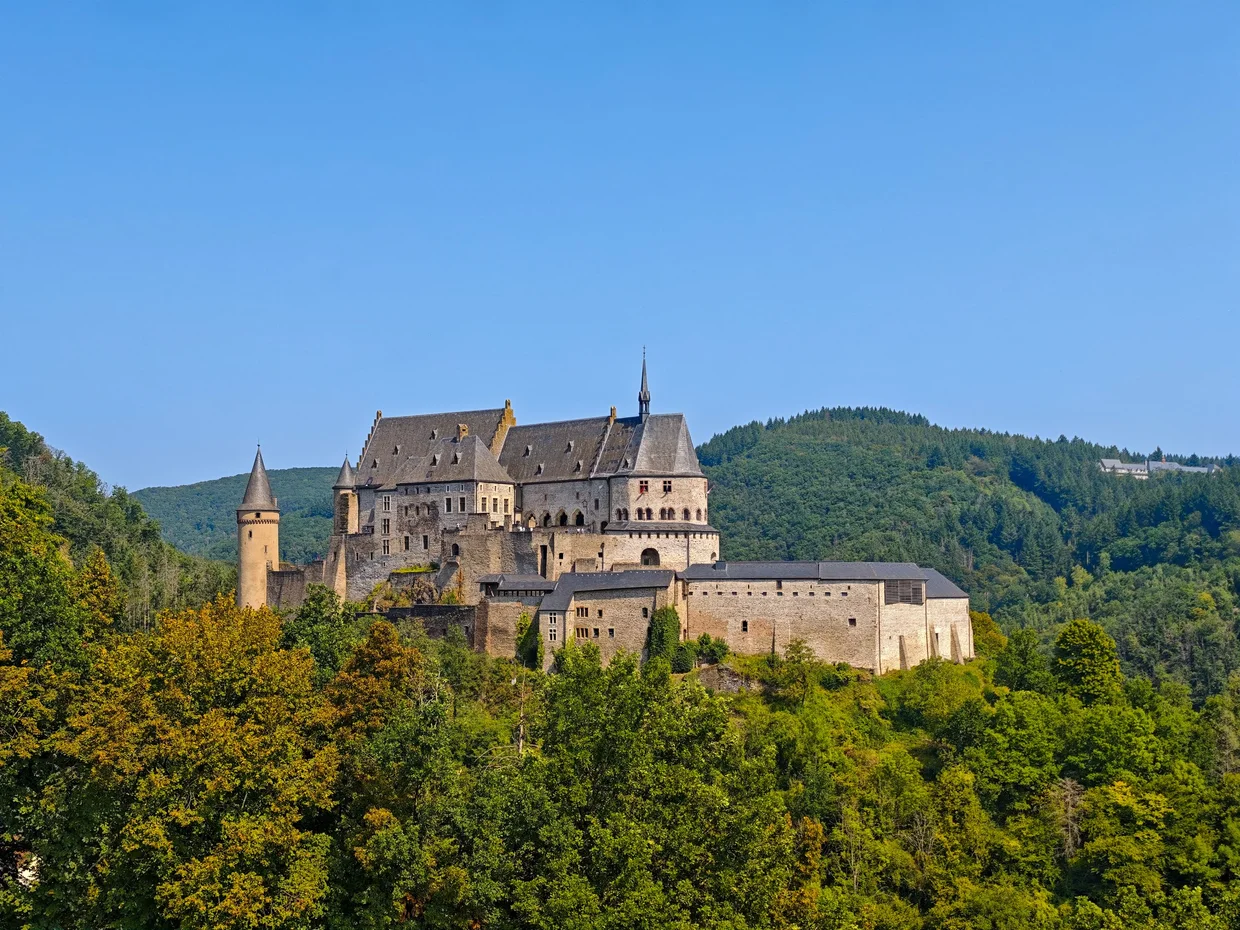
Vianden, in the north, has the most impressive castle in the country. It sits above the Our river valley, fully restored, and large enough to lose a couple of hours inside. The town below is small, charming, and has a chairlift across the valley that gives you the aerial view of the castle and the river. Victor Hugo lived here briefly and liked it enough to write about it, which is the kind of endorsement that still gets printed on tourism brochures 150 years later. Half a day from Luxembourg City by car or bus.

The Moselle valley along the eastern border with Germany is Luxembourg's wine region. The slopes produce mostly whites: Riesling, Pinot Gris, Auxerrois, and the Cremant de Luxembourg sparkling wine, which is genuinely good and a fraction of the price of Champagne. Nobody outside Luxembourg seems to know about it, and the winemakers don't seem bothered by that. The villages along the river, Remich, Ehnen, Grevenmacher, are small, pretty, and have tasting rooms where you won't fight for a spot. A boat cruise on the Moselle is touristy but pleasant, and pairs well with a winery stop.
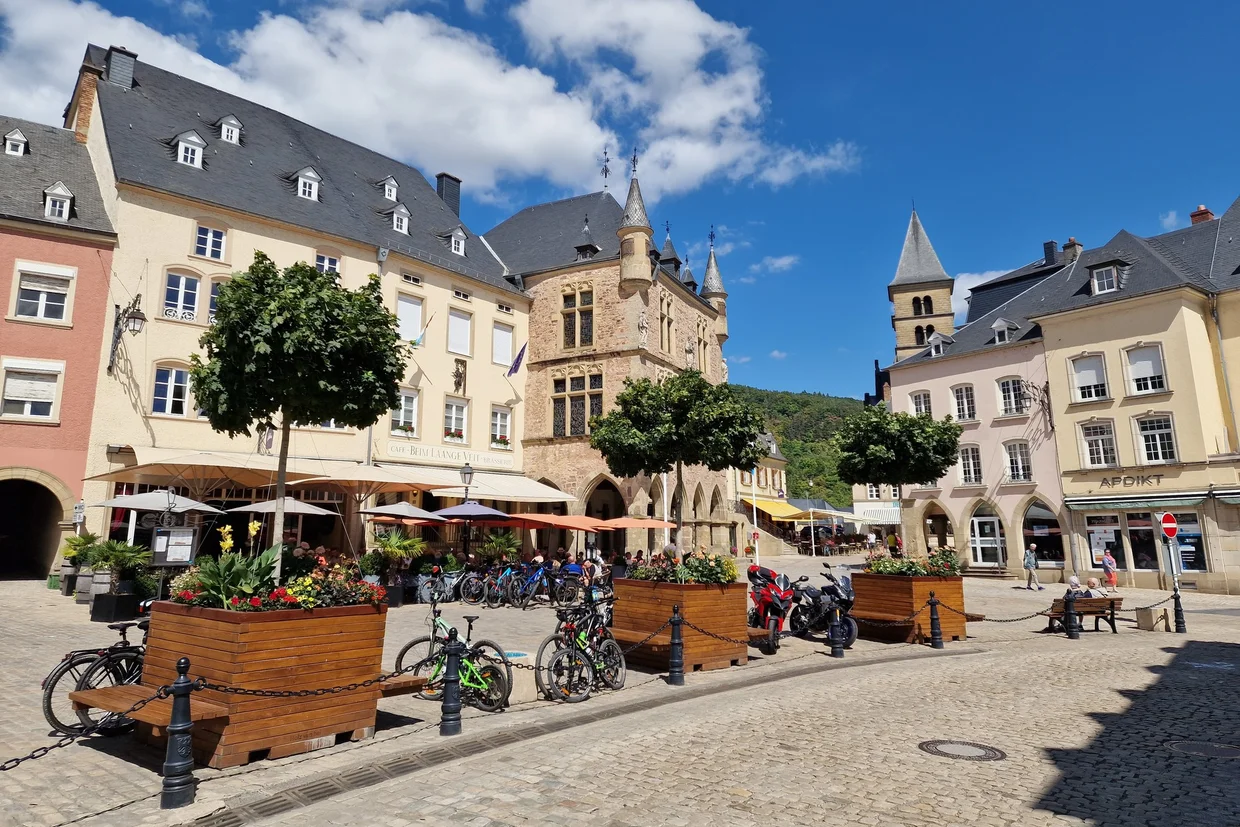
Echternach, the oldest town in Luxembourg, has a Benedictine abbey, a medieval market square, and access to the Mullerthal trails. Good base for hiking. The town's famous dancing procession, a UNESCO-listed event held on Whit Tuesday, is one of the stranger traditions in Europe: participants hop through the streets in a polka-like procession to honor Saint Willibrord. It's exactly as unusual as it sounds. If your timing lines up, go.

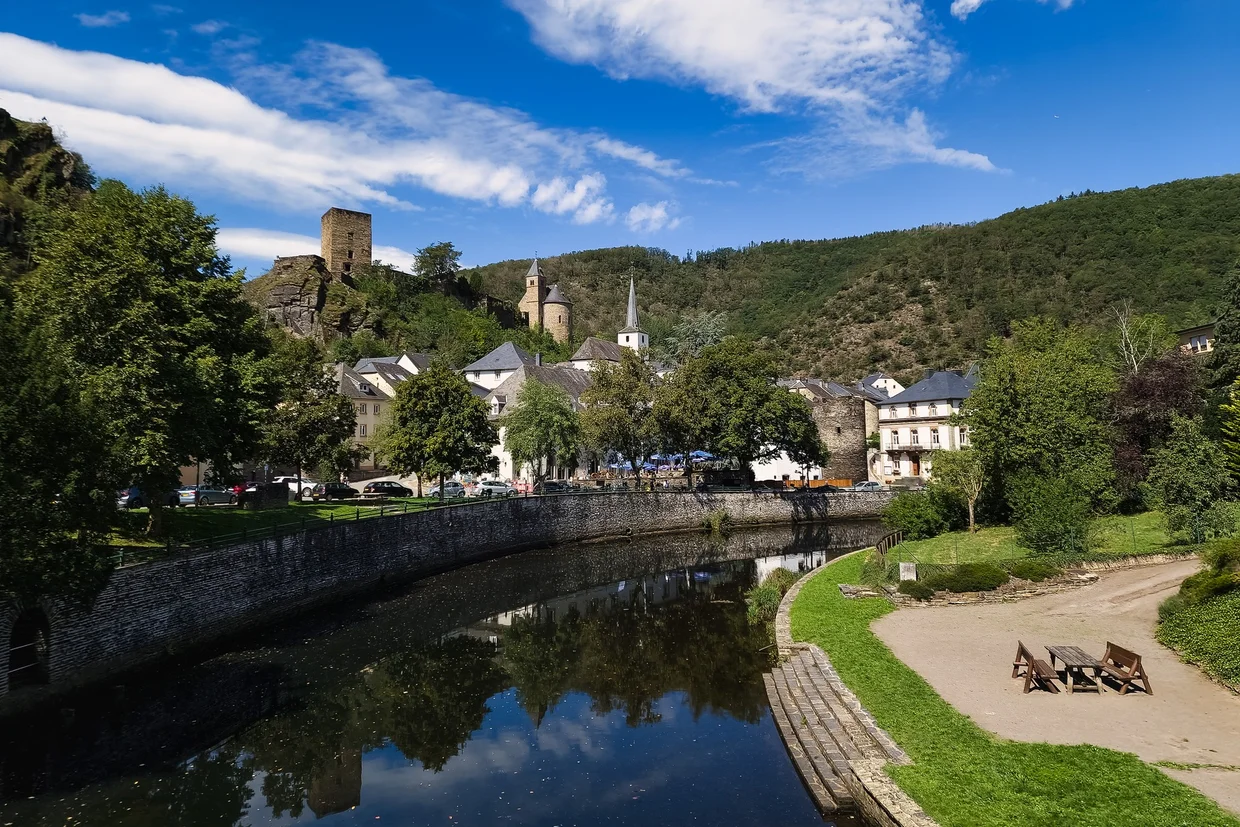
Esch-sur-Sure in the northwest is a village built inside a loop of the Sure river, with a ruined castle on the hill above and the Upper Sure Lake nearby. It's barely more than a few streets, but the setting is dramatic and the quiet is the kind you actually notice.
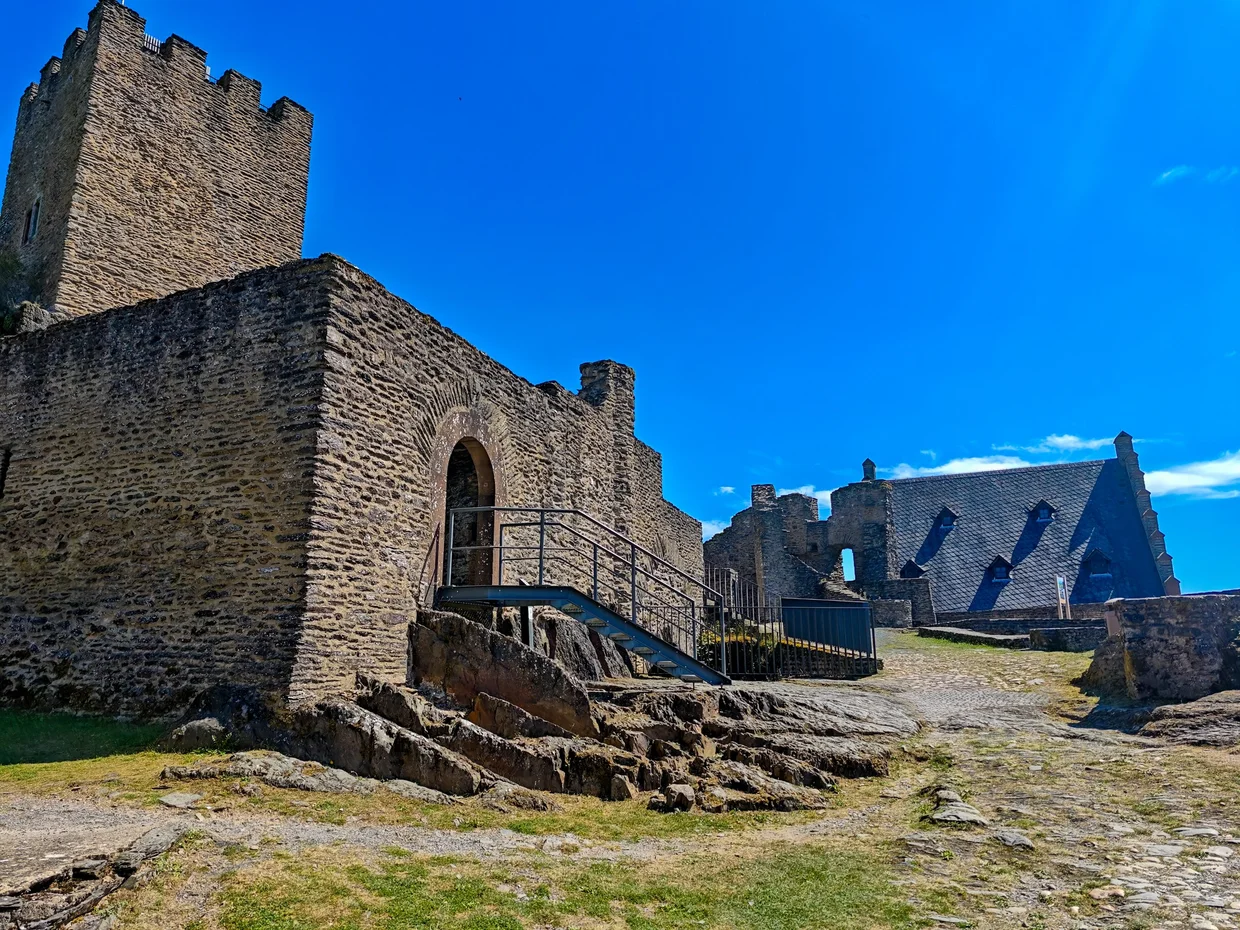
Bourscheid Castle, further north, is one of the largest fortified castles in the country. Less restored and less visited than Vianden, but arguably better for it: the ruins sprawl across a ridge above the Sure valley, and you'll often have the place entirely to yourself. Ruins are always better without crowds.

What to Do
There are many things to experience, to see and to do in Luxembourg. This here is just my personal highlight. For a more comprehensive and detailed overview, visit my dedicated what to do in Luxembourg page.
Chemin de la Corniche
Called "Europe's most beautiful balcony," the Chemin de la Corniche is a pedestrian walkway along the cliff edge of the old town, looking down into the Grund valley and the Alzette river below. The... see more
Bock Casemates
The Bock Casemates are a network of underground tunnels and galleries carved into the sandstone cliffs below the old town, remnants of the fortress that once made Luxembourg one of the strongest... see more
Pfaffenthal Panoramic Elevator
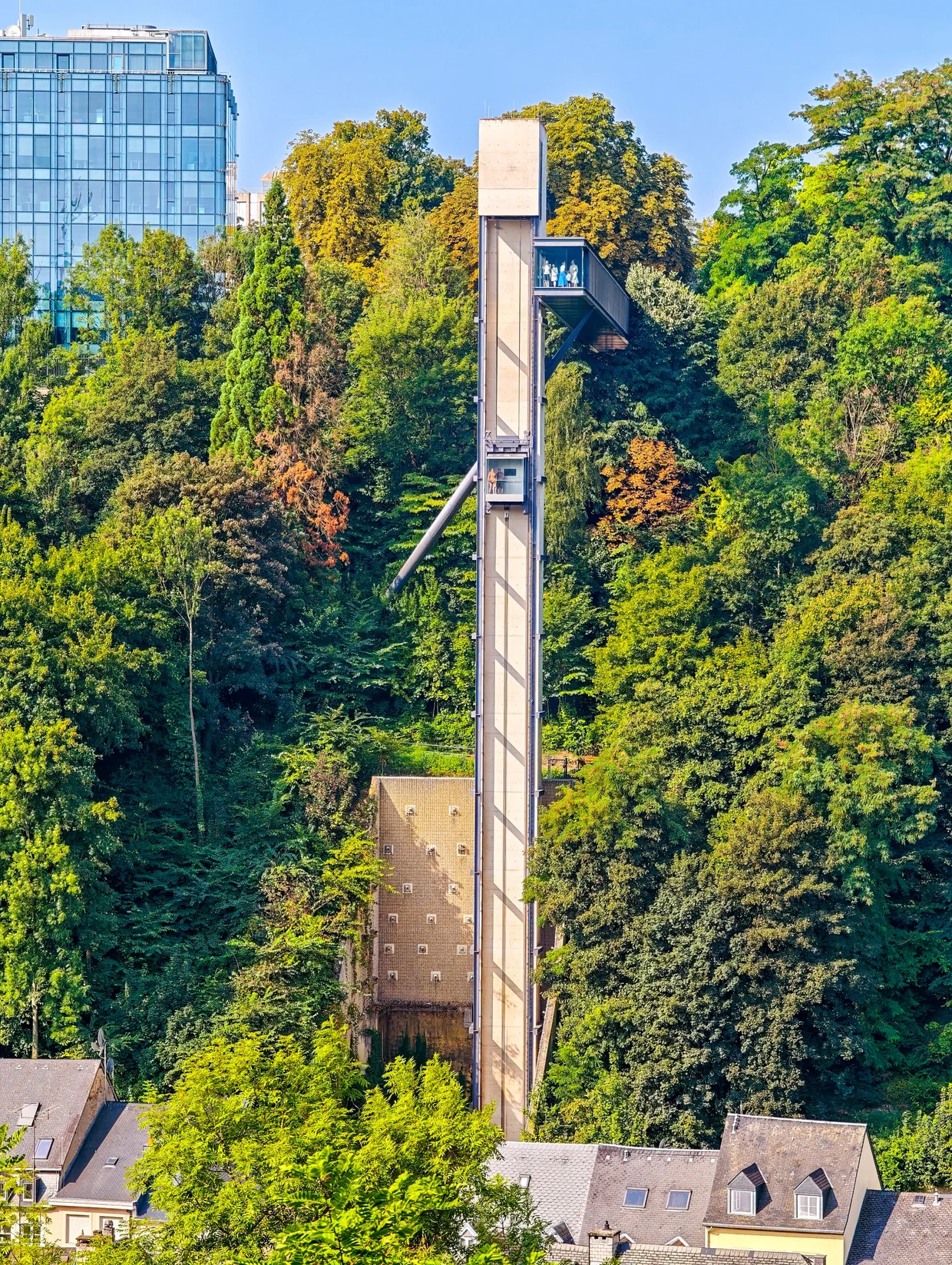
The Ascenseur Panoramique du Pfaffenthal is a glass elevator that connects the Ville Haute (upper town) to the Pfaffenthal valley 60 meters below. It's free to use, runs continuously, and the ride... see more
The Grund
The Grund is the valley neighborhood below the old town, sitting along the Alzette river at the base of the cliffs. It's reachable by a free glass-walled elevator from the upper town or by walking... see more
Municipal Park and Kinnekswiss
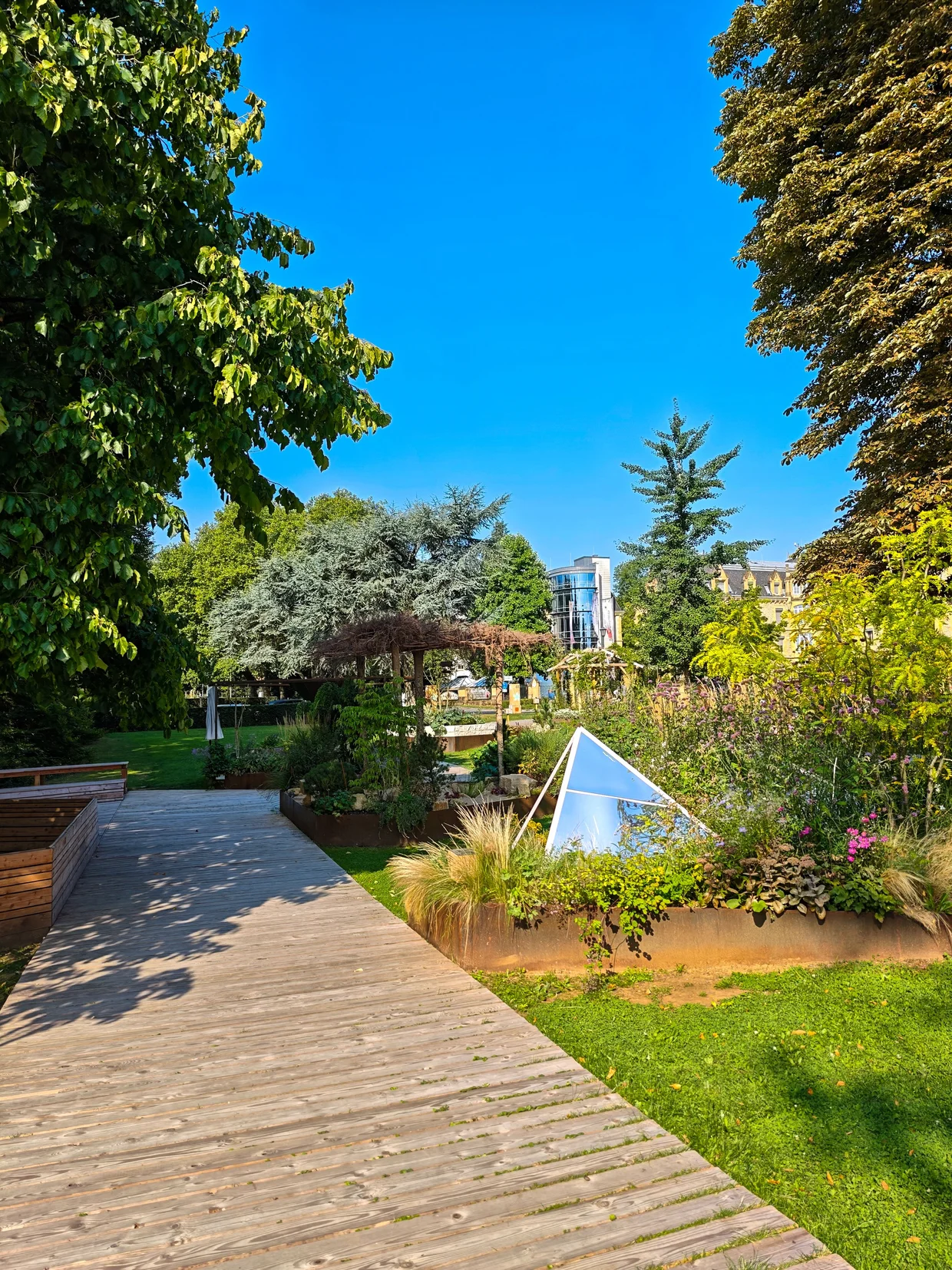
The Municipal Park of Luxembourg City is the green heart of the capital, stretching from the Petrusse valley up through landscaped gardens to the Kinnekswiss, a wide open lawn where locals gather on... see more
Vianden Castle
Vianden Castle is the most impressive castle in Luxembourg and one of the finest medieval fortifications in Western Europe. Perched above the Our river valley, it was built between the 11th and 14th... see more
Bourscheid Castle
Bourscheid Castle is one of the largest fortified castles in Luxembourg, sprawling across a ridge above the Sure river valley. It's less visited than Vianden but arguably more atmospheric: the ruins... see more
Mullerthal Trail
The Mullerthal region, marketed as "Luxembourg's Little Switzerland," has sandstone rock formations, narrow gorges, forested ravines, and a network of trails that feel completely disconnected from the... see more
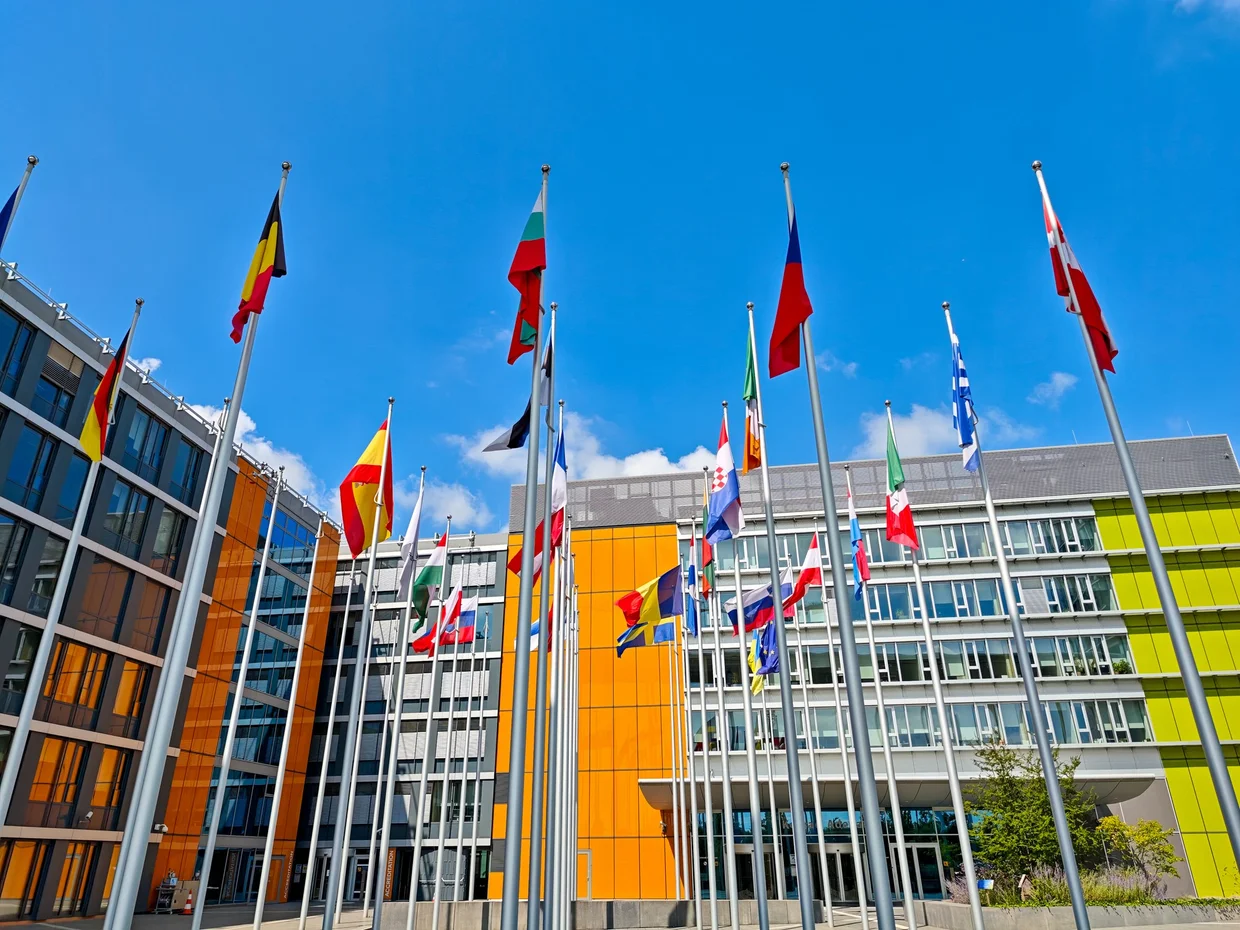
European Quarter (Kirchberg)
The Kirchberg plateau is home to some of the most important institutions of the European Union, and walking through it gives you a sense of how much of Europe's governance quietly happens in... see more
MUDAM (Museum of Modern Art)
MUDAM sits on the Kirchberg plateau in a building designed by I.M. Pei, and the architecture is half the reason to visit. The glass-and-limestone structure incorporates remnants of the old Fort... see more
Moselle Wine Valley
The Moselle valley runs along Luxembourg's eastern border with Germany, and the slopes above the river produce whites and sparkling wines that are better than their international reputation. Riesling,... see more
Schengen
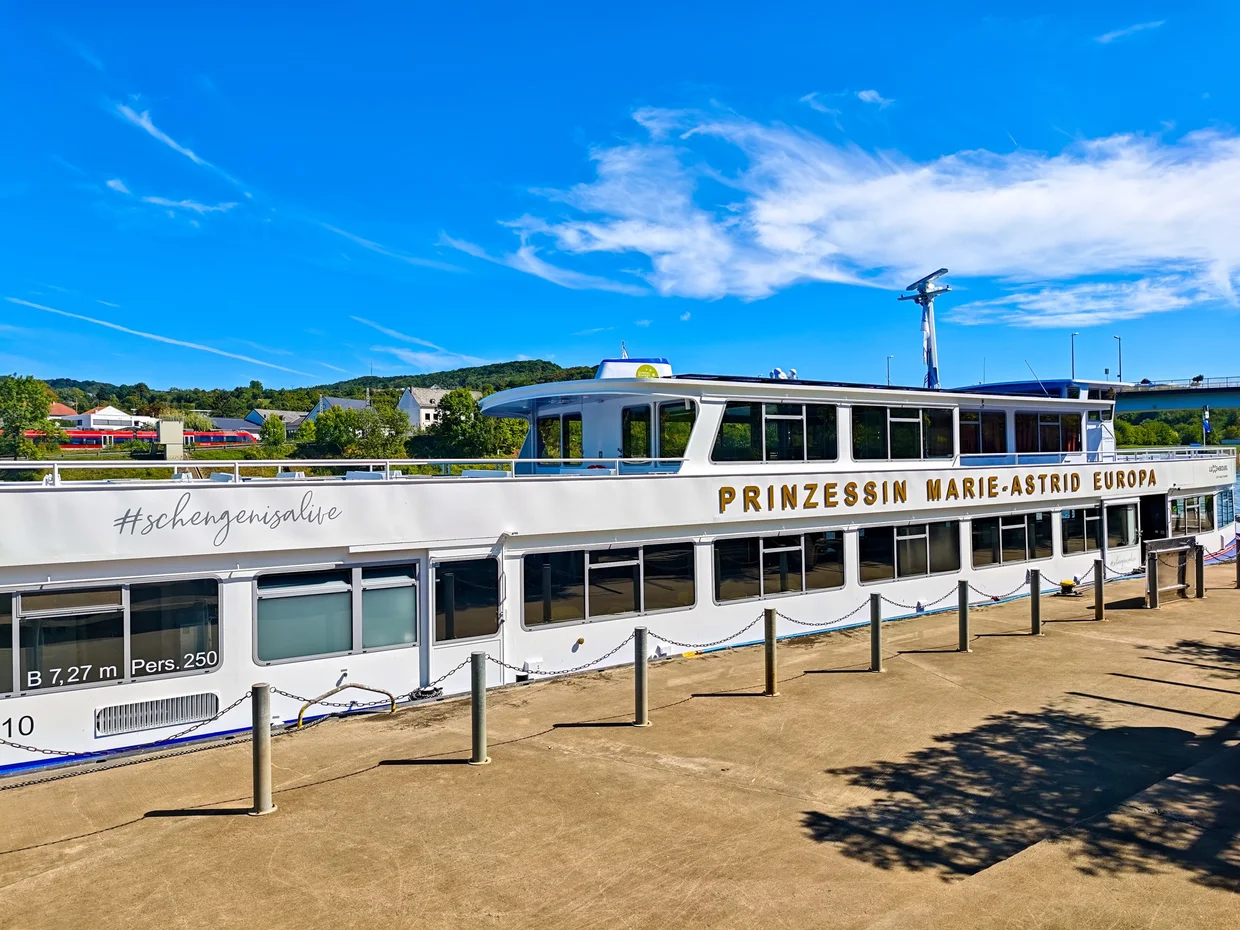
Schengen is a small village on the Moselle river where Luxembourg, Germany, and France meet at a single point. In 1985, five European countries signed the Schengen Agreement here, which eventually... see more
Echternach
Echternach is the oldest town in Luxembourg, founded around the Benedictine abbey established by Saint Willibrord in 698. The abbey still stands, rebuilt after wartime destruction, and the basilica... see more
Esch-sur-Sure
Esch-sur-Sure is one of the most photogenic villages in Luxembourg. It sits inside a tight loop of the Sure river, with a ruined castle on the hill above and the water curving almost completely around... see more
What to Pack
Layers. Luxembourg's weather changes its mind often, especially between May and September. Morning mist, afternoon sun, evening cool. A light jacket or sweater handles the swings. If you're visiting in spring or autumn, a proper rain jacket earns its suitcase space.
Comfortable walking shoes. Luxembourg City has elevation changes you won't expect. The old town is on a plateau, the Grund is in a valley, and you'll go between them more than once a day. The paths into the casemates and along the Corniche are uneven in places. If you're hiking the Mullerthal, bring trail shoes with grip because the sandstone gets slippery when wet.
Sunscreen in summer. Not as aggressive as southern Europe, but long days outdoors at altitude add up. The Mullerthal trails have shade, but the city doesn't.
A reusable water bottle. Tap water is excellent. No reason to buy bottled.
An umbrella or packable rain jacket. Rain is spread fairly evenly across the year. It rarely pours for long, but short showers are common. The kind that start just as you reach the middle of the Adolphe Bridge.
When to Go
May through September is the window. Temperatures are mild, the days are long, and everything is green. July and August are warmest and busiest, though "busy" in Luxembourg still means you can find a trail to yourself without trying. June is often the sweet spot: good weather, fewer people, long evenings.
Spring (April and May) can be cool and wet but the countryside fills with wildflowers and the gorges look their best. Autumn brings good hiking weather and the Moselle wine harvest. The Schueberfouer, Luxembourg's enormous fun fair, has been running since 1340. That's not a typo. Late August into September, and the locals take it seriously.
Winter is cold, grey, and quiet. The Christmas markets in the old town are pleasant but small compared to Strasbourg or Trier just across the border. Snow is possible but not guaranteed. Luxembourg doesn't shut down in winter, but if you're here for the landscapes, this is not the season.
Preparation
Book accommodation early if visiting during events. The Schueberfouer (late August into September) and major EU summits fill hotel rooms fast. Luxembourg City has limited capacity relative to demand, and business travelers keep midweek prices higher than you'd expect for a city this size.
Download the Mobiliteit.lu app. It covers all public transport in the country: buses, trains, tram. Real-time schedules, route planning, and since everything is free, you just need to know when and where to get on. This is the most useful app you'll have in Luxembourg.
Google Maps works also well for public transport, but I found it had some issues the last time I visited and didn't show all the busses running my route.
Bring euros. Card payments are widely accepted, but some smaller places, bakeries, market stalls, and rural cafes, still prefer cash. ATMs are easy to find in the capital but less common in smaller villages.
Learn a few words of French. Restaurant menus and service default to French. "Bonjour," "merci," "l'addition s'il vous plait" (the bill please) will cover most situations. English is widely understood, especially in the capital and among younger people, but starting in French is appreciated.
Check museum days. The big museums (MUDAM, National Museum of History and Art) have specific closing days, usually Mondays. The Casemates have seasonal hours. Checking ahead saves a wasted walk.
Visa
Luxembourg is part of the Schengen Area. EU/EEA citizens need only a valid ID card or passport. No visa, no registration, no questions.
Citizens of the US, Canada, UK, Australia, Japan, and many other countries can enter visa-free for up to 90 days within any 180-day period. This applies to the entire Schengen zone, so if you've already spent time in France, Germany, or Belgium on the same trip, those days count toward the 90.
From 2025, non-EU visitors from visa-exempt countries will need to register through the ETIAS (European Travel Information and Authorisation System) before traveling. It's an online form, costs a small fee, and is valid for three years. Check the current status before your trip as the rollout timeline has shifted several times.
For everyone else, a Schengen visa application goes through the Luxembourg embassy or consulate. Processing times vary, so apply well in advance.
Customs & Etiquette
Tipping is optional. Luxembourg is not a tipping culture. Service is included in restaurant prices. Rounding up the bill or leaving a euro or two for good service is generous and appreciated, but nobody will follow you out the door if you don't. At a cafe, leaving the coins from your change is perfectly fine.
Punctuality matters. Luxembourg runs on time. If you have a reservation, a tour, or you're meeting someone, be on time. This is a country where the buses run on schedule and people notice when you're late.
Three languages, no stress. Luxembourgish is the national language, French runs the restaurants and government, German is in newspapers and schools. Most people speak all three plus English. In restaurants, default to French. In shops, French or German both work. If in doubt, English is fine. Nobody will be offended by your language choice. The country is used to people from everywhere.
Dress is neat but not formal. Luxembourg is wealthy but doesn't flaunt it. Smart casual works in most restaurants. The finance crowd dresses well, and you'll feel underdressed in shorts and flip-flops at a nice restaurant, but nobody expects a suit. Clean and presentable covers it.
Greetings are handshakes. A handshake for meeting someone, sometimes a kiss on the cheek (one, not two or three) among friends and acquaintances. In shops and restaurants, a "bonjour" when entering and "au revoir" when leaving goes a long way. The small courtesies matter here.
Quiet hours are real. Sundays and public holidays are quiet by design. Many shops close on Sundays. Lawn mowing, loud music, and construction on Sundays will get you looks from the neighbors. Luxembourg takes its rest days seriously.
What to Skip
The Grund on a cruise ship day. When river cruise groups dock (usually day trips from the Moselle), the narrow streets of the Grund fill up fast. Go early morning or in the evening when the coaches have left. The Grund at dawn, empty and quiet along the river, is a different place entirely.
Overpriced tourist restaurants on Place d'Armes. The central square is lovely for coffee and people-watching, but several of the restaurants lining it charge tourist premiums for average food. Walk one or two blocks in any direction and the quality goes up while the price goes down.
Trying to see the whole country in a day. Yes, Luxembourg is small. Yes, you can technically drive from one end to the other in an hour. But rushing through Vianden, the Mullerthal, and the Moselle in a single day means you see everything and experience nothing. Pick two things and do them properly.
The Luxembourg Card if you're only in the city. The Luxembourg Card gives free public transport (already free for everyone) and museum entry. If you're visiting multiple museums and castles across the country over several days, it can pay off. If you're spending two days mostly walking around the capital, you'll use it once or twice and waste the rest.
Shopping as an activity. Luxembourg City has standard European chains along Grand Rue and in the Royal-Hamilius area. If you're looking for something you can't find in any other European capital, you won't find it here either. The country's charm is in its landscapes, food, and atmosphere, not its shopping.
What to Eat
Luxembourgish cuisine sits in a triangle between French, German, and Belgian cooking, and it takes what it wants from all three. The national dish is Judd mat Gaardebounen, smoked pork collar with broad beans in a cream sauce. It's a traditional comfort dish that shows up on most Luxembourgish menus. Bouneschlupp (green bean soup with potatoes, bacon, and onions) is another staple of local cooking. Gromperekichelcher, crispy potato fritters with onion and parsley, are street food staples at markets and fairs, and those are genuinely good. Crispy, salty, the kind of thing you eat standing at a market stall and immediately go back for a second portion.
What I'd actually eat here: The Gromperekichelcher, without question. Bouneschlupp works well too. The bistro and brasserie scene runs on French-style cooking where you can get a solid burger, a good pasta, or a croque-monsieur without any trouble. Pizza is easy to find and tends to be good quality given the French and Italian influence. Luxembourg's bakeries do excellent sandwiches on fresh bread. For a quick lunch, a baguette with ham or salami from a good bakery beats most sit-down options.
The French influence shows up in the fine dining. Luxembourg City has a concentration of Michelin stars that's absurd for its size. The quality at the top end is genuinely high, and the prices, while not cheap, are noticeably lower than equivalent restaurants in Paris. The bistro and brasserie culture is strong: long lunches, wine with everything, bread that's taken seriously. Nobody is in a hurry at lunch here, and that's a feature, not a bug.
The Moselle wines are the local pride. Cremant de Luxembourg is the sparkling wine and it's genuinely good value compared to Champagne. The whites, particularly Riesling and Pinot Gris from the slopes above the river, are worth seeking out. Beer culture exists too: Diekirch, Bofferding, and smaller craft breweries producing solid lagers and ales that nobody outside the region has heard of.
Pastry and baking lean German: dense breads, Quetschentaart (plum tart), seasonal pastries around holidays. The cafe culture is more French: espresso, croissants, sitting outside on Place d'Armes watching the square fill up. For a country of 640,000 people, the food range is impressive. Everything is just slightly better than you expected. That keeps happening in Luxembourg.
Costs
Luxembourg is one of the wealthiest countries in the world, and prices reflect that. It's not cheap. But the free public transport, the compact distances, and the fact that you don't need to do much paid sightseeing soften the blow.
The prices shown here are meant as a rough guide and can vary over time. While I update exchange rates regularly, local prices are typically refreshed only when I revisit the destination.
The biggest savings come from transport (free), water (tap is excellent), and the fact that the country is so small that you never need to pay for long-distance travel. The biggest surprises come from restaurant prices and accommodation in the capital, which runs closer to Brussels or Amsterdam than to neighboring Trier or Metz.
Getting Around
Luxembourg made all public transport free in 2020. Buses, trains, trams, all of it. No tickets, no validators, no awkward moment trying to figure out the machine. Just get on and ride. It's one of the few countries in the world where this is the case, and it actually works. The bus network connects the capital to most towns and villages. Trains run to the major hubs. The tram in Luxembourg City runs from Kirchberg through the center to the train station and is modern, frequent, and, yes, free.
For the capital itself, walking is the best option. The old town is compact, the Grund is reachable on foot or by the Pfaffenthal Panoramic Elevator, a glass lift that drops 60 meters from the upper town to the valley with views over the fortifications. It's free, like everything else here, and slightly surreal. The city is hilly but manageable.
For the countryside, a car gives you the most flexibility. The roads are excellent, distances are short (nothing is more than an hour from the capital), and parking is rarely a problem outside the city center. Without a car, buses and trains can get you to Vianden, Echternach, the Mullerthal trailheads, and the Moselle villages, though some connections require transfers and patience. The Mullerthal in particular is much easier with a car.
The country shares borders with France, Germany, and Belgium, and crossing them is seamless (thank you, Schengen). Trier in Germany is 45 minutes. Metz in France is about the same. Day trips in any direction are easy, and the fact that three countries are within an hour's drive of a country that's already three countries linguistically is the kind of thing that makes you appreciate what Europe has become.
Where to Stay
Luxembourg is small enough that where you stay matters less than in most countries. The capital is the obvious base and puts everything within reach: the old town is walkable, public transport is free, and every corner of the country is a day trip. If you have a car and want something quieter, the Mullerthal or Moselle valley offer a different pace. But for most visits, Luxembourg City is the right answer.
Old Town (Ville Haute)
The old town is the obvious choice and the right one for most visitors. You're on the plateau above the valleys, steps from the Chemin de la Corniche, the Grand Ducal Palace, Place d'Armes, and the Bock Casemates. Hotels here tend to be smaller,...
District map available here.
Activate Full Experience Mode to load the neighborhood map and inspect the best base visually.
Safety & Health
Luxembourg is one of the safest countries in Europe. Violent crime is extremely rare. The concerns here are minor and mostly practical.
Petty theft. It exists, mainly in Luxembourg City's tourist areas and on crowded buses, but at much lower levels than in larger European capitals. Standard precautions: keep your bag closed, don't leave your phone on a cafe table, be aware in crowded spots. This is more "common sense" territory than "high alert."
Weather-related risks. The Mullerthal trails can be slippery after rain, and the sandstone rocks get genuinely treacherous when wet. Proper footwear matters. In winter, icy patches on the steep paths between the old town and the Grund catch people off guard.
Healthcare. Excellent. Luxembourg has modern hospitals and clinics. EU citizens with an EHIC (or the newer Global Health Insurance Card) get access to public healthcare. Non-EU visitors should have travel insurance, though emergency care is available regardless. Pharmacies are well-stocked and pharmacists can advise on minor issues.
Tap water. Safe and good everywhere. Drink it.
No special vaccinations needed. Standard routine vaccinations (tetanus, etc.) are all that's recommended. No tropical diseases, no altitude concerns, no unusual health risks.
Driving. Roads are excellent but the country has a lot of roundabouts and the motorway speed limit (130 km/h) feels fast on short distances. The real hazard is the cross-border commuter traffic during rush hours, especially on the motorways around Luxembourg City. Over 200,000 people commute into the country daily from France, Belgium, and Germany. Morning and evening, the roads around the capital are congested.
The European Spirit
Luxembourg is a founding member of the European Union, and the European project is not just politics here; it's woven into the fabric of everyday life. Nearly half the country's residents are foreign nationals. Three official languages coexist without friction. The institutions on the Kirchberg plateau, the European Court of Justice, the European Parliament Secretariat, the European Investment Bank, are not abstract bureaucracies to Luxembourgers; they're where the neighbors work.
The most symbolic place in the country, for what Europe has become, is the village of Schengen. It sits on the Moselle where Luxembourg, Germany, and France meet at a single point, and in 1985, five countries signed an agreement here that would eventually abolish border controls across most of Europe. The Schengen Agreement is one of those achievements that's easy to take for granted until you think about what came before it: passport queues, border guards, the assumption that moving between countries should be difficult. You and I, we know how annoying border crossings can be, how complex it can be to get a visa. Today, you can drive from Lisbon to Tallinn without stopping once (well, maybe to eat and sleep). That freedom was born in this quiet village on the Moselle.


The MS Princesse Marie-Astrid, the boat on which the agreement was actually signed, is moored at the Schengen riverbank. The European Museum nearby tells the story well, from the rubble of post-war borders to the open continent we have now. The monument by the river, three steel pillars for three countries, looks out over the water toward Germany on the opposite bank. It's a modest monument for an immodest idea: that Europeans should be able to live, work, and move wherever they choose on their own continent.
On the Kirchberg plateau in the capital, the European Parliament building and the Court of Justice are visible reminders that Luxembourg punches far above its weight in shaping European law and governance. You can walk among these buildings and feel something that's rare in politics: a project that, for all its imperfections, has delivered decades of peace, prosperity, and the simple, radical freedom to cross a border without being asked why.
If you are like me and believe in open borders, in the idea that people should be free to move, to work, to build lives wherever opportunity takes them, Luxembourg is a kind of proof of concept. A tiny country of 640,000 people, half of them born elsewhere, functioning beautifully. The European project works. You can see it working here, every day, in three languages.
Common Mistakes
Treating it as a day trip. Luxembourg gets squeezed into a "quick stop" between Brussels and the Rhine. You arrive, walk the Corniche, see the Grund, and leave. That's like reading the title of a book. Two days minimum for the city, three or four to see what the country actually is.
Skipping the countryside. Most visitors never leave Luxembourg City. The Mullerthal, Vianden, the Moselle valley, and the northern castles are where the country surprises you. If you only see the capital, you've seen the business card, not the country.
Expecting it to be boring because it's small. Small does not mean empty. The vertical drama of Luxembourg City, the gorges, the cliffs, the layers of old and new, packs more visual interest into a few square kilometers than cities ten times its size. And the countryside has a variety that the country's dimensions don't suggest.
Not using the free transport. Some visitors rent a car for everything, including getting around the capital. Buses and trains are free, frequent, and cover the country well. For the city, walking and the tram handle everything. Save the car for the Mullerthal trails or remote villages where bus connections thin out.
Eating only in the tourist center. Place d'Armes and the Grand Rue are pleasant but the restaurants there charge a premium. The Grund, Clausen, and the neighborhoods around Gare (the train station area) have better food at better prices. A five-minute walk from the main square changes the equation.
Forgetting the Moselle wines. Luxembourg's wines, especially the Cremant, are genuinely good and almost unknown outside the country. If you visit the Moselle valley and don't stop at a winery, you've missed one of the best quiet pleasures in the country. A bottle of good Cremant for under 10 euros at the cellar door is the kind of value you don't find in more famous wine regions.
Underestimating the weather. The forecast says partly cloudy, you leave the jacket at the hotel, and by 3 PM you're wet. Luxembourg's weather shifts quickly, especially in spring and autumn. Layers and a rain jacket are not optional.
Destination Info
Published March 2026.