Top Things to Do and See in Luxembourg
Luxembourg packs a surprising amount into a very small space. Medieval casemates, cliff-edge walkways, restored castles, forested gorges, and a wine valley along the Moselle. This guide covers the highlights across both the capital and the countryside, from the essential first-visit stops to the quieter places that reward an extra day.
The prices shown here are meant as a rough guide and can vary over time. While I update exchange rates regularly, local prices are typically refreshed only when I revisit the destination.
Chemin de la Corniche
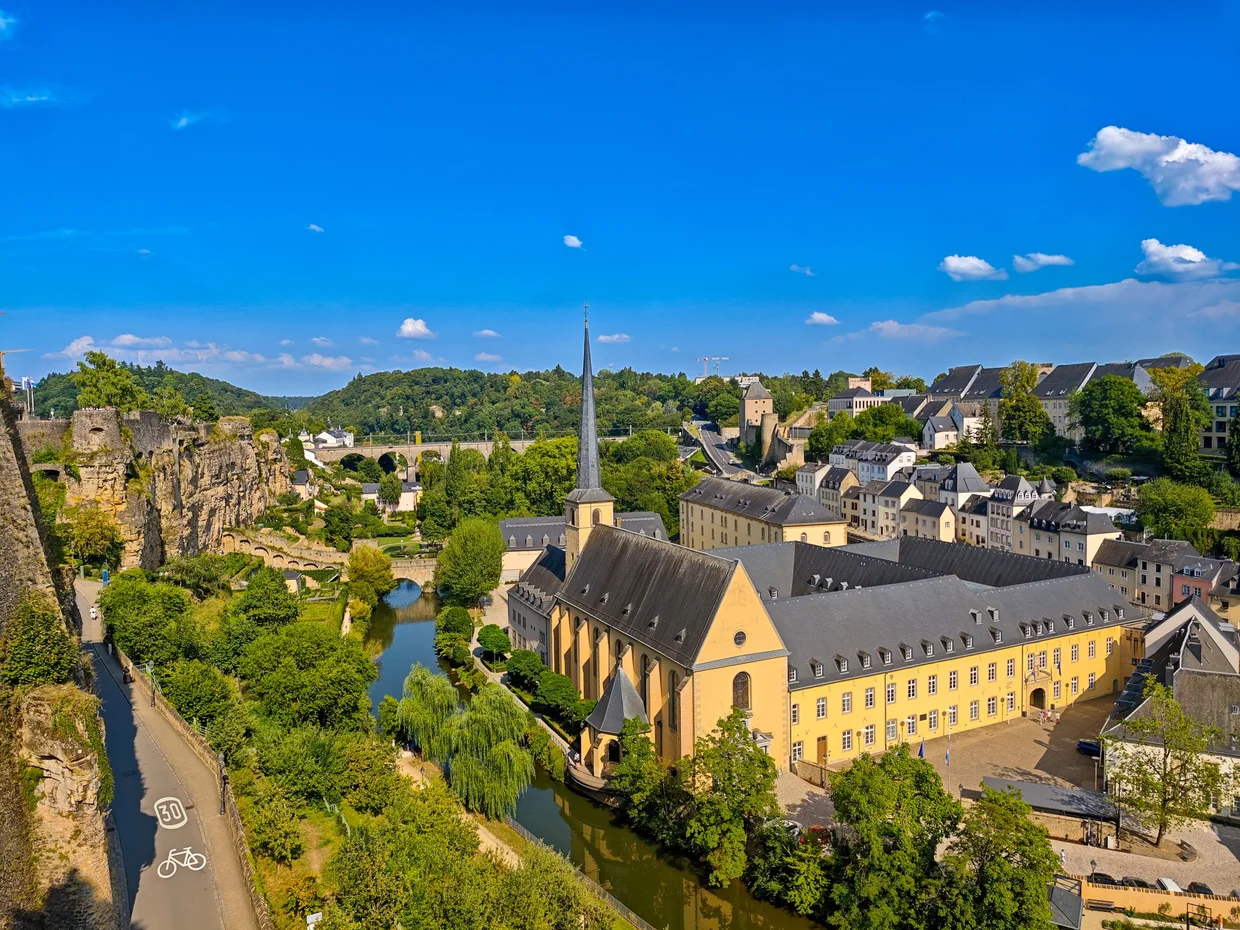
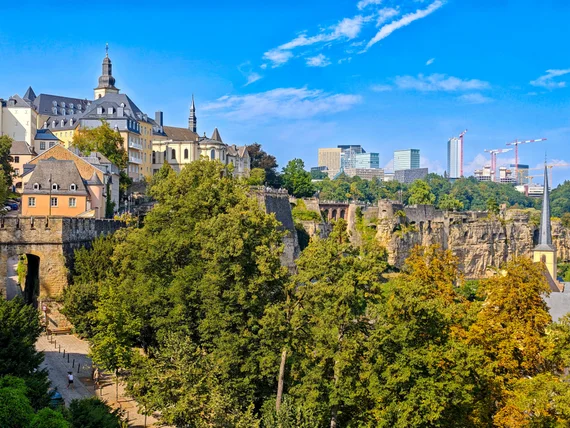
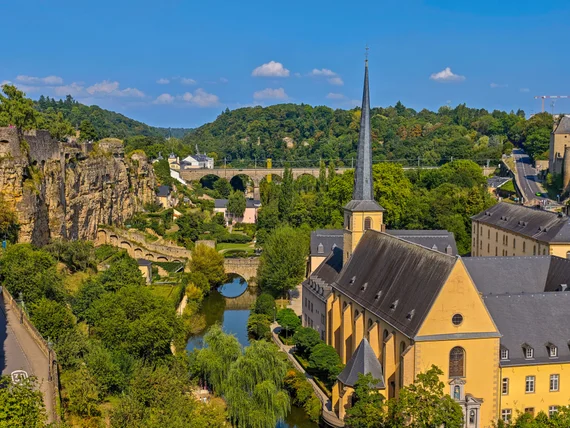
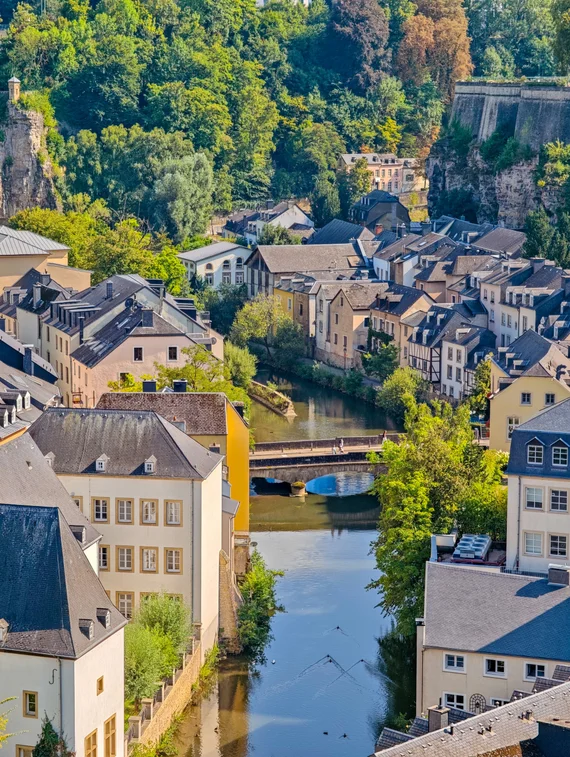
Called "Europe's most beautiful balcony," the Chemin de la Corniche is a pedestrian walkway along the cliff edge of the old town, looking down into the Grund valley and the Alzette river below. The views are expansive: the Neumunster Abbey, the old stone bridges, the forested slopes on the opposite bank, and the spire of Saint-Jean-du-Grund church. It's a short walk, maybe fifteen minutes end to end, but it's the kind of view that makes you stop multiple times. At sunset, the light hits the sandstone cliffs and the valley fills with warm color. Free, always open, and the single best thing to do in Luxembourg City.
How to Get There
In the old town, accessible from multiple points along the cliff edge. Walk east from Place Guillaume II or approach from the Bock promontory.
Notes
- Best at sunset when the light hits the cliff faces
- Combine with a walk down to the Grund afterward
- The walkway connects to the Bock Casemates at one end
- No barriers in some sections; watch children
Bock Casemates
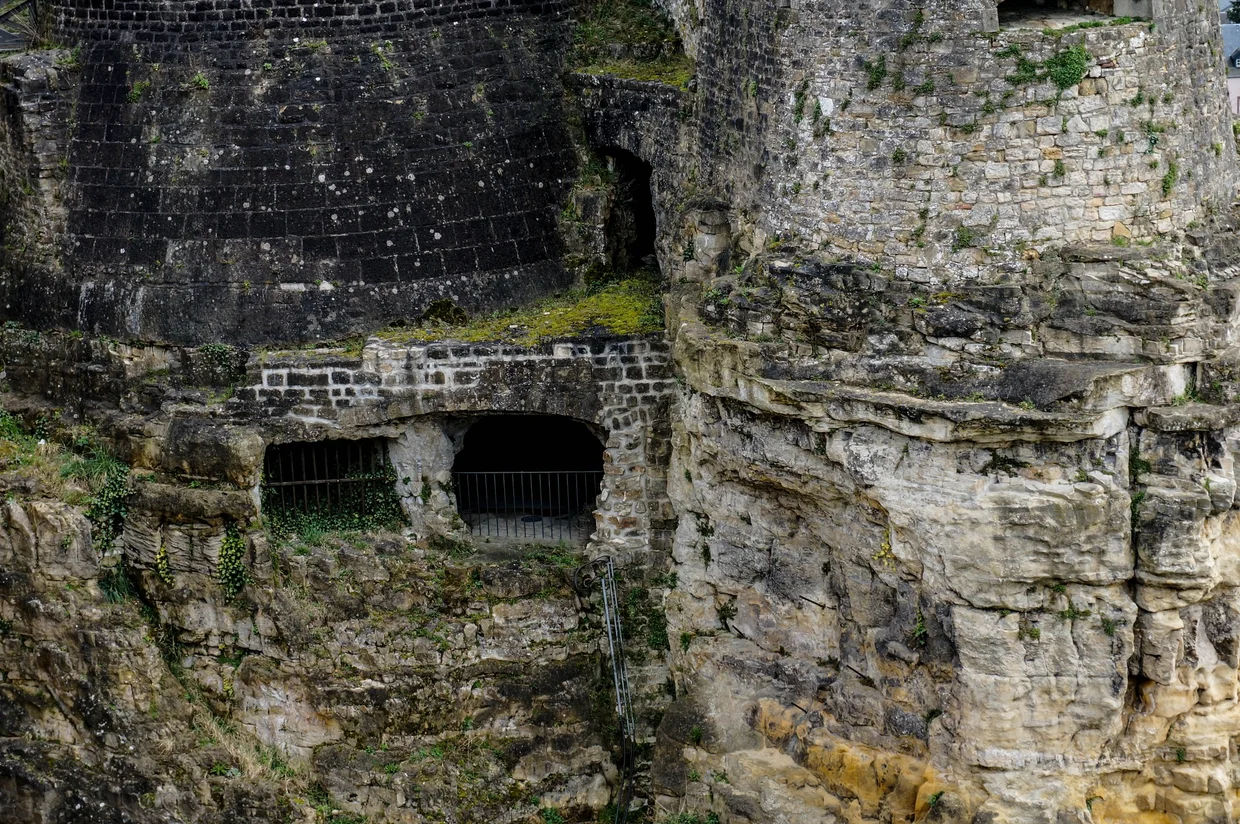
The Bock Casemates are a network of underground tunnels and galleries carved into the sandstone cliffs below the old town, remnants of the fortress that once made Luxembourg one of the strongest fortified cities in Europe. Built starting in 1644 under Spanish rule and expanded by successive occupiers, the tunnels once housed thousands of soldiers and their equipment. After the fortress was dismantled in 1867, the casemates survived because destroying them would have collapsed the cliff. Today you can walk through 17 kilometers of the original tunnels (a fraction of the original network), with openings in the rock face that frame views of the Alzette valley. It's cool underground even in summer, and the combination of military history and dramatic views through carved windows makes it unlike most fortress visits.
How to Get There
The entrance is on the Bock promontory at the eastern edge of the old town, a short walk from the Grand Ducal Palace or the Chemin de la Corniche.
Notes
- Open March through October; closed in winter
- The tunnels are cool inside; bring a light layer even in summer
- UNESCO World Heritage Site along with the old town (https://whc.unesco.org/en/list/699)
- Combine with the Chemin de la Corniche, which connects directly
Pfaffenthal Panoramic Elevator
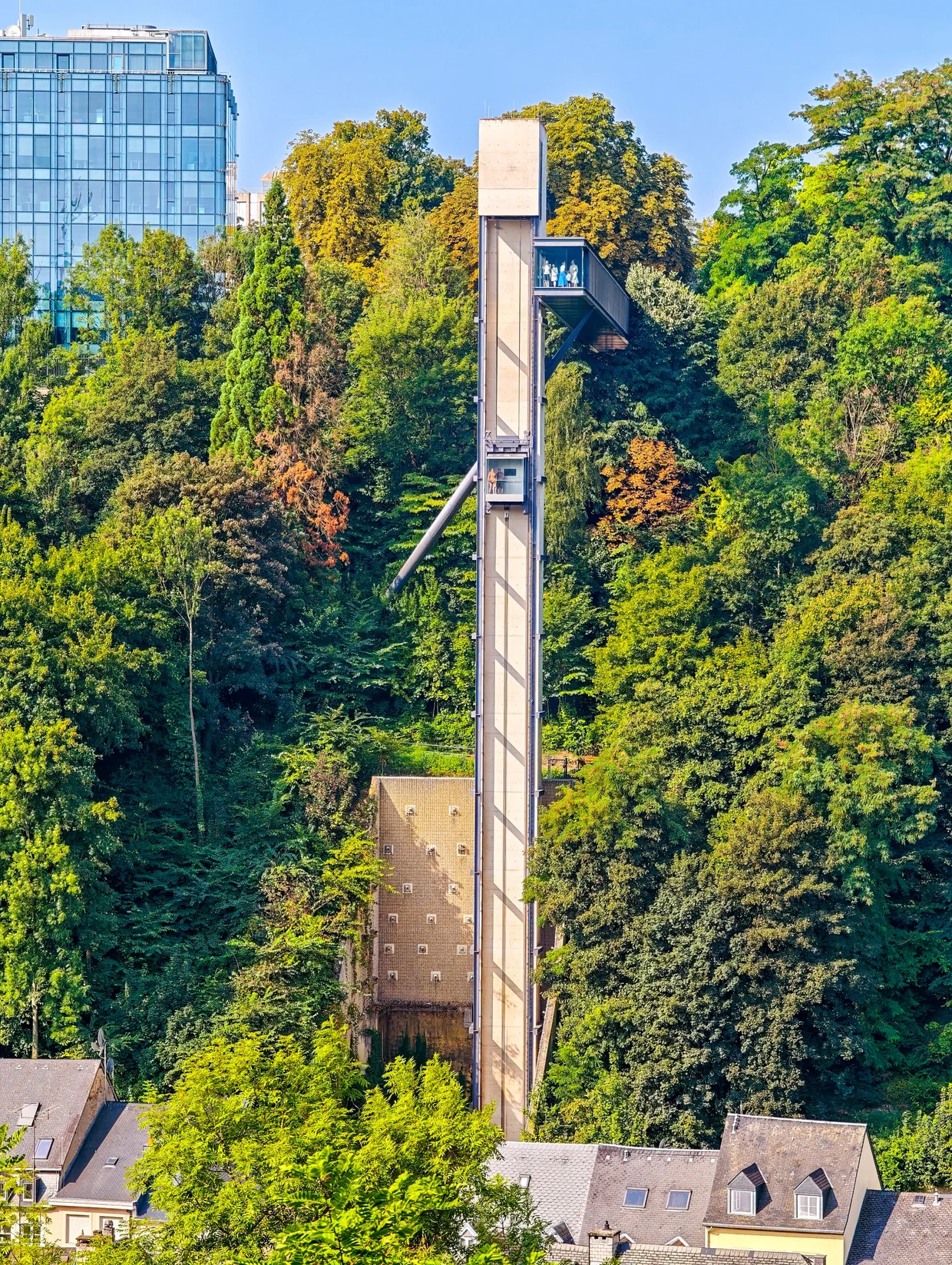
The Ascenseur Panoramique du Pfaffenthal is a glass elevator that connects the Ville Haute (upper town) to the Pfaffenthal valley 60 meters below. It's free to use, runs continuously, and the ride takes about 30 seconds, but those seconds give you a panoramic view over the Alzette valley, the old fortifications, and the viaducts that make Luxembourg City's vertical geography so striking. The elevator was built in 2016 as part of the city's effort to improve connections between the upper and lower neighborhoods, and it does that job well: you step in at street level near the Holy Spirit Citadel, drop through open air in a glass cabin, and step out at the bottom next to the Pfaffenthal-Kirchberg train station. It works as practical transport, but it's also one of the best free viewpoints in the city. The view on the way down, when the valley opens up in front of you through the glass, is worth doing even if you have no reason to go to Pfaffenthal.
How to Get There
The upper entrance is on the Plateau du Saint-Esprit, near the Holy Spirit Citadel, a short walk east from the old town or Gare Centrale. The lower exit is at the Pfaffenthal-Kirchberg train and bus stop.
Notes
- Free and runs continuously throughout the day
- The glass cabin gives panoramic views over the Alzette valley
- Connects to the Pfaffenthal-Kirchberg train station at the bottom
- Combine with a walk along the Chemin de la Corniche or a visit to the Grund
The Grund
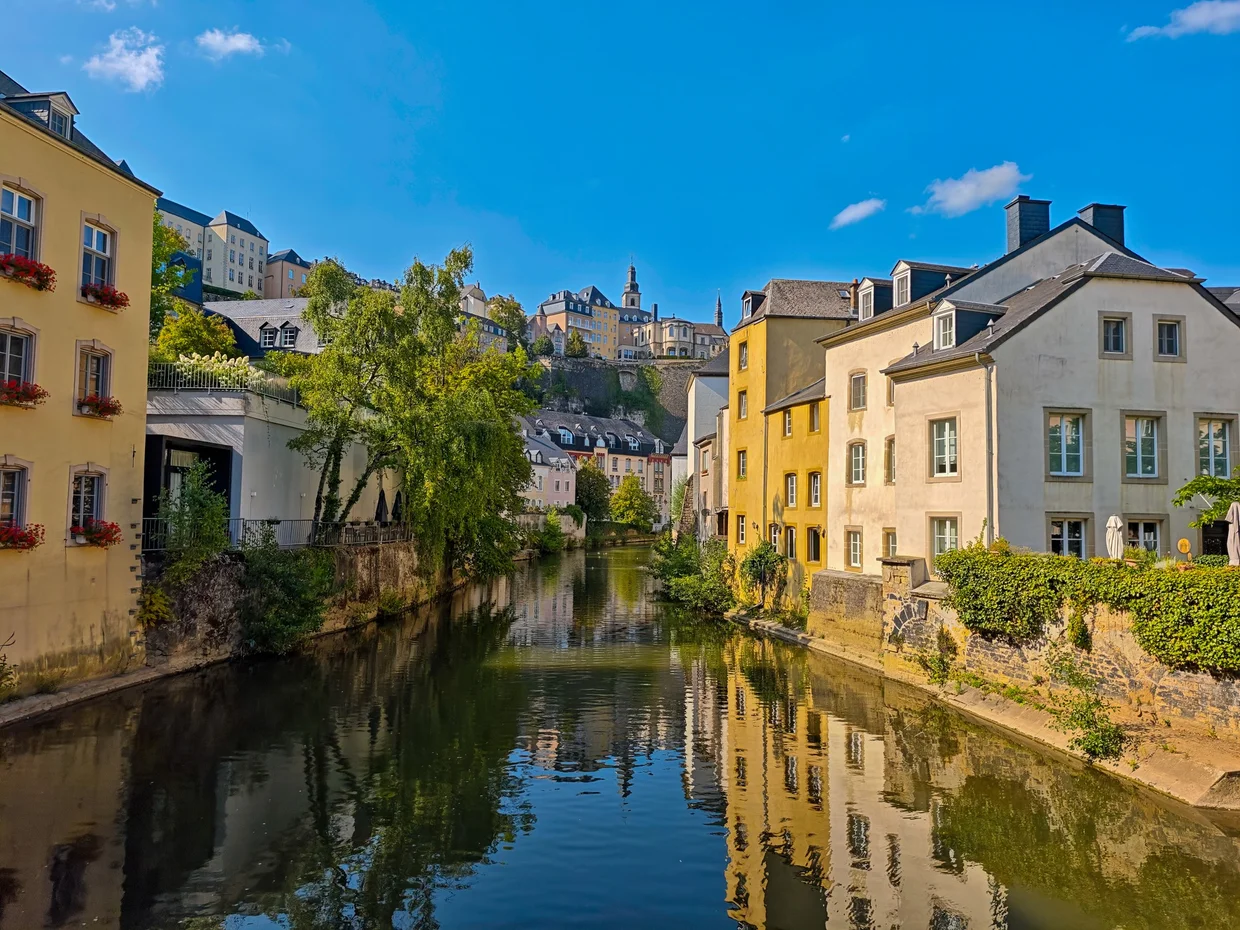
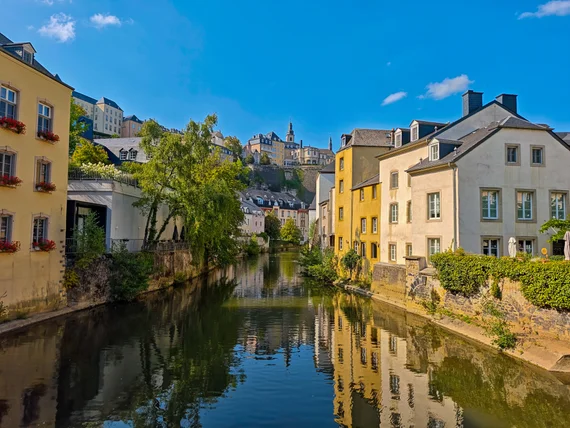
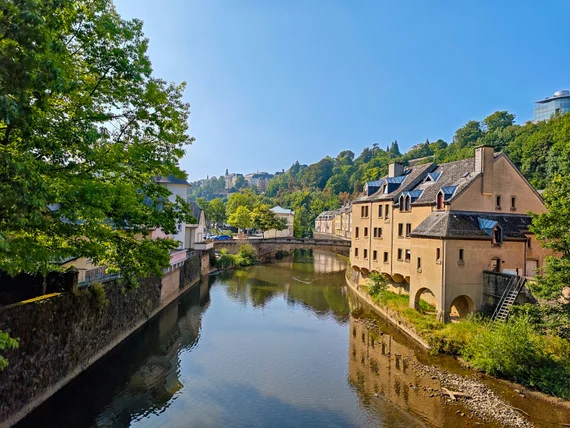
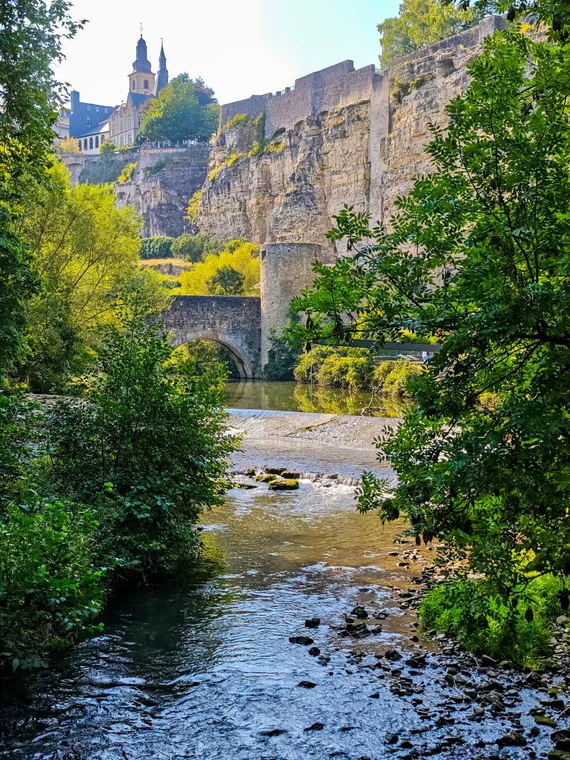
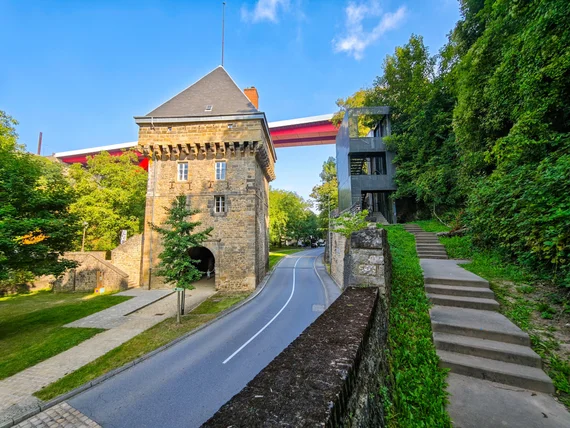
The Grund is the valley neighborhood below the old town, sitting along the Alzette river at the base of the cliffs. It's reachable by a free glass-walled elevator from the upper town or by walking down the winding streets, and the descent itself is part of the experience. The Neumunster Abbey anchors the area, now a cultural center hosting exhibitions and concerts. The streets are narrow, cobbled, and lined with a handful of restaurants and bars that come alive on warm evenings. In the morning, before the tourists descend, it's one of the quietest corners of any European capital. The river runs through the middle, ducks and all, and the views up to the old town from below are as good as the views down from the Corniche.
How to Get There
Take the free glass elevator from the upper town (Plateau du Saint-Esprit) or walk down from the old town via Rue Munster or Rue de Treves. Bus routes also serve the area.
Notes
- Take the free Pfaffenthal elevator down from the upper town for the best arrival
- The restaurants here are pricier than the Gare district but the setting is worth it
- Neumunster Abbey hosts free exhibitions and occasional concerts
- Walk along the river path for the quietest route through
Municipal Park and Kinnekswiss
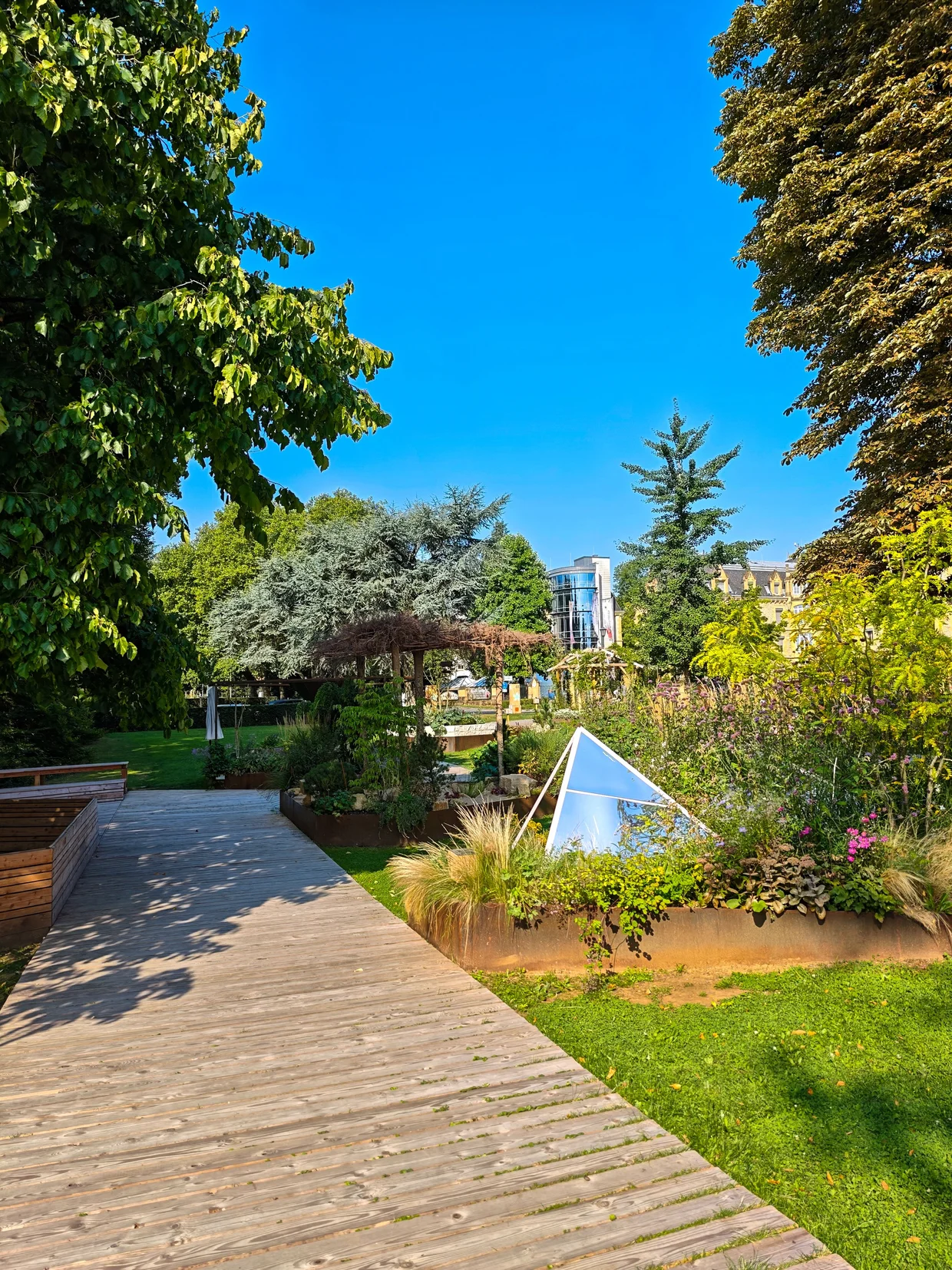
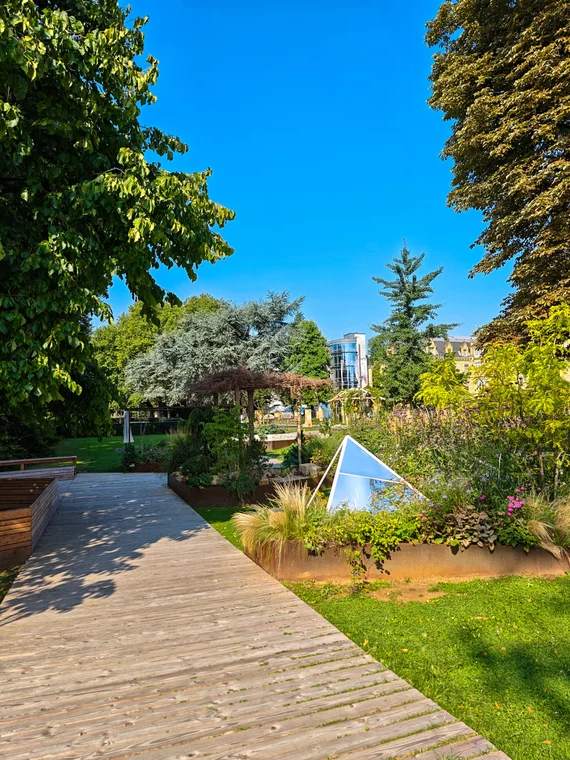
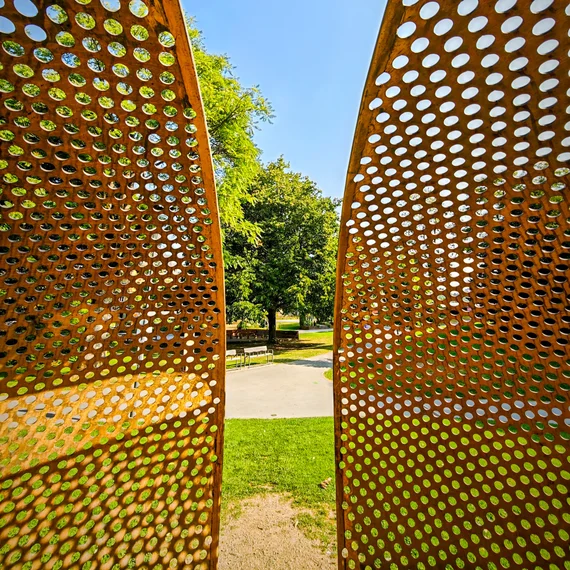
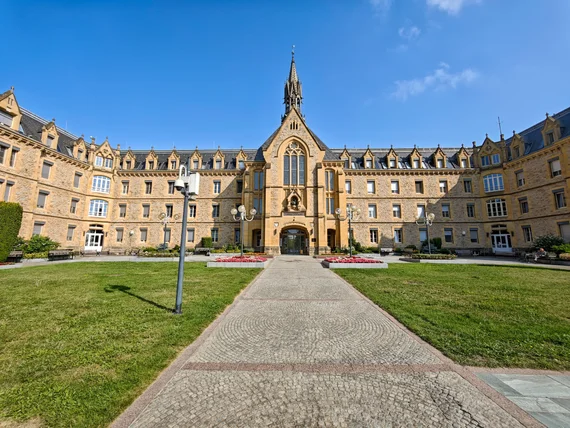
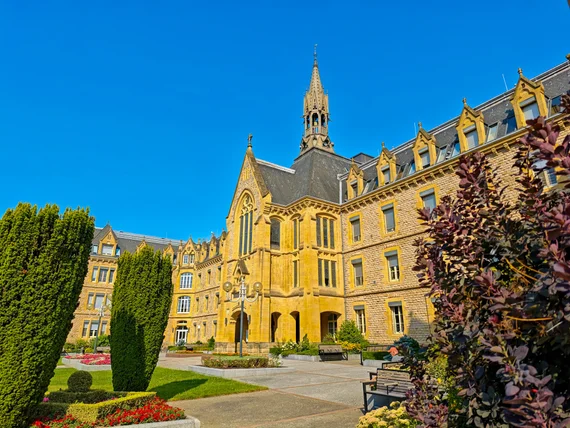
The Municipal Park of Luxembourg City is the green heart of the capital, stretching from the Petrusse valley up through landscaped gardens to the Kinnekswiss, a wide open lawn where locals gather on sunny days. The park was laid out in the 19th century in the English landscape style and has mature trees, winding paths, a bandstand, and several monuments tucked among the greenery. The Kinnekswiss section is the most popular part: a broad, gently sloping meadow surrounded by trees where people picnic, read, or just sit in the sun. Adjoining the Municipal Park to the east, the Parc Fondation Pescatore adds a quieter, more formal section with manicured flowerbeds and a calm atmosphere. Together, the parks form a continuous green corridor that connects the upper town to the valley, and they're the kind of place that makes you understand why people who live here seem so content. On a warm afternoon, the parks are more pleasant than any museum.
How to Get There
A five-minute walk from Place d'Armes or the old town center. The park stretches south from Boulevard Royal toward the Petrusse valley.
Notes
- The Kinnekswiss is the main lawn area and fills up on sunny weekends
- The Parc Fondation Pescatore is quieter and has formal gardens
- A good break between sightseeing in the old town and Kirchberg
- Several playgrounds make it family-friendly
Vianden Castle
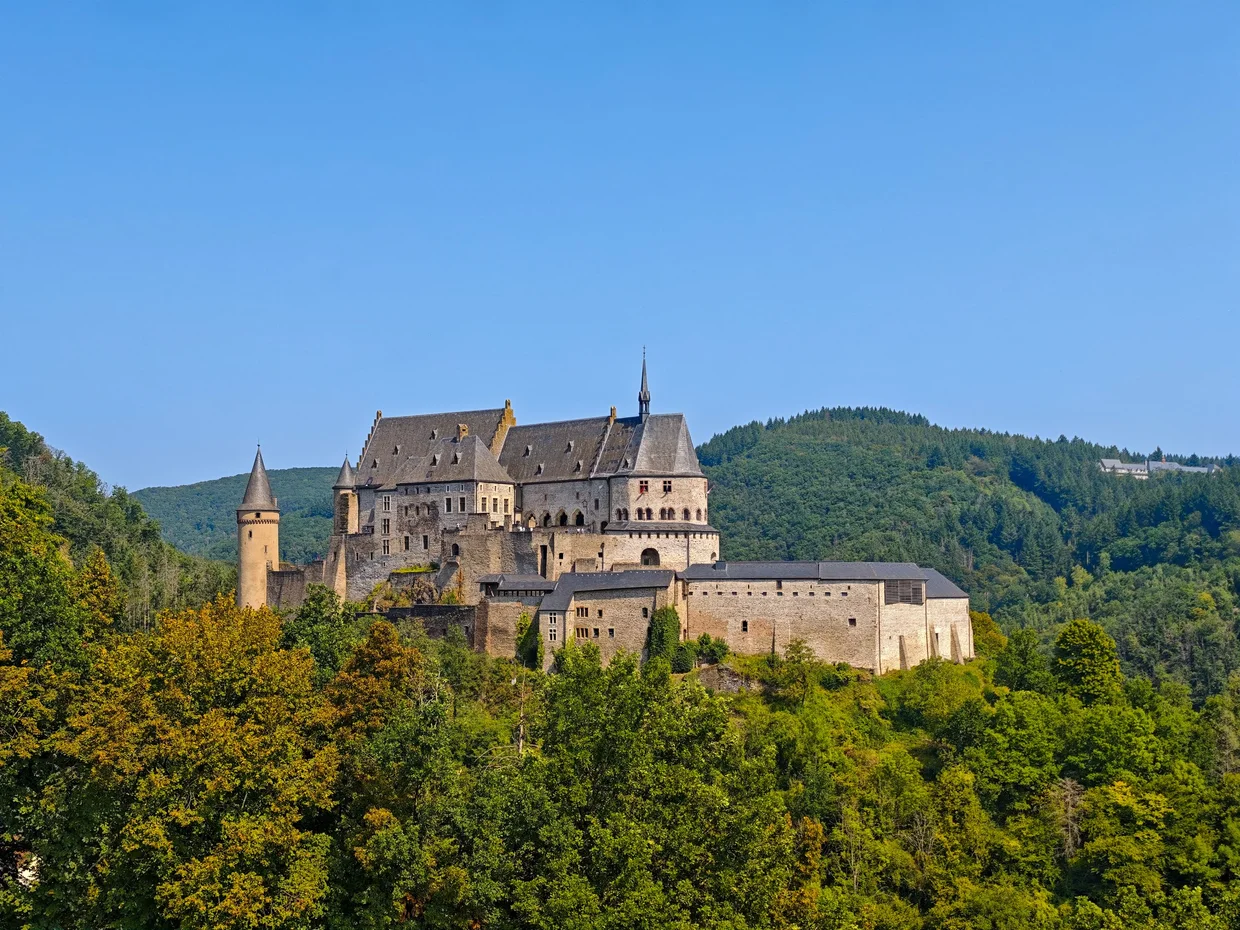
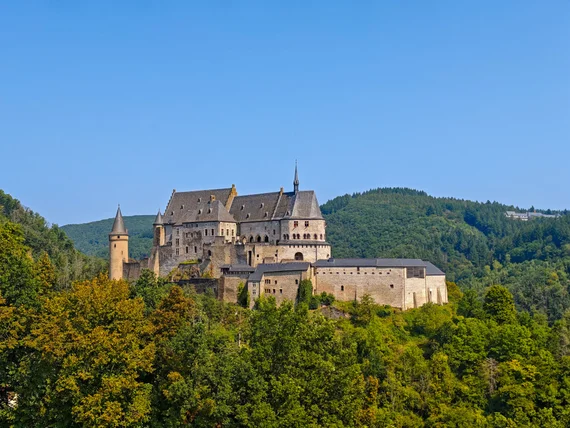
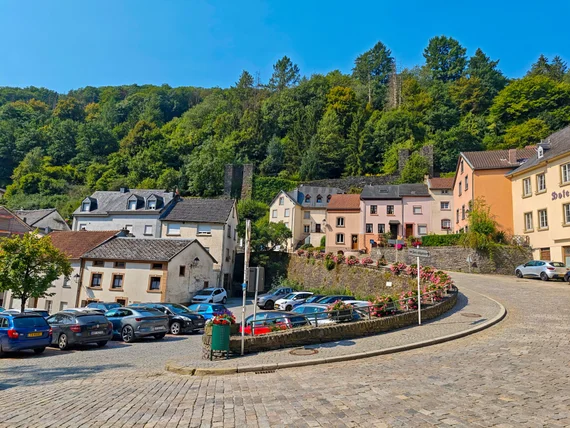
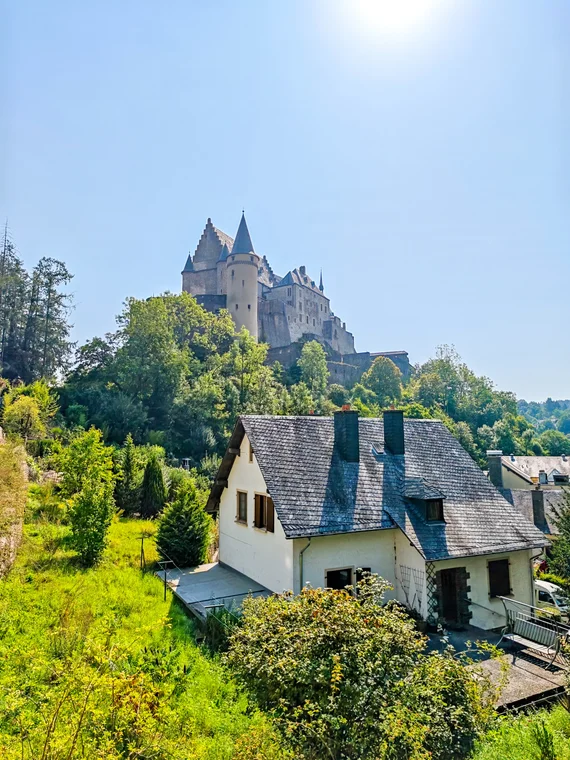
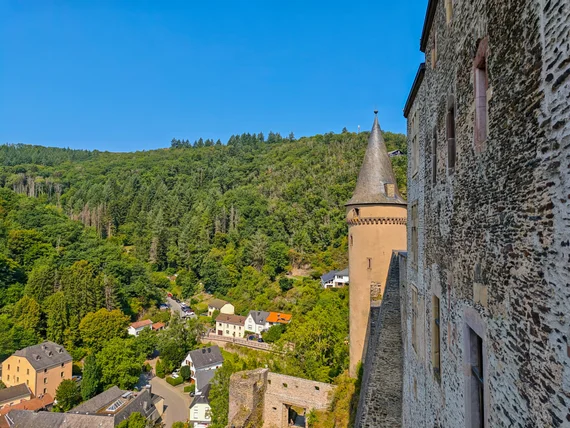
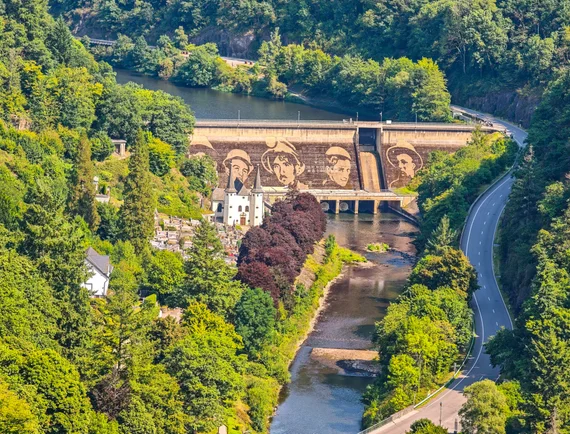
Vianden Castle is the most impressive castle in Luxembourg and one of the finest medieval fortifications in Western Europe. Perched above the Our river valley, it was built between the 11th and 14th centuries, fell into ruin, and was meticulously restored in the 20th century. The interior is furnished with period pieces and the rooms are large enough to convey the scale of the place. The views from the upper levels and the terrace look down over the small town and the forested valley. The town of Vianden itself is charming and compact, with stone houses along the river and a chairlift that takes you across the valley for an aerial perspective of the castle. Victor Hugo lived here in exile and the house where he stayed is now a small museum. The whole excursion is a satisfying half-day trip from the capital.
How to Get There
About 50 minutes north of Luxembourg City by car. Bus 570 runs from the capital to Vianden (about 1.5 hours with a transfer at Ettelbruck or Diekirch). The town is small and the castle is a short uphill walk from the bus stop.
Notes
- The chairlift across the valley gives the best view of the castle and is worth the small fee
- The medieval festival in August brings the castle to life with reenactments
- The Victor Hugo house is a quick stop and free
- Combine with lunch in the town; several good restaurants along the main street
Bourscheid Castle
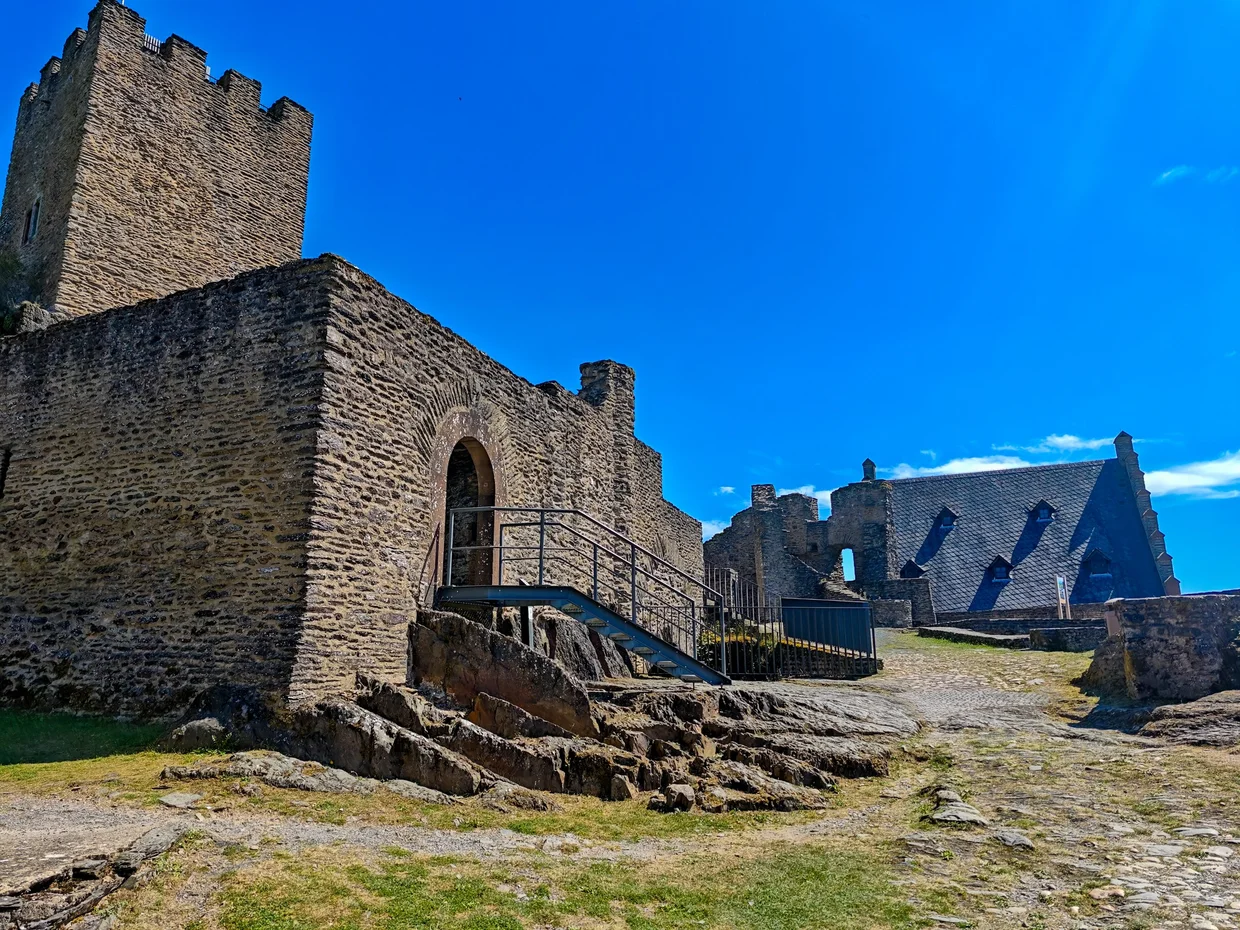
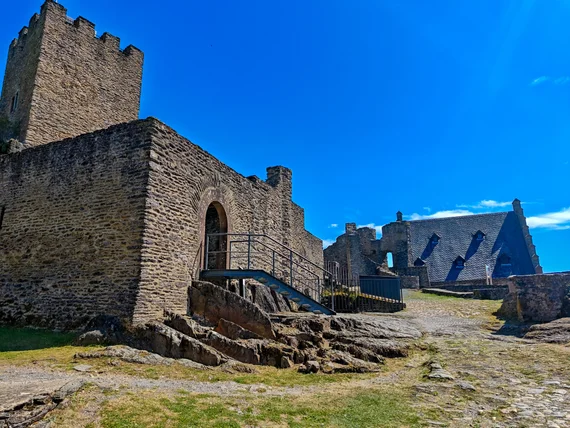
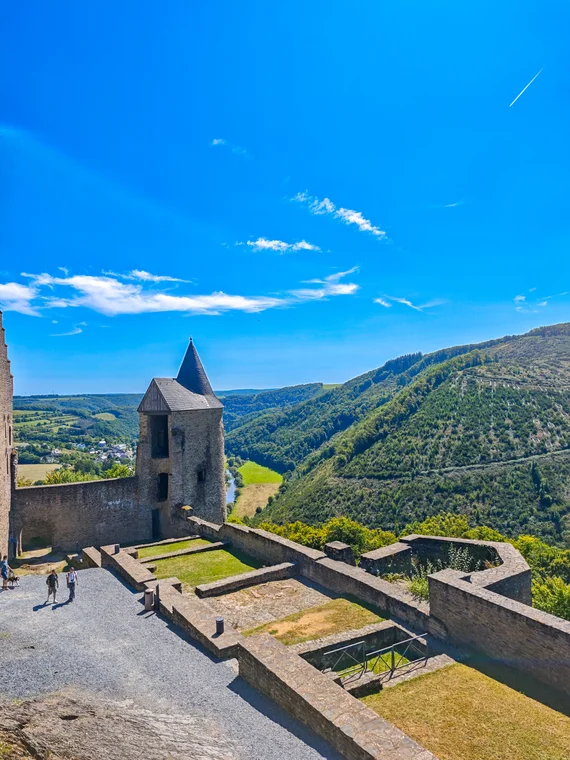
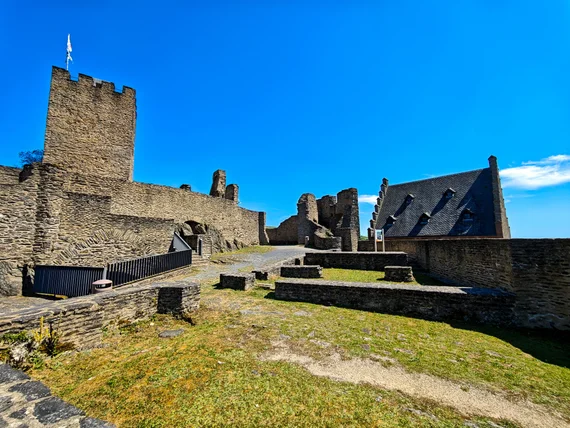
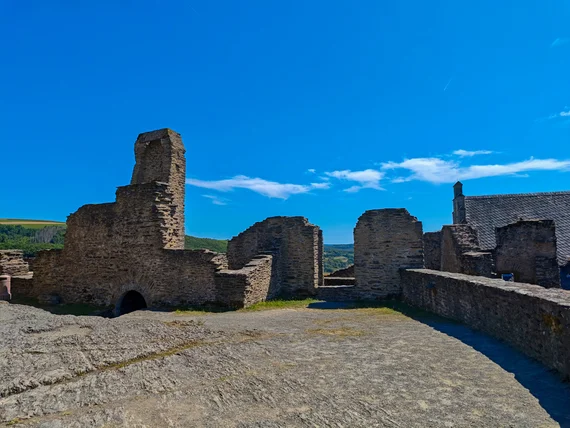
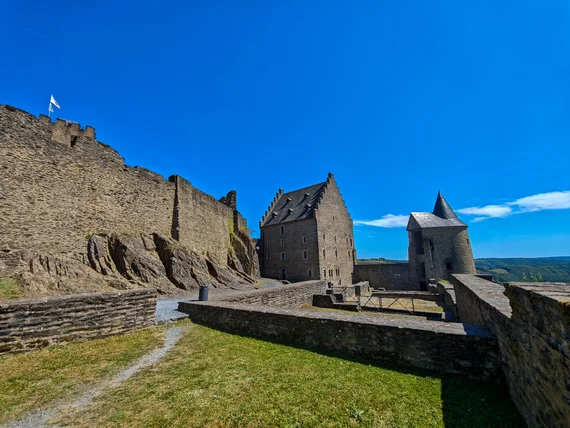
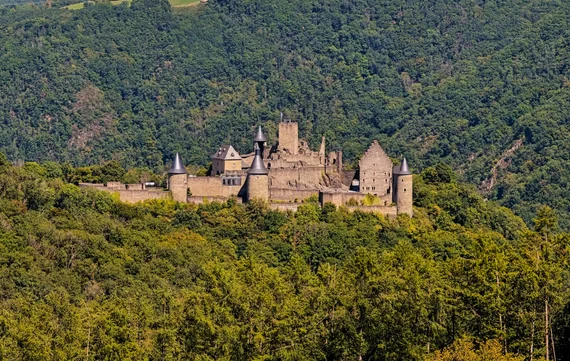
Bourscheid Castle is one of the largest fortified castles in Luxembourg, sprawling across a ridge above the Sure river valley. It's less visited than Vianden but arguably more atmospheric: the ruins are extensive, the setting is wild, and you'll often have the place mostly to yourself. The castle dates from the 10th century and was expanded over several hundred years before falling into disuse. What remains is an impressive circuit of walls, towers, and a Romanesque manor house that gives a sense of scale that Vianden, for all its restoration, doesn't quite match. The views from the upper walls look out over forested hills and the river far below. The village of Bourscheid is barely a handful of houses, which adds to the feeling of stepping outside of time.
How to Get There
About 45 minutes north of Luxembourg City by car. Public transport is limited; a car is strongly recommended. The castle is signposted from the village of Bourscheid.
Notes
- Less crowded than Vianden, often feels like you have the ruins to yourself
- The illuminated castle at night is visible from the valley road and worth a drive-by
- Combine with a stop in the Sure valley for walking or kayaking
- The approach from the village is a short uphill walk through forest
Mullerthal Trail
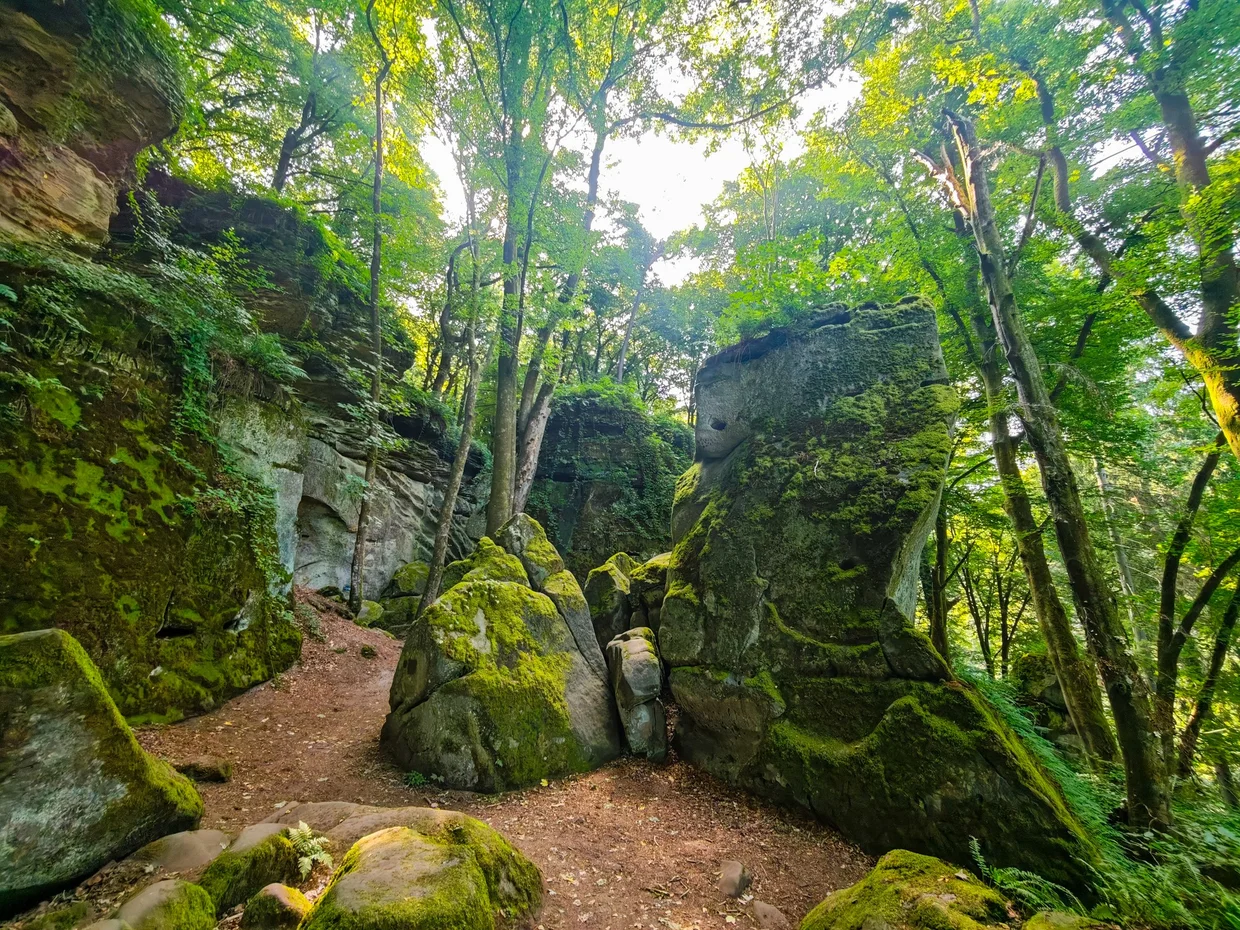
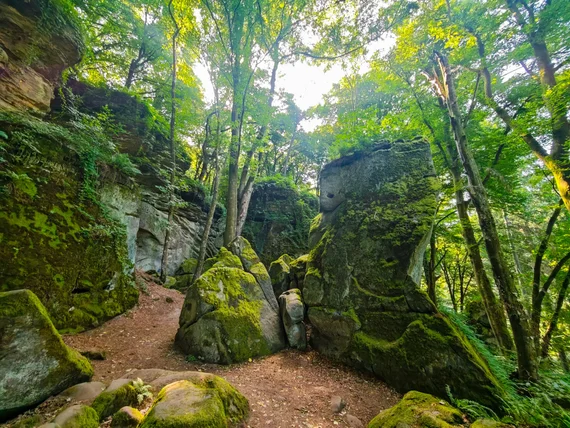
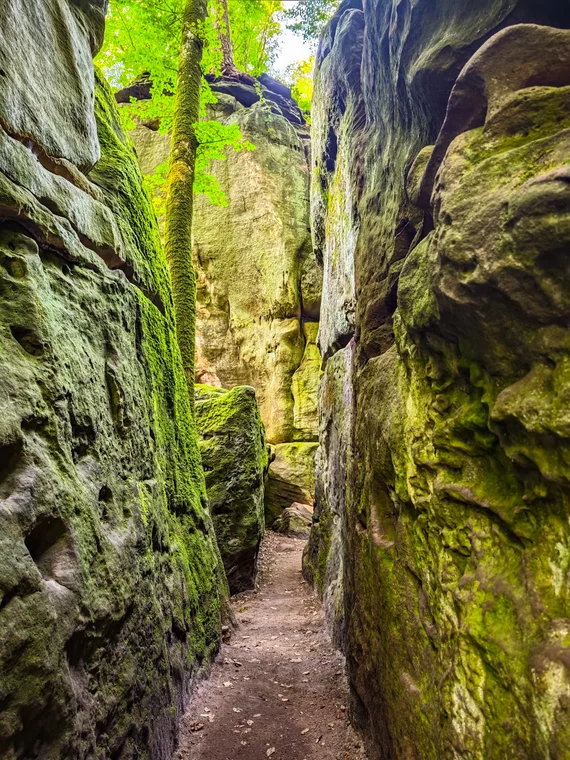
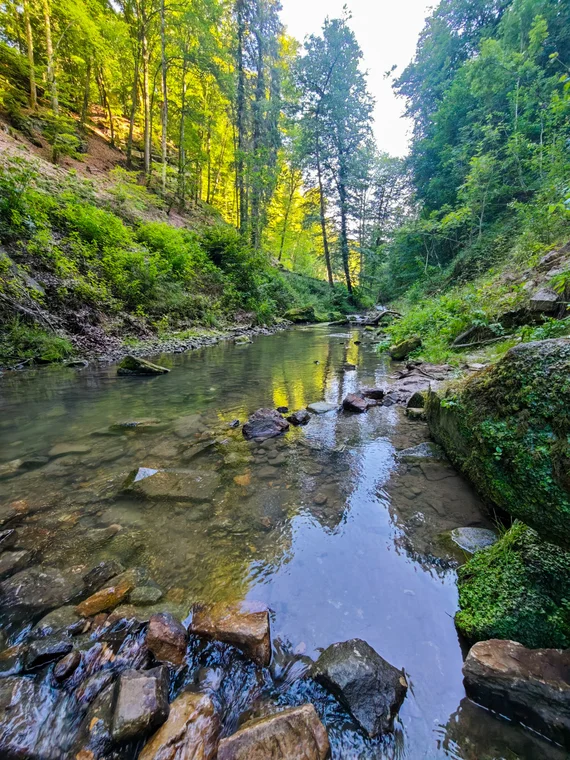
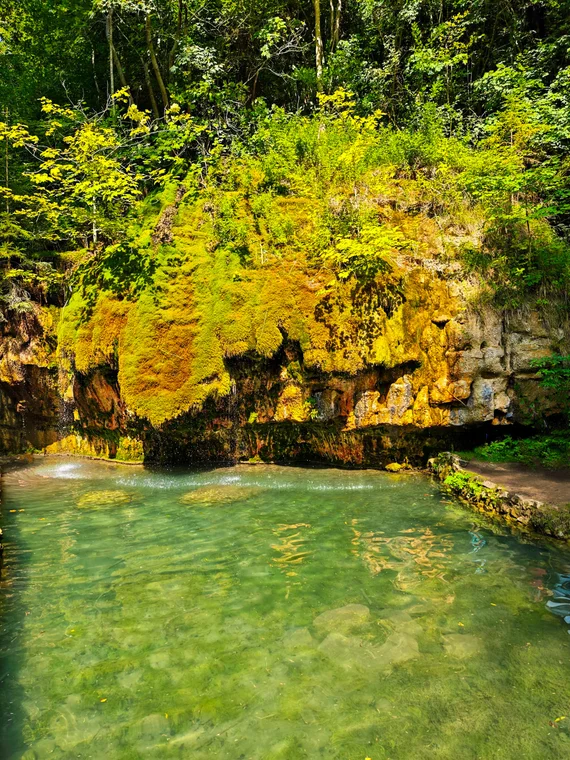
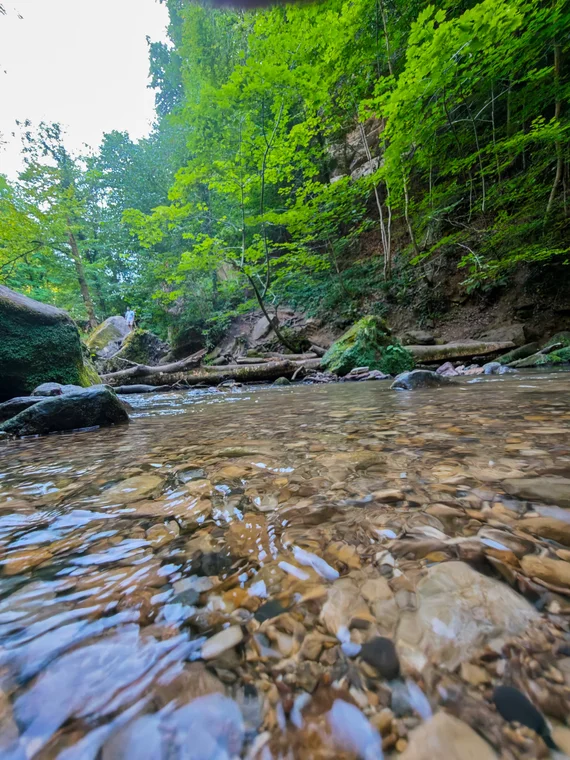
The Mullerthal region, marketed as "Luxembourg's Little Switzerland," has sandstone rock formations, narrow gorges, forested ravines, and a network of trails that feel completely disconnected from the polished capital thirty minutes away. The full Mullerthal Trail is 112 kilometers split into three routes, but shorter loops of two to four hours are well-marked and easy to follow. The landscape is dense forest punctuated by dramatic rock overhangs, moss-covered boulders, and passages so narrow you squeeze between walls of stone. The Schiessentumpel waterfall, a small cascade with a stone bridge above it, is the most photographed spot and the easiest to reach. It's not wilderness by any measure, but it's genuine hiking through genuinely interesting terrain, and the contrast with the capital is striking.
How to Get There
The trailheads are scattered across the Mullerthal region, about 30 to 40 minutes east of Luxembourg City by car. Buses run to Echternach (bus 110, about 45 minutes) and Mullerthal village. A car gives more flexibility for reaching specific trailheads.
Notes
- The Schiessentumpel waterfall is accessible via a short walk from the road near Mullerthal village
- Trail markings are excellent; download the GPX tracks from the official Mullerthal Trail website
- Wear proper shoes; the trails are rocky, rooty, and slippery when wet
- Echternach is a good starting point with parking and bus connections
European Quarter (Kirchberg)
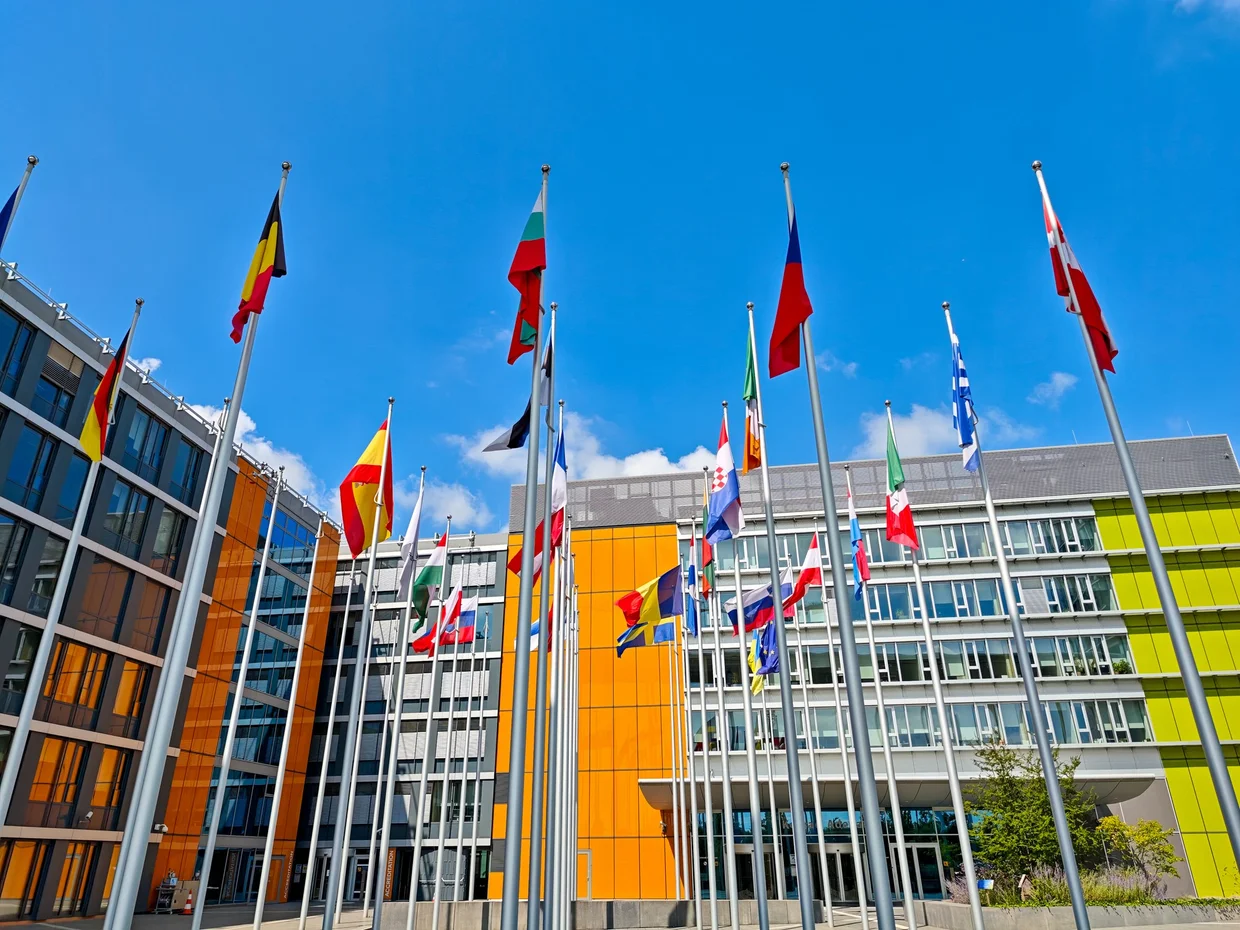
The Kirchberg plateau is home to some of the most important institutions of the European Union, and walking through it gives you a sense of how much of Europe's governance quietly happens in Luxembourg. The European Court of Justice, the European Investment Bank, the European Court of Auditors, and the Secretariat of the European Parliament all have their seats here. The European Parliament building, with its curved glass facade and the flags of all member states, is one of the more striking pieces of architecture on the plateau. The area is spacious, modern, and spotlessly maintained, with wide boulevards, public art, and a sense of civic ambition that contrasts with the medieval old town just across the valley. It's not a tourist attraction in the traditional sense, but for anyone interested in the European project, walking among these buildings is a reminder that the EU is not just an abstraction: it's people going to work every morning in a small country that punches far above its weight.
How to Get There
On the Kirchberg plateau, easily reachable by tram from the city center (stop Cour de Justice or Philharmonie/MUDAM). About a 10-minute ride from Gare Centrale.
Notes
- The European Parliament building is not always open to visitors but the exterior and surroundings are impressive
- Combine with a visit to MUDAM and the Philharmonie, both on the same plateau
- The tram connects Kirchberg to the city center in about 10 minutes
- The Three Acorns park nearby offers green space and views
MUDAM (Museum of Modern Art)
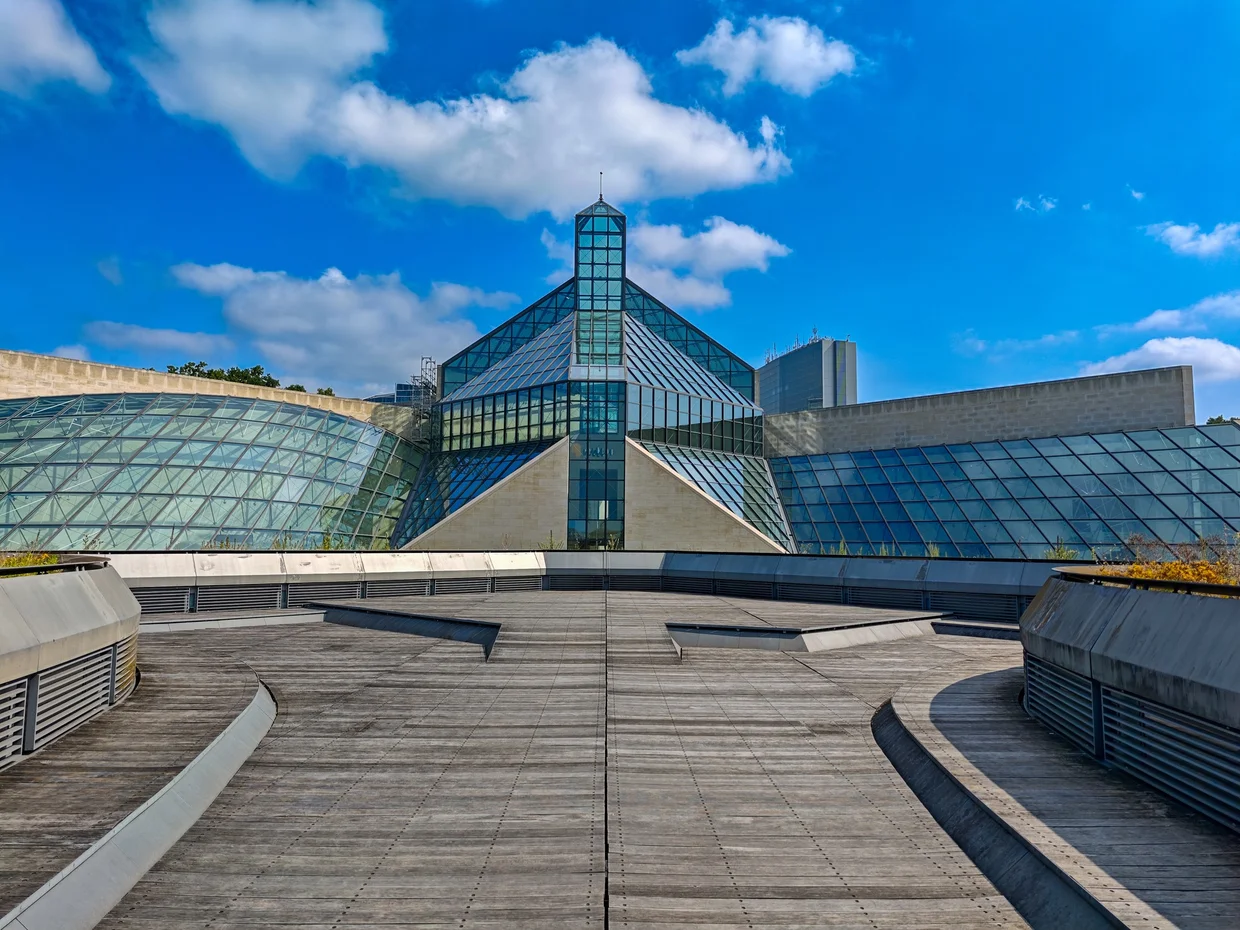
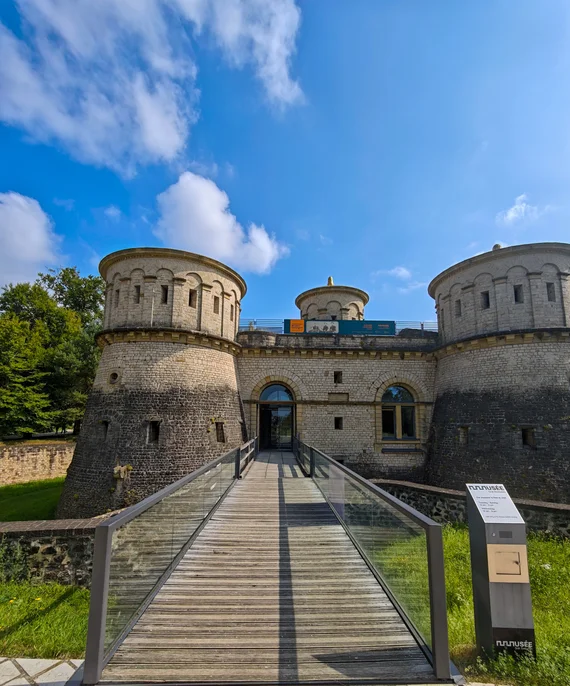
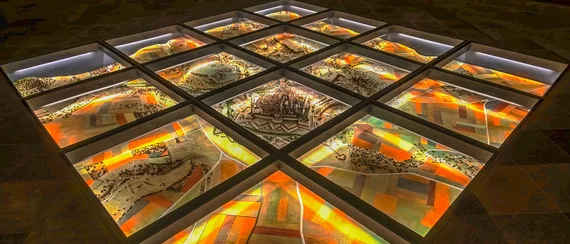
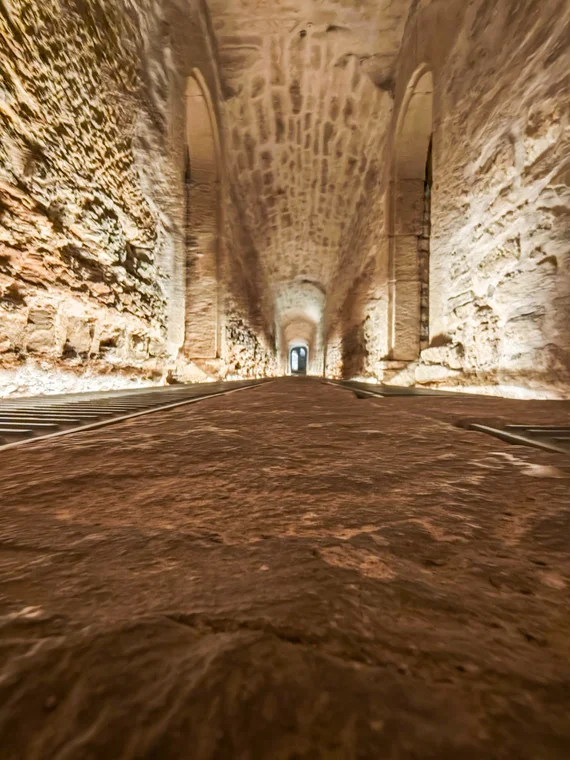
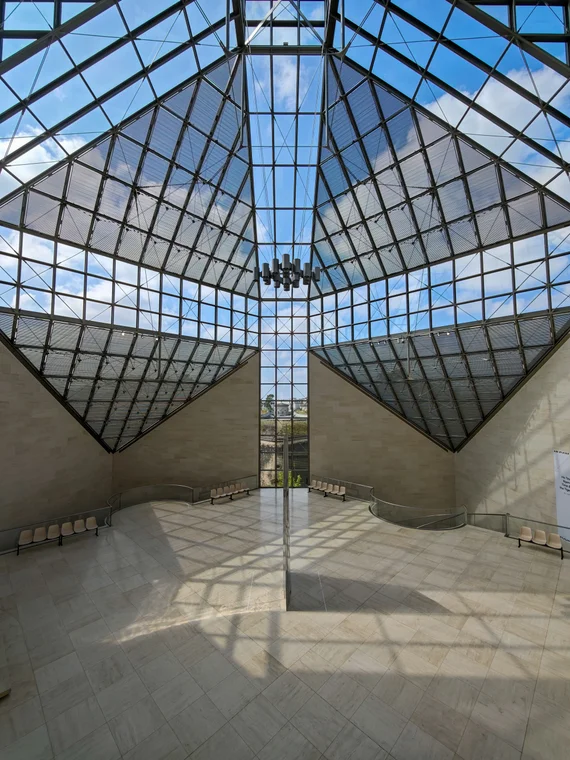
MUDAM sits on the Kirchberg plateau in a building designed by I.M. Pei, and the architecture is half the reason to visit. The glass-and-limestone structure incorporates remnants of the old Fort Thungen into its design, creating a dialogue between the military past and the contemporary present. The collection focuses on contemporary art with rotating exhibitions that range from large-scale installations to photography and new media. The quality is consistently good for a museum this size. The cafe has a terrace with views over the old town, and the surrounding park connects to the Philharmonie and the European institutions. Even if contemporary art is not your priority, the building and the setting justify a visit. Combined with a walk through Kirchberg, it's a good way to see the modern side of Luxembourg that most tourists skip. And when you're already here, you can also check out the nearby Musée Dräi Eechelen in the old fort, which focuses on the history of Luxembourg and has a great view from the top of the fortifications. It's basically just around the corner.
How to Get There
On the Kirchberg plateau, reachable by tram from the city center (stop Philharmonie/MUDAM) in about 10 minutes. Free parking available nearby on weekends.
Notes
- Free entry on Wednesday evenings from 18:00
- The building itself, designed by I.M. Pei, is worth seeing even from outside
- The cafe terrace has one of the better views on the Kirchberg
- Combine with a walk through the Kirchberg plateau and the Philharmonie
Moselle Wine Valley
The Moselle valley runs along Luxembourg's eastern border with Germany, and the slopes above the river produce whites and sparkling wines that are better than their international reputation. Riesling, Pinot Gris, Auxerrois, and the Cremant de Luxembourg sparkling wine are the main outputs. The villages along the river, Remich, Ehnen, Grevenmacher, Wormeldange, are small, pretty, and have tasting rooms and cooperatives that are rarely crowded. Ehnen has a wine museum in a traditional winegrower's house. Remich is the most lively of the towns, with a riverside promenade and boat cruises. The landscape is gentle: terraced vineyards above the river, the German bank visible across the water, and a pace that makes the rest of Luxembourg feel hectic by comparison. A half day is enough for a tasting and a meal; a full day lets you explore multiple villages.
How to Get There
Remich is about 30 minutes southeast of Luxembourg City by car. Bus 175 runs from the capital to Remich. Having a car is more practical for visiting multiple villages along the river.
Notes
- Wine tastings at the cooperatives are informal and affordable
- Cremant de Luxembourg is the best-value sparkling wine you'll find in this part of Europe
- The Ehnen wine museum gives good context on the region's winemaking history
- A boat cruise on the Moselle from Remich is touristy but pleasant
Schengen
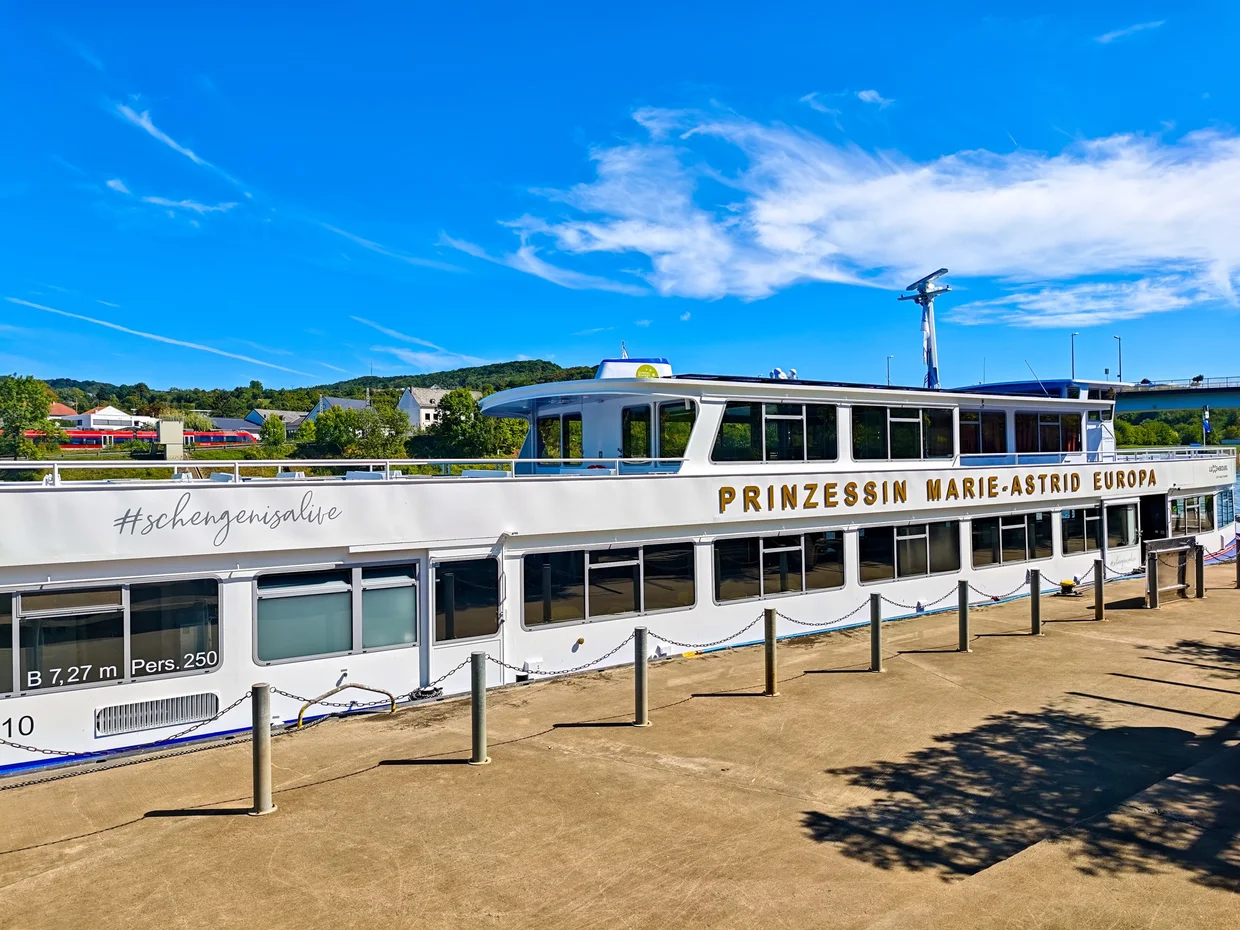
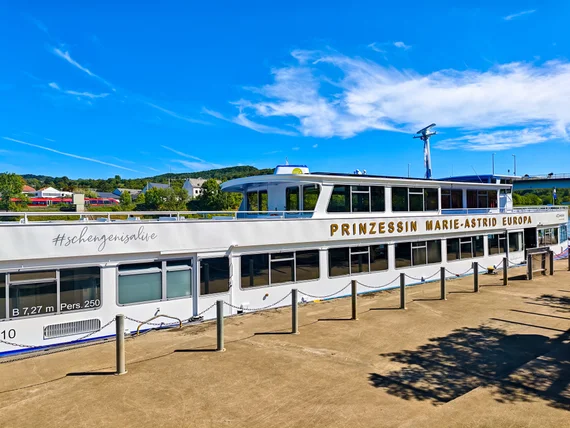
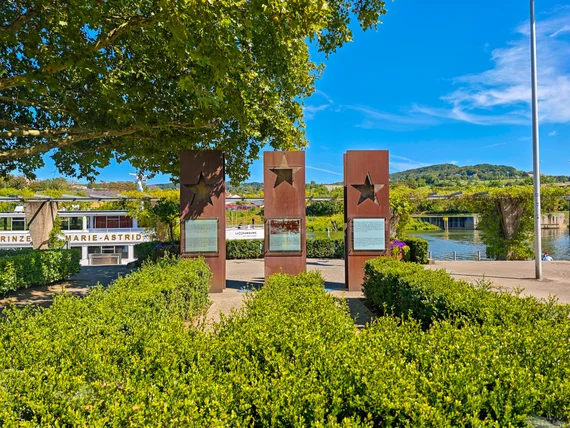
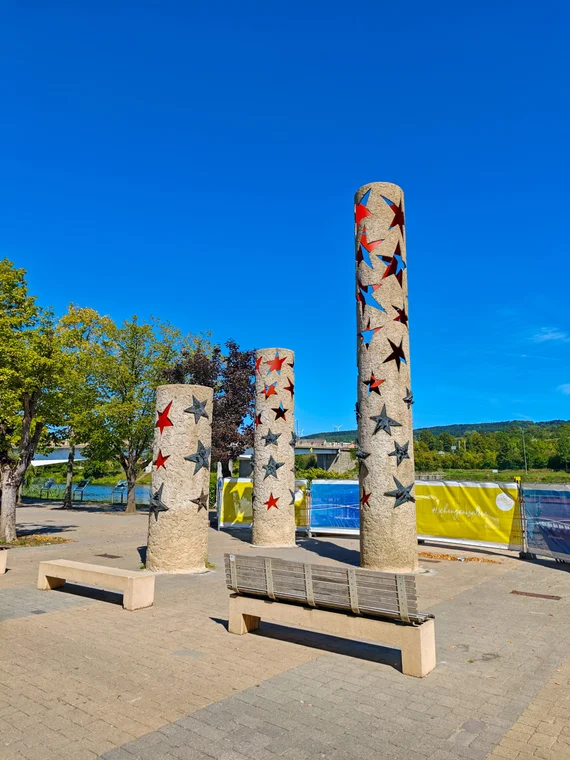
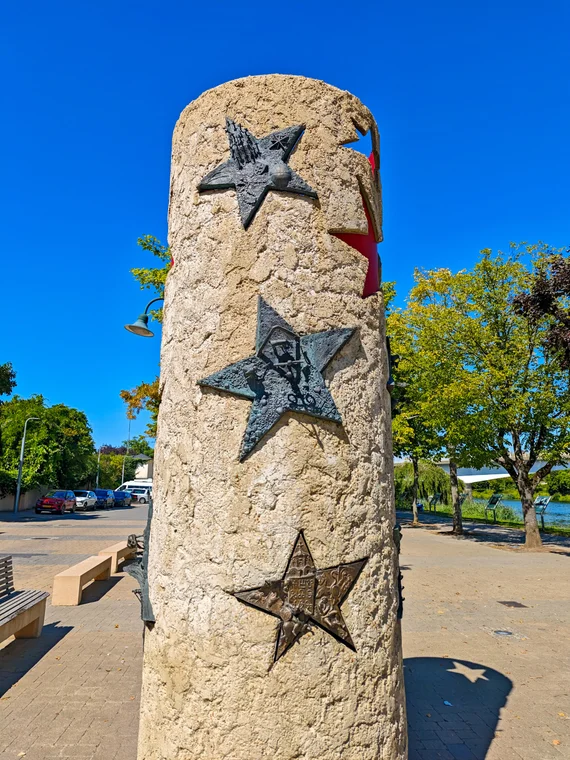
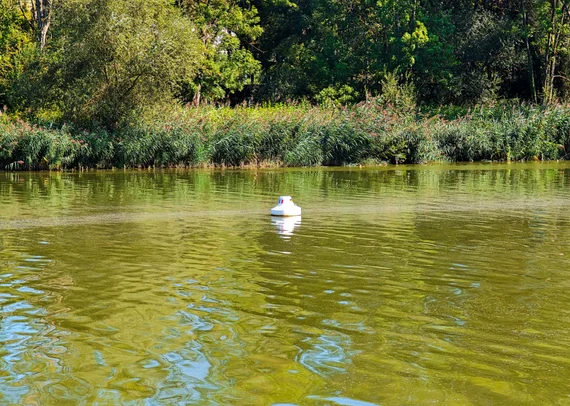
Schengen is a small village on the Moselle river where Luxembourg, Germany, and France meet at a single point. In 1985, five European countries signed the Schengen Agreement here, which eventually abolished border controls across most of Europe. The European Museum in Schengen documents this history with exhibits on the evolution of borders, passports, and the idea that people should be able to move freely. Outside, the Monument to the Schengen Agreement stands by the riverbank: three steel pillars representing the three countries that meet here, with stars from the European flag. The MS Princesse Marie-Astrid, the boat on which the agreement was actually signed, is moored nearby. The village itself is tiny and quiet, a cluster of houses and vineyards on the Moselle slopes, but the symbolic weight of what happened here is enormous. For anyone who has ever crossed a European border without stopping, this is where that freedom was born.
How to Get There
About 30 minutes southeast of Luxembourg City by car, on the Moselle river near the German and French borders. Bus 175 runs from the capital to Remich, from where Schengen is a short drive further south. A car is more practical.
Notes
- The European Museum is free and well-presented
- The tripoint where Luxembourg, Germany, and France meet is a short walk along the river
- Combine with a visit to the Moselle wine villages nearby
- The MS Princesse Marie-Astrid, where the agreement was signed, is moored at the riverbank
Echternach
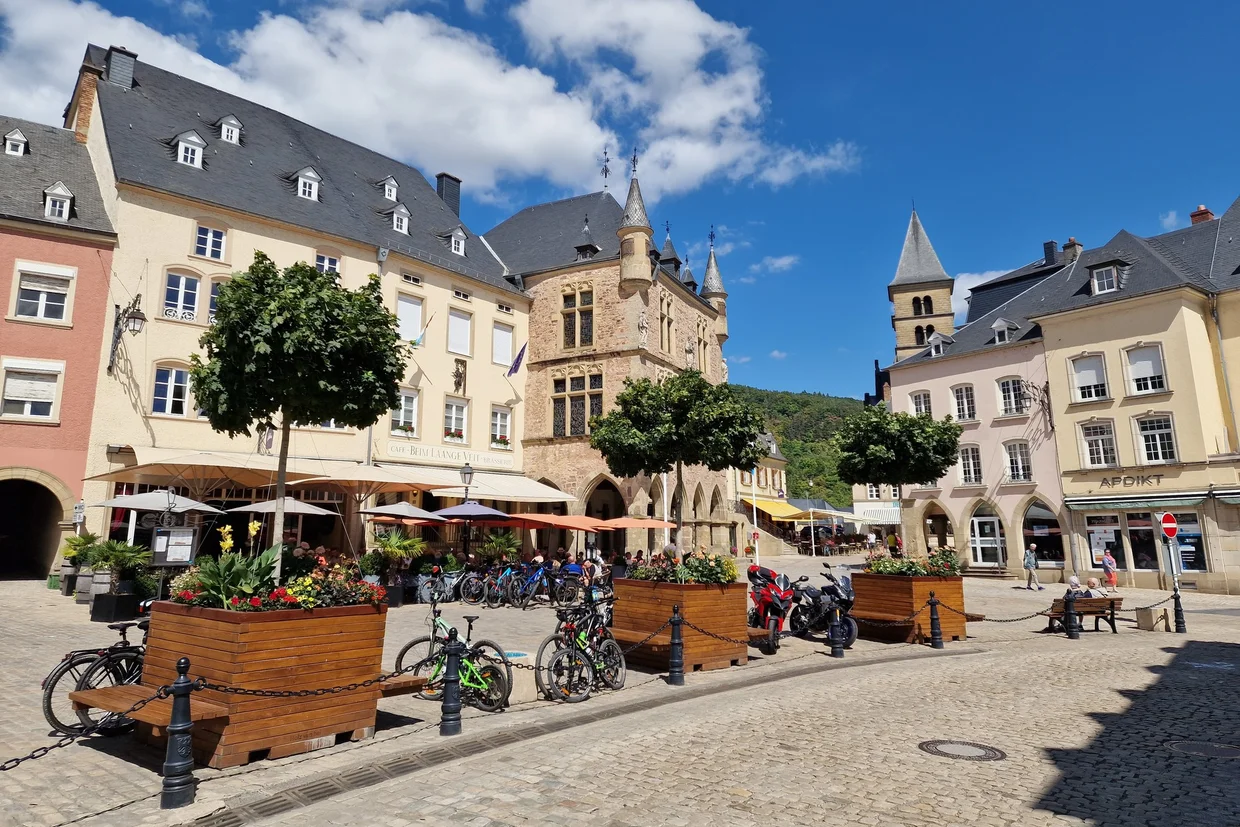
Echternach is the oldest town in Luxembourg, founded around the Benedictine abbey established by Saint Willibrord in 698. The abbey still stands, rebuilt after wartime destruction, and the basilica with Willibrord's crypt is the main draw. The medieval market square is small and well-preserved, ringed by cafes and the old town hall. The town is best known for its dancing procession on Whit Tuesday, a UNESCO-listed tradition where participants hop through the streets in a polka-like pattern to the sound of a repeated melody. Outside of that event, Echternach is a pleasant, quiet town that works well as a gateway to the Mullerthal trails. The lake on the edge of town has a small beach and paddleboats in summer.
How to Get There
About 35 minutes east of Luxembourg City by car. Bus 110 runs from the capital (about 45 minutes). Well-connected to Mullerthal Trail starting points.
Notes
- The dancing procession (Whit Tuesday) is a unique UNESCO event worth timing a visit around (https://ich.unesco.org/en/RL/hopping-procession-of-echternach-00392)
- Good starting point for Mullerthal Trail hikes
- The lake area is pleasant for families in summer
- The basilica and crypt are free to visit
Esch-sur-Sure
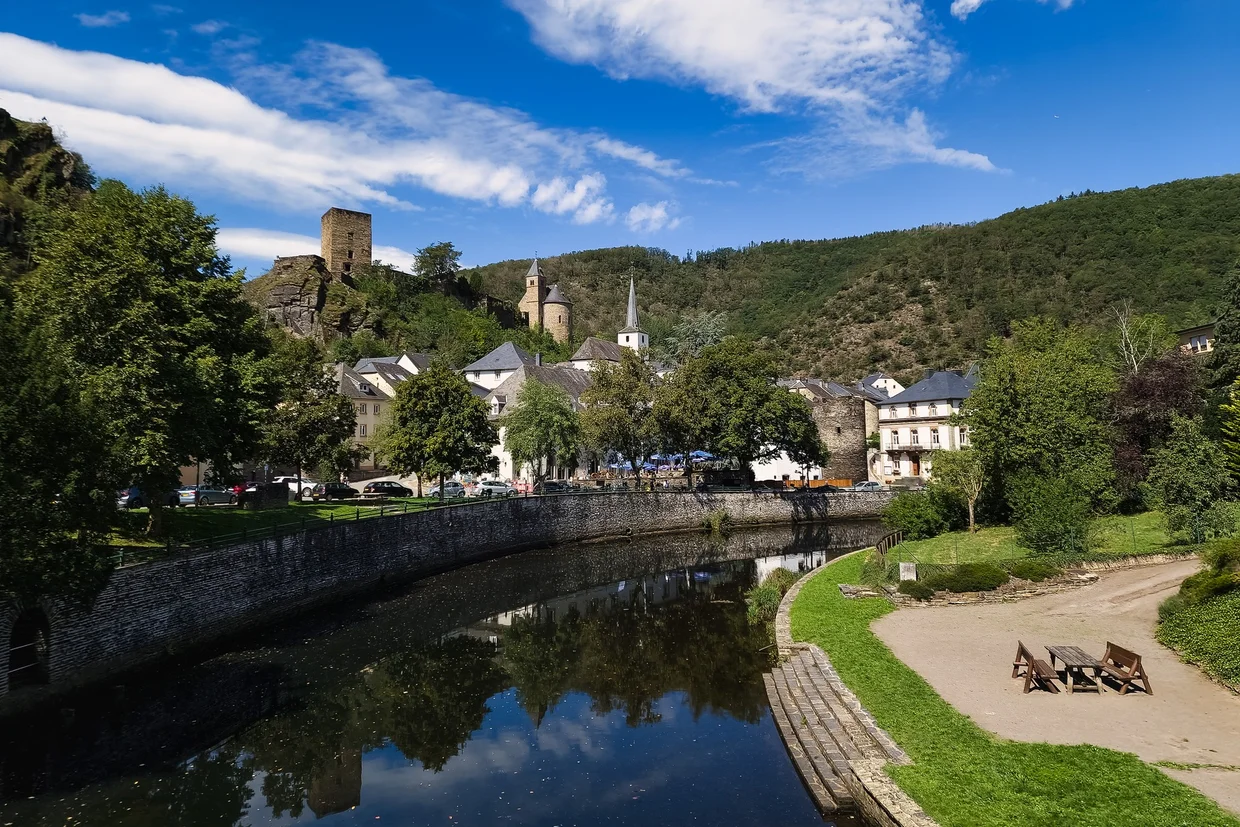
Esch-sur-Sure is one of the most photogenic villages in Luxembourg. It sits inside a tight loop of the Sure river, with a ruined castle on the hill above and the water curving almost completely around the settlement. The village itself is tiny, barely more than a few streets, a church, and a handful of houses, but the setting is dramatic from above. The Upper Sure Lake nearby is a reservoir surrounded by forest and popular for swimming, kayaking, and walking in summer. The nature park around the lake has well-marked trails and a tranquility that the capital cannot offer. It's the kind of place you visit for the landscape rather than for specific sights, and it rewards a slow afternoon more than a rushed stop.
How to Get There
About 50 minutes northwest of Luxembourg City by car. Public transport is limited; a car is strongly recommended for this part of the country.
Notes
- The viewpoint above the village gives the classic shot of the river loop
- The Upper Sure Lake has swimming areas and kayak rental in summer
- Very quiet outside of summer weekends
- Combine with a drive through the northern Ardennes landscape
Published March 2026.