A Whole Country in a Nutshell
Malta is 316 square kilometers. That's smaller than some European cities. You can drive from one end to the other before your playlist hits the third song. And yet this tiny limestone rock in the middle of the Mediterranean somehow contains more history per square meter than places fifty times its size. We're talking the oldest freestanding structures on the planet (yeah, older than the pyramids, older than Stonehenge, older than basically everything), a capital city built entirely by crusader knights, a cathedral interior so covered in gold it looks like someone went absolutely feral with a credit card at a gilding supply store, and a street food snack that costs 50 cents and will ruin every other pastry for you forever.

Malta is an archipelago of three inhabited islands: Malta (the big one, relatively speaking), Gozo (the chill one), and Comino (the tiny one with that one lagoon you've seen on every travel Instagram account). It sits between Sicily and North Africa, which explains a lot about the culture: the language is Semitic (the only one in the EU, and it sounds like Arabic got together with Italian and they had a baby that learned to write in Latin script), the food borrows from both continents, the architecture is a mix of Baroque grandeur and Mediterranean practicality, and the driving style is... let's just say "Mediterranean" and leave it at that.
The British ruled here for 164 years, so everyone speaks English, the electrical plugs are the big three-pin British ones, and you drive on the left. Yes, on the left. On narrow limestone streets. With buses coming the other way. It keeps you alert.


I came to Malta expecting a long weekend's worth of content. A cathedral, a harbour, maybe some temples, done. Instead I spent a week and still felt like I was rushing. The density of things to see, eat, photograph, and just stare at is absurd for a place this small. Every corner of Valletta delivers. Every ferry ride to Gozo feels like entering a different country. Every temple makes you question how a civilization 5,000 years ago built things that solid without, you know, wheels.
Malta is not a beach destination. I mean, it has beaches, and some of them are genuinely beautiful. But if you come here just to lie on sand, you're missing the entire point. This is a place where history, food, architecture, and that particular golden Mediterranean light all collide on a rock so small you can see the whole thing from a plane window. It punches so far above its weight it's not even funny.
Valletta
Valletta is the smallest capital city in the EU and one of the most concentrated historic cities I've ever walked through. It was built from scratch by the Knights of St John after the Great Siege of 1565, when the Ottoman Empire threw everything it had at Malta and lost. The Knights basically said "cool, let's build the most fortified city in the Mediterranean so that never happens again" and then did exactly that. Grid-planned streets, massive bastions on every side, and limestone buildings so uniform in color that the entire city glows golden in the afternoon sun.

You can walk from one end of Valletta to the other in about 15 minutes, but you won't, because you're gonna stop every 30 seconds. The streets run in a straight grid, which sounds boring until you realize they're built on a peninsula with steep drops on both sides, so every cross-street gives you a framed view of the harbour or the sea. The gallariji (those enclosed wooden balconies you'll see on every photo of Malta) are everywhere, painted in greens, reds, blues, and yellows, hanging off the honey-colored limestone facades like colorful wooden cages. They're not decorative. They were built so women could observe the street without being seen. Practical and pretty. I like that.


The streets are steep. Not Chongqing steep, but steep enough that walking downhill toward the harbour is a joy and walking back up in July is cardio you did not sign up for. Wear proper shoes. Valletta's limestone pavement gets slippery when wet and scorching when sunny. There is no in-between.
Republic Street is the main artery, a pedestrian boulevard running the length of the city with shops, cafés, and the occasional street performer. It's lively without being chaotic. In the evenings, when the cruise ship crowds have retreated to their floating hotels, Valletta gets quieter and the golden light hits the limestone and everything looks like a painting that's trying too hard but somehow pulls it off.
Gold. Everywhere. Gold.
St John's Co-Cathedral is, from the outside, a plain limestone box. Nothing about the exterior prepares you for what's inside. Nothing. You walk through the door and your brain needs a second to recalibrate because every single surface, and I mean every surface, is covered in carved stone, gilded decoration, painted ceilings, marble tombstones, and more gold than you thought could physically fit in one building.

The Knights of St John built this cathedral in the 1570s as their conventual church, and then each of the order's eight langues (national chapters) competed to outdo each other in decorating their assigned side chapel. The result is a Baroque arms race in gold leaf. Every chapel tries to be more ornate than the one next to it. Every surface screams "we had the bigger budget." The ceiling was painted by Mattia Preti and depicts scenes from the life of St John. The floor is made of around 375 inlaid marble tombstones of knights, each one a work of art in itself. You're literally walking on dead knights.


And then there's the Caravaggio. The Beheading of St John the Baptist hangs in the oratory, and it's the largest painting Caravaggio ever made. It's also the only one he ever signed, and he signed it in the blood flowing from the saint's neck, because of course he did. Caravaggio was living in Malta as a Knight of the Order when he painted it. Shortly after, he got into a fight (again), was imprisoned, escaped, fled the island, and never came back. Classic Caravaggio.
If you see one thing in Malta, one single thing, make it this cathedral. I don't care if you're not into churches. I don't care if you think you've seen enough Baroque to last a lifetime. You haven't seen this. It costs around 15 euros to enter. It's worth fifty.


Grand Harbour
Grand Harbour is one of the finest natural harbours in the Mediterranean, and the Knights of St John fortified every centimeter of it. Standing at the Upper Barrakka Gardens in Valletta and looking across the water to the Three Cities (Birgu, Senglea, Cospicua) is one of those views that makes you go quiet for a second. Massive limestone bastions dropping into deep blue water, church domes rising above the rooftops, superyachts parked next to fishing boats, and the occasional cruise ship dwarfing everything around it.

The Upper Barrakka Gardens are the obvious viewpoint, and they're free. The terrace sits on top of the bastions, shaded by stone arches, with what might be the best urban viewpoint I've seen in the Mediterranean. Come at noon if you wanna see the Saluting Battery fire. Every day at 12:00 (and again at 16:00), a cannon is fired from the battery below the gardens. It's loud, it's theatrical, it's free, and every tourist on the terrace flinches. Including me. Both times.


The Three Cities across the harbour are worth the ferry ride (or walk, there's a bridge). Birgu (Vittoriosa) is the oldest of the three and was the Knights' first base before they built Valletta. Fort St Angelo at the tip of the peninsula is where the Great Siege was directed from. The streets here are narrower, quieter, and less touristy than Valletta. It feels like the real Malta that Valletta sometimes glosses over with its postcard perfection.
Gozo
Take the ferry. It's 25 minutes from Cirkewwa to Mgarr, and the crossing alone is worth doing just for the views of the islands from the water. Gozo is Malta's smaller, greener, quieter sibling. Same limestone, same history, same language, but a completely different pace. Fewer cars, more farmland, less construction, more breathing room. If Malta is the caffeinated espresso, Gozo is the second cup you drink slowly on a terrace.


The salt pans at Marsalforn are one of those things that look almost too geometric to be natural, because they're not entirely natural. They've been carved into the coastal limestone for centuries, and seawater is channeled into shallow rectangular pools where it evaporates and leaves salt behind. The patterns are hypnotic. Rows and rows of honeycombed rock basins, some filled with brine, some dried white, stretching along the coast with waves crashing just meters away. You can buy bags of Gozitan sea salt from local producers. It's good salt.


Ramla Bay is Gozo's best beach, a wide sweep of red-golden sand backed by green hills, with Calypso's Cave perched above it. Legend says this is where the nymph Calypso held Odysseus captive for seven years in Homer's Odyssey. Whether or not you buy the mythology, the view from the cave looking down over the bay is stunning.


The Citadel in Victoria (Gozo's capital, also called Rabat by locals, because why have one name when you can have two) sits on a fortified hilltop with 360-degree views of the island. Inside the walls it's museums, churches, and narrow lanes. Outside the walls it's panoramic Gozo in every direction: terraced fields, church domes popping up in every village, and the sea always visible somewhere on the horizon.

Older Than Everything
Here's something that messes with your sense of history: Malta has the oldest freestanding structures on Earth. The megalithic temples at Hagar Qim, Mnajdra, and Ggantija (on Gozo) were built between 3600 and 2500 BC. That's older than the Great Pyramid of Giza. Older than Stonehenge. Older than anything in Mesopotamia that's still standing. Let that sink in for a second. People on this tiny island were building monumental stone temples while most of Europe was still figuring out pottery.

Hagar Qim and Mnajdra sit on a dramatic coastal cliff on Malta's south coast, overlooking the sea toward the uninhabited islet of Filfla. They're protected by large tensile canopies (which look a bit weird but are necessary because the limestone was deteriorating fast from exposure). The temples themselves are massive. Huge limestone slabs fitted together with precision that still impresses engineers today. Doorways, apses, chambers, altar stones. All built without metal tools, without wheels, without mortar.
The doorways create this telescoping effect where you look through one trilithon into the next and the next, and the geometry is so deliberate it feels designed by someone who understood space in a way we take for granted now but was remarkable 5,000 years ago.


The temples are UNESCO World Heritage Sites. They're not crowded (most visitors seem to skip them for the beaches, which is their loss). The visitor center has good context. Budget about 90 minutes for Hagar Qim and Mnajdra together. If you're on Gozo, Ggantija is the oldest of them all and worth a visit too.
These temples predate written history by millennia. We don't know who built them. We don't know why they stopped. The civilization that created them seemingly vanished. The temples remained. That's the kind of thing that sits with you for a while.
Blue Water, Golden Cliffs
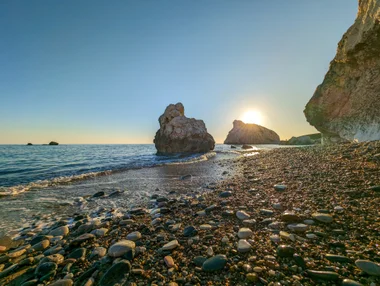
Malta is not a beach island in the way that, say, the Greek islands are. The coastline is mostly rocky limestone cliffs dropping into deep blue water. Sandy beaches exist but they're limited, and in summer the good ones fill up fast. That said, the water is absurdly clear, the coastal scenery is dramatic, and the few proper beaches are genuinely excellent.

The Blue Grotto on Malta's south coast is a series of sea caves that you visit by small boat. The boat ride takes about 25 minutes and goes through several caves where sunlight hits the water and creates this intense, electric blue glow that looks artificial but isn't. Go in the morning when the sun angle is right and the water is calm. On rough days, the boats don't run.
Golden Bay and Ghajn Tuffieha are the two best sandy beaches on the main island, sitting side by side on the northwest coast. Golden Bay is the easier to access (parking, bus stop, hotel right there). Ghajn Tuffieha requires walking down a long stone staircase from the clifftop, which filters out the casual crowd. Both have beautiful sand, clear water, and sunset views that are genuinely ridiculous. If you only go to one beach in Malta, make it Ghajn Tuffieha.


Comino and the Blue Lagoon are the thing every tourist brochure leads with. And yeah, the water really is that turquoise. It looks photoshopped in real life. The problem is that everyone else has also seen the brochure. In summer, the Blue Lagoon is packed shoulder to shoulder with day-trippers from boat tours, the water is full of swimmers, and the "paradise" vibe lasts about as long as it takes you to find a spot to put your towel down. Come in spring or autumn and it's a completely different experience. Come in August and you're basically at a waterpark without the slides.
The rest of Malta's coastline is a mix of dramatic cliffs, hidden swimming spots accessible by rocky paths, and rugged stretches of coast that are beautiful to walk along even if you don't swim. The Dingli Cliffs on Malta's west coast are the highest point on the island at about 250 meters, and the views along the cliff edge are spectacular.


Best Time to Visit
The short version: come in spring or autumn. Malta in summer is a furnace. Malta in winter is mild but wet. The sweet spots are April through June and September through October.
April to June is the best window. Temperatures are warm without being brutal (20 to 28 degrees), the rain has mostly stopped, everything is open, and the summer hordes haven't fully arrived yet. May is probably the single best month: warm enough to swim, cool enough to sightsee, and the island still feels like it belongs to the people who live there.
July and August are hot. Like, 33 to 35 degrees hot, with zero rain, relentless sun, and a UV index that treats sunscreen as a suggestion. The Blue Lagoon turns into a theme park. Valletta fills with cruise ship passengers. Hotel prices peak. If you love heat and don't mind crowds, go for it. But know what you're signing up for.
September and October are the secret season. Summer crowds vanish almost overnight. The sea is still warm (25 to 26 degrees) from months of sun. Prices drop. The light turns golden. September still feels like summer without the chaos. October gets some rain but it's usually short bursts, not all-day drizzle.
November to March is quiet, mild, and wet. Temperatures rarely drop below 10 degrees, but the rain is real (especially December and January). Many tourists disappear, which means you get Valletta largely to yourself. The festa season is over, some restaurants keep shorter hours, and the vibe is more "locals going about their life" than "holiday island." If you're here for history and architecture, winter works fine. For swimming, not so much.
Food
Maltese food is a collision of Sicilian, North African, and British influences, filtered through an island that had to make do with limited ingredients for centuries. The result is hearty, carb-heavy, deeply satisfying, and ridiculously cheap at the street food level. Rabbit (fenek) is the unofficial national dish, but the real obsession is pastizzi. You will understand why within about thirty seconds of your first bite.
Pastizzi are the king. Flaky diamond-shaped pastries filled with either ricotta (tal-irkotta) or mushy peas (tal-piżelli). They cost 50 cents to a euro, they're available at every pastizzeria on the island starting from early morning, and they are perfect. The pastry shatters when you bite into it, the filling is warm and savory, and you will eat more of them than you planned. There's no scenario where you visit Malta and don't eat pastizzi. None. Find a proper pastizzeria (not a tourist restaurant that also sells them) and eat them fresh from the oven. You'll know the good ones by the queue of locals outside at 7 AM.
Ftira is Gozo's answer to flatbread: a chewy, ring-shaped sourdough topped with tomatoes, olives, capers, onion, and local peppered cheese (gbejniet). Think of it as Gozitan pizza, but less pizza and more... Gozo. It's simple, filling, and the Gozitan version with sun-dried tomatoes and sea salt is the one you want.
Stuffat tal-Fenek (rabbit stew) is technically the national dish. Rabbit slow-cooked in wine and garlic, served with spaghetti or bread to soak up the sauce. It's everywhere on menus and the Maltese take it very seriously. If you're into stews, this is a good one. If rabbit's not your thing, don't worry, nobody's gonna force you.
Lampuki (mahi-mahi/dolphinfish) is the prized local catch, available mainly from late August through December. Pan-fried or baked in a pie (torta tal-lampuki), it's light, fresh, and one of the better fish dishes in the Mediterranean.
Kinnie is Malta's national soft drink: a bitter orange soda with a herbal edge that tastes like nothing else you've tried. It's an acquired taste, but once you acquire it, you'll miss it when you leave. Cisk is the local beer, a straightforward lager that goes well with everything and costs next to nothing from a shop.
The café culture is strong. Valletta has dozens of small cafés tucked into side streets, and sitting down with a coffee and a pastizz (singular) while watching people walk past is one of Malta's simplest and best pleasures. Prices are still very reasonable by European standards.
During the festa season (June through September), each village holds a massive street festival for its patron saint, complete with fireworks, brass bands, food stalls, and an energy that's hard to describe until you've stood in the middle of one. The street food at these events (nougat, imqaret/date pastries, fried stuff on sticks) is half the reason to go.
Costs
Malta is affordable by Western European standards. It's not rock-bottom cheap, but it's noticeably cheaper than Italy, France, or Spain's tourist islands. Street food is dirt cheap, restaurants are reasonable, and accommodation outside peak summer is genuinely good value.
The prices shown here are meant as a rough guide and can vary over time. While I update exchange rates regularly, local prices are typically refreshed only when I revisit the destination.
The biggest variable is accommodation. A guesthouse in Gozo in October might cost 40 euros a night. The same type of room in St Julian's in August could be three times that. Shoulder season is your wallet's best friend.
Getting Around
Buses are the main public transport on Malta. The network covers the island reasonably well, with Valletta as the central hub. A single trip costs 1.50 euros in winter and 2 euros in summer, which is cheap. The problem: buses can be slow, unreliable, overcrowded in peak season, and the routes sometimes take creative detours through villages that add 20 minutes to what should be a 10-minute journey. The Tallinja app shows live bus times. Use it. Standing at a bus stop hoping for the best is a gamble you'll lose.

Rental cars give you freedom but come with trade-offs. You drive on the left (British legacy), and if you've never done that before, Malta is gonna test you. I picked up my rental car at 11 PM, drove into the center in the dark, and spent the entire ride crawling at 10 km/h through narrow one-way streets with cars parked on both sides, terrified of scratching something. Turtle mode. Full survival instinct. By day two I was already comfortable, but those first kilometers at night were genuinely stressful. If it's your first time driving on the left, do yourself a favor and don't start at night in a city center. Beyond that: Maltese drivers have a relationship with lane markings that I'd describe as "loosely interpretive." Roundabouts feel like suggestions. Signage is inconsistent. Parking in Valletta and Sliema ranges from difficult to hopeless. That said, a car is the best way to reach the temples, the northwestern beaches, and anywhere off the main bus routes. Just bring patience and a vehicle you don't mind getting the occasional scratch on.
The Gozo ferry runs frequently from Cirkewwa (Malta's northwest tip) to Mgarr (Gozo). It takes 25 minutes and costs about 5 euros for foot passengers (you pay on the way back). The ferry carries cars too, and I'd say bring yours. Gozo's bus network exists but it's sparse, the sights are spread across the island, and trying to do the salt pans, Ramla Bay, and the Citadel in one day without a car means spending half your time waiting at bus stops. The catch: the car deck fills up, especially on weekends and in summer. Arrive early or expect to wait a sailing or two.
Bolt (ride-hailing) works across Malta and is often the most practical option for getting to specific places without the bus shuffle. Prices are reasonable. For airport transfers, it's usually cheaper than a taxi and faster than the bus.
Walking works well within Valletta, Mdina, and individual towns. Between towns? Not really. Malta is not built for pedestrians outside of city centers. Sidewalks disappear randomly, roads are narrow, and the summer heat makes anything beyond a 15-minute walk feel like a survival exercise.
Comino is accessible by regular boat services from both Malta (Cirkewwa) and Gozo (Mgarr). In summer, boats run constantly. In winter, services are reduced and weather-dependent.
What to Do
There are many things to experience, to see and to do in Malta. This here is just my personal highlight. For a more comprehensive and detailed overview, visit my dedicated what to do in Malta page.
St John's Co-Cathedral
From the outside, it looks like a plain limestone fortress. Inside, every single surface is covered in gold, carved stone, marble, and painted ceilings. The Knights of St John built this in the 1570s,... see more
Upper Barrakka Gardens
The best free viewpoint in Malta, hands down. This terrace sits on top of Valletta's bastions, shaded by stone arches, and overlooks Grand Harbour toward the Three Cities. The view is the postcard... see more
Hagar Qim & Mnajdra Temples
The oldest freestanding structures on Earth. Built between 3600 and 2500 BC, these megalithic temples predate the Pyramids of Giza by about a thousand years and Stonehenge by about 500. The two sites... see more
Blue Grotto
A series of sea caves on Malta's south coast where sunlight hits the water and creates an intense, electric blue glow. You visit by small boat (about 25 minutes, 8 euros), and the boatmen navigate... see more
Gozo Day Trip
Gozo is Malta's smaller, greener, quieter sibling, and spending at least a day there is non-negotiable. The ferry from Cirkewwa takes 25 minutes and the crossing alone is scenic. Once there, the... see more
Hal Saflieni Hypogeum
An underground prehistoric temple complex carved entirely out of rock around 4000 BC. Three levels deep, with chambers, passages, and carved decorations, this is one of the most remarkable... see more
The Three Cities
Birgu (Vittoriosa), Senglea (Isla), and Cospicua (Bormla) sit across Grand Harbour from Valletta and predate the capital by centuries. Birgu was the Knights' first base before they built Valletta, and... see more
Blue Lagoon (Comino)
The most famous swimming spot in the Maltese archipelago, and you've seen it on Instagram whether you know it or not. A shallow channel between Comino and the tiny islet of Cominotto with water so... see more
Marsaxlokk Sunday Market
Marsaxlokk is a small fishing village on Malta's southeast coast, famous for its colorful luzzu fishing boats (the ones with the eye of Osiris painted on the bow) and its sprawling Sunday fish market.... see more
Ghajn Tuffieha Bay
The best beach on the main island of Malta, and it earns the title by making you work for it. A long stone staircase leads down from the clifftop to a wide, sandy bay with clear water and dramatic... see more
Dingli Cliffs
The highest point on Malta (about 250 meters), which tells you something about the scale of this island. The cliffs drop vertically into the sea on the west coast and offer long views along the... see more
Ggantija Temples (Gozo)
The oldest of Malta's megalithic temples and among the oldest freestanding structures on Earth, dating to around 3600 BC. The name means "giant's tower" in Maltese, and the legend was that a giantess... see more
Valletta Walking Tour (Self-Guided)
Valletta is the kind of city where the best thing you can do is put the map away and just walk. The grid layout means you can't really get lost (every downhill street leads to the harbour, every... see more
Fort St Elmo & War Museum
The star-shaped fort at the tip of the Valletta peninsula, guarding the entrance to both Grand Harbour and Marsamxett Harbour. It played a crucial role in the Great Siege of 1565, where a small... see more
What to Skip
The Blue Lagoon in July and August. I know, I know, it looks incredible in photos. And it is. In April. In August it's a floating party of boat tours, day-trippers, inflatable unicorns, and about 800 people sharing a lagoon the size of a swimming pool. If you absolutely must go in summer, take the first boat in the morning and leave by noon. Otherwise, come in shoulder season and actually enjoy it.
The hop-on hop-off buses. Malta is small. You don't need a double-decker bus doing laps. The regular bus system costs a fraction of the price, and a rental car or a few Bolt rides give you infinitely more flexibility. Save the 20 euros.
Paceville if you're past your early twenties. Malta's party district in St Julian's is aimed squarely at young British tourists and language school students. Sticky floors, cheap drinks, music so loud your fillings vibrate. If that's your scene, you'll love it. If not, there are better bars in Valletta, Sliema, and basically anywhere else.
Overpriced waterfront restaurants in Sliema and St Julian's. The promenades are nice for walking. They're terrible for eating. Tourist-trap menus, inflated prices, mediocre food. Walk one street back and the quality jumps while the price drops. This rule applies basically everywhere in the world, and Malta is no exception.
What Not to Skip
St John's Co-Cathedral. I already gave this its own section, and I'm mentioning it again because some people will still skip it. Don't. It is the single most impressive interior I've seen in Europe. Yes, I'm aware that's a bold claim. I'm making it anyway.
Upper Barrakka at noon. Free views. Free cannon blast. Free flinching. The view across Grand Harbour to the Three Cities is the postcard shot of Malta and it earns it.

Gozo for at least a day. Take the ferry, see the Citadel, visit the salt pans, eat ftira, swim at Ramla Bay. Gozo is everything Malta is but slower, greener, and less crowded. If you have two days, even better.
The temples. Hagar Qim and Mnajdra, or Ggantija on Gozo. The oldest freestanding structures on Earth, and somehow they're not on most tourists' itineraries. This baffles me. Go.
Pastizzi from a real pastizzeria. Not from a restaurant. Not from a hotel breakfast buffet. From a proper hole-in-the-wall pastizzeria where locals queue at dawn. There's a reason this snack has survived for centuries: it's perfect.
Walking Valletta without a plan. Put the map away. Just walk. Every street delivers something. A painted balcony, a harbour view, a cat sleeping on a cannon, a tiny square with three tables and the best coffee you've had all trip. Valletta rewards wandering more than any city its size has any right to.
Ghajn Tuffieha over Golden Bay. Same stretch of coast, but the staircase down to Ghajn Tuffieha filters out the crowd. Better beach, fewer people, more dramatic setting. Your legs will complain on the way back up. Worth it.
Where to Stay
Malta is small enough that you can technically reach anything from anywhere in 45 minutes or less, which makes the "where to stay" question less about geography and more about vibe. Valletta is the cultural powerhouse. Sliema is the modern waterfront hub. St Julian's is where nightlife lives. Gozo is a different world entirely. Pick based on what you actually wanna do, not just what has the prettiest hotel photos.
Valletta
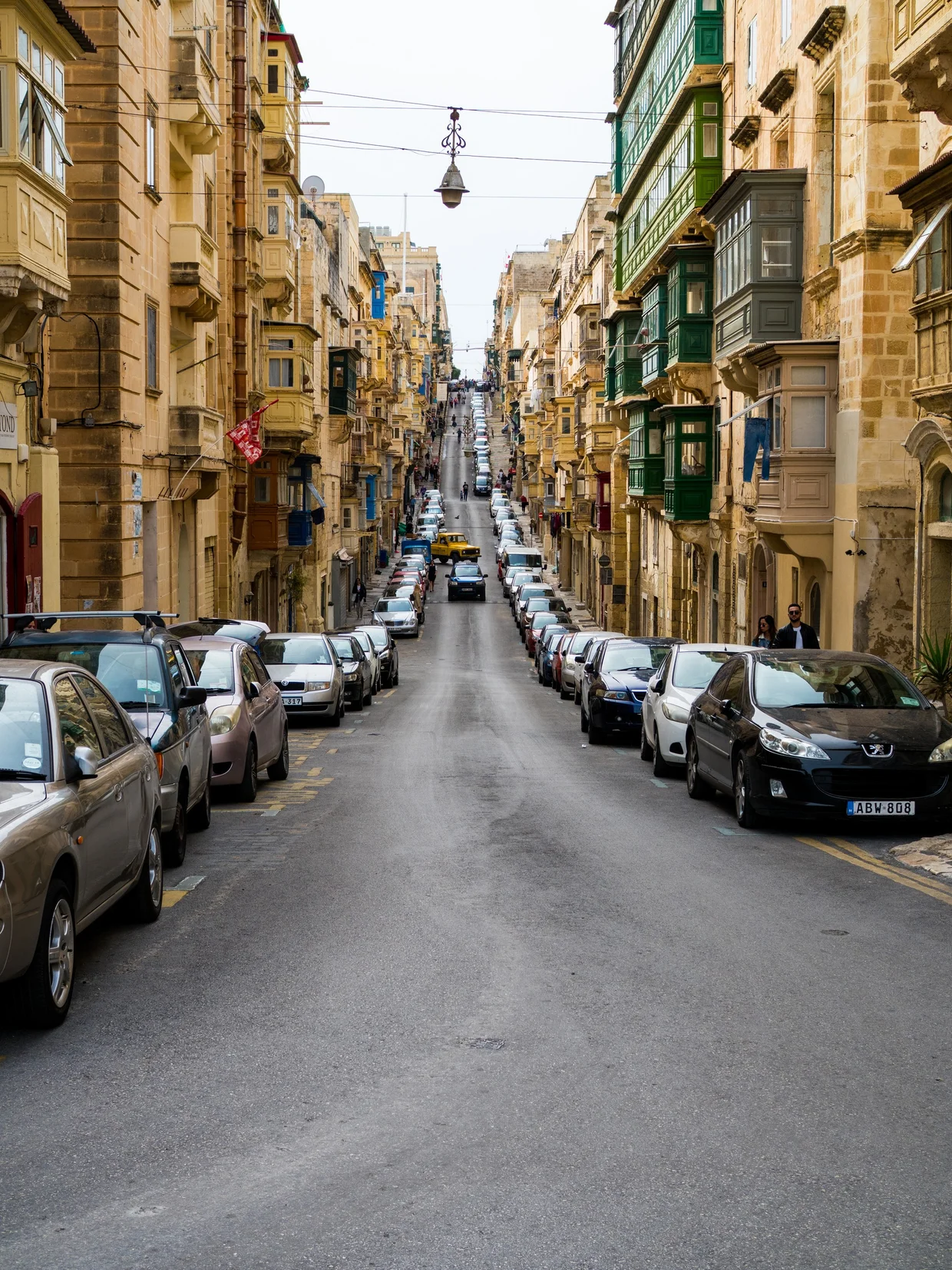
The best base for a first visit, full stop. Valletta puts you inside the most concentrated historic city on the island, walking distance to the cathedral, the harbour views, the best restaurants, and the city's entire atmospheric grid of limestone...
District map available here.
Activate Full Experience Mode to load the neighborhood map and inspect the best base visually.
Coming in August and complaining about the heat. Malta is a rock in the middle of the Mediterranean with basically no trees. In summer it bakes. That's not a surprise. That's geography. Come prepared with sunscreen, water, and realistic expectations, or come in a different month.
Picking up a rental car at night if you've never driven on the left. I did this. Landed at 11 PM, got the car, and spent the next 20 minutes white-knuckling through dark, narrow streets lined with parked cars on both sides, trying to keep left while every instinct screamed otherwise. By day two it felt natural. But those first night kilometers were not fun. If it's your first time driving on the left, arrive during the day, take a Bolt to your hotel, and pick up the car in the morning when you can actually see what you're doing. Malta's narrow streets and creative local drivers are enough of a challenge without adding darkness and jet-lagged spatial confusion to the mix.
Not budgeting enough time for Valletta. Most cruise ship passengers get about four hours. That's enough to speed-walk Republic Street and take a cathedral selfie. It's not enough to actually experience the city. Give Valletta at least a full day if you can. Two is better.
Expecting everything to be open on Sundays. Malta is deeply Catholic. Many shops, especially outside Valletta and the tourist areas, close on Sundays. Restaurants stay open, but if you need anything practical, sort it out on Saturday.

Ignoring the festa season. If you're visiting between June and September and a village festa is happening, go. It's one of the most authentic cultural experiences in Malta. Fireworks, brass bands, decorated streets, food stalls, and an entire community celebrating their patron saint with an intensity that's genuinely infectious. Check the festa calendar before your trip and plan around one.
Thinking Malta is just Valletta. Valletta is the star, but Mdina (the old capital, a silent walled city on a hilltop), the Three Cities, the temples, the western cliffs, and Gozo all deserve attention. Spread out. The island is small enough that everything is within 30 to 45 minutes, and each area shows you a different side of the country.
Destination Info
Published March 2026.