A Jungle on a Volcano in the Middle of Nowhere
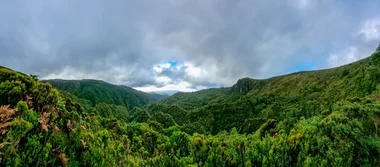
Madeira is what happens when a volcanic island in the Atlantic decides it's gonna be dramatic about everything. The mountains don't slope gently. They shoot straight up from the ocean to nearly 1,900 meters. The cliffs don't taper off. They drop 600 meters into the sea like the island just... ends. The valleys don't roll. They plunge so deep you can barely see the bottom. And then, on top of all this geological chaos, someone went and built an entire network of irrigation channels along the cliff faces, by hand, centuries ago, and now you can walk along them. Through tunnels. Past waterfalls. Above the clouds.
That's Madeira.

I came here expecting a quiet Portuguese island with some nice views and maybe a couple of good hikes. What I got was something closer to a nature theme park designed by someone with no concept of moderation. Every direction you look, there's something absurd happening. A waterfall pouring directly off a cliff into the ocean. A village sitting at the bottom of a volcanic crater. A forest so ancient and so foggy it looks like a movie set someone forgot to strike. A radar dome sticking out above the clouds at a mountain summit. A 589-meter sea cliff with a glass floor strapped to the top.

The island is tiny. About 57 km long and 22 km wide. You can drive from one end to the other in under two hours. But that number is a lie, because the roads are so twisty, the viewpoints so constant, and the pull-over temptation so strong that two hours becomes five. And you're never gonna make it anywhere on schedule. That's fine. Madeira doesn't care about your schedule.
The population is around 250,000, concentrated mostly in and around Funchal on the south coast. Tourism has grown a lot in recent years, but Madeira hasn't turned into a mass-tourism circus. The island's government has been serious about trail management and preservation, controlling access to sensitive areas, maintaining the levada paths, and keeping things from turning into the kind of overcrowded mess you see on other Atlantic islands. It shows. The trails feel cared for. The forests feel protected. The whole island has this quality of being accessible without being overrun, and that's not an accident.

Funchal
Funchal is the kind of capital that's exactly the right size. Big enough to have good restaurants, a proper market, and enough things to fill a couple of days. Small enough that you can walk everywhere, the locals know each other, and the pace never gets frantic. It sprawls up the hillside from the harbor in layers of white and terracotta buildings, and from almost anywhere in town you can look up at the mountains or down at the sea.

The Mercado dos Lavradores is the obvious first stop and it's genuinely worth it. This is a real produce market, not a tourist performance. The flower section on the ground floor is a color explosion. Upstairs, the fruit stalls sell things you've probably never seen before: monstera deliciosa fruit, tamarillo, passion fruit in three different varieties, and custard apples the size of your fist. The fishmongers in the basement sell espada (black scabbardfish), which is Madeira's signature fish, a deep-sea creature that looks like it swam straight out of a nightmare but tastes fantastic.
The old town (Zona Velha) has been transformed over the years from a run-down neighborhood into a pedestrian zone where every door has been painted by a different artist. It sounds gimmicky. It's actually pretty cool. The result is a street that's part gallery, part bar district, and entirely walkable in twenty minutes. Rua de Santa Maria is the main artery, and it fills up at night with people eating, drinking, and pretending they're going to have an early one.
The Monte Palace Tropical Garden sits above the city and is worth the trip up, ideally by cable car so you get the views on the way. The garden itself is a sprawling, slightly eccentric collection of tropical plants, tile panels, and koi ponds spread across a former hotel estate. And then, for the trip back down, there are the Monte toboggans: wicker sleds on wooden runners, steered by two guys in white clothes and straw hats who push you downhill through the streets of Monte at speeds that feel faster than they probably are. It's been running since the 1850s. It's as weird as it sounds. You should do it.

The Levadas
Here's the thing that makes Madeira genuinely unique among European hiking destinations: the levadas. These are irrigation channels built starting in the 15th century (some as recently as the 1940s) to carry water from the wet north side of the island to the drier south. There are over 2,500 km of them, and alongside most of them runs a narrow maintenance path. These paths have become Madeira's signature hiking trails, and they're unlike anything else you'll walk in Europe.

The concept is simple: you walk next to a narrow channel of flowing water, following it along the contour of the mountain. The execution is insane. These paths cut through tunnels carved by hand through solid rock, hug cliff faces with nothing between you and a long fall but your own balance, cross beneath waterfalls that drench you whether you want them to or not, and wind through forests so dense the sunlight barely gets through. Some levadas are gentle strolls through farmland. Others are full-on adventures that require a flashlight, waterproof layers, and a reasonable comfort level with heights.


Levada das 25 Fontes is probably the most popular. It leads to a pool fed by 25 waterfalls (more or less, depending on how generous you are with counting), and the trail passes through tunnels and laurel forest. It's gorgeous. It's also busy. Go early.
Levada do Caldeirão Verde is longer and more dramatic. The trail follows the levada deep into a gorge, through multiple tunnels (bring a flashlight, and I mean a proper one, not your phone), past vertical walls dripping with ferns, and ends at a 100-meter waterfall dropping into a green pool in what feels like a hidden valley. This one is the real deal.


The island has been investing heavily in trail preservation and management. Popular levadas now have improved paths, better signage, and in some cases controlled access during peak periods. This isn't red tape for the sake of it. It's what keeps these trails from turning into eroded, overcrowded messes. Madeira has looked at what happened to popular hiking spots elsewhere and decided to get ahead of it. Good call.
A practical note: some levada tunnels are long. Like, 200 meters long, pitch black, with water running across the floor. You need a proper flashlight or headlamp. Your phone flashlight will run out or get wet. Bring waterproof layers too, because the tunnels drip, the waterfalls spray, and the mountain weather does whatever it wants.

The Peaks
If the levadas are Madeira's signature, the peaks are its ego trip. The central mountain range runs east to west like a spine, and the highest points, Pico Ruivo (1,862 m) and Pico do Arieiro (1,818 m), give you the kind of views that make you wonder why you've been wasting time on flat places your whole life.

Pico do Arieiro is the easy one. You can drive all the way to the summit. There's a parking lot, a cafe, and on a clear morning the view is so vast you can see the curve of the earth. Clouds pool in the valleys below you like a white lake, peaks stick out above them like islands, and the whole scene looks fake. It's not. I promise.


Pico Ruivo is the actual highest point on the island, and getting there requires a hike. The classic route is the PR1 trail from Pico do Arieiro to Pico Ruivo, about 7 km one way, and it's one of the best mountain hikes in Europe. Full stop. The path follows a ridge between two peaks, with drops on both sides that go all the way down to the ocean, through tunnels, along knife-edge sections, and past rock formations that look like someone sculpted them on purpose.

The catch: weather. The peaks are above 1,800 meters and conditions change fast. You can start in blazing sunshine and be in thick fog within 30 minutes. The trail is well-marked, but in zero visibility the exposed sections get genuinely serious. Check the forecast, start early, and bring layers. The best conditions are typically early morning before the clouds build.


Ponta de São Lourenço
The eastern tip of Madeira is a completely different island. While the rest of Madeira is lush, green, and dripping with vegetation, Ponta de São Lourenço is barren, volcanic, windswept, and looks like it was imported from another planet. The red and orange volcanic rock, sculpted by wind and waves into spires and sea stacks, drops into turquoise water on both sides of a narrow peninsula. It's Madeira's most dramatic landscape, which is saying something for an island that treats drama as a lifestyle.

The PR8 trail runs the length of the peninsula, about 4 km each way, and it's one of the most rewarding short hikes on the island. The trail undulates along the spine of the headland, with the Atlantic crashing on both sides and the wind doing its best to remind you that this is a rock in the middle of an ocean. On clear days you can see Porto Santo, Madeira's smaller sister island, from the viewpoints.


The landscape here is so different from the rest of Madeira that it feels like a bonus destination you got for free. The volcanic colors, rust reds, burnt oranges, blacks, and yellows, contrast with the blues and greens of the ocean in a way that's almost too photogenic. Every viewpoint along the trail delivers a postcard.

Bring water, sunscreen, and a hat. There's zero shade on this trail. The wind is almost always strong, which keeps you cool but also means loose hats and phones held over cliff edges are at real risk of becoming donations to the Atlantic. The trail closes in bad weather, which is the right call given the exposed terrain.
The North Coast
The south coast of Madeira gets the sunshine, the tourists, and the calm water. The north coast gets the drama. This is where the mountains meet the Atlantic head-on, where waves crash against cliffs that haven't budged in millions of years, and where the weather swings from sunshine to cloud to sideways rain and back again in the time it takes to eat lunch.

Porto Moniz is the main draw up here, a small town on the northwestern tip famous for its natural volcanic rock pools. The ocean has carved pools into the lava formations along the shore, and they've been lightly developed with walkways and changing facilities while keeping the raw, natural feel. You're swimming in ocean water, with waves crashing over the outer rock walls, and the whole Atlantic stretching out in front of you. It's not a beach day. It's better.
The drive to Porto Moniz along the north coast is an experience in itself. The road hugs the cliff face, passes through tunnels, and at several points the mountain just... drops a waterfall onto the road. Like, water falls on your car. The Véu da Noiva (Bridal Veil) waterfall is the famous one, a thin cascade that drops from a cliff directly into the sea, and you see it from a viewpoint on the new road above.


The north coast beaches are nothing like Mediterranean beaches. They're volcanic rock, black pebbles, powerful waves, and a raw energy that's more Iceland than Ibiza. You're not gonna sunbathe here. But if you want to sit on a rock and watch the Atlantic do its thing, this is the place.
The coastal village of São Vicente has a set of volcanic caves you can visit, formed by lava tubes thousands of years ago. They're not the main reason to come north, but they're an interesting stop and they give you a sense of just how volcanic this island really is underneath all the green.

The Laurel Forest
Madeira's laurissilva (laurel forest) is a UNESCO World Heritage Site, and it's the largest surviving patch of a type of forest that once covered much of southern Europe and North Africa millions of years ago. When the last ice ages wiped these forests off the continent, Madeira's isolation and mild climate kept its patch alive. You're walking through a living fossil. That's not a metaphor. The trees in here are the same species that covered the Mediterranean 15 million years ago.

Fanal is the place that breaks people's brains. It's a high-altitude plateau on the northwest side of the island where ancient laurel trees grow in shapes that defy everything you think a tree should look like. Trunks that twist and bend and loop back on themselves, covered in thick moss and lichen, standing in permanent fog. When the mist rolls in (which is most of the time), the whole place looks like the set of a fantasy film. I kept expecting something to move between the trees. Nothing did, but the feeling doesn't go away.


The levada walks through the laurissilva are some of the best on the island. The Levada do Caldeirão Verde and Levada das 25 Fontes both pass through sections of laurel forest, and the atmosphere is completely different from the exposed mountain trails. In here, everything is green. The trees, the ground, the air itself feels green. Ferns cover every surface. Moss drips from every branch. Water runs everywhere, in the levada, down the rock walls, through the ground under your feet. It's absurdly lush.


The difference between the laurel forest in sunshine and in fog is the difference between a nice walk in the woods and a spiritual experience. If you have the choice, go when it's misty. I know that sounds backwards, but trust me. The fog is the whole point at Fanal.
Cabo Girão
Cabo Girão is one of the highest sea cliffs in Europe at 589 meters, and someone decided the best thing to do with it was build a glass-floored skywalk extending over the edge. You walk out onto transparent panels and look straight down through your feet at the ocean, more than half a kilometer below. Your brain knows the glass is safe. Your legs disagree.

The skywalk is free, which is a pleasant surprise. The view from the top is spectacular even if you don't step onto the glass, because the cliff drops away so steeply that you can see the tiny agricultural terraces (fajãs) at the base, accessible only by cable car, where farmers still grow bananas and grapes. People live and farm down there. On a ledge at the bottom of a 589-meter cliff. Madeirans are built different.
The viewpoint gets crowded by mid-morning, especially when cruise ships are in port. Come early or late for a calmer experience. And if the glass floor thing is too much for you, the regular viewpoint next to it has the same panorama without the existential crisis.
Curral das Freiras
Curral das Freiras (Valley of the Nuns) is a village that sits at the bottom of a volcanic crater so deep and so surrounded by mountains on every side that it was invisible from the coast. In the 16th century, nuns from a Funchal convent fled here to hide from pirate raids, and the name stuck. Looking down at it from the viewpoint at Eira do Serrado, you can see why they picked it. The village is just... down there. Way, way down there. Surrounded by walls of rock and green that made it basically unreachable for centuries.

The drive down into the valley is a spectacle of engineering: hairpin after hairpin through tunnels cut into the mountain. The village itself is small and quiet, famous for chestnuts (they have a chestnut festival in November), and the restaurants serve traditional dishes with a chestnut twist. Chestnut soup, chestnut cake, chestnut liqueur. If you like chestnuts, this is your moment.
The viewpoint at Eira do Serrado is the one to hit. From there, the valley opens up below you like an amphitheater, and the scale of the mountains surrounding the village is almost hard to process. I stood there for a solid ten minutes just trying to figure out how anyone ever found this place to begin with.

Santana
A quick note on Santana, on the north coast: this is where you'll find the famous casas de colmo, the traditional A-frame thatched houses painted in bright red, blue, and white. They look like something from a fairy tale, and they're all over Madeira's tourism brochures.

The ones you can visit in Santana are mostly preserved as cultural exhibits, not actual homes. A few have been converted into small shops or information points. They're worth a quick stop if you're driving the north coast, but don't build a whole day around them. See the houses, take the photo, grab a coffee, and move on to the levadas or the viewpoints. The real Madeira is outside, not in a gift shop.
What to Do
There are many things to experience, to see and to do in Madeira. This here is just my personal highlight. For a more comprehensive and detailed overview, visit my dedicated what to do in Madeira page.
Levada das 25 Fontes & Risco Waterfall
The most popular levada walk on the island, and for good reason. The trail starts at Rabaçal and splits into two routes: one leads to the 25 Fontes (a pool fed by multiple waterfalls surrounded by... see more
Levada do Caldeirão Verde
If you only do one levada walk on Madeira, make it this one. The trail follows the Levada do Caldeirão Verde from Queimadas forest park deep into a gorge that gets progressively more dramatic with... see more
Ponta de São Lourenço (PR8)
The eastern tip of Madeira is a completely different world from the rest of the island. Where everything else is green and lush, São Lourenço is barren, volcanic, and windswept. Red and orange rock... see more
PR1 Pico do Arieiro to Pico Ruivo
The ridge walk between Madeira's two highest peaks is one of the best mountain hikes in Europe. The trail runs about 7 km one way along a knife-edge ridge with drops on both sides that go all the way... see more
Cabo Girão Skywalk
Cabo Girão is one of the highest sea cliffs in Europe at 589 meters, and someone decided the most logical thing to do was bolt a glass-floored platform to the edge so tourists could look straight down... see more
Fanal Laurel Forest
Fanal is a high-altitude plateau on the northwest side of Madeira where ancient laurel trees grow in shapes that look like they were designed for a Tim Burton film. Trunks twist and bend and loop back... see more
Funchal Zona Velha (Old Town)
Funchal's Zona Velha (Old Town) used to be the city's run-down quarter. Then someone had the idea to invite artists to paint every door on Rua de Santa Maria, and now it's a pedestrianized open-air... see more
Mercado dos Lavradores
Funchal's main market is a sensory overload in the best way. The ground floor is a riot of tropical flowers. The upper level sells fruit you've probably never seen before: monstera deliciosa,... see more
Monte Palace Garden & Toboggan Ride
The Monte area above Funchal combines two very different experiences. First, the Monte Palace Tropical Garden: a sprawling estate with tropical plants, exotic trees, koi ponds, and Portuguese tile... see more
Pico do Arieiro Viewpoint
If you're not up for the full PR1 hike to Pico Ruivo, the Pico do Arieiro viewpoint alone is still one of the best things you can do on Madeira. You can drive all the way to the summit (1,818 m),... see more
Porto Moniz Natural Pools
Porto Moniz sits on the northwestern tip of Madeira, and its volcanic rock pools are the main reason people make the drive up here. The ocean has carved natural pools into the basalt lava formations... see more
Câmara de Lobos
Câmara de Lobos is a small fishing village just west of Funchal that Winston Churchill famously painted during his visits to Madeira in the 1950s. The harbor is still postcard-material: colorful... see more
Curral das Freiras (Valley of the Nuns)
Curral das Freiras is a village sitting at the bottom of a volcanic crater so deep and so surrounded by mountains that it was completely hidden from the coast. In the 16th century, nuns from a Funchal... see more
Madeira Wine Tasting
Madeira wine is one of the world's great fortified wines, produced on the island for over 500 years and historically shipped across the globe. The unique production process involves heating the wine... see more
Whale & Dolphin Watching
Madeira's deep Atlantic waters are a hotspot for cetaceans, with several resident species and others that pass through on migration routes. Bottlenose dolphins, common dolphins, and Atlantic spotted... see more
Santana Traditional Houses
The casas de colmo in Santana are the A-frame thatched houses painted in bright red, blue, and white that appear on every Madeira brochure, fridge magnet, and tourism poster. They're genuinely... see more
São Vicente Caves
The São Vicente volcanic caves are lava tubes formed about 890,000 years ago during Madeira's last volcanic eruption cycle. The guided tour takes you through about 700 meters of underground tunnels... see more
When to Go
Here's the wild thing about Madeira: there's no bad time. The island has what they call "eternal spring," which is a marketing phrase that happens to be true. Temperatures in Funchal hover between 16°C in winter and 26°C in summer. It never gets unbearably hot. It never gets properly cold. The flowers bloom year-round. The trails are open year-round. You can come in January or August and have a great trip either way.
But here's the catch, and this is the thing nobody tells you until you're already on the island: Madeira has microclimates that would make a meteorologist cry. You can be sunbathing in Funchal and it's raining in the mountains 20 minutes away. You can drive from one side of a mountain to the other and go from blue sky to thick fog in five minutes. The south coast is warm and dry. The north coast is cooler and wetter. The peaks are in the clouds half the time. The east is arid. The west is lush. It's all happening simultaneously on an island the size of a large city.
April to October is the driest and warmest period. The south coast is reliably sunny. The mountain trails are at their most accessible (though weather at altitude is always unpredictable). This is peak season, and the popular levadas and viewpoints get busy. July and August are the warmest months, but Madeira never hits the oppressive heat you get in mainland Portugal or Spain.
November to March is wetter, especially in the mountains and on the north coast. Funchal still gets plenty of sun. The temperature drops a bit but stays mild. This is when you'll get the most dramatic cloud formations in the mountains, the lushest greens in the forests, and the fewest people on the trails. If you're a hiker who doesn't mind a rain jacket, winter is fantastic.
The Flower Festival (Festa da Flor) in late April or early May turns Funchal into a botanical explosion. Floats, flower carpets on the streets, and the kind of floral displays that make your allergies worth it. The New Year's fireworks are also famous, a massive show over Funchal's harbor that draws people from all over Europe.

How Long to Stay
Five days is the sweet spot. One day for Funchal and the market. One day for the Pico do Arieiro to Pico Ruivo hike (or just the Arieiro viewpoint if you're not into mountain trails). One day for a levada walk. One day for Ponta de São Lourenço. And one day for the north coast drive through São Vicente to Porto Moniz with stops wherever the view makes you pull over, which will be constantly.
A week lets you slow down. You can add Cabo Girão, Curral das Freiras, a second levada, Fanal, and a lazy afternoon in Funchal's Zona Velha drinking poncha until your plans for the evening dissolve into a pleasant blur.
Ten days is luxury, but Madeira rewards it. You can hike the PR1, explore both the 25 Fontes and Caldeirão Verde levadas, spend time on the north coast, do the São Lourenço trail in perfect conditions (wait for the weather), and still have days where you just sit at a viewpoint with a coffee and do absolutely nothing. The island is small enough that you never feel like you're wasting time, but deep enough that you won't run out of things to discover.

Where to Stay
Madeira is small enough that you can base yourself in one spot and reach everything by car within an hour or so. That said, where you stay shapes the feel of your trip more than you'd expect. Funchal is the default and the strongest all-round base. The south coast towns offer quieter alternatives with better sunset views. The north coast is for people who want wild scenery and don't mind trading restaurants for atmosphere. Unless you're specifically chasing isolation, Funchal is the move for a first visit.
Funchal (Zona Velha / Old Town)
The default base for a first visit, and the strongest all-round choice on the island. The Zona Velha puts you within walking distance of the Mercado dos Lavradores, the painted-door streets, the best restaurants and poncha bars, the waterfront...
District map available here.
Activate Full Experience Mode to load the neighborhood map and inspect the best base visually.
Food
Madeiran food is built on simplicity, tradition, and the firm belief that more garlic is always the correct answer. It's hearty, no-nonsense Portuguese cooking with island twists, and the portions are the kind of generous that makes you wonder if they think you haven't eaten in days.
Espetada is the island's most iconic dish: chunks of beef threaded onto a laurel wood skewer and grilled over open flame. The traditional version hangs the skewer vertically from a hook above the table, so the juices drip down onto the meat below. It's primal, dramatic, and delicious. You'll find it everywhere.
Bolo do caco is Madeira's answer to bread, and it's the best answer. A flat, round bread made with sweet potato in the dough, baked on a basalt stone, and served warm with garlic butter. It comes with basically every meal, and eating it plain with butter and a cold beer is one of life's genuine pleasures. Every restaurant serves it. The quality varies. The good ones make you wanna cry a little.
Espada com banana (black scabbardfish with banana) is Madeira's signature fish dish. The scabbardfish lives at extreme depths in the Atlantic and looks genuinely terrifying. It tastes mild, white, and excellent, especially when pan-fried and served with banana, which sounds like a weird combination and is a perfect one. If you eat fish, this is non-negotiable.
Lapas are limpets grilled with garlic and butter. They're small, chewy, and taste like concentrated ocean. You either love them or you wonder why you're eating a thing that was recently attached to a rock.
The fruit is remarkable. Passion fruit, bananas (Madeiran bananas are smaller and sweeter than the ones you get in supermarkets), custard apples, monstera deliciosa fruit, and guava all grow on the island. The poncha stand at the Mercado dos Lavradores will let you try some of them in juice form.
Poncha is Madeira's national drink. Aguardente (sugarcane rum), honey, sugar, and lemon juice, mixed with a specific wooden tool called a caralhinho. The basic version is lemon. You'll also find passion fruit, orange, and mixed-fruit versions. It tastes light and refreshing. It is neither light nor refreshing. Two ponchas feels like nothing. Three ponchas feels like a decision. Four ponchas and you're telling a stranger your life story in broken Portuguese. Pace yourself.
Madeira wine is the other famous drink, a fortified wine that's been produced on the island for centuries and was historically shipped around the world (the heat of long sea voyages actually improved it, which is how the heating process in production was discovered). It ranges from dry to very sweet, and a tasting at one of the Funchal wine lodges is a solid afternoon activity that pairs well with doing absolutely nothing afterward.
Getting Around
A rental car is essential. Full stop. The levadas, the peaks, the north coast, Ponta de São Lourenço, Cabo Girão, Curral das Freiras, none of these are practically reachable without a car. The roads are excellent by island standards, paved and well-maintained, but they're narrow, twisty, and involve a lot of tunnels. If mountain driving makes you nervous, you'll need to get comfortable fast or budget for guided tours instead.
The tunnel system is extensive and impressive. Madeira has invested heavily in tunnels that cut through the mountains, drastically shortening journey times. Before the tunnels, getting from Funchal to the north coast took hours on cliff-edge roads. Now it takes 30 minutes through the mountain. Some of the old roads are still open though, and they're the scenic ones, so don't autopilot through the tunnels for every trip.
Parking is free at most trailheads and viewpoints, but the popular spots fill up by mid-morning. The Pico do Arieiro car park, the 25 Fontes trailhead, and the São Lourenço trailhead all get busy. Early starts pay off in both parking and trail solitude.
Buses exist. The Horários do Funchal network covers the Funchal area decently, and inter-city buses (SAM, Rodoeste) reach most towns. But frequencies are low, connections are inconvenient, and getting to trailheads by bus ranges from tricky to impossible. If you're on a tight budget and you've got patience, buses work. For everyone else: rent the car.
Taxis and transfers are an option for specific trips, especially the popular hikes where you'd otherwise need two cars (or a very long out-and-back). Some levada walks are linear, so having a taxi drop you at one end and pick you up at the other is worth the cost.
Costs
Madeira is mid-range for Western Europe and a genuine bargain compared to similar island destinations like the Canaries, Azores, or Balearics. The south of Portugal pricing applies here, which means your money goes further than in most of Europe without any drop in quality.
The prices shown here are meant as a rough guide and can vary over time. While I update exchange rates regularly, local prices are typically refreshed only when I revisit the destination.
The biggest savings come from the fact that Madeira's main attractions are free. The levadas, the peaks, the viewpoints, Ponta de São Lourenço, Cabo Girão, all free. You're paying for food, accommodation, and a rental car. That's basically it. A week on Madeira costs less than a long weekend in most capital cities.
What to Skip
The CR7 Museum. Cristiano Ronaldo is from Madeira, and there's a museum dedicated to him in Funchal, complete with a bronze statue outside that you've probably seen memes about. If you're a massive football fan, sure. For everyone else, this is a room full of trophies and a selfie with a statue. The ten minutes you'd spend here are better used on literally any viewpoint.
Organized "Jeep safari" tours that stay on paved roads. Some of these are just overpriced drives in a Land Rover on the same roads you could drive yourself. The ones that go off-road to levada trailheads or mountain tracks can be worthwhile, but check the itinerary before booking. If the entire route is on asphalt, save your money and rent a car.
The hotel zone west of Funchal. The strip of resort hotels along the coast in the Lido area is functional but soulless. If your hotel happens to be here, fine, but don't spend your evenings here if you can get to the Zona Velha. The old town has all the atmosphere that the hotel strip doesn't.
Whale watching tours in bad weather. The operators will still take you out. You'll spend three hours bouncing on waves and seeing nothing. Check conditions first and reschedule if it's rough. The good days are genuinely magical (dolphins are almost guaranteed, whales are seasonal), but the bad days are just seasickness with extra steps.
What Not to Skip
The PR1 (Pico do Arieiro to Pico Ruivo). If you do one hike in Madeira, make it this one. The ridge walk between the two highest peaks is world-class. The exposure, the tunnels, the views above the clouds. Nothing else on the island comes close.
Ponta de São Lourenço. The volcanic eastern tip is so different from the rest of Madeira that skipping it means missing an entire dimension of the island. It's a short, easy-ish trail with some of the best coastal views in the Atlantic.
At least one levada with a tunnel. The flat garden-stroll levadas are nice. The ones with tunnels, waterfalls, and cliff-edge paths are the ones you'll remember forever. Caldeirão Verde is the best all-rounder. Bring the flashlight.
Fanal in the fog. The ancient laurel forest on a misty day is one of the most atmospheric places in Europe. Don't skip it because the forecast says clouds. That's when you go.
Poncha at the source. Go to a proper poncha bar, not a tourist restaurant. Watch them make it with the caralhinho. Try the passion fruit version. Then try the lemon one. Then realize you've been there for two hours.
The Mercado dos Lavradores. Funchal's market is the real deal. The fruit, the flowers, the fish, the chaos. Go hungry.
Cabo Girão early morning. The glass skywalk without cruise ship crowds is a completely different experience. Arrive before 9 AM and you'll have it nearly to yourself.
Common Mistakes
Only hiking in sunshine. Madeira in the mist is not a downgrade. It's a different (and often better) experience. Fanal in fog is hauntingly beautiful. The levadas in light rain are atmospheric and quiet. If you cancel every plan because of clouds, you'll miss half of what makes this island special. Pack a rain jacket and go anyway.
Underestimating the mountain weather. You can leave Funchal in a t-shirt and arrive at Pico do Arieiro in near-zero visibility with 10°C temperatures and wind. The altitude difference is nearly 1,900 meters. Always bring layers, even if the coast is warm. Always.
Trying to see everything in three days. Madeira is small on a map but enormous in what it offers. Cramming the peaks, two levadas, São Lourenço, Porto Moniz, and Funchal into a long weekend means you'll spend most of your time driving and none of it actually absorbing what you're seeing. Five days minimum. Seven is better. Your legs will thank you for rest days between hikes, too.
Skipping the north coast. Most visitors stick to the south coast and the mountains. The north coast has Porto Moniz, the Véu da Noiva waterfall, wild volcanic beaches, São Vicente's caves, and a raw, dramatic energy that the south doesn't have. It's a different world up there. Budget a full day for it.
Driving fast on mountain roads. The roads are narrow, the curves are blind, and there's always a bus or a hiker or a goat around the next bend. Madeira rewards slow driving. Leave time, enjoy the views, and don't try to stick to Google Maps' estimated arrival time. It was calculated by someone who's never been on a one-lane road at 800 meters with a tour bus coming the other way.
Not bringing a flashlight for the levadas. I mentioned this already. I'm mentioning it again because the number of people who enter a 200-meter pitch-black tunnel with nothing but their phone flashlight is staggering. Bring a headlamp. Bring a waterproof one. Your future self, standing in the dark with water dripping on their head, will be grateful.
Ignoring the microclimate. If it's raining in Funchal, it might be sunny on the peaks. If the peaks are in clouds, the south coast might be clear. Before canceling plans, check webcams and forecasts for the specific location, not just "Madeira." The island is small but the weather is local.
Eating only in the hotel. Madeiran food is excellent, cheap, and everywhere. The local restaurants in small towns serve better espetada than the Funchal hotel buffet, at a fraction of the price. Get out and eat where the locals eat. Follow the garlic smell.
Destination Info
Published March 2026.