Top Things to Do and See in Cape Town
Cape Town packs more into a small area than most cities manage across an entire country. You can hike a 600-million-year-old mountain before lunch, watch penguins waddle on a beach after, and taste world-class wine by dinner. The trick is not trying to do everything in one day, because Cape Town will punish impatience with traffic and reward slow exploration with moments you didn't plan for.
The prices shown here are meant as a rough guide and can vary over time. While I update exchange rates regularly, local prices are typically refreshed only when I revisit the destination.
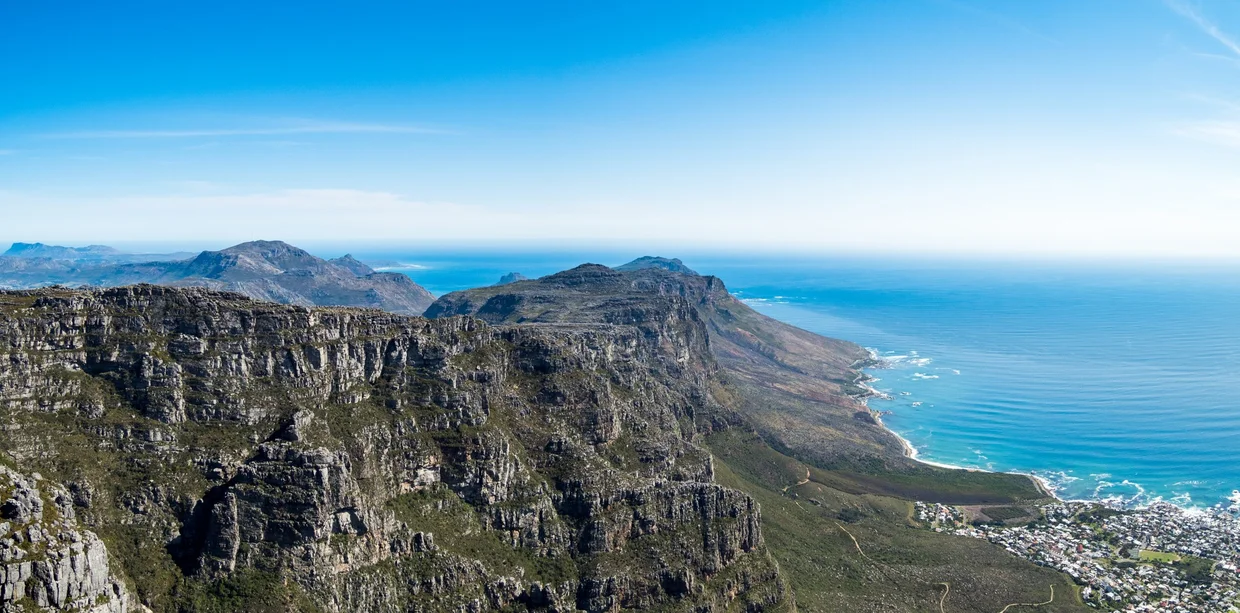
Table Mountain
Non-negotiable. Table Mountain is 600 million years old, flat-topped, and visible from almost everywhere in the city. The cable car rotates 360 degrees on the way up, which is either thrilling or terrifying depending on your relationship with heights. The top is surprisingly large with walking trails, cafes, dassies (furry creatures that look like guinea pigs but are related to elephants), and views that stretch from the city bowl to Robben Island. You can also hike up via Platteklip Gorge (steep, 2 to 3 hours, your legs will hate you the next day) or Skeleton Gorge from Kirstenbosch (longer but through forest). Go on a clear day. On a cloudy day, you pay full price to sit inside a white room. Early morning or late afternoon is best; midday brings queues and cloud cover.
How to Get There
The cable car lower station is a short Uber ride from the City Bowl or an easy drive with parking available. MyCiTi buses also run to the lower station. For Skeleton Gorge, start from Kirstenbosch Botanical Garden.
Notes
- Check the webcam before going; if the top is covered in cloud, wait for another day
- The cable car closes in high wind; have a backup plan
- Bring a layer even on warm days, the temperature at the top drops noticeably
- Sunset from the top is spectacular but means descending in the dark
- Platteklip Gorge is the fastest hiking route but has no shade
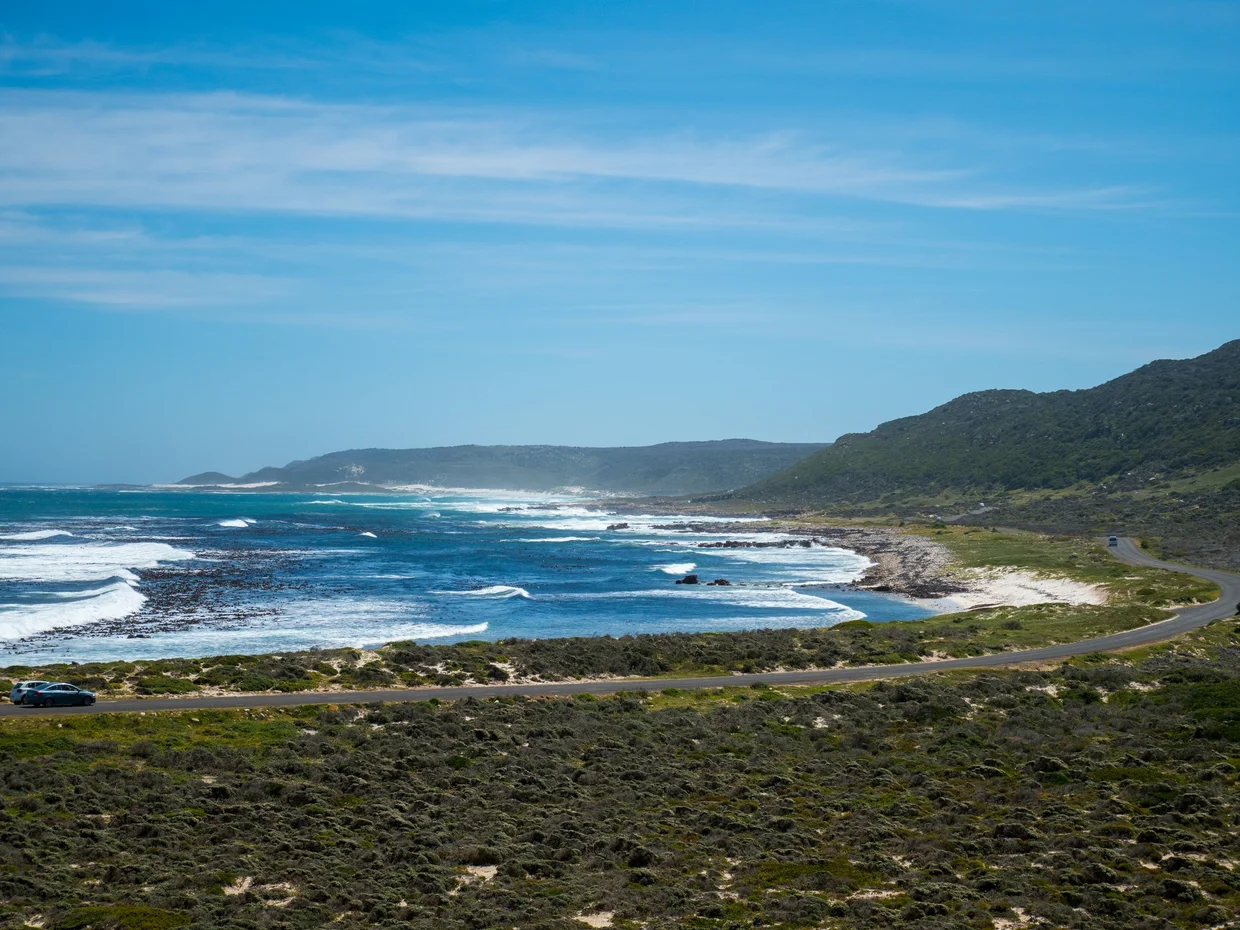
Cape Peninsula Drive
The full loop from Cape Town down to the Cape of Good Hope and back is one of the best day drives in the world, and that's not an exaggeration. Chapman's Peak is the star: a road carved into a cliff face with the Atlantic hundreds of meters below, somehow both terrifying and beautiful at the same time. The Cape of Good Hope itself isn't the southernmost point of Africa (that's Cape Agulhas), but nobody cares once they're standing at the edge of the continent watching waves crash into rocks. The hike to the old lighthouse takes about 30 minutes and gives you a view of the whole peninsula behind you. Drive the Atlantic side down and return via False Bay. Stop at Kalk Bay for fish and chips, Simon's Town for penguins, and Noordhoek for the beach. Rushing this drive should be a criminal offense.
How to Get There
Rent a car. This is a driving experience and public transport doesn't cover the route. Start from the city heading south along the M6 via Camps Bay and Hout Bay for the full Atlantic coast experience.
Notes
- Chapman's Peak is a toll road and sometimes closes for rock fall; check before you go
- Leave early to avoid traffic on the M3 southbound
- The Cape of Good Hope section is inside Table Mountain National Park (entrance fee applies)
- Baboons in the Cape Point area will absolutely rob you if you leave food visible in your car
- Fuel up before leaving; there are limited stations on the peninsula
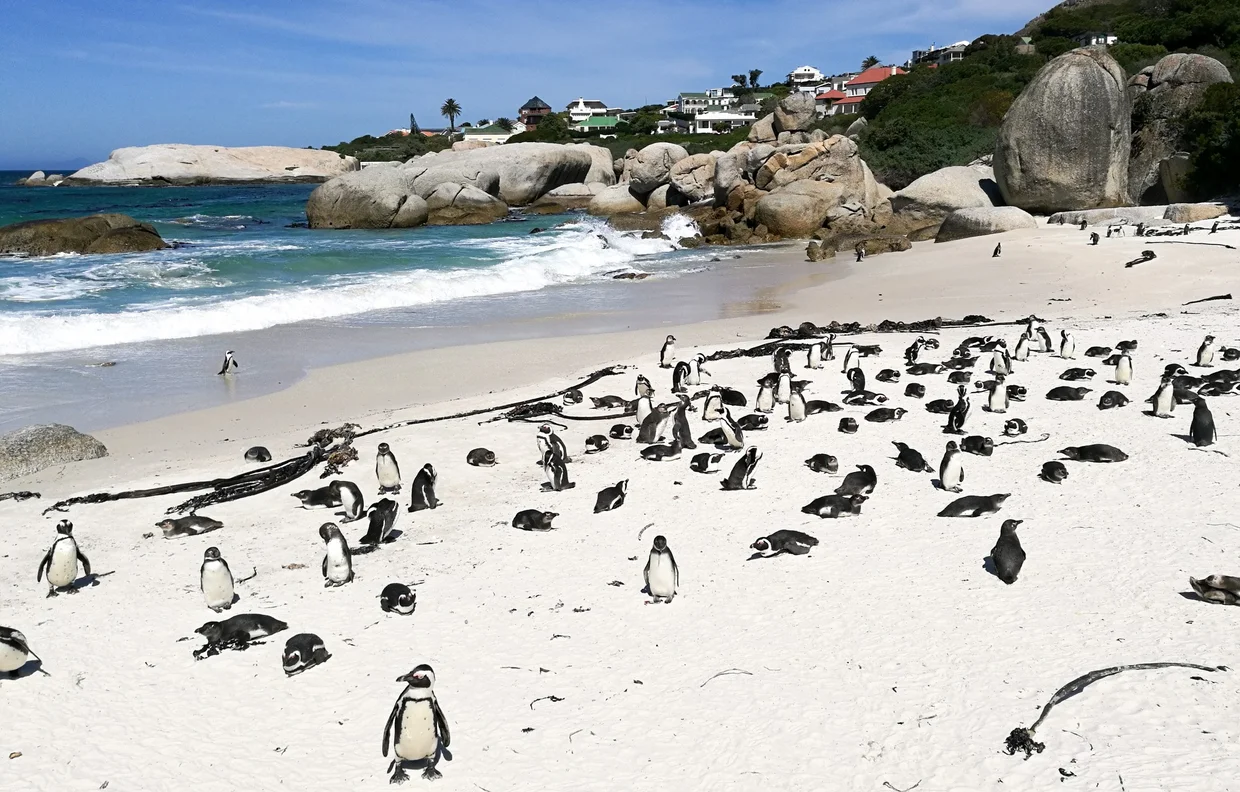
Boulders Beach Penguins
Yes, penguins in Africa. A colony of African penguins lives at Boulders Beach near Simon's Town, and watching them waddle around the sand, swim in the shallows, and generally carry on with their lives is one of those experiences that's impossible not to enjoy. Most of them are completely indifferent to the humans staring at them from the boardwalk. Some, however, are not. A few of the penguins are aggressive little creatures who will come at you and bite if they decide you're in their space. They're adorable right up until they're not. The boardwalk keeps you at a safe distance from the main colony, which is both respectful to the birds and a smart move for your ankles. The beach itself, with its smooth granite boulders and clear water, is beautiful even without the wildlife.
How to Get There
Boulders Beach is in Simon's Town, about 45 minutes from central Cape Town via the M3 and M4. Parking is available near the entrance. Also reachable by Southern Line train to Simon's Town station, then a 15-minute walk.
Notes
- Best combined with the peninsula drive as a stop along the False Bay side
- Early morning means fewer tourists and more active penguins
- You can swim at the adjacent Boulders Beach (not in the penguin colony area) for free
- The colony is shrinking due to habitat loss; your entrance fee supports conservation
- Keep your distance from penguins that approach you; they bite harder than they look
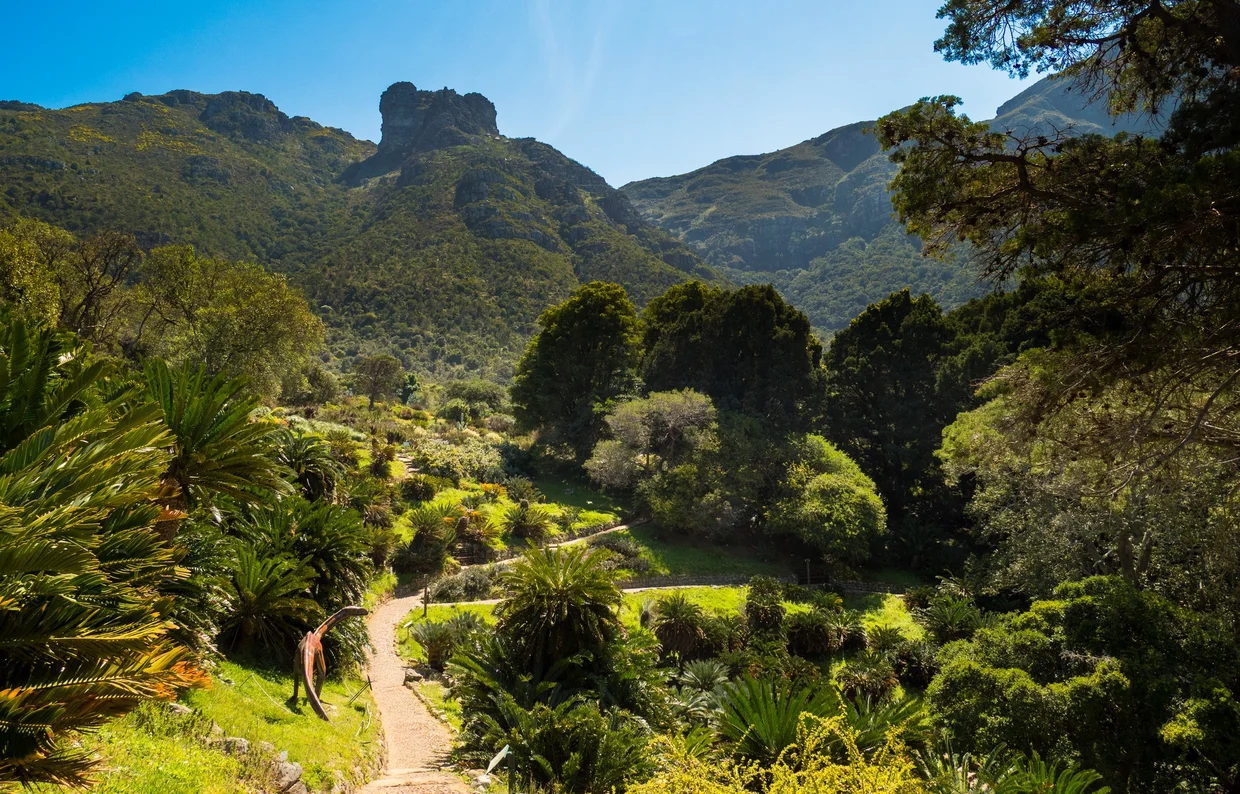
Kirstenbosch National Botanical Garden
Kirstenbosch sits on the eastern slopes of Table Mountain and is one of the great botanical gardens of the world. The setting alone justifies the visit: manicured gardens backed by the mountain's forested slopes, with paths winding through fynbos, cycads, and a canopy walkway (the "Boomslang") that curves through the treetops and gives you views across the garden to the city. It's the kind of place where you plan to spend an hour and end up staying three. The garden is also the trailhead for Skeleton Gorge, one of the best hiking routes up Table Mountain, so you can combine a garden visit with a serious hike if you're feeling ambitious. Summer sunset concerts on the lawn are a Cape Town institution. Bring a picnic blanket and a bottle of something local.
How to Get There
About 15 minutes by car from the City Bowl via the M3. Parking is available at the main entrance. Uber is the easiest option if you're not driving. No convenient public transport option.
Notes
- The Boomslang canopy walkway is included in the entrance fee
- Summer sunset concerts (November to March) are wildly popular; arrive early for a good spot
- The garden is large; comfortable walking shoes are a must
- Skeleton Gorge hike to the top of Table Mountain starts from the garden (allow 3 to 4 hours up)
- The restaurant on site is decent but bringing a picnic is more fun
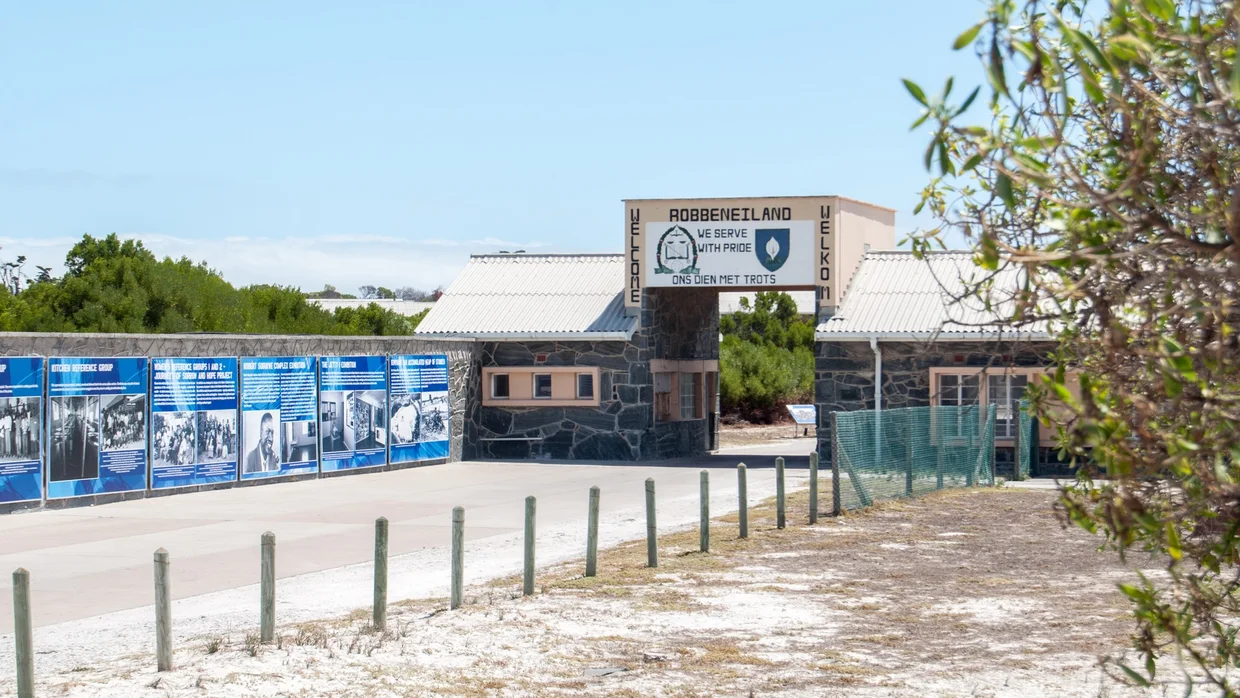
Robben Island
Robben Island is where Nelson Mandela spent 18 of his 27 years in prison, and visiting it is one of the most powerful experiences Cape Town offers. The ferry takes 30 minutes from the V&A Waterfront. Tours are led by former political prisoners, which makes the whole thing land differently than reading a plaque in a museum. You stand in Mandela's cell, which is small enough to touch opposite walls at the same time, and you listen to someone who lived through it tell you what happened there. It's heavy. It's important. And it puts the rest of your Cape Town trip in a context that the pretty beaches and wine farms don't provide on their own.
How to Get There
Ferries depart from the Nelson Mandela Gateway at the V&A Waterfront. The crossing takes about 30 minutes each way. Arrive at least 30 minutes before departure.
Notes
- Book well in advance; tours sell out, especially in peak season
- The ferry can be rough in bad weather; take seasickness precautions if needed
- Tours include a bus ride around the island and a guided walk through the prison
- No food on the island; eat before or after
- Morning tours tend to have calmer seas
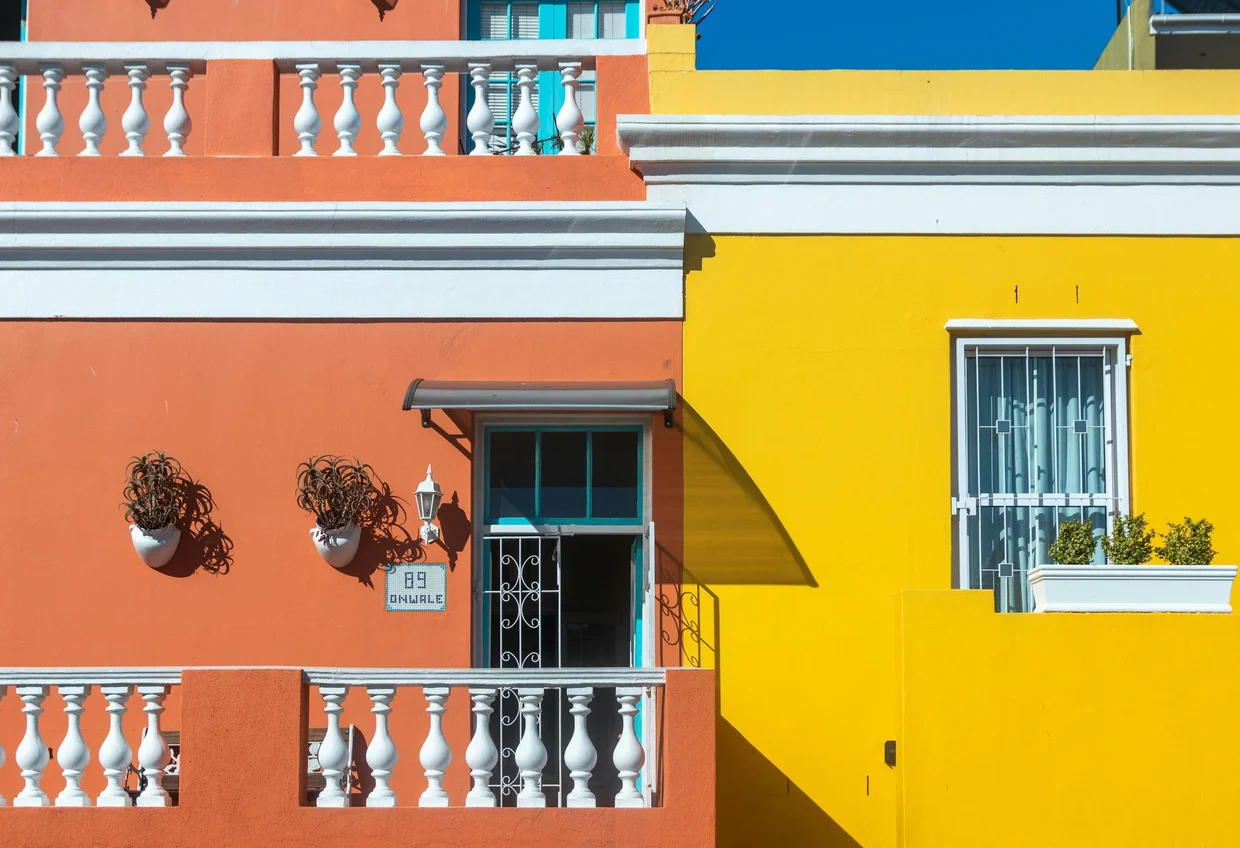
Bo-Kaap
Bo-Kaap is the neighborhood on the slopes of Signal Hill with the brightly colored houses that show up on every Cape Town Instagram post and travel brochure. But it's not a set piece built for tourists. The Cape Malay community has lived here since the 1760s, descendants of enslaved people brought from Southeast Asia by the Dutch. The colors are real, the food is incredible, and the Bo-Kaap Museum gives you the history behind the postcard. Walk the cobblestone streets, eat Cape Malay curry and samoosas, and try the koeksisters and dhaltjies. If you leave without eating something, you did it wrong. The neighborhood is gentrifying fast, and longtime residents are fighting to stay. It's worth knowing that context while you're there.
How to Get There
Bo-Kaap is on the western edge of the City Bowl, walkable from Long Street or Bree Street in about 10 minutes. It's uphill, as everything on Signal Hill tends to be.
Notes
- The Bo-Kaap Museum is small but well done; entry is cheap
- Visit in the morning for the best light on the colorful houses
- Several cooking classes in the area offer hands-on Cape Malay cooking experiences
- Be respectful; this is a residential neighborhood, not a theme park
- Easily combined with a walk through the City Bowl
Winelands Day Trip
Stellenbosch and Franschhoek are less than an hour from Cape Town and produce wine that competes globally. The landscape looks like someone designed a wine region from scratch and forgot to include any flaws: Cape Dutch farmhouses, vineyards against mountain backdrops, oak-lined streets. Tastings are absurdly cheap by international standards, 50 to 150 rand (3 to 8 euros) for a flight of five or six wines, and some estates waive the fee if you buy a bottle. You will leave with more bottles than you planned for. Everyone does. Stellenbosch has the most estates and a charming walkable town center. Franschhoek is smaller, more polished, and calls itself the food and wine capital of South Africa with enough justification to get away with it. The food at both is excellent.
How to Get There
Stellenbosch is about 50 minutes by car from central Cape Town via the N2 and R44. Franschhoek is about 75 minutes via the N1 and R45. Organized wine tours with hotel pickup are widely available and solve the drinking-and-driving problem.
Notes
- If you drink, do not drive; the roads are winding and police take it seriously
- Organized wine tours, Uber, or a designated driver are the way to go
- Franschhoek Wine Tram is a fun way to visit multiple estates without driving
- Most estates are open 10 AM to 5 PM; plan to visit 3 to 4 in a day
- Pinotage, Chenin Blanc, and Bordeaux-style blends are the regional signatures
- Pair with lunch at one of the estate restaurants for the full experience
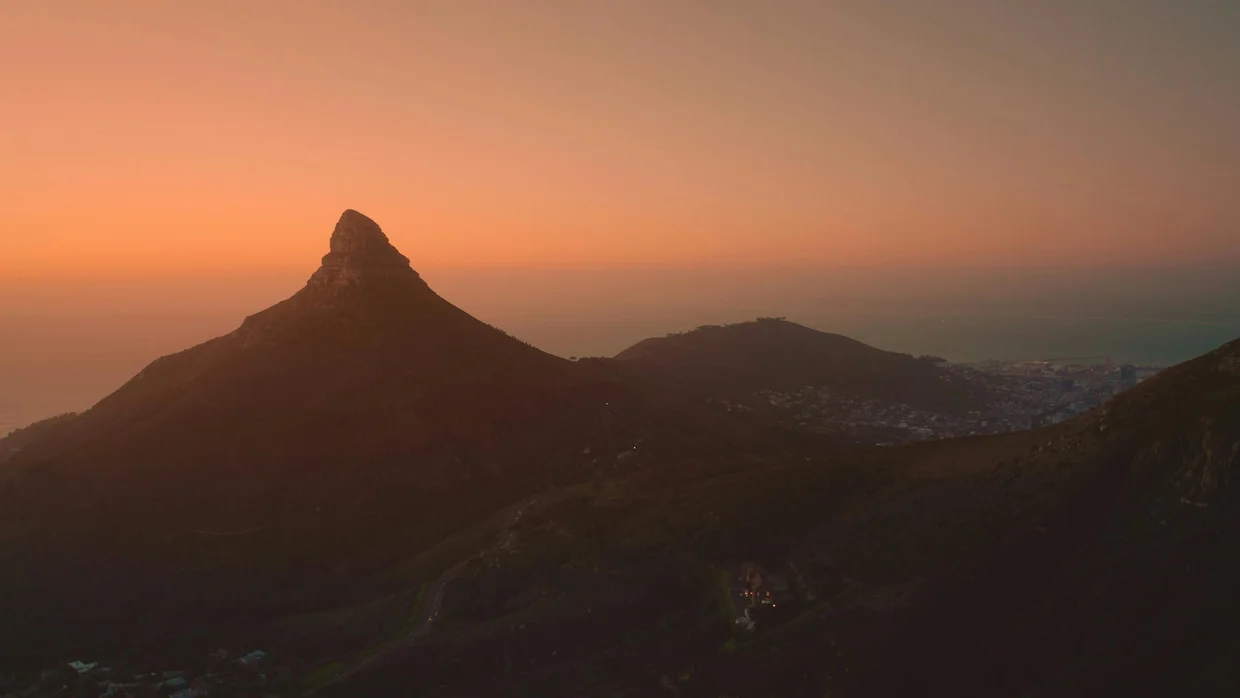
Lion's Head Sunset Hike
Lion's Head is the conical peak next to Table Mountain, and hiking it for sunset is one of the best things you can do in Cape Town. The trail takes about an hour up and spirals around the peak with 360-degree views of the city, Table Mountain, Camps Bay, and the Atlantic. The final section has chains and ladders bolted into the rock, which sounds more dramatic than it is but does get the heart rate up. The summit at sunset is a communal experience: locals and visitors sit on the rocks with wine and snacks, watching the sun drop into the Atlantic while Table Mountain turns gold behind them. It's special. Bring a headlamp for the descent, because it gets dark fast once the sun goes and you do not want to be navigating chains in the dark without one.
How to Get There
The trailhead is at the signal station parking area on Signal Hill Road, about 10 minutes by car from the City Bowl. Street parking fills up quickly for sunset hikes. Uber is reliable for drop-off but arrange pickup in advance for the descent.
Notes
- Full moon hikes are extremely popular; expect crowds
- Bring a headlamp for the descent; the path is not lit
- The chains section has an easier bypass route if you're not comfortable with scrambling
- Parking at the signal station fills up fast for sunset; arrive early or Uber
- Carry water; there's no shade and no water on the trail
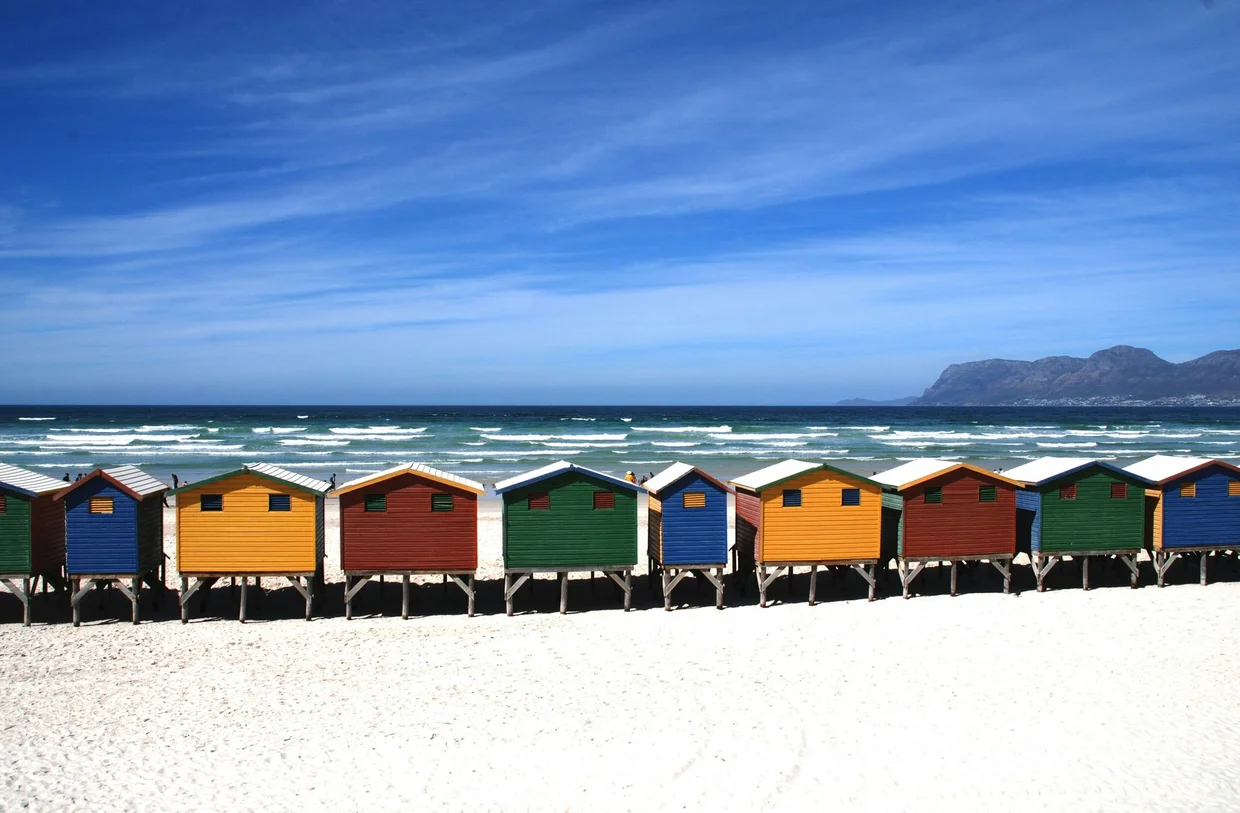
Muizenberg Beach & Surfing
Muizenberg is where Cape Town surfs. The waves are gentle and forgiving, which makes it the best place in the city to learn. Surf schools line the beachfront and will have you standing up on a board within an hour or two, or at least falling off with style. The colorful beach huts are the most photographed things on the False Bay side and they really are as cheerful in person as they look in pictures. The water on this side is warmer than the Atlantic (which is a low bar, but still). Beyond the surfing, Muizenberg has a relaxed, slightly bohemian character that's a welcome change from the more polished parts of Cape Town. Grab a coffee, walk the beach, and enjoy the fact that you're not in Camps Bay paying three times as much for everything.
How to Get There
Muizenberg is about 30 minutes from central Cape Town via the M3. Also reachable by Southern Line train from Cape Town station to Muizenberg station, a 40-minute ride along the coast.
Notes
- Surf lesson prices typically include board and wetsuit rental
- The beach has shark spotters during summer; pay attention to the flags
- Morning is usually best for waves and fewer crowds
- The beach huts are at the southern end near the surf shops
- Combine with a stop in Kalk Bay (10 minutes away) for lunch and antique shopping
District Six Museum
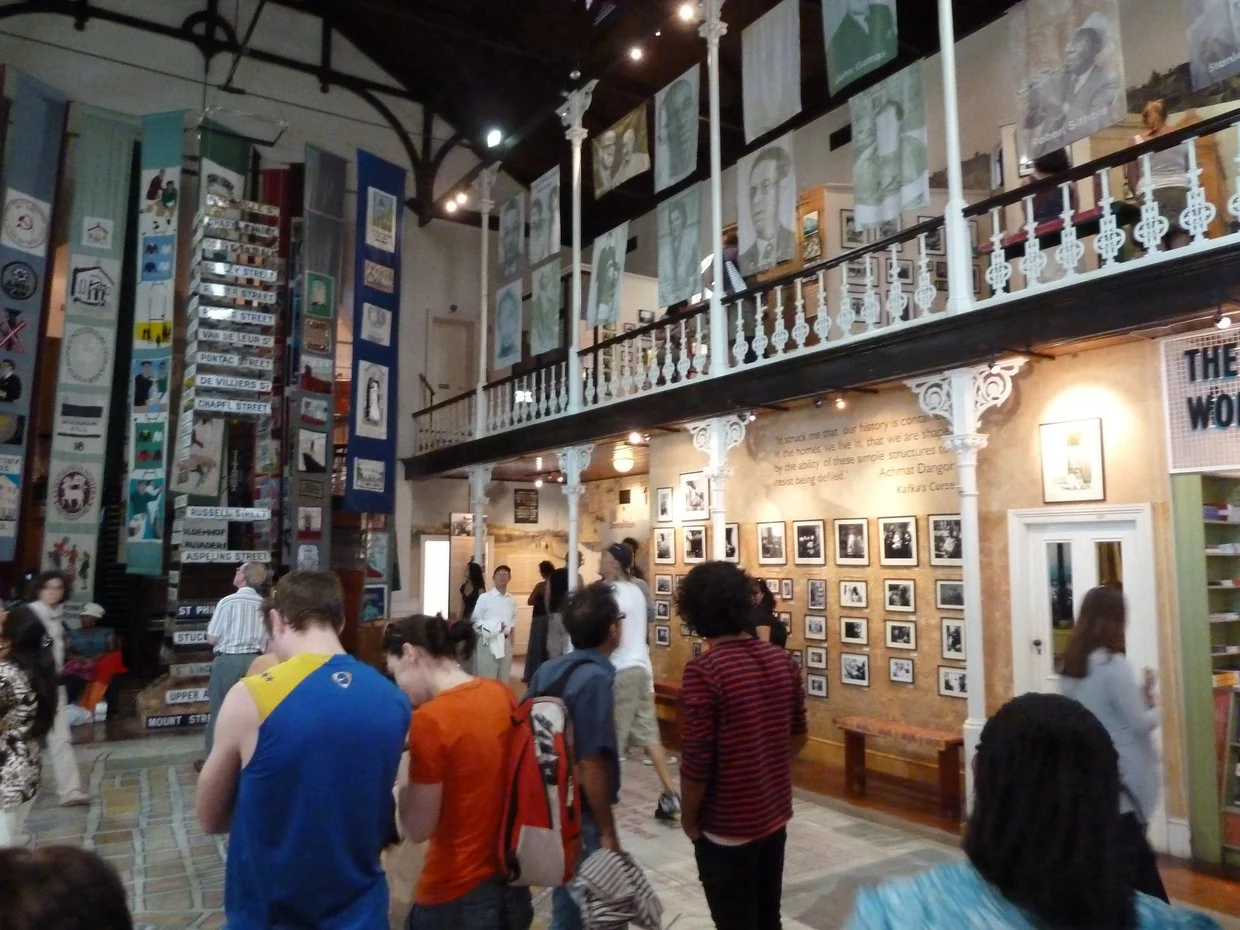
District Six was a vibrant, mixed community of 60,000 people in central Cape Town. During apartheid, the entire neighborhood was declared a whites-only area. Everyone was forcibly removed. The buildings were bulldozed. Today, the land is still mostly empty, a scar in the middle of the city that the government never managed to fill with anything meaningful. The District Six Museum, housed in a former church, preserves what was lost: photographs, street signs, personal belongings, and the memories of people who lived there. Former residents sometimes volunteer as guides, which makes the experience deeply personal. It's not a cheerful visit, but it's an important one. You'll understand Cape Town differently after seeing it.
How to Get There
The museum is on Buitenkant Street, walkable from the City Bowl in about 15 minutes. Close to the Cape Town train station.
Notes
- Former residents occasionally lead tours; ask at the front desk
- The floor map of the old neighborhood, drawn by former residents, is the emotional centerpiece
- Photography is allowed but be respectful
- Combine with a walk through the surrounding area to see the emptiness where the neighborhood once stood
- Small bookshop on site with excellent material on Cape Town's history
Published 2020. Last update March 2026