The Country That Runs on Its Own Clock
Spain is the kind of country where dinner at 10 PM is considered early, a two-hour lunch break is a constitutional right, and nobody bats an eye when a three-year-old is running around a restaurant at midnight. You're gonna walk in expecting "basically Italy but with paella," and you're gonna walk out wondering why you ever lived anywhere that dinner starts at 6 PM like some kind of punishment.


This is the second-largest country in Western Europe, and it's so absurdly varied that you could spend a month here and still feel like you've only scratched the surface. In the south, Andalusia has Moorish palaces that'll make your jaw hit the floor. Up north, the Basque Country has a food scene that makes the rest of Europe look like it's not even trying. The islands are their own universe: Mallorca's got cliffs and cathedrals, the Canaries have literal volcanoes and laurel forests that look like something out of a dinosaur movie. And somewhere in the middle, there's a giant plateau where it gets so hot in summer that the locals just collectively agreed to shut everything down for three hours every afternoon and call it a siesta. Which, if you think about it, is the most reasonable cultural invention in human history.
I've spent a good chunk of time in the south, on Mallorca, and in the Canary Islands. Haven't done Barcelona or the north yet, so I'm not gonna pretend to cover those. But the parts I have seen? They're kinda ridiculous in the best way.

Why Spain
The food will ruin you for everywhere else. I'm not being dramatic. OK, I'm being a little dramatic. But tapas culture alone is worth the flight. You walk into a bar, you order a beer for two euros, and in Granada they just hand you a plate of food for free. Free. With your drink. And it's not sad bar snacks either, it's actual proper food. Then you go to the next bar, get another beer, get another free tapa. You do this five or six times and you've had dinner, you've had a great time, and you've spent maybe 15 euros. Name another place in Western Europe where that's possible. I'll wait.
The variety is almost unfair. You wanna lie on a beach? Spain's got beaches on the Atlantic, the Mediterranean, and in the middle of the actual ocean (Canary Islands, sitting off the coast of Africa like they took a wrong turn). You wanna see mountains? The Sierra Nevada has snow on top while people are sunbathing on the coast two hours away. You wanna see volcanoes? The Canaries have got one that erupted in 2021, and you can literally walk around the lava fields. You wanna see medieval towns? Moorish architecture? Roman ruins? Modern art? Spain has all of it, and somehow it all feels like Spain.

The lifestyle is contagious. Give it three days and you'll start eating dinner at 10 PM without even thinking about it. Give it a week and the idea of going back to a country where restaurants stop serving at 9 PM will feel borderline hostile. The Spanish pace of life is not laziness. It's a deliberate choice to prioritize living over rushing. Meals take time. Conversations take time. Walking through a beautiful town at sunset with an ice cream cone takes time. And none of that time feels wasted.
It's still affordable. Not as cheap as it was ten years ago, and Barcelona and Madrid have gotten expensive for accommodation. But once you step outside the biggest tourist hotspots, Spain is genuinely good value for Western Europe. Full meals with wine for 12-15 euros. A beer for under 2 euros. A glass of good Rioja for 3 euros. The islands are slightly pricier, but even there you're not gonna feel robbed.
The people are warm in a way that doesn't feel performative. Spaniards are loud, expressive, direct, and generally very welcoming to visitors who make even the slightest effort. Learn "hola," "gracias," and "una cerveza, por favor" and you're already on most people's good side. They'll forgive your terrible Spanish and probably offer you food.

The Regions
Spain has 17 autonomous communities, some of which consider themselves basically separate countries (looking at you, Catalonia and Basque Country). The regional differences are real. Food, language, architecture, climate, and general vibes shift dramatically as you move around. Here's the quick version.
Andalusia is the south, and it's what most people picture when they think "Spain." Flamenco, tapas, whitewashed villages, the Alhambra, and summer heat that could melt your resolve to do anything between 2 and 5 PM. I've got a separate, detailed page on Andalusia because there's way too much to fit here.
Catalonia and Barcelona are the northeast. Gaudi, the Sagrada Familia, a food scene that's world-class, and a distinct cultural identity complete with its own language. I haven't been yet, so I'll keep my mouth shut.
The Basque Country is the north, bordering France. San Sebastián has more Michelin stars per square meter than basically anywhere on earth. Bilbao has the Guggenheim. The coast is green and dramatic. Also haven't been yet, and it's high on the list.
Madrid is the capital, right in the center of the country on a high plateau. World-class museums (the Prado, the Reina Sofía), enormous parks, and a nightlife that considers 2 AM to be early evening. Haven't done it properly, and I know I'm missing out.
The Balearic Islands (Mallorca, Menorca, Ibiza, Formentera) are in the Mediterranean. Mallorca is the big one, and it's got way more to offer than the package-holiday reputation suggests. I've been to Mallorca and it kinda blew my expectations out of the water.
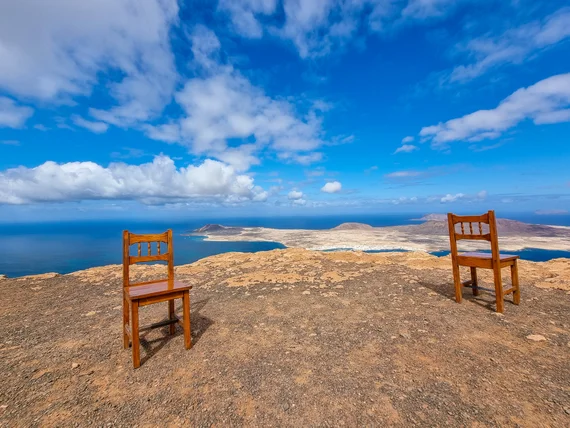
The Canary Islands are out in the Atlantic, closer to Africa than to mainland Spain, and they're volcanic, subtropical, and completely unlike anywhere else in Europe. I've been to several of them and they're absolutely wild.
Galicia is the green, rainy northwest. Think Ireland but with better food. Santiago de Compostela, the end of the Camino pilgrimage route, is here. Haven't been.
Valencia is the home of actual paella (not the stuff they serve in tourist traps in Barcelona). Also haven't been.
You see the pattern. Spain is enormous and I've got a lot of ground still to cover. But the parts I know, I know well. So let's talk about those.


Andalusia
Andalusia is southern Spain turned up to eleven. Eight centuries of Moorish rule left behind some of the most jaw-dropping architecture in Europe, and the Andalusians layered their own culture on top of it in the most extra way possible. Flamenco, sherry, fried fish, whitewashed villages, and a sun that genuinely does not quit.
I did Andalusia as a road trip, and I gotta tell you, it's one of the best driving destinations I've ever done. The landscape changes every hour: olive groves stretching to infinity, then dramatic gorges, then suddenly you're above the clouds in the Sierra Nevada, and then you drop back down to the coast and it's beaches and palm trees. The roads are good, the distances are manageable, and there's something worth stopping for around every corner.

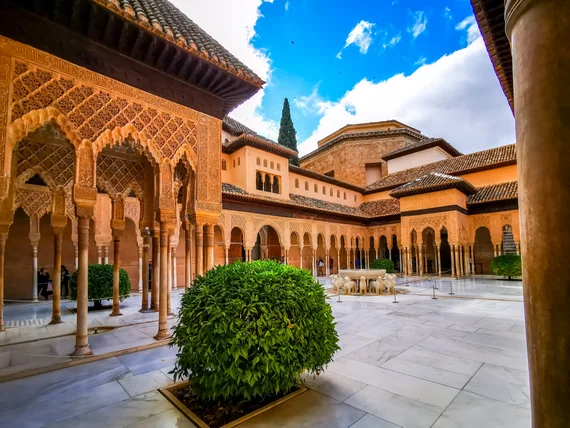
The Alhambra in Granada is the single most beautiful thing I've seen in Europe. I'm not throwing that around casually. The Nasrid Palaces have rooms where every surface, floor to ceiling, is covered in carved stucco and tilework so intricate that you'll stand there with your mouth open wondering how human beings made this with their hands. The Generalife gardens are the kind of peaceful that makes you wanna rethink your entire life. Book your tickets weeks in advance or you're not getting in. I'm serious.


Seville is loud, gorgeous, and runs on a rhythm that doesn't really get going until the sun starts to set. The old town is enormous, the architecture is absurdly beautiful, and the tapas scene is world-class. The Santa Cruz quarter with its narrow streets and flower-covered balconies is basically a movie set, except it's real and people actually live there.


Ronda sits on top of a cliff, split by a 100-meter gorge, with a bridge across it that shouldn't exist but does. You've probably seen photos. In person, it's even more absurd. The white villages (pueblos blancos) scattered through the mountains around Ronda are some of the most photogenic places in Spain. Zahara de la Sierra with its castle ruins perched on a rocky peak above a turquoise reservoir? Come on. That's not real. But it is.
The coast has two personalities. The Atlantic side (Costa de la Luz) is wild, windswept, and full of kitesurfers. Tarifa is where you can see Africa across the Strait of Gibraltar while people fly through the air on kite boards. The Mediterranean side (Costa del Sol) is more resort-heavy and calmer. I preferred the Atlantic side by a wide margin.


The Sierra Nevada is where Spain hides its mountains. You can drive from the beach to snow-capped peaks above the clouds in about two hours, which is the kind of geographic flex that most countries can only dream about.

I wrote a whole separate page on Andalusia because it deserves one. If you're doing Spain for the first time, Andalusia is probably where you should start. Or at least where you're gonna end up spending most of your time, whether you planned to or not.
Mallorca
Let me be real with you: I went to Mallorca expecting resort beaches and German tourists in sandals with socks. And sure, there's some of that. But the island also has one of the most spectacular mountain roads in Europe, a gorgeous historic capital, medieval villages, and landscapes that made me genuinely wonder why people associate this place with cheap package holidays.

The Serra de Tramuntana is the mountain range that runs along Mallorca's northwest coast, and it's legitimately stunning. The Sa Calobra road, this insane series of switchbacks that winds down through a limestone gorge to the sea, is one of the best drives I've ever done. You're turning hairpin after hairpin with sheer cliff walls on both sides and the Mediterranean appearing and disappearing below you. It's the kinda road where you gotta pull over every few minutes just because the view demands it.


The turquoise mountain reservoirs up in the Tramuntana look like they've been photoshopped. They haven't. The water really is that color, sitting between steep limestone walls with dramatic clouds overhead. It's gorgeous in a way that catches you off guard because you came to Mallorca for the beach and now you're standing in what feels like the Alps with Mediterranean weather.
Palma de Mallorca is a proper city with a proper soul. The old town around the cathedral has beautiful courtyards, narrow streets, and the kind of lived-in charm that resort towns can never replicate. The Plaza Major is one of those squares where you just wanna sit and watch people for an hour.


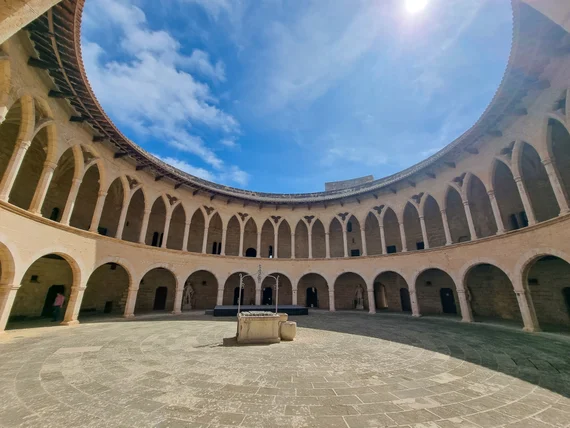
Castell de Bellver, up on the hill above the city, is a unique circular Gothic castle with a panoramic view over the bay that'll have you scrolling through your camera roll for weeks.
The rural interior has its own thing going on. Traditional fincas (farmhouses) with stone hearths and copper pots, black Mallorcan pigs grazing in olive groves, and a food culture that's way more interesting than what the beach restaurants suggest. Sobrassada, the island's cured sausage, is kinda incredible.


Mallorca is one of those places where the reputation and the reality are completely different animals. The reputation says "package holidays." The reality says "one of the most beautiful islands in the Mediterranean, and by the way, there's a 14th-century circular castle and a mountain road that'll make your palms sweat." Go in with low expectations and prepare to be corrected.
Canary Islands
The Canaries are wild. I mean that literally. These are volcanic islands sitting in the Atlantic off the coast of Africa, and they look like nothing else in Europe. You've got lava fields that could pass for Mars, laurel forests that are straight out of Jurassic Park, volcanoes you can walk around (one of which erupted in 2021, like, recently), and microclimates so extreme that you can drive 30 minutes and go from desert to cloud forest. It's bananas.

Tenerife has Mount Teide, Spain's highest peak and a volcano that sits in a caldera so massive it feels like you're on another planet. The drive through Teide National Park at sunset is one of those things that makes you go "this can't be real" out loud in your car. The golden light hits the lava formations and the whole landscape turns into something between a painting and a fever dream.


Lanzarote is the volcanic island that leaned all the way into its geology. The Timanfaya National Park is a lava landscape so alien that NASA has used it for training. You're driving through fields of black volcanic rock with craters and cones on the horizon, and then you stumble on La Geria, where they grow wine in individual holes dug into black volcanic soil, each vine sheltered by a small stone wall. It looks like a science fiction farming colony and it produces genuinely good wine. The green lagoon at El Golfo, the lava tube caves, the cactus garden... Lanzarote is basically an art installation disguised as an island.


La Palma is the green one, and it's spectacular. The Caldera de Taburiente is a massive volcanic crater that you can look into from the summit at Roque de los Muchachos, and the view is the kind of thing that makes you forget whatever was stressing you out that morning. The laurel forests at Los Tilos are ancient, dripping wet, and so impossibly green that your camera's gonna think it's malfunctioning. And then there's the 2021 eruption. The Cumbre Vieja volcano erupted for almost three months, destroying homes and covering parts of the island in lava. You can visit the affected areas now, and it's sobering and fascinating and beautiful in a way that feels wrong to call beautiful.


Gran Canaria has the famous Roque Nublo, a volcanic rock formation on a mountaintop, and from the viewpoint you can see Mount Teide on Tenerife floating above the clouds across the sea. Let me say that again: you're standing on one island, looking at a volcano on a different island, across actual ocean, and the volcano is poking out above a sea of clouds. It's one of the most ridiculous views I've ever seen.
Fuerteventura is the desert island. Dramatic layered mountains rising from arid plains, enormous sand dunes, and empty beaches that stretch for kilometers. It's the quietest of the major islands and perfect if you wanna feel like you're at the edge of the world.
La Gomera is small, steep, and famous for the "cloud waterfall," where trade wind clouds spill over the mountain ridge like a slow-motion avalanche. It's one of those natural phenomena that makes you feel like the planet is showing off.


The Canaries don't feel like Spain. They don't really feel like Europe. They feel like their own thing, which is exactly what makes them worth the trip. If you think you know what Spain looks like, the Canaries are gonna politely and thoroughly prove you wrong.
Best Time to Visit
Spain is big enough that "when to go" depends entirely on "where you're going." The short version: spring and autumn are golden, summer will test your heat tolerance on the mainland, and the Canaries are basically a cheat code for year-round good weather.
April to June is the sweet spot for most of Spain. The weather is warm but not murderous, wildflowers are out, the light is gorgeous, and the worst of the summer crowds haven't descended yet. Andalusia is green and blooming. Mallorca is warm enough for beaches but not yet overrun. May and early June are as close to perfect as you're gonna get on the mainland.
July and August are fine on the coast and islands but genuinely brutal inland. Seville and Cordoba regularly hit 42-45 degrees. Madrid bakes. The Spanish understand this, which is why everyone heads to the coast and the interior cities feel abandoned. If you're going to the Canaries, summer is actually great, the trade winds keep things comfortable. If you're going to inland Andalusia in August, I respect your bravery but question your judgement.
September and October are excellent. The summer heat breaks, the crowds thin out, the sea is still warm from months of sun, and prices come down. October can bring some rain but nothing dramatic. The light turns golden and the whole country feels like it's exhaling.
November to February is mild by Northern European standards. You can still do 15-18 degree days in Andalusia, and the Canaries sit at a comfortable 20-24 degrees year-round. Rain is more likely, especially in the north and on the mainland, but the upside is fewer tourists, lower prices, and a more local atmosphere. Winter is a perfectly good time for a culture trip if you're not chasing beach weather.
The Canaries year-round. This is the thing about the Canary Islands: they're always somewhere between 20 and 28 degrees. Always. It's almost annoying how consistent they are. If you want guaranteed decent weather in Europe during winter, the Canaries are your best bet. Full stop.
Food
Spanish food is built on the principle that ingredients should taste like themselves, portions should be generous, and eating should take at least two hours. If you're looking for fancy plating and foam on things, go to a Michelin-starred place in San Sebastian. The rest of Spain will hand you a plate of perfectly grilled something with a glass of wine and let the ingredients do the talking.
Tapas are the headline act. Small plates, meant for sharing, ordered at the bar or at a table. In most of Spain, you order and pay for individual tapas. In Granada and parts of Jaen, you get a free tapa with every drink. Let me repeat that because it still amazes me: you order a 2-euro beer and they give you a plate of food. For free. And it's not some sad olive. It's a proper portion of actual food. The tapas get better with each round. By your fourth drink, they're bringing you grilled fish and potatoes. It's the best deal in European dining and it's not even close.
Jamon iberico is Spain's gift to humanity. Cured ham from acorn-fed Iberian pigs, sliced thin, served at room temperature, and so good that you're gonna find yourself buying a whole leg at the airport. (Do it. It's worth the looks you'll get on the plane.) The quality ranges from "very good" to "life-changing," and the top-tier stuff, jamon iberico de bellota, is one of the finest cured meats on earth. You'll see ham legs hanging from the ceilings of bars across the country, and yes, they do just slice off pieces right there. It's beautiful.
Tortilla espanola is the potato and egg omelette that every Spanish grandmother makes and every Spanish person has an opinion about. Should the center be runny or set? Onions or no onions? These are questions that can end friendships. What's not debatable: a good tortilla is one of the most satisfying things you'll eat in Spain, and you'll find it in every bar in the country. Thick wedge, room temperature, two euros. Done.
Gazpacho and salmorejo are cold soups that make summer heat bearable. Gazpacho is the thinner one: tomatoes, peppers, cucumber, garlic, olive oil, vinegar, bread, all blended and served ice-cold. Salmorejo is the thicker, creamier version from Cordoba, usually topped with hard-boiled egg and jamon. Both are refreshing in a way that no drink can match when it's 40 degrees outside. I lean toward salmorejo, but that's a personal war.
Olive oil is not a condiment in Spain. It's a way of life. Spain produces more olive oil than any other country on earth, and the good stuff, the extra virgin from Jaen province, is green, peppery, and used on everything. Bread with olive oil and tomato (pan con tomate) for breakfast. Olive oil drizzled on grilled fish. Olive oil in gazpacho. Olive oil on olive oil. You're gonna start wondering why you've been cooking with anything else.
The wine. Oh, the wine. Spain has the largest area of vineyards in the world, and the wine is excellent and absurdly cheap. Rioja is the famous one, but Ribera del Duero, Priorat, Rias Baixas, and dozens of other regions produce wines that would cost three times as much if they had French or Italian labels on them. A glass at a restaurant is 2-4 euros. A good bottle at a shop starts at 5 euros. The Canaries even have their own wines, grown on volcanic soil in ways that look completely impractical but produce surprisingly interesting results.
And look: if someone offers you sangria, that's fine, but know that it's basically the tourist drink. Locals drink tinto de verano (red wine with lemon soda), which is simpler, less sweet, and what people actually order when they want a refreshing wine drink in summer. You're welcome for that intel.
Customs & Etiquette
Meal times will break your brain. Lunch is at 2 PM. Dinner is at 9:30 or 10 PM. These are not suggestions, they are the schedule. If you show up at a restaurant at 6 PM asking for dinner, they will look at you the way you'd look at someone eating cereal at 3 AM. Many restaurants don't even open for dinner until 8:30 or 9 PM. Adjust or starve. Actually, you won't starve, you'll just end up eating at tourist restaurants where the food is worse and the prices are higher. Eat on the Spanish schedule.
Tipping is not a big deal. Spain is not the US. Service is included in the price. Rounding up the bill or leaving a euro or two is nice and appreciated but absolutely not expected. Nobody will chase you down the street. Nobody will give you a dirty look. If the service was genuinely excellent, leave 5-10%. Otherwise, the coins from your change are totally fine.
The siesta is real but evolving. Small towns still shut down from about 2 to 5 PM. Big cities, not so much anymore, but many shops and non-tourist businesses still close in the early afternoon. Don't fight it. Use those hours for lunch (which is the main meal of the day), for resting, for sitting in a park. The Spanish didn't survive thousands of years of 40-degree summers by powering through the afternoon with a to-go coffee.
Greetings are physical. Two kisses on the cheek (right, then left) between women, and between men and women. Men shake hands with men. This is for social situations. Don't try it with the waiter. A simple "hola" works in shops and restaurants. "Buenos dias" (morning), "buenas tardes" (afternoon), and "buenas noches" (evening) are polite and appreciated.
Volume is not rudeness. Spaniards are loud. Restaurants are loud. Conversations happen at volumes that would constitute an argument in Scandinavia. This is not anger. This is enthusiasm. If someone is speaking to you loudly and gesticulating wildly, they're probably just telling you about their aunt's recipe for croquetas.
Don't mention the regions thing casually. Spain has strong regional identities, some of which come with serious political weight. Calling a Catalan "Spanish" or a Basque "Spanish" in the wrong context can be awkward. Calling paella "a Spanish dish" in Valencia is technically correct but emotionally fraught. It's kinda like telling someone from Texas they're "basically from California." Just read the room.
Getting Around
The AVE high-speed train is genuinely excellent. Madrid to Seville in 2.5 hours. Madrid to Barcelona in under 3 hours. It's fast, comfortable, punctual, and if you book in advance online, surprisingly affordable. The RENFE website is not the most user-friendly thing ever designed, but it works. The trick is booking early: advance tickets can be half the price of walk-up fares or less.
A rental car is essential for the countryside, the smaller towns, the pueblos blancos, the mountain roads, and basically anywhere the train doesn't go. Spanish highways are excellent and tolled in some sections. Secondary roads through the mountains are narrower but well-maintained and scenic. Driving in the big cities, though? Skip it. Seriously. Seville's old town is a one-way nightmare. Barcelona's traffic is dense. Madrid is chaotic. Park outside the center and walk, or just don't drive in cities at all.
Buses fill every gap the train network misses. ALSA is the big national operator. Buses are cheap, generally punctual, and reach towns that the train doesn't. For island hopping in the Canaries, inter-island ferries (Fred Olsen, Naviera Armas) connect the main islands, and the buses on each island are functional if not exactly thrilling.
Domestic flights make sense for the islands and for long mainland distances. Flying from the mainland to the Canaries takes about 3 hours and budget airlines keep prices reasonable if you book ahead. Island-hopping by plane between the Canary Islands is quick, cheap, and sometimes the only practical option.
Within cities, the metro systems in Madrid and Barcelona are excellent. Seville has a basic tram. Most old towns are best explored on foot. Taxis exist everywhere. Uber is complicated in Spain (it's been on-and-off with various legal battles), but Cabify works as the local ride-hailing alternative in major cities.
For Mallorca, a rental car is basically non-negotiable if you wanna see anything beyond Palma and the resort strip. The Sa Calobra road alone is worth the rental. Public buses exist on the island but they're more of a "getting between towns" option than a "exploring the mountains" option.
Costs
Spain is one of the best-value countries in Western Europe. It's not Eastern-Europe-cheap, but compared to France, Italy, the UK, or Scandinavia, your money goes noticeably further here. And the quality you get for the price is, frankly, kind of unfair to other countries.
The prices shown here are meant as a rough guide and can vary over time. While I update exchange rates regularly, local prices are typically refreshed only when I revisit the destination.
The biggest money-saver is the food culture. Tapas bars serve small portions at small prices, the menu del dia (set lunch) at most restaurants is a three-course meal with bread and a drink for 10-14 euros, and in Granada the free tapas can literally cover your dinner. Spain makes it very easy to eat well without spending much. The main budget traps are tourist-facing restaurants on main squares, overpriced cocktails in trendy nightlife areas, and accommodation in Barcelona and Madrid during peak season.
Safety & Health
Spain is very safe. It consistently ranks among the safest countries in Europe for travelers. Violent crime affecting tourists is extremely rare. The main concerns are practical and preventable.
Pickpocketing is the big one, and it's concentrated in a few specific places: Barcelona (Las Ramblas, the metro, tourist attractions), Madrid (Gran Via, metro, Retiro Park), and to a lesser extent Seville and other tourist cities. Standard precautions apply: front pocket or crossbody bag, be aware in crowds and on public transport, don't leave your phone on the restaurant table. Barcelona in particular has a well-earned reputation for this, so be extra alert there.
The heat in summer is not a joke. Inland Spain, especially Andalusia, Castile, and Extremadura, routinely hits 40-45 degrees in July and August. Heatstroke is a real risk if you're walking around sightseeing in the middle of the day. Hydrate aggressively, seek shade, and respect the siesta hours. They exist for a reason.
Ocean currents on the Atlantic coast (Canaries, Galicia, Andalusia's Costa de la Luz) can be strong. Beaches with lifeguards fly flag systems: green is safe, yellow is caution, red means don't go in. Respect the flags. The Mediterranean side is generally calmer, but rip currents exist anywhere there's surf.
Driving in Spain is mostly fine. Highways are well-maintained. The tricky bits are mountain roads (narrow, winding, sometimes with loose gravel), roundabouts (they're everywhere and the lane discipline is creative), and city driving (avoid). Drink-driving limits are strict and enforced.
Healthcare is good. Public hospitals exist in all major cities. EU citizens with an EHIC card get public healthcare access. Pharmacies are everywhere and pharmacists can help with minor issues. Travel insurance is always smart. The Canary Islands have full hospital infrastructure on the major islands.
Tap water is safe on the mainland and on the major islands. Some of the smaller Canary Islands and parts of Lanzarote have desalinated water that's safe but tastes a bit mineral-heavy. In those cases, bottled water is cheap and widely available.
What to Skip
Tourist restaurants on famous squares. The restaurants right on Plaza de Espana in Seville, the Ramblas in Barcelona, the waterfront in Malaga, the area around the Alhambra in Granada. Beautiful places to sit. Terrible places to eat. The food is mediocre, the prices are inflated, and you're literally two blocks away from places that are better and cheaper. Walk away from the landmark, turn a corner, and look for the place full of locals. That's where you eat.
All-inclusive resorts as your only Spain experience. There's nothing wrong with wanting a beach holiday. But if you fly to Mallorca, stay at a resort in Magaluf, eat at the hotel buffet for a week, and fly home, you haven't experienced Spain. You've experienced a hotel. The actual island, with its mountains, villages, and food, is right there. Leave the resort. Even for a day. You won't regret it.
Sangria as your main drink. I'm gonna get emails for this one. But sangria, the way it's served in tourist bars, is overpriced, over-sweetened wine punch. It's fine as a novelty, but if you wanna drink what Spaniards actually drink in summer, order a tinto de verano. Red wine, lemon soda, ice. Cheaper, simpler, better. Or just drink the house wine. It's gonna be good and it's gonna cost nothing.
Flamenco dinner shows for tour groups. The ones where they bus you in, give you a mediocre dinner, and present a sanitized show at 7 PM. If you wanna see real flamenco, find a small tablao or pena flamenca in Seville's Triana neighborhood or in Jerez de la Frontera. Smaller venue, later start time, actual emotion. Warning: real flamenco doesn't start until 10 or 11 PM, because this is Spain and nothing starts before 10 PM.
The Costa del Sol resort strips. Torremolinos, Fuengirola, parts of Benalmadena. They're functional beach towns with the charm of a duty-free shopping mall. If you want Mediterranean beach time, the smaller towns are better. If you want Atlantic coast, the Costa de la Luz is better still. If you want the best beaches in Spain, the Canaries or Galicia will surprise you.
Paella outside of Valencia. I know, I know. But paella is a Valencian dish, and the versions served in tourist restaurants in Barcelona and Madrid are often overpriced, underwhelming, and would make a Valencian cry. If you must have paella, go to Valencia. Otherwise, eat what the region you're actually in is famous for. Andalusia has tapas. The Basque Country has pintxos. Galicia has pulpo. Every region has its thing. Eat that thing.
What Not to Skip
The Alhambra. It's the most visited monument in Spain for a reason, and it genuinely lives up to the hype. The Nasrid Palaces are unlike anything else in Europe. Book tickets at least 2-4 weeks in advance. In peak season, book as far ahead as possible. I can't stress this enough: they sell out.

Tapas hopping in Granada. Order a drink, get a free tapa. Walk to the next bar, repeat. Do this five or six times and you've had dinner, a bar crawl, and you've spent the price of a mediocre sandwich back home. Start around Calle Navas or Plaza Nueva and let the evening take you where it wants to go.
At least one mountain drive. Whether it's the Sa Calobra road in Mallorca, the Sierra Nevada from Granada, or the road through Teide National Park in Tenerife, Spain's mountain roads are spectacular. Rent a car, pick one, and give yourself a full day. Pull over constantly. The views deserve it.
The Canary Islands. Most mainland-focused Spain trips skip them, and that's a mistake if you've got the time. They're a 3-hour flight from the mainland, flights are cheap, and they'll show you a version of Spain you didn't know existed. Lanzarote for the volcanic madness. La Palma for the forests and the caldera. Tenerife for Teide. Pick one or do a few. You won't be bored.
A proper market visit. Mercado de San Miguel in Madrid (touristy but fun), Mercat de la Boqueria in Barcelona (even more touristy but worth it early in the morning), Mercado de Atarazanas in Malaga (less touristy, genuinely great). Spanish food markets are an experience: the colors, the smells, the vendors who'll insist you try something before you buy. Go hungry.
Cadiz. Most visitors skip it for Seville and Granada, and that's a shame. Cadiz is 3,000 years old, almost entirely surrounded by water, and has the best food culture in Andalusia. The old town is compact, walkable, and full of life. If you can fit it in, do.

Watching the sunset from somewhere high. Spain does sunsets like nowhere else. From the Alhambra over Granada. From Castell de Bellver over Palma's bay. From Teide National Park as the lava fields turn gold. From a chiringuito (beach bar) on the Costa de la Luz with your toes in the sand. Pick your spot. You'll remember it.
Destination Info
Published March 2026.