The City That Eats Your Wallet
London is gonna cost you. Let's get that out of the way right now. A pint will set you back six quid. A hotel in Zone 1 will set you back your dignity. A black cab from Heathrow will set you back the price of a long weekend in Lisbon. And you're gonna pay all of it, gladly, because London is one of those cities that justifies every single penny it takes from you.
This is a city of nine million people spread across a patchwork of neighborhoods so different from each other that calling them all "London" feels like a stretch. A Roman wall sits next to a glass skyscraper. A 950-year-old fortress shares a skyline with a building shaped like a pickle. The Houses of Parliament look the same as they did in every history textbook you ever opened, and across the river, the Tate Modern fills a former power station with art that would've gotten you arrested in the century Parliament was built.

I came to London expecting the postcard. Big Ben, red phone boxes, guys in funny hats guarding a palace. I got all of that. I also got a city so ridiculously layered that I could've spent a month and still not scratched the surface. Every neighborhood has its own personality, its own food scene, its own vibe. Shoreditch and Chelsea exist in the same city the way fire and ice exist in the same universe: technically possible, fundamentally incompatible.


Here's what nobody tells you before your first visit: the best stuff is free. The British Museum, the Natural History Museum, the Tate Modern, the National Gallery, the V&A, the Science Museum. All free. Every single one. In a city this expensive, walking into world-class museums without paying anything feels like a glitch in the system. Don't question it. Just enjoy it.

Westminster & The Icons
This is the London you already know. You've seen it in movies, on postcards, in every tourism campaign the UK has ever produced. And yeah, it looks exactly like that in person. Which is kinda the point and kinda the problem, because when you finally stand in front of Big Ben, your brain goes "yep, that's Big Ben" and then isn't quite sure what to do next.


The Palace of Westminster (that's the official name for the Houses of Parliament) is one of those buildings that's genuinely more impressive in person than in photos, if only because photos can't capture the scale. It stretches along the Thames like it's trying to prove something, all Gothic Revival detail and vertical drama. You can't just walk in, but you can book tours when Parliament isn't in session, and they're worth doing if you wanna see where democracy gets loudly argued about.


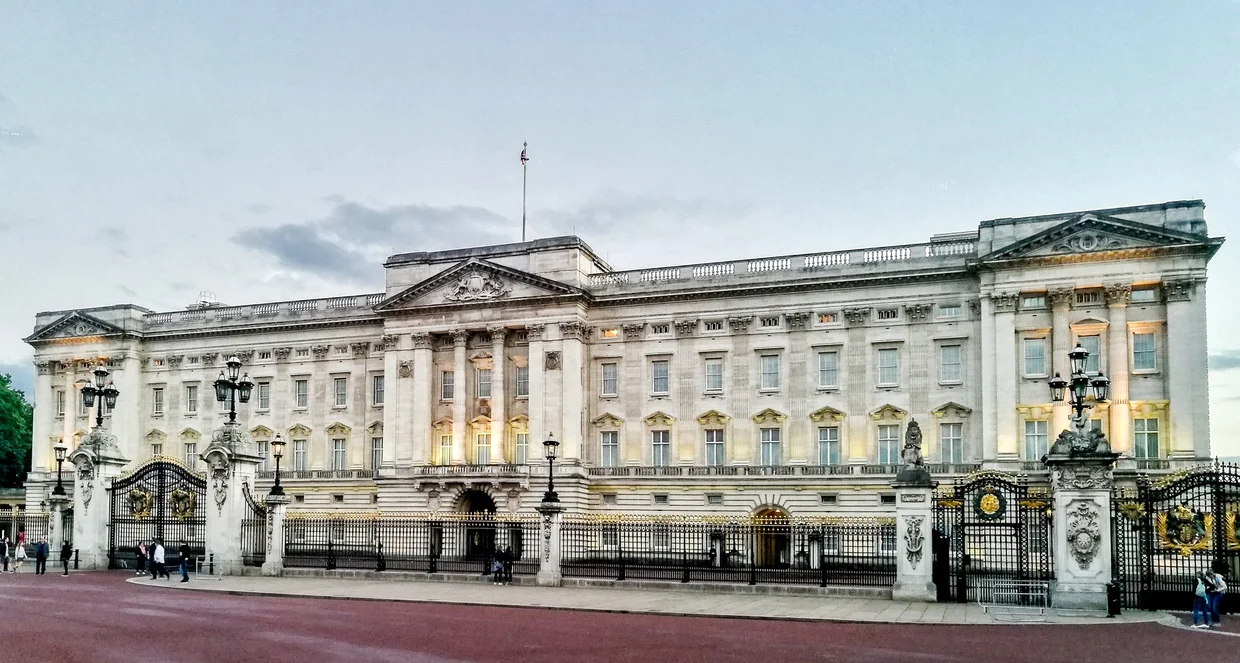
Buckingham Palace is the other big one. The facade is grand in a "we conquered a quarter of the planet and here's the receipt" kind of way, and the Queen Victoria Memorial in front of it is a massive marble-and-gold centerpiece that nobody seems to photograph properly because everyone's too busy trying to see over the crowd.

The Changing of the Guard happens at 11:00 AM and it's the most overrated free attraction in London. I'll say it. Hundreds of people crammed behind barriers trying to catch a glimpse of soldiers marching across a courtyard that's too far away to properly see from any public vantage point. If you really wanna see it, arrive 45 minutes early for a decent spot. Otherwise, watch it on YouTube from your hotel room and spend that hour at a museum instead.


What you should not skip, though, is Wellington Arch. It sits at the top of Constitution Hill, a short walk from the palace, and most tourists walk right past it on their way somewhere else. The arch is illuminated at dusk and the quadriga (the chariot sculpture on top) is one of the most dramatic pieces of public art in London. There's a small exhibition inside with a terrace that gives you views up and down Constitution Hill.

The Square Mile
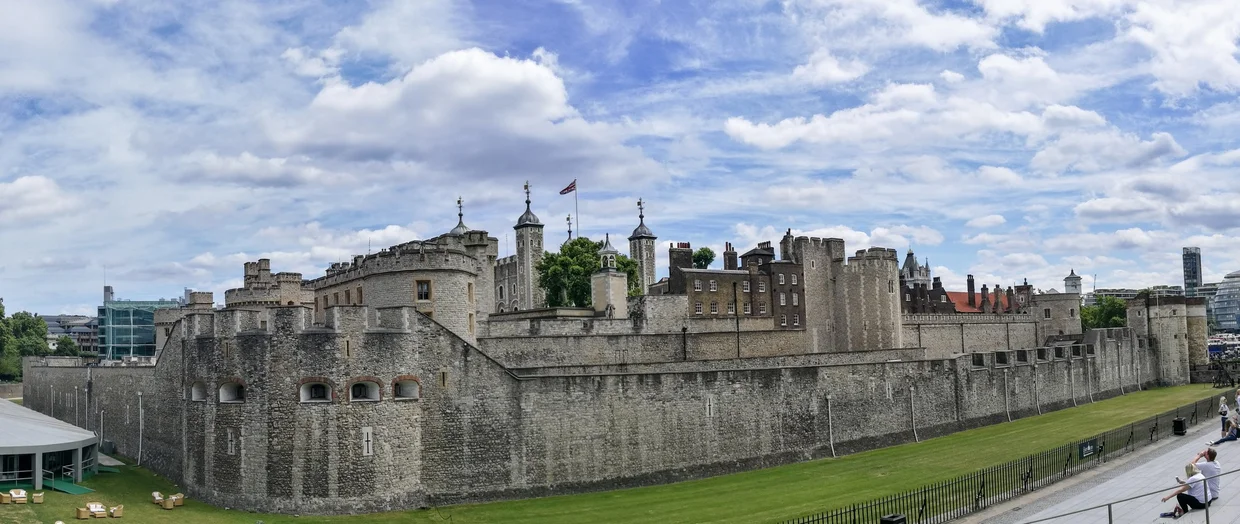
"The City" in London means something very specific. It's not the whole city. It's the City of London, aka the Square Mile, the ancient heart of Roman Londinium turned global financial capital. And it is, without exaggeration, one of the most visually insane neighborhoods you'll ever walk through. Medieval churches sit directly beneath glass-and-steel towers. A 950-year-old fortress guards the eastern edge while the Gherkin, the Walkie Talkie, and the Cheesegrater compete for attention behind it. It looks like someone played two different eras of SimCity at the same time.

The Tower of London is the anchor of this area and one of the few paid attractions in London that's worth every penny of the (admittedly steep) entrance fee. It's been a royal palace, a prison, an execution site, a zoo, and a treasury. The Crown Jewels are inside, and the queue moves faster than you'd expect. The Yeoman Warders (Beefeaters) give tours that are surprisingly funny and morbidly detailed. They live on the grounds. This is their home. And they will tell you exactly which patch of grass someone famous got beheaded on, with relish.

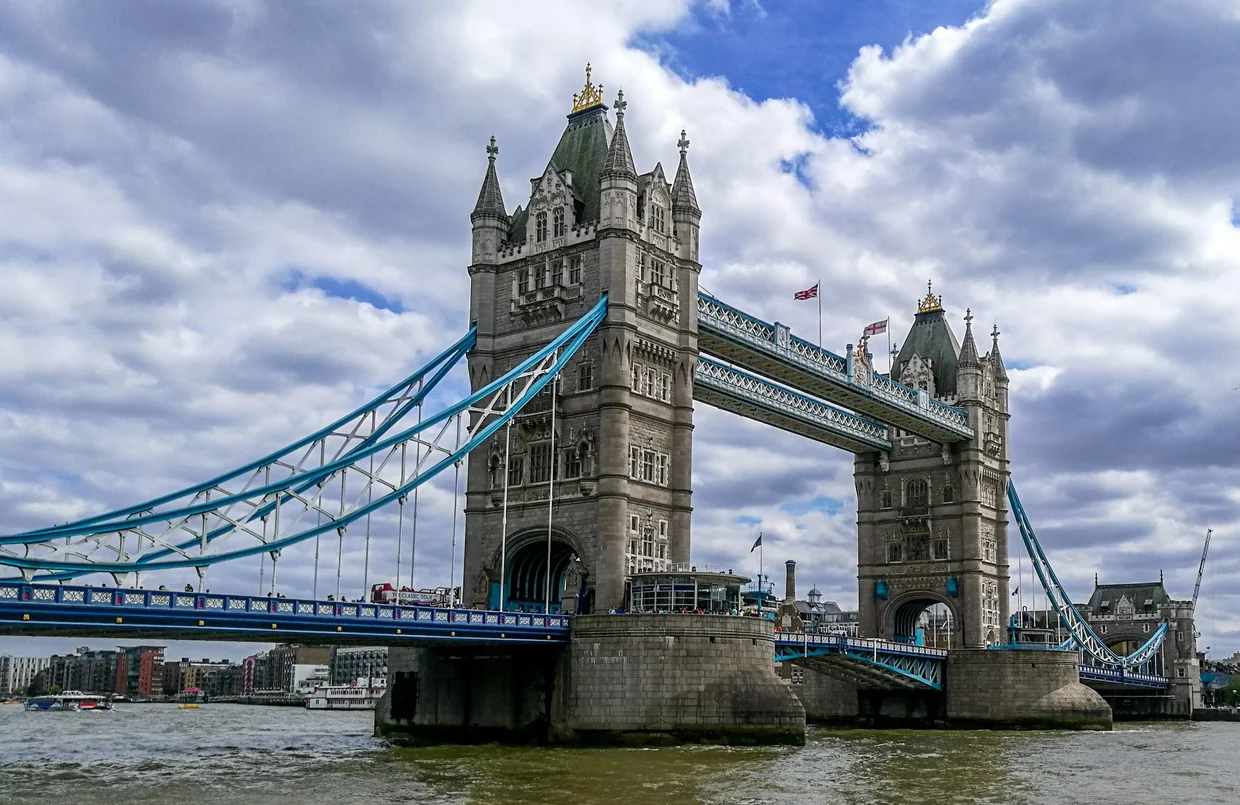
Tower Bridge is right next door and it's the bridge you're thinking of when you say "London Bridge" (which is actually a different, much more boring bridge nearby). You can go up inside the towers, walk across the glass floor high above the Thames, and learn about the Victorian engineering that makes the drawbridge work. It still opens for tall ships, and if you happen to be there when it does, it's genuinely thrilling.


But the real spectacle in the City is the architecture. The contrast between old and new is so extreme it borders on performance art. The Gherkin (30 St Mary Axe) is the most famous shape in the London skyline, and seeing it rise behind a medieval church steeple on Leadenhall Street is one of those shots that makes you stop mid-stride.


Here's a tip most visitors don't know: the City empties on weekends. Monday through Friday it's packed with finance workers in suits. Saturday and Sunday it turns into a ghost town. If you wanna photograph this area without thousands of commuters in the frame, go on a weekend morning. You'll have the streets, the churches, and the architectural contrasts almost entirely to yourself.

The South Bank
If you do one walk in London, make it this one. Start at Westminster Bridge, turn left, and follow the Thames Path east along the South Bank. You'll pass the London Eye, the Southbank Centre, the National Theatre, the Tate Modern, Shakespeare's Globe, Borough Market, and end up at Tower Bridge. It's about five kilometers, it's flat, it's free, and it's the single best way to understand London's relationship with its river.

The Tate Modern is the South Bank's crown jewel. A massive Bankside power station converted into one of the world's best modern art museums. The Turbine Hall alone is worth the visit: a vast, cathedral-scale industrial space where they install enormous commissioned artworks that change regularly. The permanent collection has Picasso, Warhol, Rothko, and pretty much every name you'd expect. And it's free. (I'm gonna keep repeating this about London's museums because it still blows my mind.)
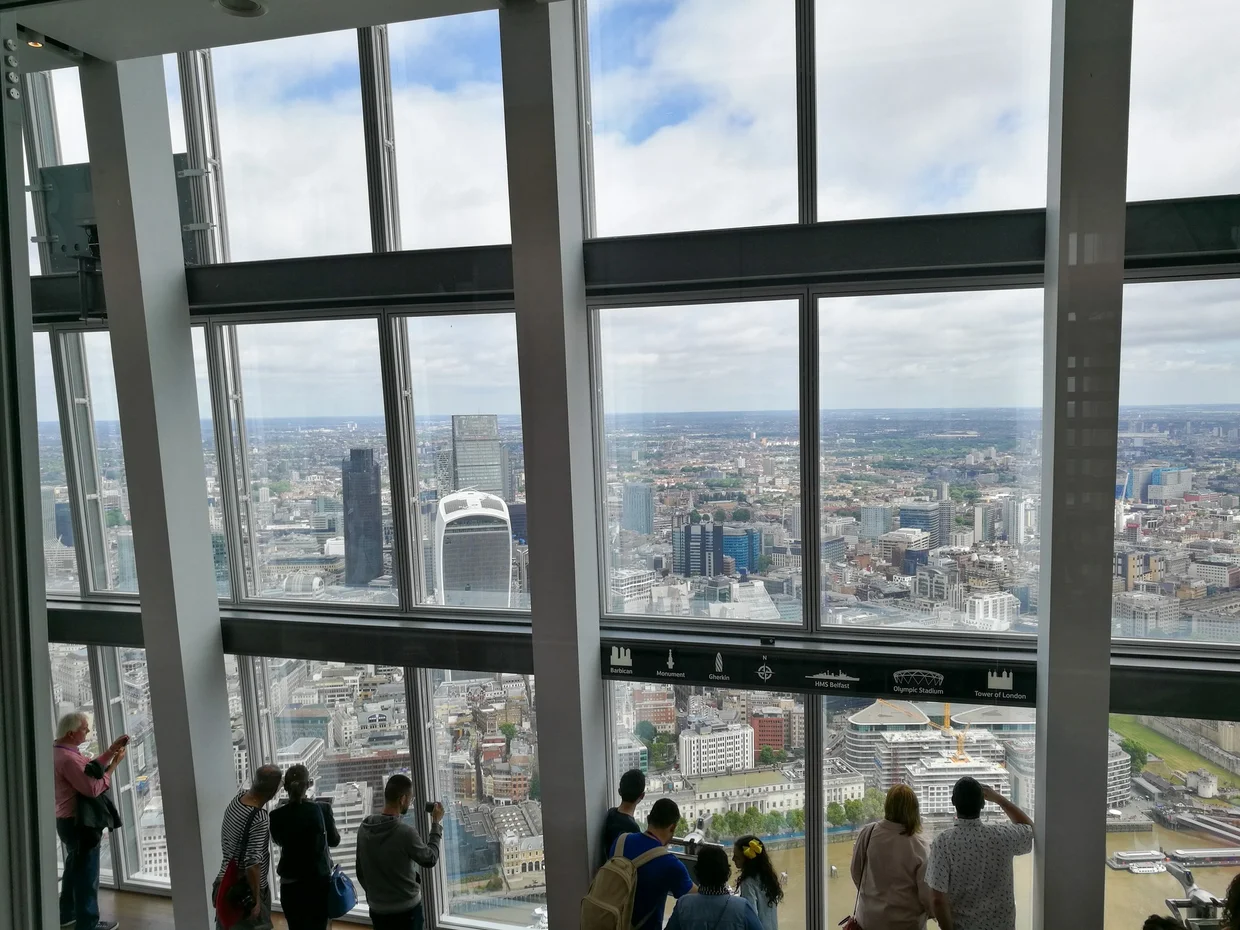
The Shard sits on the South Bank too, and you can go up to the observation deck on the 72nd floor for a panoramic view of the entire city. It's pricey (around 30 GBP), but on a clear day the view is genuinely staggering. You can see every landmark from up there, and the scale of London suddenly makes sense in a way it doesn't from street level.

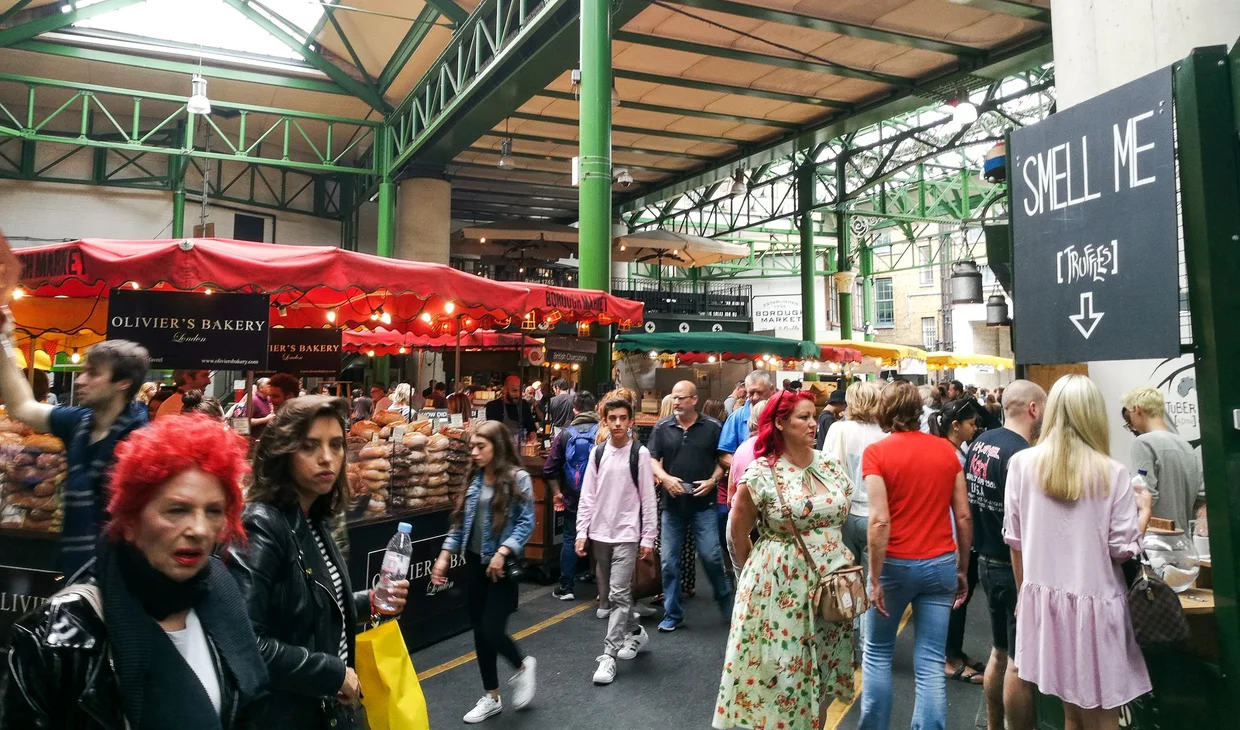
Borough Market is the food heart of the South Bank and arguably the best food market in the country. It's been operating in some form since the 13th century, and today it's a dense, noisy, overwhelming maze of stalls selling everything from artisan cheese to Ethiopian injera to fresh oysters to sourdough bread to raclette melted directly onto potatoes. Come hungry. Come with cash (some stalls are still cash-only). And come on a weekday if you can, because weekends are shoulder-to-shoulder packed.


The London Eye is on the western end of the South Bank and, look, I'll be blunt: it's fine. The views are nice but not dramatically better than what you get from the Shard or the free Sky Garden in the Walkie Talkie. The ticket price is steep (over 30 GBP), the queue can be enormous, and a "flight" takes 30 minutes. If you've never done it, sure, go for it. If you're looking for views and value, the Sky Garden is the move.

The West End
The West End is London's sensory overload district. Piccadilly Circus, Leicester Square, Soho, Chinatown, Covent Garden, and the entire theatre district all crammed into a relatively small area. It's the bit of London that never sleeps, never quiets down, and never stops trying to sell you something.

Piccadilly Circus is the obvious starting point. The curved LED screens, the Eros statue (it's actually Anteros, the angel of selfless love, but literally nobody calls it that), and the constant stream of people from every corner of the planet. Stand there for ten minutes and you'll hear a dozen languages. It's a good meeting point and a terrible place to linger, because there's nothing to actually do at Piccadilly except look at Piccadilly.
Chinatown is a two-minute walk south, centered on Gerrard Street with its traditional gate. The food here is decent (not London's best Chinese food, which is actually further out in zones 2 and 3), but the atmosphere is great. Red lanterns overhead, bakeries with steamed buns in the window, and a density of dim sum options that would make you forget you're in England.

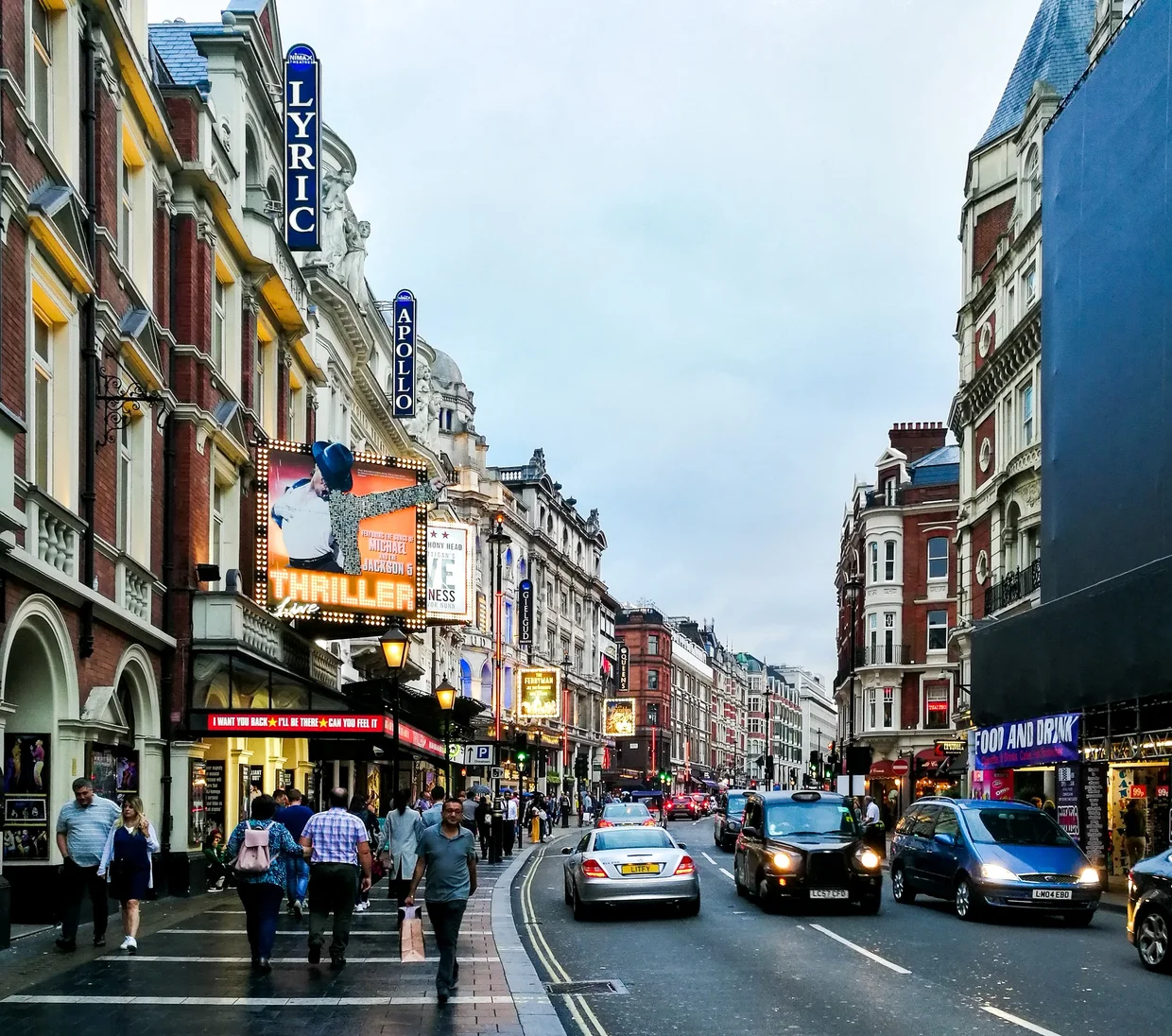
The West End theatre district is the real draw here. London's equivalent of Broadway, with over 40 theatres showing everything from long-running musicals (Les Mis has been going since 1985) to new plays to experimental stuff to whatever Andrew Lloyd Webber is doing this decade. If you wanna see a show, book in advance for the popular ones. For day-of deals, the TKTS booth in Leicester Square sells discounted tickets. The quality of West End theatre is world-class and generally cheaper than Broadway.

Leicester Square itself, I'll be direct: skip it. It's the tourist trap of tourist traps. Overpriced restaurants, chain stores, a Lego store, an M&M's World that is somehow four floors of candy-branded merchandise. Unless you're there for the TKTS booth or a film premiere, there is no reason to spend time in Leicester Square. Walk through it on your way to somewhere better. Soho is right next door, and Soho is a thousand times more interesting.

What to Do
There are many things to experience, to see and to do in London. This here is just my personal highlight. For a more comprehensive and detailed overview, visit my dedicated what to do in London page.
Tower of London
The Tower of London is 950 years old and has been a royal palace, a prison, an execution ground, a zoo, a mint, and a vault for the Crown Jewels. It's one of the few paid attractions in London that's... see more
British Museum
The British Museum is free, enormous, and contains roughly eight million objects spanning two million years of human history. That sentence alone should be enough to get you through the door. The... see more
Borough Market
Borough Market has been feeding London in some form since the 13th century, and today it's the best food market in the country. No debate. The covered market hall is packed with stalls selling artisan... see more
South Bank Walk
The South Bank walk from Westminster Bridge to Tower Bridge is the single best free activity in London and I will defend this opinion against all challengers. Five kilometers of flat Thames-side path... see more
The Shard
The Shard is Western Europe's tallest building and the viewing gallery on floors 68 to 72 gives you a 360-degree panorama of London that genuinely reframes how you understand the city. From up here,... see more
Buckingham Palace & Changing of the Guard
Buckingham Palace is the official London residence of the King and one of the most recognizable buildings on earth. The facade is grand, the Victoria Memorial in front is impressively over-the-top,... see more
Natural History Museum
The Natural History Museum is free, jaw-dropping, and one of the few places in London where the building itself is as impressive as the collection inside it. The main entrance hall is a Romanesque... see more
Tate Modern
The Tate Modern is a former Bankside power station converted into one of the world's best modern art museums. The Turbine Hall, the massive industrial space that greets you at the entrance, is worth... see more
Tower Bridge
Tower Bridge is the bridge you're thinking of when you say "London Bridge" (London Bridge is actually a different, much more boring bridge nearby). Built in 1894, it's a combination of suspension... see more
Camden Market
Camden Market is a sprawling collection of interconnected markets in north London that sells everything from vintage band t-shirts to handmade ceramics to street food from 40 different countries. The... see more
West End Show
London's West End is one of the two great theatre districts in the world (the other being Broadway), and catching a show here is one of those experiences that transcends whether you normally "like... see more
Sky Garden
The Sky Garden is a free public garden and observation deck on the top three floors of the Walkie Talkie building at 20 Fenchurch Street, and it might be the best free experience in London. Yes, free.... see more
Hyde Park & Kensington Gardens
Hyde Park and the adjoining Kensington Gardens together form a 250-hectare rectangle of green in the middle of one of the most expensive neighborhoods on earth. The Serpentine lake runs through the... see more
St Paul's Cathedral
St Paul's Cathedral is Sir Christopher Wren's masterpiece, rebuilt after the Great Fire of 1666 and still one of the most recognizable silhouettes in the London skyline. The dome is iconic from the... see more
Beyond the Center
Central London, the stuff covered above, is where the tourists go. And fair enough, it's spectacular. But if you want to understand what London actually feels like to the people who live here, you gotta get out of Zone 1 and into the neighborhoods that make this city genuinely great.
Camden is the punk-rock-meets-street-food neighborhood in north London. Camden Market is a sprawling maze of stalls selling vintage clothes, vinyl records, handmade jewelry, and food from about 40 different countries. The canal area has a nice walk along Regent's Canal, and the pubs have live music most nights. It's loud, it's a bit grungy, and it has more character per square meter than most entire cities.
Shoreditch is east London's creative hub. Street art on every wall, independent coffee shops in converted warehouses, vintage stores with prices that have long stopped being "vintage bargain" territory, and a bar scene that peaks around midnight. Brick Lane runs through the area and is London's famous curry street, though the reputation is kinda coasting on history at this point. The newer restaurants on the surrounding streets are where the good stuff is.
Notting Hill is the pastel-colored postcard neighborhood in west London, made famous by the movie. Portobello Road Market on Saturdays is the main draw: antiques, vintage, street food, and crowds that make Borough Market look spacious. The residential streets with their candy-colored townhouses are genuinely beautiful, but they're also genuinely some of the most expensive real estate in the world. Walking through Notting Hill is a bit like window-shopping for a life you can't afford.
Greenwich is south of the river and worth a half-day trip. The Royal Observatory is where GMT starts (you can literally stand on the Prime Meridian line). The view of London from the hill in Greenwich Park is excellent. The Cutty Sark is docked here, and the Maritime Museum is free and surprisingly interesting. Take the DLR for the best approach, or the riverboat from central London for a scenic route.
Brixton is south London with Caribbean soul. The covered Brixton Market (and the connected Brixton Village) is one of the best food destinations in London, with a mix of Caribbean, Colombian, Italian, Korean, and Vietnamese restaurants packed into tight indoor arcades. The area has a strong community identity that's held on through waves of gentrification, and the atmosphere is more genuine and more alive than anything you'll find in the tourist zones.
Food That Will Shut Up Every Critic
If you still think British food is bad, you haven't been to London since approximately 1997. The city's food scene has completely transformed, and it's now one of the most diverse and exciting food cities on the planet. This is not patriotic cheerleading. This is just what happened when a city with 270 nationalities decided to cook.
Fish and chips is still the classic, and you should have it at least once. Proper fish and chips means a thick fillet of cod or haddock in crispy batter, fat chips (not fries, chips), mushy peas, tartar sauce, and enough vinegar to dissolve the paper it comes in. Skip the tourist-trap chippies on major streets and ask a local or look for the places that have a queue of people who look like they've been coming for 20 years. That's your spot.
Borough Market is the food destination, as mentioned, but London has dozens of other food markets worth visiting. Maltby Street Market (smaller, cooler, less crowded). Broadway Market in Hackney (Saturday mornings, excellent vibes). Brixton Village (the best range of international food under one roof). Each one gives you a different slice of London's food diversity.
A Sunday roast is a London ritual and you should experience one. A proper pub Sunday roast is a plate loaded with roasted meat (or a vegetarian option at the good pubs), roast potatoes, Yorkshire pudding (a fluffy baked batter thing that's better than it sounds), vegetables, and gravy. The whole thing costs around 15 to 18 GBP at a decent pub, and it comes with the atmosphere of a packed room full of people in various stages of weekend recovery. This is comfort food at its most British, and it's excellent.
Curry is basically London's second national dish. Brick Lane in Shoreditch is the famous curry street, and while some of those restaurants survive on reputation and aggressive sidewalk touts, the newer spots on surrounding streets serve genuinely great Indian and Bangladeshi food. For something more upscale, Dishoom is a Bombay-style cafe chain that does breakfast naan rolls and black daal that people literally queue for an hour to eat. And yeah, the queue is worth it.
Street food in London has leveled up dramatically. The markets mentioned above plus places like Kerb, Mercato Metropolitano, and Pop Brixton offer everything from Korean fried chicken to Neapolitan pizza to Venezuelan arepas to Japanese gyoza. This is where London's diversity shows up strongest, and where you can eat incredibly well for under 10 quid.
Burgers deserve a shout. London's burger scene is absurdly good. Bleecker, Patty & Bun, Honest Burger, and a dozen independent spots serve smash burgers, double stacks, and loaded creations that would hold their own against anything in the States. If you're someone who judges a city by its burgers (no judgment, same), you're gonna be very happy here.
London is also very vegan-friendly. Plant-based options are everywhere, from dedicated vegan restaurants to mainstream menus that actually try. If you eat plant-based, you'll have no trouble in this city.
Where to Stay
Where you stay in London matters more than in most cities, because this place is huge and the Tube, while excellent, adds 20 to 40 minutes to every journey if you're based in the wrong spot. The good news is that every area has something going for it. The bad news is that nowhere in central London is cheap. Zone 1 hotels start at "ouch" and go up to "why." Zones 2 and 3 are noticeably cheaper with minimal travel time increase. Pick your base by what you want to be near, not by what looks central on a map.
South Kensington
The strongest all-round base for a first visit to London. South Kensington puts you within walking distance of three of the world's best museums (Natural History, V&A, Science Museum), all of which are free. Hyde Park and Kensington Gardens are a...
District map available here.
Activate Full Experience Mode to load the neighborhood map and inspect the best base visually.
Best Time to Visit
London doesn't have a bad season. It has a grey season, a greyish season, an occasionally sunny season, and Christmas. The weather is famously unreliable, and the joke about carrying an umbrella year-round is not a joke.
May to September is the best window. Days are long (sunset after 9 PM in June), temperatures are comfortable (18 to 24 degrees on average), and the parks are at their most lush. Summer is also peak tourist season, which means higher hotel prices and longer queues at popular attractions. But long summer evenings in London, sitting outside a pub by the Thames with a pint as the sun slowly sets, that's the kind of moment that makes you forgive all the rain.
October and November bring autumn colors to the parks and thinner crowds. Temperatures drop but stay mild enough (8 to 15 degrees). Rain picks up. Daylight hours shrink fast. But if you're OK with a jacket and an umbrella, this is a great time to visit for lower prices and a more local-feeling city.
December is when London goes fully festive. Christmas lights on Oxford Street and Regent Street, skating rinks at Somerset House and the Natural History Museum, winter markets at Southbank Centre and Hyde Park. It's cold (3 to 8 degrees), dark by 4 PM, and packed with Christmas shoppers. But the atmosphere is genuinely magical if you lean into it.
January to March is the lowest season. Cold, grey, short days. But also the cheapest hotels, the shortest museum queues, and a city that feels more like itself without the tourist layer. If budget matters and you own a warm coat, this is the window.
How Long to Stay
Four to five days is the minimum for a first visit that doesn't feel like a speed run. Two days for the central landmarks (Westminster, the City, the South Bank). One day for museums (you could spend a full day in the British Museum alone, so pick two or three and accept you won't see everything). One to two days for neighborhoods, markets, and wandering.
A week lets you breathe and explore beyond Zone 1. Add a day trip to Greenwich. Spend a lazy afternoon in a park. Walk the Regent's Canal from Camden to King's Cross. See a West End show on a weeknight when tickets are cheaper. Have a Sunday roast at a pub that a local recommended.
Two weeks and London starts revealing its depth. You'll find your coffee shop, your pub, your market stall, your bench in the park. London rewards repeated visits and long stays more than almost any city I know, because every layer you peel back reveals another layer underneath.
Getting Around
The Tube (London Underground) is the backbone of the city and your best friend. It's the oldest metro system in the world (opened 1863), it covers most of central and greater London, and it runs from about 5 AM to midnight (with Night Tube on some lines on Fridays and Saturdays). The map is iconic. The system is fast. And in summer, some of the deep lines turn into saunas because many tunnels don't have air conditioning. The Central Line in July is not for the faint of heart.
Use contactless payment. You don't need an Oyster card anymore. Just tap your bank card or phone at the barriers. The system automatically caps your daily and weekly spending, so you'll never pay more than the equivalent of a day pass. If you've got a contactless card or Apple/Google Pay, you're sorted. One less thing to figure out.

Buses are slower but scenic. The top deck of a London bus is one of the best free sightseeing experiences in the city. Route 11 goes past Buckingham Palace, Westminster, and the City. Route 15 runs along Fleet Street and past St Paul's. Buses run all night, which the Tube mostly doesn't.
Walking is often the fastest option for short distances. Central London is more compact than the Tube map suggests. Many stations that feel far apart on the map are actually a 10 to 15 minute walk from each other. And walking is how you discover the stuff that makes London special: the side streets, the pubs, the random blue plaques marking where someone famous once lived.
Black cabs are iconic but expensive. Uber works fine and is usually cheaper. Avoid both during rush hour unless you enjoy sitting in traffic watching the meter climb.
One more thing: look right first when crossing the road. Traffic drives on the left in the UK. If you're from continental Europe or anywhere else where traffic drives on the right, this will trip you up (possibly literally) for the first day or two. The painted road markings that say "LOOK RIGHT" at pedestrian crossings exist because enough tourists walked into traffic that someone decided signage was necessary.
Costs
London is expensive. Not "a bit pricier than expected" expensive. Properly, genuinely, eye-wateringly expensive. It's one of the priciest cities in Europe and regularly ranks among the most expensive in the world. But here's the thing: with smart choices, you can still have an incredible time without selling a kidney.
The prices shown here are meant as a rough guide and can vary over time. While I update exchange rates regularly, local prices are typically refreshed only when I revisit the destination.
The biggest savings come from two things: free museums (which are genuinely world-class, not "free because they're not worth paying for") and eating at markets instead of restaurants. A full meal at Borough Market or Maltby Street Market costs 8 to 12 GBP and is often better than a 25 GBP restaurant plate.
Tipping is not mandatory in London. Some restaurants add a 12.5% service charge automatically (check the bill). If they don't, leaving 10% is nice but not expected. Pubs: you don't tip at the bar. Ever. Just pay for your drink and say thank you.
What to Skip
Leicester Square. I already said it and I'll say it again. There is nothing here for you. Chain restaurants, overpriced everything, crowds that make walking a contact sport. Walk through it on your way to somewhere better.
The London Eye (maybe). It's not bad, but at 30+ GBP for a 30-minute rotation in a glass pod, it's hard to justify when the Sky Garden (free, same skyline, cocktails available) exists. If you've got kids, sure, they'll love it. If you're an adult with a budget, skip it.
Changing of the Guard as a standalone activity. Standing behind barriers for 45 minutes to catch a partial view of soldiers marching across a courtyard is not a great use of time. Walk past Buckingham Palace, enjoy it from the outside, and move on.
Oxford Street for shopping. It's London's most famous shopping street and also its most stressful. Packed with tourists, dominated by chain stores you already have at home, and congested to the point of claustrophobia. If you actually want to shop, go to Carnaby Street (nearby but calmer), King's Road in Chelsea, or any of the independent shops in Shoreditch or Marylebone.
Overpriced "traditional" restaurants near major landmarks. The closer a restaurant is to a major tourist site, the worse the food-to-price ratio gets. Walk five minutes in any direction and quality doubles while prices halve.
What Not to Skip
The British Museum. Not because it's famous. Because it's staggering. The Rosetta Stone, the Elgin Marbles, Egyptian mummies, Assyrian wall reliefs, the entire history of human civilization crammed into one building. You could spend three days here and still miss rooms. It's free, and it might be the single greatest museum in the world. Go.
The South Bank walk. Westminster Bridge to Tower Bridge. Five kilometers of Thames-side walking that takes you past almost every major South Bank attraction. Free, flat, and beautiful in any weather.
A proper pub. Not a chain pub, not a gastro-pub trying to be a restaurant. A proper local. Dark wood, worn carpet, hand-pull beer taps, maybe a dog sleeping under a table. Ask for a pint of cask ale (bitter, best bitter, or IPA from a regional brewery), find a corner, and sit. This is London at its most genuine.
Borough Market. Already covered it, but it bears repeating. Go on a weekday morning for the best experience. Saturday is chaos (fun chaos, but chaos).
Sky Garden. A free public garden and viewing platform on the top floors of the Walkie Talkie building at 20 Fenchurch Street. Book a free ticket online (required). The views rival the Shard, there are bars and restaurants up there, and you pay exactly zero pounds for the experience. This is the best free viewpoint in London.

A West End show. London theatre is genuinely world-class. TKTS in Leicester Square sells same-day discounted tickets, and Monday to Thursday shows are cheaper than weekend performances. Even if theatre isn't usually your thing, seeing a musical or a play in one of these historic venues is an experience that goes beyond the performance itself.
The free museums. All of them. Any of them. The Natural History Museum building alone is worth visiting even if you skip every exhibit (the Romanesque entrance hall is jaw-dropping). The V&A is a design lover's paradise. The Science Museum is interactive and fun. The National Gallery has Van Gogh, Monet, Da Vinci, and Rembrandt. Free. All of it. London's greatest trick.
Common Mistakes
Trying to see everything. London is not a city you can "do." It's too big, too spread out, and too deep. Pick neighborhoods, not checklists. You'll have a way better time spending an afternoon wandering Shoreditch at your own pace than sprinting between six landmarks you half-remember from a travel blog.
Only staying in Zone 1. The tourist center is where you sleep, not where you live. The best food, the best pubs, the best atmosphere is often one or two Tube stops out from the central zone. Brixton, Camden, Dalston, Peckham. The city gets more interesting the further you go from Big Ben.
Ignoring contactless payments. You don't need to buy an Oyster card. Just tap your contactless bank card or phone at Tube barriers, bus readers, and train gates. It's the same price as an Oyster, it auto-caps daily, and it's one less thing to carry and lose. If your card doesn't support contactless, then get an Oyster, but check first.
Not booking theatre tickets in advance. The big shows sell out weeks ahead. Hamilton, Les Mis, The Phantom of the Opera. If you know what you wanna see, book online before you arrive. Day-of TKTS tickets are great but limited to whatever hasn't sold out.
Eating near the landmarks. The restaurant within eyeshot of Big Ben, Tower Bridge, or Buckingham Palace is charging you for the location, not the food. Walk ten minutes. Pull up Google Maps. Find the 4.5-star place on a side street that the locals actually go to. Your stomach and your wallet will both thank you.
Underestimating walking distances on the Tube map. The Tube map distorts geography. Some stations that look far apart on the map are a short walk. Some that look close are actually on different lines with no easy connection. Use Citymapper (way better than Google Maps for London transport) and check whether walking is faster before you tap into a station.
Expecting sunshine. London gets about the same annual rainfall as Sydney or New York, but it drizzles more frequently. Carry a compact umbrella and wear layers. If you wait for a sunny day to go sightseeing, you'll be waiting in your hotel room for a while. London under grey skies is still London. It works in any weather.
Destination Info
Published March 2026.