Green Karsts & Calm Water
Ninh Binh is a province about 90 km south of Hanoi. When people say going to Ninh Binh, they usually mean the wider scenic region around Trang An, Tam Coc, Hoa Lu, and Hang Mua rather than the city itself.
Geologically, this area is part of a massive limestone karst system that stretches across northern Vietnam. Over millions of years, water carved caves, tunnels, and steep limestone towers rising abruptly from flat rice paddies. The result looks dramatic, but the scale is more intimate than the open sea setting of Ha Long Bay.
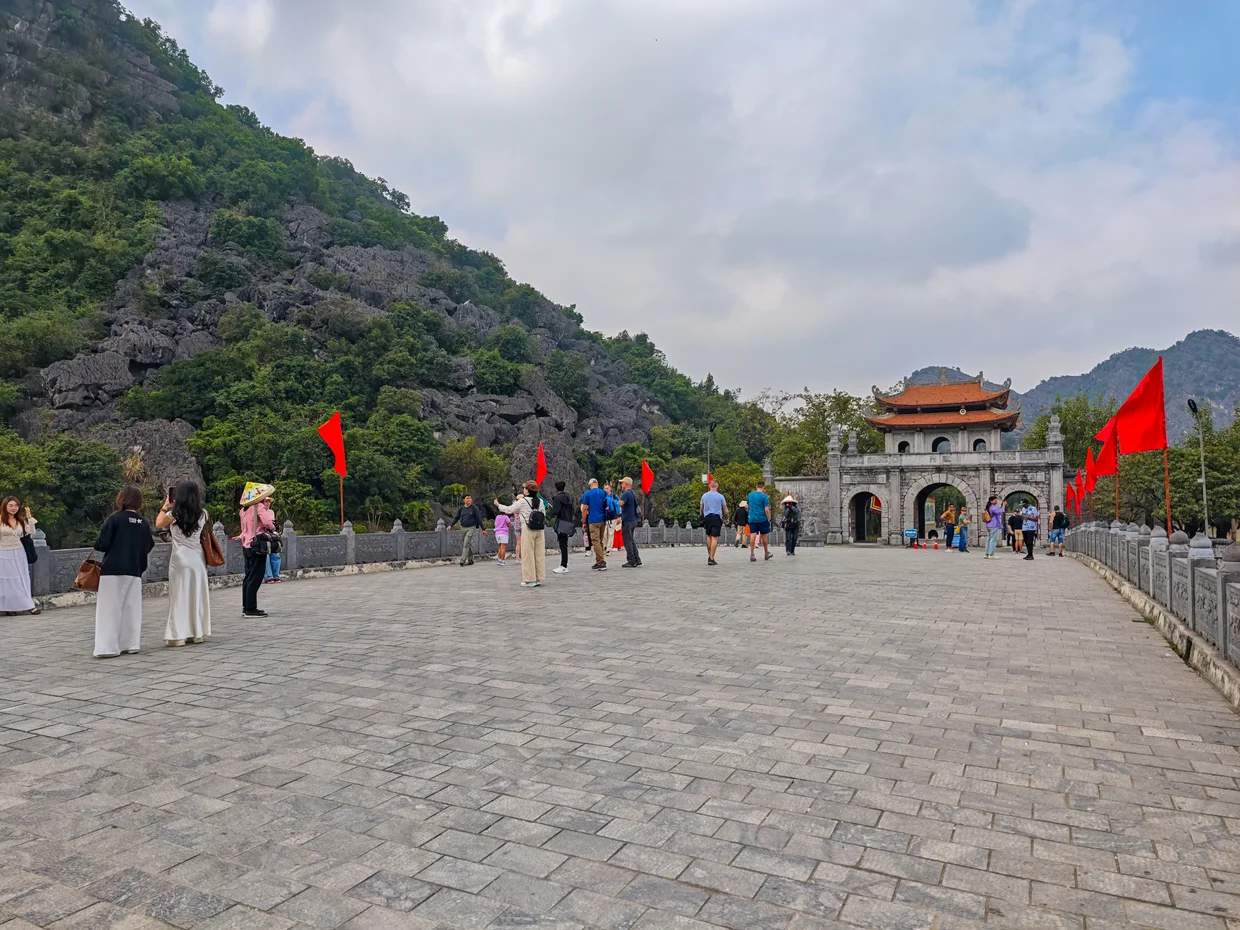
Historically, Ninh Binh matters more than many visitors realize. Hoa Lu was the capital of Vietnam in the 10th and early 11th century, under the Dinh and Early Le dynasties. This was a politically unstable period after independence from Chinese rule, and Hoa Lu's location, surrounded by limestone mountains, offered natural defensive protection. What looks scenic today was once strategic.
Parts of the landscape, especially the Trang An complex, are recognized as a UNESCO World Heritage Site for both cultural and natural value. So this is not just pretty countryside. It is a geological formation, an ancient power center, and a modern tourism hotspot rolled into one.

Ninh Binh Is Not "Ha Long Bay on Land"
You'll often hear that Ninh Binh is Ha Long Bay on land. I understand the marketing logic: limestone towers, water routes, dramatic scenery. But the comparison only goes so far.
Comparing Ha Long Bay and Ninh Binh can feel like comparing a zebra with a horse. Yes, there are visual similarities. But when they bite you, the experience is different.
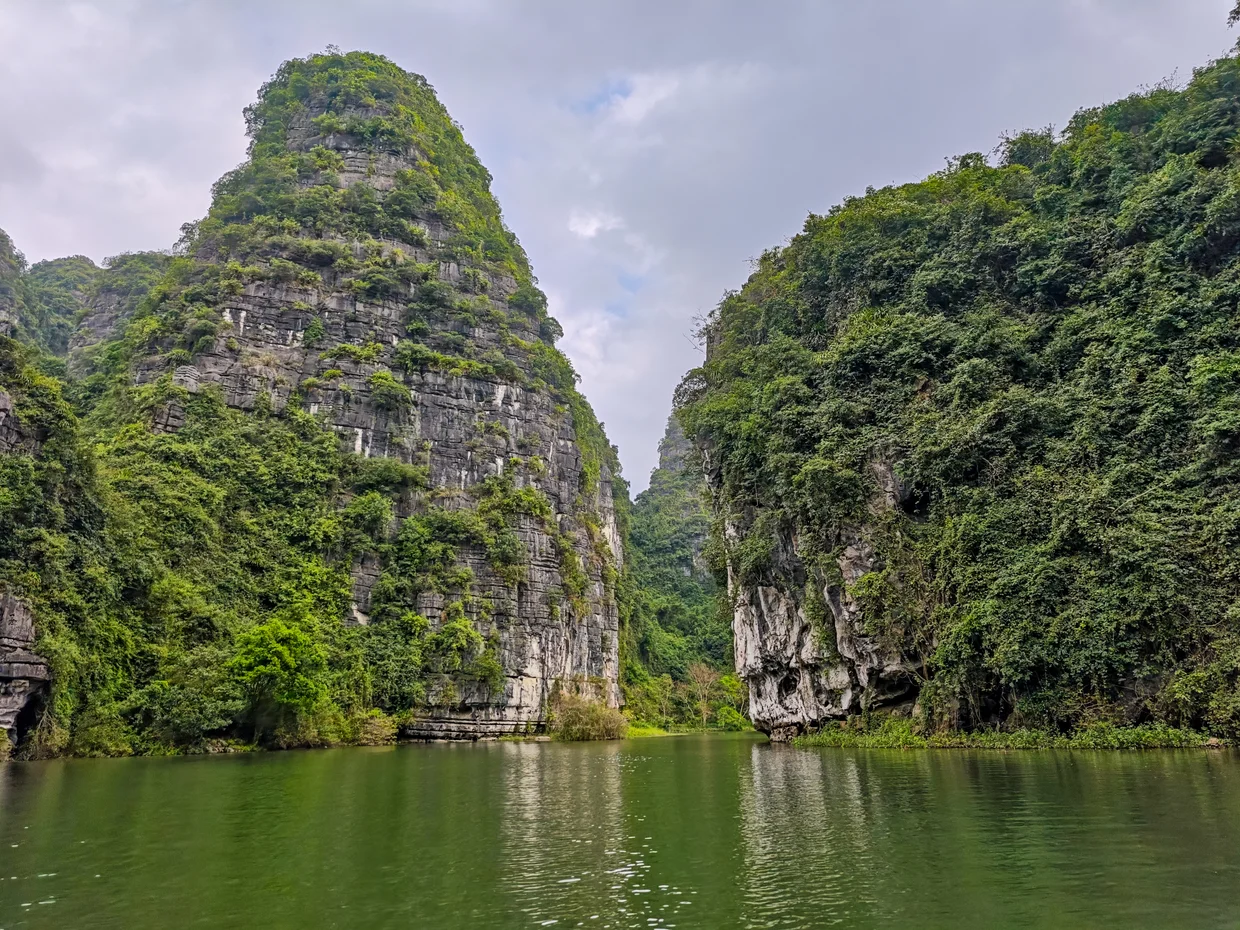
In Ha Long Bay, you're on a boat in open water with vast horizons and cruise ships. In Ninh Binh, you're in narrow rivers between rice fields, cliffs rising almost vertically beside you, often close enough to touch. It feels more enclosed, more grounded, more rural.
The mood is different. The scale is different. And the way you move through the landscape is different.
On the boat, a rower paddles you through passages so narrow you could trail your fingers across the rock face. You pass through low caves where everyone instinctively ducks, then emerge into an enclosed valley with nothing but water, green walls, and silence. For long stretches, the only sound is the paddle breaking the surface. It is a completely different kind of immersion than standing on the deck of a cruise ship scanning the horizon.
If you have the choice, try to get with people on a boat that won't talk the whole 2 to 3 hours. You want peace and silence.


What to Do
There are many things to experience, to see and to do in Ninh Bình. This here is just my personal highlight. For a more comprehensive and detailed overview, visit my dedicated what to do in Ninh Bình page.
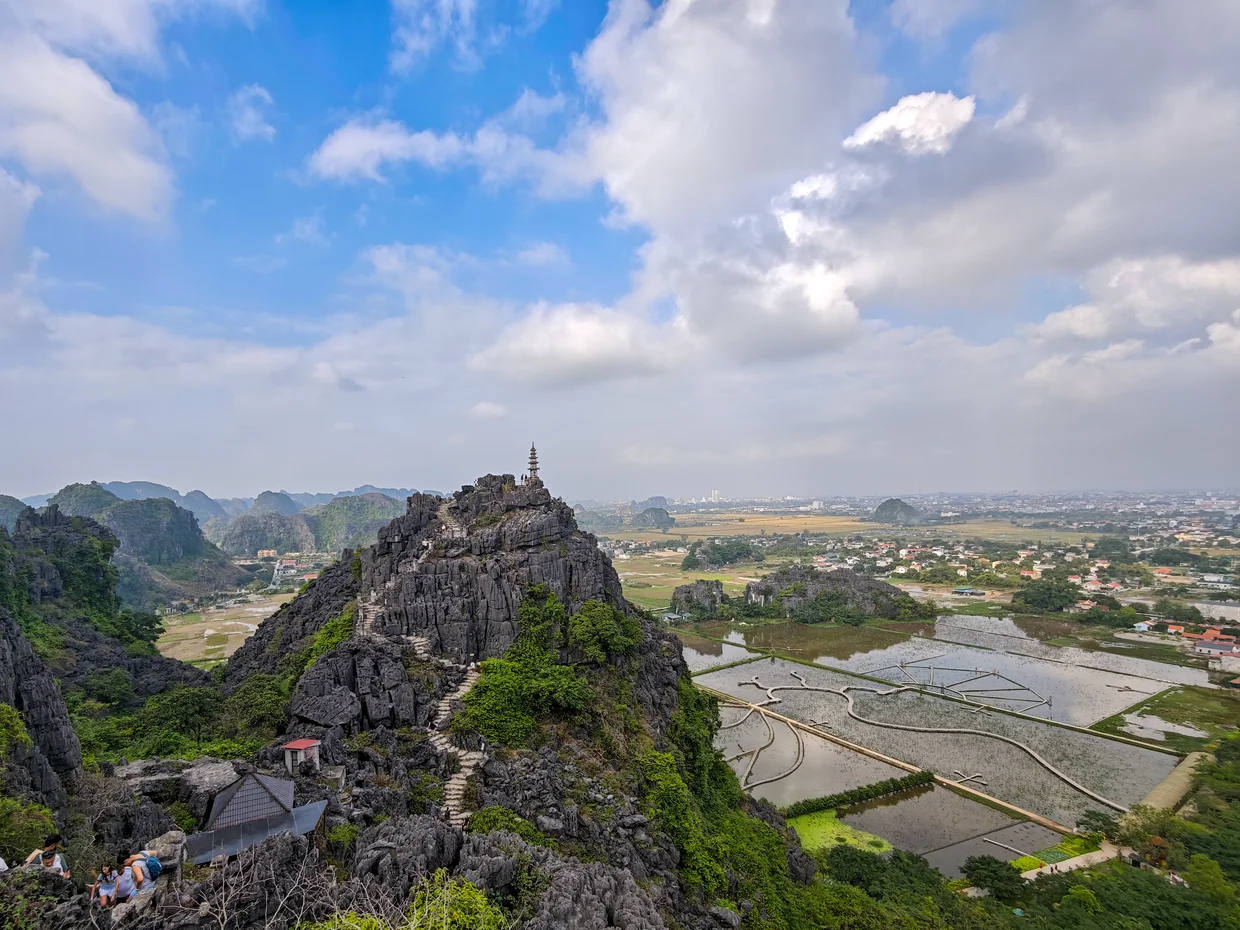
Hang Mua
Hang Mua is the famous staircase viewpoint that everyone photographs. The climb is not technically difficult, but heat and humidity make it exhausting faster than expected. The steps vary wildly in... see more
Best Time to Visit
October through April is the dry season and the most predictable window. Temperatures are comfortable, rain is light, and the karst landscape is sharp against clear skies. This is the peak period for boat tours on the Trang An complex and for climbing Hang Mua without melting. February through April tends to be the sweet spot: warm, dry, and the rice paddies start turning green.
The wet season (May through September) brings heavy rain, high humidity, and temperatures above 30 degrees. The trade-off is that the rice paddies flood and turn a vivid green that photographs beautifully from the viewpoints. If you are here for the classic Tam Coc or Trang An boat shots with bright green fields on both sides, the wet season actually delivers the most dramatic version of that scenery. Just expect to get rained on.

Lotus season is a separate gamble. The lakes look fantastic in photos, but lotus is seasonal and unreliable. Outside the peak flowering window (roughly June and July), you might see few blossoms or almost none. The same applies to boat rides marketed as among lotus fields. If lotus is your main motivation, check current conditions before booking. Otherwise, treat it as a bonus, not an expectation.

How to Get There
Hanoi is the main gateway.
Most travelers:
- Book a guided day tour with hotel pickup
- Take a limousine van
- Hire a private car
Travel time is typically 2 to 2.5 hours each way, depending on traffic and which area you're heading to: Trang An, Tam Coc, or Hoa Lu.
There is also a train from Hanoi to Ninh Binh city. From there, you continue by taxi or motorbike.
For first-timers who want Hoa Lu, Trang An, Hang Mua, and lunch in one day, guided tours are usually the least stressful option.
Day Tours from Hanoi Are the Standard
Most visitors do Ninh Binh as a day trip from Hanoi. There are countless operators running that format daily: pickup, Hoa Lu, Trang An or Tam Coc, Hang Mua, lunch, back to Hanoi.
After seeing it, I'd say this: a day works. But it is tight.
The area is large and surprisingly diverse. You're moving between historical sites, river systems, viewpoints, and rural roads. Compressing all of that into a single day means you see a lot, but you don't really slow down.
I joined a small group (6 people plus guide). For a first visit, it was practical: transport, timing, tickets, and route planning were handled. If you want efficiency and minimal friction, this format makes sense.
If you prefer space, early starts, or independent pacing, staying one or two nights changes the experience significantly.
Lunch on the Tour
Our day tour included lunch at a local restaurant, and surprisingly, we were the only guests there at the time. No buffet line, no crowded dining hall, no rushed atmosphere.
It was not a la carte either. Instead, they simply started filling the table. And then kept going.
Plates of meat, seafood, multiple vegetable dishes, rice, tofu and vegetarian options, fresh fruit, desserts, and a few things I am still not entirely sure what they were. At some point, the table was completely covered. It looked less like a standard tour lunch and more like a small banquet.
Quantity was not an issue. There was easily enough food to feed both the zebra and the horse from earlier, assuming they are open to seafood.
Beyond the volume, the quality was solid. Proper flavors, good variety, and not the watered down tourist compromise version you sometimes get. It felt like actual value, not a symbolic meal included to justify the package price.
If you travel independently, you'll still find plenty of decent local spots around Trang An and Tam Coc. Food here is not the weak link.
How Long to Stay
One day covers the core highlights. You will see Hoa Lu, do a boat ride, climb Hang Mua, eat lunch, and be back in Hanoi by evening. It works. But it is tight, and you spend a surprising amount of time in transit between stops.
One night improves pacing significantly. You can arrive in the afternoon, do Hang Mua in the cooler late light, sleep locally, and take the boat ride the next morning before the tour bus crowds arrive. That alone changes the experience.
Two nights allow you to:
- Do Hang Mua early before heat and crowds
- Spend more time on the water
- Explore smaller roads by bicycle
- Avoid feeling like you're ticking boxes
With two nights, you stop operating on a schedule. You can rent a bicycle and ride between rice paddies and temple grounds at your own speed. You can sit at a riverside cafe without checking the time. The landscape rewards slow movement. Rushing through it on a minibus is functional, but cycling through it at walking pace is where you actually feel the place.
If your Vietnam itinerary is tight, a day works. If you value breathing room, stay longer.
Destination Info
Published February 2026.