You're Probably Overlooking Bulgaria
Bulgaria sits in the southeastern corner of Europe, bordered by Romania, Serbia, North Macedonia, Greece, Turkey, and the Black Sea. It doesn't make a lot of noise internationally. No flashy tourism campaigns, no Instagram-famous landmarks that everyone recognizes, no "you have to go" dinner party conversations. Most people know it vaguely as "somewhere in the Balkans" and leave it at that.
I came to Bulgaria with zero expectations. I knew the basics: Cyrillic alphabet, yogurt, rakia, some beaches, affordable. What I didn't know was that one city would completely blindside me and become one of my favorite places in all of Europe.
That city is Plovdiv. More on that in a moment.
Beyond Plovdiv, Bulgaria has a lot going on. Roman ruins, Black Sea beaches, Soviet-era monuments that look like they were designed by aliens, cave systems with poetic names, medieval fortresses on clifftops, and stone forests that science still argues about. It's one of Europe's most affordable countries, which means you can travel comfortably without watching every euro. The Cyrillic script throws you off for the first day or two, but you adjust. The people are warm once you get past the initial reserve. And the rakia flows freely.
Plovdiv: Go Here First, Ask Questions Later
If you go to only one place in Bulgaria, make it Plovdiv.
I had no idea what to expect. Plovdiv wasn't really on my radar before this trip. I'd read the Wikipedia article, saw "one of the oldest continuously inhabited cities in Europe," nodded politely, and moved on. I figured it would be a nice old town, some cobblestones, maybe a church or two. The standard Eastern European small city package.
I was so wrong.

Plovdiv is, for me, one of Europe's most interesting cities. And it's beautiful. It's old. It's modern. It has layers upon layers of history stacked on top of each other in a way that feels almost absurd. You're walking down a normal modern pedestrian street, shopping and cafes on both sides, and then the ground just opens up. There's a 2nd-century Roman stadium sitting right there, excavated and visible beneath the pavement, with people walking across glass panels above it. That's not in a museum behind a ticket counter. That's just the street.

And then there's the amphitheater. You walk through the Old Town, climbing cobblestone streets between colorful Revival-era houses, turn a corner, and whoomp, there it is. A beautifully preserved Roman amphitheater from the 2nd century, just sitting there in the middle of the city, still used for concerts and performances. No grand entrance. No dramatic approach. You open a door, walk through a gap between buildings, and suddenly you're looking at 7,000 seats carved into a hillside with modern Plovdiv spread out below.


This is what makes Plovdiv special. The ancient and the modern aren't separated. They're the same thing. You walk past Roman columns on your way to get coffee. You eat dinner with a view of a 2nd-century forum. The city doesn't treat its ruins as museum pieces behind glass. It just lives with them, around them, on top of them.


The Old Town itself is gorgeous. It climbs across three hills, a maze of cobblestone streets lined with Revival-era houses from the 18th and 19th centuries. The upper floors overhang the streets, the walls are painted in yellows and blues and pinks, and every turn reveals another photo opportunity. The old town's core is closed to cars (except for residents and hotel guests), which makes it wonderfully low-traffic. You can walk everywhere without dodging vehicles.
Fair warning though: it's exhausting. The cobblestones are uneven, the hills are steep, and by the end of the day your legs will remind you of every single step. Wear good shoes and pace yourself.


The Dzhumaya Mosque sits right next to the Roman Stadium in the city center. A 15th-century Ottoman mosque with a cafe terrace out front where people drink Turkish coffee surrounded by ruins that are 1,500 years older than the building they're leaning against. Plovdiv does these juxtapositions casually, as if mixing Roman, Ottoman, and modern European architecture on the same block is just normal.


Beyond the ruins, Plovdiv has the Tsar Simeon Garden, a beautiful park with a large turquoise lake right in the center of the city. There's the Kapana ("The Trap") district, a former artisan quarter turned gallery-and-cafe hub with street art and creative energy. And the city has real nightlife, real restaurants, and real character without the exhausting tourist-trap feeling.


I spent more time in Plovdiv than I planned. I'd budgeted two days and stayed longer. If someone told me before this trip that a Bulgarian city would become one of my favorite places in Europe, I would have been skeptical. But here we are.

Destination Info
Quick Facts
Overview
- Best 7 to 10 days in May till September.
- At 550m in Balkans, time zone UTC+2.
- The population of 6.9M people speaks Bulgarian, writes in Cyrillic script.
- Bulgarian Lev (BGN) is the official currency, and tipping is 10%.
Local Flavor
- Get a Rakia and Banitsa.
- The main festival here is Kukeri, and popular sports include Football.
Practicalities
- You can use Metro, buses, trams for public transportation, while driving on the right.
- You can get here mostly via Sofia (SOF).
- The best area to stay is Plovdiv Old Town.
Sofia: It's Fine, But...
I should preface this by saying I was really unlucky with the weather in Sofia. Cold, rain, and wind that genuinely blew me sideways on more than one occasion. That colors everything. A grey, windy day makes any city look worse than it is. In the end I had just a few hours of sunshine.
With that caveat: Sofia was, for me, a bit disappointing.

It's a working city. Wide boulevards, Soviet-era apartment blocks, construction that never seems to end, and a sprawl that makes it hard to love on first impression. It's not ugly, it's not unpleasant, it's just not particularly impressive for a European capital. I kept waiting for the moment where something would click, where I'd find the neighborhood or the view or the street that made me think "this is why people love Sofia." That moment didn't come.


Alexander Nevsky Cathedral is beautiful, with its gold domes and imposing presence. The Roman ruins of Serdica in the metro underpass are a nice surprise. There are good cafes and a growing food scene. Vitosha Mountain looms to the south, offering hiking in summer and skiing in winter, which is a genuine asset for a capital city.
But the main pedestrian street, Vitosha Boulevard, was disappointing. It feels like it should be the vibrant heart of the city, but when I was there it was just a street with some shops. Maybe I caught it on a bad day. Maybe summer transforms it. But during my visit, it left me wanting more.
Don't get me wrong. Sofia isn't a bad city. It has tons to do, it's affordable, and the combination of Roman, Ottoman, and Soviet layers gives it historical depth. If you're using it as a base for day trips (Rila Monastery is about two hours away), it serves that purpose well. It just didn't live up to my expectations, and if your time in Bulgaria is limited, I'd prioritize Plovdiv without hesitation.
What to Do
There are many things to experience, to see and to do in Bulgaria. These are my personal highlights.
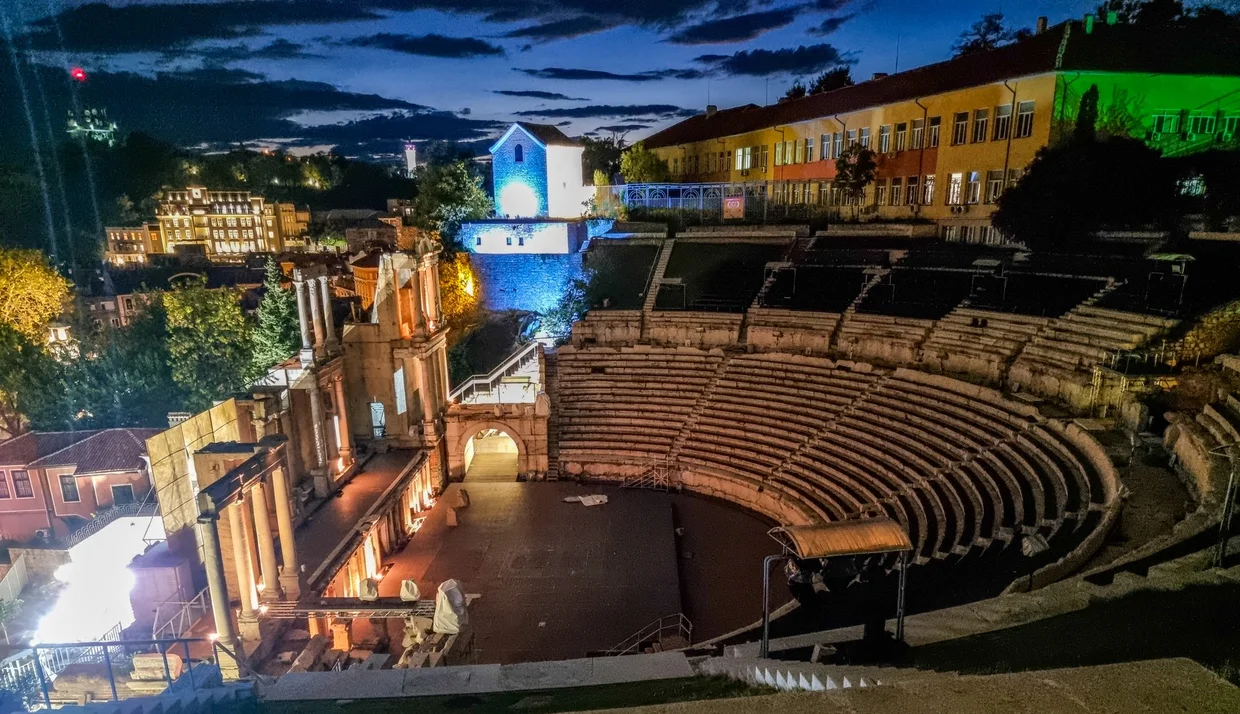
Plovdiv Roman Amphitheater
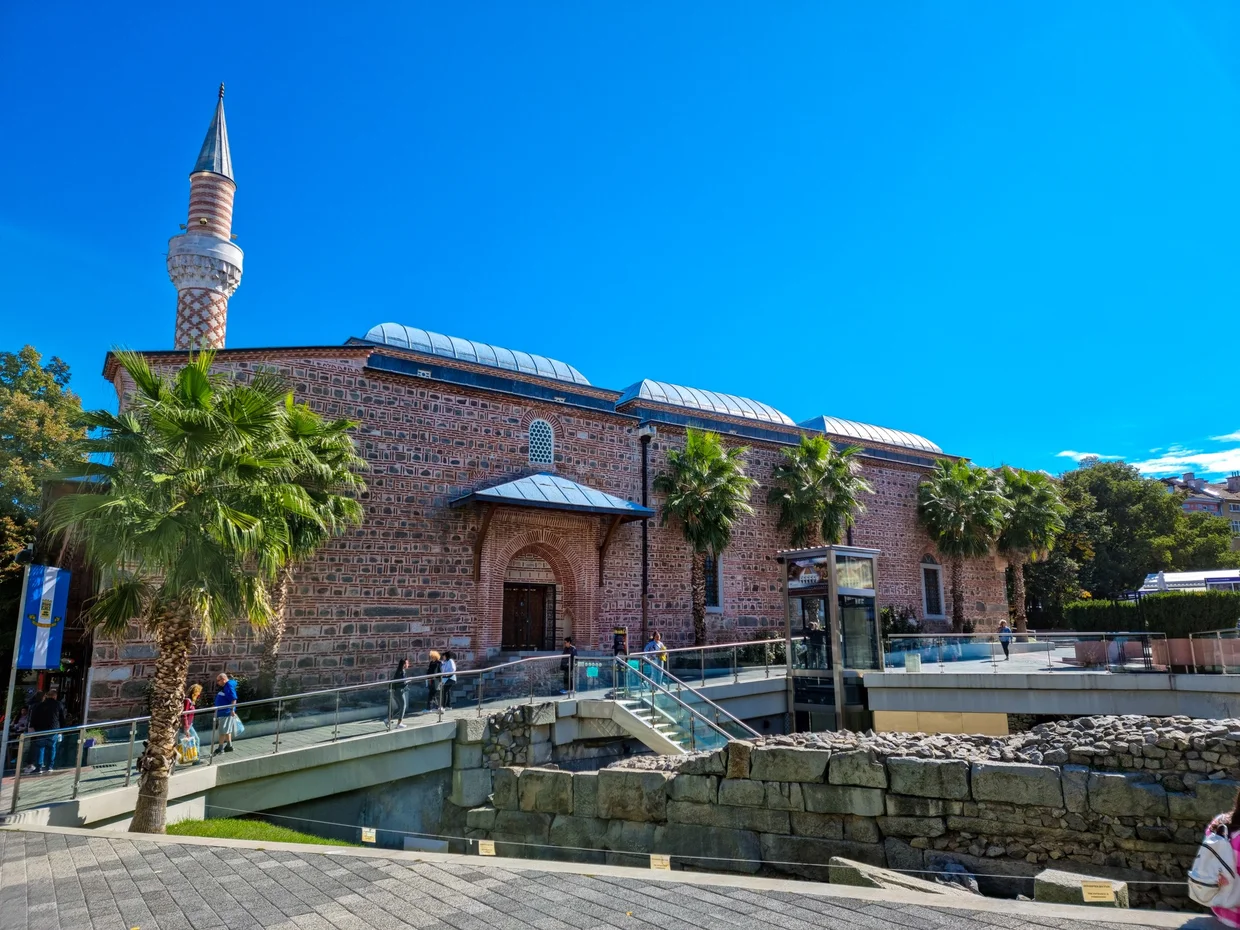
Plovdiv Old Town
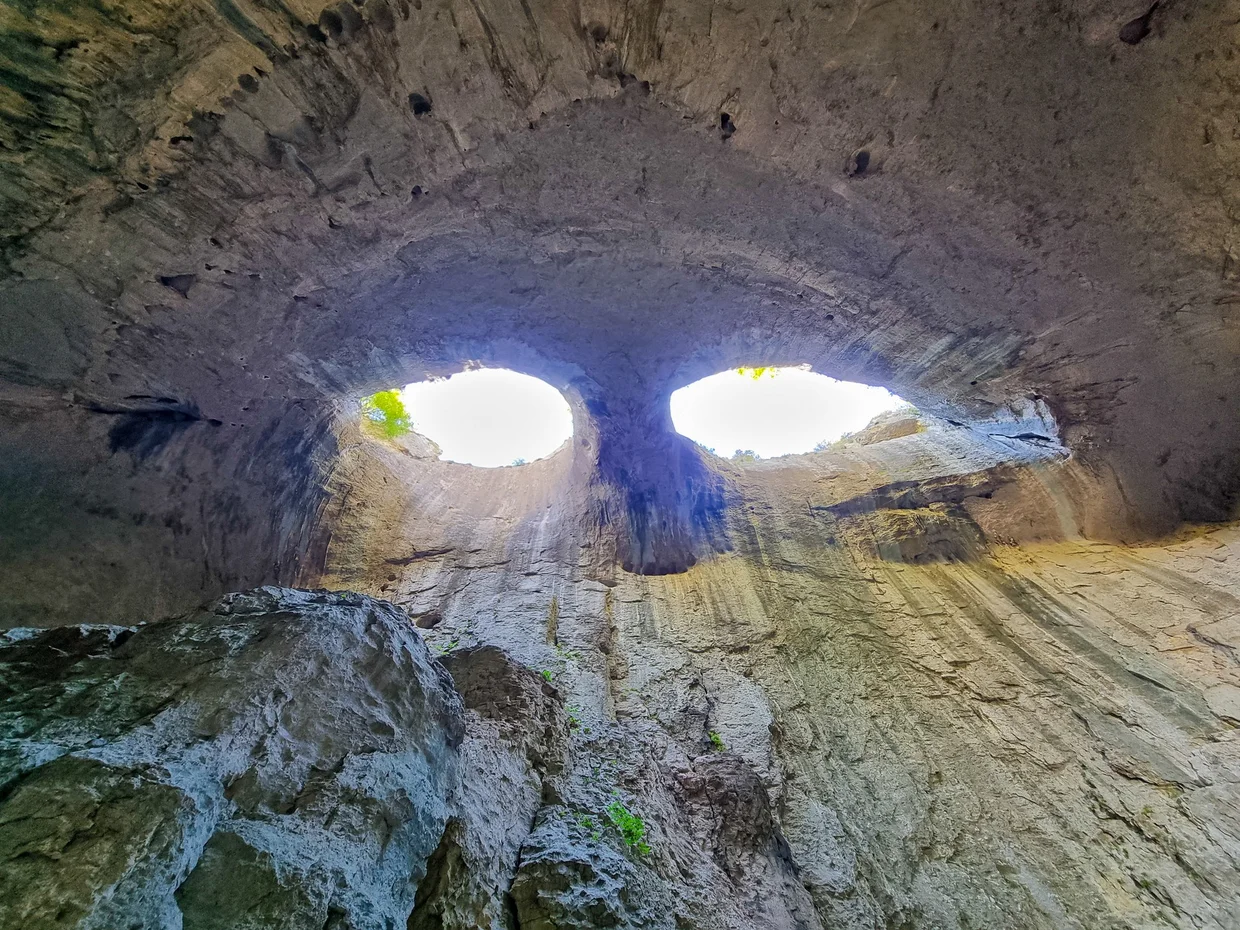
Prohodna Cave (Eyes of God)
See the full what to do in Bulgaria guide.
Nessebar and the Black Sea
Bulgaria's Black Sea coast is a completely different side of the country. Less history, more sand. Less rakia, more sunscreen. In summer, it fills up with Bulgarian families, Eastern European tourists, and budget travelers looking for beach time without the Mediterranean price tag.
The highlight of the coast, for me, was Nessebar. It's a small town on a narrow peninsula, connected to the mainland by a thin causeway. The old town is a UNESCO World Heritage site and it earns the designation. Ancient church ruins from the Byzantine era, wooden houses from the 19th century, cobblestone streets, and the sea visible from almost every angle.


Nessebar is touristy. The main streets are lined with souvenir shops and restaurants, and in peak summer it gets crowded. But the bones of the place are genuinely beautiful, and if you visit in the shoulder season or early morning, you can still feel the atmosphere.
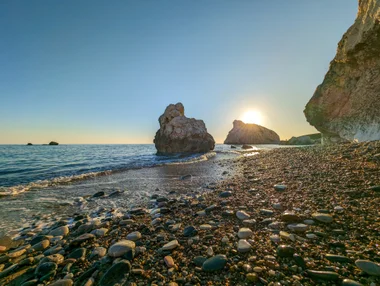
The beaches along the coast surprised me with how natural and empty some of them are. Away from the big resort strips like Sunny Beach (which is exactly what it sounds like: cheap, loud, and packed), there are long stretches of sand where you can walk for 20 minutes without seeing another person. Some of these beaches have river mouths creating natural lagoons, driftwood scattered along the shoreline, and dunes backing up to forest. It feels wild in a way that most European beaches don't anymore.


Varna is the biggest city on the coast. It has a port, decent parks, Roman baths, and a waterfront promenade. It's not a destination in itself, but it works as a base for the northern coast and nearby attractions like the Stone Forest.
The coast is best in late spring or early autumn, when the crowds thin out and the weather is still warm enough for swimming.
Best Base
Where to Stay
Plovdiv Old Town
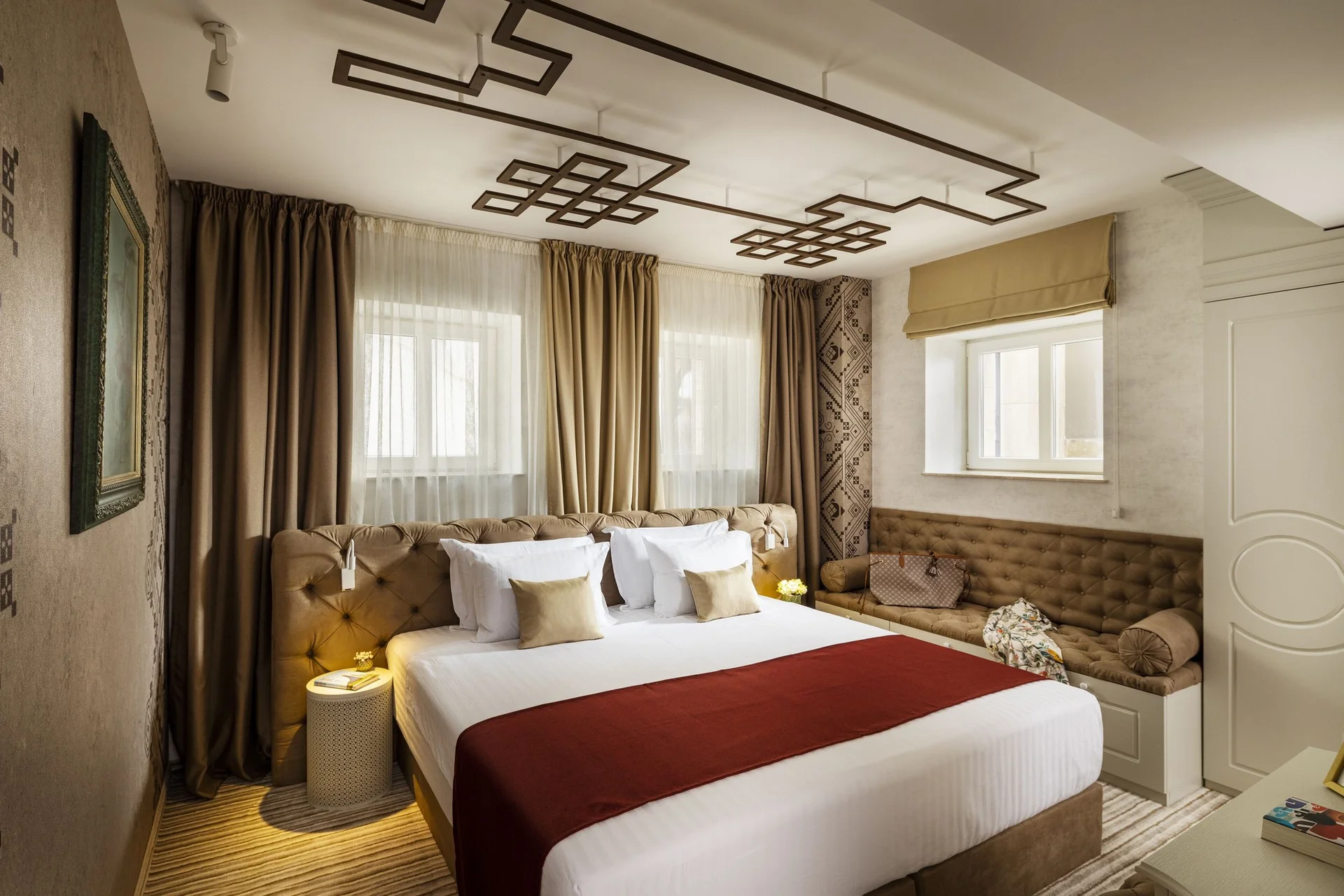
The best base in Bulgaria, full stop. Plovdiv's Old Town puts you on the cobblestone hills among Revival-era houses, steps away from the Roman amphitheater, and within walking distance of the Kapana district, the restaurants, and the main pedestrian street. The area is mostly car-free, which makes it quiet and atmospheric, especially at night when the old houses are lit up and the cobblestones gleam. Accommodation ranges from boutique hotels in restored Revival houses to guesthouses and apartments. Prices are very reasonable by European standards, even for the nicer options. The trade-off is the terrain: the Old Town is hilly with uneven cobblestones, so if mobility is a concern, consider staying in the lower center instead. For anyone else, this is where you want to wake up. The morning walk to a cafe through empty cobblestone streets, with the hills of the Old Town around you and Roman ruins at the bottom, is worth the price of admission alone.
Caves, Fortresses, and a Soviet UFO
Bulgaria has some wild natural attractions, and several of them are unlike anything I've seen elsewhere in Europe.
Prohodna Cave is the standout. A massive karst cave in north-central Bulgaria, famous for two holes in its ceiling that look exactly like a pair of eyes staring down at you. They call it the "Eyes of God," and when you stand underneath and look up, you understand why. The scale of the cave is impressive (the main chamber is over 45 meters wide), and the eyes let in shafts of light that make the whole space feel almost sacred. It's free, it's accessible, and it takes maybe 30 minutes. One of the best things I did in Bulgaria.


Krushuna Waterfalls are a series of cascading waterfalls and turquoise pools in the forest near the town of Letnitsa. The water has that unreal blue-green color you normally associate with tropical places, and the mossy rocks and overhanging trees give the whole area a fairy-tale quality. There's a trail that follows the waterfalls upstream, and it's a beautiful walk. Combine it with Prohodna Cave for a solid day trip since the two are close to each other.

Ovech Fortress sits on a clifftop near the town of Provadia. The fortress itself is a medieval ruin with stone walls and a reconstructed bridge spanning a gap between two cliff faces. Walking across it feels like something out of a fantasy novel. The views from up there are staggering: the town below spreads out in a patchwork of red roofs and green hills, and on a clear day the panorama seems to stretch forever.


Pobiti Kamani (the Stone Forest) near Varna is one of Bulgaria's strangest sights. A field of stone columns, some over seven meters tall, scattered across a sandy landscape like the ruins of a civilization that never existed. Scientists still debate how they formed. Some say they're natural limestone formations, others suggest they're hollow tubes left behind when the surrounding material eroded. Whatever the explanation, walking among them feels otherworldly.


Buzludzha is something else entirely. A massive, saucer-shaped concrete monument perched on a mountaintop in the Balkan range, built in 1981 as a monument to Bulgarian communism. It looks like a brutalist UFO landed on a peak and stayed. The building has been abandoned since the fall of communism and is now fenced off (officially closed to the public, though restoration debates continue). Even from the outside, the scale and the setting are striking. The drive up through mountain roads is beautiful, and seeing this crumbling monument to a dead ideology silhouetted against the sky is one of those images that stays with you.

You can drive all the way up and park right near the monument. I tried my luck getting inside, but got turned away by some decidedly unamused construction workers.
When to Go
Bulgaria has four proper seasons. The country is split between mountain interior and Black Sea coast, so the "best time" depends a lot on what you want from the trip.
May to September is the prime stretch for almost everything. Cities are pleasant, the Black Sea is warm enough to swim from June onwards, and the mountains are perfect for hiking. July and August can get hot in Sofia and Plovdiv (high 20s, sometimes hitting the mid-30s on heatwave days), but the coast and the higher altitudes stay manageable. This is also when the seaside resorts fill up with Bulgarian families and Eastern European tourists, so book accommodation ahead if you're heading to Nessebar, Sozopol, or Sunny Beach.
May, June, and September are the sweet spot. Warm enough for the coast, comfortable for sightseeing, and the crowds haven't fully arrived (or have already left). September is particularly nice. The water is still warm from the summer, the wine harvest is happening, and the cities are alive without being overwhelmed.
Spring (April to May) is beautiful inland. Wildflowers in the Rose Valley, monasteries surrounded by green hills, and weather mild enough for long walks. The Rose Festival in Kazanlak in early June is a real thing and worth planning around if you're into that kind of trip.
October to March is the off-season for most of the country, but it's also when Bulgaria gets one of its biggest draws: skiing. Bansko, Borovets, and Pamporovo are some of Europe's most affordable ski resorts, and the season runs roughly from December through March. If you're not skiing, winter in Bulgaria is cold (often well below freezing in Sofia), some smaller attractions close, and the coast basically shuts down. But the cities still have their charm, prices drop further, and you get them mostly to yourself.
Banitsa, Shopska, and Rakia
Bulgarian food is hearty, simple, and built around what grows locally. The flavors lean Mediterranean (tomatoes, peppers, cheese, herbs) with Slavic and Ottoman influences woven in.
Banitsa is the breakfast staple: flaky pastry filled with cheese and eggs, baked until golden and served warm. Simple, satisfying, and it pairs well with a cup of yogurt. Speaking of yogurt: Bulgarian yogurt is famously thick and tangy, made with Lactobacillus bulgaricus bacteria. The locals eat it with everything, drink it as ayran (a salty yogurt drink), and are justifiably proud of it.
Shopska salad is on every menu and for good reason. Tomatoes, cucumbers, onions, peppers, and a pile of grated white cheese (sirene) on top. Fresh, light, and perfect in warm weather. If you eat one thing every day in Bulgaria, this is a strong candidate.

Tarator is a cold yogurt soup with cucumbers, garlic, dill, and walnuts. It sounds unusual and for someone (like me) who hates cold soups, it's the anti-food.
Rakia is the national spirit. A fruit brandy usually made from grapes or plums, strong enough to make your eyes water, served in small glasses before, during, and after meals. You'll often be offered homemade rakia, proudly produced from someone's grandfather's recipe. While that's part of the culture, I'd generally be cautious with home-distilled alcohol. If it's not distilled properly, it can contain methanol, which is toxic. It's rare, but not something you want to gamble with. When in doubt, stick to reputable sources and treat it with respect.
The country is very affordable when it comes to food. A full meal with drinks in a traditional mehana costs a fraction of what you'd pay in Western Europe. Even in the tourist areas, prices stay reasonable.
Travel Tips for Bulgaria (Before You Go)
Plan the essentials before your trip to Bulgaria, including plug types, SIM or eSIM options, and travel insurance coverage.
Plug Check
Do you need a plug adapter?
Compare your home sockets with Bulgaria before you go.
220V and Type C/F sockets
ESIM
Land with data already working
Set up mobile data before arrival so maps, rides, and messages work the moment you land.
eSIM or physical SIM?
If you're staying less than 2 weeks, get an eSIM. Otherwise a SIM from the airport runs cheaper long term. If you already have a SIM/eSIM from an EU country, you don't need another.
Read the SIM vs eSIM guideTravel Insurance
Sort coverage before you need it
Medical costs, trip disruption, and lost baggage are much easier to handle when you are already covered.
Getting Around
Renting a car is the best way to see Bulgaria. Many of the most interesting places (caves, fortresses, mountain monuments, quiet beaches) are not well served by public transport, and a car gives you the flexibility to explore at your own pace. Highways are decent, rural roads can be rough, and fuel is cheap by European standards.
Buses connect major cities and towns. They're inexpensive but can be slow on longer routes. Sofia to Plovdiv takes about two hours by bus, which is reasonable. Reaching smaller towns and rural attractions by bus is possible but often involves awkward schedules and connections.
Trains exist but are generally slower than buses. The network connects the main cities, and some mountain routes can be scenic, but don't expect speed or reliability.
Within cities, Sofia has a metro, trams, and buses that are cheap and functional. Plovdiv is compact enough to walk, though the Old Town hills will test your stamina. On the coast, taxis and local buses handle short trips.
Language note: Cyrillic script is used everywhere, which makes road signs and menus disorienting at first. Most younger people in cities speak some English, but outside the main tourist areas, communication can be a challenge. Learning the Cyrillic alphabet before your trip (it takes a day of practice) makes navigation much easier.
Costs
Bulgaria is one of the most affordable countries in the European Union. We're talking genuinely cheap, not "cheap by Western European standards." Eating out, getting around, and sleeping in nice places all cost a fraction of what they would in France, Germany, or Italy. The currency is the Bulgarian Lev (BGN), and roughly 2 BGN equals 1 EUR, which makes mental math easy.
The prices shown here are meant as a rough guide and can vary over time. While I update exchange rates regularly, local prices are typically refreshed only when I revisit the destination.
The biggest variable is the Black Sea coast in summer. From mid-July to late August, accommodation prices in Nessebar, Sozopol, and Sunny Beach can double or triple, and seafront restaurants charge tourist prices. Off-season or shoulder-season visits dodge most of that. Anywhere inland (Plovdiv, Sofia, Veliko Tarnovo) stays affordable year-round, and even "splurging" in Bulgaria still feels like a bargain by Western European standards.
Published September 2025.