The Country That Hijacks Your Plans
A week in Georgia isn't too short. It's actually a pretty efficient way to see a lot. Tbilisi, some day trips, maybe a canyon or two, maybe a cave city. Well, definitely a cave city. The hard part isn't time. It's choosing.
Georgia sits at the crossing of Europe and Asia, squeezed between the Greater Caucasus mountains to the north and Russia, Turkey, Armenia, and Azerbaijan on all other sides. It's a country that's been invaded and occupied more times than seems fair, yet it has kept one of the world's oldest languages, one of the world's oldest wine traditions, and a culture you won't find anywhere else nearby.
Ask a geographer and you won't get a clear answer. Georgia sits on the dividing line, and depending on which rule you use (the Caucasus watershed, the Kuma Manych depression, the Aras river) it lands in Asia, in Europe, or right on the border. On paper it's both. But inside Georgia, if you ask a Georgian, the answer is almost always Europe. The feel is European: Christianity here is ancient and central to life, the alphabet is a local invention rather than something brought in from Asia, political ambitions point west toward Brussels, the football team plays in UEFA, and the self-image is firmly European even when the geography's a bit unclear. You feel that the moment you land. It's a country that belongs to both continents on the map and to one of them in spirit.
The capital, Tbilisi, is where most people start: 1,500 years of layered history packed into one compact city, with carved wooden balconies hanging over cobblestone streets, sulfur steam rising from domed bathhouses, medieval churches on cliffsides, and a nightlife scene that came out of nowhere over the last decade and is now genuinely great. Beyond the capital, the country opens up into wine regions, semi-desert monasteries carved into cliffsides, turquoise river canyons, mountain peaks, and villages where time moves at a different speed.

It's smaller than you expect and bigger than you think. The roads are slow, which turns out to be fine, because there's something worth looking at on every single one of them.
Tbilisi: The City That Keeps Giving
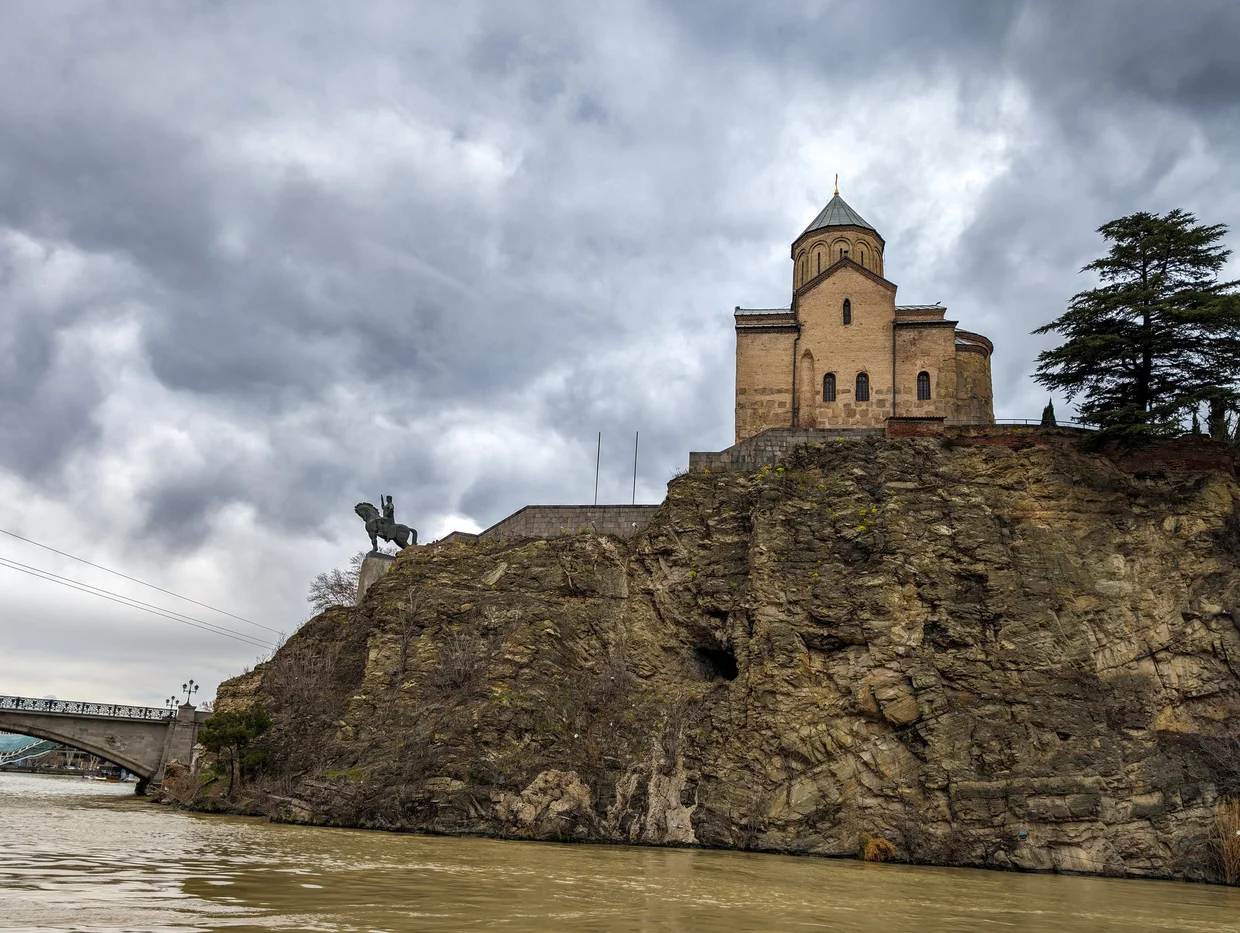
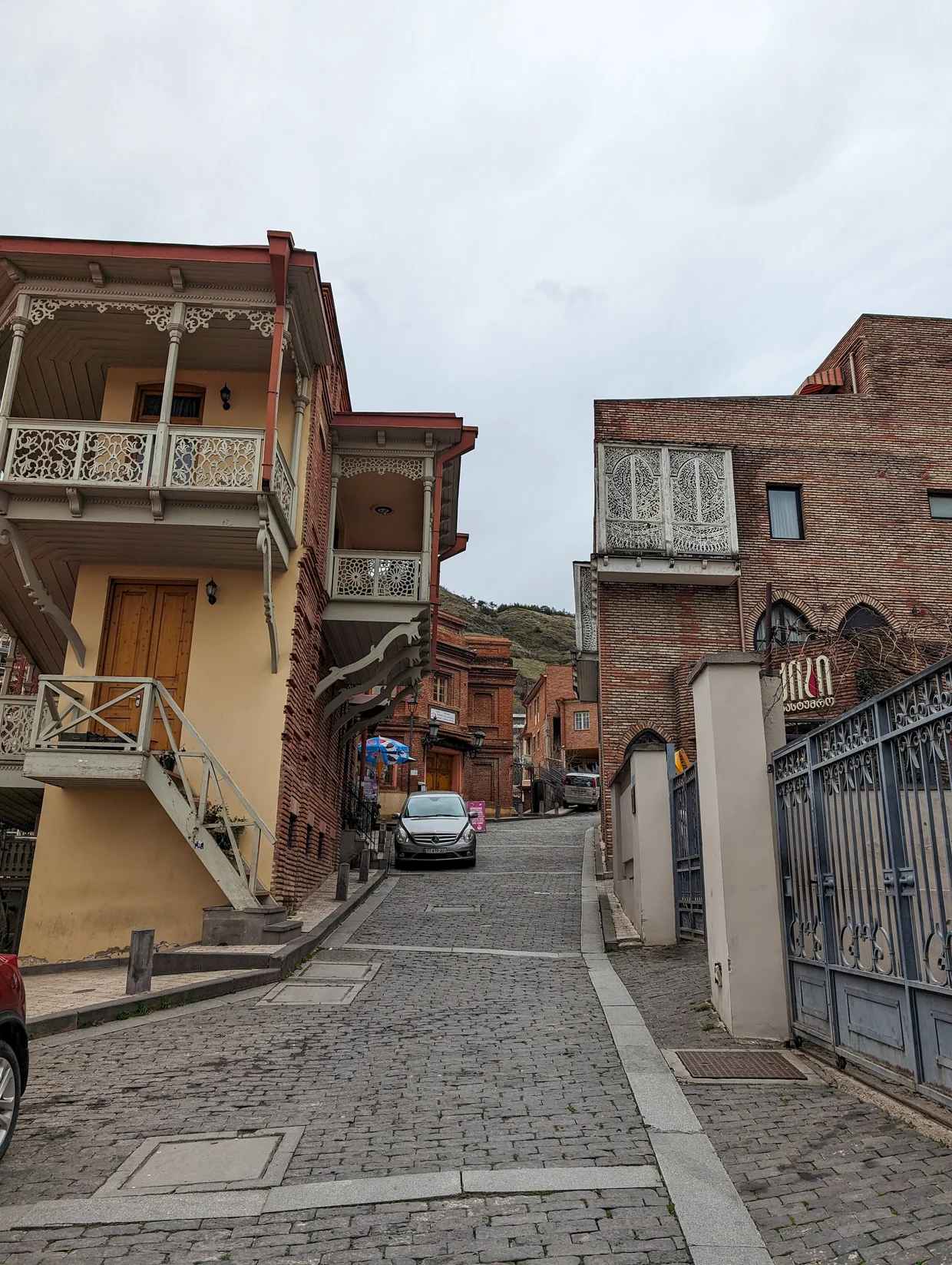
Tbilisi doesn't try to sell itself. It just is what it is. You arrive in the Old Town and you're immediately in something real: cobblestone streets climbing hills and dropping back down, wooden balconies with carved patterns leaning out over the street, the Mtkvari river down below, a church on a clifftop that you can see from most angles. This is Kala, the old city core. Nobody agreed on a plan for how to build it over fifteen centuries, and it shows.
The sulfur baths in the Abanotubani district are where the city gets its name. Tbilisi means warm place, named for the hot springs that bubble up from below. The bathhouses are brick-domed buildings several centuries old, with steam rising through the vents in the roofs. You book a private room, soak in naturally heated sulfur water in a tiled stone room, and someone might offer to scrub you down with a rough mitt. It smells exactly like sulfur.


Just behind the baths is the Leghvtakhevi area, where the neighborhood starts doing that very Tbilisi thing of getting stranger and better the moment you think you've understood it. The gorge, the rocks, the old brickwork, the damp air, the sound of water somewhere nearby: it all feels half hidden, like the city left a secret passage open by accident.
The Leghvtakhevi tunnel is especially good for that. It's basically a rough concrete tube with lights hanging down, stone steps underfoot, and, at least when I was there, paintings propped along the sides like someone decided a bunker should also moonlight as an art gallery. That's Tbilisi in one image. Ancient city, Soviet leftovers, improvised culture, zero interest in keeping its moods separate.
Walk uphill from the baths and you'll reach Narikala Fortress, the medieval fortress above the Old Town. Take the cable car up from Rike Park for the view: the city spread out along the river valley, the curved glass Bridge of Peace shining below, Mtatsminda mountain behind it with the Soviet TV tower on top. At sunset, when the lights come on across the whole valley, it's one of the better views in the Caucasus.


A short walk along the ridge from the fortress brings you to Kartlis Deda, the Mother of Georgia. A 20-meter aluminum statue of a woman in traditional dress, put up in 1958 for Tbilisi's 1,500th birthday. She holds a bowl of wine in one hand and a sword in the other. The idea's simple: wine for those who come as friends, a sword for those who come as enemies. Practical, welcoming, and a little threatening all at once, which turns out to be a pretty fair summary of the national character after a few days here. She stares out over the city from the edge of Sololaki hill, and the walk along the ridge to reach her gives you a slow view of the Old Town spreading out below.
The more formal city center around Freedom Square is the opposite kind of Tbilisi: broader, grander, more polished, the city putting on a jacket for a minute. In the middle stands the golden St. George column, dramatic enough to look like it was designed by a nation that wanted even its traffic circle to come with a boss fight. Around it, banks, hotels, government buildings, and Rustaveli Avenue do their best impression of a capital city that has things under control. Then you turn one or two streets and the whole thing loosens up again. That's the trick with Tbilisi. It can go from official and upright to cracked, crooked, and charming in under five minutes.


Back in the Old Town, the Rezo Gabriadze Puppet Theater clock tower is the thing you'll stop and photograph before you even know what you're looking at. A brick tower that leans on purpose at a weird angle, covered in small paintings and decorations, topped by a golden angel who pops out every hour and strikes a bell. The late Georgian artist Rezo Gabriadze built it this way on purpose. It's a bit silly. You know it's silly. You take the photo anyway, like everyone else does, and you leave with a phone full of pictures of a crooked tower. That's fine. That's the point.
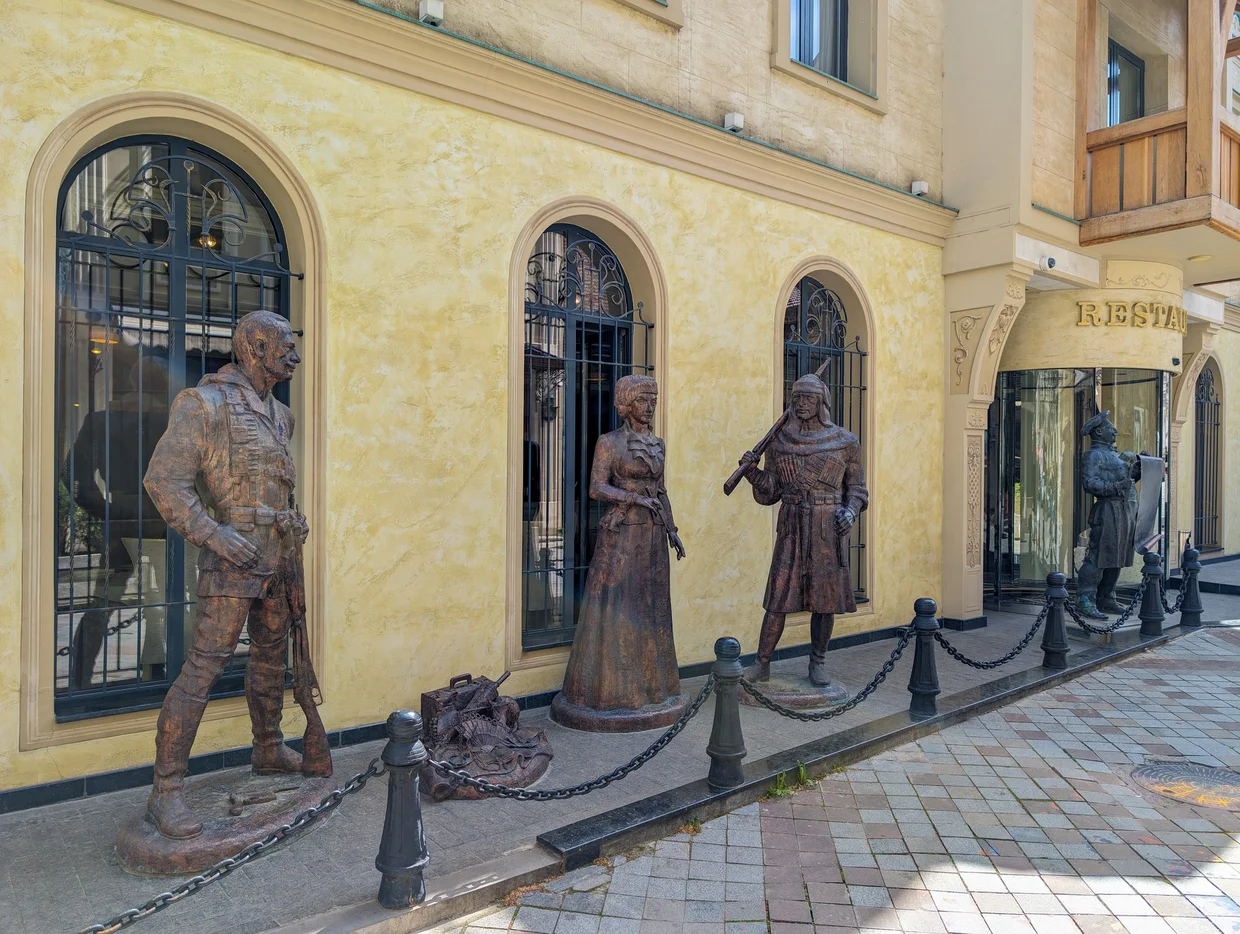
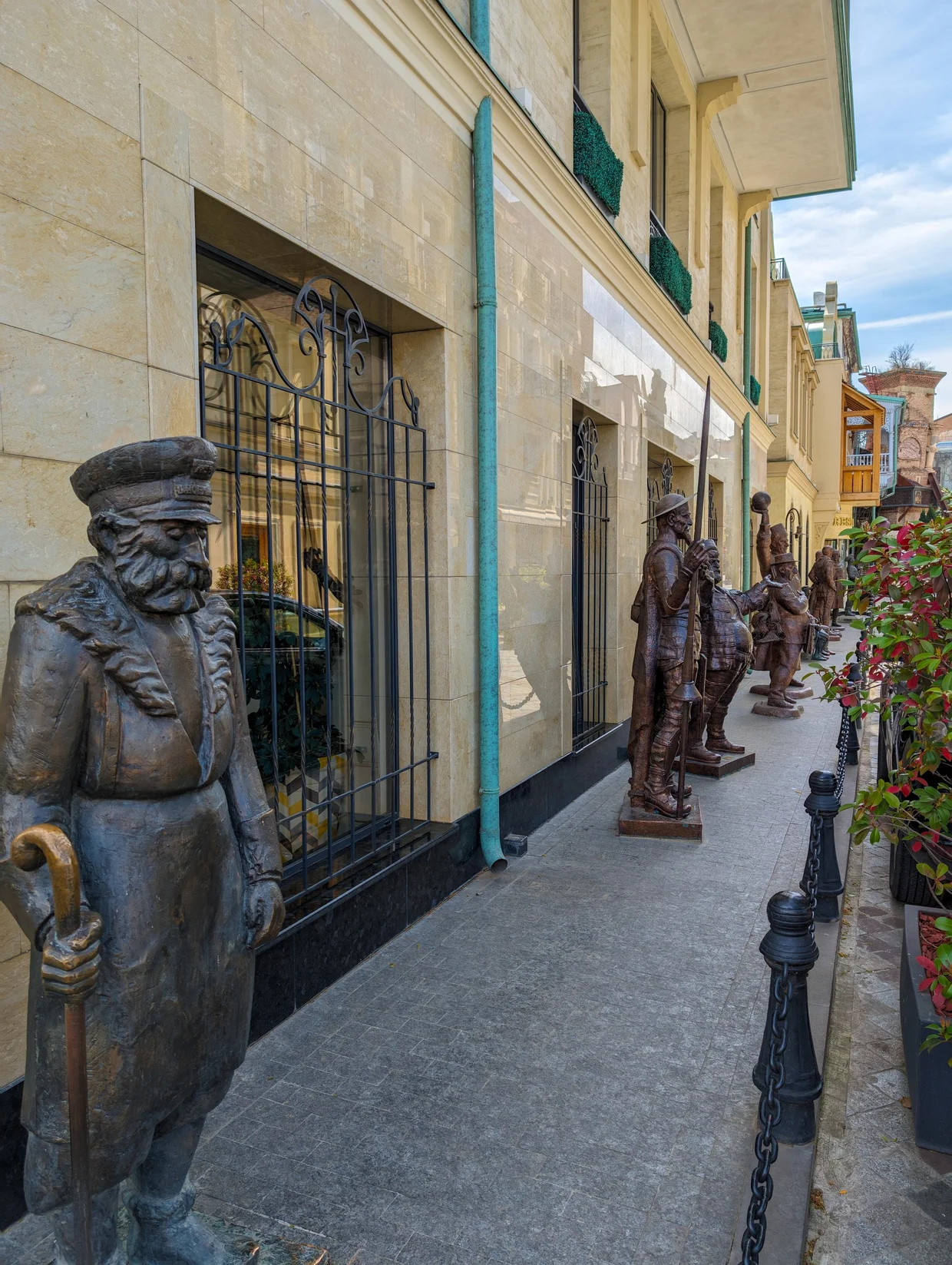
Just around here on Shavteli Street, keep an eye out for Dvornik na Shavteli. Calling it one sculpture doesn't quite cover it. It's more like a bronze lineup of street characters standing along the building as if they stepped out of different centuries and got told to wait here until further notice. A caretaker, soldiers, townspeople, little bits of ordinary life turned into something theatrical but still oddly grounded.
What I like about it is that it feels very natural in a quiet way. Not polished, not overexplained, not fenced off. You just walk past and there they are, keeping watch over the street with that slightly melancholic, slightly comic energy Tbilisi does so well. The whole thing feels like a side note in the city margins, which is exactly why you remember it.

The streets around the theater have paintings hung on walls and fences by local artists, the kind of casual street gallery that only works in a city with this much character.
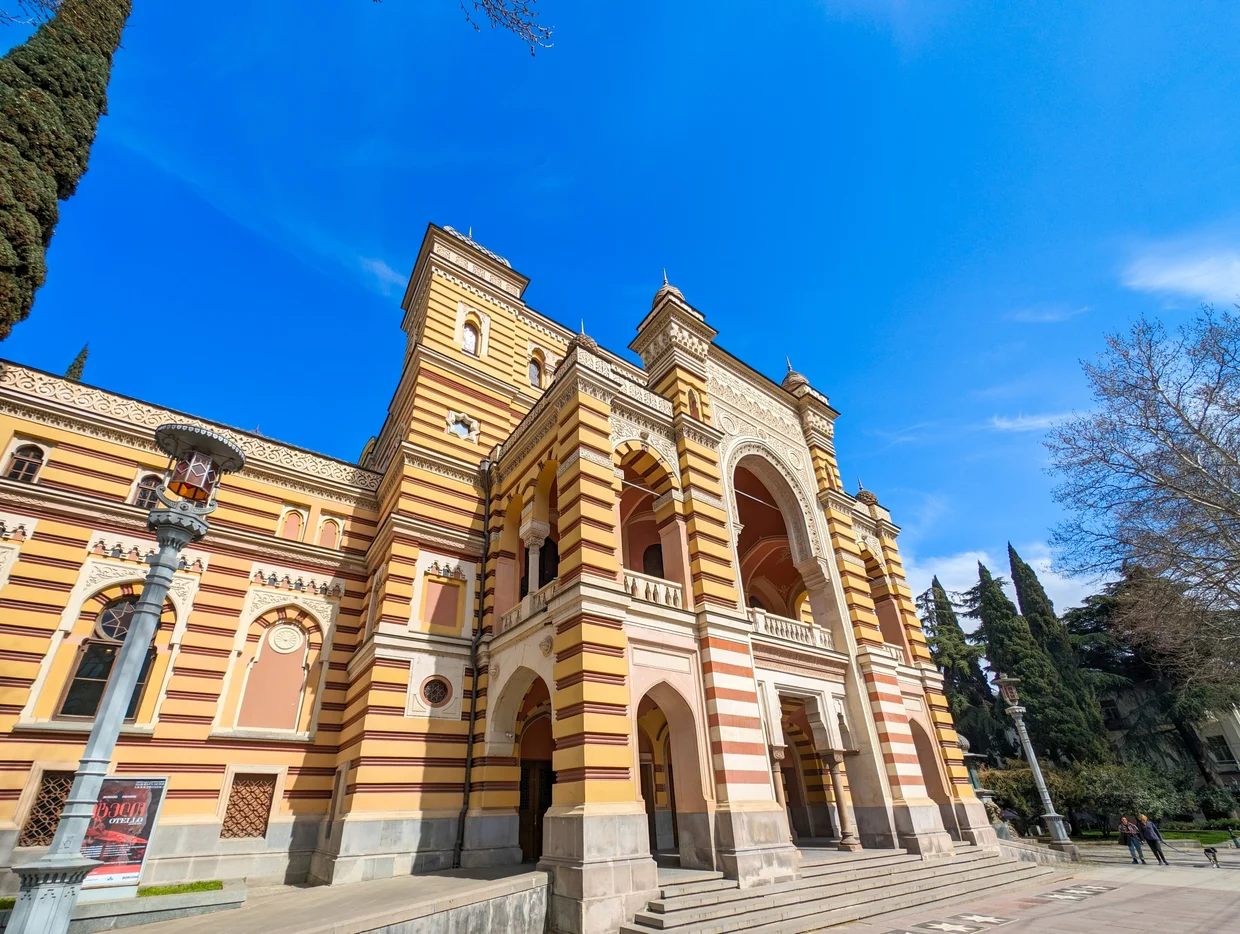
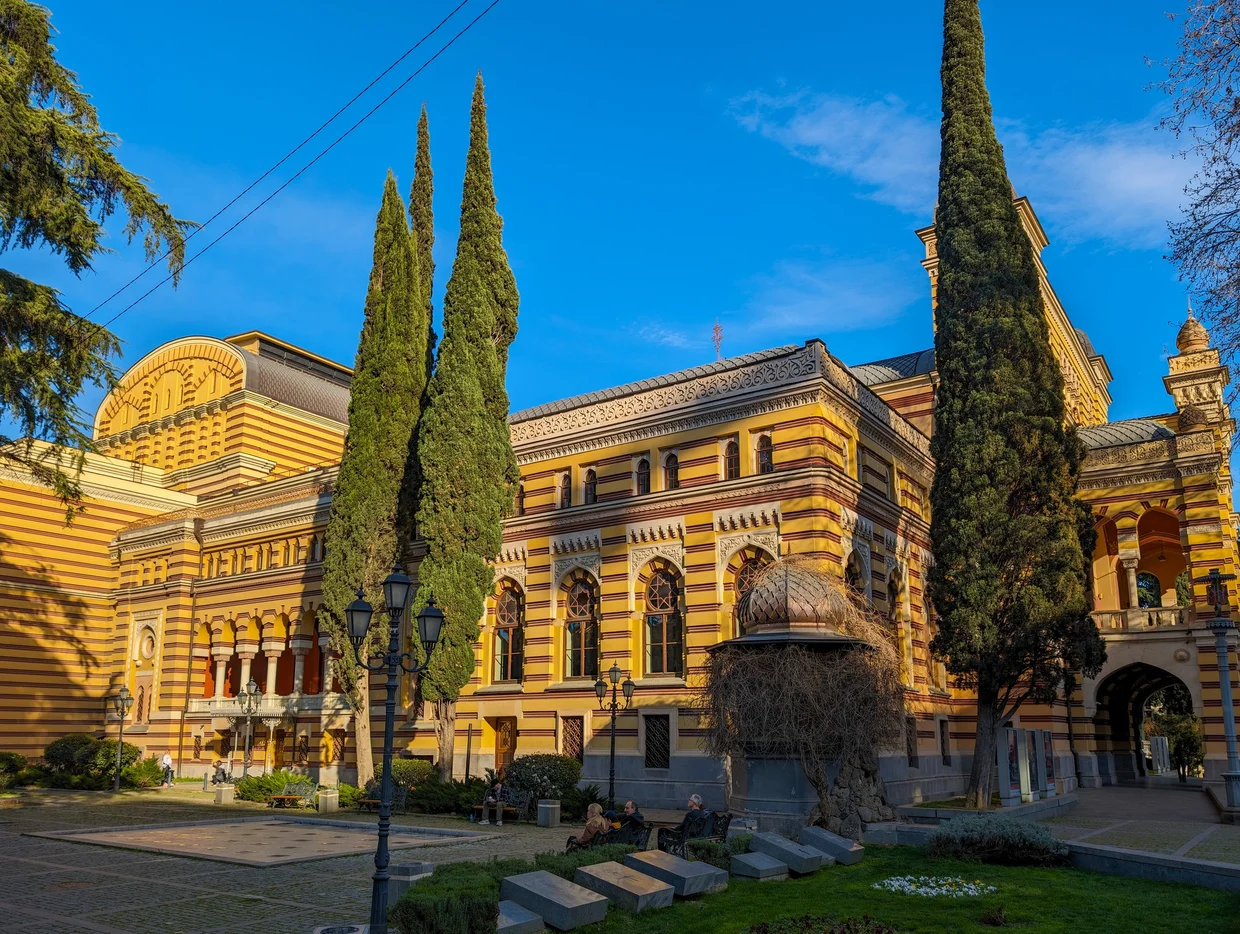
Along Rustaveli Avenue, the main boulevard, the Tbilisi Opera and Ballet Theatre sits in yellow and red stripes, a fancy Moorish-Victorian building that looks like someone moved an opera house here from a different century and a different continent. It shouldn't work. It does.
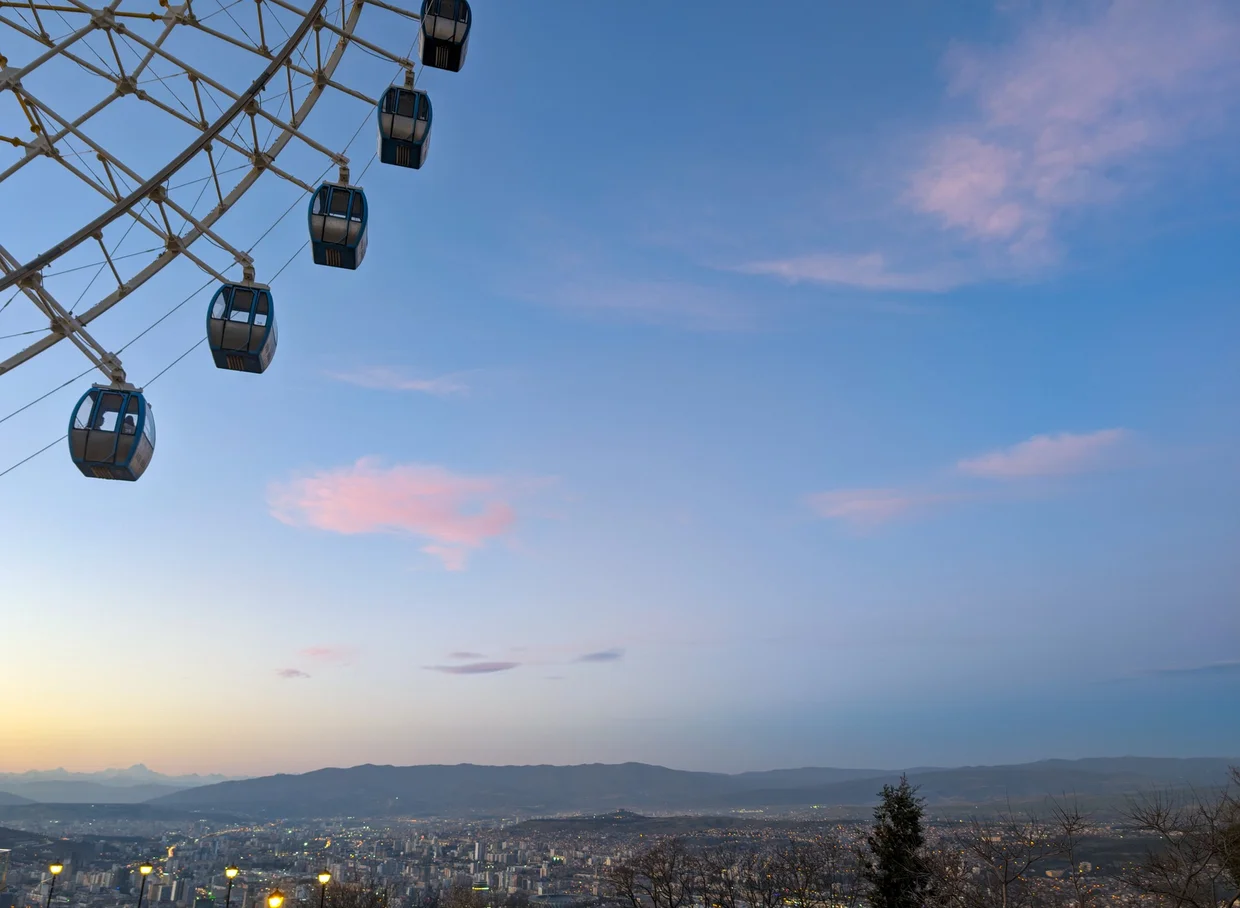
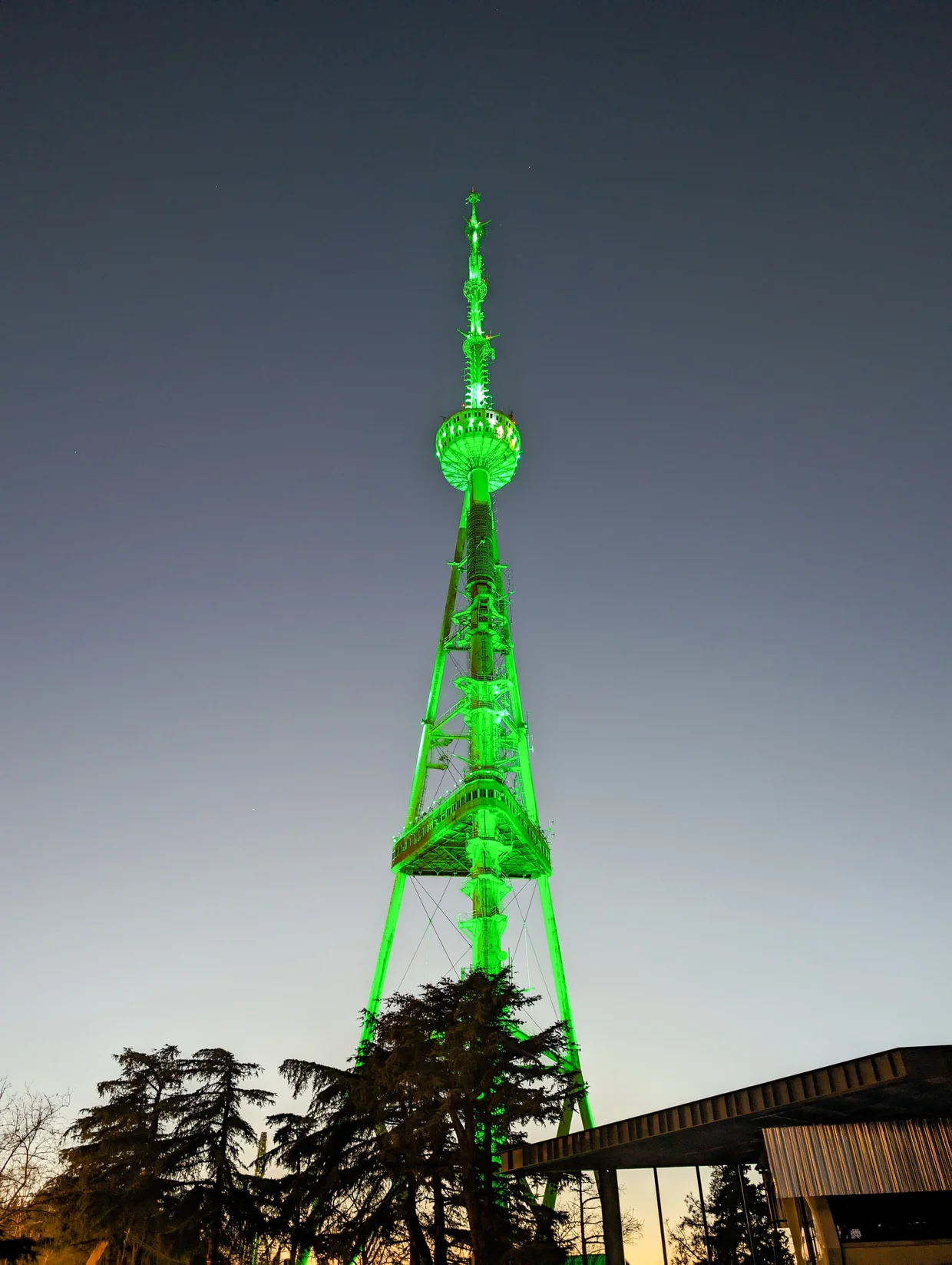
For a view that costs nothing: take the cable car or the funicular up to Mtatsminda hill above the city. The park at the top has a Ferris wheel, a TV tower that's lit up in colors at night, and a view over all of Tbilisi that stretches to the mountains on clear days.
At night, the bars and clubs around Fabrika (an old Soviet sewing factory turned into a creative complex with container bars, food stalls, and a hostel in the courtyard) and along Agmashenebeli Avenue stay open late. Electronic music, natural wine, young Tbilisi doing its thing. The city has quietly become one of the better nightlife spots in the whole region, which surprises nobody who spends any time here.
Tbilisi isn't all successful reinvention, though. Georgia has a weirdly strong collection of abandoned or half-finished projects. Lots of countries do, to be fair, but here they somehow feel more visible, like the city forgot to close a bunch of browser tabs and just left them open in public.

The best example is the Rike Park Concert and Exhibition Hall, the two giant tube things down by the river that look like a sci-fi project someone got 85 percent through and then went for lunch and never came back. It was built more than a decade ago, never properly finished or used, and now just sits there looking oddly cool and mildly tragic at the same time. You can walk around it, but you can't go inside. The park next to it is actually nice and surprisingly quiet, which somehow makes the whole thing feel even stranger. As of 2025, City Hall said it wants to dismantle the hall and replace it with something else, possibly a hotel, because apparently the one thing every city has been missing all along is, obviously, another hotel.

Destination Info
Quick Facts
Overview
- Best 7 to 10 days in May till October.
- At 490m in Caucasus, time zone UTC+4.
- The population of 3.7M people speaks Georgian, writes in Georgian script.
- Georgian Lari (GEL) is the official currency, and tipping is 10%.
Local Flavor
- Get a Qvevri wine and Khachapuri.
- The main festival here is Tbilisoba, and popular sports include Rugby.
Practicalities
- You can use Metro, marshrutkas for public transportation, while driving on the right.
- You can get here mostly via Tbilisi (TBS).
- The best area to stay is Tbilisi Old Town.
Cave Cities and Cliff Monasteries
Georgia has a thing for carving whole settlements right into the rock. Not small caves you duck into, but full cities and monastery complexes, some of them lived in and prayed in for over a thousand years. Two of them are must-sees.
Uplistsikhe is a town carved into a sandstone cliff above the Mtkvari river, about 80 kilometers west of Tbilisi near Gori. A whole city inside the rock: streets, houses with multiple rooms, a pillared hall used as a theater, grain stores, storage rooms, and a church built on top once Christianity arrived. The whole thing goes back to the early Iron Age, around 1000 BC, and was still a major city as late as the 13th century.
You walk through it on paths cut into the rock, ducking into rooms, looking out through carved windows at the wide river valley below. The size of the place is impressive in a way you only really feel once you're inside it.
One practical warning: the whole site sits on top of an open cliff with nothing to block the wind. On a calm day, fine. On a windy day, it's windy as fuck. Bring a jacket even if it looks warm in the parking lot, because up there you're getting the full force of whatever the valley's doing that afternoon.

The underground stairway is the detail that gets you: a passage carved through the inside of the cliff, going from one level to another, lit now with warm light, the walls polished smooth from thousands of years of hands touching them. You come out on the upper level near the church.
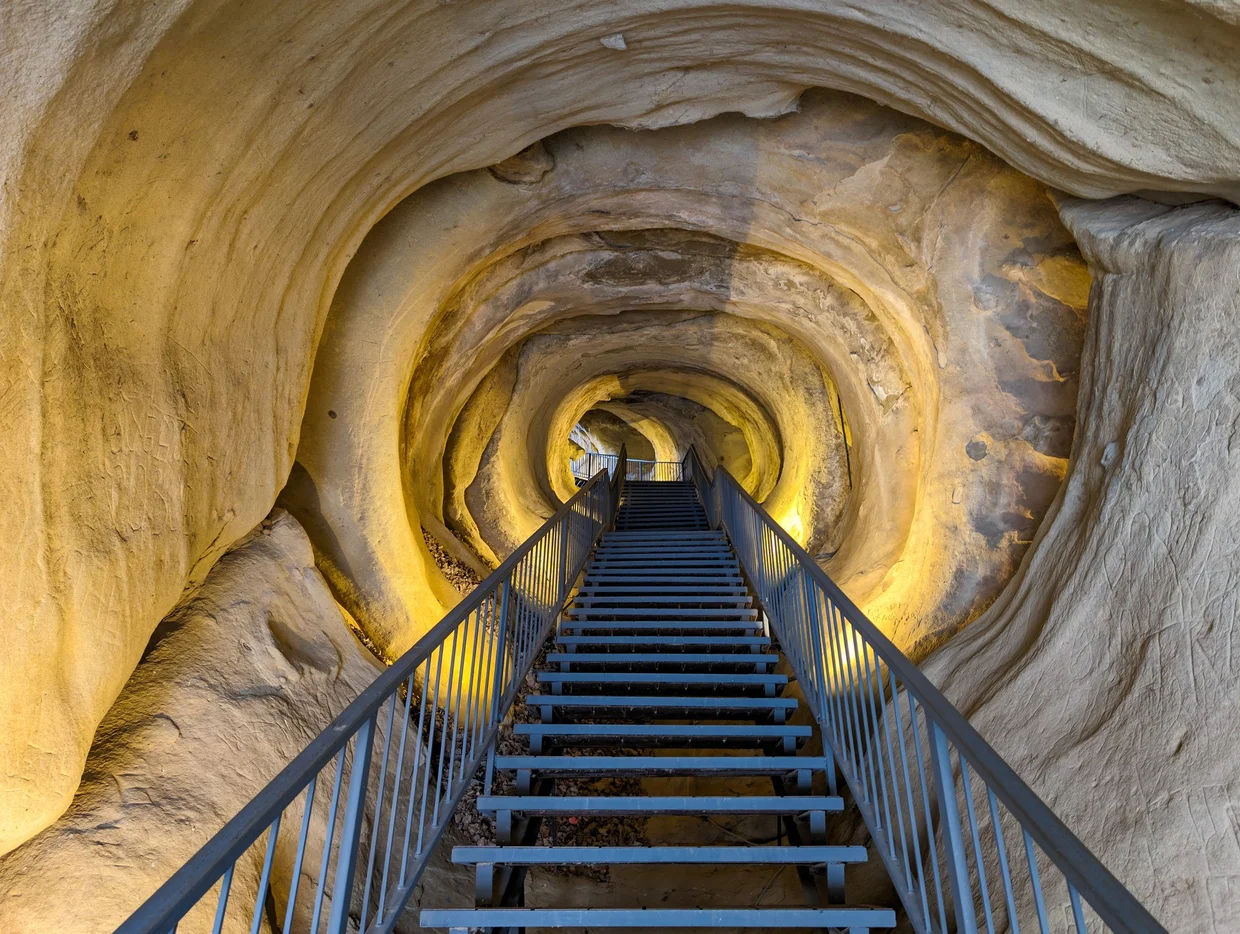
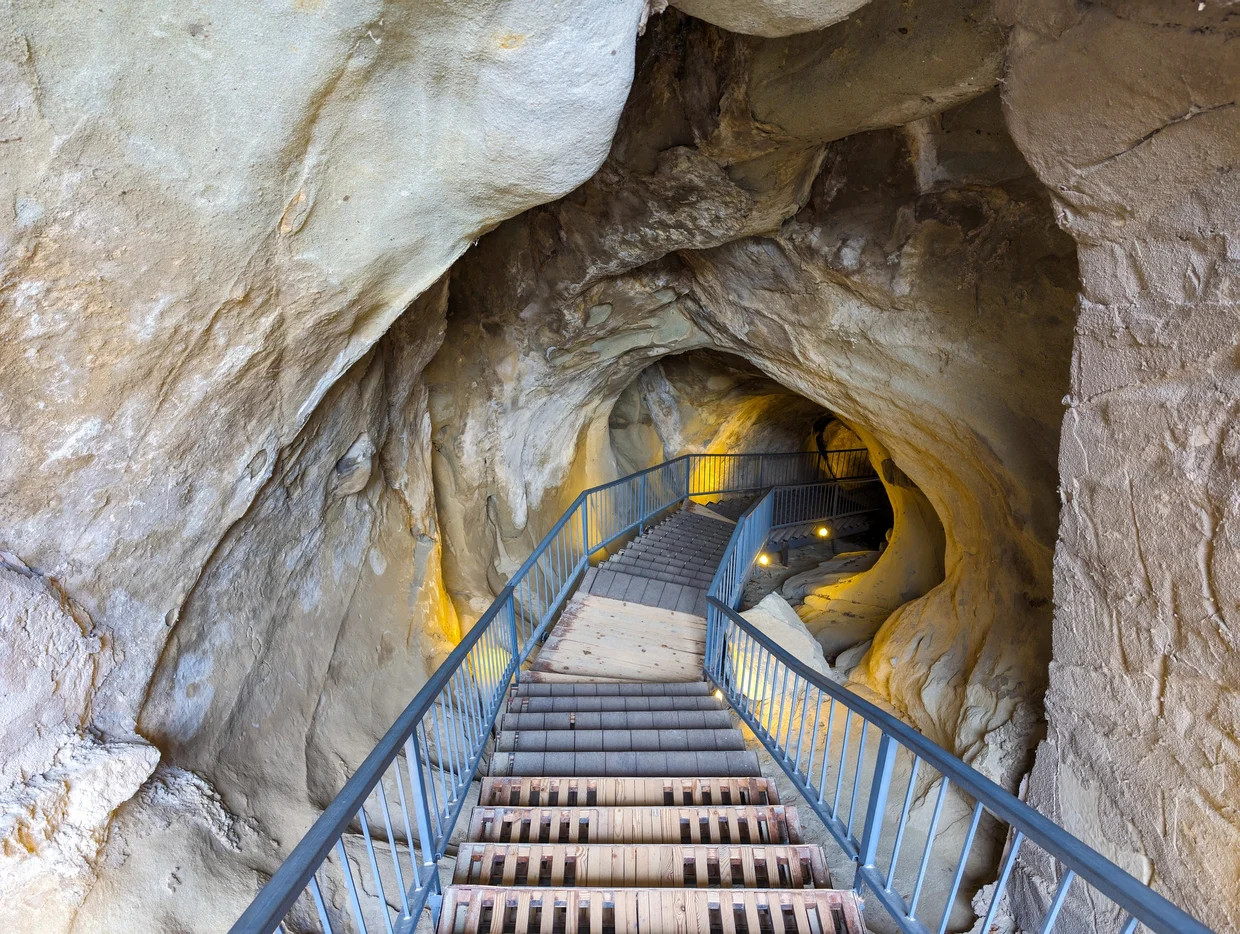
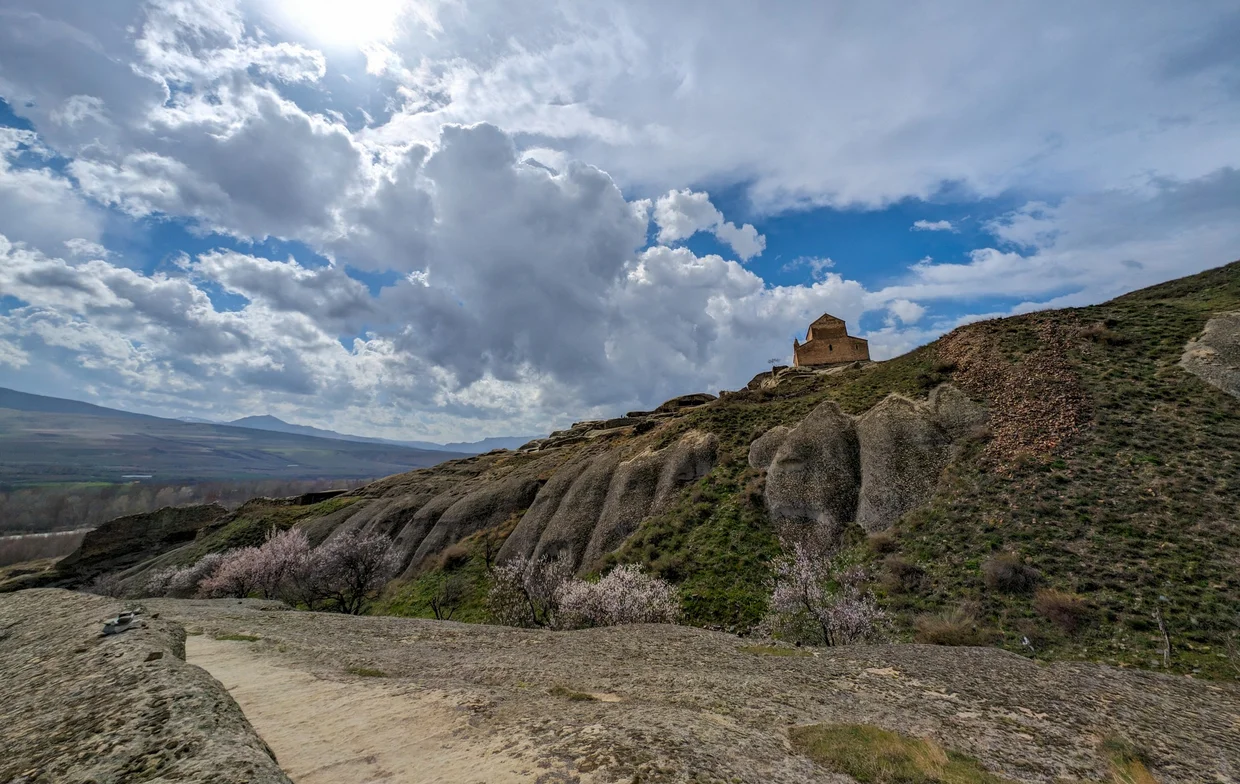
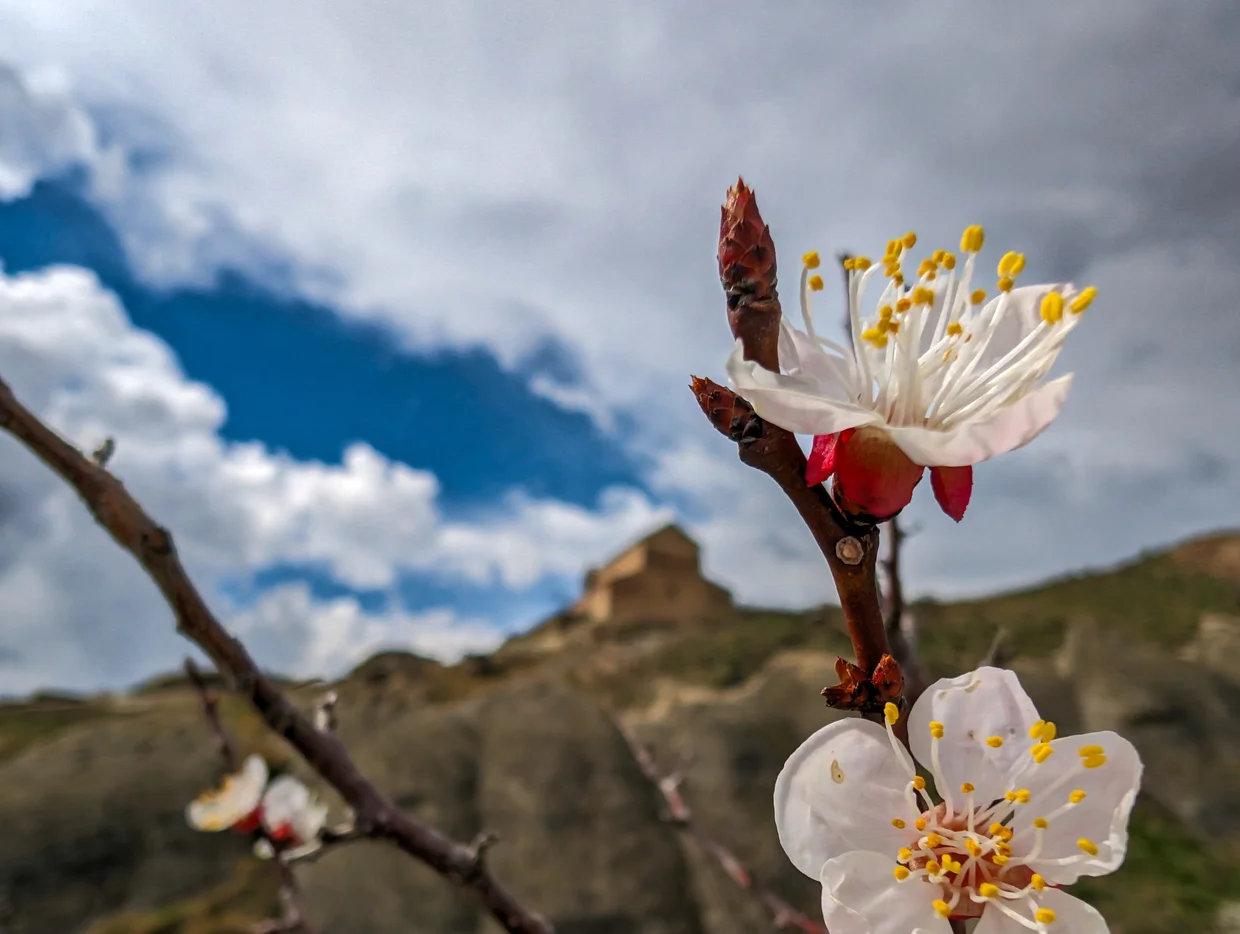
In spring, the almond trees on the hillside below bloom white. The church sits on the crest of the cliff against the sky. It's a lot.
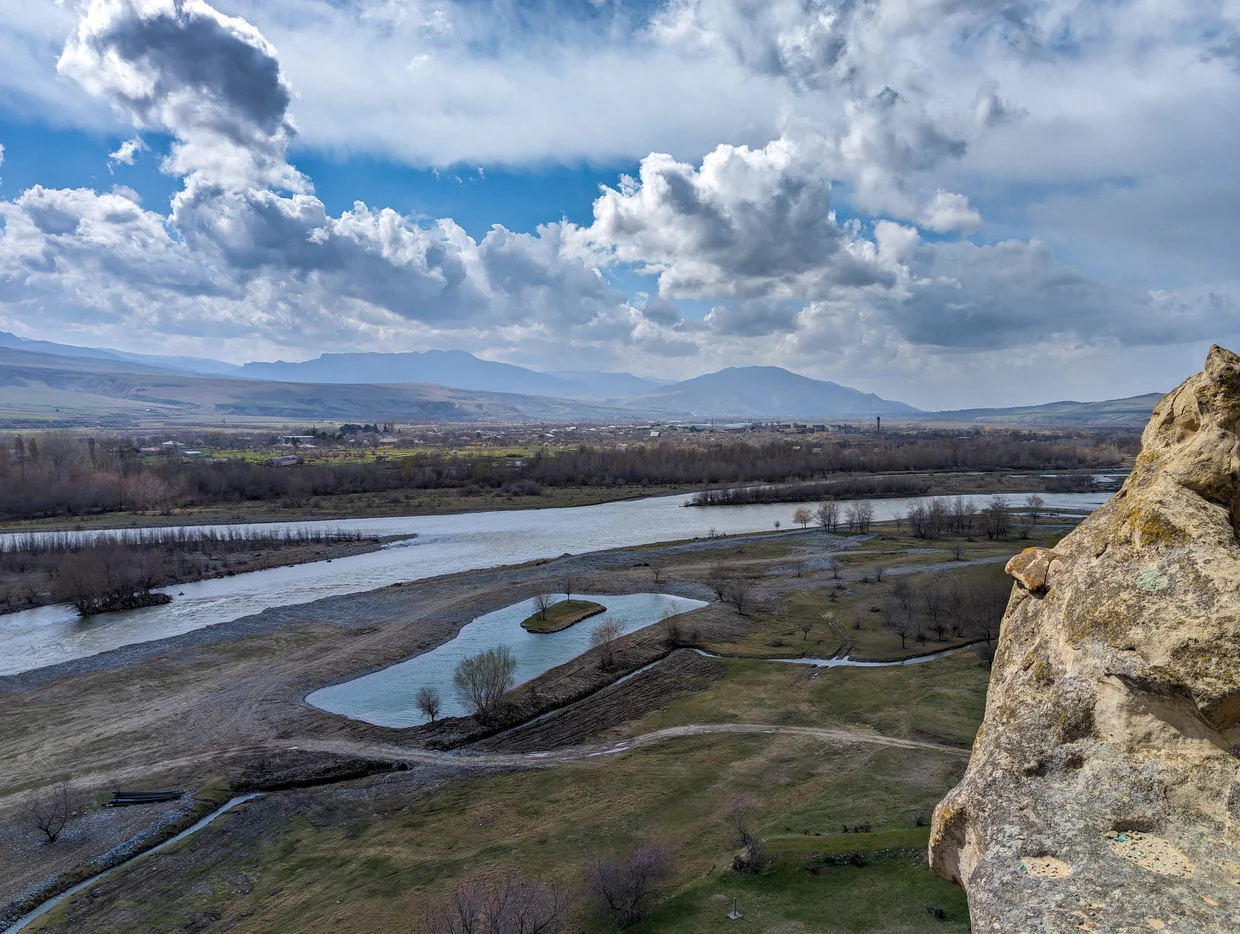
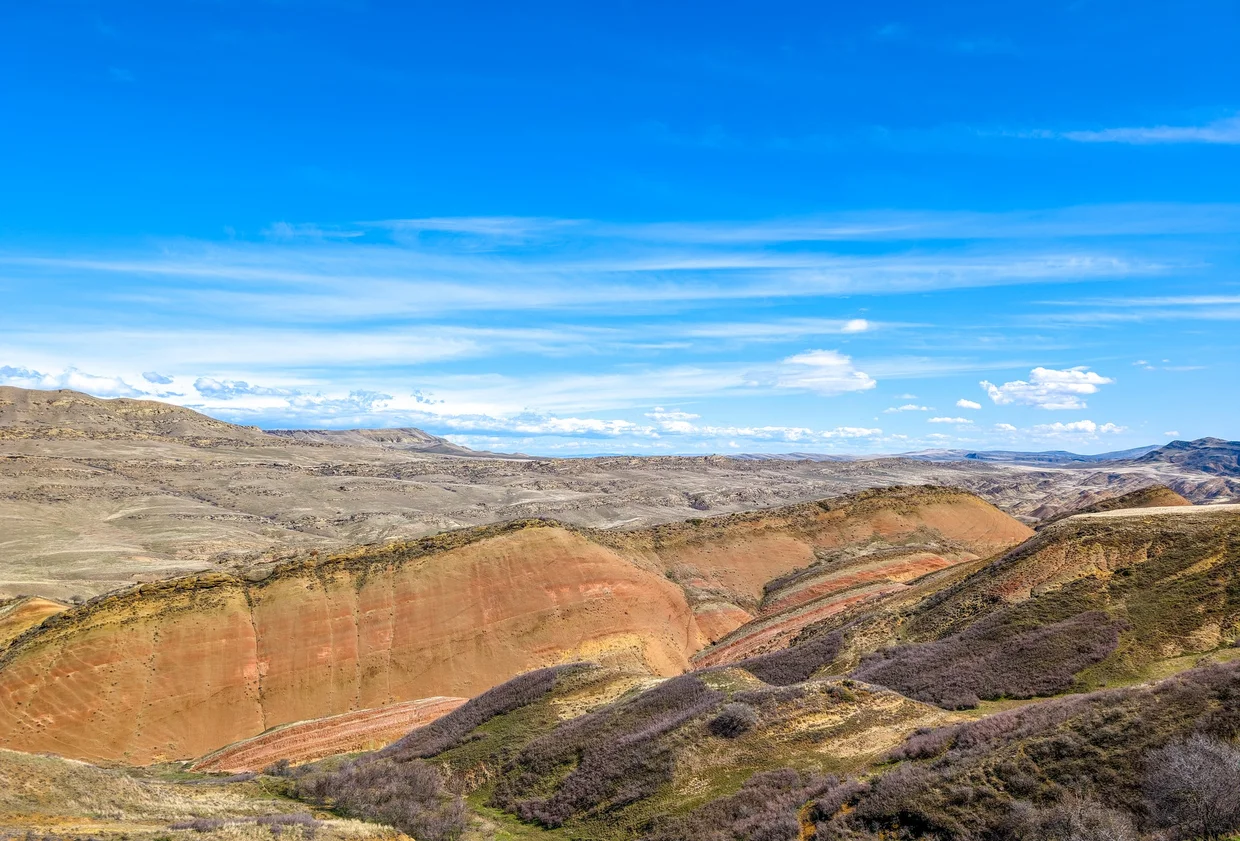
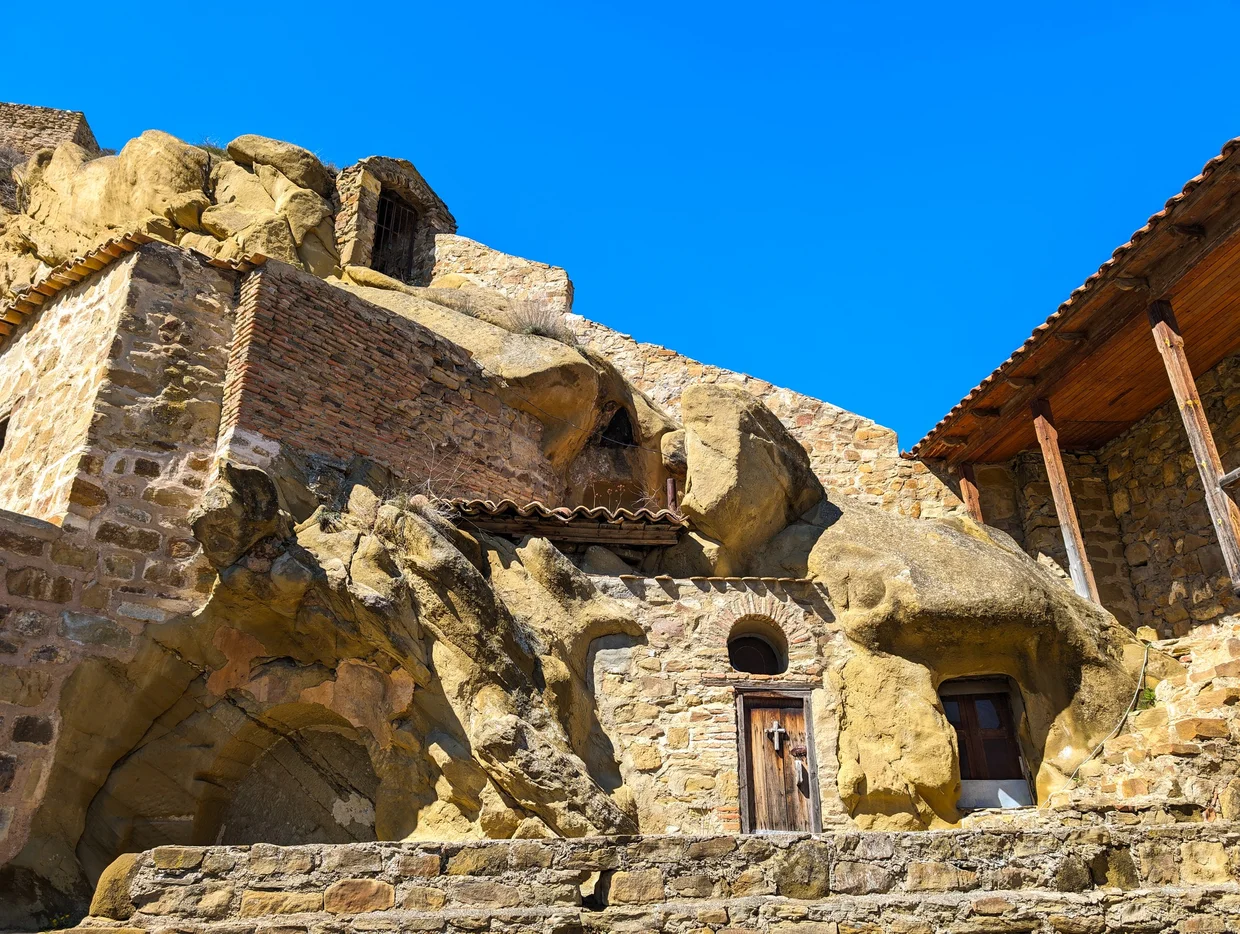
David Gareja is a completely different experience. A monastery complex carved into a remote semi-desert cliff in southeastern Georgia, near the Azerbaijan border, roughly two and a half hours from Tbilisi. Monks have been there since the 6th century. The cave cells run up the cliff face in rows like a vertical village, some of them with 9th and 10th century wall paintings still visible inside. The landscape around the monastery has colors you wouldn't believe without seeing them: orange and yellow-brown hills, a huge dry plateau, and a deep blue sky that feels too bright to be real.
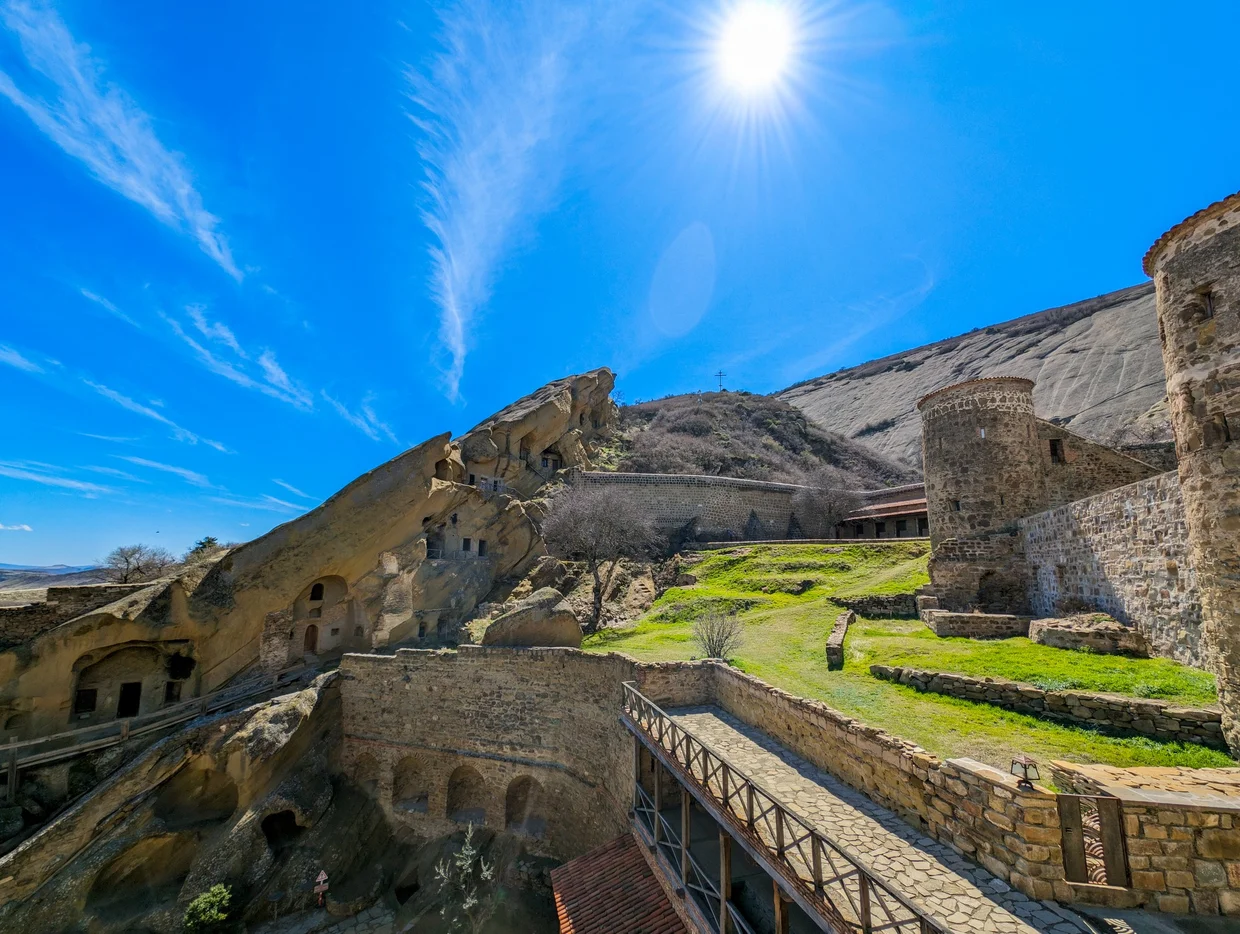
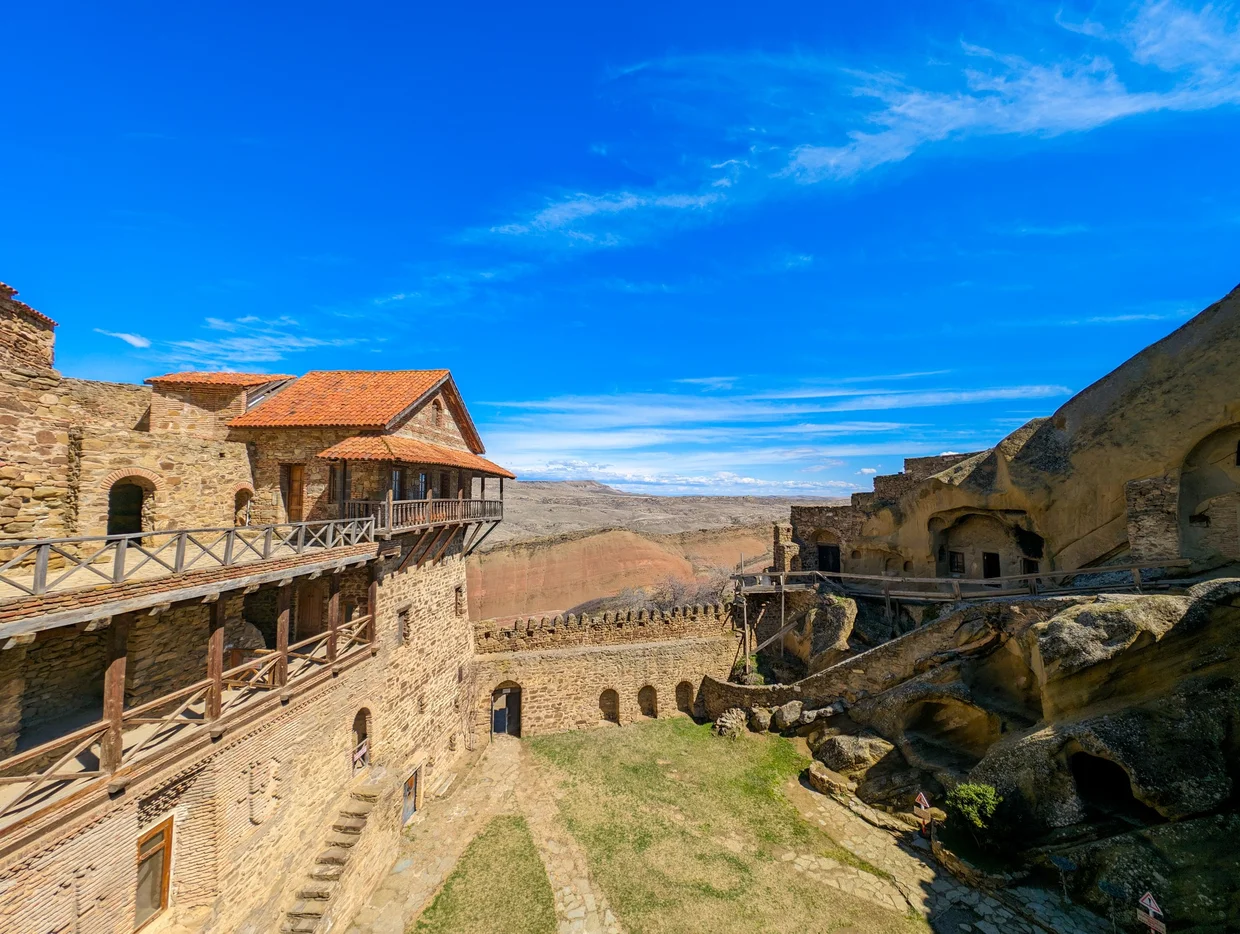
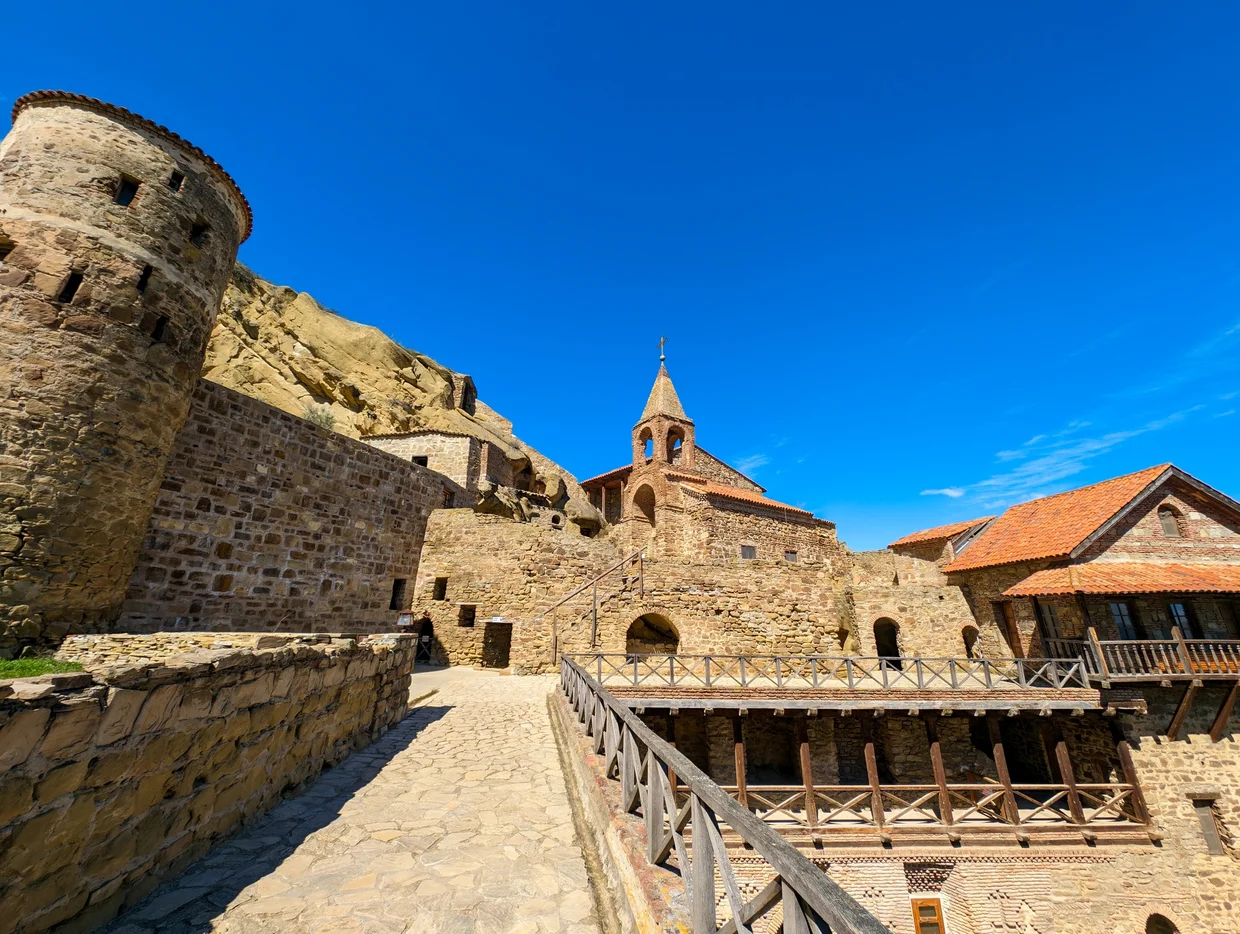
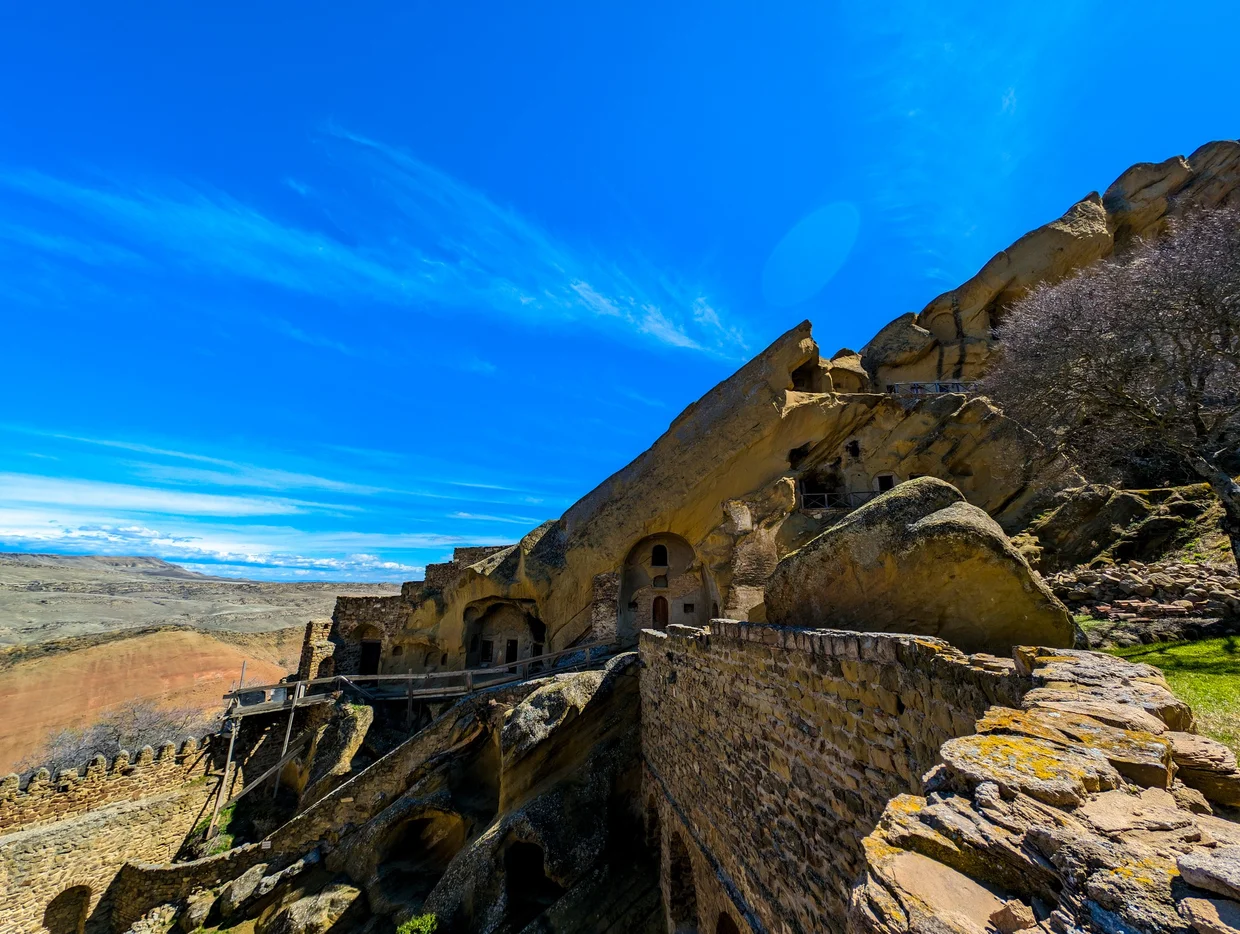
Getting there requires a car, and the last stretch of road is rough. The border with Azerbaijan runs along the ridge above the monastery, so you stay on the Georgian side, but the views from the top are a bonus the entrance ticket doesn't mention. Go in the morning, before the heat.
Best Base
Where to Stay
Tbilisi Old Town
The best base in Georgia, no real competition. Staying in the Old Town puts you in the cobblestone streets among carved wooden balconies, within walking distance of the sulfur baths, the Gabriadze clock tower, the cable car up to Narikala, and the restaurants and bars that make Tbilisi worth lingering in. The neighborhood is hilly and uneven underfoot, which your legs will remind you of, but the trade-off is waking up somewhere that actually feels like Tbilisi rather than somewhere adjacent to it. Accommodation ranges from boutique guesthouses in restored historic buildings to small hotels with rooftop terraces. Prices are reasonable by any European comparison, and the nicer options are still very affordable. The one downside is that parking is nearly impossible and some streets are too narrow for cars. If you are renting a vehicle, check with your accommodation about parking options before arriving.
Western Georgia: Canyons, Caves, and Greener Mountains
Western Georgia feels like a different country from the east. Wetter, greener, the Caucasus mountains closer and more dramatic, the valleys packed with plants in a way the eastern steppe isn't. The drive from Tbilisi to Kutaisi alone takes you through enough scenery to fill a trip.

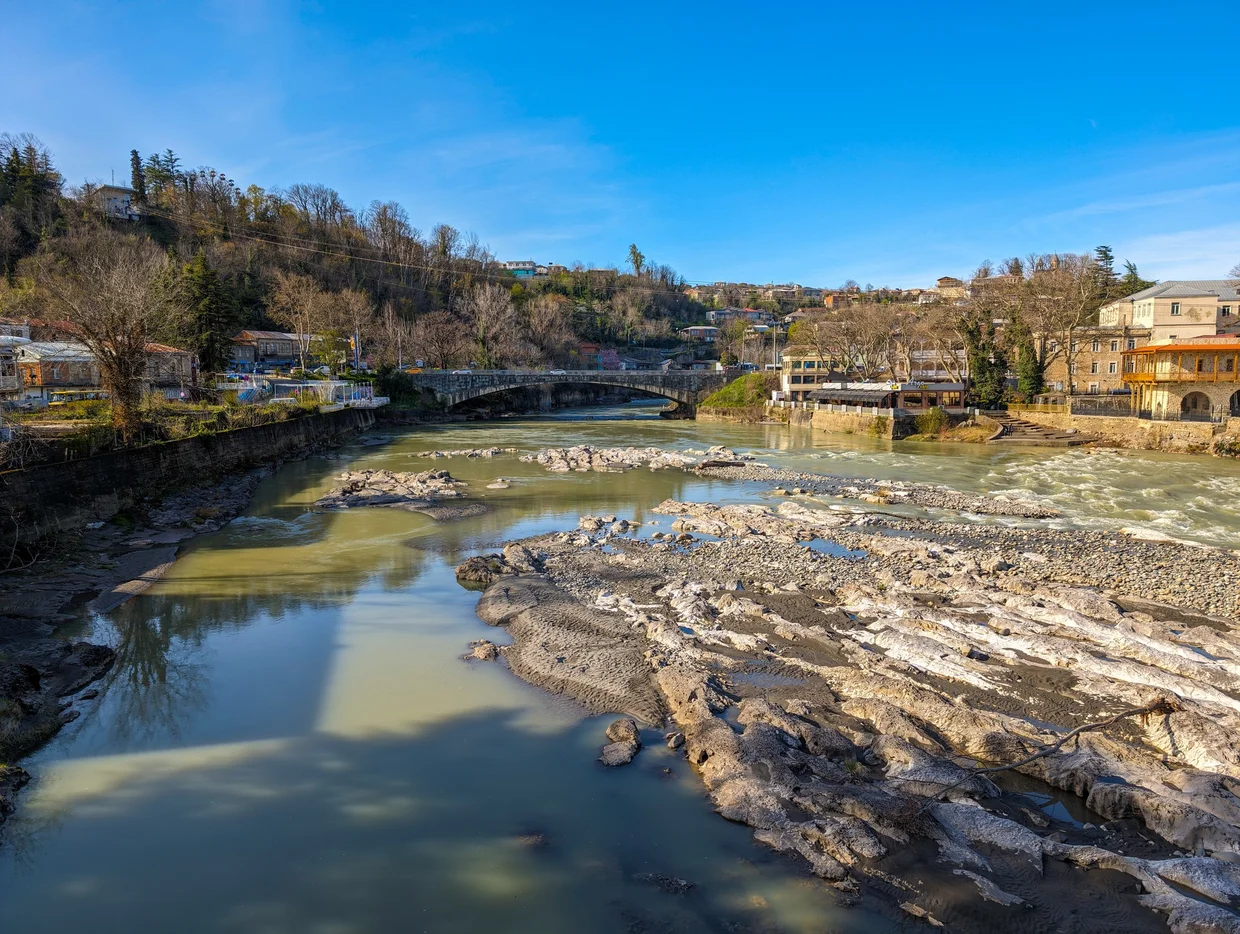
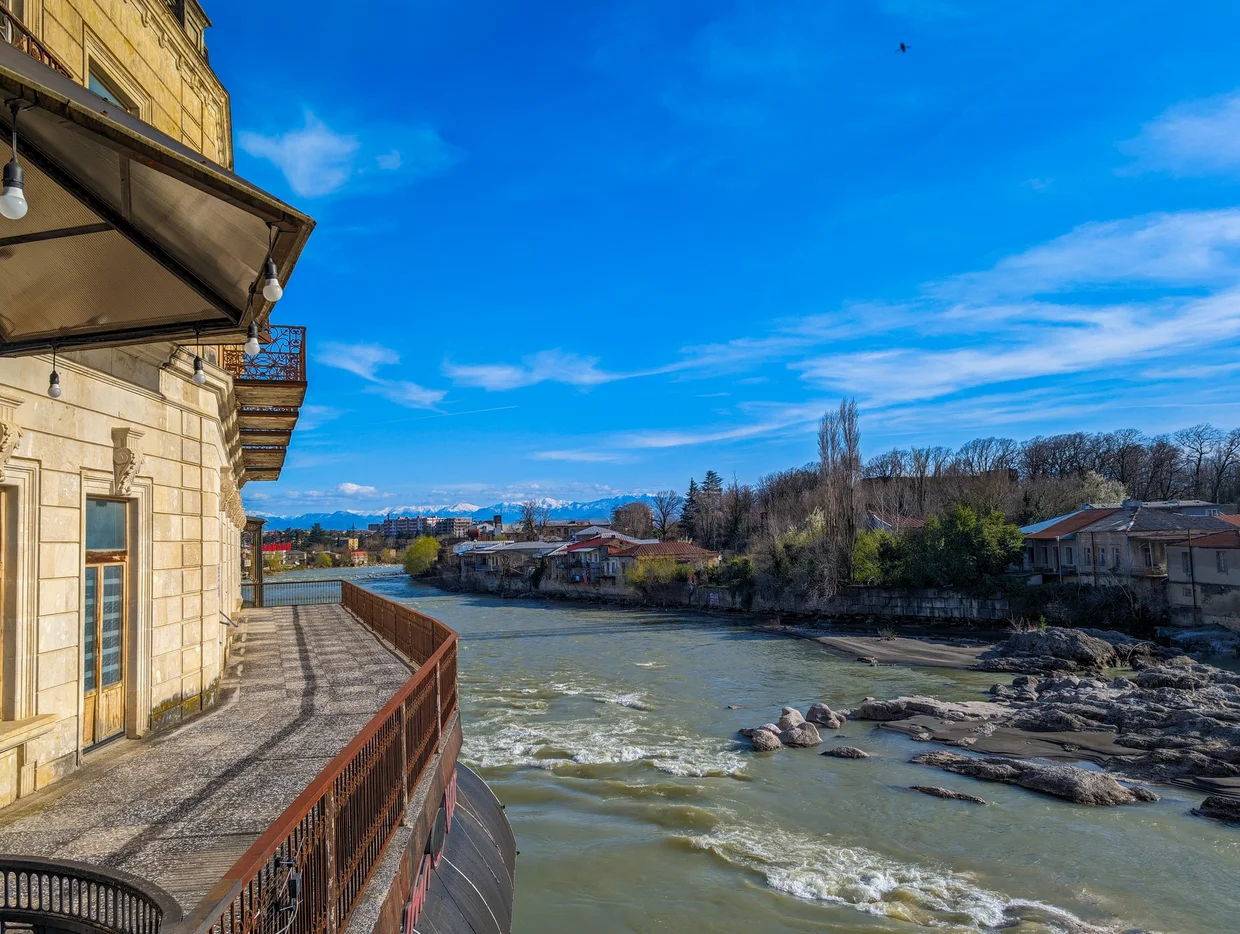
Kutaisi is Georgia's second city and the base for everything in the west. The cable car over the Rioni river is the first thing to do: the view of the snowy Caucasus range behind the city, with the river winding below, is the kind of thing that sticks with you for days. The city itself is relaxed and easy to walk.
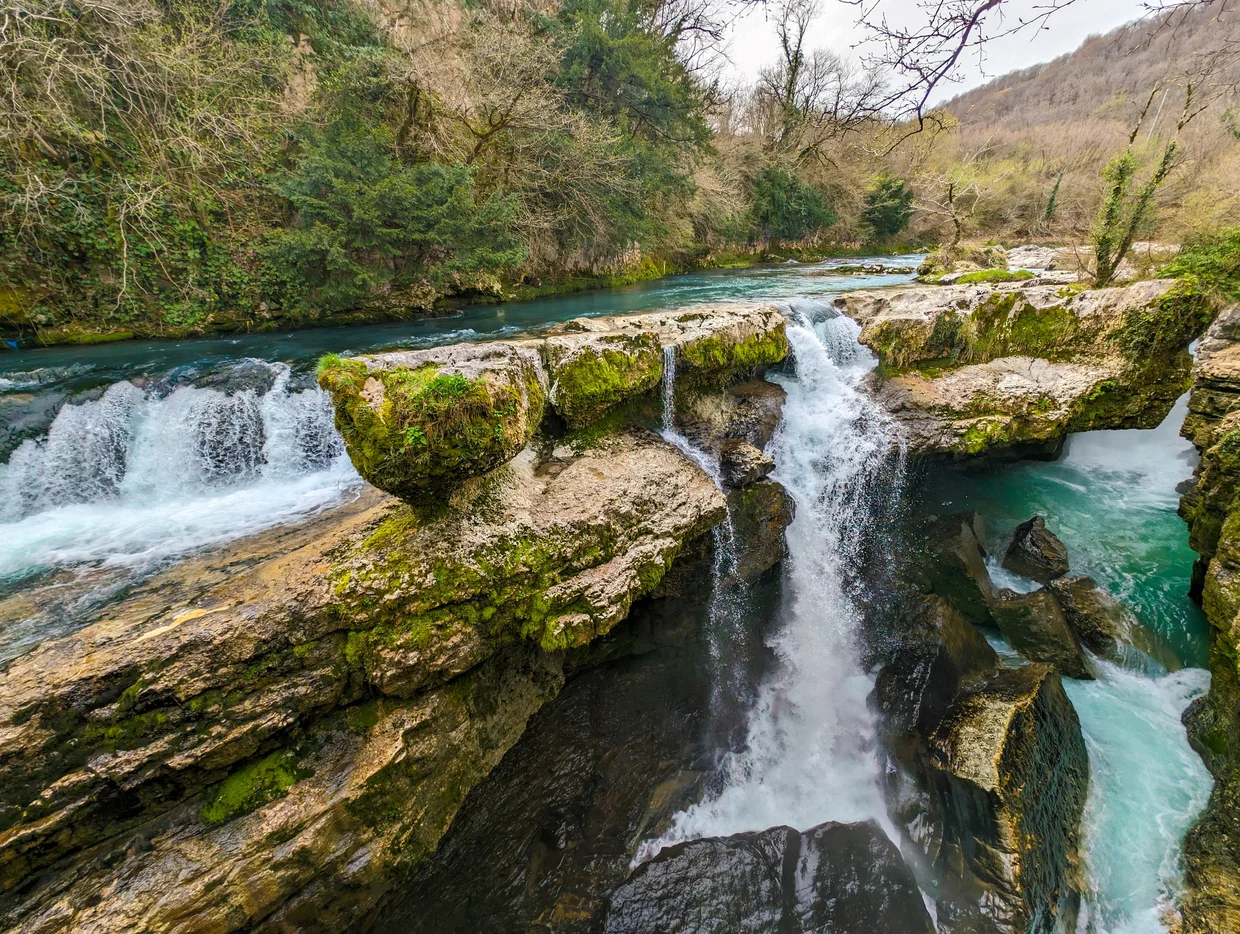
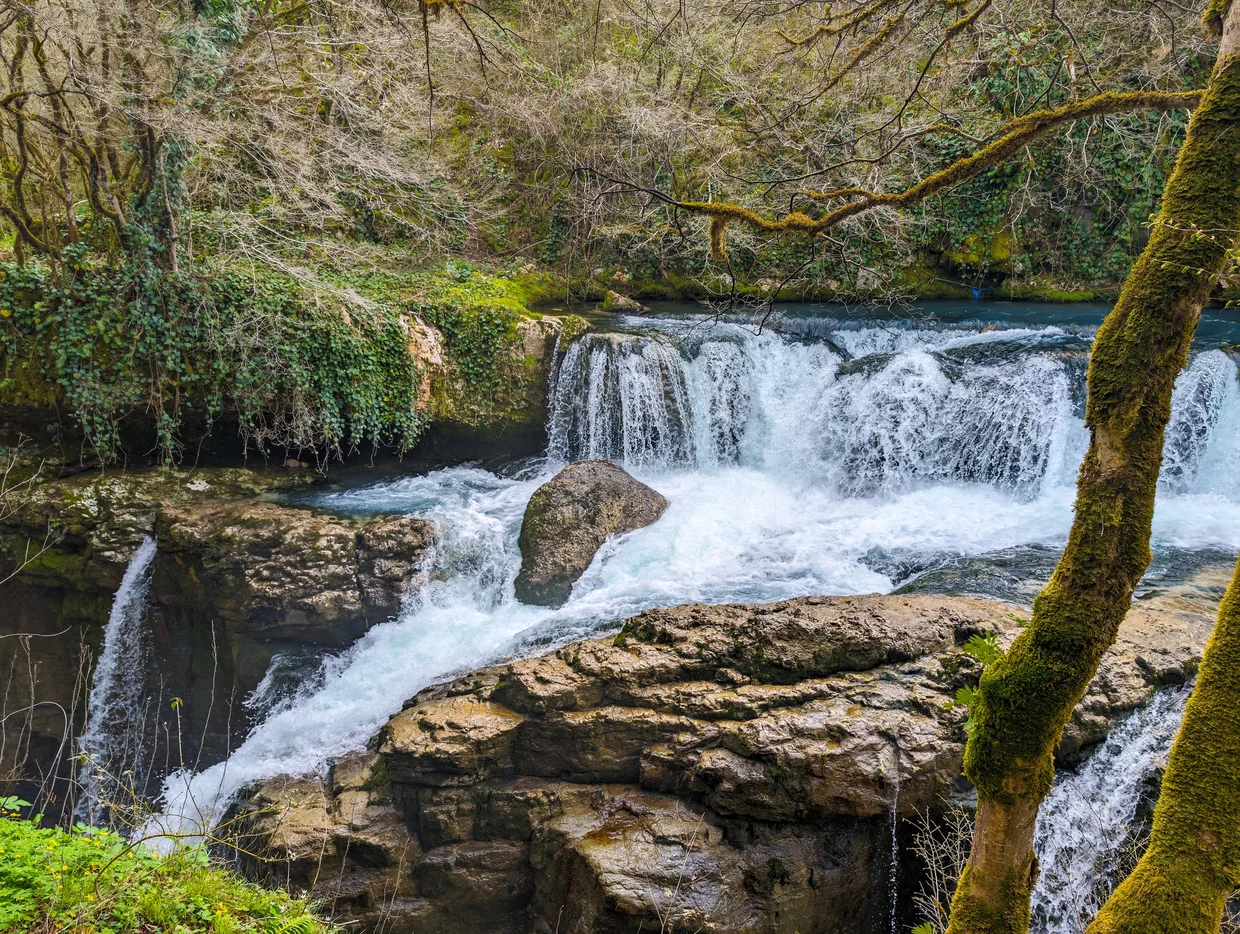
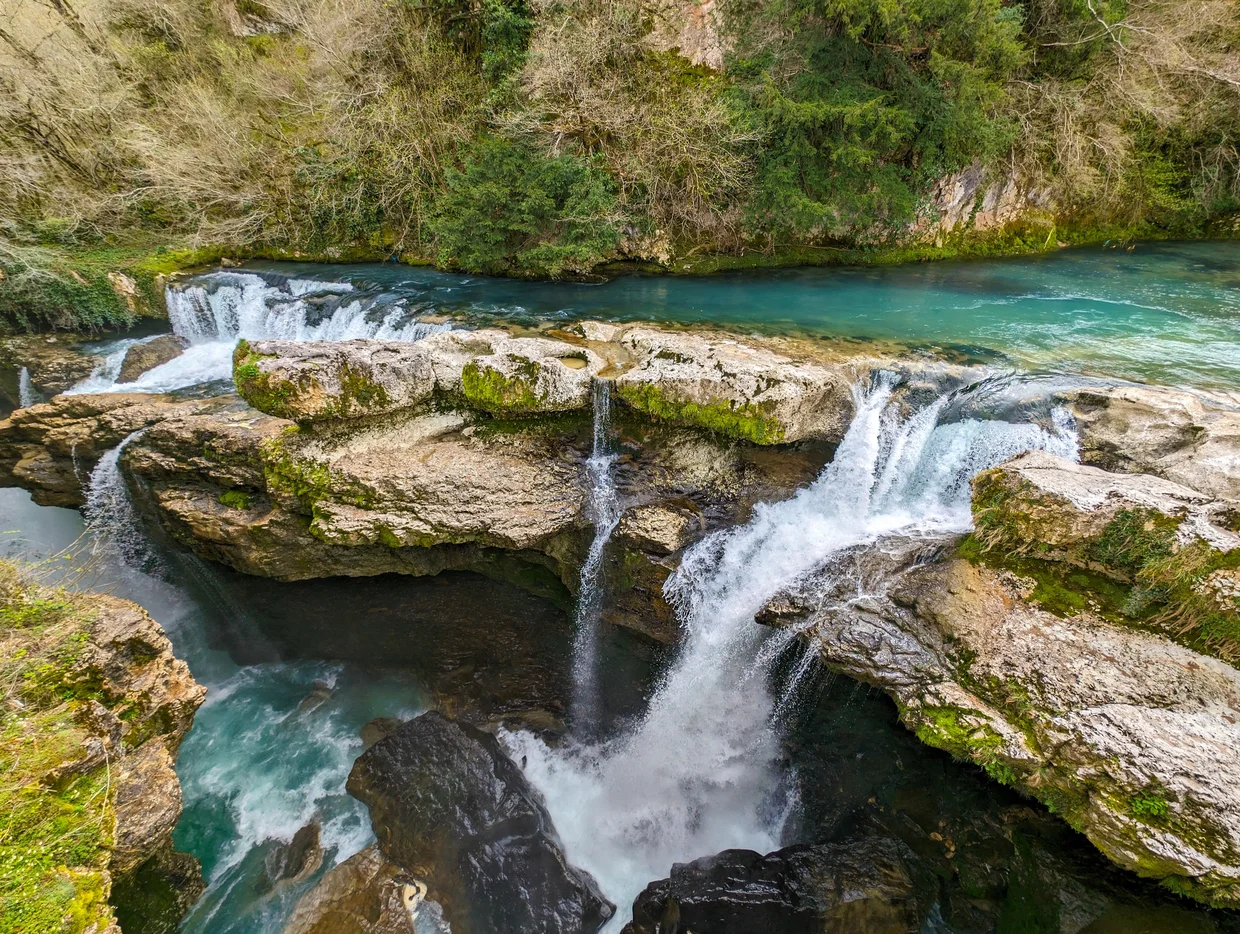
Martvili Canyon is about 40 minutes from Kutaisi and the single best natural attraction in western Georgia. The Abasha river has cut a gorge through the limestone, and the water is an unreal turquoise, the kind that looks edited in photos and is somehow even brighter in person. A trail runs along the canyon with wooden bridges and viewpoints that make you stop every few meters. You can also take a short boat ride through the narrowest section, between walls of mossy rock, with waterfalls coming in from the sides.

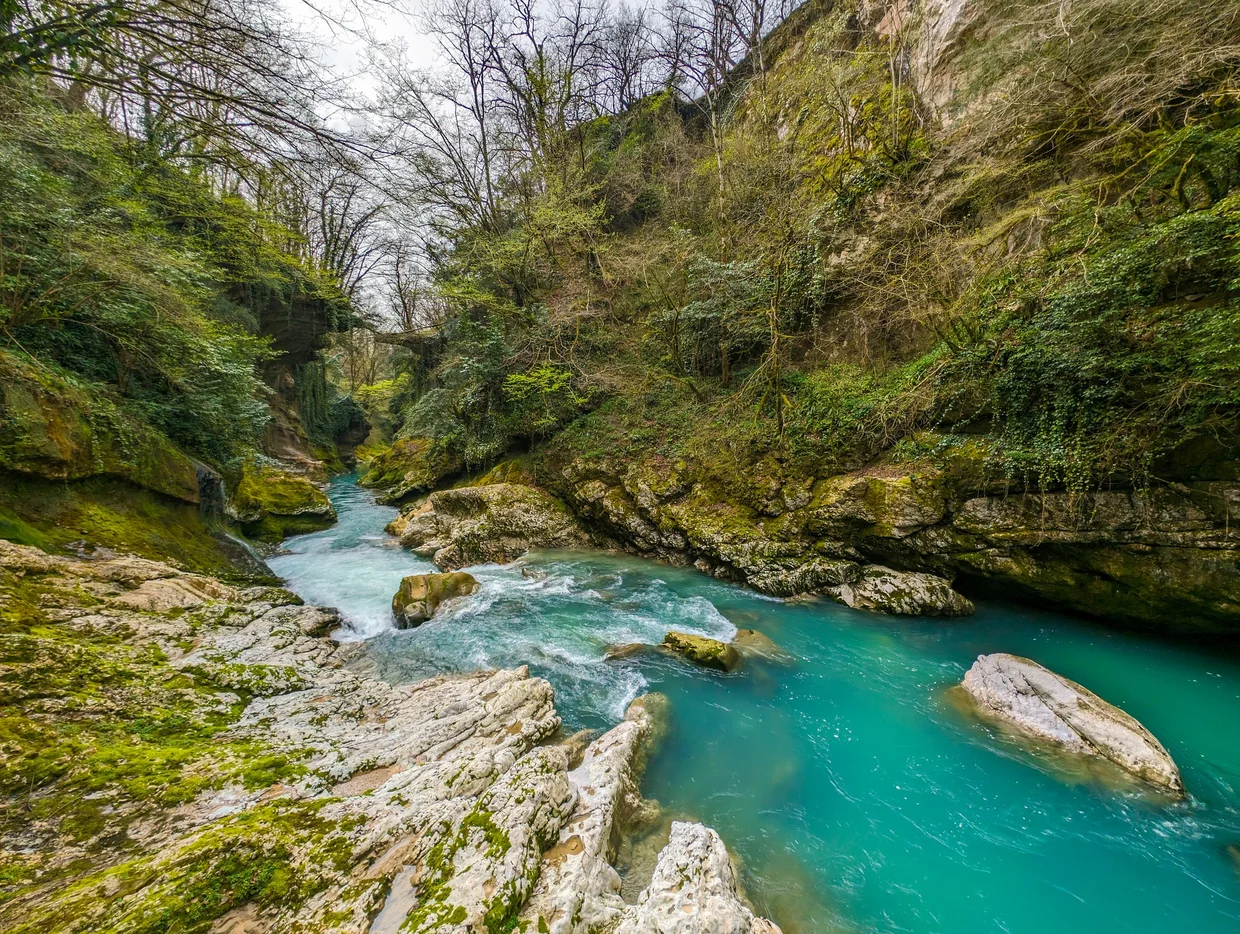
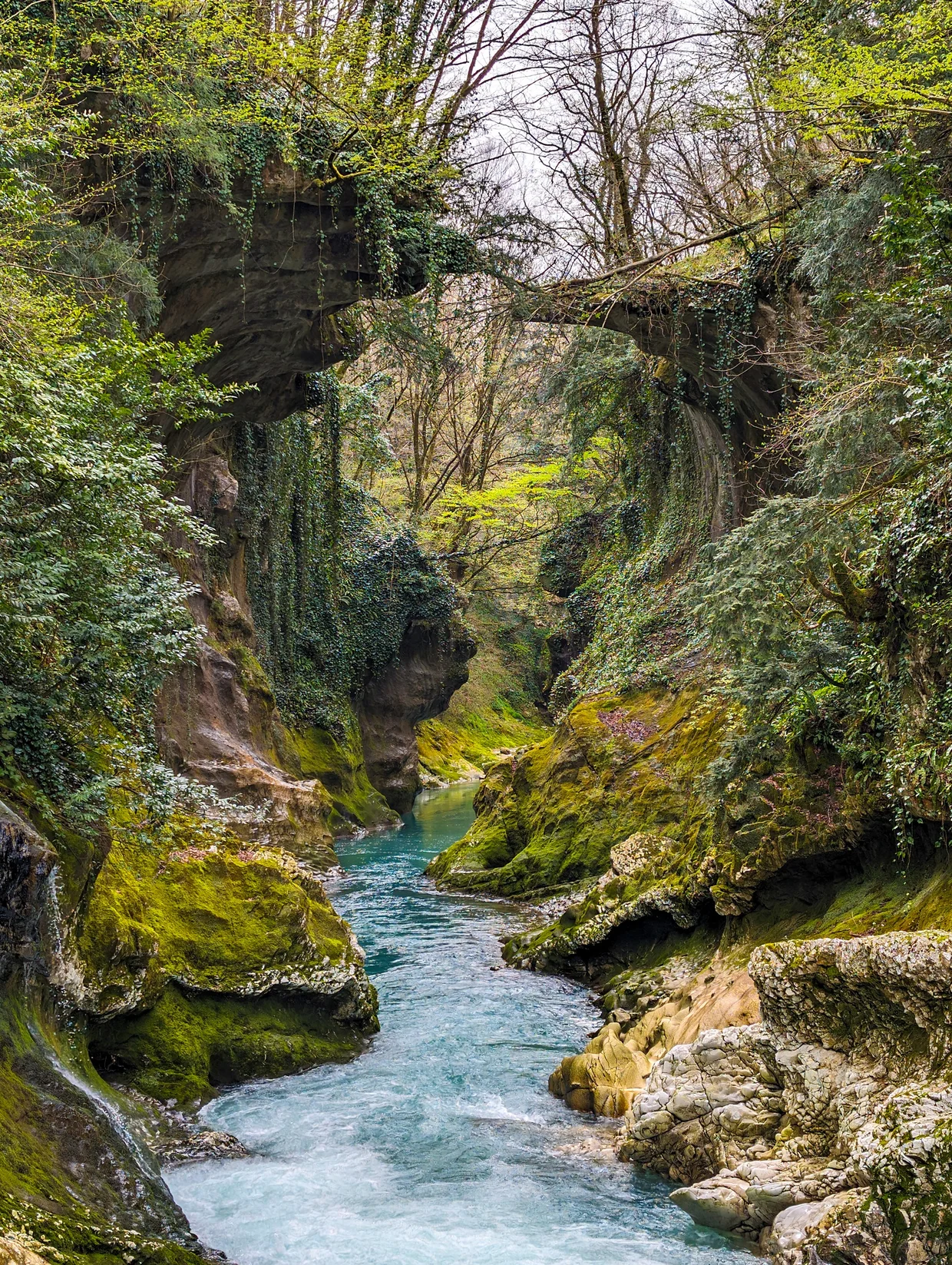
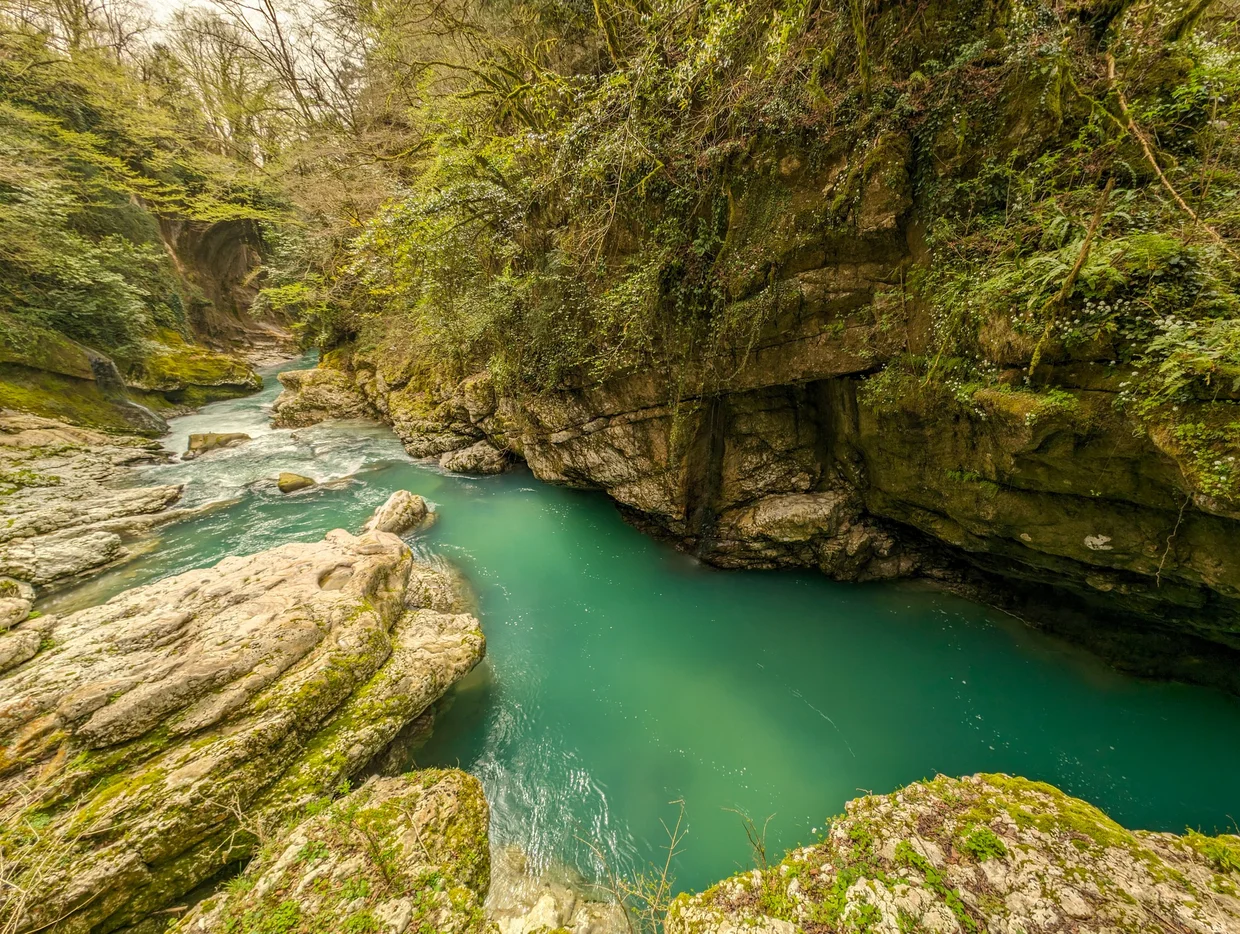
The waterfalls at the canyon entrance are worth the stop before you even get to the gorge itself.
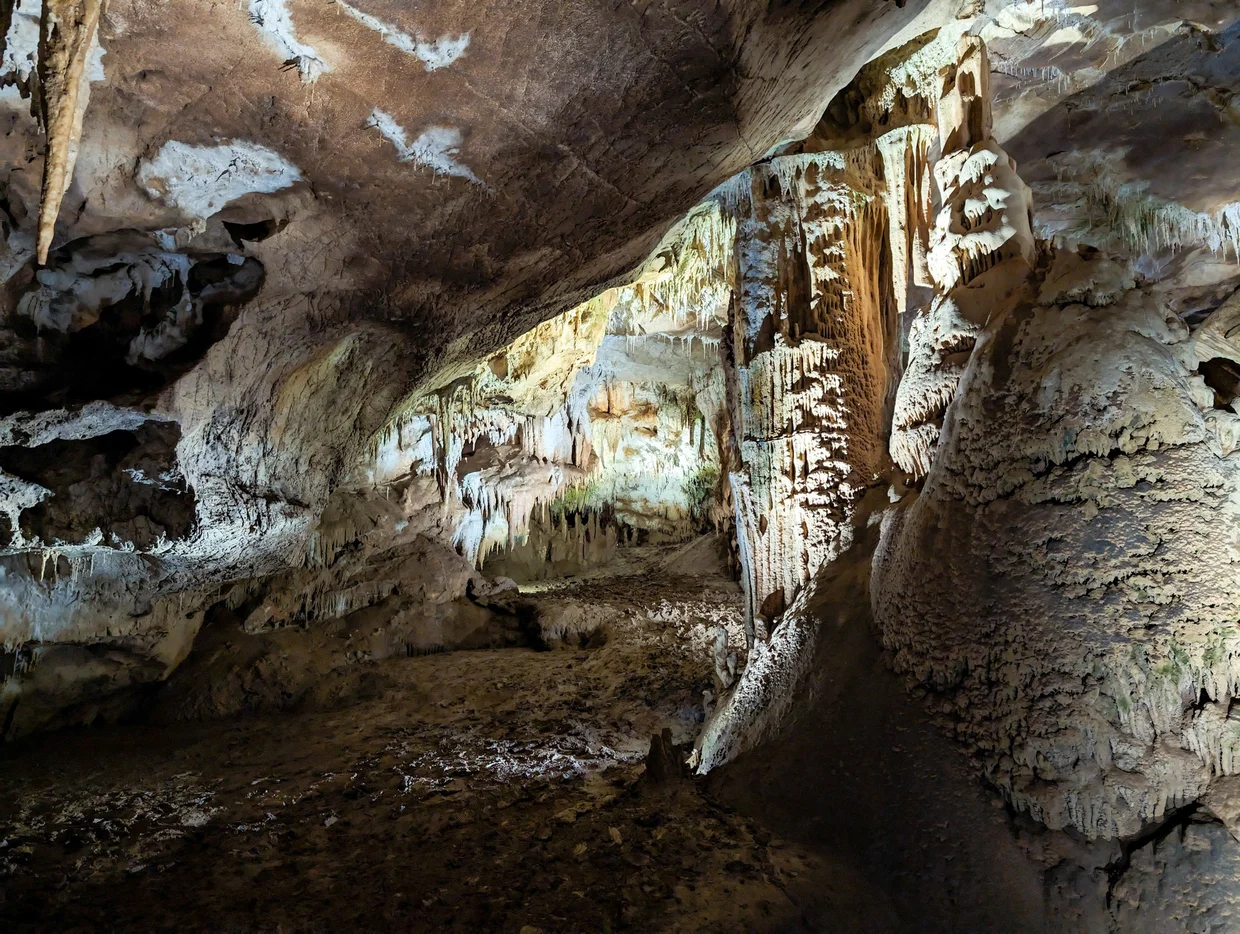
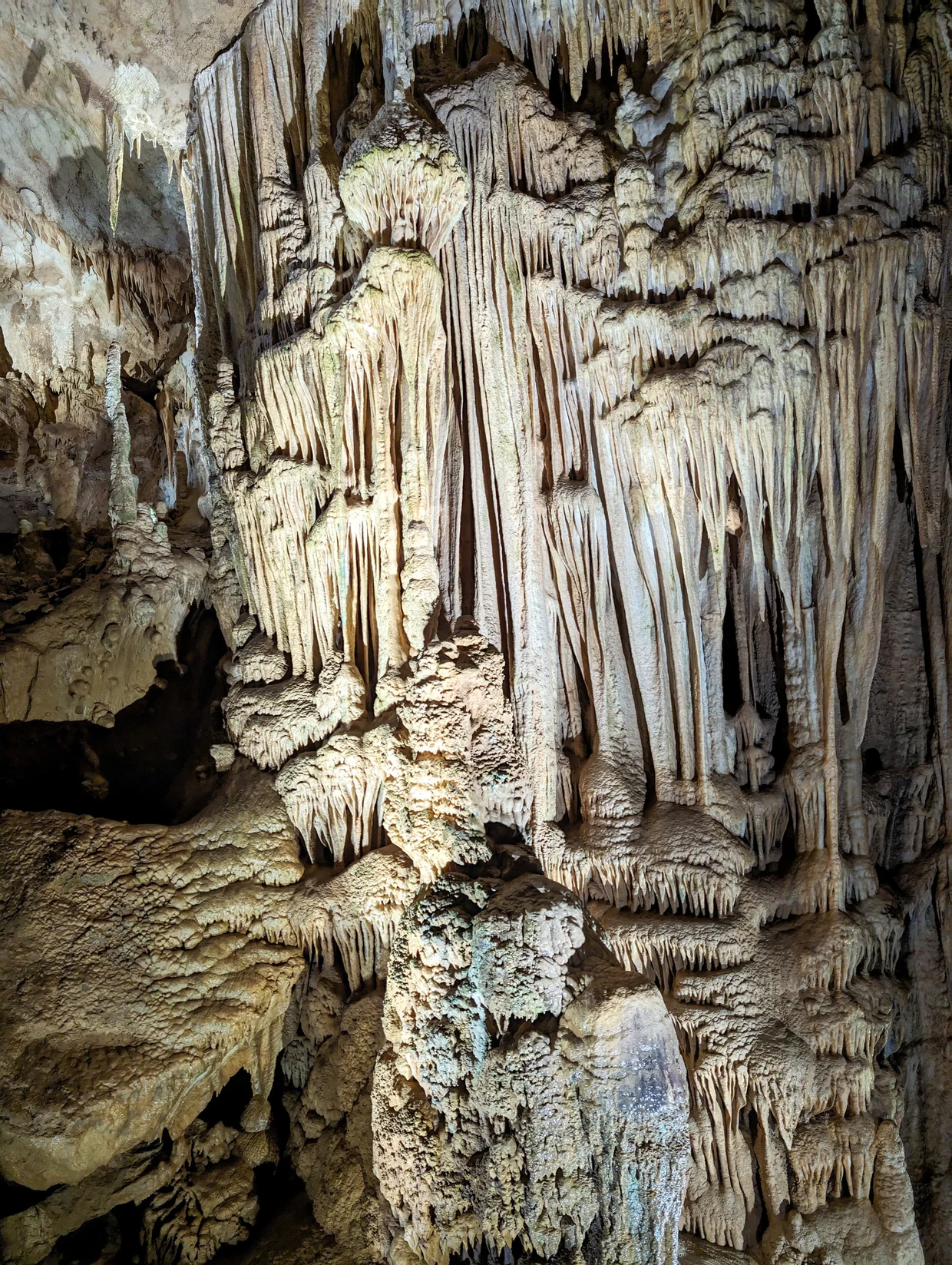
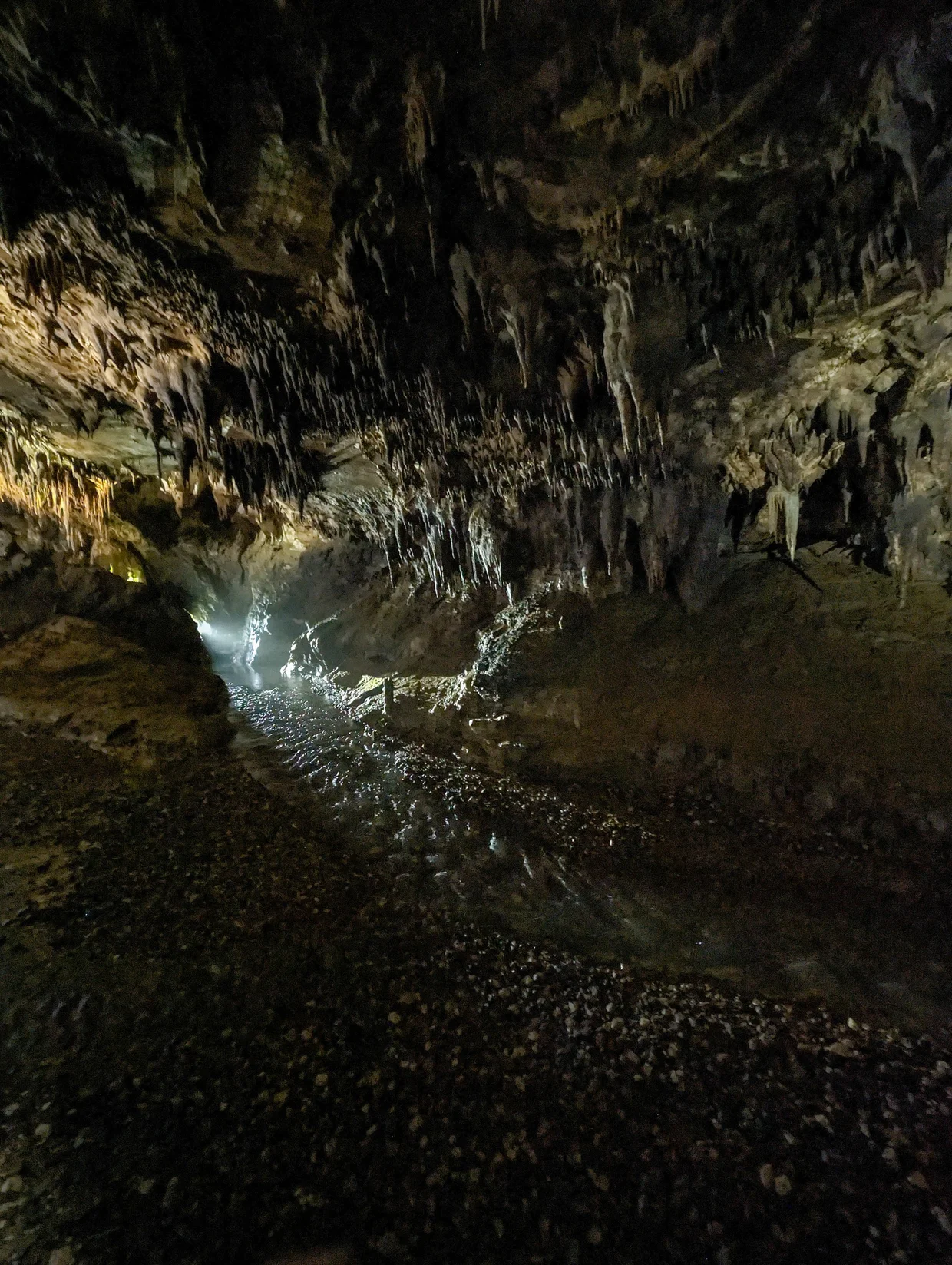
Prometheus Cave is 15 kilometers from Kutaisi: a huge cave with stalactites, underground rivers, and a lit boat ride at the end through a flooded cavern. If you usually avoid tourist caves, make an exception for this one. The size is real, the rock formations are packed tight, and the boat section through the dark water with the ceiling lit above you is genuinely dreamlike.
What to Do
There are many things to experience, to see and to do in Georgia. These are my personal highlights.

Martvili Canyon

Tbilisi Old Town & Sulfur Baths

Uplistsikhe Cave City
See the full what to do in Georgia guide.
Khachapuri, Khinkali, and 8,000 Years of Wine
Georgian food is a short list of dishes that keep coming back through your whole trip without getting old.
Khachapuri is the dish. Cheese-filled bread, with different regional versions. The Adjarian version is boat-shaped, the cheese bubbling inside, with a raw egg cracked in at the table and a chunk of butter dropped on top. You tear strips of the bread crust and stir them through the melted cheese and egg until it turns into something that shouldn't be legal. The Imeretian version is more to my tasting, a flat cheese pie, simpler, cleaner. Order it for breakfast. Order it for lunch. Order it again at dinner because nothing is stopping you.
Khinkali are the famous soup dumplings, filled with spiced meat. They're cheap, traditional, and on every menu. You eat them by hand: bite a small hole at the top, drink the broth that's collected inside, then eat the rest. The doughy top knot is a handle, not food, and you leave it on the plate. They weren't for me. The one time I ordered them, the minimum portion was six (ordering one isn't a thing here), and I left four. They aren't bad, they're just nothing I'd go back for. Plenty of travelers love them, so try them once if you're curious. After that you'll know which camp you're in. I'm not in a position to recommend them.

Beyond the basics: mtsvadi is skewered meat grilled over a wood fire, badrijani nigvzit is eggplant rolls with walnut paste and pomegranate, lobiani is bread stuffed with spiced kidney beans, pkhali is a spinach or beet roll with walnut filling. Bread from a tone oven (shotis puri, a long flattish loaf with dark edges) is pulled out on a long-handled paddle and served warm. You will eat more bread here than you planned.
The wine: a disclosure first. I'm not a wine drinker, and I know basically nothing about wine. So everything that follows is context, not expert opinion. Treat me as the wrong person to ask.
Georgia is, by most accounts, the oldest wine region on earth. 8,000 years of winemaking. The qvevri method (large clay containers buried underground, grape juice fermenting with the skins, seeds, and stems for months) produces something with no real match in Western wine. The result is amber wine, earthy and tannic, the kind of thing wine people get visibly excited about.
I did a wine tasting in Kakheti. It was wine. That much I can confirm with confidence. Beyond that, well, it was good, I guess. If you actually know wine, you'll get more out of this part of the country than I did, and you should plan accordingly.
In Kakheti, the wine region east of Tbilisi, the road through the valley is lined with family wineries. In Sighnaghi, a hilltop town with views over the Alazani Valley, there seem to be more wine bars than anything else. The town is small enough to walk in a morning and pretty enough to stay in for two days even if your interest in the actual wine is, like mine, pretty vague.

The supra is the formal Georgian feast, the big cultural event every guidebook describes. A tamada (toastmaster) leads the table through long, sincere toasts: to the host, the guests, absent friends, the dead, Georgia, peace, family, future. People drink together after each one. Food and wine keep showing up. It's a real cultural tradition rather than a tourist show, and most travelers don't end up at one without a local connection, so don't show up expecting it to happen on cue.
When to Go
Georgia has four proper seasons, and the best time depends on what you came for.
May through October covers almost everything. Cities are pleasant, the Caucasus mountains are open, and the wine country is up and running. July and August get properly hot in Tbilisi and Kakheti (high 20s and sometimes pushing into the mid-30s on peak days), but evenings cool down and the mountain areas stay comfortable throughout.
May, June, and September are the sweet spot. Warm but not too hot, the countryside is green, and the crowds are manageable. September is especially good: the weather is still great, the grape harvest is happening in Kakheti, and the whole wine region is busy. If you can only pick one month, pick September.
Spring (April to May) is beautiful in the cave cities and at lower altitudes. Almond and cherry trees bloom early, and Uplistsikhe in April with the blossom below the cliff is the kind of view that no photo really captures.
Winter is quiet but not shut down. Tbilisi works well in the off-season: fewer tourists, lower prices, the wine bars and restaurants are just as good in the cold. The mountain highlight is Gudauri, Georgia's main ski resort about two hours north of Tbilisi. Good skiing at a fraction of Alpine prices, and the mountain scenery is dramatic in any season.
Travel Tips for Georgia (Before You Go)
Plan the essentials before your trip to Georgia, including plug types, SIM or eSIM options, and travel insurance coverage.
Plug Check
Do you need a plug adapter?
Compare your home sockets with Georgia before you go.
220V and Type C/F sockets
ESIM
Land with data already working
Set up mobile data before arrival so maps, rides, and messages work the moment you land.
eSIM or physical SIM?
An eSIM is the easiest option for Georgia. Local SIM cards are available at Tbilisi airport from Magti and Geocell. With a little bit more effort you can get a Magti eSIM online, which is the cheapest option.
Read the SIM vs eSIM guideTravel Insurance
Sort coverage before you need it
Medical costs and trip disruption are easier to handle when you're covered
Getting Around
In Tbilisi: the metro covers the main routes cheaply and quickly (two lines, flat fare around 1 GEL). Bolt works well for taxis and shows you the price before you get in, so you skip the haggling. Marshrutkas (yellow minibuses) cover everything the metro doesn't, but you need to know which number goes where.
Between cities: marshrutkas again, leaving from various stations when full rather than on a schedule. For busy routes like Tbilisi to Kazbegi or Tbilisi to Kutaisi, there are shared taxis and organized minivan services that are easy to find. Trains run to Batumi on the Black Sea coast, overnight or daytime, and the route through the lowlands is pretty.
Car rental is the right call for anything off the main tourist loop: David Gareja, Uplistsikhe, Kakheti wine country, the mountain regions. Roads in cities and on main highways are fine. Rural roads range from okay to rough. Mountain roads to places like Svaneti or remote Kakheti need patience and ideally a car that sits a bit higher off the ground. Fuel is cheap.
The script: Georgian uses its own unique alphabet, not related to Cyrillic or Latin or anything else you've seen. Road signs, menus, and shop names will be impossible to read at first. Most younger Georgians in cities speak some English. Outside cities, Google Translate's camera mode is your best friend.
Costs
Georgia is very affordable by European or American standards. The Georgian Lari (GEL) runs at roughly 3 GEL to 1 USD and around 3.5 GEL to 1 EUR (check current rates before you go). Eating well is cheap, accommodation is cheap, getting around is cheap. The main variable is how much wine you drink, which in Kakheti can add up faster than you expect.
The prices shown here are meant as a rough guide and can vary over time. While I update exchange rates regularly, local prices are typically refreshed only when I revisit the destination.
The biggest cost drivers are wine tastings in Kakheti (easy to spend if you're doing winery visits), car rental (worth every lari), and accommodation in Tbilisi Old Town in peak July and August, when prices climb. Outside those peak months, even the better options stay very reasonable.
Published 2025. Last update April 2026