The Greece Nobody Posts About
Let me tell you what this page is not. It's not about Santorini. It's not about Mykonos. It's not about watching a blue dome church at sunset while a waiter pours you a second glass of Assyrtiko. It's not about Athens either, and I feel like I owe you an explanation up front: I skipped Athens on purpose. I skipped Thessaloniki too. I skipped every beach. That was the whole plan.

Here's the deal. I wanted to drive through the mainland, see the ruins, sleep in small towns, and not queue behind a cruise ship group for anything. Athens I'm saving for a separate trip, because it deserves more than two days sandwiched between other stops. A city with the Acropolis, the Agora, the Parthenon, and three world-class museums is not something I want to speed-run. Same for Thessaloniki. Same for the islands. Those are their own trips.
So this is mainland Greece, from the north to the southern tip of the Peloponnese, done by rental car over ten days. Meteora. Delphi. Mycenae. Mystras. Olympia. Royal tombs in a cornfield. A Byzantine ghost town nobody's heard of. A wetland full of pink samphire two weeks later on an unrelated detour. No islands. No beaches. No Acropolis. It's the Greece you drive through on the way somewhere else, except I made it the destination.

And I'll save you some suspense. It's one of the best road trips I've done in Europe. Not the most dramatic, not the most scenic, but the most layered. You drive two hours and the civilization on the signs changes: Mycenaean, then classical Greek, then Roman, then Byzantine, then Ottoman, then modern. Every stop is another couple of thousand years. And most of them are basically empty.
If you want blue domes and sunsets, you know where to find them. This page is for the other Greece.
Meteora
Meteora is the thing. If I had to pick one place from this trip to tell you about, it's this one. Six working monasteries sitting on top of sandstone rock pillars hundreds of meters tall in the middle of the Thessaly plain, most of them built in the 14th and 15th centuries by monks who wanted to get as far from the world as physically possible. The rocks are the kind of geology that shouldn't exist. Rounded columns and fins rising out of a flat valley with nothing around them. And then someone went "yeah, I gonna build a church on top of that one" and somehow did it.

The town at the base is called Kalambaka, with a smaller village called Kastraki tucked right up against the rocks. You base yourself in either, and you drive the loop road that winds up between the pillars, stopping at each monastery. All six are open to visitors on different days, so you can't actually hit them all in a single day unless you time it carefully. I did two days and saw three, which felt like the right pace.

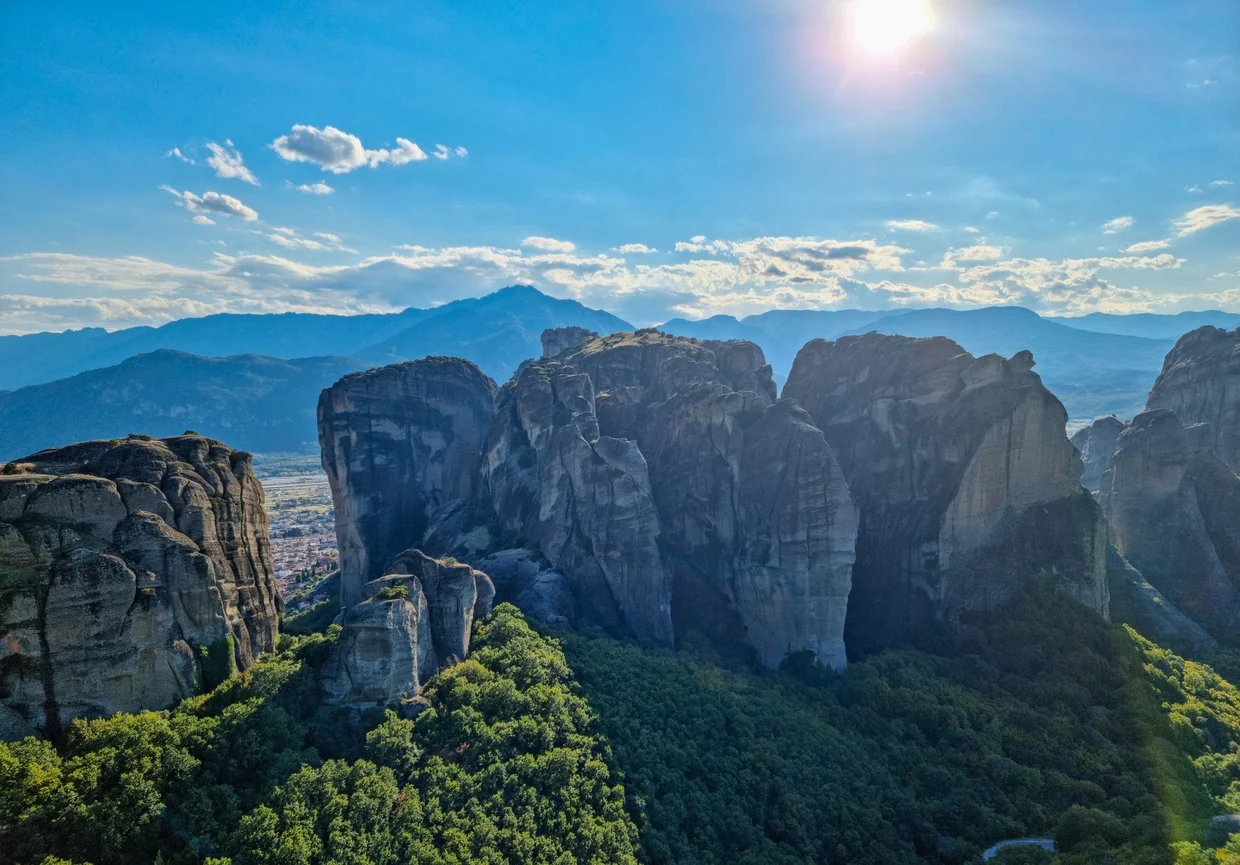
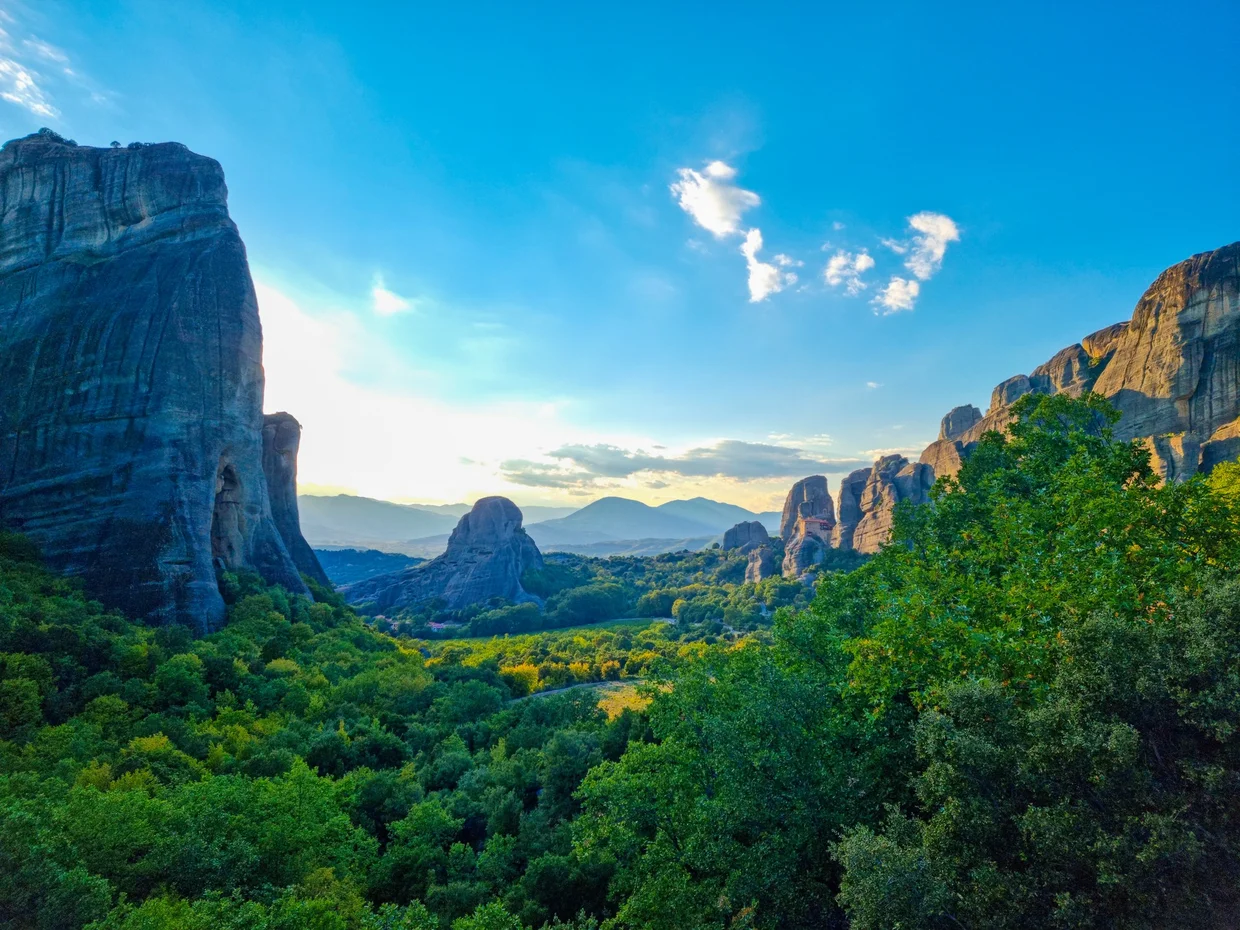
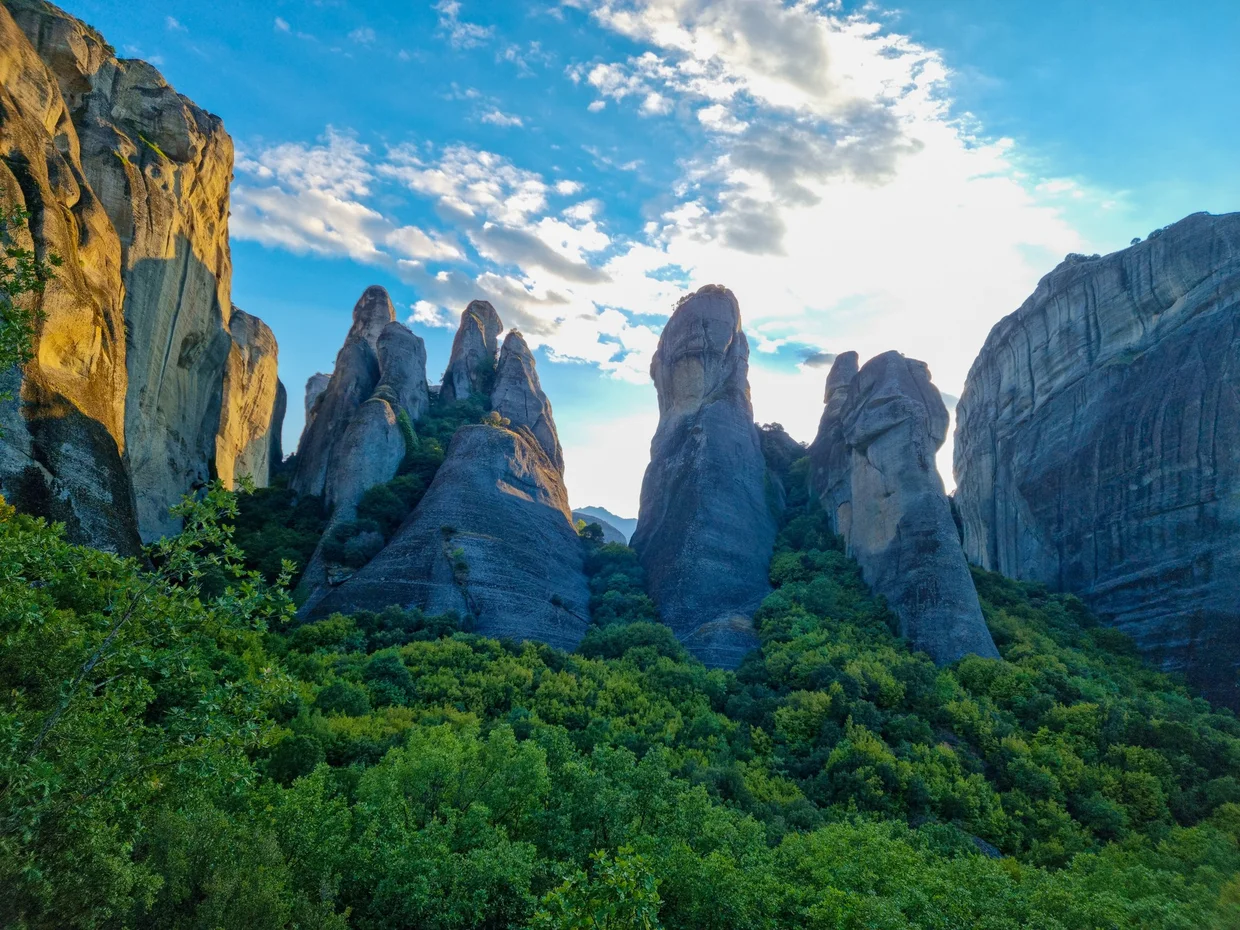
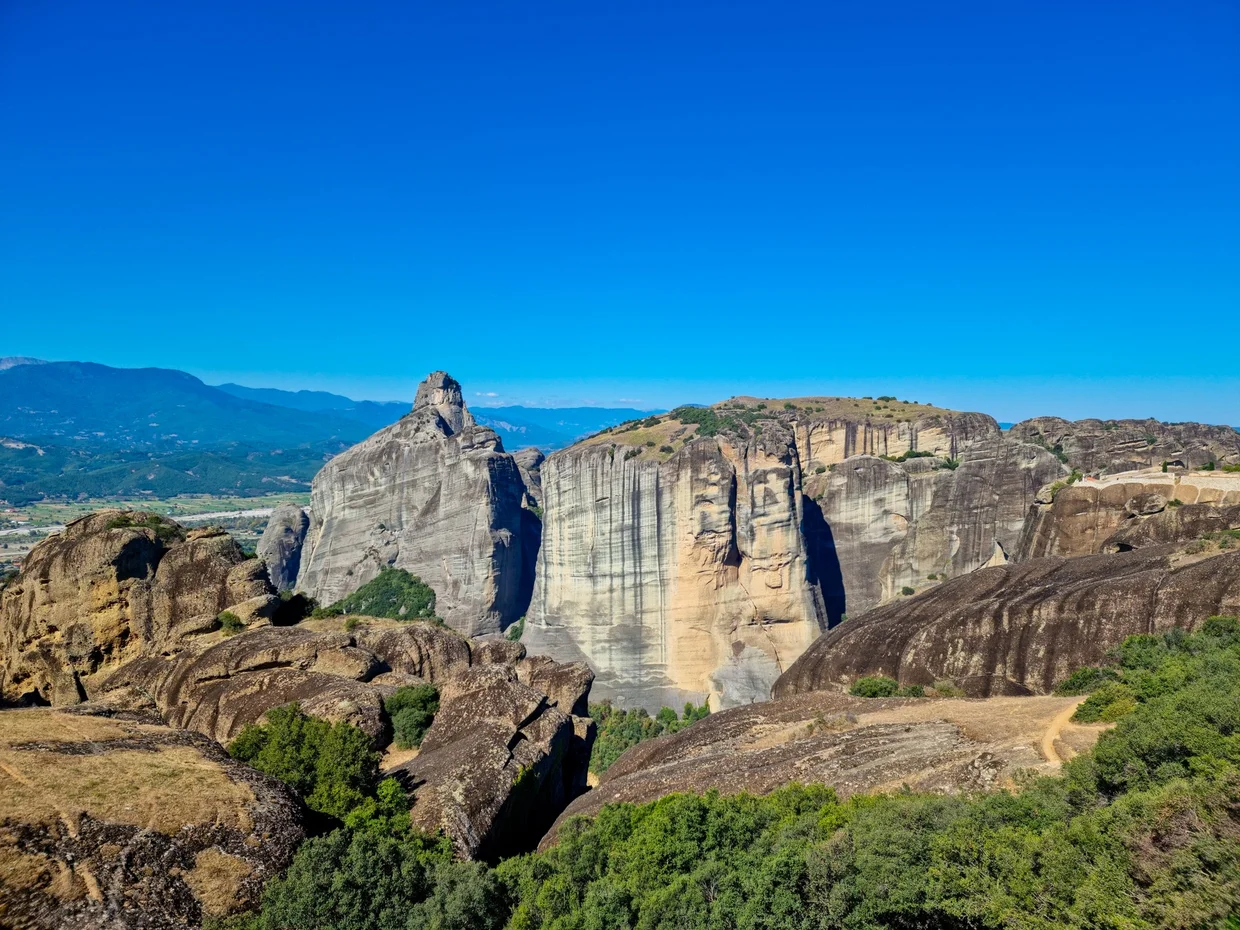
The individual monasteries each have their own character. Holy Trinity (Agia Triada) sits on a single isolated spike and is the one you've seen in photos even if you didn't know it. It's the one from the James Bond film For Your Eyes Only. The approach is a steep path cut into the rock with steps on the side of a cliff. It's also the smallest and the least visited, which is part of the reason it's the best.

Saint Stephen's (Agios Stefanos) is the biggest and the easiest to reach. You park, walk across a short bridge, and you're there. Because of that, it's also the most crowded. The views from the terrace over the plain toward Kalambaka are the widest of any of them.

Roussanou is perched on a narrow rock that looks like it shouldn't hold a building, let alone an entire convent with gardens and dormitories. You approach across a stone bridge that gives you a moment to doubt your life choices before you step on.

And Varlaam and the Great Meteoron are the two big ones that sit on connected plateau rocks. The Great Meteoron is the oldest (14th century) and the most monastic in feel. There's an old winch system they used to haul monks up in a net, which is the kind of thing that makes you appreciate the elevator to your hotel room.

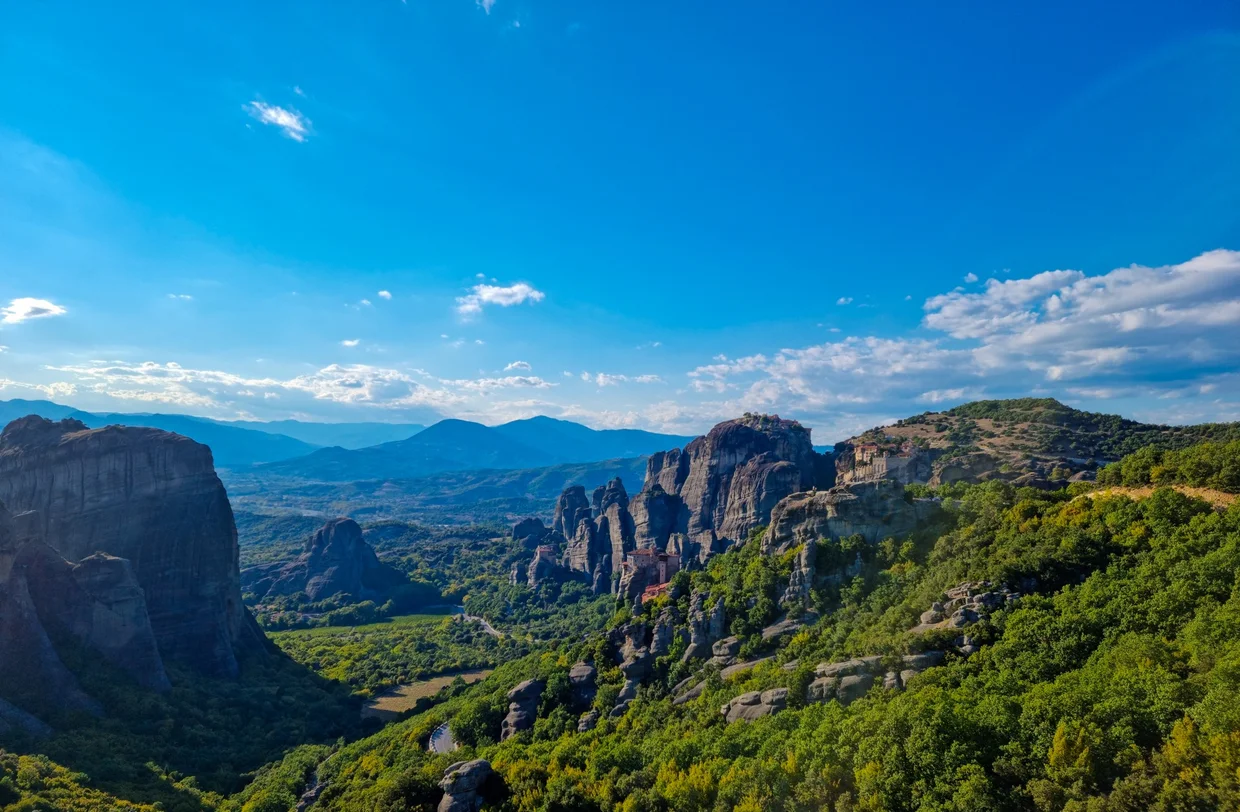
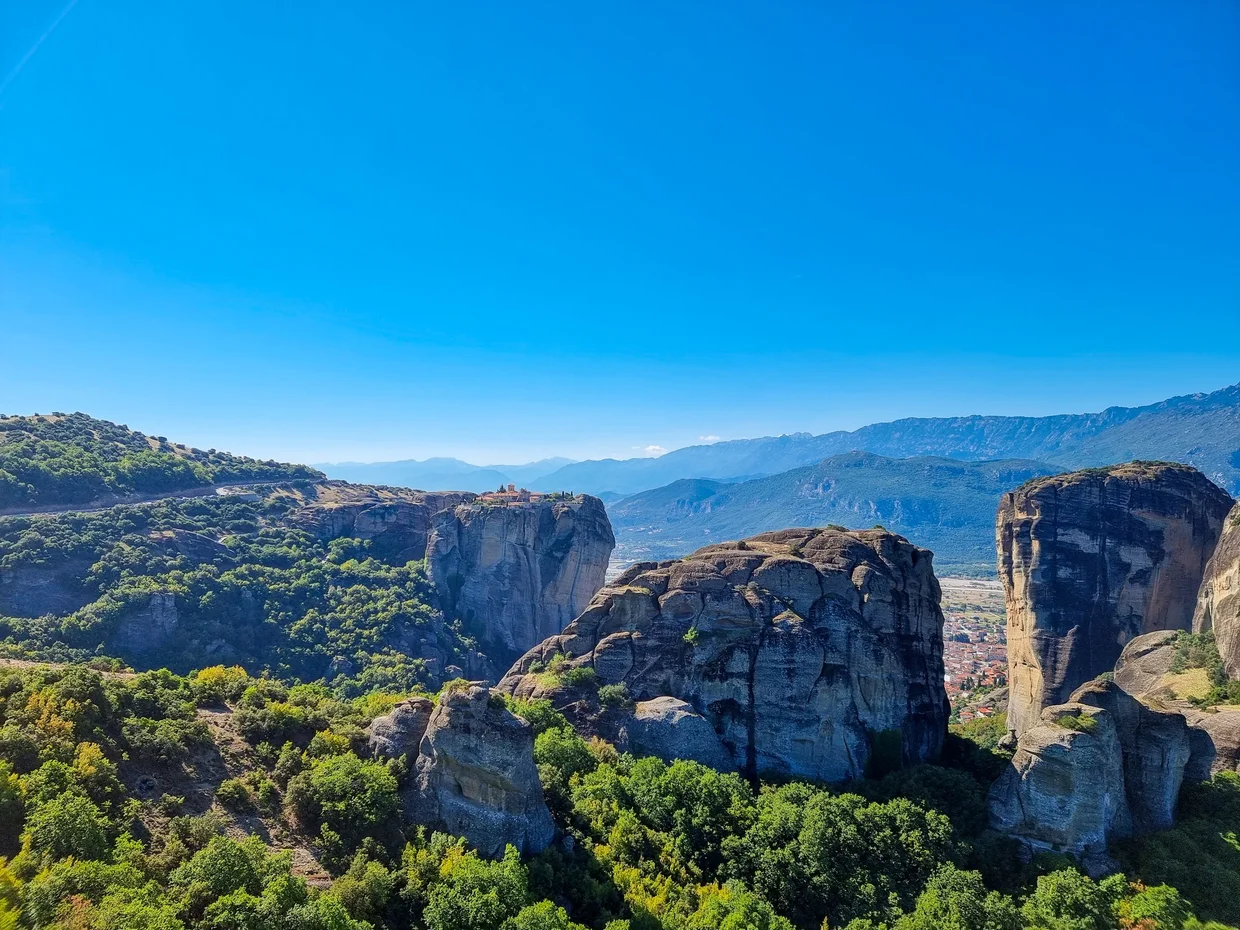
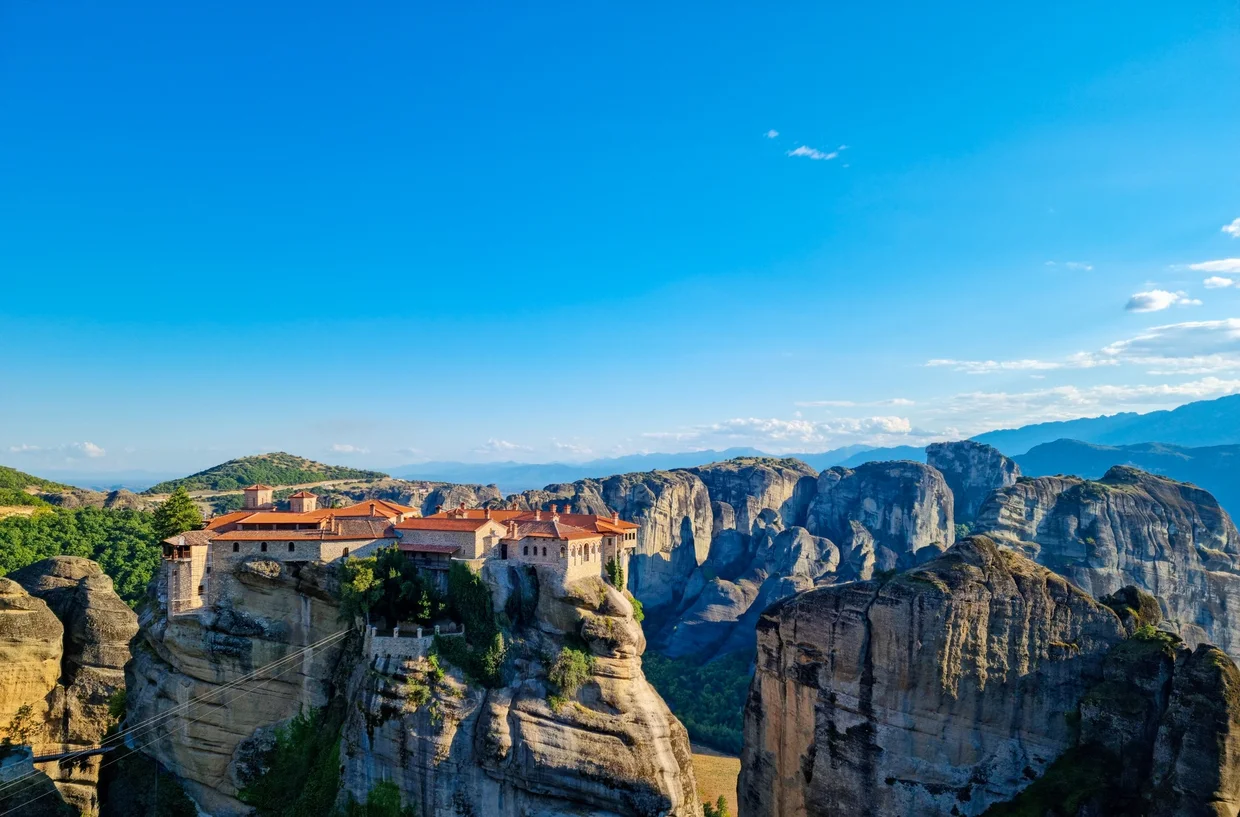
Two things to know. First: dress codes. Women need a long skirt and covered shoulders. Men need long trousers. If you show up in shorts, they hand you a wraparound at the door. Not a big deal, but don't plan to hike in between visits unless you're willing to change. Second: the monasteries each close one or two days a week, and the schedule is not synchronized across the six. Check before you go. Showing up at Varlaam on a Friday to find it closed is a standard Meteora rookie mistake.
The sunset from the upper viewpoints is ridiculous. You'll see a few dozen people with tripods, but there's enough rock up there that you can find your own ledge. I spent an hour up there on the first evening and another hour the next and could've done a third. If you only do one thing in Meteora besides visiting a monastery, sit on a rock and watch the sun go down.

Destination Info
Quick Facts
Overview
- Best 7 to 12 days in April till October.
- At Sea level in Southeastern Europe, time zone UTC+2 (EET) / UTC+3 (EEST).
- The population of 10.4M people speaks Greek, writes in Greek script.
- Euro (EUR) is the official currency, and tipping is rounding up appreciated, not expected.
Local Flavor
- Get a Ouzo and Moussaka.
- The main festival here is Easter (Orthodox, spring).
Practicalities
- You can use Intercity buses (KTEL), limited trains for public transportation, while driving on the right.
- You can get here mostly via Athens (ATH), Thessaloniki (SKG).
Delphi
Delphi is the other heavyweight on this trip. For a thousand years this was where the ancient Greek world came to ask the gods what to do, and the answer came from a priestess sitting on a tripod over a crack in the rock, breathing volcanic vapors and speaking in riddles. Every important question in the ancient world, from whether to found a colony to whether to go to war, got routed through here. Then the Romans looted the site, the emperor Theodosius closed it down in 394 AD for being pagan, and the whole place got buried under a village for 1,500 years.

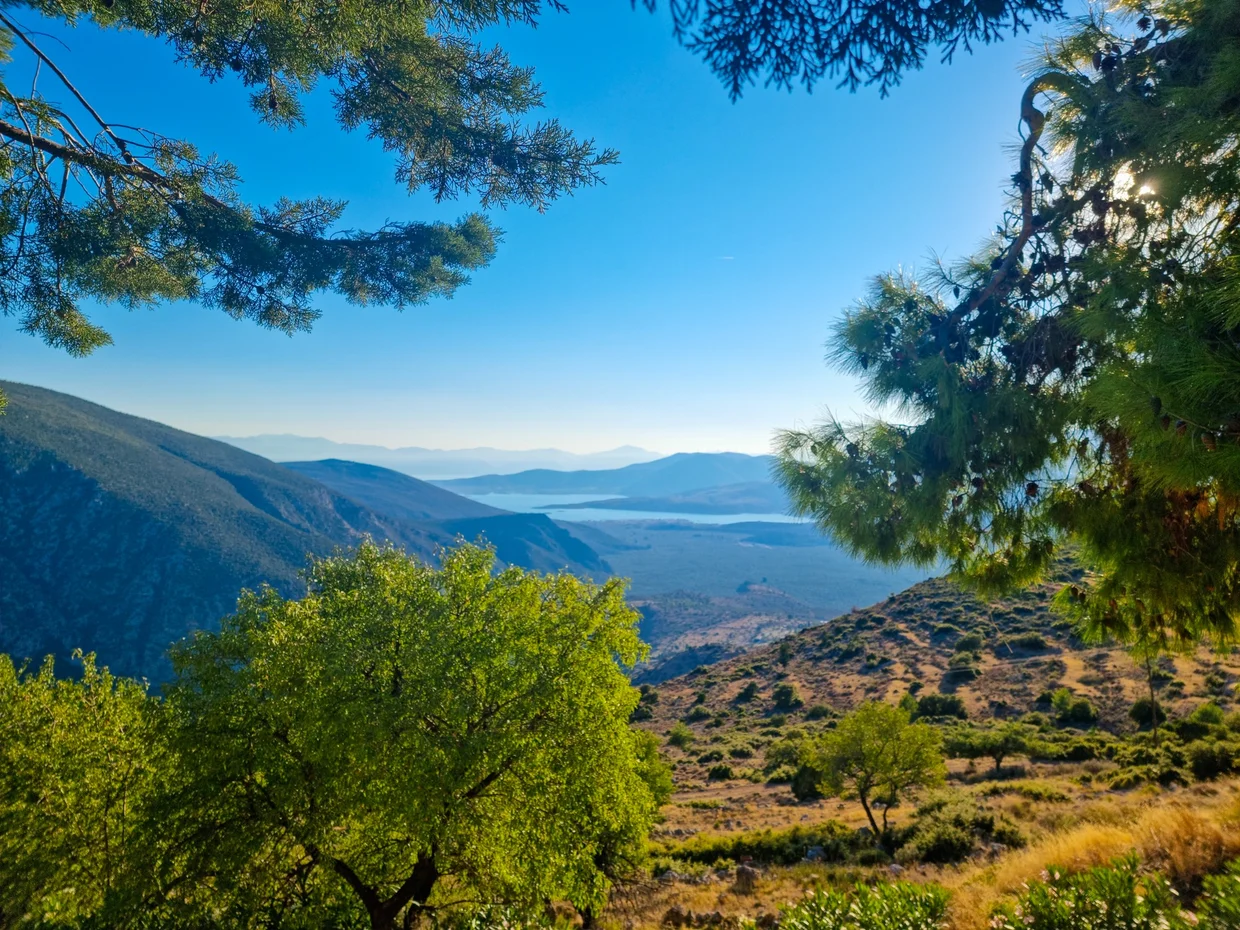
The setting alone is worth the drive. Delphi clings to the side of Mount Parnassus, at about 600 meters altitude, with the sacred ruins stacked up the slope on terraces. You look out from the site over a steep valley of olive groves running all the way down to the Gulf of Corinth, which sparkles in the distance. I spent half a day there and I could've happily spent two if it wasn't for the heat.

The Sanctuary of Apollo is the main site, but the most iconic single building is actually in the smaller Sanctuary of Athena Pronaia just down the road. It's the Tholos, a circular marble temple with three reconstructed Doric columns standing on a round base. It's the photograph of Delphi. Nobody's sure what the building was for (circular temples weren't a standard Greek form), but it's the kind of structure that looks like it came from a mythology textbook, sitting there in an olive grove with the cliffs of Parnassus behind it.

Up the hill, the Temple of Apollo is mostly foundations and a few re-erected columns, but it's the spot where the Oracle actually delivered her pronouncements. Standing there, imagining the kings and generals who came to ask their questions, is one of the better "ok this is wild" moments of the trip.

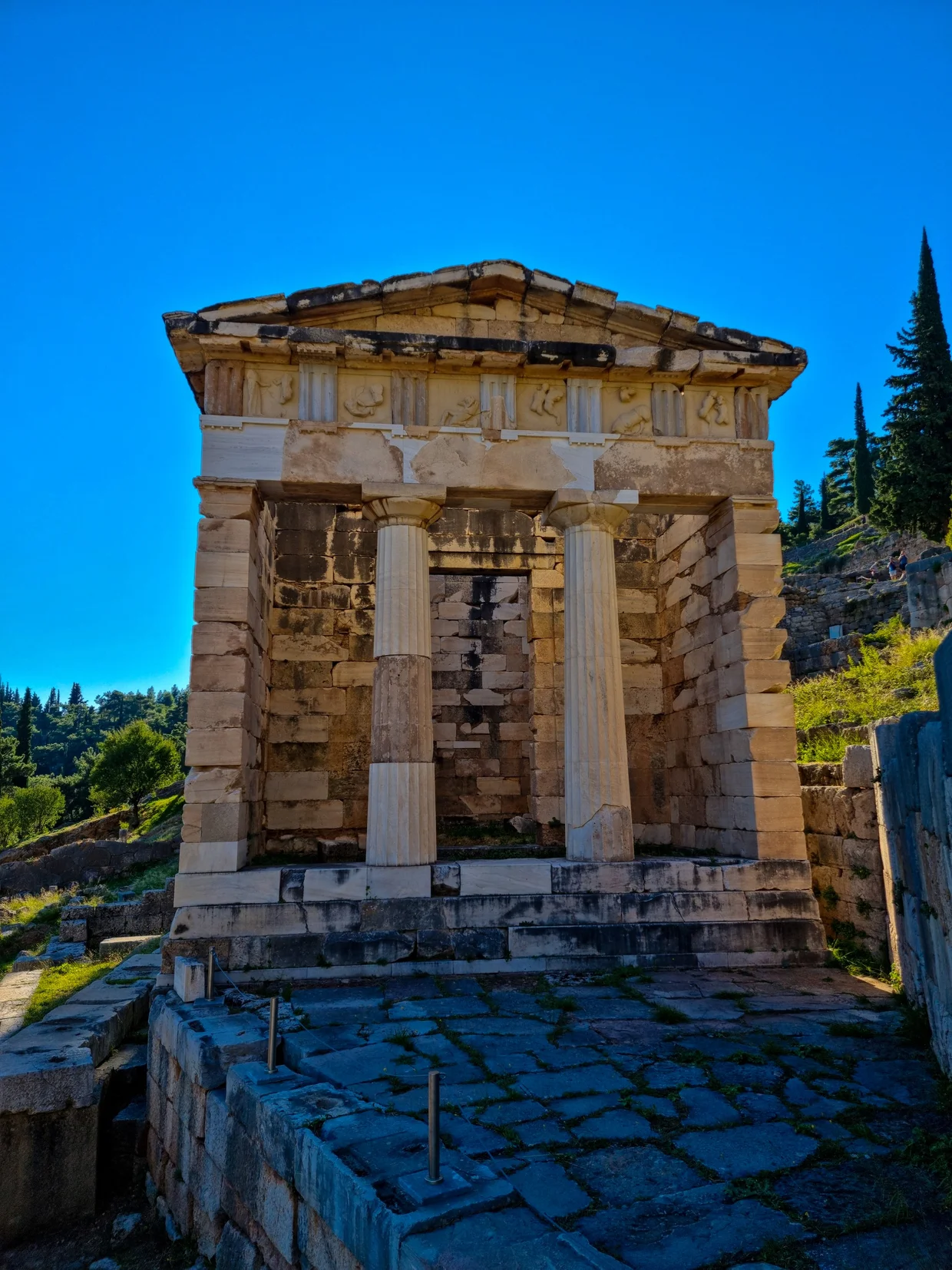
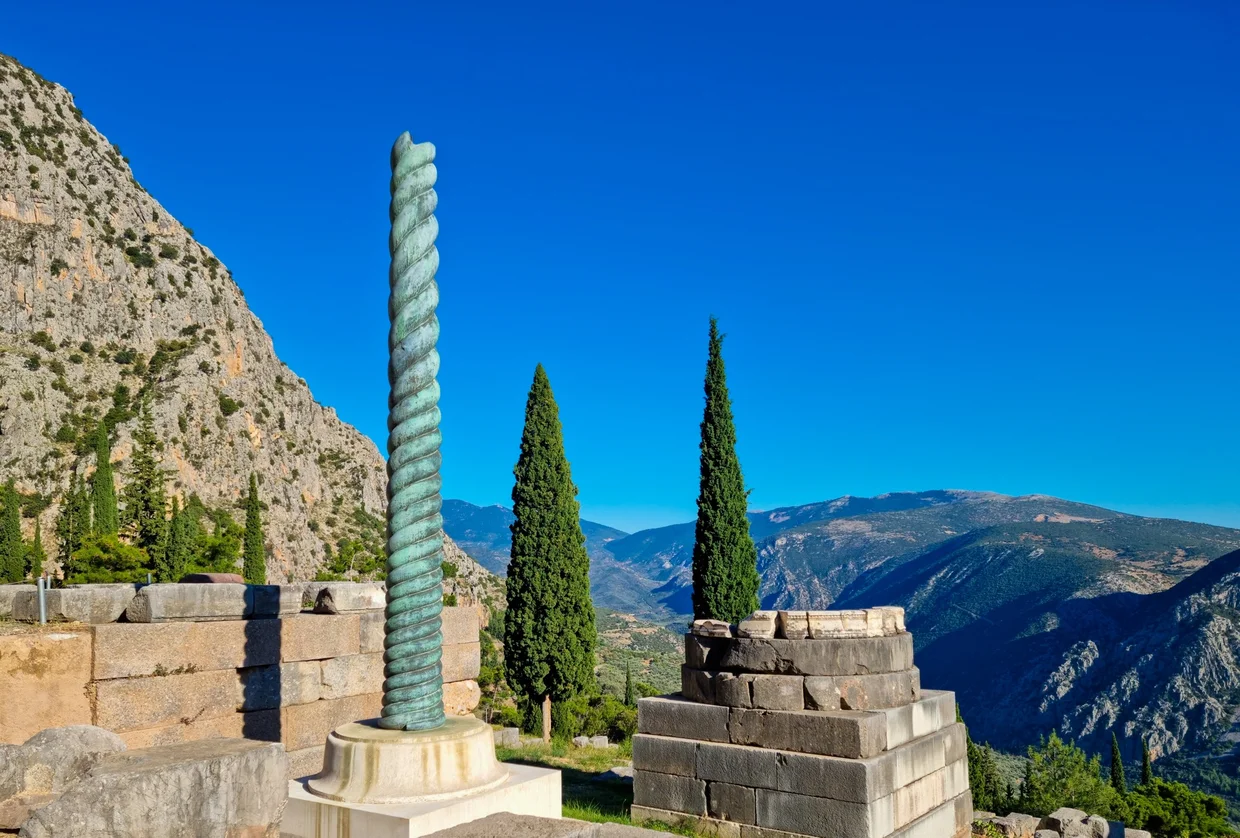
The Athenian Treasury is a small rebuilt marble building about a third of the way up the main site. It was built by Athens to store the offerings they sent to the Oracle, and it's the only one of the many treasuries that's been reconstructed enough to actually look like a building. The theater above the Temple of Apollo is cut into the mountainside and frames one of the better views on the site. Keep climbing past it and you'll hit the stadium at the top, where the Pythian Games were held. Not much survives up there, but the walk is quiet and you earn the view.
Stay at Delphi the village, not at Arachova up the hill. Arachova is the local ski-town alternative, cute but overpriced and too busy. Delphi village is a string of guesthouses along a single road that all face the Gulf of Corinth. Sunset from there is the closing act on a good day at the ruins.

Vergina
Most people who visit Greece have never heard of Vergina, which is weird because this is where the father of Alexander the Great is buried. Philip II of Macedon, the guy who conquered the Greek city-states and set his son up to conquer the rest of the known world, was interred here in 336 BC. The tombs sat undisturbed under a huge earthen mound in a field in northern Greece for 2,300 years. Then in 1977 a Greek archaeologist dug in, found them still sealed, and pulled out some of the most spectacular grave goods ever found in the Greek world. The site is a UNESCO World Heritage Site and about ninety minutes west of Thessaloniki.

What you visit now is the Museum of the Royal Tombs. They built the museum inside the tumulus itself. You walk into the mound through a dark entrance and emerge in a dimly lit underground hall where the original tomb facades and burial chambers are preserved in situ, next to cases full of the gold wreaths, crowns, armor, weapons, and ivory portraits that came out of them.

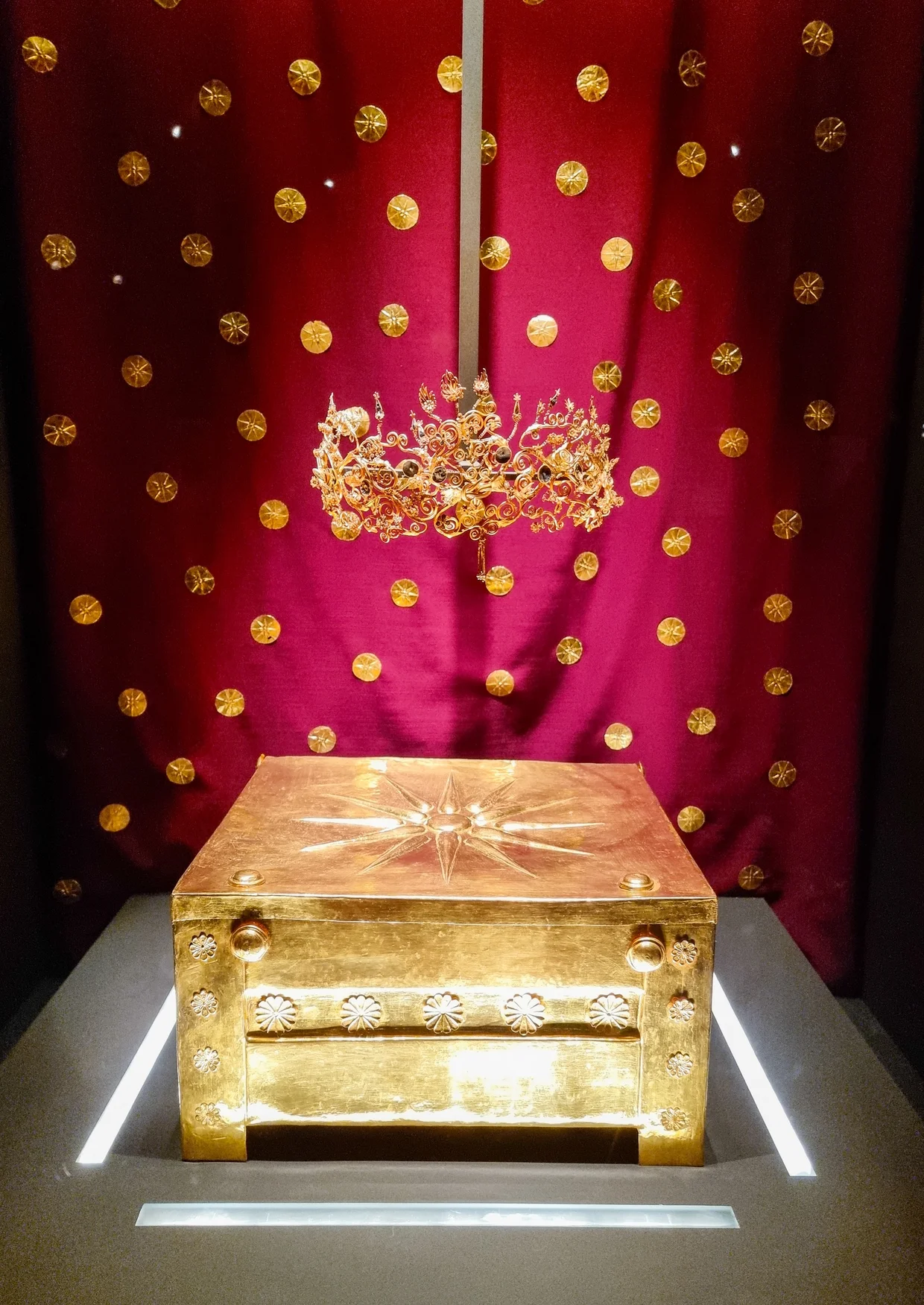
The centerpiece is a gold chest (larnax) with a sunburst embossed on the lid, which held Philip II's cremated bones. Around it are the rest of the grave goods: a ceremonial cuirass pieced back together from iron and gold, a round shield with a figural relief at the center, helmets, swords, and gold wreaths.
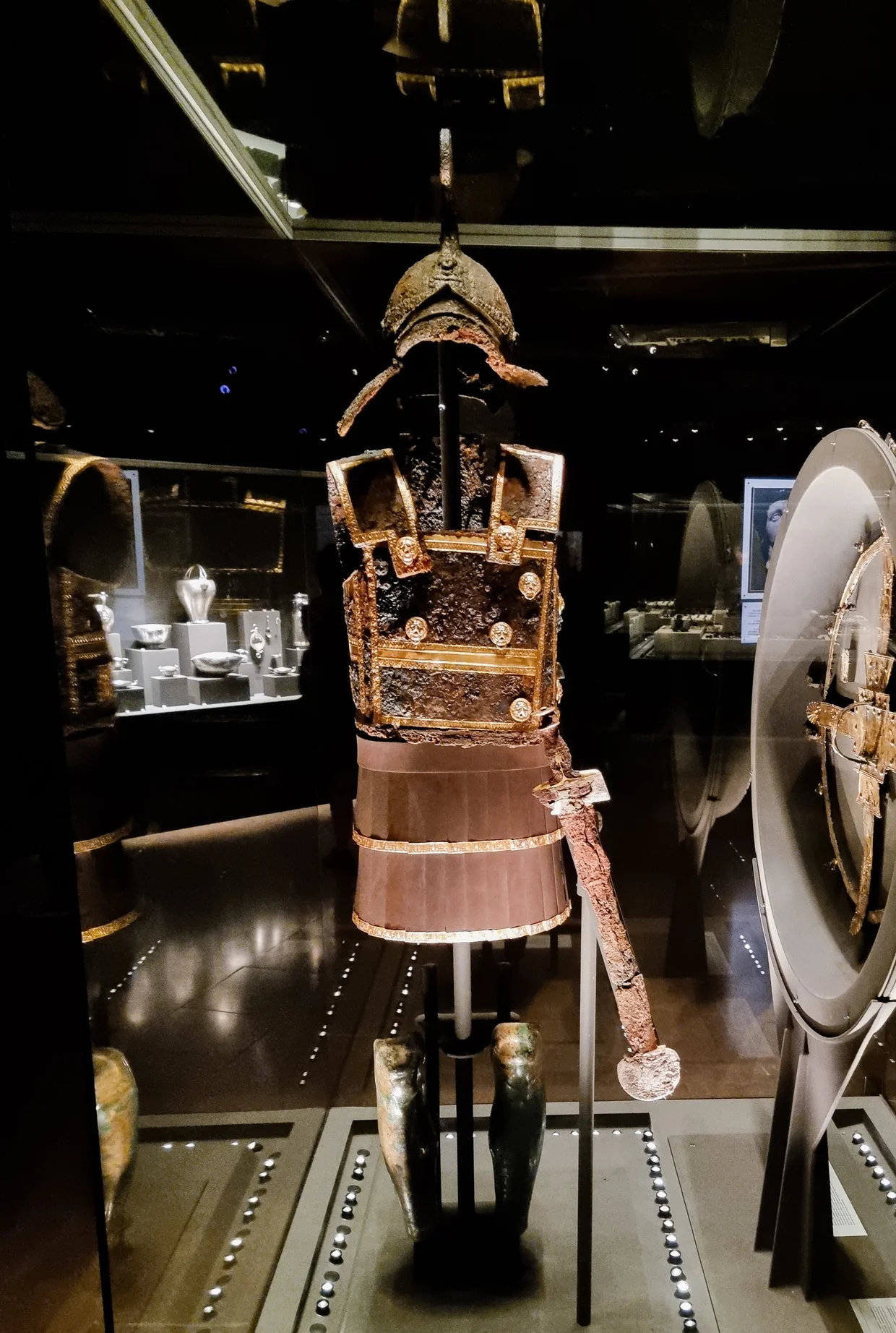
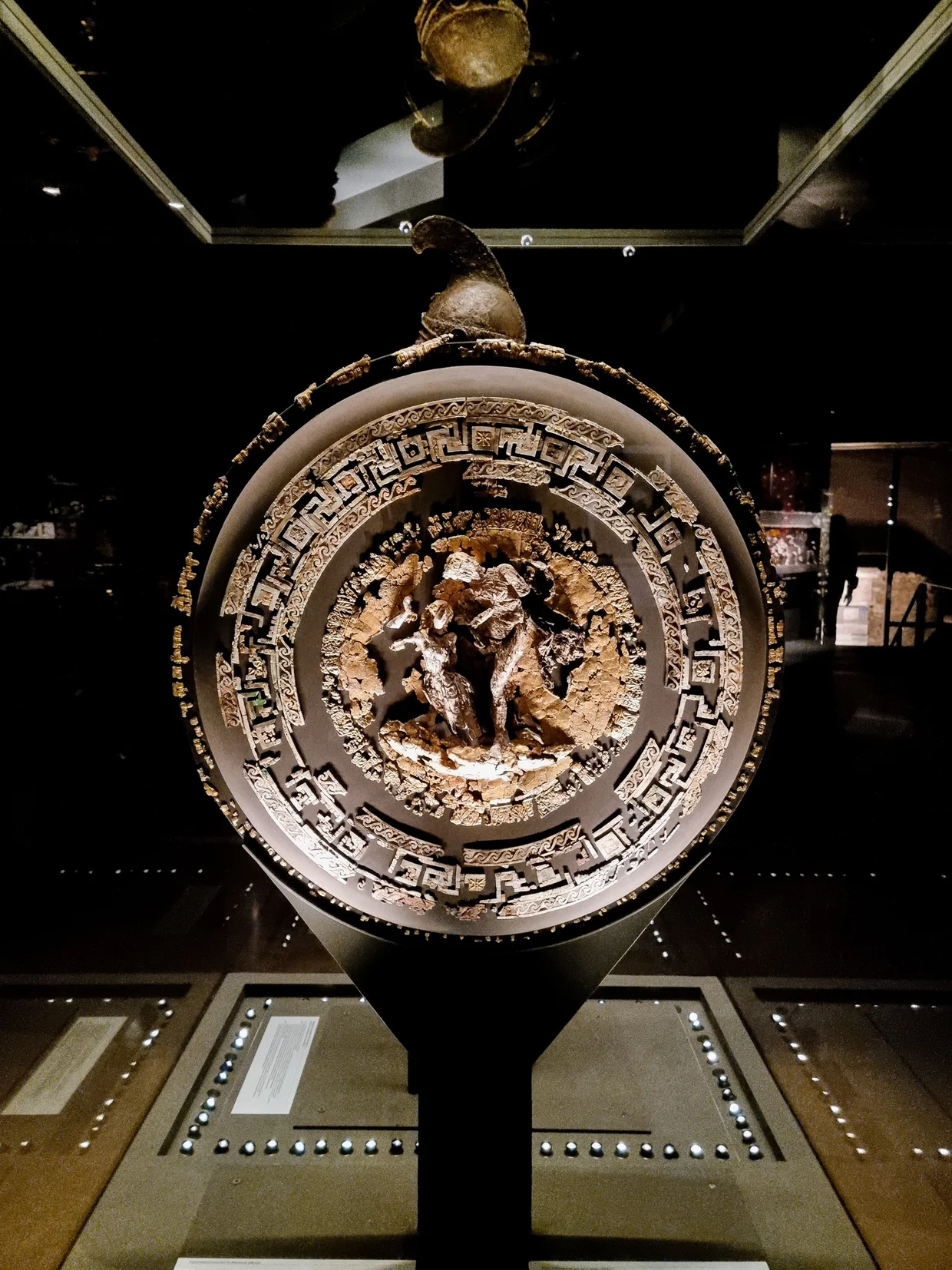

The atmosphere is weirdly moving. You go from blazing northern Greek sunshine outside to this hushed, climate-controlled cavern where you're standing ten meters from a king who was buried when his son was twenty years old and about to change the world. If you're at all into Greek history, it's worth the detour from Thessaloniki or Meteora. Easy half-day trip. Book a ticket in advance because they limit the number of people inside at a time.

Corinth
Corinth is the crossroads of the Peloponnese. Every ancient army that wanted to invade the peninsula had to squeeze through the narrow isthmus here, which is why the city was rich, strategic, and repeatedly destroyed and rebuilt. There are really three things to see, and they stack right on top of each other.

Ancient Corinth is the lower site, a sprawling Roman-era archaeological zone with the ruins of the forum, shops, baths, and a few standing monuments. The star is the Temple of Apollo, a 6th century BC Doric temple with seven original columns still standing. This temple predates the Parthenon by about 100 years and has the kind of proportions that make you understand why the Greeks got this style so right. Around it are Roman foundations and the Fountain of Peirene, a monumental water source with arched niches that the Greeks turned into a whole architectural production.

Above the site, Acrocorinth is the citadel on the hill. It's a massive fortified rock that was occupied continuously for over 2,500 years, by Greeks, Romans, Byzantines, Franks, Venetians, Ottomans, and Greeks again. You can drive up most of the way and then walk up through three sets of gates into the fortress. It's enormous (the circuit walls are about 3 kilometers) and almost empty of visitors because most people who visit Ancient Corinth don't realize the castle above is open. The views over the Saronic Gulf and across to central Greece are the best in the Peloponnese.


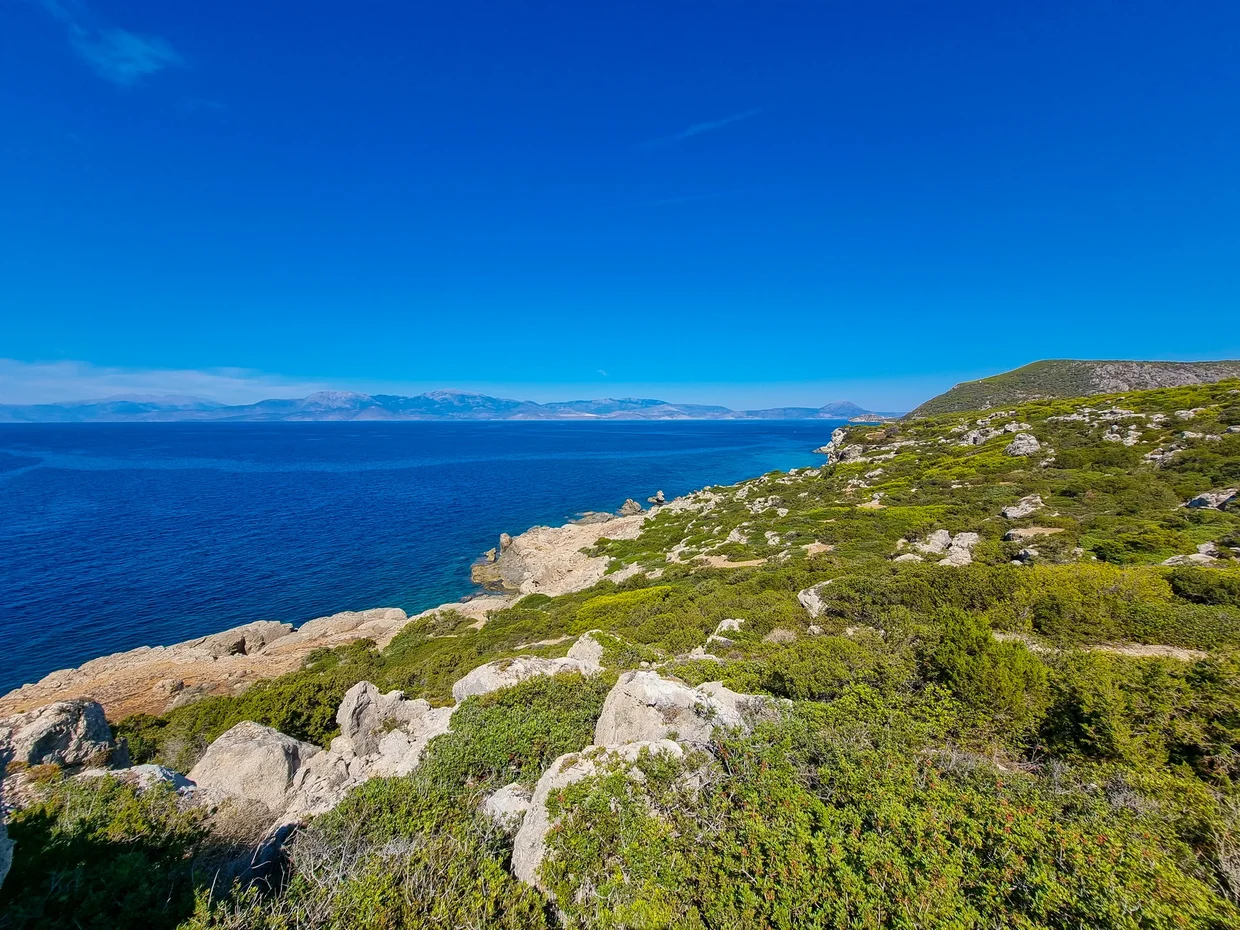
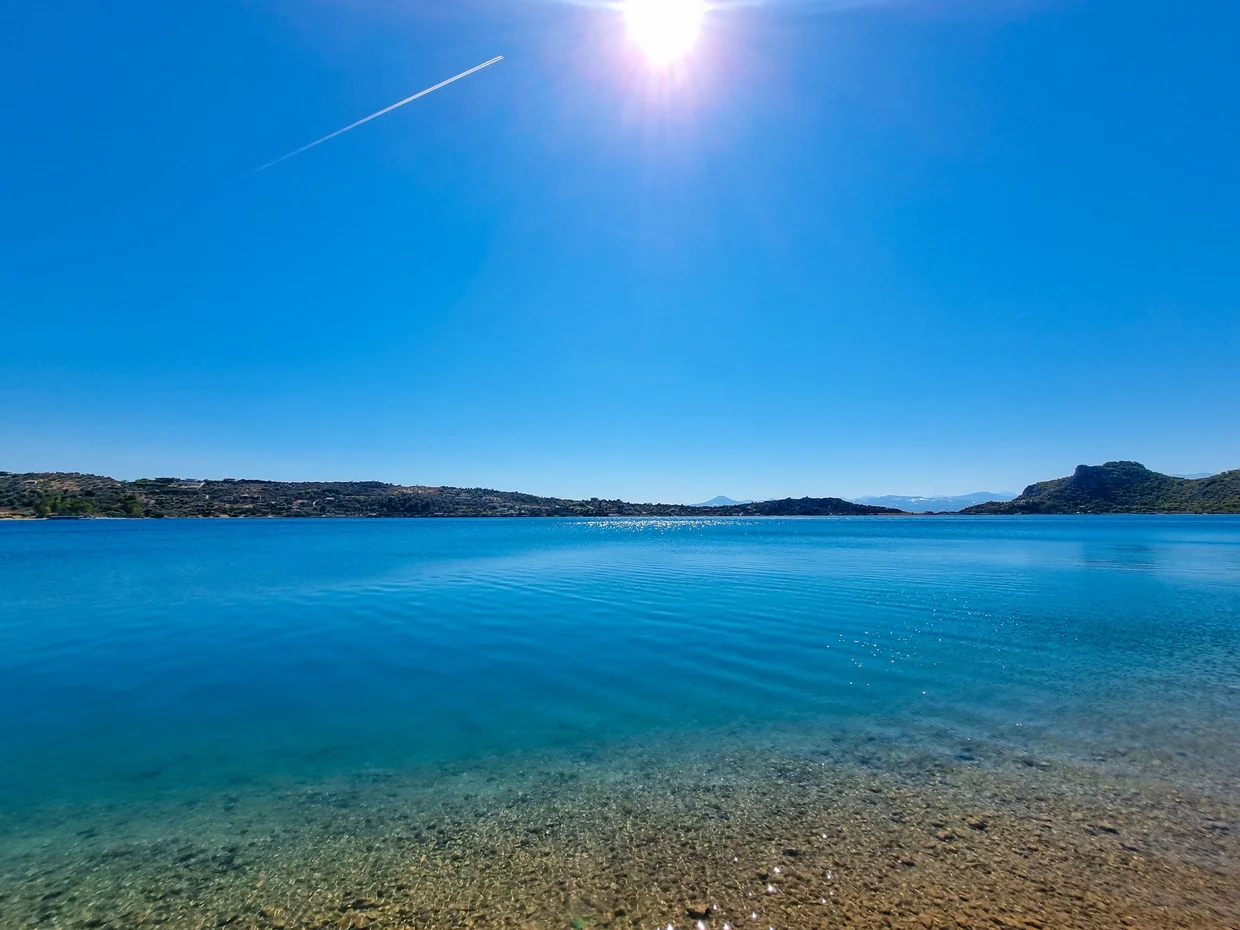
North of modern Corinth, if you have another hour, the Heraion of Perachora is a small archaeological site on a peninsula across the gulf, and next to it is a lake called Vouliagmeni (not to be confused with the Athens suburb of the same name). The lake is a brackish lagoon with ridiculously clear water, mostly empty even in summer, and a decent swim if you happen to be wearing a swimsuit. The drive out is long and winding but the road is a beauty.
Mycenae
Mycenae is where Greek history turns into Greek myth. This is the fortress of Agamemnon, the king who led the Greeks to Troy in Homer's Iliad. The citadel itself is up on a hill with the famous Lion Gate at the entrance, and the walls are built of such massive stone blocks that the classical Greeks couldn't believe humans had made them and assumed it must have been the work of giants.

But the part that actually hit me away wasn't the citadel. It was the Treasury of Atreus, also called the Tomb of Agamemnon, which sits a few hundred meters down the hill. This is a beehive tomb (tholos), built around 1250 BC, with a 36-meter-long stone corridor (dromos) leading to a doorway so massive it looks Pharaonic, and then an interior chamber with a 13-meter-tall corbelled dome that was the largest unsupported dome in the world for a thousand years, until the Romans built the Pantheon.
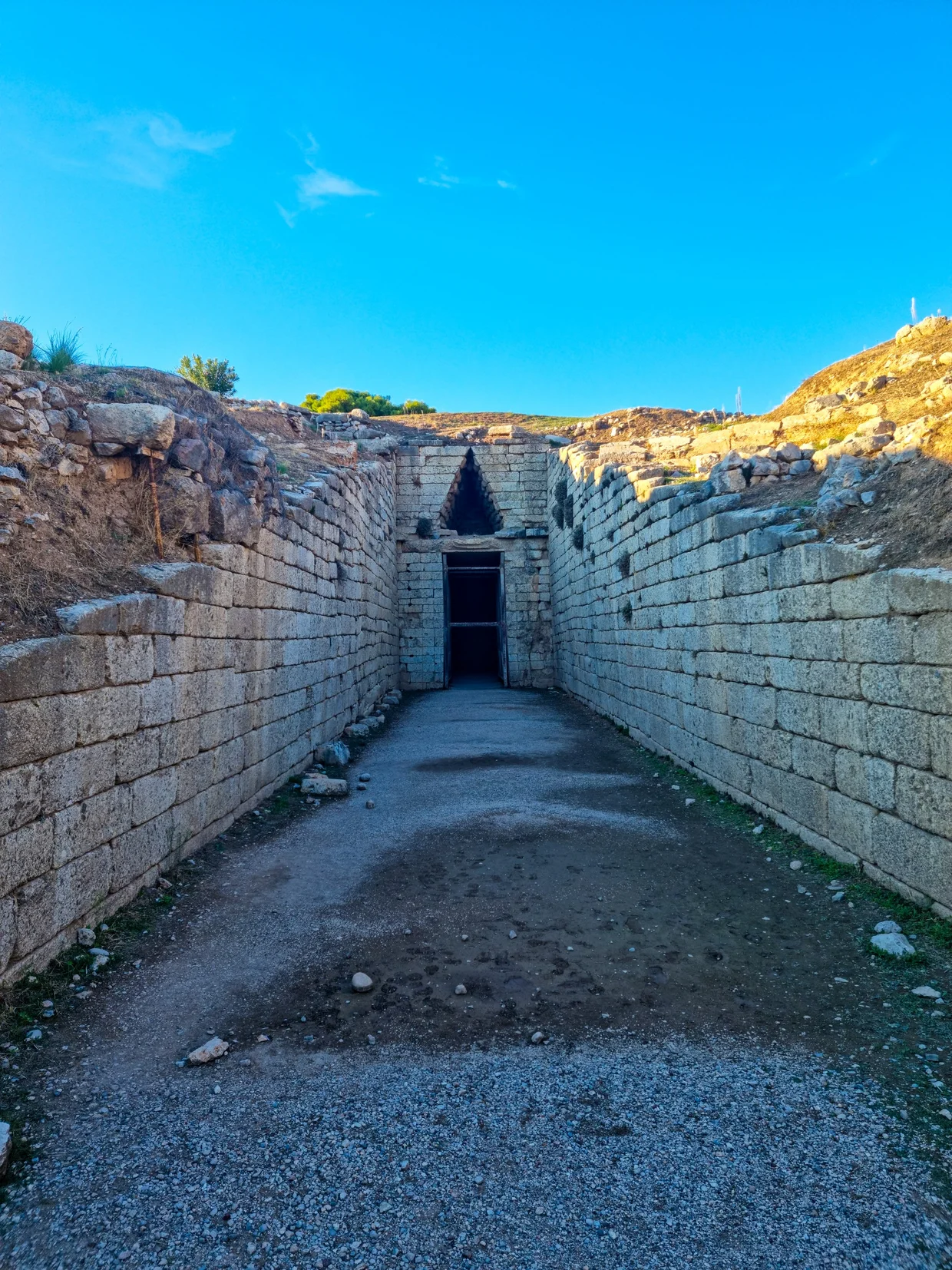
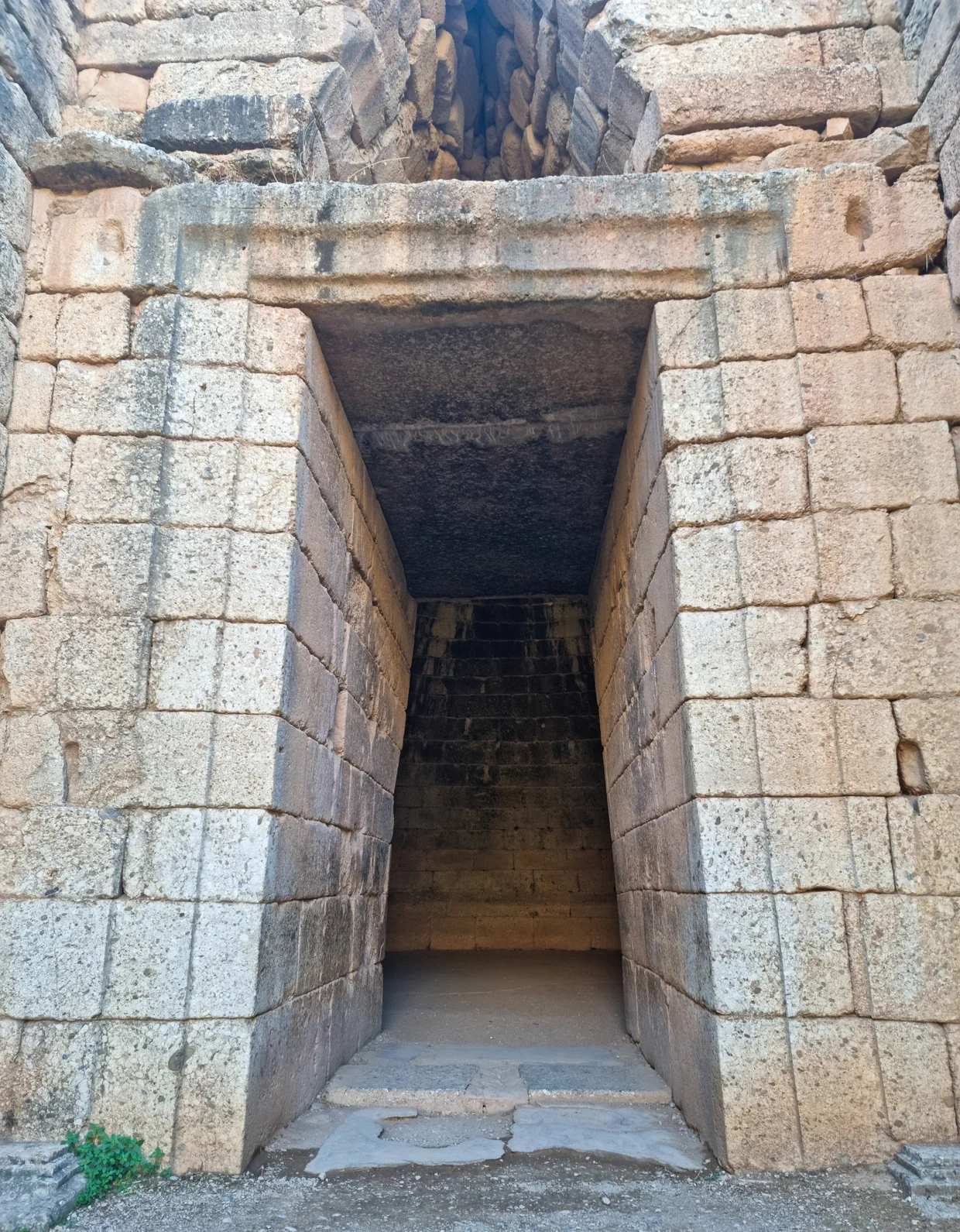
You walk down the dromos, pass through the doorway, and you're inside this silent stone beehive. The walls curve inward in concentric rings of cut stone. The only light comes from the door you walked through. It smells like cold rock. Nobody was in there when I walked in, and I just stood there for a while, head tilted back, trying to process that this was built a thousand years before classical Athens.


The whole Mycenae site is compact. You can do the citadel, the Lion Gate, the tomb, and the small museum in about three hours. Pair it with Ancient Corinth in the morning and Nafplio for dinner and you've got a solid Peloponnese day.
Mystras
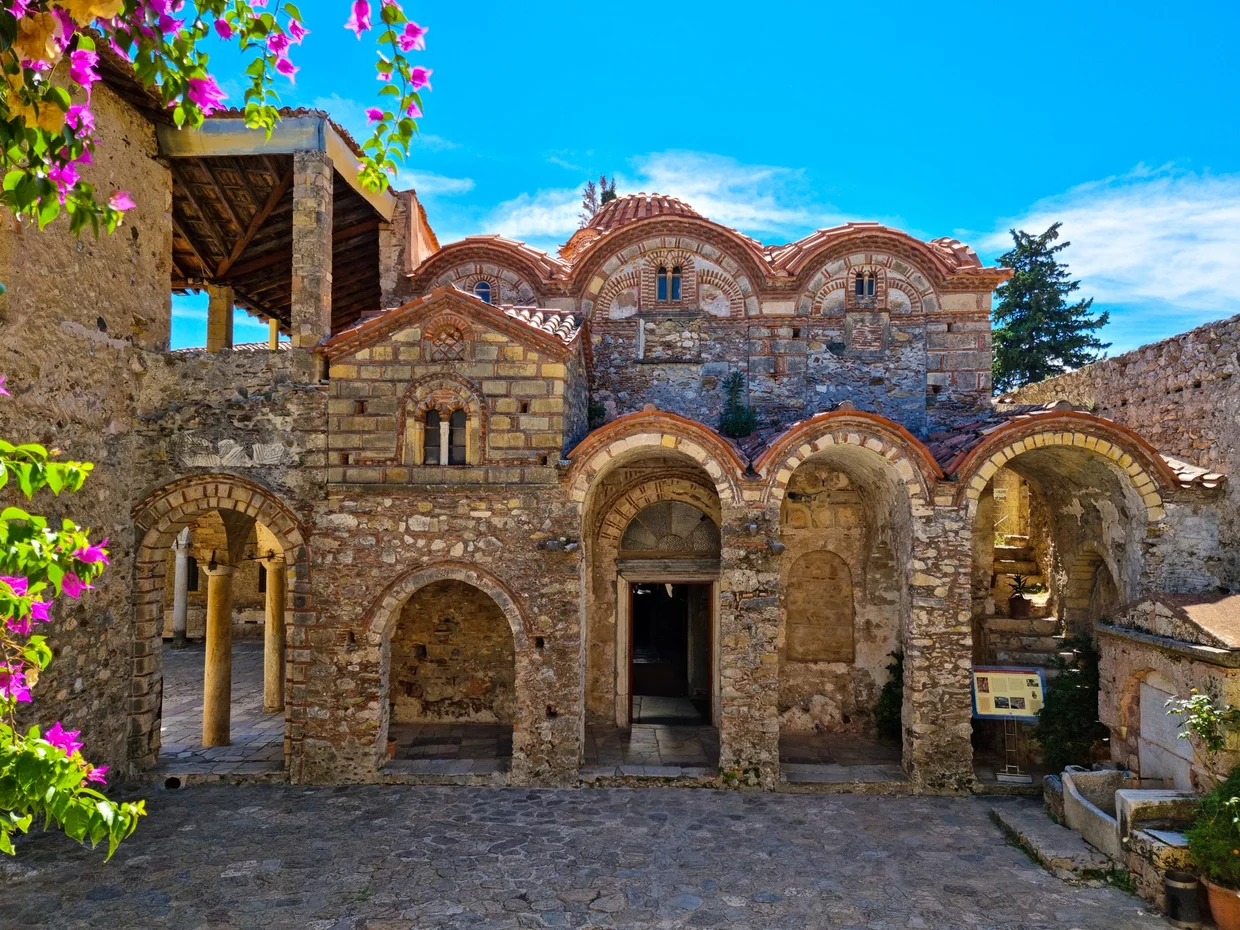
Mystras is my favorite place in Greece that nobody has heard of. It's a Byzantine ghost town, a whole abandoned medieval city on the slopes of Mount Taygetos, built in the 13th century when the Byzantine Empire was collapsing and a splinter state called the Despotate of the Morea tried to make the Peloponnese its refuge. At its peak there were thousands of people living here, a huge fortified castle on top, monasteries and palaces on the slopes, churches every hundred meters. Then the Ottomans took it in 1460, the population drained away, and the whole city was abandoned by the 19th century.
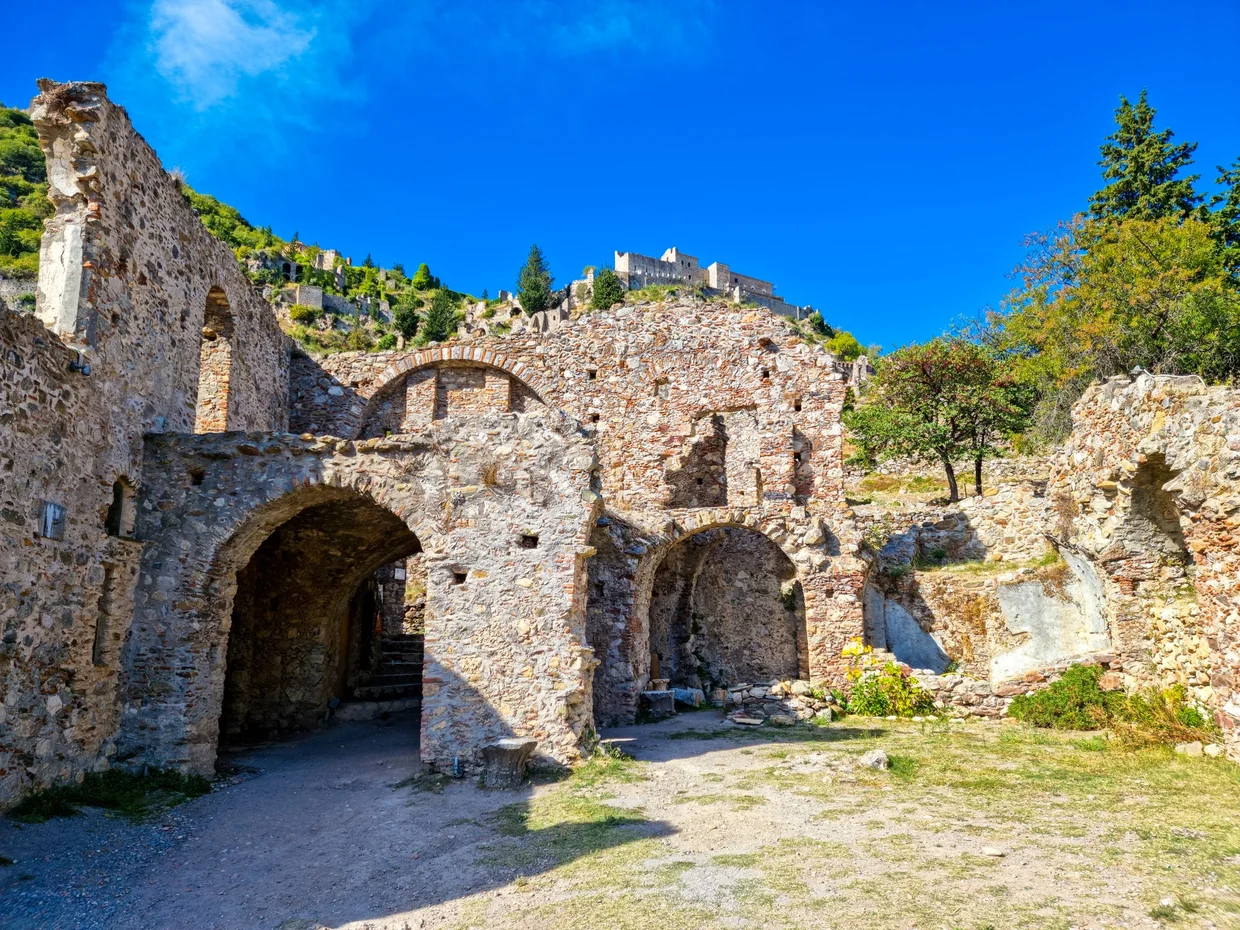
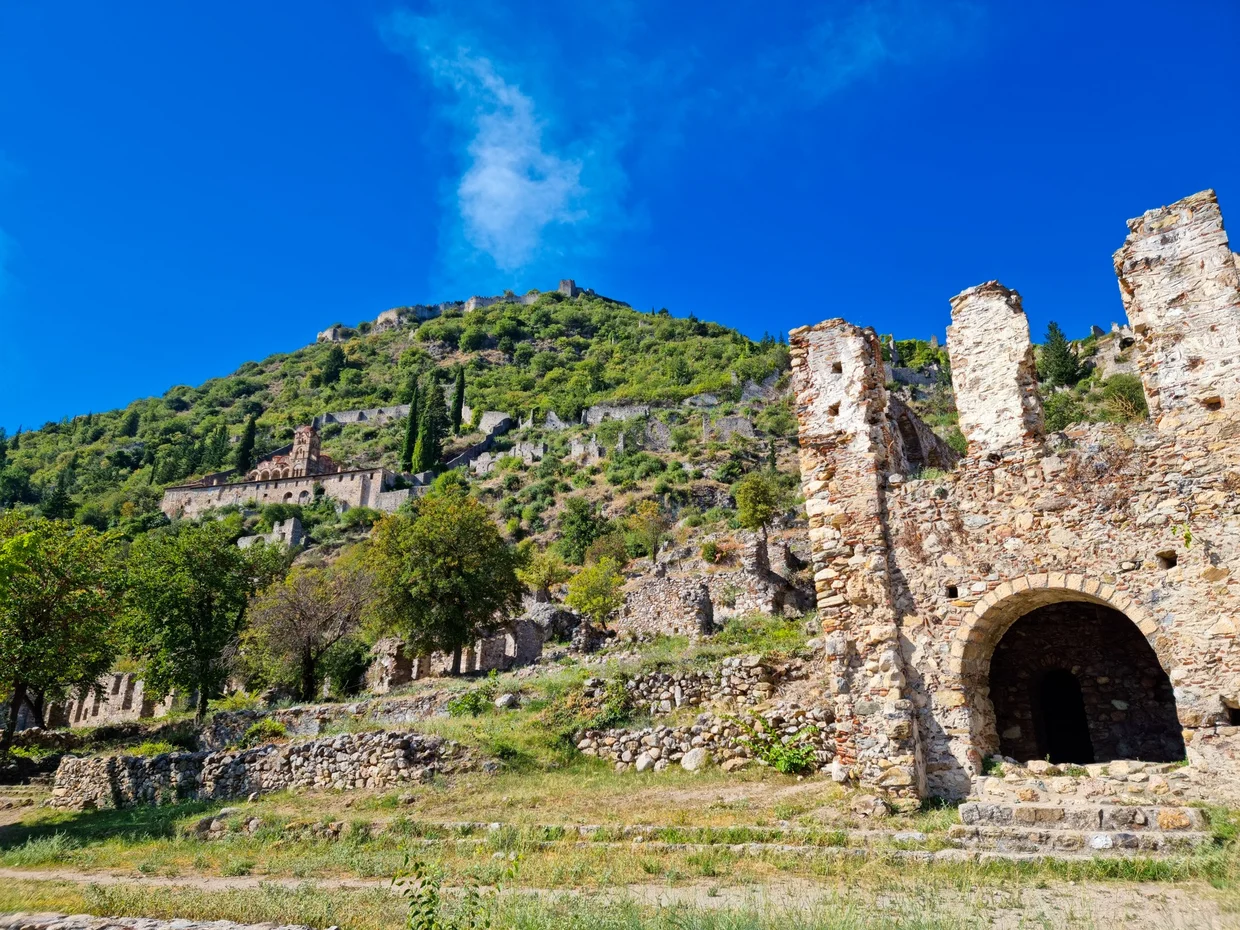
It's a UNESCO World Heritage Site, but visiting it is not a ten-minute walk past a fence. You park at one of two entrances (upper and lower, and you want to enter at the upper gate so you walk down), and then you spend three or four hours wandering through an entire abandoned city. Streets. Plazas. Houses. Dozens of intact Byzantine churches with their domes and brick-pattern facades still standing. The frescoes inside some of the churches are still visible, seven hundred years on.
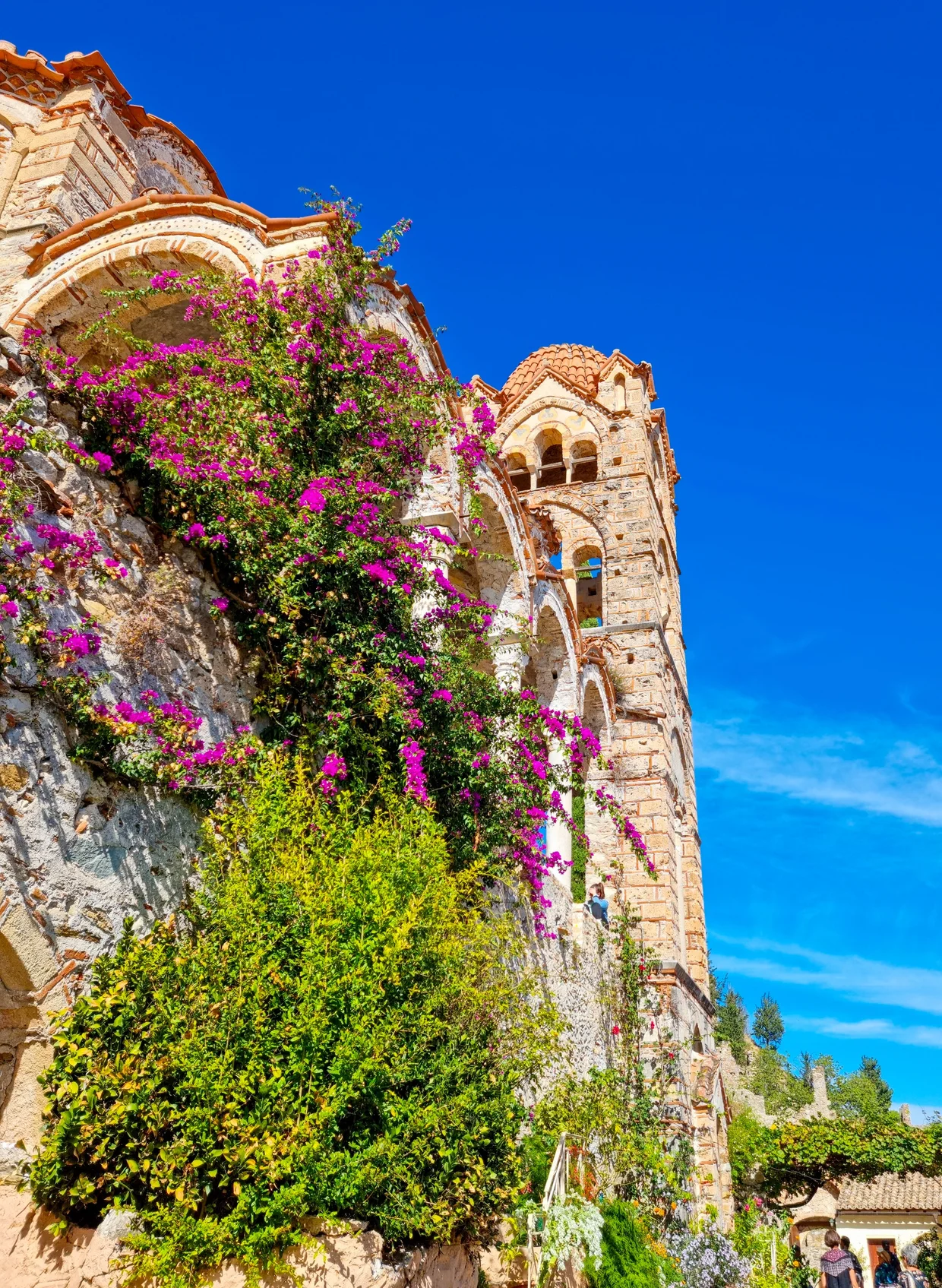
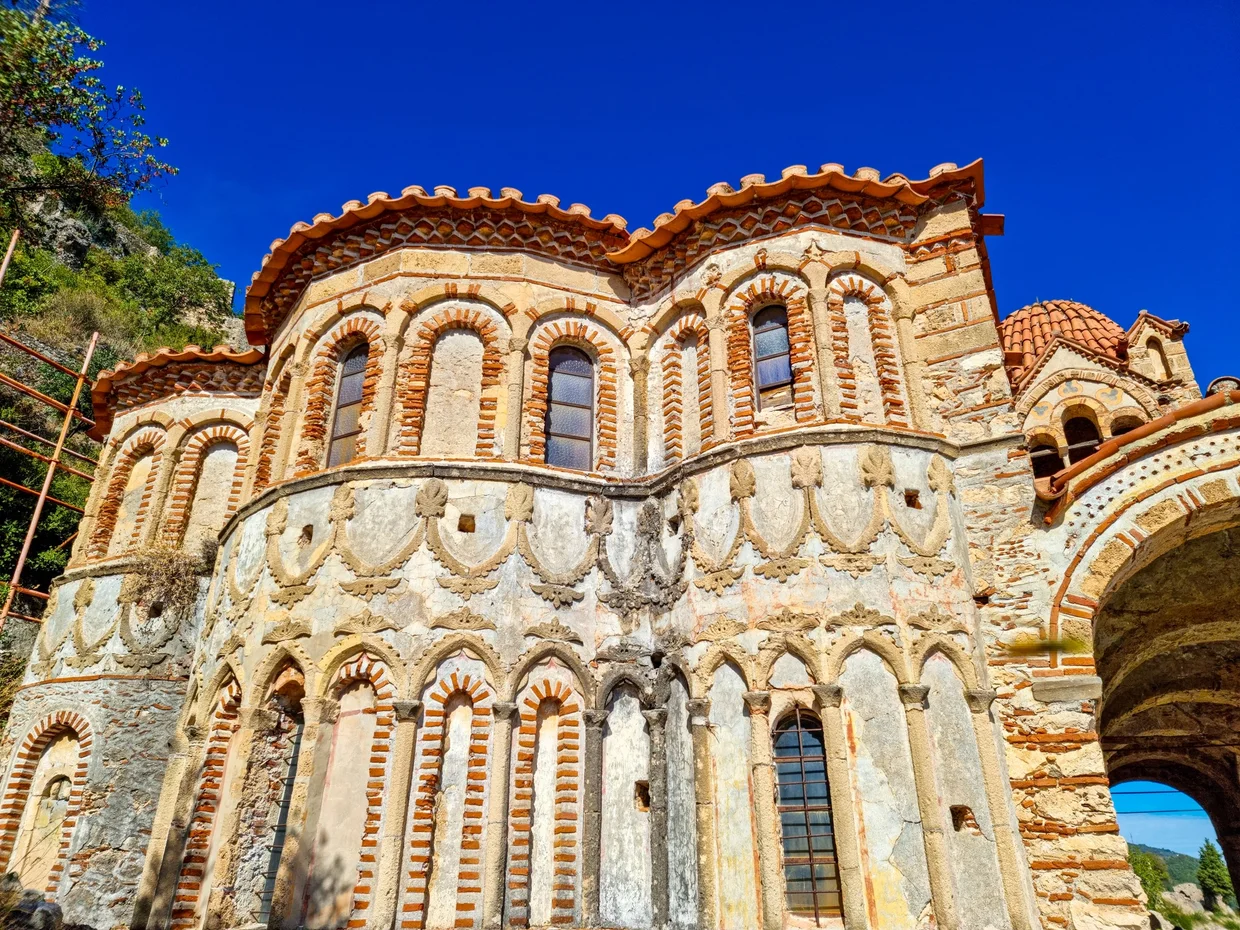
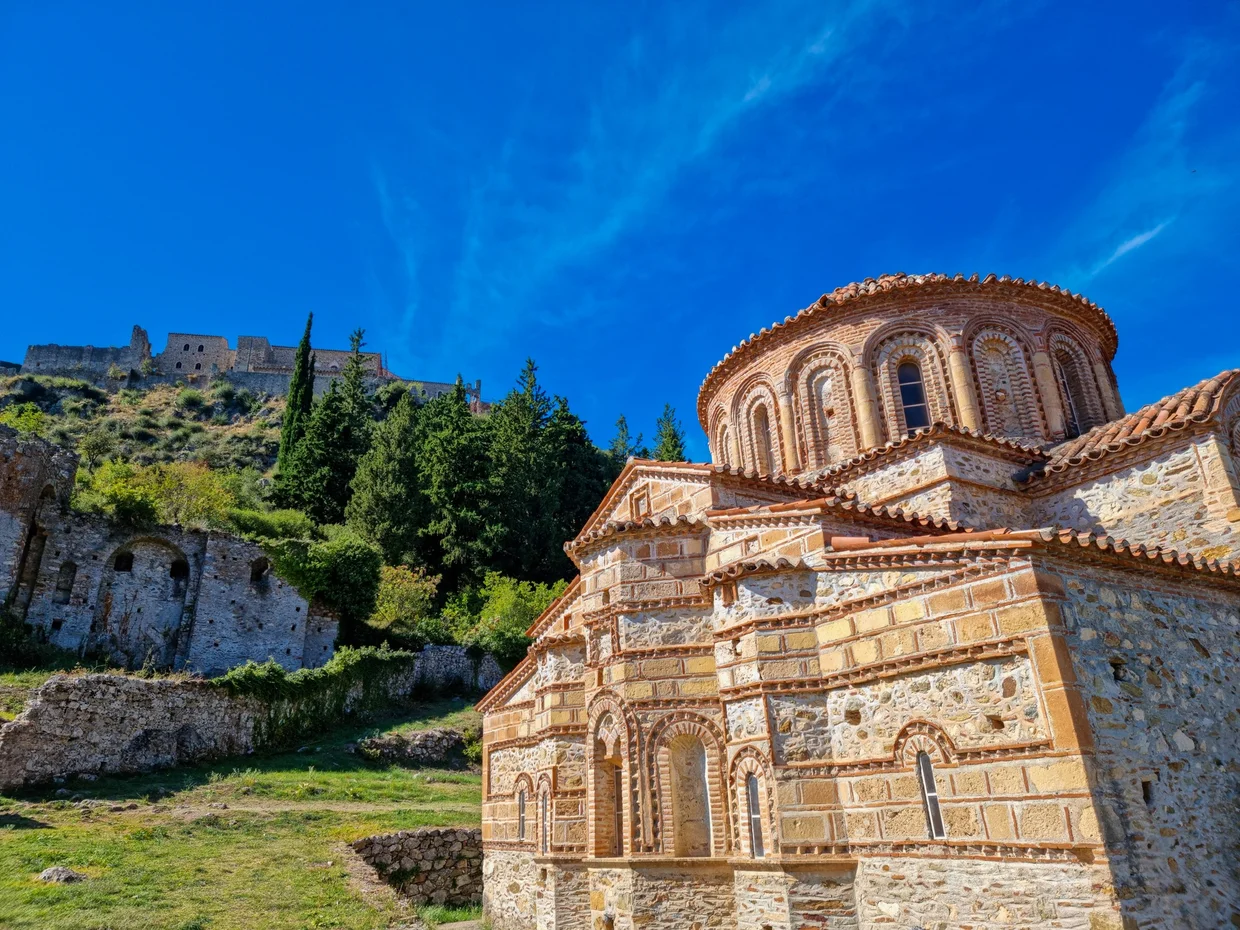
The churches are the highlight. They're not the huge hall-type Greek churches you're used to seeing in guidebooks. These are Byzantine cross-in-square plans, compact and intricate, with domes stacked on drums, decorative brick patterns in the walls, and interior fresco cycles that have survived because nobody has been using these buildings for centuries. Panagia Pantanassa and the Metropolis of Saint Demetrios are the two best, but really you should walk into every church you pass.

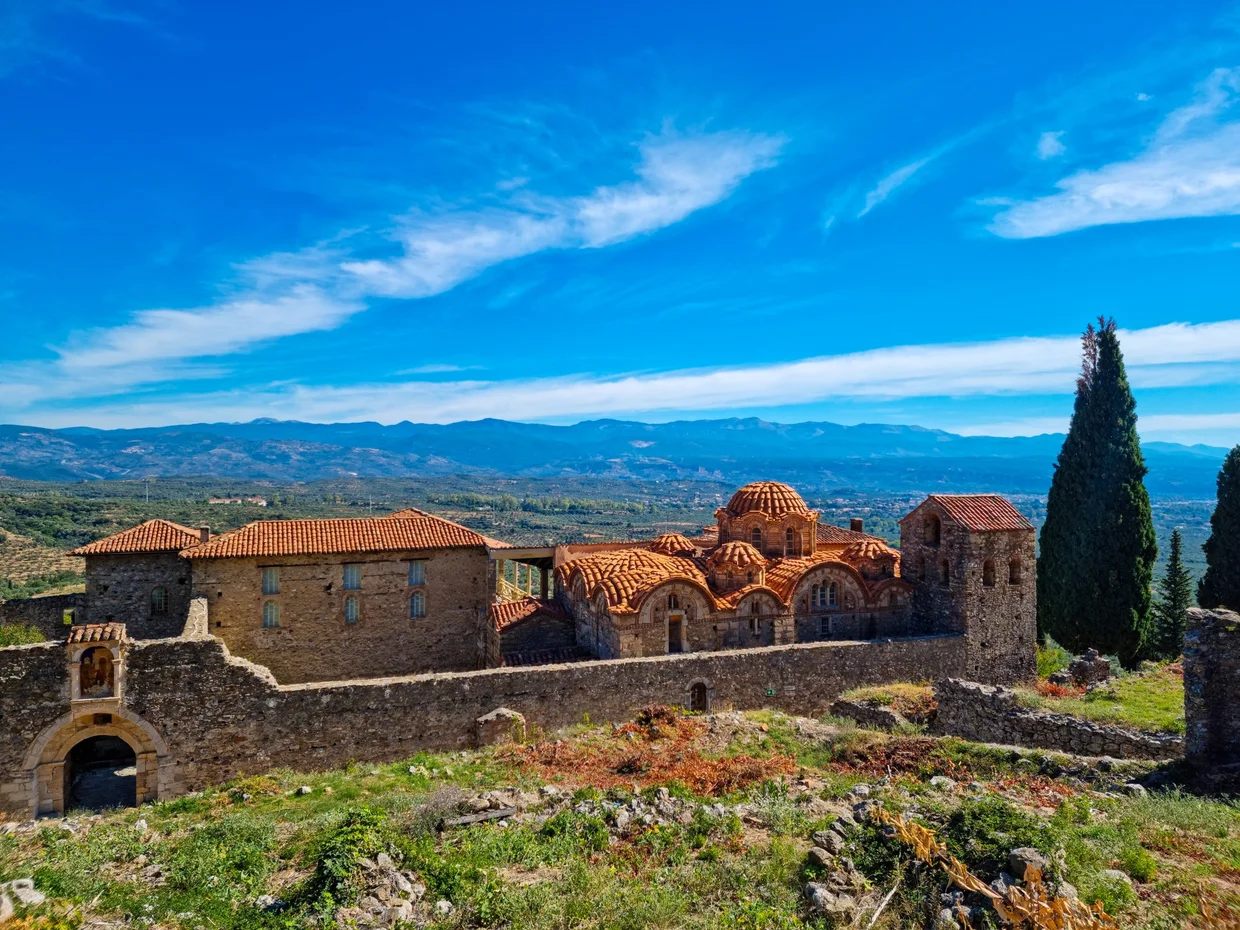
The city climbs up the hill. At the top is the Frankish castle, built by William II of Villehardouin in 1249 (the Byzantines inherited it after beating him in battle). The walk up is a workout. The reward is the view: the entire Sparta plain spread below you, the Taygetos range behind, and the ruined city cascading down the slope at your feet. On a clear day you can see to the sea.

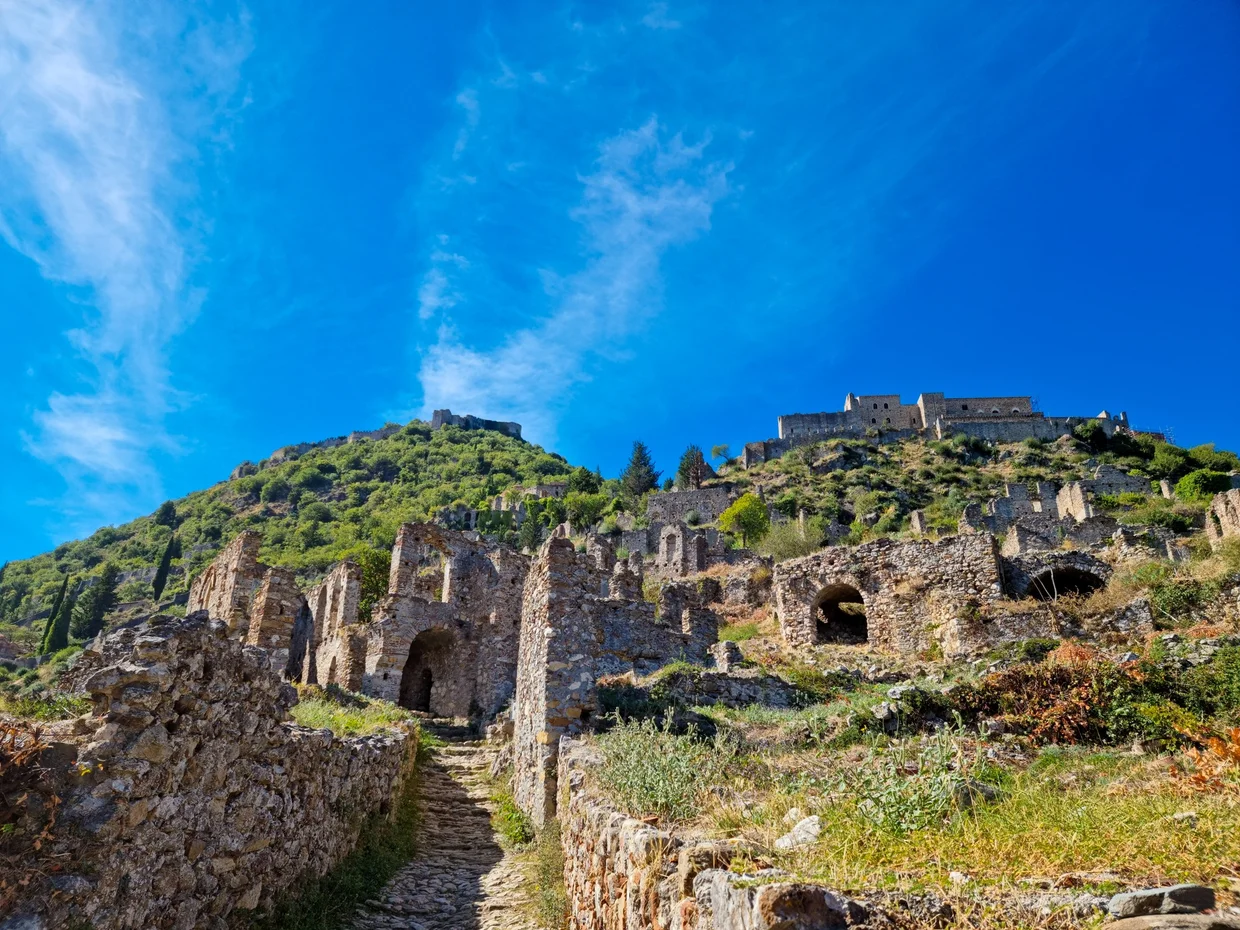
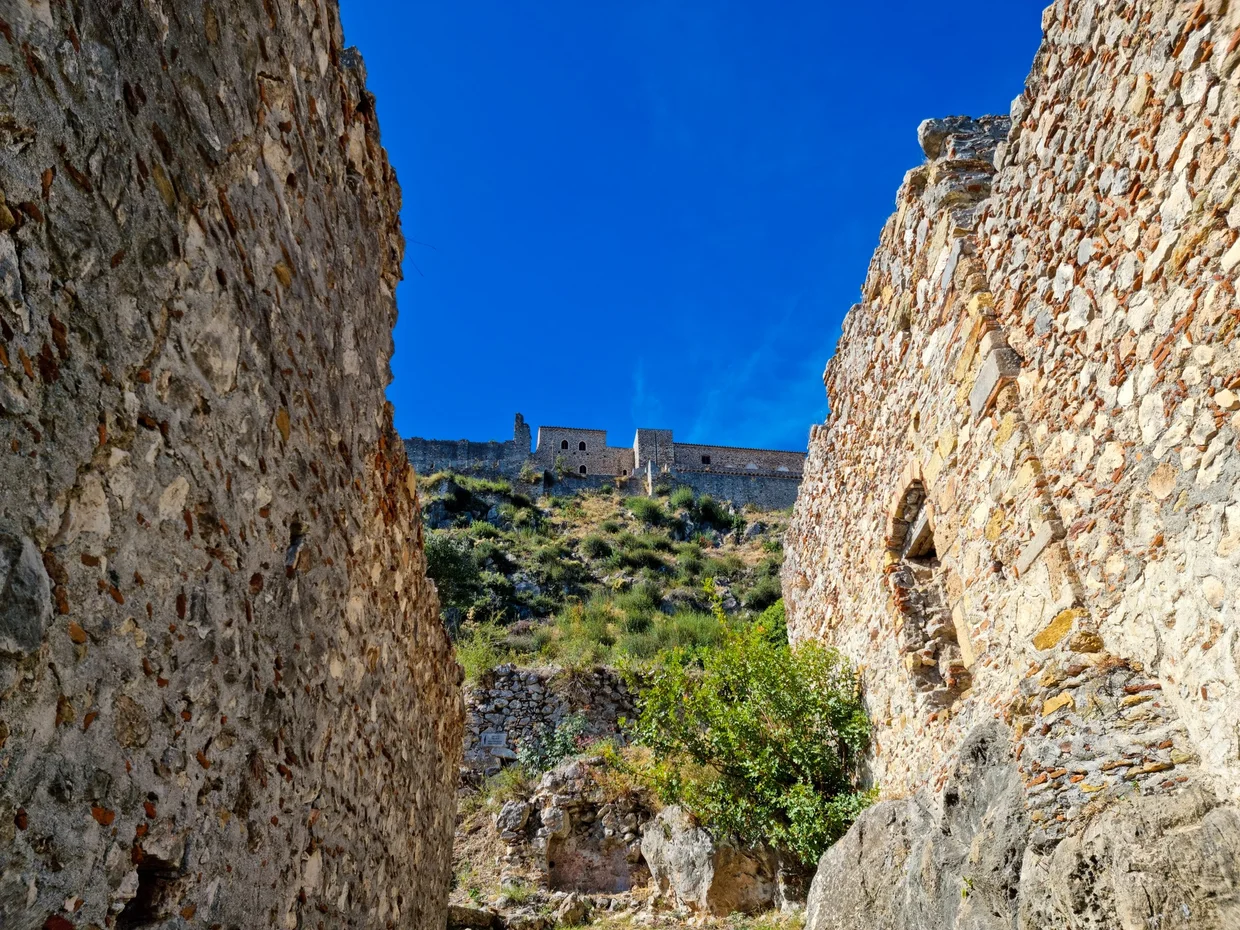
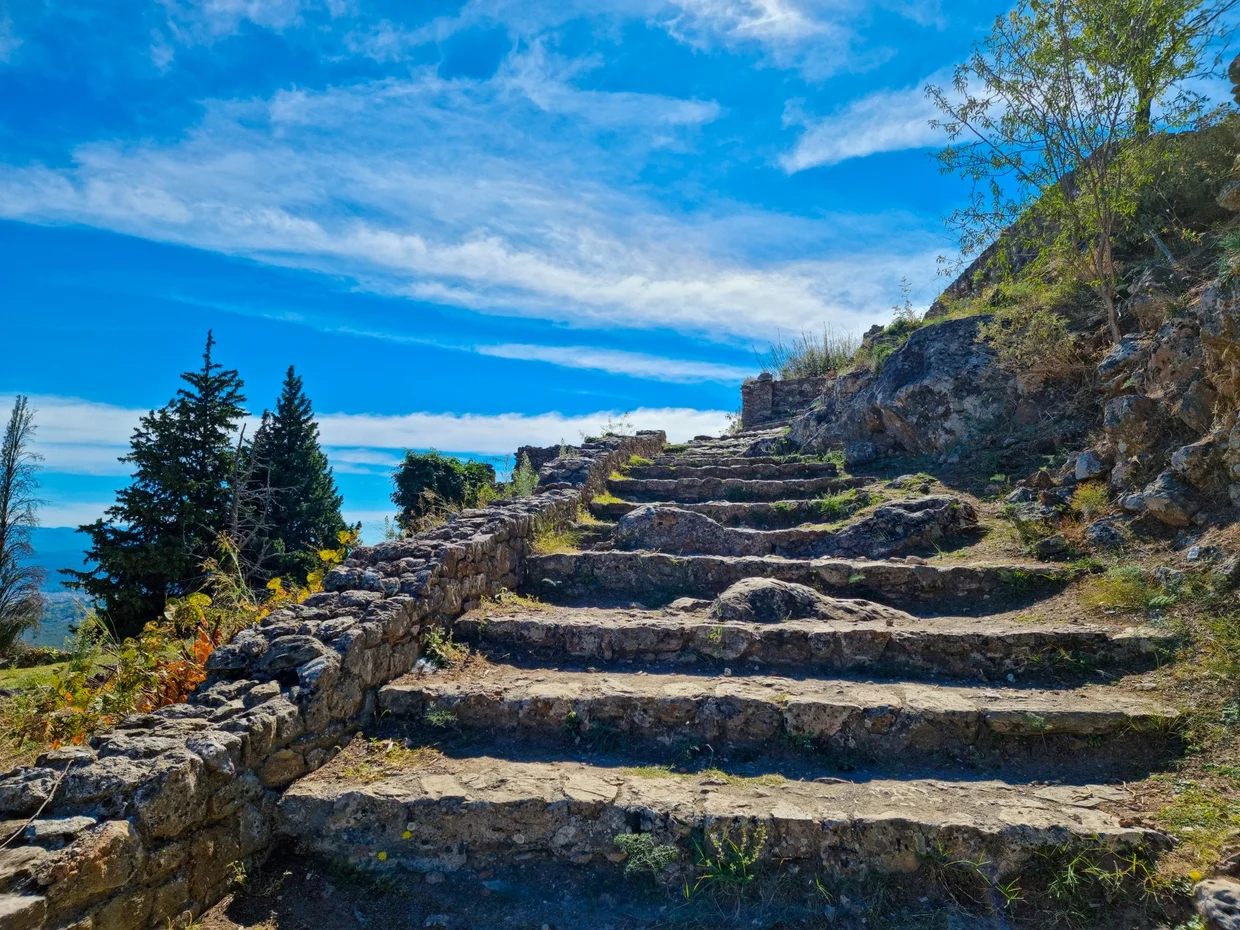
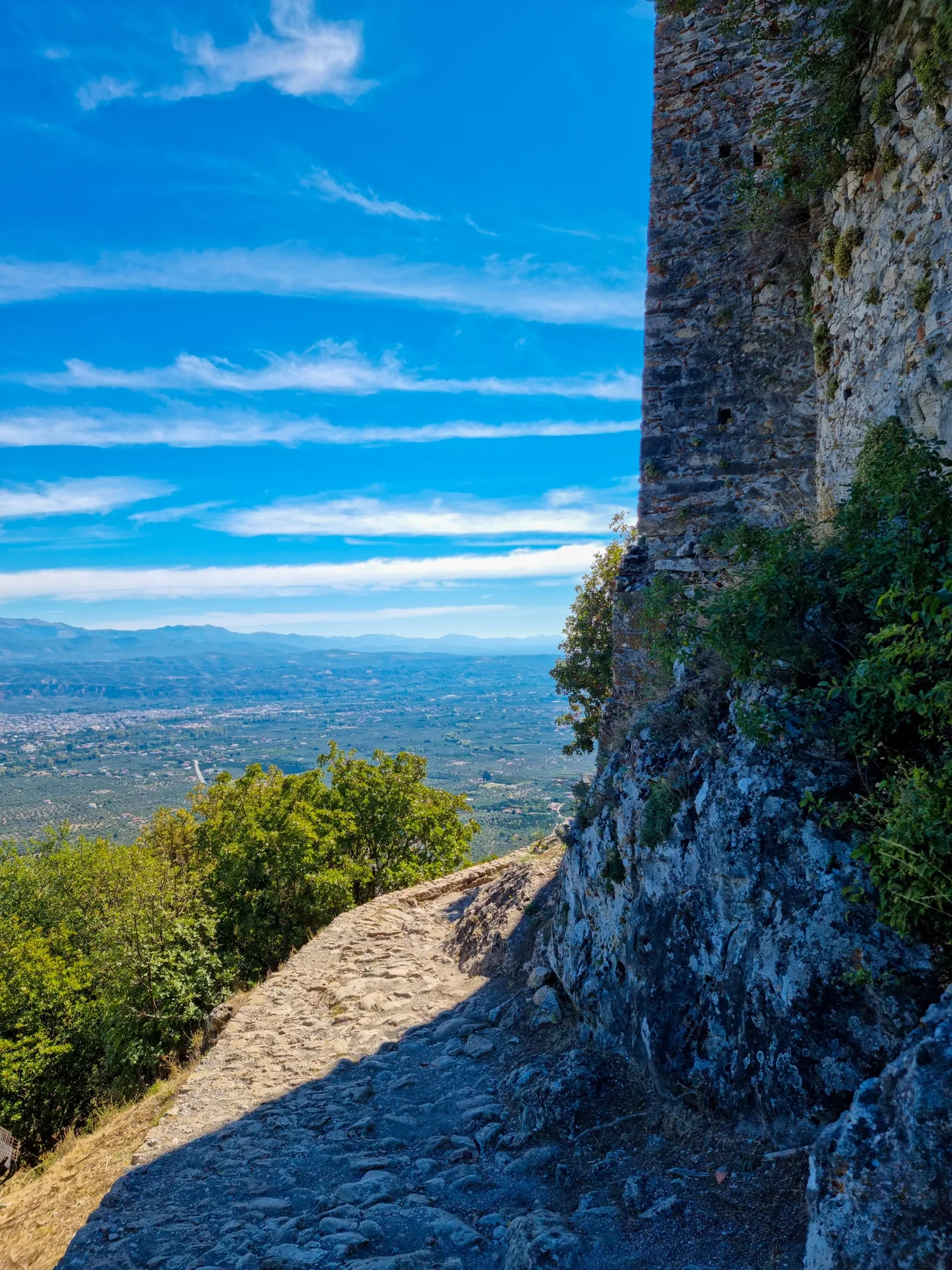


A practical note. There's almost no shade. Wear a hat, bring water, and don't do it at noon in July unless you're trying to win a bet. Morning and late afternoon are the moves. Also: proper shoes. The paths are polished stone that turns into an ice rink if there's even a trace of damp.
Sparta
Sparta the modern town is not exciting. The ancient Spartans were famously not into monuments (Thucydides literally wrote that if someone visited Sparta after it was abandoned they'd never guess how powerful it had been), which means there's almost nothing to see from the ancient city. It's a pleasant provincial town with orange trees and a Leonidas statue, and most people drive through it on their way to Mystras.

That said, go look at the statue. It's the Leonidas monument at the end of the main avenue, with a bronze Leonidas in full Spartan armor, shield and spear raised, and rings of flags behind him. The inscription on the base says "Molon labe" (come and take them), which was supposedly Leonidas's response at Thermopylae when the Persians demanded he hand over his weapons. It's a bit kitsch, a bit earnest, and I liked it more than I expected to.
Then leave and go to Mystras, which is five kilometers up the road.
Olympia
Olympia is where the Olympic Games started in 776 BC and ran every four years for almost 1,200 years until the Christian emperor Theodosius shut them down in 393 AD for being too pagan. Like Delphi, the sanctuary was a pan-Hellenic site where all the Greek city-states gathered and competed, with a sacred truce that suspended wars for the duration of the games. The whole site sits in a valley between two rivers, shaded by pine trees, and compared to the more dramatic locations of Delphi and Meteora, it's gentle and quiet and green.

The most photogenic part is the Palaestra, the wrestling school, where a grid of reconstructed Doric columns has been re-erected around the central courtyard. This is where athletes trained in wrestling, boxing, and pankration. Walking through it, you get a decent mental image of what the complex looked like in active use.
The Temple of Zeus is where the Pheidias statue of Zeus, one of the Seven Wonders of the Ancient World, stood for about 800 years. The temple itself is mostly a pile of massive fallen column drums now (an earthquake took it down in the 6th century), but one column has been re-erected so you can see the scale. The fallen drums are stacked like enormous Oreo cookies, which is the best description I can give you.


The stadium is where the actual foot races happened. You walk through a stone-lined tunnel, the same one the athletes used, and emerge onto a long strip of grass between embankments that could hold 45,000 spectators. You can stand at the starting line, which is a stone slab in the ground with grooves for the runners' feet. It's one of those moments on the trip where the layers collapse and you're standing where people stood 2,700 years ago doing the exact same thing.
The museum next to the site is one of the best archaeological museums in Greece (after the one in Athens). The Hermes of Praxiteles, one of the few original works by a famous classical Greek sculptor that we have, is there. Don't skip it.
Axios Delta
This one is a bonus, a different trip two weeks later, but it's in the country so I'm including it. The Axios-Loudias-Aliakmonas Delta is a protected wetland complex about 30 kilometers west of Thessaloniki, where four rivers empty into the Thermaic Gulf. It's a mosaic of salt marshes, lagoons, reedbeds, and pine forests, and it's one of the most important bird sites in Greece. I'm talking flamingos, pelicans, herons, kingfishers, birds of prey. You can see dozens of species in a morning without trying.


There are also half-drowned trees standing in the shallow water, which is the result of the water table rising over decades and swallowing what used to be dry ground. It's a strange, slightly post-apocalyptic look, and if you like landscape photography it's one of the more unusual spots in northern Greece. There's a bird observation tower, a few marked trails, and almost nobody there. An easy half-day out of Thessaloniki if you're passing through.
One downer: there's a visitor center on site that looks like it was built five minutes ago and abandoned ten minutes later. Locked doors, no staff, no info, nothing. And for a protected area, there's a surprising amount of trash lying around. Mostly plastic bottles and bags floating in the water, but also some old tires half-sunk in the mud. Sad to see in a place that's supposed to be one of the country's flagship wetland reserves. Hopefully somebody's paying attention and this gets sorted, because the site deserves better.
Roadside Greece
One of the best things about driving mainland Greece is the stuff you don't plan for. You pull over because something catches your eye and you have no idea what it is, you walk around for fifteen minutes, you get back in the car, and you're on your way. A few of the ones I stopped at:

Thessaly cotton fields. Driving south from Meteora, I kept passing fields full of what looked like snow in September. Turns out the Thessaly plain is the cotton-growing belt of Greece, and in late September the plants are in full white bloom, ready for harvest. It's a weird, quietly beautiful landscape you don't associate with Greece at all.

Mountain gorges off the highway. On the drive between Thermopylae and Delphi, there's a side road that ducks into a narrow rocky gorge with no signs and no fanfare. I pulled over because the entrance looked dramatic from the road, walked ten minutes in, and was alone in this quiet canyon with nothing but cicadas. Greece is full of these.

A broken stone bridge I stumbled on somewhere near the same gorge. Old stonework, split clean through by what was probably a flash flood years ago. No sign, no explanation, no name. Just rural Greece doing its thing. The mainland is full of these half-forgotten places, and the best way to find them is to get off the highway and take the slower road for an hour.
Why I Skipped Athens (and Thessaloniki, and the Beaches)
This is the question people asked me most when I told them about this trip. "You went to Greece and didn't go to Athens?" Correct.
Athens has the Acropolis, the Agora, the Temple of Olympian Zeus, the Panathenaic Stadium, the National Archaeological Museum, the Acropolis Museum, the Benaki, and the Anafiotika neighborhood. And even though I prefer fast-paced travel, squeezing it into two days sandwiched between Delphi and Olympia would have been a disservice to both the city and to me. I'd rather show up specifically for Athens, for four days or so, and do it right.
Thessaloniki is the same logic. It's the second city, it has its own Byzantine heritage, its own food culture, and it's the gateway to northern Greece and the Balkans. Another trip.
The beaches and islands are a third trip entirely. Greek islands aren't a side activity, they're the whole point of a separate vacation. Picking two or three islands and spending a week there is how that should work, not tacking one day on a Santorini ferry onto a mainland archaeology itinerary.
How Long to Stay
Ten days is the right amount. You get a night in the north (Thessaloniki or Vergina), two nights in Meteora, a night in Delphi, two in the Argolid for Mycenae, Epidaurus, and Nafplio, a night at Mystras, a night in Olympia, and a final night in Athens before you fly out. That's the itinerary I'm linking to on this page, and it's the one I'd plan again.
Seven days is the compressed version. You cut the northern detour, drop one Peloponnese night, and absorb the driving days into whatever's left. Doable, but you'll feel the pace.
Two weeks lets you fold in Athens seriously, or stretch out into the Mani peninsula, Monemvasia, or the Zagori region in the northwest, which I didn't get to but is on my list.
The worst mistake is trying to do the mainland in four days. You'll spend the whole trip driving and you'll resent every stop because you're stressed about the next one.
Best Time to Visit
Greece is big enough and varied enough that the right answer depends on what you're doing. But for this itinerary, which is ruins, monasteries, hiking up hills, and driving mountain roads, the answer is clear.
Late September to mid-October is the sweet spot, and it's when I went. The worst heat is gone, the tourist wave has receded, the sites are emptier, and the light is that golden late-season quality that makes every ruin photograph well. You get the occasional rainy day but it's not a summer monsoon. Hotels drop their prices from the summer peak. Meteora stops feeling like a conveyor belt. Delphi is calm enough that you can stand on the theater steps without jostling.
Late April to early June is the other shoulder window, and a lot of people say it's even better. Wildflowers everywhere, the landscape is green (it browns quickly by July), temperatures are comfortable, and the long days let you stretch sightseeing into the evening.
July and August are brutal at archaeological sites. 35 degrees with zero shade at Delphi, Olympia, or Mycenae is not fun. The stones reflect the heat back at you. You'll drink three liters of water and still feel terrible. Also: peak season, peak prices, peak crowds. Unless you're pairing the mainland with beach time, skip it.
November through March is moody and quiet and actually kind of beautiful in its own way, especially Meteora with mist wrapping around the rocks. Days are short, some smaller sites have reduced hours, and you might get proper rain. But hotels are cheap and you'll have the monasteries to yourself. If you don't mind cooler weather, it's a solid off-season option.
Getting Around
Rent a car. This itinerary is impossible to do properly any other way. Buses connect the main cities (KTEL is the intercity bus network), and they're cheap and reliable, but the frequency is low, the connections between secondary destinations are rough, and you'll lose hours on every transfer. Trying to do Meteora to Delphi to Olympia by bus will eat two extra days for no good reason.
Car rental in Greece is reasonable. Expect 25 to 50 euros a day for a small car in shoulder season, more in summer. Book ahead. All the big international agencies operate at Thessaloniki and Athens airports, plus local chains like Avance and Kosmos that are often cheaper. You need an International Driving Permit technically, though in practice a European or US license is usually accepted without issue.
The driving is fine. Main highways are modern, well-maintained, and fast. Expect tolls on the E65 and E75 (roughly 2-6 euros per section, pay in cash or card at booths). Mountain roads are narrow but well-engineered. Parking in the small towns like Kalambaka, Delphi village, and Nafplio is easy. The main headache is Athens and Thessaloniki, which you're skipping anyway. The Greek driving style is assertive but not dangerous. Honking is communication, not aggression.
Don't drive at night if you can help it. Rural roads aren't lit, and you might meet a goat, a dog, a tractor, or a van without taillights in the middle of the road. Not often, but often enough.
A fun detail: there are speed cameras absolutely everywhere on mainland Greek highways and back roads. You'll pass one every few kilometers. I did not see a single local respecting the speed limit. Not one. A Greek guy I chatted with at a gas station told me, with the confidence of someone stating a physical law, that the cameras "don't work." I have no way to verify this. What I can say is that speed limits in Greece feel more like a polite suggestion than a rule, and the locals blow past you at speeds that make you double-check the signposted number. Drive the way you're comfortable with and let them do their thing.
Fuel is expensive by non-European standards, around 1.70-1.90 euros a liter. Factor it into your budget. Distances are short enough that it won't wreck you (a full mainland loop is about 1,650 kilometers over ten days), but it's not negligible.
Know Before You Go
A few small things that make a trip to Greece noticeably smoother. Here are the first four, the full list covers 34.
- 1
It's one of the safest countries in Europe
Greece consistently ranks near the top of European peace and crime indices, and outside of central Athens the petty-crime risk drops to... - 2
Perfect for solo travel
The mainland is calm, English is widely spoken, and small-town tavernas are used to people eating alone. Women solo travelers consistently... - 3
English is widely spoken
Anyone under forty, anyone in hospitality, and most people in tourist towns speak good English. Older folks in rural villages might switch... - 4
Learn to read the Greek alphabet, even badly
Road signs on highways are usually bilingual, but smaller signs, menus and shopfronts often aren't. Spending twenty minutes before you fly...
Read the full know before you go Greece guide.
Food
I'm not a foodie, so I'll keep this short. Greek food is Greek food. You know what it is. Tavernas everywhere do the same core menu of grilled meat, fresh salads, dips, and fried things, and it's reliably good. Here's what I actually liked.
Souvlaki pita is the default quick meal. Grilled pork or chicken in a pita with tzatziki, tomato, onion, and fries. Cost: 3-4 euros. It's the Greek equivalent of a kebab and you can eat it every day without getting tired. The places that call themselves "souvlatzidiko" are the ones to look for, not the tourist tavernas.
Horiatiki (Greek salad) with feta that actually tastes like feta, fresh tomato, cucumber, onion, olives, and olive oil. Every taverna does it. It's simple and it's almost always good.
Gemista (stuffed vegetables) are tomatoes and peppers filled with rice, herbs, and sometimes meat, baked in tomato sauce. Hearty, vegetarian by default, the kind of thing your yiayia (grandmother) would make.
Spanakopita and tyropita, spinach and cheese filo pastries, are the national breakfast and gas station snack. 2 euros for a warm triangle. Do it.
Loukoumades are fried dough balls drizzled with honey and walnuts or cinnamon, and they're the dessert you want after a long day. Light, crunchy outside, soft inside, the kind of thing you say you'll only have two of.
Skip the fancy "modern Greek" places. The good food is at the unpretentious taverna with plastic chairs and a handwritten menu.
On the drink side, Greek coffee is strong, grainy, and served in a small cup with grounds at the bottom (don't drink the last sip). Freddo espresso and freddo cappuccino are the iced espresso drinks that Greeks obsess over and that you'll want every afternoon. They're made with a handheld frother and taste nothing like the Starbucks version. Ouzo is the aniseed spirit that turns cloudy white when you add ice or water, served with a small plate of mezedes. Tsipouro is the grape pomace spirit, stronger and less floral.
Costs
Mainland Greece is cheap by Western European standards, especially outside of Athens. The euro is the currency, so there's no exchange hassle. In shoulder season the numbers look like this:
The prices shown here are meant as a rough guide and can vary over time. While I update exchange rates regularly, local prices are typically refreshed only when I revisit the destination.
The biggest steal on this trip is the site entry fees. Twelve euros to spend a full day inside Delphi, or inside Mystras, is some of the best-value sightseeing on the continent. For comparison, the Colosseum in Rome is 18 euros and you get about two hours of interest. Delphi will fill a whole day.
Free entry days. State-owned archaeological sites and museums in Greece are free on quite a few days a year, which is worth planning around if your dates are flexible. The main ones:
- The first and third Sunday of every month from November 1 to March 31 (so basically every winter Sunday except the second and fourth)
- March 6 (Melina Mercouri Day)
- April 18 (International Monuments Day)
- May 18 (International Museums Day)
- The last weekend of September
- October 28 (National Holiday, the "Ohi Day")
If you're in Greece on one of those days, the sites I've listed above (Delphi, Mycenae, Mystras, Olympia, Vergina, all of them) are free. It's not a huge saving, but stacking three or four sites into one free day adds up. The catch is that free days at popular sites are busier, so you're trading euros for crowds.
Safety
Greece is one of the safest countries in Europe for travelers, and this itinerary in particular is about as low-risk as travel gets. That said, a few things worth flagging.
Summer heat at archaeological sites is the actual risk. Every single site on this itinerary (Delphi, Mycenae, Mystras, Olympia, Acrocorinth) is a sun-exposed hillside with almost no shade. In July and August, people get heatstroke at these sites every year. Ambulance callouts at Delphi and the Acropolis in peak summer are routine. Bring water, wear a hat, time your visit to early morning or late afternoon, and take the warnings seriously if you're visiting in summer.
Wildfires are a summer hazard, especially in hot dry years. Check current conditions before driving into rural areas during July and August. Greece has had devastating fires in recent years (Mati 2018, Evia 2021, Dadia 2023), and roads can close with little warning. The civil protection service publishes daily fire risk maps.
Slippery marble and polished stone is a sneaky risk. The ancient walking surfaces at sites like Mystras, Acrocorinth, and the Delphi sanctuary have been polished by centuries of feet. A bit of dew or rain turns them into actual ice. Proper shoes with grippy soles are not optional. Flip flops are a genuinely bad idea.
Aggressive drivers in cities and on mountain passes. Athens and Thessaloniki driving has a reputation. Rural mountain driving involves tight curves, occasional goats, and locals who know the road better than you. Give yourself time. Don't try to match the local pace.
Strikes and protests are a normal part of Greek public life, especially in Athens. They usually happen in and around Syntagma Square. Check the news before heading to central Athens if you're visiting. Protests can turn tense, but tourists are almost never the target. Just don't walk into the middle of a demonstration for the photo.
Earthquakes happen in Greece (it sits on active faults), but major ones are rare. Minor tremors are common and nothing to worry about. If you feel a strong shake, the standard drill applies: drop, cover, hold on, and stay away from windows.
Petty crime is low compared to most European countries. Athens has the usual pickpocket risk in tourist zones, and bag snatching from parked cars happens at beach and archaeological site parking lots. Don't leave valuables visible. Nothing paranoia-inducing, just standard common sense.
Solo female travel is very safe in Greece overall. The mainland outside Athens is relaxed and low-hassle. Most people I talked to were friendly, helpful, and not weird about it.
Emergency numbers: 112 (European general emergency), 100 (police), 166 (ambulance), 199 (fire), 108 (coast guard). 112 works from any phone including with no SIM.
What to Skip
The Corinth Canal selfie stop. It's a narrow canal cut through a rock isthmus, yes, and the first time you see the drop from the bridge it's a "huh, okay" moment that lasts about fifteen seconds. Then you realize there are 30 coach-tour passengers queuing for the same photo and you've wasted a half-hour you could've spent at Ancient Corinth.
Restaurants directly next to archaeological sites. At Delphi village, Olympia, and especially on the approach road to Mycenae, there are tavernas with laminated menus in six languages and aggressive door staff. The food is mediocre and the prices are inflated. Walk two streets away and the quality goes up and the price comes down.
"Authentic traditional Greek night" dinner shows. Bouzouki music, plate smashing, a guy in a Zorba costume. The real music scene in Greece is great. The hotel-lobby version is not.
Packaged "Classical Tour" bus trips from Athens. Delphi, Olympia, Epidaurus, and Mycenae are all doable as day trips from Athens, but on a coach you get 90 minutes at each and a pizza lunch. You'll pay 150 euros to see the main sites at half speed. Rent a car instead.
The Oracle of Delphi reconstruction shows. Some tourist operations stage "Pythia" performances with costumes and smoke. It's cringe. The real ruins do the work.
What Not to Skip
Meteora. All six monasteries if you can, but at least three. And at least one sunset on the rocks. If you do nothing else in Greece, do this.
The Treasury of Atreus at Mycenae. The beehive tomb. Walk in alone if you can and just stand there for a minute. It's one of the oldest domed spaces you'll ever enter.
Mystras. Give it a full morning. Walk through every church you pass. The frescoes are the quiet miracle of the trip.
The Delphi Tholos at the Sanctuary of Athena Pronaia. Go to the lower sanctuary before you do the main site. It's a few hundred meters down the road, and the circular temple with three columns is the most photogenic shot in Delphi.
Acrocorinth. Everyone does Ancient Corinth and drives away. The citadel above is huge, empty, and has the best views in the Peloponnese.
The Olympia stadium. Walk through the runners' tunnel and stand at the starting line. It's the kind of small, personal thing that sticks with you more than the bigger monuments.
A long lingering dinner somewhere that isn't on a main tourist street. The lifestyle of slowly eating outside while the sun goes down is a real thing and it's worth slowing down for.
Common Mistakes
Underestimating driving times. Greek road distances look small on a map but the reality is that mountain roads, village speed limits, and your own detours add up. Meteora to Delphi is three hours. Delphi to Mycenae is four. Add stops and lunch and a day evaporates.
Doing Delphi at midday in summer. No shade, 35 degrees, marble glare. It's the most miserable way to see one of the best sites in Greece. Morning or late afternoon only.
Wearing flip flops or dress shoes to archaeological sites. The footing is rubble, polished stone, or loose gravel. You need grippy soles. Mystras and Acrocorinth are the worst offenders.
Not checking monastery opening days at Meteora. Each of the six monasteries is closed one or two days a week, and the schedule is not synchronized. Look it up before you go. Showing up to find your target closed ruins a day.
Ignoring the dress code at monasteries. Long trousers or skirt, covered shoulders. They'll lend you a wraparound at the door but you'll feel like a tourist for the whole visit.
Planning to "do Athens" in a day between two other stops. Don't. Athens deserves its own trip. Squeezing it will make you hate both Athens and the trip.
Skipping Mystras because you've never heard of it. You've never heard of it because it doesn't make the Top 10 Greece listicles. That doesn't mean it's not one of the best sites in the country. It is.
Filling up on mediocre food at tourist tavernas. The difference between the taverna on the main square and the one two blocks off it is 20 percent cheaper, 50 percent better, and 100 percent more likely to have locals in it.
Not learning a few Greek words. "Efharistó" (thank you), "parakaló" (please/you're welcome), "kaliméra" (good morning), "yiá sas" (hello). Greeks appreciate it and it softens every interaction.
Published April 2026.