Three Countries, Stacked Along the Baltic
Is it fair to group Lithuania, Latvia and Estonia together? Probably not. They have three different languages, three different histories (if you zoom in close enough), three different dishes they argue about, and three different national characters that locals will happily explain to you for an hour if you buy them a beer. Each one deserves its own page, and it'll get one.
But here's the thing: they share a coastline, a climate, a forest, half a millennium of being handed around as a colonial parcel between Sweden, Poland, Germany, and Russia, and one 1989 moment where two million people held hands across the lot of them in protest. That's not nothing. And when you travel them back to back, something clicks. You start noticing how the same idea, say "wooden houses" or "medieval old town" or "bog," shows up three times with three different accents. It's one of those trips where the whole is bigger than the sum.

So yes, I'm writing one combined guide. And yes, I'll also write three separate ones later. You are free to disagree. I'm still going to tell you that if this is your first time up here, go for all three.
Why I Group Them (And Why It Almost Works)
If you squint at a map, the Baltics look like three nearly identical rectangles stacked north to south. Lithuania at the bottom, Latvia in the middle, Estonia on top. Populations of around 2.8, 1.9 and 1.3 million respectively. Add them up and you get a country smaller than the Netherlands in people, bigger than England in land area, and mostly covered in pine trees.
The national characters, though, are not identical. Ask a Lithuanian and they'll tell you they're the warmest, most Catholic, most continental of the three. They have a thing for basketball and a soft spot for baroque churches. Ask a Latvian and they'll tell you they sit in the middle, literally and figuratively, speaking a language older than most of Europe and drinking a jet-black herbal liqueur that tastes like someone brewed a forest. Ask an Estonian and they won't tell you anything, because Estonians don't talk much. They'll just hand you a piece of paper with all the information digitized, signed and notarized, and you'll realize this country runs like a Nordic startup.

Travelers who come here expecting "Eastern Europe" get genuinely confused. There's no grime, no shouting, no chaos. Public transport works. Tap water is drinkable. Wifi is everywhere and disgustingly fast. Streets are clean, sometimes spotless. The Soviet era left concrete apartment blocks and a certain dry humor, but culturally these countries lean firmly north. They feel Scandinavian with cheaper beer and more pine.
And then you cross one of the invisible internal borders (there are no border checks, just a road sign and maybe a different colored speed limit), and the landscape is the same but the shop signs change alphabet-rhythm. Suddenly you're counting trees in a language you can't pronounce.

Destination Info
Quick Facts
Overview
- Best 10 to 14 days in June till August.
- At Sea level in Northern Europe, time zone UTC+2 (UTC+3 in summer).
- The population of 6M people speaks Lithuanian, Latvian, Estonian (plus widespread Russian and English), writes in Latin script.
- Euro (EUR) is the official currency, and tipping is 5-10% if happy.
Local Flavor
- Get a Black balsam (Latvia), Vana Tallinn (Estonia), midus mead (Lithuania) and Varies by country (cepelinai, potato pancakes, black bread, pork).
- The main festival here is Song and Dance Celebrations (every 4-5 years, UNESCO listed), and popular sports include Basketball (Lithuania), ice hockey, football.
Practicalities
- You can use Trams, buses, intercity coaches for public transportation, while driving on the right.
- You can get here mostly via Vilnius (VNO), Riga (RIX), Tallinn (TLL).
Lithuania
Lithuania is the largest, southernmost and, in some ways, the loudest of the three. It's the one that kept its pagan traditions longest (Christianized in 1387, last in Europe), the one with the medieval empire (yes, really: the Grand Duchy of Lithuania once stretched from the Baltic to the Black Sea), and the one where people hug you before they know your name.
Vilnius
Vilnius is the capital, and for a city of around 600,000 people it punches unreasonably above its weight. The Old Town is huge, one of the biggest surviving medieval cores in Northern Europe, and it's got this late-baroque theatrical mood that reminds me more of Kraków or Prague than anything else in the region.

St. Anne's Church is the one you'll see first. It's a red brick Gothic confection built in 1500, and the story goes that Napoleon, passing through on his way to Moscow, wanted to carry it home to Paris in the palm of his hand. Standing in front of it, you get why. It looks like someone iced a cake. Next to it sits the more sober Bernardine Church, and together they form one of the most photogenic street corners in the Baltics.
Gediminas Tower sits on the hill above the Old Town, and it's basically the city's logo. Climb up (or take the funicular if your knees are diplomatic) for the view.

From up there, the Old Town unfolds below: red tiles, green copper spires, bell towers, baroque bell towers, and more baroque bell towers. There are more than forty churches in this city. Forty. In a town the size of a Midwestern suburb.
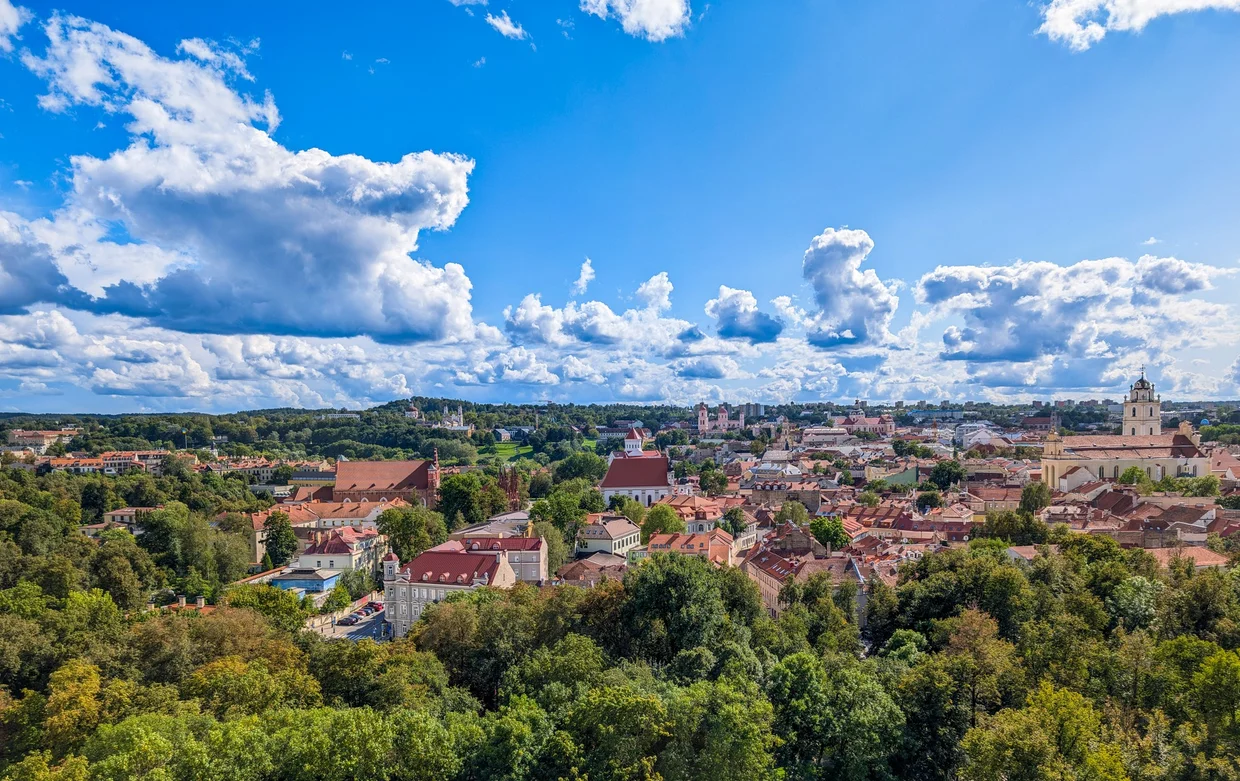
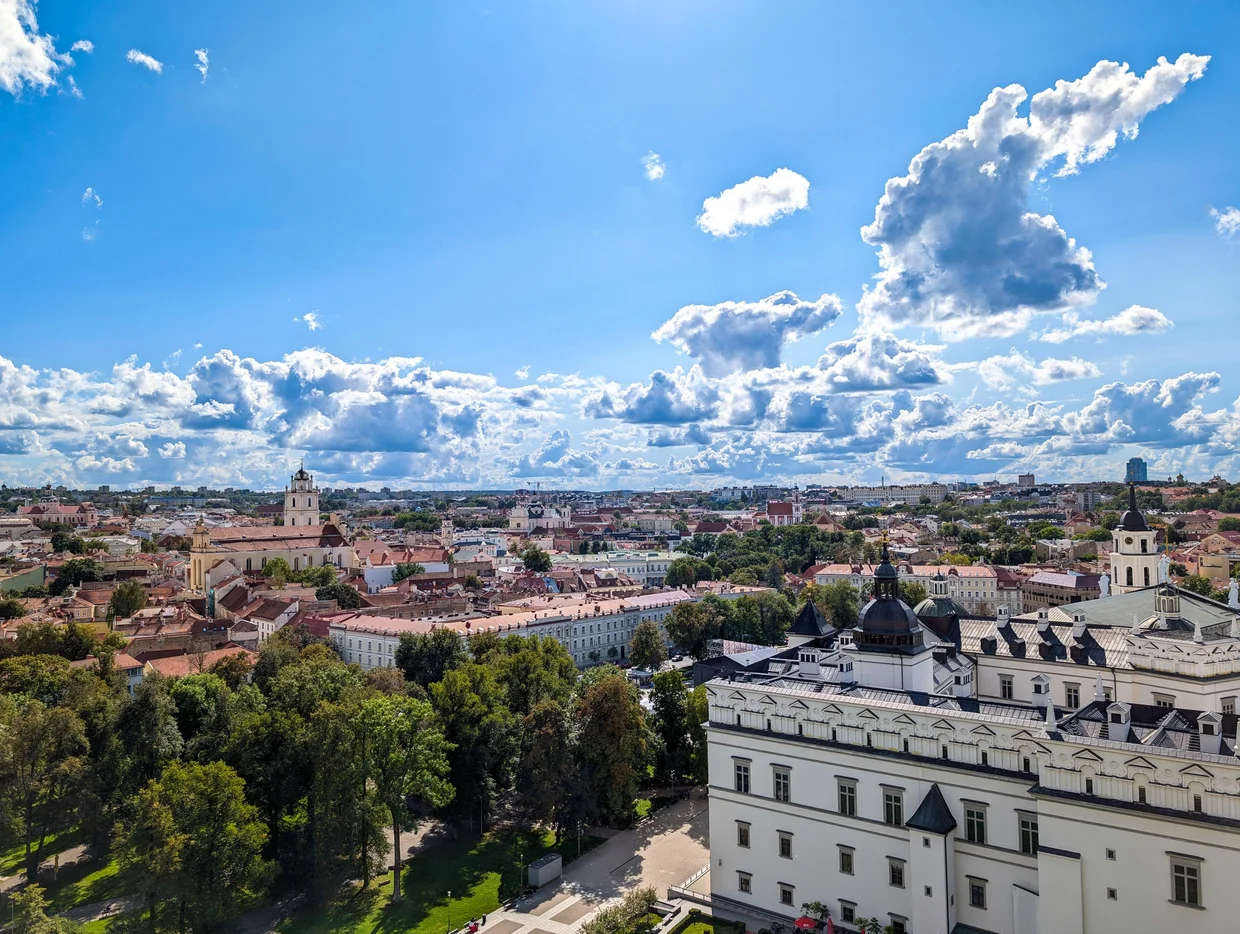
Turn your head 180 degrees from the Old Town view and you get the other Vilnius: glass towers, a skyline rising on the far bank of the Neris river, and the sense that this is a country very consciously walking into the next century while keeping the last five in its back pocket.

Down in the Old Town, wander. Vilnius rewards wandering more than ticking off sights. Pilies Street and Castle Street connect most of the big stuff, but the good bits are in the side lanes where you turn a corner and suddenly the facades are canary yellow, mint green, or dusty terracotta.
Cross the little bridge east of the cathedral and you're in Užupis, the self-declared "republic" of artists, writers, drinkers and assorted weirdos who unilaterally declared independence on April 1st, 1997. They have their own constitution (articles include "A dog has the right to be a dog" and "People have the right to be unhappy"), their own president, a tiny army of about 11 people, and a statue of an angel. You can still get your passport stamped here if the border guard happens to be awake.

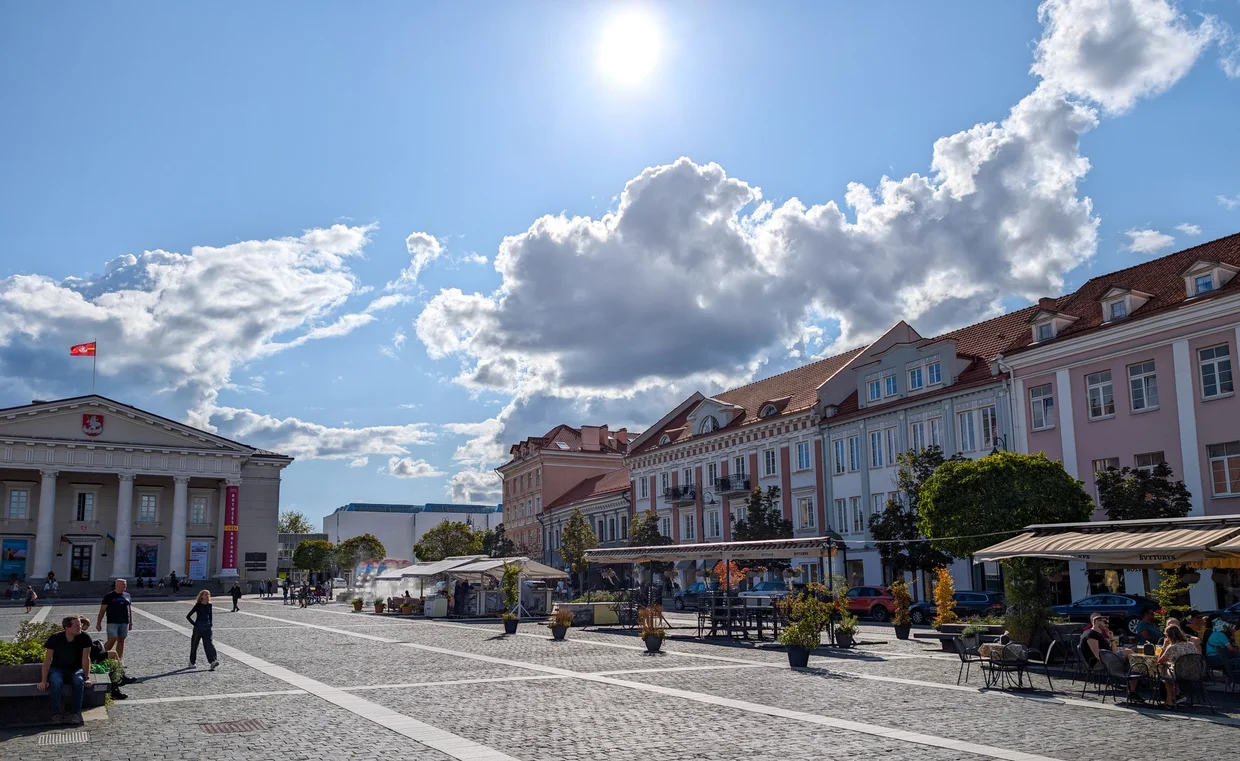
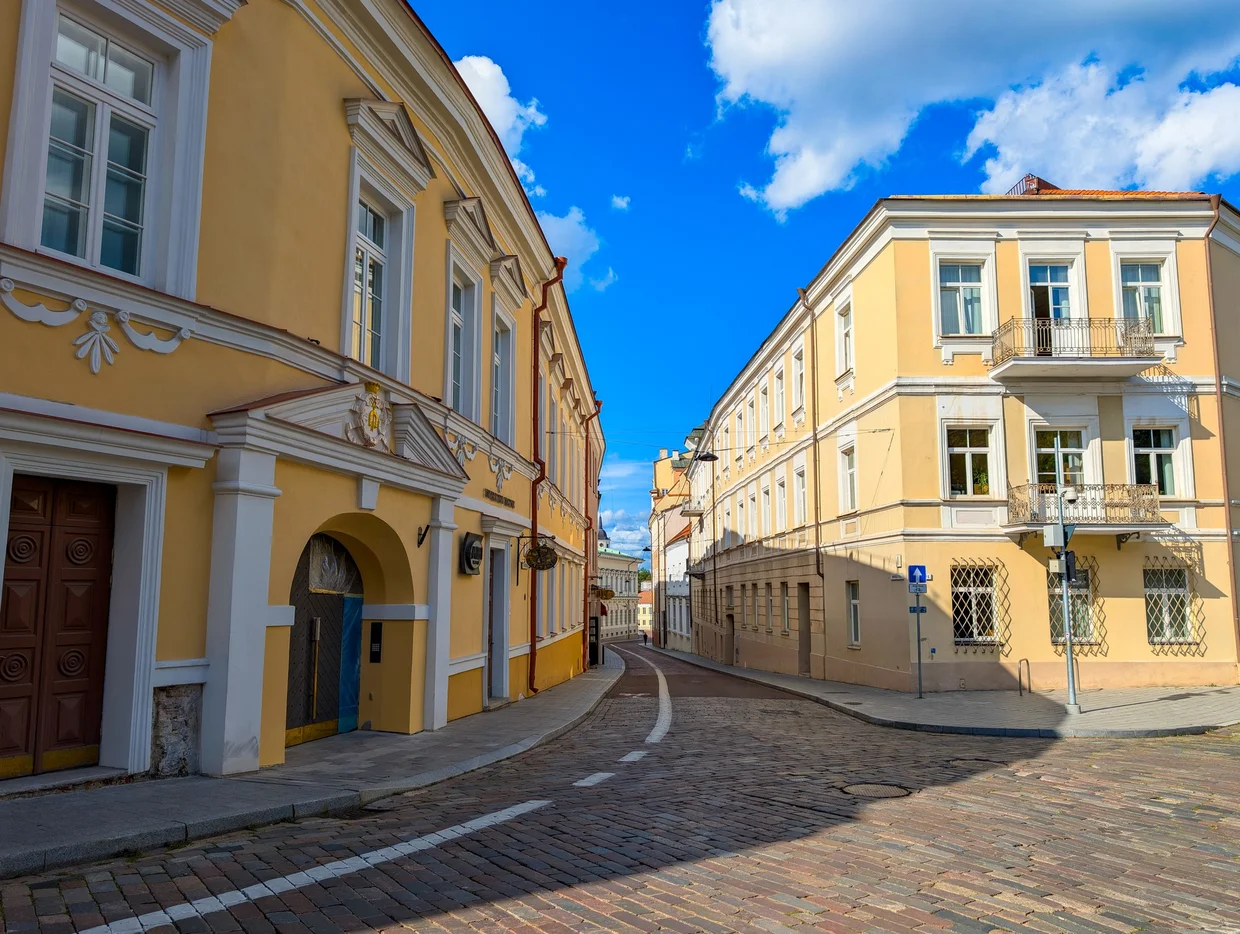
And then, when you've had enough baroque, walk into one of the wooden house neighborhoods. Much of Vilnius outside the Old Town is still low, wooden, domestic. Gardens behind fences. Cats on windowsills. This is where people actually live, and it's a good reminder that capital cities are still cities.

Kaunas
Kaunas is Lithuania's second city and for a couple of decades (1919 to 1939, when Vilnius was annexed by Poland) it was the capital. The place has a bit of a chip on its shoulder about that, in the charming way second cities always do. It also has possibly the best interwar modernist architecture in Europe, which got it on the UNESCO list in 2023.

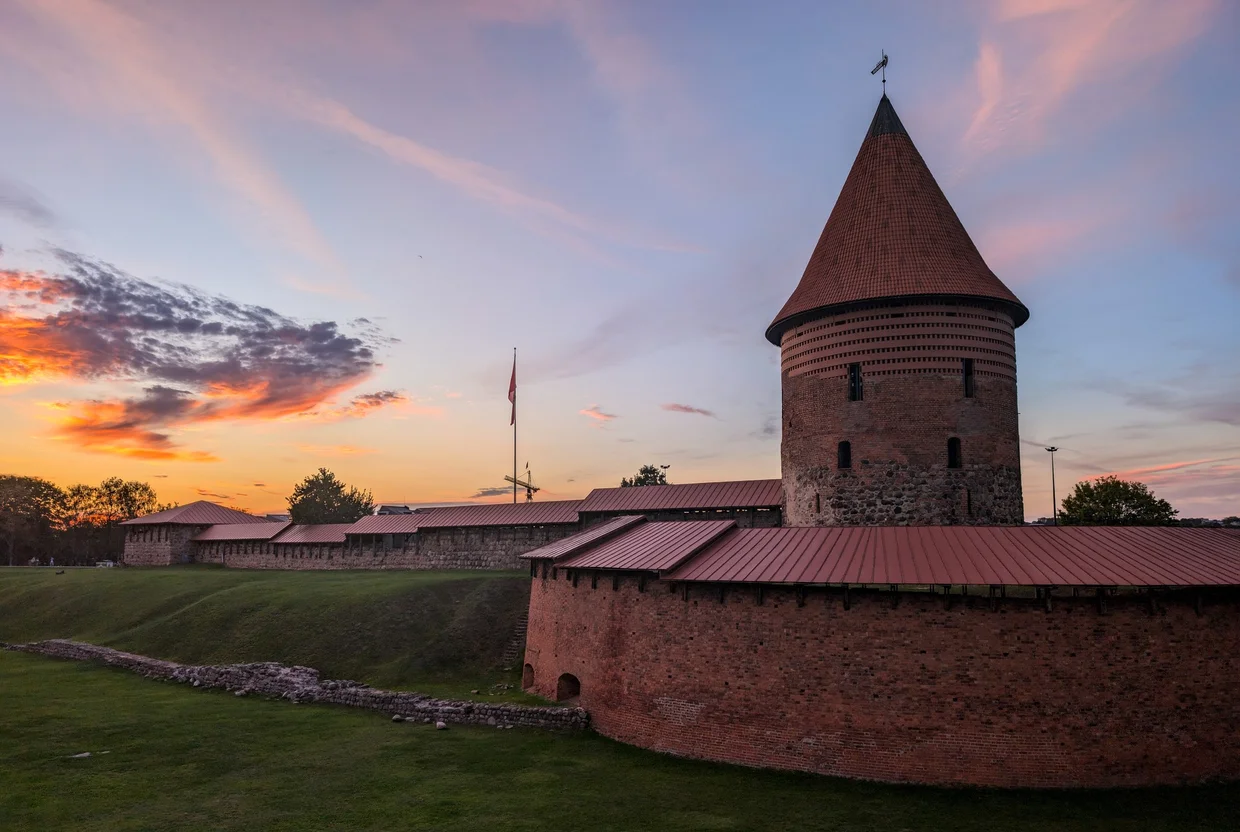
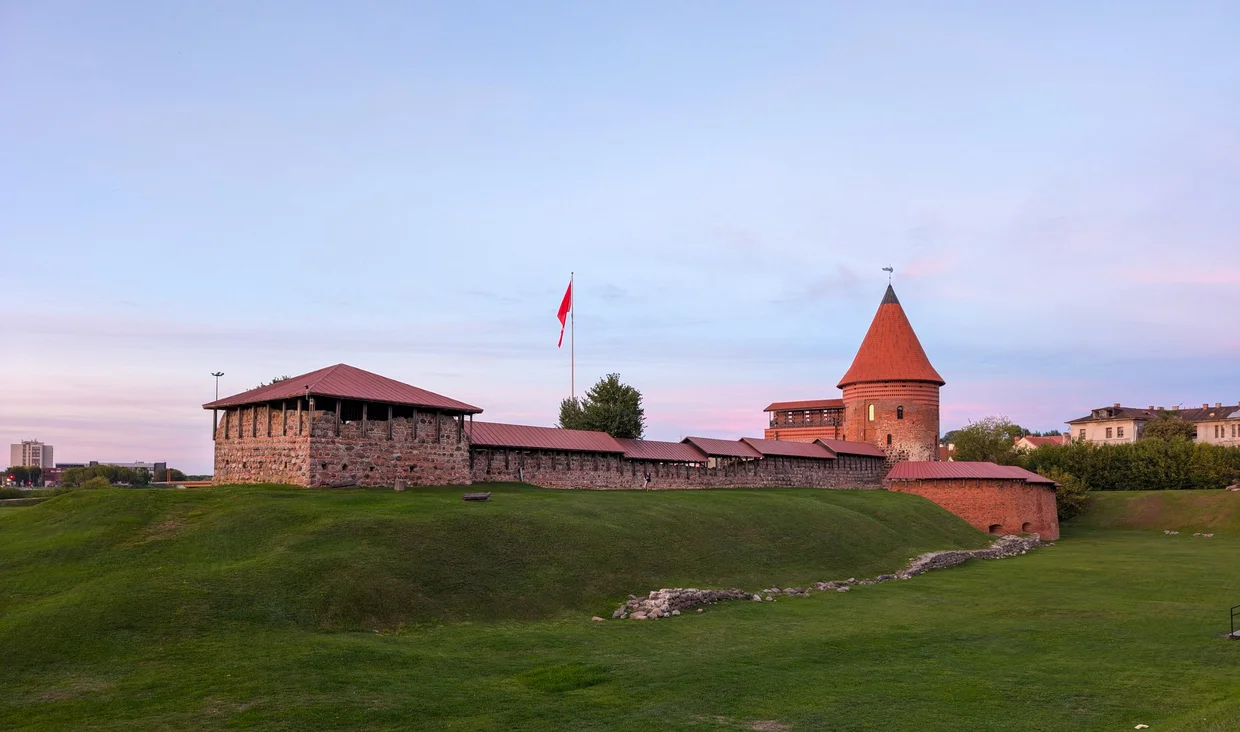
Kaunas Castle sits where the Nemunas and Neris rivers meet. The original red brick tower has been guarding this spot since the 14th century, and at sunset the whole thing glows pink against the sky. It's smaller than you'd expect. Most Baltic castles are.


Lithuania is one of the most Catholic countries in Europe, and Pope John Paul II's visit in 1993 is still talked about. You'll find his statue in a few cities. He visited right after independence, and for a lot of older Lithuanians it was the moment that confirmed they were really, finally, back on the European map.
Klaipėda and the Coast
Klaipėda is Lithuania's only real port city, and it used to be German. The town was called Memel until 1923, and you can see it in the bones: tidy squares, Prussian-style merchant houses, and a slightly different atmosphere than inland Lithuania.

The Meridianas, a three-masted training ship from the 1940s, sits permanently moored in the Dane river running through the middle of town. Half museum, half restaurant, all postcard.


Klaipėda has scattered a lot of small, weird, lovable sculptures around the town. Mice, cats, a boy with a dog, a chimney sweep. There's an outdoor giant chess set that's almost always in the middle of a game. You could spend a whole morning hunting them down and it wouldn't feel like tourism, more like an easter egg hunt.

Klaipėda is also the launch point for the Curonian Spit, a 98-kilometer long sand dune peninsula split between Lithuania and Russia's Kaliningrad exclave. The Lithuanian half is a UNESCO site, full of pine forests, shifting dunes and small wooden villages. If you have an extra day, go. If you don't, the spit alone is almost reason enough to come back.
Latvia
Latvia is the middle child, geographically and temperamentally. Smaller than Lithuania, bigger than Estonia, with the best old town of the three (I'll die on this hill, Tallinn fans, come at me) and a countryside that is essentially one very large pine forest with some bogs in it.
Riga
Riga is the biggest city in the Baltics, home to about a third of Latvia's entire population. It's also the capital with the most range: you get medieval cellars, Hanseatic guild halls, Soviet concrete, one of the densest collections of Art Nouveau architecture in the world, and a river promenade that's worth one long walk.

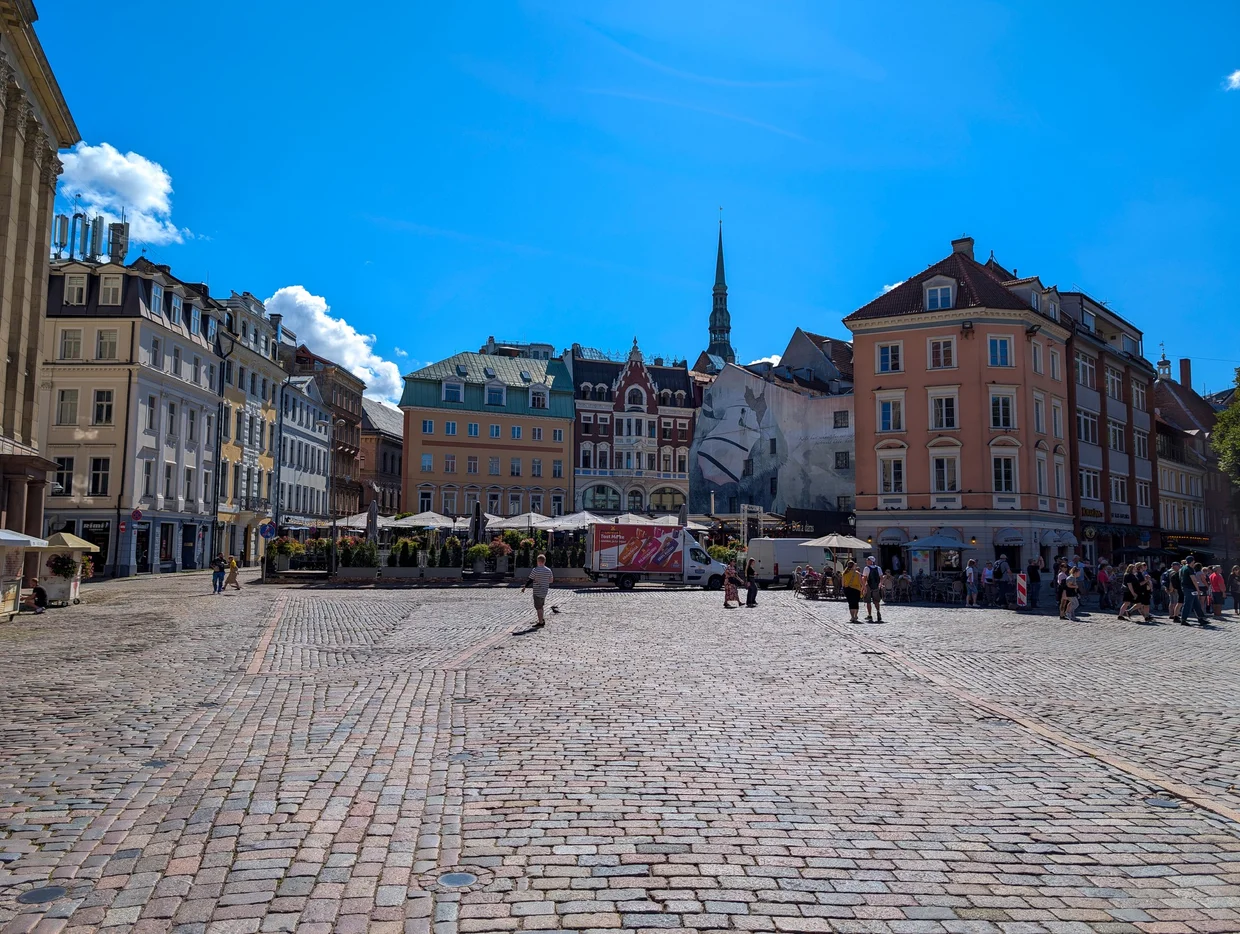
You'll probably land in Town Hall Square first. The big "RIGA" sign is there for your photo. I'm not judging, I took one too. The square itself is small, a cobbled rectangle with the rebuilt Town Hall on one side and a statue of Roland in the middle, sword raised, looking off into the distance like every Roland statue ever made. Most of what you see is post-1991 reconstruction. WWII flattened the originals in 1941, the Soviets parked an empty square here for fifty years, and Latvia rebuilt the whole ensemble between 1999 and 2003 from old photos and drawings. Knowing that doesn't kill the magic. If anything, it adds a layer.

The real attraction is the building opposite: the House of the Blackheads, a 14th-century guild house rebuilt after WWII flattened it. The facade is absurd in the best way. Statues, gilded details, an astronomical clock, a stepped Dutch Renaissance gable, red brick under everything, and just enough ornament that the eye keeps finding new things to land on. The Blackheads themselves were a brotherhood of unmarried foreign merchants who took St. Maurice as their patron saint, hence the name. Maurice was a Roman officer of African descent who got martyred in the third century, and the guild put a Black knight's head on their crest in his honor. They used this building for feasts, balls and general merriment from the 1330s until 1939. The Luftwaffe bombed it in 1941, the Soviets dynamited what was left in 1948, and the version standing today went up between 1995 and 2001 for Riga's 800th anniversary. Knowing it's a reconstruction doesn't take anything away. The proportions are right and the detailing is obsessive.
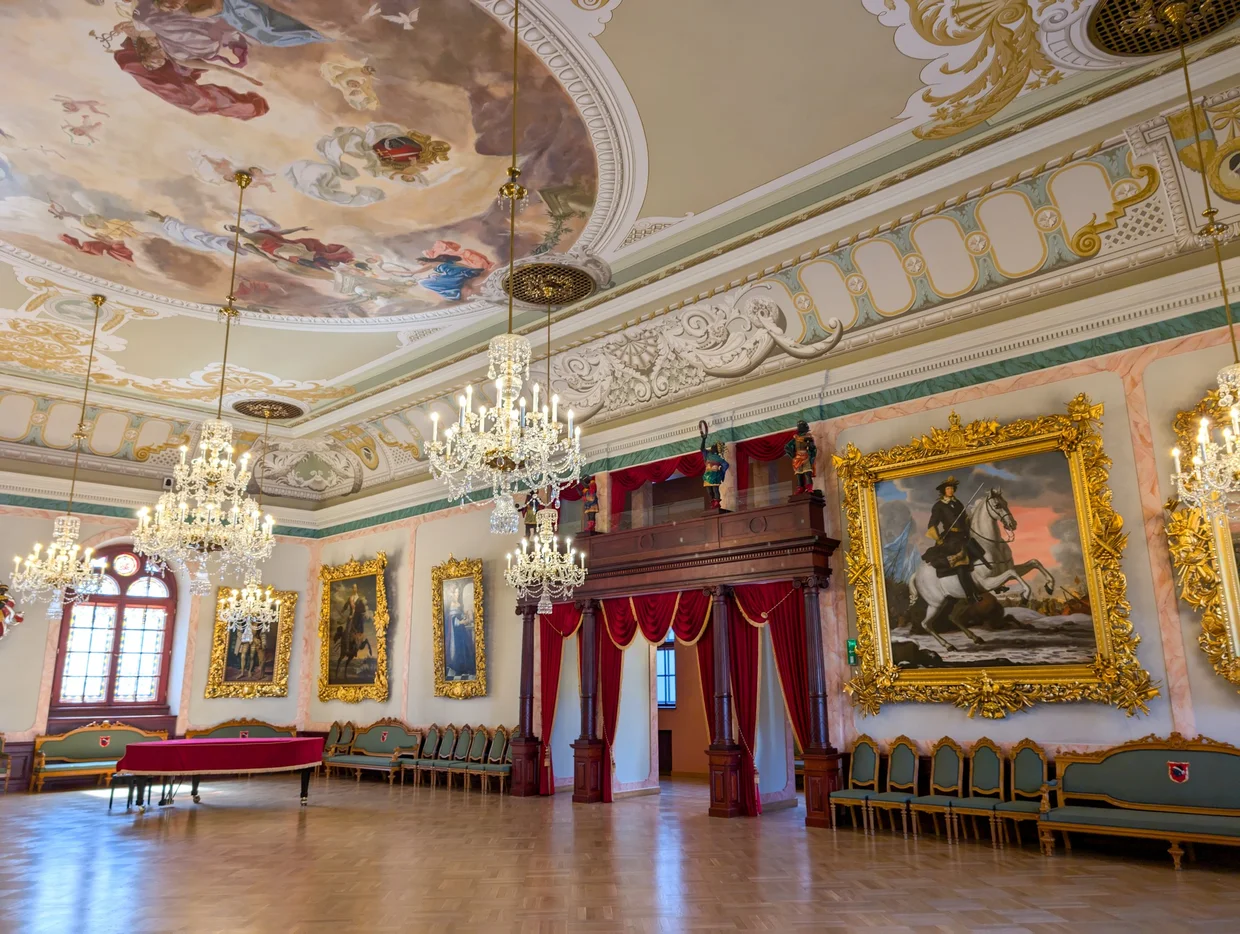
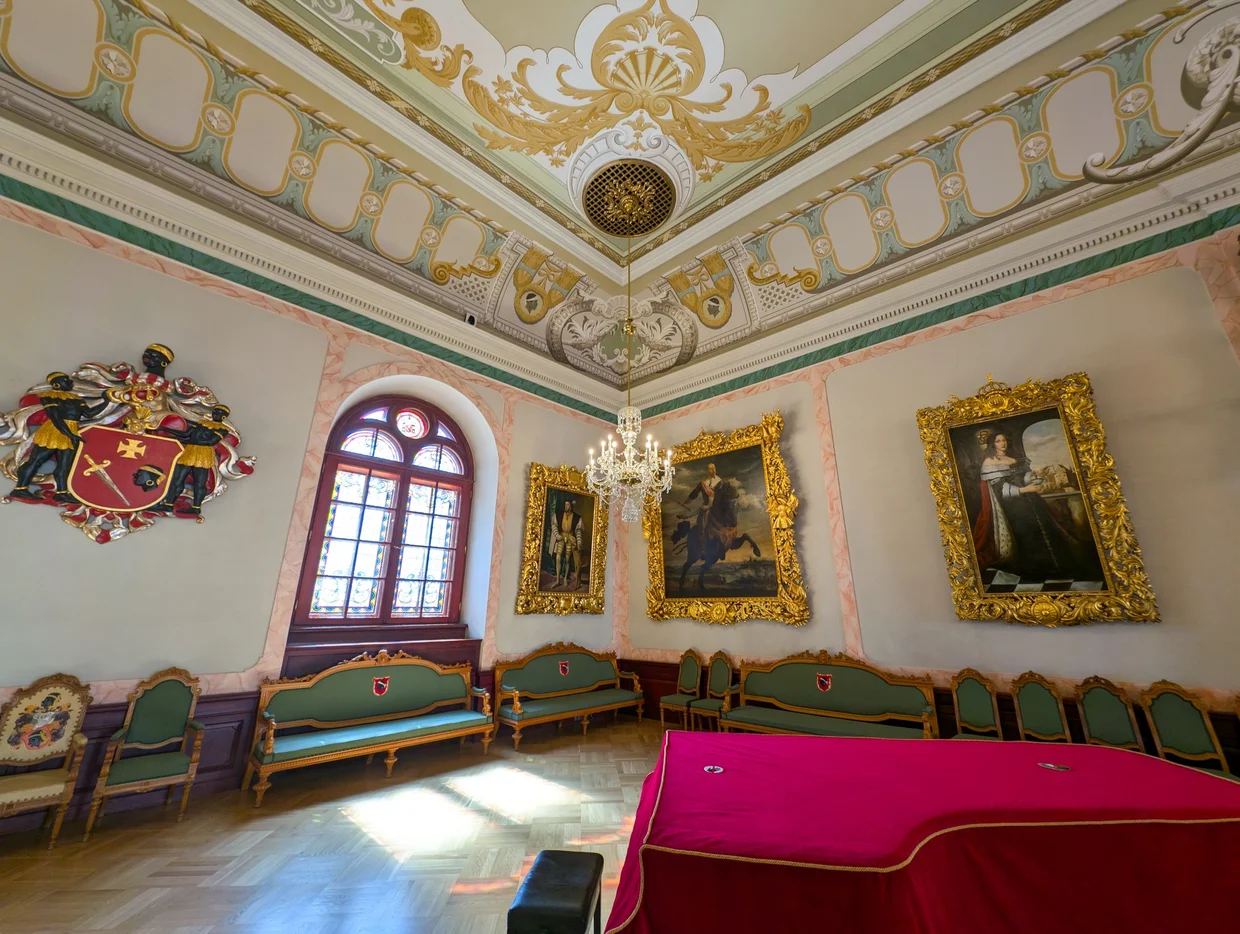
The inside of the Blackheads is just as theatrical as the outside. Baroque chandeliers, ceiling frescoes, gold leaf, a mix of "merchant guild boardroom" and "wedding venue." Tickets are cheap. Worth it.

Right behind Town Hall Square sits the Museum of the Occupation of Latvia, wrapped in a striking rust-colored Corten steel facade. The museum covers 1940 to 1991, the three occupations (Soviet, Nazi, Soviet again), and it's essential. Not easy. Essential.
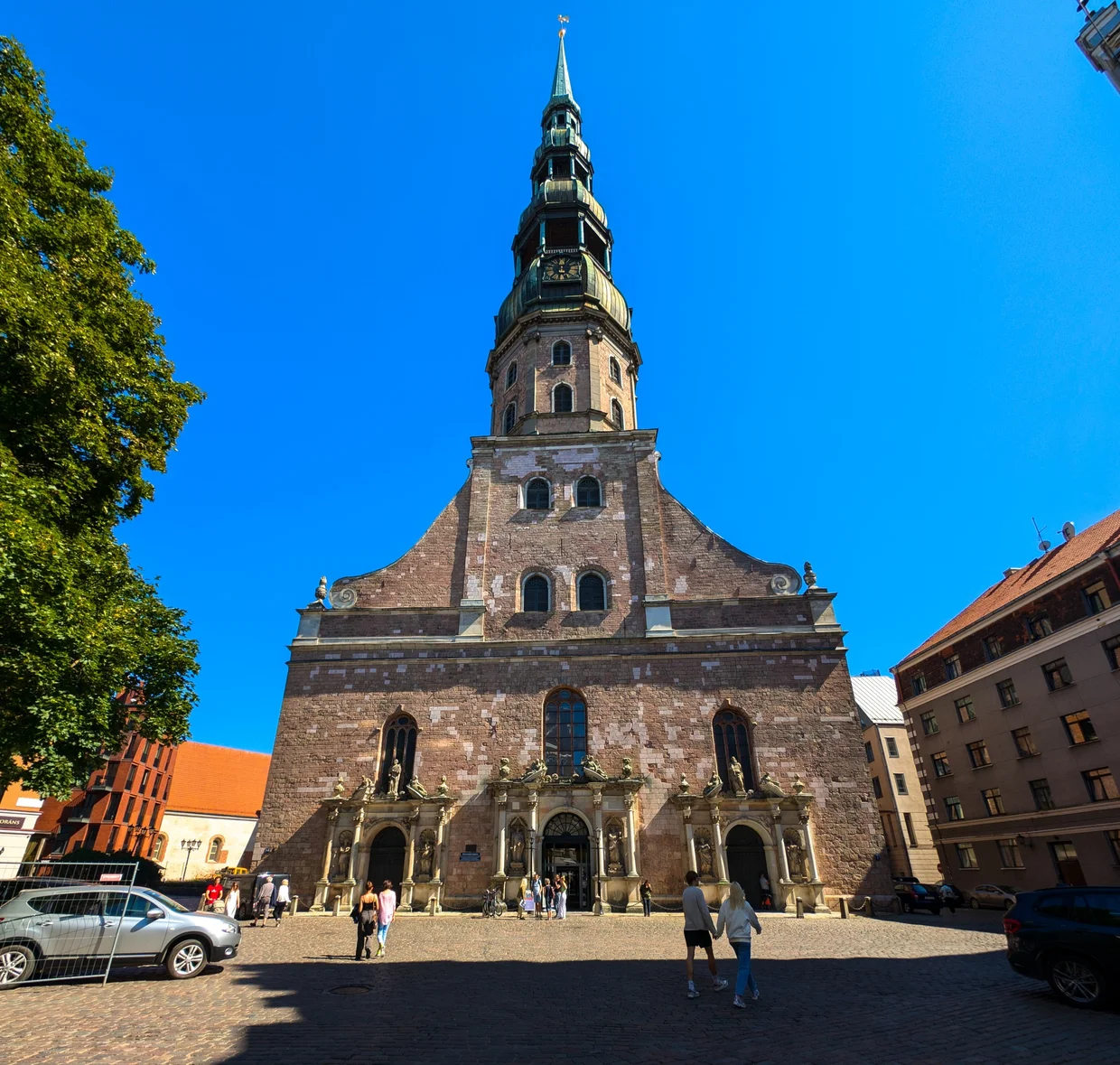
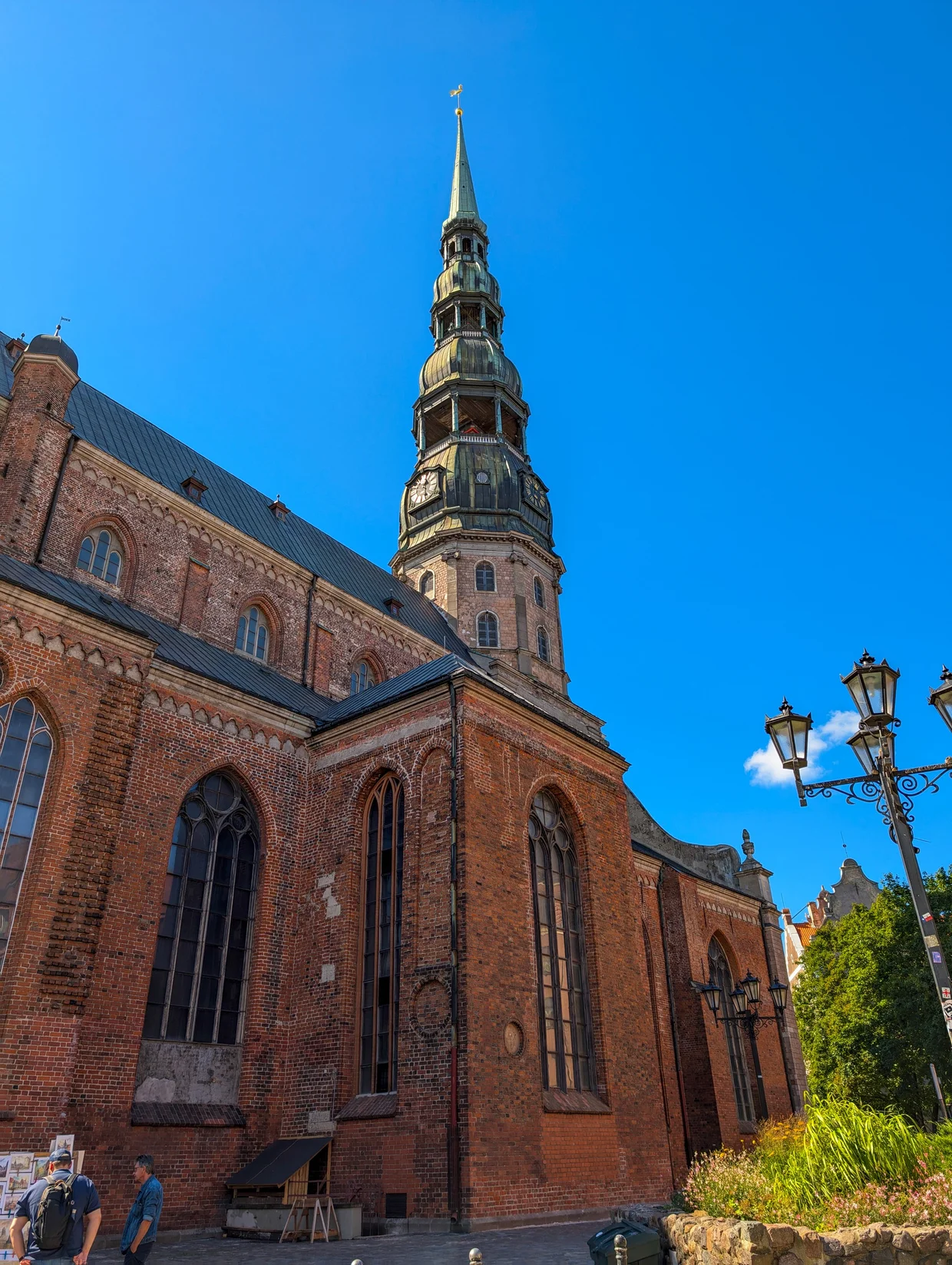
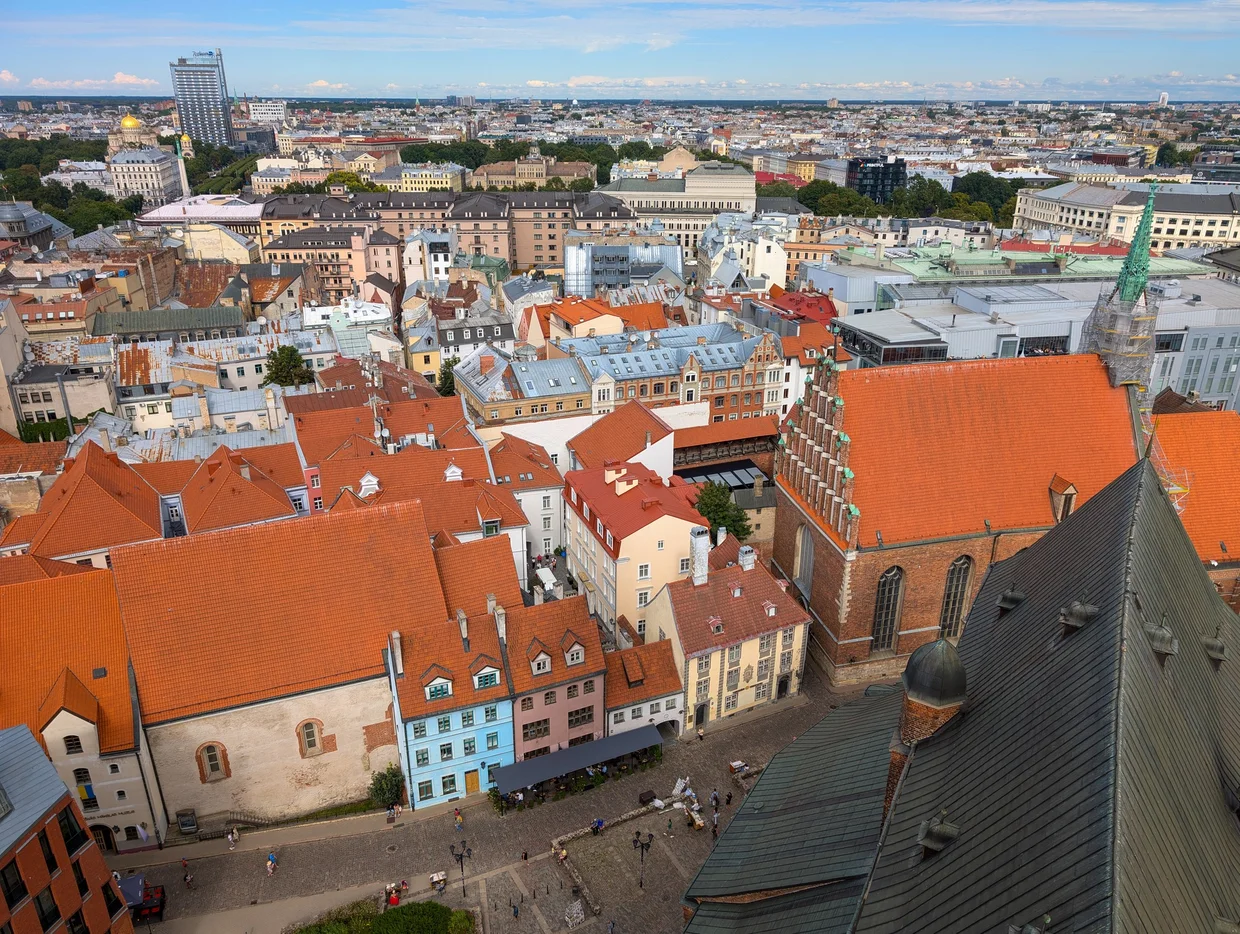
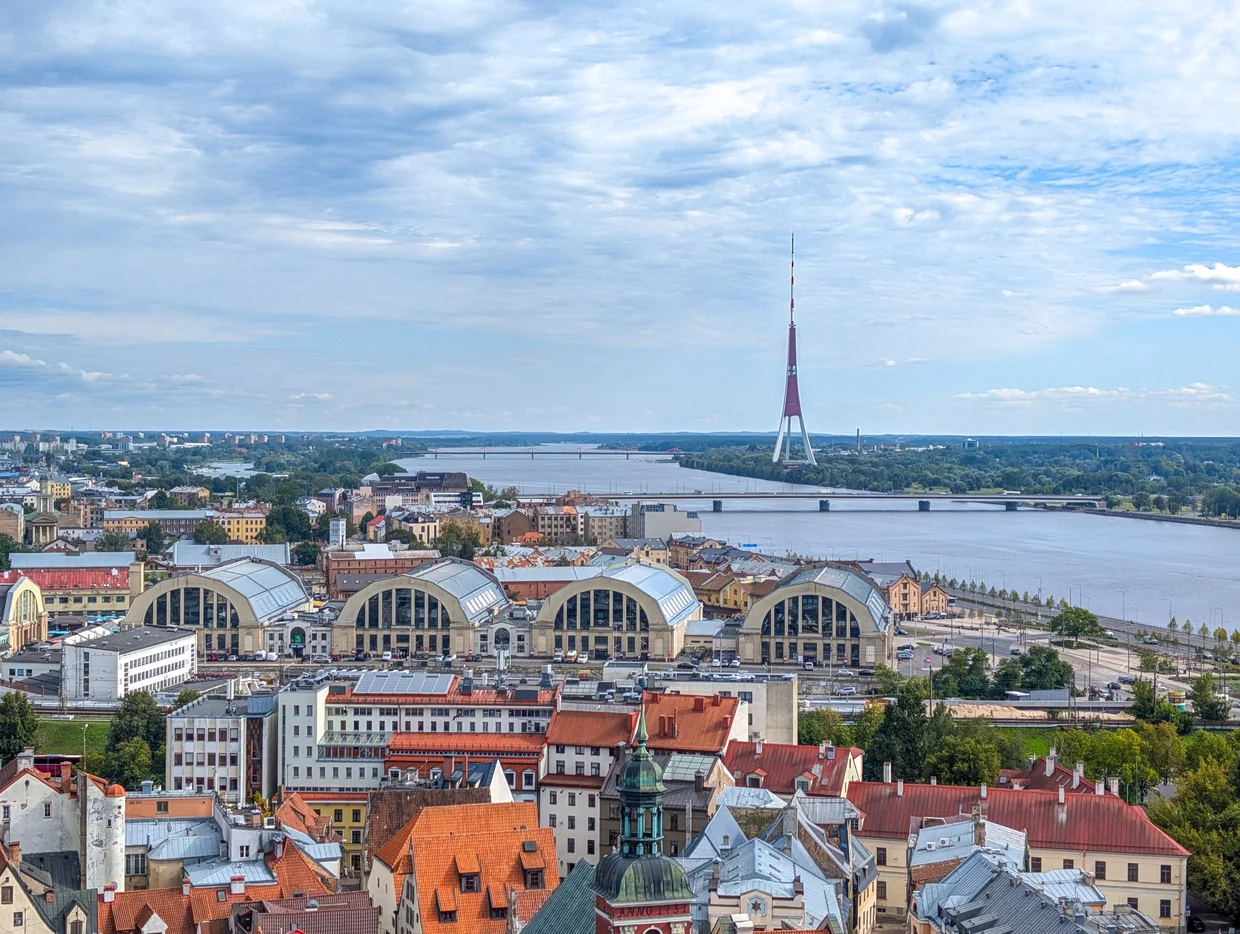
St. Peter's Church is the tall green-and-white spire you'll see from almost anywhere in the Old Town. Take the elevator to the top. The view is the one I opened the page with. The church itself goes back to 1209, and the spire has a faintly comic history of catching fire, collapsing, and being rebuilt taller each time. The current one is steel, finished in 1973 after the previous wooden version burned down during German artillery shelling in 1941. It tops out at 123 meters. The viewing platform sits at 72, with a proper railing, plenty of wind, and a 360-degree sweep over the Old Town, the Daugava, the Central Market hangars, and the Academy of Sciences off in the distance, a Stalinist wedding cake locals nicknamed "Stalin's Birthday Cake." Tickets are cheap, the elevator is fast, and outside of July there's basically no queue.
From up there you can see the whole Old Town at your feet and, off across the Daugava, five huge zeppelin hangars. Those are the Riga Central Market, one of the largest indoor markets in Europe, built between the wars out of leftover German airship hangars because someone in 1924 looked at them and thought: hey, those are already big and dry, let's put fish in them.
Inside, the market is alive. Farmers, fishmongers, bread stalls, pickles in every dialect of brine. It's also one of the cheapest places in Riga to eat lunch.


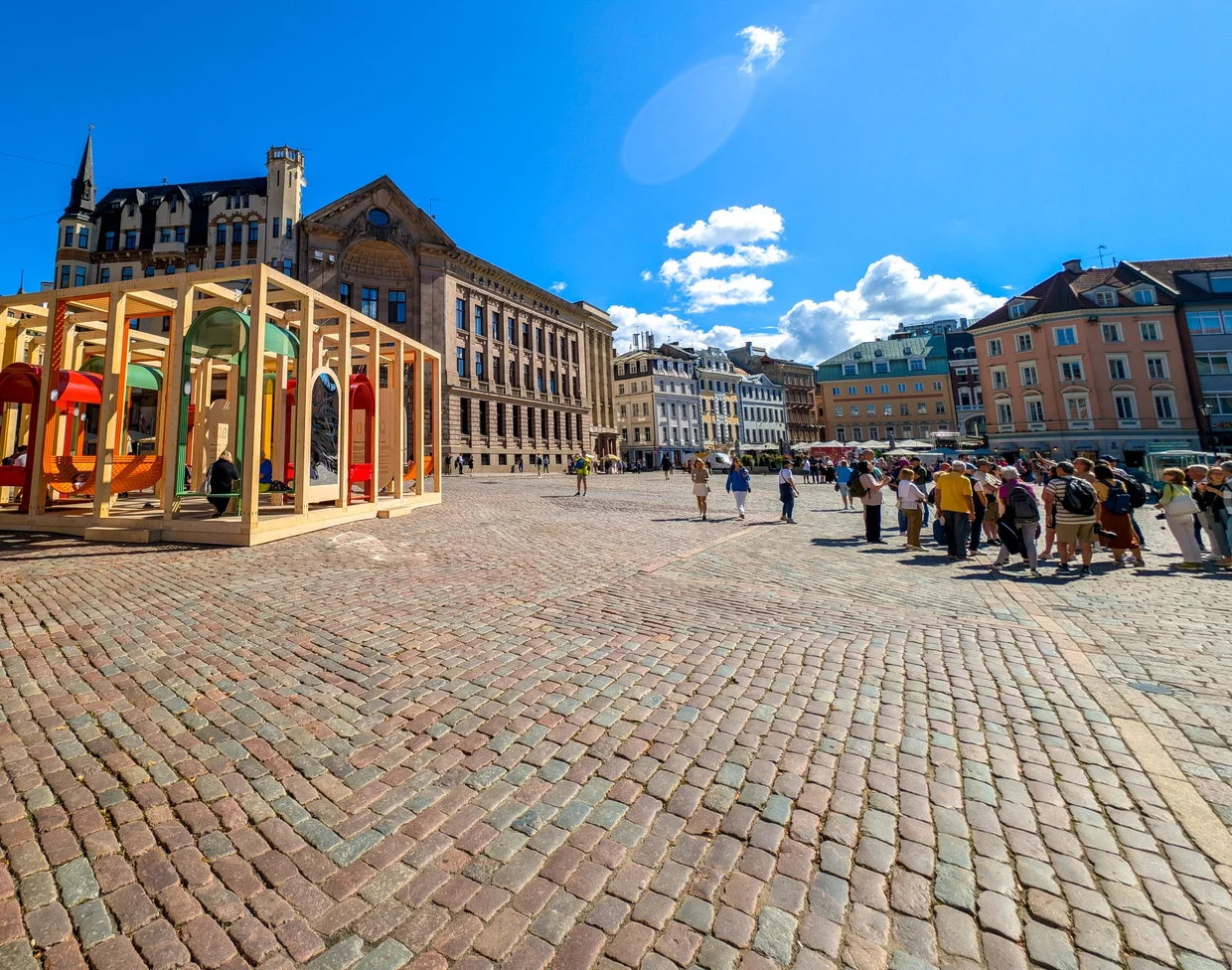
Dome Square is the other big Old Town square, dominated by the enormous Riga Cathedral. In summer the square fills up with cafe tables, open-air concerts, and tourists trying to find shade. Walk a few blocks and you'll hit the Stock Exchange building, a Venetian Renaissance-style palace painted in the warmest terracotta I've ever seen.
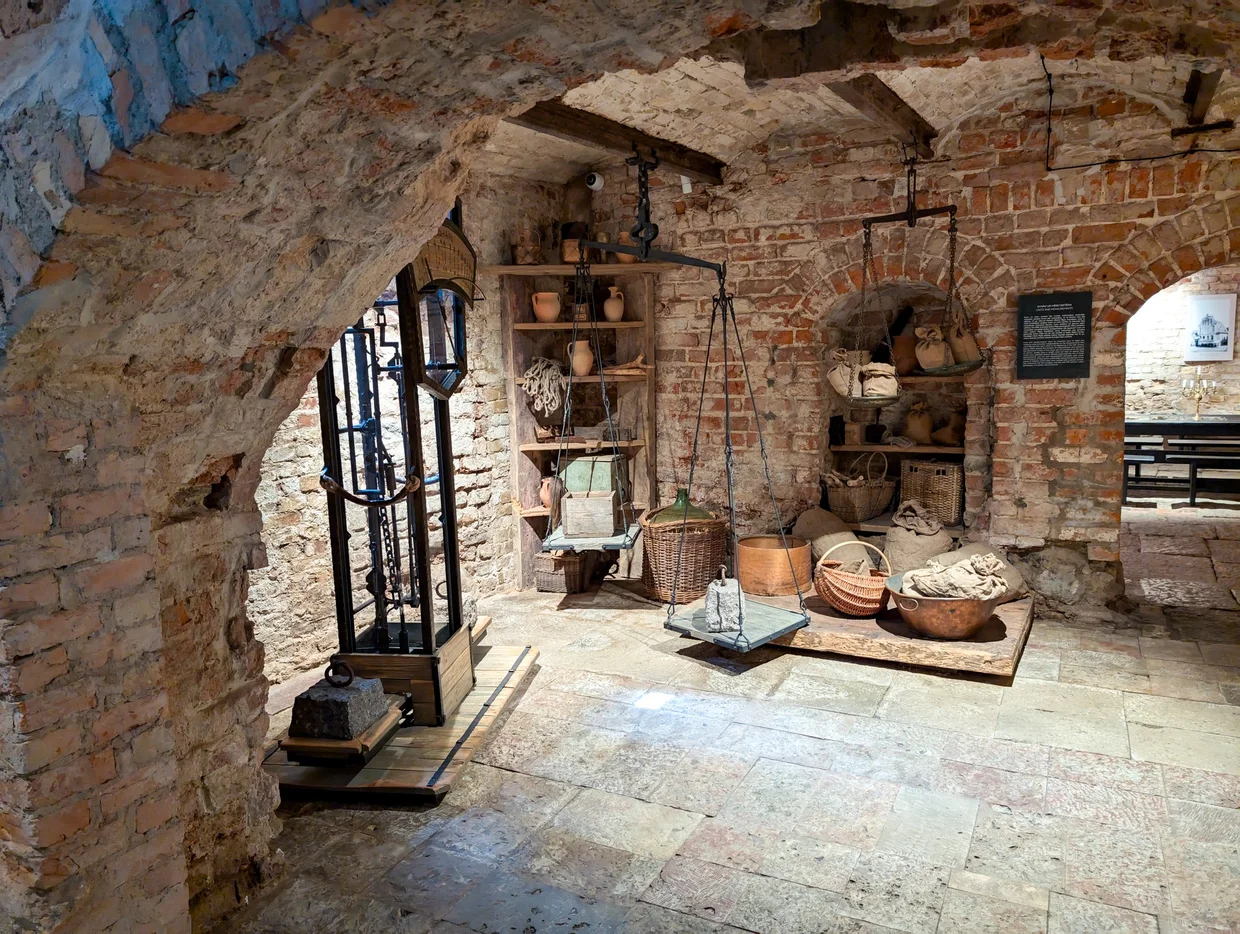
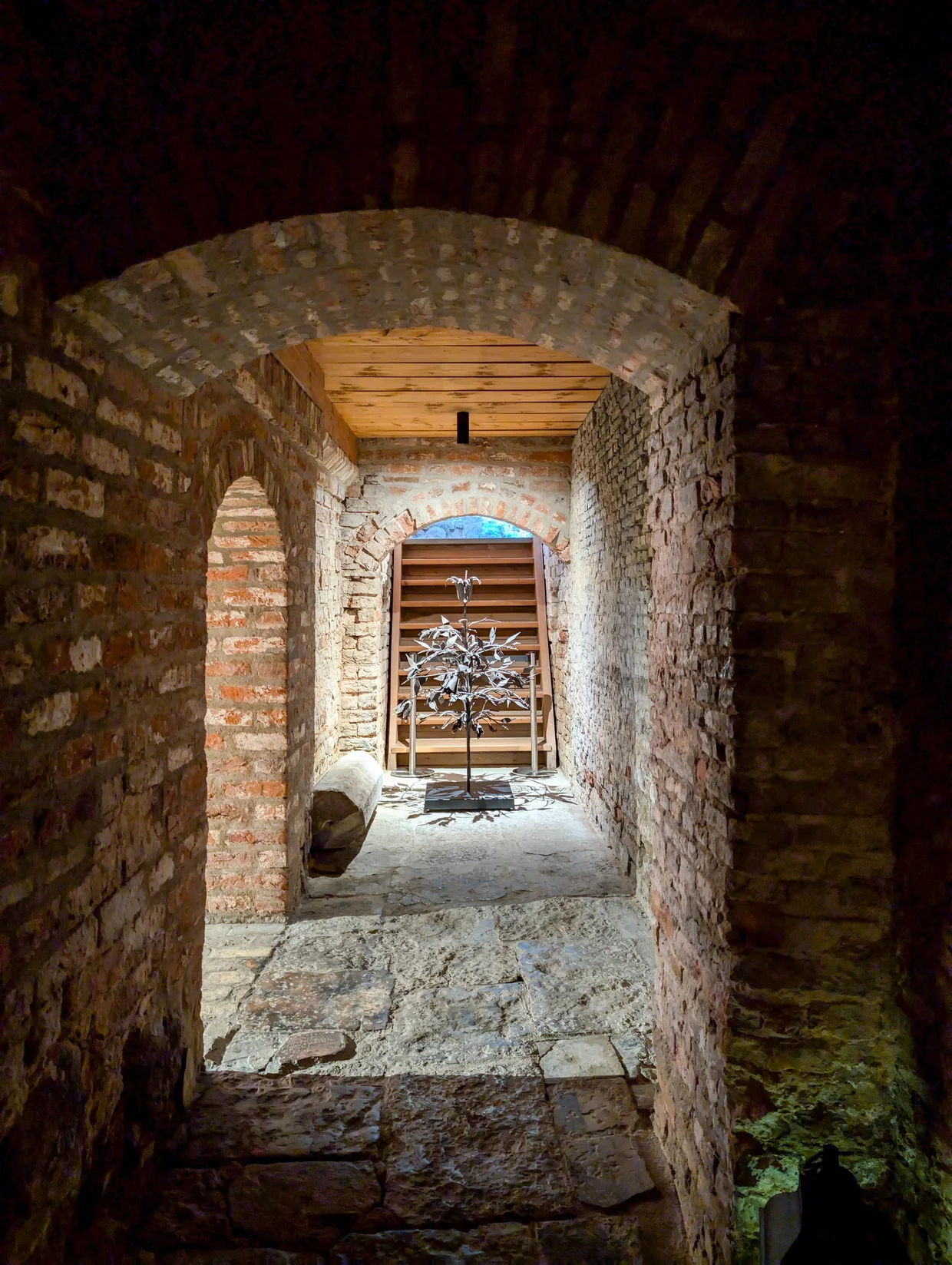
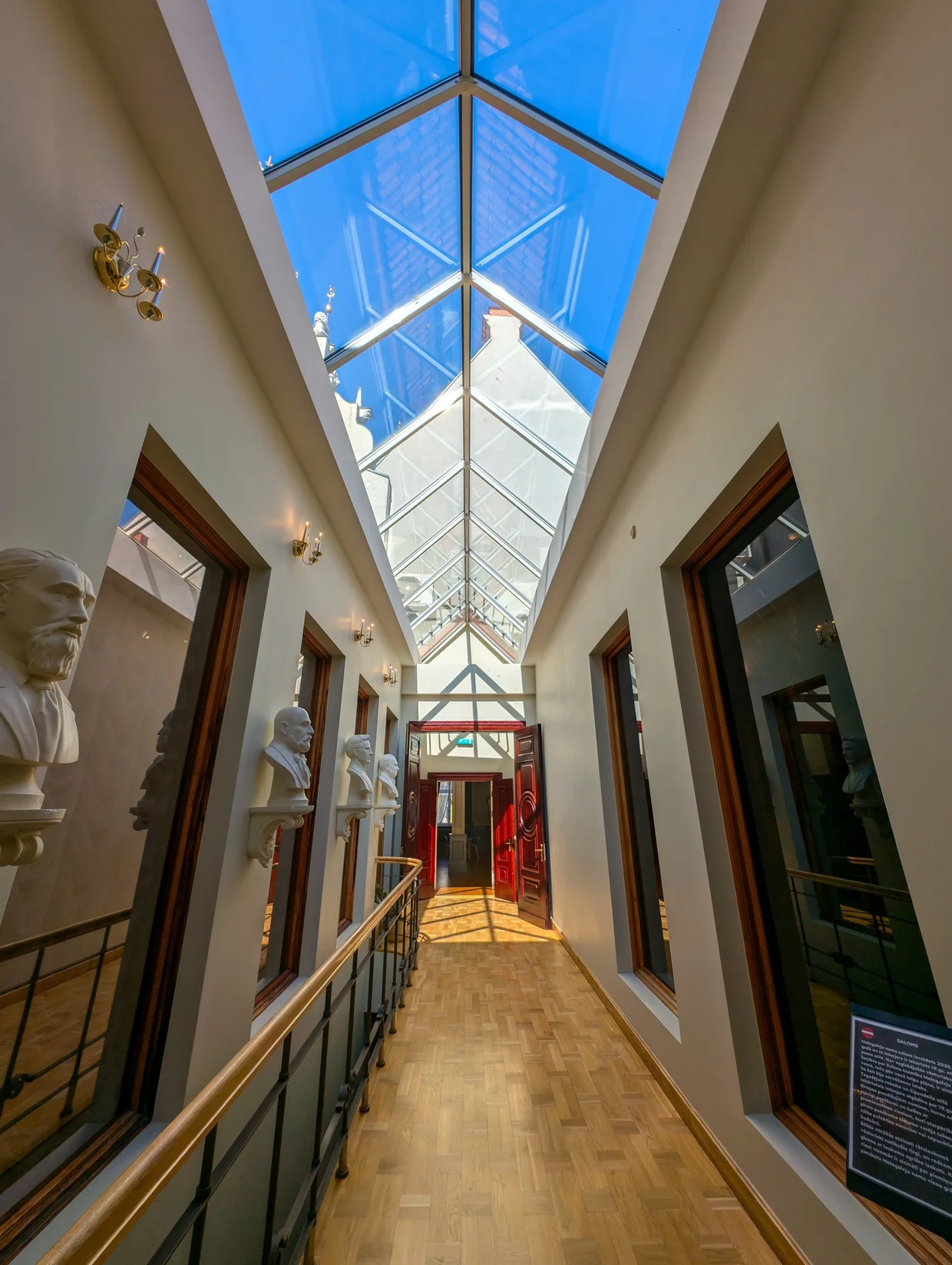
Riga has a lot of small museums tucked into its old merchant houses: Mentzendorff House, the Photography Museum, the Pharmacy Museum. None of them take more than an hour, most of them are cheap, and collectively they give you a much better feel for the city than trying to see one big thing.
Rundāle Palace
Just over an hour south of Riga sits the wildest baroque pile in the Baltics: Rundāle Palace. This was built between 1736 and 1768 by Bartolomeo Rastrelli, the same architect who did the Winter Palace in St. Petersburg, for a minor Baltic duke who wanted to impress people. Mission accomplished, Mr. Rastrelli, even 300 years later.
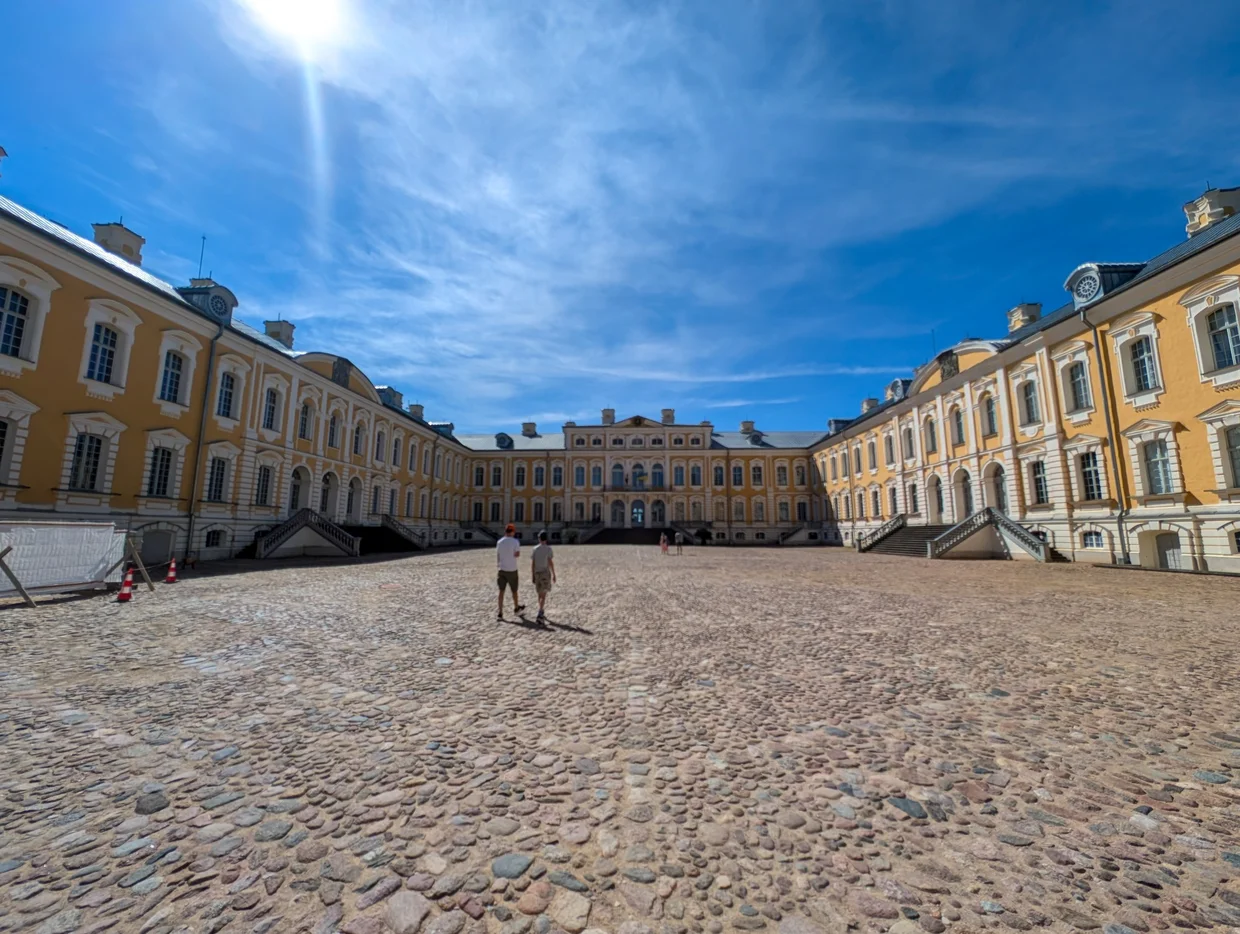
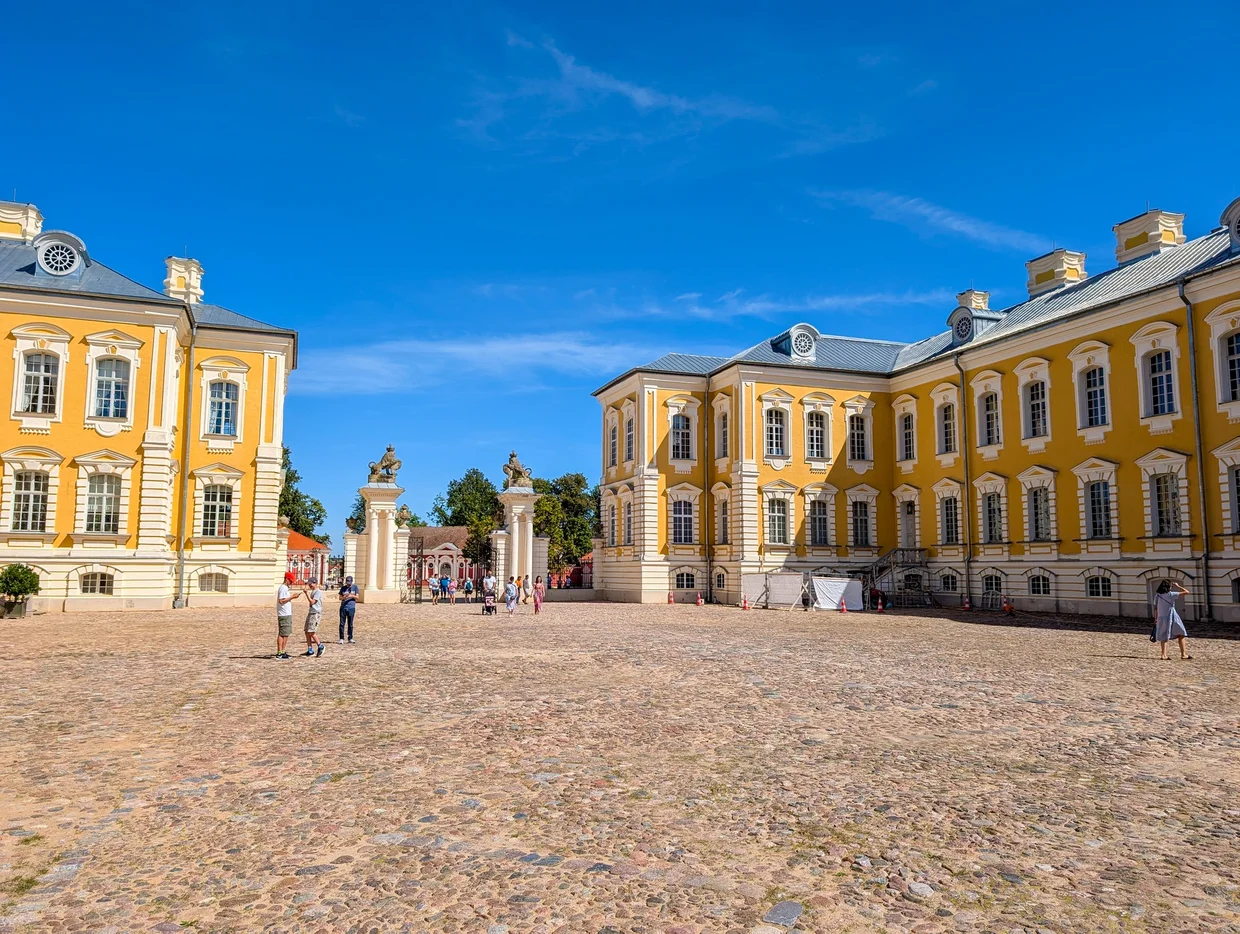
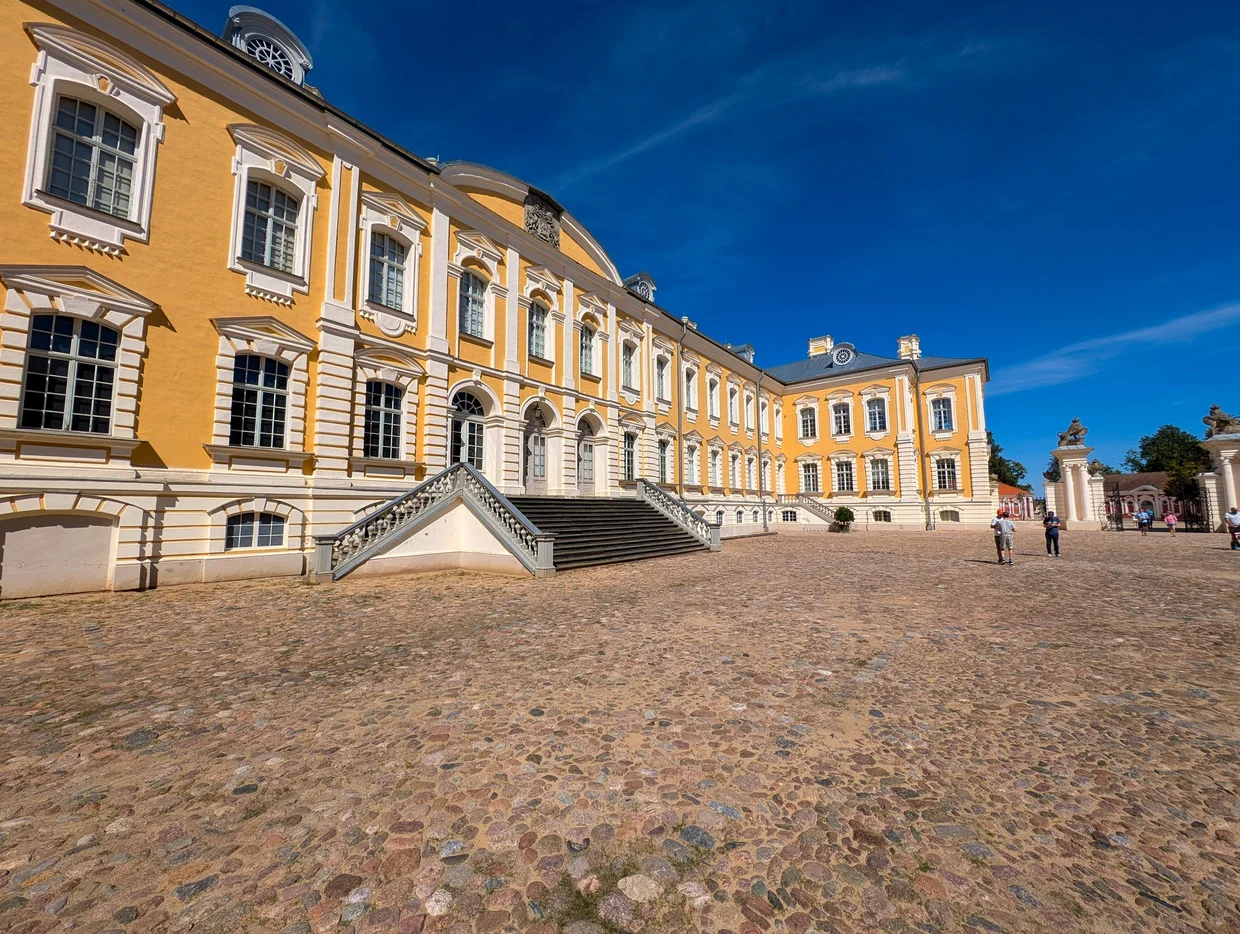
The inside is a sugar rush of gold, stucco, chandeliers and painted ceilings that try to convince you the roof has been replaced with a cloud full of cherubs. It's so extra it loops back around to being delightful. Bring sunglasses for the gold.

Don't skip the gardens. They were restored to the original baroque plan in the 2000s, and they are, straight up, one of the prettiest formal gardens in Northern Europe. Roses, geometric hedges, a maze, a long pergola tunnel, and a fountain that seems to be calibrated for Instagram.

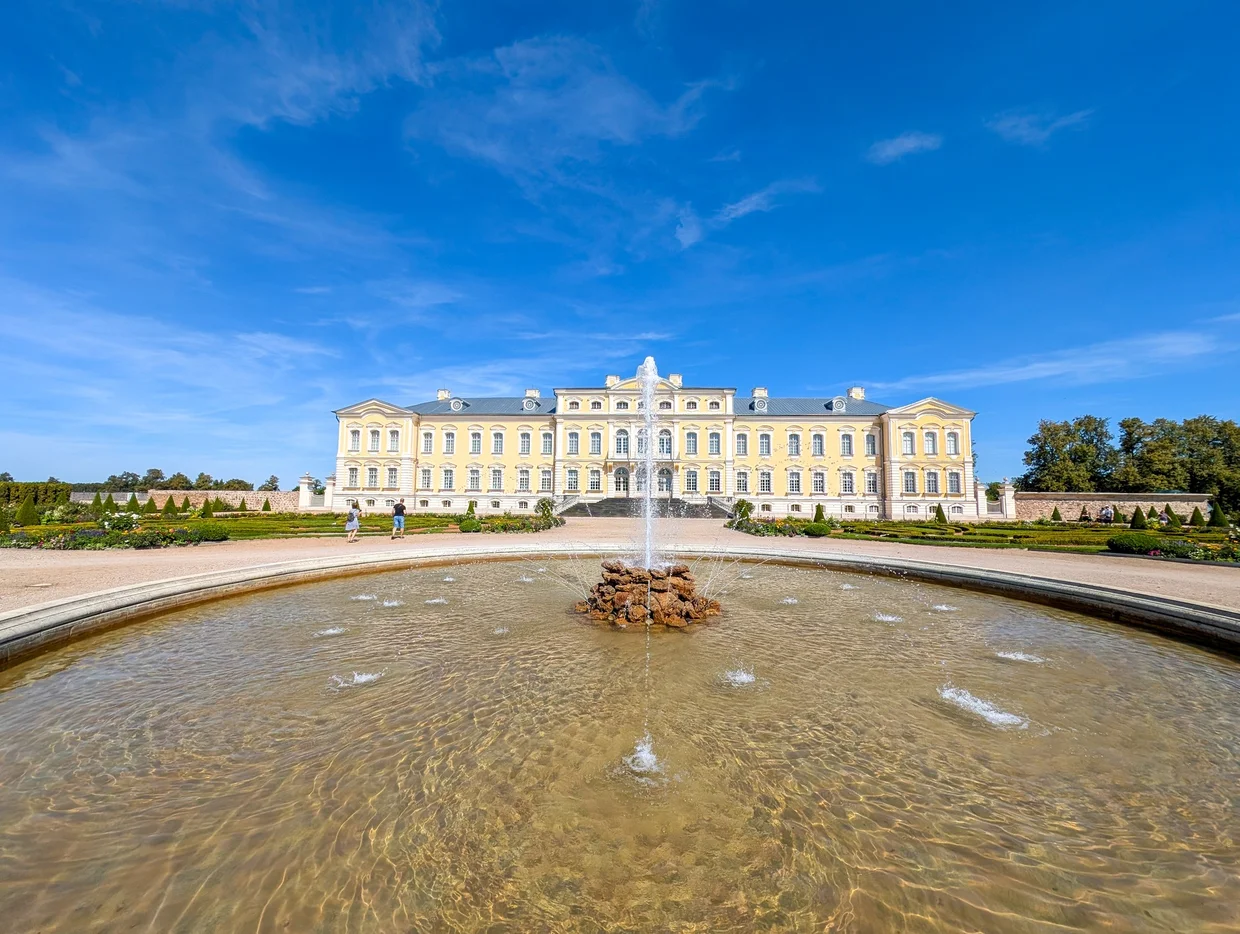
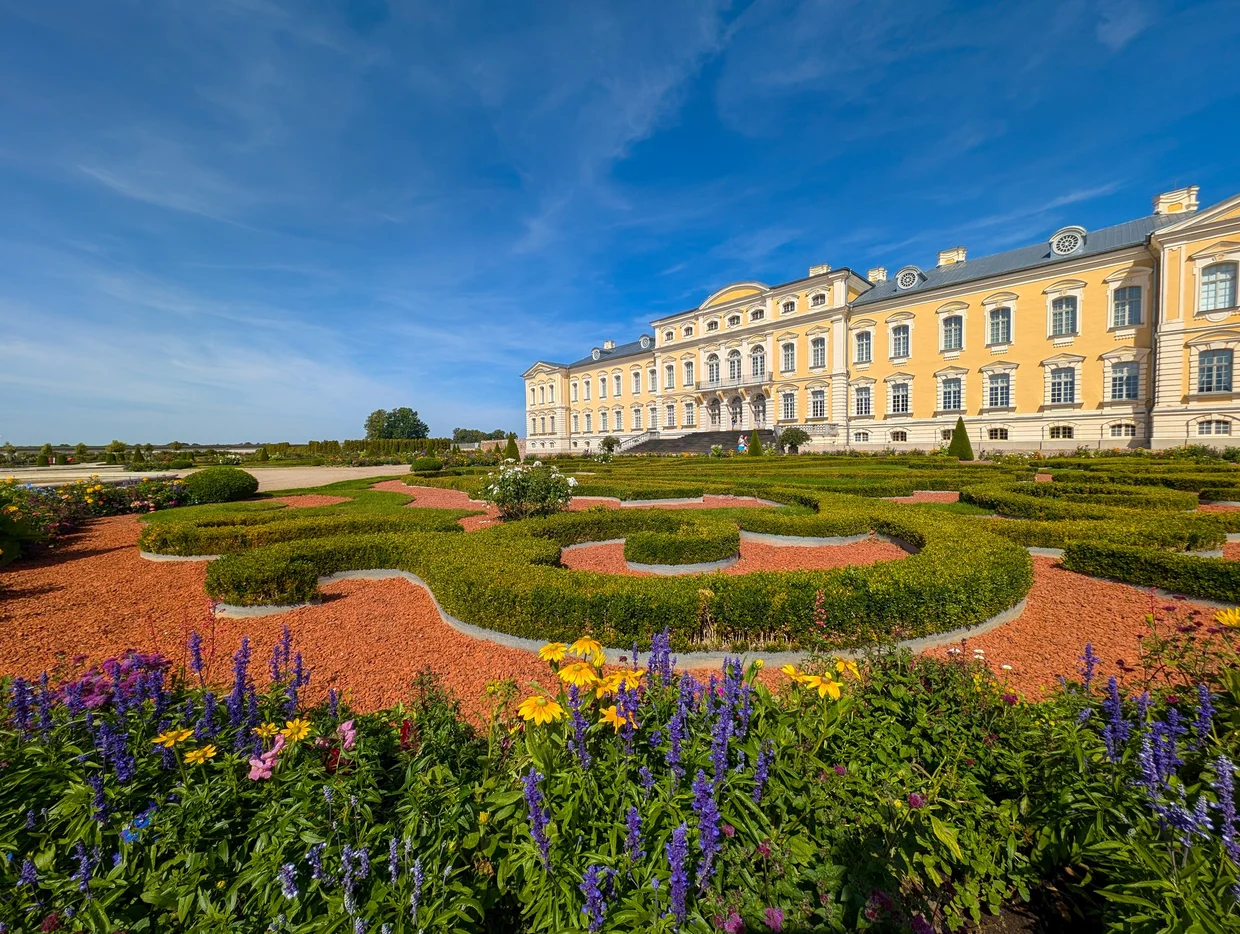
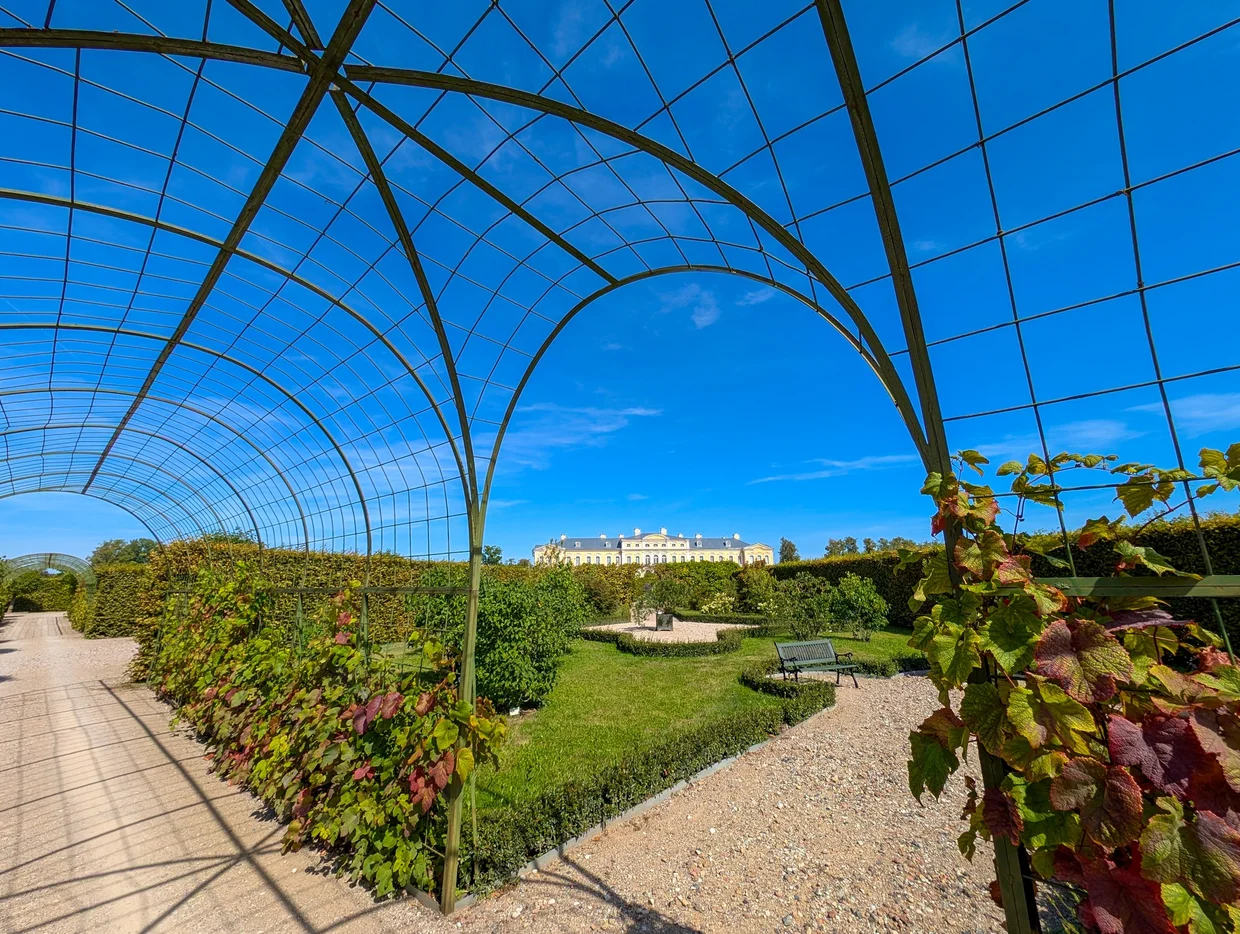
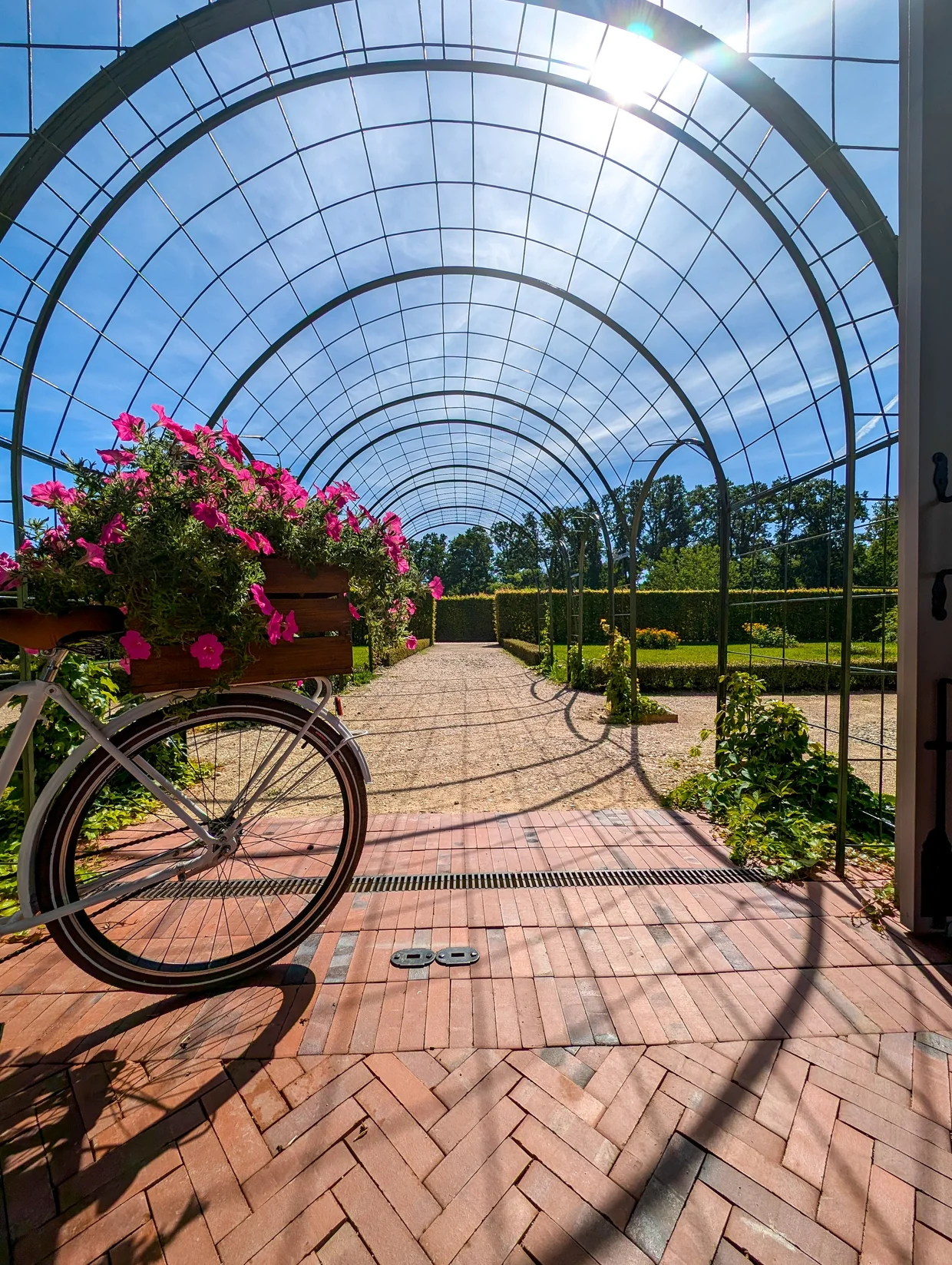
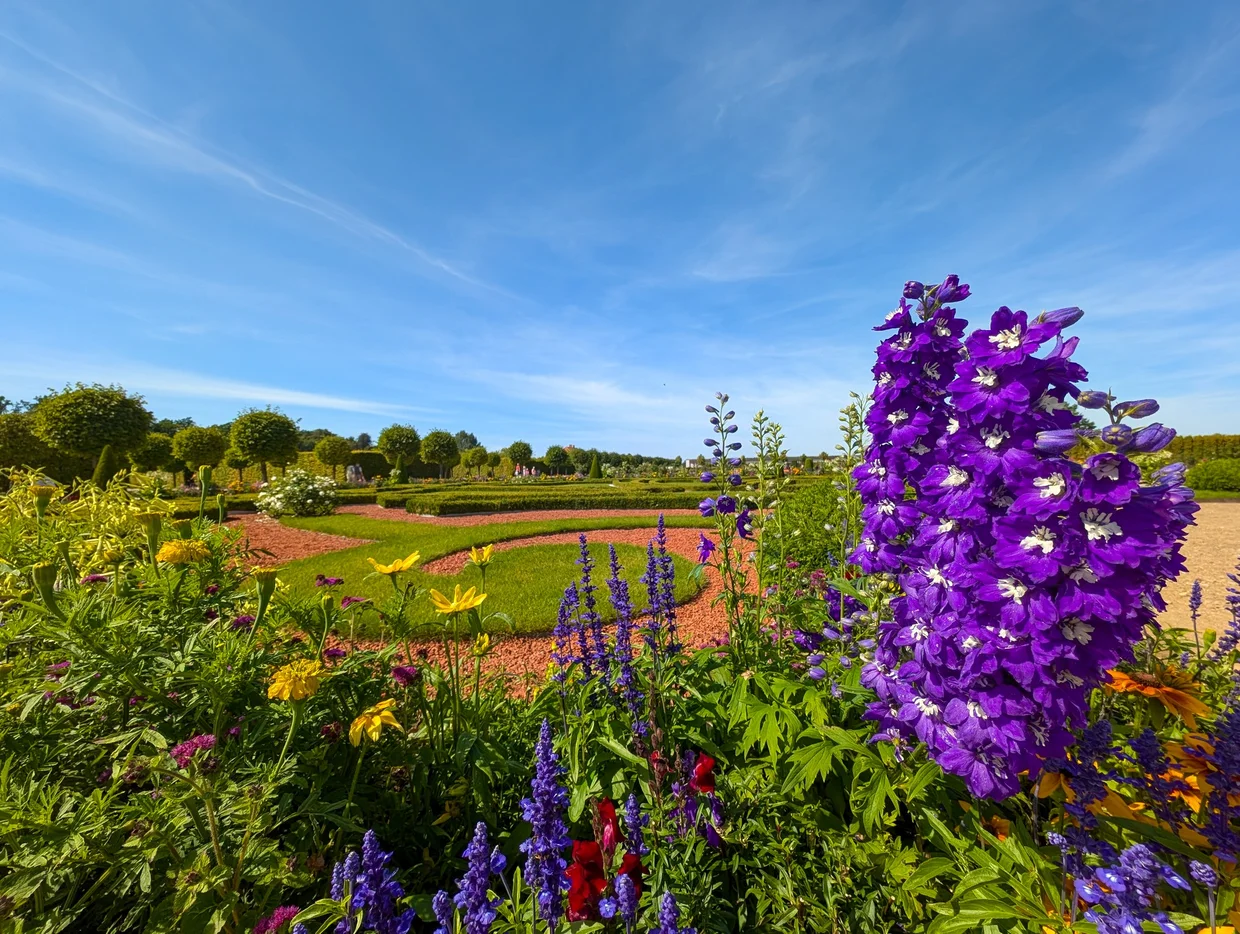
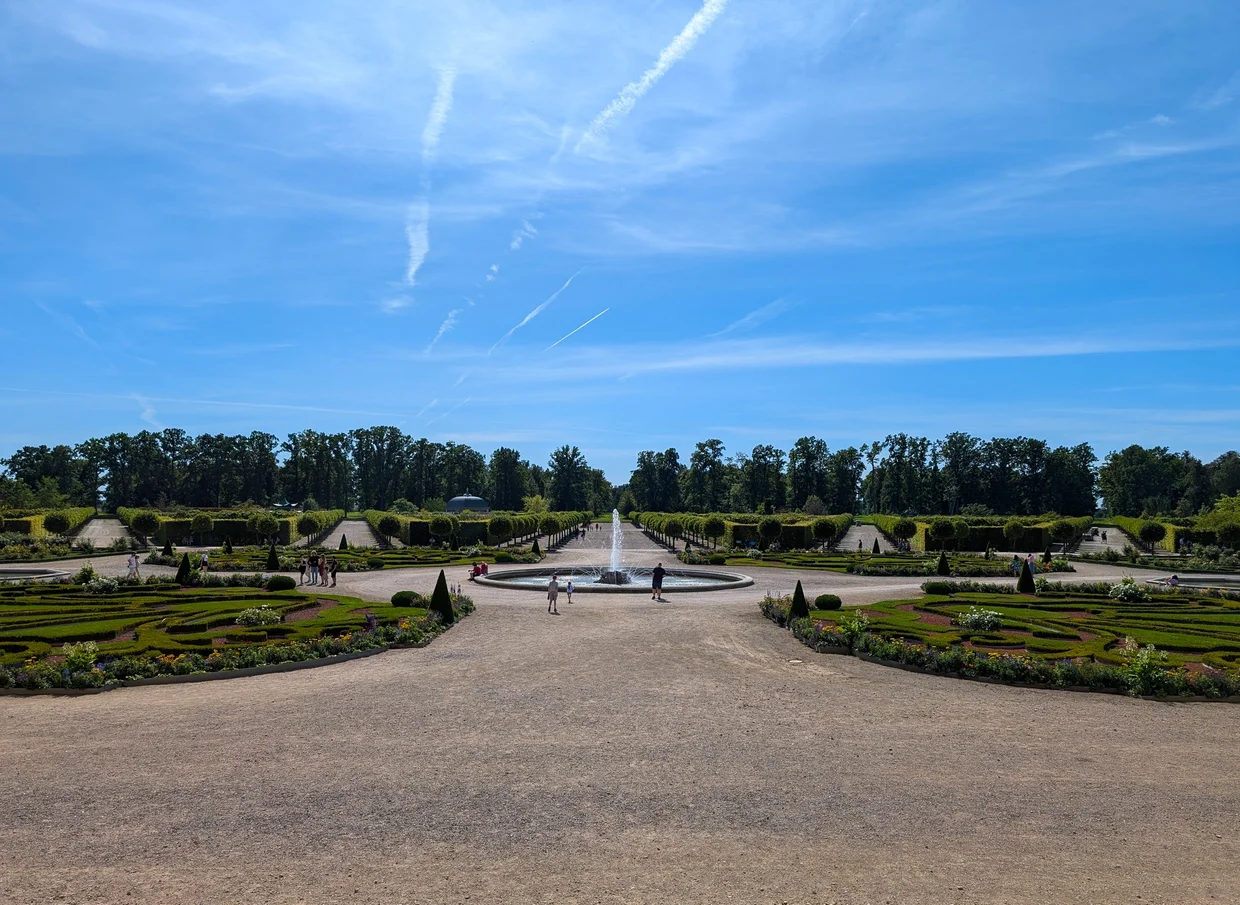
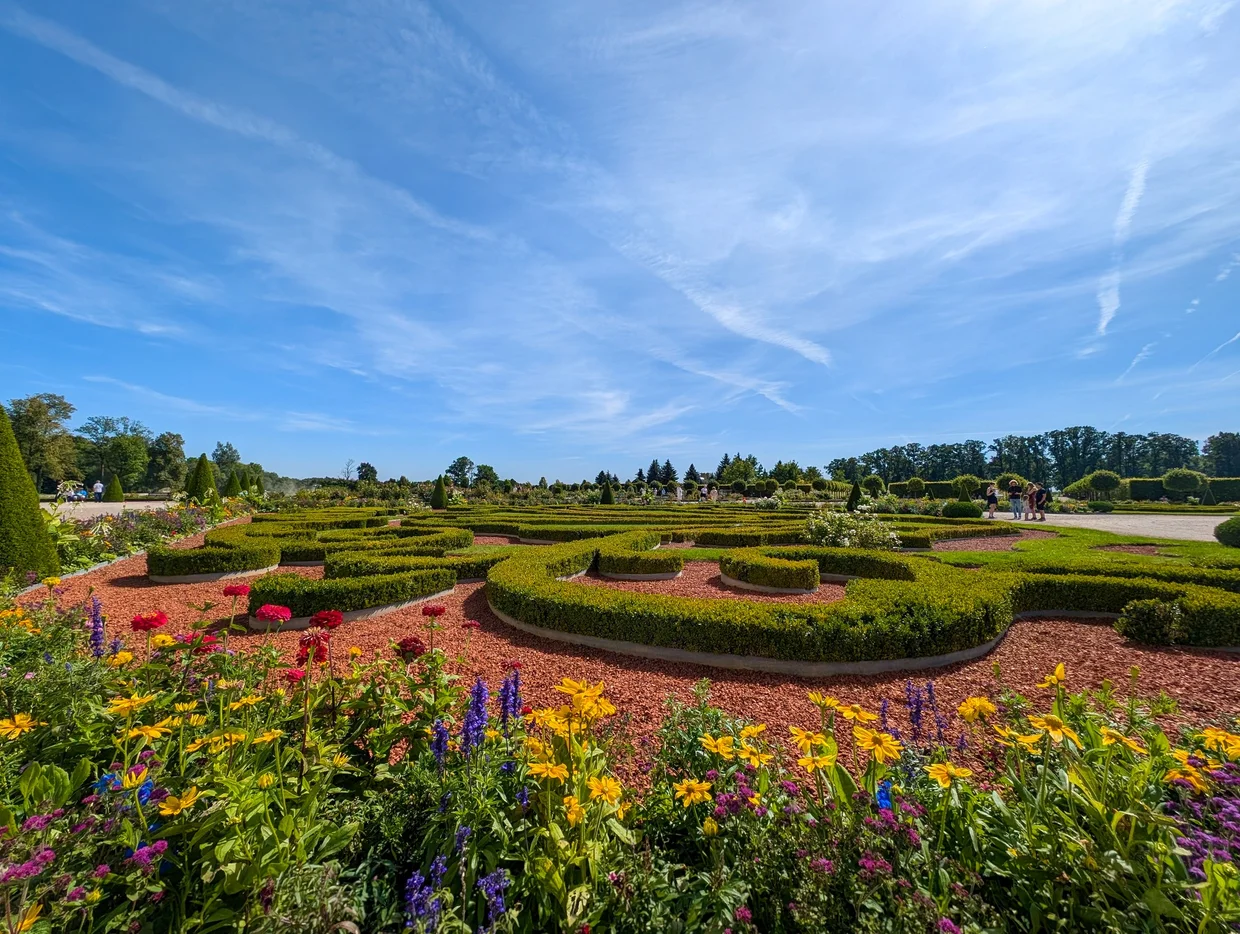
Rundāle is a half-day trip from Riga. If you only have time for one day trip out of the city, this is the one.
Sigulda and the Gauja Valley
About an hour northeast of Riga, the Gauja River carves a soft green valley through pine forest. This is Gauja National Park, Latvia's first national park, and it's where Latvians go to pretend they live in Switzerland for a weekend.

Turaida Castle is the big draw. It's a red brick medieval castle rebuilt on the foundations of a 13th-century bishop's fortress, sitting on a bluff above the Gauja valley. Climb the tower.

That view is worth the ticket on its own. Green all the way to the horizon, the river winding through it, and not a single industrial building in sight. This is what most of the Baltics looks like, once you get out of the cities.
Bogs and Coast

An hour west of Riga, Ķemeri National Park is the bog I'd been waiting to walk through. I already had a thing for bogs long before Latvia, and when I started planning the trip, Ķemeri was at the very top of the list. It did not disappoint.
If you've never walked across one, let me tell you: it's one of the most peaceful, quiet, slightly alien experiences you can have in Europe. Brown pools reflecting a blue sky, tiny twisted pines, the smell of peat and sunshine, no sound except your own boots on the boardwalk.
Look closer and the "empty" bog turns out to be anything but. Mossberries crouching in the sphagnum, carnivorous sundews quietly digesting whatever they've managed to catch, insects I genuinely couldn't identify and had never even seen in pictures. And at the same time, some irrational part of your brain is waiting for a Moorleiche to rise out of the water, or for whatever lives underneath the peat to decide it's hungry. It's that kind of place. Beautiful and a little bit wrong.
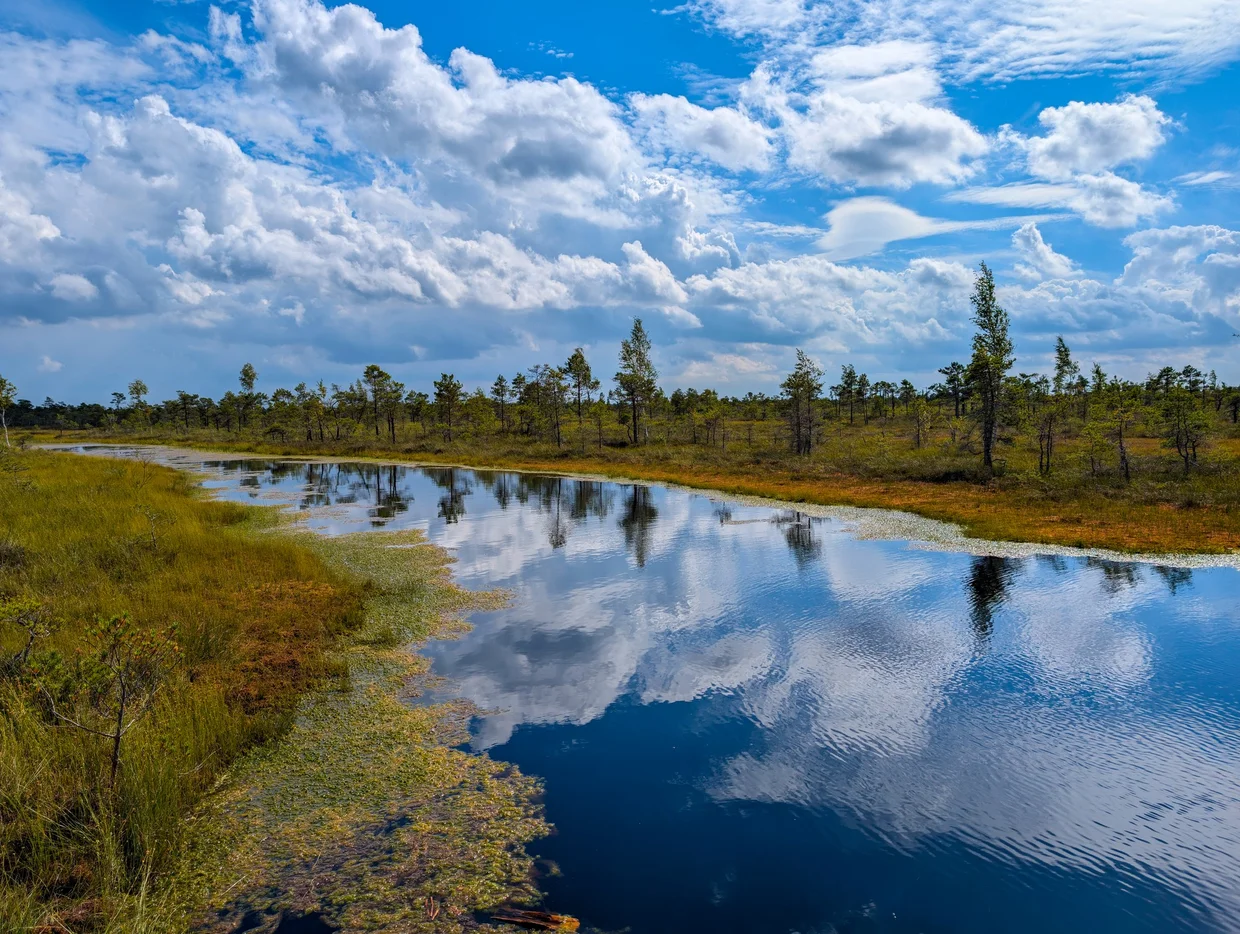
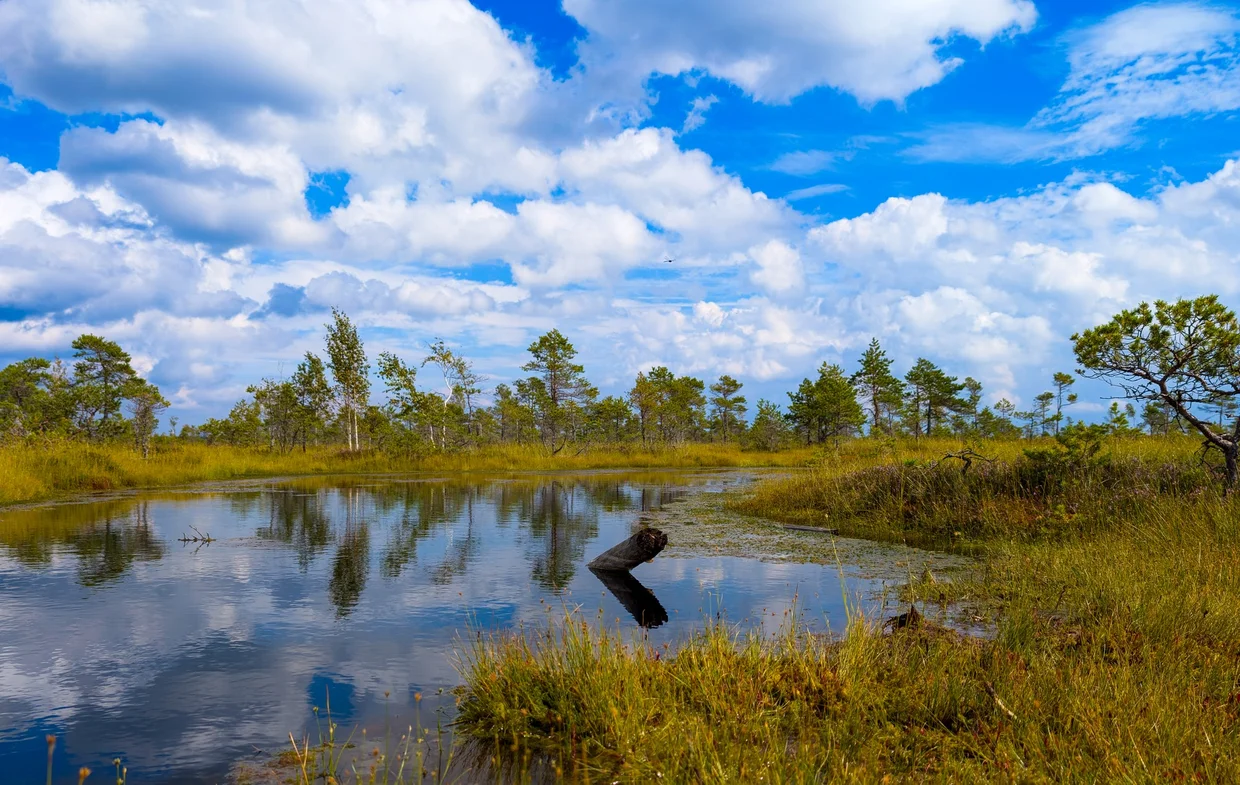


There's a reason Baltic people have an almost religious relationship with the forest. Walk into one and look up. That's the reason.
One warning, though, and please learn from my mistakes. In summer, bring bug repellent. And bring a lot of it. The bog itself is fine, the wind keeps things moving and nothing really bugs you out there (I'll see myself out). But between the parking lot and the start of the boardwalk there's a short stretch of forest that looks perfectly innocent and is, in fact, a mosquito ambush. Dozens, hundreds, thousands of them, all vampirically committed to your blood. I've never been stung so many times in my life. Spray yourself before you leave the car.
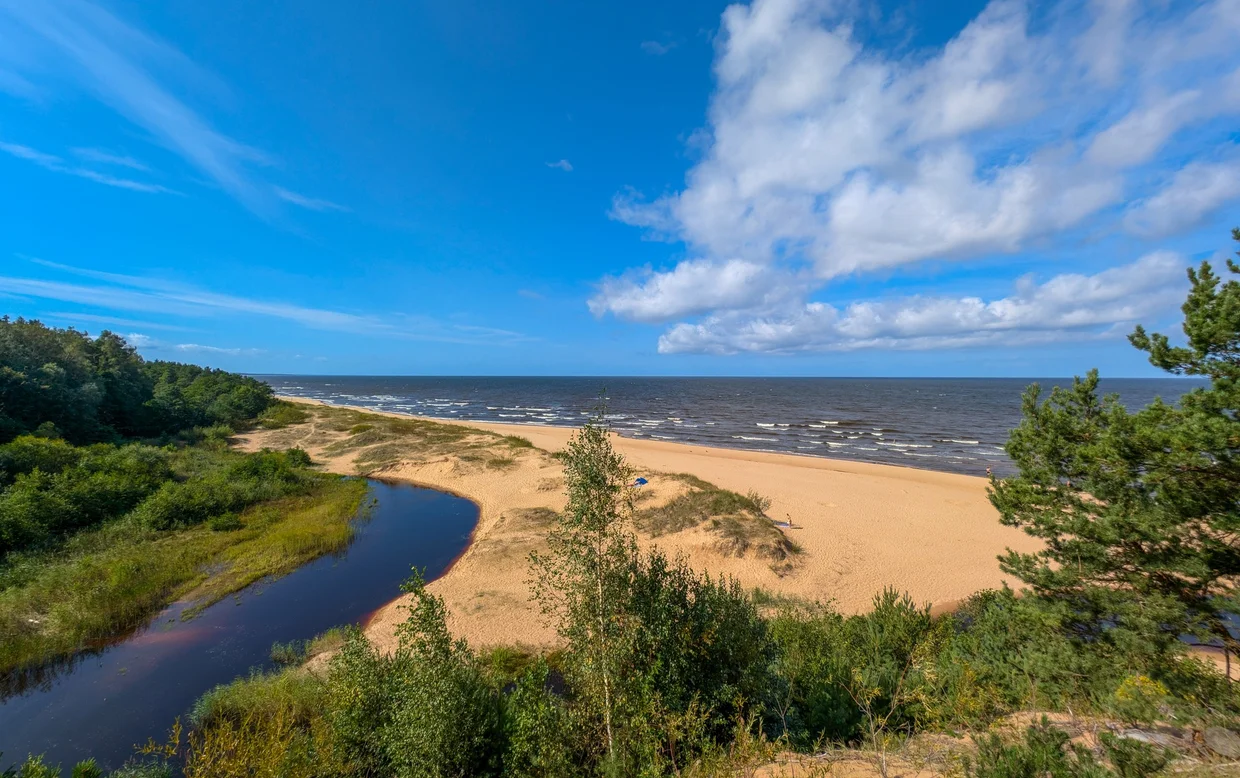
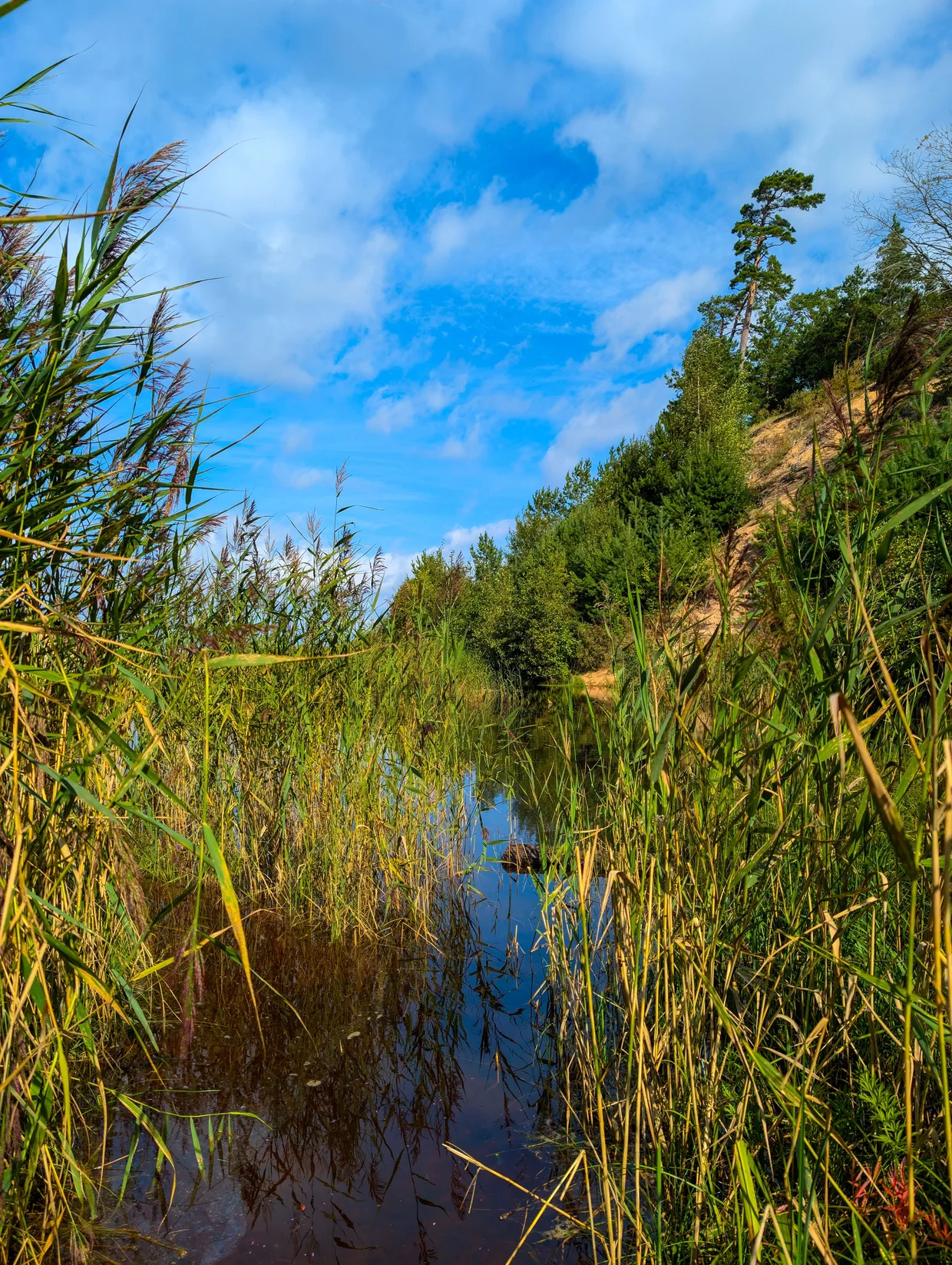
The Latvian coast is almost entirely public, almost entirely sandy, and almost entirely empty outside of July and August. Wide beaches. Shallow warm water (by Baltic standards, which means you might last ten minutes). Pine forests coming right up to the dunes. It's a coast that keeps catching me off guard.
Estonia
Estonia is the northernmost, smallest in population, and the one that is, culturally and linguistically, half-Finnish. The language is Finno-Ugric. You'll understand zero of it, and neither will your Lithuanian or Latvian friends. Estonia is also the most digital country in the Baltics (and arguably the world), the place where you can declare taxes on your phone, vote online, start a company in 18 minutes, and wave at a drone delivering your parcel.
Tallinn
Full disclosure before I get going: I have to keep this section shorter than it deserves. My time in Tallinn was overshadowed by an injury that kept me off my feet for most of it, so I didn't get to explore the city the way I wanted. What you're getting here is the outline, not the full picture. I'll come back for a proper round, and when I do, this section gets rewritten.
Tallinn's Old Town is the poster child of the Baltics. Medieval city walls still mostly intact. Cobblestones. Towers with names like "Kiek in de Kök" (Look in the Kitchen, a nosy defensive tower from 1475) and "Fat Margaret." Red roofs. Onion domes. You get the picture. In July it is busy. Outside July it is perfect.

Town Hall Square is the heart of it. The Town Hall itself, a Gothic stone block with a tall narrow tower, has been standing here since 1404. In summer, cafes spill out onto the square.
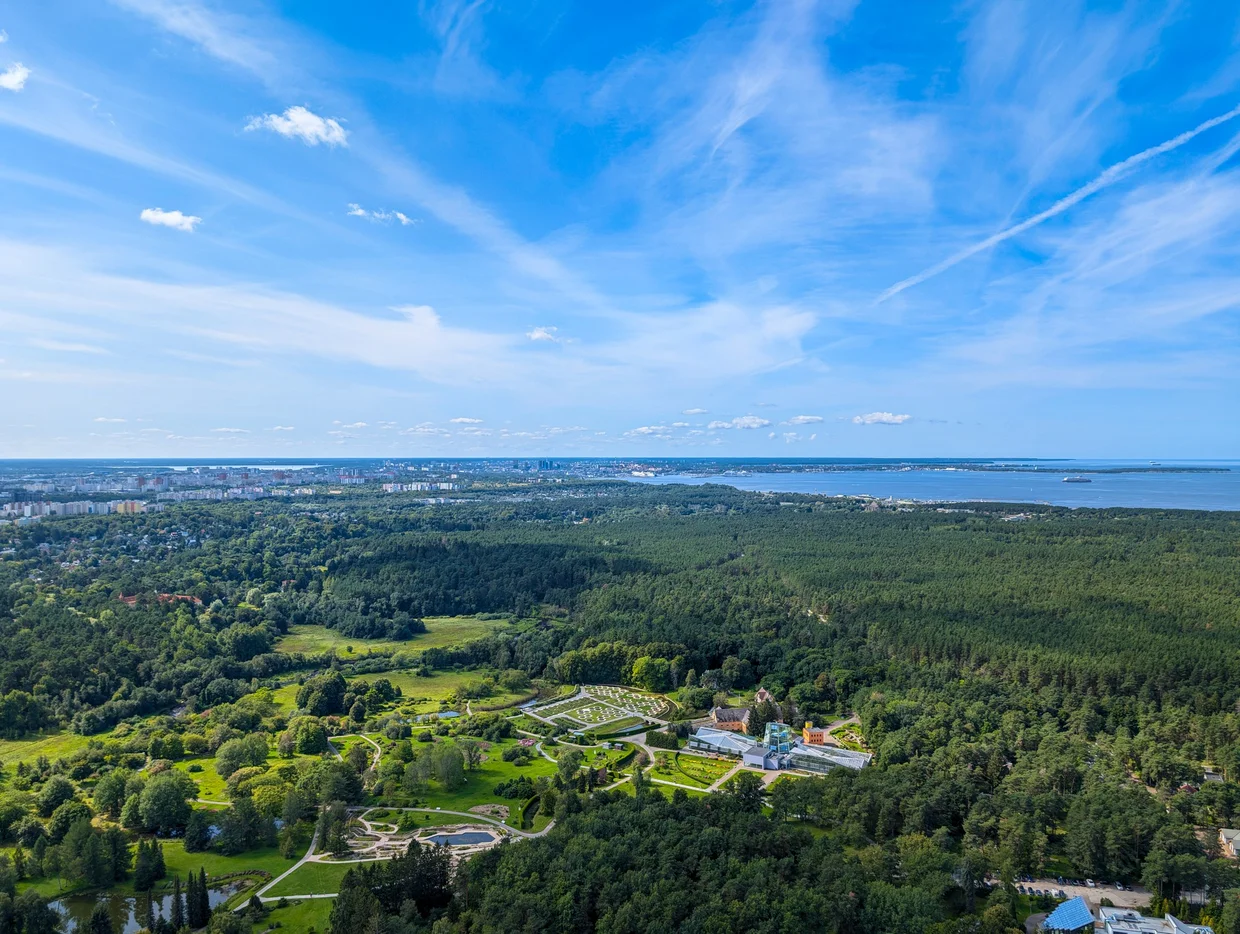
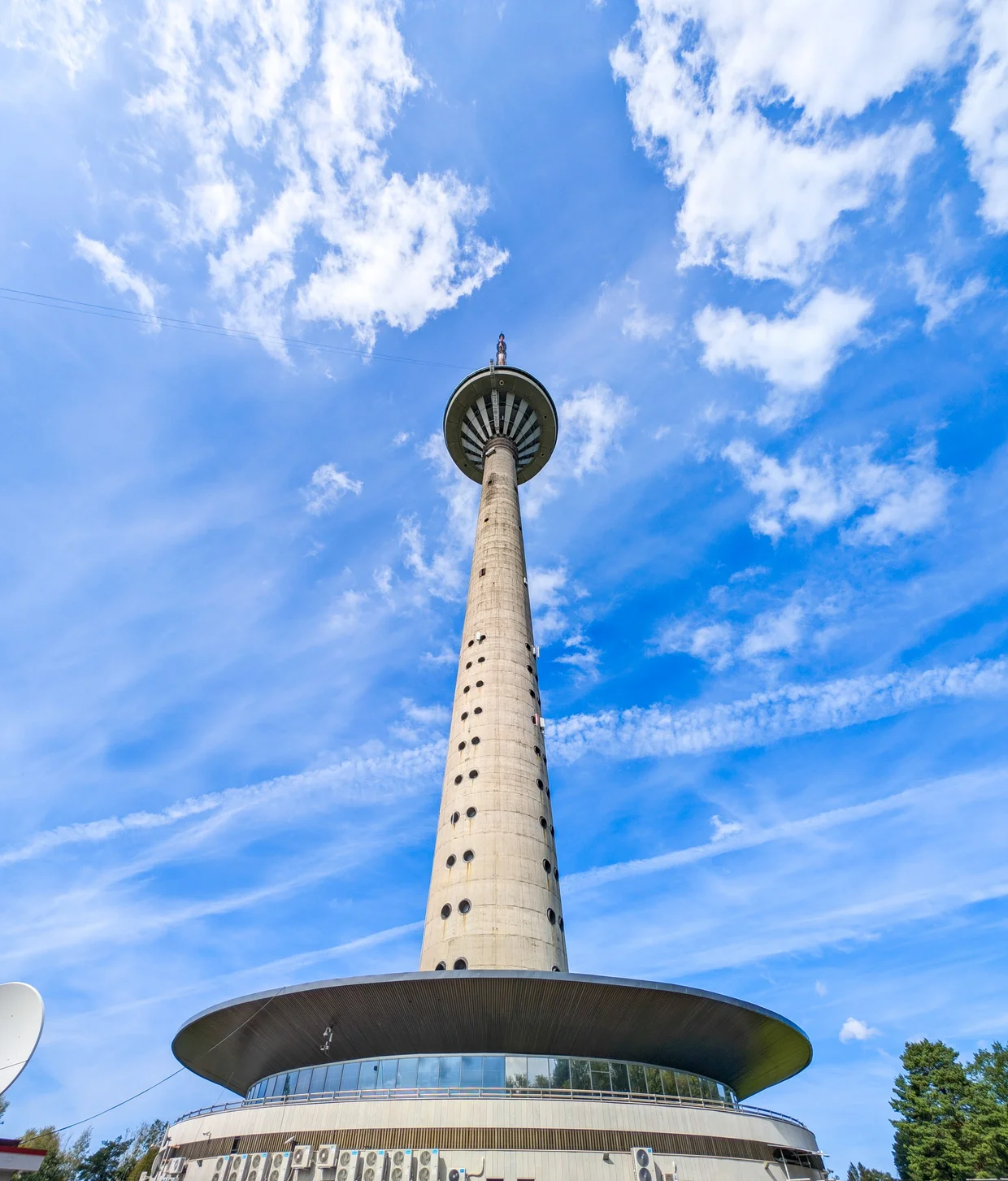
Outside the Old Town, Tallinn keeps going. Kadriorg Park, with its Peter-the-Great baroque palace (Russia's, this time, not Latvia's) and the very good KUMU art museum. Kalamaja, the hipster wooden-house district with craft beer and burger joints. The seafront, which has been steadily reclaimed from Soviet industrial wasteland into one of the best urban waterfronts in the region. And the TV Tower, a 314-meter concrete spike with a viewing platform that, on a clear day, lets you see all the way to Helsinki across the Gulf of Finland.
Tartu
Tartu is Estonia's second city, its oldest city, and its university town. The vibe is completely different from Tallinn: smaller, quieter, more eccentric, with that distinctive mix of old wood, new galleries and students riding rusty bikes that every good university town seems to produce.
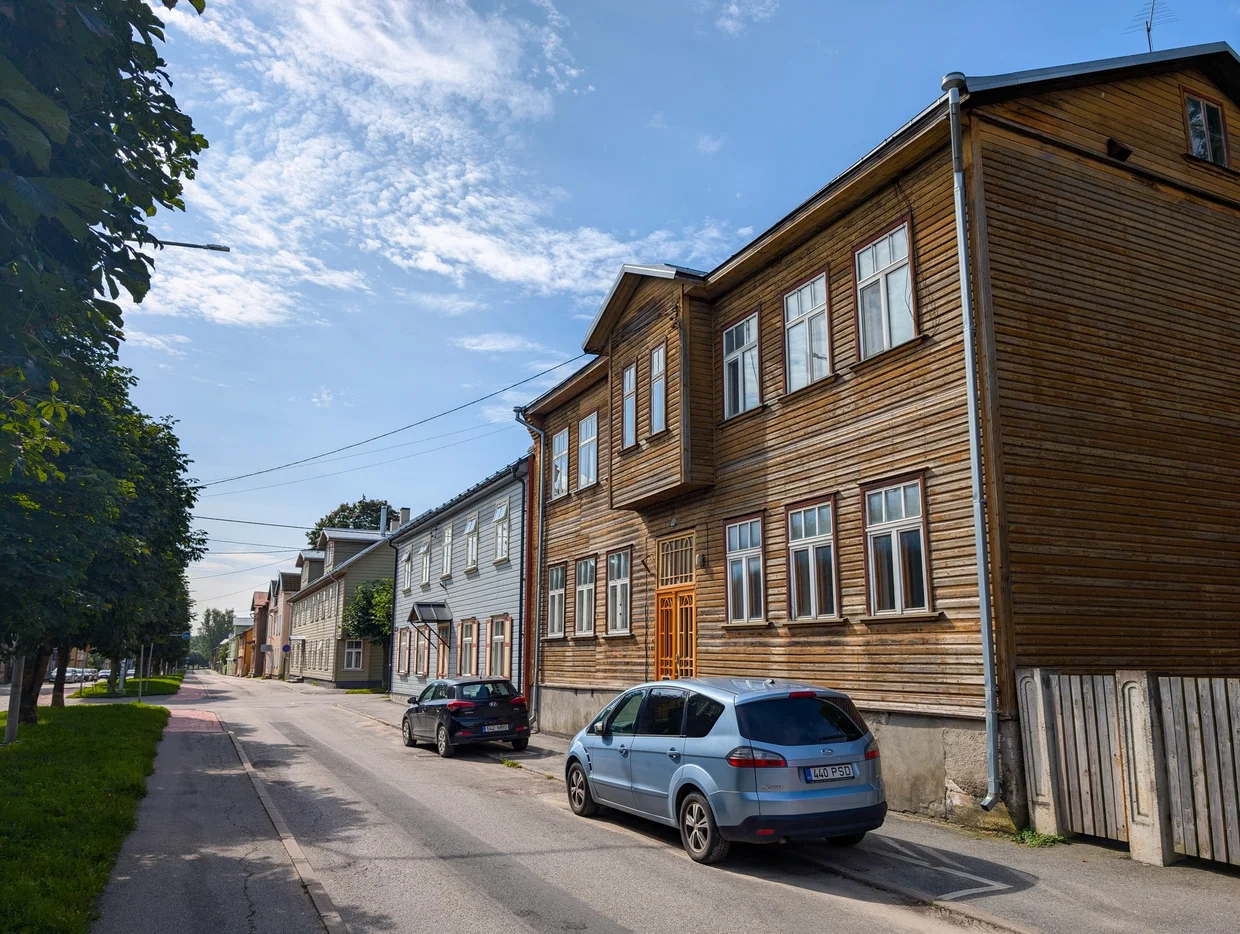
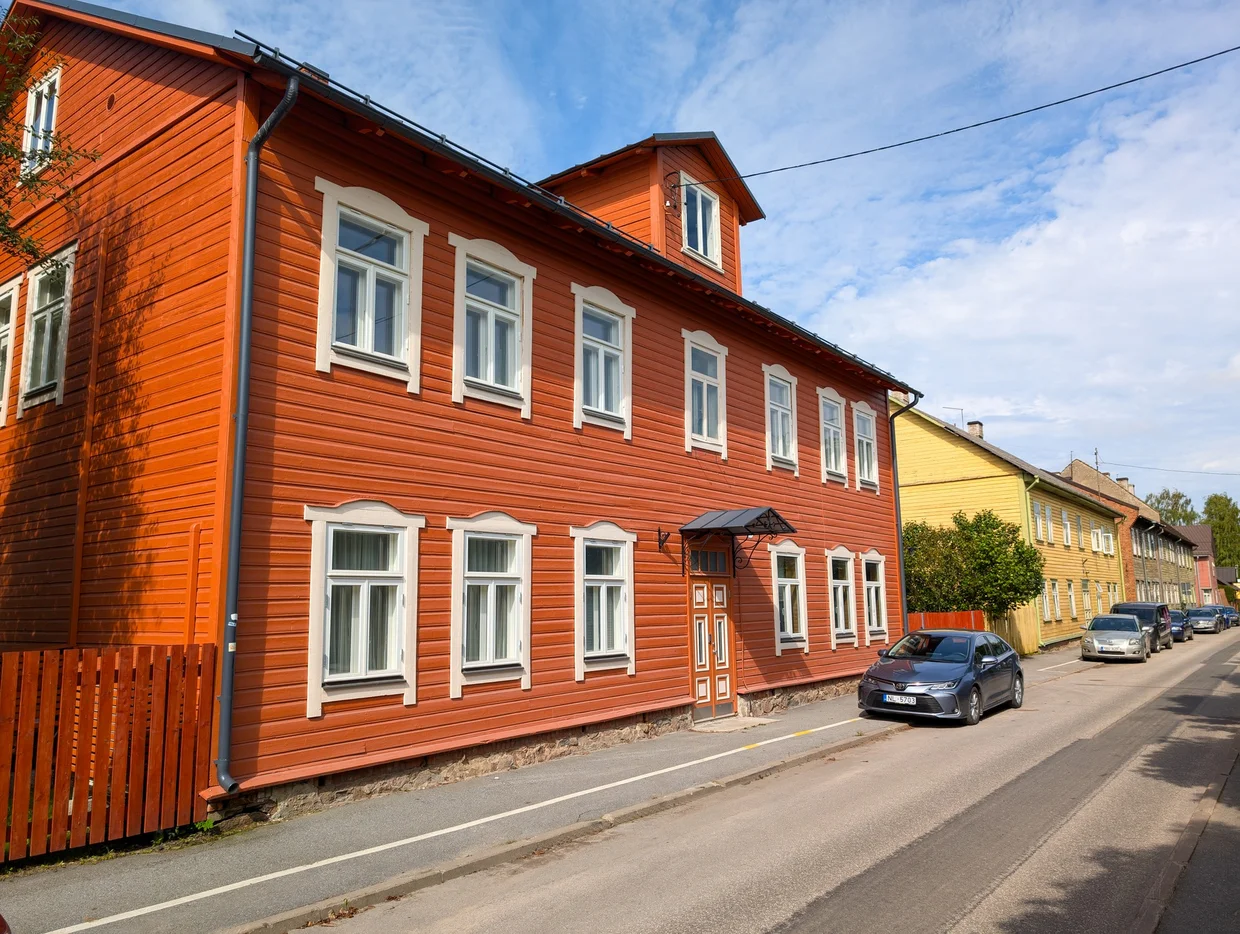
The Supilinn (Soup Town) district is the one to wander. The streets are all named after ingredients (Bean, Potato, Herring) because the area was historically the cheap end of town where everyone cooked soup. It's now gently gentrified: wooden houses in unexpected colors, tiny galleries, cafes where someone is definitely writing a thesis.
Pärnu
Pärnu is the summer capital. Estonians descend on it in July and August for beach days, mud baths (the town has spas going back to the 1830s) and nightlife that, for a town of 40,000, is surprisingly committed.

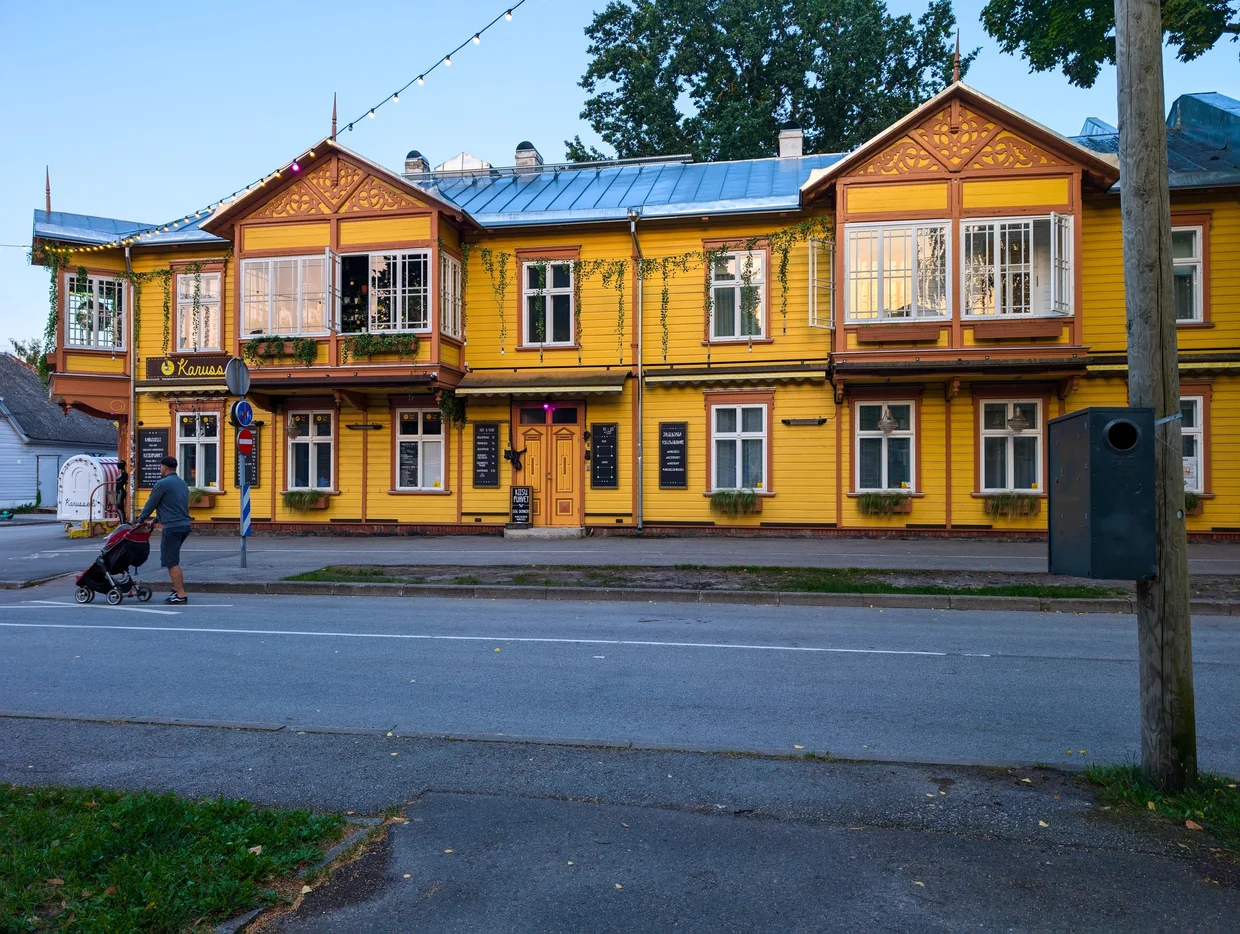
The Old Town is small, mostly wooden, and painted in pastels. Whole streets of lilac, mint, butter-yellow houses, most of them built between the 1880s and the 1930s when Pärnu was becoming a fashionable seaside resort for St. Petersburg's middle class.
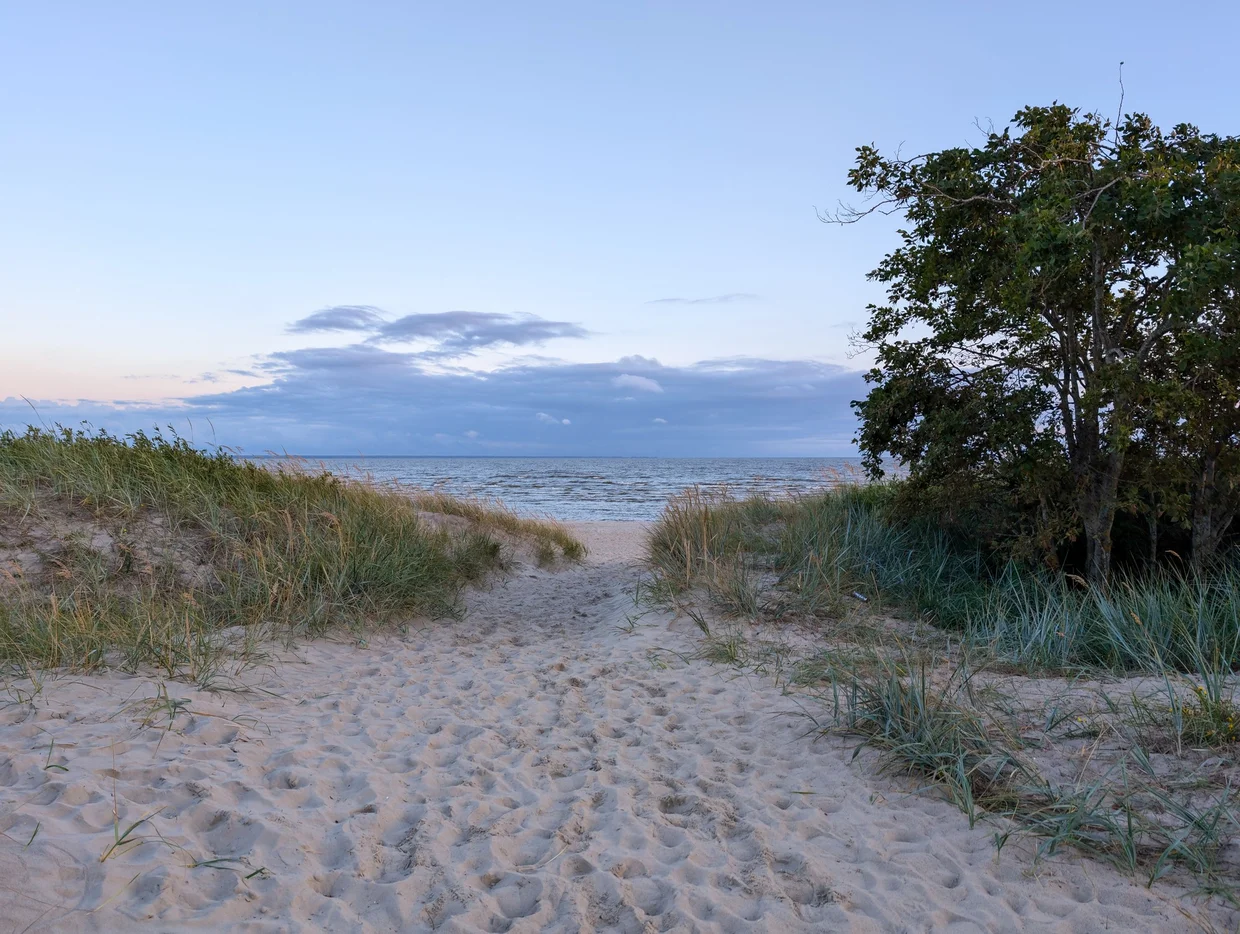
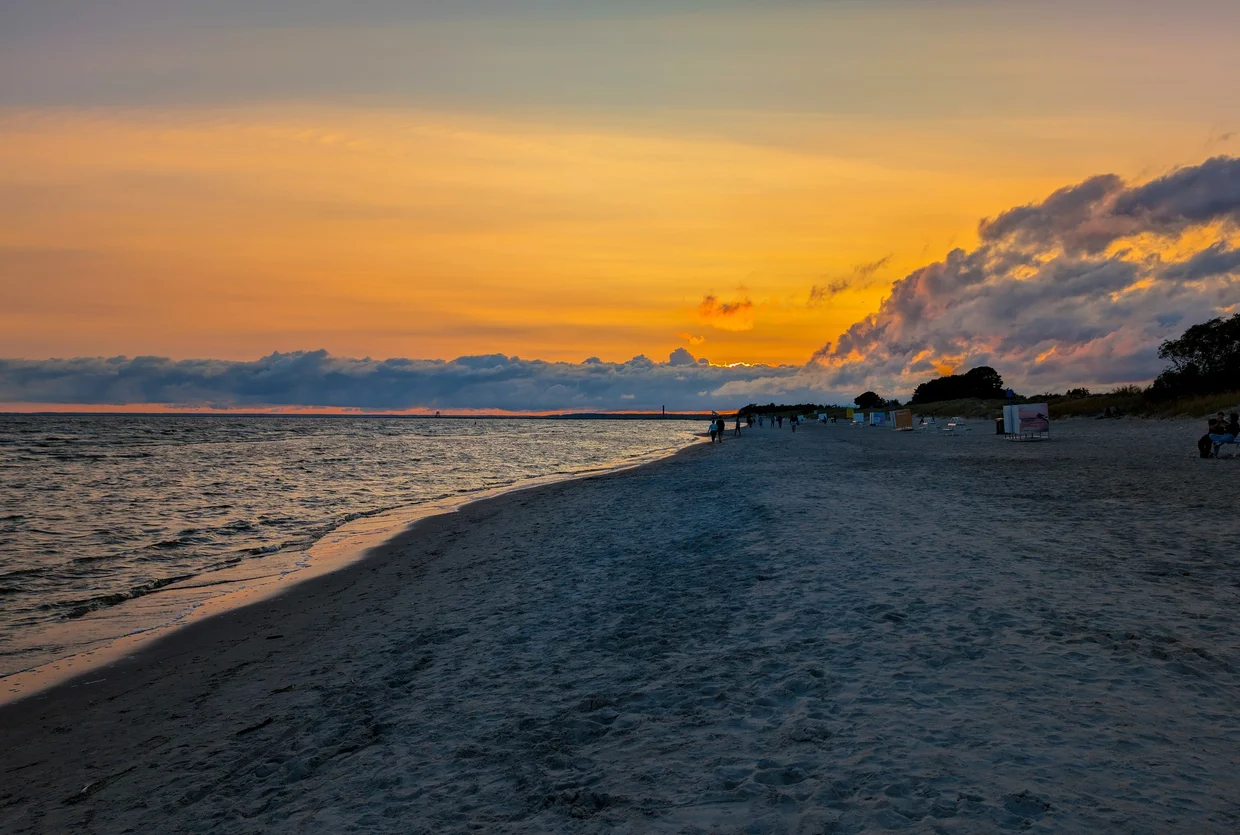
The beach itself is long, flat, and shallow. The water never gets properly warm (we're at 58 degrees north), but in August it's swimmable for 15 minutes at a time if you commit.
The Wild Estonian Coast
Most visitors stop at Tallinn and maybe Tartu. Drive east, though, or west, and Estonia opens up into something wilder.

Western Estonia is bogs, islands and shallow bays. Matsalu National Park is one of the biggest bird migration corridors in Europe. Twice a year, millions of geese and cranes stop here to refuel on their way between the Arctic and Africa.

Keila-Joa is a proper waterfall, about six meters high and 60 meters wide, sitting in a park with a 19th-century manor, 30 minutes from Tallinn. Locals take picnics. It's the kind of spot you're surprised isn't more famous.
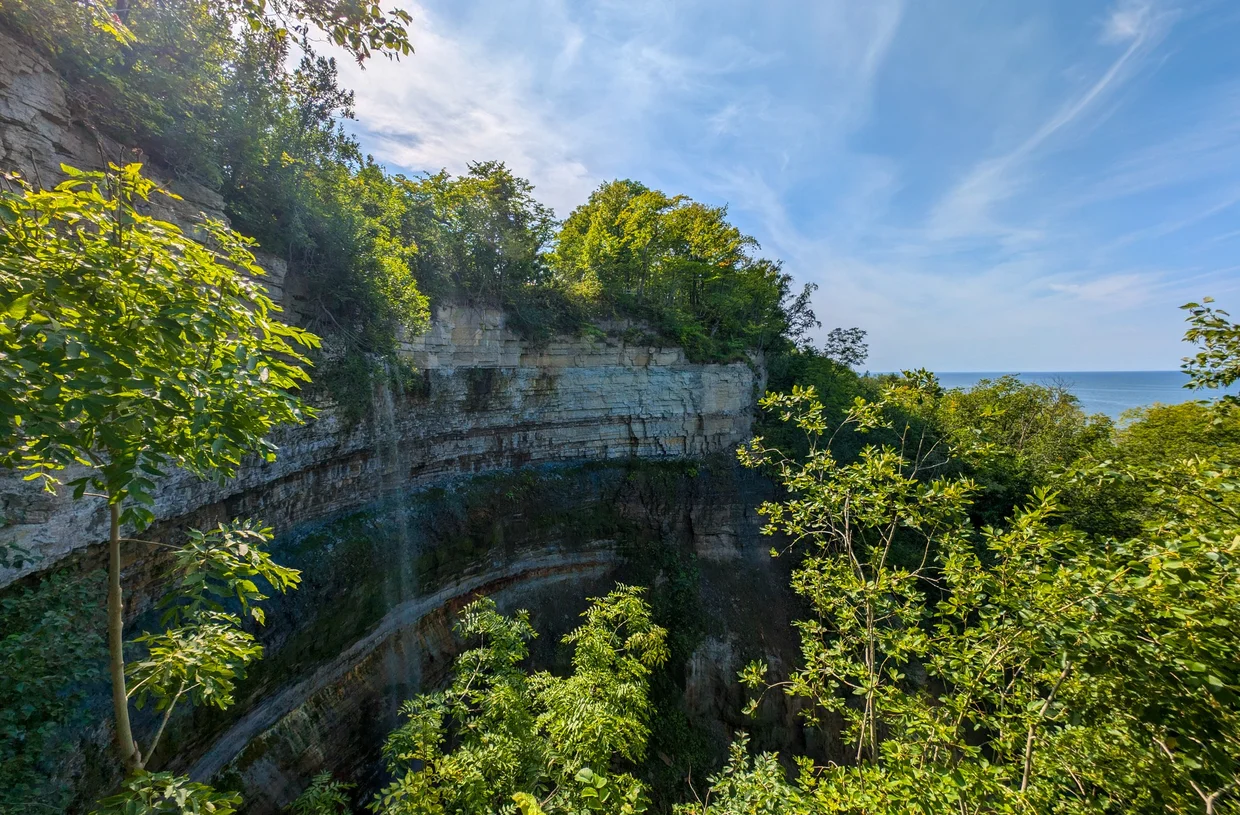
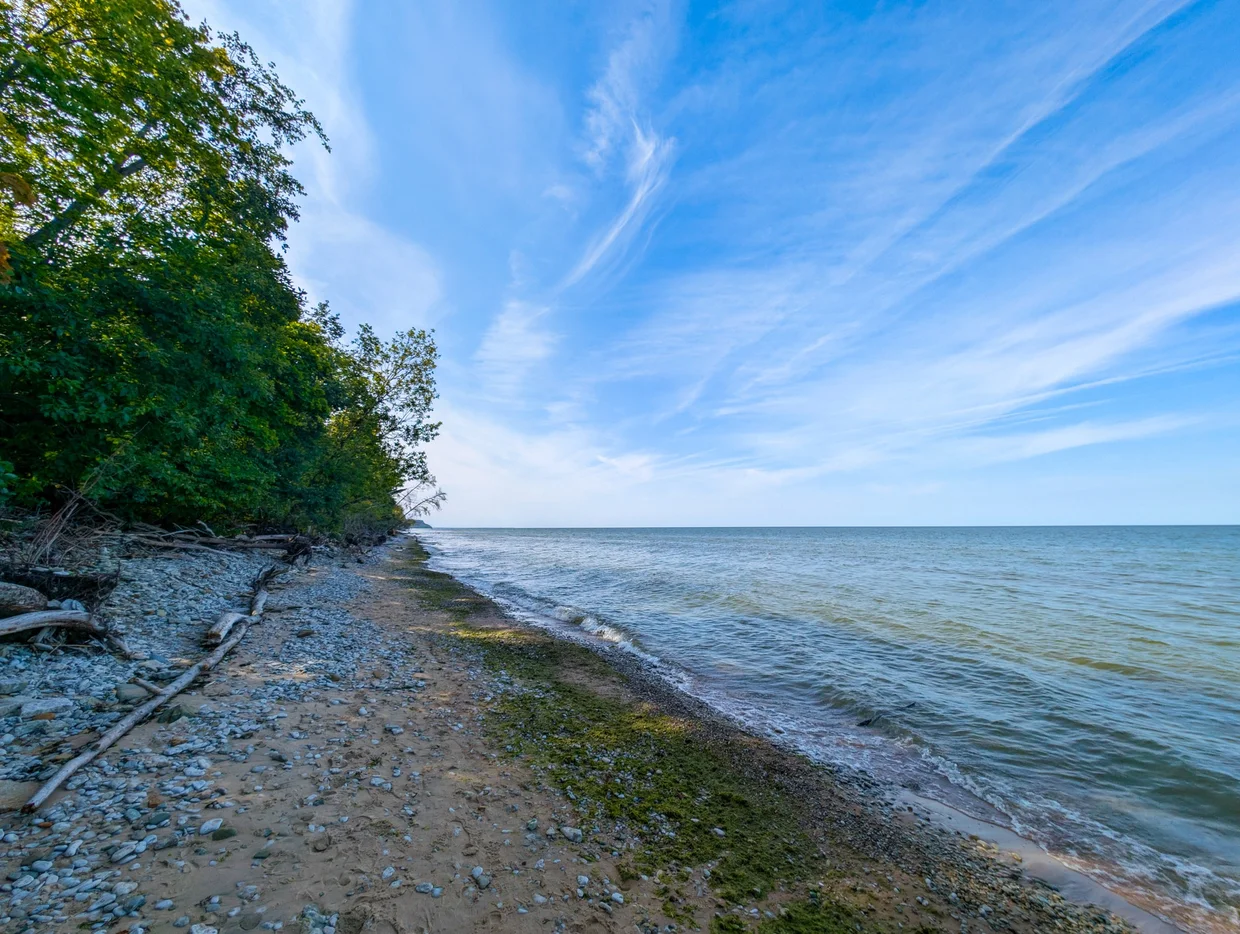
East of Tallinn, the coastline turns dramatic. The Baltic Klint is a limestone cliff running along the northern edge of Estonia, and in places it's 50 meters high. Valaste Waterfall plunges straight off it. The beach below is empty, stony, and beautiful in that specific Baltic way where the sky is enormous and the sea looks vaguely offended.
The Route
If you're planning a first-time Baltic trip and you want my honest recommendation on the order: go from south to north. Start in Vilnius, end in Tallinn. Here's why: the cities get progressively more northern, more digital, more polished and, dare I say, colder as you go up. Ending in Tallinn feels like a natural finish, and you can fly home from there, or take a ferry to Helsinki and extend the trip, or hop on a ferry to Stockholm overnight.
A workable 10 to 14 day route:
- Vilnius (3 days): Old Town, Užupis, day trip to Trakai Castle (which I don't have photos of, but trust me it's gorgeous).
- Kaunas (1 day): Castle, interwar architecture, a museum or two. Stop on the way north.
- Klaipėda / Curonian Spit (1 or 2 days, optional detour).
- Rundāle Palace (half day): Do this on the way from Lithuania to Riga.
- Riga (3 days): Old Town, Central Market, Art Nouveau district, day trip to Sigulda or Ķemeri.
- Coastal drive (1 day): Pärnu on the way from Riga to Tallinn.
- Tallinn (3 days): Old Town, Kadriorg, Kalamaja, Tartu day trip if you're into university towns.
Flip it if you're flying into Tallinn. The route works either way.
Best Time to Visit
The Baltics have, basically, two seasons: a short, beautiful summer from June to August, and "not summer."
Summer (June to August) is the obvious answer. Days are ridiculously long (around midsummer, Tallinn barely gets dark), the weather is mild (17 to 23 degrees), the beaches are warm enough, the festivals are happening, and everyone is outside. June is the sweet spot: fewer crowds than July, all the daylight, lupins still in bloom.
May and September are the shoulder months and, in my book, arguably better than peak summer. Cooler, quieter, cheaper, still green, still pleasant. Autumn colors in September are spectacular.
Winter (December to February) is real winter. Snow, ice, dark by 4pm, -10 degrees not unusual. But Christmas markets in Tallinn, Riga and Vilnius are gorgeous, saunas finally make complete sense, and the cities look cinematic under snow. Just pack properly.
Avoid March and November if you can. These are the mud months. Grey, wet, cold without the romance of snow. Even locals admit this.
Know Before You Go
A few small things that make a trip to Baltic Countries noticeably smoother. Here are the first four, the full list covers 27.
- 1
They're three countries, not one
Lithuania, Latvia and Estonia share a coastline, a climate, and half a millennium of shared history, but they are three separate countries... - 2
All three are extremely safe
EU, Schengen, NATO, and consistently near the top of European rankings for low crime and low violence. You can walk Vilnius, Riga or Tallinn... - 3
Tap water is drinkable everywhere
All three countries have excellent tap water, including in small towns and rural areas. Bring a reusable bottle. Save money, save plastic,... - 4
The euro is everywhere
All three countries use the euro, all three are in Schengen, and internal borders are completely open. You don't change money, you don't...
Read the full know before you go Baltic Countries guide.
Food and Drink
Baltic food is hearty, potato-heavy, and built for a climate where winter lasts six months. Think rye bread, pickled herring, smoked fish, dumplings, pork, beetroot soup cold in summer and hot in winter. It's not competing with the Mediterranean on delicacy, but on its own terms it's good honest stuff.
Quick disclaimer: I'm not much of a meat eater, so I'm going to describe what each country is famous for without pretending I personally lived off it. Your mileage will definitely vary.
Famous regional dishes, in rough order per country:
- Lithuania: cepelinai (potato dumplings the size of a fist, usually stuffed with meat, served with sour cream and bacon) are the national dish. Šaltibarščiai, a cold pink beetroot soup, looks radioactive and is genuinely delicious on a hot day. Kibinai are Karaite pastries, traditionally meat-filled.
- Latvia: speķa pīrāgi (bacon-filled rolls), rye bread with everything, sklandrausis (a sweet potato-and-carrot tart from the western region). And Black Balsam, the 45% herbal liqueur that tastes like a forest fought a pharmacy and both won.
- Estonia: black bread that's actually black, smoked fish of all kinds, kama (a toasted grain powder mixed into yogurt for breakfast, weirder than it sounds, better than it sounds), and Vana Tallinn, a vanilla-rum liqueur that is either your new favorite thing or a one-time experience.
What I actually recommend: rye bread with pretty much anything, smoked fish across the board, and dumplings. All three countries do dumplings and there are plenty of non-meat versions around: cheese, mushroom, berry, potato, even cherry. Ask for the vegetarian filling and you'll rarely be disappointed.
Beer is good across all three countries (the craft scene is strong in Tallinn especially). Prices are still reasonable in local currency, noticeably cheaper than Scandinavia, slightly cheaper than Central Europe.
Getting Around
Rental car is the answer if you want to see anything outside the three capitals. The road network is excellent, distances are short (Vilnius to Tallinn is 600 kilometers, about seven hours driving), there are no internal border checks, and parking in the cities is mostly manageable. Rent in one country, drop off in another (there's usually a small fee, but it's worth it).
Buses between cities are cheap, frequent and surprisingly comfortable. Lux Express and Ecolines run the main routes. Vilnius-Riga is about 4.5 hours, Riga-Tallinn is about 4.5 hours. If you don't want to drive, this works perfectly well.
Trains exist but are limited. There's a brand-new Rail Baltica project building a proper high-speed line between the three capitals, but as of 2026 it's not fully open yet. For now, bus beats train.
Within cities, public transport is good and cheap. Tallinn is famously free for residents. Visitors pay a small fee. All three capitals have working tram / trolleybus / bus systems, and all of them are walkable enough that you might not need them at all for the Old Towns.
Ferries: Tallinn to Helsinki is two hours. Tallinn to Stockholm is overnight. Both are cheap by ferry standards and a fun way to extend the trip.
Are the Baltics Safe?
Short answer: yes, extremely. All three countries are in the EU, Schengen and NATO, and they sit consistently near the top of European rankings for low crime and low violence. Tap water is drinkable everywhere. You can walk across any of the three capitals at night. The biggest actual risks are mosquitos, ticks, and ice on pavements in winter.
Solo Travel and Crime
Solo travel in the Baltics is about as easy as it gets. All three capitals have visible cafe culture, walkable old towns, and public transport that runs late. Women travelers generally report feeling comfortable here, day and night. In smaller towns you'll sometimes be the only tourist in sight, which feels different but not unsafe.
Petty theft exists in the usual places: Tallinn's Old Town in July, Riga's Old Town on weekends, the main bus and train stations. Keep your phone out of a back pocket and you'll be fine. Outside the old towns, theft is rare.
Nightlife in Riga has a reputation for bachelor parties, mostly British, who sometimes mistake the city for a lawless zone. It isn't. The bar areas are fine. The one genuine thing to watch out for in Riga is a specific scam where friendly English-speaking "girls" invite tourists to a bar and then the bill arrives at three figures. The scam is well known enough that the Latvian foreign ministry hosts State Police guidance about it. If a stranger hands you a flyer or suggests "a good bar nearby," just say no.
Scams otherwise barely register. Taxi apps (Bolt is the local default across all three countries) are cheap and honest. Menus match the bills. ATMs work normally.
Health and Environment
No special vaccinations required beyond the routine ones. Pharmacies are easy to find, well stocked, and the staff in cities usually speak English. EU citizens can use the EHIC card. Private care in the capitals is modern and reasonably priced.
Ticks are the one thing that catches people out. All three countries are heavily forested and tick-borne encephalitis is endemic in parts of them, especially the inland forests. Lyme disease is also present. If you're walking in forests, meadows or bogs between April and October, long sleeves and repellent make sense, and check yourself properly at the end of the day. A TBE vaccine is worth looking into if you're planning serious time outdoors.
Mosquitos are the other thing. I already ranted about this in the Ķemeri section, but it applies more broadly. Forests, bogs and lakeshores in summer can be brutal. Bring repellent. Learn from my mistakes.
Bears, wolves and lynx all exist in the wilder forests, especially in eastern Latvia and eastern Estonia. You almost certainly will not see one, because they avoid people. Moose and wild boar you might meet, typically on country roads at night, where they are the actual danger. Drive carefully through forest sections after dark.
Winter adds ice. Pavements in all three capitals get genuinely slippery between December and March, and cities vary in how aggressively they grit. Proper shoes with real tread save you more than you think. Frostbite is rare if you're dressed sensibly, but minus ten with wind is real cold if you're used to milder winters.
Swimming in the Baltic Sea is safe but cold. Even in August the water rarely gets above 20 degrees. Rip currents on some of the longer sandy beaches can catch you out, so pay attention to the local flags at official beaches.
The Russia Question
I'll address it because people ask. All three countries share a border with Russia or Belarus, and since 2022 that has felt a bit more present, especially in Estonia near Narva and in eastern Latvia. Practically speaking, for a tourist, nothing changes. The borders are closed to casual crossing, there's a visible but calm police and military presence in the east, and day-to-day life is normal. The Baltics are arguably the best-prepared, most NATO-integrated part of Europe's eastern flank. Locals are not anxious, and neither should you be.
Published April 2026.