Greece Travel Tips
Greece is one of the easier countries in Europe to travel, but mainland Greece in particular comes with a handful of quirks worth knowing before you land. Summer heat at the archaeological sites is the real danger, monastery dress codes catch people out, speed cameras on the highways are treated as decoration by every local, and Easter shifts your prices and your hotel availability depending on the year. Skim it before you fly and you'll land feeling like you already know the country.
It's one of the safest countries in Europe
Greece consistently ranks near the top of European peace and crime indices, and outside of central Athens the petty-crime risk drops to almost nothing. You can walk Nafplio, Kalambaka or Delphi village at midnight, leave a bag on a taverna chair, or pull over on a country road for a photo without thinking twice. For the broader picture, the travel safety primer covers the habits that matter everywhere.
Perfect for solo travel
The mainland is calm, English is widely spoken, and small-town tavernas are used to people eating alone. Women solo travelers consistently report feeling very comfortable, especially outside the bigger cities. Driving the loop on your own is one of the most relaxing solo trips you can do in Europe.
English is widely spoken
Anyone under forty, anyone in hospitality, and most people in tourist towns speak good English. Older folks in rural villages might switch to gestures and a smile, but you'll never be stuck. Learning a few words of Greek goes a long way for the warmth of the interaction, but you don't need it to function.
Learn to read the Greek alphabet, even badly
Road signs on highways are usually bilingual, but smaller signs, menus and shopfronts often aren't. Spending twenty minutes before you fly learning to phonetically decode the alphabet (so you can read "Καλαμπάκα" as "Kalambaka") makes navigation noticeably easier and is a fun party trick.
Summer heat at the ruins is the actual risk
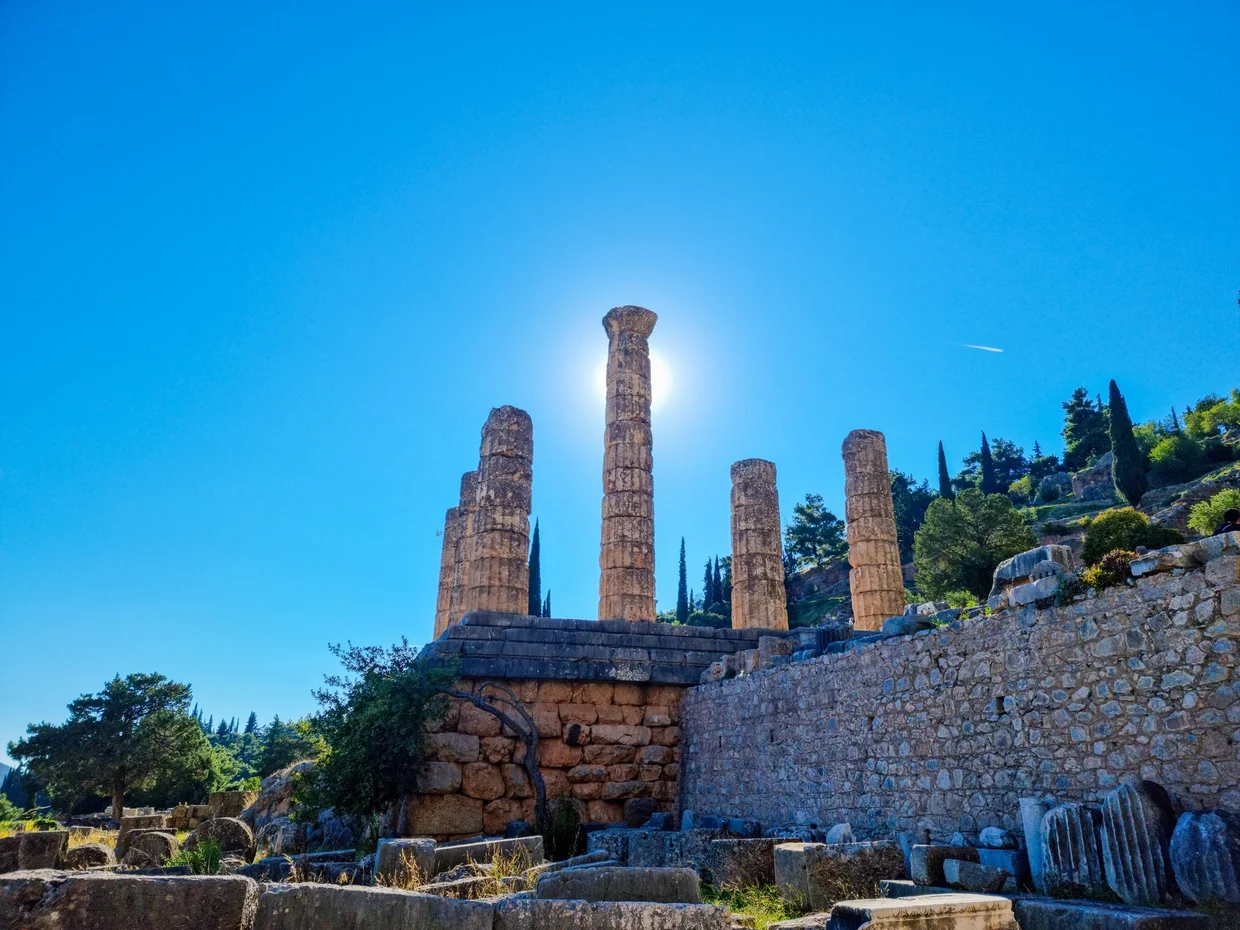
Every archaeological site on the mainland (Delphi, Mycenae, Mystras, Acrocorinth, Olympia) is a sun-exposed hillside with almost no shade. Ambulance callouts at the Acropolis and Delphi in peak summer are routine. Bring water, wear a hat, and time your visit for early morning or late afternoon. The midday slot in July or August is genuinely miserable.
Power and plug adapter
Greece runs on 230V power with Type F (Schuko) sockets. Pick your home country to see if you need a travel adapter.
Wildfires are a summer reality
Hot dry years bring serious fires, especially July through September. Roads can close with little warning, and the smoke can affect whole regions. Check the daily fire risk maps from the civil protection service before driving into rural areas in summer.
Slippery polished stone is a sneaky risk
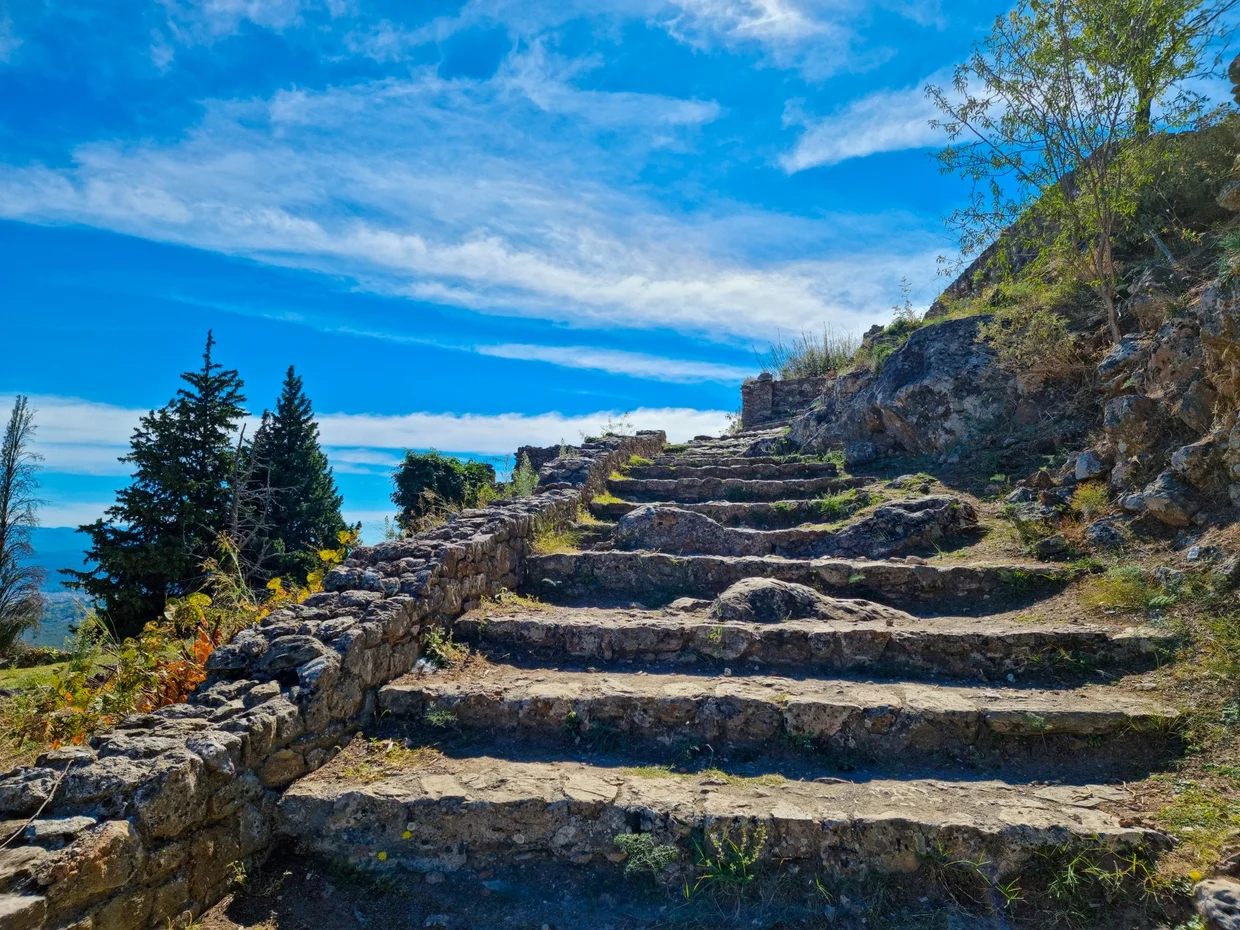
The walking surfaces at Mystras, Acrocorinth and the Delphi sanctuary have been polished by centuries of feet. A trace of dew or rain turns them into an ice rink. Proper shoes with grippy soles are not optional. Flip-flops are a genuinely bad idea at any of these sites.
Monastery dress code is enforced at Meteora
Women need a long skirt and covered shoulders. Men need long trousers. Show up in shorts and they'll hand you a wraparound at the door, but you'll feel like a tourist all visit. If you're hiking between monasteries, plan to change.
Each Meteora monastery closes on a different day
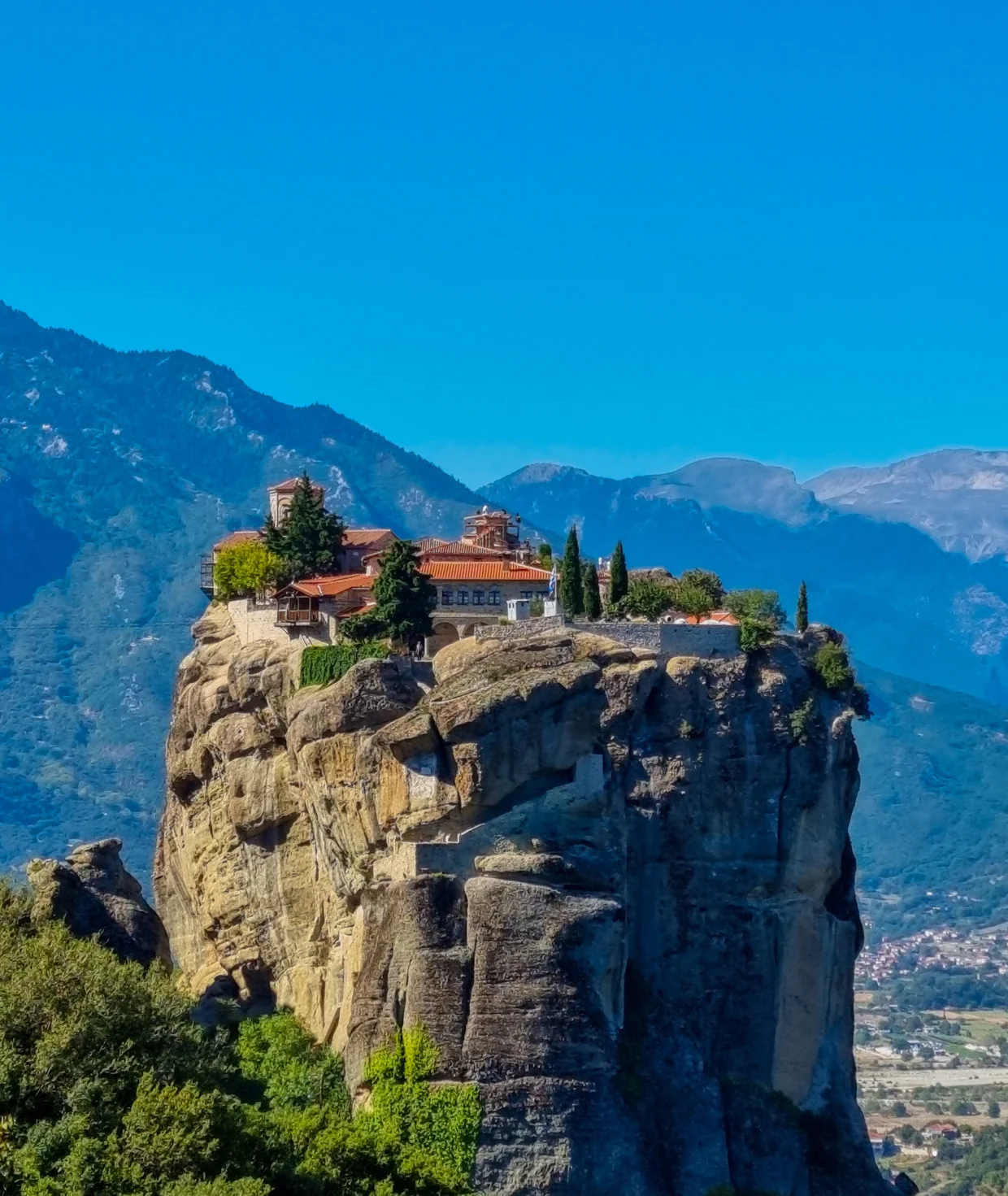
All six are open to visitors, but each one closes one or two days a week and the schedules aren't synchronized. Look it up before you drive out. Showing up at Varlaam on a Friday to find it closed is a standard rookie mistake.
Book Vergina in advance
The Royal Tombs museum at Vergina runs timed entry and limits the number of people inside at a time. In summer or around weekends it can sell out the same day. Reserve through the official site a few days ahead and you skip the queue.
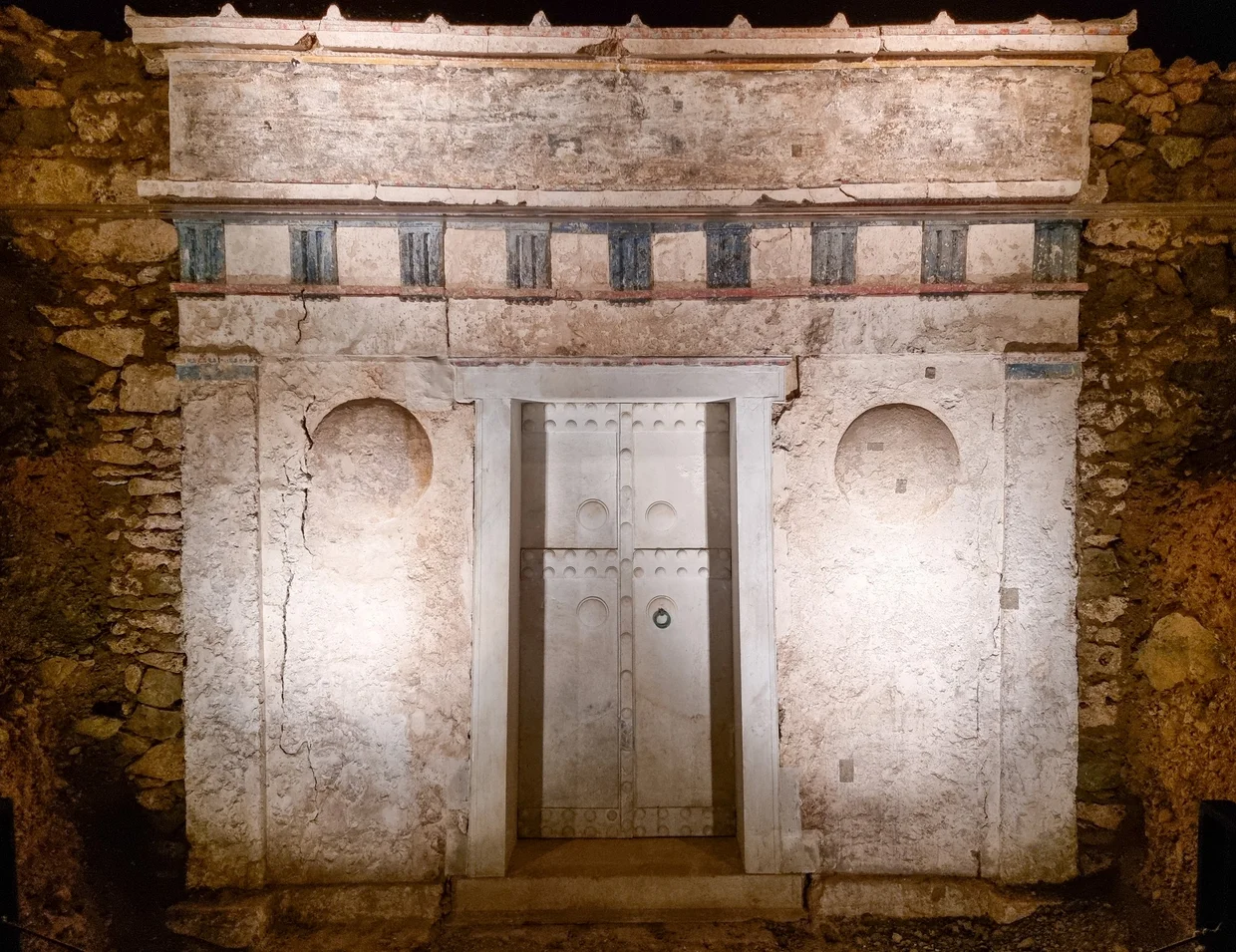
Free entry days at state archaeological sites
The big state-owned sites (Delphi, Mycenae, Mystras, Olympia, Vergina, the Acropolis) are free on the first and third Sunday from November to March, plus March 6, April 18, May 18, the last weekend of September, and October 28. Stacking three or four sites into one free day adds up. The catch is they're noticeably busier on free days.
Easter changes everything
Greek Orthodox Easter is the biggest holiday of the year and falls on a different date than Catholic Easter most years. Hotels book out weeks ahead, prices climb, ferries fill, and small towns empty out as locals travel home. If your trip overlaps Easter weekend, plan early or plan around it. Holy Week itself is a beautiful time to be in a small town if you've booked properly.
Rent a car for the mainland
This itinerary is impossible to do properly any other way. Buses (KTEL is the network) are cheap and reliable but infrequent, and the connections between secondary destinations are rough. Trying to do Meteora to Delphi to Olympia by bus eats two extra days for no good reason.
An International Driving Permit is technically required
Greek law requires non-EU drivers to carry an IDP alongside the home license. In practice, rental agencies often don't ask, but the police can fine you for driving without one if you're stopped. Get an IDP from your home automobile association before you leave, it costs almost nothing.
Highway tolls, no vignette
Greece uses old-school toll booths on the E65 and E75 motorways, not a vignette like Slovenia or Austria. Expect 2-6 euros per section, payable in cash or card at the booth. Keep some euro coins handy for the smaller booths.
Speed cameras are everywhere, locals ignore them
Cameras on Greek highways and back roads come every few kilometers, and not a single local respects the speed limit. A guy at a gas station told me with total confidence that "they don't work." I can't verify this. What I can say is that the locals will blow past you at speeds that make you double-check the sign. Drive the way you're comfortable with.
Don't drive at night if you can help it
Rural roads aren't lit, and you might meet a goat, a dog, a tractor, or a van without taillights in the middle of the road. Not often, but often enough. Plan your driving days to finish at dusk.
City driving is more aggressive than rural
Athens and Thessaloniki driving has a reputation. Honking is communication, not aggression, and lane discipline is loose. Rural mountain roads are calmer but tight, with locals who know every curve. Give yourself time and don't try to match the local pace.
Fuel is expensive by global standards
Around 1.70-1.90 EUR per liter. A full mainland loop runs about 1,650 kilometers, so factor 150-200 EUR for ten days of driving into your budget.
Tap water is drinkable in most of the mainland
Athens, Thessaloniki and most of central and northern Greece have safe tap water that locals drink without thinking. Some islands and remote areas can be more brackish, but for this mainland itinerary you can refill a bottle at any tap. Save the money and skip the plastic.
Cash still matters at small tavernas and markets
Card acceptance has improved a lot, but small village tavernas, fruit stalls, monastery entry fees, and some smaller museums are cash only. Carry 50-100 EUR in small notes at all times. Breaking a 50 EUR bill at a souvlaki place can be awkward.
ATMs are widely available but watch the fees
Bank-branded ATMs (Alpha, Eurobank, Piraeus, National Bank) are reliable and have English menus. The "Euronet" yellow boxes that pop up in tourist areas charge punishing fees and aggressive dynamic conversion. Always select "without conversion" and pay in EUR if you're given the choice.
Tipping is appreciated, never expected
Rounding up the bill or leaving 5-10% at a sit-down restaurant is normal if you're happy with the service. Nobody chases you out if you don't. Tipping isn't expected at cafés, bakeries, or for taxis. Hotel porters and tour guides appreciate a few euros.
Sundays and afternoons run on Greek time
Many shops, smaller museums and rural businesses close on Sundays and through the early afternoon (roughly 2pm to 5pm). Tavernas and tourist sites stay open. If you need a pharmacy, supermarket, or a hardware store outside a city, check the hours before you drive out.
Strikes and protests happen, mostly in Athens
Public-sector strikes affecting transport, ferries, museums and the metro are a normal part of Greek life and usually announced a day or two ahead. Most demonstrations happen around Syntagma Square in central Athens. Tourists are almost never the target, but check the news before heading to the square if something's flaring up.
Earthquakes are common but usually minor
Greece sits on active faults and minor tremors are normal. Major ones are rare. If you feel a strong shake, the standard drill applies: drop, cover, hold on, and stay away from windows. Buildings are built to handle it.
Greek Orthodox church etiquette
Cover shoulders and knees. Don't talk loudly. Don't take photos with flash, and check for "no photos" signs before shooting at all (some monasteries forbid all photography inside). Lighting a candle by the entrance is fine and welcomed if you want to. Don't cross your legs while sitting in front of an icon, locals consider it disrespectful.
Coffee culture is its own thing
Greek coffee is strong and grainy, served in a small cup with grounds at the bottom (don't drink the last sip). Freddo espresso and freddo cappuccino are the iced espresso drinks Greeks obsess over and you'll want every afternoon. They're made with a handheld frother and taste nothing like the Starbucks version. Order one even if you don't normally do iced coffee.
Vegetarian options are easier than the menu suggests
The famous dishes lean meat-heavy, but Greek tavernas almost always have a strong vegetarian side. Gemista (stuffed vegetables), spanakopita (spinach pie), tyropita (cheese pie), horiatiki (Greek salad), gigantes (giant baked beans), fava (yellow split-pea purée), and fried cheese cover most of a menu without effort. Lent runs for forty days before Easter and many tavernas mark "νηστίσιμα" (fasting) dishes that are vegan by default.
Skip the tourist-strip restaurants
The tavernas with laminated menus in six languages and aggressive door staff (especially around Mycenae, Olympia, and Delphi village) are mediocre and overpriced. Walk two streets back from the main strip and quality goes up while price comes down. Look for places with locals at the tables.
Get a SIM or eSIM
Any European SIM roams in Greece without extra cost (EU roaming rules apply). If you're arriving from outside the EU, a regional eSIM is the easiest option. Coverage is excellent across the mainland, including in mountain valleys and at most archaeological sites. The eSIM vs SIM guide breaks down when each wins.
Smoking is still very common
Greece has one of the highest smoking rates in Europe and the indoor smoking ban is enforced unevenly. Tavernas with outdoor seating will often be smoky in summer evenings. Pick your table upwind if it bothers you.
Learn five Greek words
Yiá sas (hello/goodbye), kaliméra (good morning), efharistó (thank you), parakaló (please/you're welcome), signómi (sorry/excuse me). Greeks notice it instantly and the warmth of every interaction goes up. Bonus: "stin yiá mas" (cheers) when you raise a glass.
Emergency numbers
112 (European general emergency, works from any phone with no SIM), 100 (police), 166 (ambulance), 199 (fire), 108 (coast guard). Operators on 112 speak English.
Published April 2026.