Switzerland Travel Tips
Switzerland is one of the easiest countries in the world to travel and one of the most expensive. Most of what's on this list is about cost, calibration, and not getting blindsided by a Sunday closure or a cable car schedule. Skim it, plan around the bits that apply, and the rest of the trip looks after itself. This guide is specifically tuned to the north-east corner (St. Gallen, Appenzell, the Alpstein) but most of it applies country-wide.
It's not in the EU but Schengen applies
Switzerland is in Schengen but not the EU and not the eurozone. There are no routine Schengen passport checks crossing in from Germany, Austria, Italy, or France, and your Schengen visa (or visa-free entry) covers it. Customs is separate from Schengen, so random or targeted checks for goods and documents can still happen at road and rail crossings.
The currency is the Swiss franc
Switzerland uses the Swiss franc (CHF) for everything. Euros are sometimes accepted in tourist-facing places at a poor exchange rate (you'll lose around 5%). Cards work everywhere, contactless is universal, and the country is one of the most card-friendly in Europe. ATMs are common in St. Gallen and most towns; less so once you're up in mountain villages.
It is genuinely expensive
Pricing is the highest in Europe by a wide margin. A casual lunch is 20 to 35 CHF, a basic 3-star hotel runs 180+ CHF a night, a Big Mac will set you back almost 9 CHF, and a coffee costs around 5 CHF. Plan accordingly. Cooking your own breakfast at a Migros or Coop supermarket is the easy money-saver if you're on a tighter budget.
Two days covers the NE corner
St. Gallen, Appenzell, and the Ebenalp-Seealpsee loop fit comfortably into a two-day weekend with a rental car. Three days lets you slow down and add Trogen, Heiden, or a second hike. If you're trying to also see Zurich, Lucerne, or the Matterhorn, this isn't enough time. Pick one region and do it properly.
German is the local language
Specifically Schwyzerdütsch (Swiss German), an Alemannic dialect that's near-incomprehensible even to standard German speakers. Standard German is what's written on signs and used in any formal context. English is widely understood in St. Gallen and tourist-facing places, less so in mountain huts. A few "Grüezi" (hello) goes a long way.
Power and plug adapter
Switzerland runs on 230V power with Type C/J sockets. Pick your home country to see if you need a travel adapter.
Sundays slow everything down
Like Germany and Austria, Sundays in Switzerland are quiet. Most shops are closed, supermarkets too (except at airports and main train stations), and restaurants run reduced hours. Museums and the Abbey Library are usually open with shorter hours. Plan your supermarket run for Saturday afternoon.
Driving is the easiest way around
Roads are immaculate, signage is clear, and traffic outside city centres is light. Pick up a rental at Zurich Airport (90 mins to St. Gallen), St. Gallen-Altenrhein (45 mins), or in St. Gallen itself. You'll need a Swiss motorway vignette (40 CHF, valid one calendar year) for any time you're on the highway, but for this corner of the country a lot of the driving is on smaller scenic roads where the vignette isn't required.
Public transport is genuinely world-class
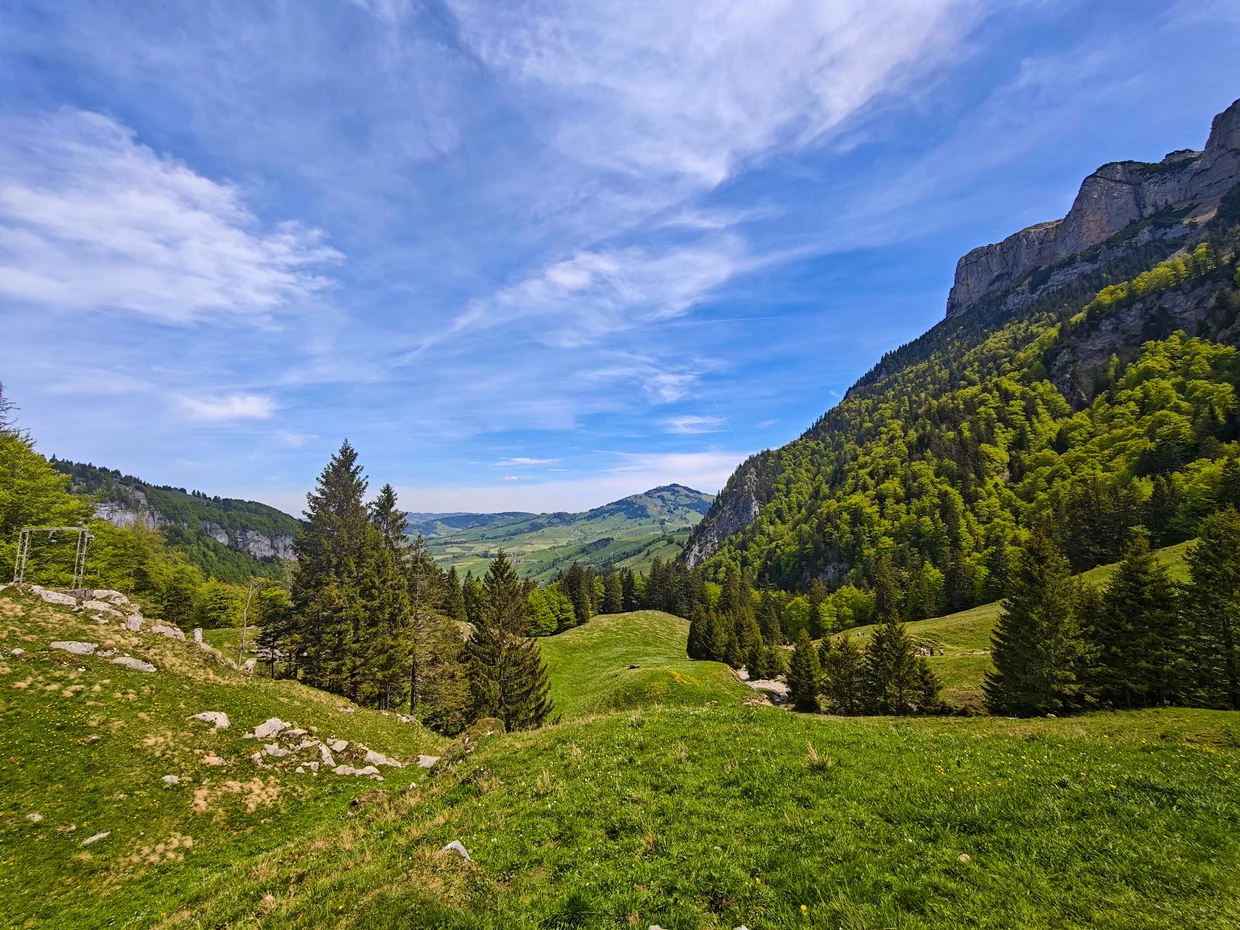
The SBB rail network plus the regional Appenzeller Bahnen and PostBus services cover everything in this guide on a single ticket app (the SBB Mobile app). Trains run on time to the minute, are clean and quiet, and the windows are made for staring out of. A Swiss Travel Pass or half-fare card pays off on longer trips but probably not on a tight weekend with a rental car.
Get there early for the cable car
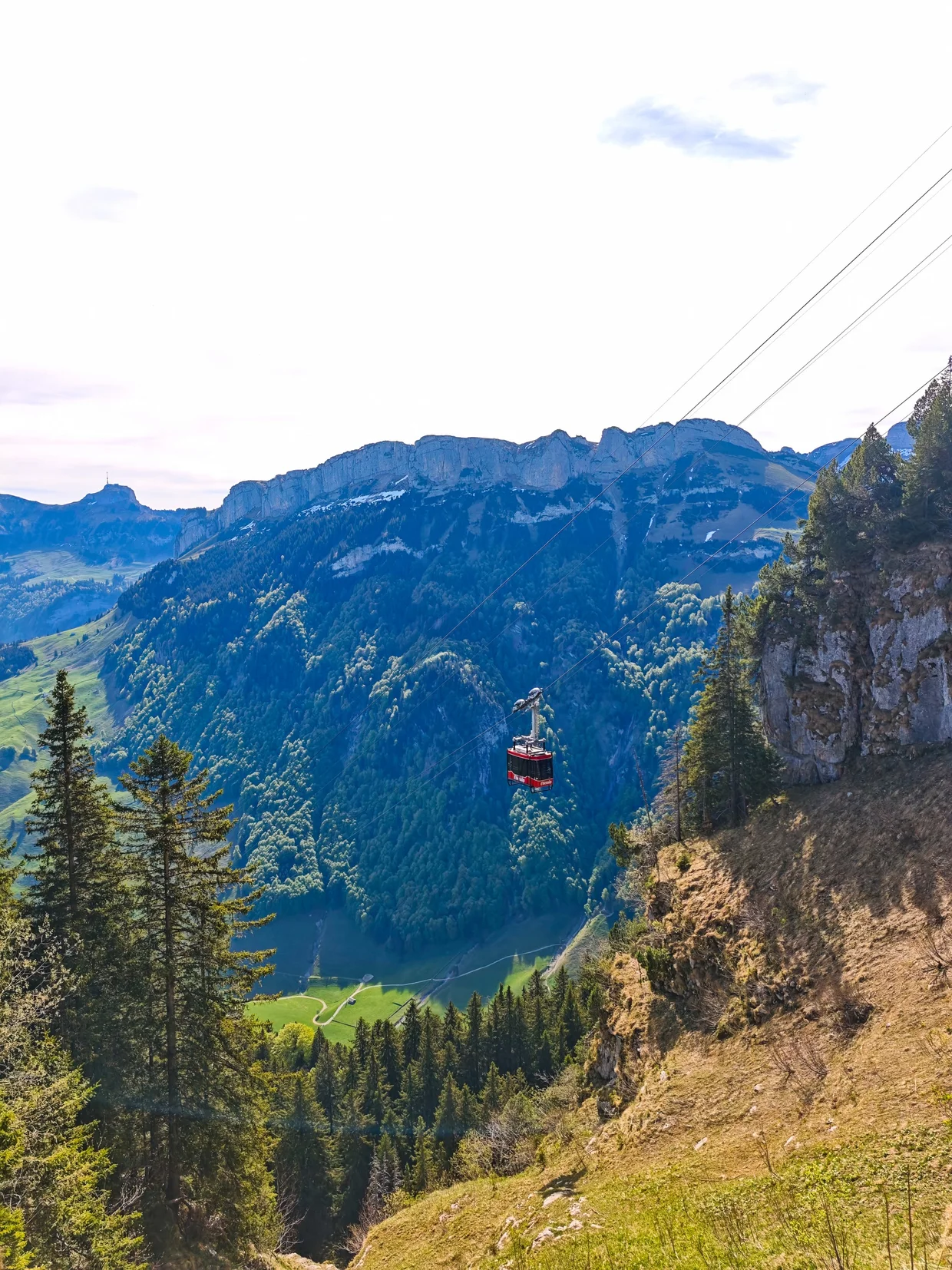
In the main season, the Wasserauen-Ebenalp cable car runs roughly every 15 to 20 minutes from morning into early evening, but check the official timetable for spring and late-autumn revision closures. Either arrive before 9 am, take the train (no parking issue), or be ready to park a kilometre or more down the road and walk in. The earliest cable cars of the day are the quietest by miles.
The Aescher rewards early starts
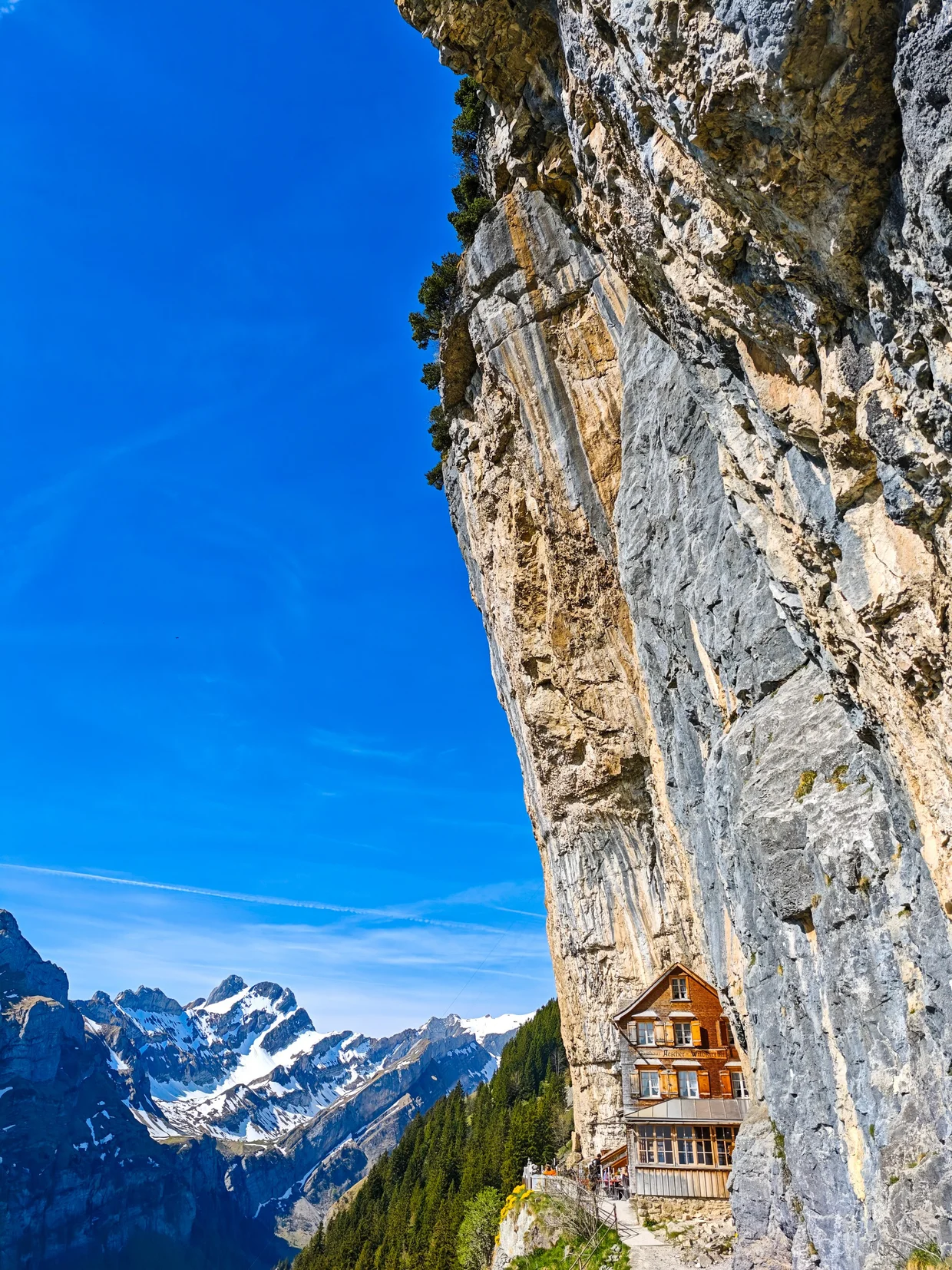
The cliffside Berggasthaus Aescher used to be a walk-up affair but has become genuinely busy. Regular daytime lunch tables are mostly walk-up, with reservations limited to specific cases like groups, breakfast slots, evening meals, or overnight stays. In peak season (July, August, weekends in June and September), go early if you want a relaxed terrace meal.
Mountain weather changes fast
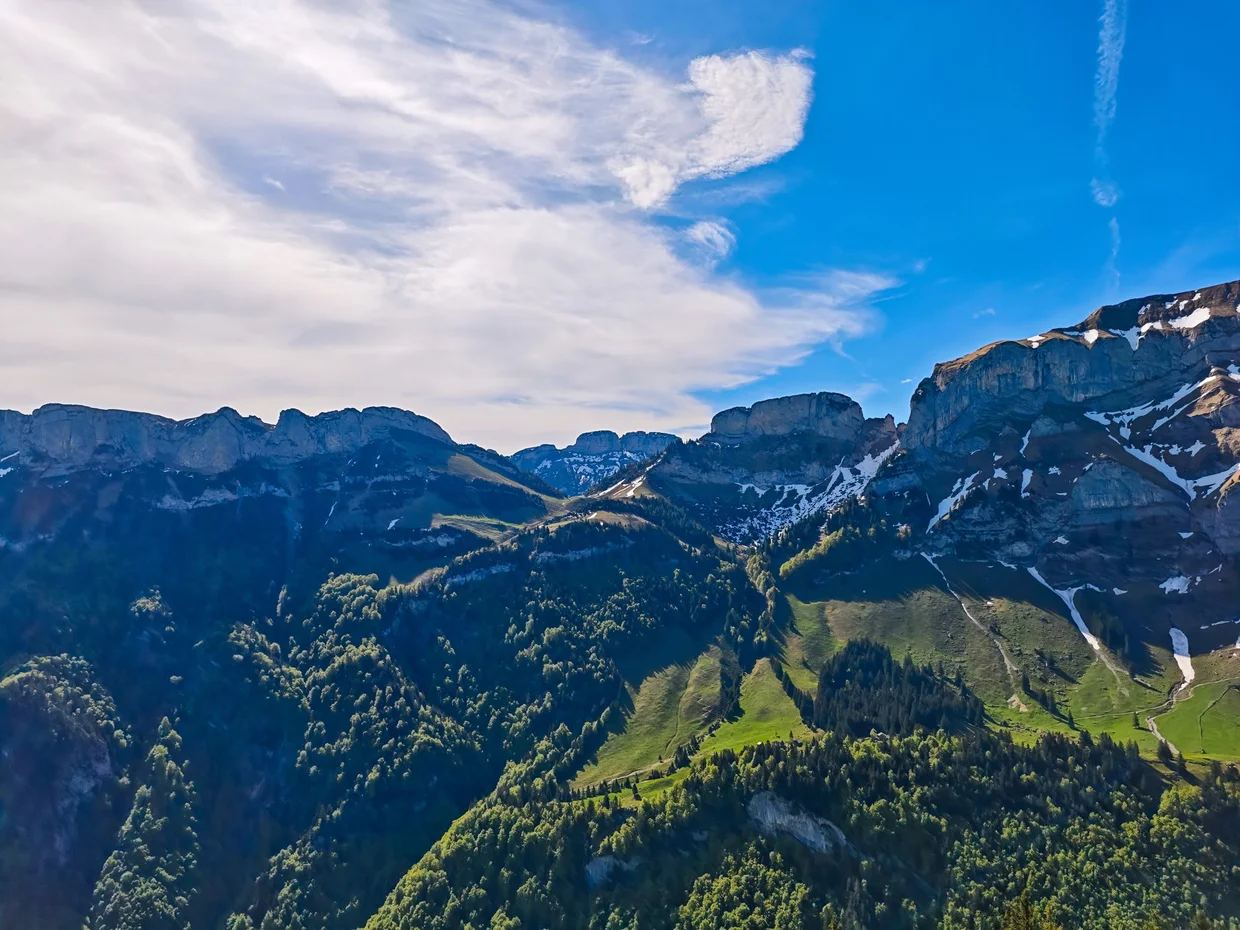
The valleys can be sunny and the high peaks stormy at the same time. Afternoon thunderstorms are common in summer. Pack a light fleece and a waterproof shell even in July if you're going up to Ebenalp or hiking around Seealpsee. Snow can linger on the high paths into June.
Tap water is excellent
Mountain spring water, drinkable from any tap or any of the public fountains in St. Gallen and Appenzell (unless marked "Kein Trinkwasser"). Bring a reusable bottle and skip the bottled stuff entirely; you'll save 4 CHF per bottle.
It's one of the safest countries on earth
Crime rates are among the lowest in Europe. Walking around St. Gallen at night, leaving stuff in a car at a trailhead, hiking alone: all things locals do without thinking about it. The actual risk profile here is the steep alpine paths, not anyone bothering you.
Tipping is light
Service is included in restaurant bills by law. Rounding up to the nearest franc, or leaving 5 to 10% for very good service, is normal but not expected. Nobody chases you out for not tipping.
SIM and eSIM
Switzerland is not in the EU roaming zone, so an EU SIM with included roaming will incur extra charges. A regional eSIM (Airalo, Holafly, etc.) is the simplest option for short visits. Coverage is excellent in towns and surprisingly good in the Alpstein, including up at Ebenalp and around Seealpsee.
St. Gallen is small and walkable
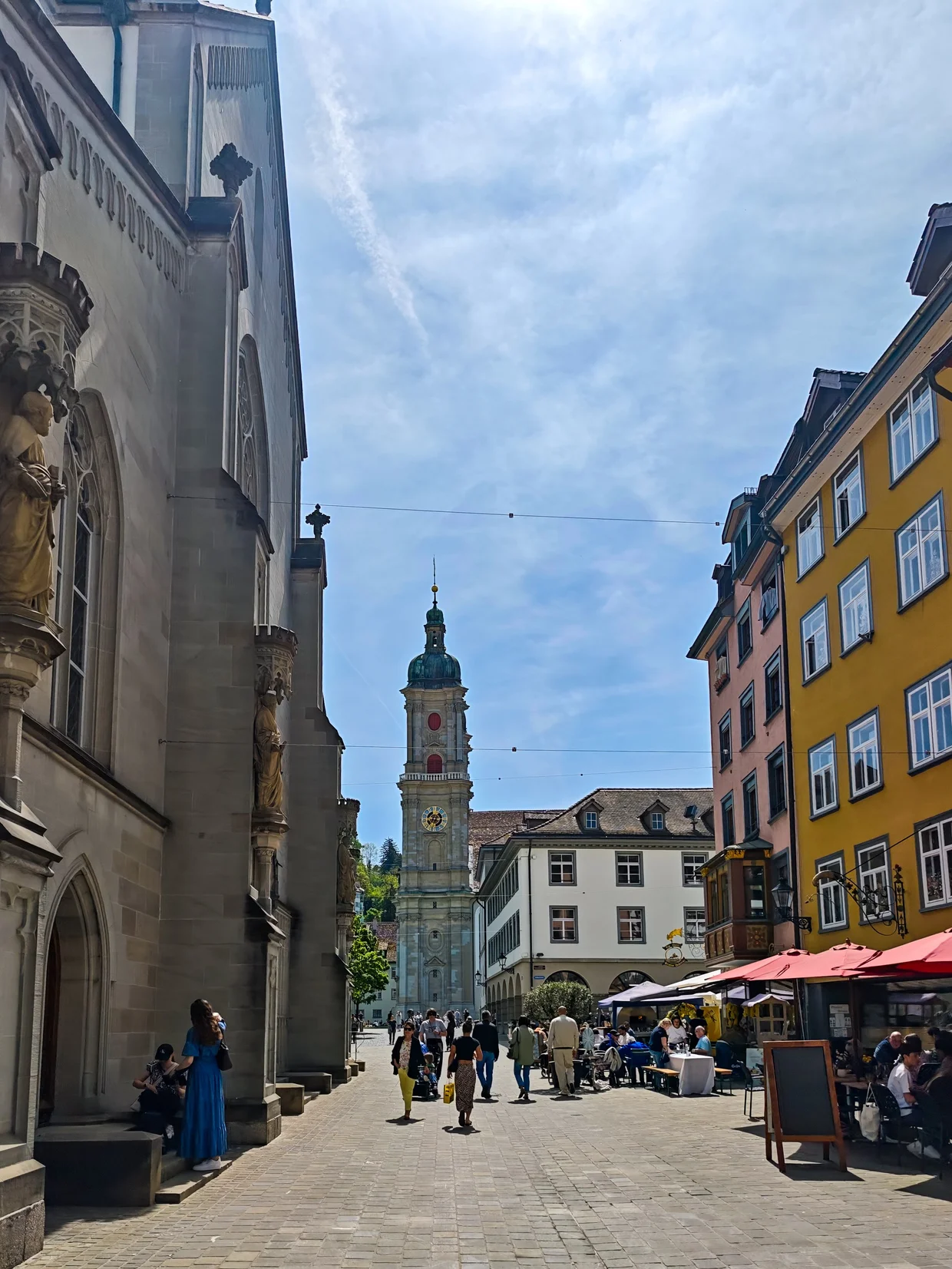
The old town is fully pedestrianised and you don't need a car once you're in. If you arrive by car, park in one of the underground lots (Brühltor, Oberer Graben, Bahnhof) and walk everywhere. The whole city centre fits in a 15-minute walking radius.
Try the local food at least once
Älplermagronen is the Alps' answer to mac and cheese: pasta, potato, cheese, cream, fried onions, side of apple sauce. Käseschnitte is Swiss cheese on toast at a comically large scale. Appenzeller cheese (made with the canton's secret herb mix) is in every shop window. Wash it down with an Appenzeller Quöllfrisch beer or an Alpenbitter herbal liqueur.
National Day is 1 August
Bundesfeier (Swiss National Day) is the main public holiday, with bonfires, fireworks, and brass bands in pretty much every village. It's a great day to be in St. Gallen or Appenzell if you don't mind crowds, and a chaotic day to be there if you do. Many businesses close, but festivities run all day.
Appenzell Innerrhoden is its own canton
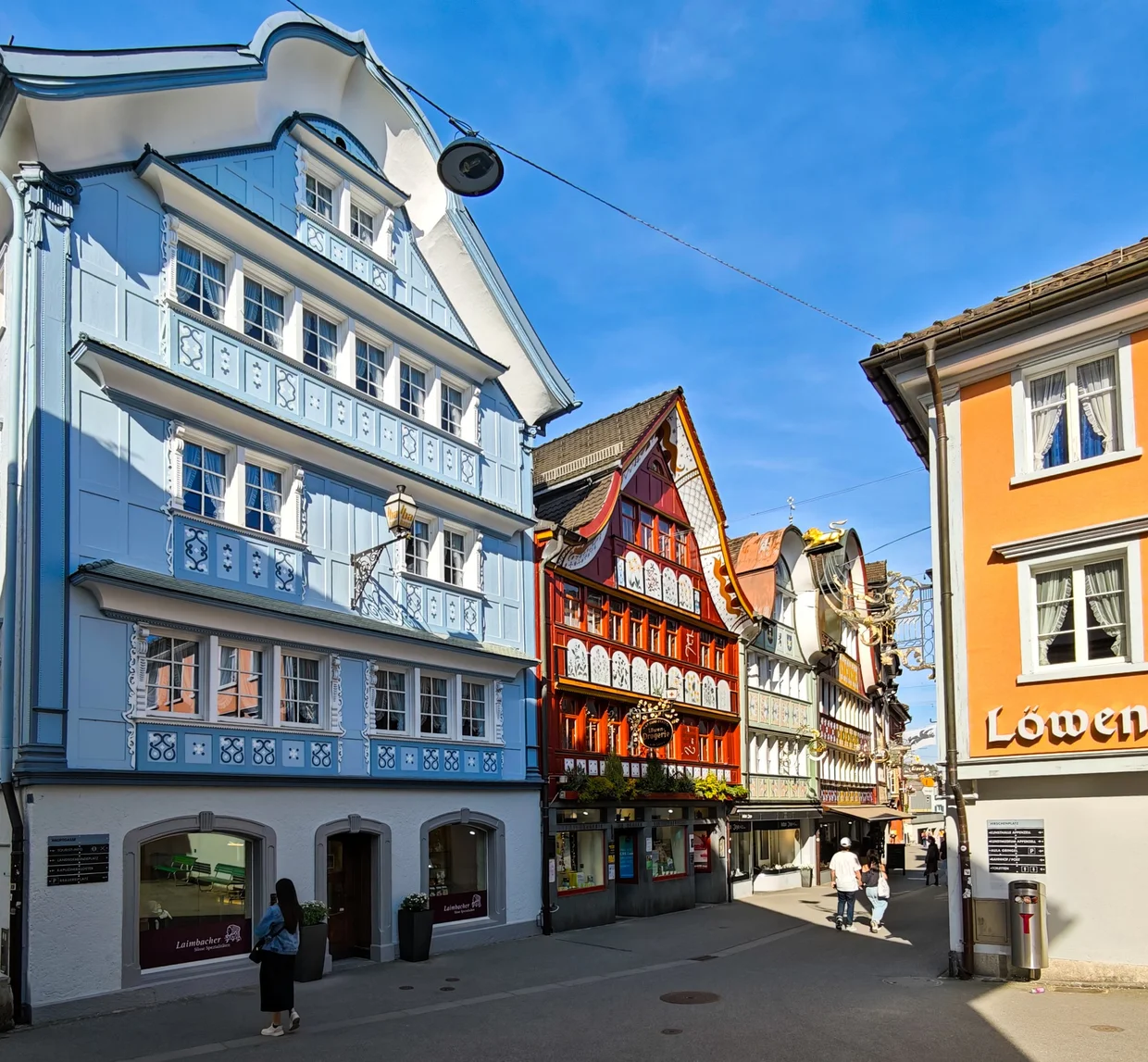
The cantons of Appenzell Innerrhoden (Catholic, conservative, the village itself) and Appenzell Ausserrhoden (Protestant, more liberal, includes Trogen and Heiden) split in 1597 and are still separate cantons today. It's why you'll see two flags and slightly different signage as you cross between them. Innerrhoden is also where they still hold open-air democratic Landsgemeinde votes by show of hands every spring.
Swiss vignette for the highway
If you're driving on Switzerland's autobahn (the green-signed motorways), you need a Swiss vignette sticker (40 CHF, valid for the calendar year). You can buy it at any border crossing, post office, or larger petrol station. For this NE corner, the autobahn is mostly the A1 between Zurich and St. Gallen, useful if you're flying into Zurich, less relevant if you stick to scenic routes.
Published May 2026.