A Long Weekend in the North-East
North-eastern Switzerland is the bit this guide is actually about: St. Gallen's monastery-town polish, Appenzell's painted-house theatre, and the Alpstein hills rising up from cowbell meadows.
This is not the Switzerland of glacier trains, designer ski resorts, and Matterhorn postcards. It is smaller, softer, greener: a weekend-sized corner where monastery courtyards turn into painted village streets, and those turn into limestone cliffs fast enough that you start wondering whether the map is lying to you.
This trip didn't try to do the whole country. Two days, one rental car, one cable car, and a tight loop in the chunk that sits between Lake Constance and the Alpstein peaks. St. Gallen for cobblestones and a Baroque library that'll make your jaw hit the floor. The Appenzell countryside for painted houses and cows wearing more hardware than Mr. T. And one ridge hike that ends at a cliff hut so dramatic it's basically a screensaver.
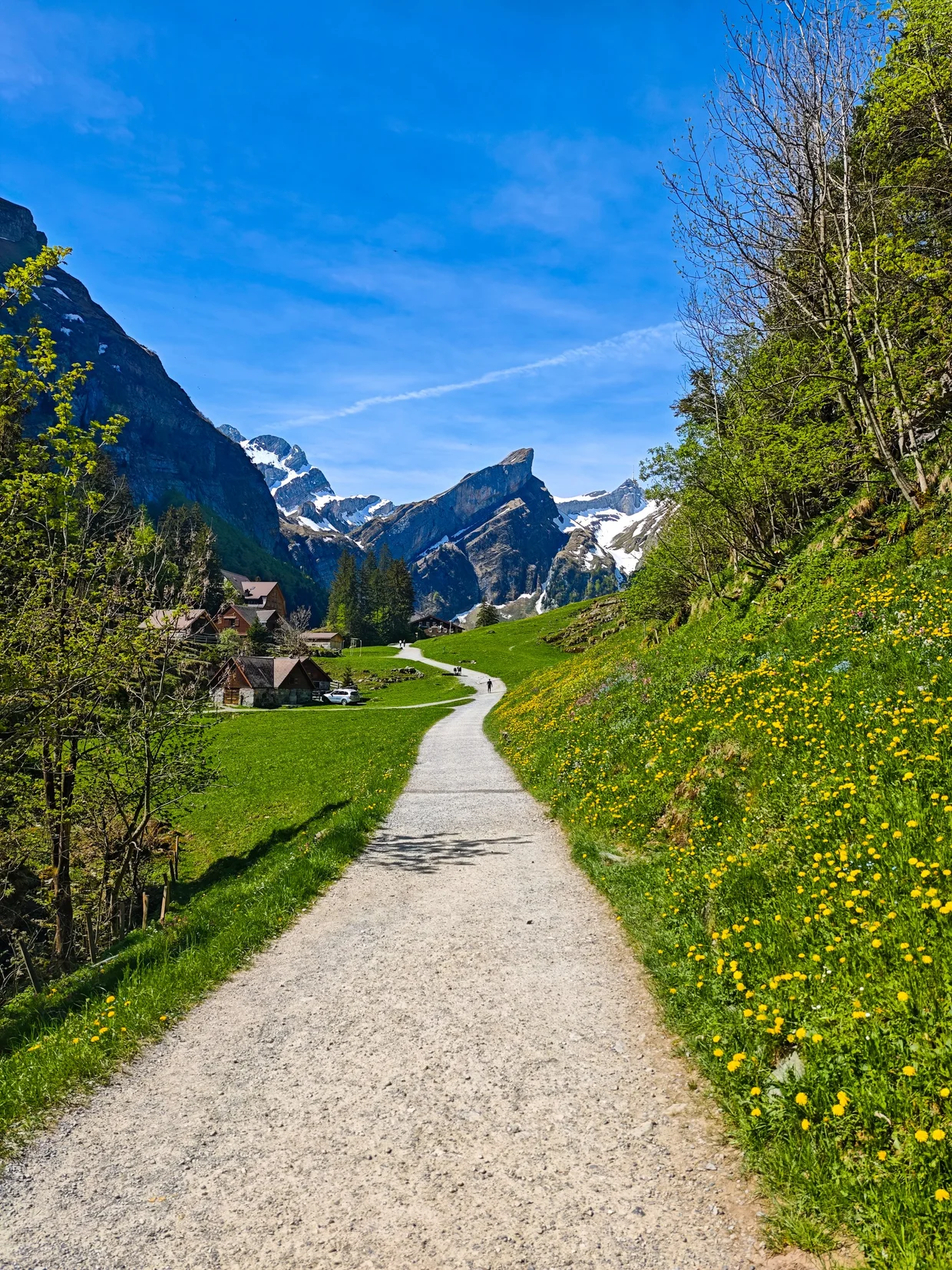
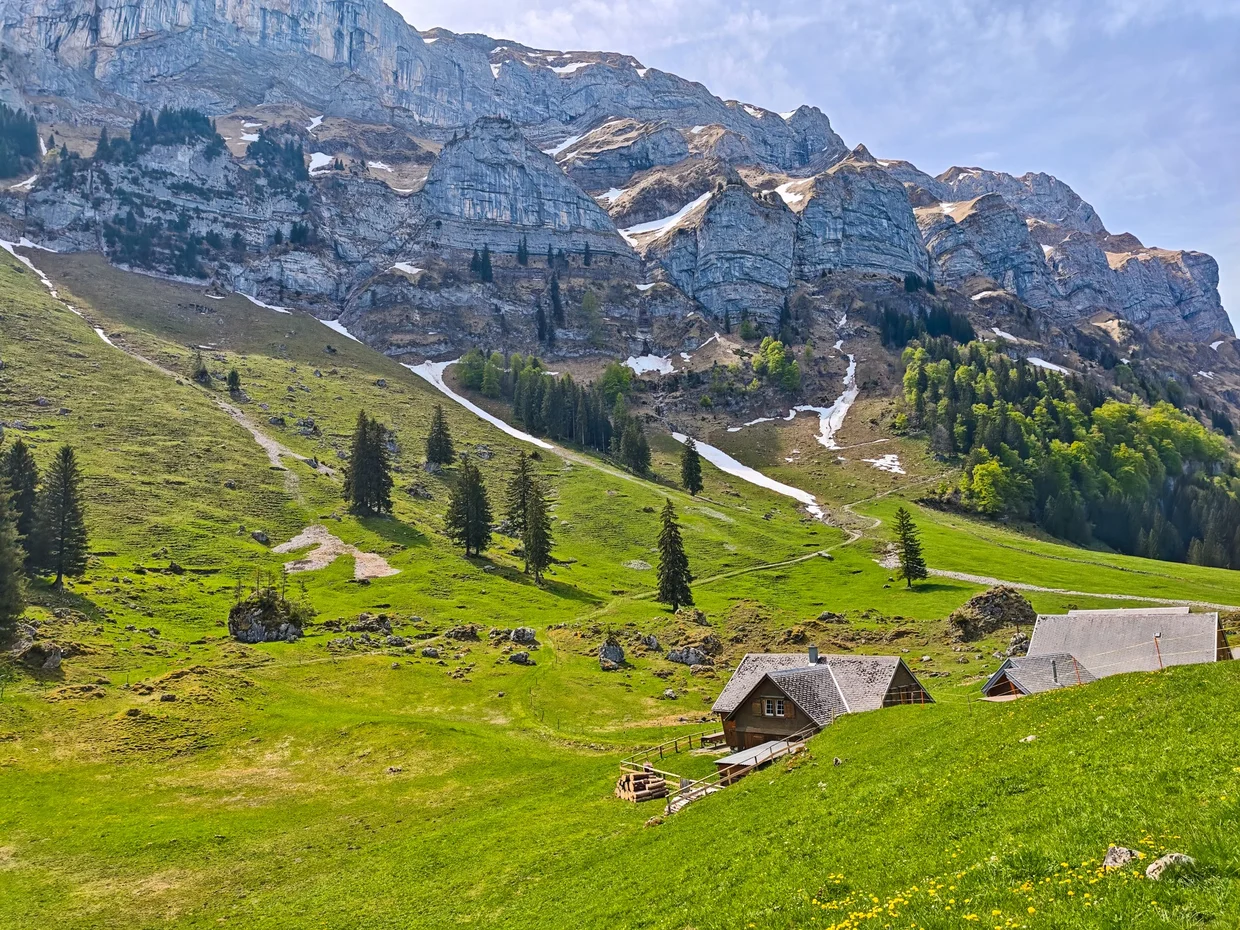
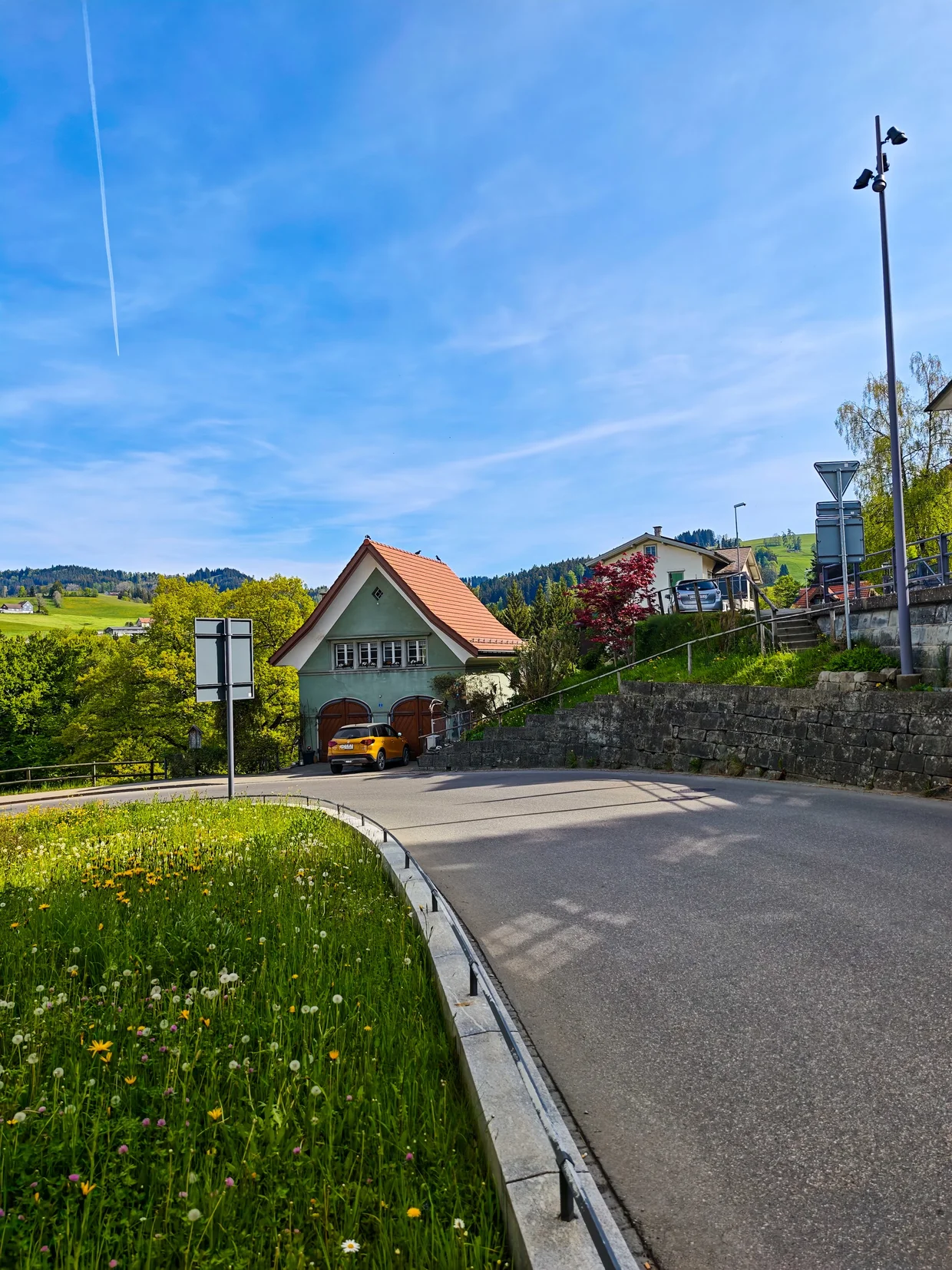
The nice thing about this route is how little dead time it has. St. Gallen to Appenzell is under an hour if you drive it straight, but the road keeps handing you excuses to pull over: Lake Constance in the distance, onion-domed churches in tiny villages, flowered balconies, pastures sloping up toward cliffs. It feels rural without feeling remote, scenic without becoming a logistical project.
Two days is enough to make the loop feel complete. Three is better if you wanna add Walensee on the way in or out: turquoise water under the Churfirsten cliffs, a swim if it's warm, and a slower lunch instead of treating the whole weekend like a relay race. Either way: light pack, good shoes, a wallet you've made peace with. Off we go.
Heads Up: Just the NE Bit
Quick disclaimer before you scroll any further: this guide currently covers only the north-eastern corner of Switzerland. We're talking St. Gallen, the Appenzell cantons, and the Alpstein massif. That's it. No Zurich, no Bern, no Lucerne, no Matterhorn, no Geneva, no chocolate factory tour. Sorry. Those'll come later.
I went on a long weekend and that's the radius you can comfortably cover in a long weekend. So if you're plotting a similar two-day swoop into Switzerland and don't really wanna spend it on a train or fighting crowds, this corner is genuinely a great pick. You'll get the half-timbered, painted, cow-belled, lake-and-cliff version of Switzerland without the Lucerne crowds or the Matterhorn shuttle bus.
Other parts of the country will get their own pages eventually. For now, treat this one as "weekend in the NE" and not "Switzerland: the whole shebang." If you've got an extra afternoon, Liechtenstein is a half-hour detour from this corner and worth a separate stop.

Destination Info
Quick Facts
Overview
- Best 2 to 3 days in May till September.
- At 670m in Central Europe, time zone UTC+1 (UTC+2 DST).
- The population of 9.1M people speaks German (Schwyzerdütsch), French, Italian, Romansh, writes in Latin script.
- Swiss Franc (CHF) is the official currency, and tipping is round up.
Local Flavor
- Get a Appenzeller Alpenbitter and Käseschnitte / Älplermagronen.
- The main festival here is Bundesfeier (1 August), and popular sports include Hiking, skiing.
Practicalities
- You can use SBB trains, PostBus, Appenzeller Bahnen for public transportation, while driving on the right.
- You can get here mostly via Zurich (ZRH), St. Gallen-Altenrhein (ACH).
- The best area to stay is St. Gallen.
St. Gallen: Painted Houses, Quiet Squares
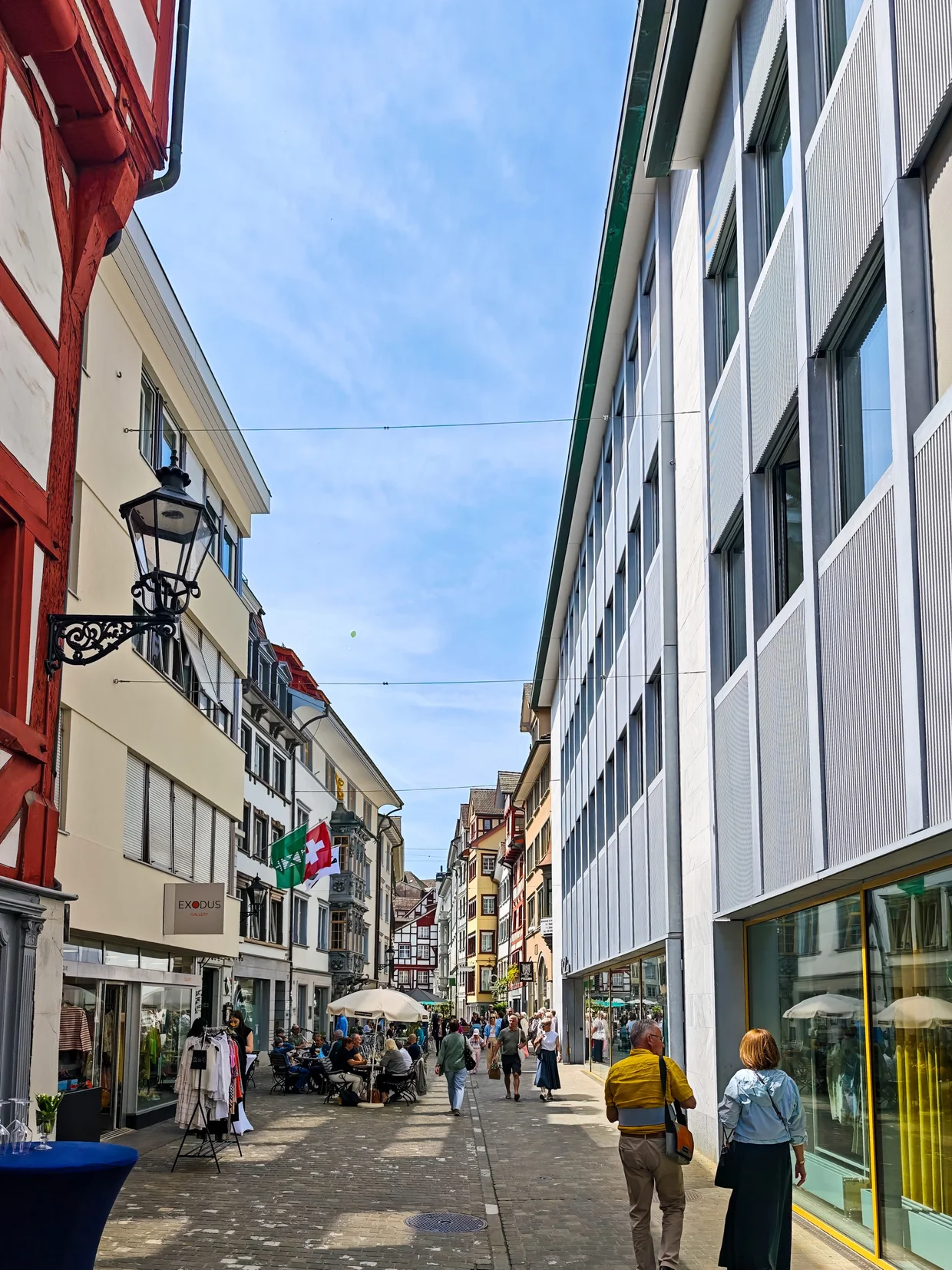
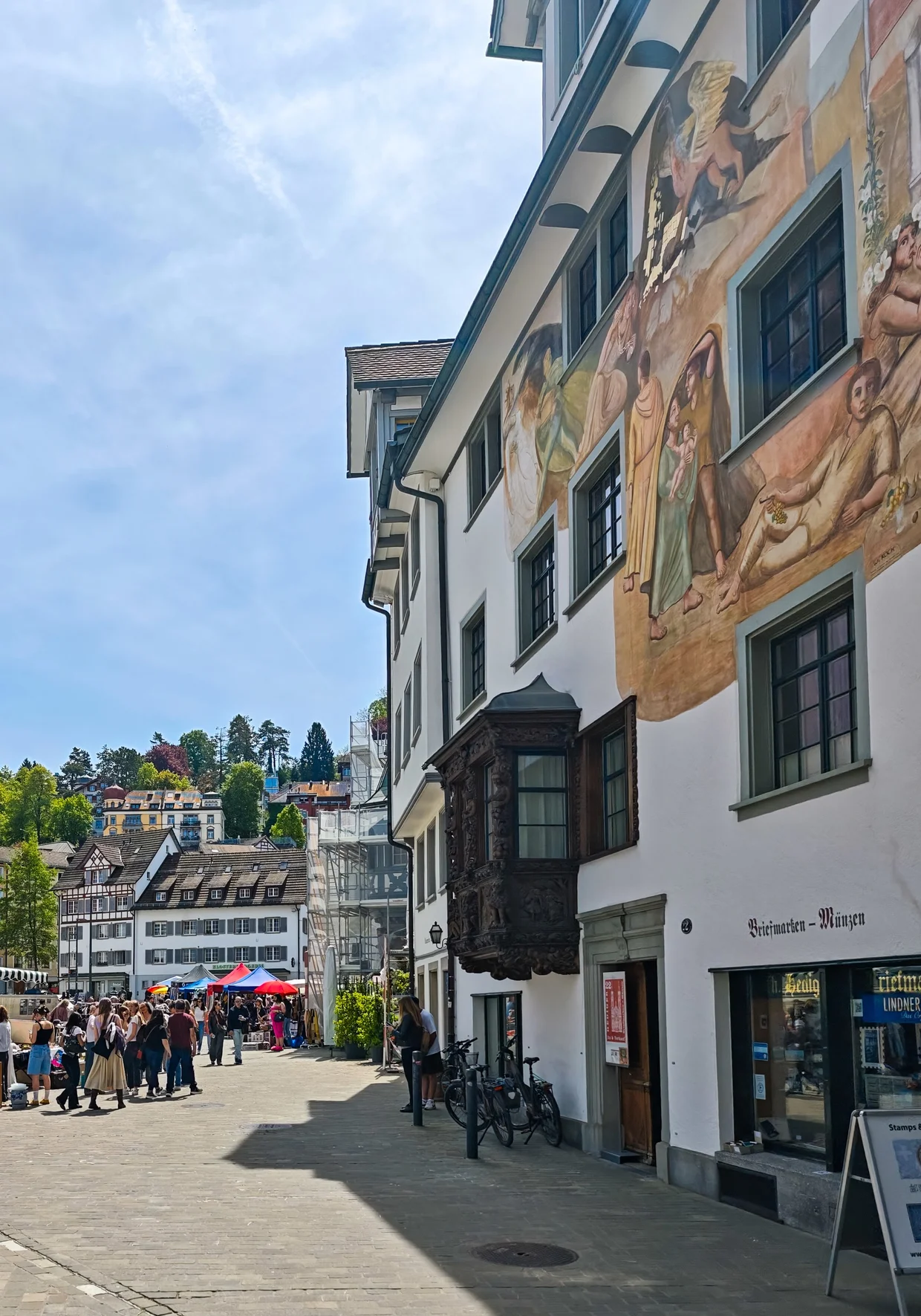
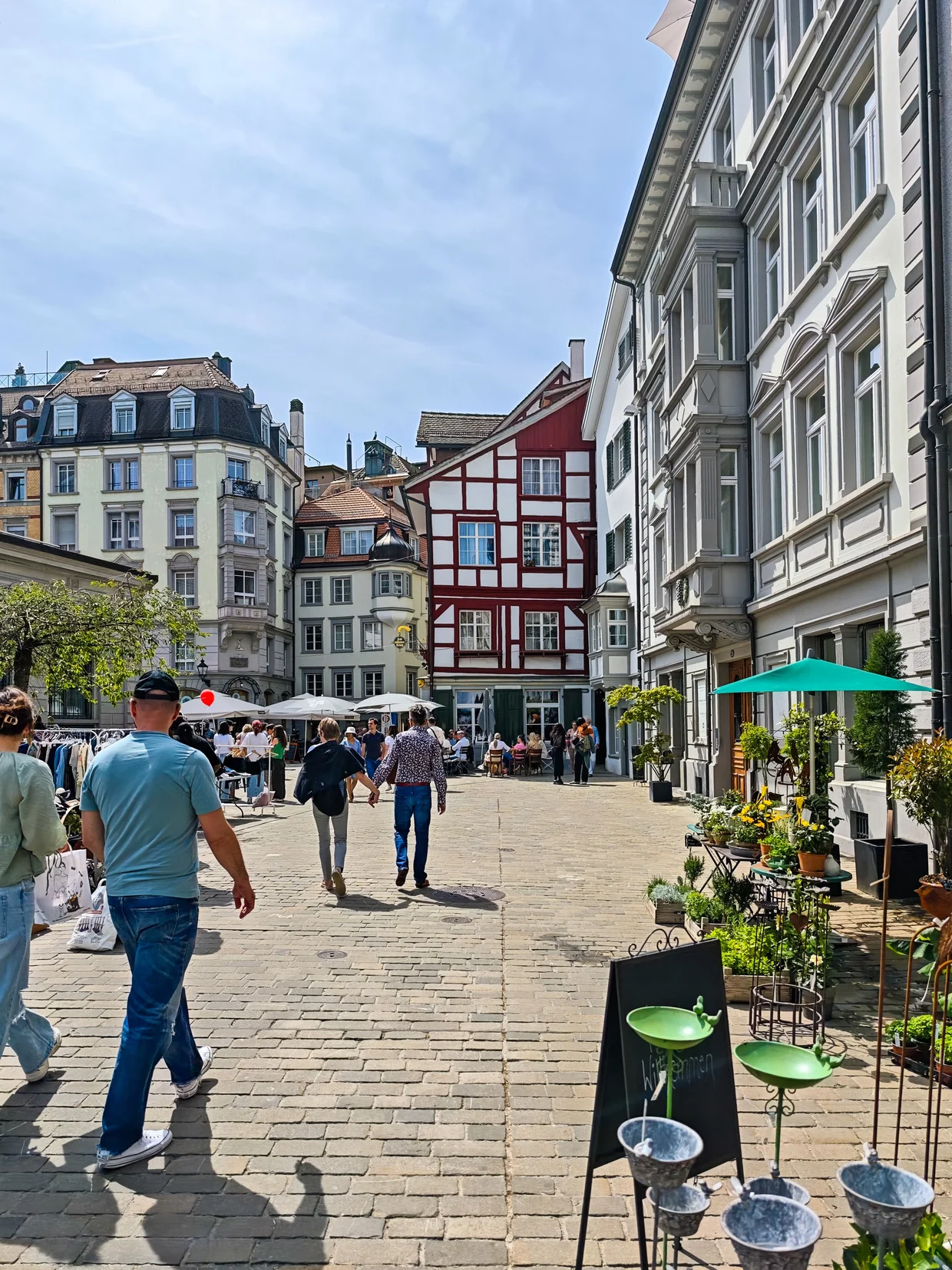
St. Gallen is the kinda town you walk into wanting a coffee and walk out of three hours later wondering where the time went. The old town is tiny (a couple of pedestrian streets, one big abbey square, a flea market on weekends), but it's stuffed with these incredible painted house facades. Frescoes, oriels, dragons, saints, occasionally a tasteful nude. A whole class of architecture I didn't know I'd been missing.
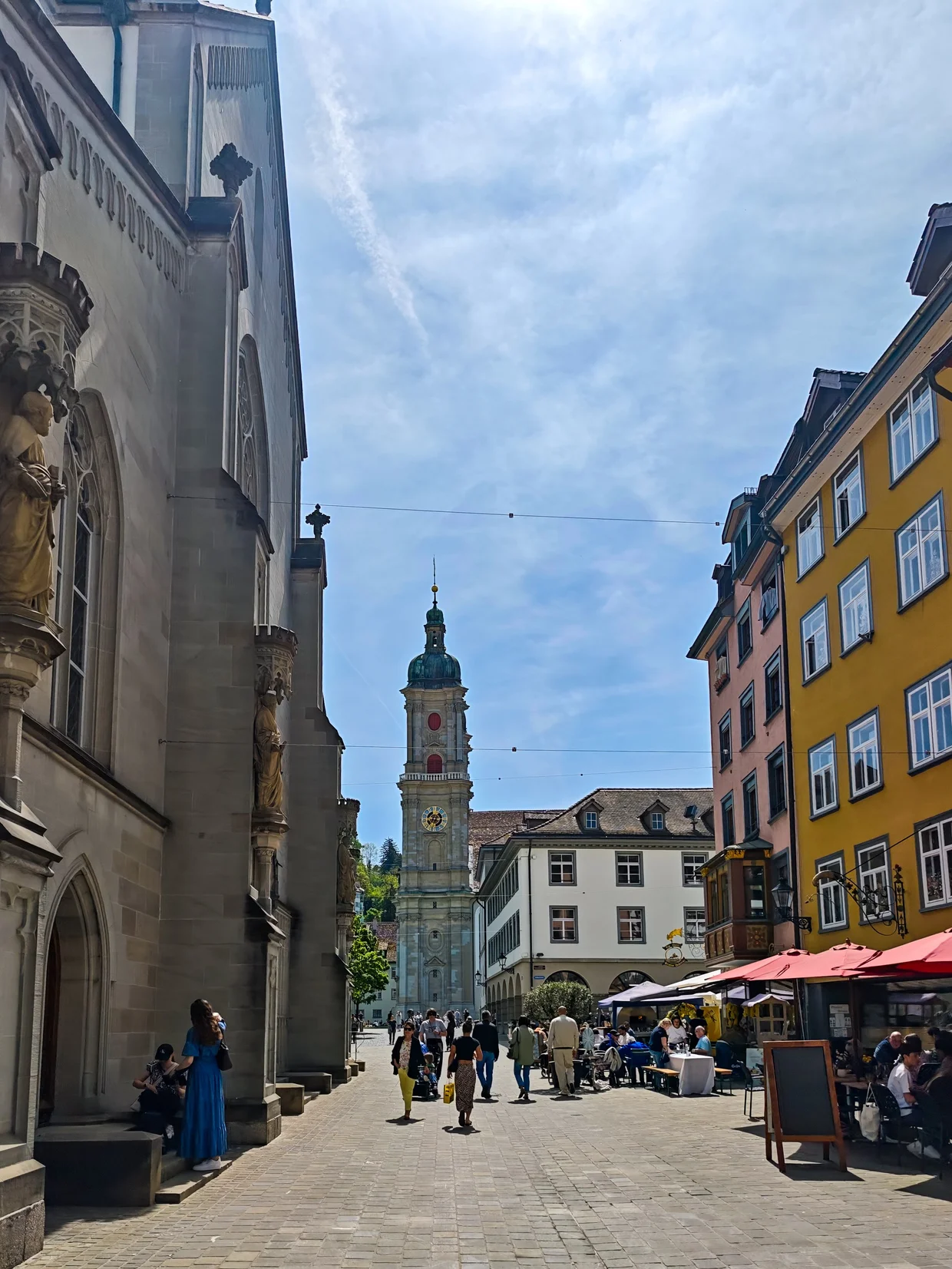
The thing that hits first is how clean it is. I know, I know, "Switzerland clean" is a cliché, but you don't really get it until you've stood on a 14th-century cobblestoned square and not seen a single bit of trash. I do wonder who'd win a cleanliness pageant with Japan and Switzerland in the final. Japan has the choreography, Switzerland has the spotless cobblestones. Even the alleyways have that vibe. Pavements look like they've been wiped down by somebody who actually meant it.
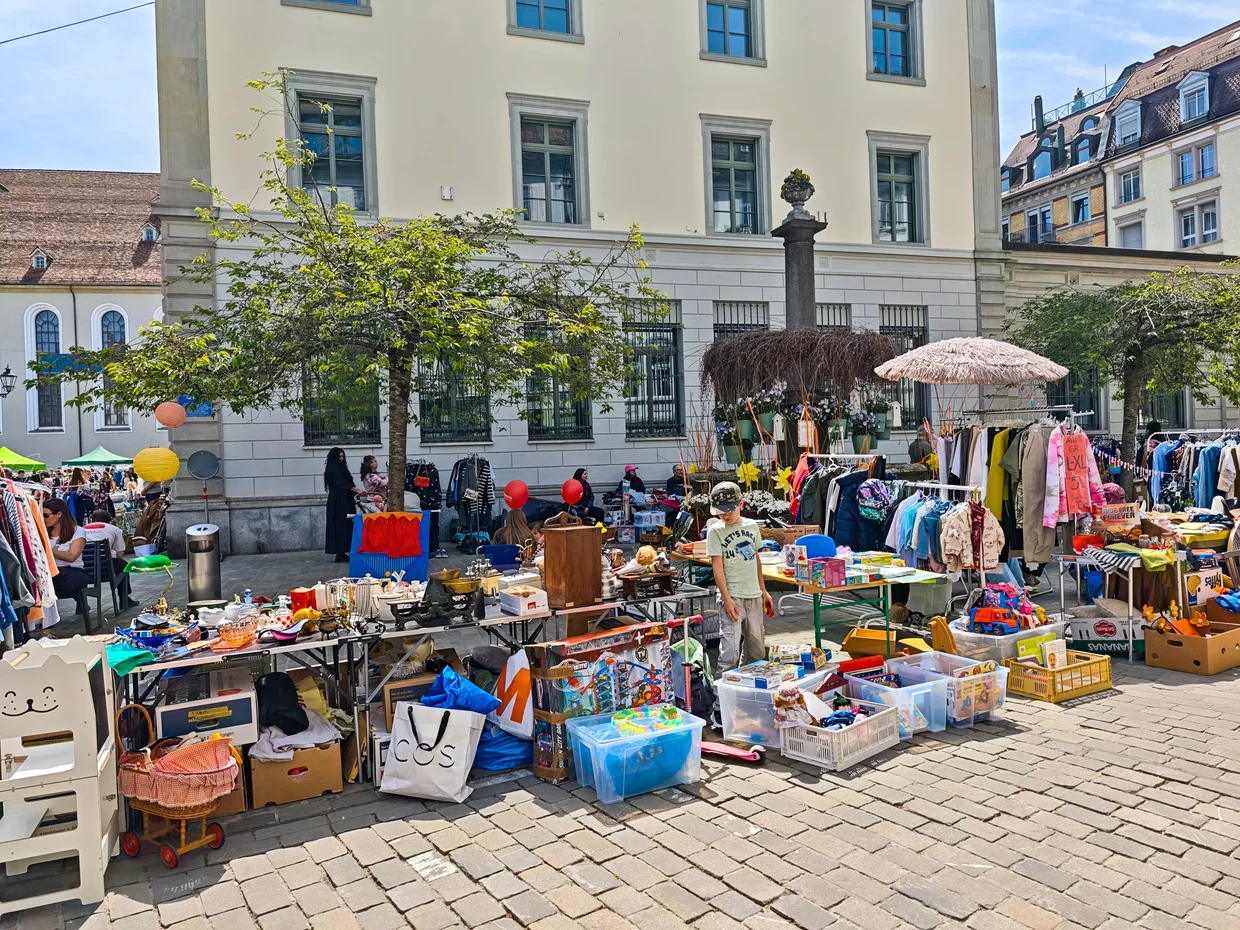
The pedestrian zone runs roughly between the Klosterhof (the abbey square) and the Marktplatz. You wander, you stop, you look up, you stare at a fresco of someone being dramatic in a robe, you keep wandering. There's a flea market on Saturdays in front of the Abbey, and on the day I was there it was the polite kind: nobody yelling, no hard sell, just a bunch of stalls and people drinking coffee on the periphery.
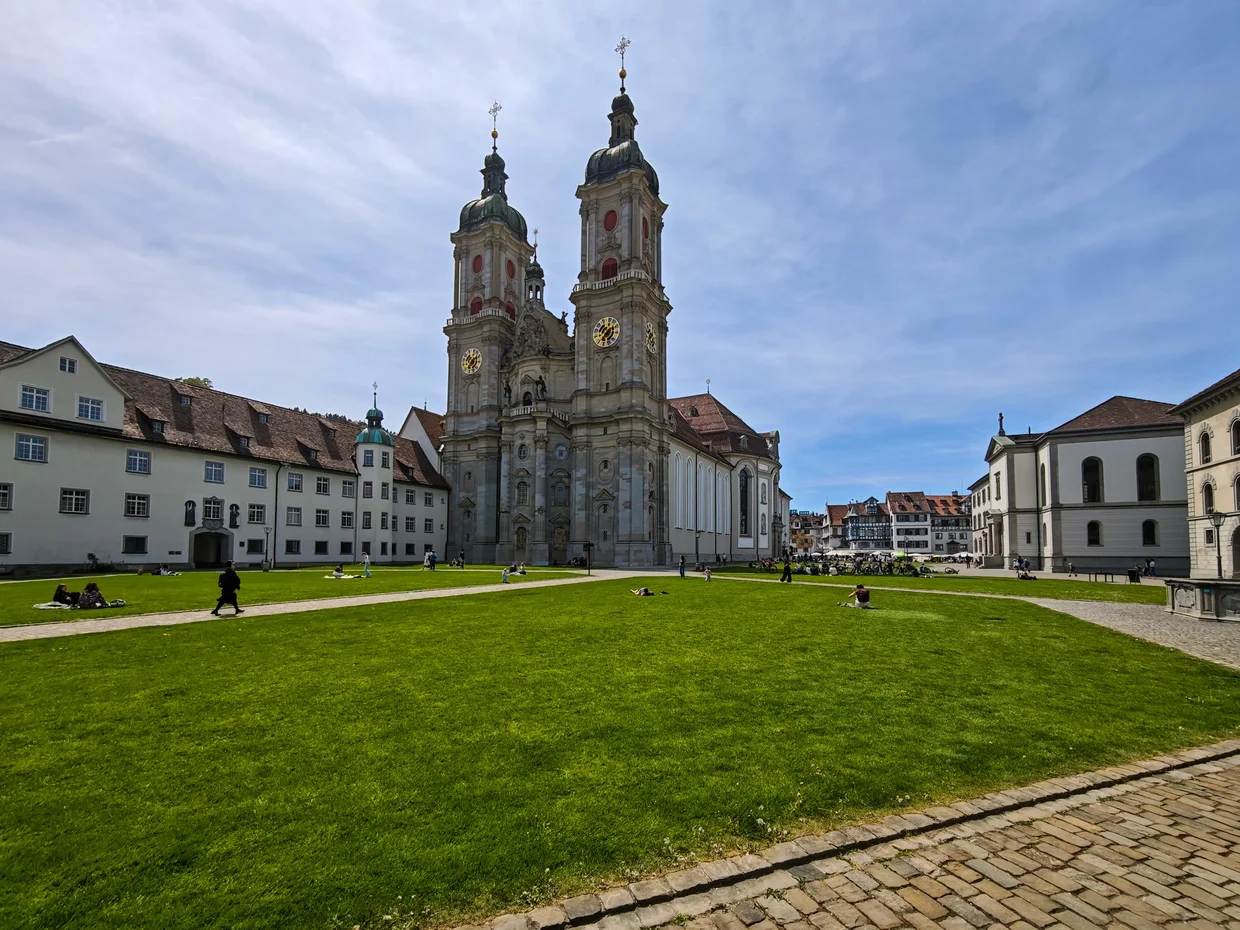
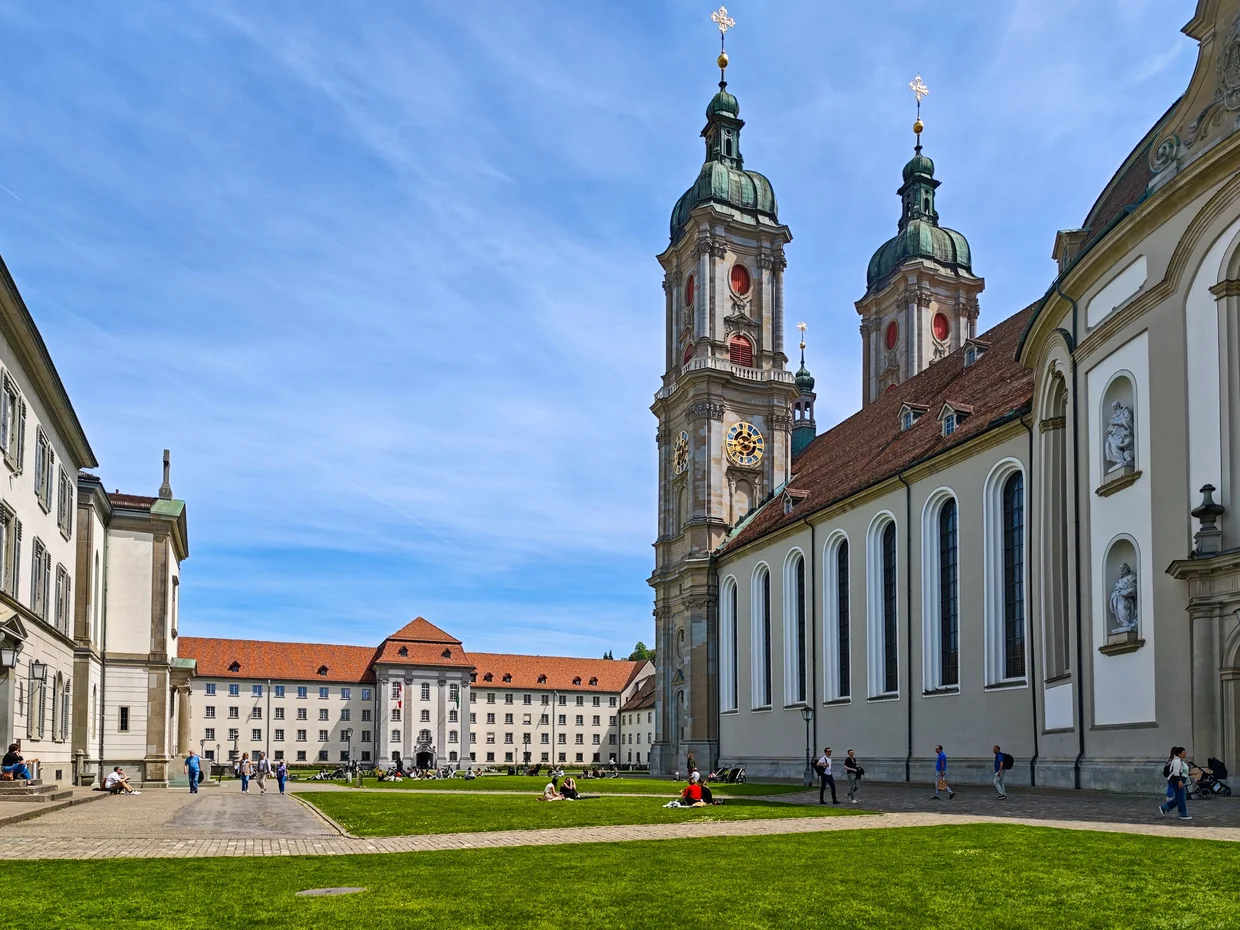
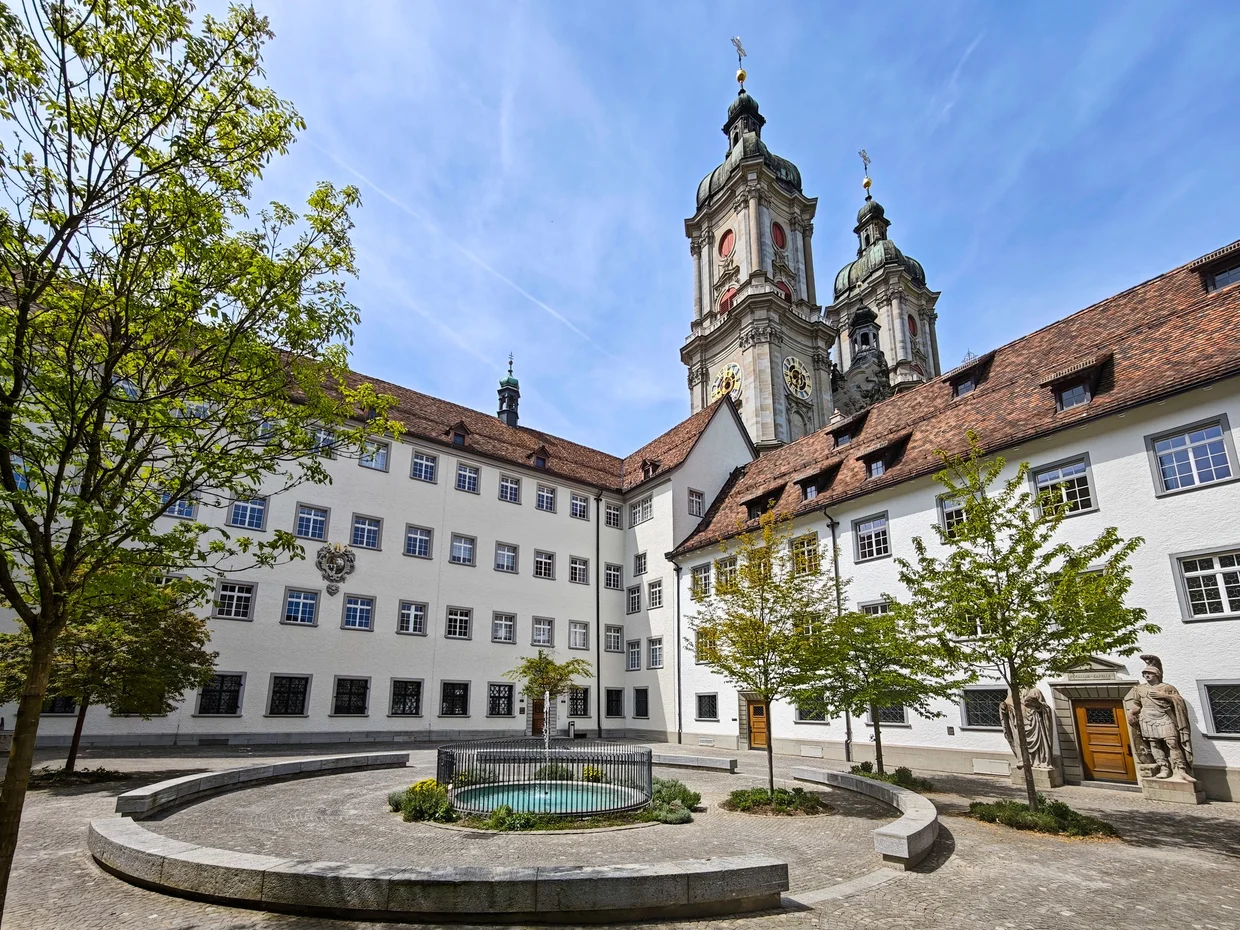
The Cathedral (Kathedrale St. Gallen). Twin-towered Baroque, sits on the Klosterhof. Built between 1755 and 1766 on the site of the old monastery church. Free to enter, drop in for a few minutes. UNESCO listed alongside the abbey precinct.
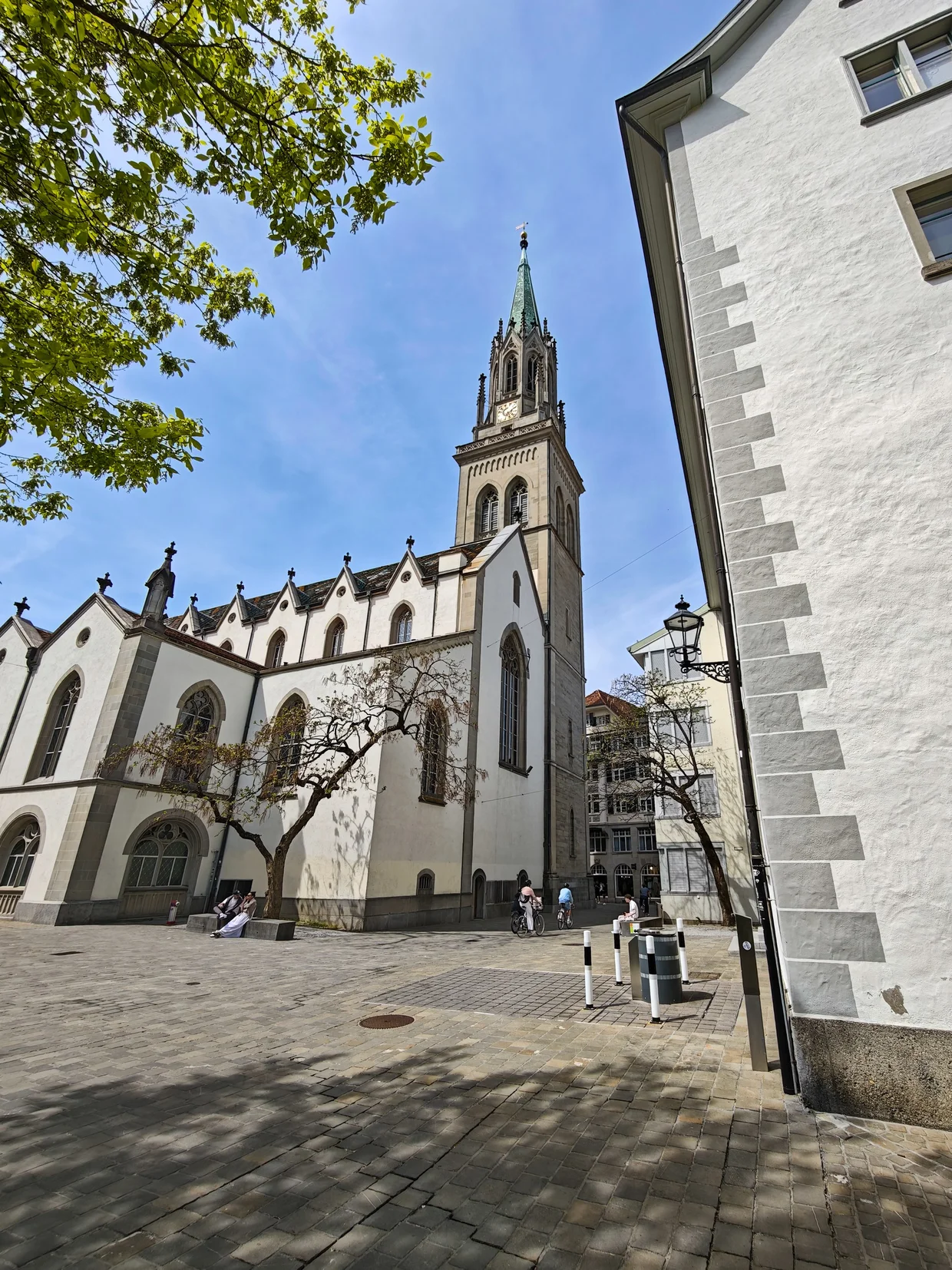
St. Laurenzen Church (Kirche St. Laurenzen). The green-spired Reformed church a few minutes walk from the cathedral. From certain angles it photobombs into half the old-town shots and you'll wonder why one little town needs two giant churches. Welcome to Reformation politics.
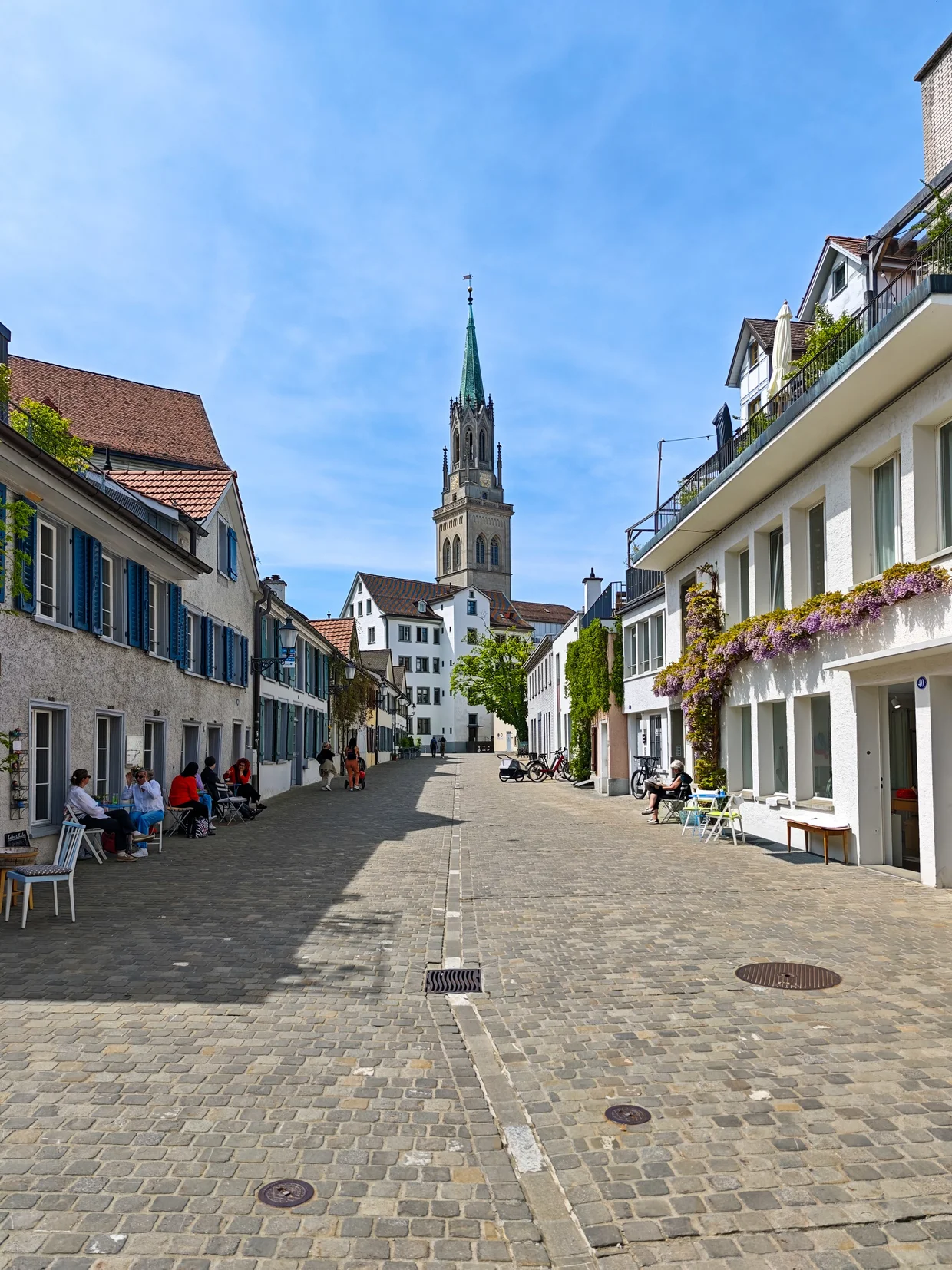
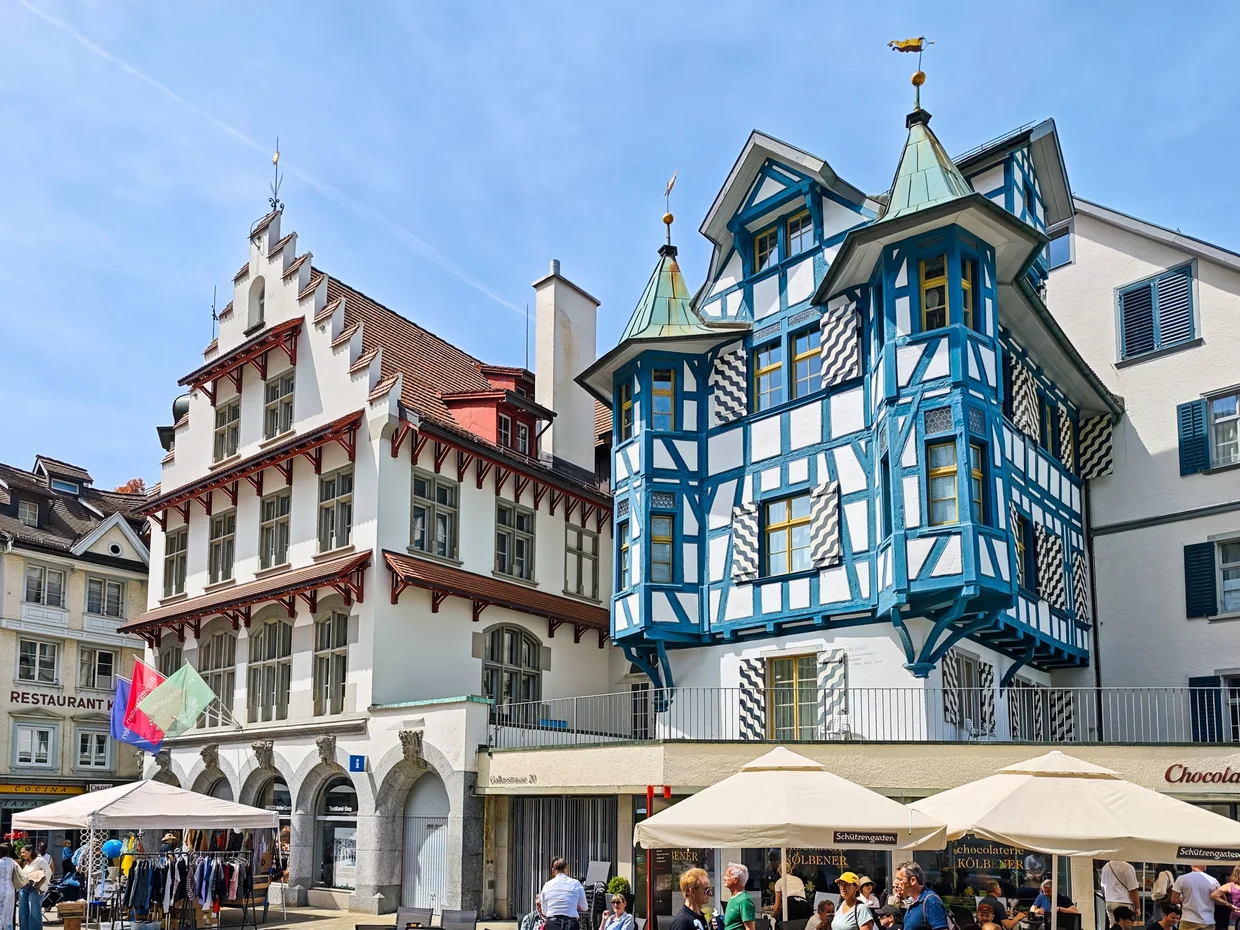
The painted oriels. This is St. Gallen's calling card. The old-town houses have dozens of carved, painted bay windows (Erker), each one a flex from a wealthy textile merchant a few hundred years ago. The blue half-timbered one on Marktgasse is the one everyone photographs, but really almost every street has at least one worth slowing down for.
Tucked-away spots. The Klostergarten herb garden behind the cathedral is a little oasis with raised beds, labels, and benches that nobody else seems to know about. The old stone walls and cobbled alleys around the Hofkeller and the Pfalz square give you the medieval-pocket feel without the crowds.
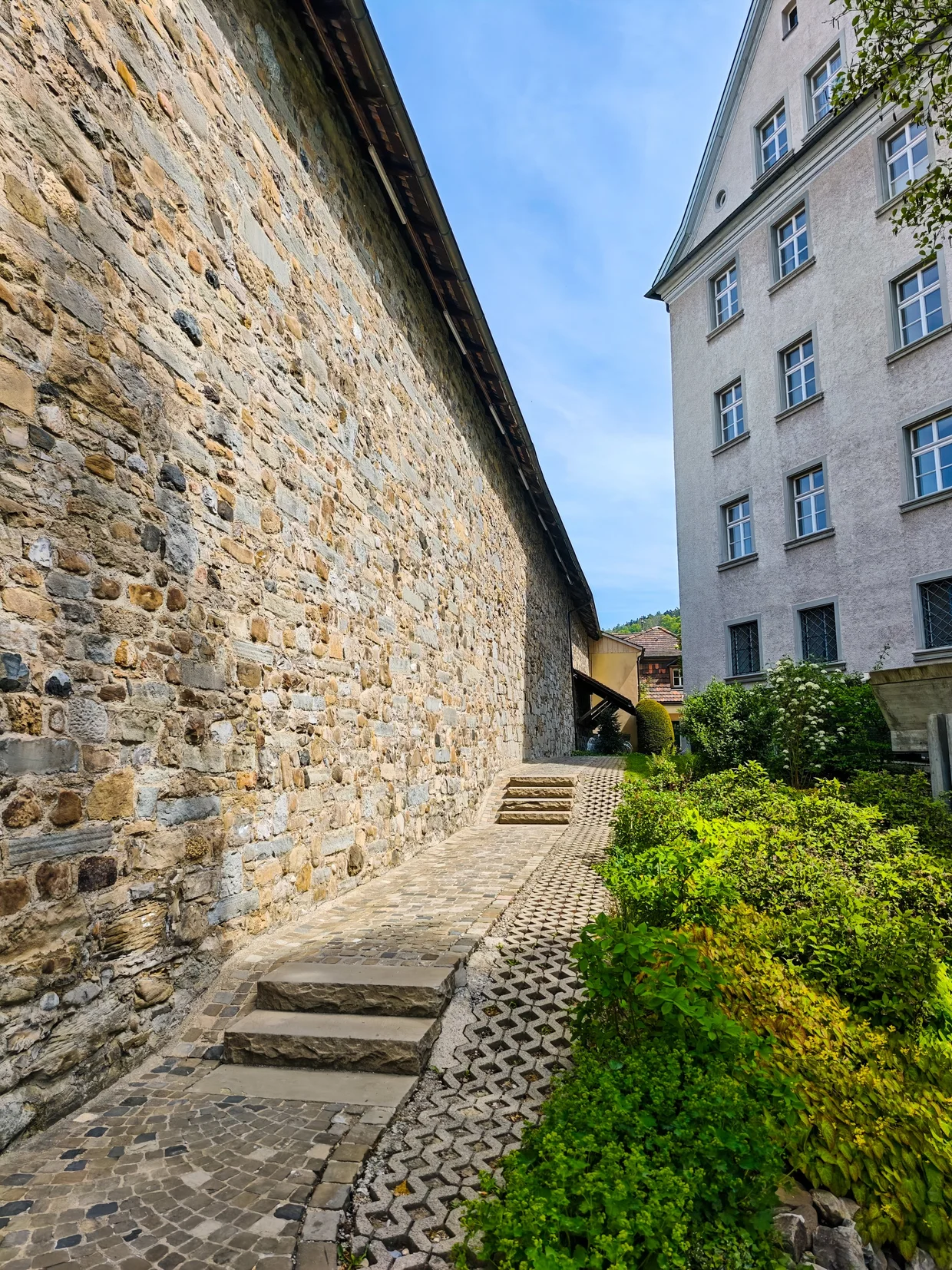
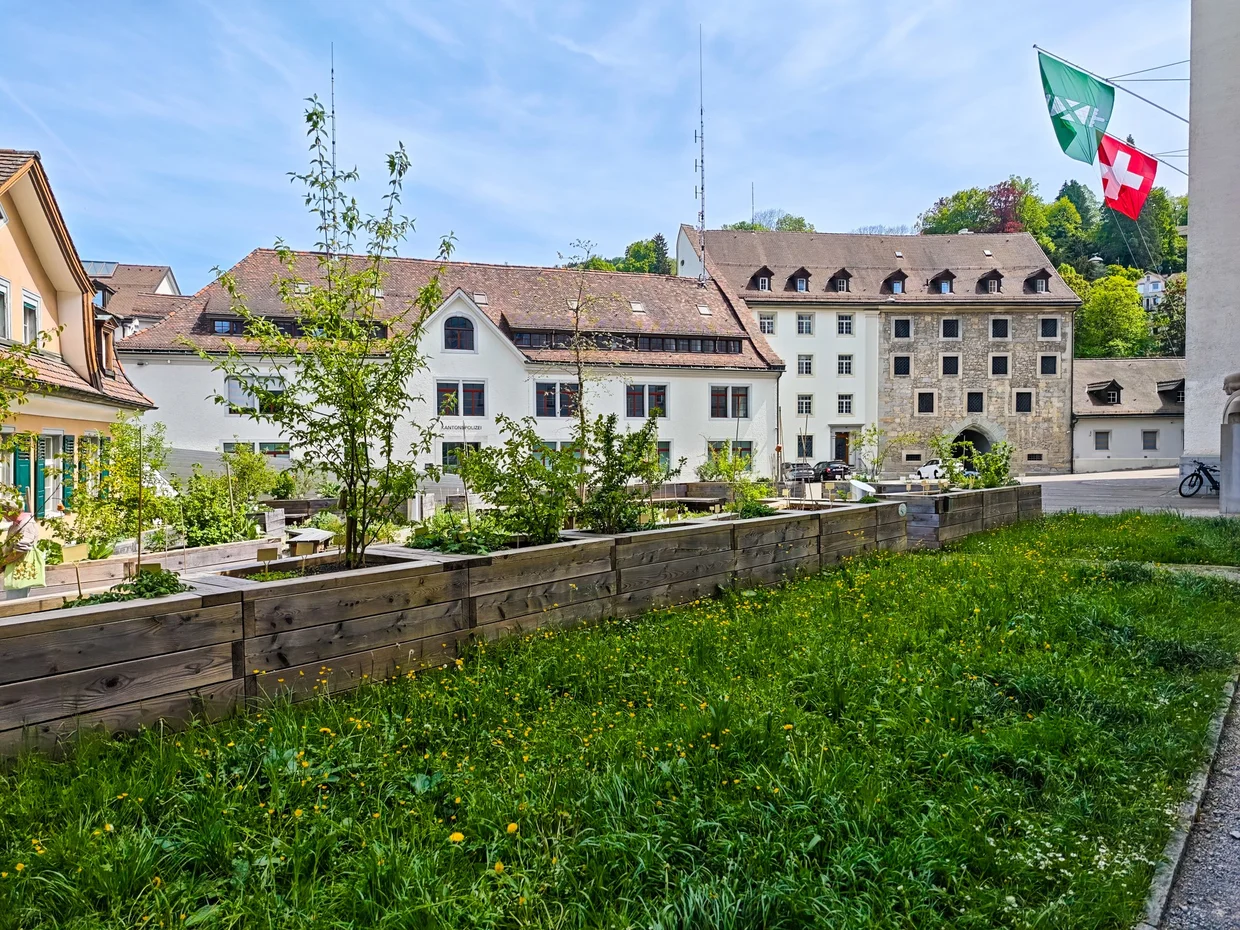
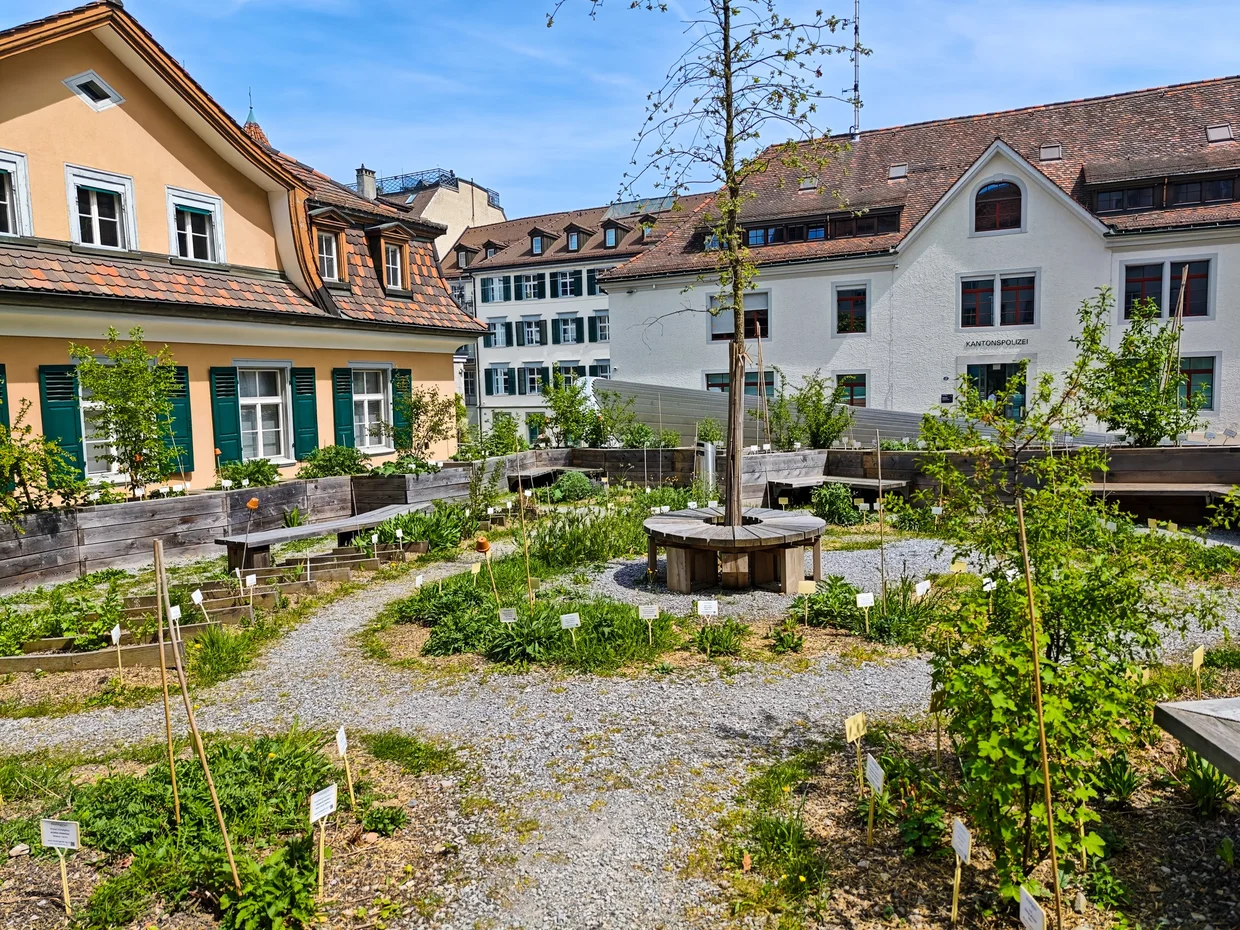
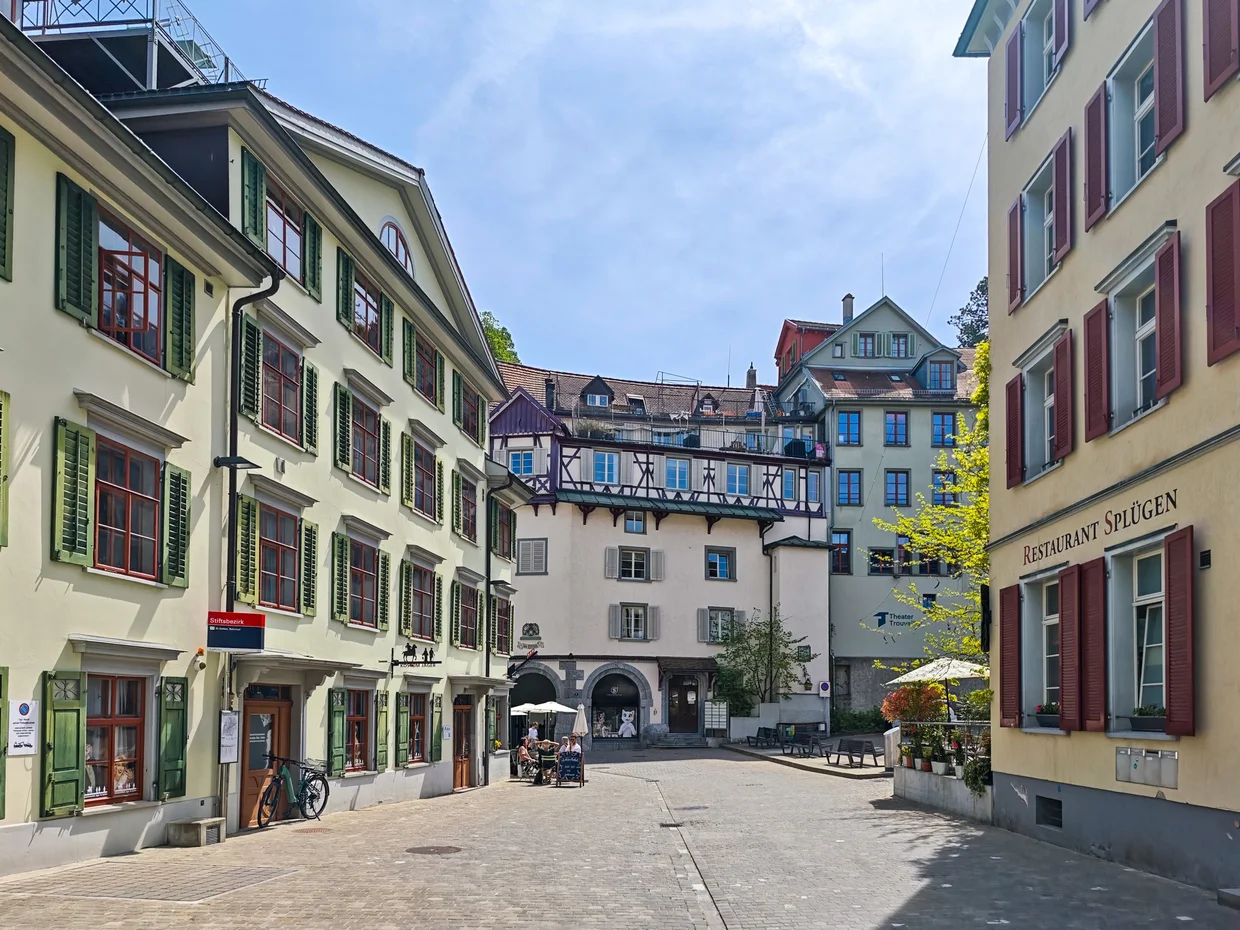
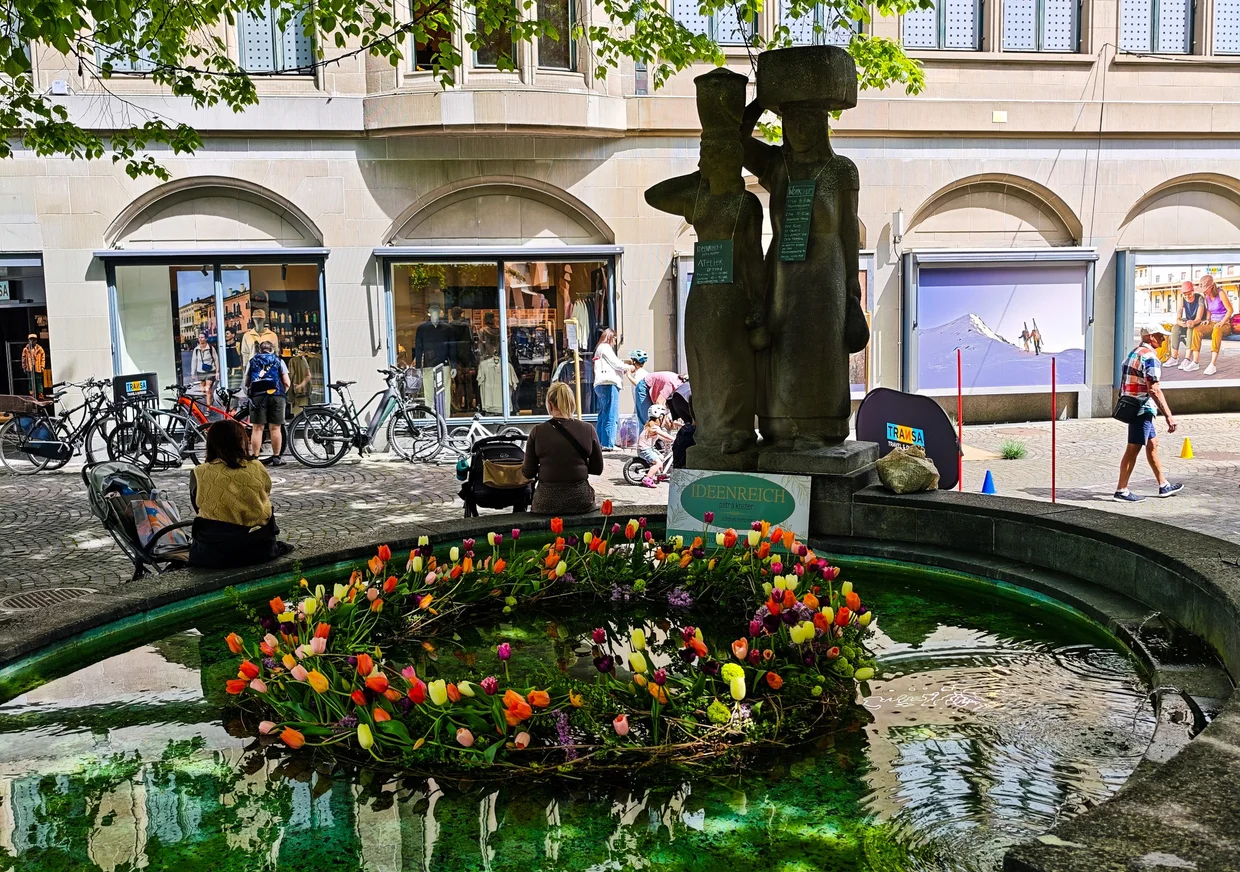
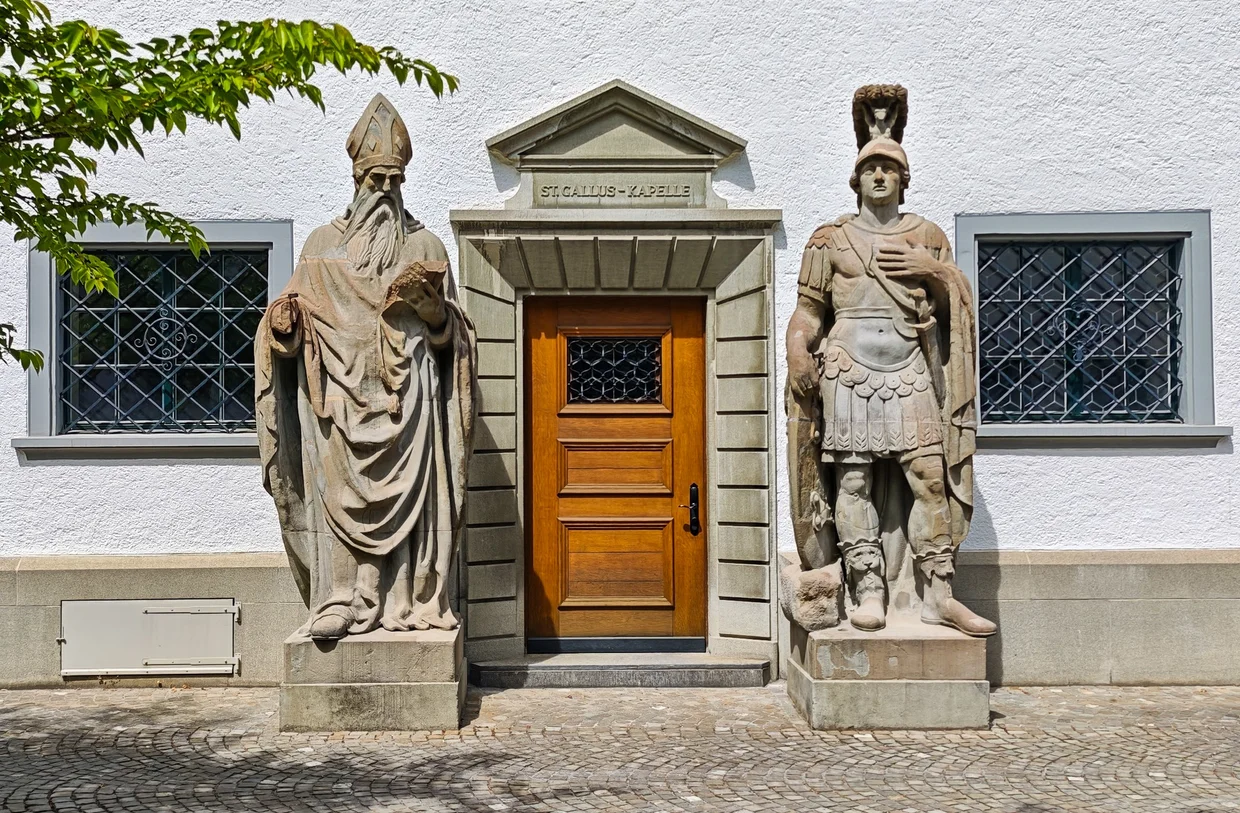
You can walk the whole old town in maybe an hour and a half if you're moving. Realistically, give it half a day, because once you start poking into courtyards and side alleys you're not gonna wanna leave on schedule.
The Abbey Library: A Wow Moment
I went to St. Gallen mostly because I wanted to see the Abbey Library (Stiftsbibliothek), and it lived up to it but got stained by the crowd.
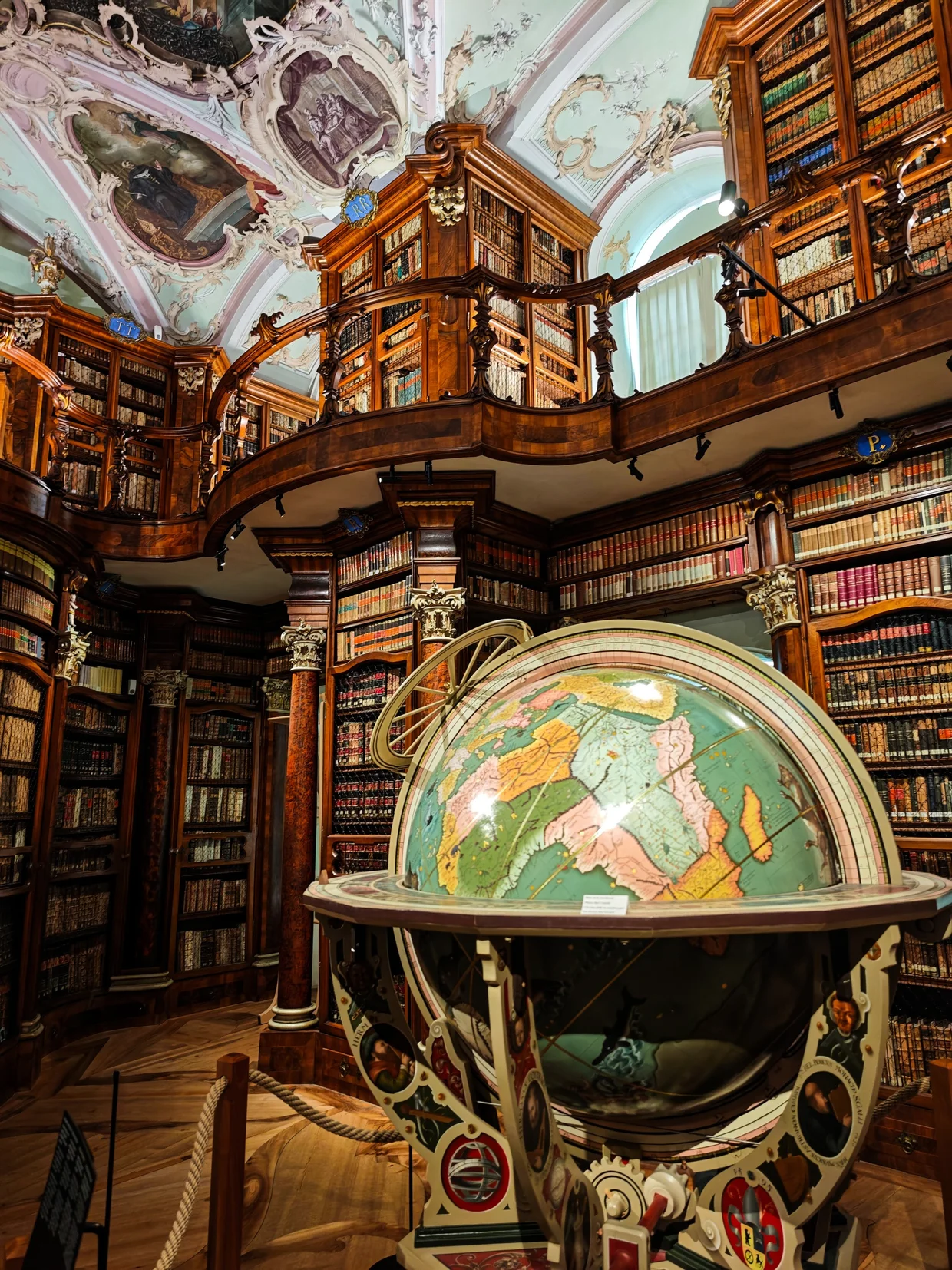
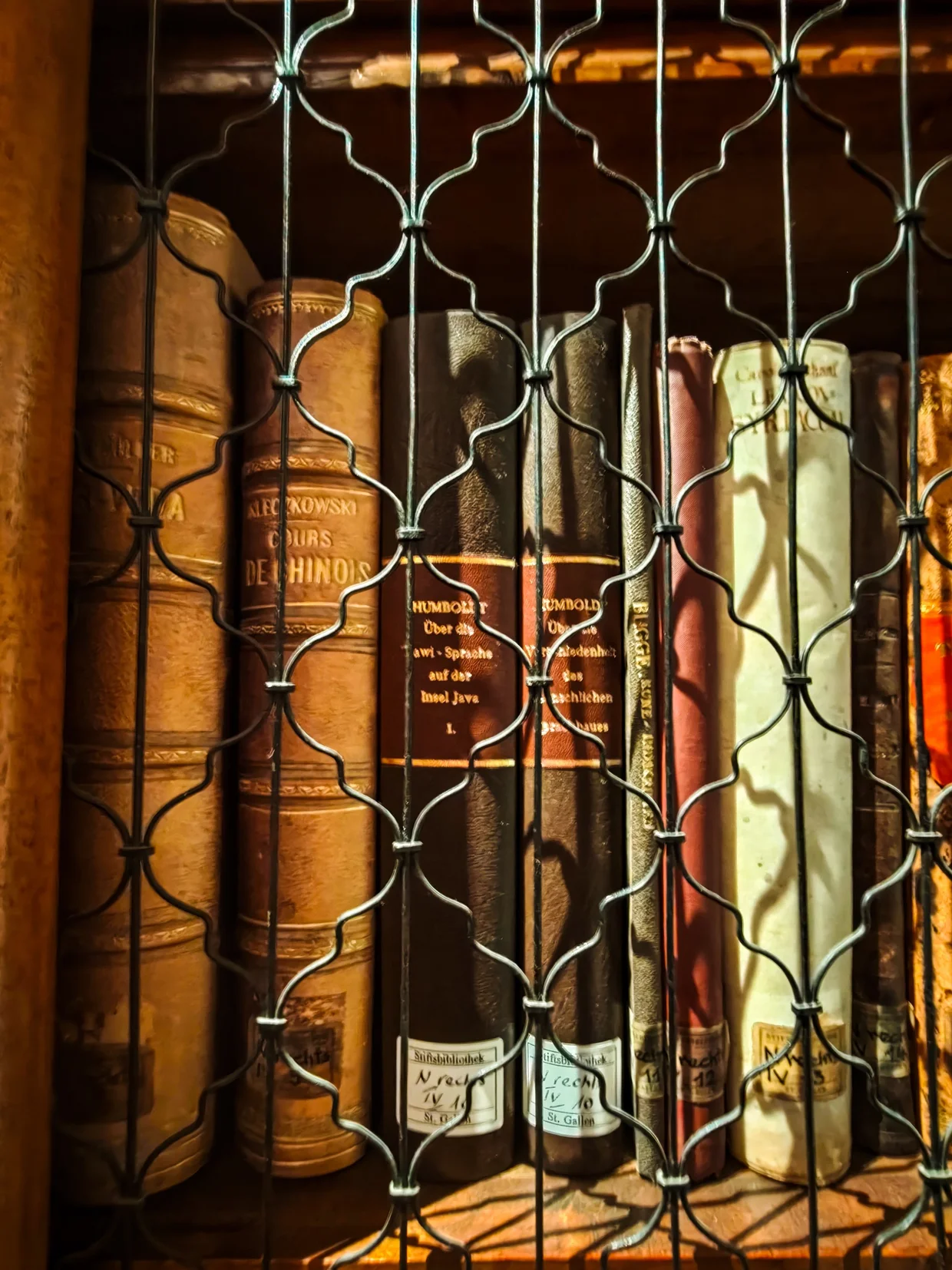
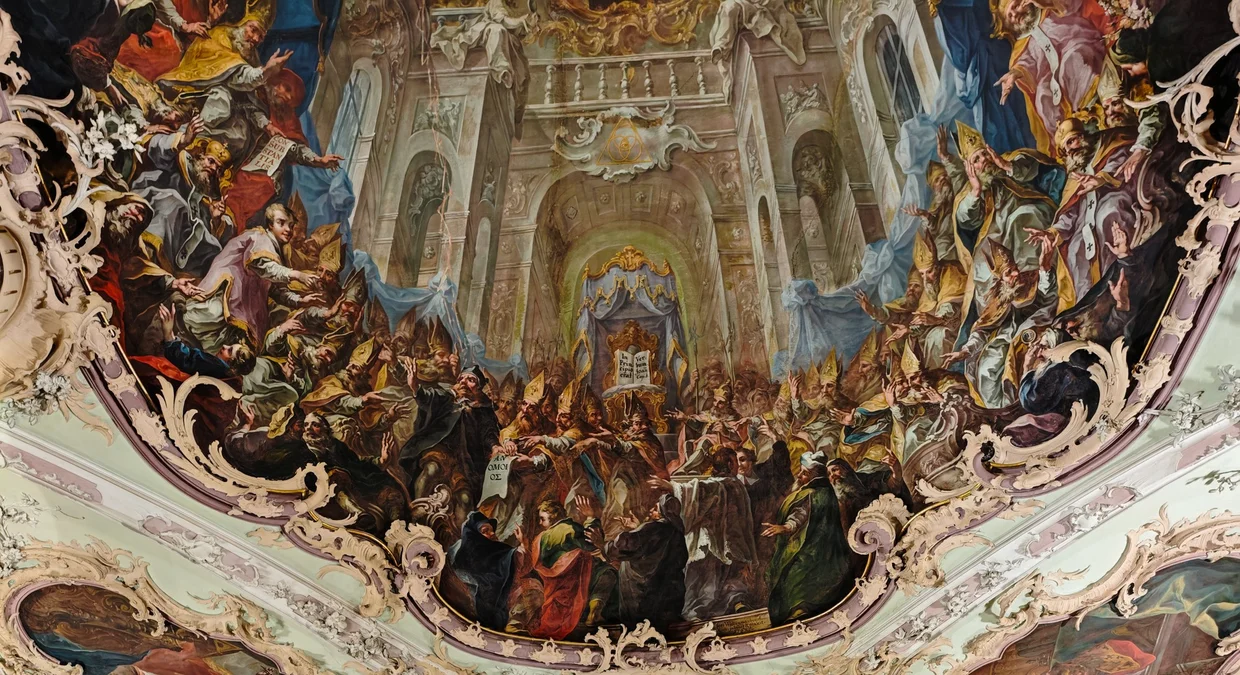
This is one of the oldest libraries in the world. It holds manuscripts from the 8th century. The library hall itself was finished in 1767 and is a full-blown Rococo dream: painted ceiling, twisting wooden bookcases, two upper galleries, a spinning globe in the middle of the room. UNESCO World Heritage. You stand there looking up and you kinda forget to breathe for a second.
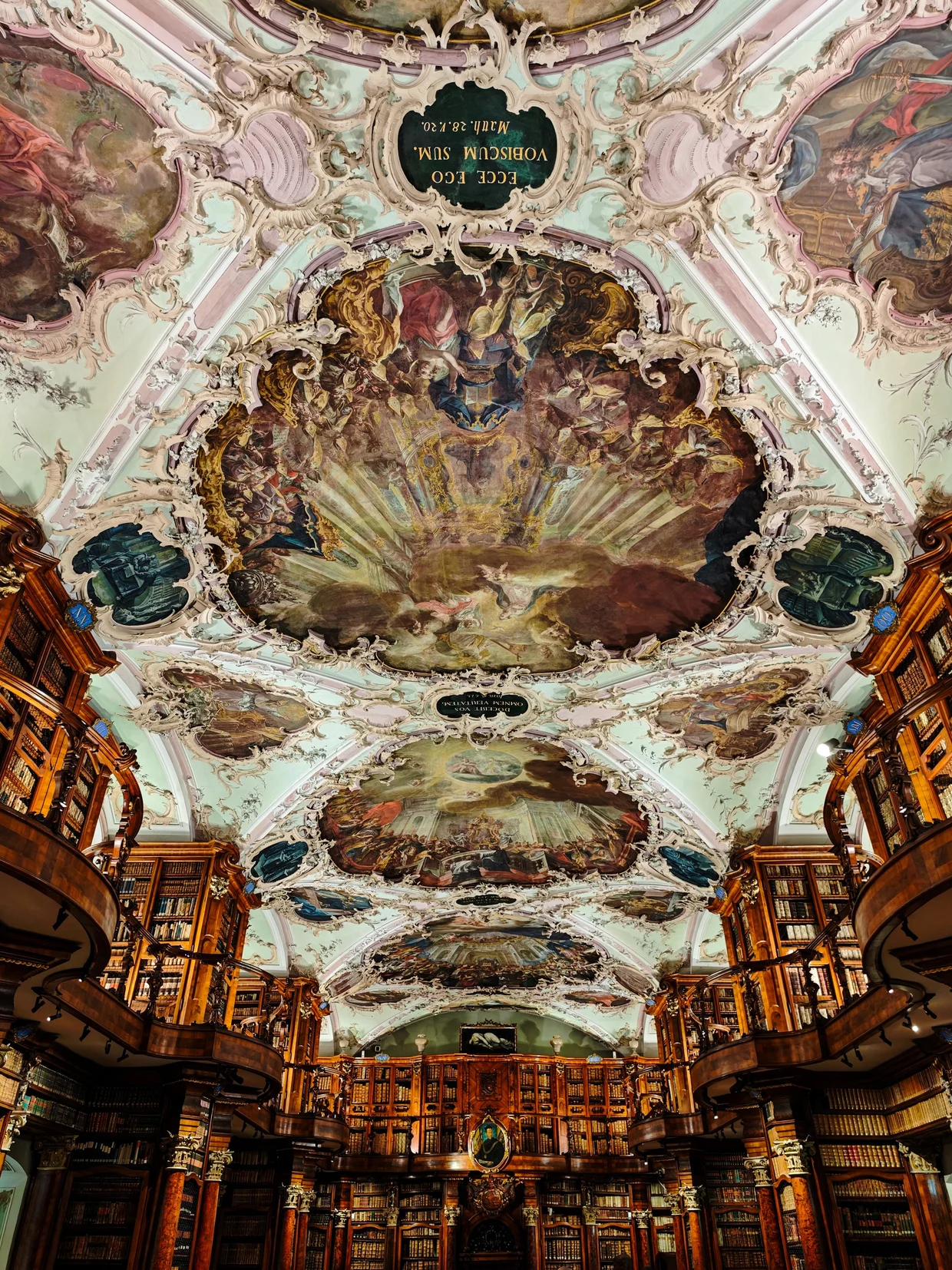
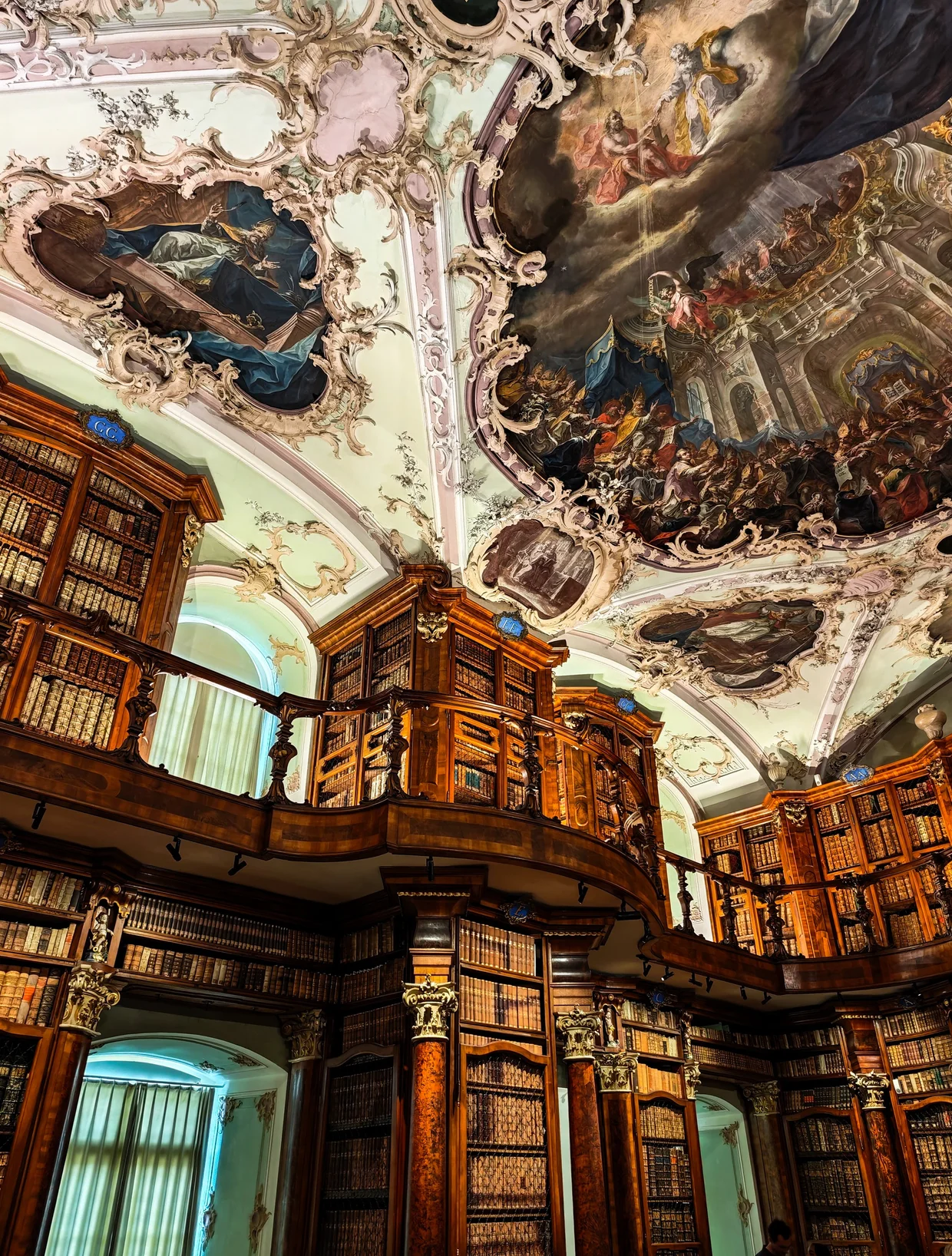
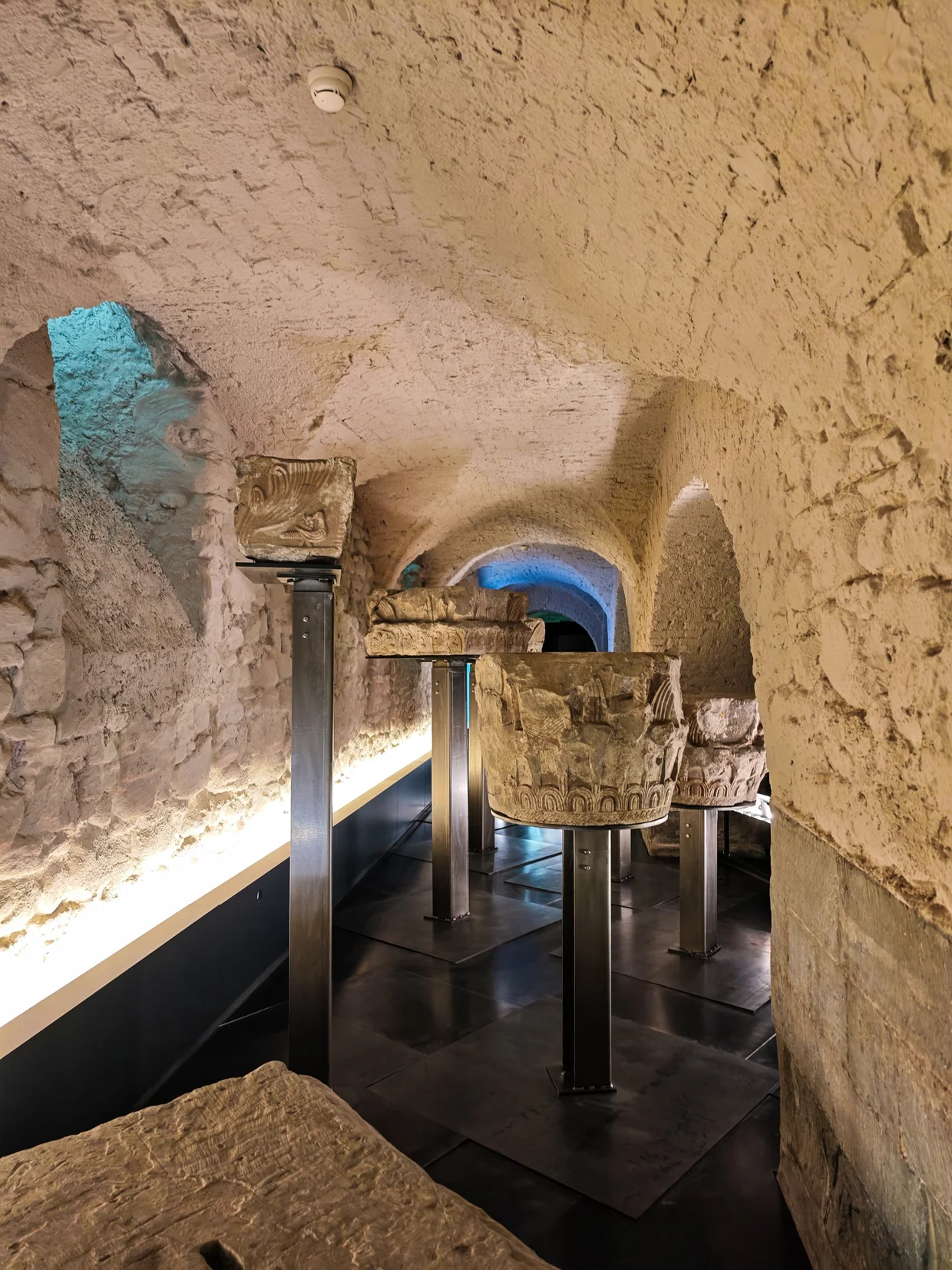
Practical bits: you pay an entry fee (around 18 CHF when I went), put on the felt slippers they hand you so you don't scuff the marquetry parquet floor, and wander. The ticket covers more than the library hall: you also get the Gewölbekeller der Stiftsbibliothek, a vaulted cellar under the library with stone fragments and architectural remains from the medieval abbey, plus the small museum across the cortyard, so it is not quite as brutally single-room as the price first sounds. Photos are fine in the library hall, so yes, you can take the ceiling shot. The exception is the real Egyptian mummy of Shep-en-Isis in the exhibition area: no photos there, clearly signed, and staff do warn people who decide the rule is for everyone else. It's not a huge space. Twenty to thirty minutes is enough, a bit longer if you read every label to find some inspiration for your book collection.
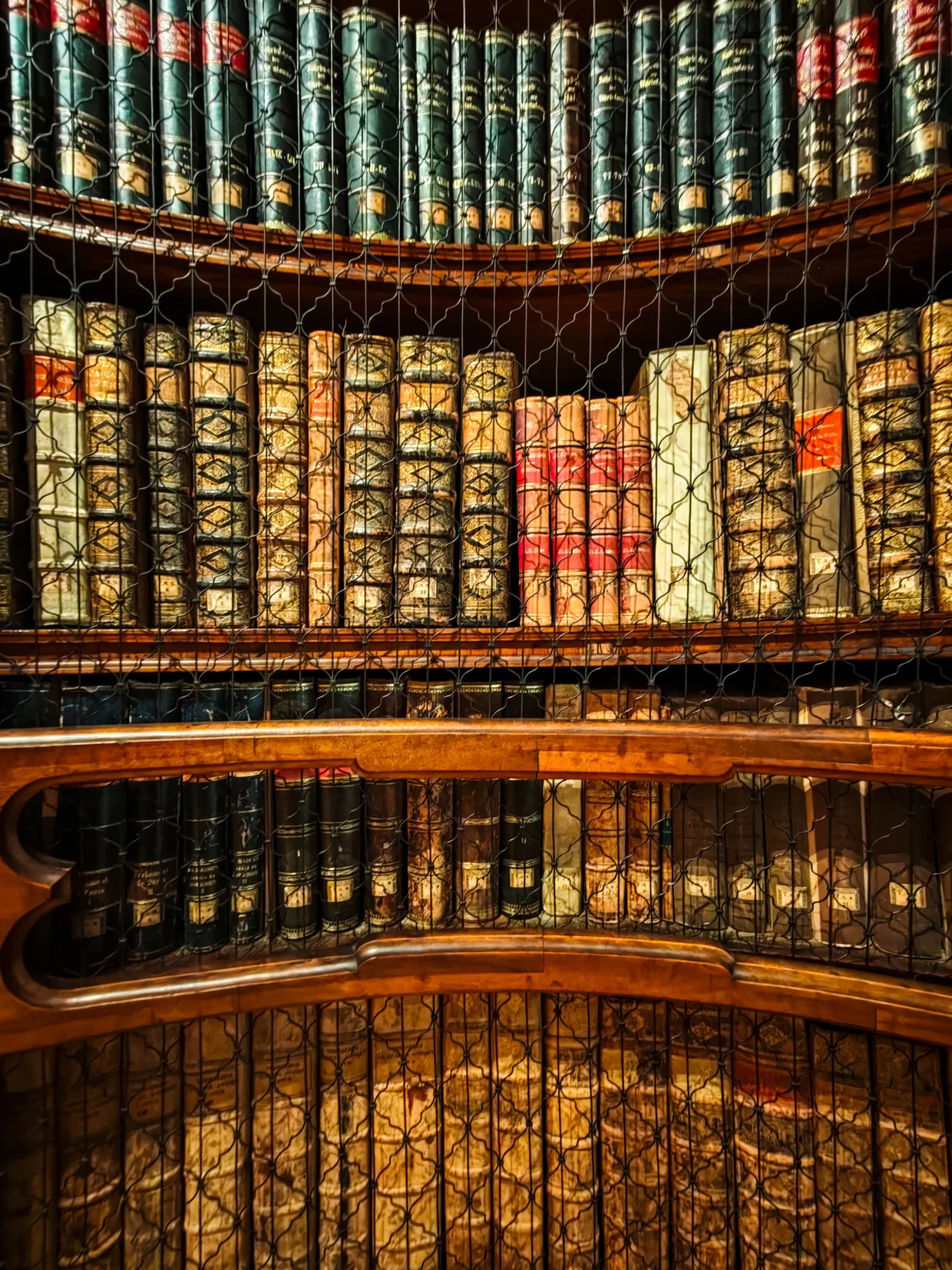
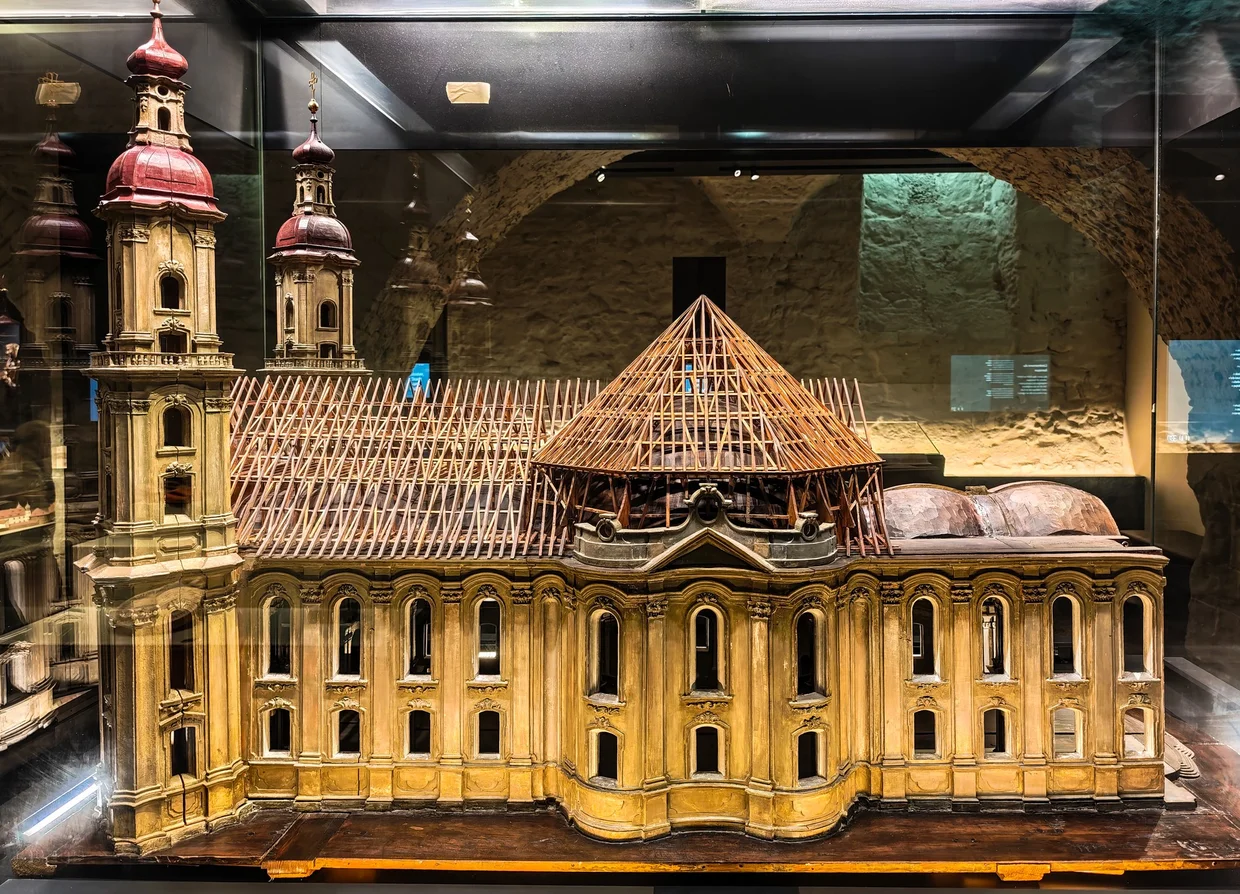
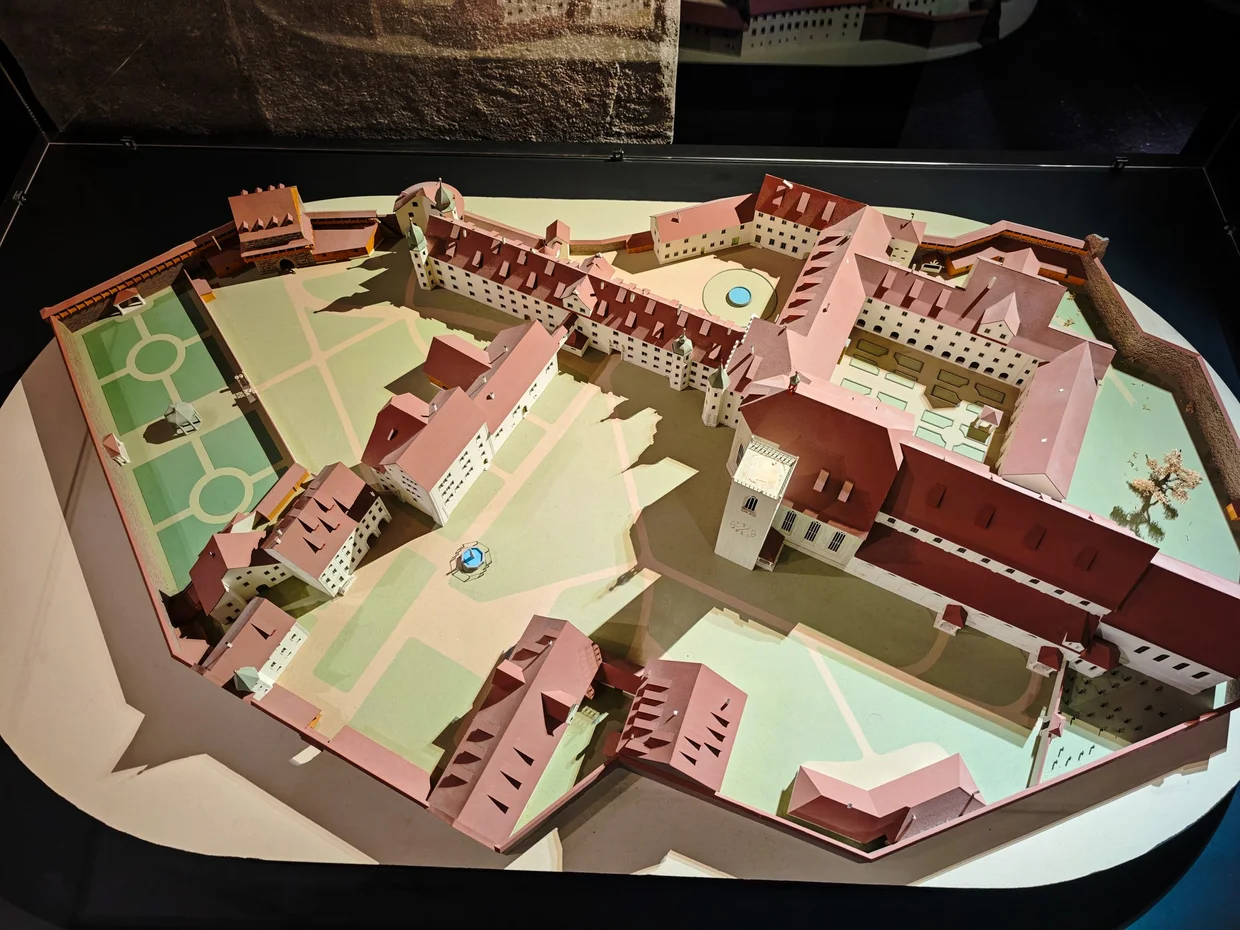
The downstairs section has architectural models of the abbey complex through the centuries, which is way more interesting than it sounds, and a crypt-like vault with carved stone fragments from the original Carolingian church.
The library closes earlier than you'd guess (usually 5pm, sometimes earlier on Sundays/holidays), so don't leave it for last. Do it first thing. You'll set the bar so high that everything else has to chill out and just be a nice afternoon.
Fünfländerblick, Then Trogen
Before you leave St. Gallen for Appenzell, make a short detour north-east toward Grub SG for the Fünfländerblick. It is not on the direct south-east route to Trogen, which is exactly why it deserves calling out separately: first you go for the Lake Constance balcony, then you swing back into the rolling Appenzell hill country.
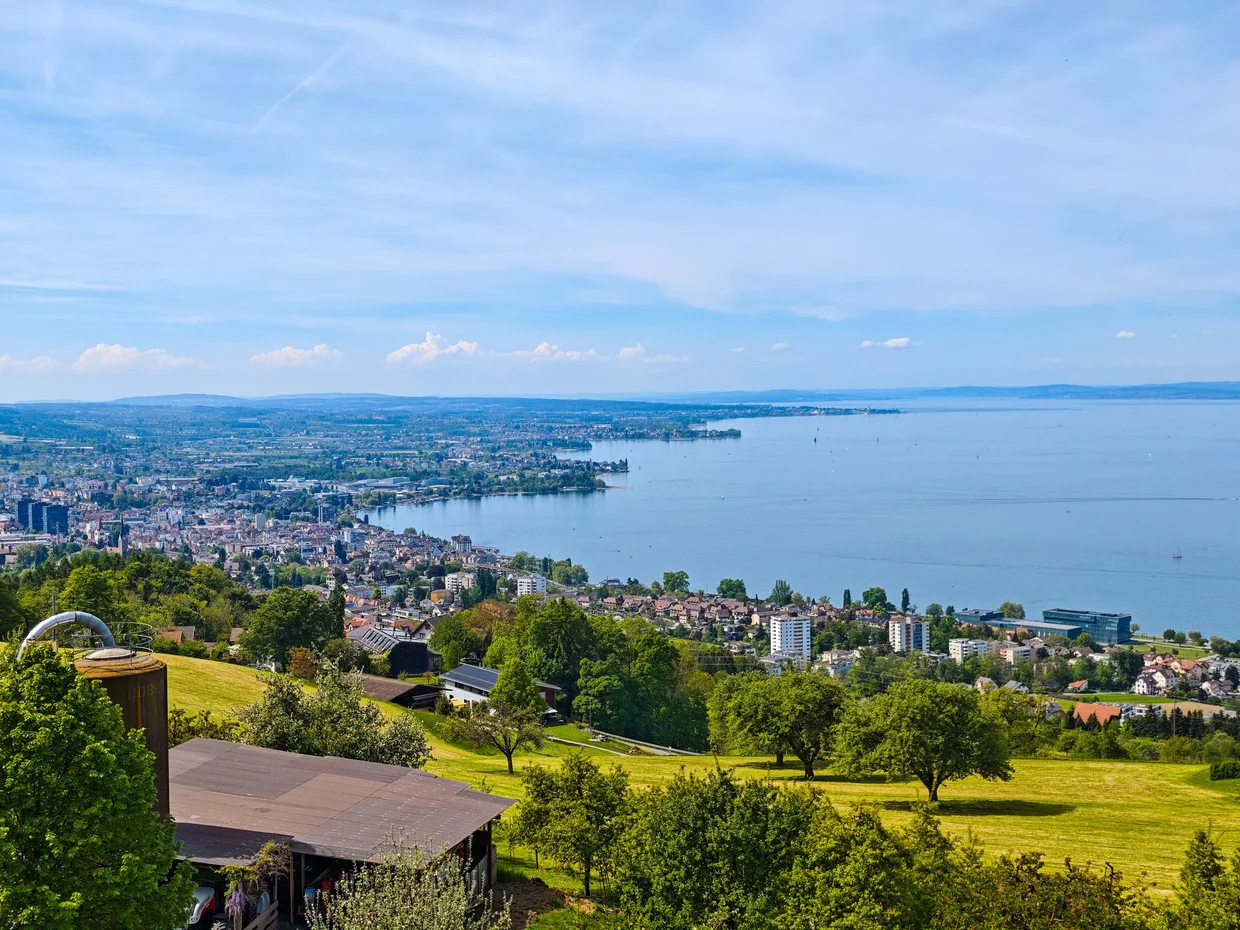
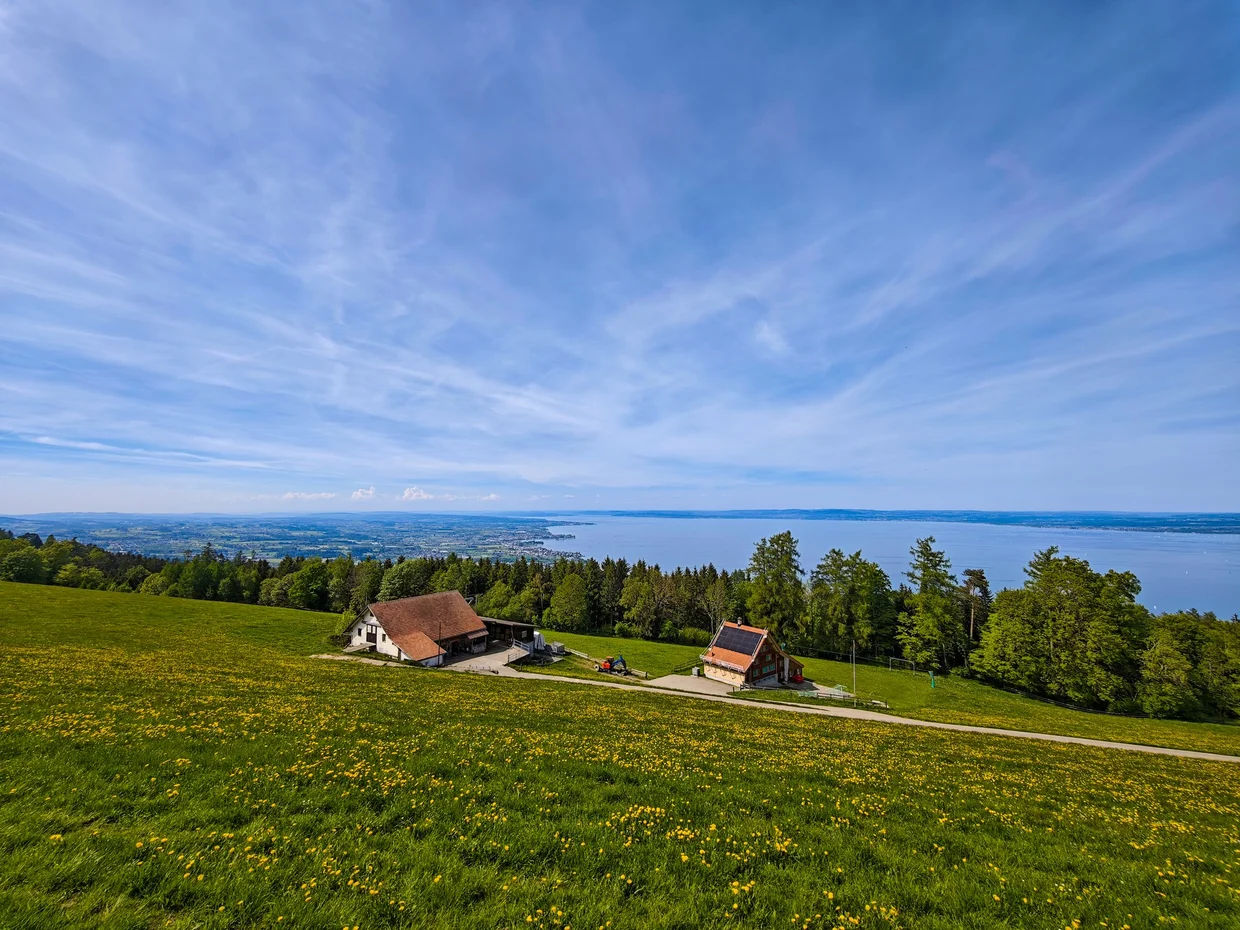
The name literally means "five-country view", but the five are historical rather than five modern countries: Switzerland, Austria, and the formerly independent German lands of Bavaria, Württemberg, and Baden. On a clear day, with Lake Constance spread out below and the far shore layered into the haze, that old map logic suddenly makes sense. It's the kind of view that still feels wonderfully low-key: meadow, chalet roofs, lake, sky.
Tiny practical catch: from the parking area, the last stretch is a short but properly steep walk up a paved road. Going up wakes the lungs; coming back down is where your knees quietly file a complaint.
Then point the car south-east. The road climbs and folds through the Vorderland, the rolling hill country above St. Gallen, and this is where Switzerland starts looking like a Heidi book.
After that, Trogen. Trogen is a tiny village (population: less than 2,000) but it has, weirdly, one of the most striking village squares in the country. The Landsgemeindeplatz is ringed with grand 18th-century mansions built by Appenzell merchant families who got rich on the linen trade, and the whole square has this slightly surreal "small town that thinks it's Florence" quality.
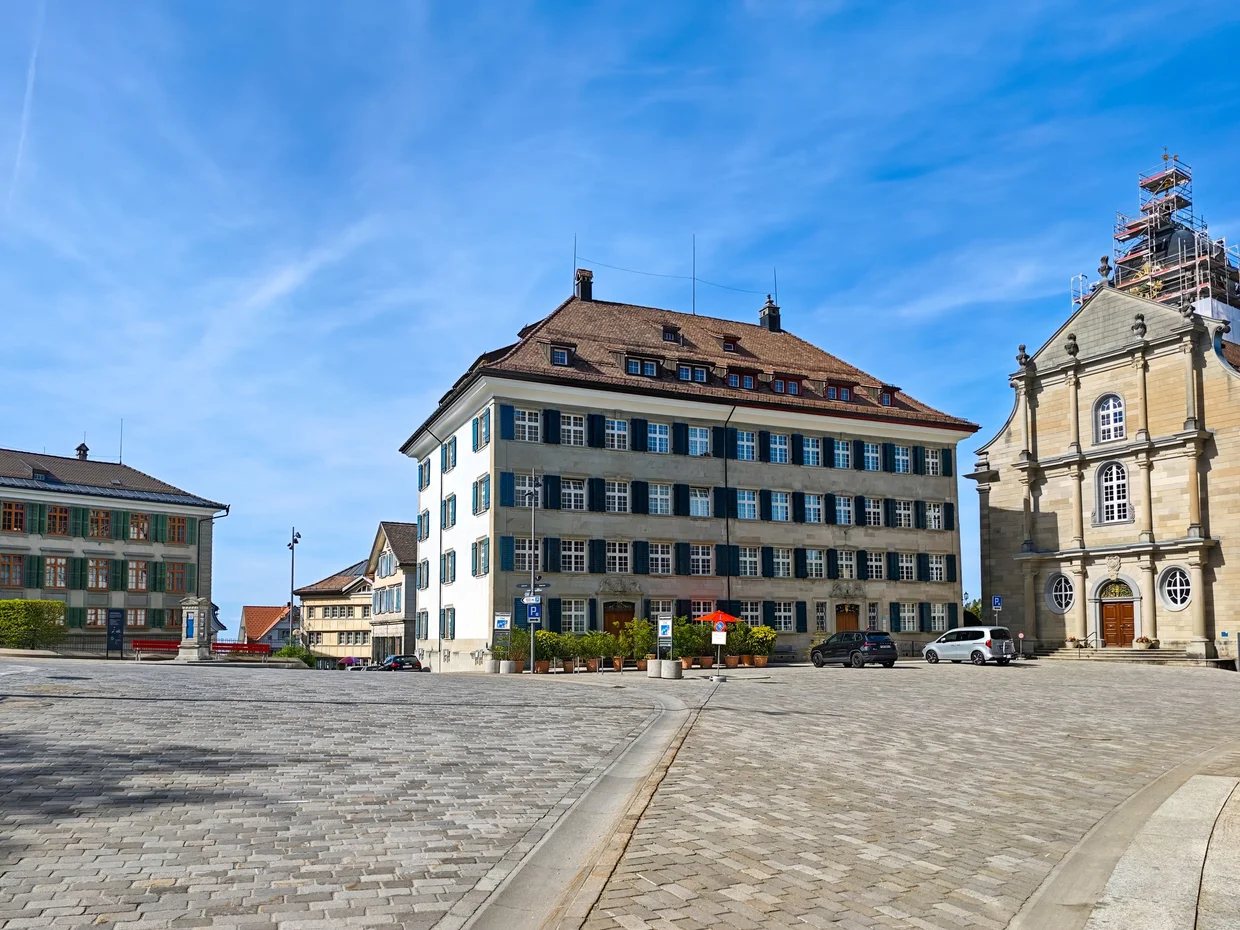
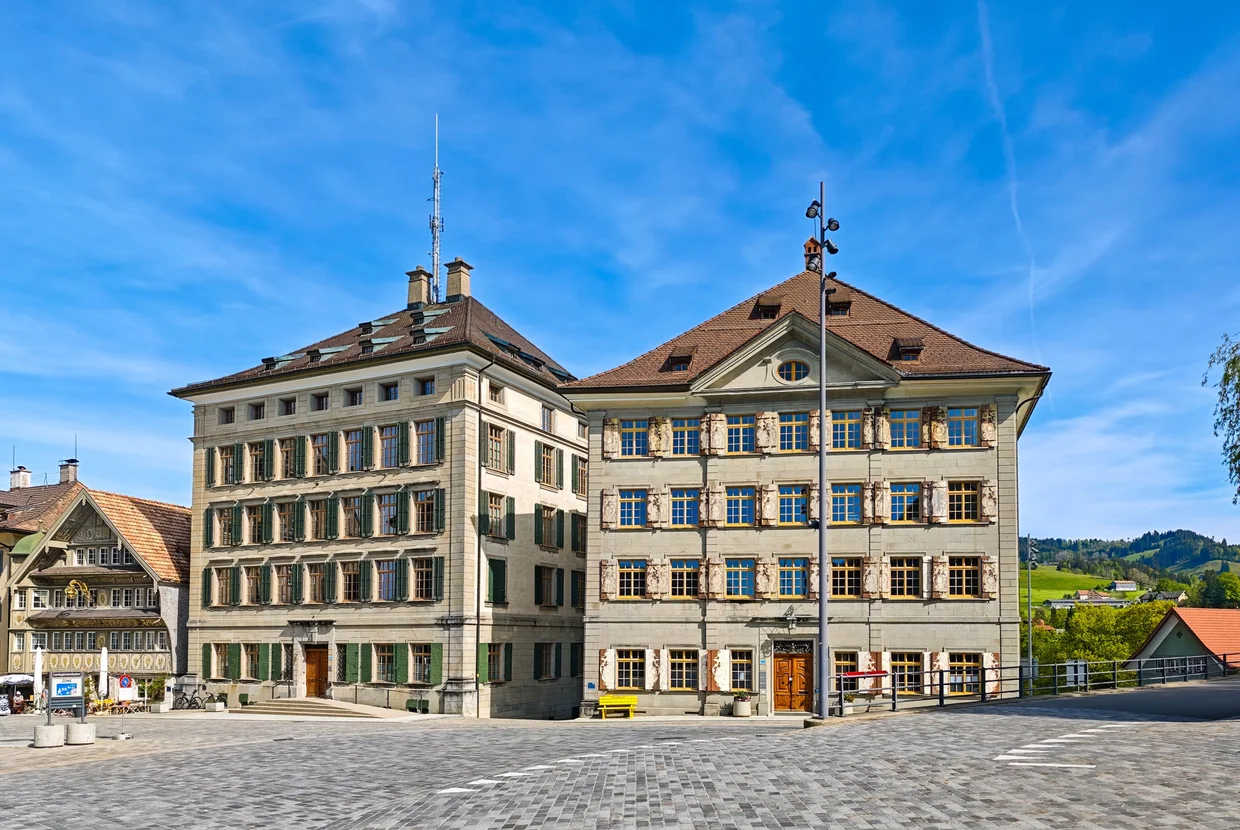
You can't really do anything in Trogen (no big attraction, no museum that took my eye, just the square), but it's worth 20 minutes of slow walking. There's a little fountain, a baroque church with a classicist façade, and a couple of cafés that may or may not be open depending on the day of the week. On a Saturday I had the place essentially to myself.
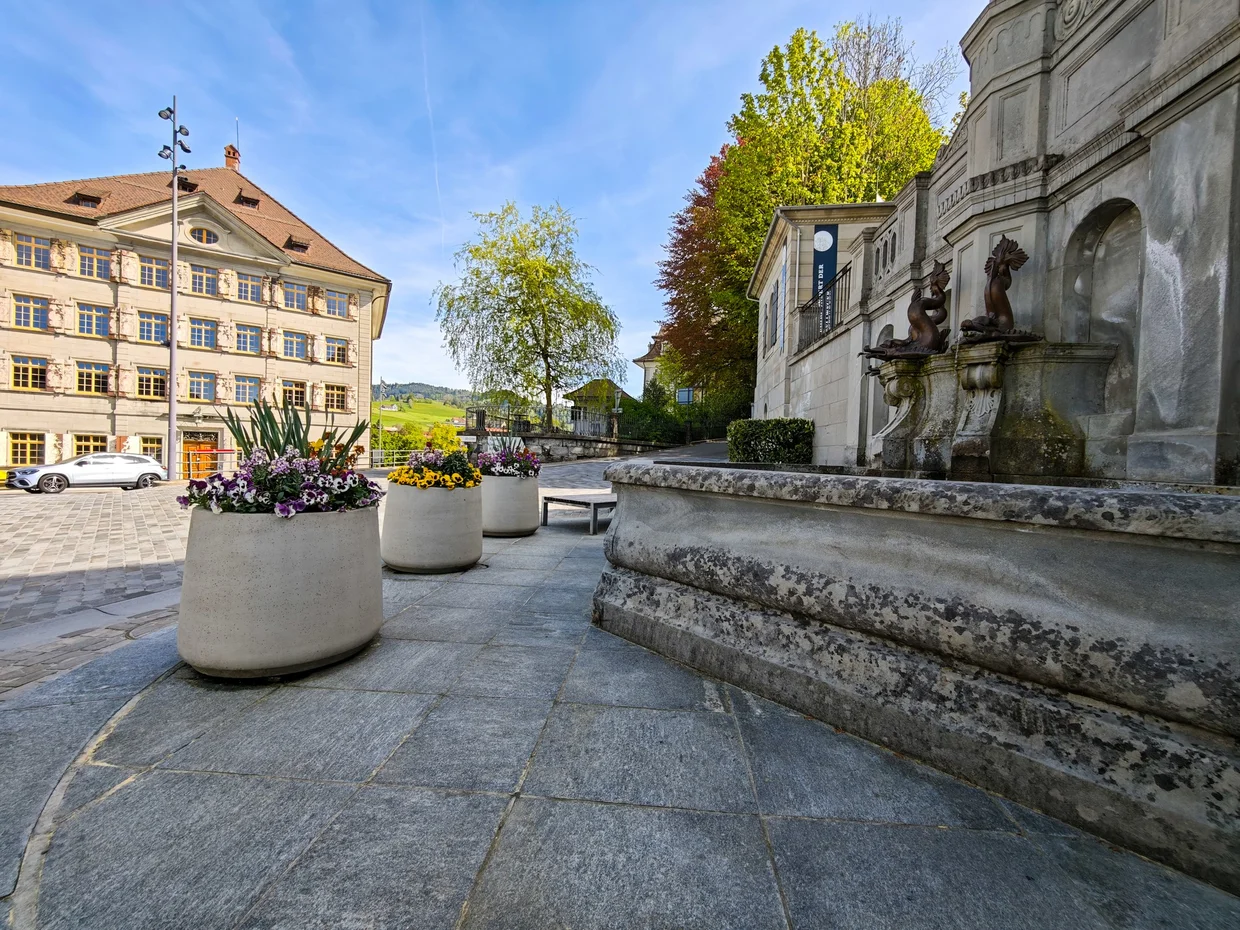
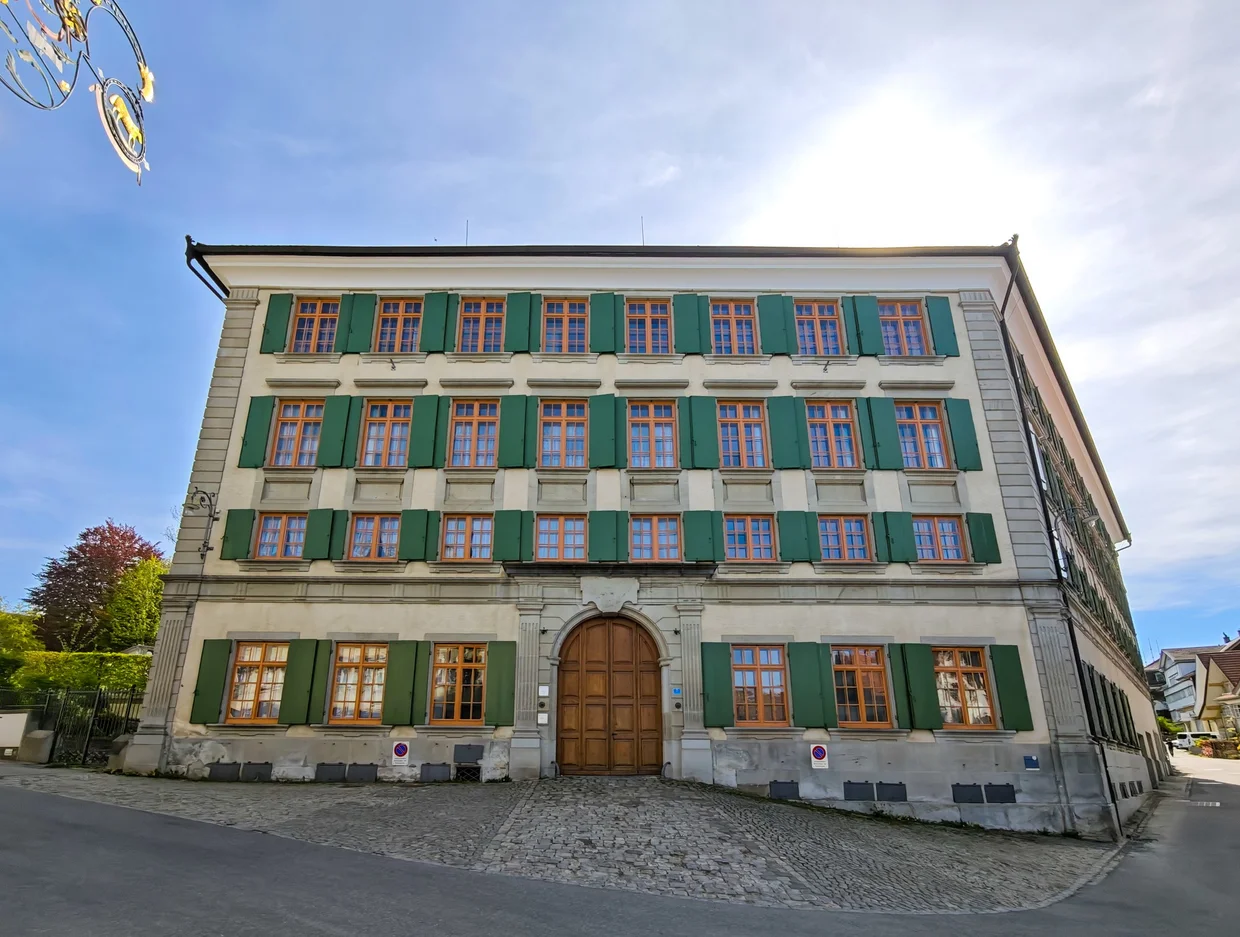
From Trogen the road keeps winding south through Speicher, Teufen, Gais. Every village a postcard, none of them worth a deliberate stop on a tight schedule, but the drive itself is the experience. Roll the window down and let the cowbell soundtrack do its thing.
Appenzell: Tiny Town, Big Personality
Appenzell village (the actual main town of canton Appenzell Innerrhoden) is the prize. You arrive, you park, you walk into the Hauptgasse, and within thirty seconds you've taken eight photos and you haven't even started looking properly yet.
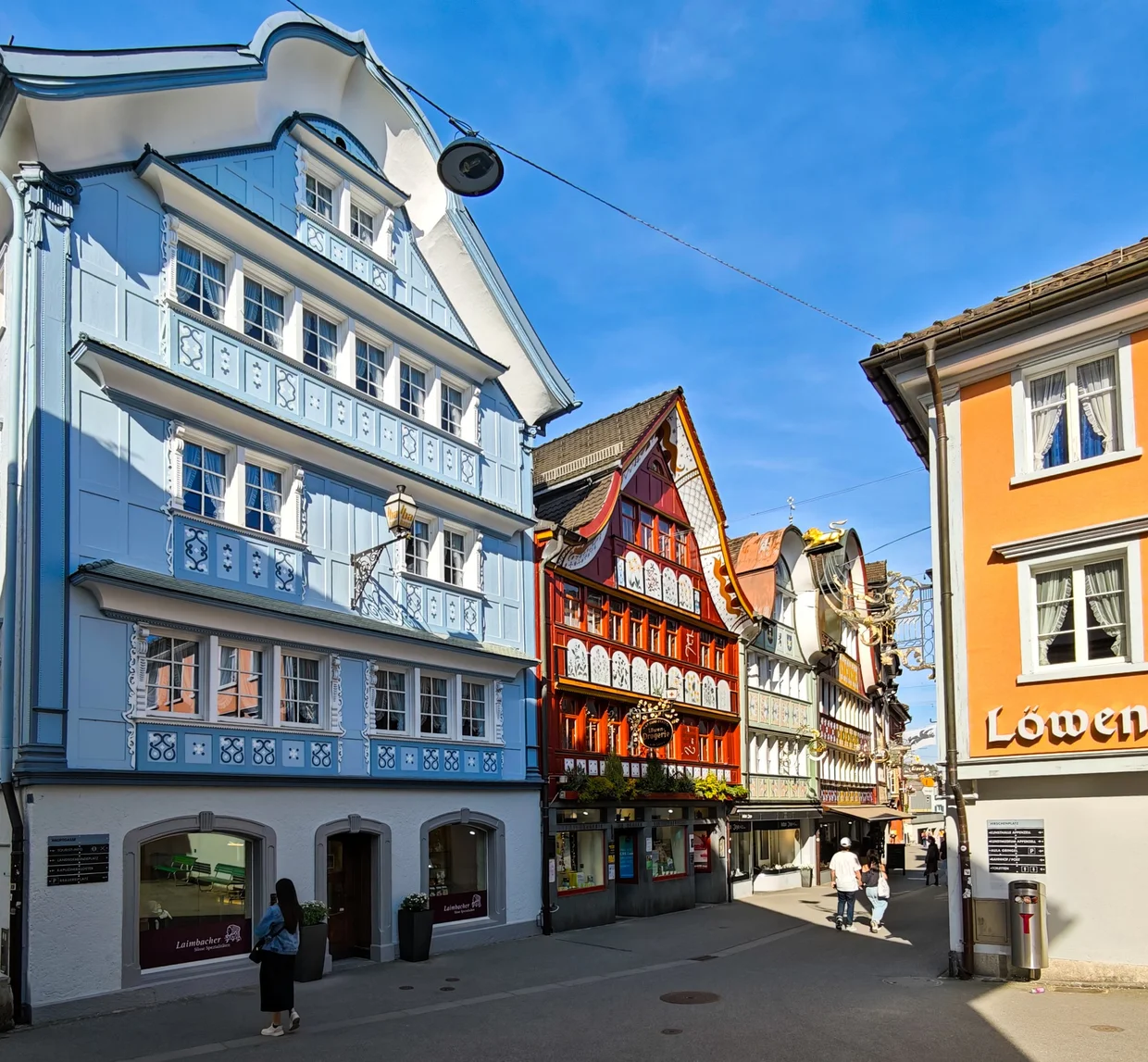
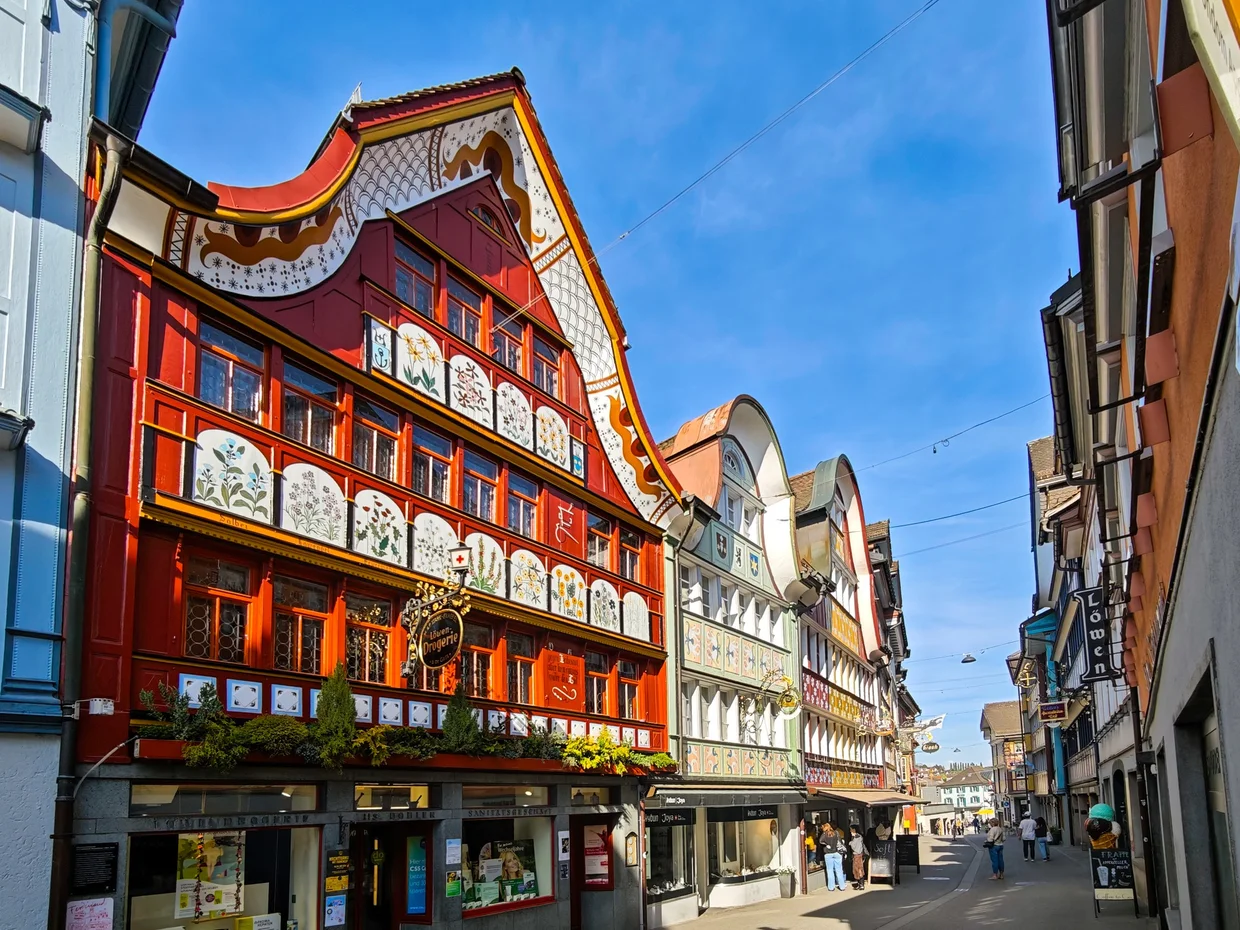
The whole main street is a parade of painted facades in red, blue, orange, yellow, each one with hand-painted floral ornaments, motifs, animals, alpine scenes. It's the maximalist version of a Swiss village. Over the top in the best possible way. It looks like a film set, except the locals walking past with shopping bags clearly aren't extras.
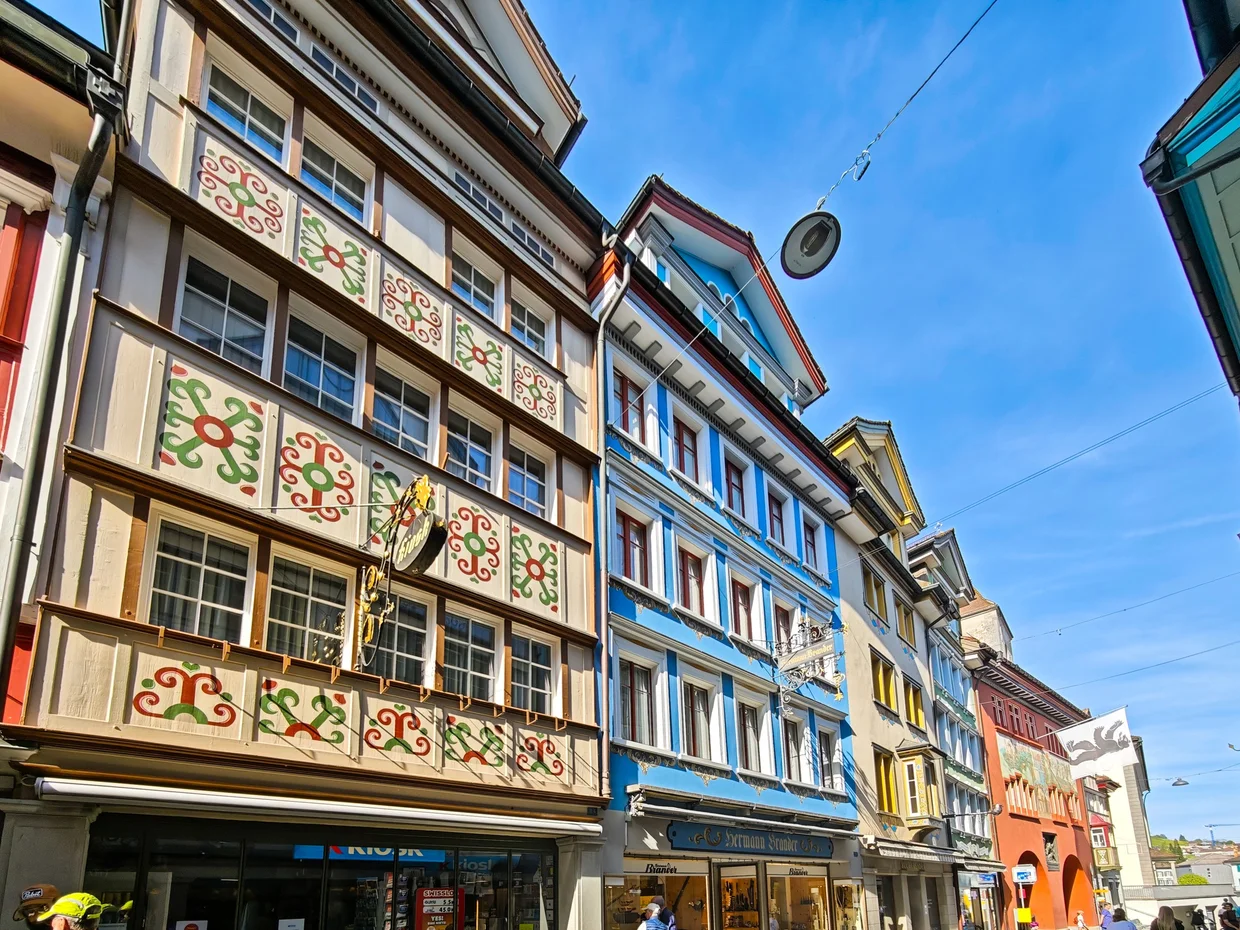
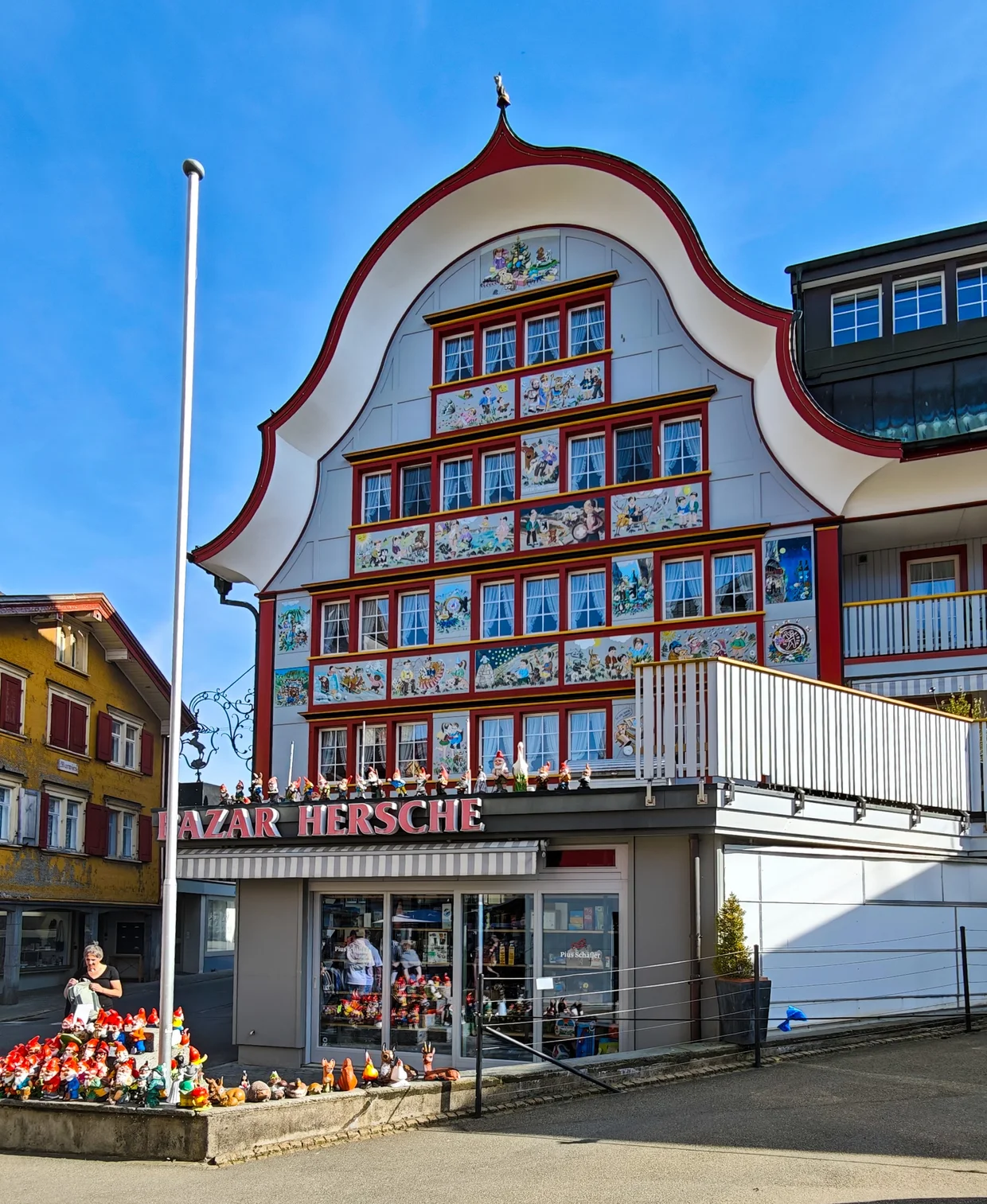
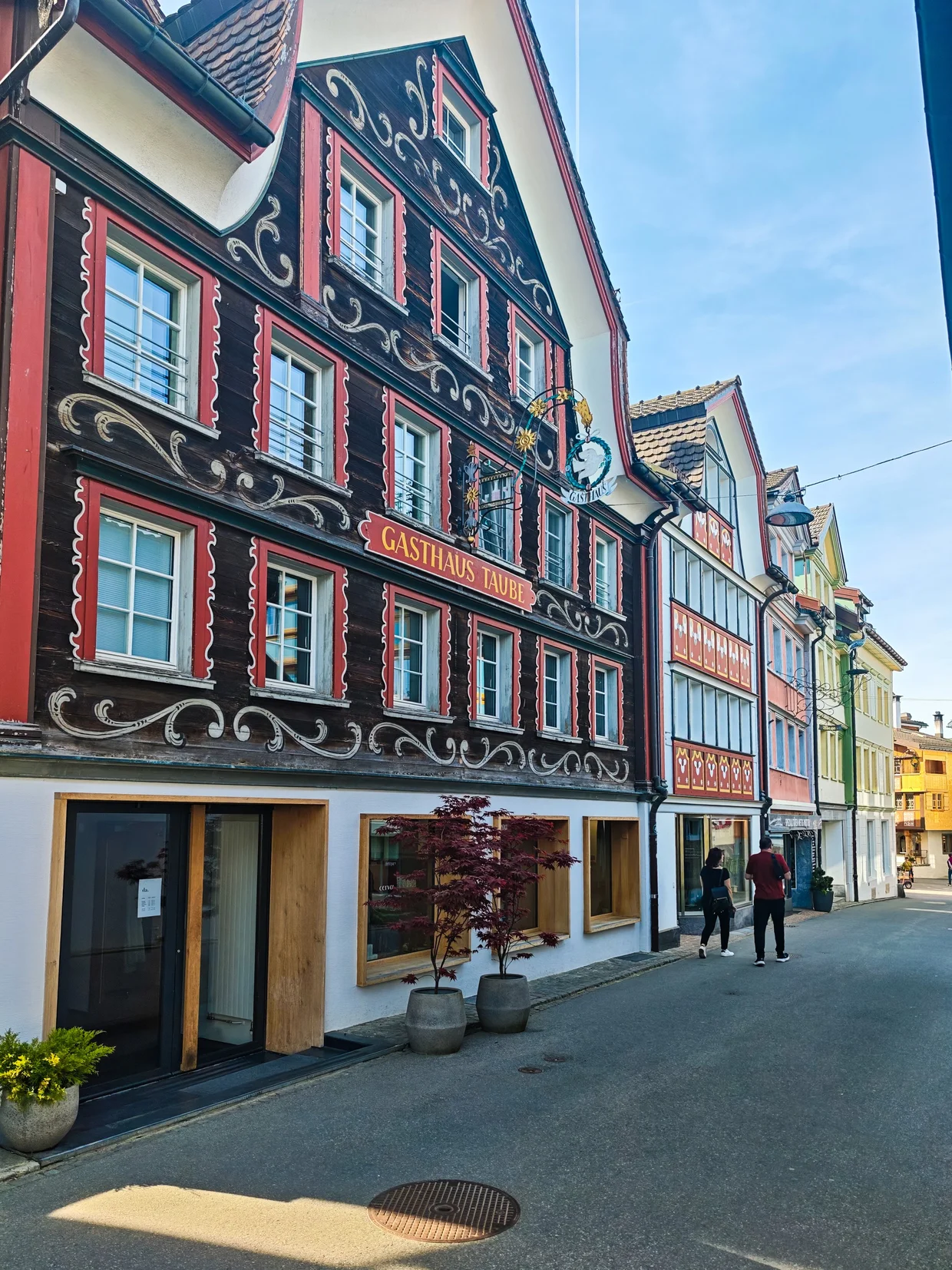
Walk Hauptgasse end to end. The street itself is tiny. Five to ten minutes is enough if you're just walking it straight, and on the weekend I visited it was a pedestrian zone, which makes the whole thing feel more like an open-air stage set than a through road. The reason to linger is not distance, it's detail: painted facades, sweet side lanes, souvenir shops, restaurant terraces, and the little "wait, look at that one" moments every few doors. You can easily spend an hour here, two if you sit down for a meal. Bazar Hersche is the famous shop with the painted dwarves outside, and Appenzeller Biber, the local spiced gingerbread filled with almond paste, seems to appear in every third storefront. Sit down for an Appenzeller Alpenbitter (the local herbal liqueur with the honey-and-pine taste) at any of the inns along the street.
The parish church (Pfarrkirche St. Mauritius) sits a block off the main drag, with a bell tower that pokes up between the houses from every direction.
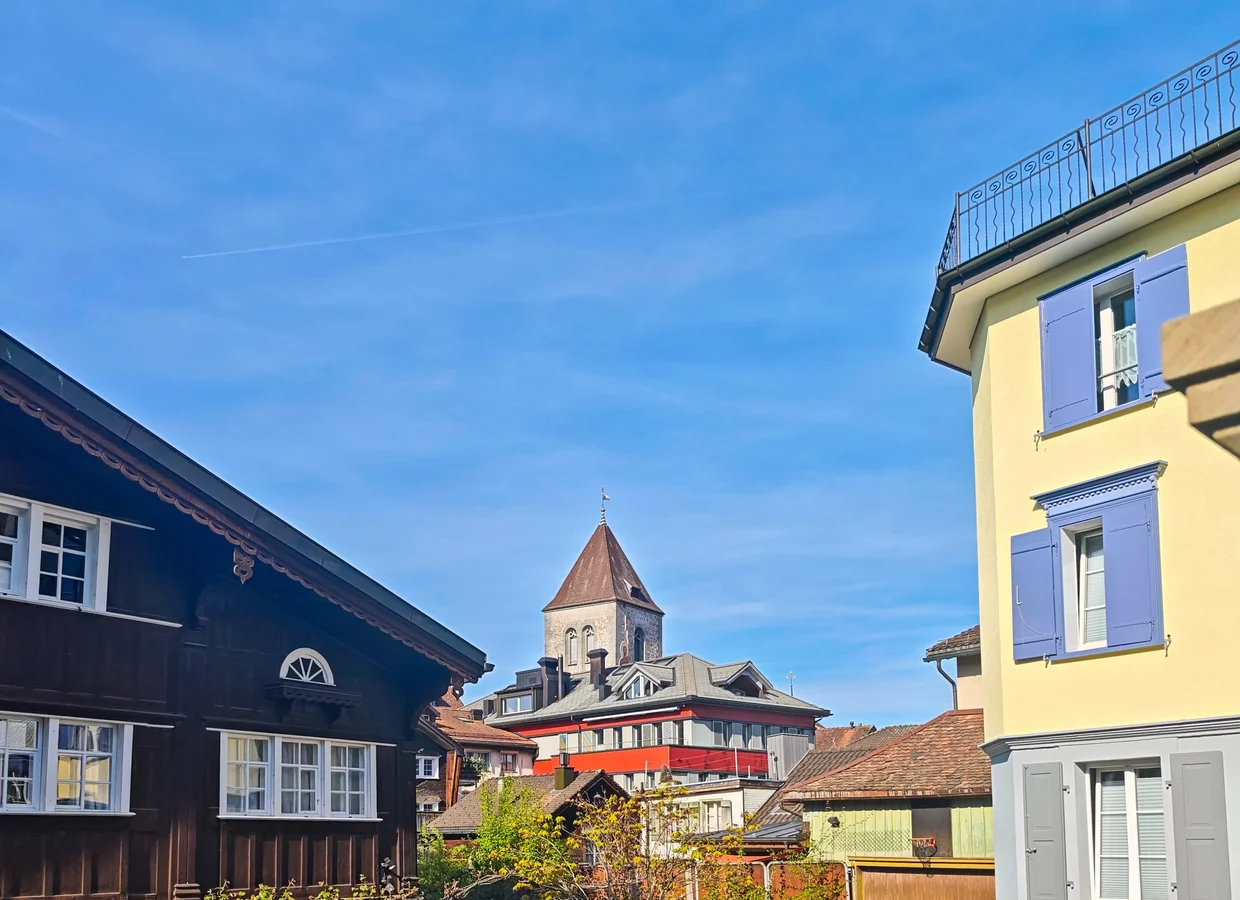
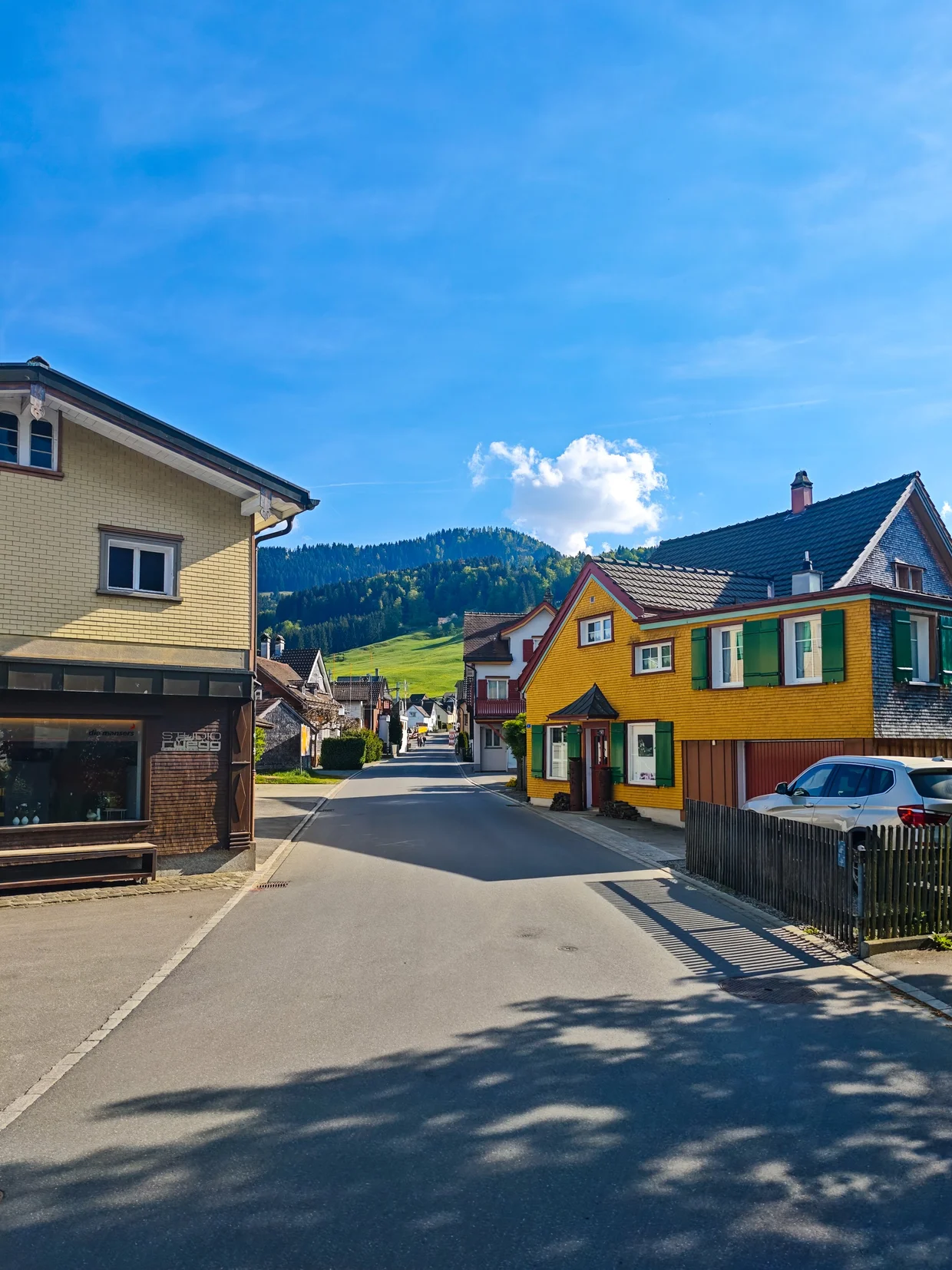
The Landsgemeindeplatz (yes, another one) is where the canton still holds open-air democratic votes, by show of hands, every spring. Yes, in 2026. Yes, that's a real thing. Worth a quick wander even when nothing's happening.
Eat the cheese, drink the bitter. Appenzeller is a herbal-washed cheese with a famously secret recipe (literally, the herb mix is a guarded trademark) and is in roughly every shop window. The Alpenbitter is the digestif. Together they're the canton's whole personality on a plate.
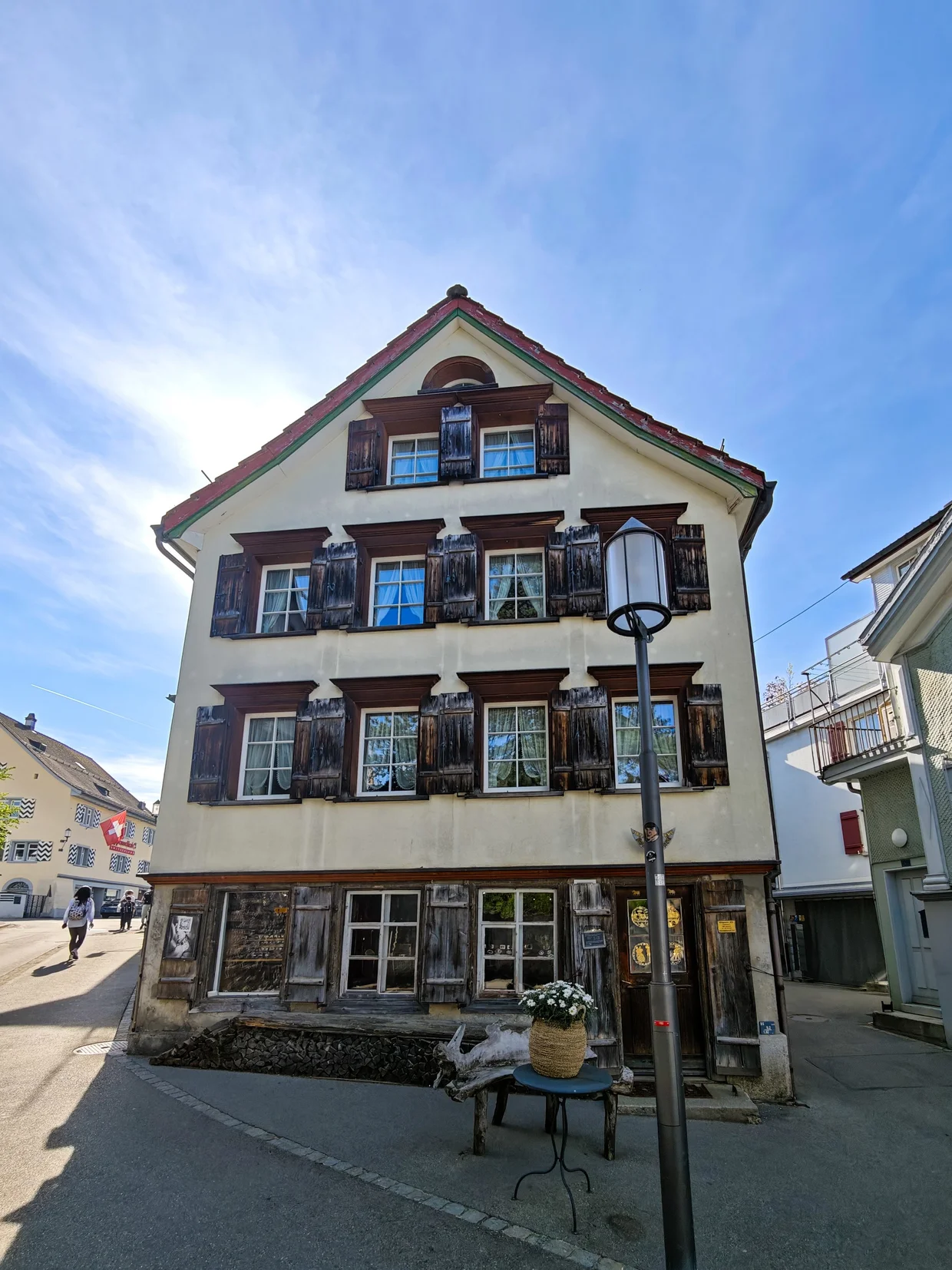
You don't need long here. A couple of hours, maybe a meal. This is the kinda place you base yourself in for a night so you can start the Alpstein hike fresh in the morning. Which is exactly what we're gonna do next.
What to Do
There are many things to experience, to see and to do in Switzerland. These are my personal highlights.

Stiftsbibliothek St. Gallen (Abbey Library)

Ebenalp & The Aescher Cliff Hut

Seealpsee
See the full what to do in Switzerland guide.
Wasserauen to Ebenalp: Cable Car Up
Wasserauen is the end of the road. Literally. The train line and the road both stop here, in a tiny hamlet at the foot of the Alpstein massif, and from this point on you're either hiking or you're getting in a cable car.
The cable car (Luftseilbahn Wasserauen-Ebenalp) is the easy option, and it's the one I'd recommend unless you've got a full day and a real appetite for vertical metres. You buy a ticket, you climb into a small red gondola, and in about six minutes it hauls you roughly 720 metres up to the mountain station at 1,590m. You step out, the air's a few degrees cooler and noticeably thinner, and the entire Appenzell countryside is laid out below like a green felt mat with miniature villages stitched into it.
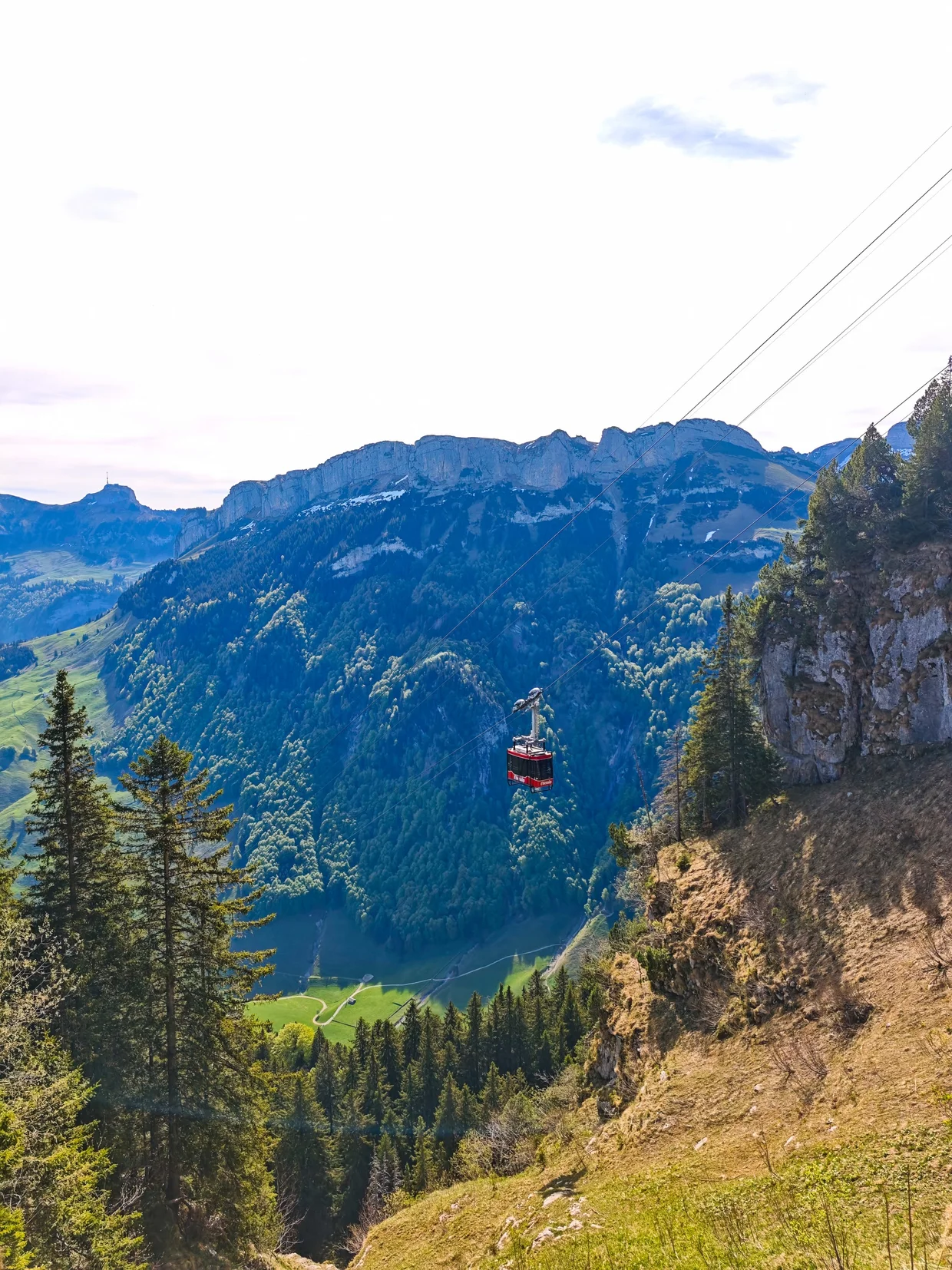
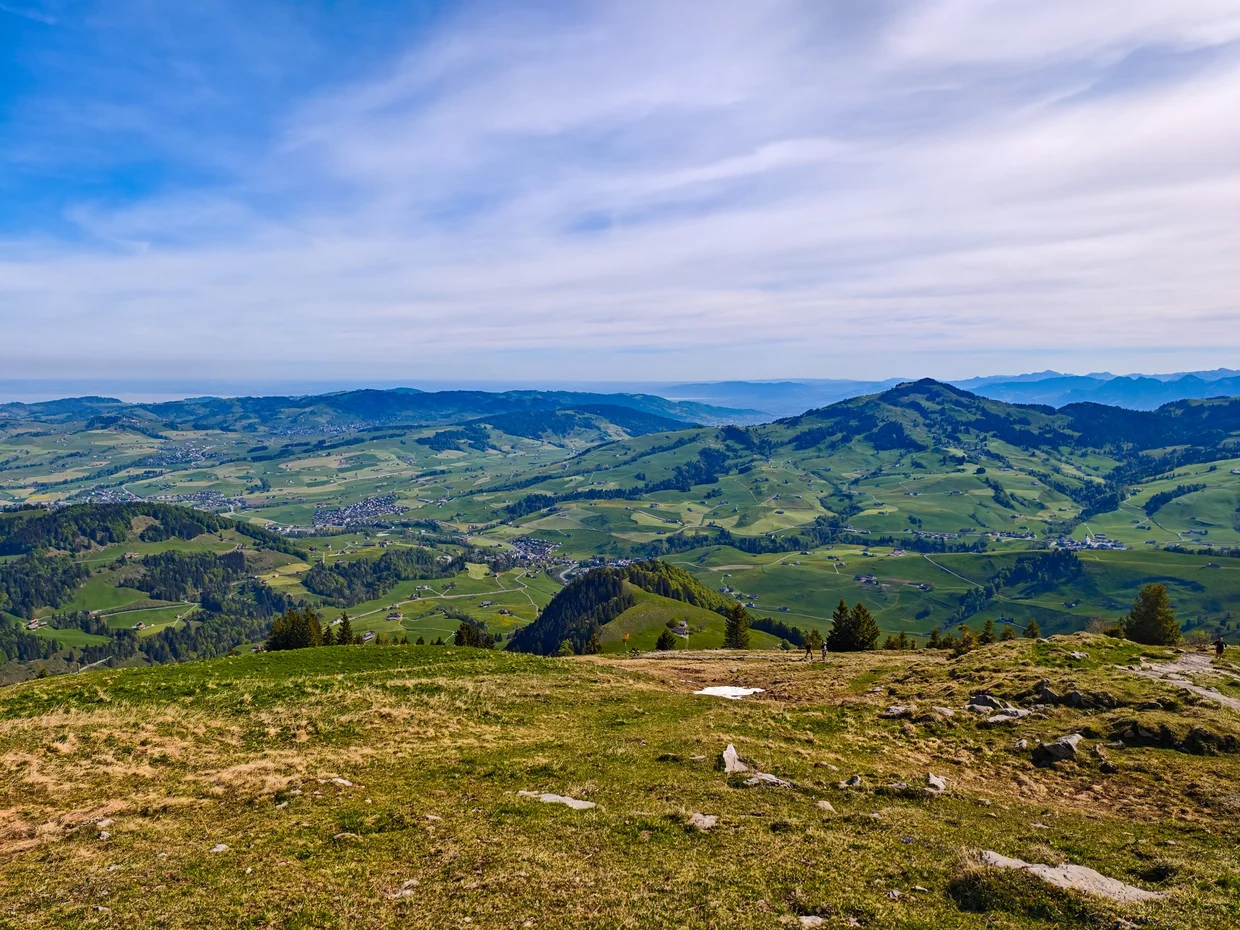
A couple of practical bits: the round-trip ticket is around 36 CHF (one-way 24, last I checked), and in the main season the cable car runs roughly every 15 to 20 minutes through the day. Check the official timetable before you drive up, because the line takes revision breaks in spring and late autumn. There's a small parking lot at Wasserauen that fills up by mid-morning on a sunny weekend. Get there early or expect to park further down the road. If Wasserauen is full, park in Appenzell or one of the villages on the line and take the little Appenzeller Bahnen train in. It runs frequently, doesn't cost much, and drops you right at the trailhead.
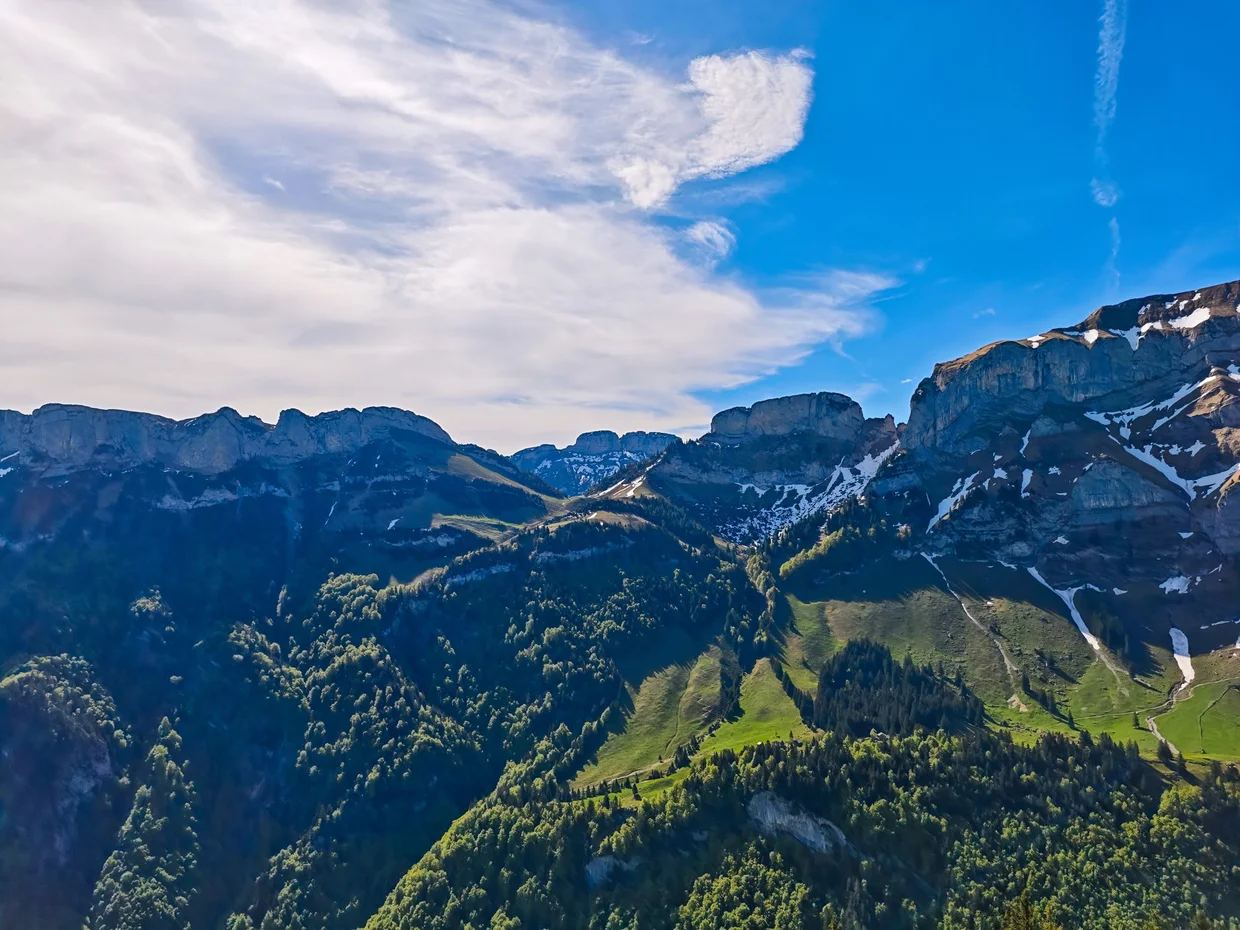
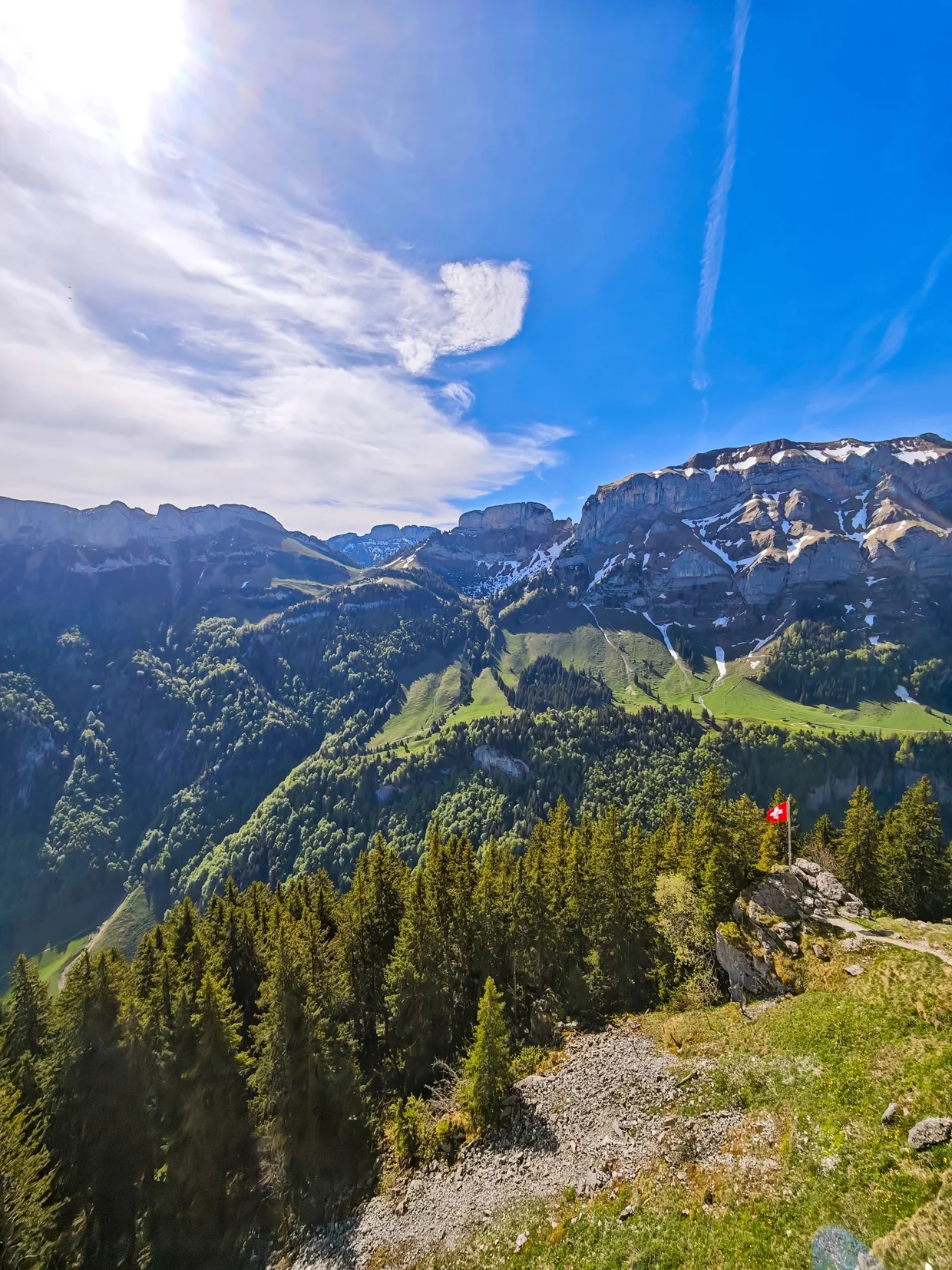
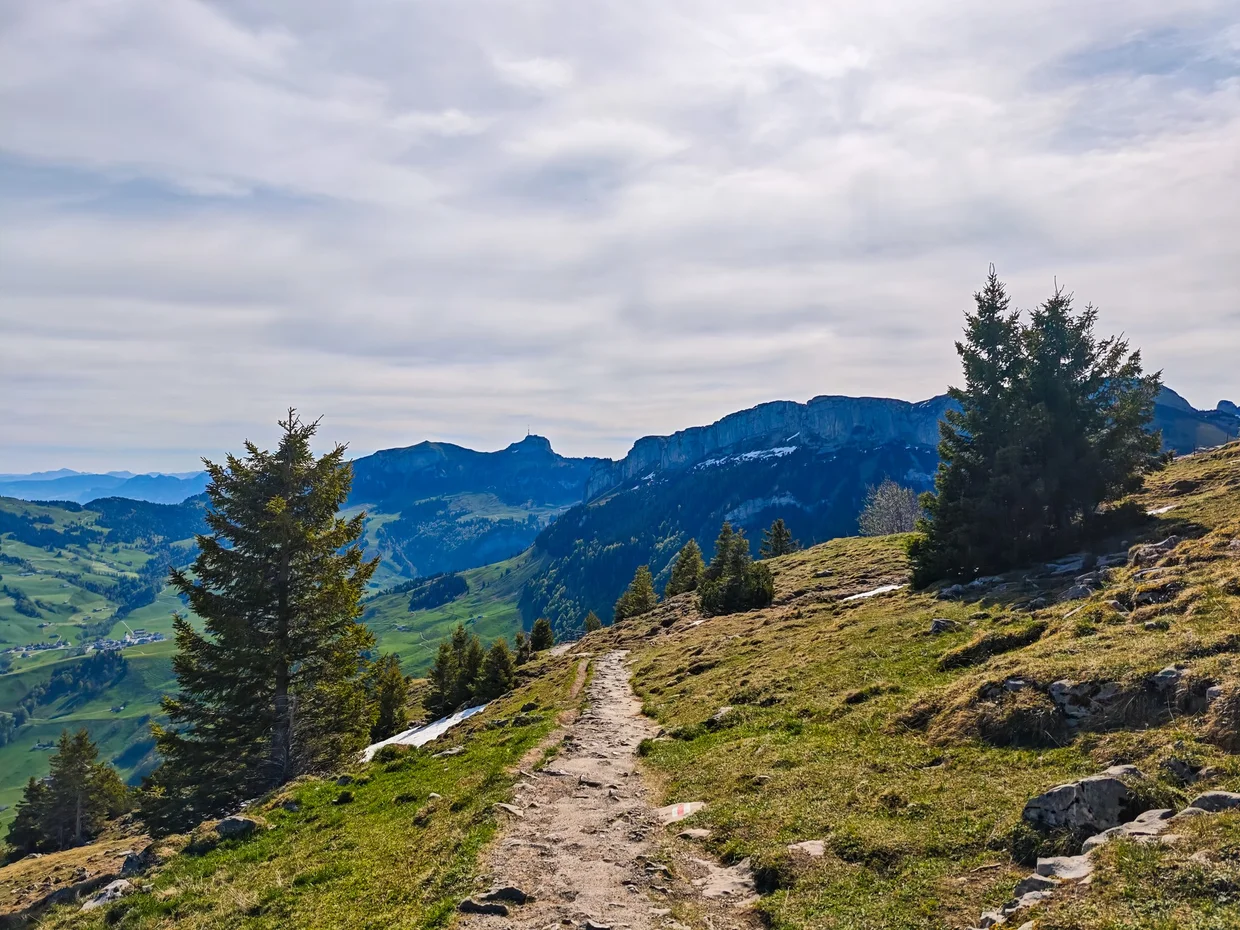
Once you're up top, there's a network of paths radiating out. The classic short loop, and the one I'd point you to, is Ebenalp summit → Wildkirchli cave → Aescher → down to Seealpsee → out to Wasserauen on foot.
About three hours of moving, half a day with stops, mostly downhill after the first bit. It's well marked and well trafficked, but I wouldn't call it a gentle scenic stroll.
A lot of the route asks you to watch your footing almost constantly, so the views come in pauses more than in long, dreamy walking stretches. The first stretch from the cable car station drops gently along a ridge with peaks all around you, and then narrows into the Wildkirchli cave.
Yeah, you literally walk through a cave that has a tiny chapel built inside it. Prehistoric stone tools and cave-bear bones have been found in there, plus a hermit hut from the 1600s. It's one of those things that sounds made up.
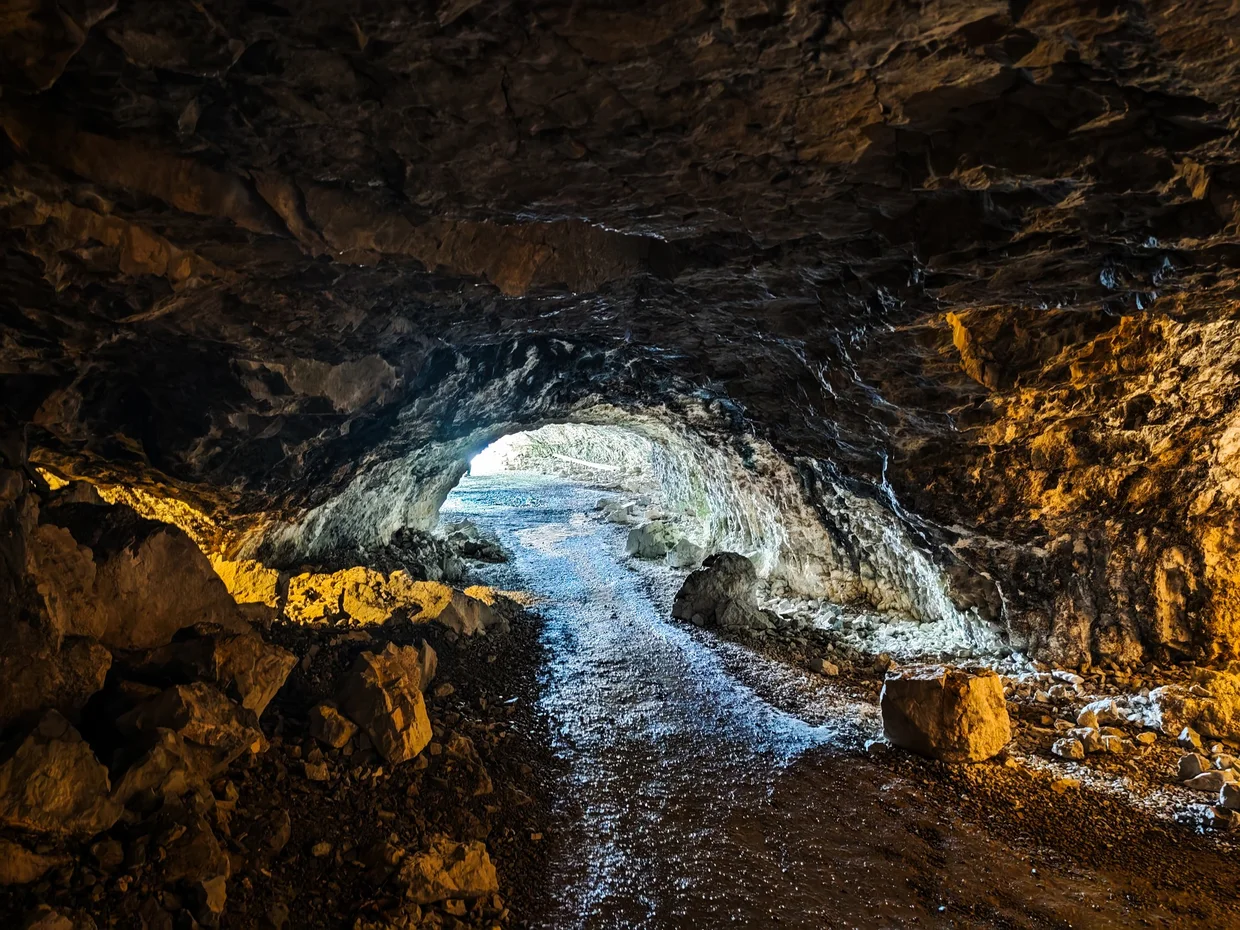
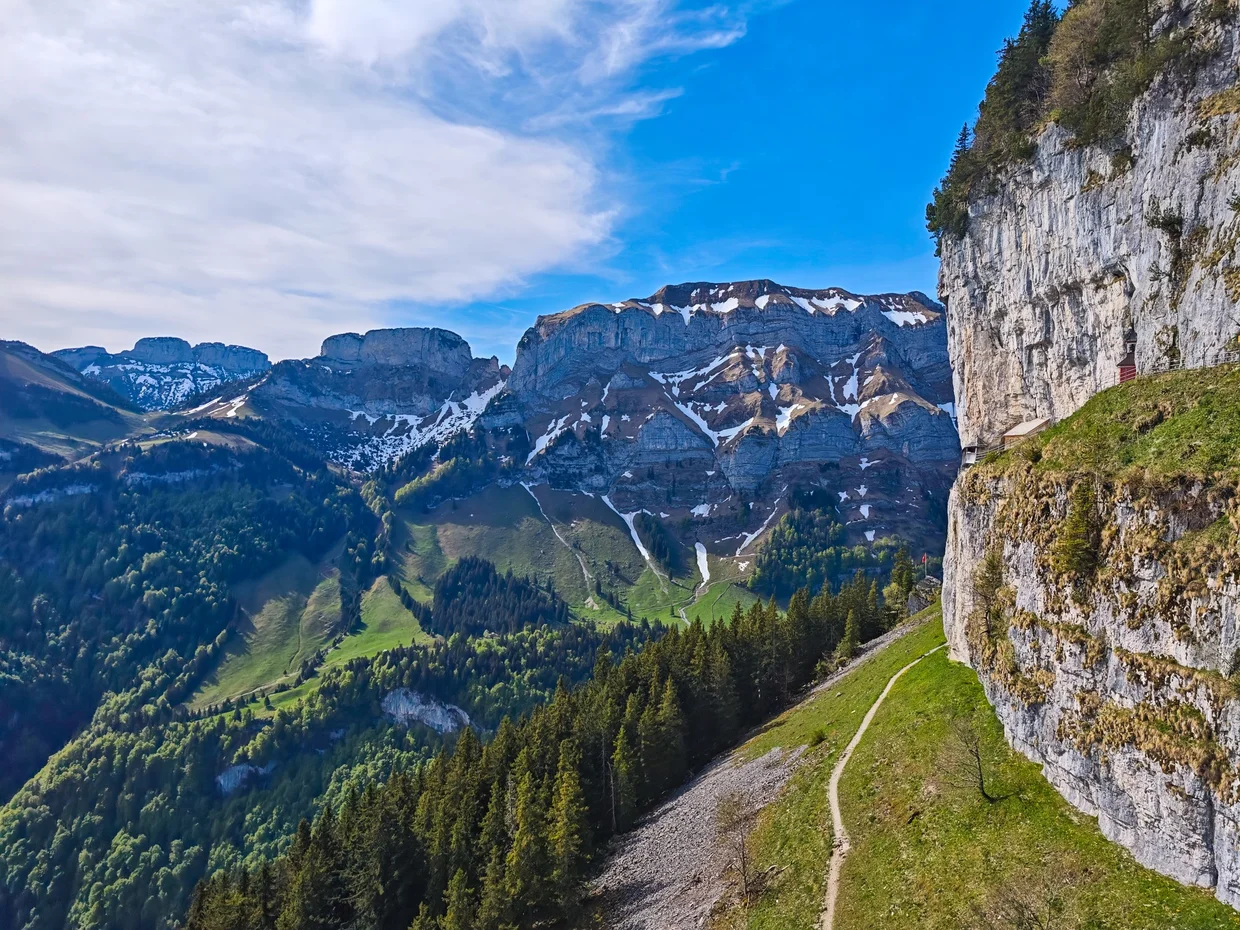
The Aescher: That Cliff Hut
Two minutes past the cave, the path rounds a corner and you're at it: Berggasthaus Aescher, a 170-year-old wooden inn glued to the base of a 100-metre vertical cliff, looking like a Swiss film prop somebody forgot to take down.
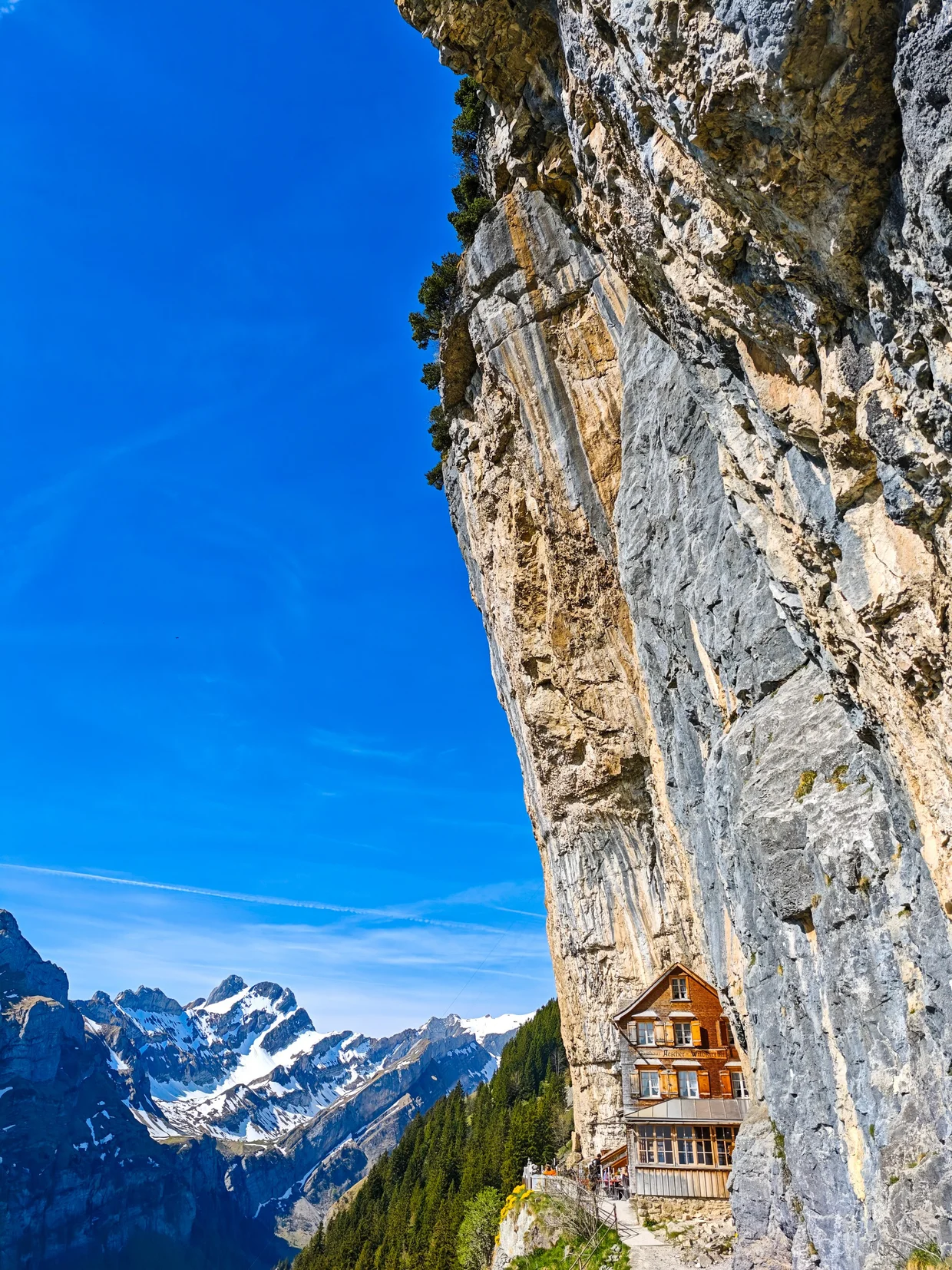
You've seen this place before, even if you don't think you have. It got famous when National Geographic put it on a magazine cover in 2015 and the internet collectively lost its mind. It's been a working guesthouse since the 1850s and a hermit hut for centuries before that. Now it's a restaurant where you can eat Rösti and drink a beer with a literal cliff face dripping water on the roof above your head.
A few things to know:
- It gets busy. On a sunny weekend, expect a queue for the terrace and waiting times for food. Going midweek or early in the day cuts most of that down.
- You can stay overnight. The inn rents out a handful of dorm-style rooms. You need to book months ahead in summer.
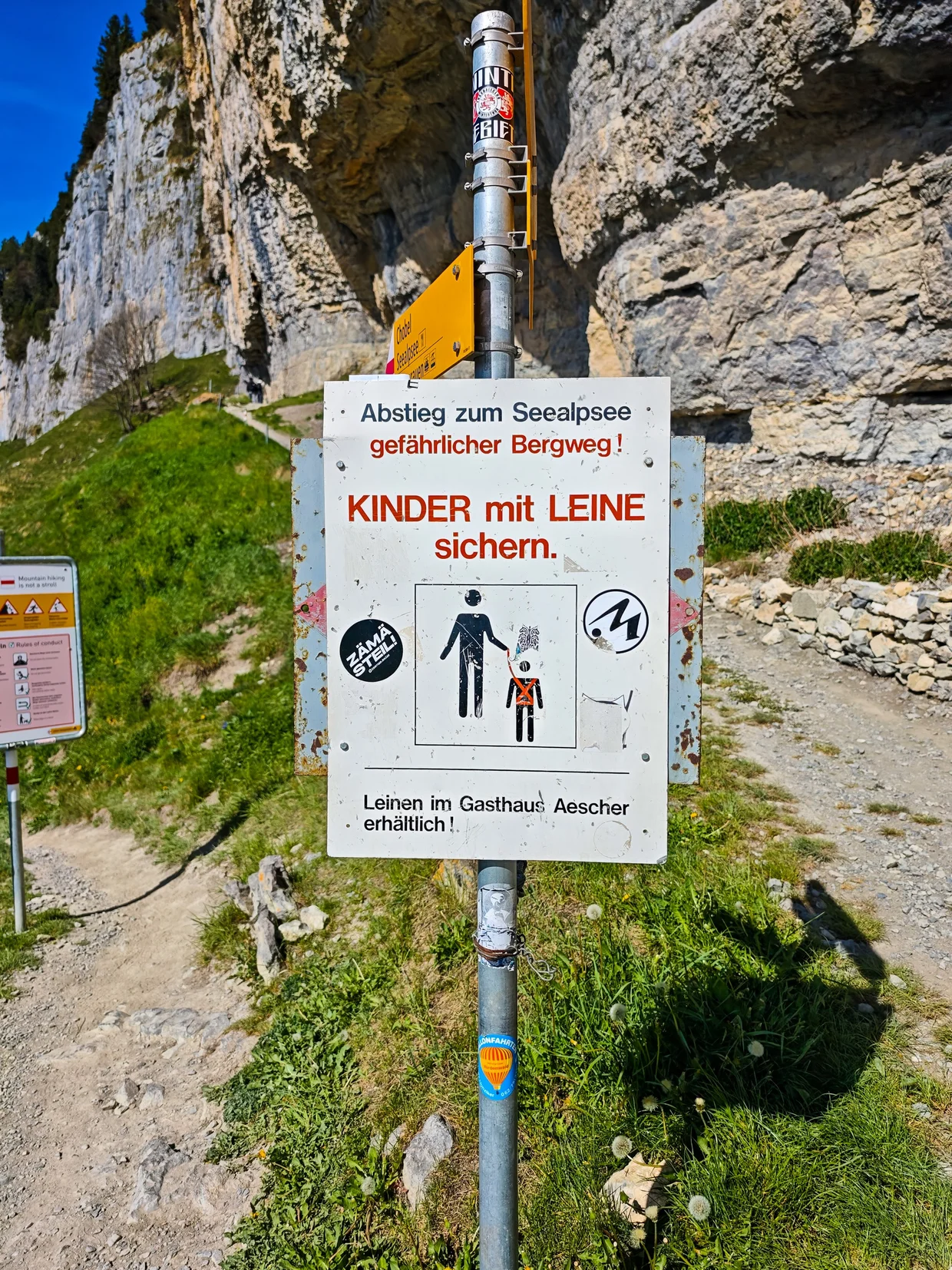
- Keep kids close on the descent. The path past the Aescher is genuinely steep and exposed in a few stretches. There's an actual sign suggesting children be secured with a leash before the descent, though I passed plenty of families who were just holding hands and moving carefully. Either way, this is the part where you pay attention.
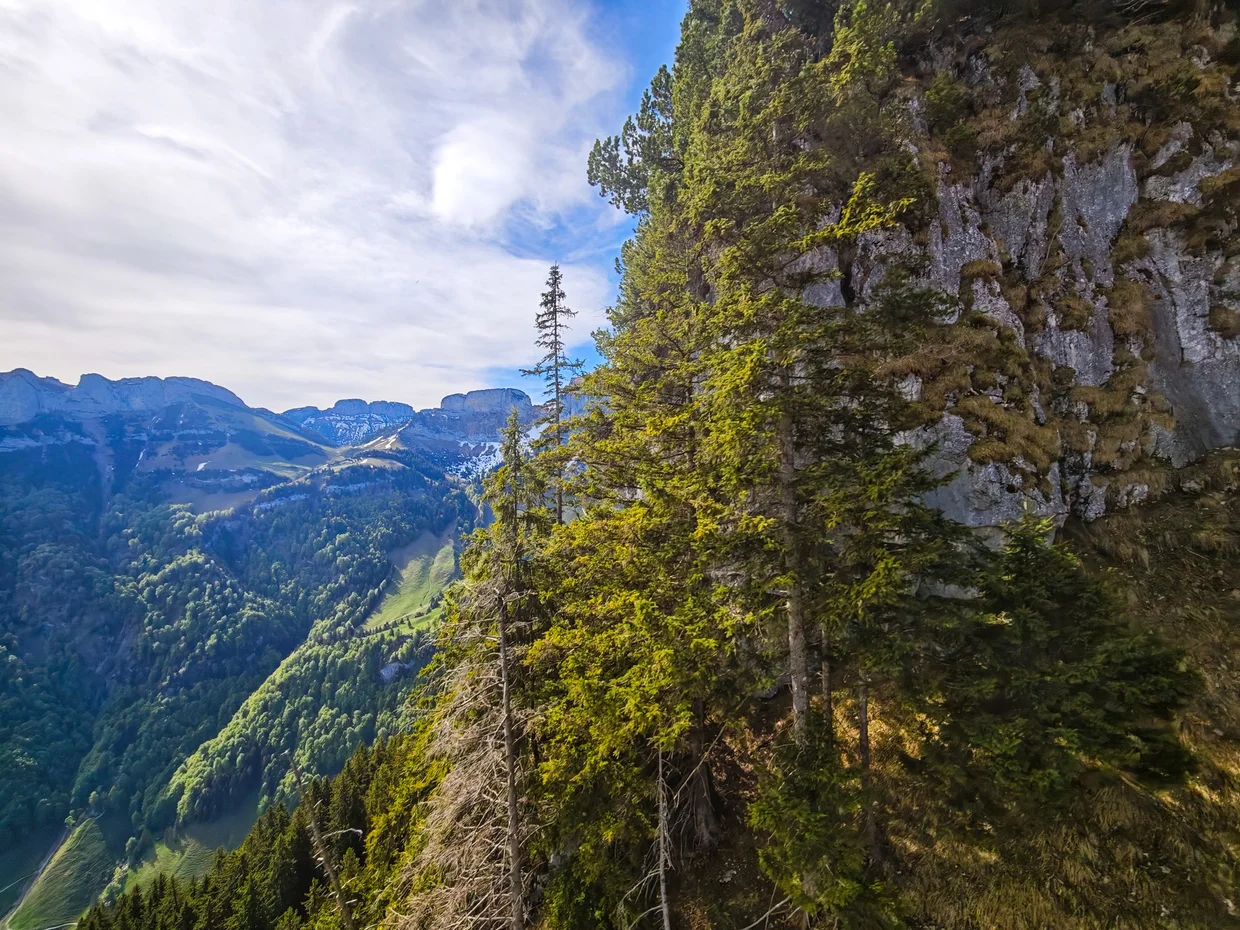
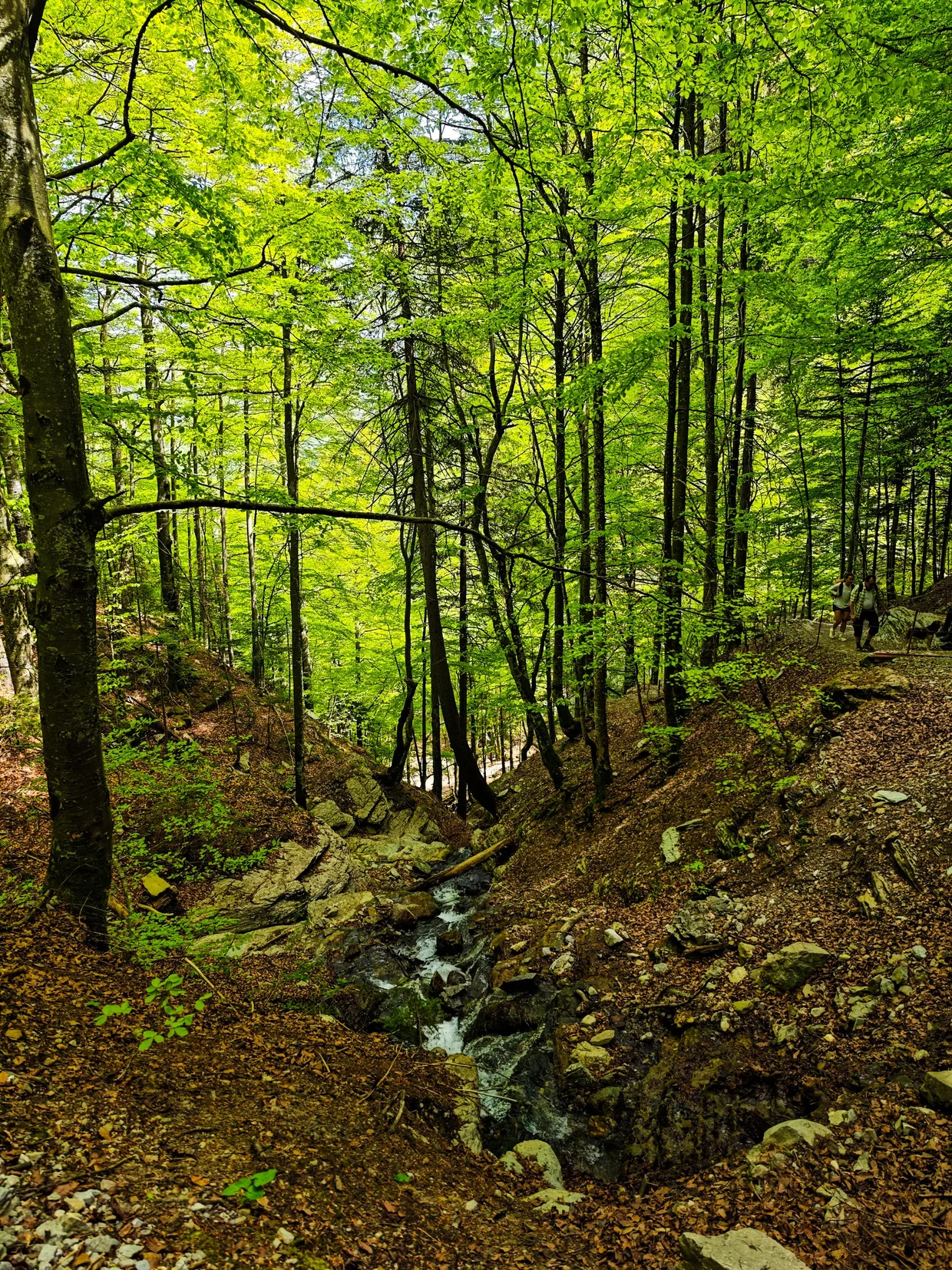
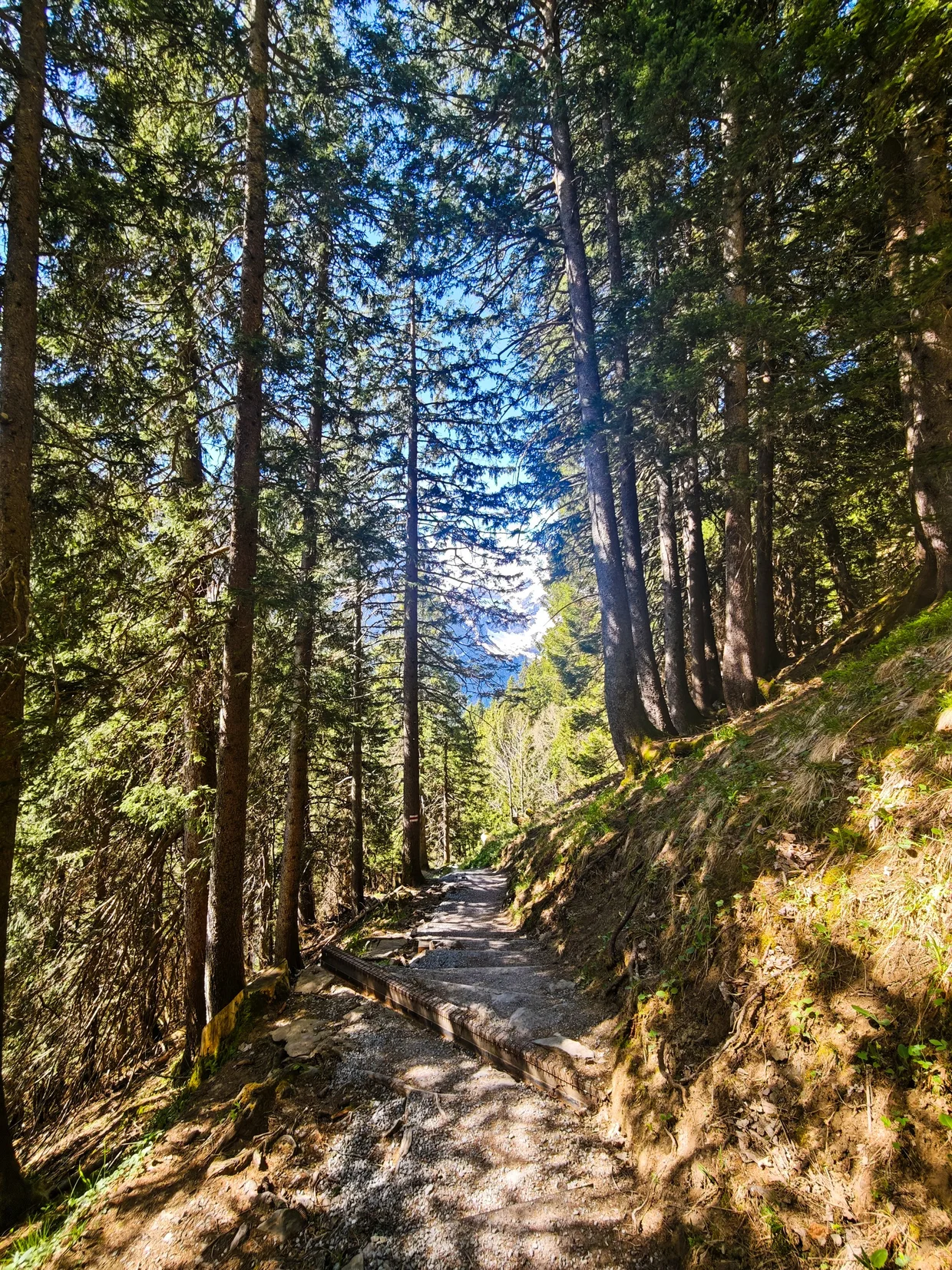
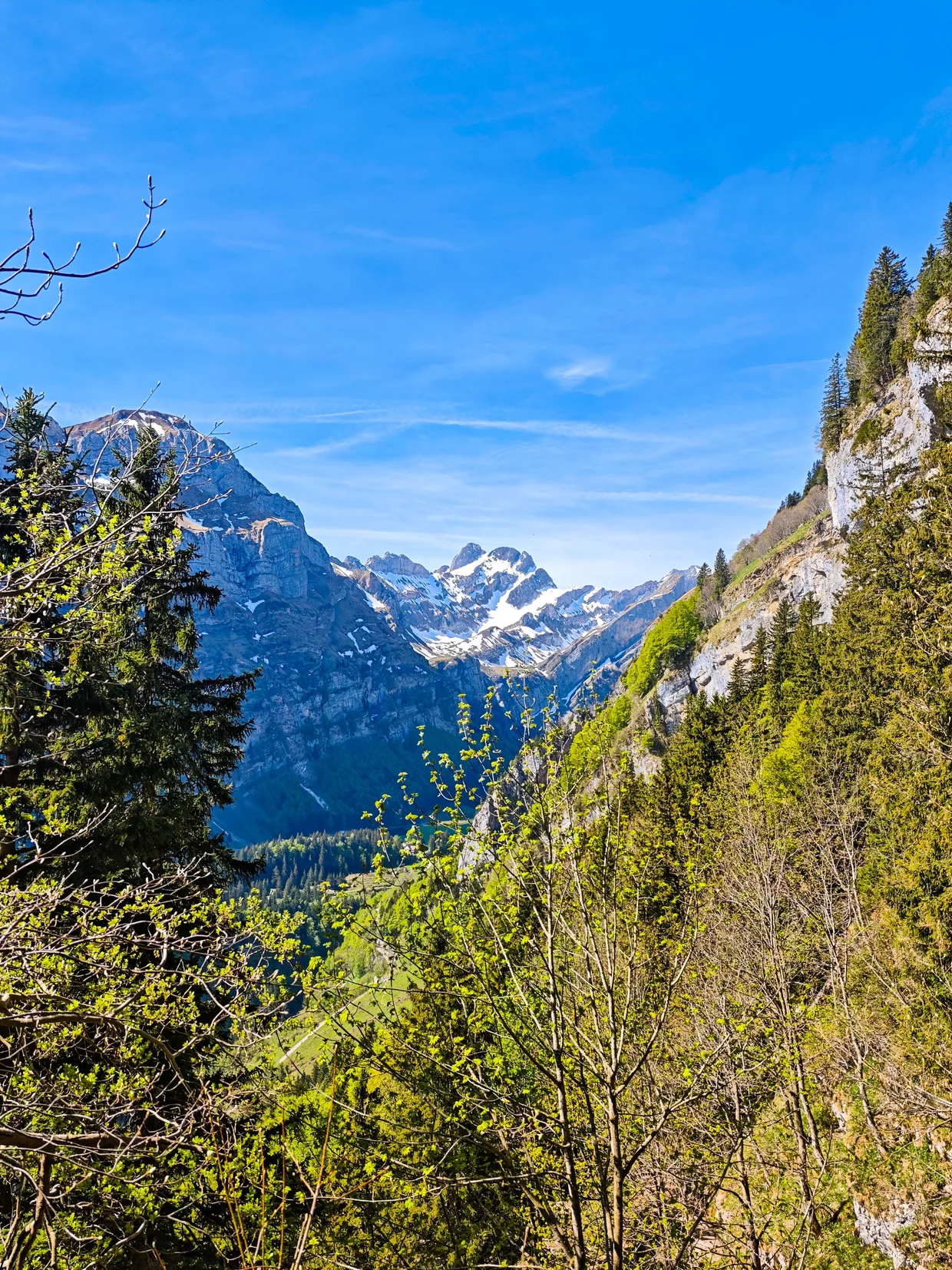
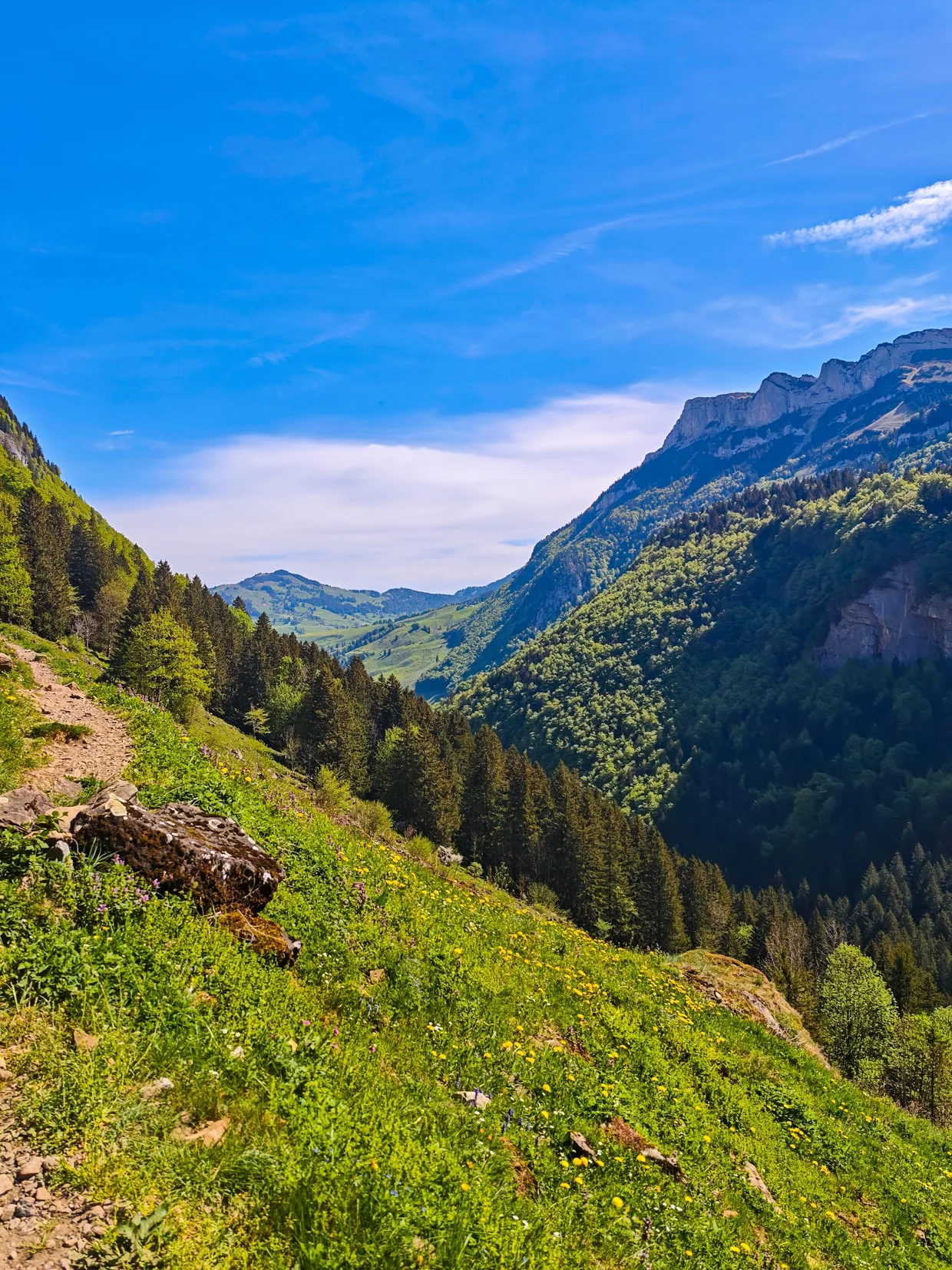
After the Aescher the path drops fast: switchbacks through pine forest, then opening out into wildflower meadows above the lake. The descent takes around 45 minutes from the Aescher to the lake itself.
Seealpsee: The Green Lake
Seealpsee is what you get when nature decides to flex.
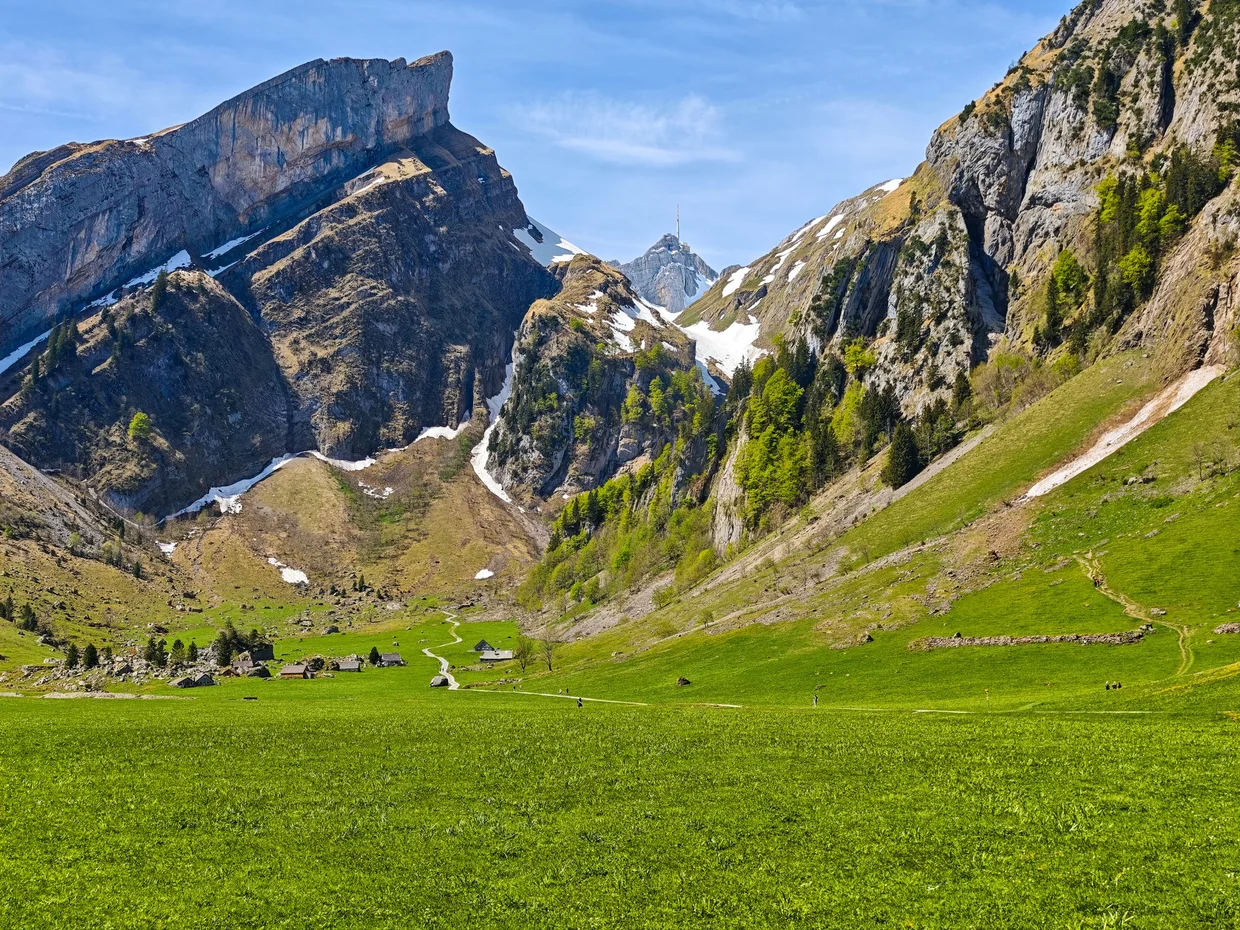
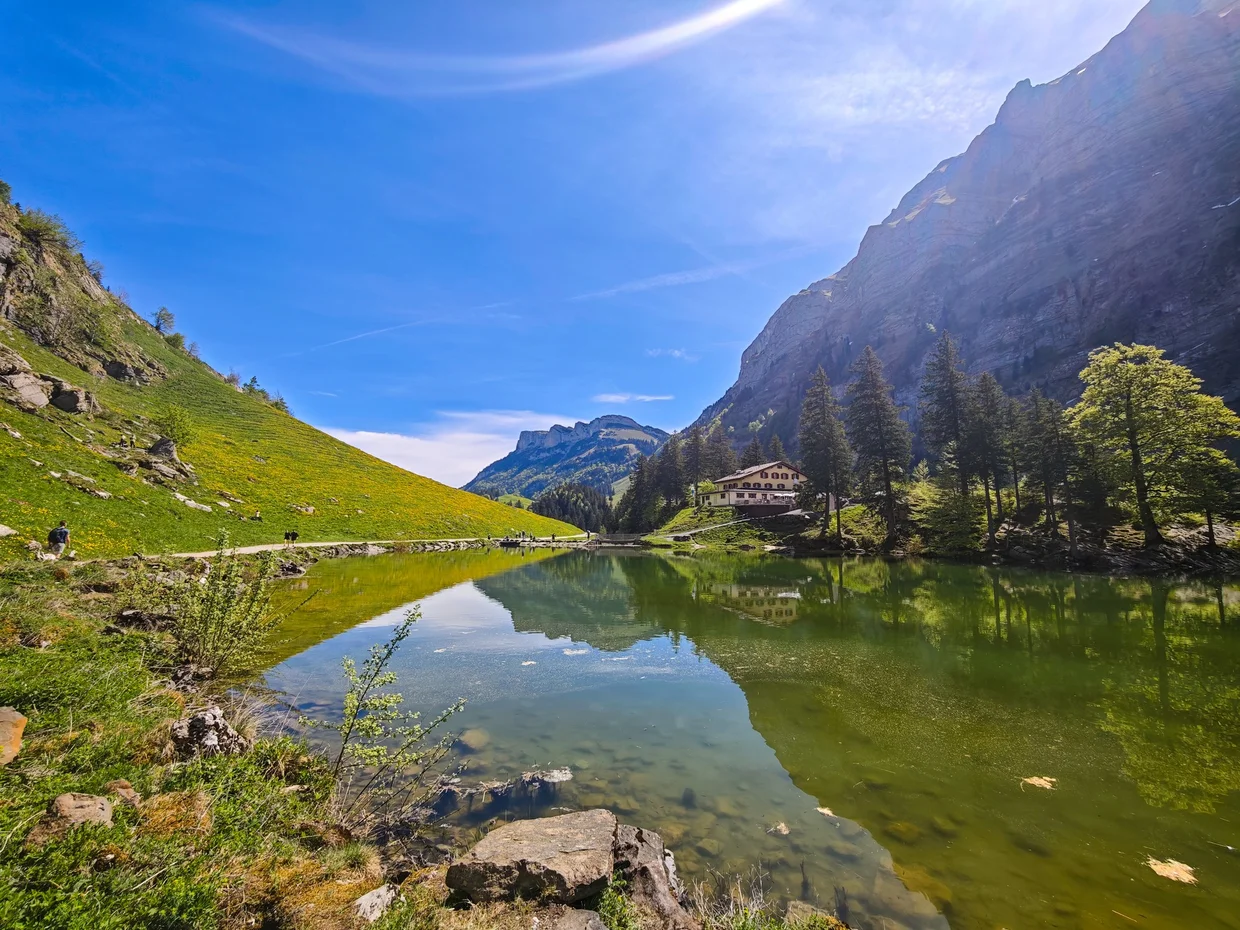
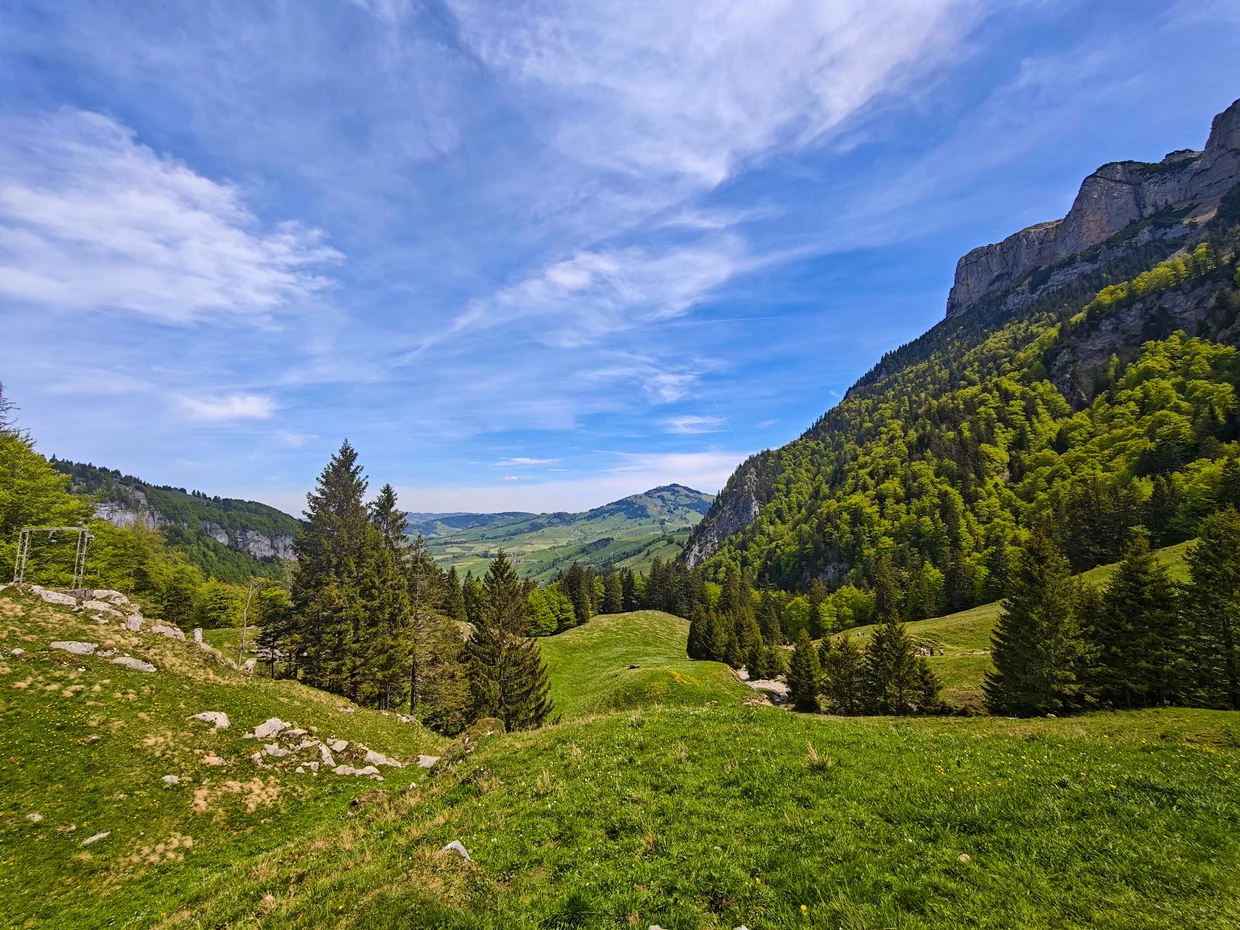
It's a small alpine lake at 1,140m, sitting in a steep-walled bowl beneath the Säntis ridge, with water so vividly green-blue you'll keep checking it's not a filter. Around it: meadow, a couple of farmhouses doing service as guesthouses, a herd of cows whose bells double as the soundtrack, and basically nothing else. No road in. No shops. No cars. Just lake.
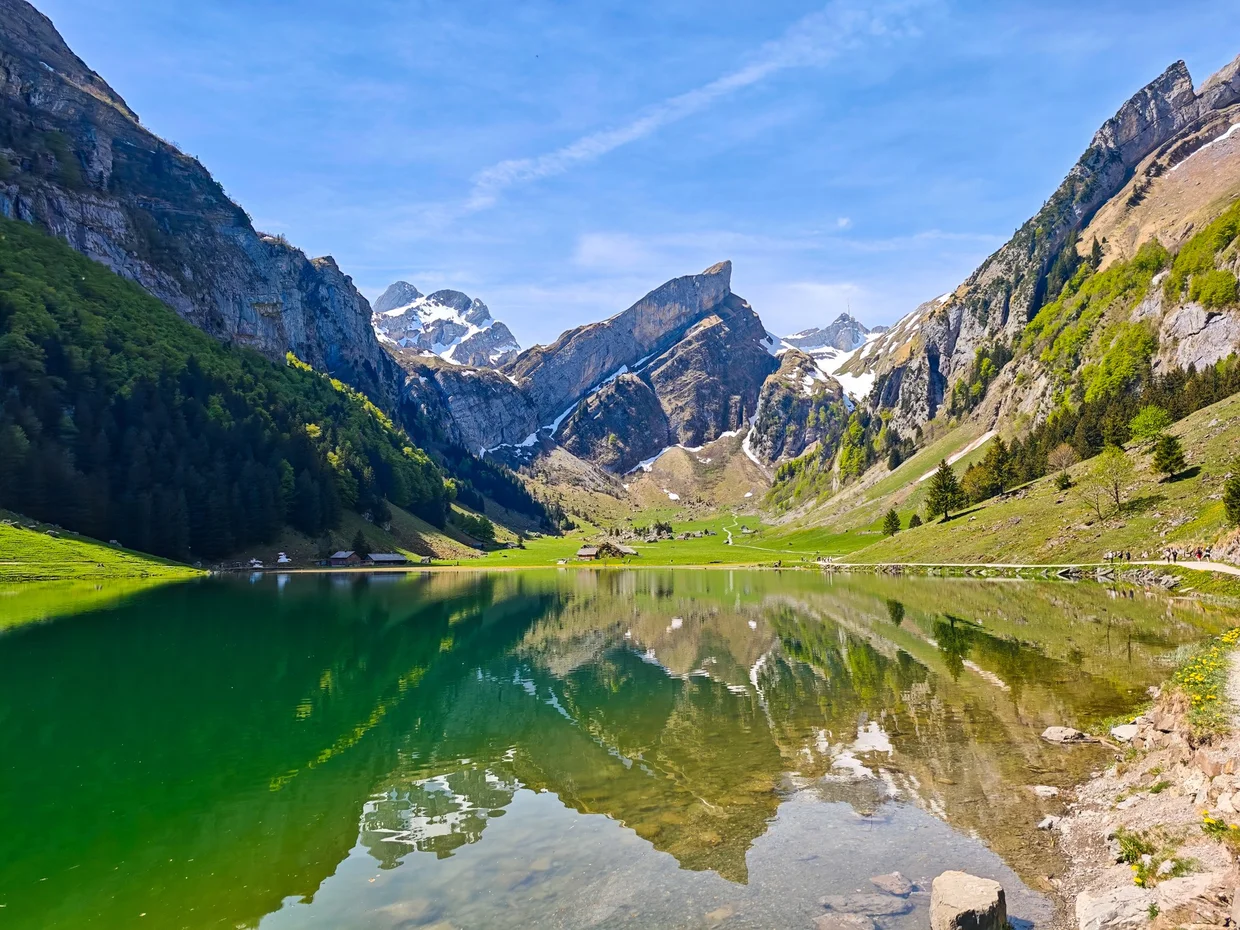
When the wind is off, the surface goes dead flat and the mountains paint themselves in twice. When the wind picks up, the water goes properly turquoise. Either way, you're gonna take more photos than you mean to.
There's an easy walking loop around the entire lake (about 30 minutes), or you can flop down on the grass and not move for an hour. There are two guesthouses (Berggasthaus Forelle and Berggasthaus Seealpsee), both serving lake fish, both with terraces that catch the sun until late afternoon. You don't have to eat at either, but you might want to.
From the lake, the path back down to Wasserauen takes around an hour, mostly through forest and pasture. It starts gentle, then gets properly steep and slippery toward the end. I saw plenty of people hiking up that way, but only one other person heading down it, which tells you something about how the route feels in reverse. Near the bottom you pass a small waterfall right beside the path; not a major sight, but you'll hear it before you see it.
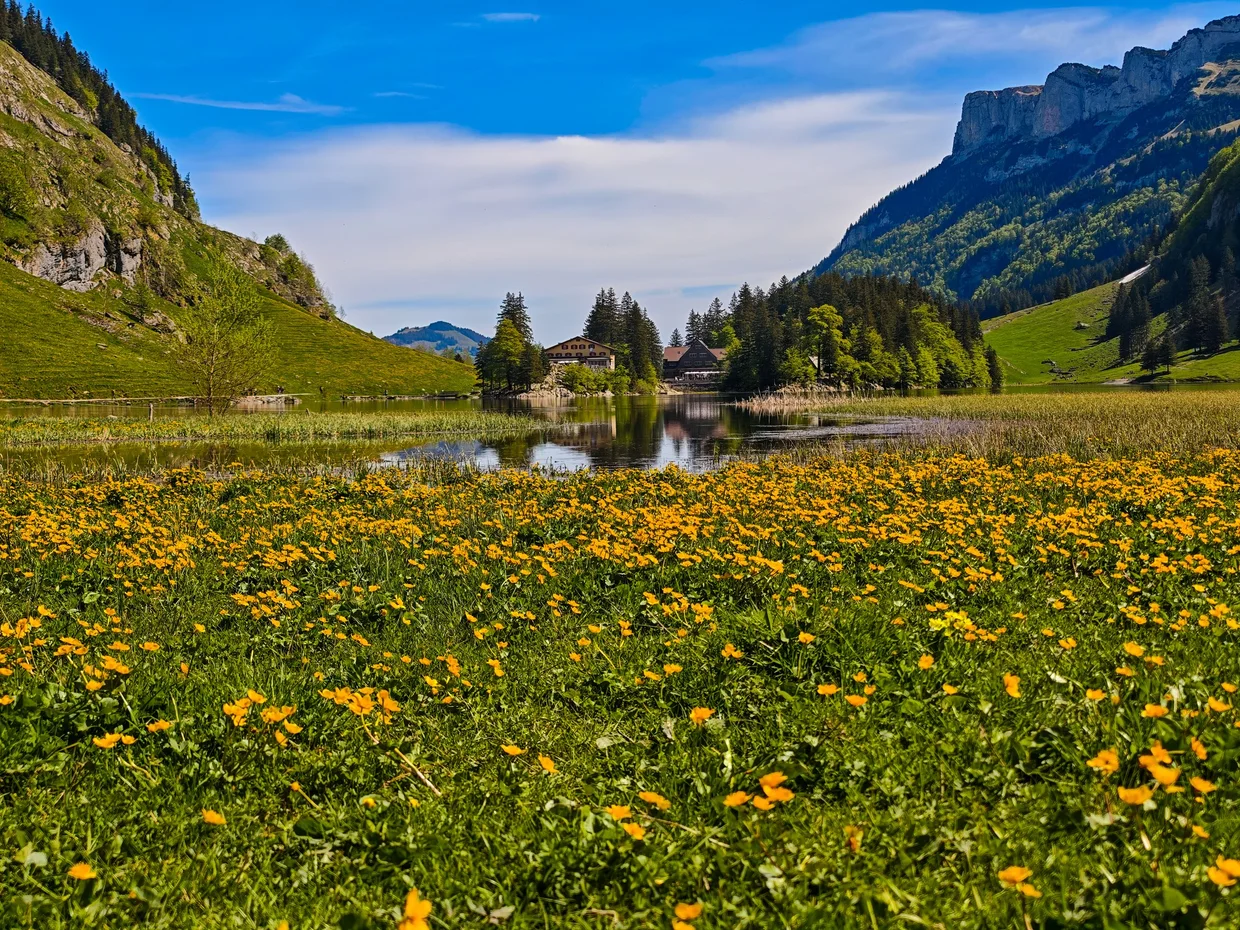
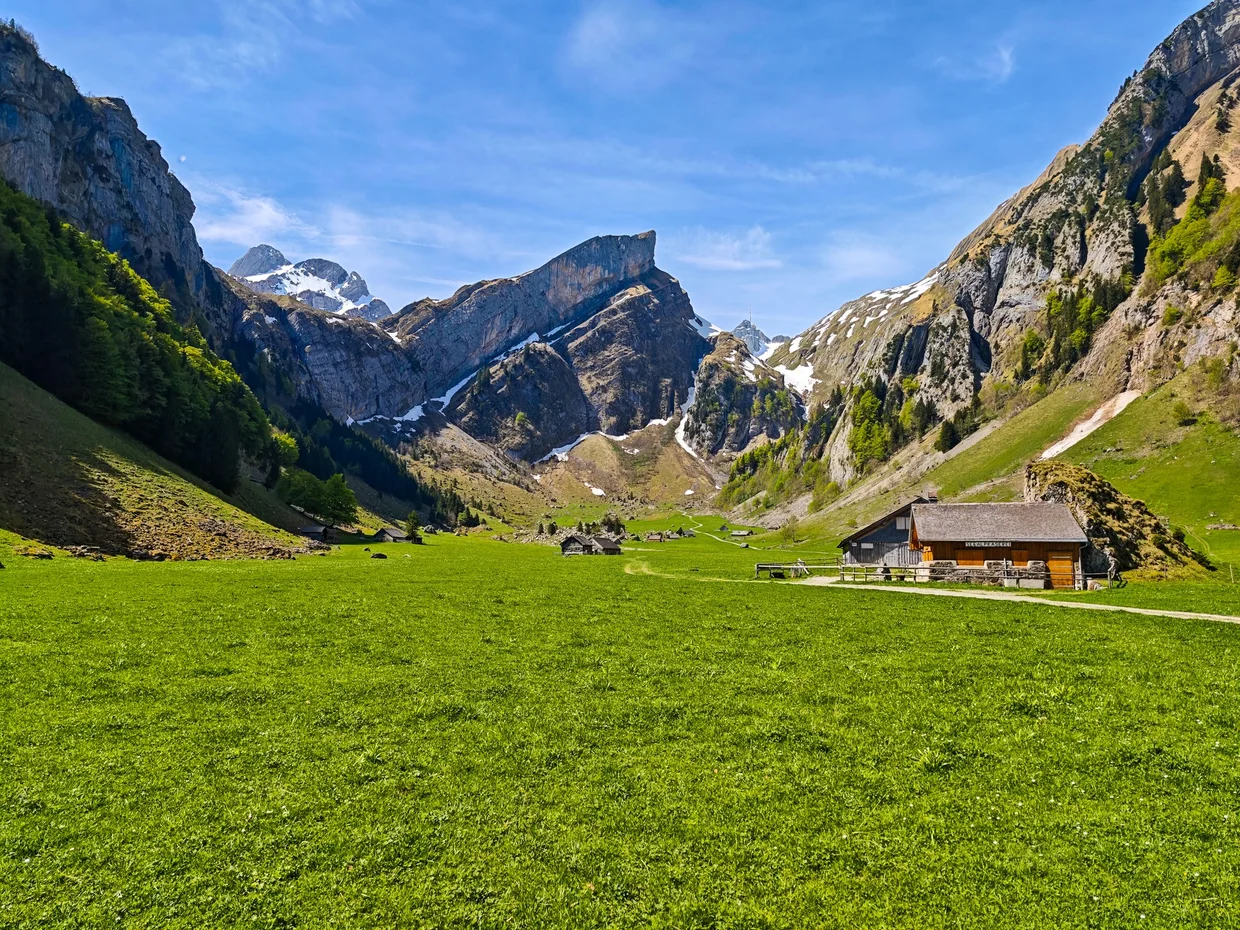
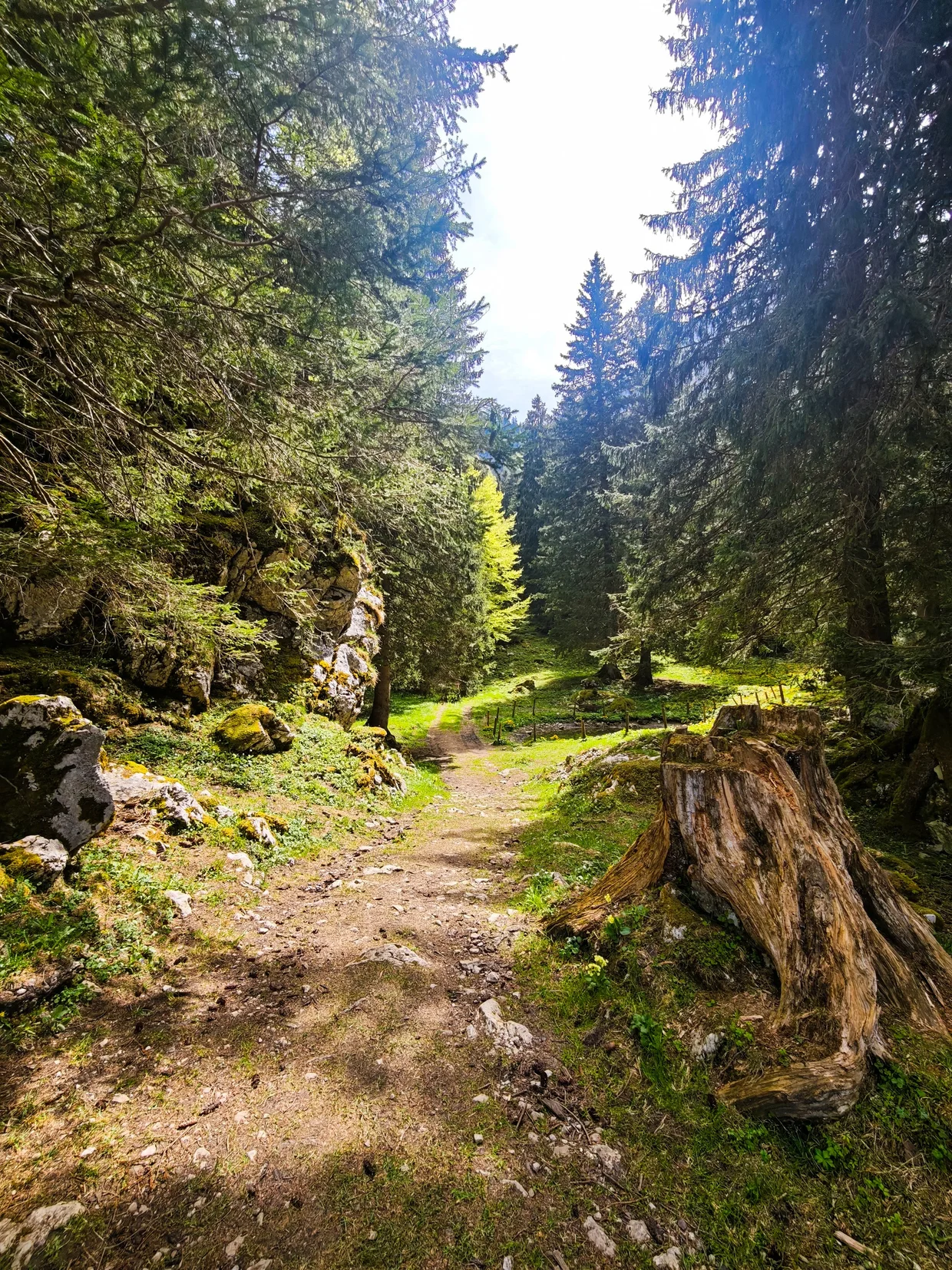
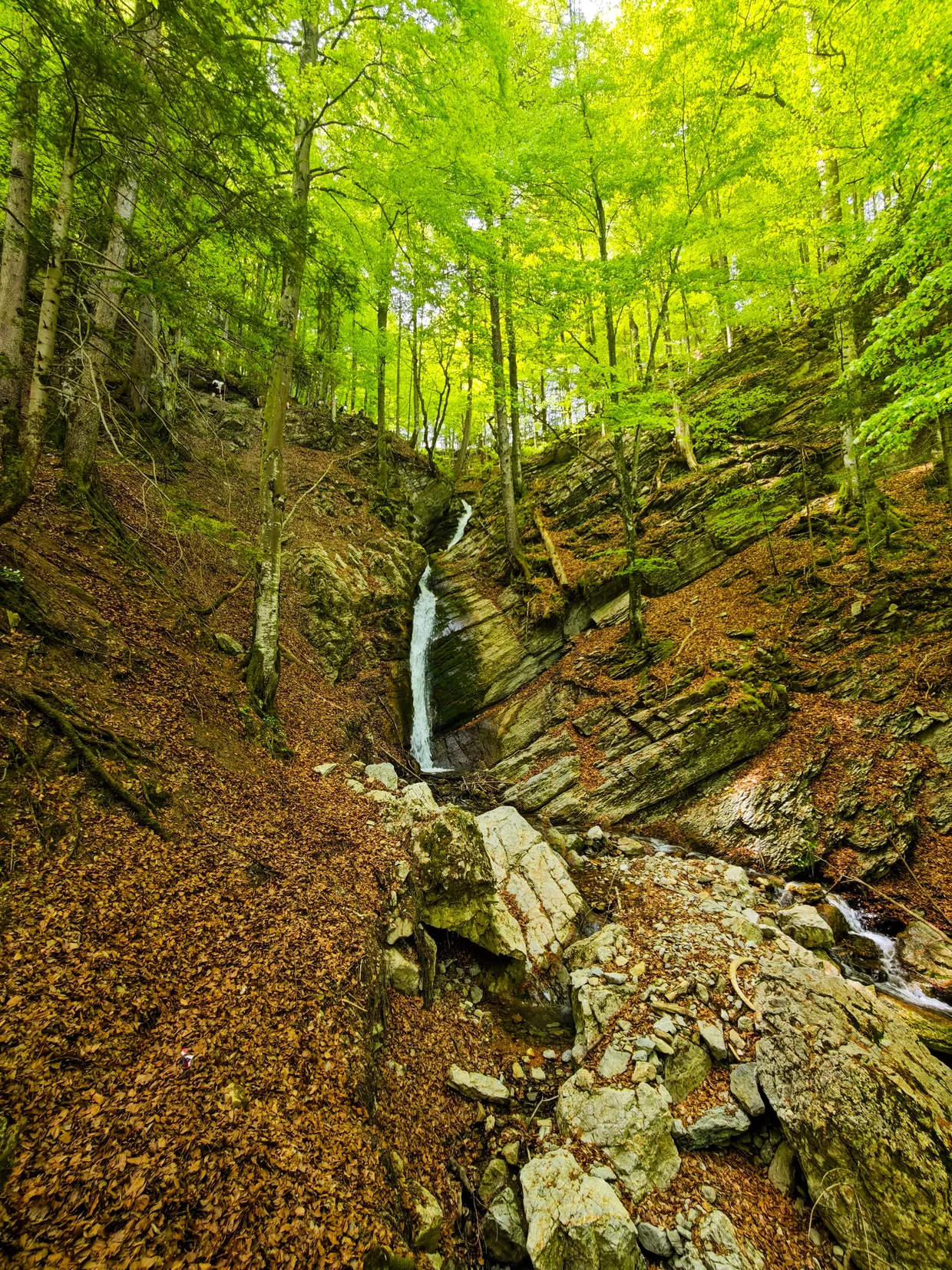
Total time for the loop, with the Aescher detour and a long lake stop: 4 to 5 hours. Take a picnic, take water, take proper shoes. No flip-flops. I will fight you on this. While you're packing the daypack, throw in a small travel first-aid kit: blister tape, plasters, and an antihistamine earn their keep on this descent.
Costs: Brace Yourself
Switzerland is expensive. You knew that. But "knowing it" and "paying nine francs for a Rivella" are two different experiences. Calibrate now.
The prices shown here are meant as a rough guide and can vary over time. While I update exchange rates regularly, local prices are typically refreshed only when I revisit the destination.
Couple of money-saving moves: cooking your own breakfast (Migros and Coop are everywhere, both supermarket chains, both miles cheaper than a hotel buffet), drinking tap water (it's mountain spring quality, free, and totally safe), and skipping the bottled stuff. Also, the half-fare card and Swiss Travel Pass can pay for themselves on a longer trip, but for a tight weekend with a rental car you probably don't need them.
Best Base
Where to Stay
St. Gallen
St. Gallen is the cultural anchor of the region and the easier of the two bases for a short trip. You're a couple of minutes' walk from the Klosterhof and the Abbey Library, surrounded by a small but extremely photogenic old town with painted facades on basically every street, and ten minutes' walk from the train station with direct connections to Zurich and to Appenzell. Hotels range from boutique stays inside the old town to standard mid-range business hotels nearer the station. The trade-off is the usual Swiss-city one (prices climb fast and weekend rooms fill up quicker than you'd think for a town this size) but you're paying for a genuinely walkable city with the country's best UNESCO library on your doorstep. Worth it for most short visits.
Getting Around
Rental car. For this corner of the country, a car is the move. The drive from St. Gallen up through the Vorderland, into Appenzell, and down to Wasserauen is fifty minutes start to finish, but you'll wanna stop a dozen times along the way and buses won't accommodate that. Pick up at Zurich (90 mins away by motorway), St. Gallen-Altenrhein (closer, smaller, sometimes cheaper), or even just at St. Gallen city station.
Trains. Switzerland's rail system is genuinely a marvel. SBB plus the regional Appenzeller Bahnen will get you St. Gallen → Appenzell → Wasserauen on a single ticket, run on time to the minute, and have the kind of windows you can stare out of for hours. It's slower than a car door-to-door but more relaxing. If you're not stopping in Trogen and the small villages, this is a totally workable plan.
Buses. PostBus runs the secondary routes (Heiden, the small villages, ridgetop stops) and is well integrated with the train network. The single SBB app handles tickets across the whole country including PostBus and Appenzeller Bahnen.
Walking. St. Gallen and Appenzell are tiny and walkable. The cliff hike from Ebenalp to Seealpsee is well-marked and well-graded, but it's a real hike, not a stroll. Wear proper shoes.
Taxis and rideshare. Uber works in Zurich and other big cities, but in the NE villages it's basically nonexistent. Don't plan around them.
Best Time to Visit
Late spring through early autumn is when this corner of Switzerland is at its best. The cable cars are running, the hiking trails are open, the meadows are absolutely riotous with wildflowers, and the cows are doing their thing on the high pastures.
May to early June is probably the sweet spot for St. Gallen, Appenzell, and the lower Seealpsee version of the trip. The meadows are turning into wildflower carpets, the towns are warm but not yet packed with summer visitors, and the lake is often clear of ice. The full Alpstein route is more conditional: higher paths can still hold snow, so check current trail conditions before assuming the Ebenalp-Aescher descent is open.
July and August are the warmest months and the busiest. Trails get traffic, Aescher gets queues, parking at Wasserauen fills by 9am. Still very doable, just plan for early starts.
September is gorgeous. The weather is often more stable than midsummer, the air is clearer, and the crowds are thinning out. If your dates are flexible, this is a strong pick.
October to early November the colours turn, the high cable cars start shutting down for the season, but St. Gallen, Trogen, and Appenzell stay charming and you'll have them mostly to yourself.
Winter (December to March) is its own thing. The hiking won't be it, but the towns are pretty in the snow, and Ebenalp keeps the cable car running for skiers and snowshoers. Christmas markets happen in St. Gallen and are worth the detour.
Spring shoulder (March-April) can be hit-or-miss. The valleys are fine but the high country can still be deep in snow and lots of mountain restaurants are closed for the off-season.
Know Before You Go
A few small things that make a trip to Switzerland noticeably smoother. Here are the first four, the full list covers 20.
- 1
It's not in the EU but Schengen applies
Switzerland is in Schengen but not the EU and not the eurozone. There are no routine Schengen passport checks crossing in from Germany,... - 2
The currency is the Swiss franc
Switzerland uses the Swiss franc (CHF) for everything. Euros are sometimes accepted in tourist-facing places at a poor exchange rate (you'll... - 3
It is genuinely expensive
Pricing is the highest in Europe by a wide margin. A casual lunch is 20 to 35 CHF, a basic 3-star hotel runs 180+ CHF a night, a Big Mac... - 4
Two days covers the NE corner
St. Gallen, Appenzell, and the Ebenalp-Seealpsee loop fit comfortably into a two-day weekend with a rental car. Three days lets you slow...
Read the full know before you go Switzerland guide.
Is Switzerland Safe?
Switzerland is one of the safest countries in the world by basically any metric you wanna pick. Crime is low, the political situation is famously stable, and the place is so well-organised that the things people gripe about (high prices, slow Sundays, a tendency to follow rules) are problems of comfort, not safety. The actual risks on this kind of trip are alpine: weather that flips fast, paths that go close to cliffs, and a wallet that can hemorrhage if you're not paying attention.
Crime and petty theft
Petty theft is rare and concentrated in the obvious tourist spots. St. Gallen and Appenzell are calm even by Swiss standards, but Zurich main station, train carriages on busy summer routes, and the cable car queues at Wasserauen are still the kinda places where bag-watching pays off. A zipped pocket and a hand on your bag in crowds covers most of it.
Street-tourist scams are rare, but normal scam rules still apply. Around St. Gallen, Appenzell, Wasserauen, and the Aescher route, you're unlikely to run into the classic bracelet sellers, fake petitions, taxi touts, or hard-sell tourist traps. Still, Switzerland is not magically exempt from card fraud, ATM tampering, online rental scams, investment pitches, or pickpocketing in bigger transport hubs, so keep the usual travel brain switched on.
Solo and women travellers report Switzerland as one of the easiest countries in Europe. St. Gallen at midnight, Appenzell on a Sunday morning, the trail down from Ebenalp at any time, all feel relaxed. Mountain hut culture runs on trust: you sign yourself in, you pay at checkout, sometimes by leaving cash on a counter when nobody's around.
Nightlife in St. Gallen is mellow. Few late bars, no rough scene. Drink-spiking happens occasionally in any university town, but this isn't a place where it's a real concern.
Health and mountain hazards
No special vaccines beyond the routine ones. The medical system is excellent, expensive without insurance, and English-speaking in the cities. Pharmacies (Apotheke) are easy to find, well stocked, and the staff almost always speak English. Save the relevant emergency numbers on your phone before heading into the Alpstein, including Rega for mountain rescue.
Tap water is some of the best in the world. Drinkable everywhere, including from public fountains in old towns and from springs along hiking trails marked Trinkwasser. Bottled water is a waste of money here.
Mountain weather changes fast. The Alpstein can shift from sun to rain to thunderstorm in an afternoon. Start hikes early, check the MeteoSwiss app or a live weather radar, and be off exposed ridges before mid-afternoon if the sky is brewing. A cold front can drop the summit temperature by 10°C inside an hour.
Ticks are present in low and mid-elevation forests across central Europe, including the Alpstein foothills. Tick-borne encephalitis (TBE) and Lyme are both endemic. If you're hiking through meadows or forest from April to October, use repellent and check yourself at the end of the day.
The Aescher descent is the part of this loop where you actually need to pay attention. The path past the cliff hut down toward Seealpsee is steep, exposed in a few stretches, and has the sign about kids on a leash for a reason. It's not climbing, but it's not a stroll either. Proper shoes, dry conditions if you can pick them, and your phone in your pocket so you're not photographing while you're walking.
Driving
Roads are excellent. The motorway requires a Vignette (40 CHF, valid for the calendar year), buy it at the border, at any petrol station, or online as an e-vignette before you hit the autobahn. For this specific north-east loop, though, you don't really need one. Avoiding toll roads around St. Gallen, Appenzell, Trogen, and Wasserauen barely adds driving time, so for two or three days in this corner it can be a waste of money. If you're staying longer or crossing more of Switzerland, just get it and stop thinking about it. The alcohol limit is 0.05, headlights on at all times, and Swiss police don't bend on speed limits. I got caught doing 57 km/h in a 50 zone and paid a 120 CHF fine. There are much better ways to spend that money in Switzerland. Mountain roads are well-paved but have hairpins and the occasional cow.
Winter driving in the Alpstein needs winter judgment. Switzerland does not mandate winter tires by fixed dates, but you are expected to keep the car controllable for the conditions, and liability can get ugly if you block a road or crash on summer tires in snow. Winter tires are the sensible default for the cold months, chains are smart for high roads, and the road into Wasserauen stays open year-round but climbs through patchy snow zones.
What's actually likely to ruin your trip
Sticker shock, sunburn at altitude, a missed cable car, an ankle on the Aescher descent, or a speed camera reminding you that "just hurrying a bit" is an expensive personality trait in Switzerland. That's the realistic risk list. Compared to almost anywhere else you might travel, Switzerland is about as soft a country as it gets. The main danger is forgetting to keep an eye on the weather above 1,500m.
Published May 2026.