Top Things to Do and See in Switzerland
This guide covers a weekend loop in north-eastern Switzerland: St. Gallen's painted old town and its UNESCO Abbey Library, the Appenzell countryside with its postcard villages and cliffside hike, and the Alpstein massif rising right behind it. The activity list is short on purpose (this is a two-day plan, not a sightseeing marathon) but every item on it punches well above its weight. All of it is doable from a single base.
The prices shown here are meant as a rough guide and can vary over time. While I update exchange rates regularly, local prices are typically refreshed only when I revisit the destination.
St. Gallen Old Town
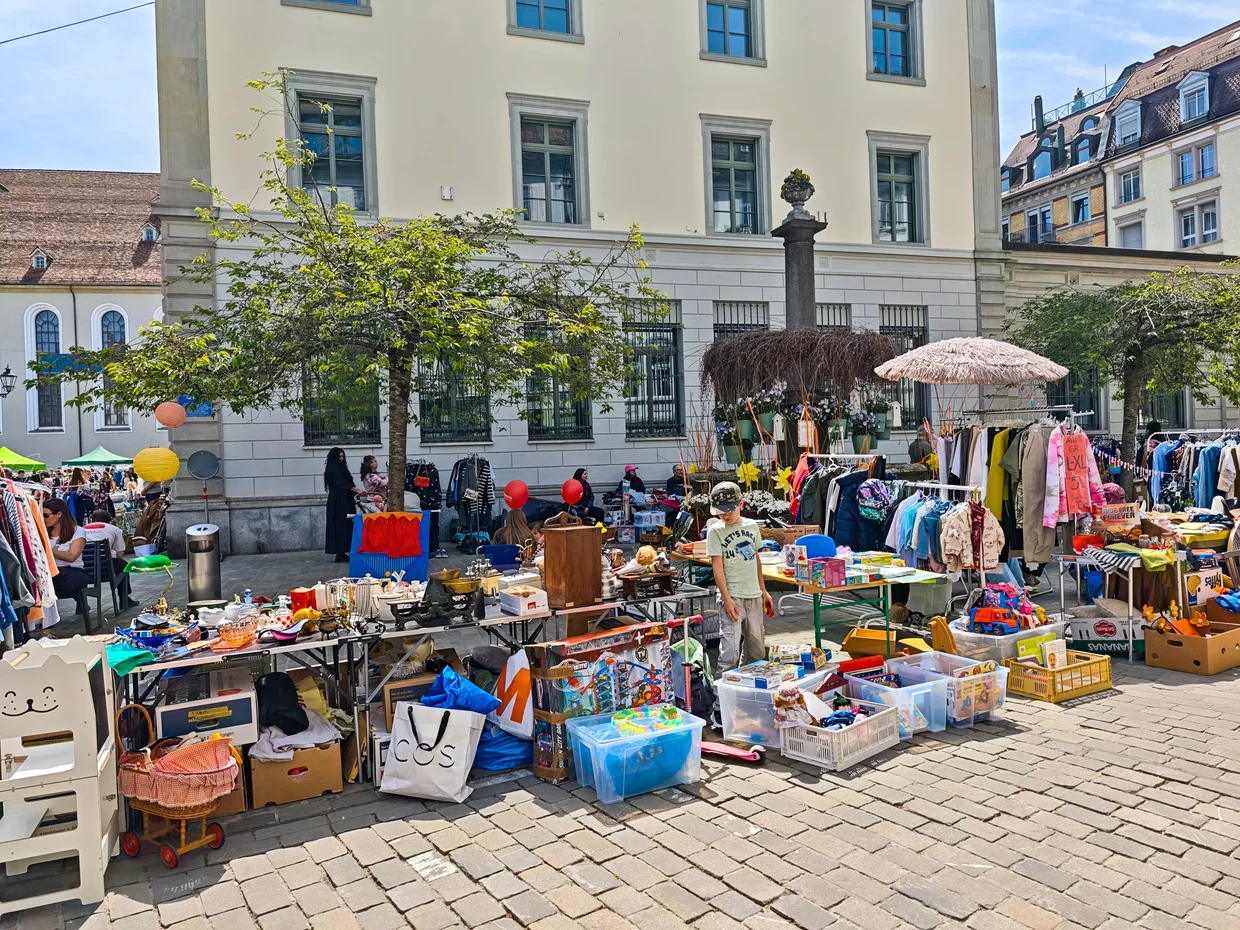
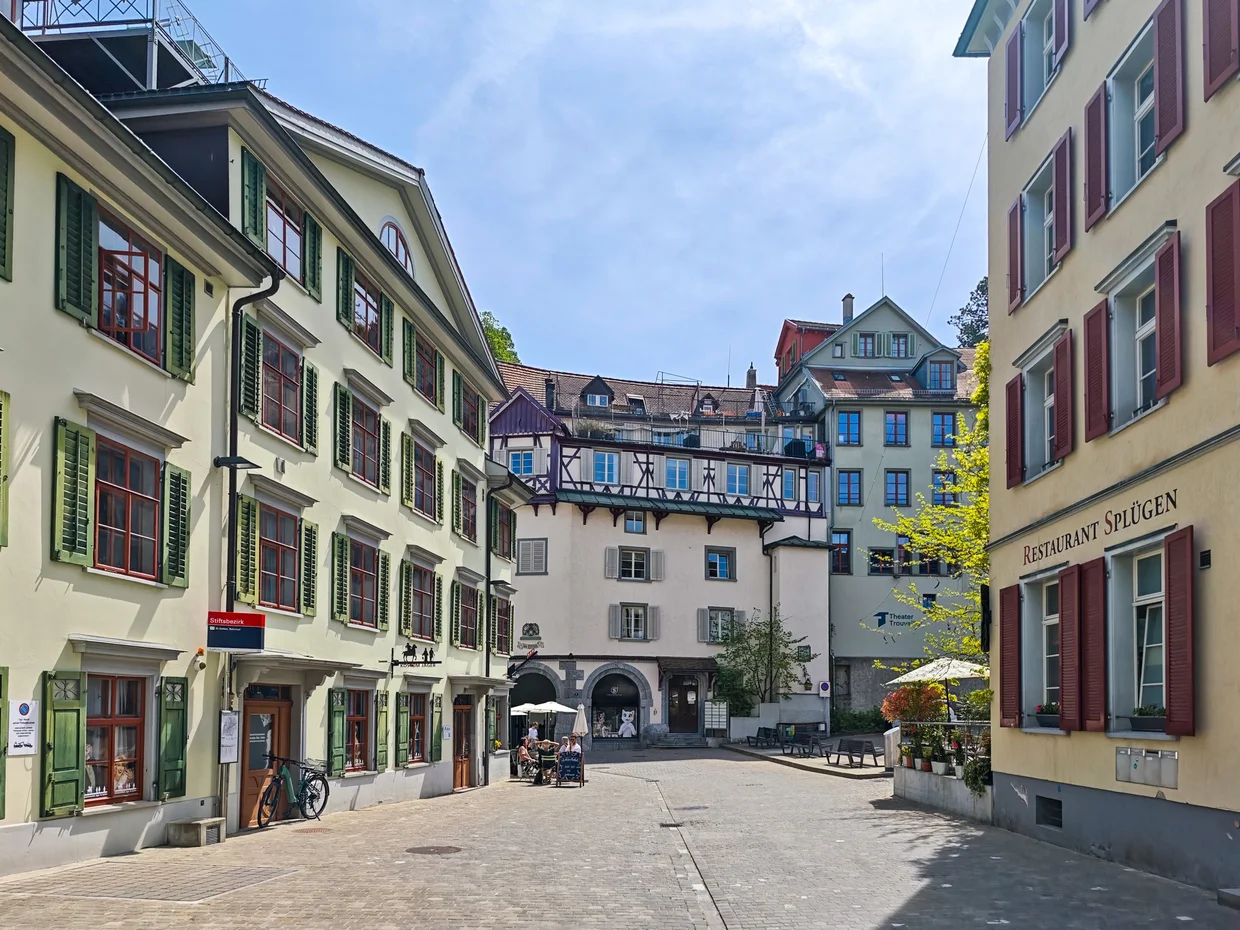
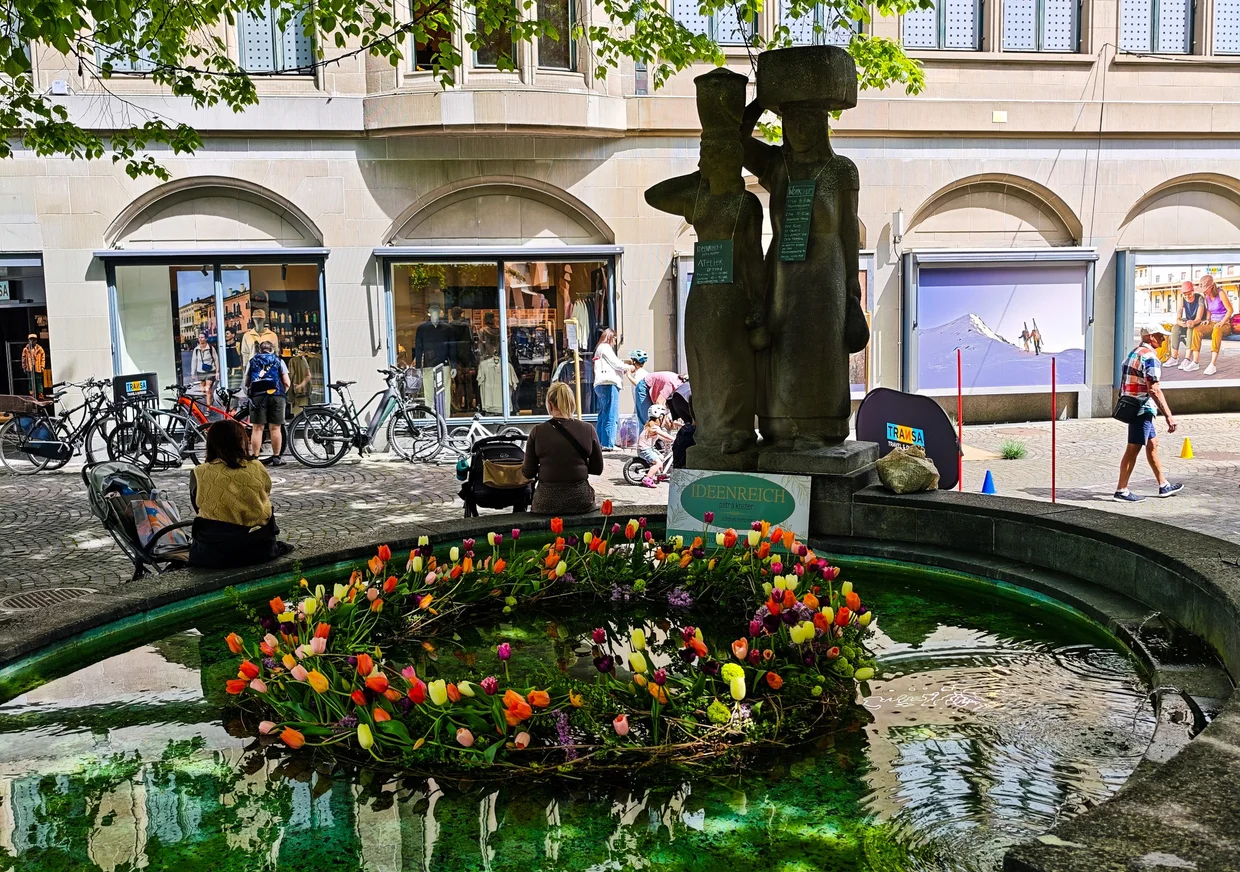
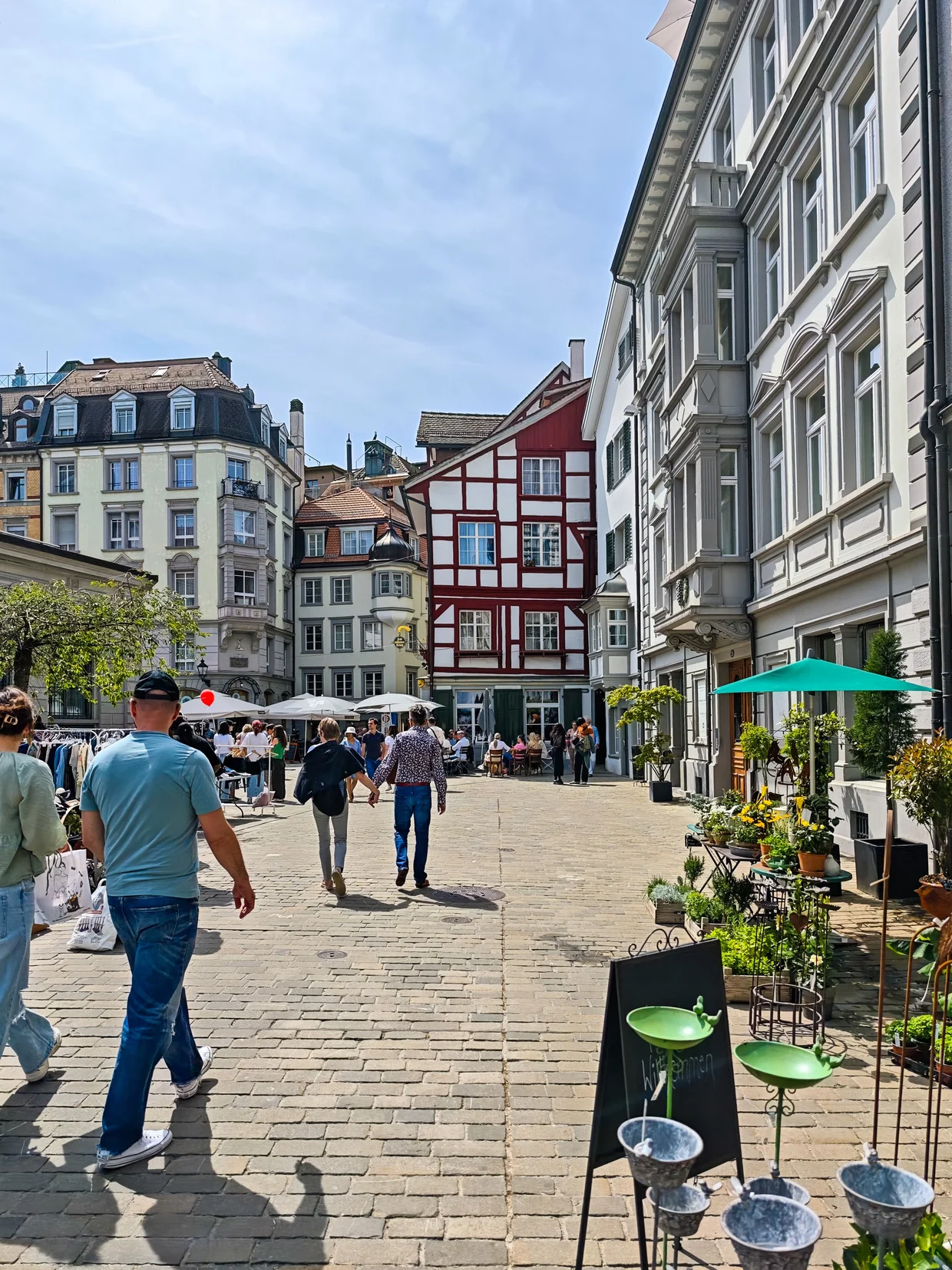
The old town of St. Gallen is the kind of place you walk into for a coffee and walk out of three hours later wondering where the time went. It's small, dense, and almost completely pedestrianised, with painted house facades on basically every street. The wealth of the medieval and early-modern textile trade pulled in commissioned frescoes, carved oriels (Erker), and ornate bay windows that still cover the houses today, and they're maintained to a standard that frankly puts most other historic centres to shame. The pedestrian zone runs roughly between the Klosterhof (the wide grass square in front of the Cathedral) and the Marktplatz, with a flea market on Saturdays in front of the Abbey buildings. Wander, look up, repeat. The blue and white painted oriel on Marktgasse is the single most photographed thing in town. The herb garden tucked behind the abbey precinct, on the other hand, is one of those tiny corners almost no tourist finds.
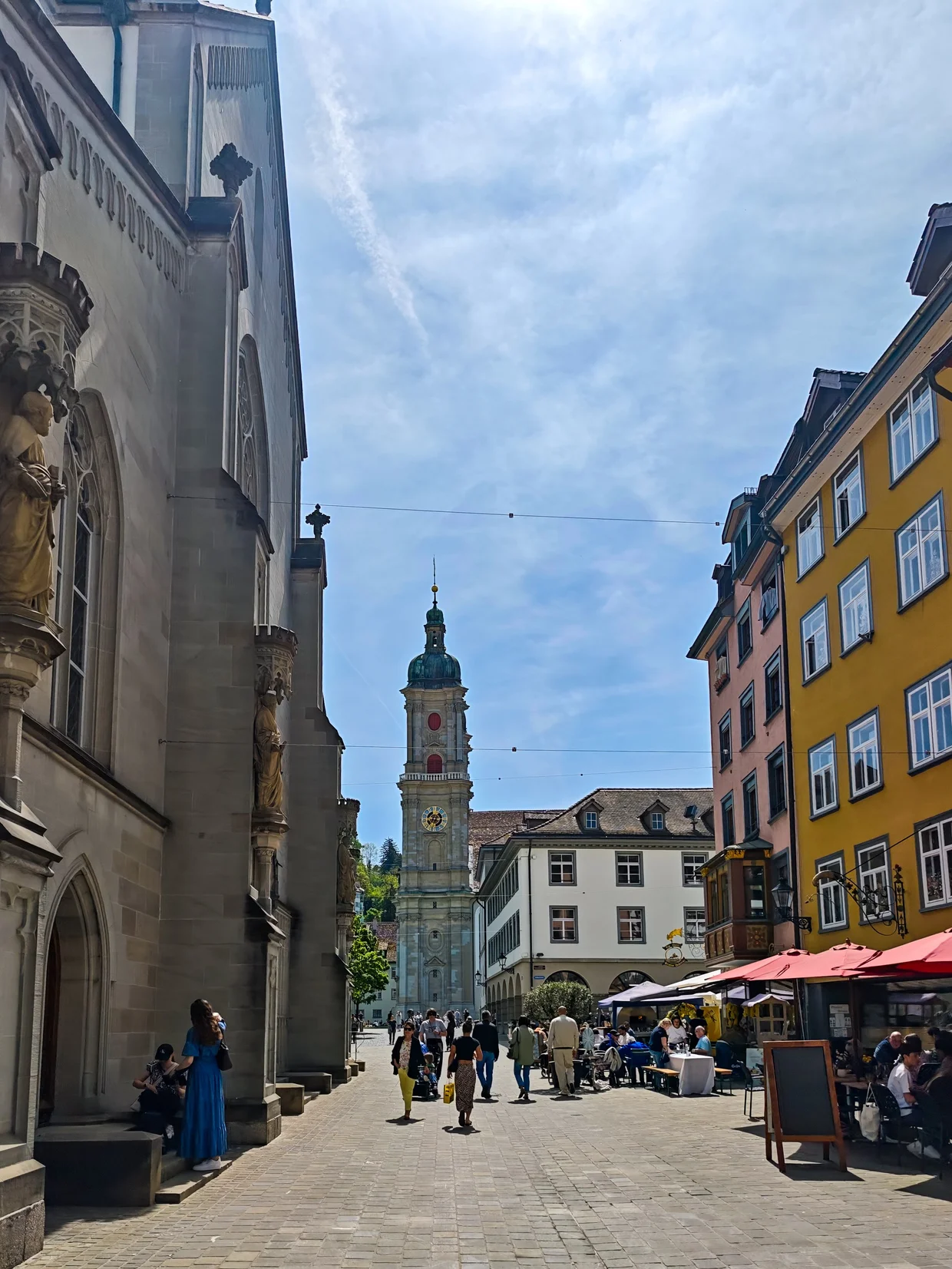
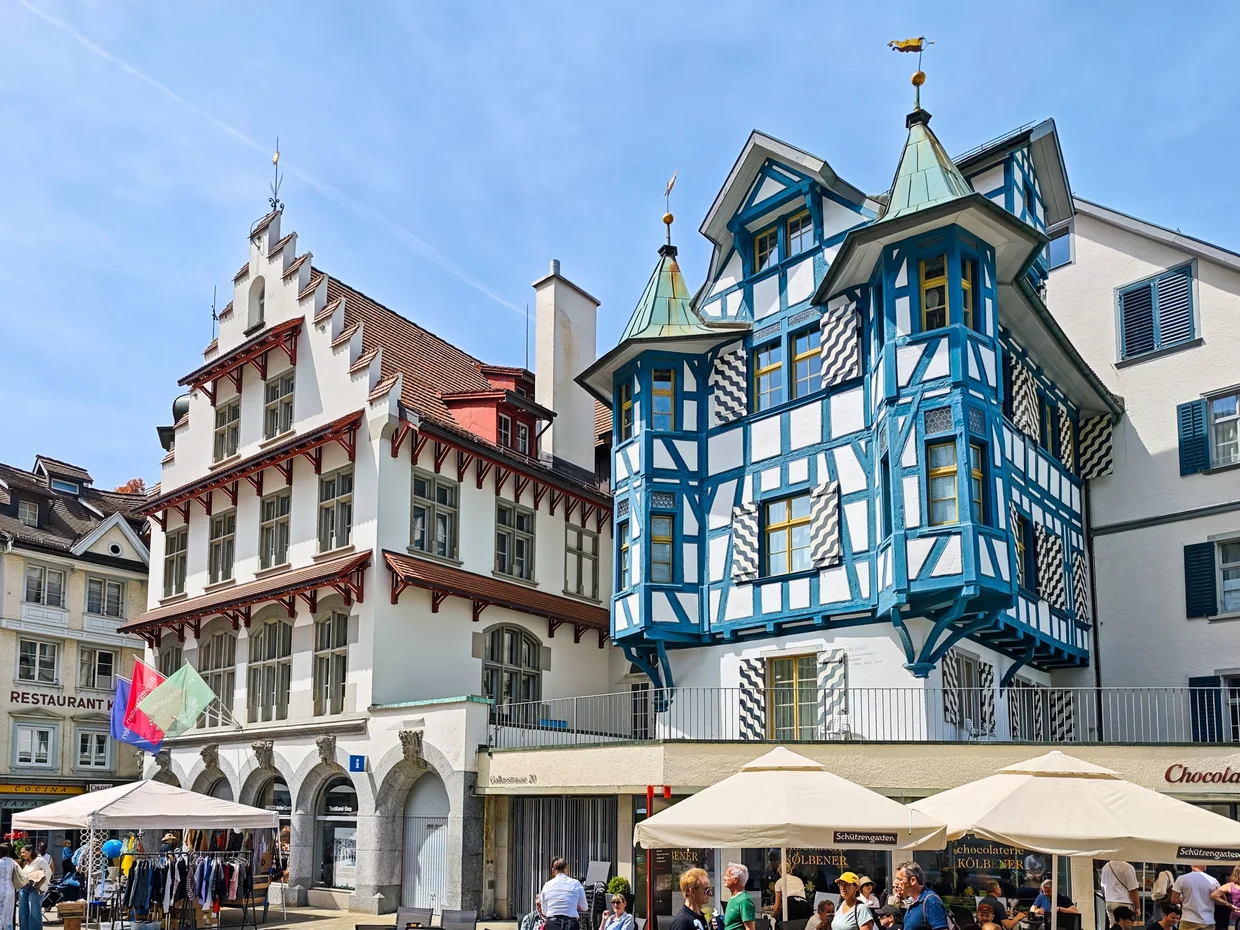
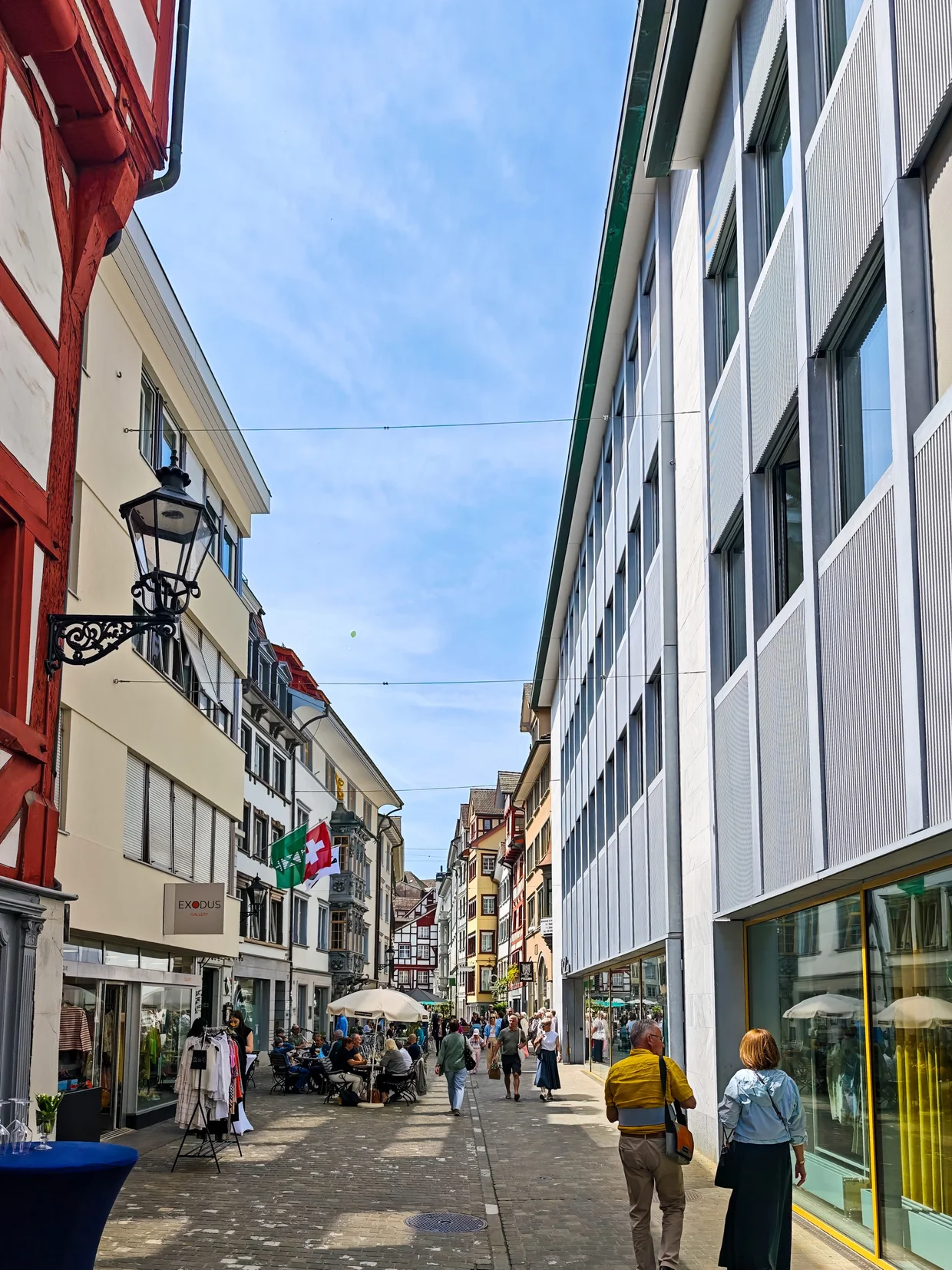
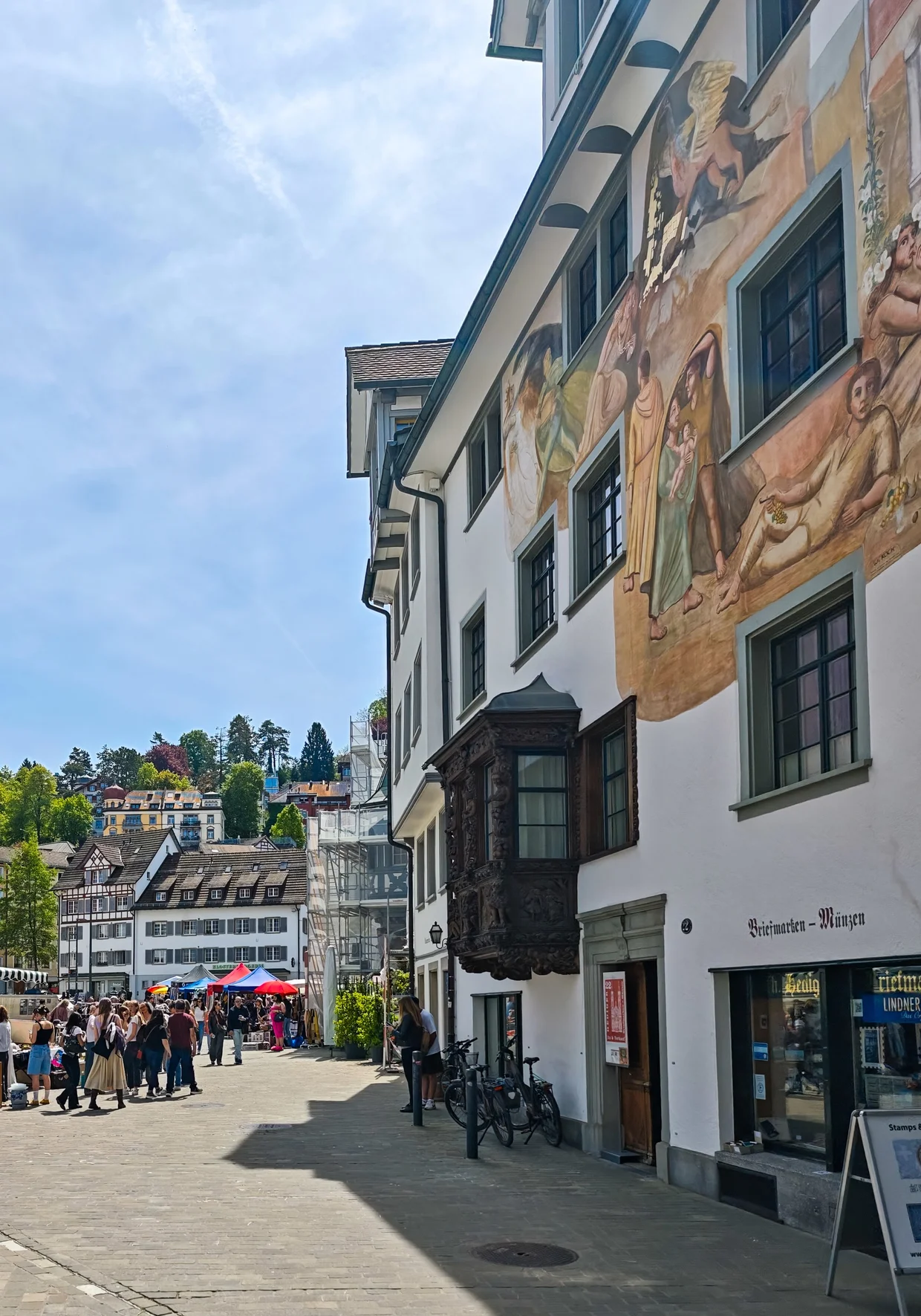
How to Get There
Park in one of the signposted lots just outside the pedestrian zone (Brühltor, Bahnhof, or the underground Oberer Graben are easiest). St. Gallen station is a 5-minute walk from the Klosterhof, with direct trains from Zurich (60-70 min) and onward connections to Appenzell on the Appenzeller Bahnen.
Notes
- The pedestrian zone is fully closed to cars, park outside the centre and walk in
- Saturday flea market in front of the Abbey is the best people-watching of the week
- Most cafés close earlier than expected, especially on Sundays
- The Klostergarten herb garden behind the cathedral is a quiet under-the-radar stop
- Painted facades light up best in late morning and golden hour
Stiftsbibliothek St. Gallen (Abbey Library)
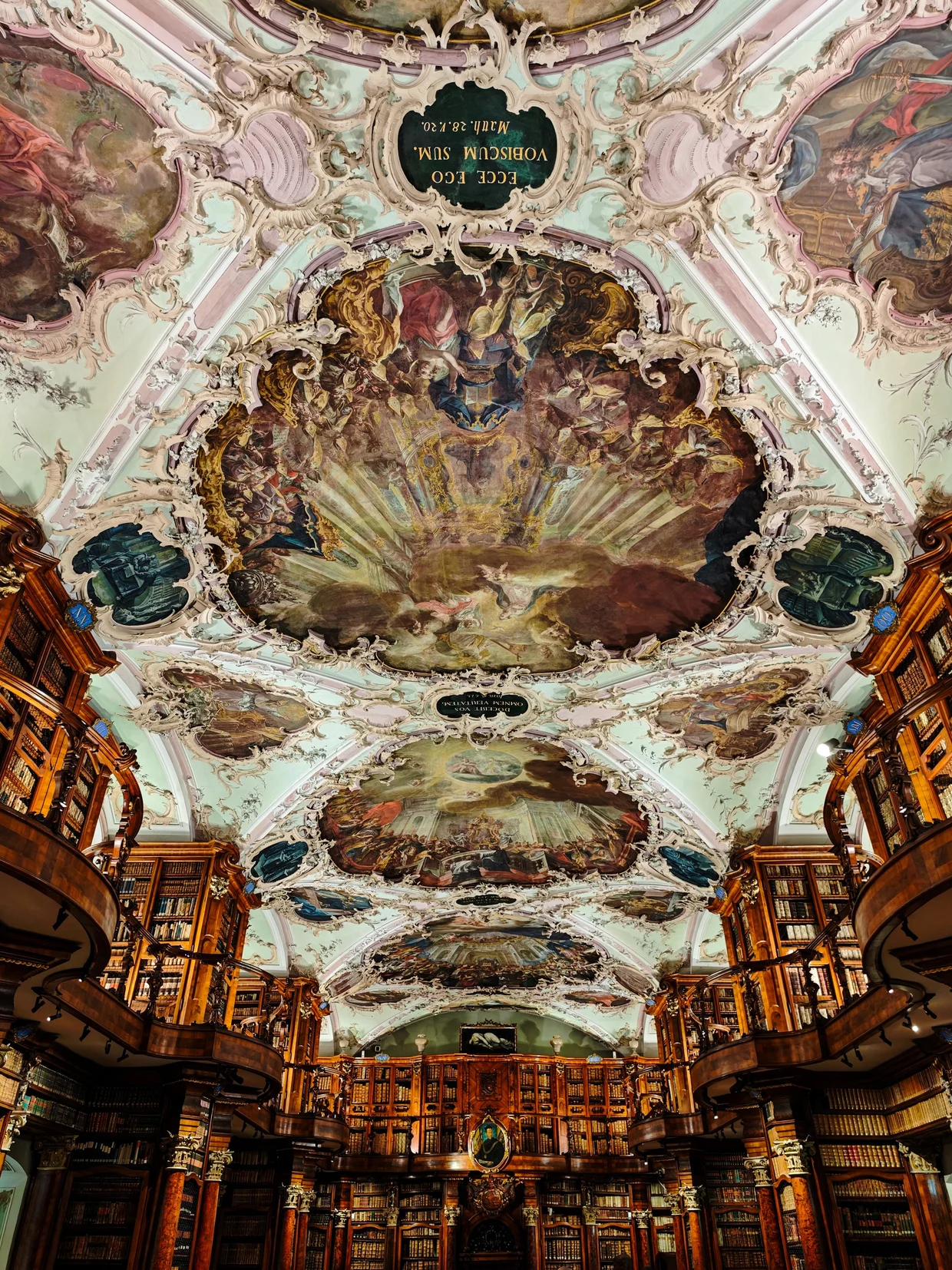
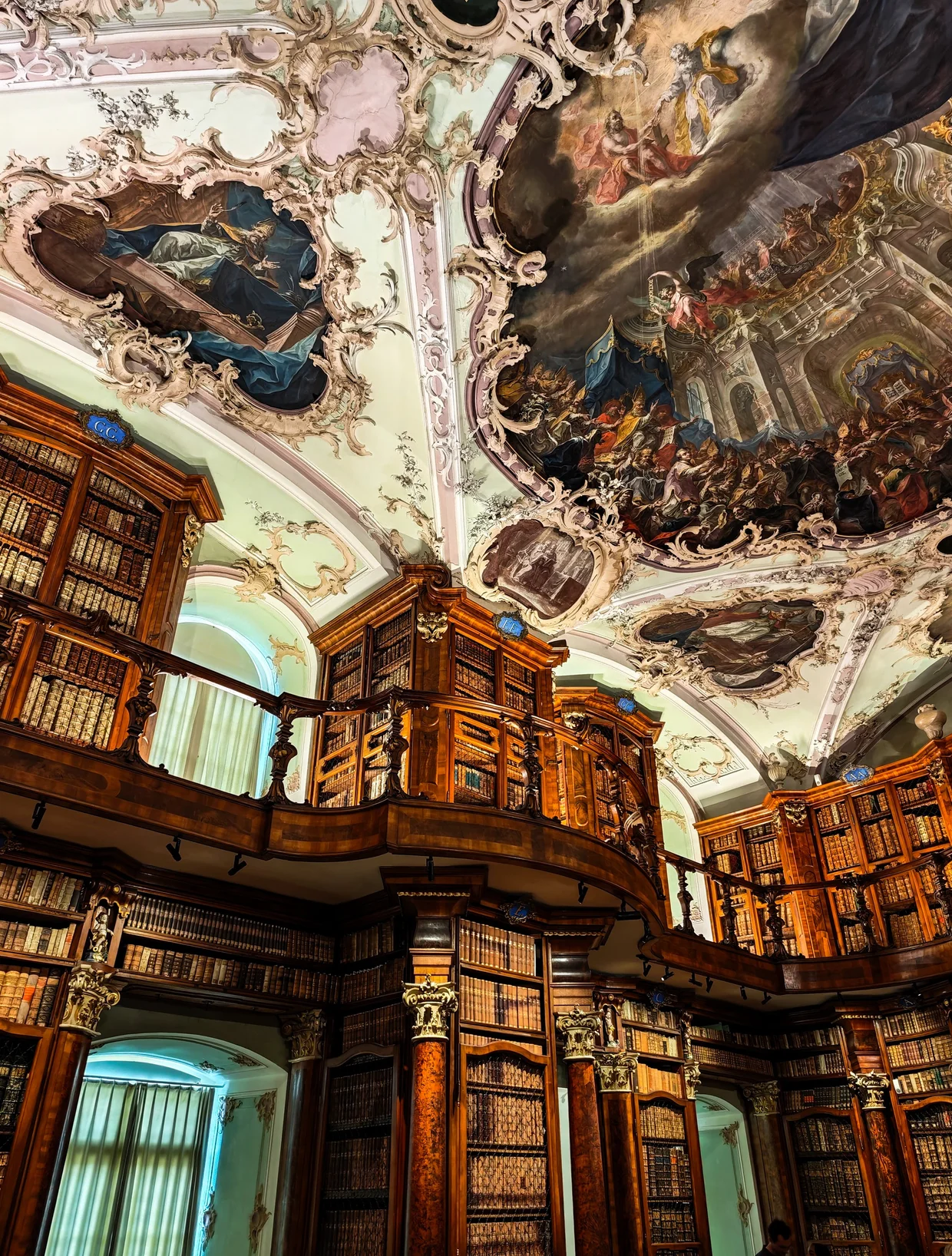
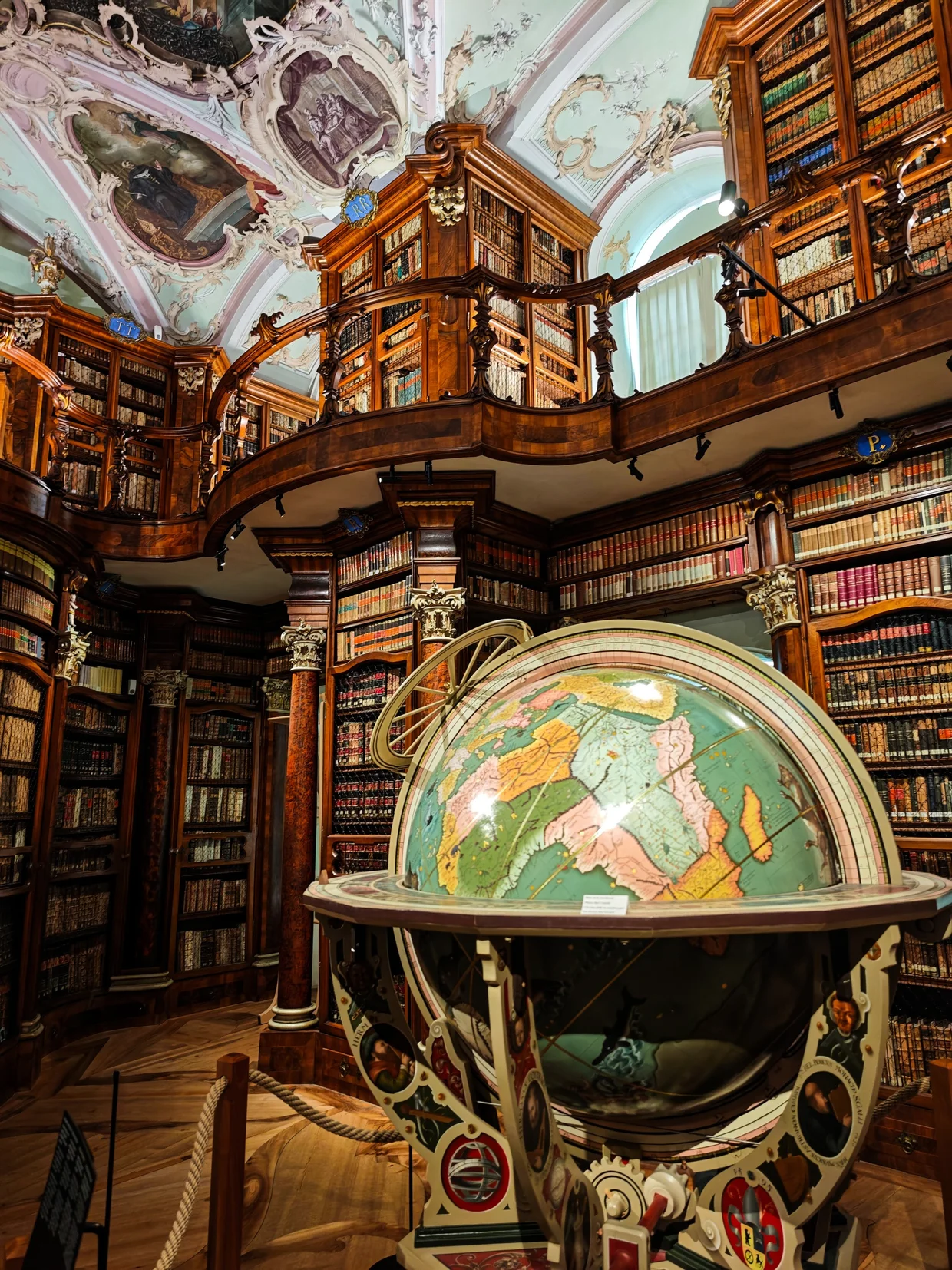
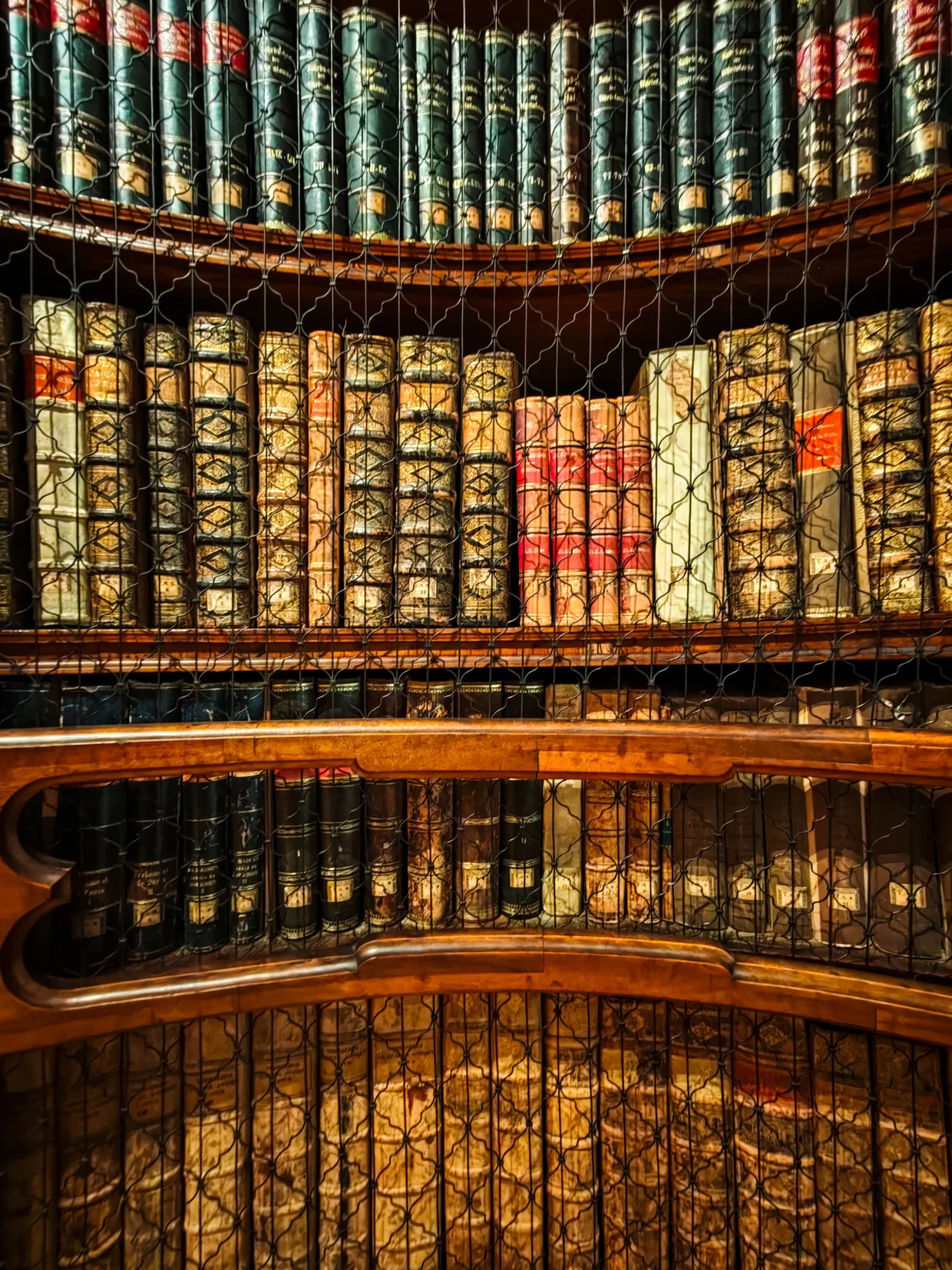
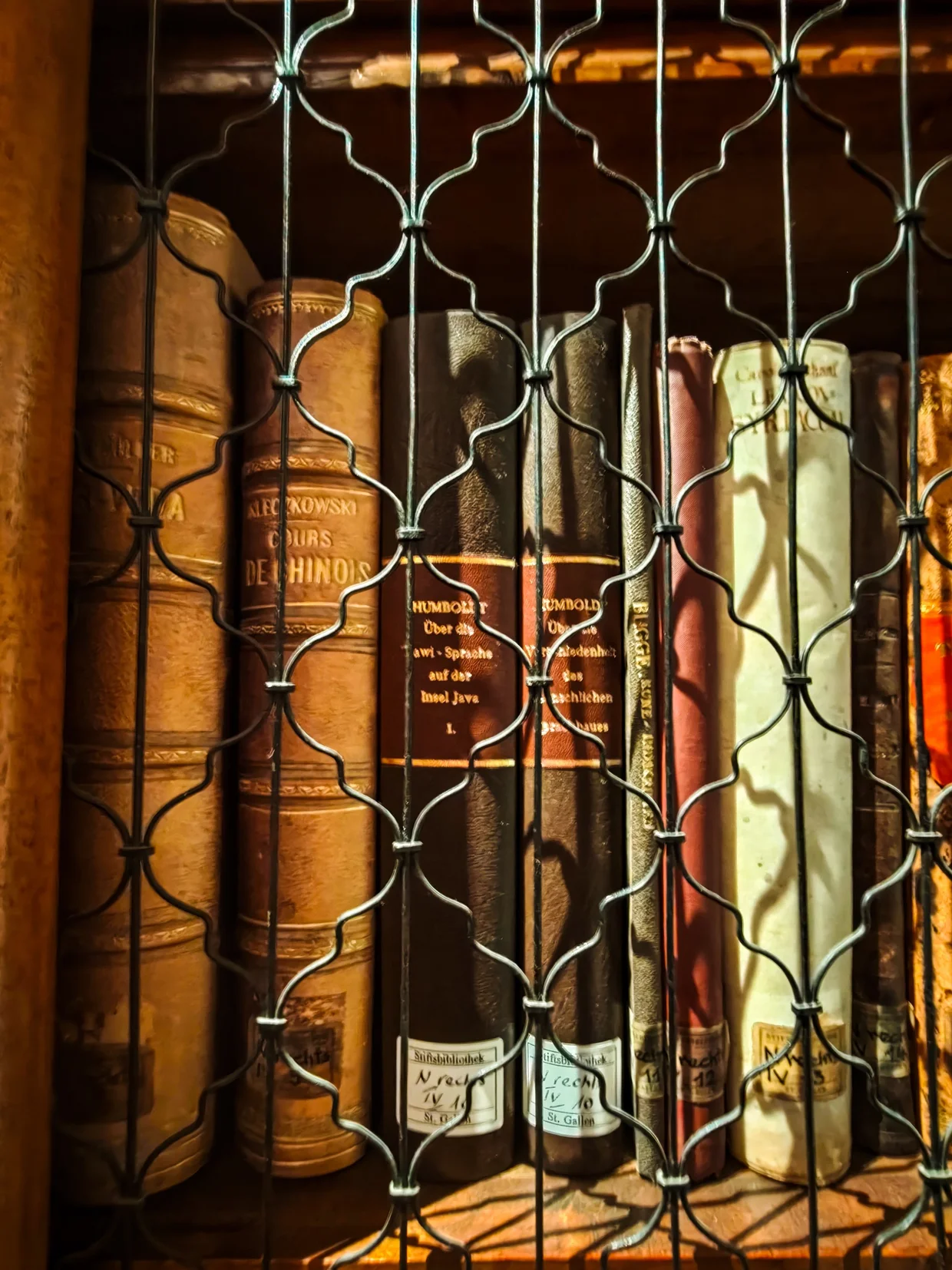
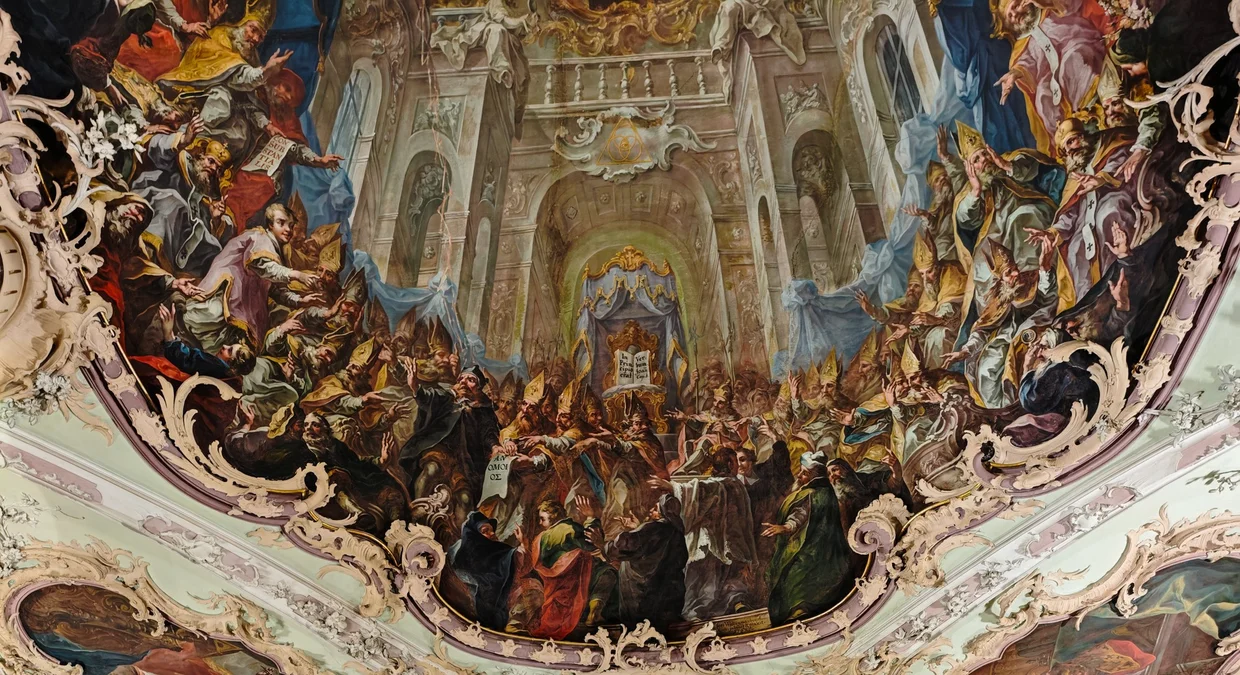
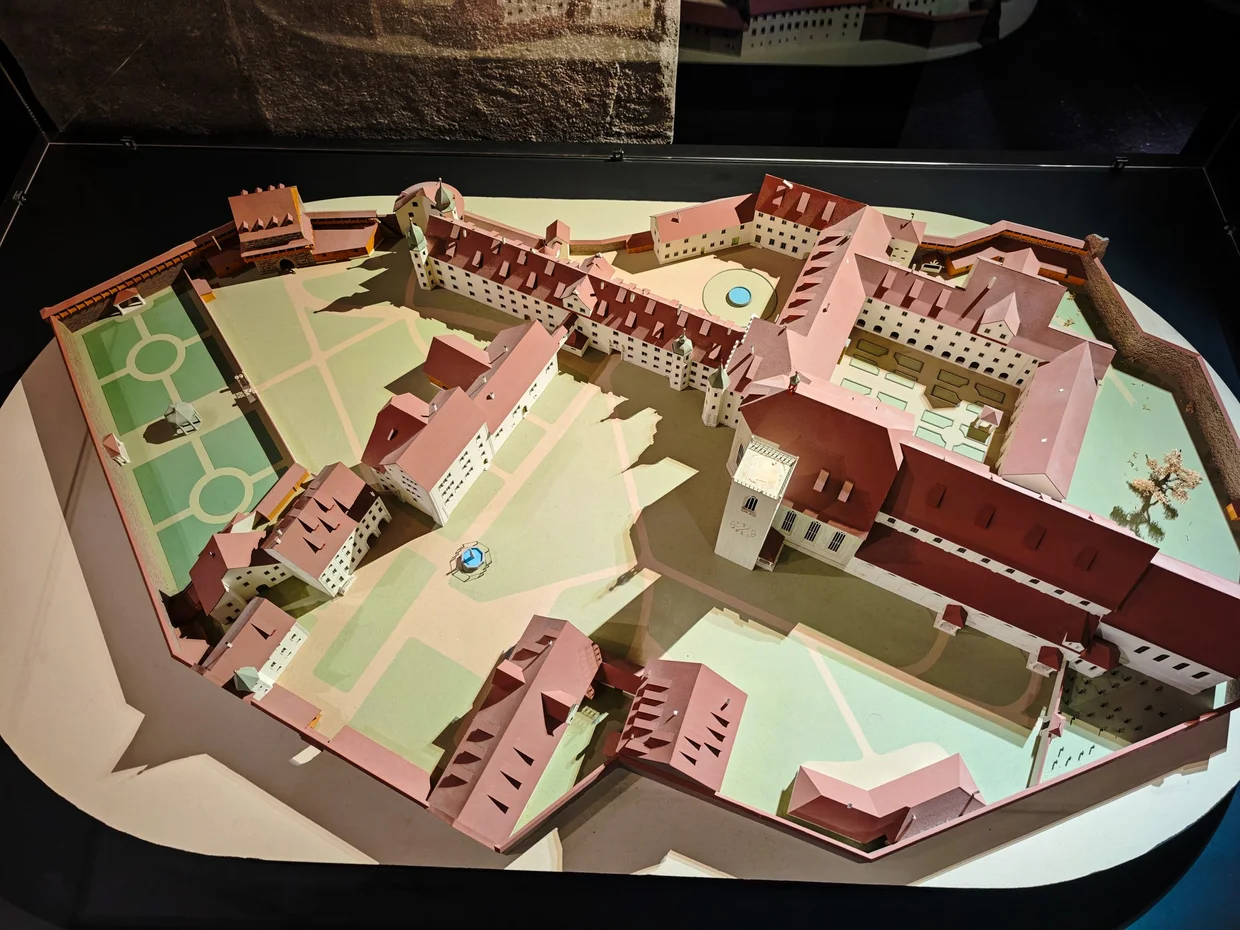
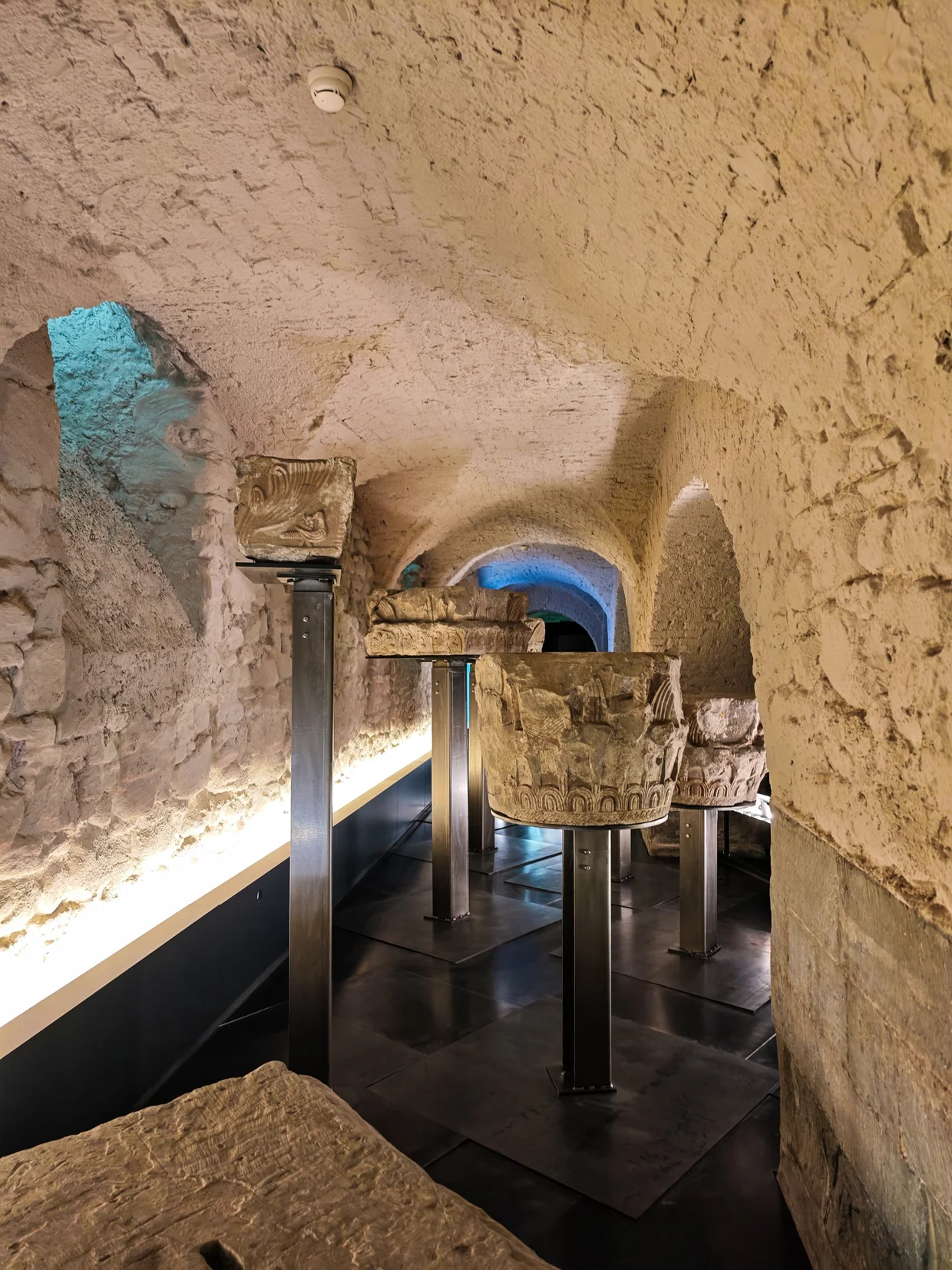
The Abbey Library of St. Gallen is one of the oldest libraries in the world and one of the only Rococo library halls of its scale that's still in active use. The current hall was finished in 1767, with a painted ceiling, twisting wooden bookcases, two upper galleries, and a 16th-century globe parked dead in the middle of the room. The collection itself goes back to the 8th century, including some of the earliest surviving German-language manuscripts and a near-complete plan of an idealised Carolingian monastery. UNESCO World Heritage. The whole thing is genuinely a wow moment, the kind that justifies the trip on its own. You enter through a small ticket office, swap your shoes for felt slippers (so the inlaid parquet survives another century), and wander. The upper gallery is open. Rotating exhibitions in the side rooms feature actual manuscripts under glass. A separate downstairs section houses architectural models of the abbey complex through the centuries and a crypt-like vault with carved Carolingian stone fragments. Allow an hour minimum.
How to Get There
Inside the abbey precinct on the Klosterhof, a 5-minute walk from St. Gallen station and right next door to the Cathedral. There is no dedicated parking for the library specifically, use the city centre lots and walk.
Notes
- Photography is allowed in the main hall but restricted in some side rooms
- Felt slippers are mandatory and provided at the entrance
- Closes earlier than expected (around 5pm, sometimes earlier on Sundays/holidays)
- The downstairs Carolingian crypt is included with the main ticket and easy to miss
- Tickets bought in advance online let you skip the small ticket queue on busy weekends
St. Gallen Cathedral
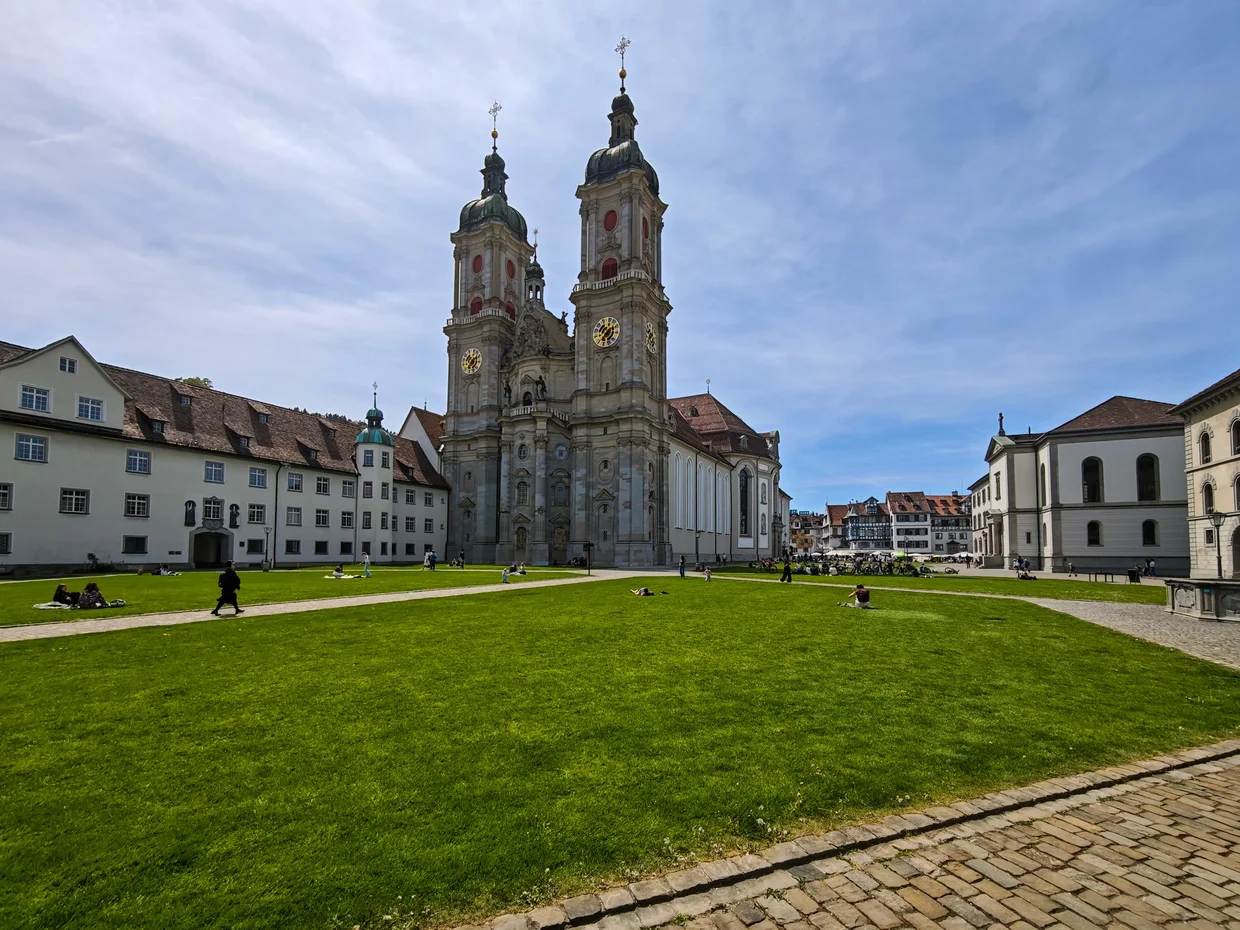
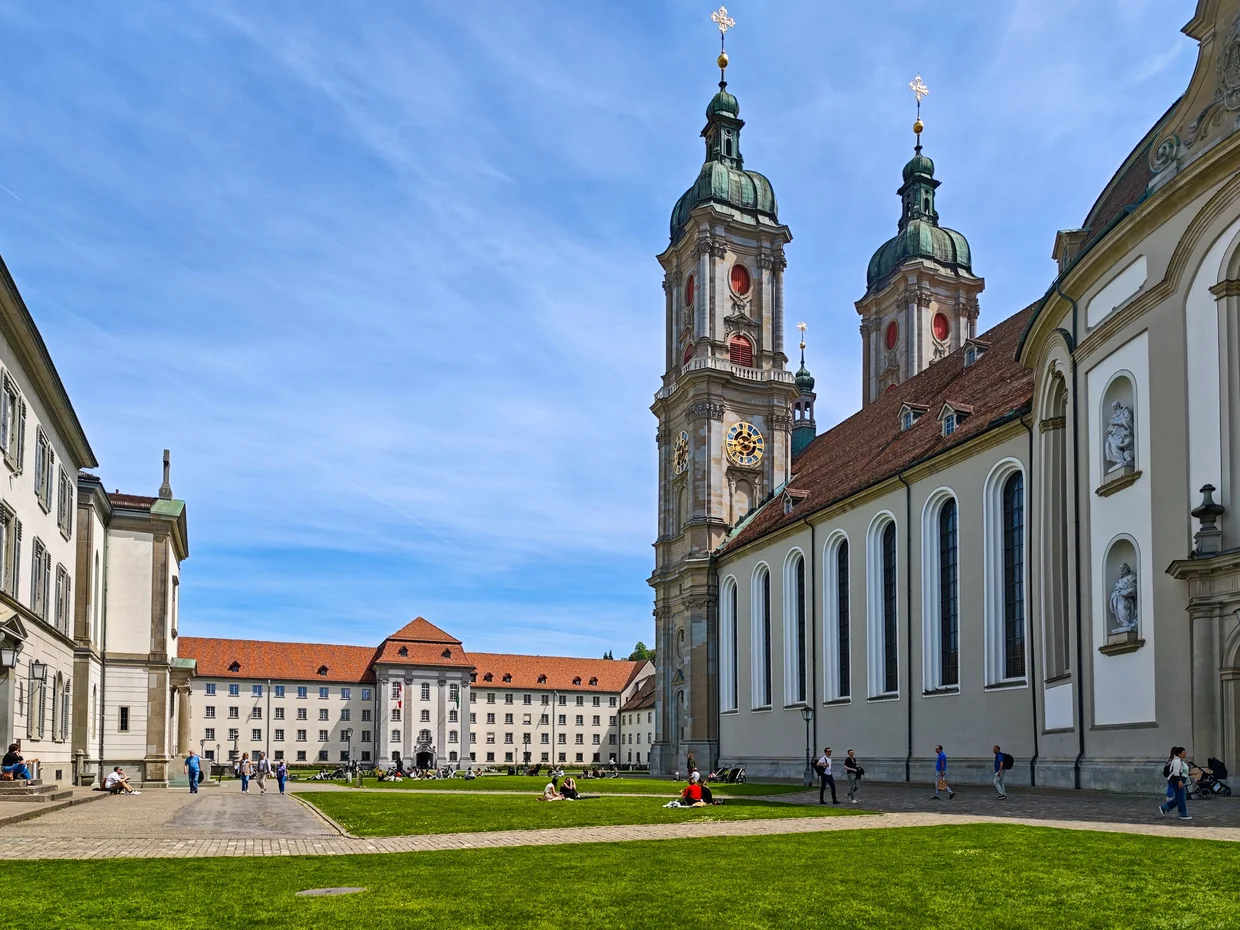
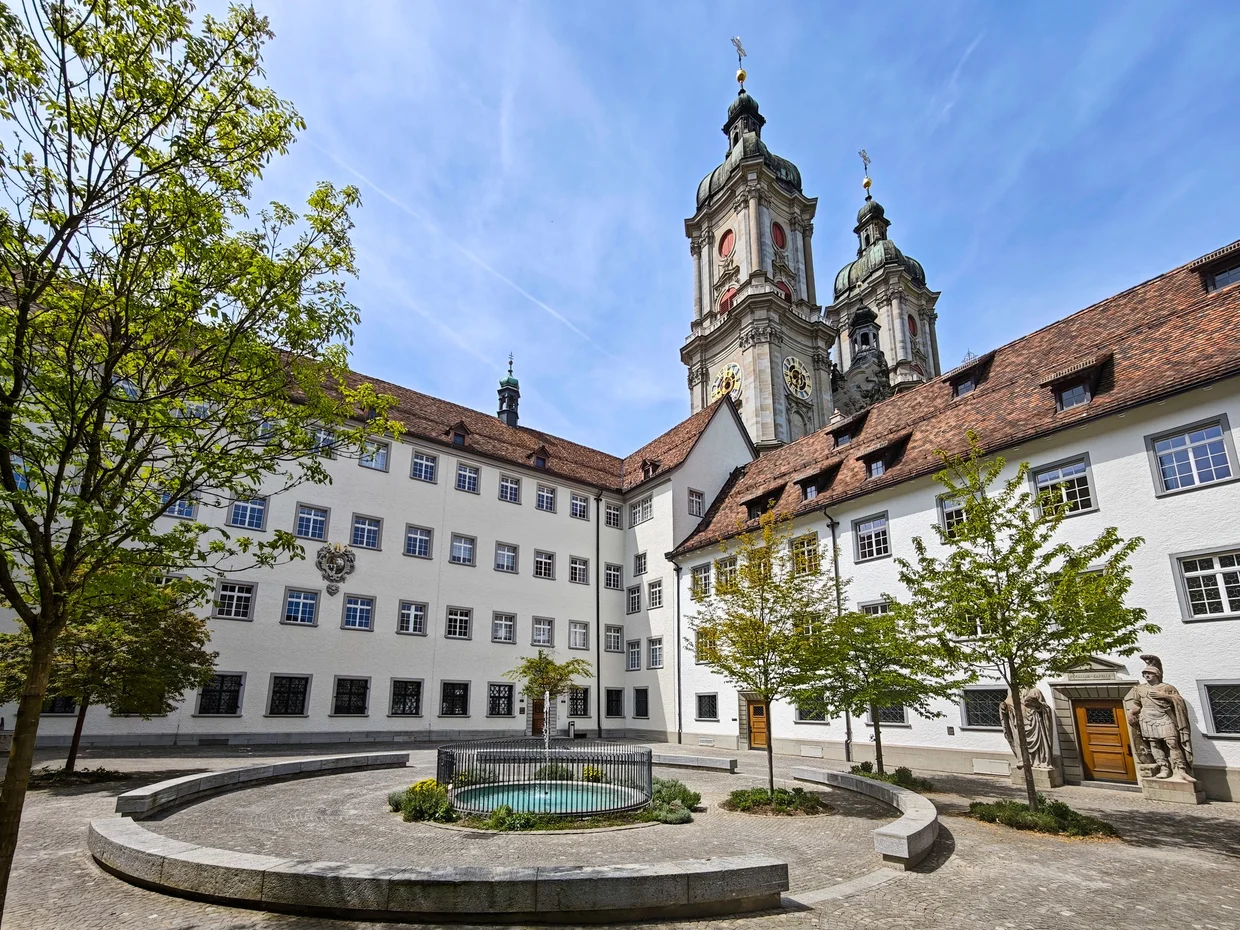
The twin-towered Baroque cathedral of St. Gallen sits on the Klosterhof, the wide grass square that anchors the abbey precinct. The current building was completed between 1755 and 1766, on the foundations of the medieval monastery church that grew up around the hermitage of the Irish monk Gallus in the 7th century. Inside it's surprisingly bright for a Baroque interior (pale stucco, soft pastels, and a reasonably restrained use of gold compared to its German cousins) with an enormous painted ceiling and an organ that fills the west end. UNESCO listed alongside the rest of the abbey precinct. Free to enter. A 15 minute stop is enough unless you're really into ecclesiastical architecture, in which case give it half an hour and walk all the way around the outside on the Klosterhof too.
How to Get There
On the Klosterhof, between the Abbey Library and the Government Building. A 5 minute walk from St. Gallen main station.
Notes
- Free entry but service times restrict access, check the door notice
- Combine with the Abbey Library next door for a single Klosterhof half-day
- The Klosterhof itself is a great spot to sit on the grass for half an hour
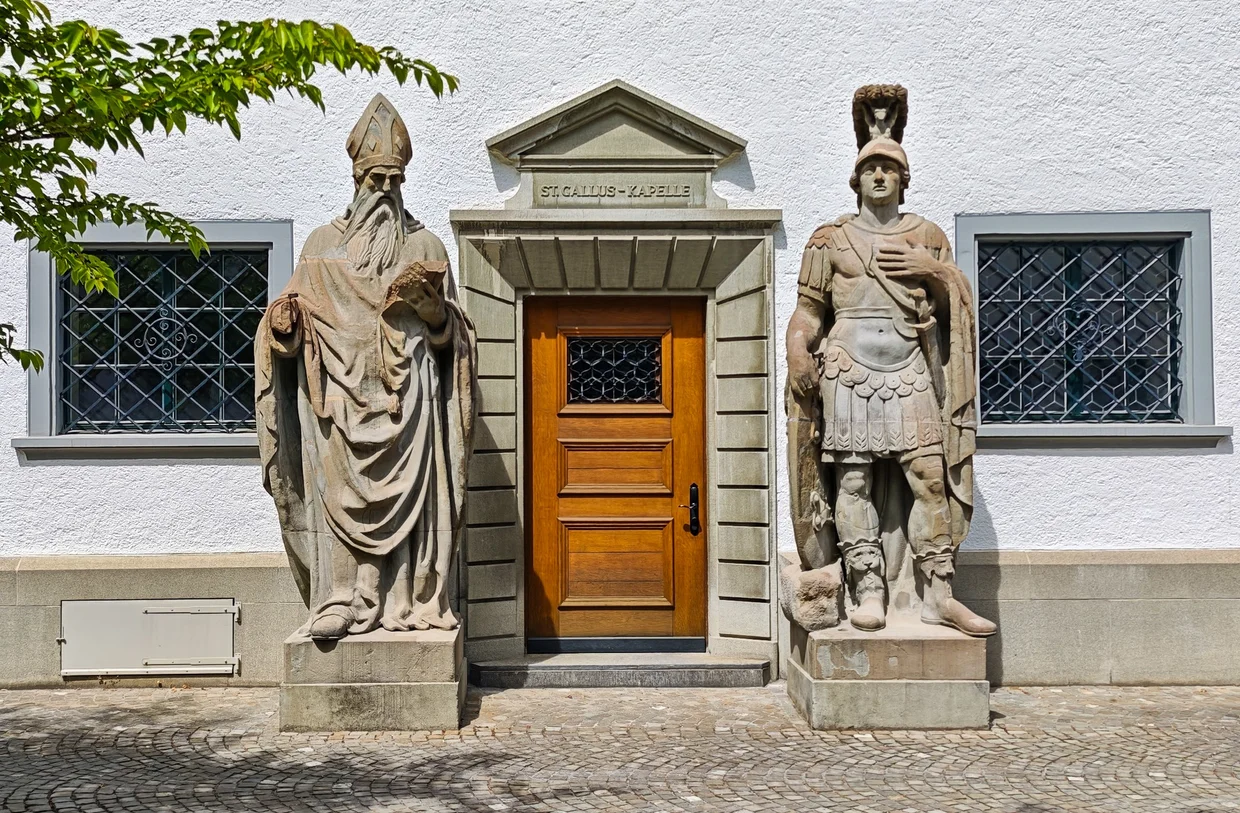
- The St. Gallus chapel just outside is a small overlooked extra
Appenzell Village (Hauptgasse)
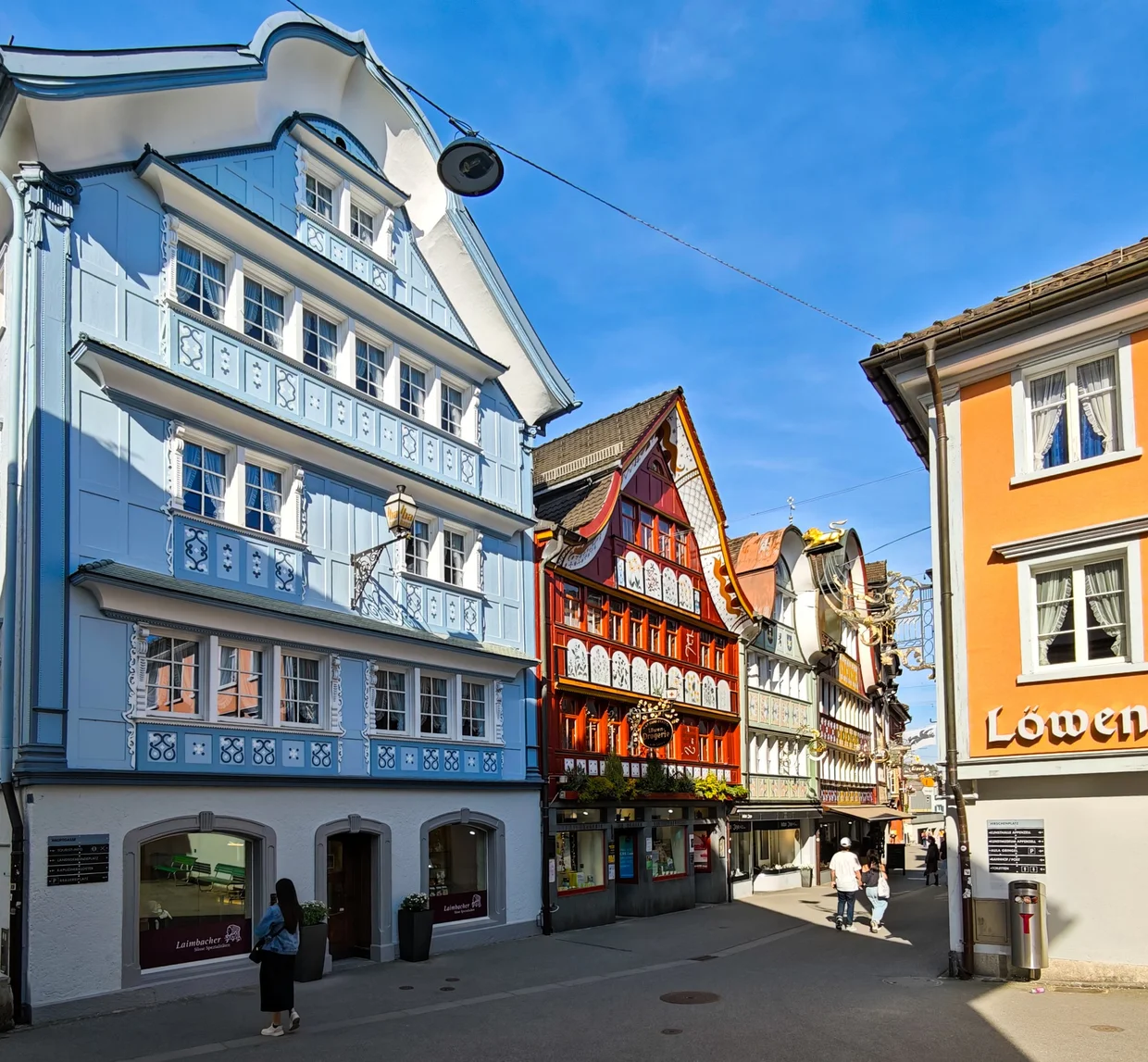
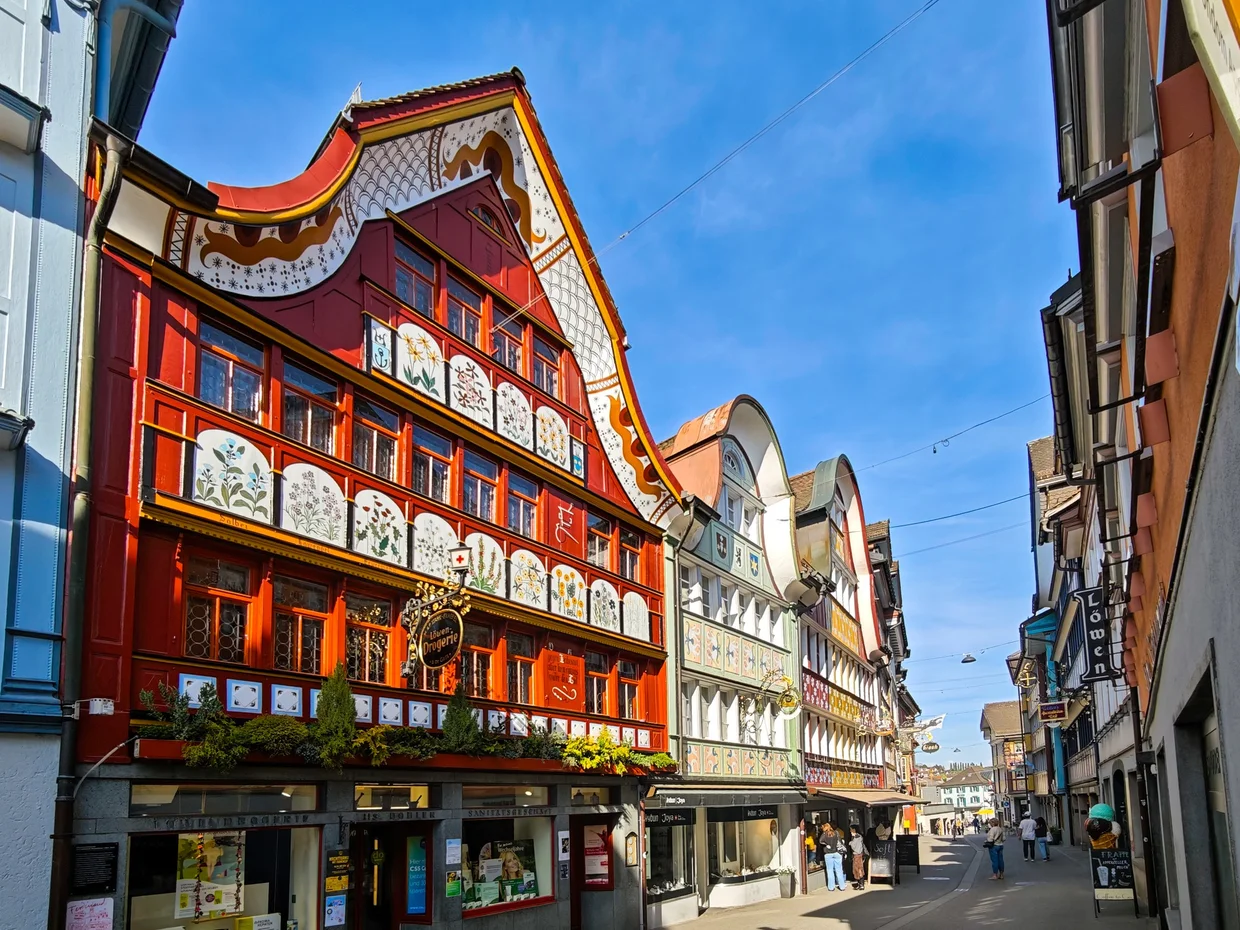
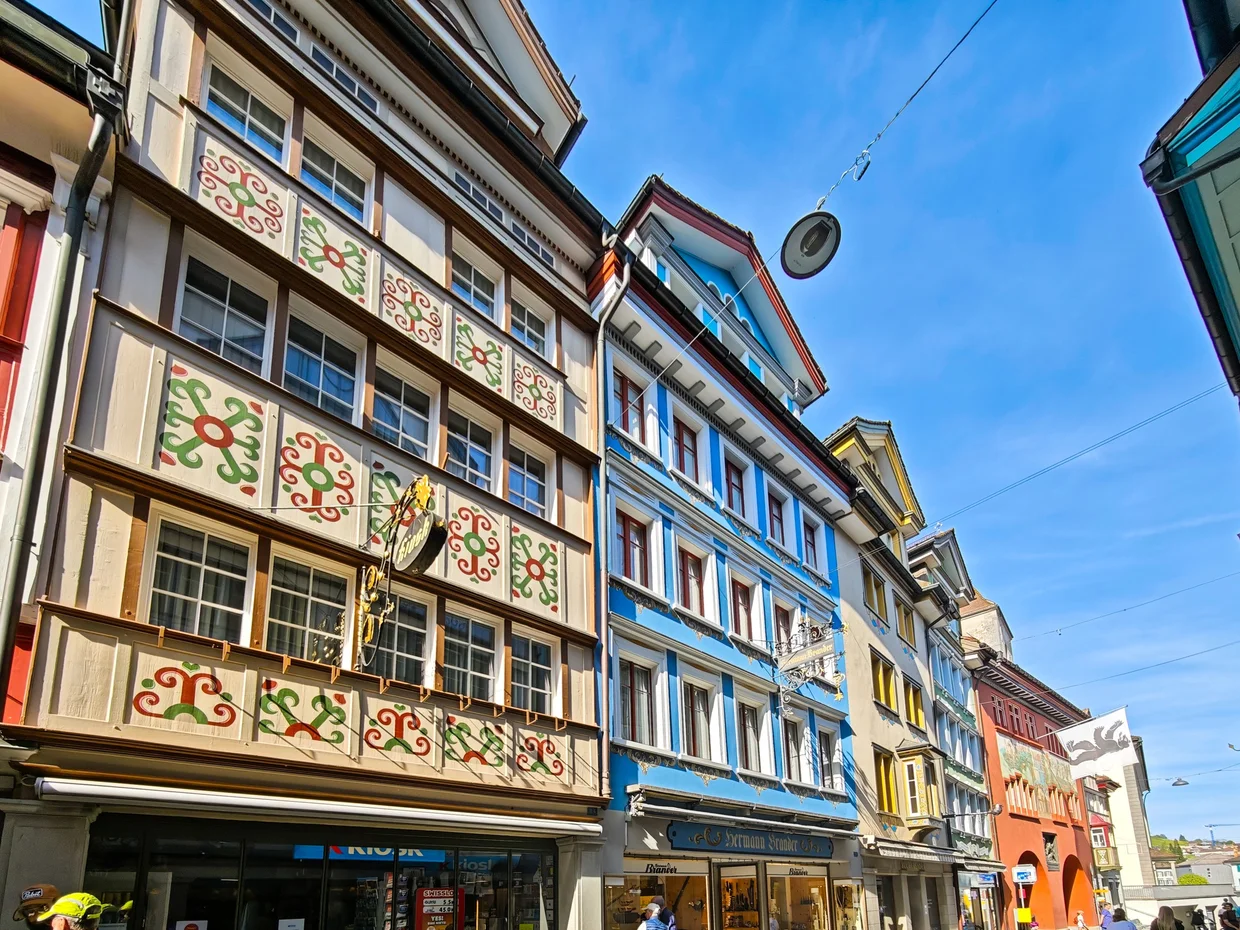
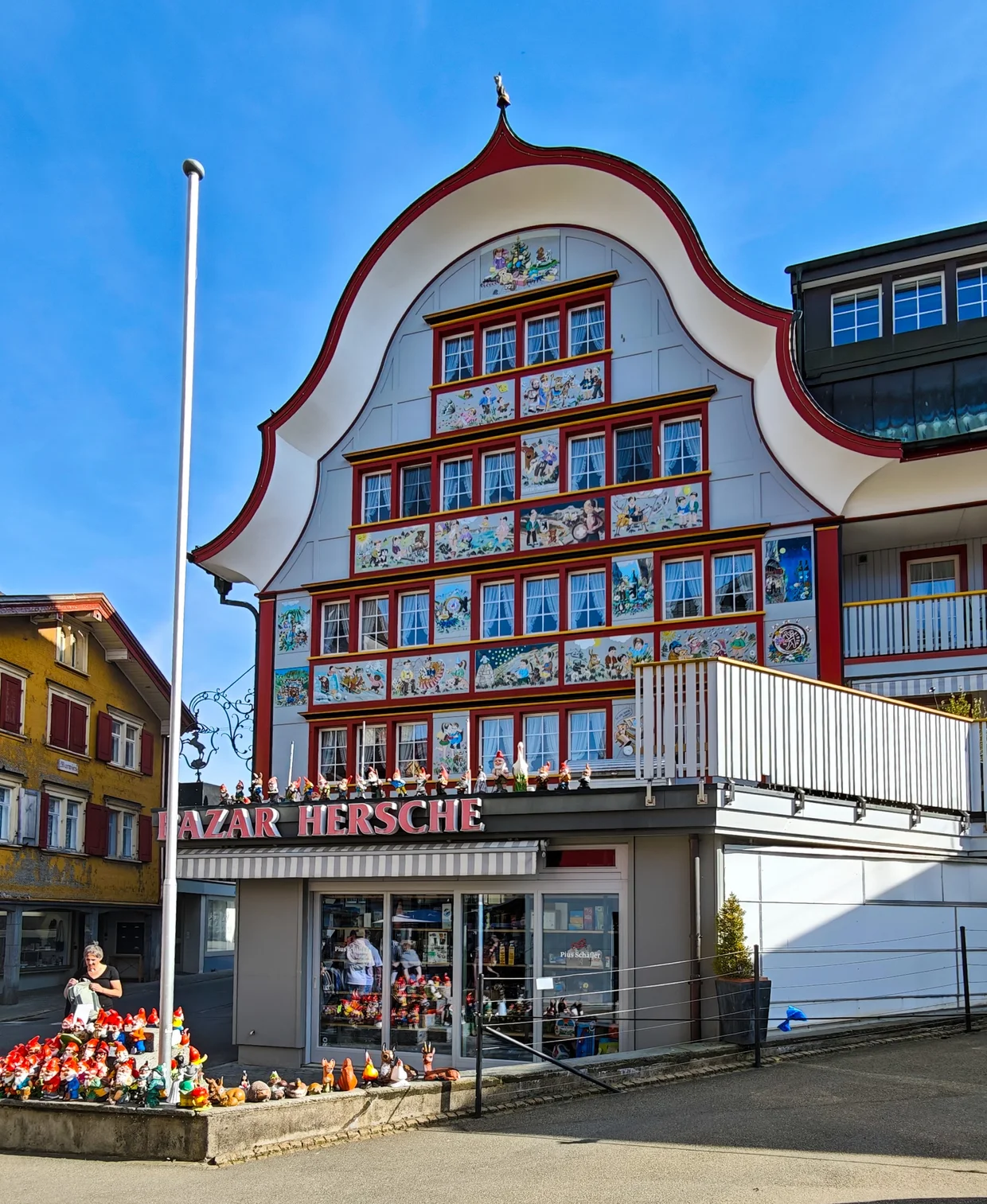
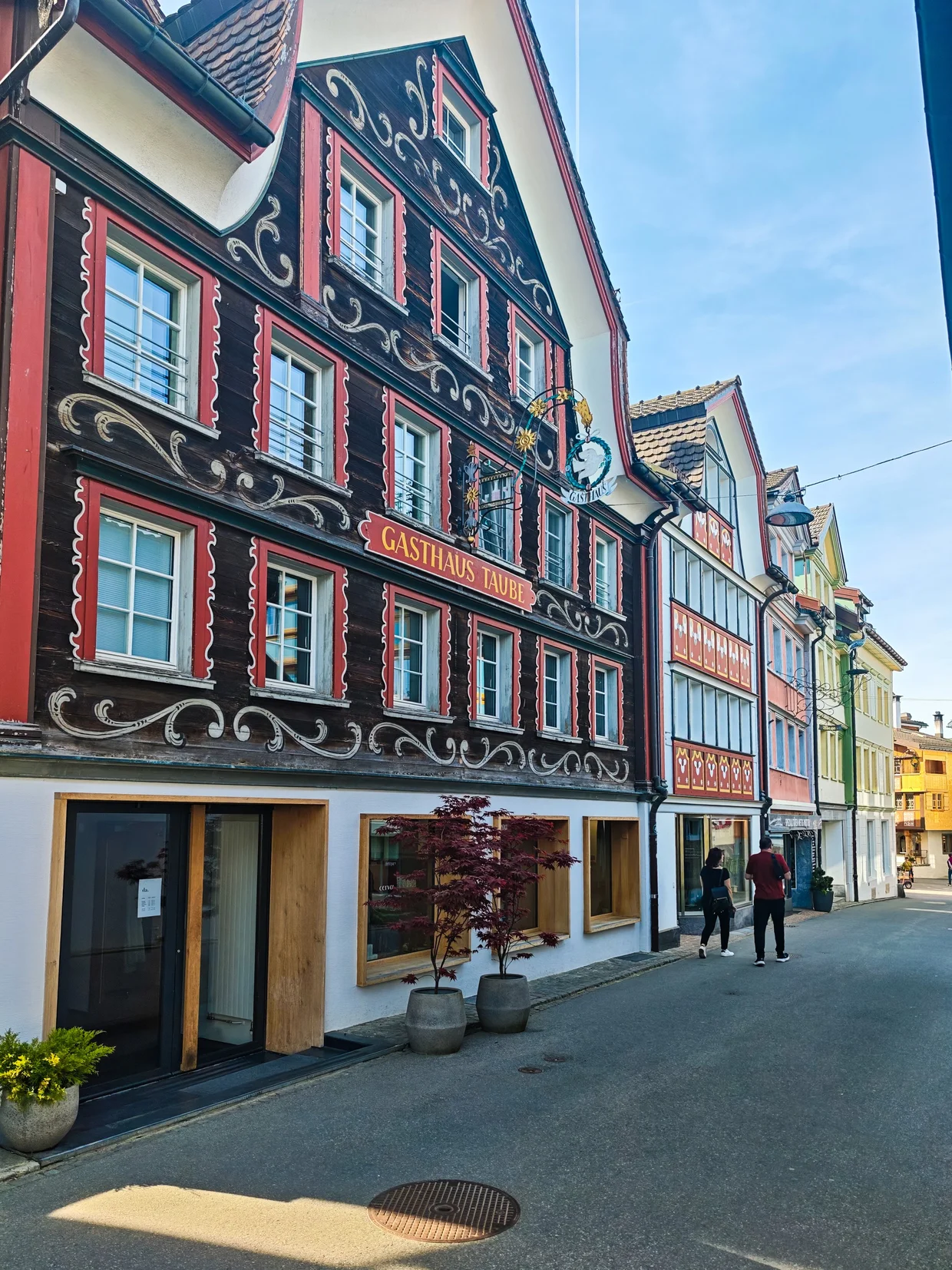
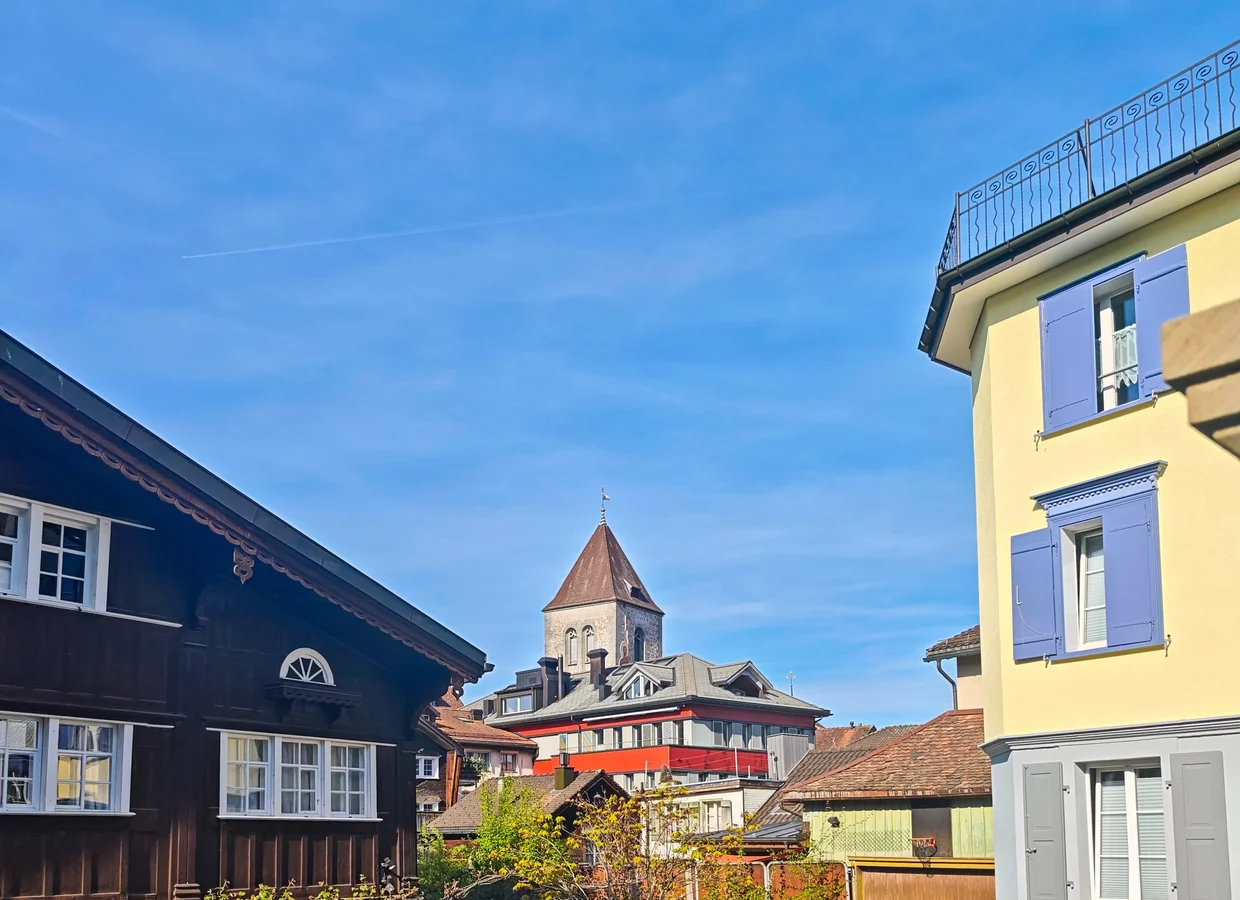
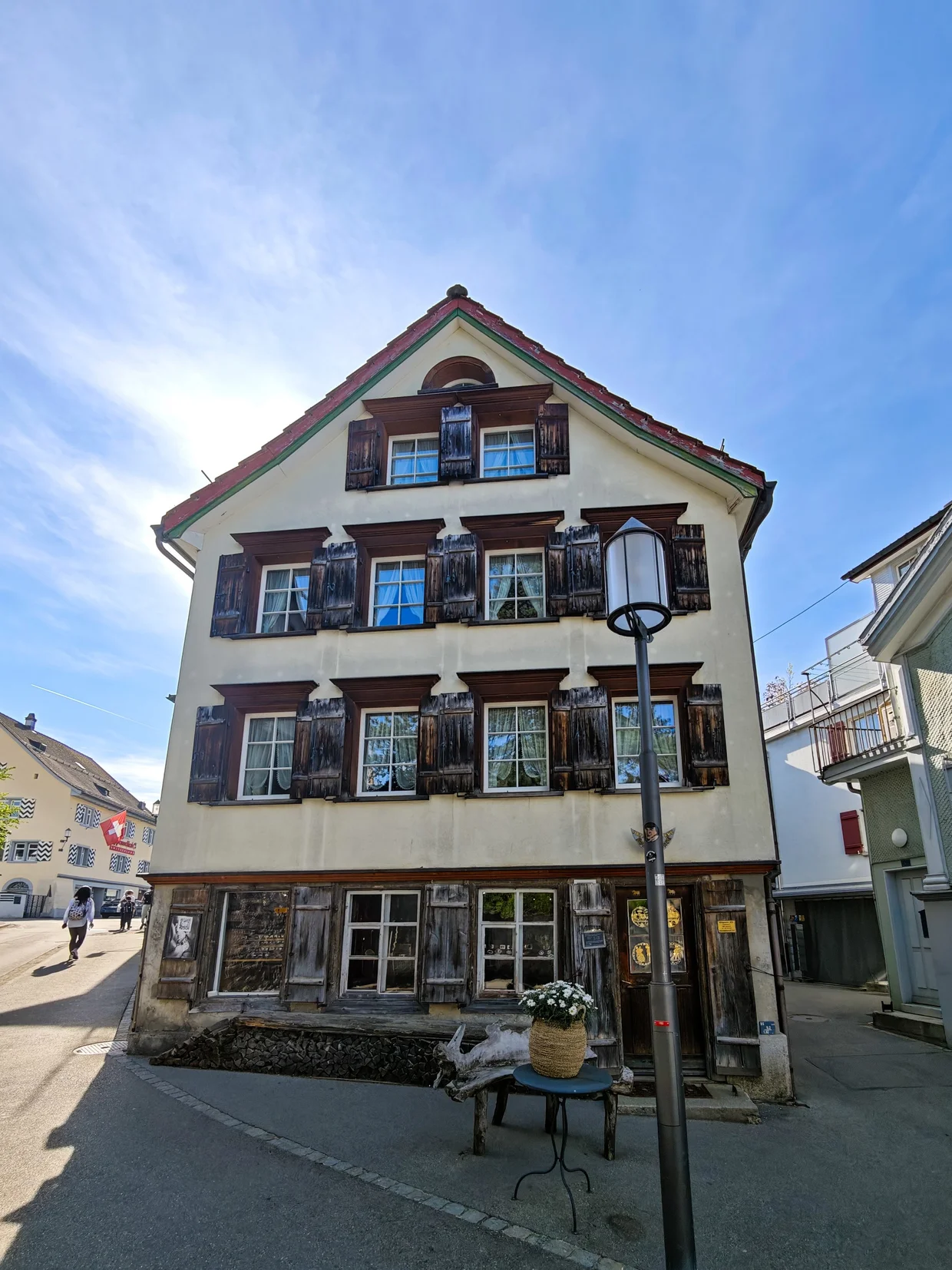
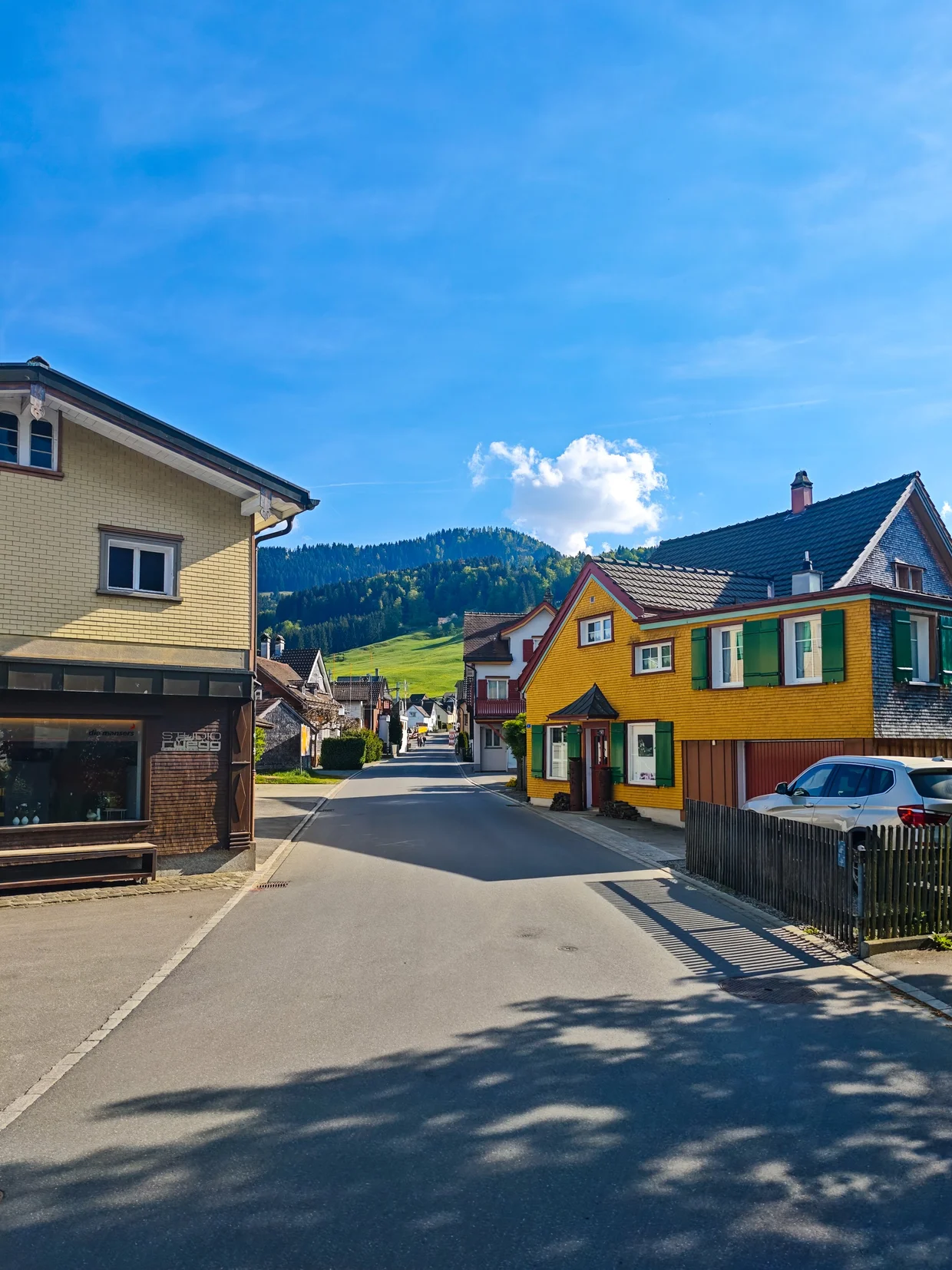
Appenzell village is the main town of canton Appenzell Innerrhoden and the most visually loud place in north-eastern Switzerland. The whole Hauptgasse is a parade of brightly painted facades in red, blue, orange, yellow, each one with hand-painted floral ornaments, motifs, and alpine scenes. It's the maximalist version of Swiss village architecture and it works precisely because the locals lean into it: shop signs are wrought iron, window boxes are full of geraniums, and the souvenir shops sell hand-painted dwarf figurines you didn't know you wanted. The village is tiny (you can walk Hauptgasse end to end in 15 minutes) but you'll want to slow right down. Pop into the parish church (Pfarrkirche St. Mauritius) with its onion-domed bell tower, sit on the Landsgemeindeplatz where the canton still holds open-air democratic votes by show of hands every spring, and order an Appenzeller Alpenbitter at one of the painted inns to round it off.
How to Get There
Around 35 to 45 minutes south of St. Gallen by car (or about 50 minutes by direct Appenzeller Bahnen train). The train station sits a 5 minute walk from Hauptgasse. Drive parking is on the edge of the village. The whole place is fully walkable; you don't need wheels once you're there.
Notes
- Free parking at the edge of the village near the train station
- Try the local Appenzeller cheese (washed with secret herb mix) and Alpenbitter liqueur
- The Landsgemeindeplatz democratic vote happens on the last Sunday of April
- Bazar Hersche is the iconic souvenir shop and worth 5 minutes even if you don't buy
- Sunday afternoon is when the village is at its most peaceful, weekdays for shop hours
Ebenalp & The Aescher Cliff Hut
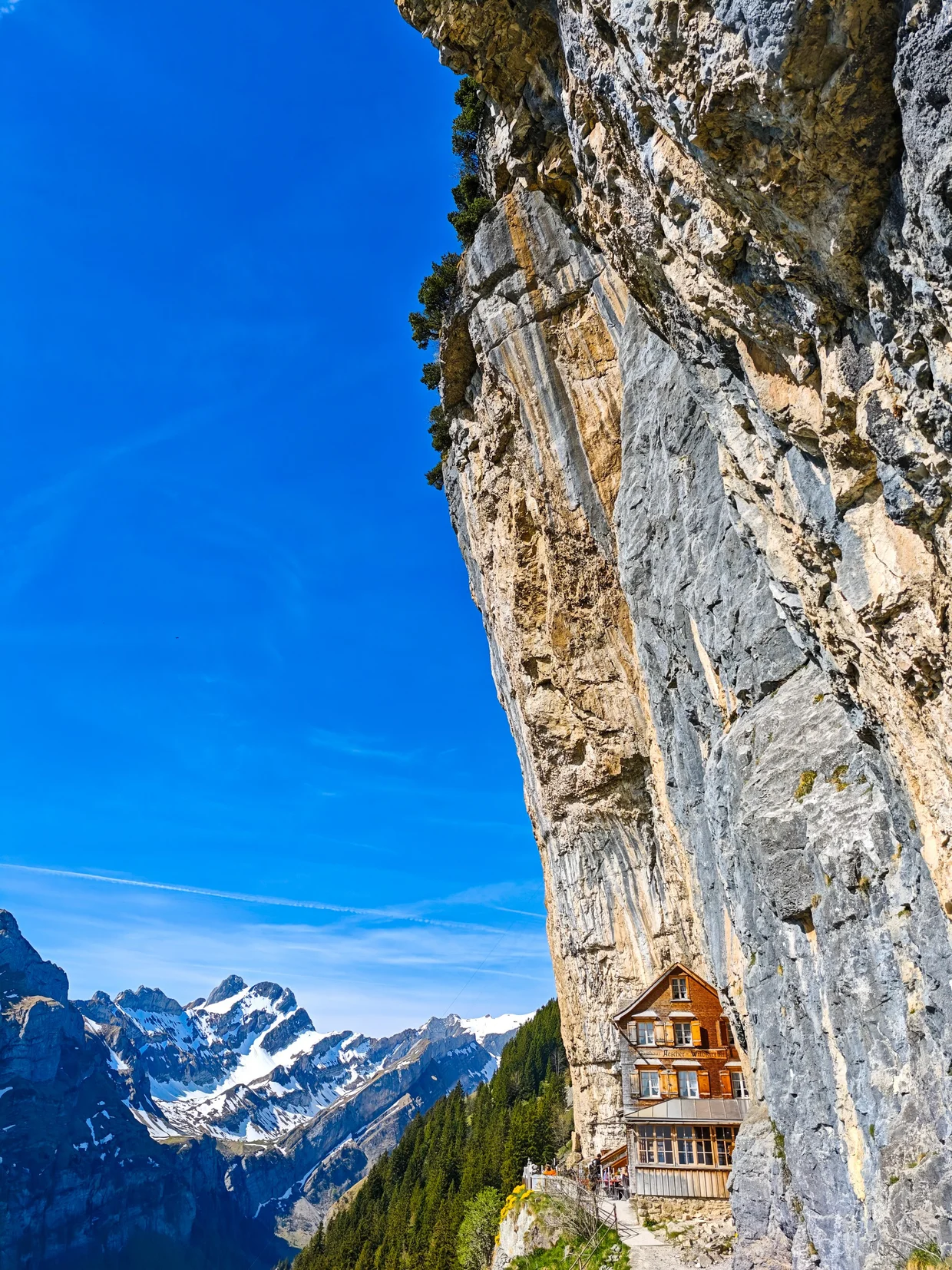
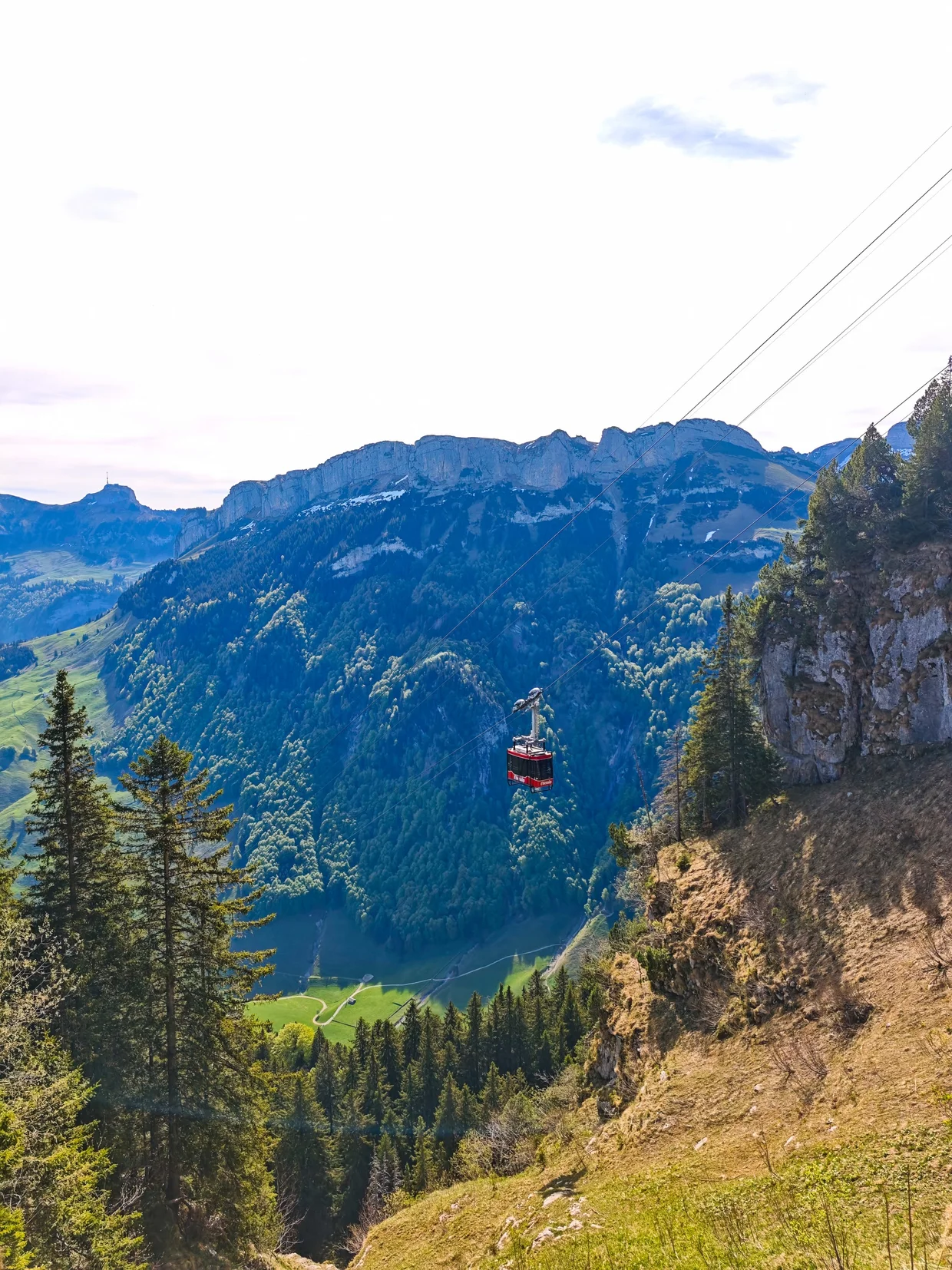
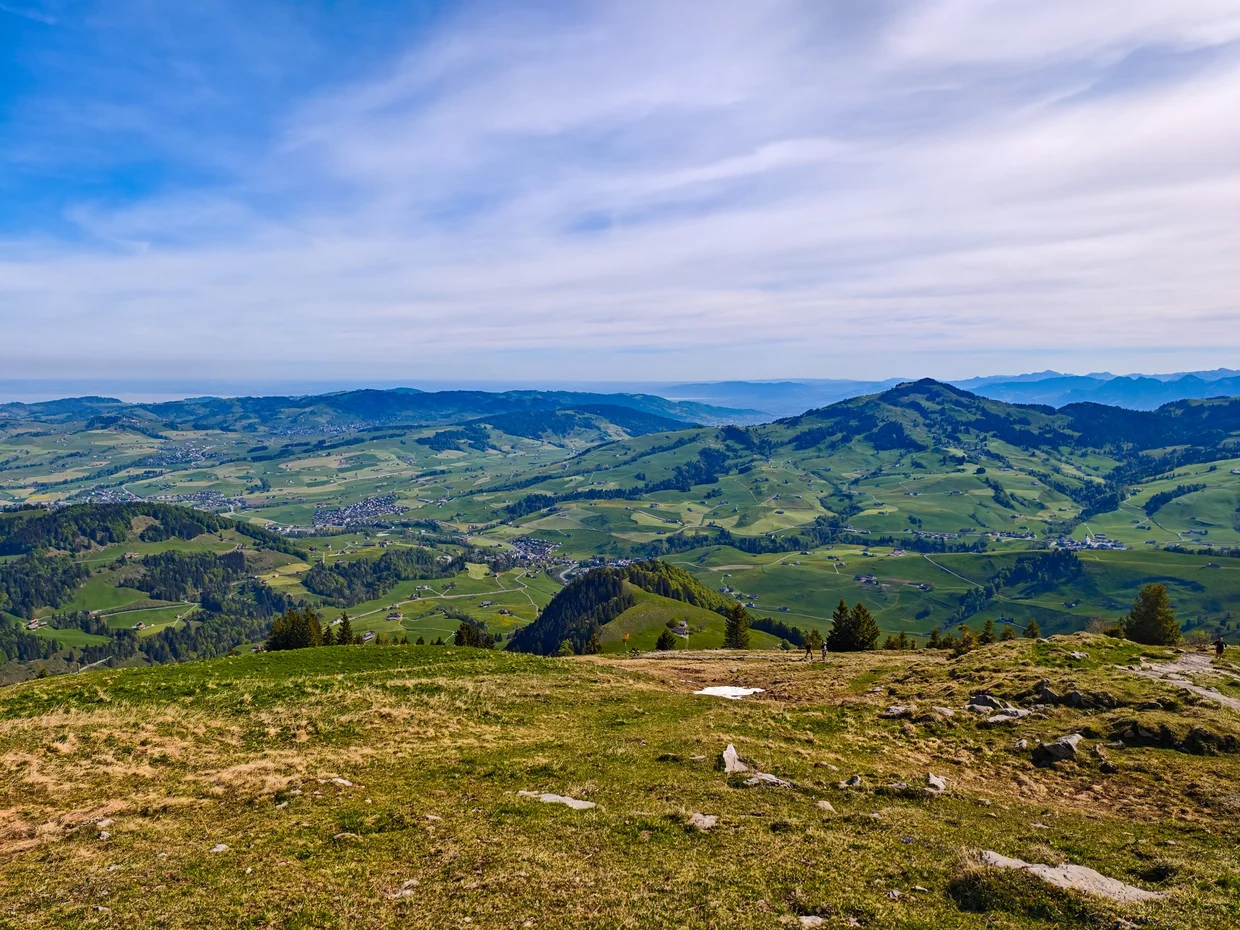
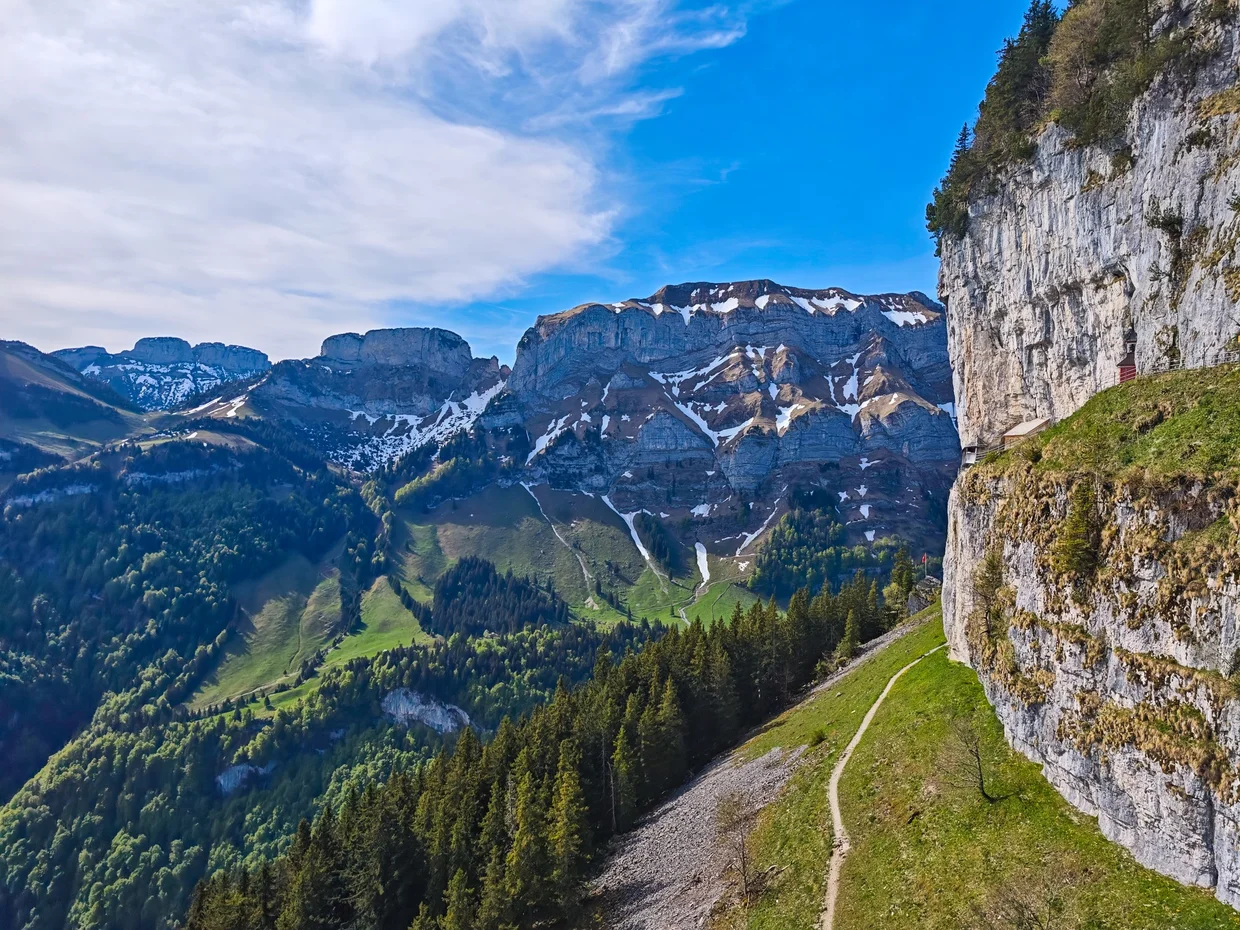
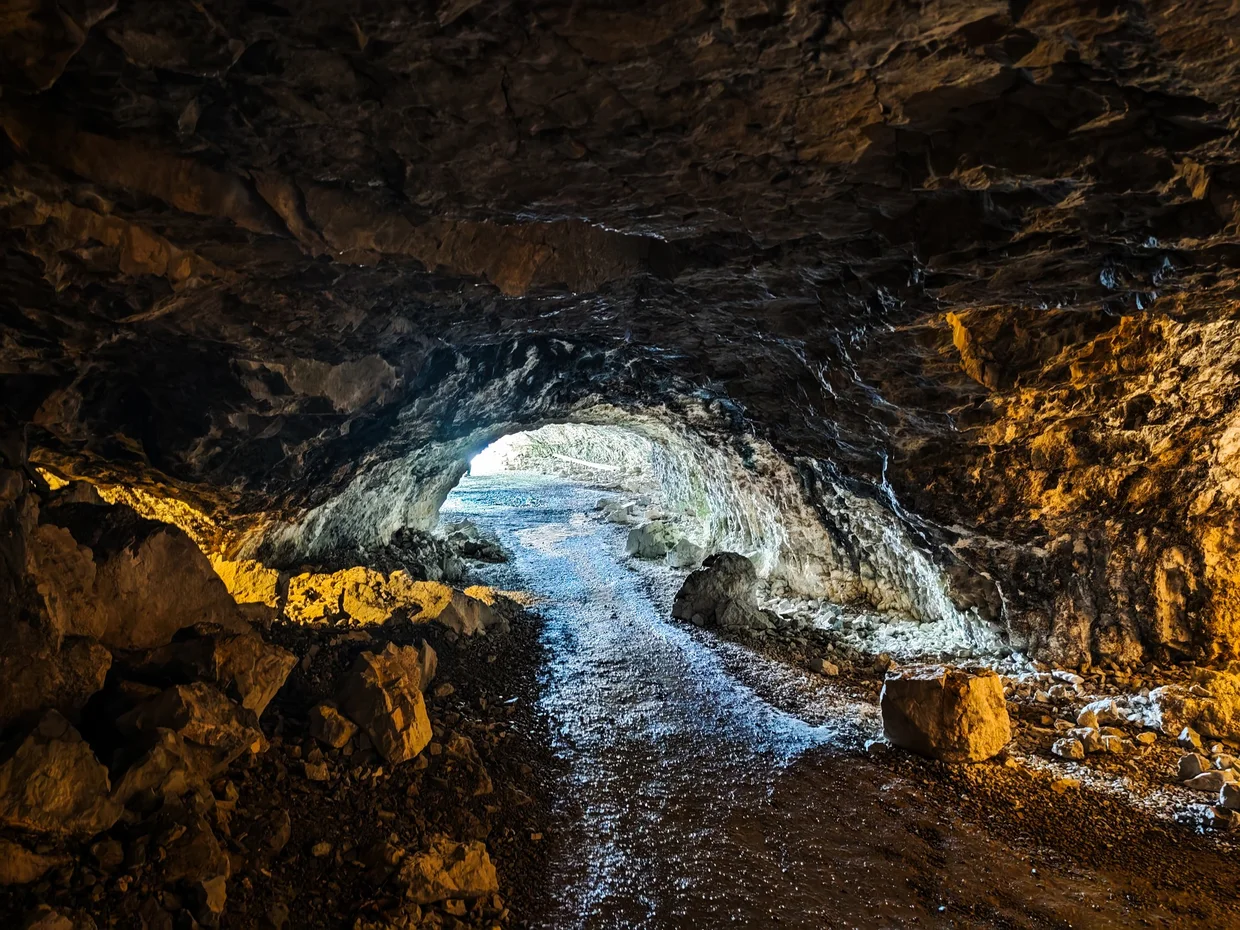
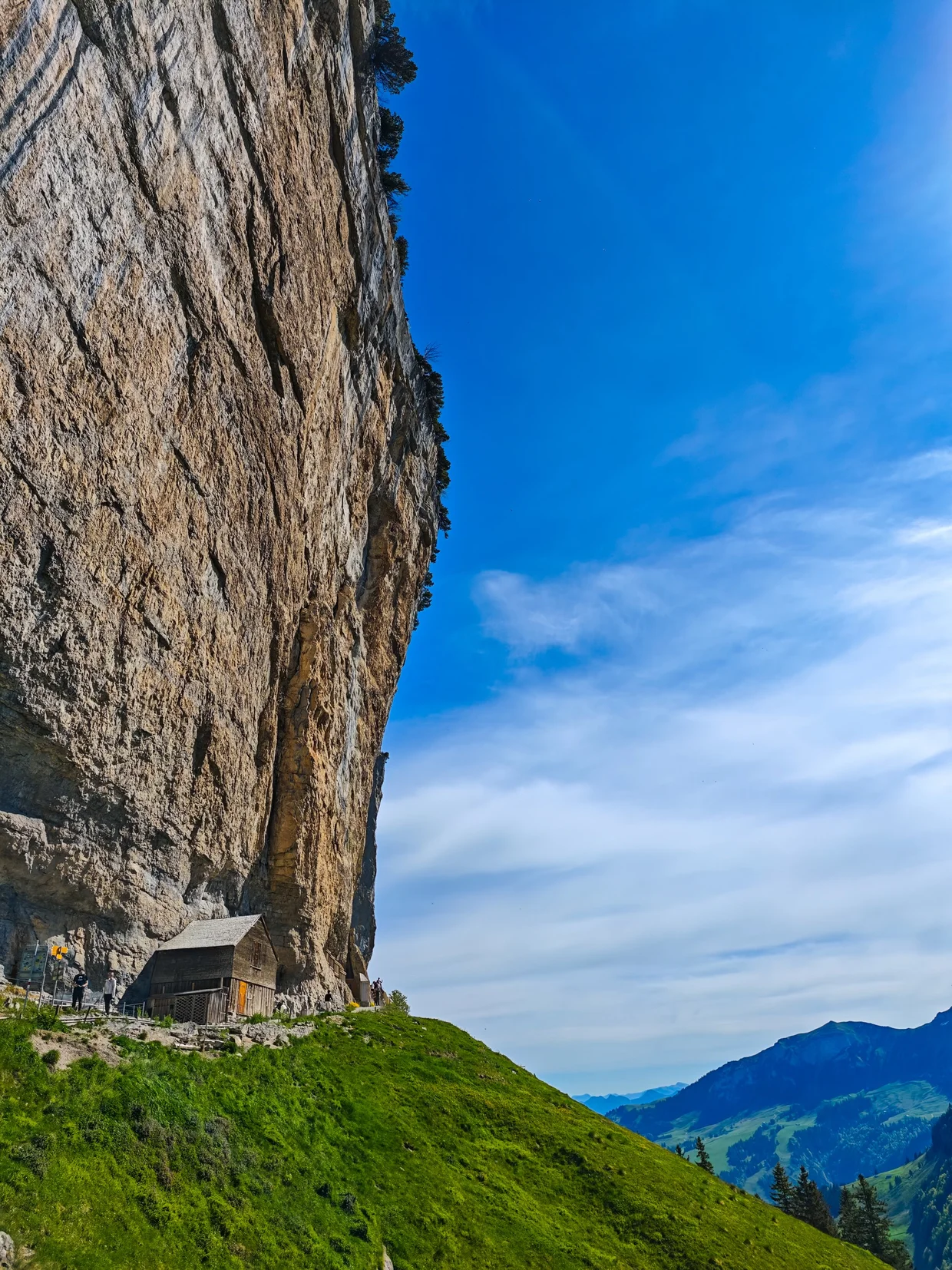
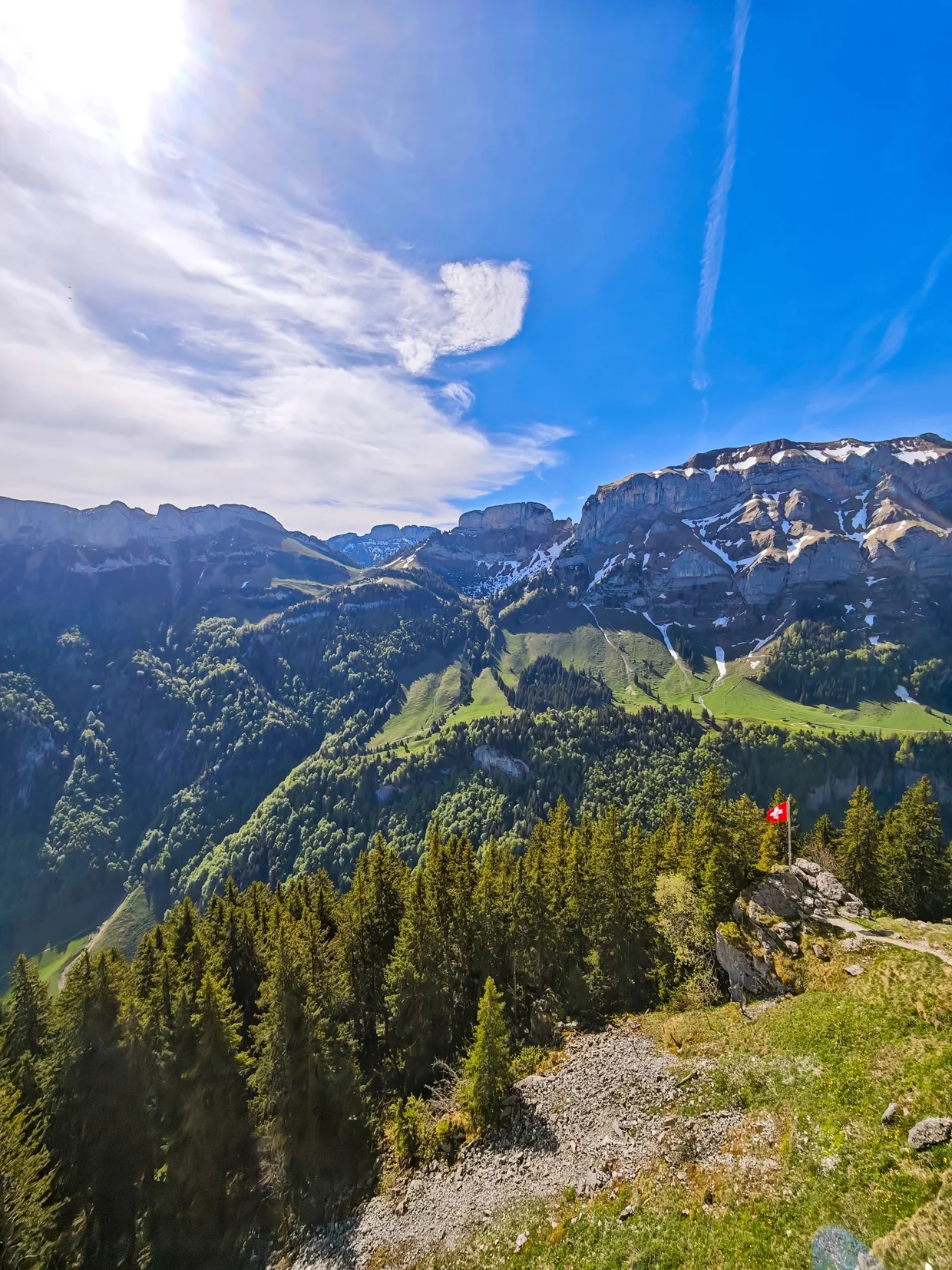
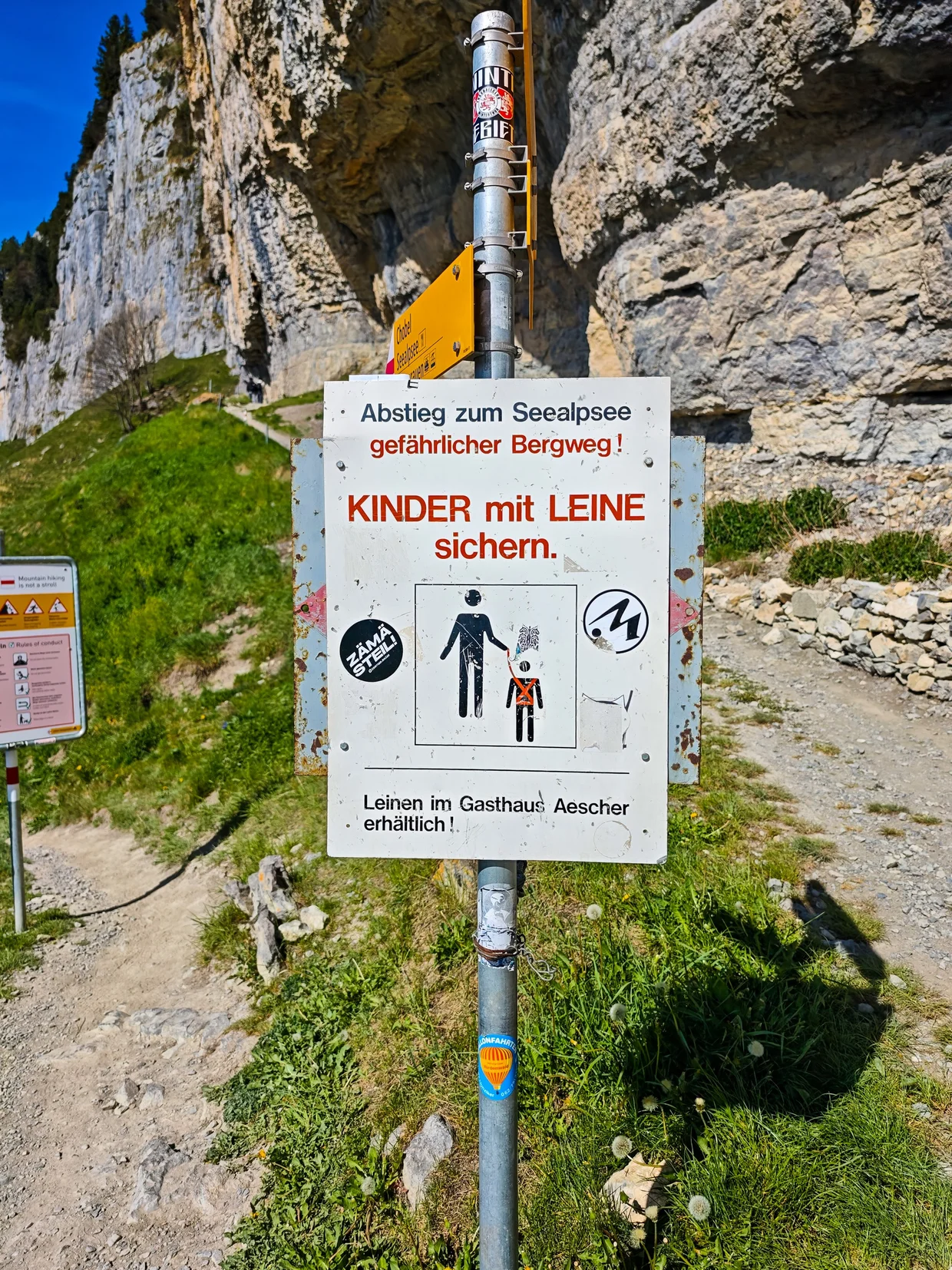
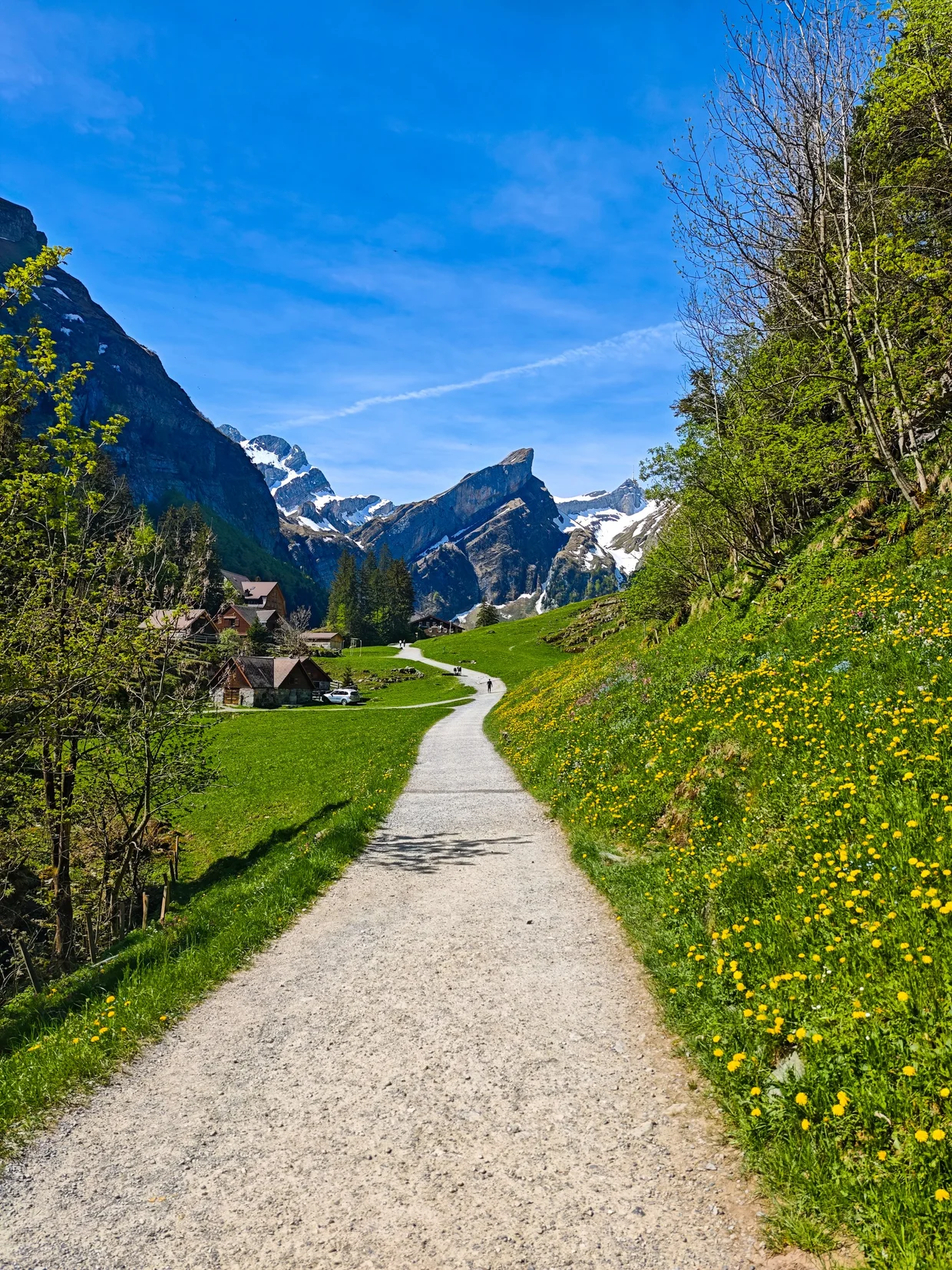
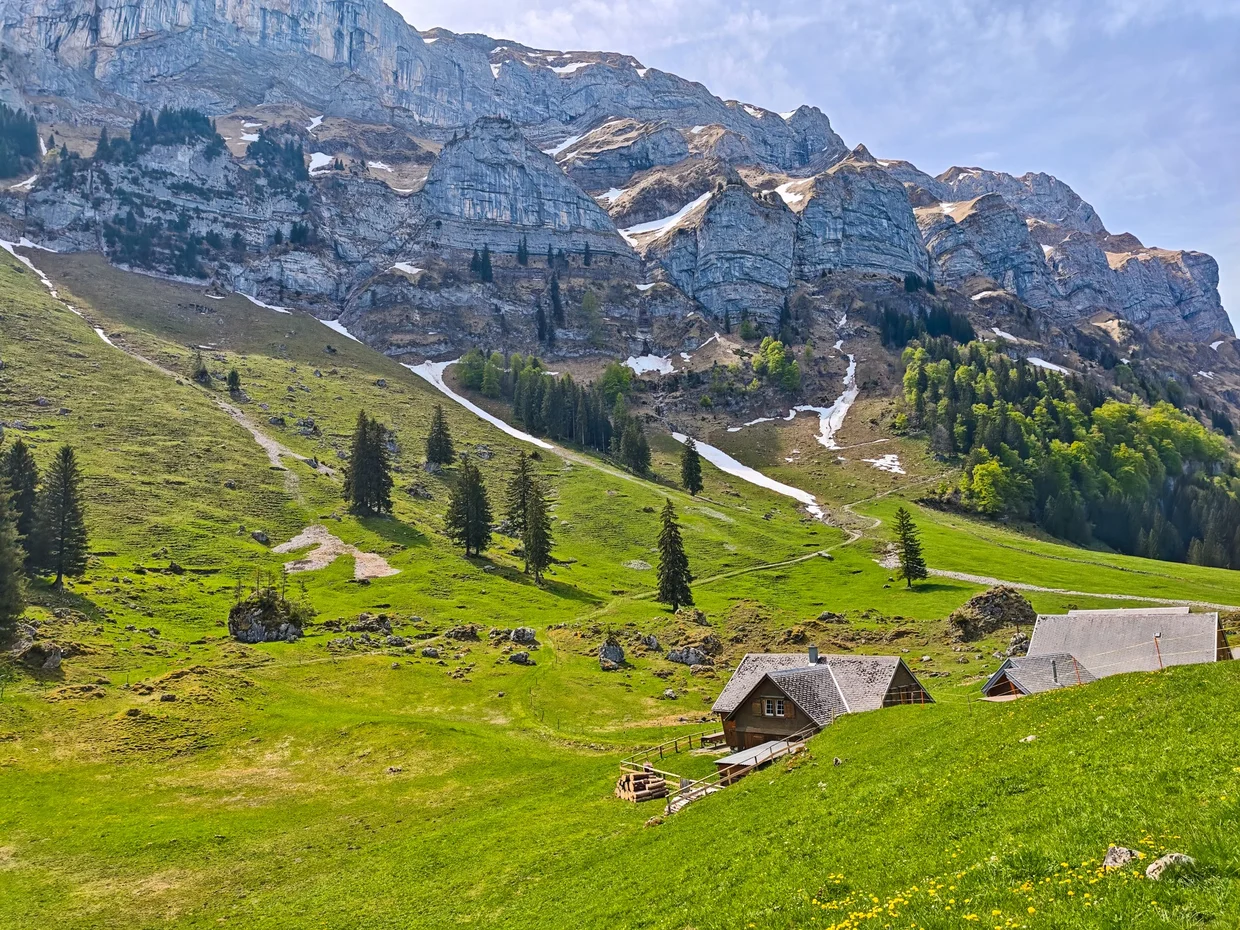
Ebenalp is a high mountain plateau on the northern edge of the Alpstein massif, reached in about six minutes by cable car (Luftseilbahn Wasserauen-Ebenalp) from the hamlet of Wasserauen. The upper station sits at about 1,590m, roughly 720m above the valley station. The cable car is the easy option and the one most visitors take; the alternative is a steep three to four hour hike on foot. From the upper station, a short ridge path leads through the Wildkirchli cave (yes, you walk through an actual cave that has a tiny chapel built inside, plus a hermit's hut from the 1600s and prehistoric stone tools and cave-bear bones found on site) and then drops down to the Aescher (Berggasthaus Aescher), a 170-year-old wooden inn glued to the base of a 100-metre vertical cliff. The Aescher is the photo: it's the one National Geographic put on a magazine cover in the 2010s, and it's been an unbroken working guesthouse since the 1850s. The terrace serves rösti and beer with a literal cliff face dripping water above your head. From the Aescher you can either turn back the way you came or continue down to Seealpsee, a green alpine lake an hour's hike below. The best loop combining both is the Ebenalp → Wildkirchli → Aescher → Seealpsee → Wasserauen circuit (4 to 5 hours total, mostly downhill).
How to Get There
Wasserauen is the trailhead. By car, it's 10 to 15 minutes south of Appenzell village on a single dead-end road. By train, the Appenzeller Bahnen runs from St. Gallen via Appenzell to Wasserauen as a regular service. The cable car station is a 2 minute walk from both the train station and the parking lot.
Notes
- Cable car return ticket is 36 CHF, one-way 24 CHF
- Main-season service runs from morning to early evening; check the timetable for spring and late-autumn revision closures
- Wear proper hiking shoes; the descent past Aescher is steep and exposed in places
- Aescher terrace queues from late morning on busy weekends, go early
- Daytime Aescher tables are mostly walk-up; go early in summer, and book only where reservations are offered
- Wasserauen parking fills by mid-morning on weekends; arrive before 9 am or take the train
- Check the official cable car website for weather closures before driving up
Trogen
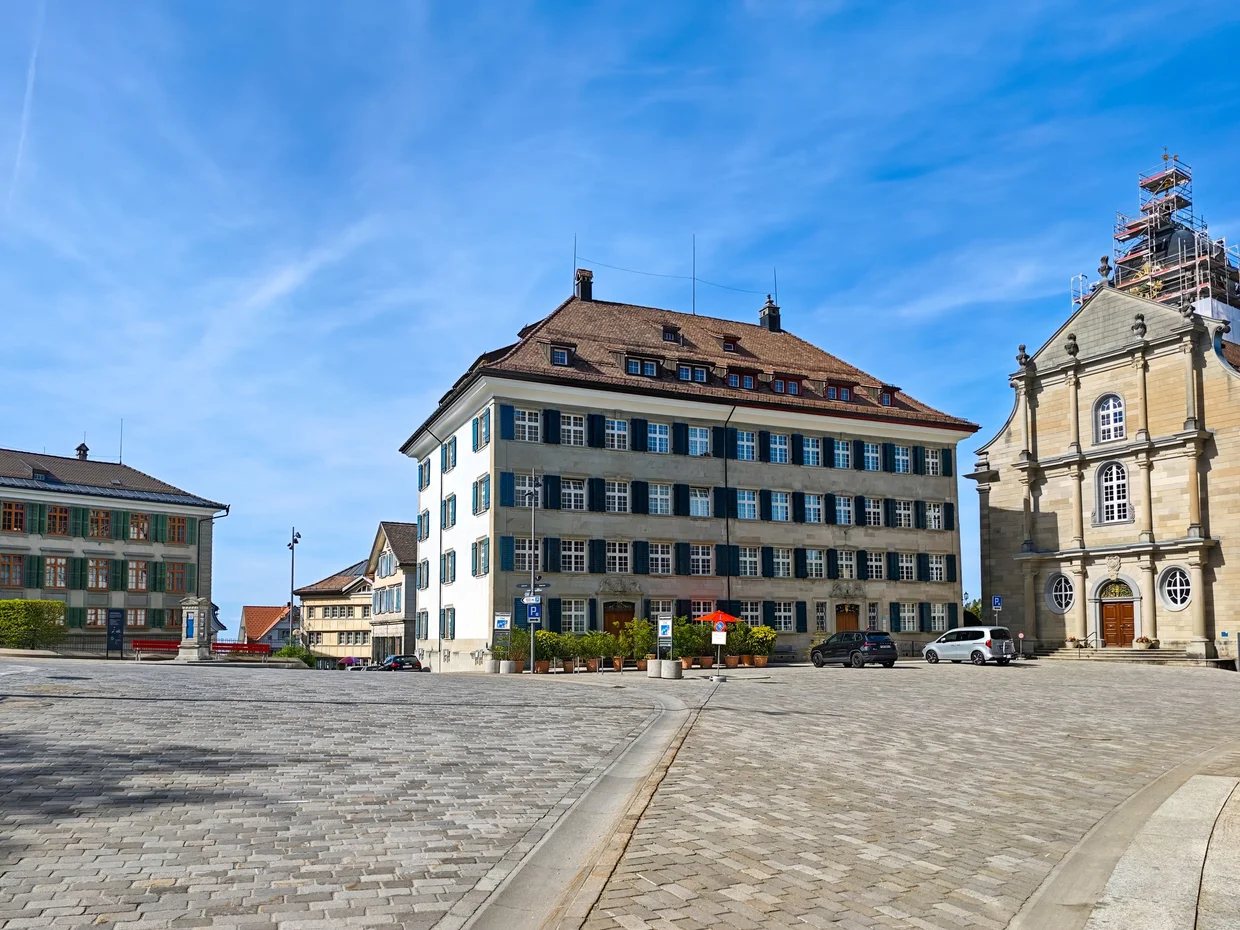
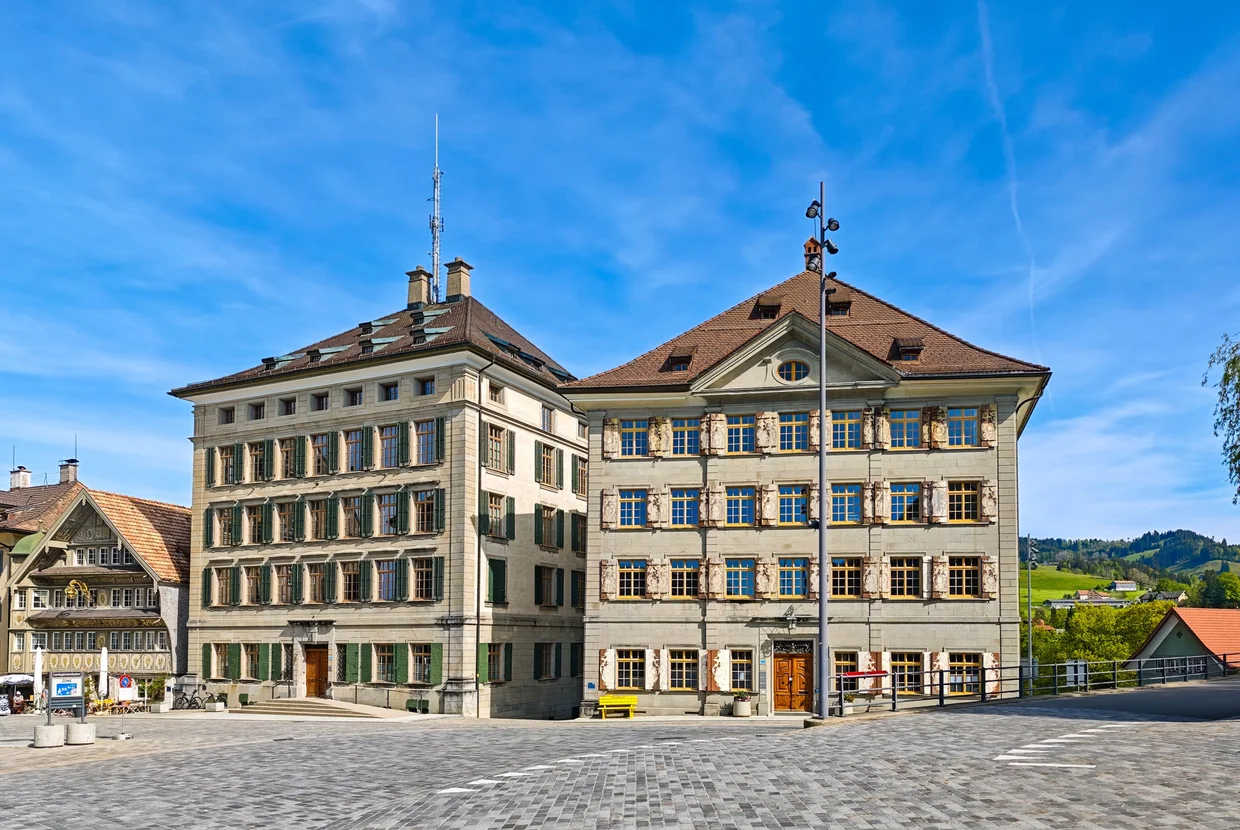
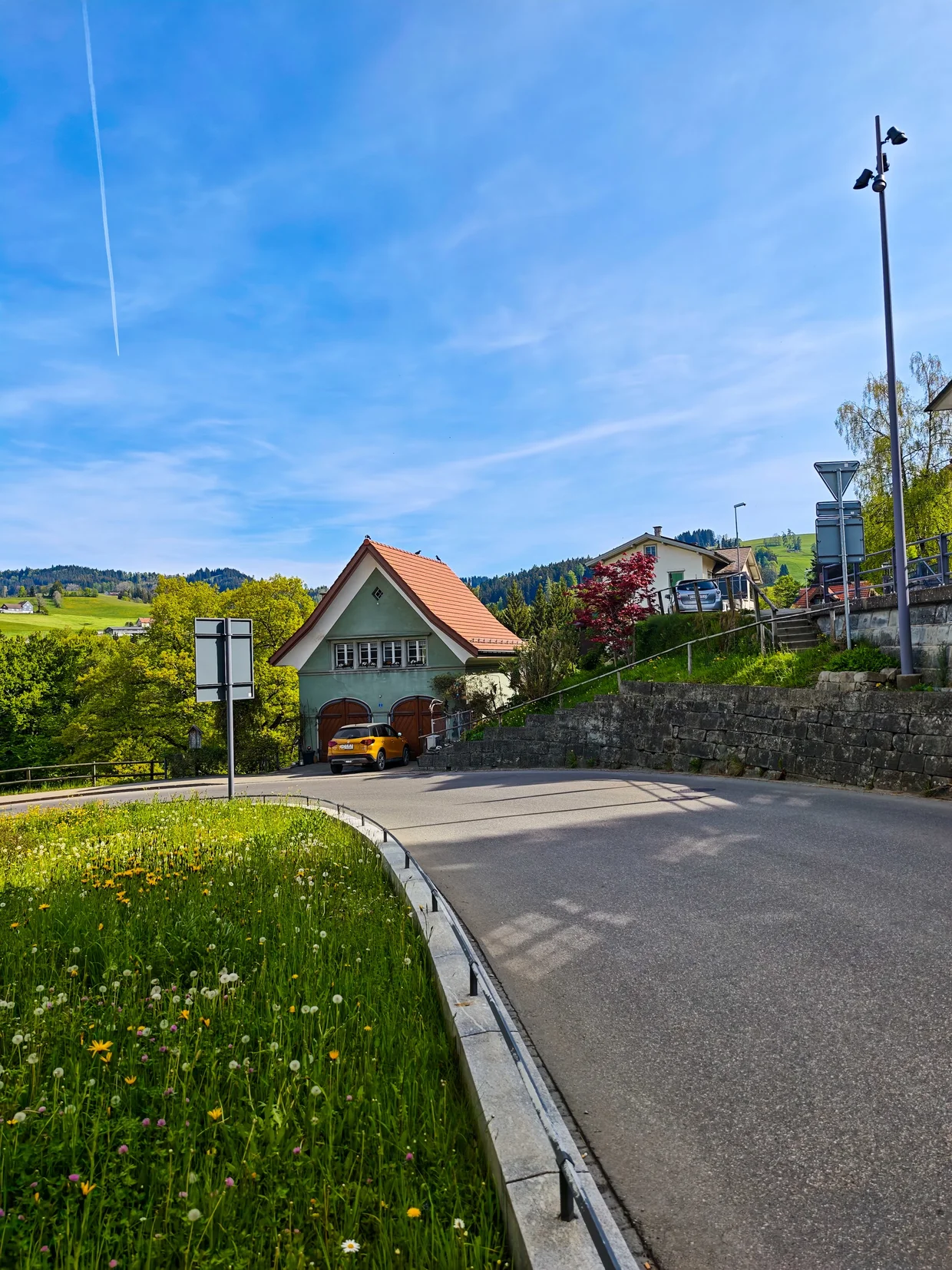
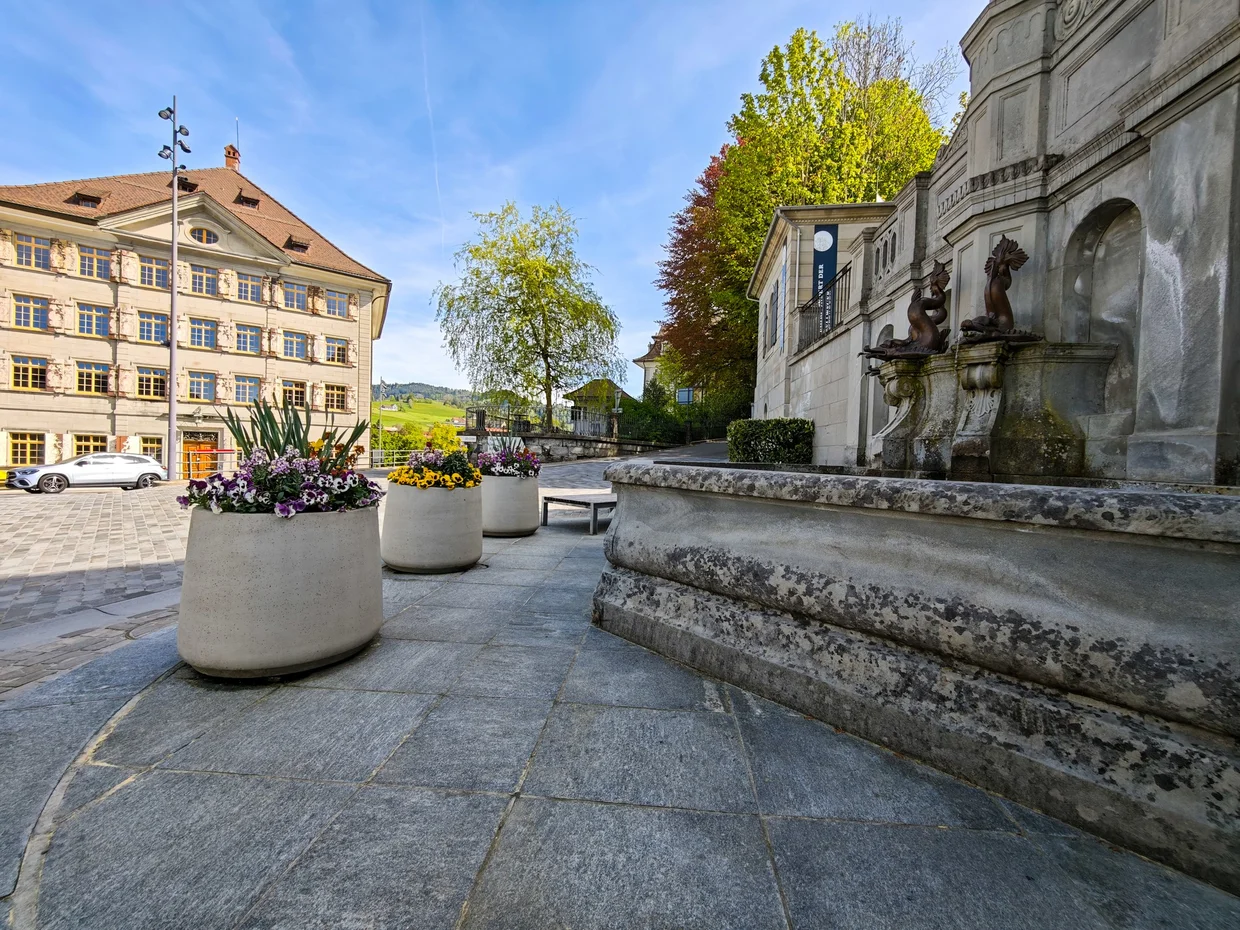
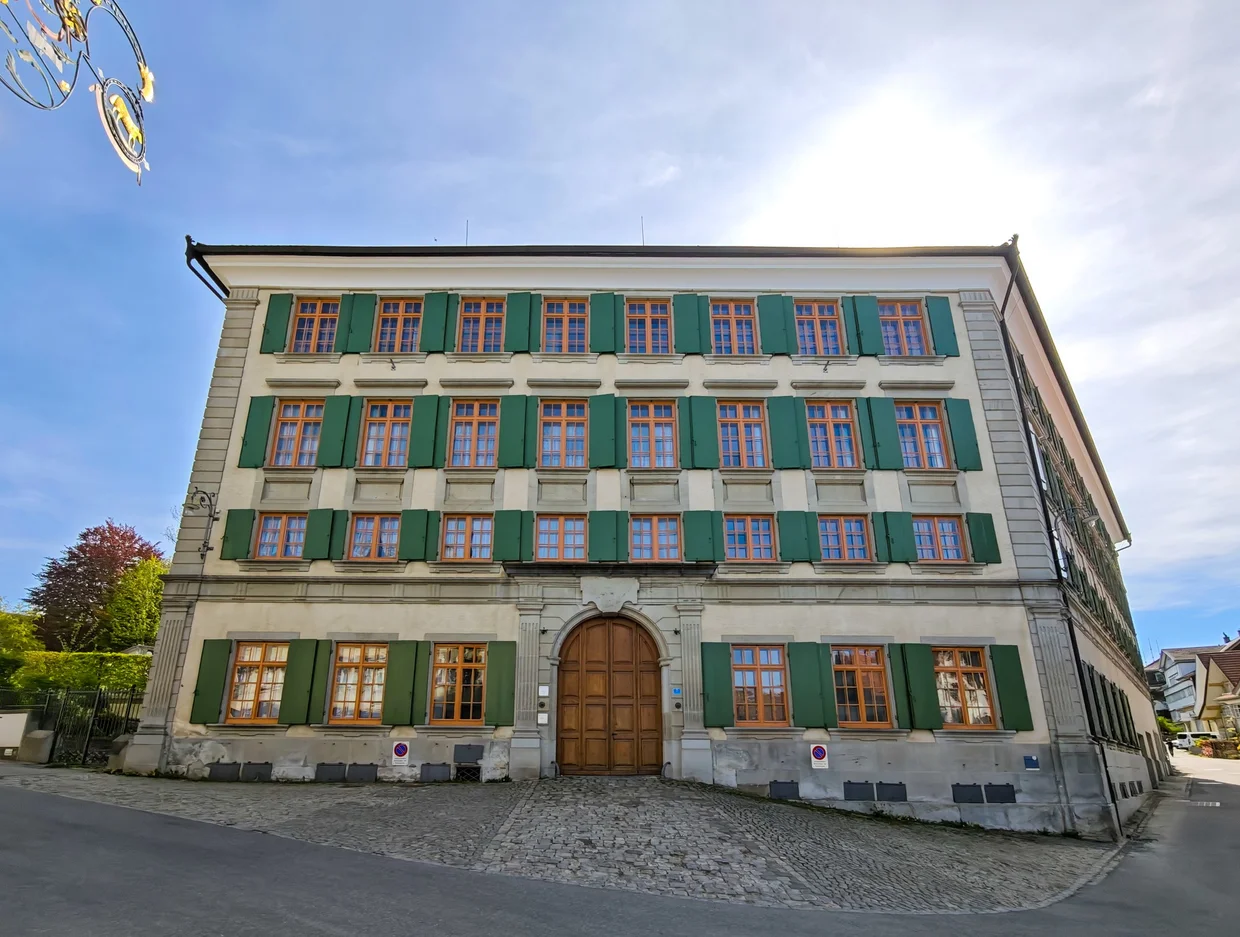
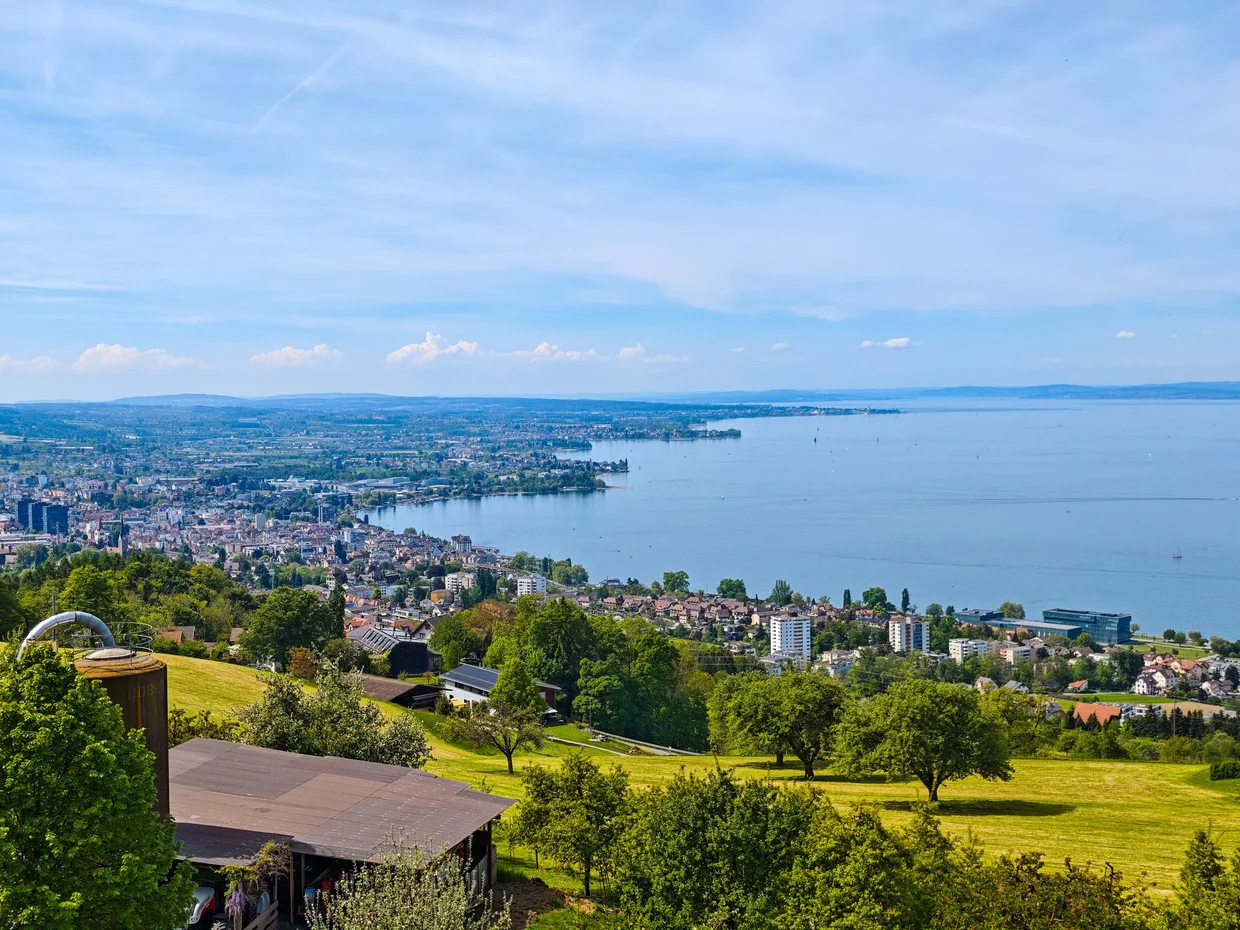
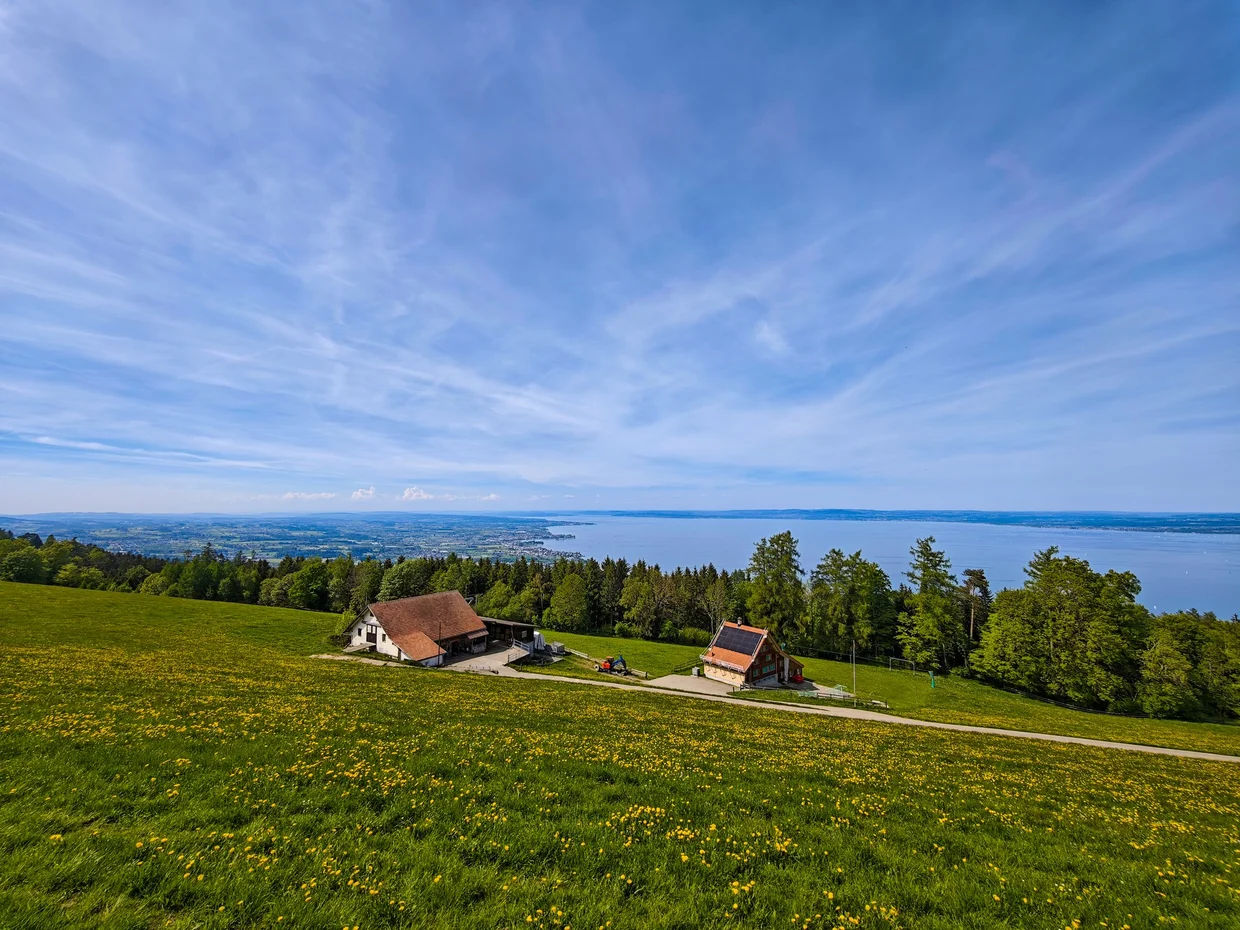
Trogen is the kind of village you'd drive past without stopping if nobody told you to. Don't drive past. The Landsgemeindeplatz, Trogen's central square, is ringed with grand 18th-century Palladian-style mansions built by Appenzell merchant families who got rich on the linen trade in the 17th and 18th centuries. The Honnerlag-Haus and the Fünfeckpalast are the heavyweights, but the whole square has this odd "small village that thinks it's a Tuscan capital" energy, especially when it's empty (which is most of the time). The square is also where Appenzell Ausserrhoden held its open-air democratic Landsgemeinde votes until 1997, when the canton abolished the practice and moved to ballot-box voting. Worth a 20 to 30 minute walk, paired with the rolling drive through the Vorderland country. For the Lake Constance panorama, make a separate north-east detour from St. Gallen to the Swiss Fünfländerblick before swinging south-east toward Trogen.
How to Get There
About 25 minutes by car south-east of St. Gallen, on a winding road through Speicher and the rolling Vorderland country. The charming AB Trogenerbahn (Appenzeller Bahnen line 7) also runs from St. Gallen to Trogen, with stops at every village along the way. The journey itself is part of the attraction.
Notes
- Cafés on the square keep limited hours, especially on weekdays and Sundays
- The Lake Constance photos here are from the Swiss Fünfländerblick, north-east of St. Gallen
- [object Object]
- Trogen pairs well with Speicher, Heiden, and the Appenzell Vorderland on the same loop
- Free parking on the main square outside of any rare event days
Seealpsee
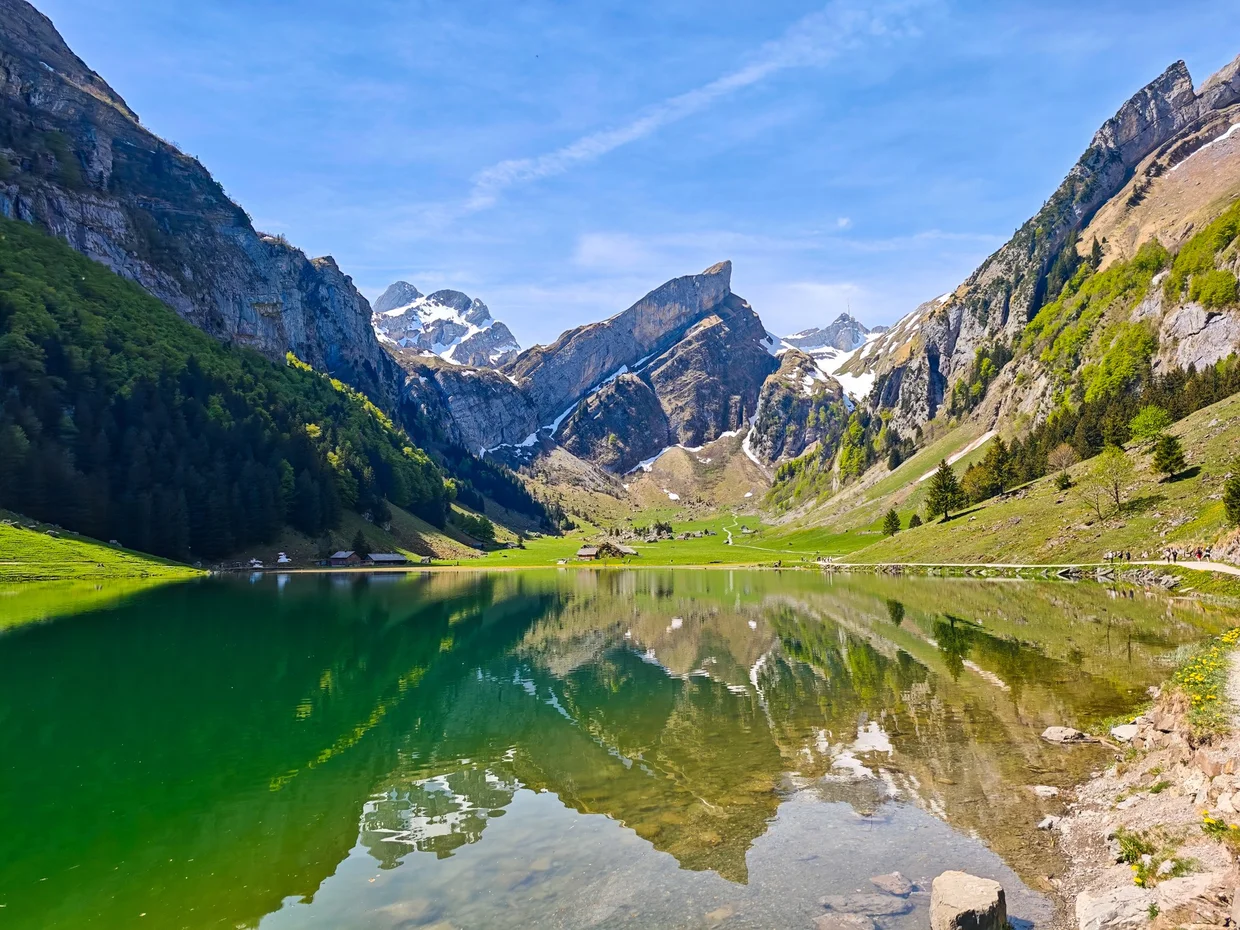
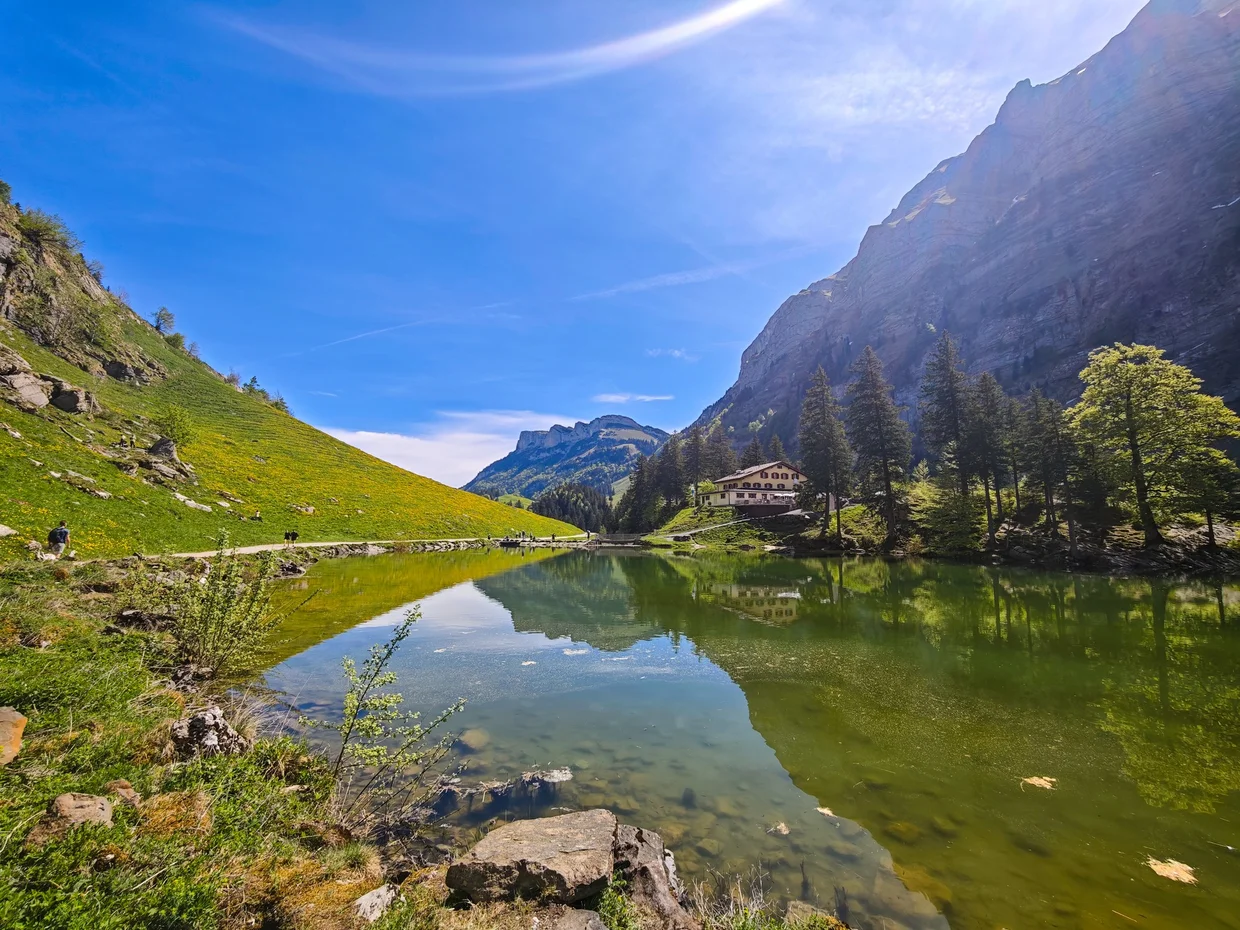
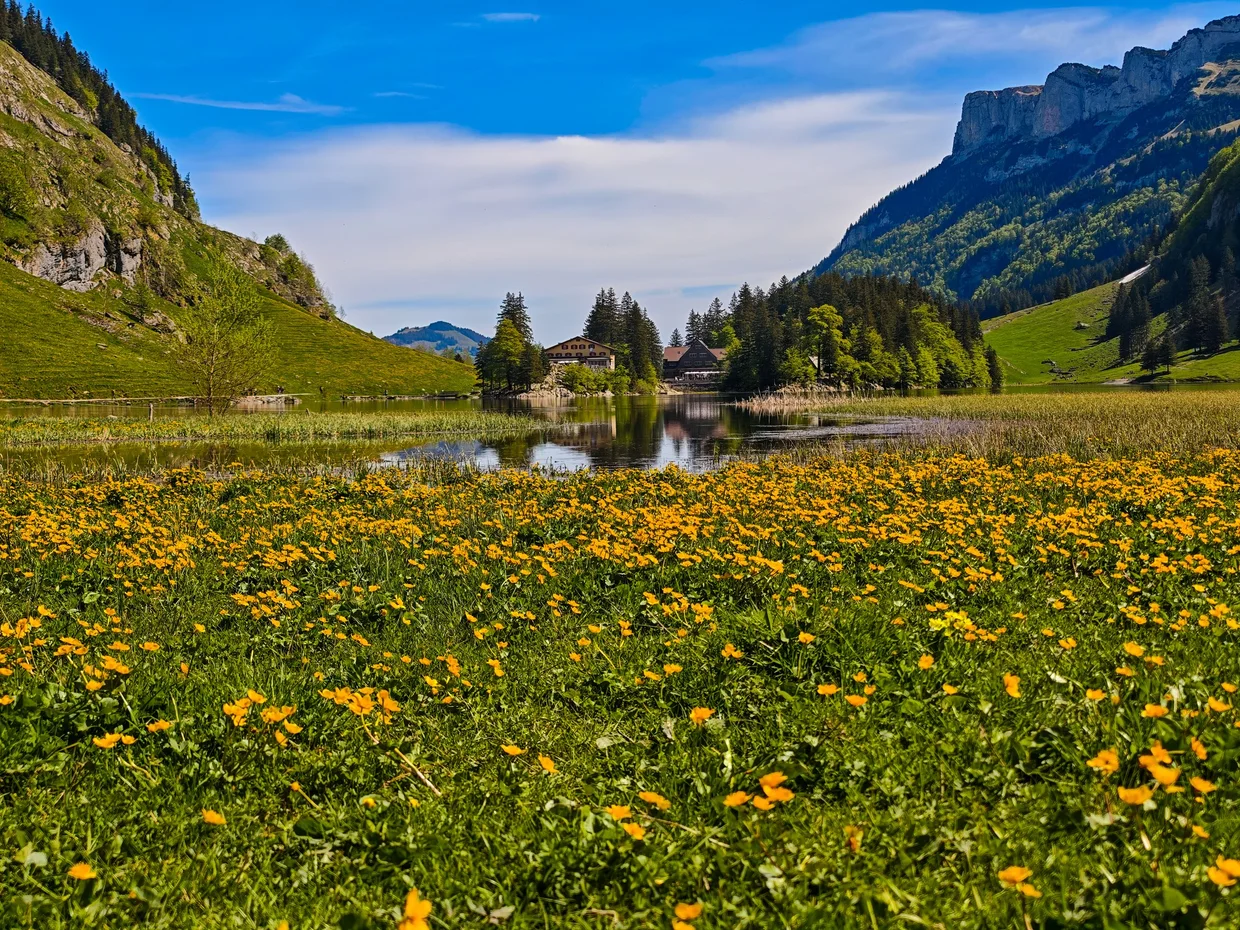
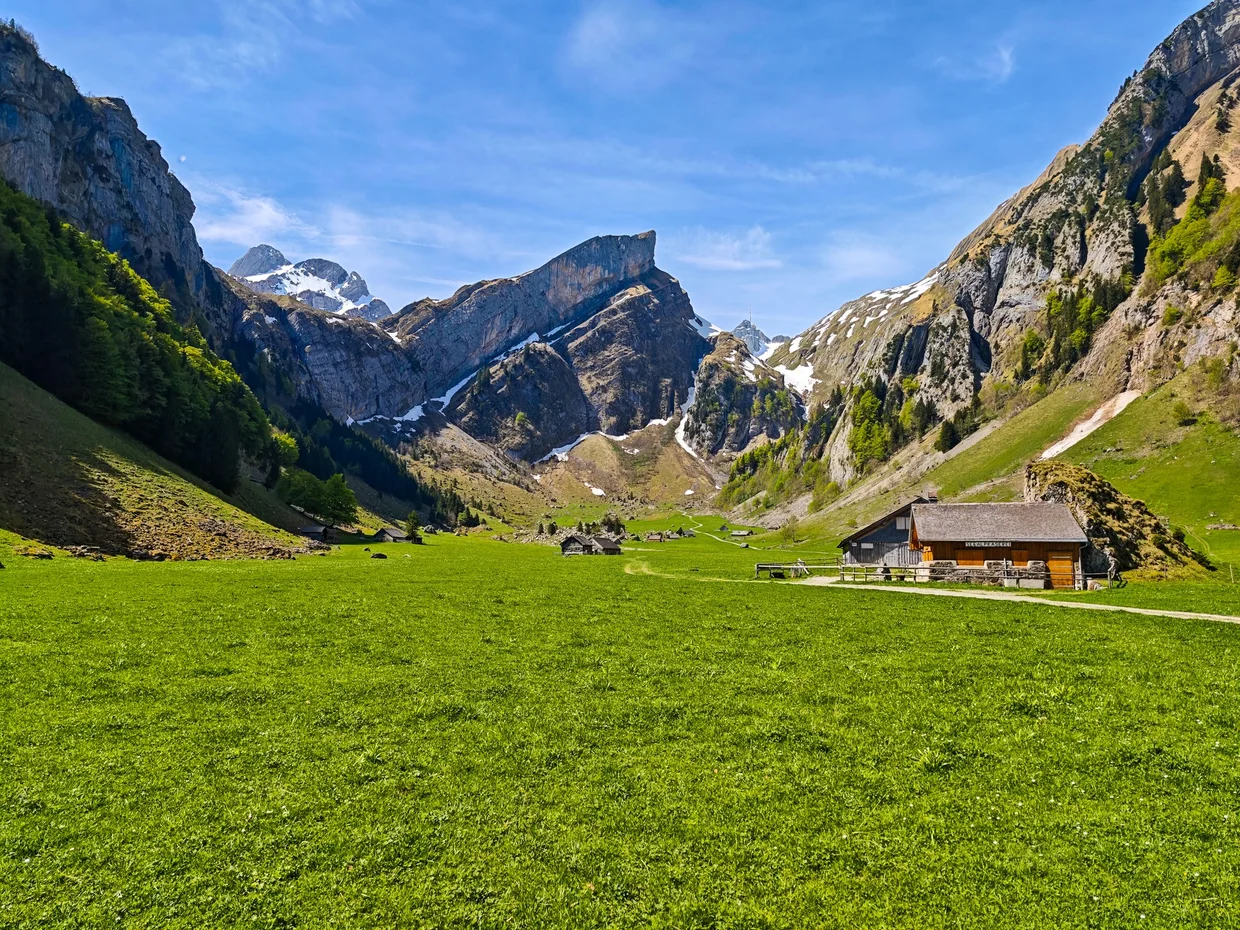
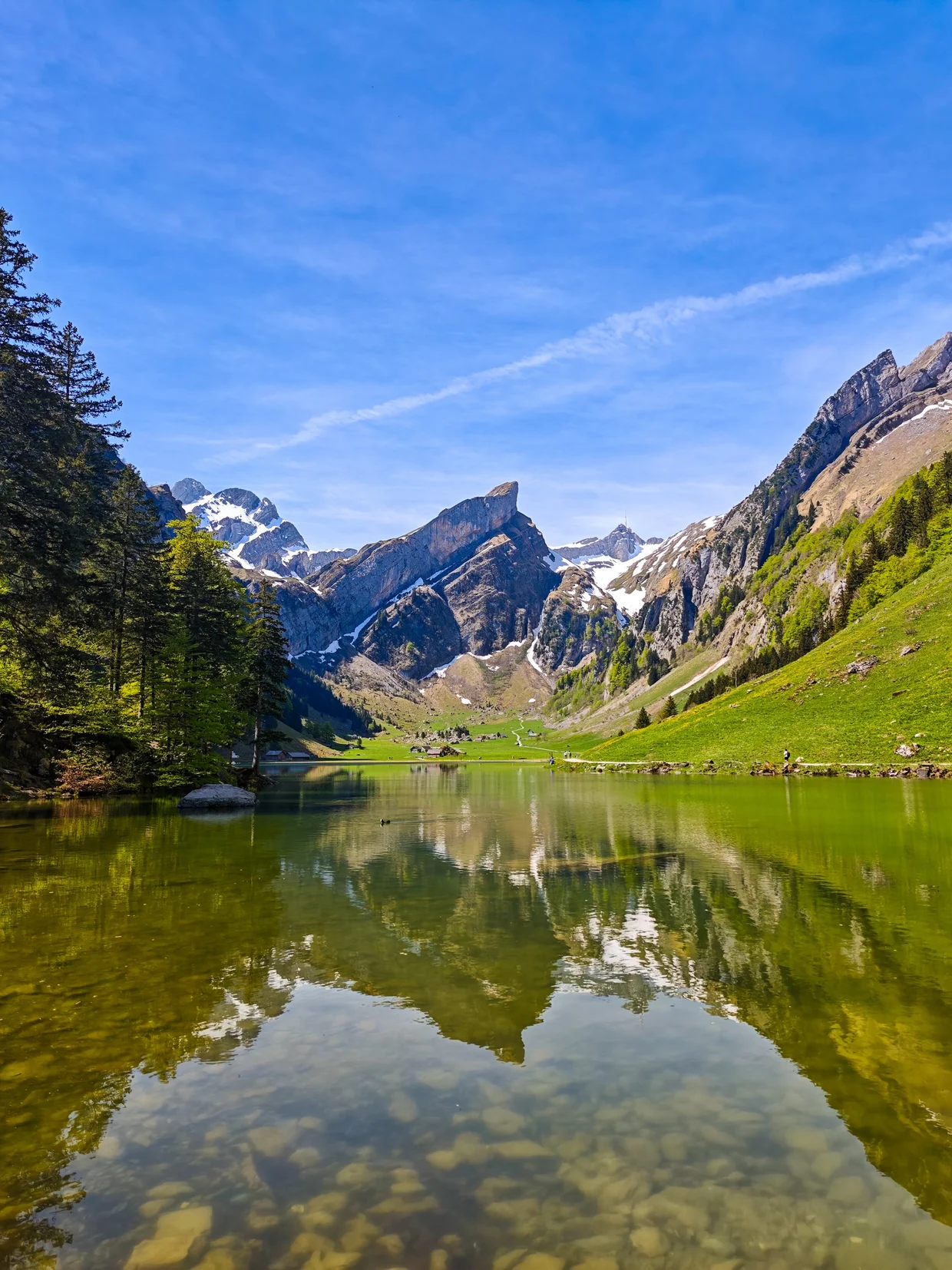
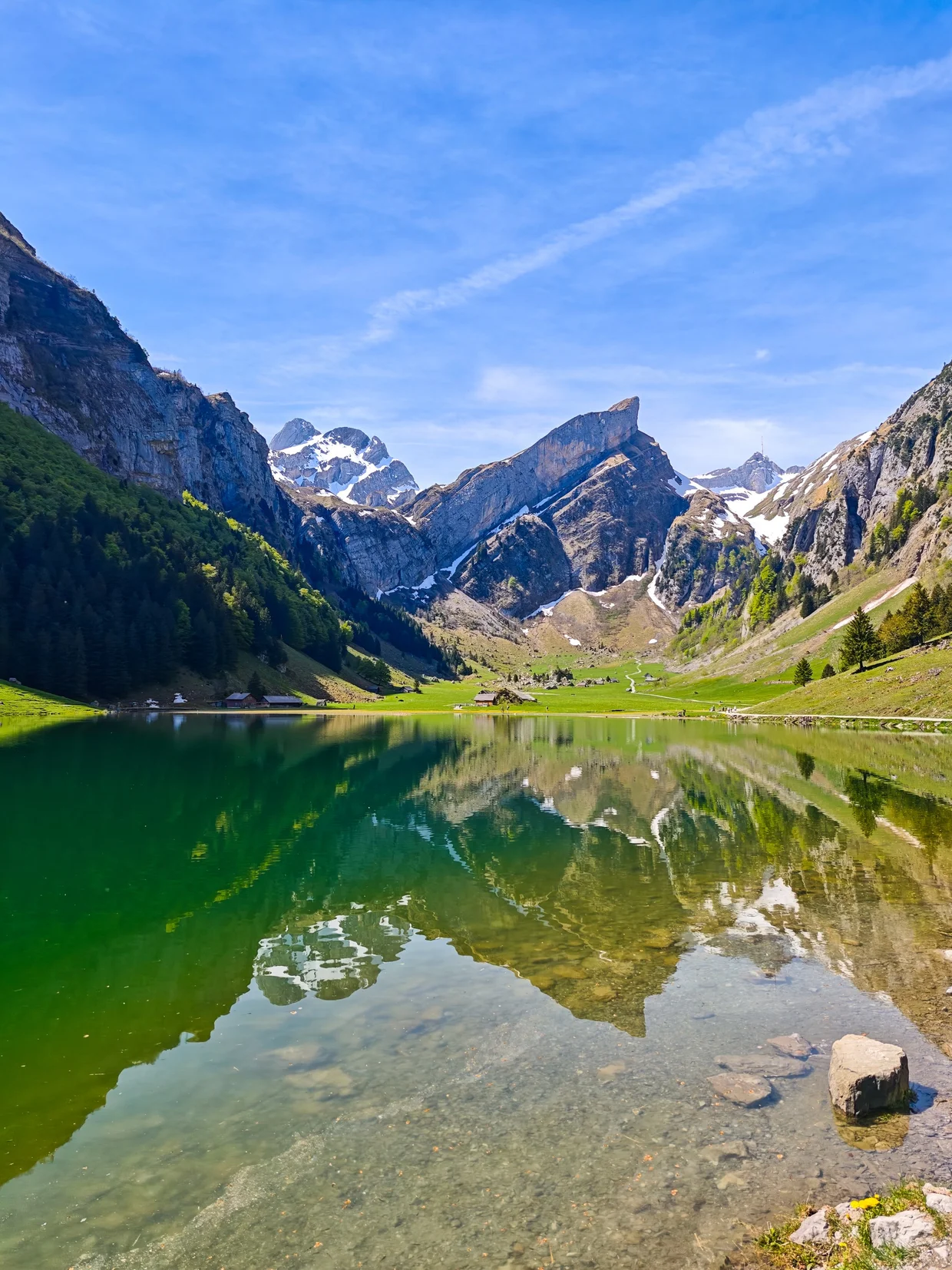
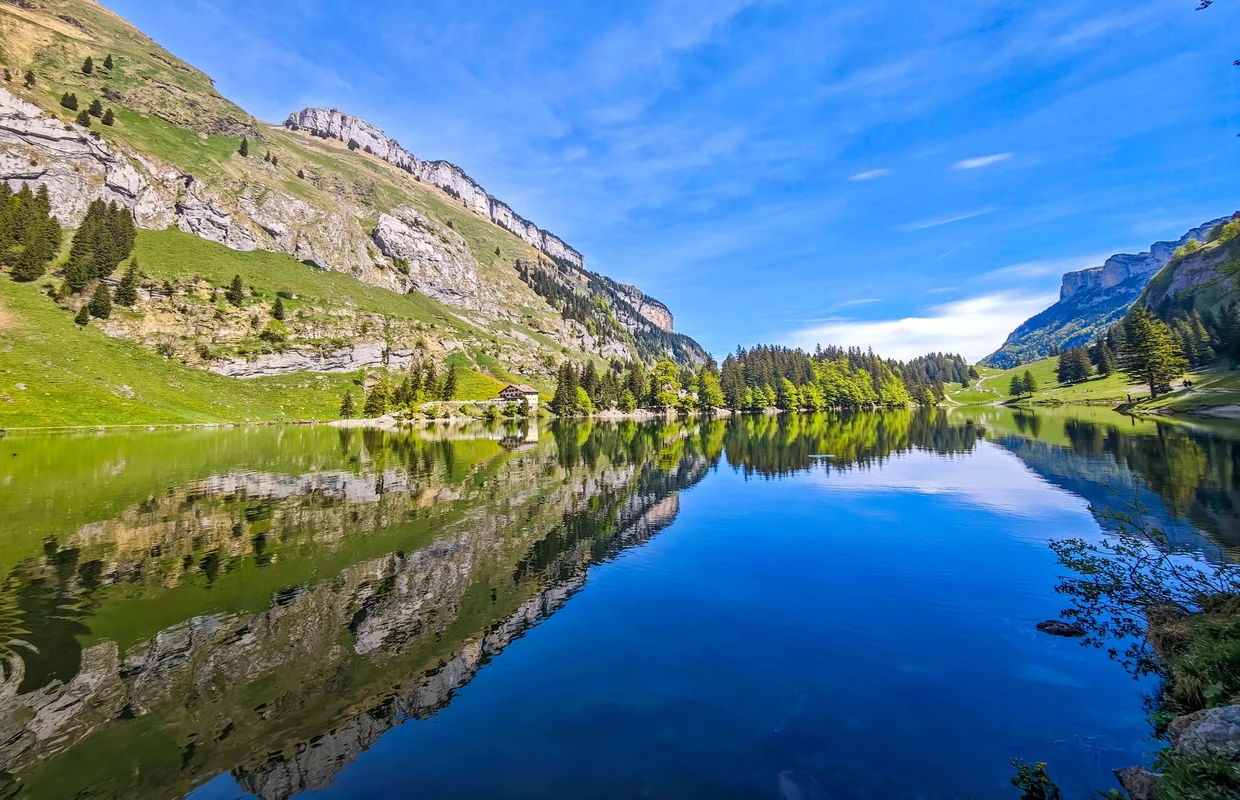
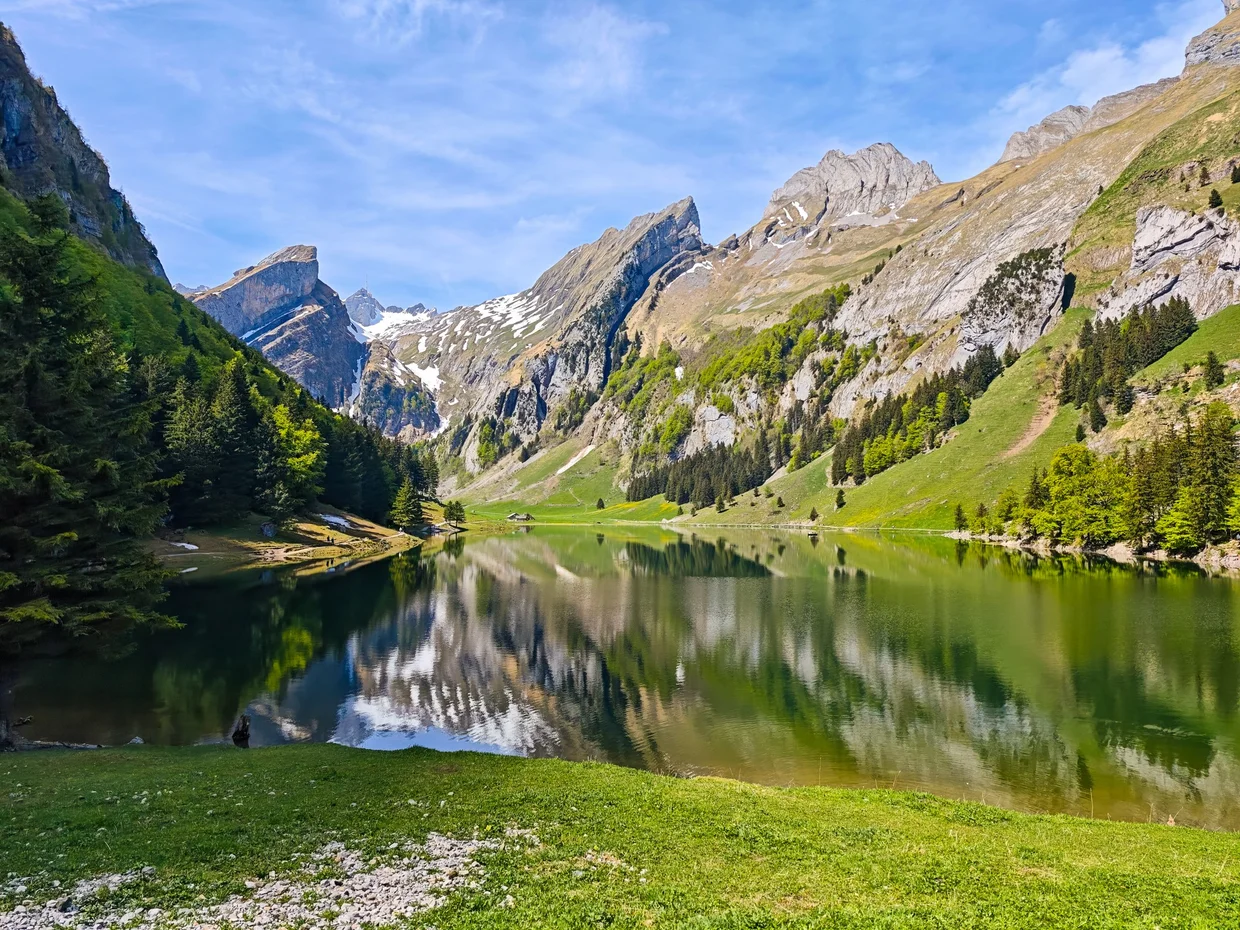
Seealpsee is a small alpine lake at 1,140m, sitting in a steep-walled bowl beneath the Säntis massif in the heart of the Alpstein. There's no road in. No shops. No cars. Just a green-blue mountain lake, a couple of farmhouse-turned-guesthouses, a herd of grazing cows, and basically silence. When the wind drops, the lake surface goes glass-smooth and the cliffs paint themselves in upside down. When the wind is up, the water turns properly turquoise. Either way it photographs absurdly well. You can reach it on foot from Wasserauen in about 90 minutes (gentle, mostly forest path) or, more memorably, as the second half of the Ebenalp-Aescher hike from above (around an hour of switchback descent past the cliff hut). The flat path circles the entire lake in 30 minutes if you want a stretch, or you can flop down on the grass and not move for an hour. Two guesthouses (Berggasthaus Forelle and Berggasthaus Seealpsee) both serve lake fish and beer with a view that justifies the prices.
How to Get There
Two ways. The direct route: walk in from Wasserauen on a forest and pasture path, around 90 minutes uphill. The scenic route: take the cable car up to Ebenalp, hike past the Aescher, and descend to the lake from above (the path everyone wants you to take). Loop the lake, then walk back out to Wasserauen in about an hour. No cars permitted on the lake access path.
Notes
- The lake itself is free to visit, you only pay if you eat at a guesthouse
- 30 minute easy loop around the lake on a flat path
- The guesthouses serve until late afternoon, kitchen often closes earlier
- Pair with the Ebenalp-Aescher hike for the classic Alpstein loop
- Reflections are best mid-morning before the wind picks up
- Bring proper shoes even for the direct walk up from Wasserauen
Published May 2026.