Top Things to Do and See in Slovenia
Slovenia packs more variety into a small area than any other country in Europe. Alps, gorges, caves, coast, capital city, and a cliffside castle, all within a few hours of each other. You can build a very good week out of the headline sights and then stack on extras depending on how much time you have. The list below focuses on what is genuinely worth the effort, not on what fills a tour bus schedule.
The prices shown here are meant as a rough guide and can vary over time. While I update exchange rates regularly, local prices are typically refreshed only when I revisit the destination.
Vintgar Gorge
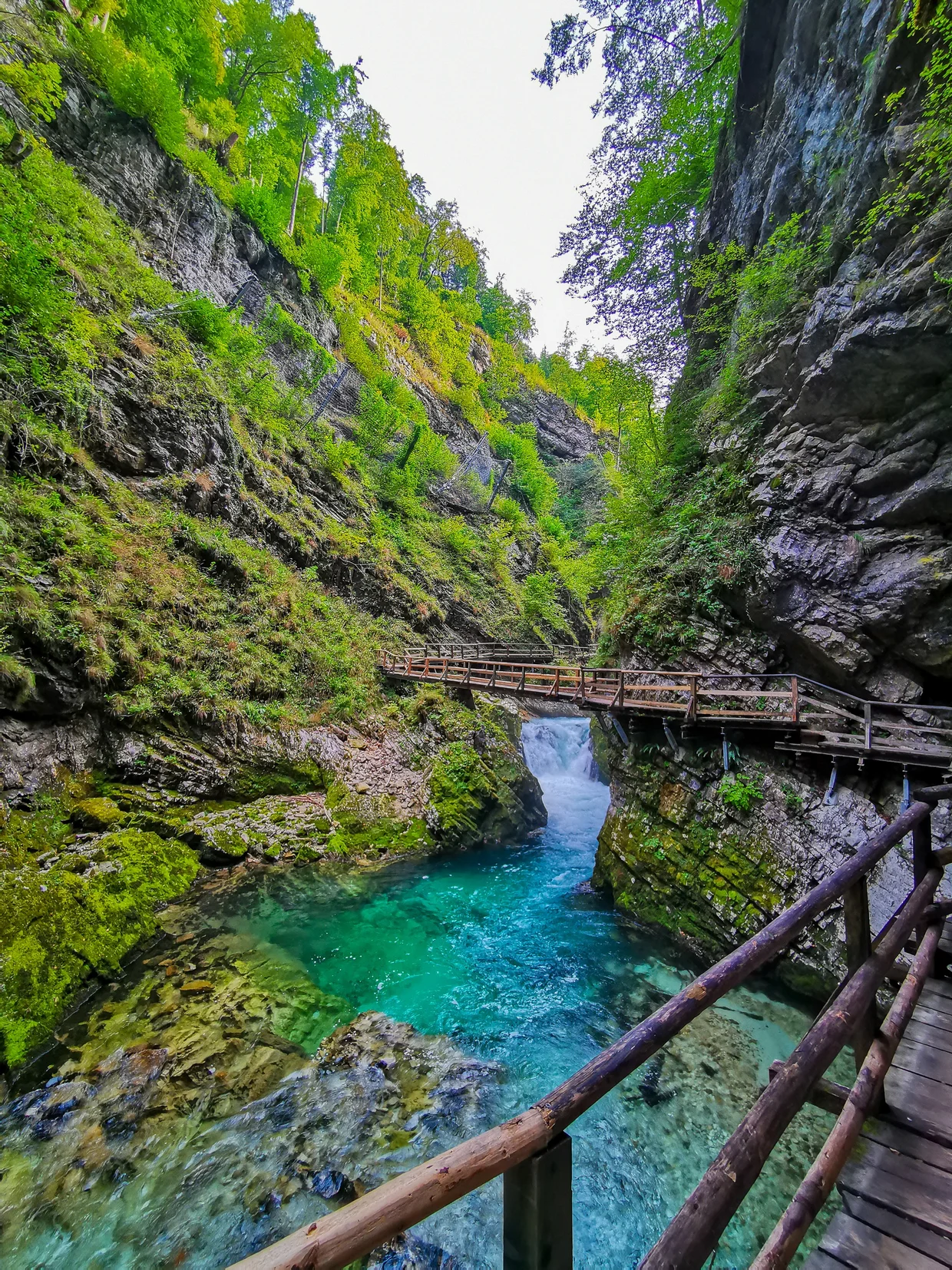
The Radovna river has cut a narrow limestone gorge about 1.6 kilometres long, and a wooden boardwalk runs along the side of it, sometimes clinging to the cliff and sometimes bridging over the water from one bank to the other. The water is the unreal turquoise you see in the brochures, and in person it actually looks that way. The trail is flat, one-way for most of the length, and ends at the Šum waterfall at the far end, which is the tallest river waterfall in the country. You walk back to the entrance along a forest loop. Entry is by timed ticket in summer, which cut the crowds dramatically after the old queue system made the gorge almost unusable. Book online a day or two ahead and go as early in the morning as you can. If you do one half-day trip out of Bled, make it this one.
How to Get There
By car it is about 10 minutes from Bled. There is paid parking at the entrance. From Bled you can also walk (about an hour one way) or take a seasonal shuttle bus.
Notes
- Timed entry tickets, book online a day or two in advance in summer
- Open roughly April to November, closed in winter
- Wear shoes with grip, the boardwalk gets wet and slippery
- Early morning has the best light and fewest people
- The return path is through forest, not back along the gorge
Soča Valley
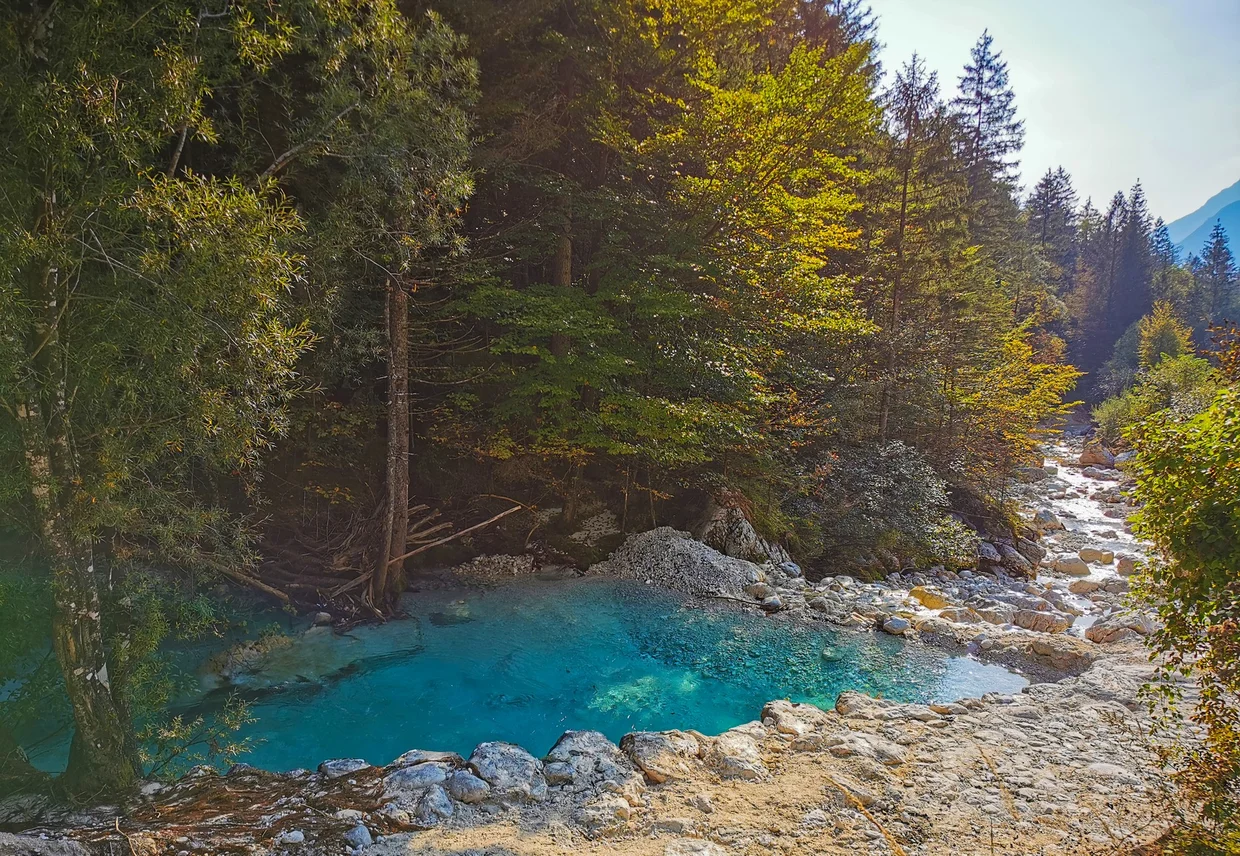
The Soča is the river that made people start describing water colours in words that sound made up. A pale, bright, slightly unreal turquoise, caused by fine limestone particles in the glacial meltwater, held for long stretches through a valley that runs from the Julian Alps down to the Italian border. The valley is the centre of outdoor sports in Slovenia: whitewater rafting, kayaking, canyoning, zip lines, via ferrata, and fly fishing are all happening along this one river in summer. Even without any of that, the drive alone is worth it. Stop wherever a pull-off looks promising, walk ten minutes toward the sound of water, and the odds of finding something photogenic are very high. Bovec is the base for the active stuff. Kobarid is the historical stop, with a small but excellent war museum and the Kozjak waterfall nearby.
How to Get There
By car from Ljubljana via the Vršič Pass in summer (about 2 to 3 hours, slow but spectacular) or via Nova Gorica and Tolmin year-round (about 2 hours). Buses run but are infrequent and cover only the main towns.
Notes
- Rafting and kayaking season runs roughly April to September
- Operators in Bovec and Kobarid handle all the gear and transport
- The drive from Bovec to Tolmin is scenic the whole way, no fixed stops required
- Kobarid Museum is worth a full hour, the WWI history is heavier than it sounds
- Kozjak waterfall is a short walk from Kobarid, very striking
Ljubljana Old Town
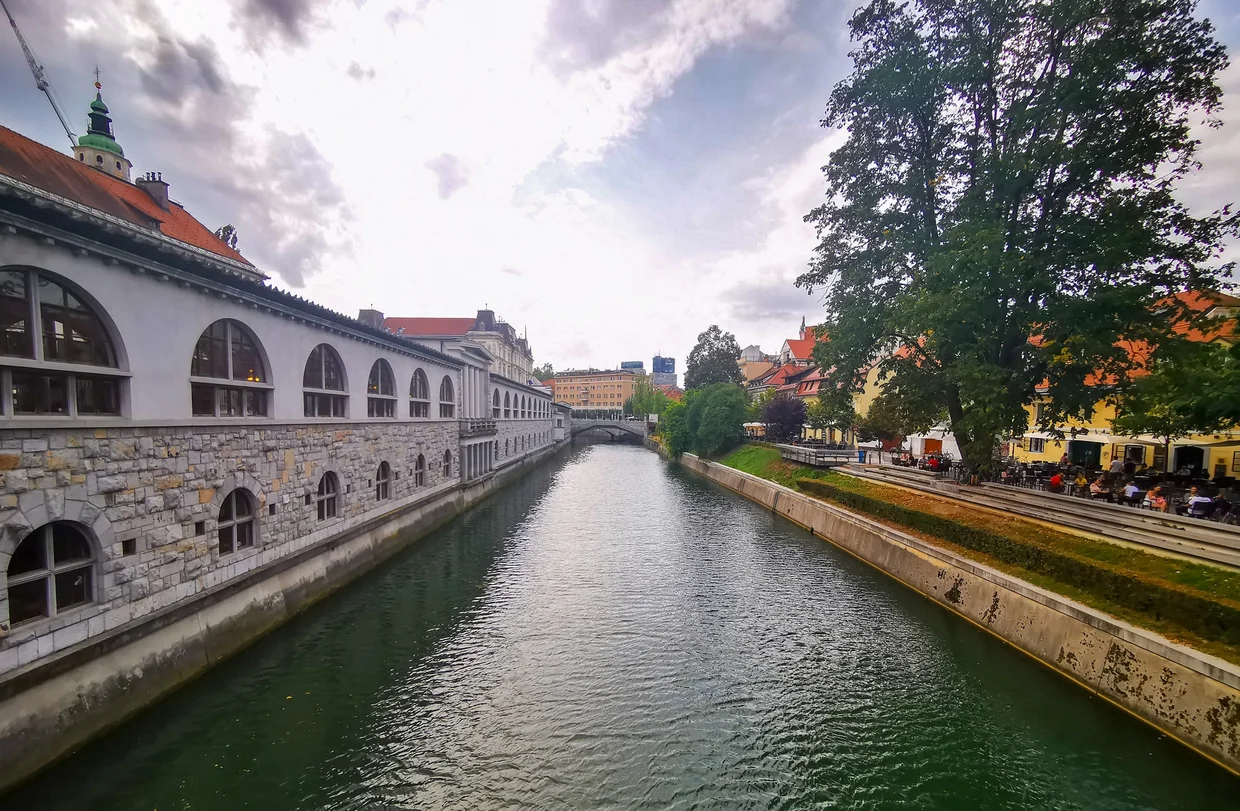
The old town sits on one bank of the Ljubljanica river, a tight network of pastel facades, arcades, and small squares running from Prešeren Square past the Triple Bridge and along the embankment to the open-air market and Plečnik's covered arcades. The whole thing can be walked in under an hour, slowly, with a coffee stop halfway. Saturday morning is when the market comes alive, with farmers bringing fruit, cheese, bread, and wine from the countryside. You can assemble a picnic here for very little and eat it on the embankment twenty metres away. Most of the buildings along the river are the quiet, elegant work of Jože Plečnik, Slovenia's most famous architect, whose interventions are subtle but everywhere once you know what to look for.
How to Get There
Ljubljana is small enough that the old town is a 10-minute walk from anywhere in the city centre. No car or transit needed.
Notes
- Saturday morning is market day on the embankment
- Much of the old town is car-free, easy to walk
- The Triple Bridge and Dragon Bridge are the two Plečnik landmarks not to miss
- Cafés along the river are tourist-priced, walk one street inland for better value
Ljubljana Castle
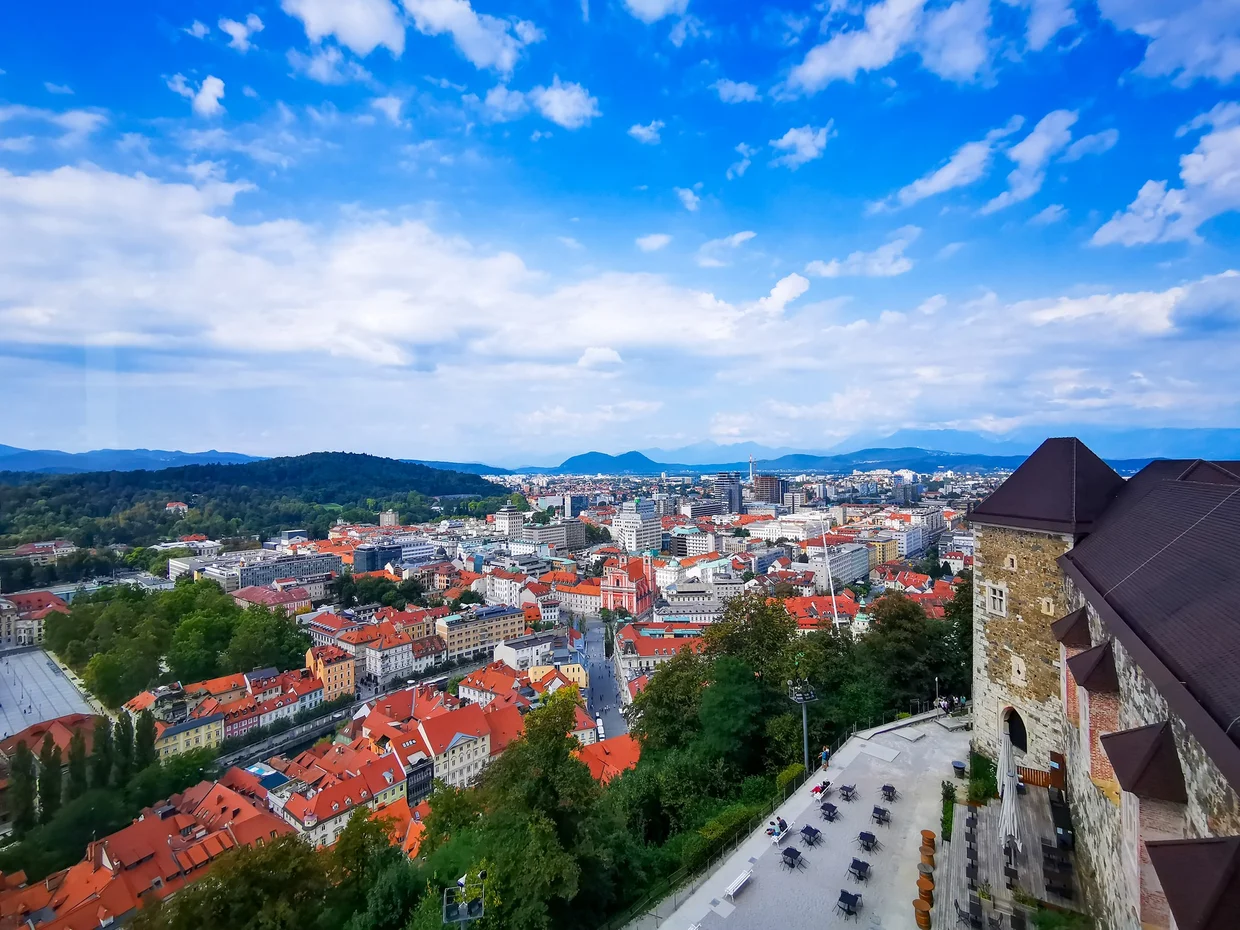
Ljubljana Castle sits on a low hill directly above the old town. The grounds are free to enter, the tower and museum sections are ticketed, and the view from the ramparts gives you most of the city in one frame with the Kamnik Alps in the distance on a clear day. You can walk up through a shaded path in about 20 minutes or take the funicular from the base of the hill. Inside, the castle has a small historical exhibition, a modern exhibition corridor carved into the rock, and a puppet museum that is better than it sounds. It is not the most dramatic castle in the country (Predjama owns that title), but it is the most accessible and it anchors the city view from almost every angle.
How to Get There
Walk up from the old town (about 20 minutes on a shaded path) or take the funicular from Krekov trg at the base.
Notes
- Grounds and outer courtyards are free, interior exhibitions and tower are paid
- Funicular saves the walk up, around 6 EUR return
- The Time Machine guided tour is the more entertaining ticket option
- Sunset from the ramparts is the best time for photos
Škocjan Caves
Škocjan is the wilder of Slovenia's two big cave systems and the one on the UNESCO list. The tour takes you through several kilometres of passages and then into the main event: an underground river canyon carved inside the mountain, with a footbridge crossing the river at dizzying height and the roar of water below. The scale is the thing that sticks with you. Postojna has the polish and the little train. Škocjan has the drama. If you only do one cave in Slovenia, this is the one I would pick. No electric train, no theatrical lighting, just a guide and a walk through a landscape that looks like it was designed for a fantasy film.
How to Get There
By car about 45 minutes from Ljubljana via the A1 motorway toward Koper, exit at Divača and follow signs. Divača train station is 5 km away and a shuttle runs in summer.
Notes
- Constant 12°C inside, bring a jacket even in summer
- Guided tours only, in multiple languages through the day
- No photos allowed inside on the main tour (strictly enforced)
- Good shoes required, the path has stairs and wet sections
- The surface walk to the dolines afterwards is included and worth doing
Postojna Cave
Postojna is the touristy cave and it leans into it, which turns out to be part of the appeal. You ride a small open electric train two kilometres into the system before continuing on foot with a guide through the biggest halls. The formations are dense, the scale of some of the chambers is unreasonable, and the main hall is large enough to hold orchestral concerts (which it does). It is less atmospheric than Škocjan, more comfortable, and better for anyone who does not fancy the longer walk. Combine it with Predjama Castle, which is ten minutes down the road and part of a combined ticket option.
How to Get There
By car about 45 minutes from Ljubljana on the A1 toward Koper, exit at Postojna. Regular buses and trains from Ljubljana also reach Postojna town in about an hour.
Notes
- Constant 10°C inside, bring a jacket even in summer
- Combined Postojna + Predjama ticket is cheaper than buying both separately
- Tours run roughly every hour or two, in multiple languages
- The proteus (olm) aquarium at the end is unusual and worth a look
- Book online in peak season to avoid the ticket queue
Predjama Castle
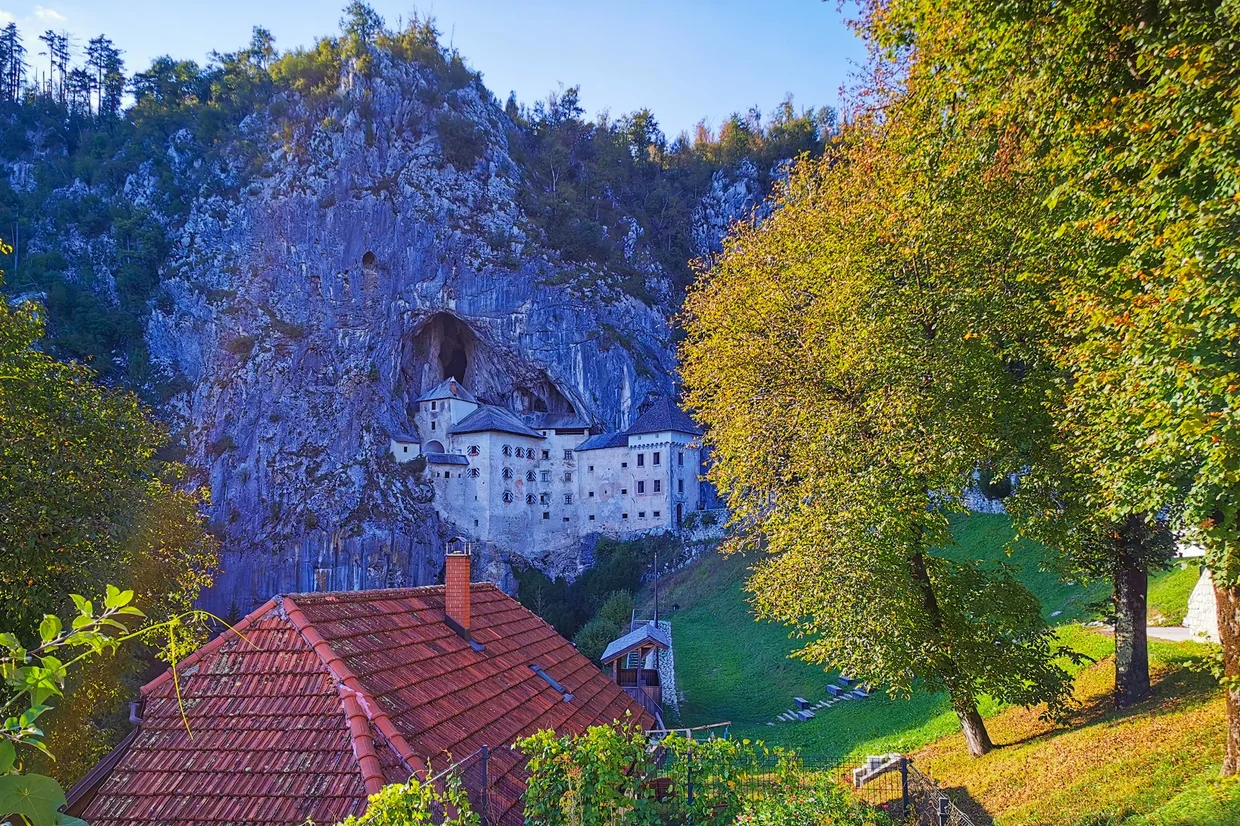
Predjama is a medieval castle built into the mouth of a cliff cave, half stone and half rock, looking like it was carved out of the hillside rather than placed on it. The rooms inside extend back into the caves behind the facade. It is the most distinctive castle setting in the country and one of the most unusual in Europe. The drive between Postojna Cave and Predjama is short, the two sites pair naturally into a single half-day trip, and a combined ticket is available. Even if you do not pay to go inside, the view of the castle from the road below is the real draw.
How to Get There
By car only, about 10 minutes from Postojna Cave. No public transport directly to the castle.
Notes
- Combined Postojna Cave + Predjama ticket is cheaper than buying both
- The audio guide is included and decent
- Cave tours under the castle run in summer only
- A 10-minute drive from Postojna Cave
Piran Old Town
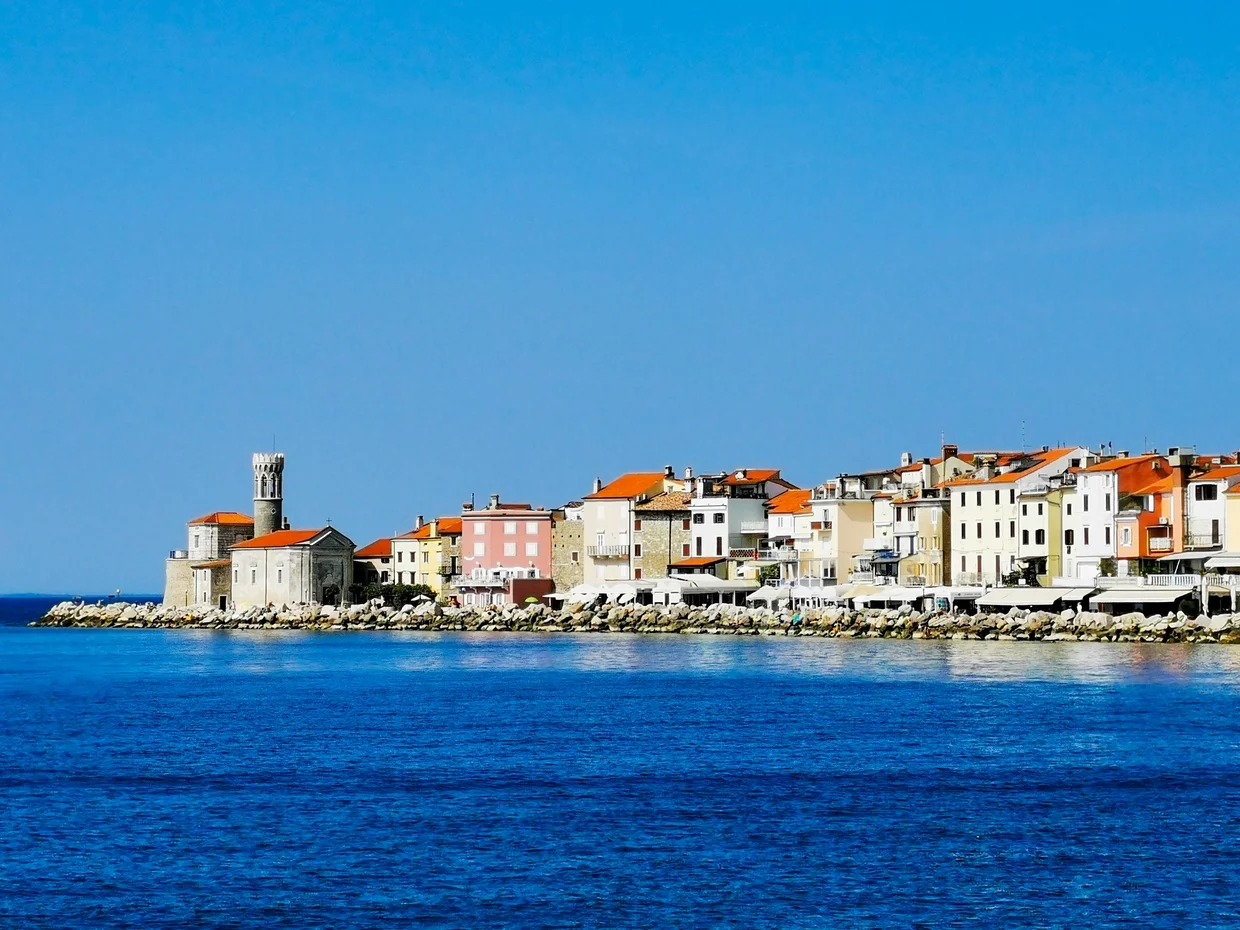
Piran is a Venetian-era fishing town that juts out on a narrow peninsula on the Slovenian coast, with a tight network of stone alleys, a main square (Tartini Square) ringed by pastel buildings, and a hilltop church with a bell tower you can climb for the view. The whole old town is tiny. You can walk across it in fifteen minutes. The best thing to do is to get lost in the alleys, climb up to St George's church for the view down over the red tiled roofs, and eat at one of the seafood restaurants along the waterfront at lunch. Italian is still widely spoken here, and the food leans more Italian than Slovenian on most menus. Piran is the one coastal stop in Slovenia that repays a longer visit.
How to Get There
By car about 1.5 hours from Ljubljana on the A1 toward Koper, then follow signs. Regular buses from Ljubljana reach Piran in about 2.5 hours.
Notes
- Park at one of the edge-of-town car parks, the old town is mostly pedestrian
- St George's bell tower is a small entrance fee, worth it for the view
- Waterfront seafood restaurants are reliable and fair value at lunch
- Staying a night (rather than day-tripping) gives you the town empty at dawn and dusk
Vršič Pass
Vršič is the iconic Alpine drive in Slovenia: fifty numbered hairpin bends zig-zagging up and over the Julian Alps, connecting the Upper Sava valley near Kranjska Gora on the north side to the Soča valley at Trenta on the south side. The pass tops out just over 1,600 metres. Each hairpin is numbered, there are small pull-offs for photos, and the views on both sides are as good as anything you get in the central Alps at this altitude. Allow at least a couple of hours for the drive itself, more if you stop at the pull-offs, and a full day if you are combining it with a drive down the Soča valley on the far side. The road is open to cars, motorbikes, and a steady stream of cyclists who are in much better shape than the rest of us.
How to Get There
Enter from Kranjska Gora on the north side (about 1 hour from Ljubljana) or from the Soča valley at Trenta/Bovec on the south. Car or motorcycle essential, no bus service over the pass.
Notes
- Open roughly May to October, closed in winter due to snow
- Narrow, steep, hairpin-heavy, drive carefully
- Traffic is usually not about volume, it is about drivers who cannot handle hairpins at a proper speed
- Fuel up before you start, no stations at the top
- Small huts sell food and drink near the summit in season
- Russian Chapel near hairpin 8 is a moving small detail worth stopping for
Lake Bohinj
Bohinj is Slovenia's quieter lake. Larger than Bled, a longer drive from Ljubljana, and located inside Triglav National Park rather than next to it, Bohinj is the place you head when you want the Alpine lake atmosphere without the crowds of Bled. The water is clear, the surrounding mountains are higher, and the summer crowds are a fraction of what you find an hour down the road. A short walk from the eastern end leads to the Savica waterfall, one of the river sources that feeds the lake. A cable car from the same area runs up to Vogel, a ski area in winter and a high viewpoint in summer, looking back over the whole basin. Swimming in the lake is cold but possible from June onwards.
How to Get There
By car about 1.5 hours from Ljubljana, or a bus from Ljubljana to Bohinjska Bistrica plus a short connection. From Bled it is about 30 minutes by car.
Notes
- Savica waterfall is a small paid entry, trail is about 20 minutes from the car park
- Vogel cable car runs year-round, paid
- Rental boats and kayaks available in summer at Ribčev Laz
- Much quieter than Bled, especially early morning
- Bring a swimsuit in July and August
Lake Bled
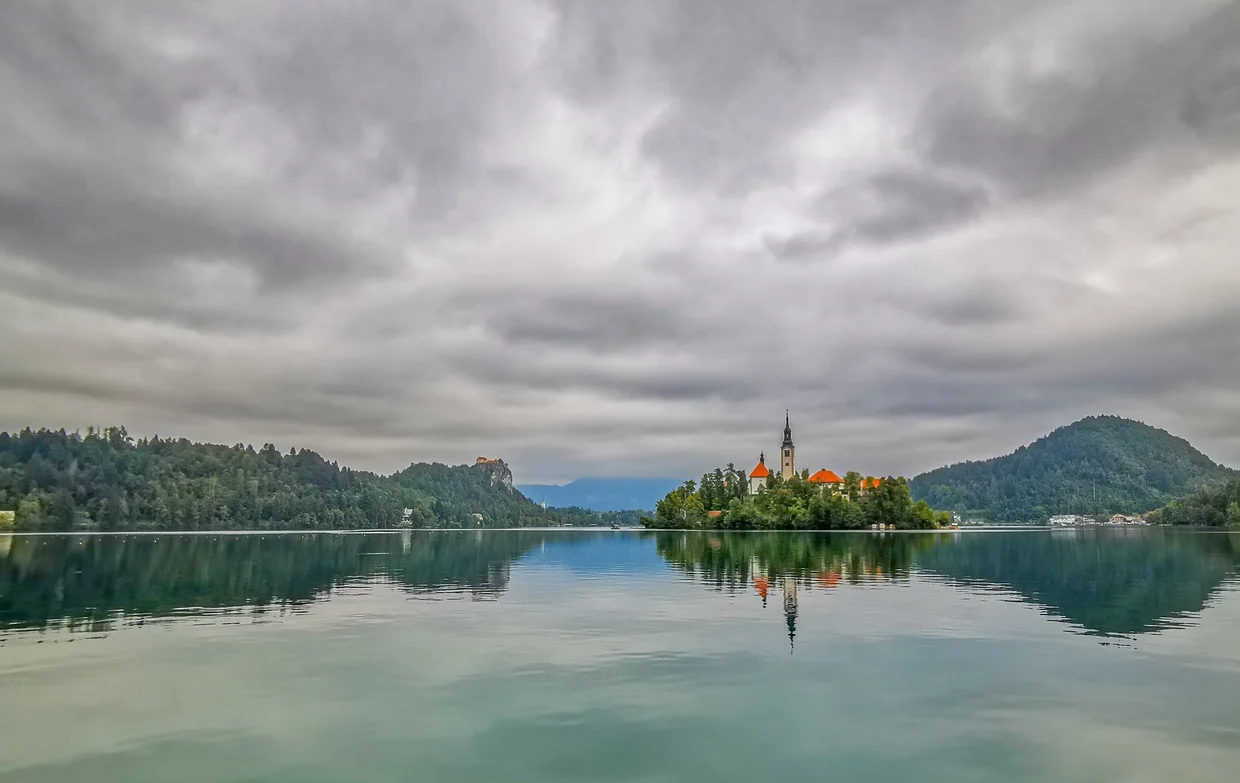
Lake Bled is the country's most photographed sight: a glacial lake with a small baroque church on an island in the middle, a cliff-top castle on one side, and green forested hills all around. From the drone shots you have seen online, it looks magical. On the ground, with average weather and crowds, it is a nice lake with a church in the middle. I am putting this one in the "go if you are already nearby" category rather than the "build a day around it" category. The walk around the lake is pleasant (about 6 kilometres, mostly flat), the pletna boats out to the island are a classic touristy thing to do, and Bled Castle on the cliff has a decent view. Go, take the photo, manage your expectations, and spend the rest of the day at Vintgar or Bohinj, which are both nearby and in my honest opinion more worth the time.
How to Get There
By car about 45 minutes from Ljubljana on the A2 motorway. Frequent trains and buses from Ljubljana, both about an hour.
Notes
- Pletna boat to the island is about 18 EUR return
- Bled Castle entry is around 15 EUR
- Walking loop around the lake is free and takes 1.5 to 2 hours
- Cream cake (kremšnita) is the famous local pastry, fine but not life-changing
- Try to catch it on a calm, clear day for the reflection shot
Metelkova
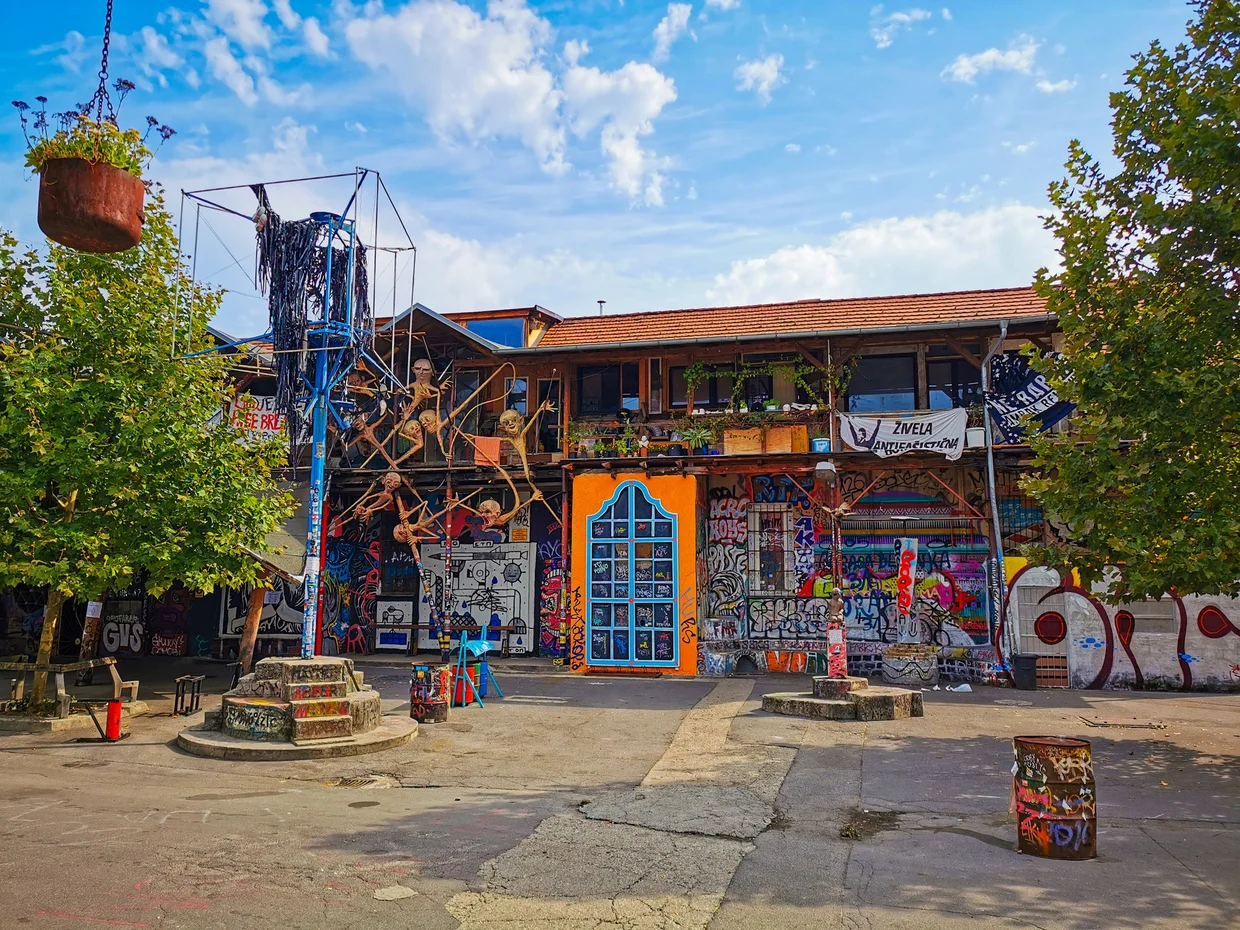
Metelkova is a former Yugoslav army barracks that was squatted in the early 90s and turned into an autonomous cultural centre, and it is now a small block of buildings covered floor to roof in graffiti, sculptures welded out of scrap metal, and painted murals. During the day it is quiet and a little surreal, good for a slow walk and a lot of photos. At night it turns into one of the main alternative nightlife hubs in Ljubljana, with a cluster of clubs and bars hosting everything from punk and metal to electronic and hip-hop. If you want a side of Ljubljana that is not pastel old town, this is the easiest place to find it.
How to Get There
Walk from Ljubljana's main train station or the city centre, both about 10 to 15 minutes on foot.
Notes
- Free to walk around during the day
- Nightlife starts late, mostly Thursday to Saturday
- Photography friendly in the day, respect people at night
- Close to the bus and train station, easy to fit into a longer walk
- Right next door to the Ethnographic Museum if you want to pair it with something
Published April 2026.