Top Things to Do and See in Taiwan
Taiwan packs an absurd amount into a small island. A marble gorge you can walk through, a stained glass ceiling inside a metro station, coral beaches on the southern tip, lantern lit hill towns that look straight out of a Ghibli film, and some of the world's most inventive modern architecture along a rebuilt harbor. This is the short list: the places that genuinely make Taiwan feel like Taiwan.
The prices shown here are meant as a rough guide and can vary over time. While I update exchange rates regularly, local prices are typically refreshed only when I revisit the destination.
Taroko Gorge
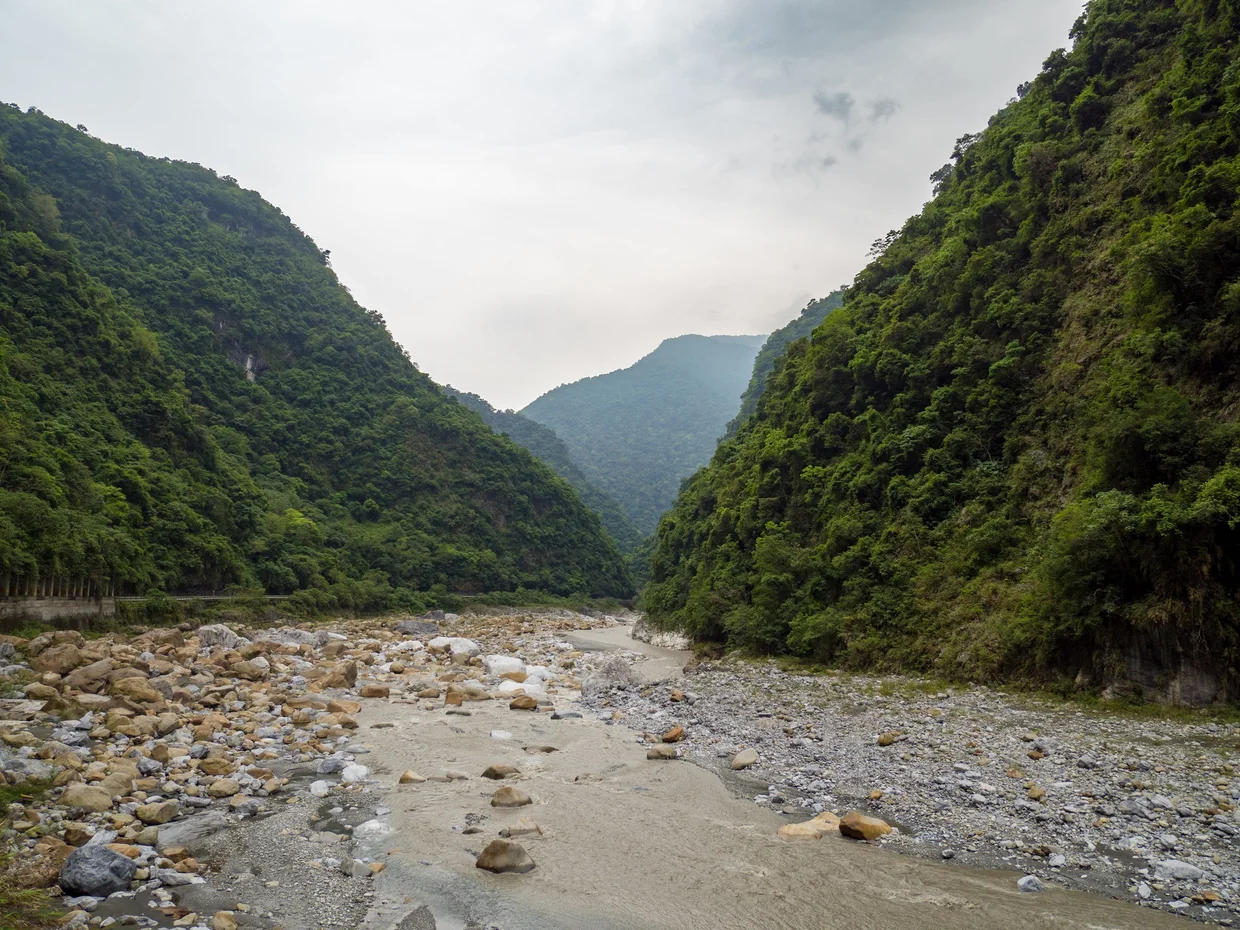
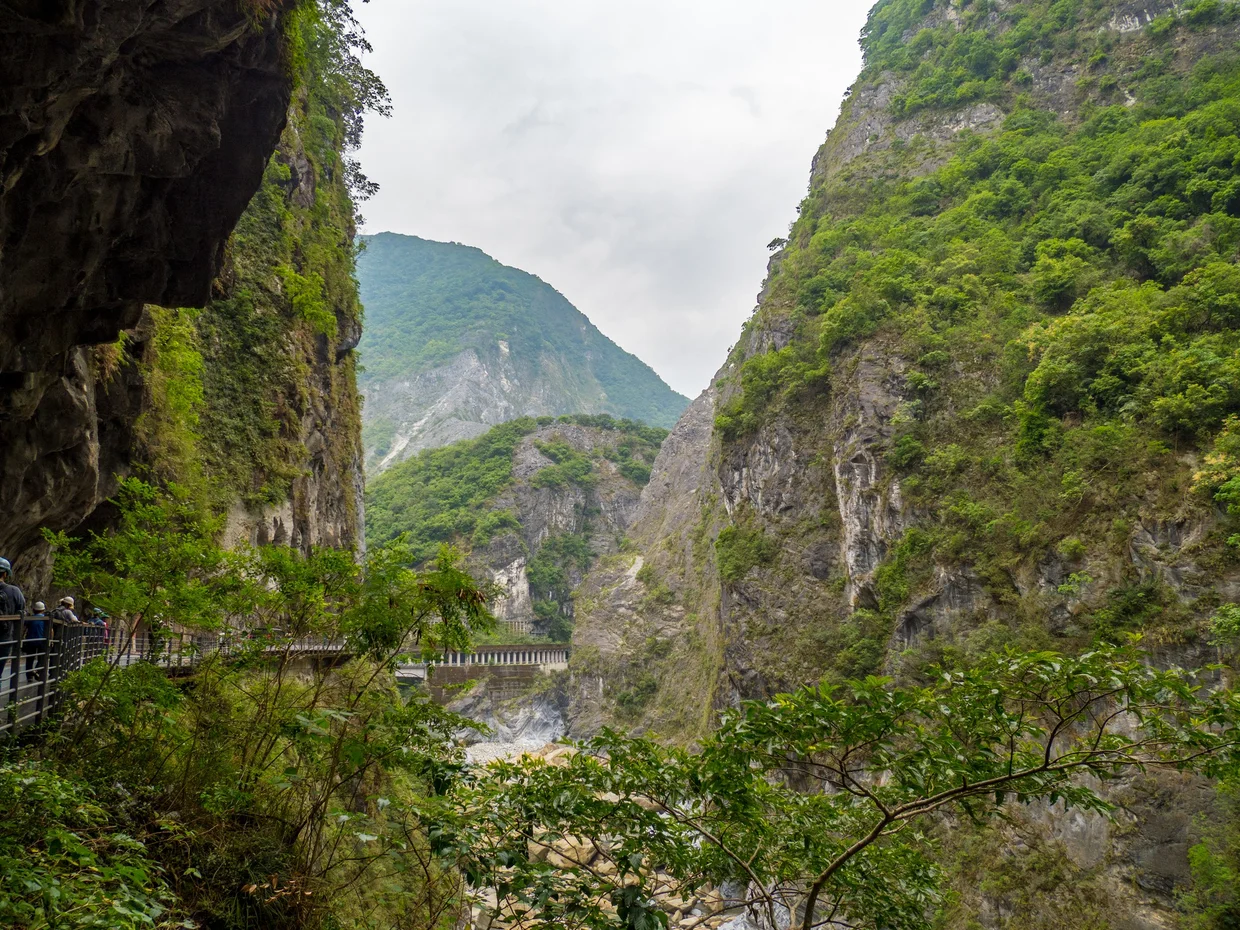
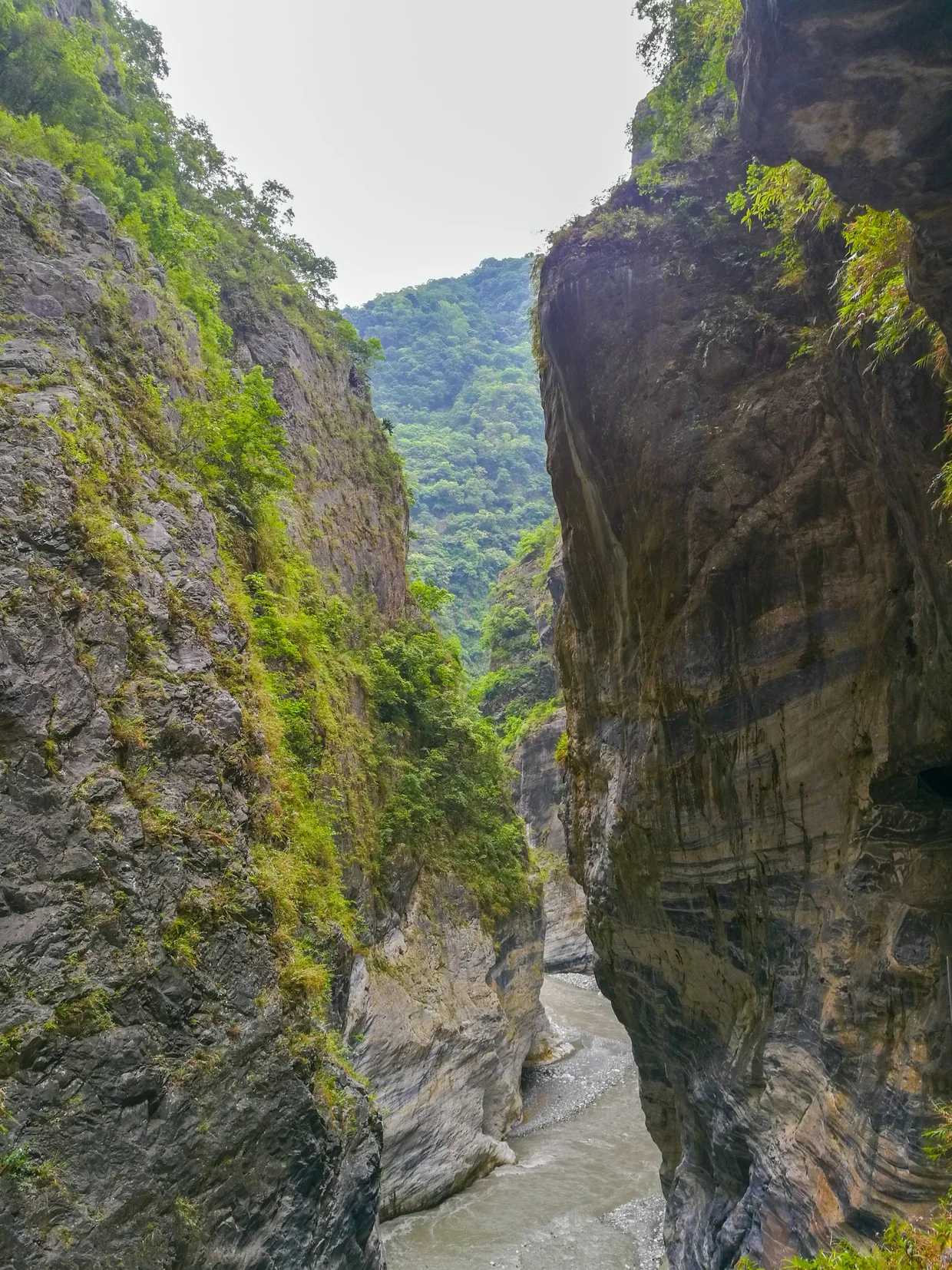
If you only do one thing in Taiwan outside the cities, make it Taroko. A marble canyon on the east coast, carved by the Liwu River over millions of years into a narrow, high walled, jade green river gorge with walls striped in white and grey. The road tunnels through solid rock in places and hangs off the cliff edge in others. You can drive it, bus it, cycle it, or walk stretches of the old highway and the Shakadang Trail. The scale is hard to grasp until you're standing underneath 500 meters of sheer marble. Taroko has been hit by major earthquakes and sections close and reopen on a rolling basis. Check the park website before you go. Even with restrictions, it's one of the most impressive natural landscapes in Asia.
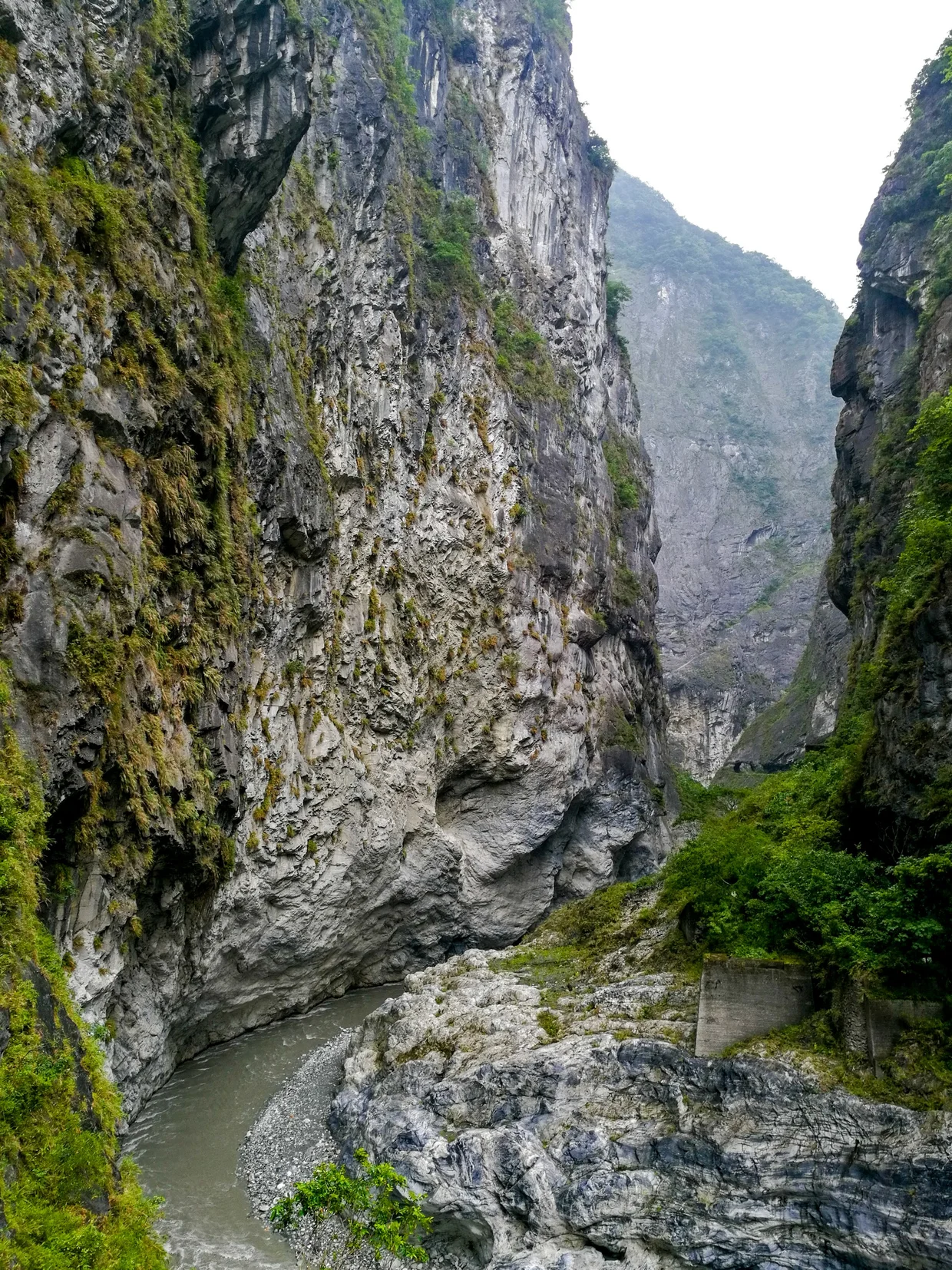
How to Get There
The park entrance is a few minutes by bus or taxi from Xincheng train station. Most visitors base themselves in Hualien (20 minutes south) or in Xincheng itself. Taipei to Hualien is 2-3 hours on the TRA express trains, which sell out for weekends. Inside the park, the Taroko Bus (shuttle) hits the main stops. Renting a scooter or hiring a driver gives you more flexibility.
Notes
- Entry to the park is free; some specific trails require permits
- The main gorge sights (Shakadang, Eternal Spring, Swallow Grotto) are the essential loop
- Check taroko.gov.tw for current trail and road closures
- A hard hat is required for some trails due to rockfall; free to borrow at visitor center
- Weekends and Taiwanese holidays get busy; weekdays are dramatically quieter
Eternal Spring Shrine
This is the postcard moment of Taroko. A small memorial pavilion built directly over a waterfall on the cliffside of the Liwu gorge, dedicated to the 226 workers who died building the Central Cross Island Highway through these mountains in the 1950s. It's the first big "wait, what" moment on the drive into the park. The classic view is from across the valley: the shrine clinging to the rock face, the waterfall pouring through its base, marble cliffs rising behind it. There's also a trail up to the shrine itself and a small tunnel/suspension bridge system that lets you see it from multiple angles. The area has been affected by earthquake damage and closes periodically. Check current access before you go.
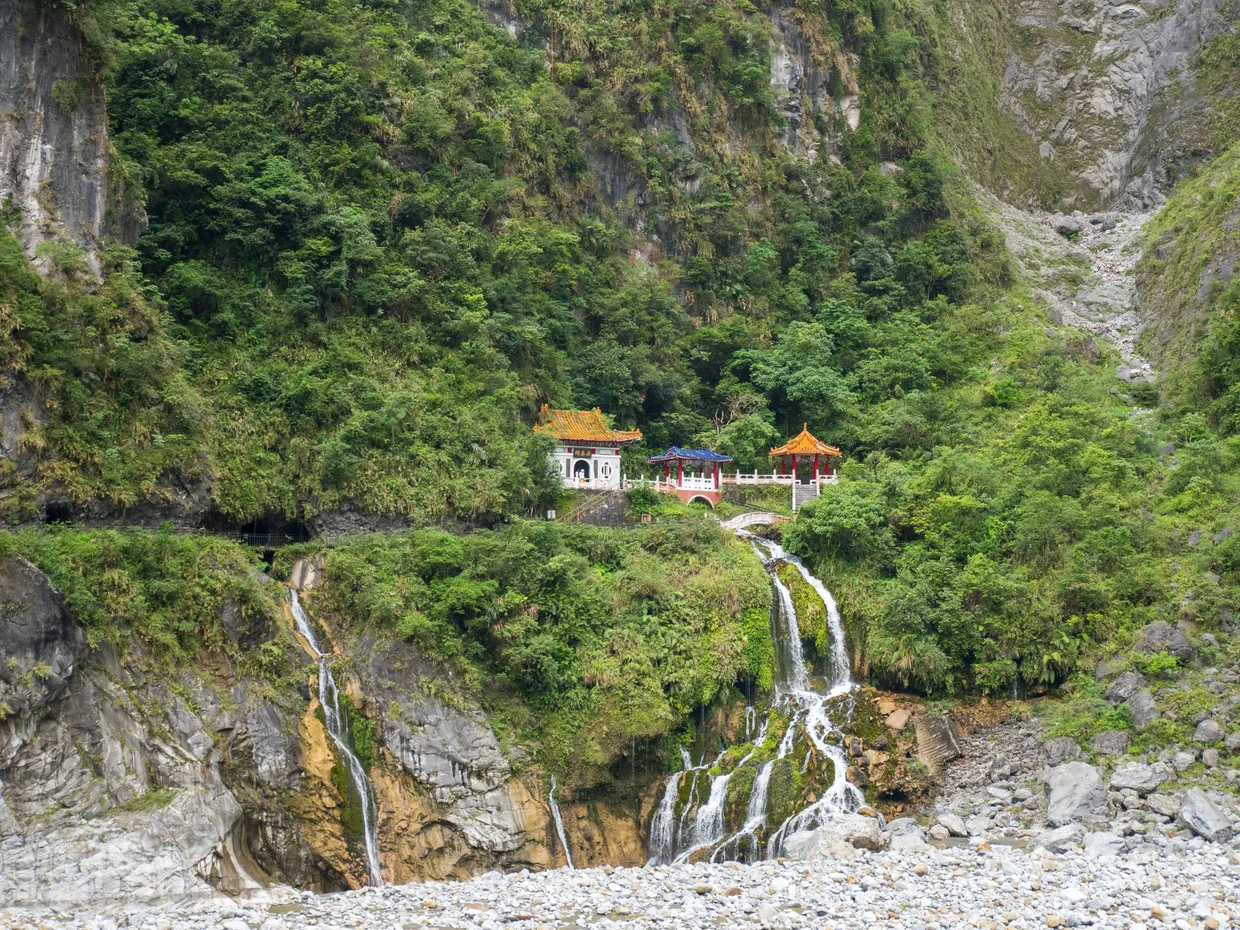
How to Get There
About 3 km into Taroko National Park from the main gate, along the main Central Cross Island Highway. Stop at the designated viewpoint (clearly marked). Taroko shuttle buses stop here. Any park tour, scooter, or rental car will include it on the main loop.
Notes
- The best photo is from the viewing platform across the valley
- Morning light hits the shrine front; afternoon light backlights the waterfall
- The upper trails are sometimes closed due to rockfall
- Combine with the nearby Eternal Spring Pavilion and the Changchun Trail
Taipei 101 and Xinyi District
Taipei 101 was the tallest building in the world from 2004 to 2010, and it's still one of the most recognizable skyscrapers in Asia. The bamboo inspired silhouette, with eight stacked segments (eight is the lucky number), looks better in person than in photos. The observatory on the 89th floor gives you a panoramic view of the city and the famous 660 ton tuned mass damper, a bronze sphere that keeps the building from swaying in typhoons. But the best view of Taipei 101 isn't from inside it. It's from Elephant Mountain, a short but steep hike that starts right at Xiangshan MRT station. Go at sunset. The tower lights up in blue at night, and the whole Xinyi district sparkles below. Xinyi itself is Taipei's modern commercial heart: designer malls, public plazas with red dog sculptures, and weekend shopping crowds.
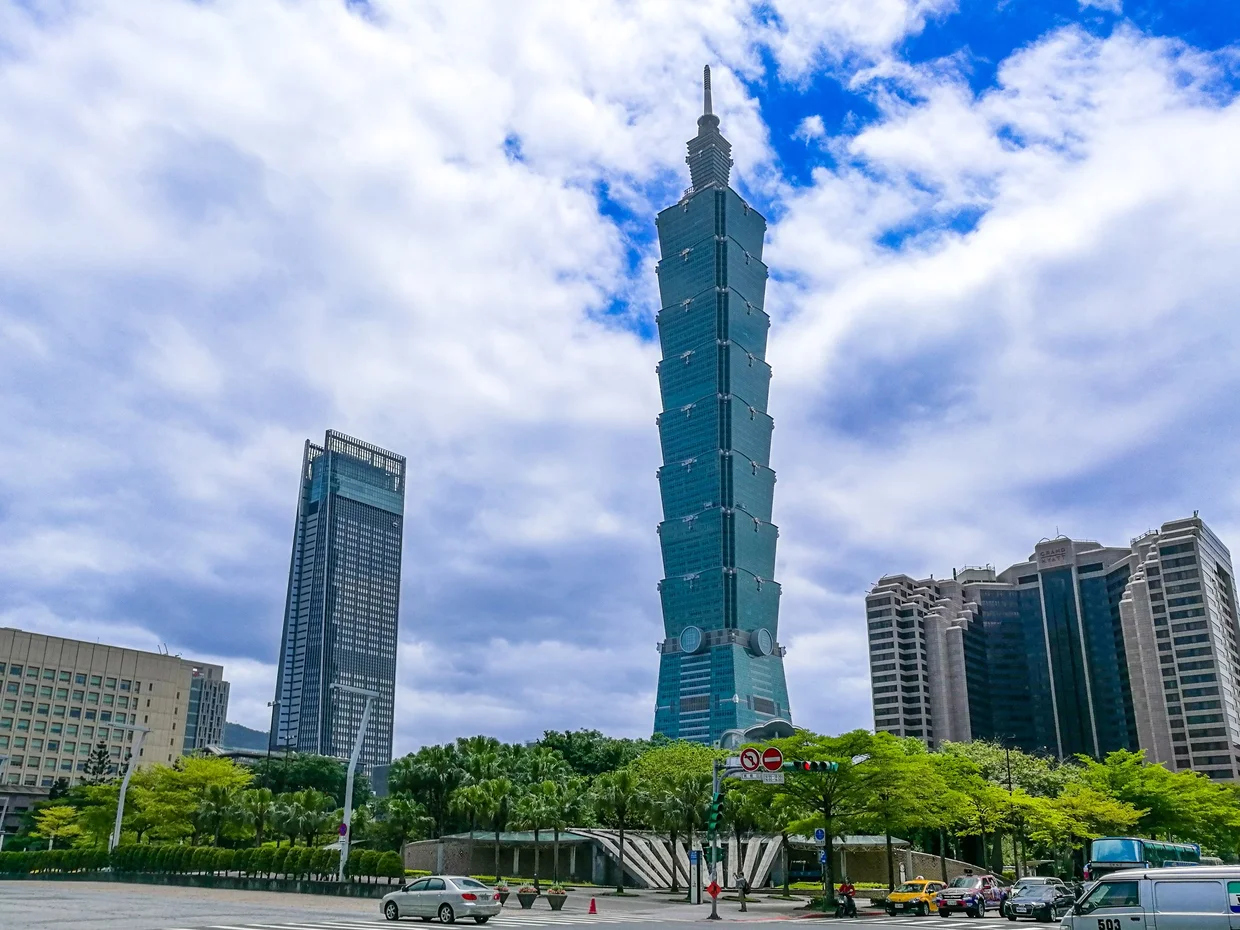
How to Get There
Taipei 101/World Trade Center MRT station (Red Line) sits directly under the tower. For Elephant Mountain, take the MRT one stop further to Xiangshan. The trail starts 5 minutes from the station and the main viewpoint is a 15-20 minute climb.
Notes
- The observation deck ticket is 600 TWD for the main deck, 900 TWD including the outdoor skyline deck
- Elephant Mountain is free and has better views of Taipei 101 itself
- The tower lights up at night with a nightly show on New Year's Eve (one of Asia's biggest fireworks events)
- The mall at the base has a world class food court for a cheap, easy meal
Dome of Light (Formosa Boulevard Station)
The largest glass artwork in the world, and it's inside a subway station. Formosa Boulevard station sits at the intersection of Kaohsiung's two main MRT lines, and its central concourse is covered by a 30 meter wide stained glass dome created by Italian artist Narcissus Quagliata. The four quadrants represent water, earth, light, and fire, and the whole thing took 4.5 years to install using 4,500 hand crafted glass panels. It's free to visit. You just walk in. CNN once named it one of the 14 most beautiful subway stations in the world, and it's the only one on that list that Taiwan casually tossed together as public transit infrastructure. Go at one of the scheduled light show times (posted at the station) when the dome runs through a six minute sequence of changing colors set to music.
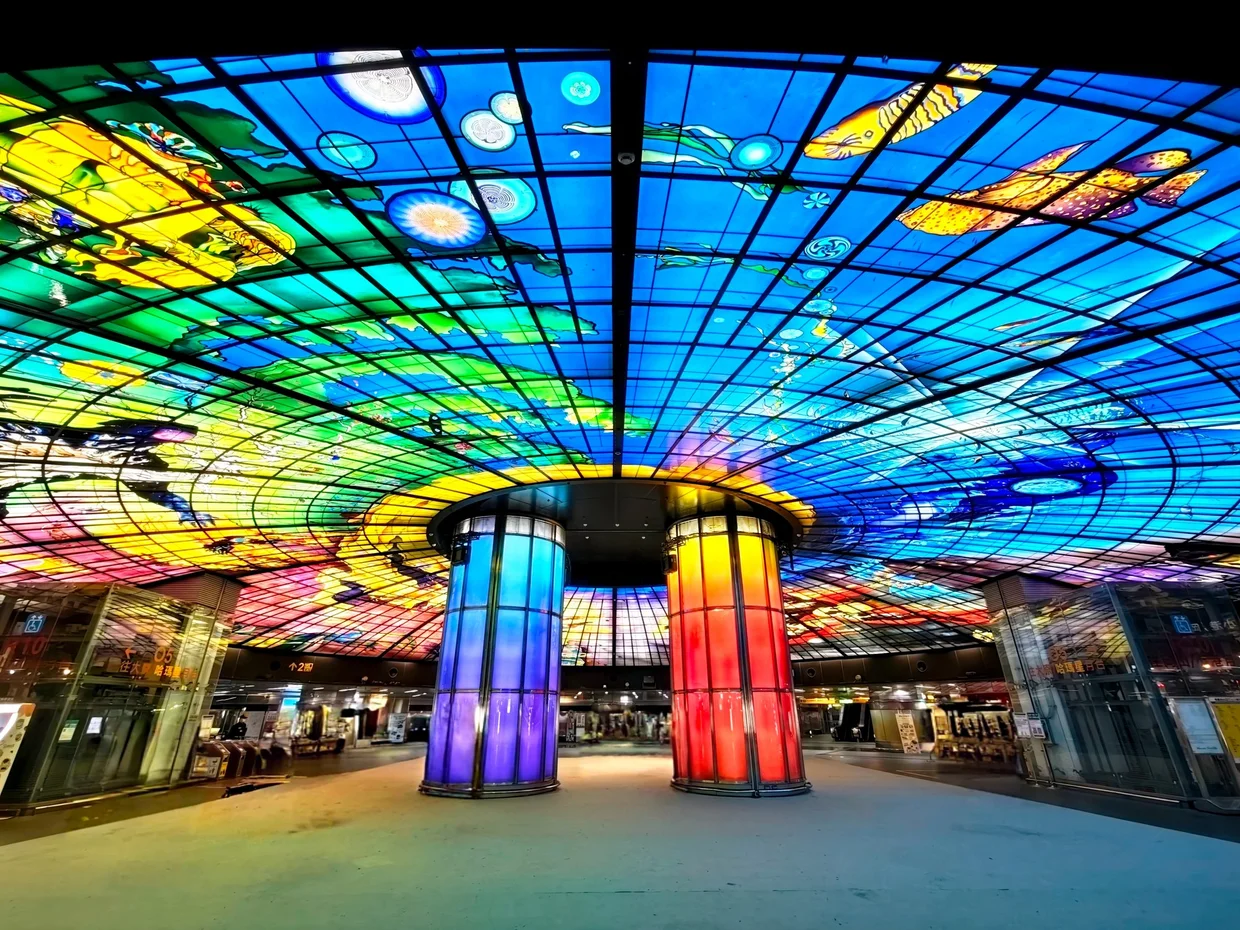
How to Get There
Formosa Boulevard MRT station in central Kaohsiung, at the intersection of the Red and Orange lines. Can't miss it: the station itself is the attraction. Easy to reach from anywhere in Kaohsiung in under 15 minutes by MRT.
Notes
- Light shows usually run at 11:00, 15:00, 18:00 and 20:00; check current times on arrival
- Free to enter even without an MRT ticket if you're just visiting the dome
- The best shot is from the center of the concourse looking up
- Nearby Liuhe Night Market starts a short walk away, good pairing for a night visit
Pier-2 Art Center
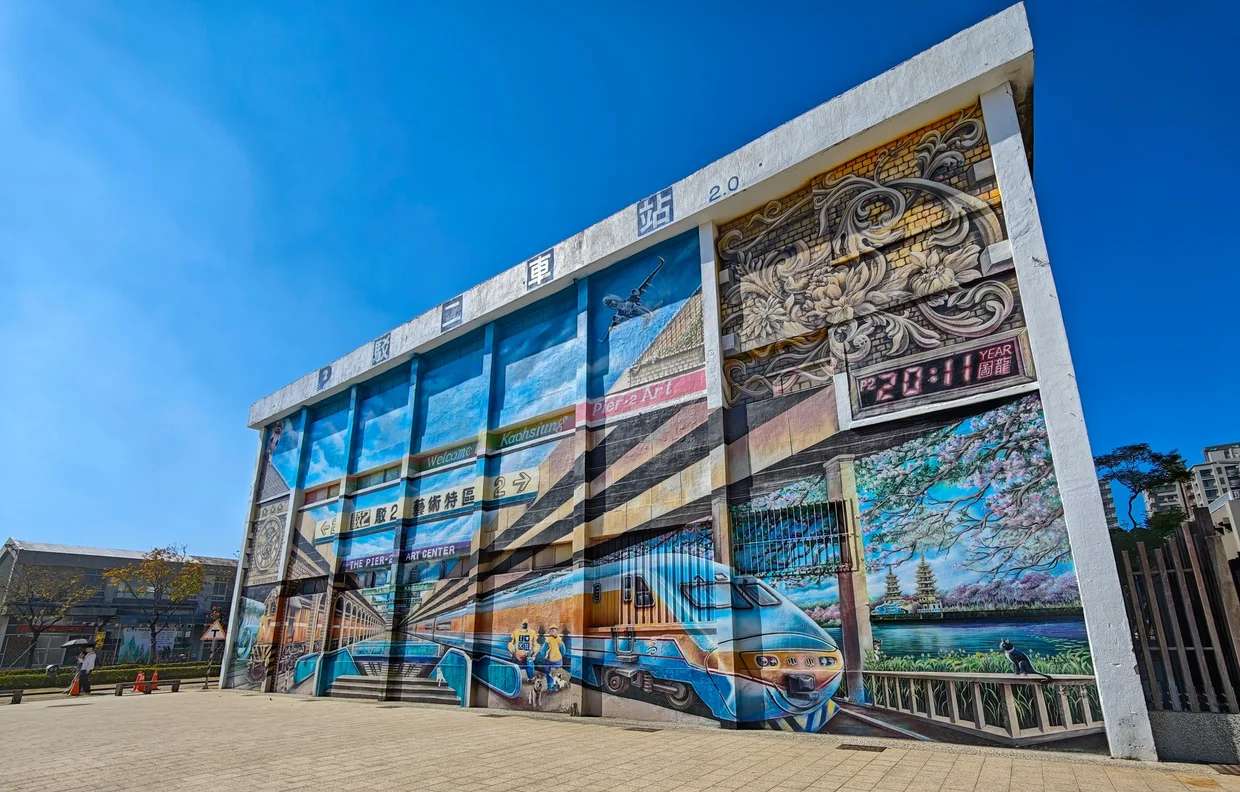
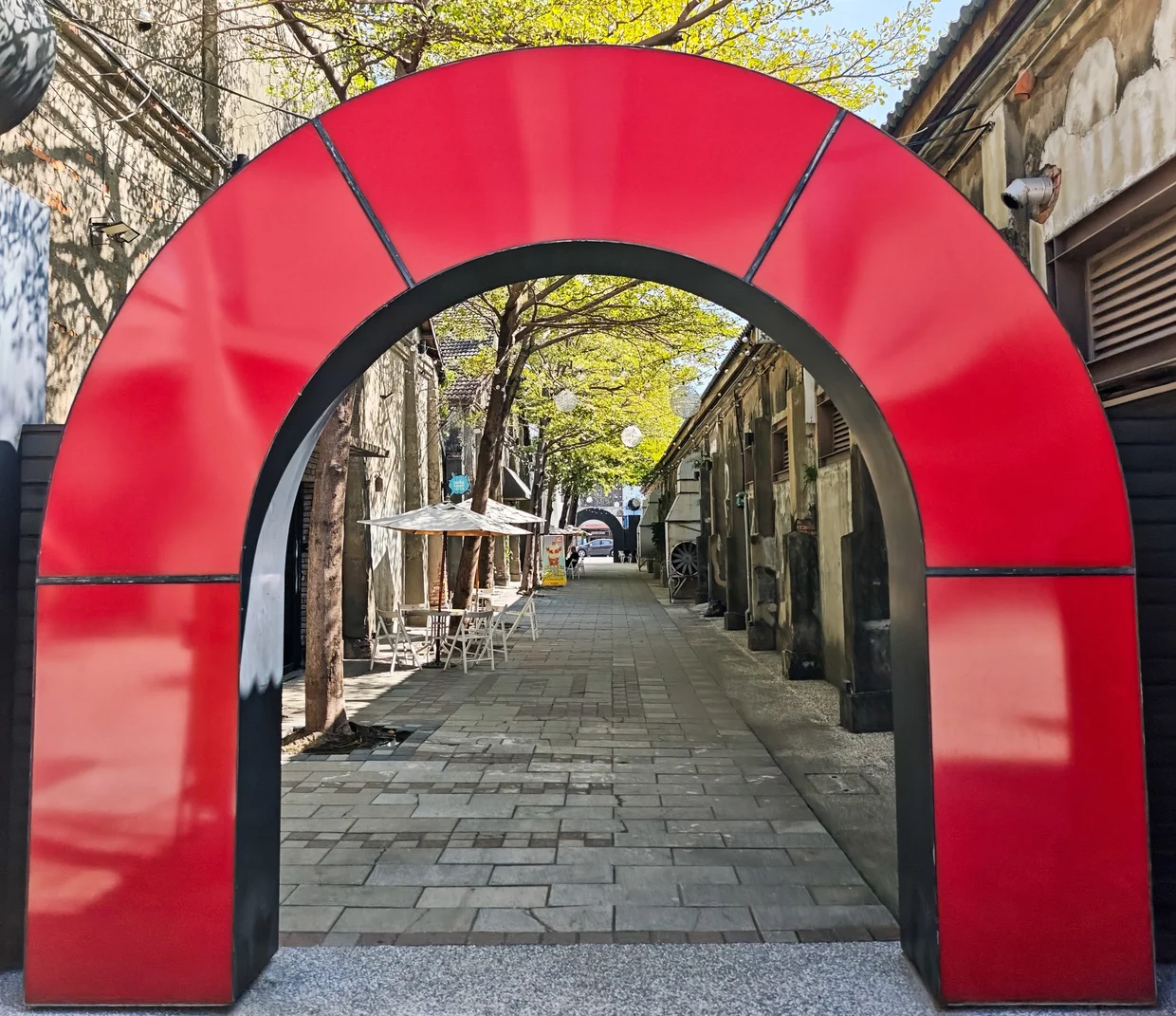
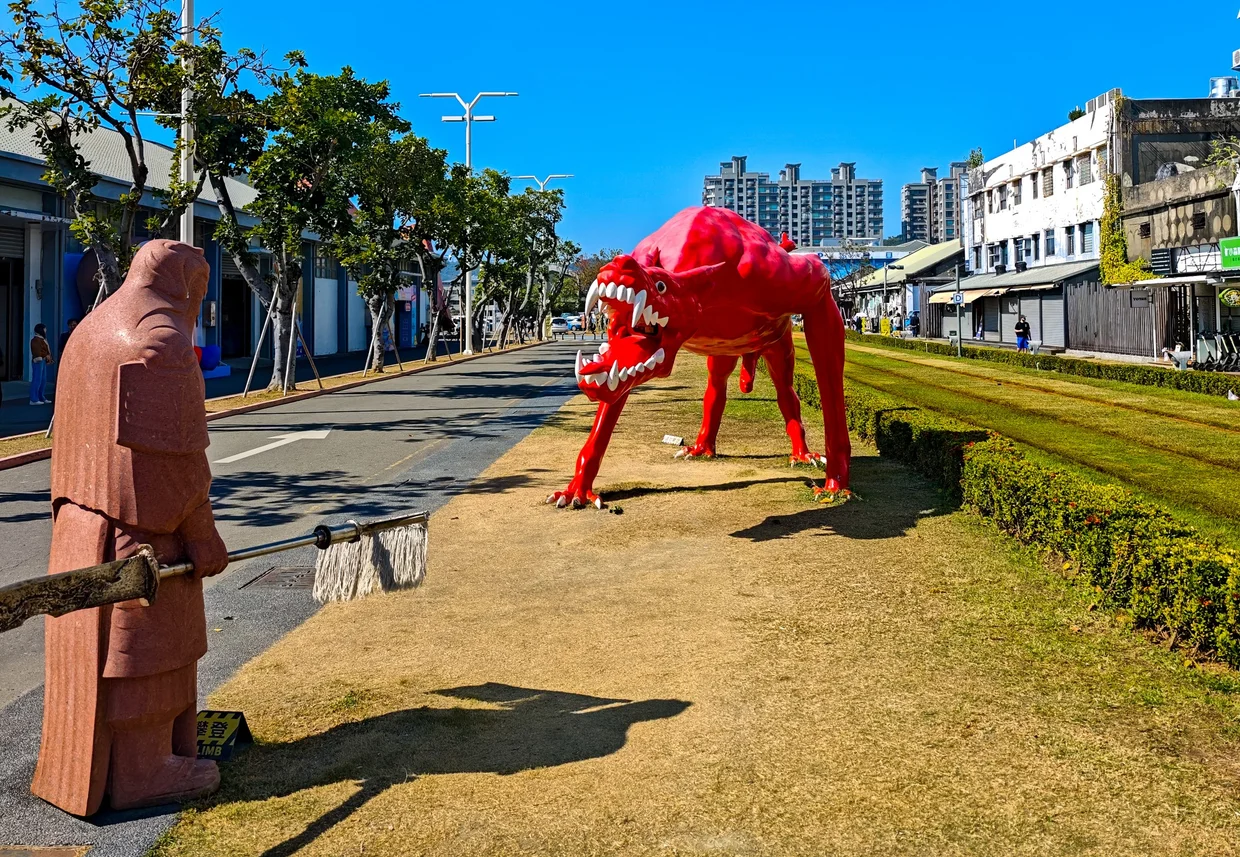
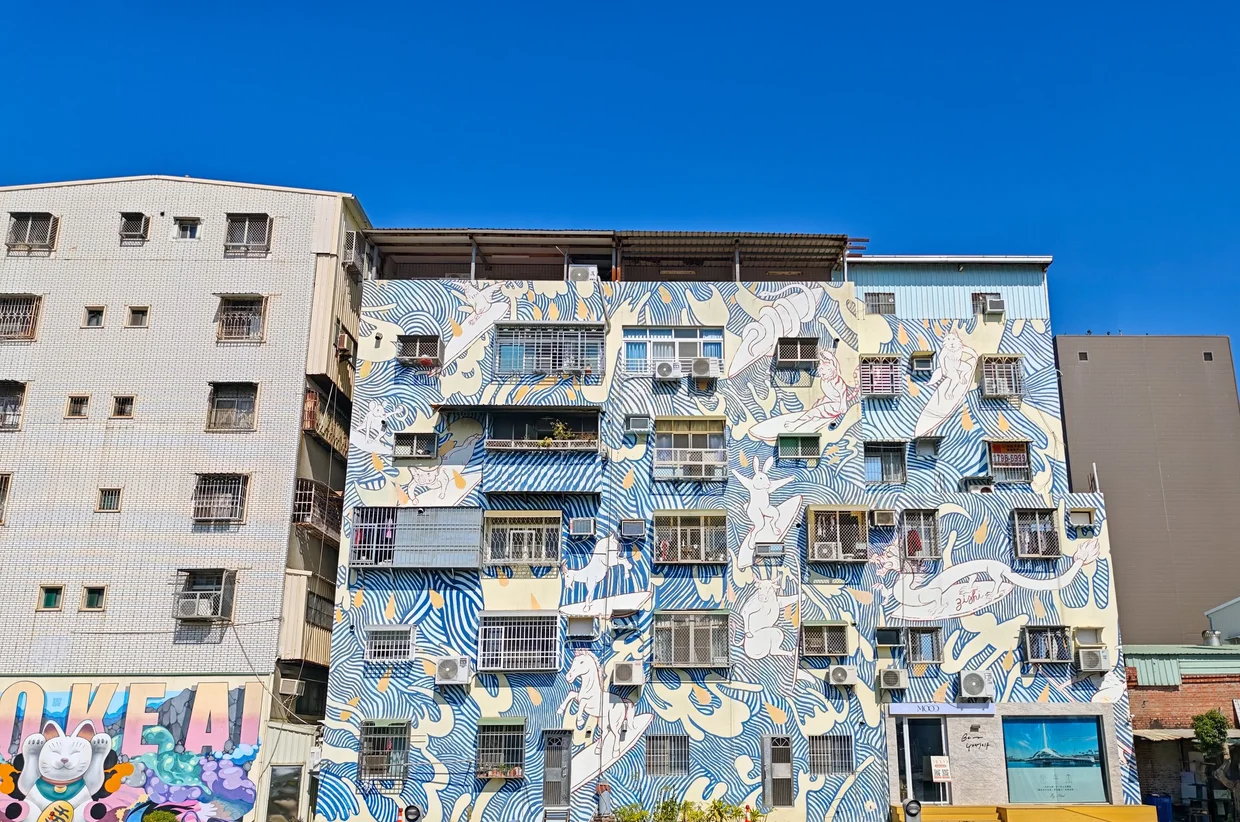
A cluster of old harbor warehouses on the Kaohsiung waterfront, converted in the early 2000s into one of Asia's liveliest arts districts. Pier-2 runs along the harbor next to the light rail, and it's genuinely walkable: galleries in old storage sheds, public sculpture in every courtyard, independent shops, cafes, and a painted apartment building that stops you in the street. The scale is the thing. You can spend half a day wandering, stop for coffee, see a gallery show, walk across the harbor bridge, and still feel like you missed things. Kaohsiung's Songshan, except larger, harbor adjacent, and somehow more creative. On a nice evening it's one of the best places to be in southern Taiwan.
How to Get There
Take the Kaohsiung light rail (LRT) to Hamasen or Penglai Pier-2 station; the district is directly at the stops. From Formosa Boulevard MRT, it's 10-15 minutes via the light rail. Walkable from the main Kaohsiung ferry terminal and from Yancheng district.
Notes
- The district is free to walk; individual galleries may charge small fees
- Weekends get livelier with markets and performances
- Combine with the Great Harbor Bridge walk and the Music Center across the bay
- The painted apartment mural (the "colorful building") is a popular photo stop
Kaohsiung Music Center and Harbor Bridge
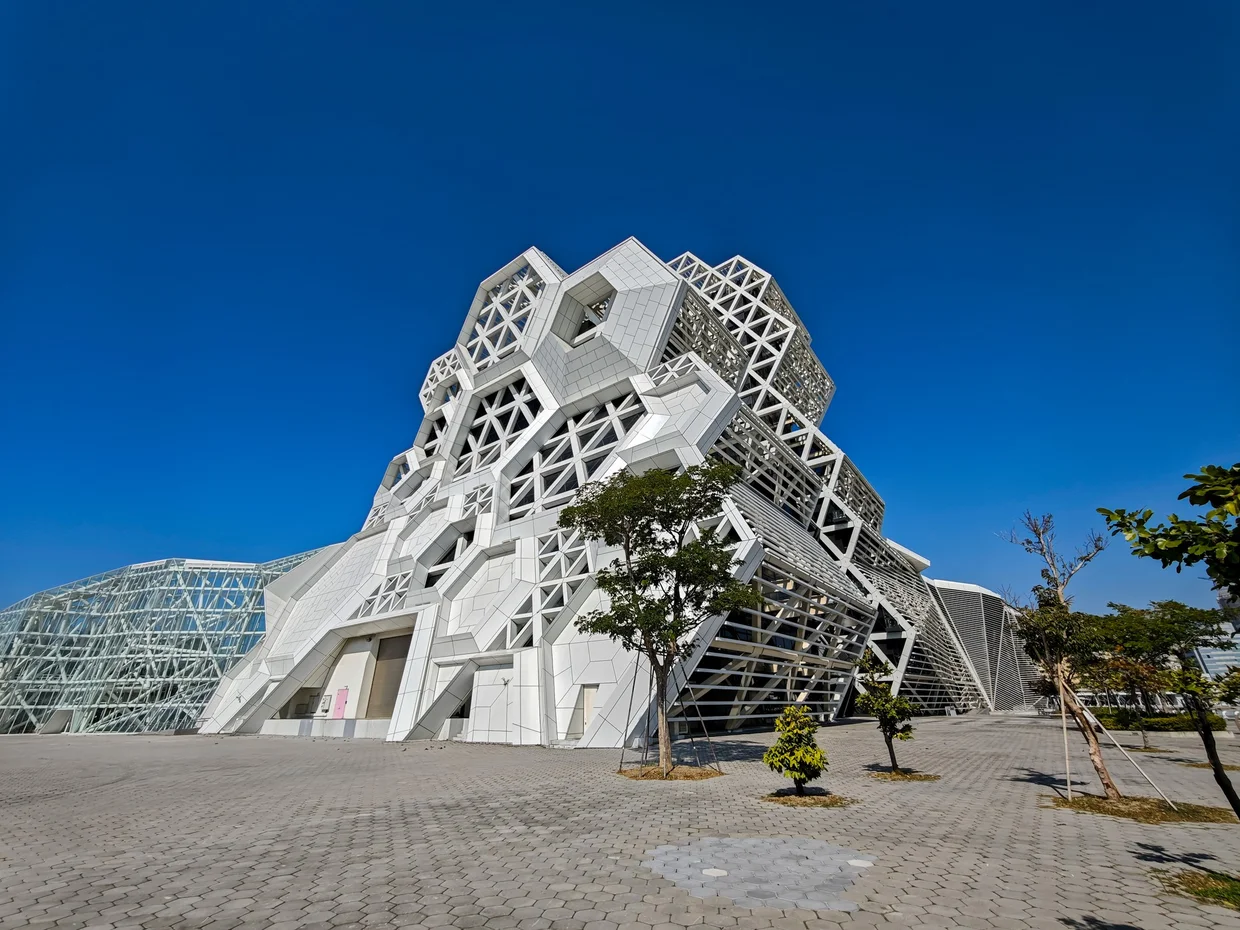
The Kaohsiung Music Center is the kind of building that makes you pull out your phone before your brain has caught up. A series of curving, fluted white concrete volumes on the harbor, designed by Spanish firm Manuel Álvarez-Monteserín Lahoz, opened in 2021, and lit up in changing colors every night. It looks like concrete waves freezing mid break. Seen from across the bay, lit pink after dark with the skyline behind it and the water reflecting everything, it's one of the most photogenic pieces of architecture in Asia. Pair it with a walk across the Great Harbor Bridge nearby, a sleek white pedestrian bridge that curves over the water and gives you the best shot of the whole harbor redevelopment. Evening is the right time for both.
How to Get There
Take the Kaohsiung light rail (LRT) to the "Kaohsiung Music Center" stop (Cianzhen Star station area). Walkable from Pier-2 via the Great Harbor Bridge. About 20 minutes from Formosa Boulevard MRT by light rail.
Notes
- The exterior and public spaces are free to explore day or night
- Performances (concerts, shows) happen in the main concert halls; check the current program
- Best photos are at blue hour (right after sunset) from across the harbor
- The Great Harbor Bridge connects the Music Center side to Pier-2; walkable in 15-20 minutes
Longpan Park
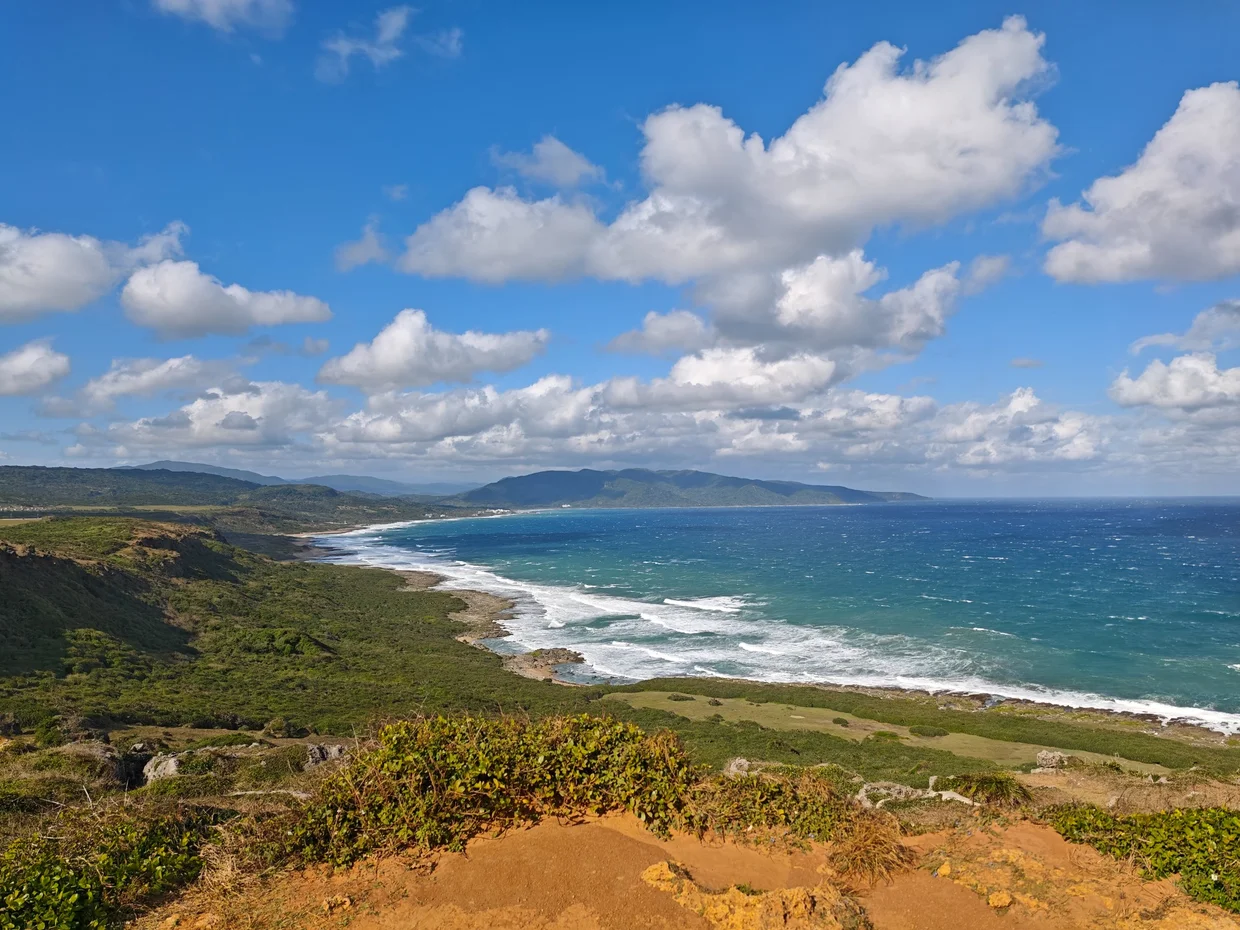
This is the best coastal landscape in Taiwan, and most people have never heard of it. A series of grassy bluffs on the eastern edge of Kenting National Park, where the land plunges from 100 plus meters down to the Pacific. No guardrails, no ticket booth, no crowds. You walk out across the grass, find a spot near the edge (at your own pace, please), and the ocean just opens up below you. The bluffs are uplifted coral reef, still technically moving. The wind hits you from every direction. Sunrise here is legendary. Sunset is quieter but beautiful. On a clear day you can see down the entire eastern Kenting coast. Budget an hour minimum; you'll probably end up staying longer.
How to Get There
In the far southeast of Kenting National Park. From Hengchun town, about 25-30 minutes by scooter via Route 200 or the main Route 26 coast road. There's a small car park at the entrance; scooter parking is right at the grass. No public bus goes directly to the park; the Kenting Street Bus gets you partway.
Notes
- No fences, no warnings; stay back from the edge and watch for wind gusts
- Wind can be strong year round; hats fly off regularly here
- Combine with the east coast loop through Jialeshui and Shadao
- Sunrise is the golden hour if you can manage the early start
Nanwan Beach (South Bay)
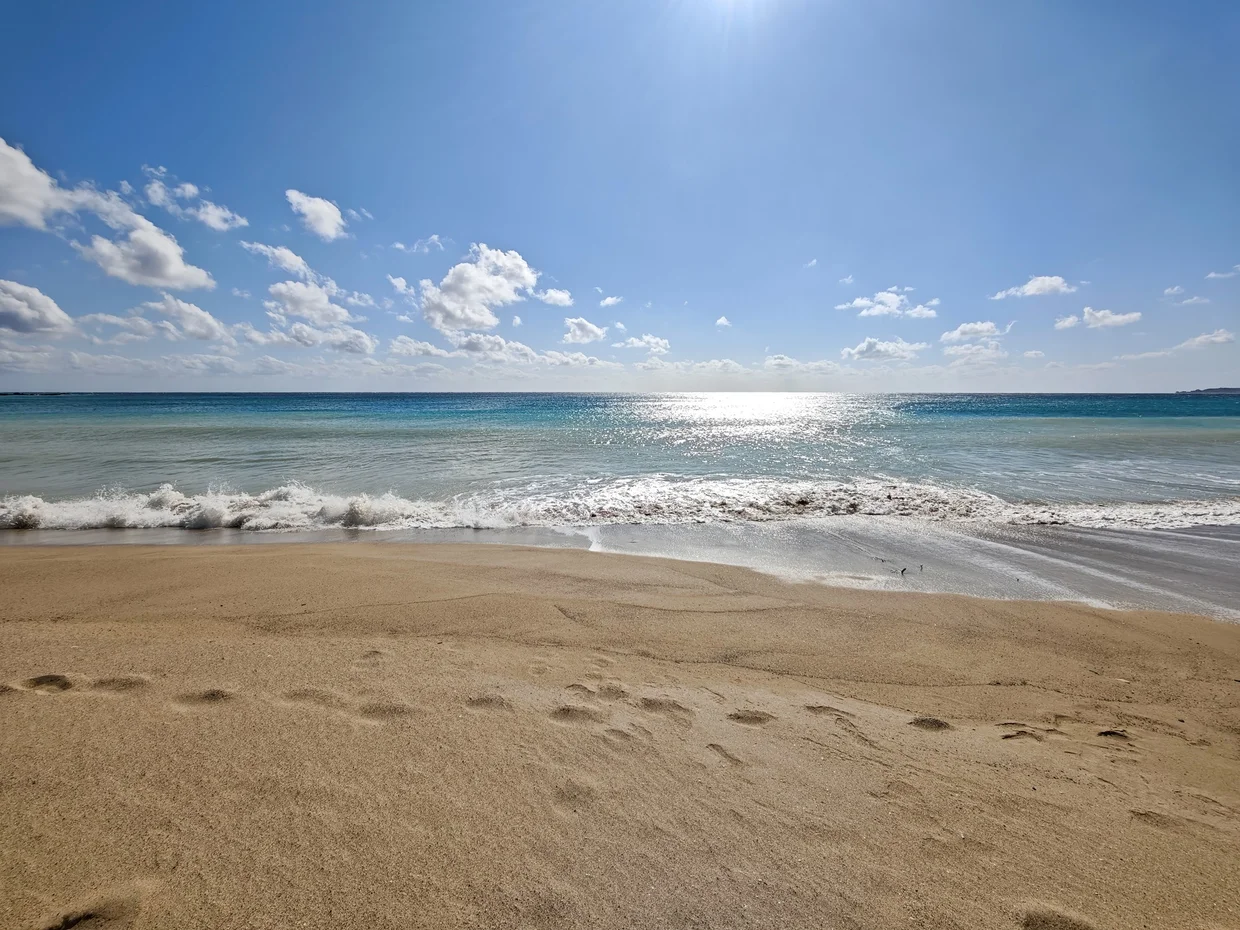
Nanwan, meaning South Bay, is the main swimming beach in Kenting National Park. A clean crescent of coral sand, water that genuinely looks like a postcard, decent surf on the right days, and enough space that even in peak summer you can find a quiet corner. This is what most people mean when they talk about "tropical Taiwan": warm water almost year round, coconut palms, sunburn if you're careless. Rental shops along the beach road handle stand up paddleboards, boogie boards, and sun umbrellas. On a weekday in shoulder season, you can practically have the place to yourself.
How to Get There
On the southwestern side of the Kenting peninsula, about 15 minutes by scooter from Hengchun town along Route 26. The Kenting Street Bus stops nearby. Free scooter parking, paid car parking at the entry.
Notes
- Lifeguards in summer; water can have currents, especially after storms
- Water quality is good but rain runoff affects it briefly after heavy storms
- Best months are October to April for quieter beaches; May-September is busy and typhoon prone
- Small shops, toilets, and rentals at the main entry; food trucks park nearby
Maobitou Coast
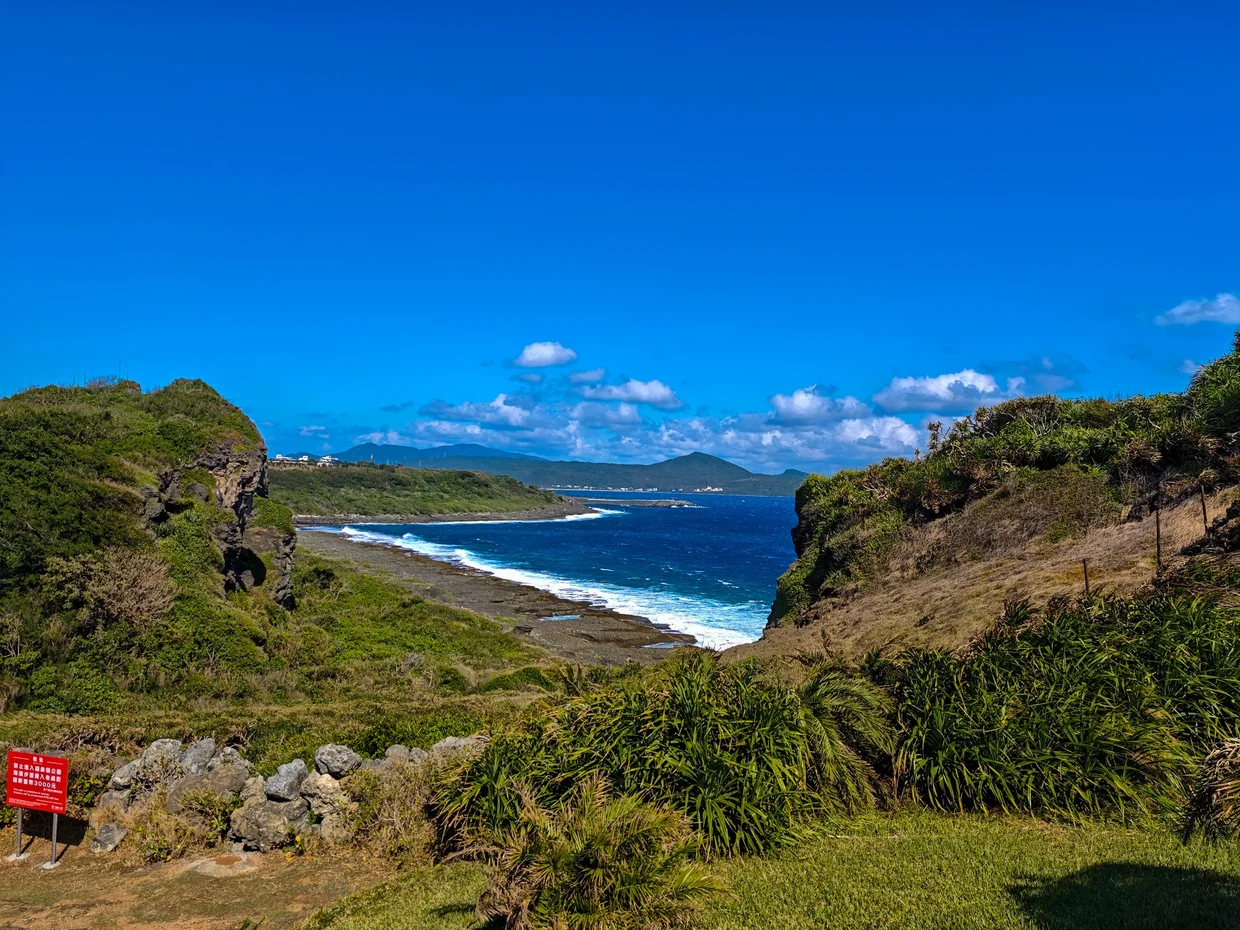
Maobitou, meaning "cat nose head," is the southwestern tip of the Kenting peninsula, a headland of raised coral reef that drops into the Pacific in a series of pale cliffs and sea stacks. The name comes from a rock formation that supposedly looks like a cat's face; I couldn't quite see it, but the view is the view. A small paved walkway leads out to the viewing deck and down to lower viewpoints. The water directly below is an unreal bright blue, the rock shelf is full of tidepools, and on a clear day you can see all the way across the Bashi Channel toward the Philippines. Combine it with the lighthouse at Eluanbi at the southern tip and the rest of the Kenting coast loop.
How to Get There
Southwestern corner of Kenting National Park. About 20 minutes by scooter from Hengchun town via the Route 26 coast road, then a turnoff toward the headland. Car parking at the entrance. Kenting Street Bus route covers the area in summer.
Notes
- Small entrance fee (30 TWD) for park maintenance
- Paved walkway with railings; accessible for most fitness levels
- Wind can be very strong; sun is intense year round
- Pairs well with the Eluanbi lighthouse and the southern Kenting coast
- Best light is mid morning or late afternoon
Gold Waterfall and Jinguashi
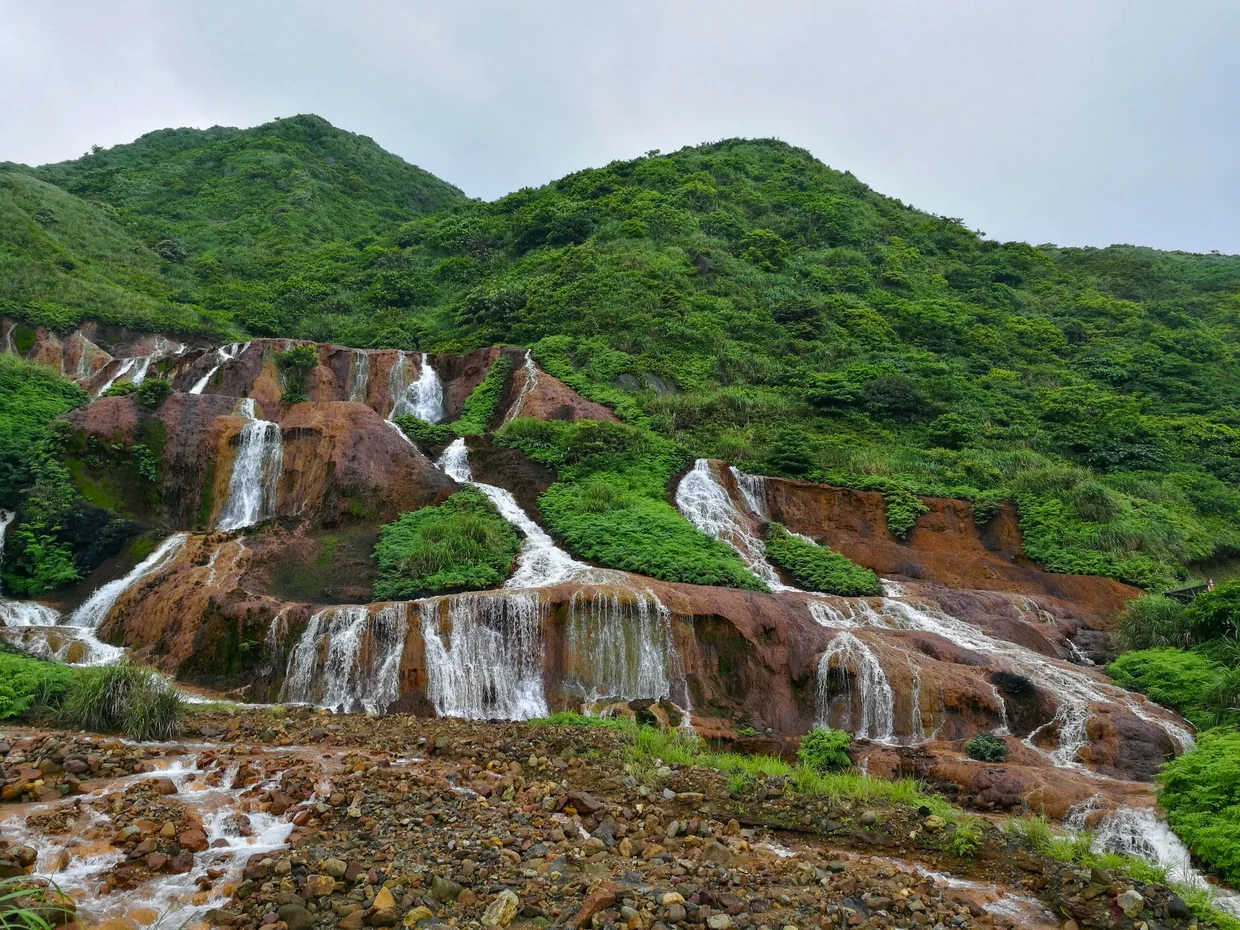
The Gold Waterfall sits just outside Jinguashi, an old gold and copper mining town on Taiwan's northeast coast. The water tumbles down a green hillside in rust orange terraces, stained by copper and iron minerals from the old mines upstream. It's small by waterfall standards, but the color is unlike anything else: a full spectrum of ochre, red, and iron oxide yellow. The surrounding area adds more weirdness: the Yin Yang Sea, where runoff from the mines tints part of the bay a completely different color from the open ocean, and the abandoned smelter ruins clinging to the coast. Combine all of this with Jiufen next door for a solid northeast coast day trip from Taipei.
How to Get There
About 45 minutes to 1 hour by car northeast of Taipei. Take National Highway 1 or local routes through Ruifang. Public transport involves taking the TRA train from Taipei to Ruifang and then a local bus toward Jinguashi. Many day tours from Taipei combine this with Jiufen and the northeast coast.
Notes
- Free to visit; small parking lot at the viewpoint
- Don't swim or drink; the water is heavily mineralized and not potable
- Drives pair well with Jiufen (15 minutes away) and the northeast coastal road
- Best light is morning; the colors pop more with sun
Liberty Square and Chiang Kai-shek Memorial
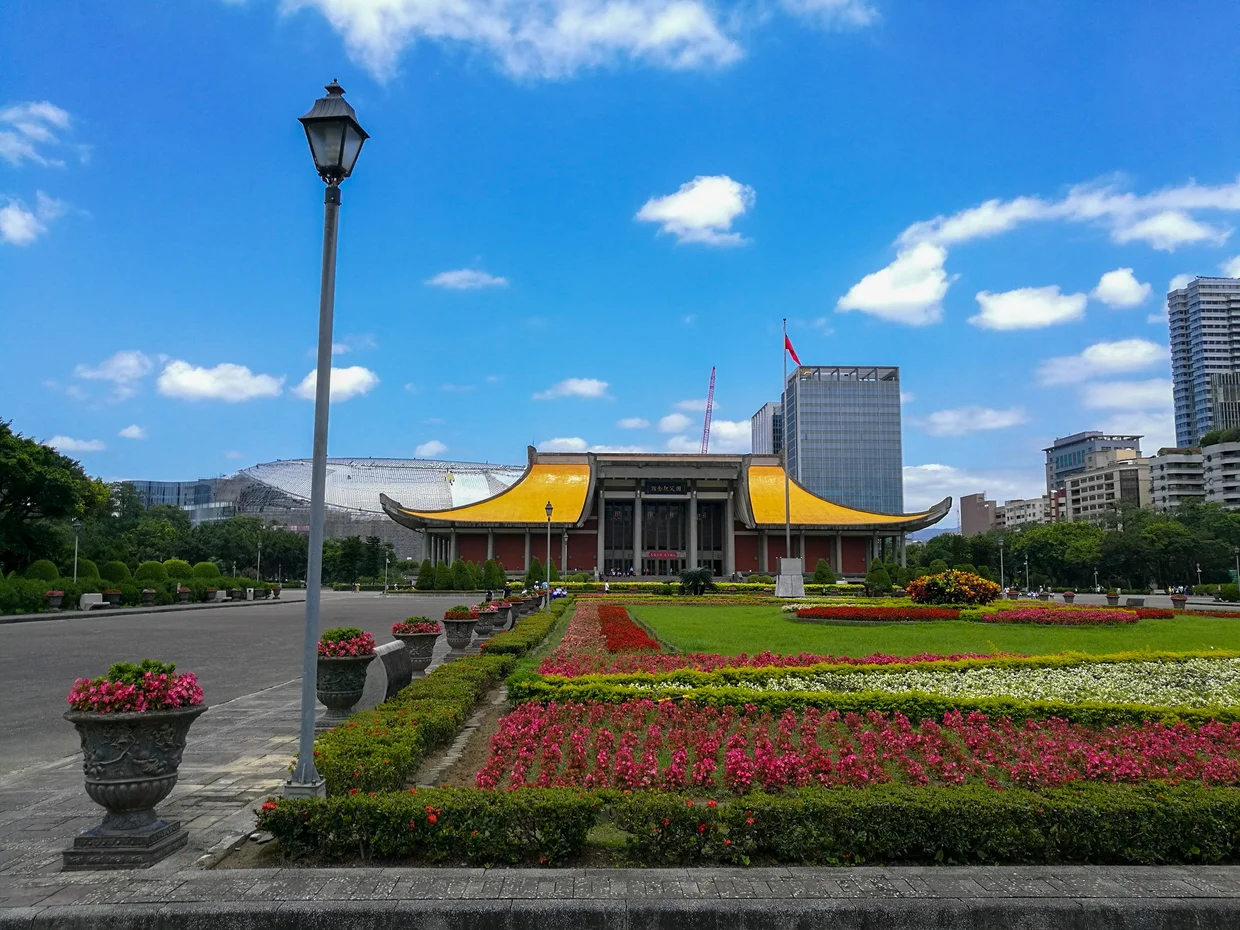
Liberty Square is the formal, ceremonial heart of Taipei. A huge open plaza flanked by two mirrored Chinese style buildings (the National Concert Hall and the National Theater), with Chiang Kai-shek Memorial Hall anchoring one end and a massive blue tiled gateway at the other. The plaza is built at imperial scale: wide, symmetrical, and empty enough that you can feel the city drop away for a few minutes. The memorial hall itself contains a museum on Taiwan's modern history, and a changing of the guard ceremony happens every hour on the hour, precisely choreographed. The architecture, the ceremony, and the scale are all quietly striking. Morning visits with better light are recommended. Combine with the nearby National Taiwan Museum or a walk through the 228 Peace Memorial Park.
How to Get There
Chiang Kai-shek Memorial Hall MRT station (Red and Green lines) sits directly at the plaza. Exit 5 leads straight to the main gate. About 10 minutes from Taipei Main Station by MRT.
Notes
- The plaza is free and open all the time
- Changing of the guard happens every hour from 09:00 to 17:00 inside the memorial hall
- The memorial hall itself (including the museum) is free
- The name "Liberty Square" is politically loaded; it was renamed from "CKS Memorial Square" in 2007
- Excellent photo opportunities at the blue gate from outside, especially at golden hour
Dongao Beach
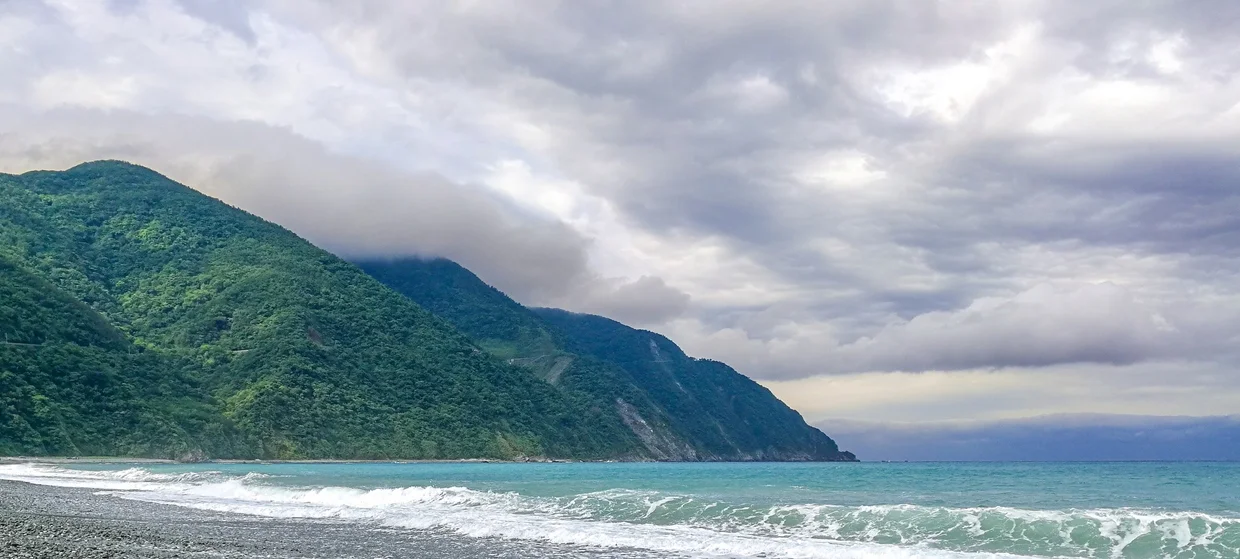
Dongao sits on the east coast of Yilan County, a few hours south of Taipei, in a bay where dark grey and black sand meets steep tropical mountains that drop almost straight into the Pacific. This is not a tourist beach. Few vendors, minimal infrastructure, usually empty except for locals out for a weekend. The water is cooler than Kenting and the sand is coarser, but the scenery is quieter and moodier: green ridges in the background, driftwood strewn across the shore, and shells and sea creatures in the tide pools. It's the kind of place you come to walk for an hour and not say anything. If you're driving the northeast coast south from Taipei toward Hualien, Dongao is worth the detour.
How to Get There
On the Yilan coast, about 2 hours south of Taipei. The TRA railway line passes through Dongao station, a short walk from the beach. By car, Route 9 and the Suhua Highway bring you directly past. Bus connections exist but infrequent.
Notes
- Minimal facilities; bring water and snacks if you plan to stay
- Currents can be strong; check conditions before swimming
- The nearby town of Su'ao has restaurants and a quirky domed Islamic style building
- A good break on the Taipei to Hualien drive (it's roughly halfway)
Published April 2026.