This page is a seed in the digital garden. It will very likely be finished within the next two weeks. Until then, content may change, sections may be incomplete, and some details might still be missing.
Servus and Welcome to the Altstadt
Munich's old town fits inside a ring road that the locals call, with the imagination of a tax accountant, the Altstadtring. Inside that ring, you've got pretty much everything tourists come to Munich for: Marienplatz, Frauenkirche, Viktualienmarkt, Hofbräuhaus, the Residenz, half a dozen churches with onion domes, and an above-average density of people in Lederhosen who are probably tourists but might not be. In Munich you can never be 100% sure.
This page sticks to that center. No English Garden, no Schloss Nymphenburg, no Olympiapark, no day trips. Just the Altstadt on foot, because trying to get around inside the inner ring with anything else is a comedy. The U-Bahn here mostly exists so you can skip to the Altstadt, not so you can move within it.

Do it slowly, eat a Brez'n or two, and drink a Weißbier.

Destination Info
Quick Facts
Overview
- Best 1 to 2 days in May till September.
- At 520m in Central Europe, time zone UTC+1 (UTC+2 DST).
- The population of 1.5M people speaks German, writes in Latin script.
- Euro (€) is the official currency, and tipping is round up.
Local Flavor
- Get a Helles (and a Maß at the Hofbräuhaus) and Weißwurst.
- The main festival here is Oktoberfest, and popular sports include Football (FC Bayern, obviously).
Practicalities
- You can use U-Bahn, S-Bahn, trams (but you won't need them here) for public transportation, while driving on the right.
- You can get here mostly via Munich (MUC).
Marienplatz, the Glockenspiel, and the Cult of 11 a.m.
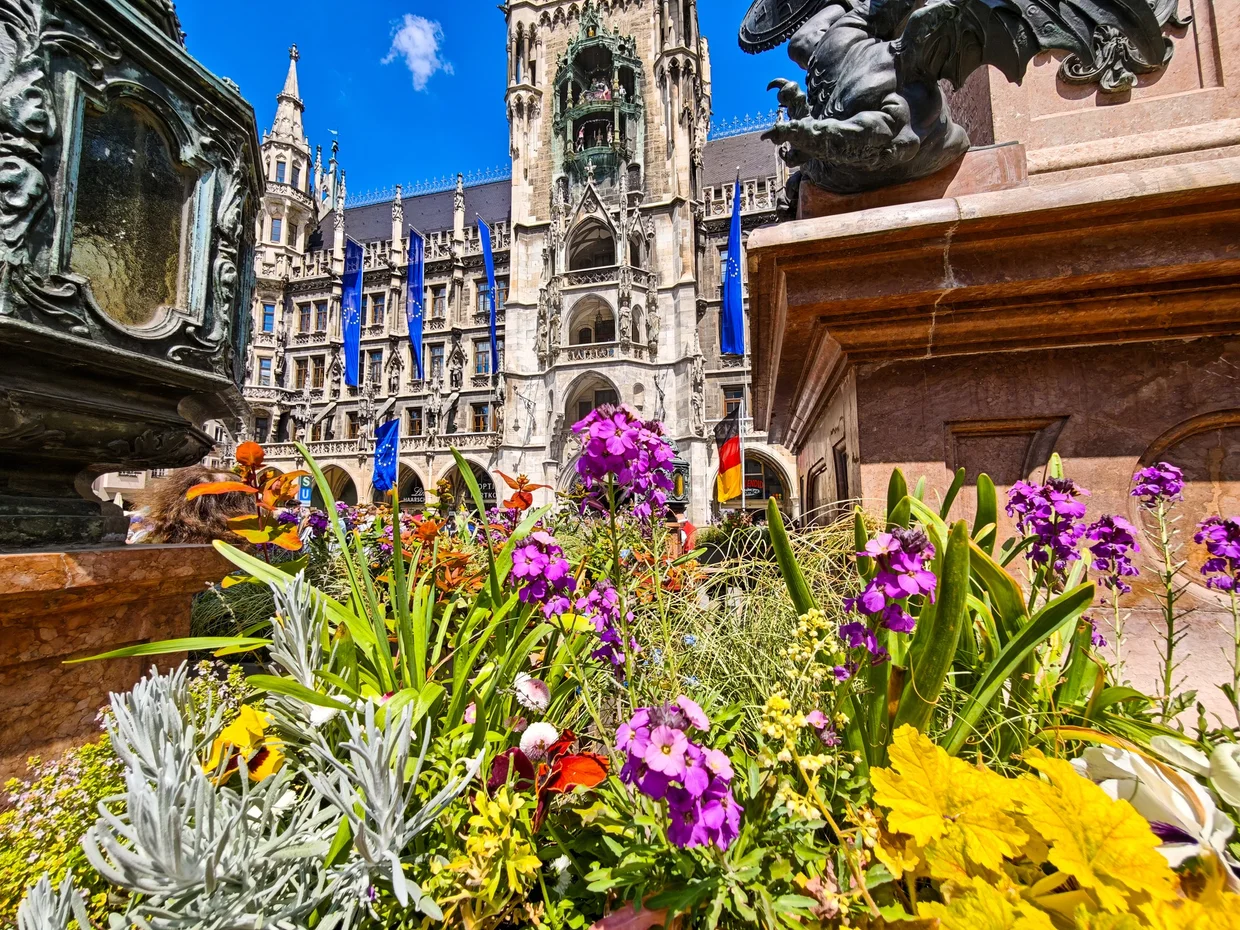
Marienplatz is the heart of Munich and the place every guidebook, hotel concierge, and Instagram story will send you. It's a big square with the Neues Rathaus on one side, the Altes Rathaus tucked into the corner, and the Mariensäule (the Marian column) standing in the middle like it owns the place. Which, since 1638, it kind of has.
The Neues Rathaus looks medieval. It is not. It's late-19th-century neo-Gothic, built when Bavaria decided it wanted older-looking buildings than the actually-old buildings it already had. The result is fantastic. The facade is dripping with statues, gargoyles, kings, dragons, and at least one cat I'm pretty sure I made up.

And then there's the Glockenspiel. Twice a day (11 a.m. and noon, plus 5 p.m. from March through October), 32 life-sized figures spin around to bell music for about 12 minutes. The story is a jousting tournament from the wedding of Wilhelm V in 1568, plus the Schäfflertanz (the cooper's dance) from 1517 that was originally performed to celebrate the end of a plague.
It is, technically, very impressive. It is also very slow. The first three minutes you'll find charming. Minutes four through twelve you'll spend wondering how many of the 2000 other people standing in the square genuinely care, or whether everyone is just collectively pretending out of politeness.
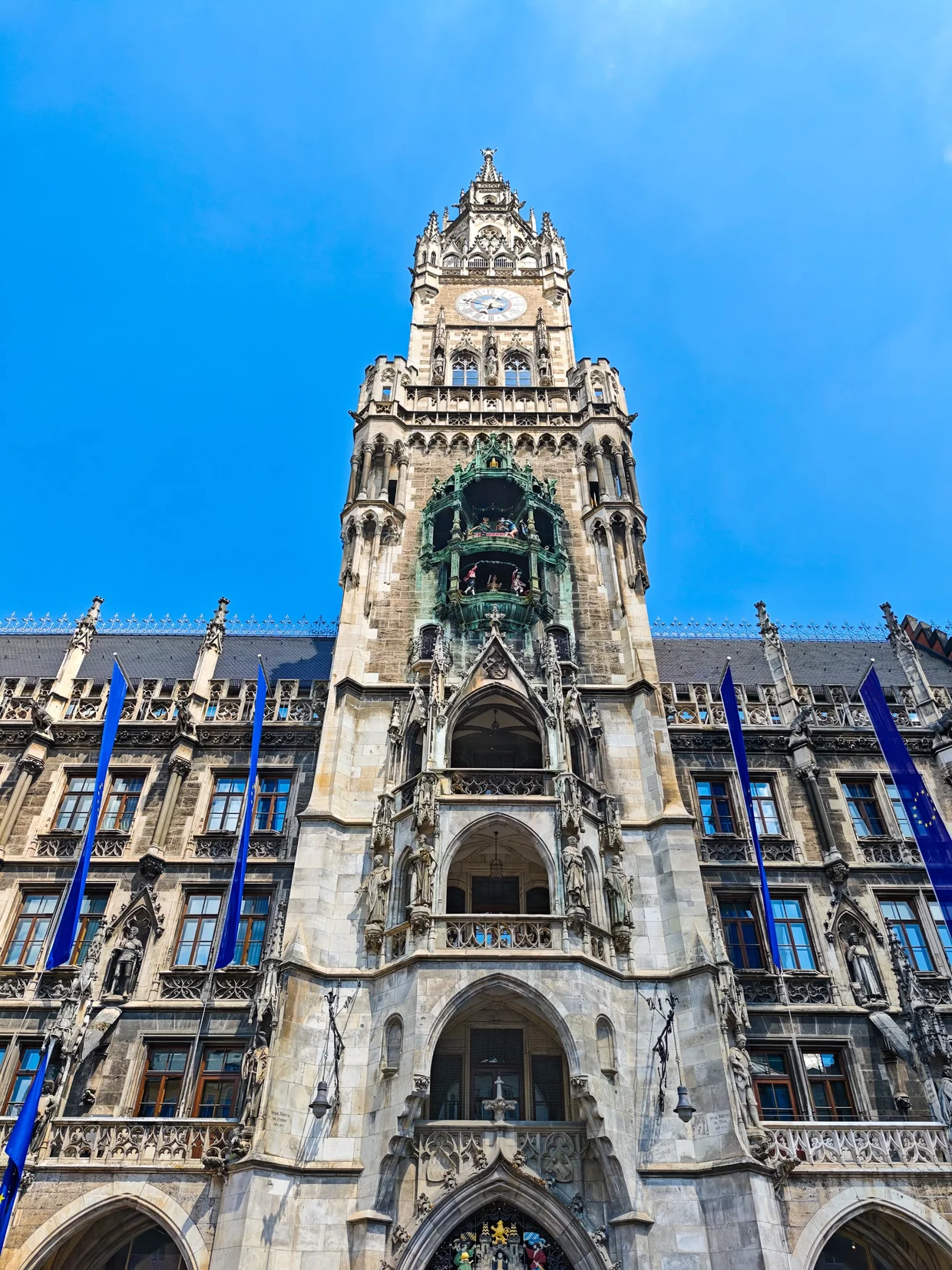
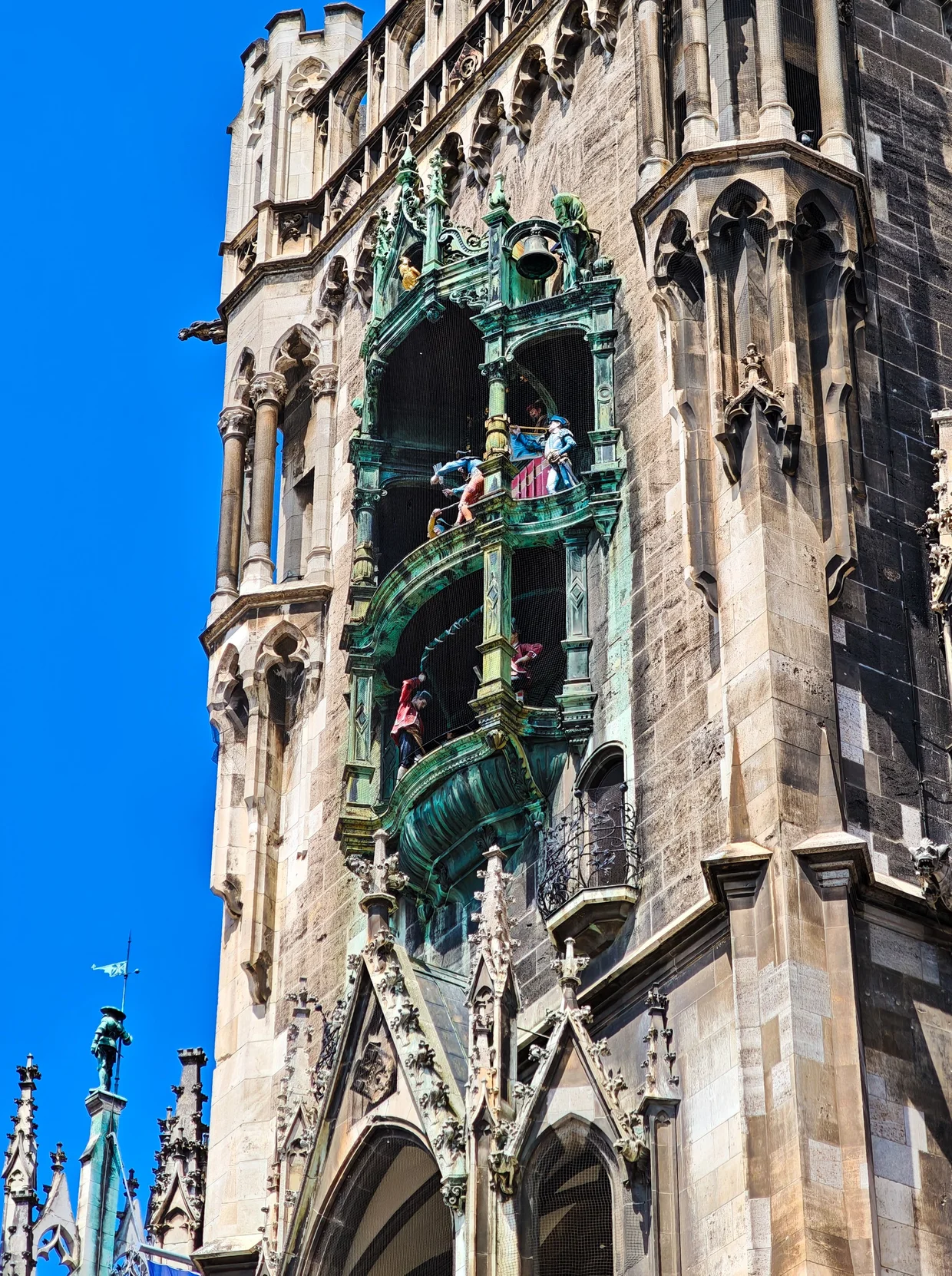
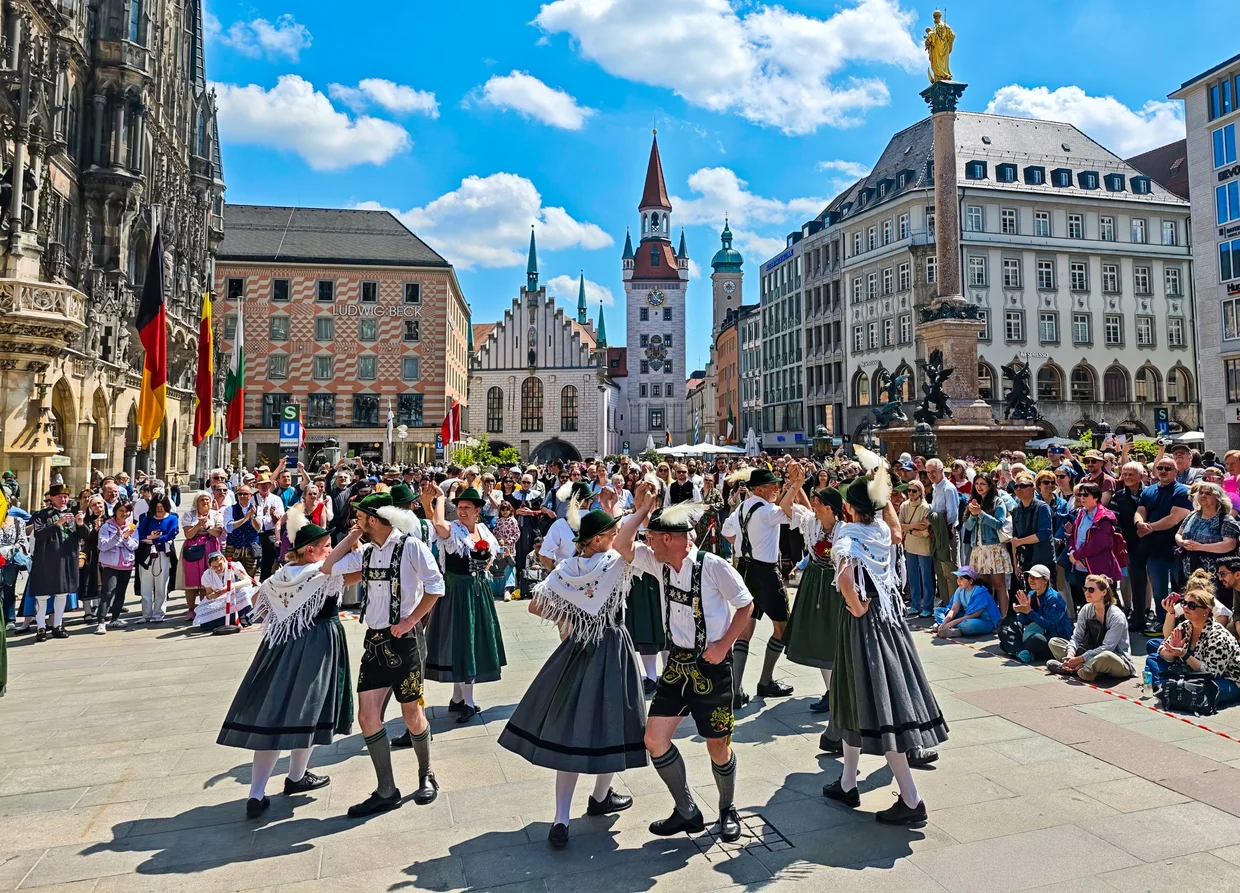
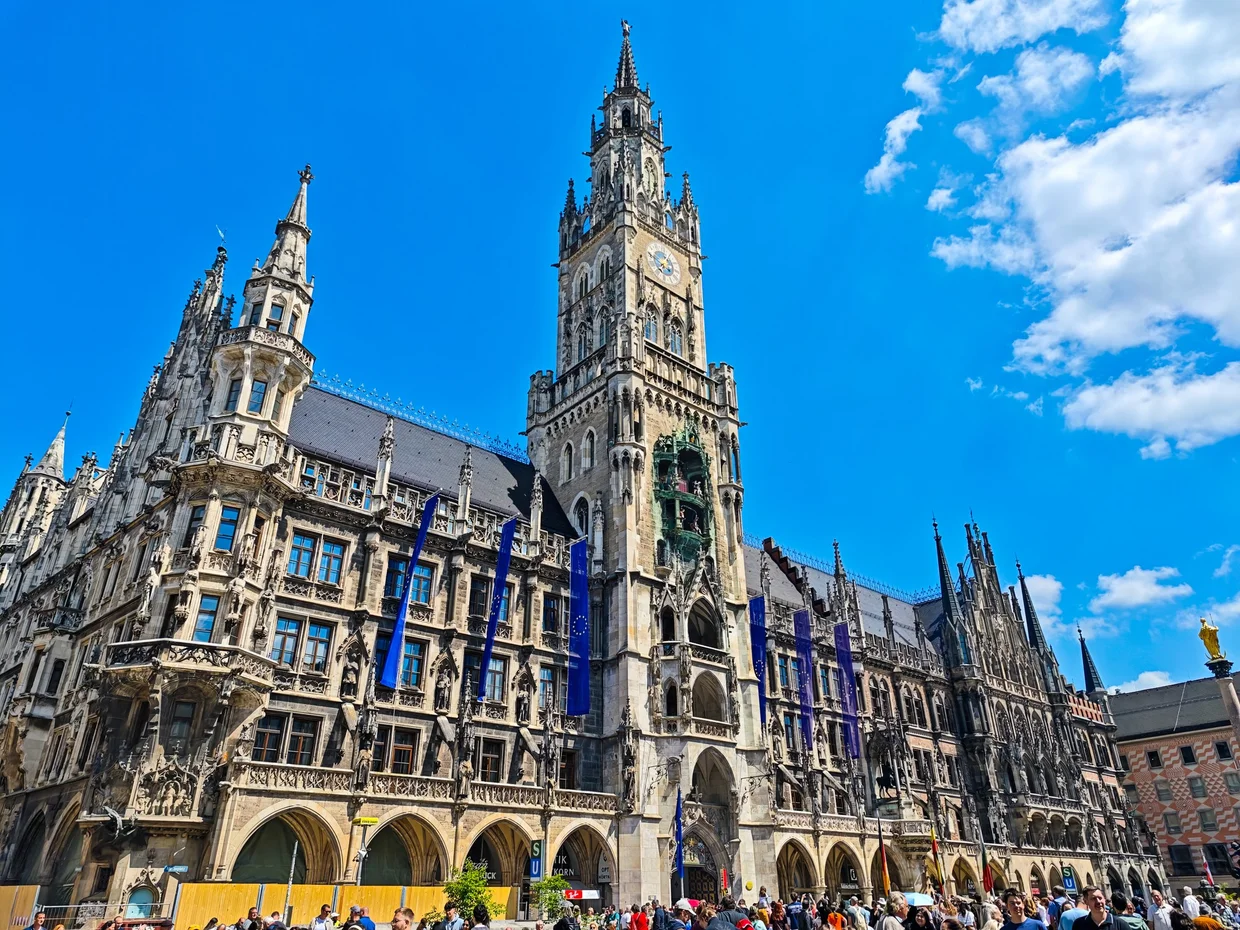
While I am at it, the facade of the Neues Rathaus deserves a pause. Look up. Gargoyles, kings, dragons, knights, gothic vaulting in the entry passages, an inner courtyard with that mock-medieval Tudor-Gothic look. The architect Georg von Hauberrisser was Austrian, did most of his work in Bavaria, and clearly had a thing for over-decoration. Bavaria thanks him.
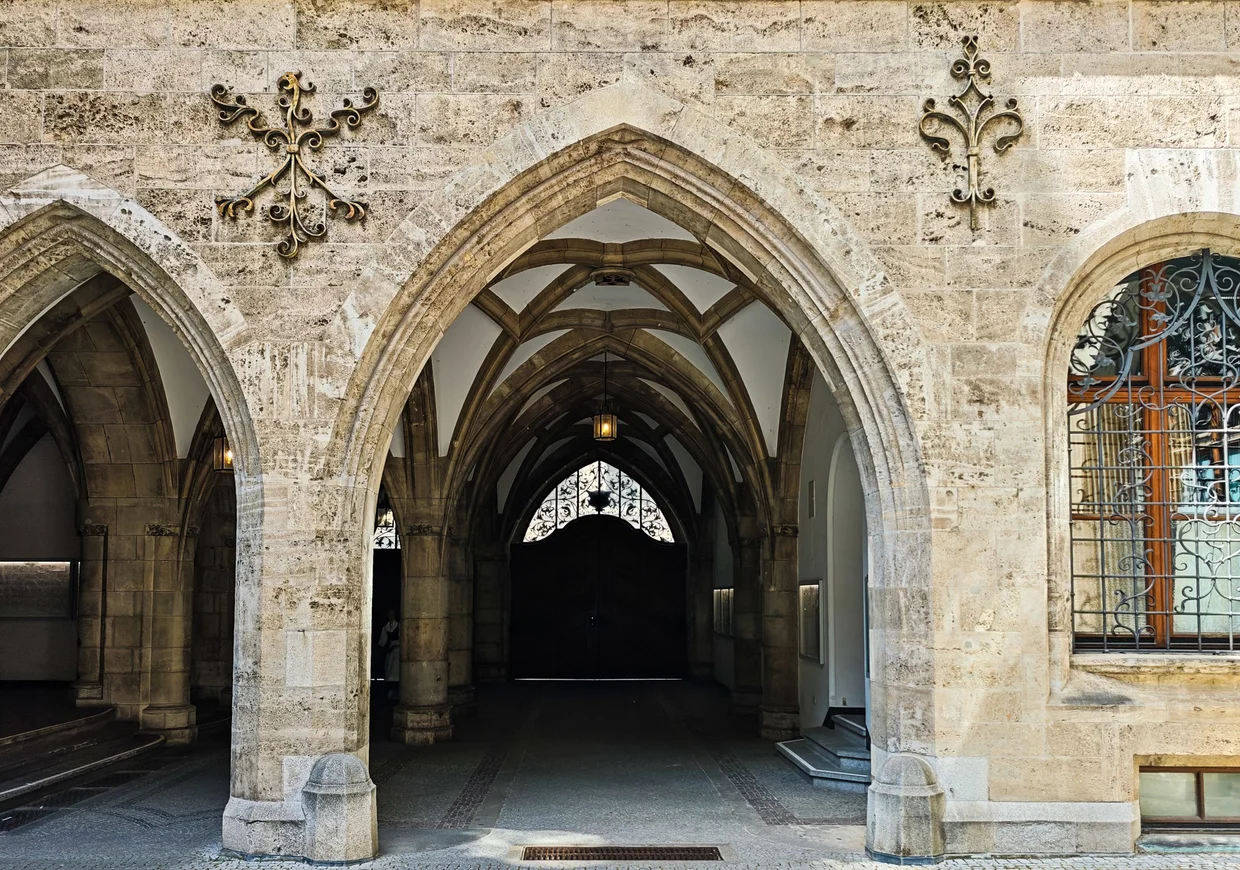
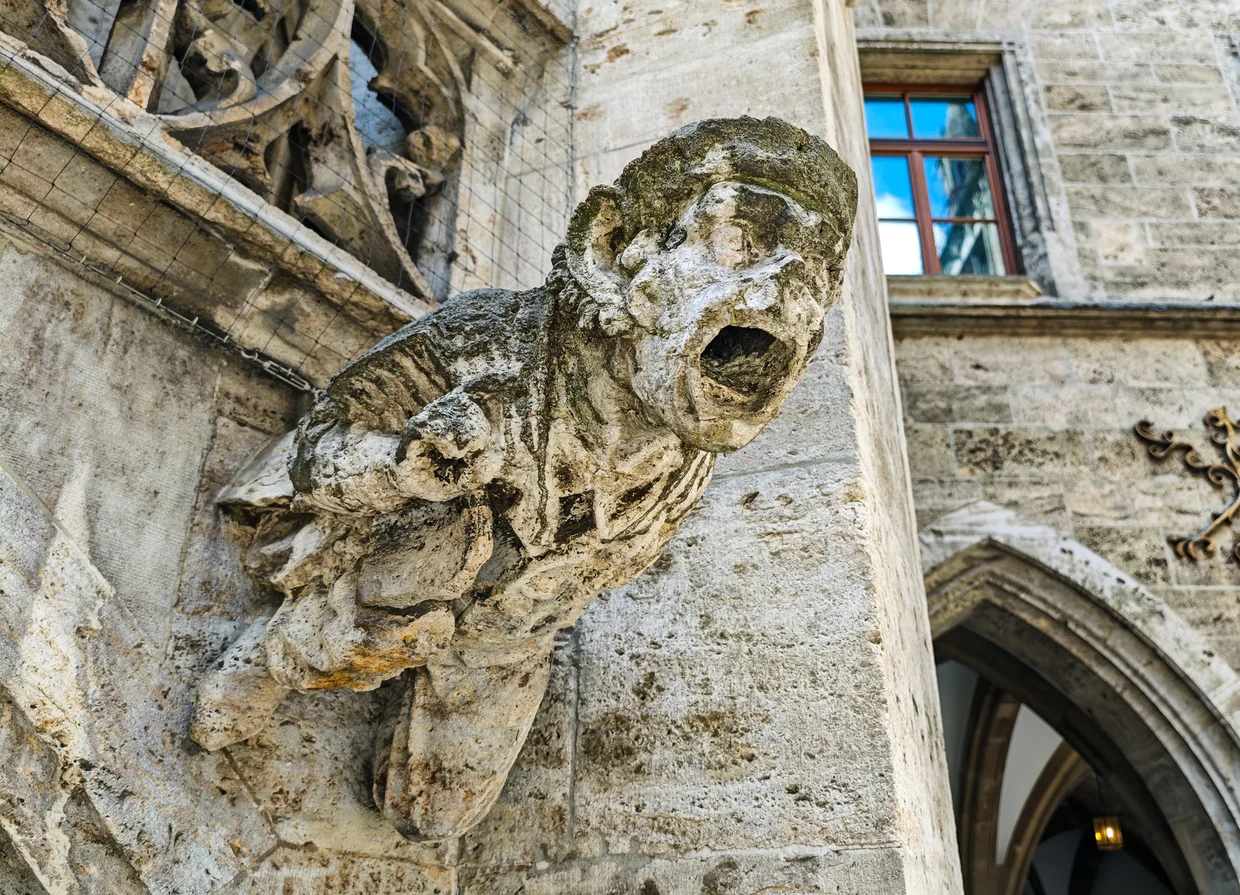
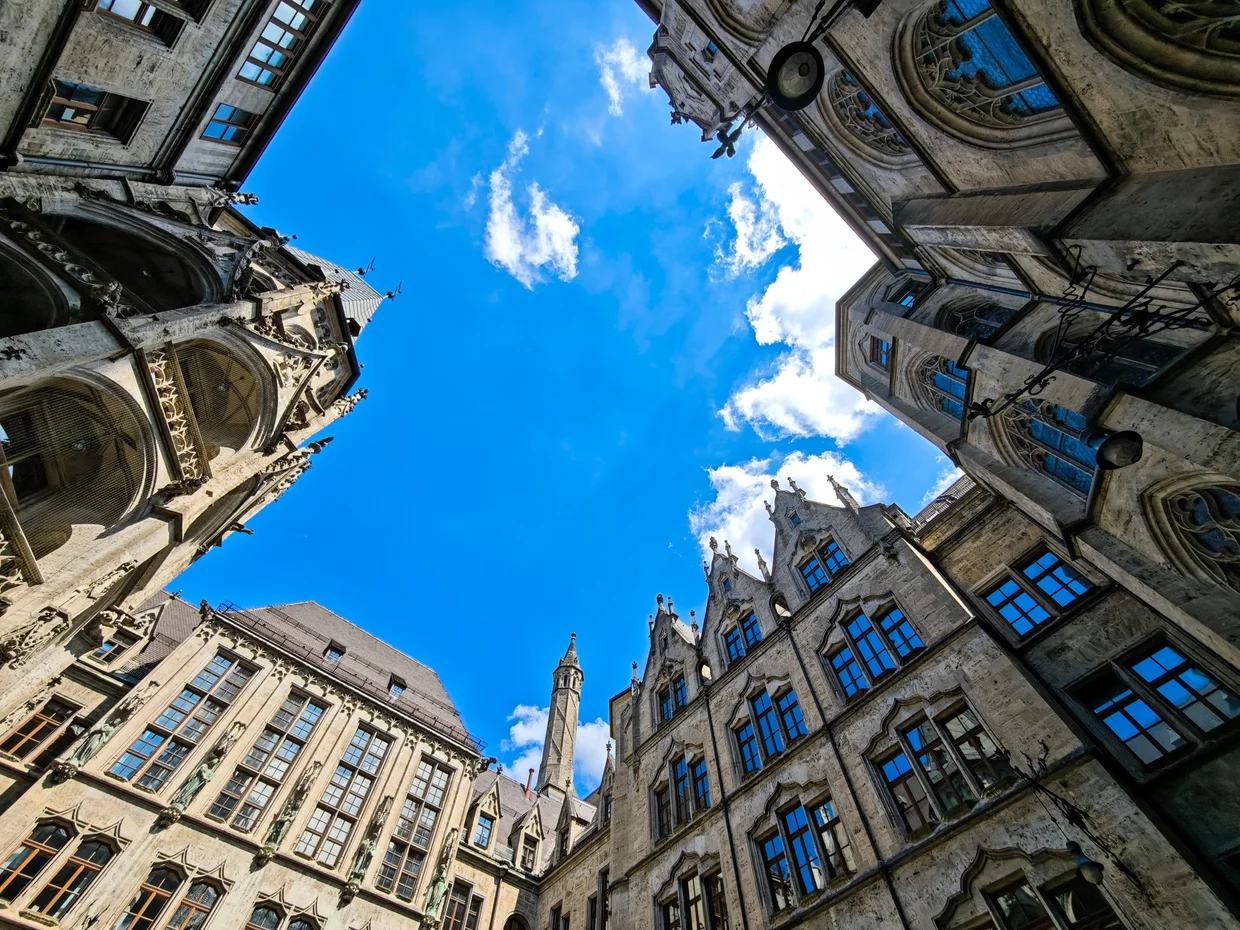
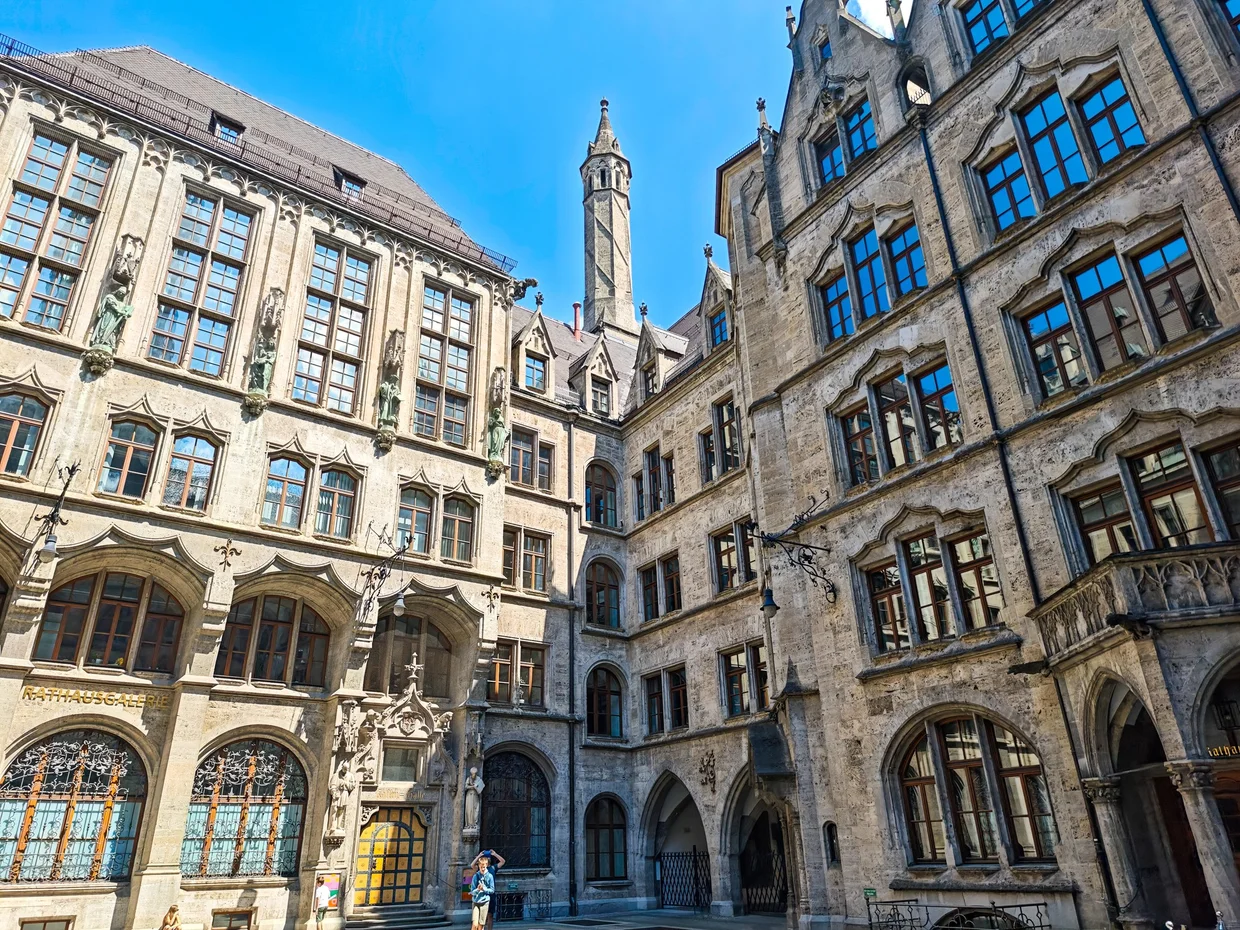
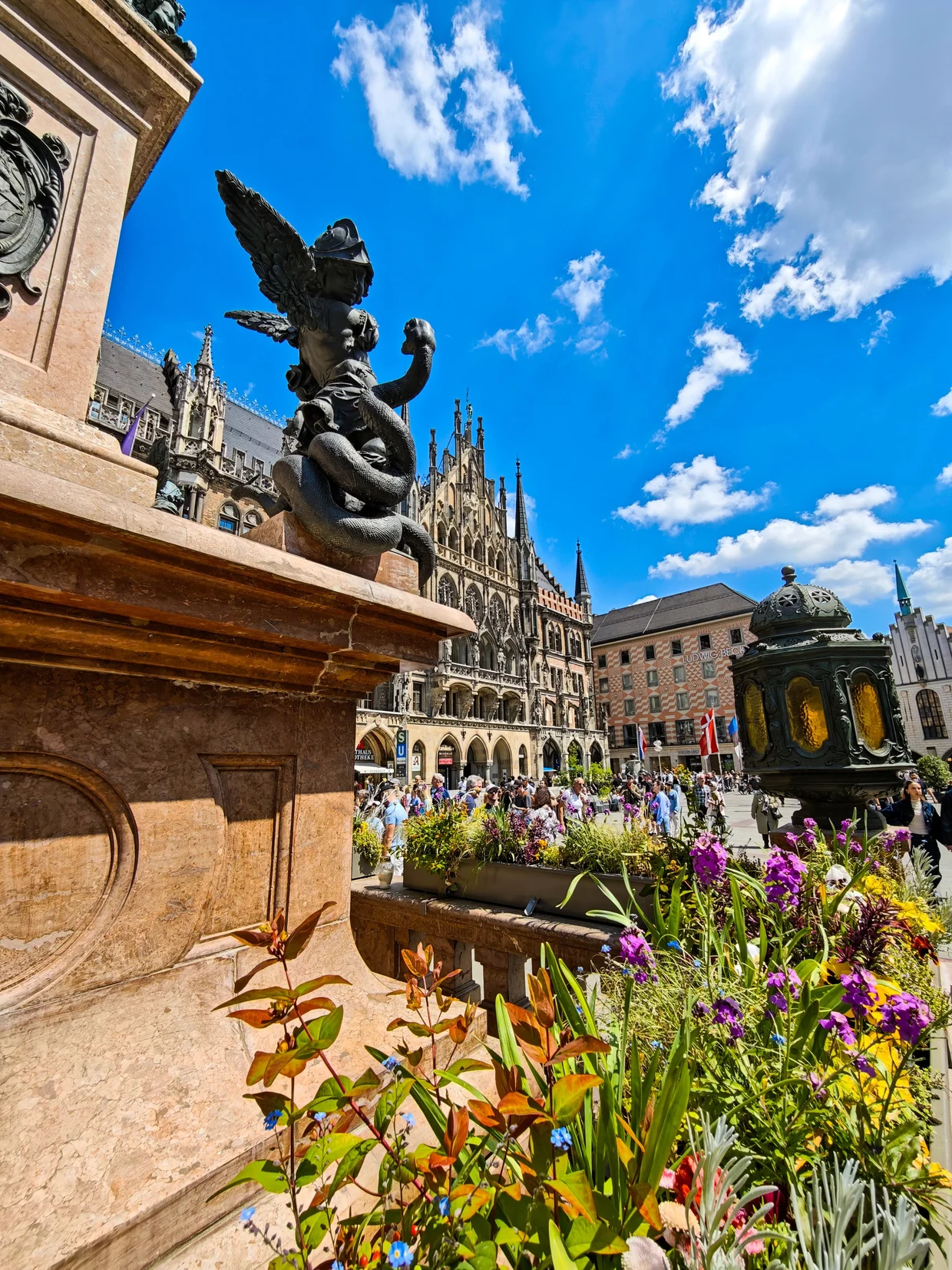
In the middle of the western half of the square sits the Fischbrunnen (fish fountain), with its bronze apprentice butchers ritually dunking each other (figuratively, but you get the idea). Locals meet here to swap gossip, kids climb the basin in summer, and on Ash Wednesday the Mayor symbolically rinses his wallet in the fountain so the city's finances will recover. They never do. He keeps doing it anyway.

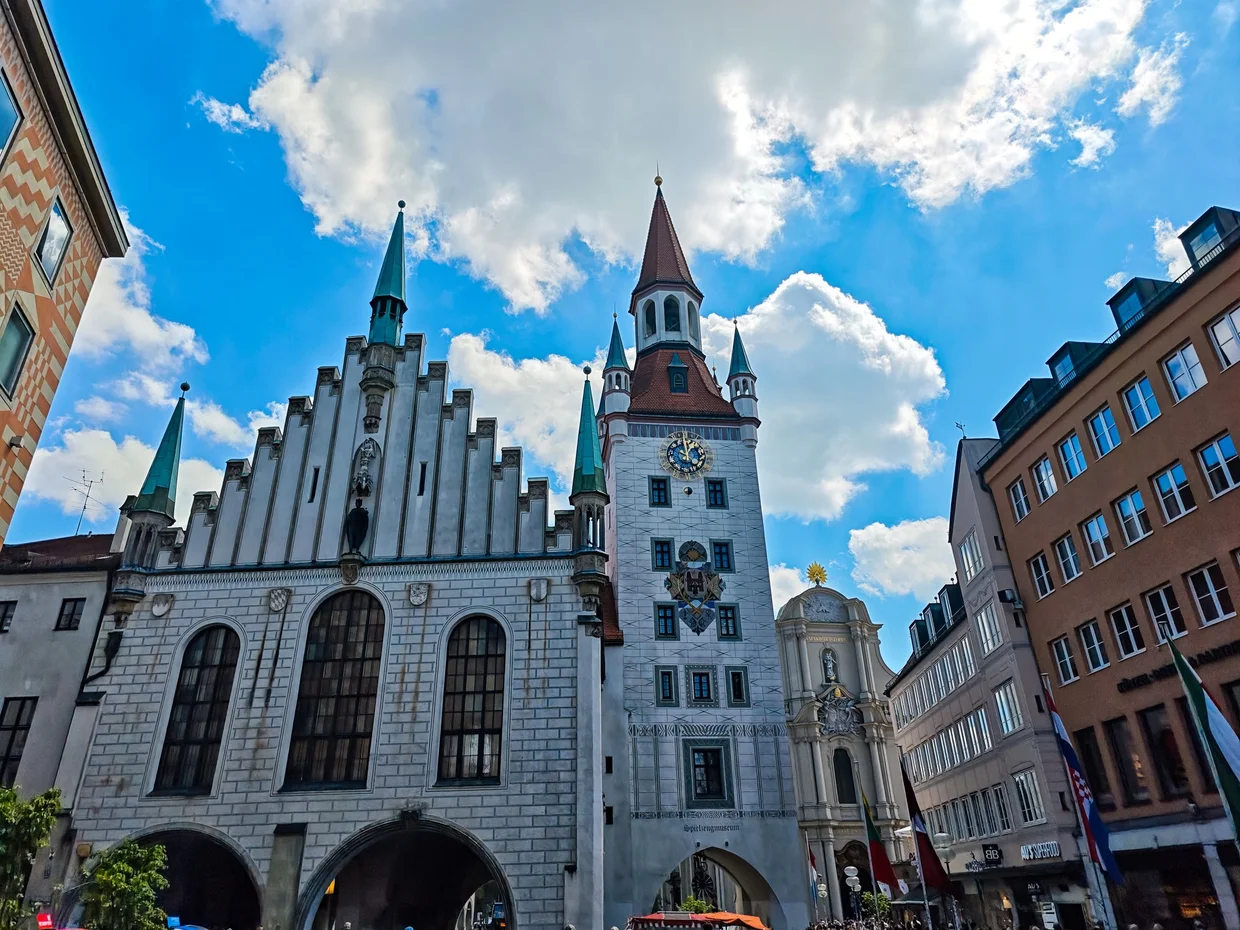
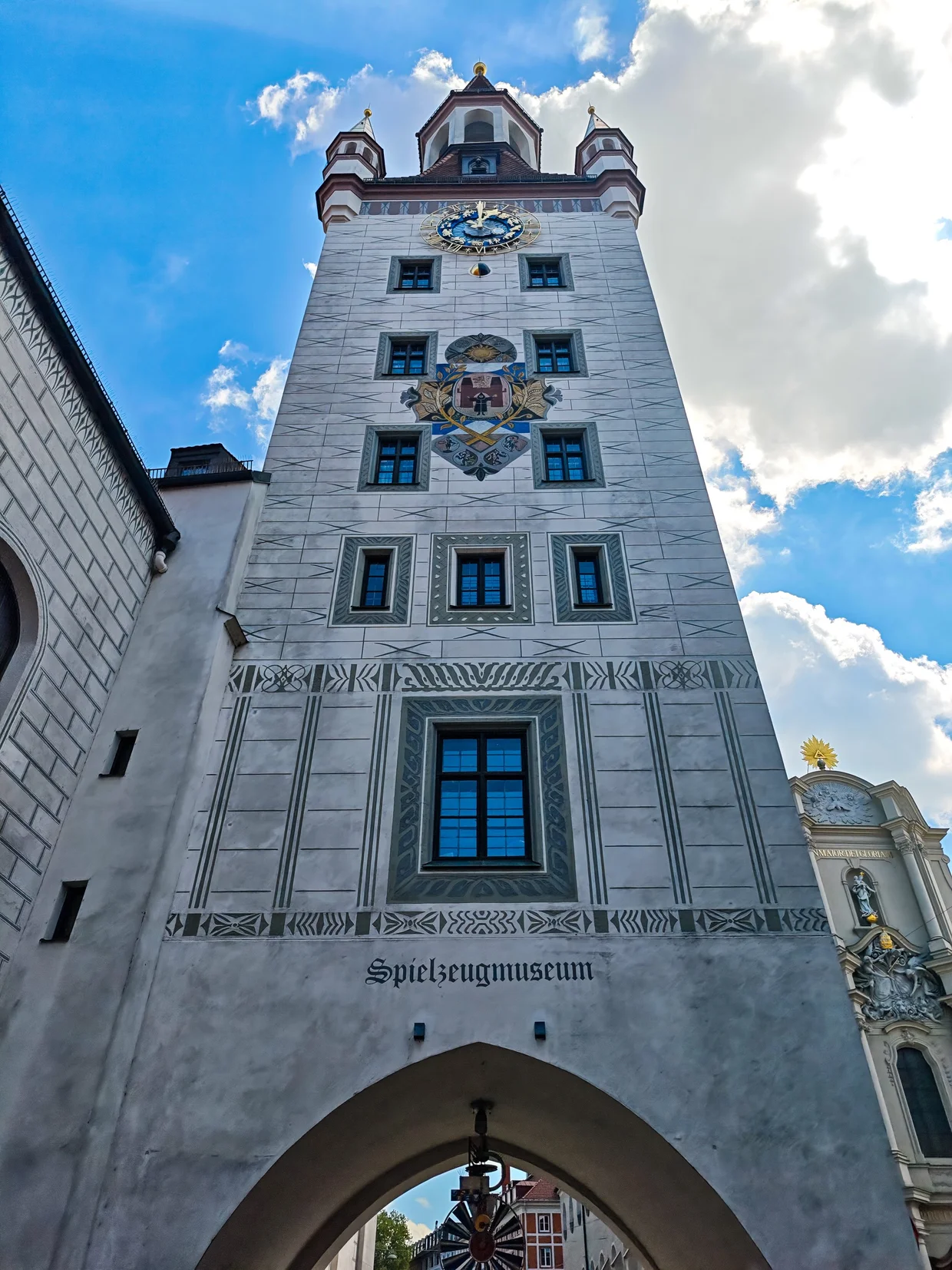
The Altes Rathaus is the white building with the pointed tower at the eastern end of the square. Its tower now houses the Spielzeugmuseum (toy museum), which is exactly as charming as it sounds and is mostly aimed at people under 8 or over 60. Worth a look if you fall into either category.
If you have the legs for it, you can take the elevator (yes, elevator, it's 2026) up the Neues Rathaus tower for a view across the rooftops to the Frauenkirche and the Alps on a clear day. Clear days happen. Just not as often as Bavarian tourist boards would like you to believe.
Frauenkirche, the Two Onions
Walk west from Marienplatz on Kaufingerstraße for about 200 meters and you'll see them: two enormous brick towers with copper-green onion domes that look slightly cartoonish from up close. Those are the towers of the Frauenkirche, Munich's cathedral and the unofficial logo of the city. A 2004 referendum made their roughly 100-meter height the city's famous skyline ceiling, especially around the historic core. The rule has been argued over and softened at the edges since then, but the towers still set Munich's mental skyline.

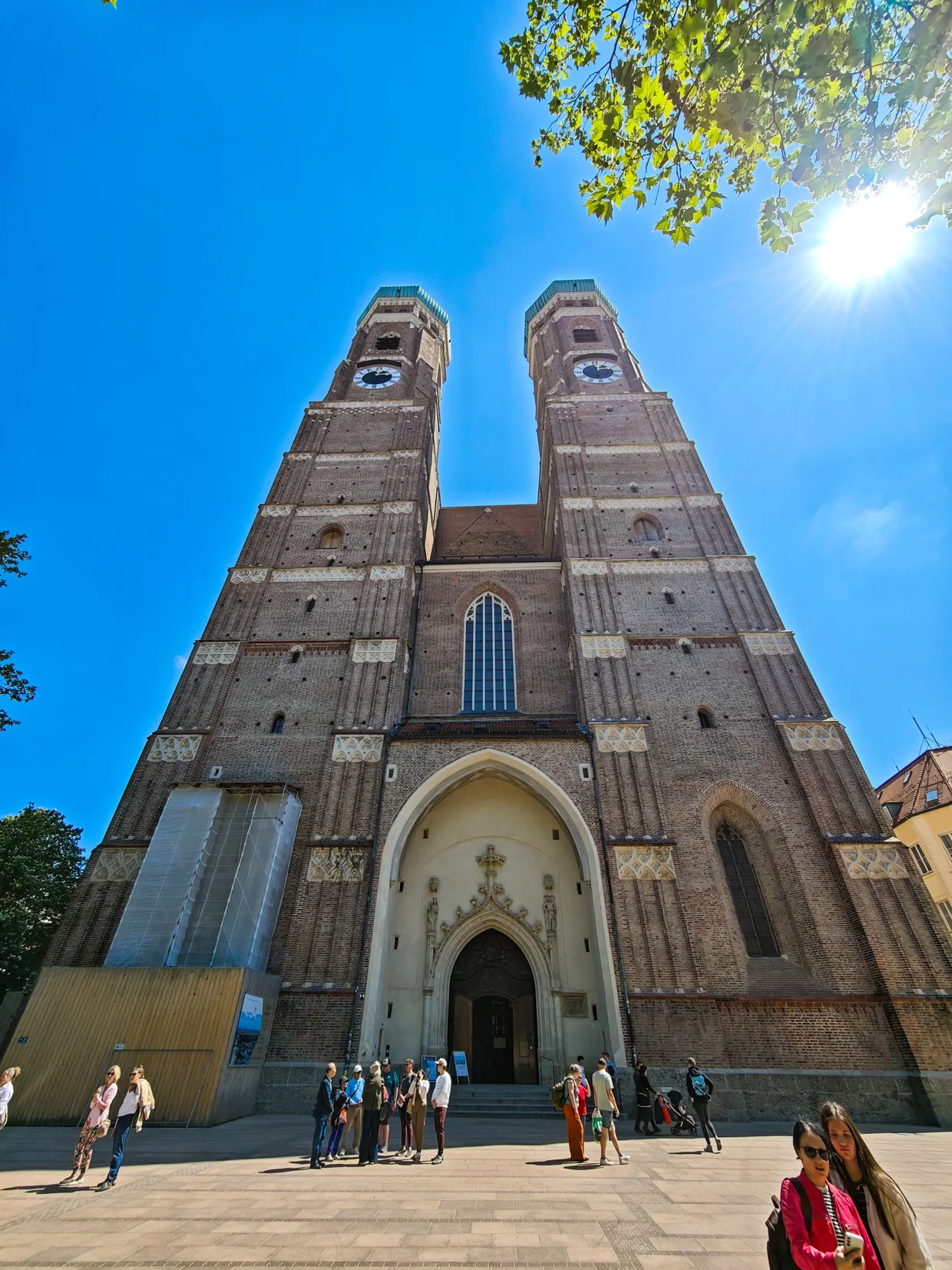
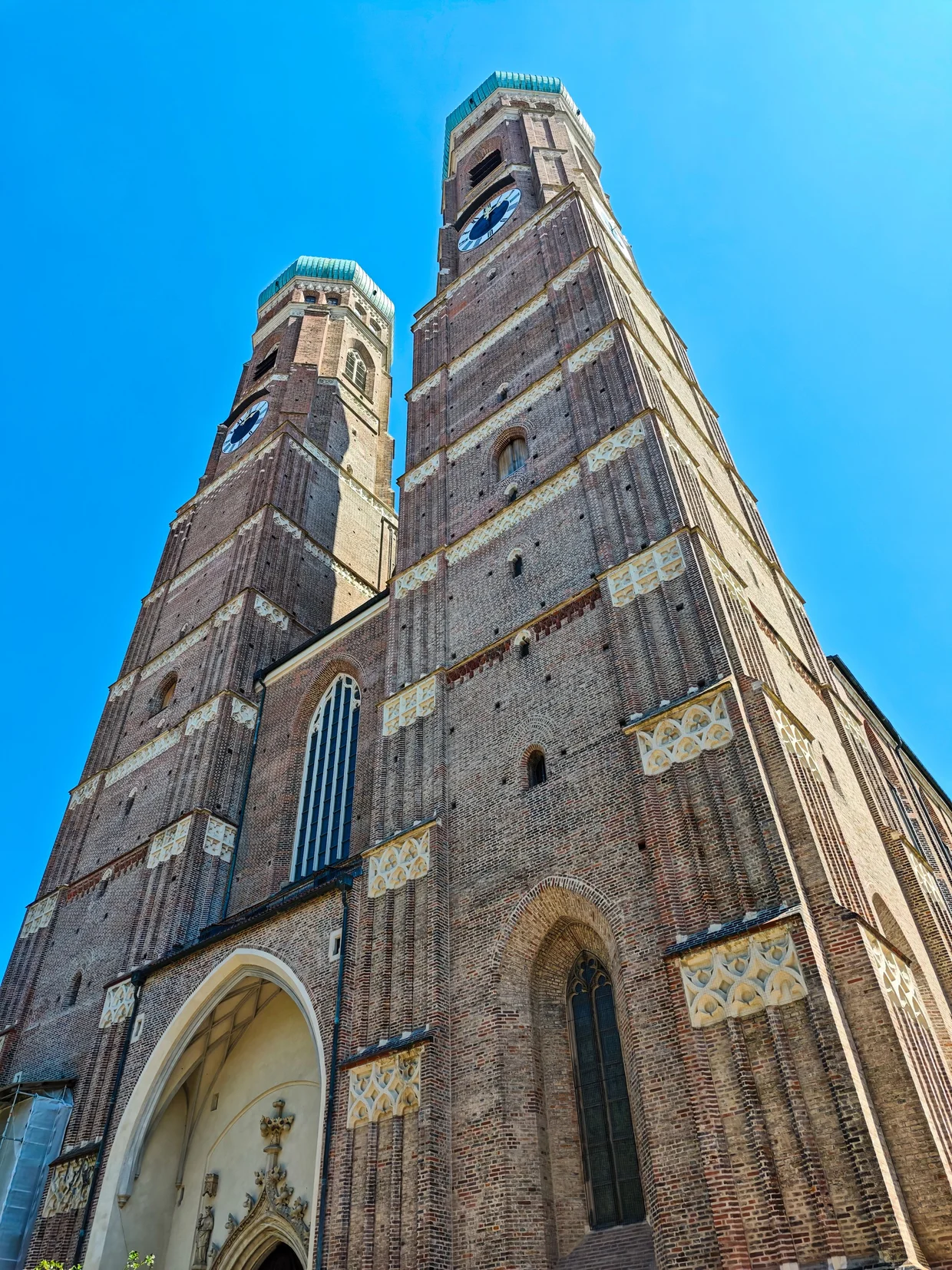
The inside is austere brick-and-white, surprisingly bright, and almost completely rebuilt after WWII bombing. The original Gothic shell survived. Most of the rest didn't. Look down at the floor near the entrance and you'll find the Teufelstritt, the Devil's Footstep. The legend goes that the devil made a deal with the architect, came to inspect the finished church, stood on this exact spot where (from this angle only) you can't see any of the windows, and stomped his foot in fury thinking he'd been tricked into a windowless church. Then he saw the windows. Then he was, presumably, very annoyed.
It's a great story. The footprint is real. The devil is, as far as I can tell, hypothetical.
You can also climb the south tower for the best view in the Altstadt, but only the south tower. It has reopened after renovation, though hours, weather, and the occasional closure still matter, so check before you walk over.
Up in the church itself, the black-marble cenotaph of Kaiser Ludwig the Bavarian (Holy Roman Emperor, died 1347) stands guarded by four bronze knights in armor. It's the most striking thing inside the Frauenkirche and you can't miss it.

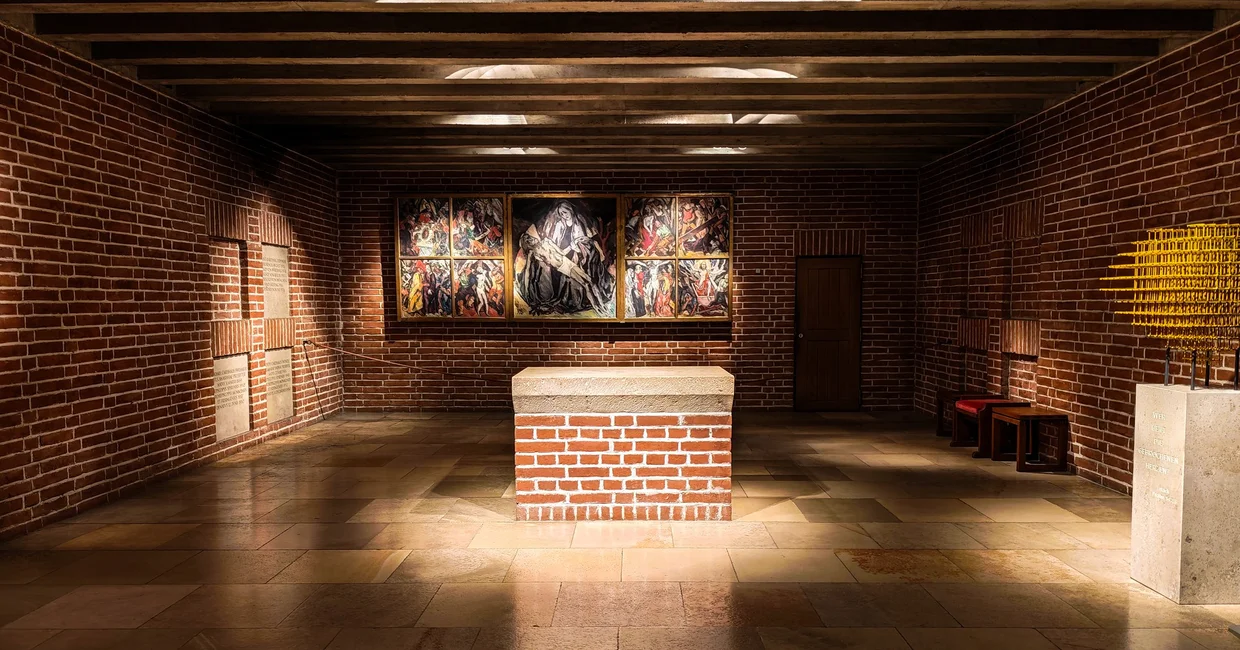
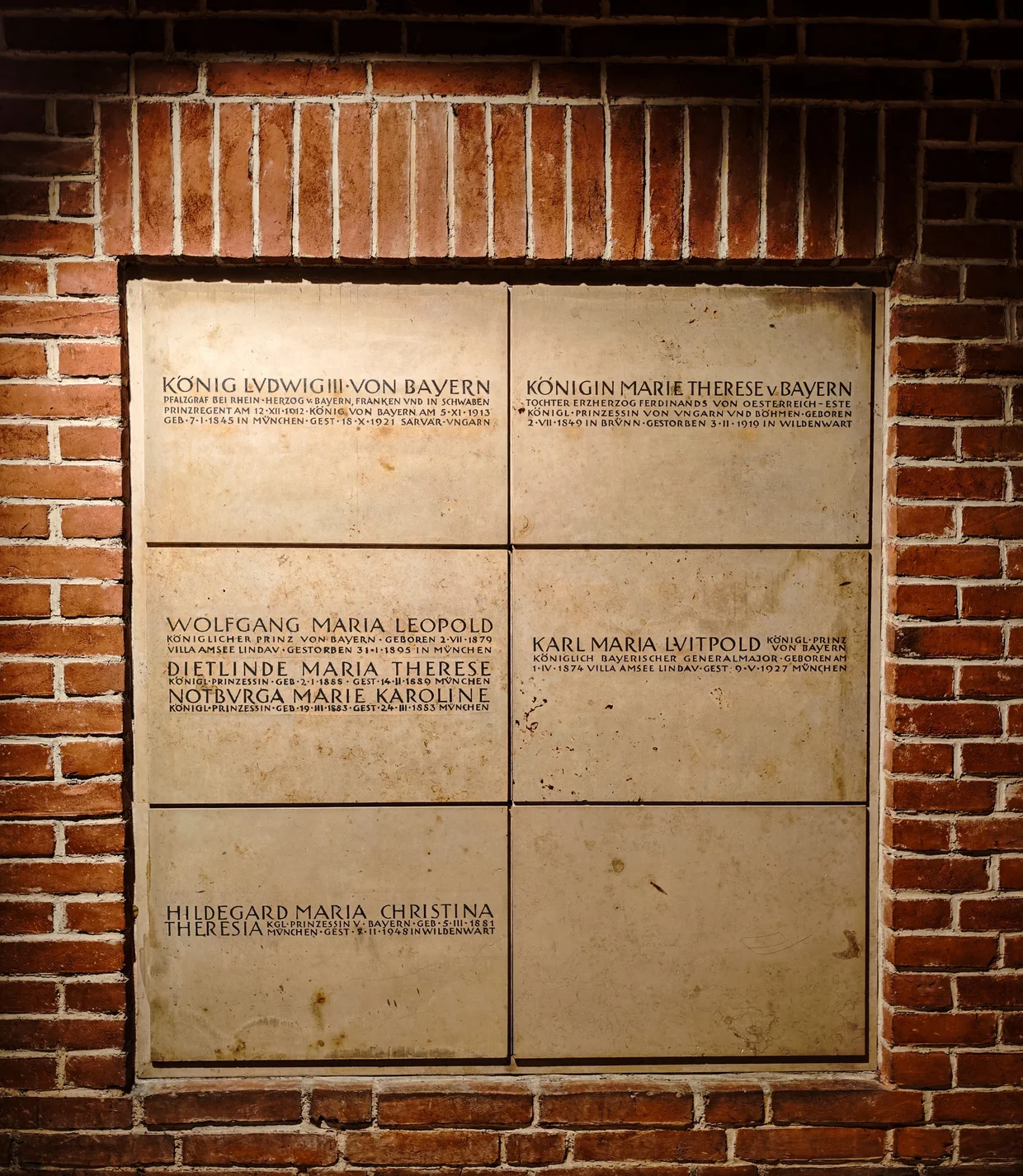
Down a staircase in the south aisle is the Fürstengruft, the Wittelsbach royal crypt. A stark brick chamber, a single tomb block in the middle, a triptych on the back wall, and on the side walls the inscribed slabs naming the people buried here: King Ludwig III (the last king of Bavaria, abdicated 1918), his wife Marie Therese, and a row of princes and princesses. One emperor's memorial upstairs, the last Bavarian king downstairs: 600 years and a flight of stairs apart, in the same building.
===
If you want a much shorter church visit with a different vibe, St. Michael is a five-minute walk west on Kaufingerstraße. Renaissance-Jesuit instead of Gothic, white instead of brick, and home to the crypt of King Ludwig II (yes, the swan-castle one). It's also where you'll find half of Munich's tourists pretending to take a photo of the facade while actually photographing each other.

The facade is Renaissance restraint. The interior is a different story: a vast white barrel vault, one of the great cantilever barrel vaults in Europe and often measured against St. Peter's in Rome, completely undecorated with frescoes (very un-Bavarian) and lit so beautifully it does most of the work for you.

Stachus, the West Gate
Keep going west and Kaufingerstraße turns into Neuhauser Straße, which dumps you onto Karlsplatz. That's the official name. To literally every Münchner it's Stachus. The name comes from a beer hall that stood here in the 18th century, run by a guy called Eustachius. The beer hall is long gone. The name stuck.

The square itself is not particularly pretty. It's a transit hub, a fountain, a gate (the Karlstor), and a giant neo-Baroque court complex called the Justizpalast. It's also where the White Rose trial happened in 1943. Sophie Scholl, her brother Hans, and Christoph Probst were sentenced to death here for distributing anti-Nazi leaflets at the university. Nobody puts that in the cute Munich brochures.

Below the square, a multi-level underground passage links the S-Bahn, the U-Bahn, and a shopping concourse. It's modern, surprisingly bright, and has a ceiling lined with hundreds of round white discs that you'll either find pleasingly futuristic or vaguely unsettling. I find it pleasingly futuristic.

The fountain at the center of Stachus is, depending on the season, either a popular meeting spot for teenagers or a slightly sad pile of wet stone. In summer kids run through it. In winter it becomes an ice rink. Both are nice. Neither is a reason to come here on its own.
What Stachus is good for is the moment you turn around and walk back east along Kaufingerstraße toward Marienplatz. That's when you realize the Munich Altstadt is essentially one long pedestrian shopping street with a square at each end, and you've just done the western half.
Viktualienmarkt, the Open-Air Pantry
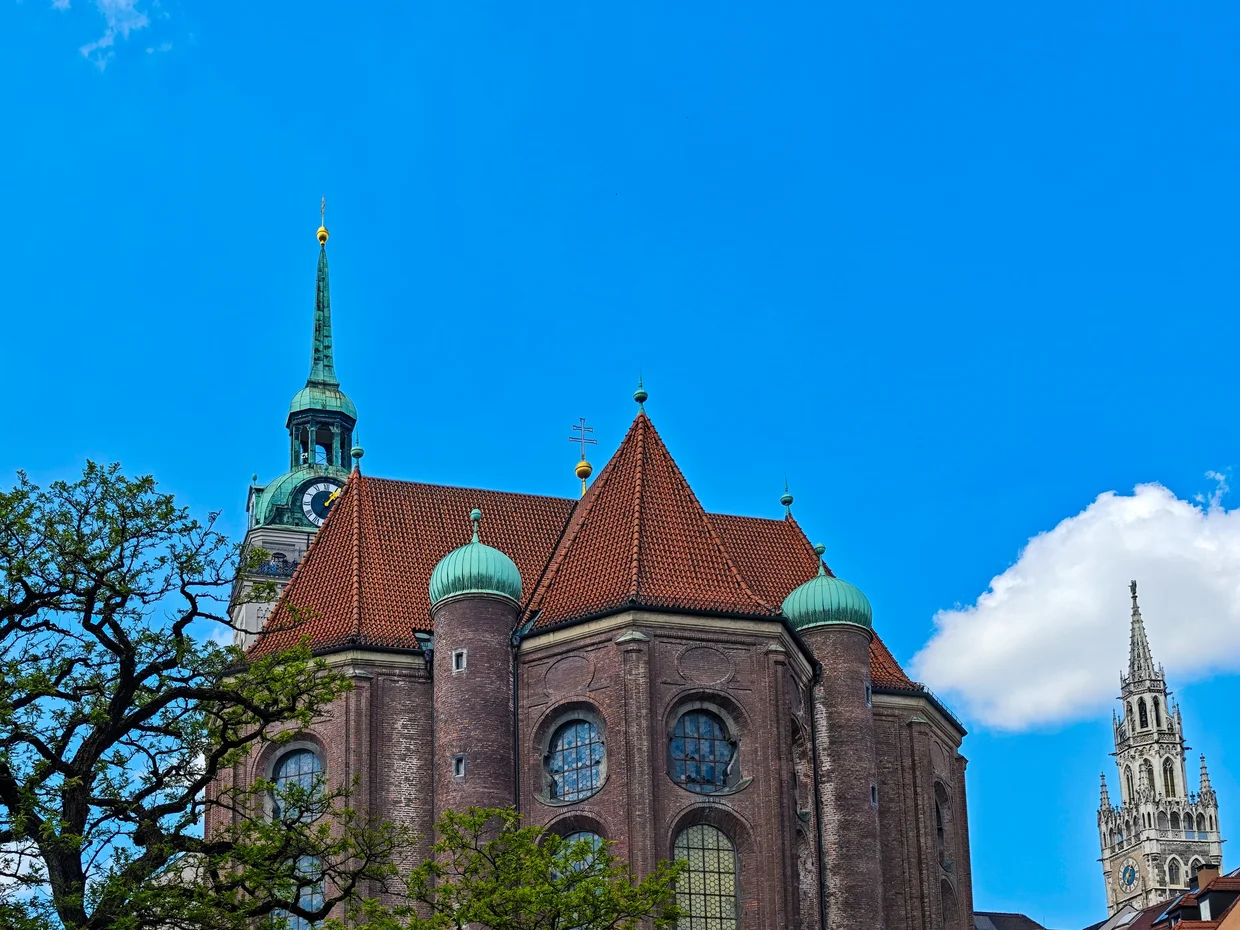
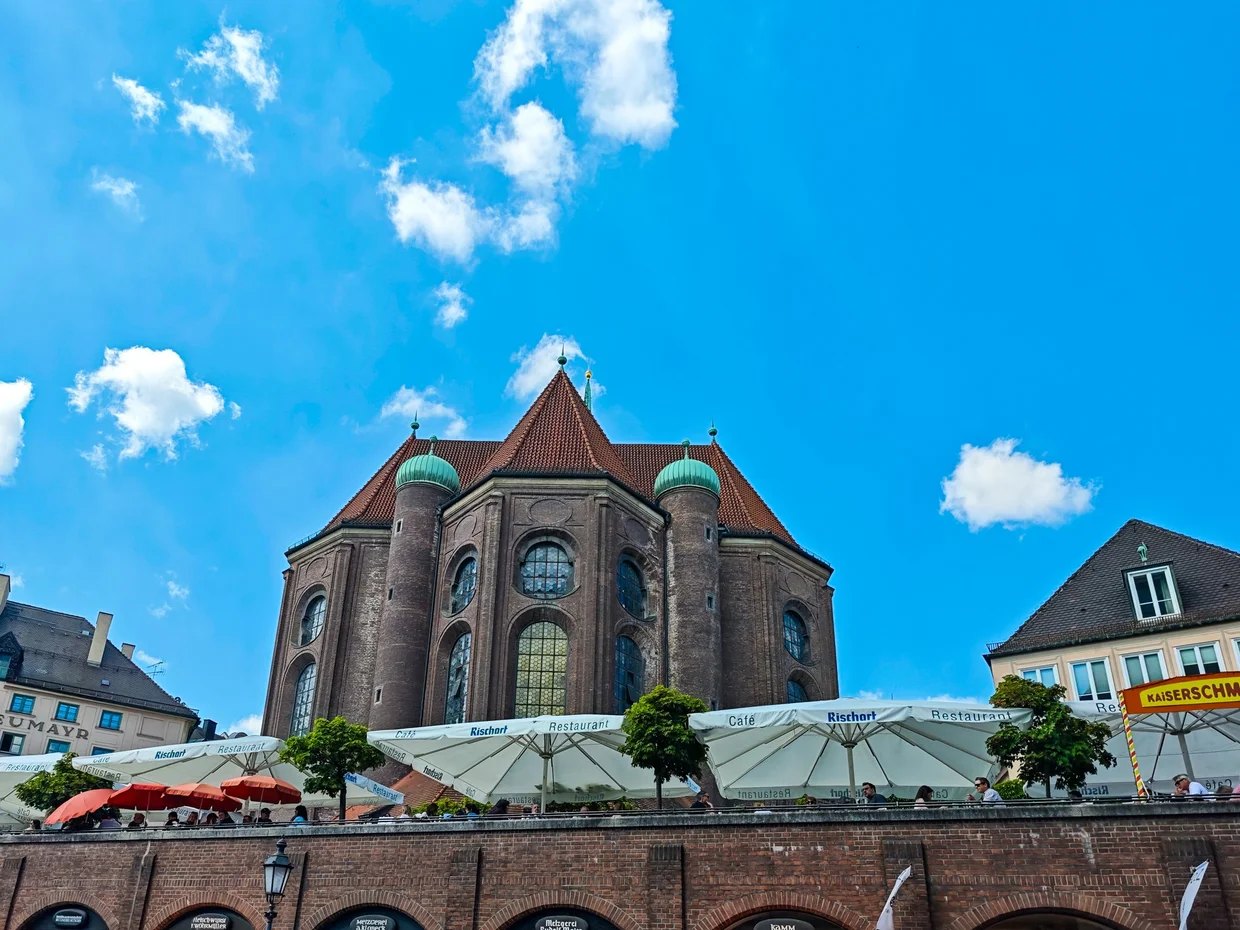
Two minutes south of Marienplatz, past St. Peter's Church (the Alter Peter, oldest parish church in Munich, climb the tower if your knees allow), you walk into the Viktualienmarkt. It's an open-air food market that's been running on this exact spot since 1807, when King Max I Joseph moved it here because the original market on Marienplatz had outgrown the square.

The market is a bit of everything: cheese stalls, fish smokers, butchers, fruit and veg, honey, spice merchants, flower stands, and a whole row of imbiss stands selling Brez'n, sausages, fish sandwiches, and Käsespätzle out of plastic plates. Prices are tourist-trap-adjacent. Quality is, generally, very good. The cheese mongers especially are the real deal.
In the middle of it all sits the Viktualienmarkt-Biergarten, around the maypole. Around 1,100 seats, classic bench tradition: if you bring your own food (yes, even from the market 30 meters away) you can sit at the unlaid tables and just buy a Maß. It's one of the few "tourist" spots in Munich that locals actually use, mostly because it's hard to argue with a beer at lunch when the maypole is right there.

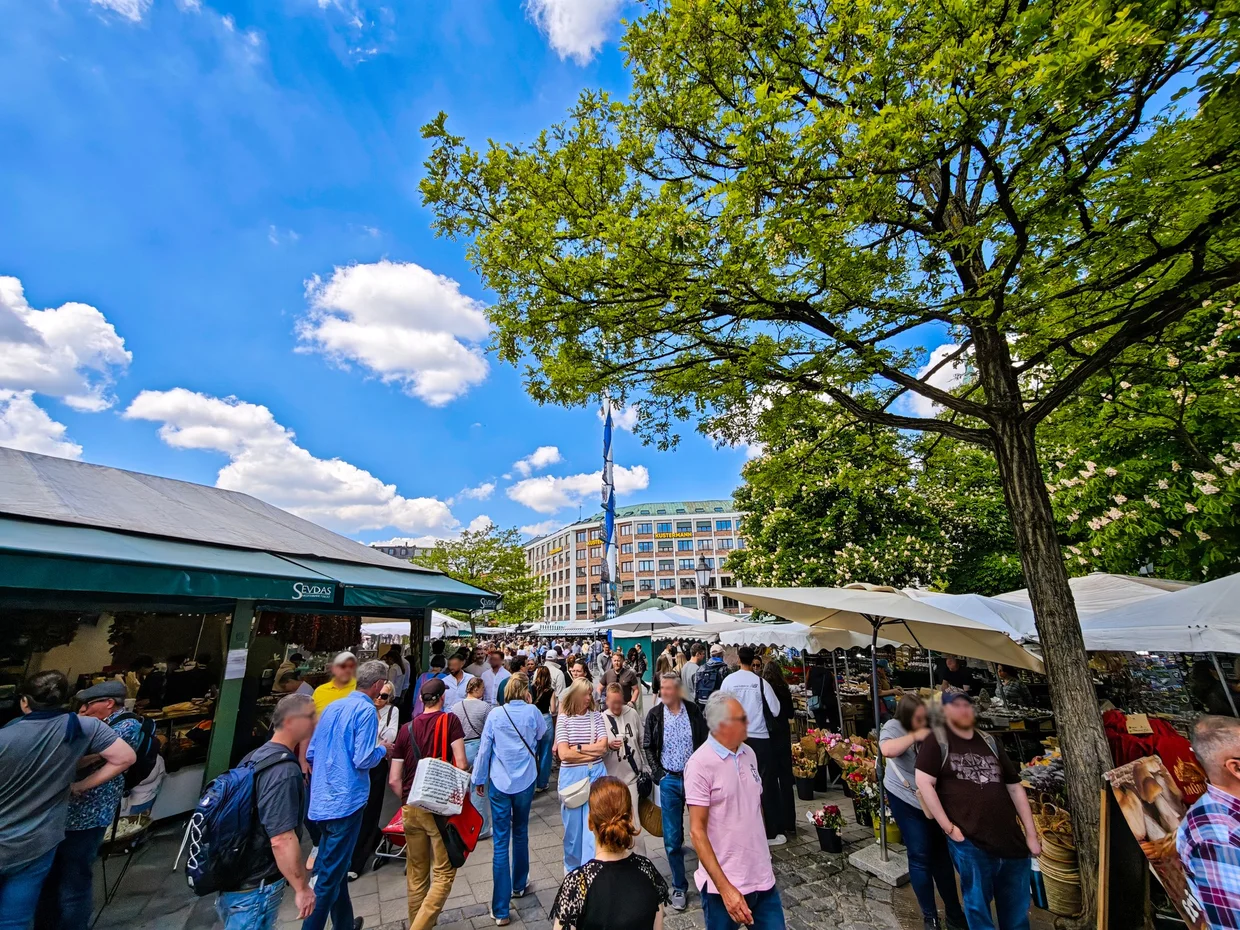
A practical note: the Viktualienmarkt is busiest on Saturday morning. If you want to actually move through it without getting elbowed, come on a weekday around 11 a.m. or after 3 p.m. If you want the full chaos and don't mind it, Saturday is exactly the right time.
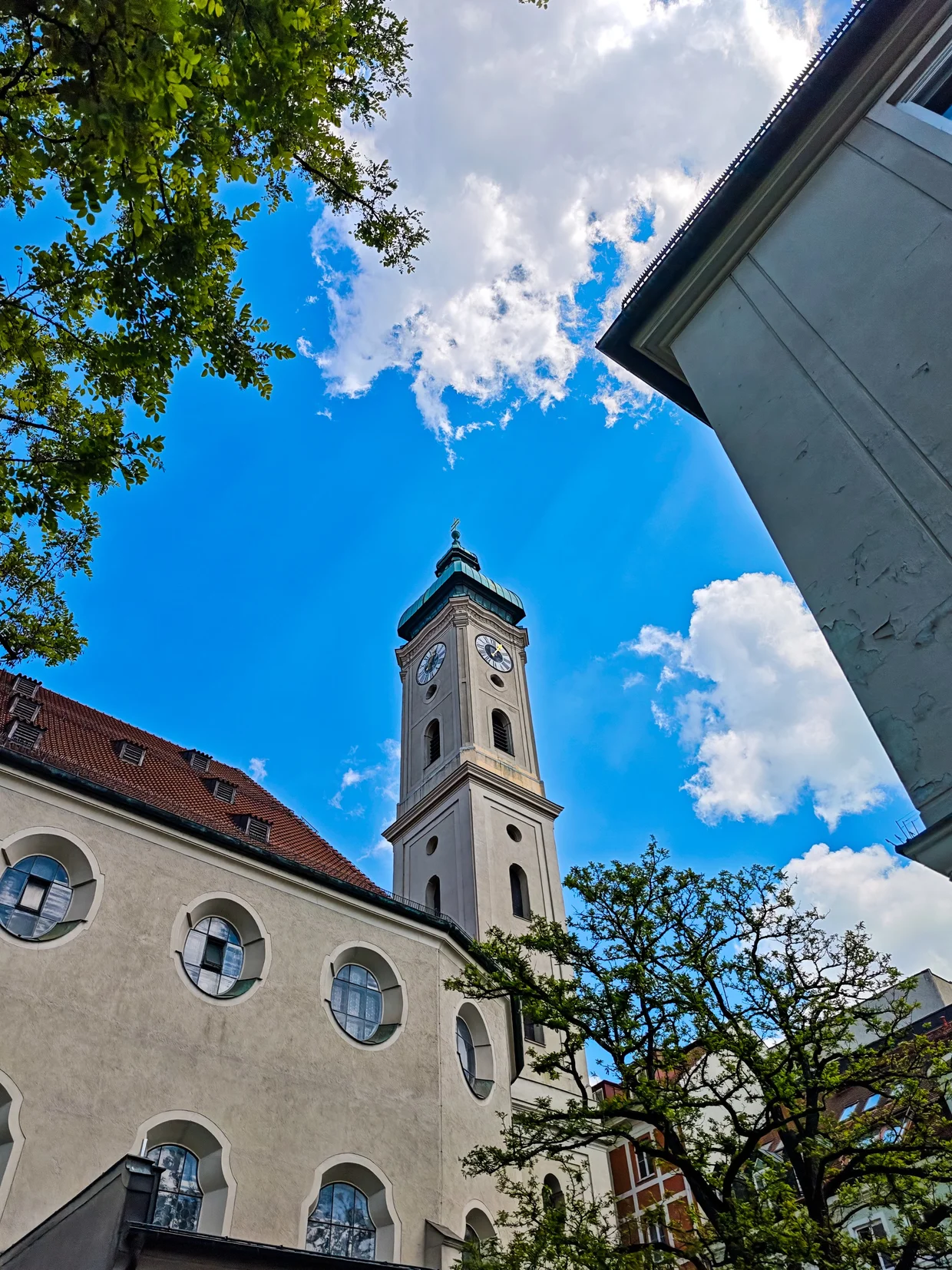
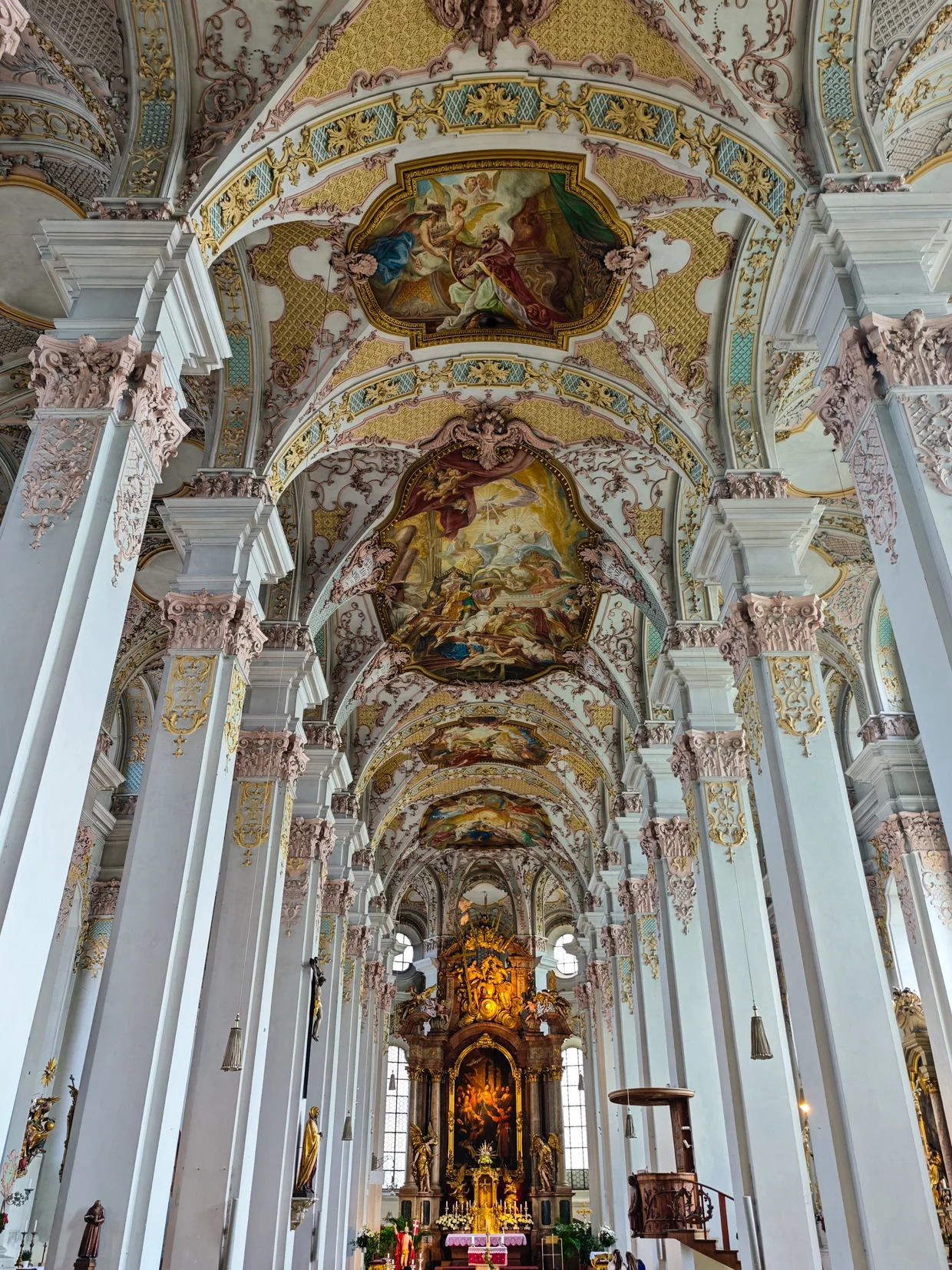
At the northern edge of the market, half-tucked between the stalls and Tal, is the Heilig-Geist-Kirche (Church of the Holy Spirit). From the outside it's a brick Gothic apse you'll walk past three times before noticing. Step inside and the surprise hits: a fully Asam-style Baroque interior with rococo stucco, painted ceiling frescoes, and the kind of pink-gold-white color palette you don't expect after the brick exterior. It's one of my favorite hidden-in-plain-sight churches in Munich.
A south-of-the-market detour: walk a block further south to St-Jakobs-Platz and you'll find the Münchner Stadtmuseum, the Jewish Center (a striking modern stone-and-glass cube with a synagogue and a small museum), and one of the quieter squares in the whole Altstadt. Just know that most of the Stadtmuseum is being refurbished until 2031, so treat it more as a landmark unless there's a specific interim exhibition you want to see.
Isartor, the East Gate
From Viktualienmarkt, head east along Tal toward the Isartor. The Isartor is one of the three surviving medieval city gates (the other two are Karlstor at Stachus and Sendlinger Tor down south, which we're skipping because it's outside the loop you actually want to walk). Isartor is the prettiest of the three.

It was built in the 14th century, restored in the 19th, partially blown up in WWII, and rebuilt again. The big fresco of the Crucifixion on the front of the central tower is from 1835 and looks every one of those years.
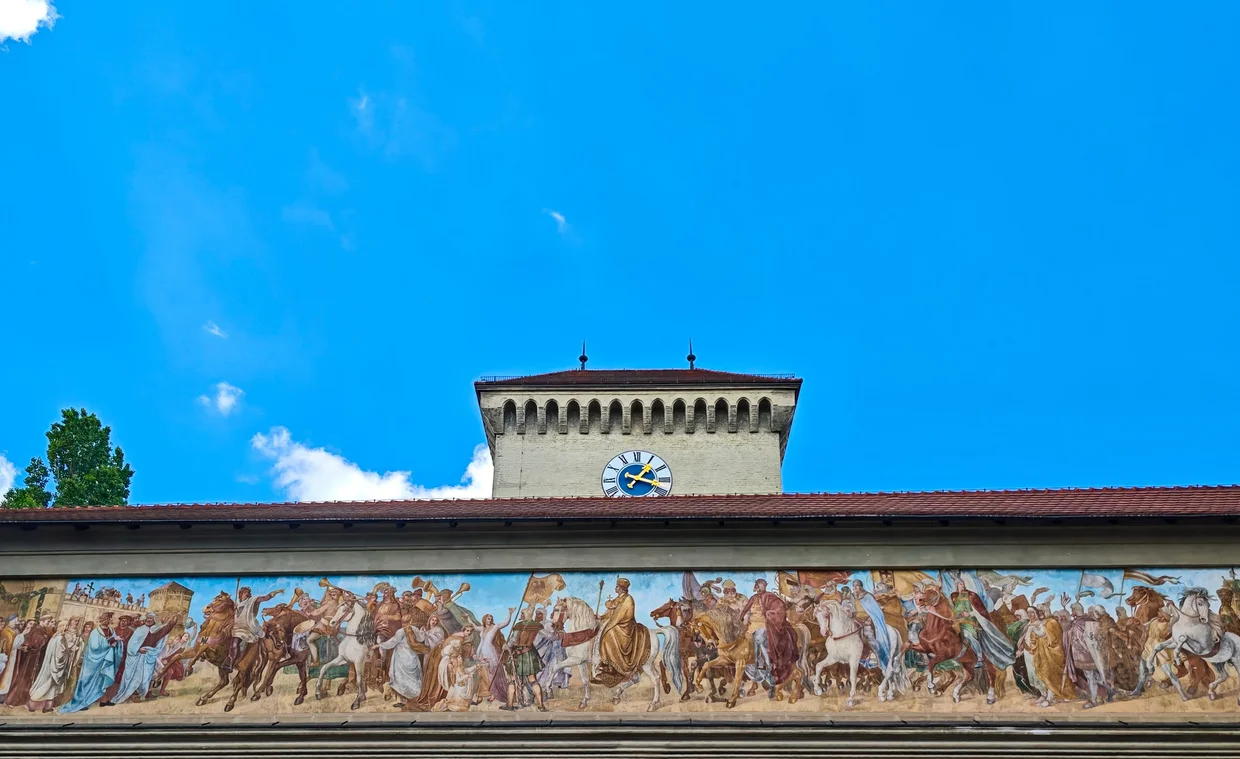
Walk through the gate to the city-side and look back. The inner facade carries a long historical fresco showing the triumphal entry of Kaiser Ludwig the Bavarian into Munich after his victory at the Battle of Mühldorf in 1322. Look up further and you'll see the central tower with its crenellations and the painted Bavarian shields below the roofline.
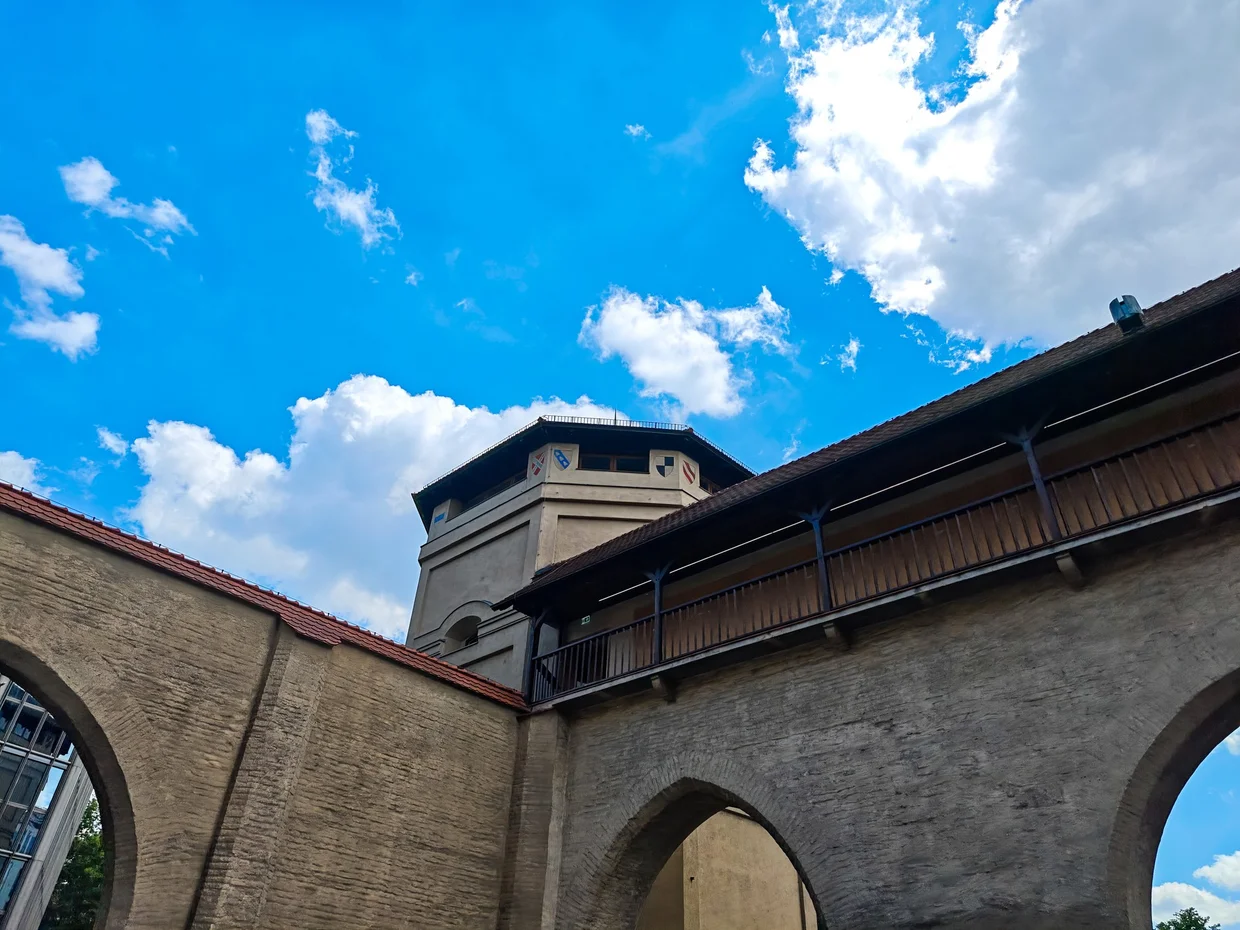
Inside the south tower is the Valentin-Karlstadt-Musäum, a museum about Karl Valentin, a Munich comedian from the early 20th century who was basically the German Buster Keaton with a mustache and a lot of philosophical sadness. The museum itself is a Karl-Valentin-style joke: tiny, chaotic, full of nonsense exhibits, accessible only by an extremely narrow spiral staircase. If you don't speak German, you'll miss most of the jokes. If you do, it's one of the best small museums in Munich.
After the Isartor, walk back west along Tal toward Marienplatz, but hang a right onto the smaller side streets (Burgstraße, Hochbrückenstraße) to find some of the oldest townhouses in the city. The painted facade on Burgstraße 5 is the Weinstadl, one of the oldest surviving Gothic burgher's houses in Munich.

Hofbräuhaus and Why It's Fine
Let's get this out of the way: yes, you should go. No, it's not where Münchners drink. Yes, it's still good. Yes, the band plays Ein Prosit der Gemütlichkeit every 15 minutes and the tourists stand on the benches. No, this is not technically allowed.
The Hofbräuhaus is a Royal Bavarian brewery founded in 1589 by Wilhelm V (the same wedding guy from the Glockenspiel) because Munich's beer at the time was, by his judgment, mediocre, and he wanted his own brown beer brewed in-house. It worked. It's been operating ever since. The current building is from 1897, the inside is the kind of vaulted, painted, thoroughly Bavarian beer hall that you've seen in every postcard.
Order a Maß (one liter) of Helles or Hofbräu Original. Eat a Schweinshaxe if you eat that kind of thing, or a Brez'n with Obatzda (a cheese-and-paprika spread that is the actual best thing on the menu) if you don't. Don't tip more than a euro on a Maß. The waitresses carry eight of them at once and have stronger forearms than you. Show some respect.
The garden in the back is calmer than the Schwemme, the ground-floor beer hall where the daily bands play and most of the actual chaos happens. The Festsaal upstairs is more for events and Bavarian evenings. Pick your room based on your mood.
All that, of course, if you get inside. It fills up fast, it stays full, and on a sunny weekend you'll be circling tables for a while before something opens up.

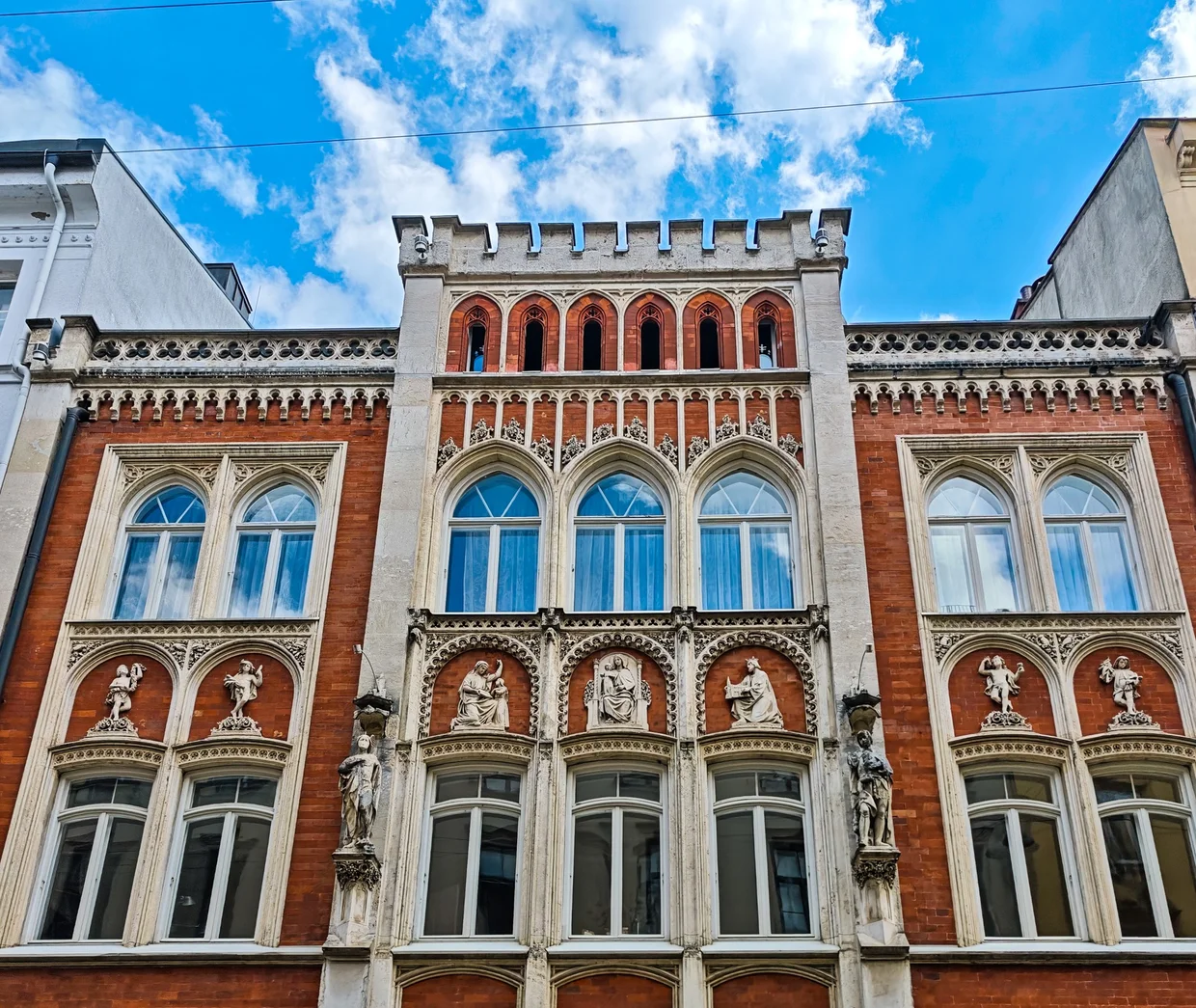
Real talk: the Hofbräuhaus is a tourist institution that knows exactly what it is. It's not pretending to be a hidden gem. It's a 437-year-old beer hall that can serve beer to 30,000 visitors on peak days. Go once, drink one Maß, eat one pretzel, listen to one Ein Prosit, and then leave and find a quieter spot. The Augustiner-Großgaststätte on Neuhauser Straße or the Andechser am Dom behind the Frauenkirche are both better for actual food. You're welcome.
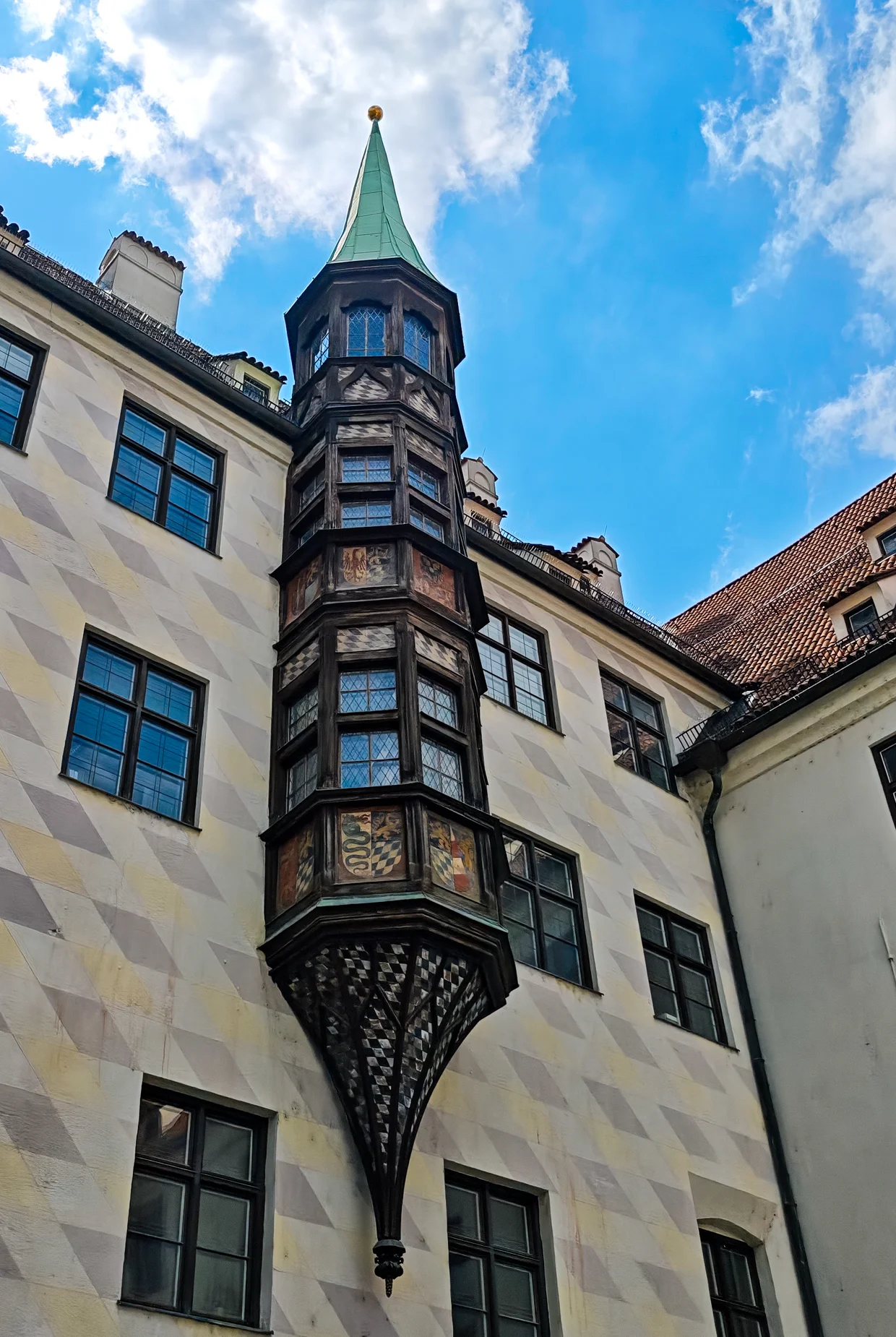
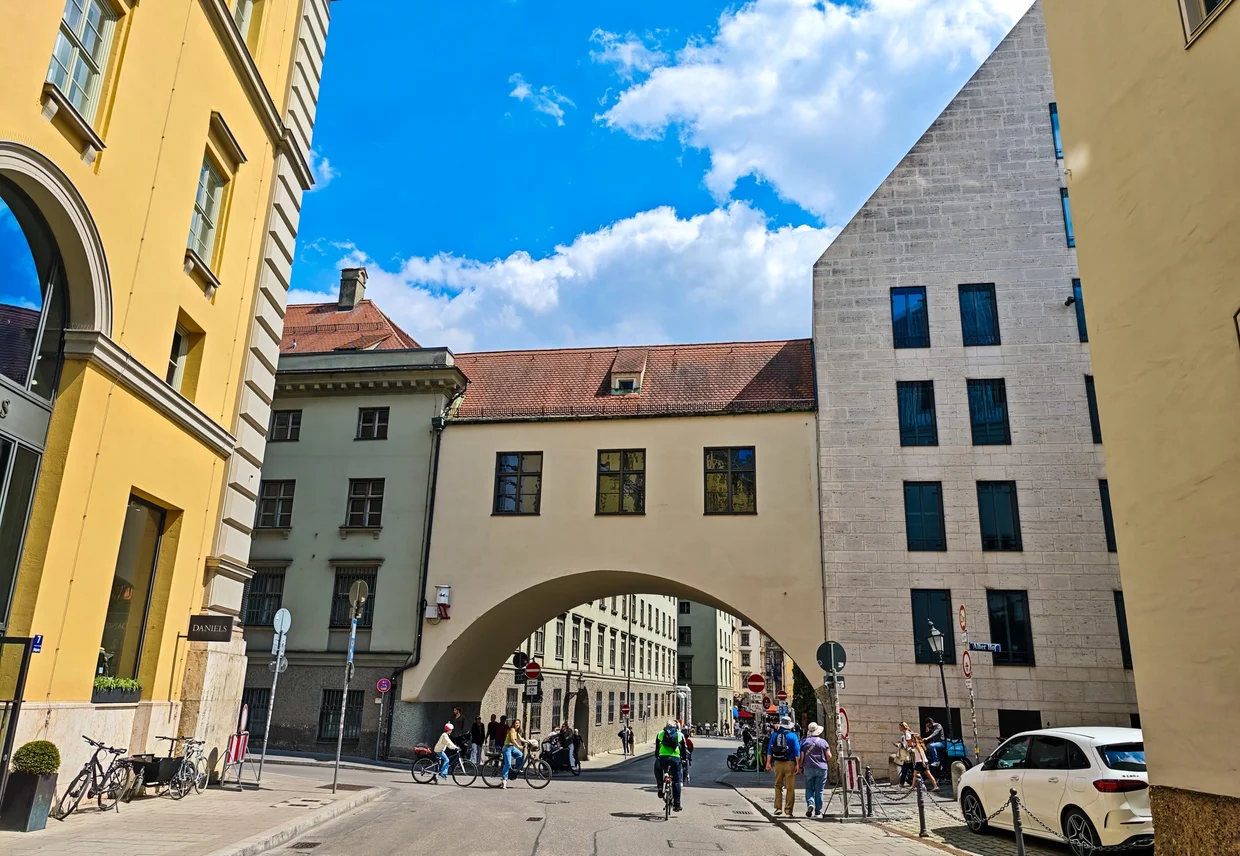
Two minutes west of the Hofbräuhaus is something almost no one mentions: the Alter Hof, the original residence of the Wittelsbachs from the 13th century, before they built the much grander Residenz a few hundred meters north. The whole complex is a quiet pentagon of low buildings around an inner courtyard. The single thing to look up at is the Affenturm (monkey tower) with its incredible late-Gothic Erkerturm, a wooden oriel that hangs off the wall like a small turret. Local legend: a court monkey once snatched the infant Ludwig the Bavarian from his cradle and carried him up here. The baby survived. The monkey did not get a raise.
Maximilianstraße, the Least Fun Luxury Street in the World
Walk north from the Hofbräuhaus and you hit Maximilianstraße. This is Munich's luxury boulevard, designed in the 1850s by King Max II as a grand showpiece avenue between the Residenz and the Isar. It consistently shows up on lists of the most expensive shopping streets in the world. And in my opinion it's also the most boring of them.

Hear me out. There's no pedestrian zone. There are no real street cafes. Down the middle runs a tram line. Both lanes are full of cars circling for a parking space and buses muscling past them. The shop windows are immaculate (Louis Vuitton, Chanel, Prada, Dior, every other house with a logo and a velvet rope), but actually being on the street is just noisy and inconvenient. It feels forced. Like a luxury district that someone built without thinking about whether anyone would want to walk through it.
Munich did once have a word for the old-money crowd that populated this kind of place: Schickeria. The real Schickeria era is long gone. What's left is the architecture, the brand names, and a steady flow of rented convertibles.
A few buildings still earn the walk:
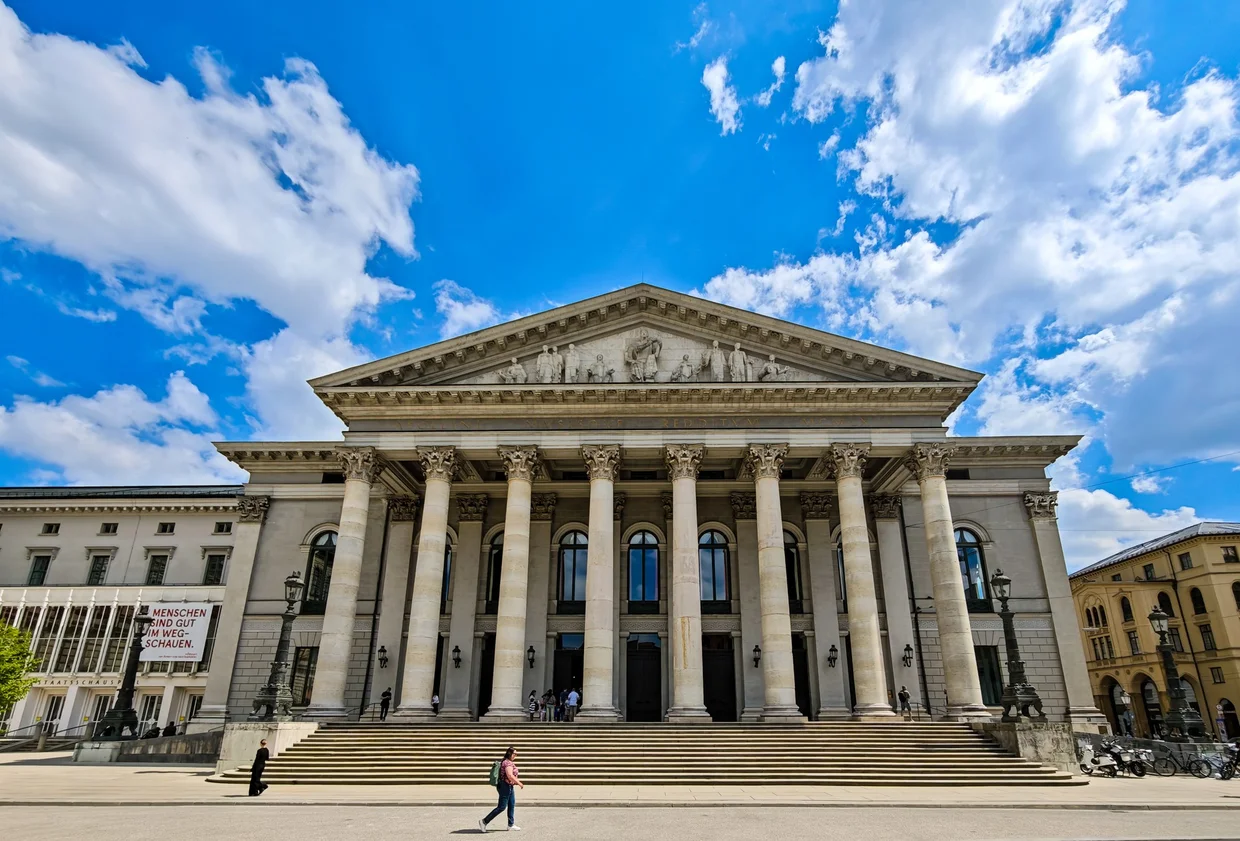
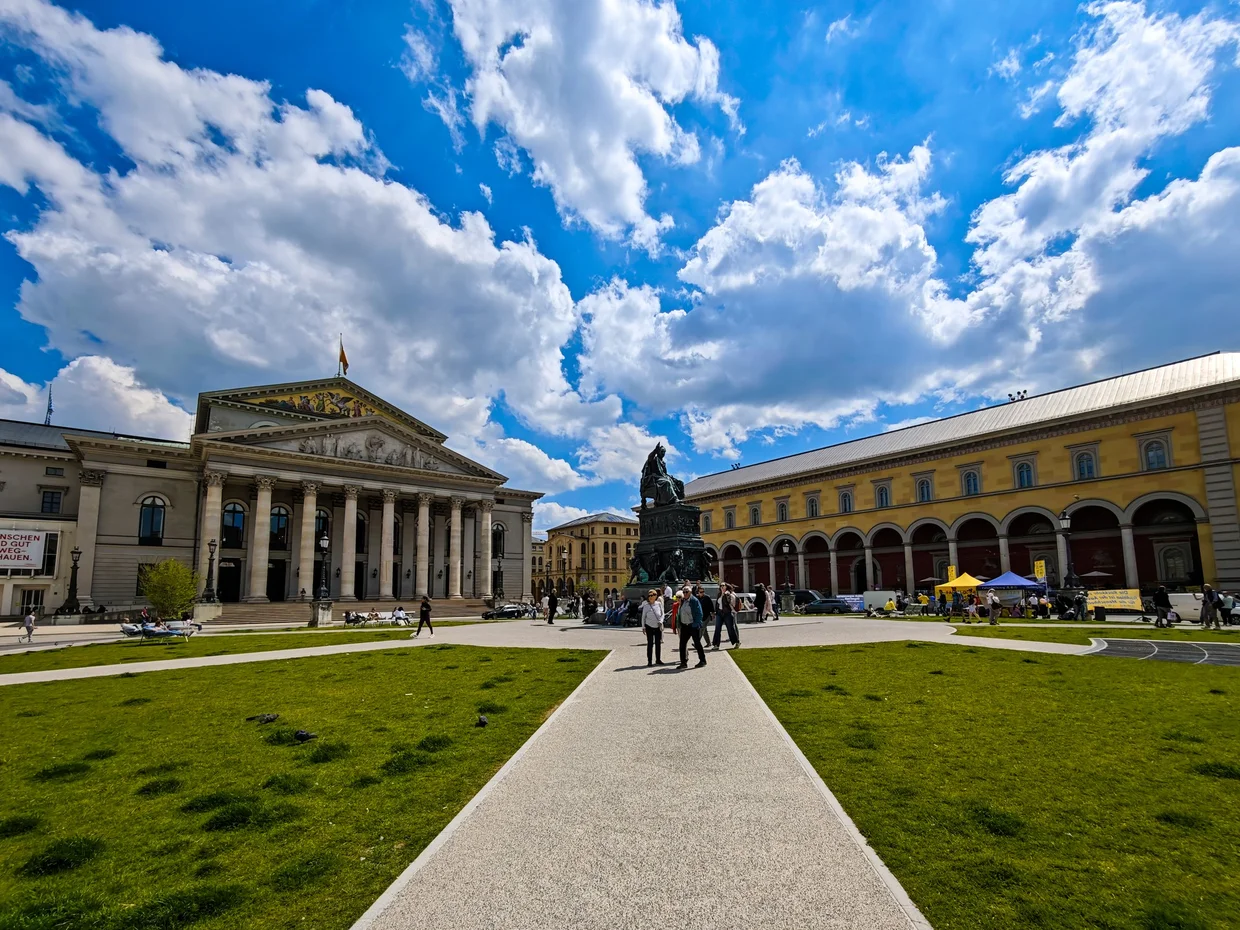
- The Bayerische Staatsoper (Nationaltheater) at the western end. White, columned, the kind of opera house that looks like a bank. Catch a performance if you can.
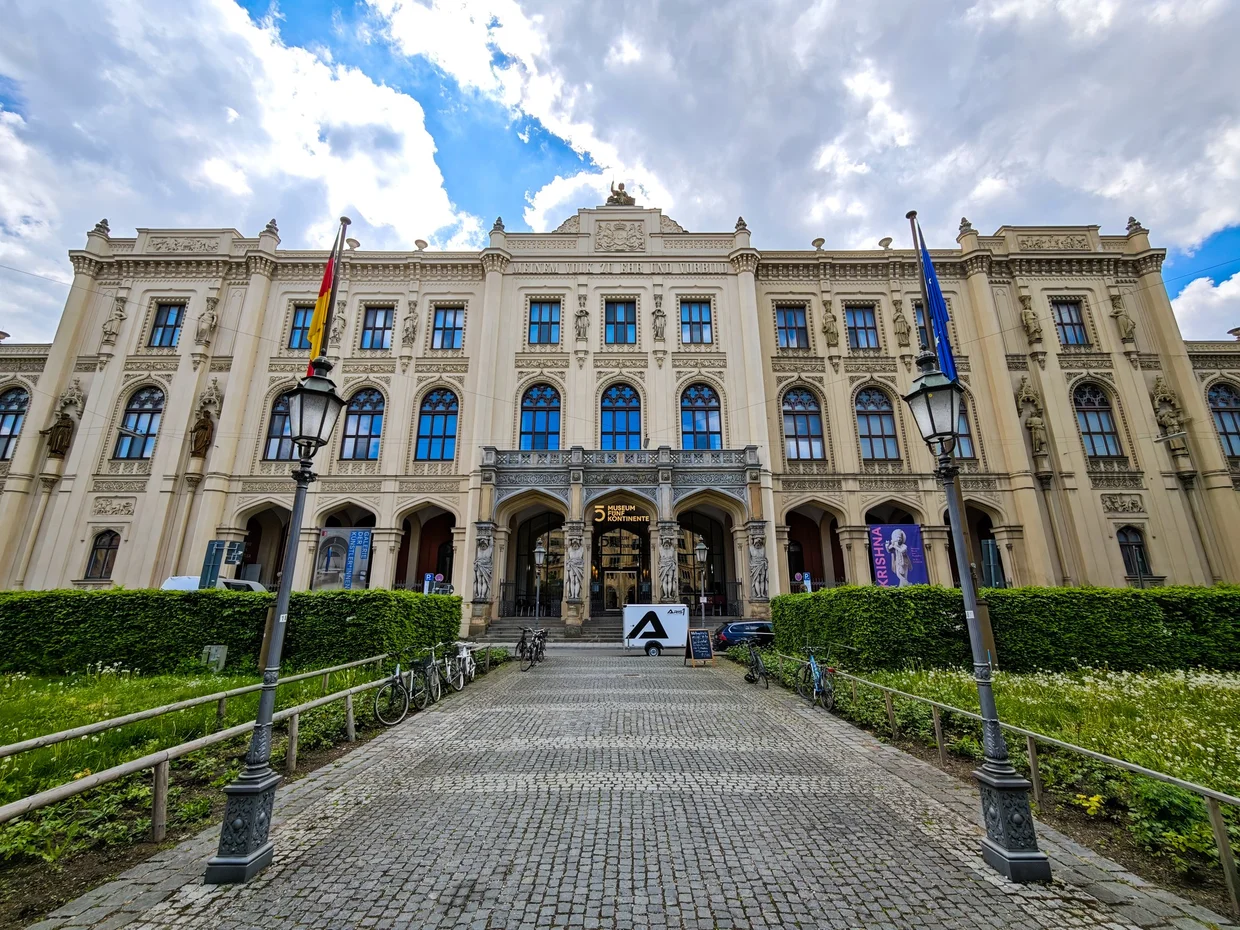
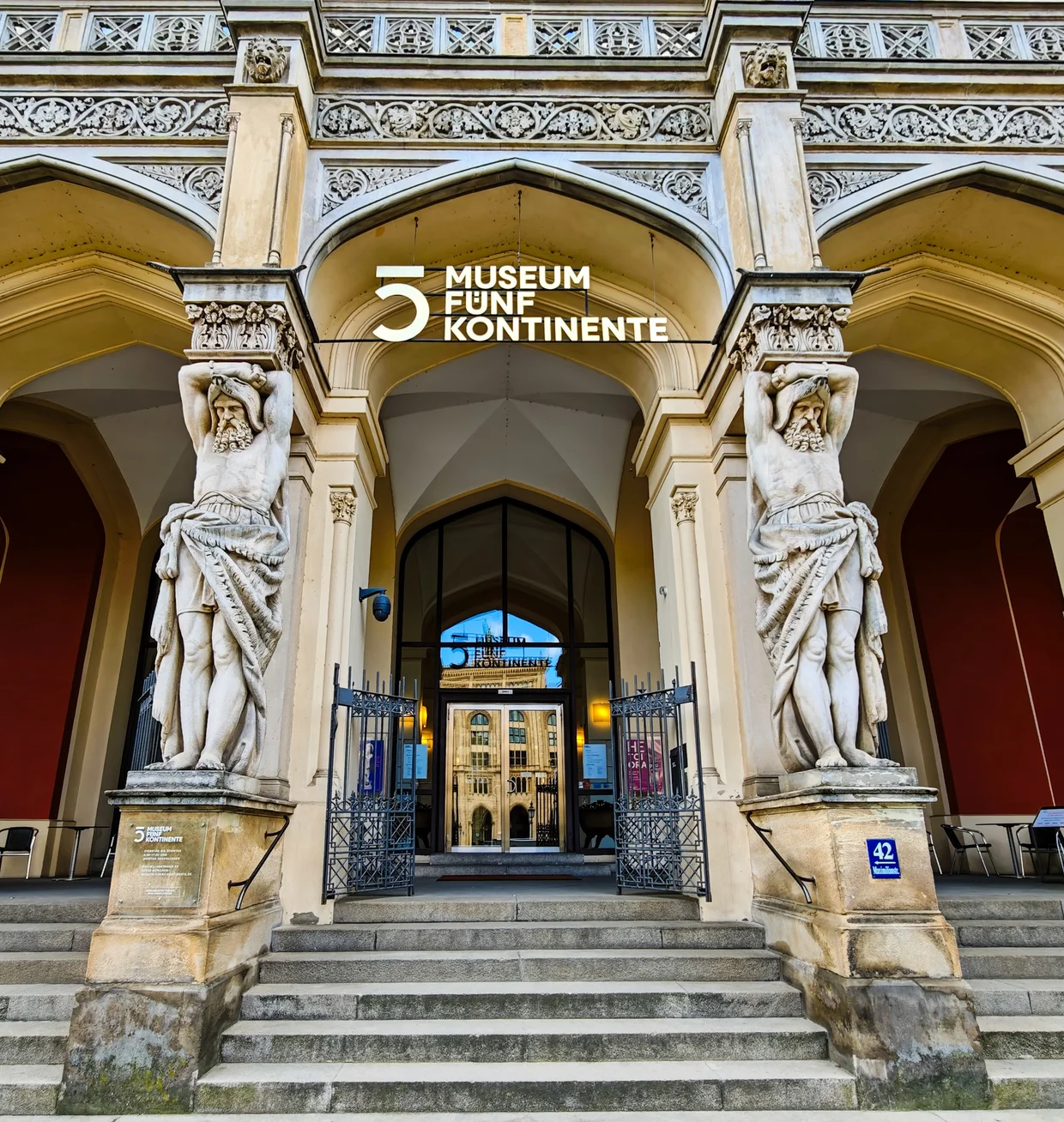
- The Museum Fünf Kontinente (Five Continents Museum), a few blocks east. Munich's old ethnographic museum, one of the oldest of its kind in Europe, with a permanent collection that's both fascinating and complicated for the obvious post-colonial reasons.
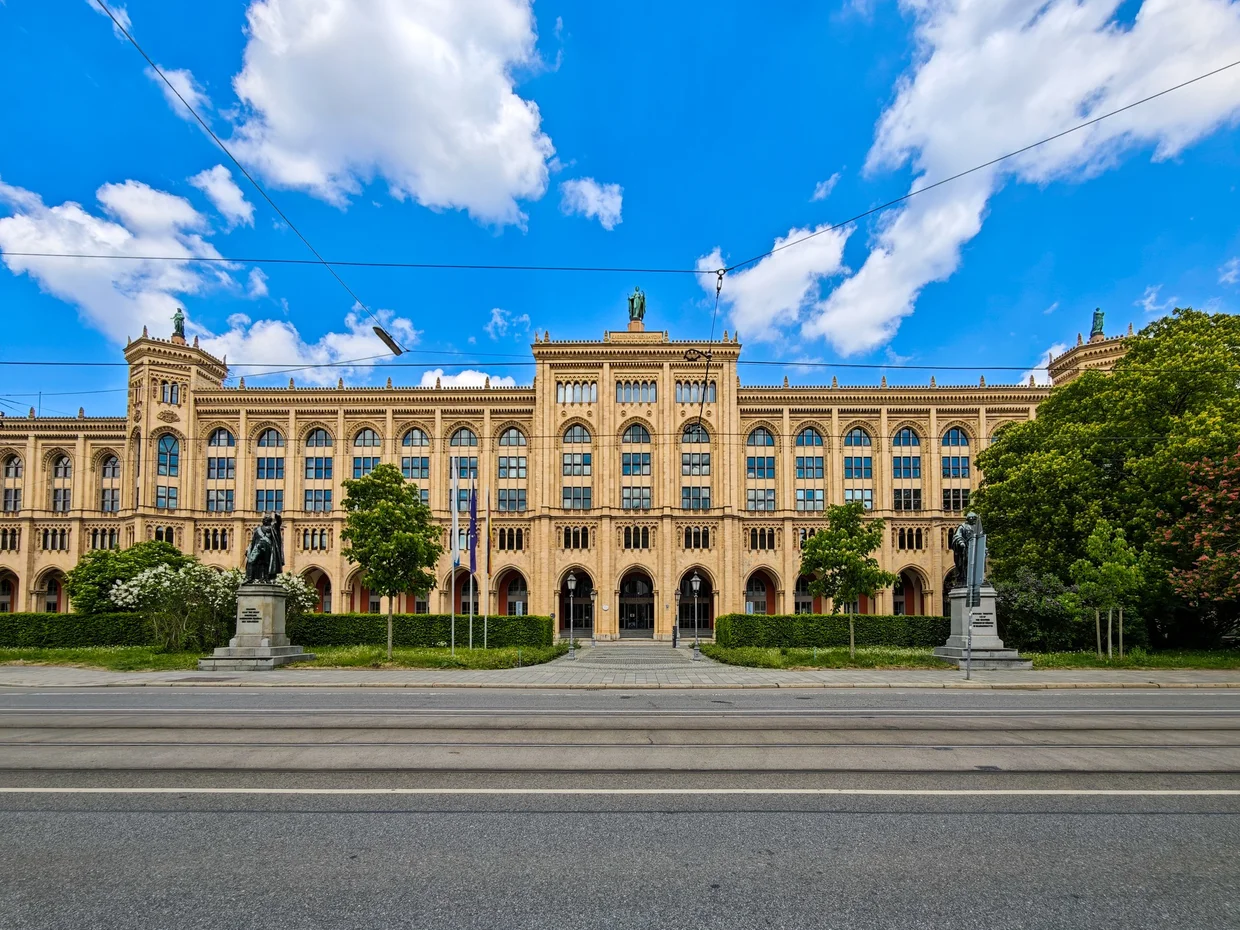
A bit further east stands the Regierung von Oberbayern, the seat of the Upper Bavarian government. Yellow-stone neo-Gothic, an entire long block of pointed arches and pinnacles. It's one of the better-looking buildings on the street, and most people walk past it staring at their phones.
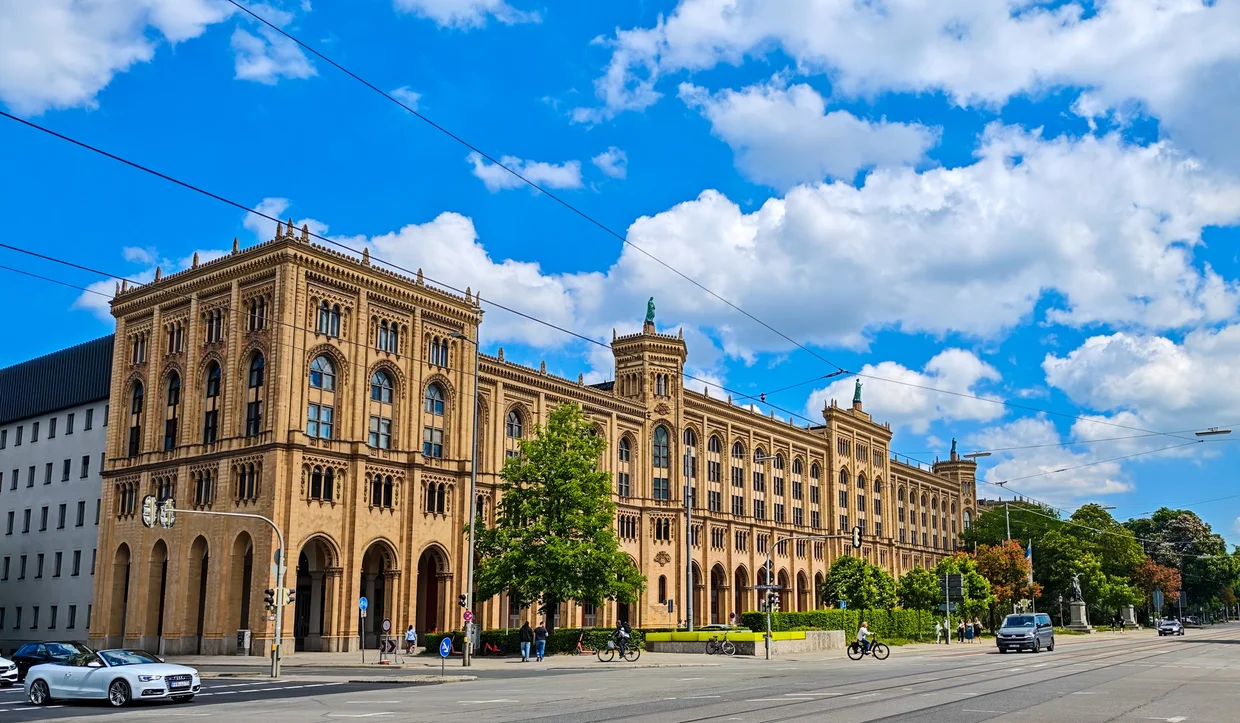
If you walk all the way east, you'll cross the Isar and end up at the Maximilianeum, the Bavarian state parliament. Outside the Altstadtring and outside the scope of this page, but you can see it from here. It's the big yellow thing on the hill.
The good news: a few minutes back west, behind the Residenz, the Fünf Höfe and the small Gassen between Theatinerstraße and Salvatorplatz are calmer, properly pedestrian, and a much nicer wander. More on that in a moment.
Residenz and Hofgarten, the Royal Block
Back inside the ring, the Residenz takes up an entire block north of Max-Joseph-Platz. It was the seat of the Bavarian dukes, electors, and kings from 1508 until 1918. Then there were no more kings, and the Residenz became a museum.
It is enormous. There are ten courtyards. The museum itself has more than 130 rooms. You will not see all of it. Nobody sees all of it on one visit and stays sane. Pick: the Antiquarium (an absurdly long Renaissance hall covered in frescoes, the longest secular Renaissance hall north of the Alps), the Cuvilliés-Theater (Rococo court theater that survived WWII because they took the panels down and stored them in a cave), or the Treasury (crowns, swords, reliquaries, one of Europe's best royal collections, and a rhino-horn cup if that's your thing).
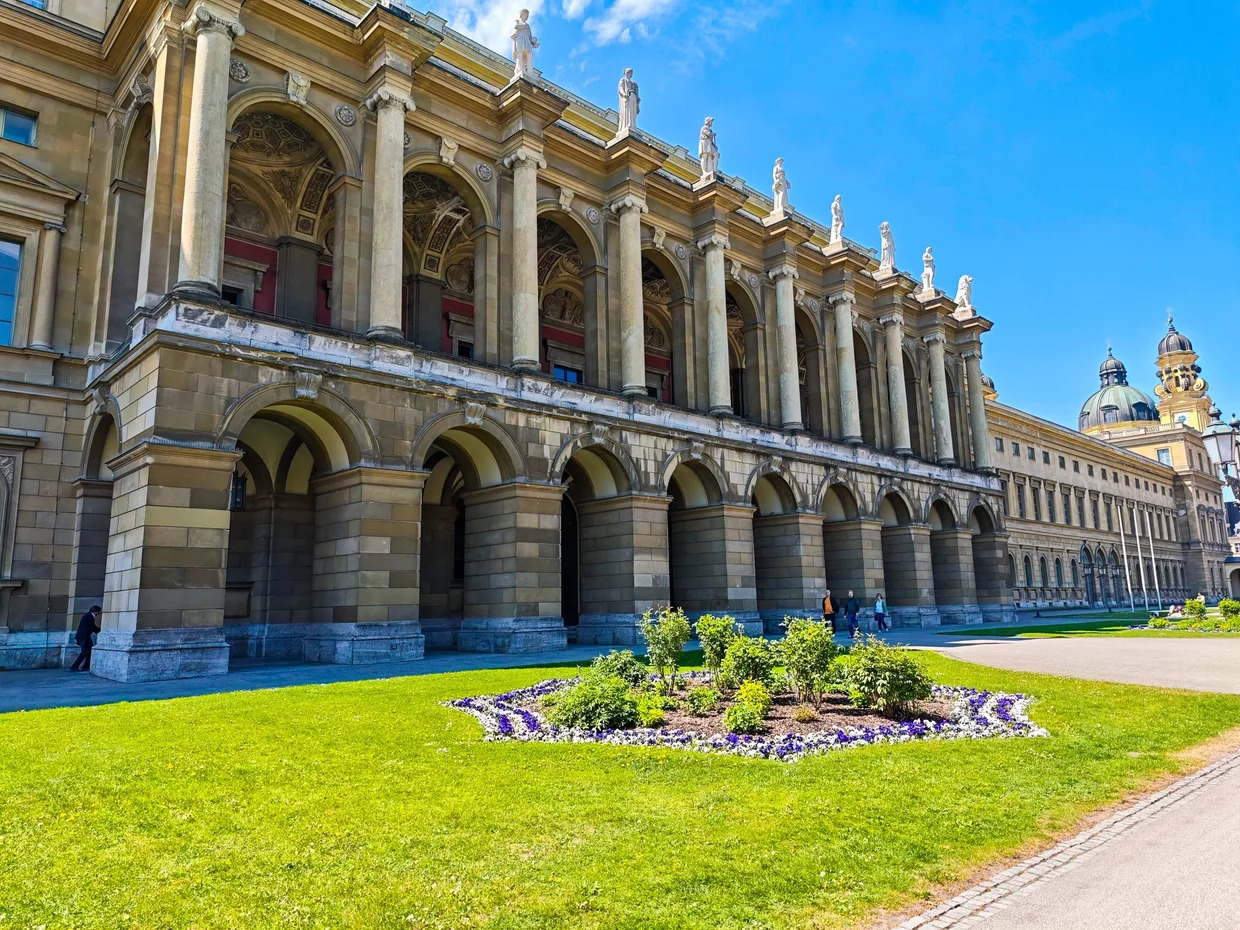
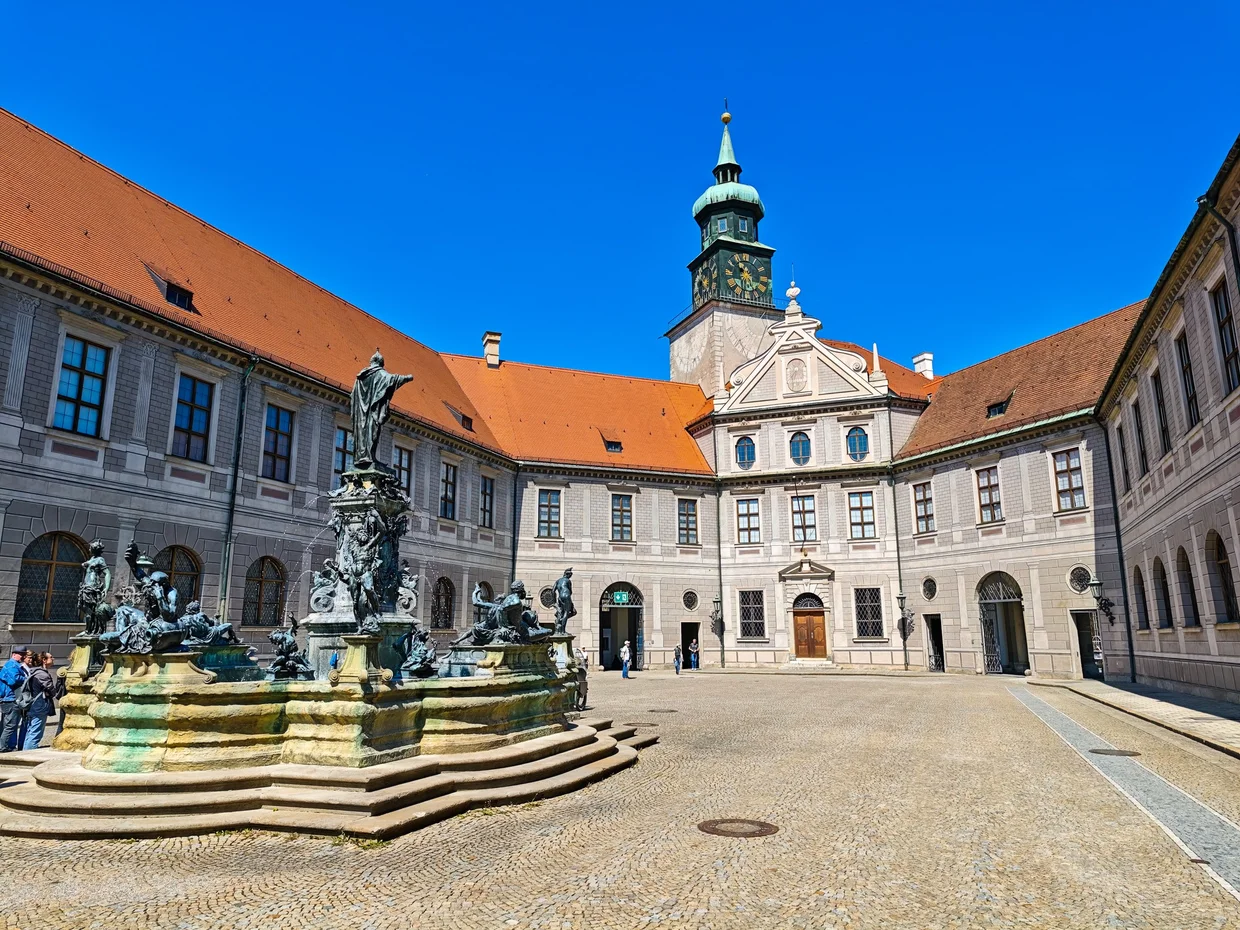
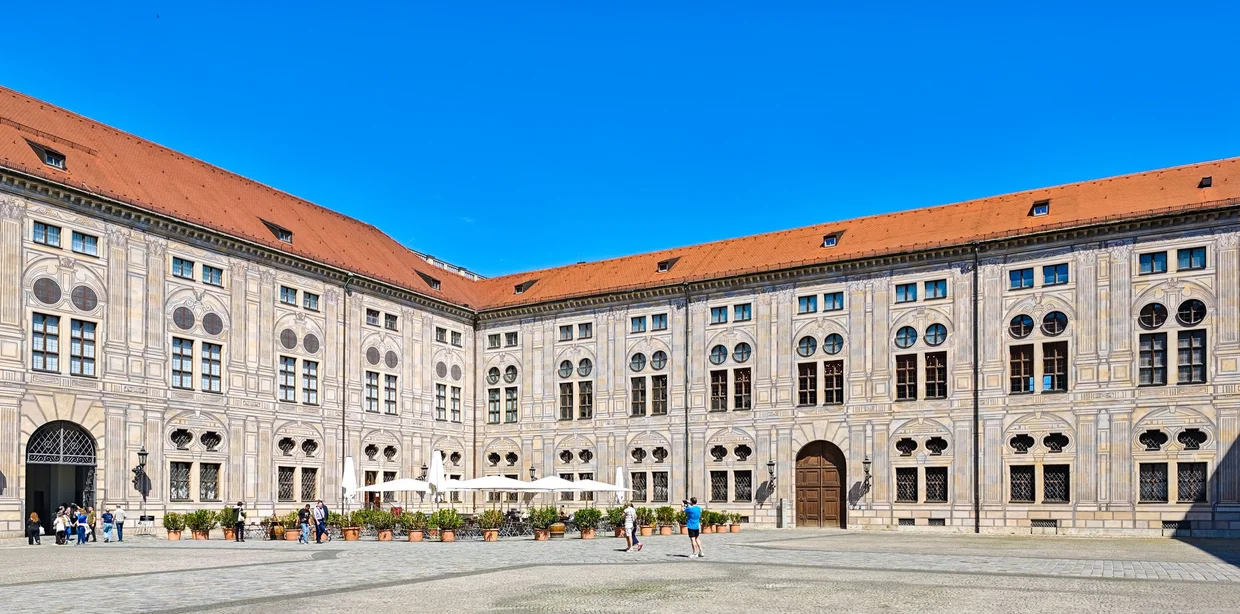
If you only have an hour, do the Antiquarium and the Treasury. If you have half a day, do all three. If you have less than an hour, just walk through the courtyards (free) and pretend.
The big inner cobblestone courtyard between Festsaalbau and Königsbau, the Kaiserhof, is one of the largest enclosed Renaissance courtyards in Germany. It's frequently empty. Sit there for ten minutes and pretend you own the place.
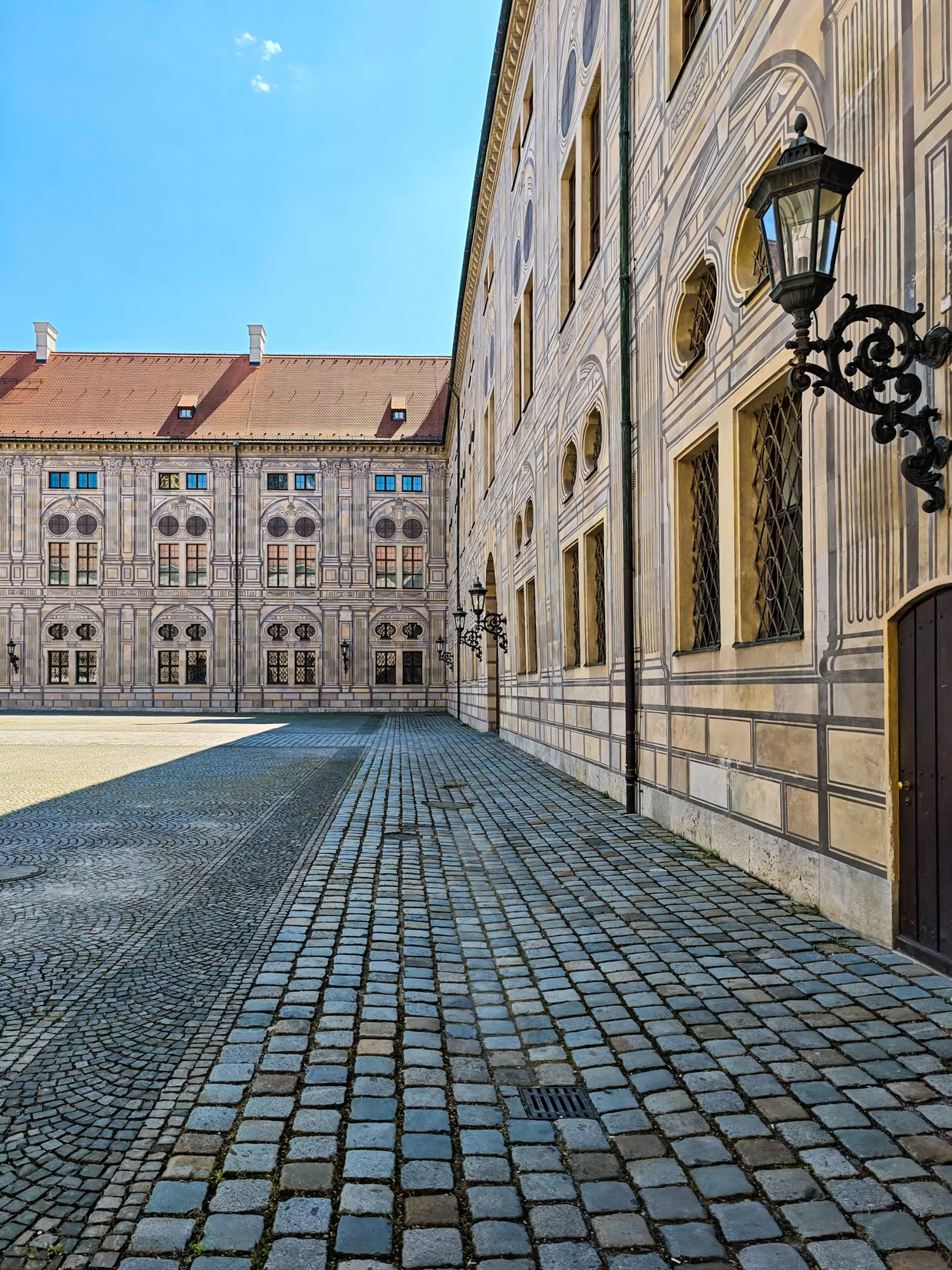
The Brunnenhof in the middle is a small Renaissance courtyard with the Wittelsbach Fountain at its center. It's used for summer concerts. It's also one of the few places in central Munich where you can sit on a bench in complete quiet and pretend the rest of the city isn't there.

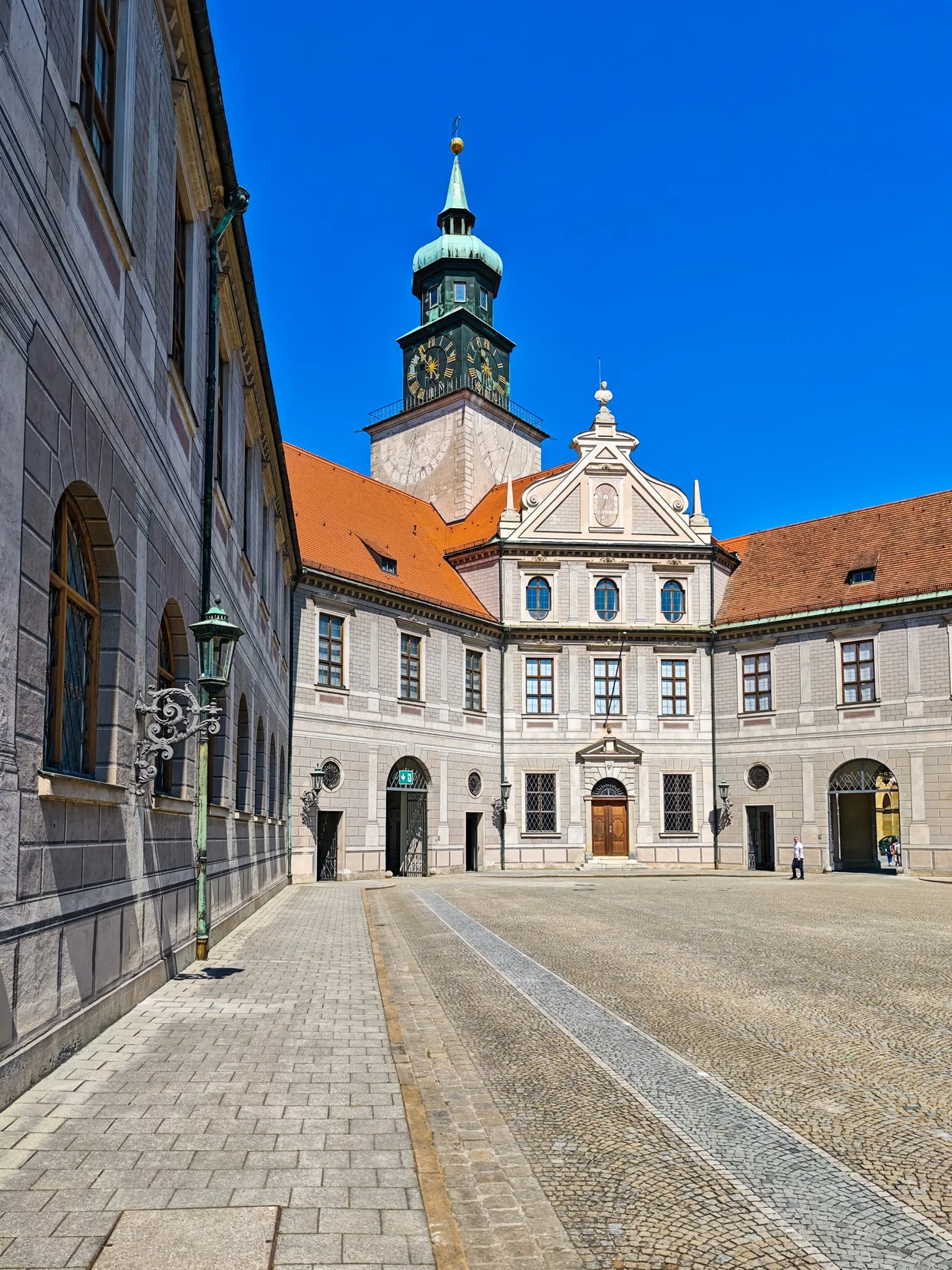
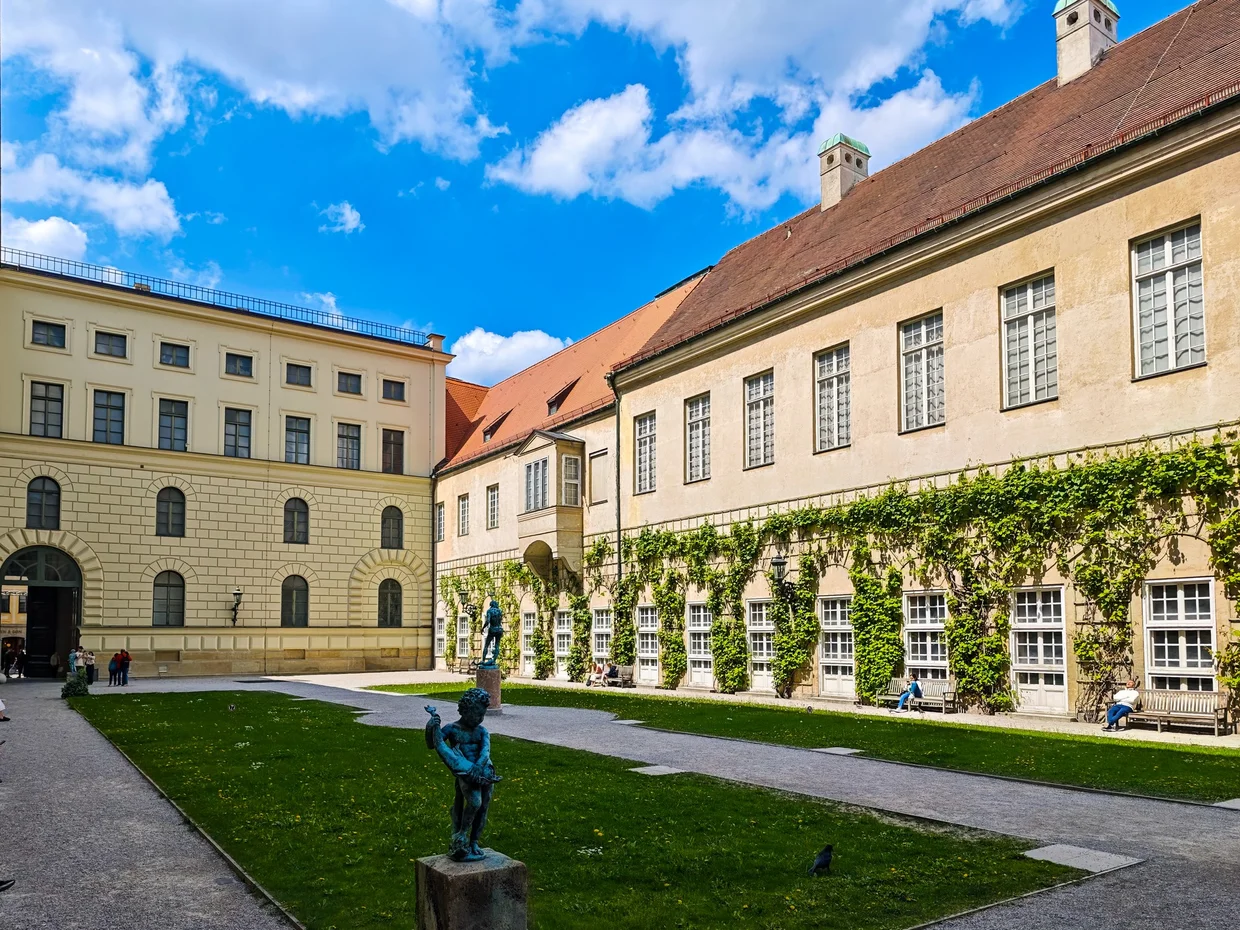
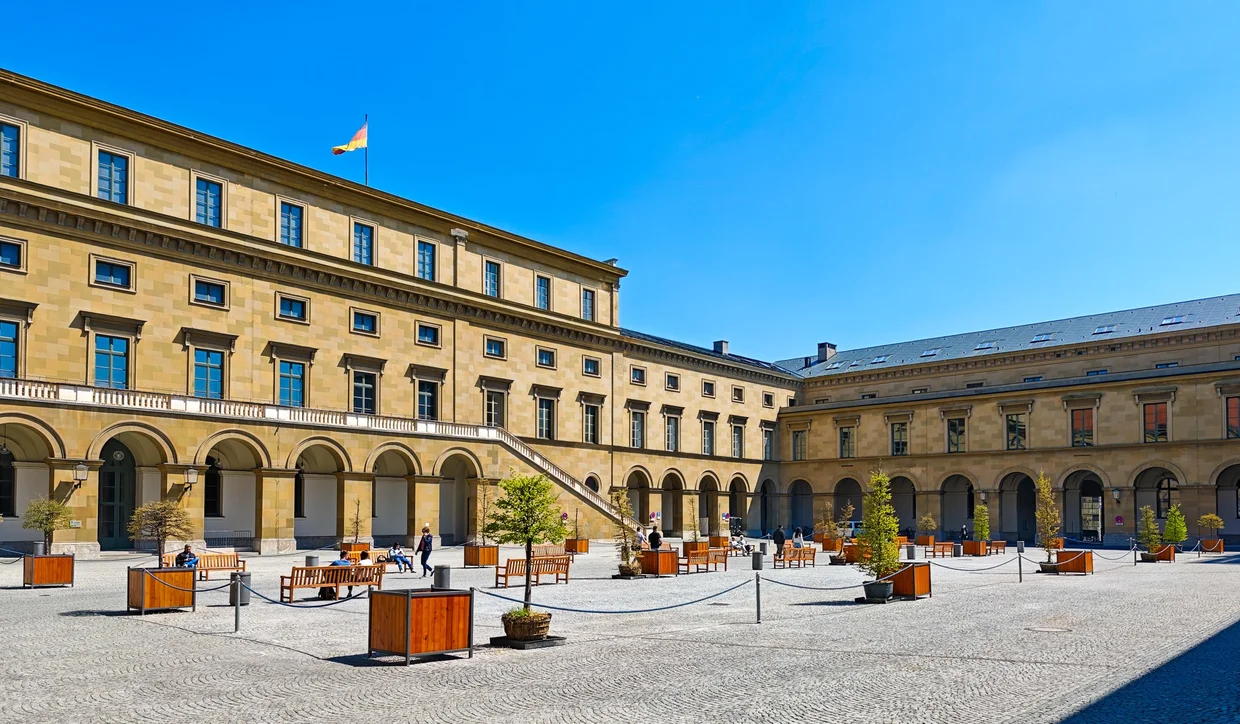
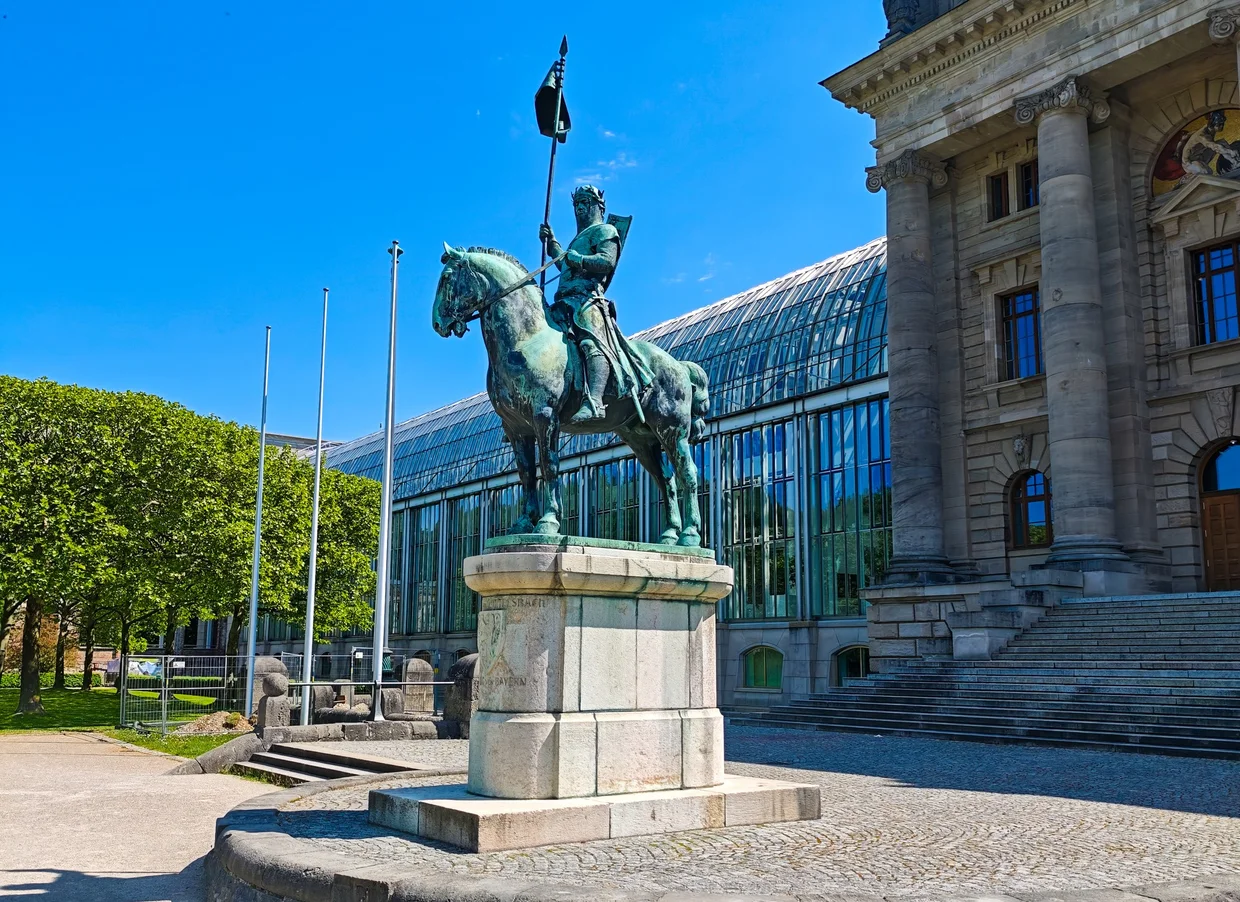
The other quiet courtyards each have their own character. The Kapellenhof is anchored by the Antiquariumsturm clock tower with its onion dome. The Apothekenhof behind has a small bronze putto fountain in the corner of the lawn. And the Marstallplatz outside, on the eastern flank of the Residenz, opens onto a long classical arcade and a bronze equestrian statue of a Bavarian elector in full armor.
Behind the Residenz is the Hofgarten, a formal Italian-style Renaissance garden from 1613 with low hedges, gravel paths, and the small Dianatempel rotunda in the middle. On top of the Dianatempel is a bronze figure called Tellus Bavarica, but everyone calls her Bavaria because that's easier and because she looks like a Bavaria.

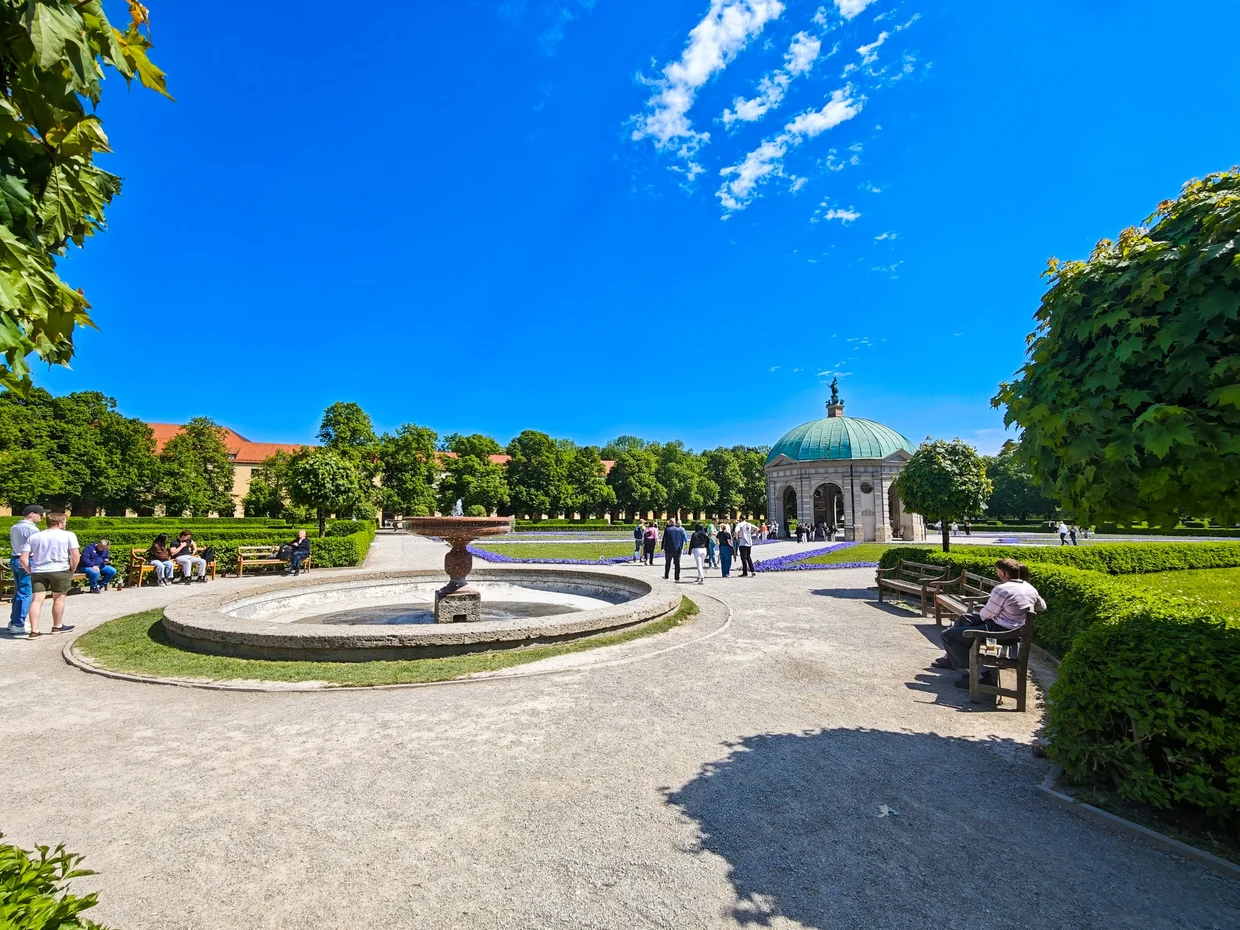
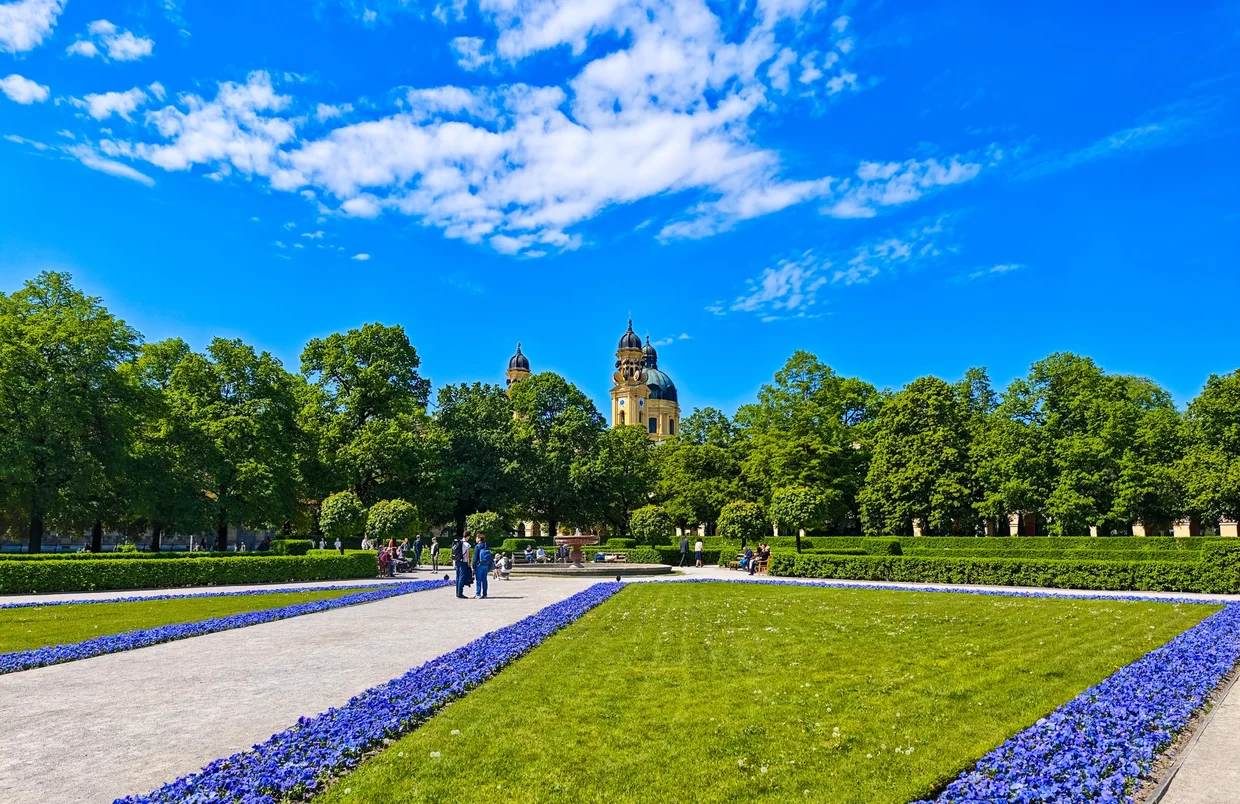
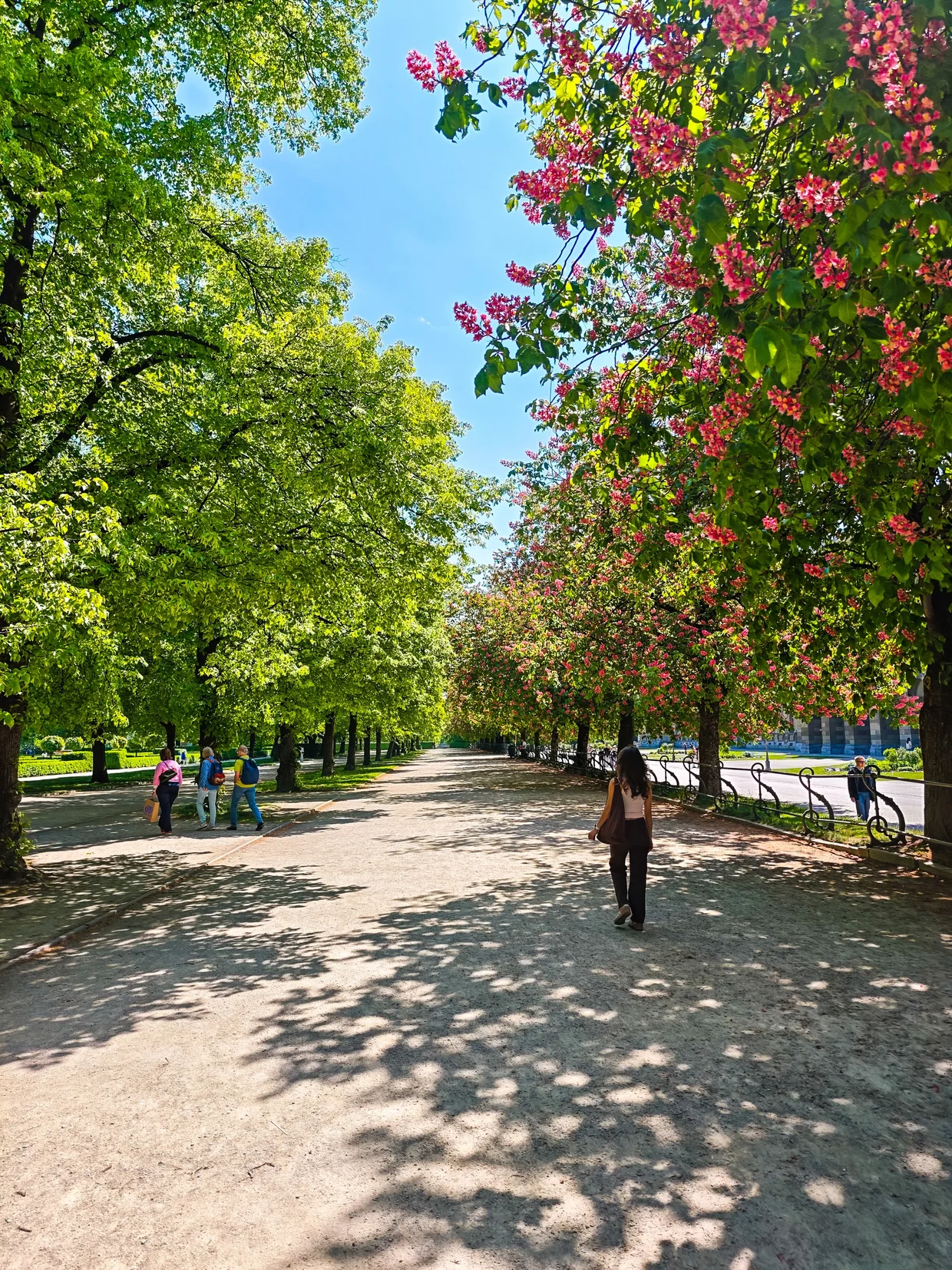
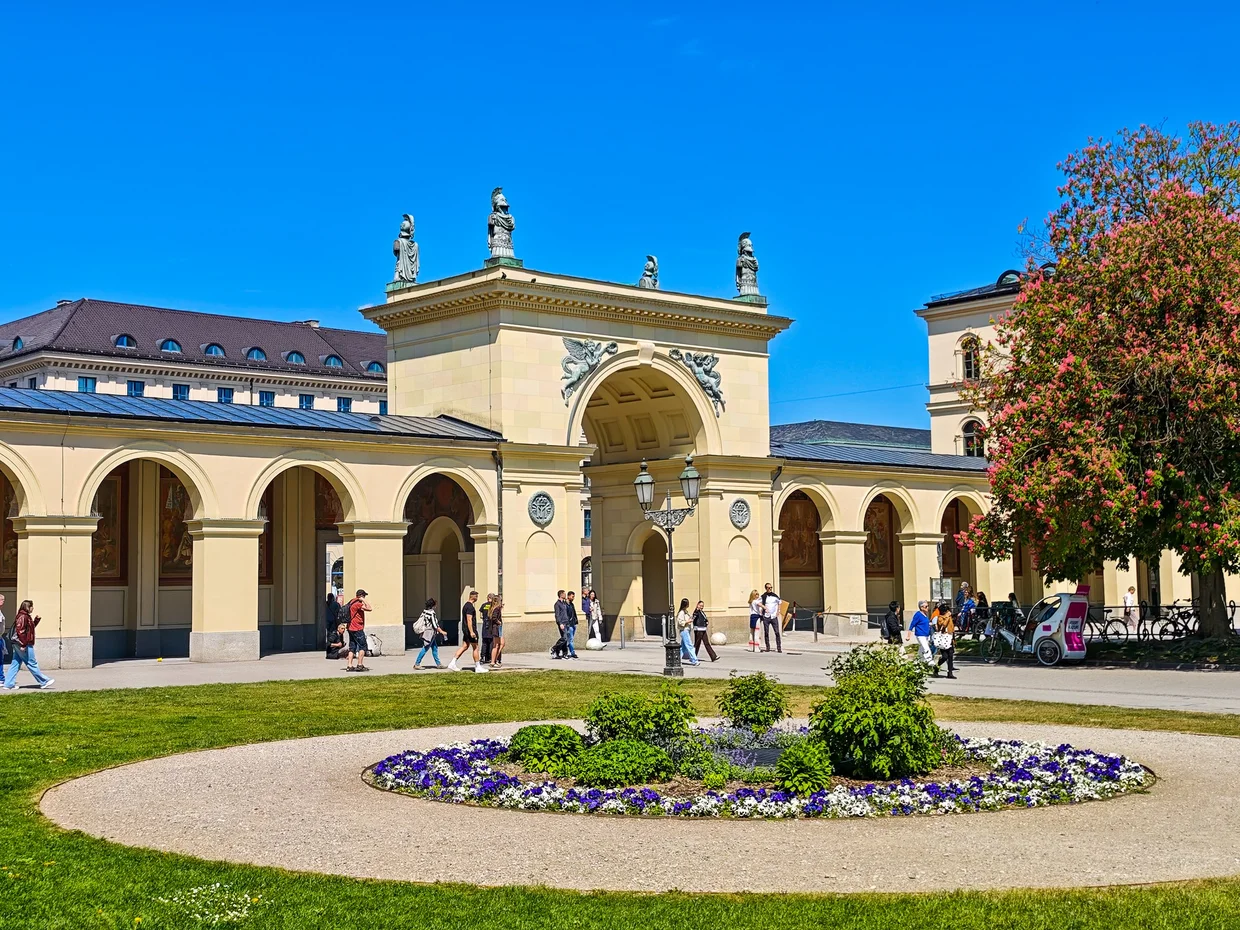
The Hofgarten is one of the more pleasant parks in Munich. There's almost always someone playing Boule (yes, French Boule, in Bavaria, don't ask) on the gravel near the eastern end. There's a cafe under the arcades. On the north side, the Kriegerdenkmal (Warrior Memorial) is worth pausing at.

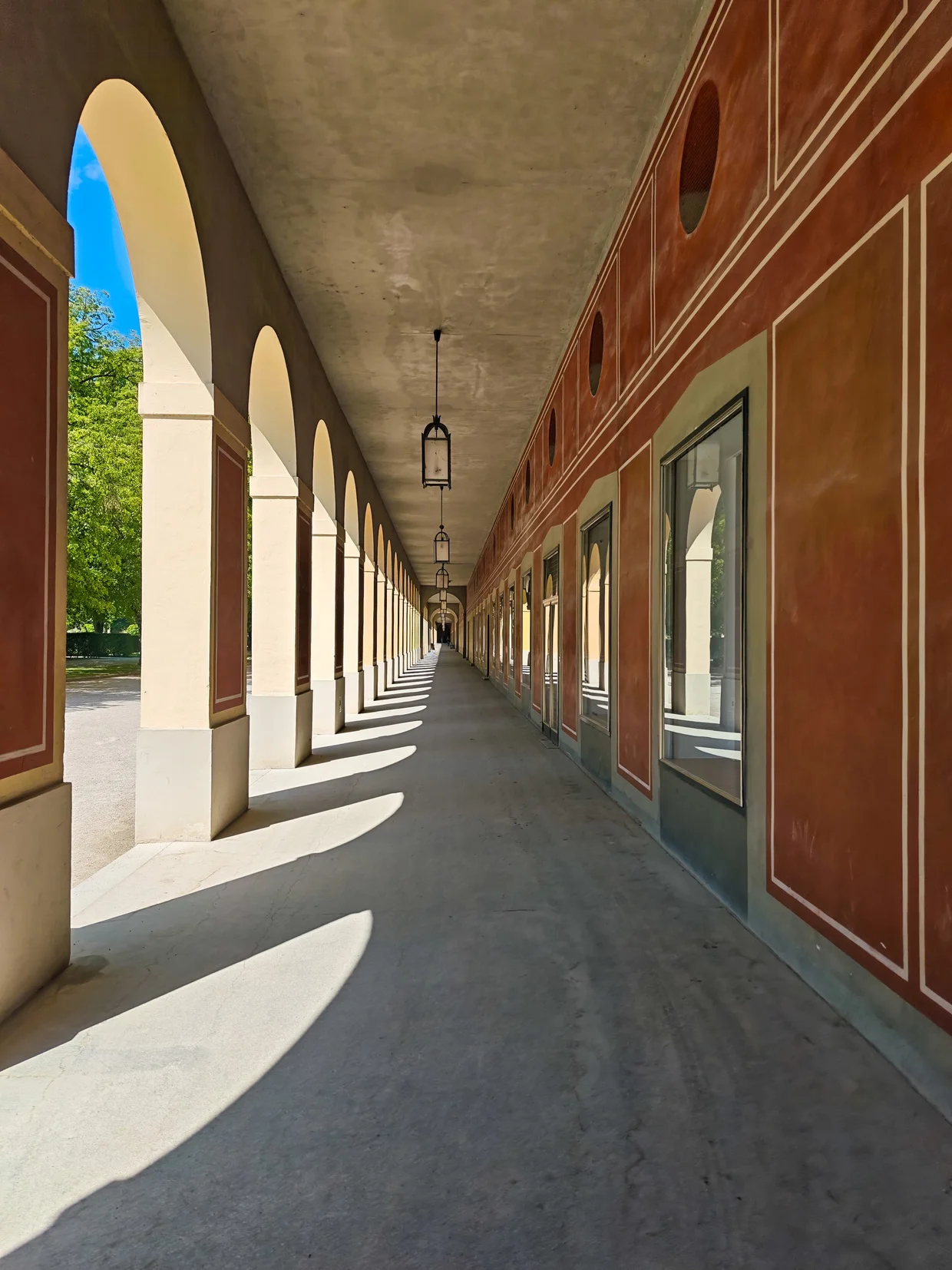
The arcades on the southern and western sides (the Hofgartenarkaden) are worth the slow walk. Painted dark red on the inside, vaulted, lit by hanging lanterns, the perspective view down the long arcade is one of the best architectural shots in central Munich.
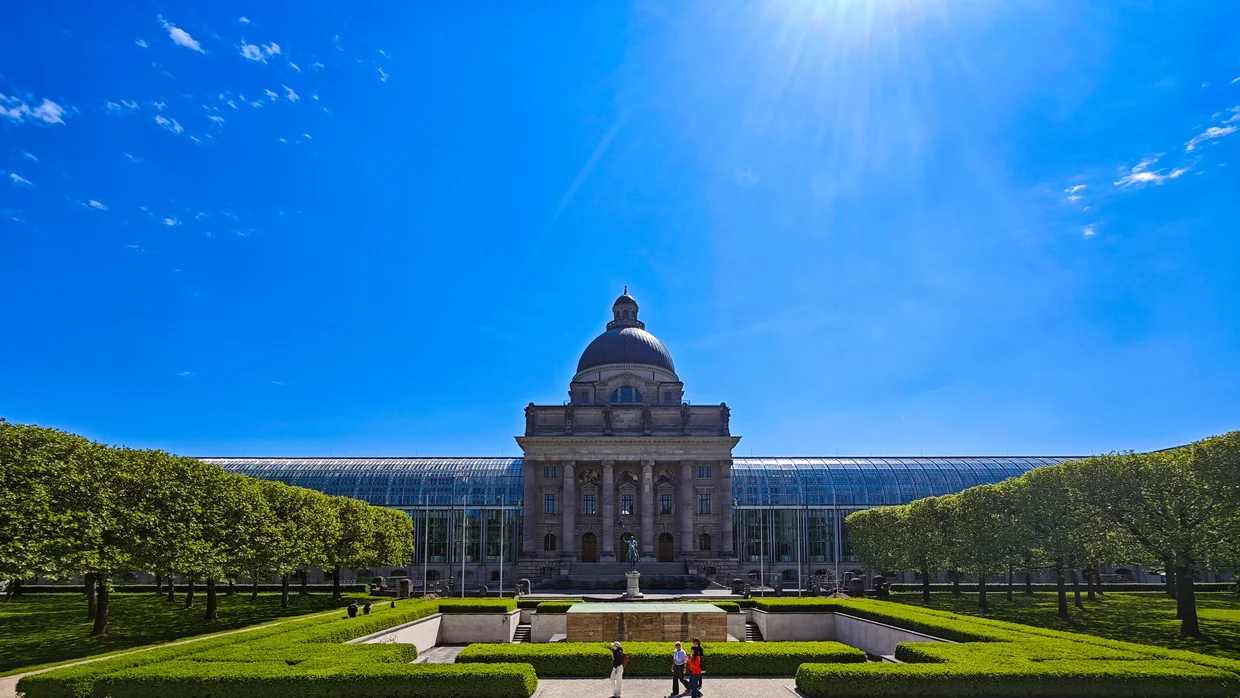
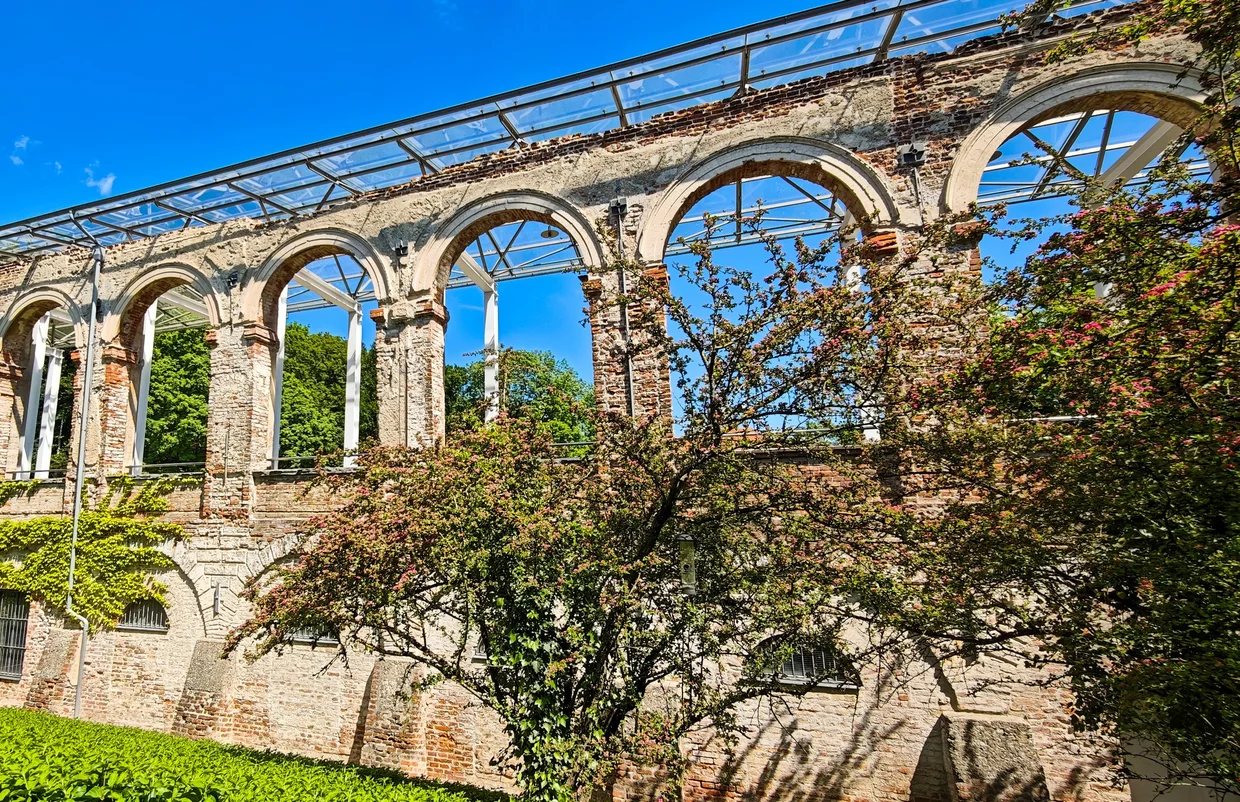
The huge domed building behind the Hofgarten is the Bayerische Staatskanzlei, the Bavarian State Chancellery. It was built around the surviving central section of the old Bavarian Army Museum, with two big modern glass wings tacked onto either side. The result is what happens when an architect tries to please both the heritage commission and a postmodernist. Some people love it. Some people don't. You decide.
Odeonsplatz, Theatinerkirche, and the Drückebergergasserl
Just south of the Hofgarten is Odeonsplatz, which is one of the most photographed squares in Munich and also one of the most historically loaded. Three things define it:
- The Theatinerkirche, that ridiculously yellow Italian Baroque church on the western side. Its color is officially Theatiner-Gelb (Theatiner yellow), which is just Pope-yellow with a Bavarian accent. The church was built in the 17th century by an Italian architect for the Italian wife of the Bavarian elector, who was tired of the Gothic Bavarian churches and wanted something that looked more like home. The result is glorious.
- The Feldherrnhalle, the open loggia on the southern side, modeled directly on the Loggia dei Lanzi in Florence. Built in 1844 to honor Bavarian military heroes. Two stone lions out front. Two important things about those lions: the one on the left has its mouth closed (facing the Residenz, "no opinions about the king"), the one on the right has its mouth open (facing the church, "you can yell at God all you want"). I love a city that hides jokes in stone.
- Ludwigstraße, the wide boulevard heading north from the Feldherrnhalle. Built by Ludwig I in the 1820s and 1830s as the via triumphalis of his new Bavaria. It's perfectly straight and perfectly grand and a bit sterile. Wait until evening when the light hits the facades and it's spectacular.
The yellow is a shock from the outside. Step inside and the second shock hits: it's all white. White stucco, white columns, white vaulted ceiling, only the gilded altar breaking the palette. Italian Baroque taken to its logical end. After the brick gravity of the Frauenkirche it feels like walking into a different city.


Now, the Feldherrnhalle has a very dark history that the city handles, in my opinion, with exactly the right amount of restraint. On 9 November 1923, Hitler's Beer Hall Putsch ended here in a firefight between Nazi putschists and Bavarian state police; 16 putschists and four police officers were killed. After 1933, the Nazis turned it into a shrine, posted SS guards on permanent watch, and required every passing pedestrian to give the Nazi salute.
People who didn't want to do that started taking a small detour through the alley behind the Theatinerkirche, Viscardigasse, just to avoid the salute. After the war, the alley was renamed (informally) the Drückebergergasserl, the "shirker's alley". Today there's a winding line of golden cobblestones running through it, marking the path the resisters took.

I think it's one of the best memorials I've ever seen. No plaque, no monument, no big text. Just a line of gold cobblestones in an otherwise unremarkable alley. You walk past it twice before you realize what it is, and then it stays with you.
If you want a less heavy follow-up: the inner courtyards of Fünf Höfe, the upscale shopping arcade across the street, are five connected glass-roofed atriums full of art installations. There's a very large suspended metal sphere hanging in the middle of one. There's a separate atrium roofed with cascading hanging plants and dangling lamps that turn the whole thing into a vertical garden. Don't shop, just walk through. It's a free, indoor, air-conditioned five minutes of architecture.
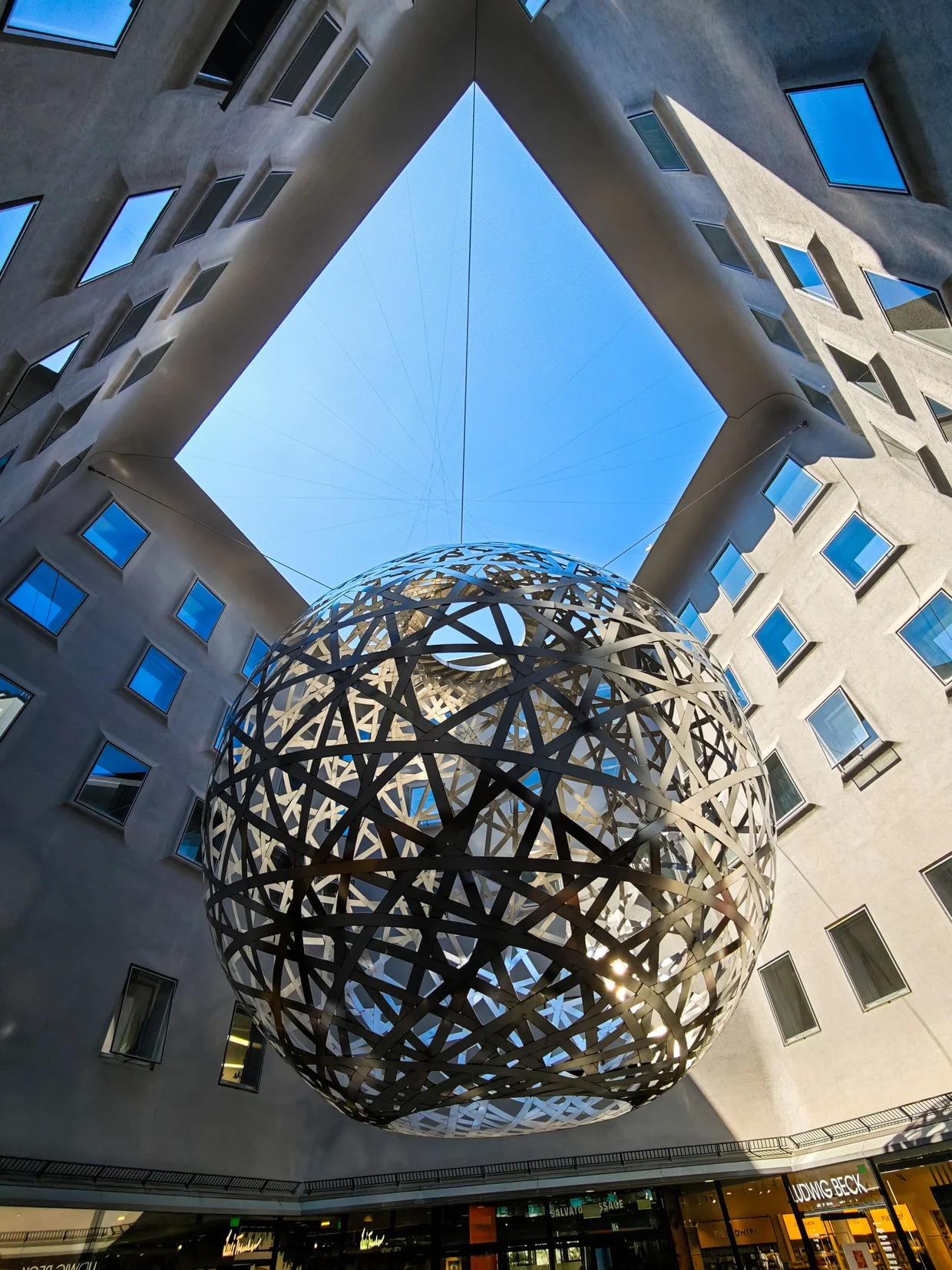
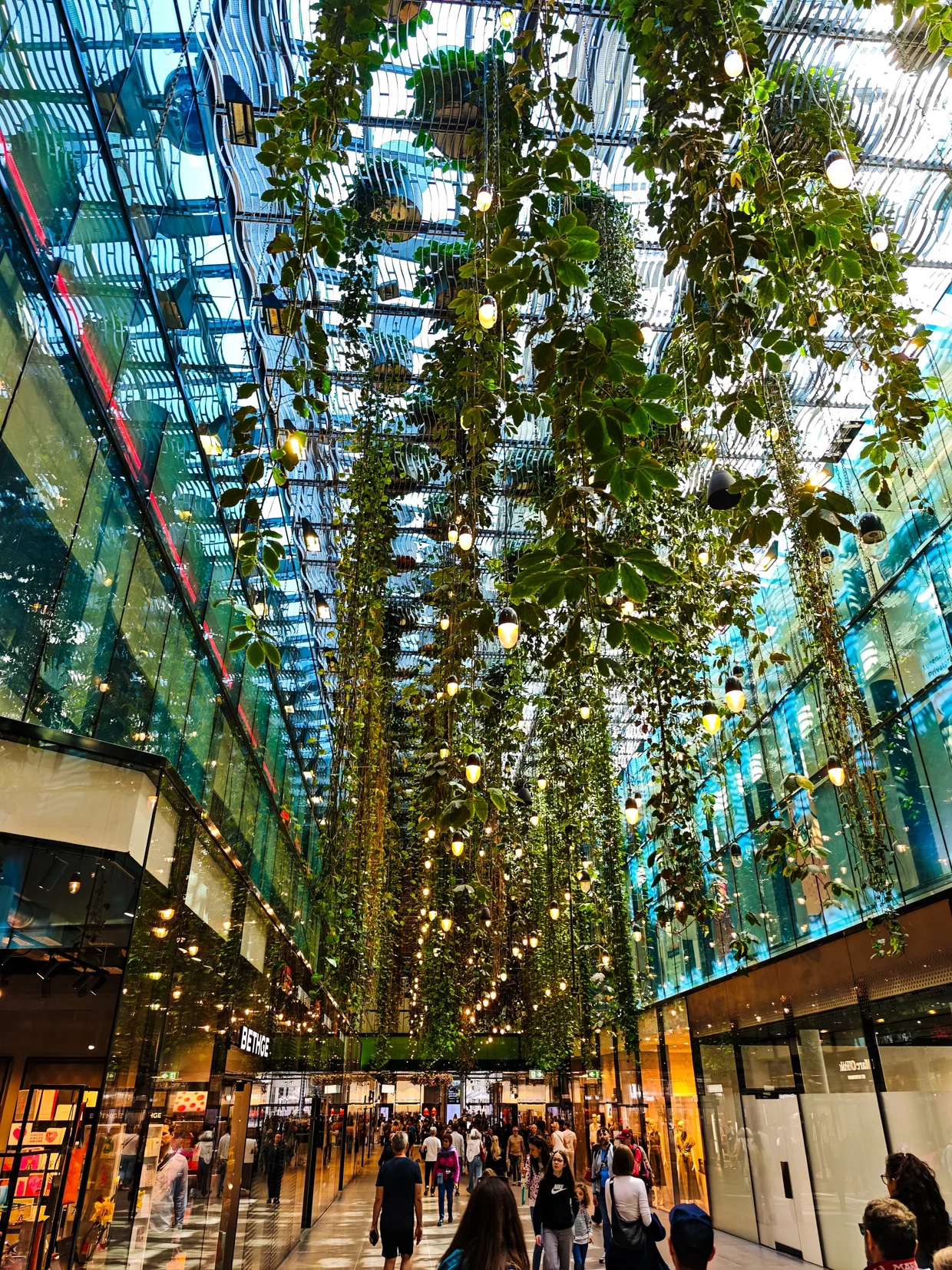
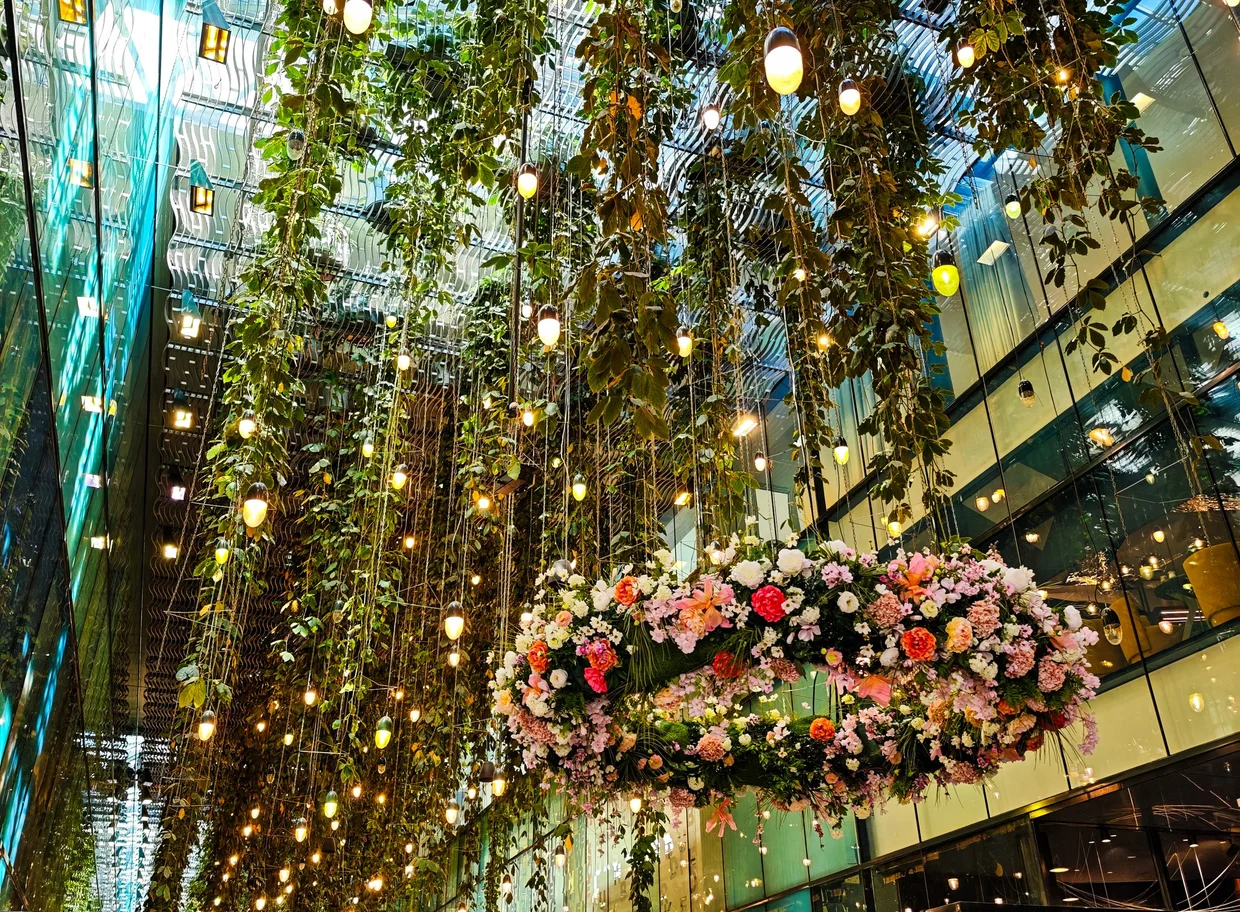
The small Gassen connecting the Fünf Höfe to Theatinerstraße and Salvatorplatz are the calmer, more pedestrian-friendly Altstadt I promised earlier. Cobblestones, low traffic, plenty of cafes that aren't trying too hard, and the kind of unhurried feel that Maximilianstraße entirely lacks.

A short walk west on Promenadeplatz brings you past the Bayerischer Hof hotel, where Michael Jackson stayed when he was in Munich and where, since his death in 2009, fans have built and rebuilt an unofficial memorial at the base of the statue of Renaissance composer Orlando di Lasso. Orlando di Lasso did not, as far as we know, ever record Thriller. The fans don't care. The memorial gets cleared periodically, and rebuilt. Munich shrugs.

Best Time to Visit
May through September is the classic window. The beer gardens are open, the Hofgarten is in full flower, the cafes spill onto Maximilianstraße, and the days are long enough that you can do the whole Altstadt loop after work. The downside: tourist crowds at Marienplatz and Viktualienmarkt are at their worst, and Munich gets sweaty by August.
Late September into early October is Wiesn season (Oktoberfest). Hotel prices triple. The Altstadt isn't where Oktoberfest happens (that's the Theresienwiese, west of the center) but the city as a whole is louder and drunker, and finding a quiet table anywhere is a project. Either come for the Wiesn or avoid those two weeks entirely.
December is Christmas market season. Marienplatz has the main Christkindlmarkt, with the giant tree, glühwein stands, and approximately one million people sharing 12 square meters between 5 and 8 p.m. on weekends. It's beautiful. It's also a contact sport.
January and February are cold, often grey, sometimes snowy. The crowds drop. Hotel prices drop. The light is bad for photography. The light is great for sitting in a Wirtshaus all afternoon. Pick your priority.
On Foot Only
This entire page is walkable. The Altstadt fits inside roughly a 1.2 by 1.0 kilometer rectangle. From Karlsplatz/Stachus in the west to the Isartor in the east is 1.1 kilometers along Kaufingerstraße, Marienplatz, and Tal. From the Hofgarten in the north to Sendlinger Tor in the south is about 900 meters. You can do the whole loop, with all the sights described above, in two to three hours if you don't stop. You should stop.
The Altstadt is mostly pedestrianized. Cars are excluded from the core. Bikes are not. Watch the bike lanes. Munich has an excellent network of red-paved bike lanes that look exactly like sidewalks but are not sidewalks, and Münchners on bikes will not stop for you, will not slow down for you, and will not ring their bells until they're 1.5 meters away. Bike traffic is the single most genuine danger in central Munich.
Public transport you don't need inside the Altstadt. You'll need it to get to the Altstadt: the U-Bahn stops at Marienplatz, Odeonsplatz, Karlsplatz, and Isartor (S-Bahn) cover all four corners. From Munich Airport (MUC), the S1 or S8 takes about 40 minutes to Marienplatz; in 2026, an M-5 single ticket is 15.10 €, while the day ticket is only a little more if you'll ride again. Don't take a taxi from MUC unless you really enjoy spending roughly 100-110 €.
If you absolutely must use a car in central Munich, don't. Park at one of the underground garages on the edge of the Altstadtring (Max-Joseph-Platz, Stachus, or Am Platzl) and walk in. Munich parking inside the ring is expensive, scarce, and aggressively enforced. The Politessen do not negotiate.
Published May 2026.