The Road That Isn't Really Romantic
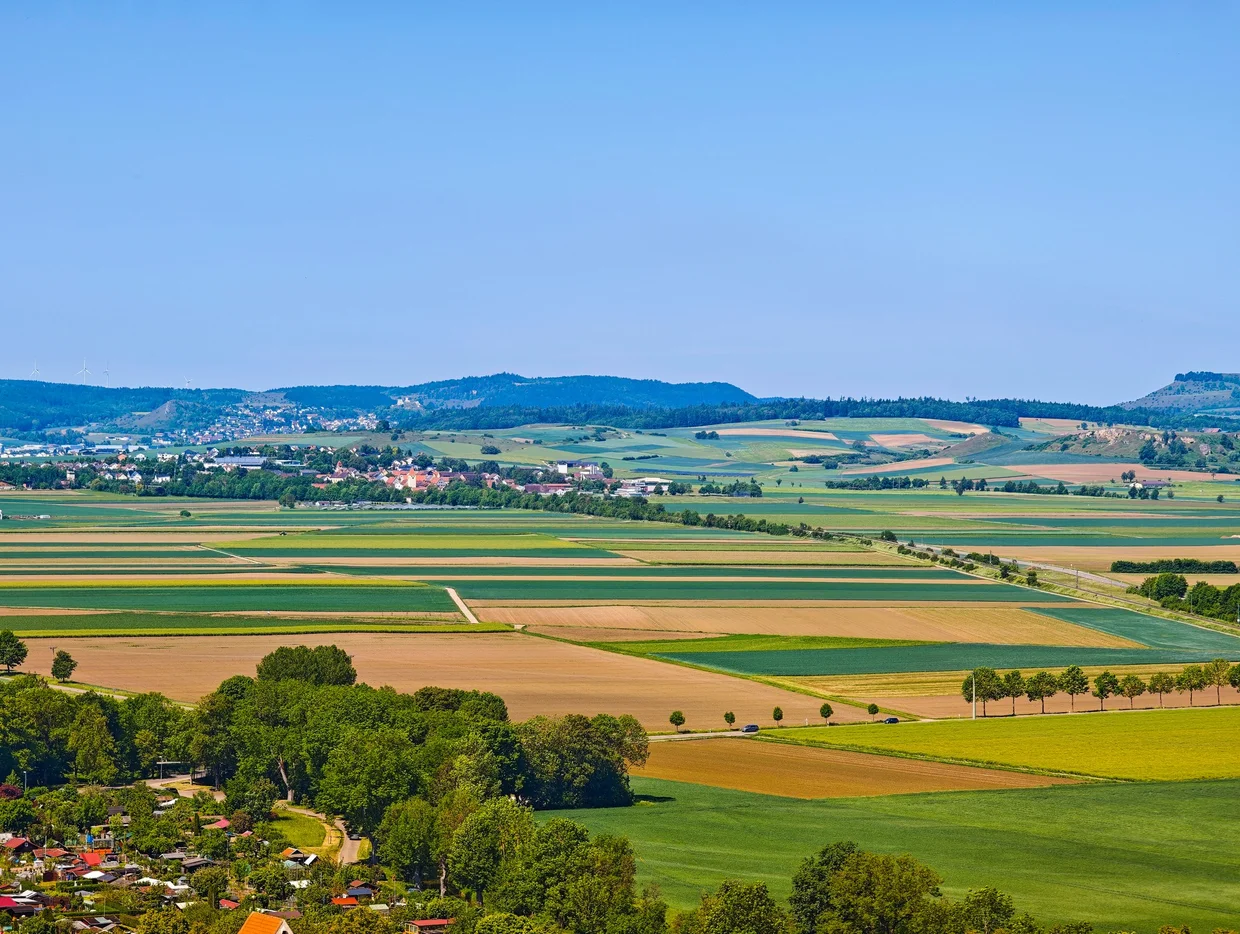
Well, despite the name and imagination, the Romantic Road isn't romantic. Like, at all. It's a regular Bavarian B-road threading between fields, villages and the occasional tractor. You'll find prettier drives in the Alps, prettier drives in the Black Forest, prettier drives basically anywhere with more elevation than a pancake. The "Romantische Strasse" is a 1950s tourism brand, not a geographic feature, and it sells itself with a name that promises sunset valleys and gets you sugar-beet fields.
So why bother? Because the towns are the point, and the road saves the loudest bit for the end. Three of the medieval towns are genuinely great, the castles at the southern finish (Neuschwanstein and Hohenschwangau) are the showstopper everyone already knows, a couple more places are worth a stop for lunch, and a few are honest skips. Treat the road as a way to chain together the good bits and you'll have a really nice few days. Treat it as scenic touring and you'll wonder what the fuss is.
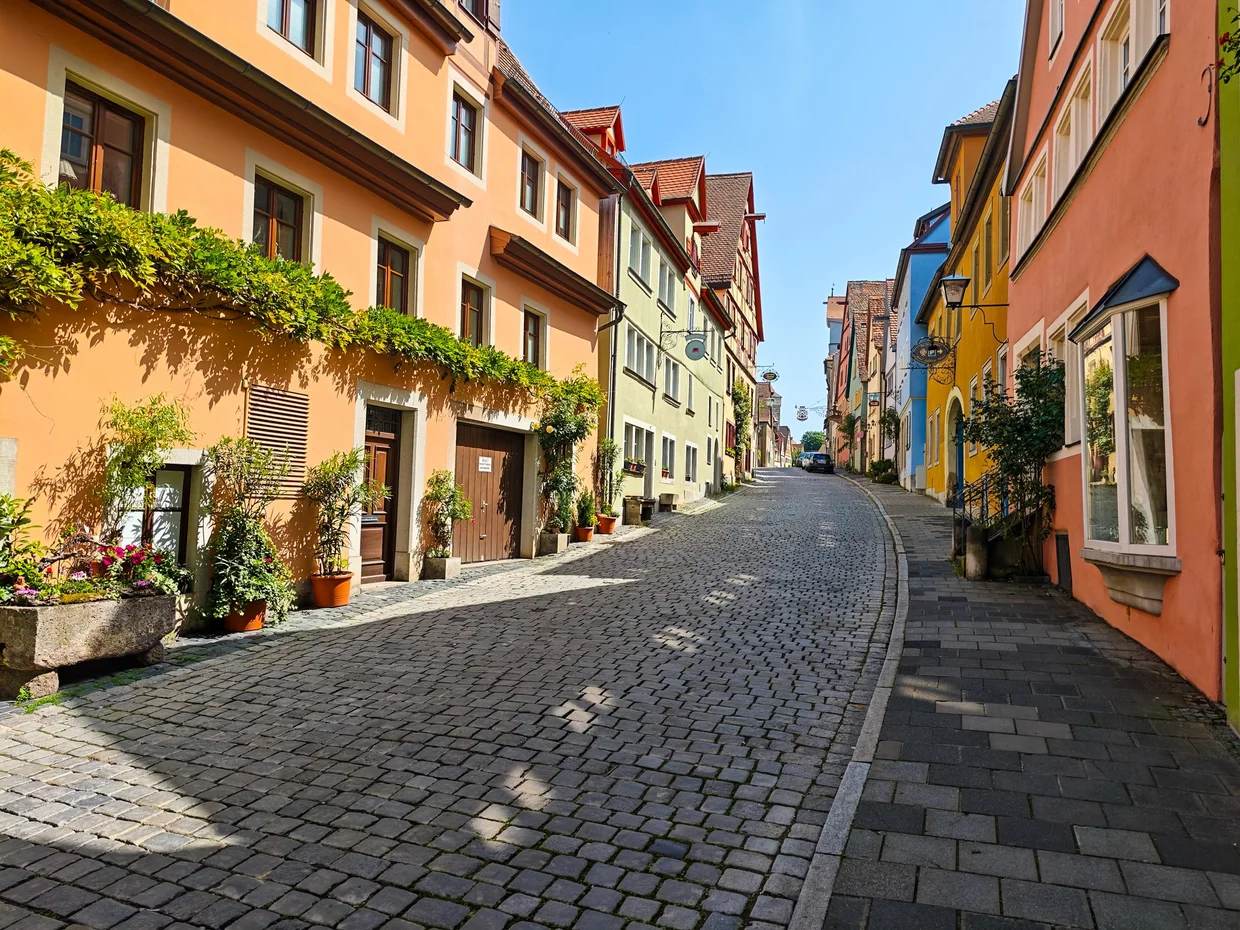
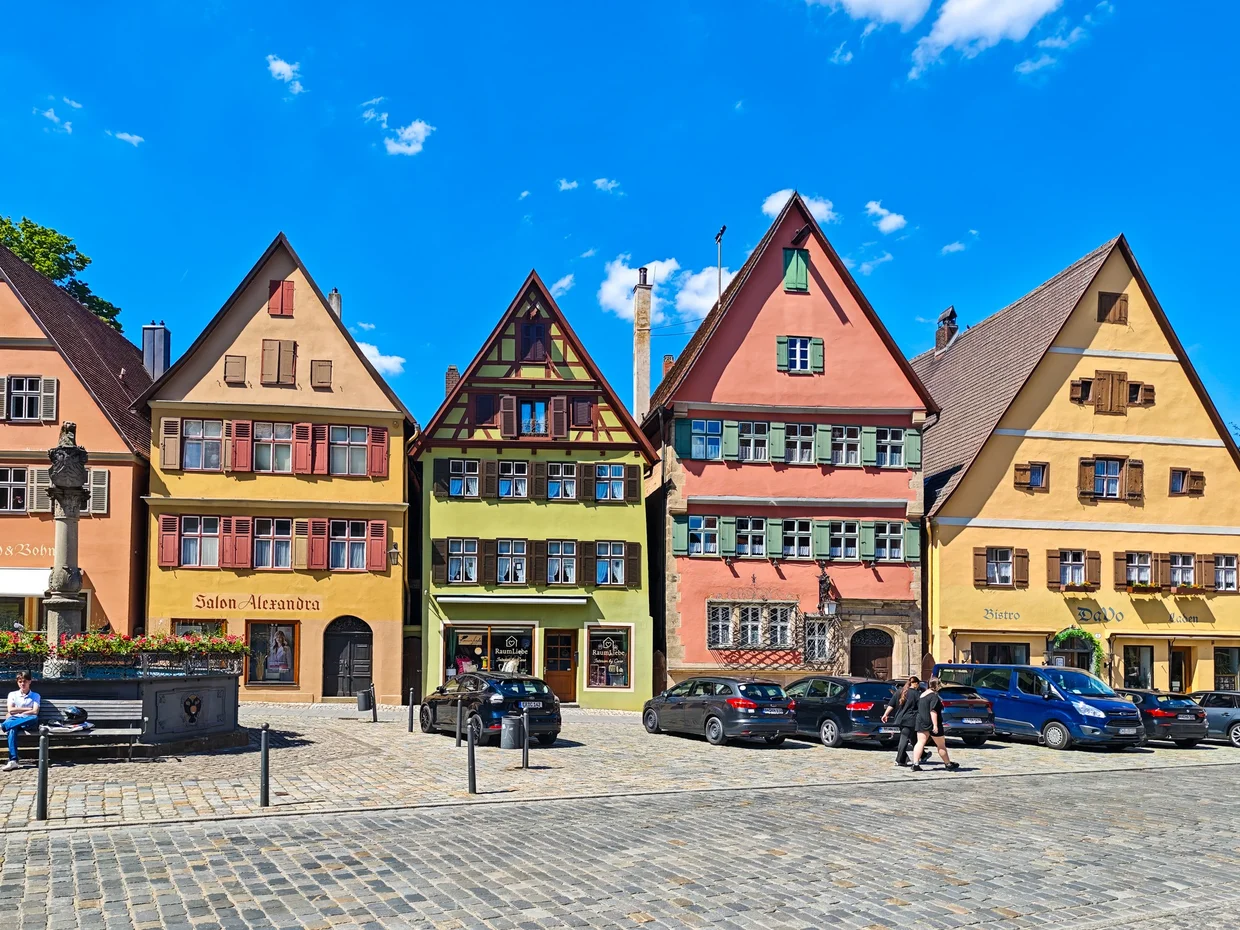
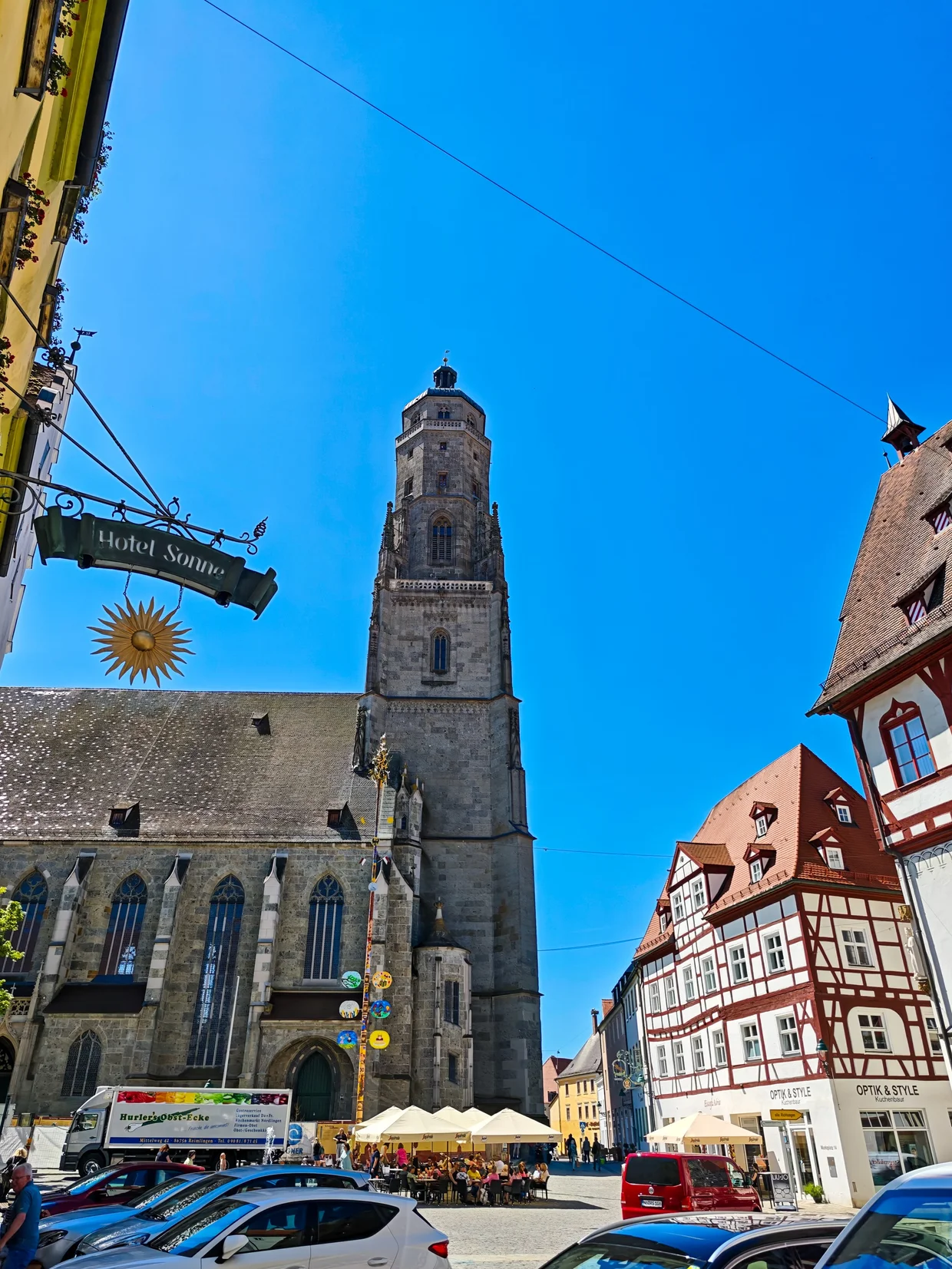
This runs the road north to south, the way most people drive it: from Bad Mergentheim down through Rothenburg and the walled towns of the middle stretch, past Landsberg and Schongau, and finishing where the road actually ends at Fuessen, with the Neuschwanstein and Hohenschwangau castles right next door at Schwangau and a worthwhile Linderhof detour that technically isn't on the Romantic Road at all. Two big towns I haven't covered yet: Wuerzburg, the official northern starting point of the route, sits up before Bad Mergentheim, and Augsburg, which sits roughly in the middle. Each is a whole day of its own, so both will get their own write-up rather than a rushed paragraph here.

Destination Info
Quick Facts
Overview
- Best 4 to 6 (full route) days in May till September.
- At 400m in Bavaria / Baden-Wurttemberg, Germany, time zone UTC+1 (UTC+2 DST).
- The main language is German, written in Latin script.
- Euro (EUR) is the official currency, and tipping is round up.
Local Flavor
- Get a Frankenwein (Silvaner), Tauber Schwarzriesling and Frankische Bratwurst, Schweinebraten, Knoedel.
- The main festival here is Pfingstfestspiele Rothenburg, Heimattag der Siebenbuerger Sachsen (Dinkelsbuhl), Taubertal Festival (Rothenburg), and popular sports include Football, hiking, cycling.
Practicalities
- You can use slow regional trains and sparse buses for public transportation, while driving on the right.
- You can get here mostly via Nuremberg (NUE), Munich (MUC), Stuttgart (STR).
- The best area to stay is Rothenburg ob der Tauber.
How to Use This Guide
Read it as a sort. The towns run in the order you'd hit them driving north to south, the standard direction, but the real value is the verdicts. The headline finish is Fuessen and the castles at Schwangau (Neuschwanstein and Hohenschwangau); for a lot of people that's the whole reason to drive the road. Among the medieval towns, Rothenburg, Nordlingen and Dinkelsbuhl are the heavyweights; build the middle of the trip around those three and give each at least a half-day, a full day is better. Weikersheim, Bad Mergentheim and Creglingen are pleasant bonuses if you wanna add a day, with a couple of standout attractions (Riemenschneider's altar, the Schloss). Donauwoerth, Harburg, Feuchtwangen, Landsberg and Schongau are stop-for-lunch or skip entirely; I'll tell you which is which.
If you've only got two days and you're here for the medieval towns, do Rothenburg and Dinkelsbuhl, sleep in one or the other, and use the second day for Nordlingen. If you've come for the castles instead, base near Fuessen, give a full day to Neuschwanstein, Hohenschwangau and the Alpsee, and spend the other day on Rothenburg as you drive in or out. Either way, everything else is gravy.
If you wanna do the whole road end to end and finish with Fuessen and the castles, plan four to six days. Don't try and do it in two. You'll skim the good stuff and resent the in-between.
The Drive Itself
I'm gonna repeat this because some guidebooks really sell the drive: it's a regular road. Two lanes, occasional villages, fields of grain and rapeseed, the odd cyclist, a tractor or two. Nice enough. Not memorable. You'll find better drives in Bavaria within an hour of pretty much anywhere on the route. The eastern Alps are a different sport. So is the Frankische Schweiz. So is the Schwarzwald.
That said, rent a car. Public transport between these towns is patchy at best, and the trains skip half of them entirely. Train + bus combinations exist; they're slow and you'll spend more time waiting at rural bus stops than walking around old towns. A small rental from Munich, Nuremberg or Stuttgart sorts the logistics in about ten minutes. Parking in the towns is fine: most have a big garage or numbered lots (P1-P5 in Rothenburg) just outside the wall, and Landsberg am Lech has a parking garage carved straight into the Schlossberg that drops you next to the Altstadt.
Bad Mergentheim: Knights, Spa, and a Schloss Worth Doing
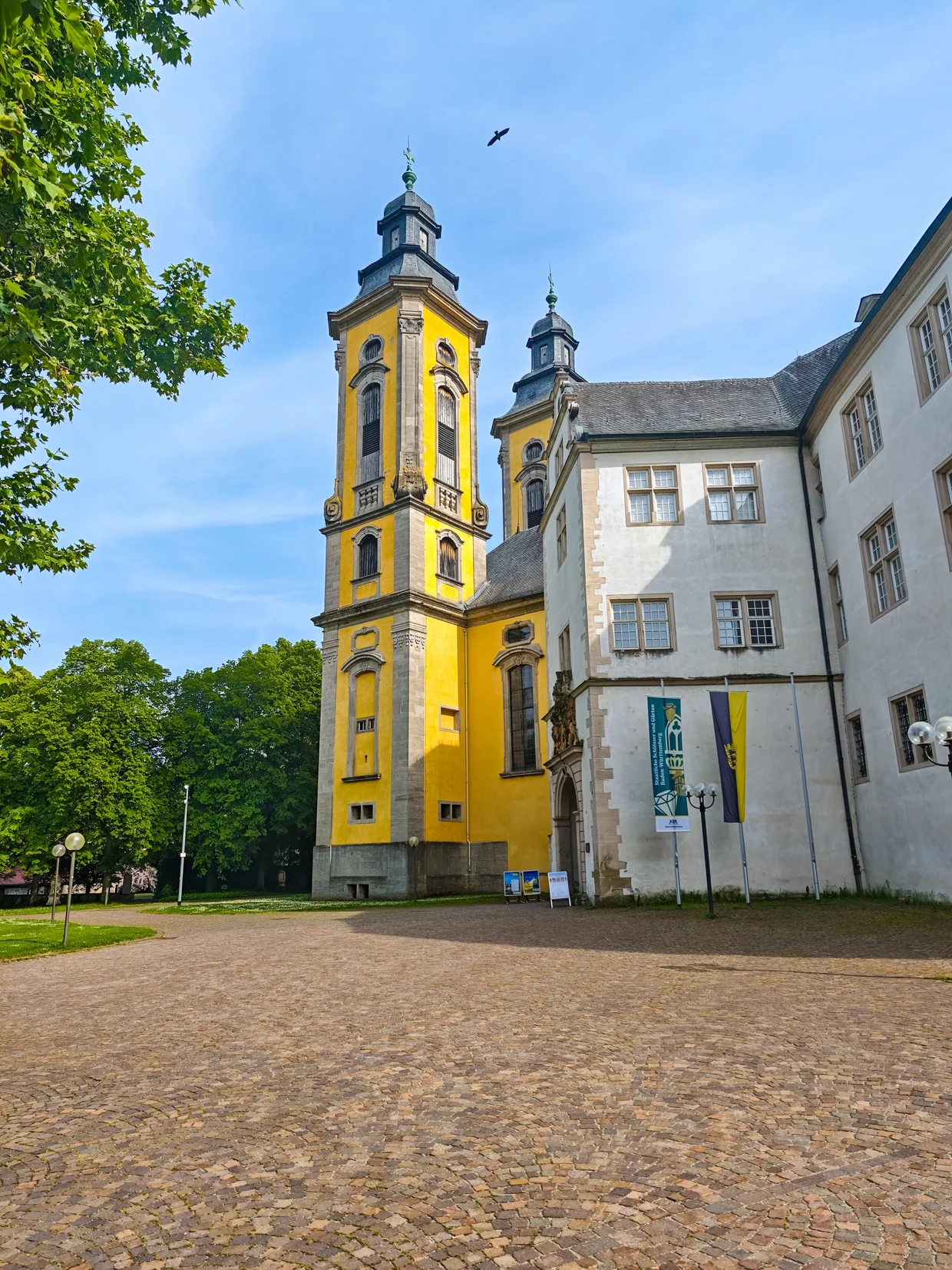
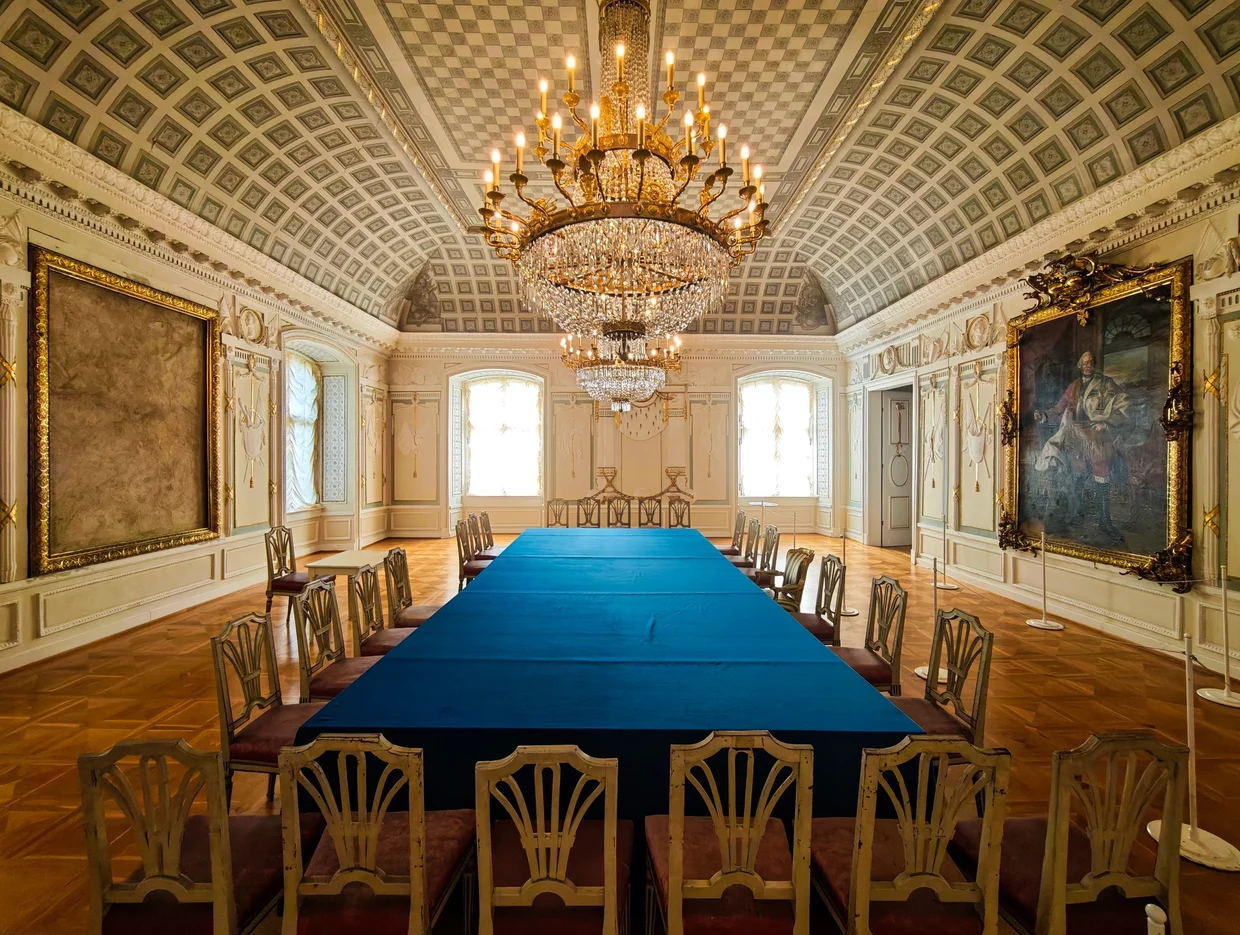
Bad Mergentheim was the long-time seat of the Hochmeister of the Teutonic Order (the Deutscher Orden) after they were kicked out of Prussia, and the Schloss is still the most interesting thing in town. The exterior is dignified rather than dramatic, but inside there's a rococo Schlosskirche, a Festsaal with a proper chandelier, a Knights' Hall, and at least three different staircases each impressive in a different way: a Gothic spiral with a ribbed stone vault overhead, a neoclassical grand stair with white columns and green balustrades, and a cantilevered spiral with a golden handrail that wouldn't look out of place in a film set.
The staircases are the unexpected highlight. You don't walk into a Teutonic Order Schloss expecting the stairs to be the thing you photograph most, but here you do. This one is a Gothic spiral that fans out at the top into a ribbed stone vault, the kind of net-vaulting you'd expect over a church choir, not a stairwell. Wooden treads wind up around a carved stone core, a single lamp throws warm light across the ribs, and the whole thing feels far grander than a way to get from one floor to the next.


Then there's this one, a few rooms over. A second spiral, but here the rails and supports are carved as bundles of stone that twist upward like rope, with the ceiling above painted in a gilded foliate frieze and leaded windows spilling daylight onto the steps. It's the showiest of the three, and it knows it.
The third one plays it completely straight. No Gothic theatrics, no twisting stone: a wide neoclassical staircase with plain columns rising past the landings, green-and-white balustrades, a classical urn set in a niche at the top and an arched fanlight door catching the light at the foot of the steps. After the two spirals it feels almost restrained, which is exactly its charm. Same building, three staircases, three completely different centuries of showing off.

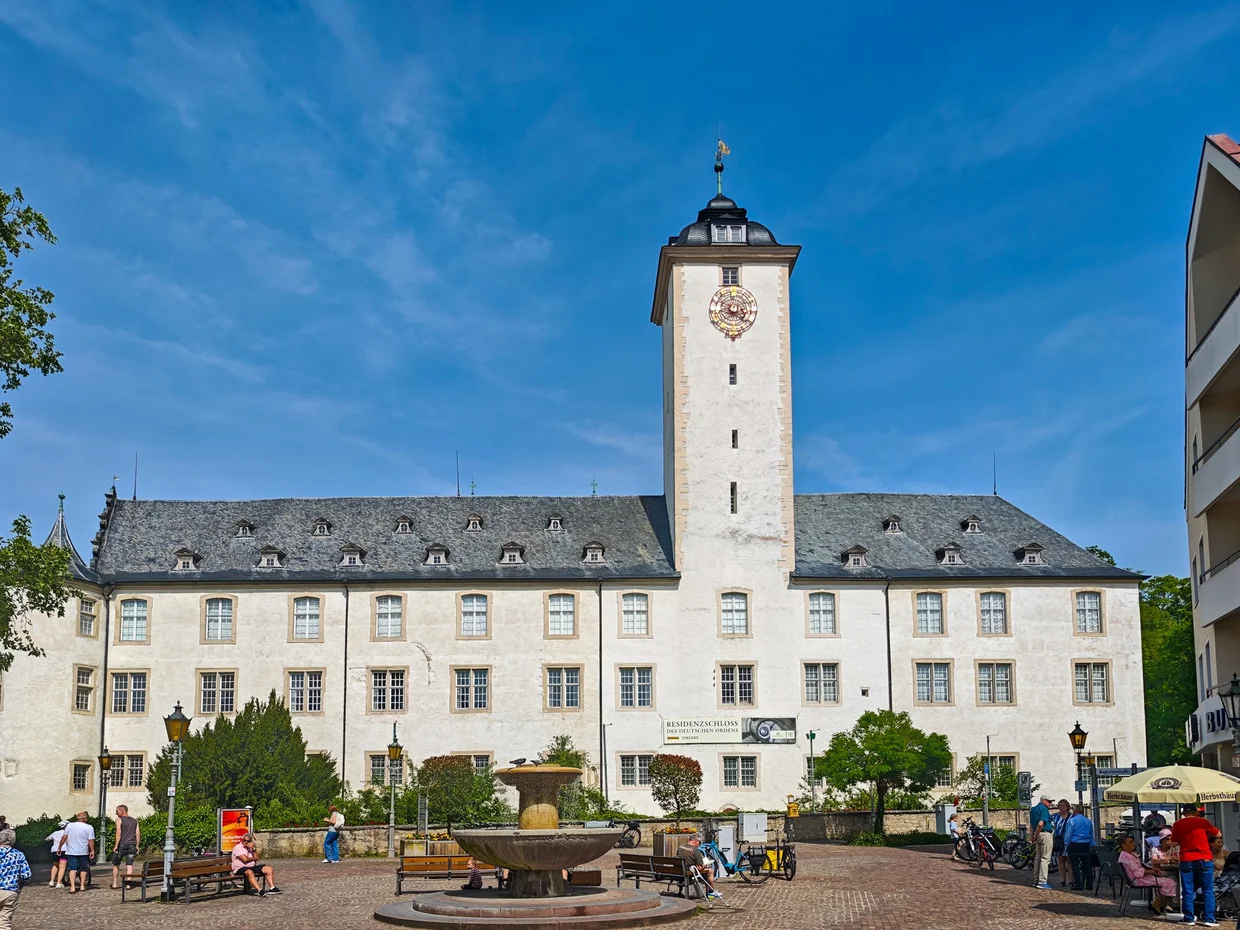
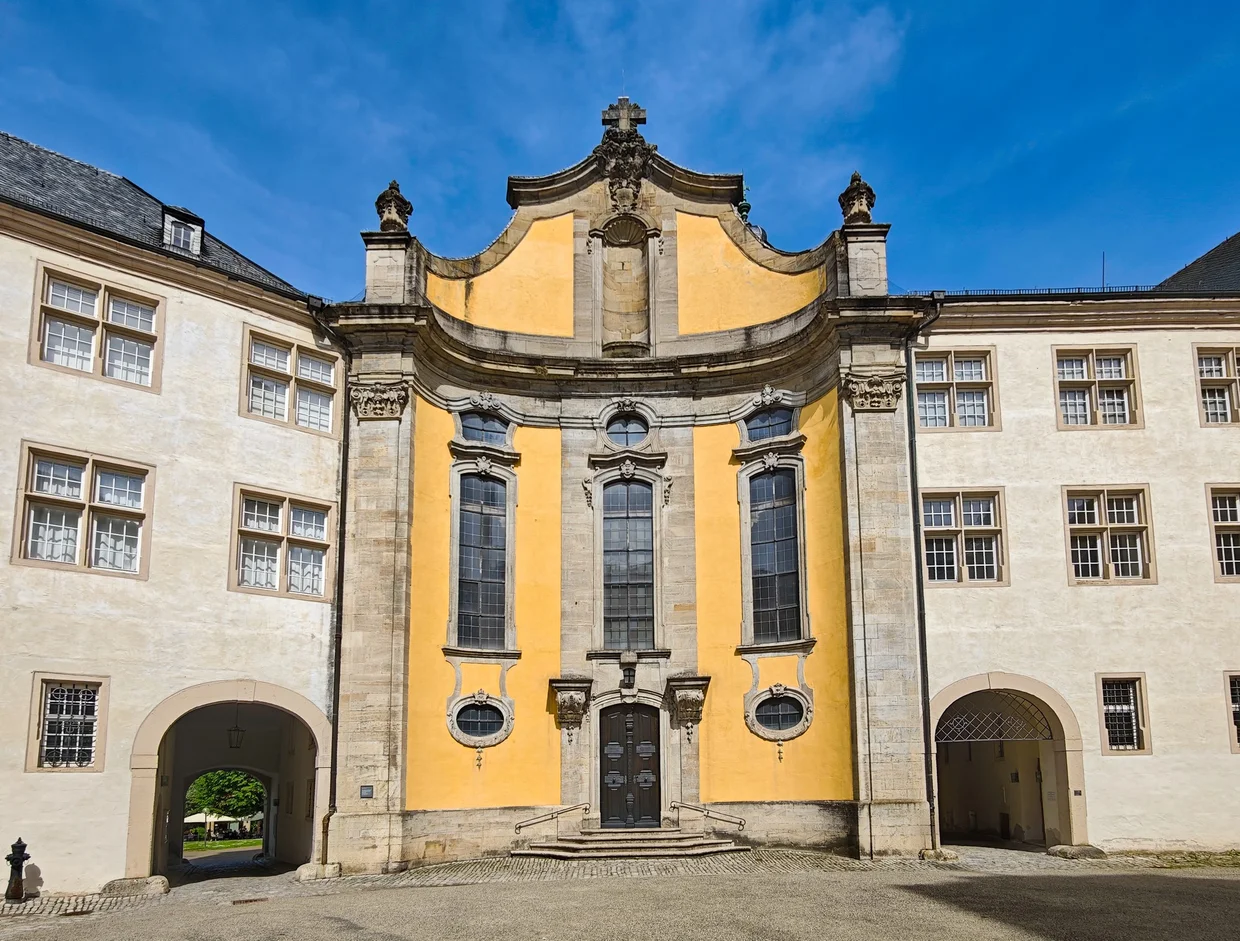
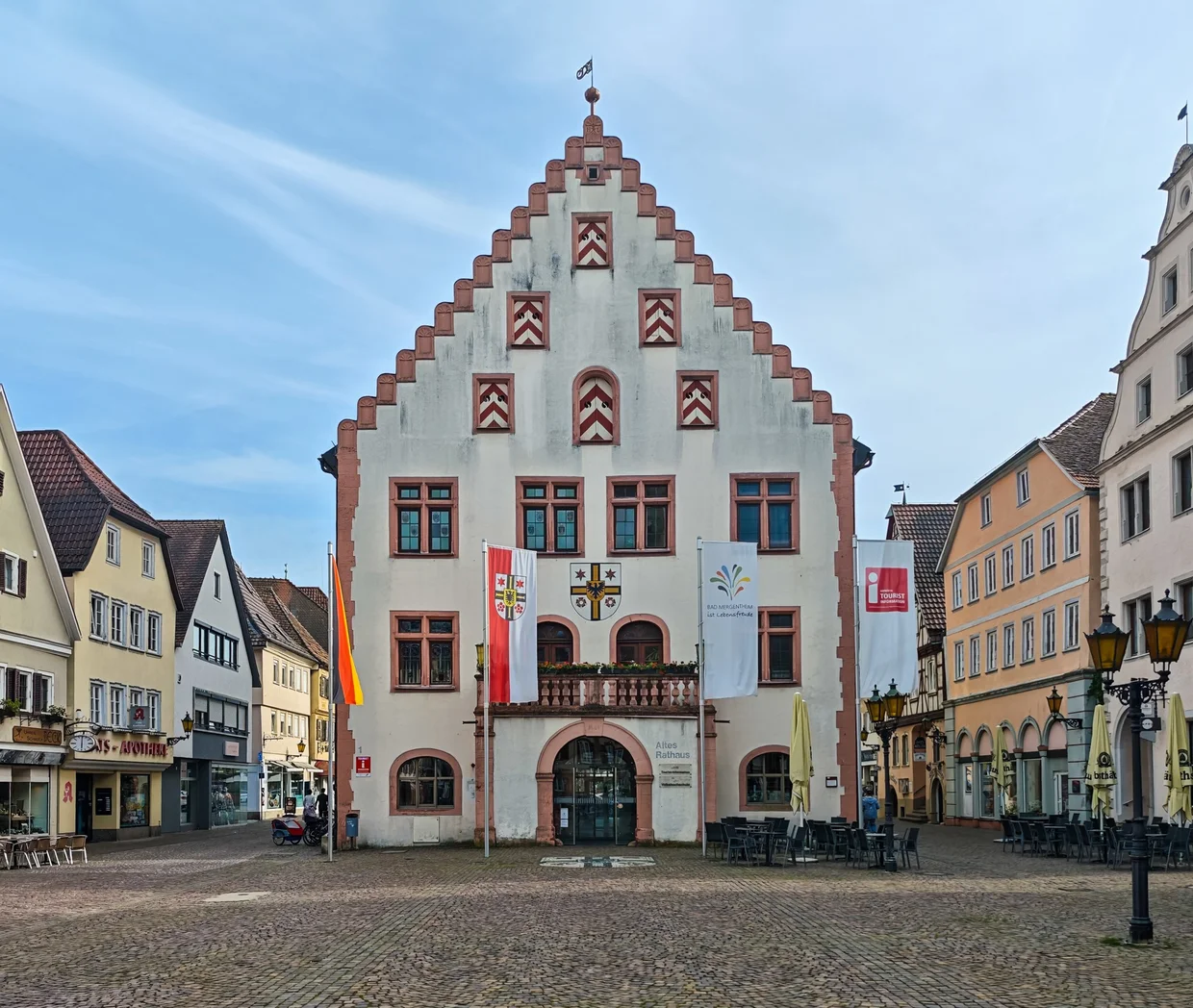
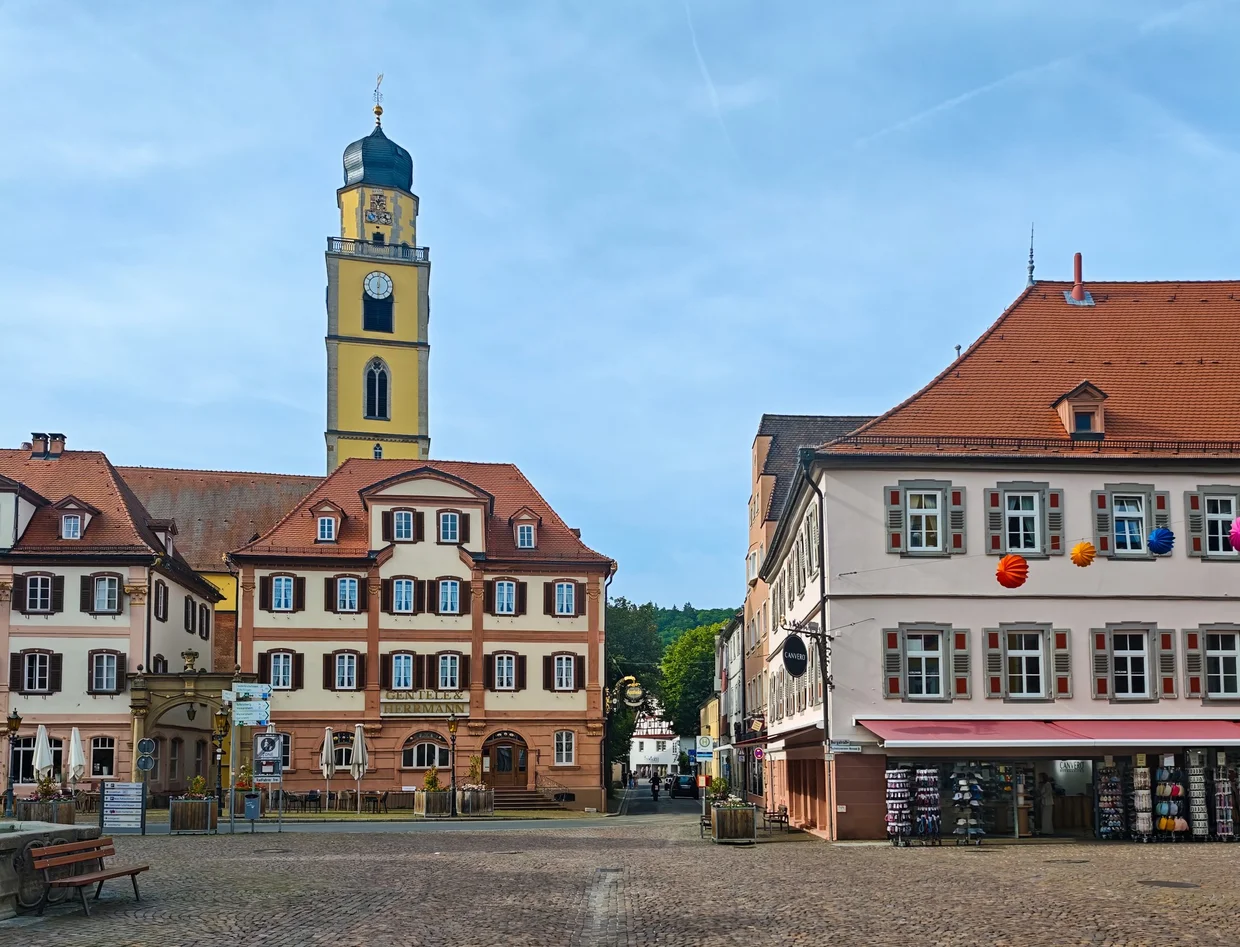
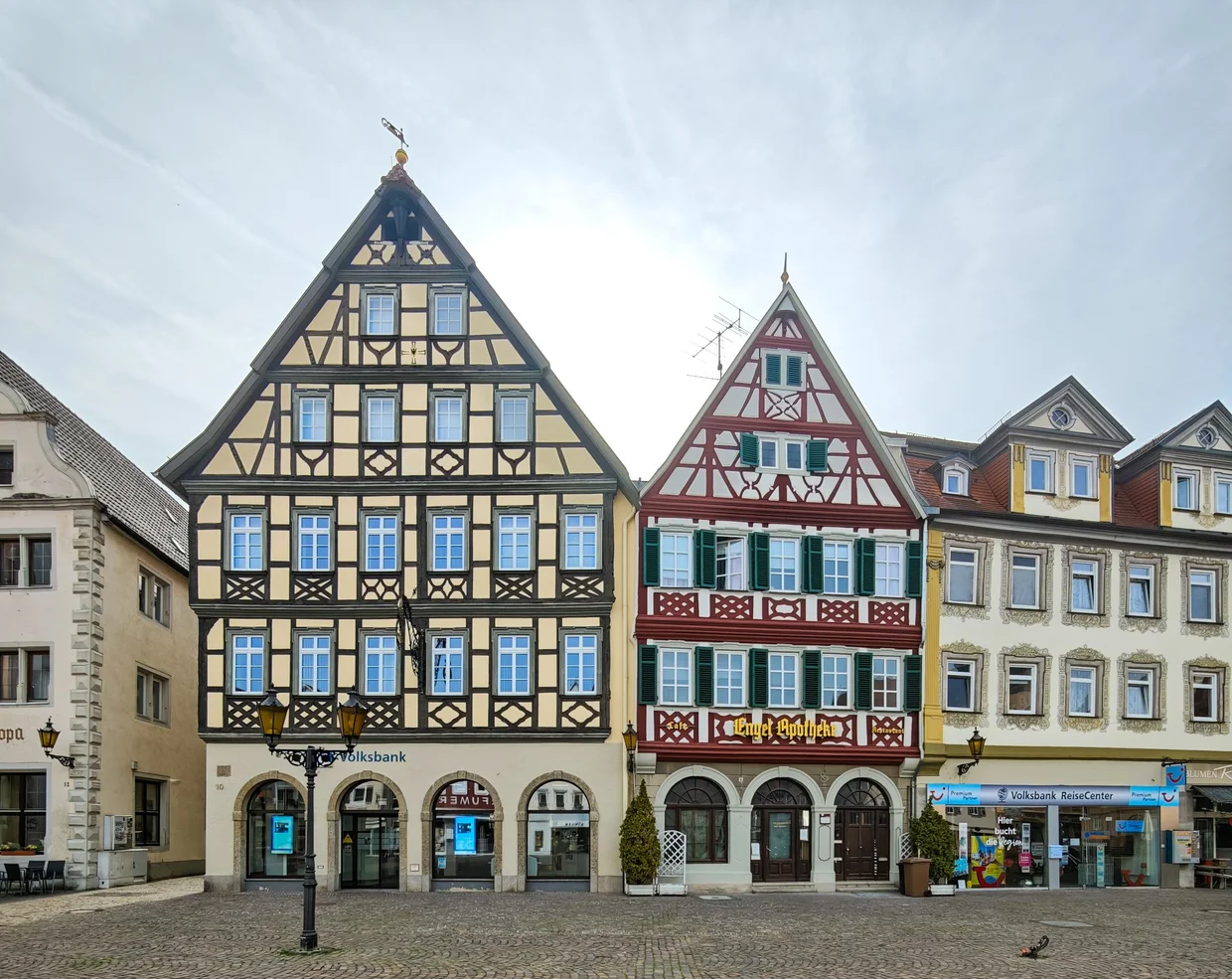
The Marktplatz is also worth a wander, lots of nicely preserved Bürgerhäuser, a proper Renaissance Rathaus with a stepped gable, and the Münster (parish church) with an onion-domed bell tower at the end of the square. The town also has a proper Kur and spa tradition (this is where "Bad" comes from), so if you fancy a low-energy afternoon there are saunas and thermal baths nearby.
Plan 1.5 to 3 hours at the Schloss. Don't try and do Bad Mergentheim and Weikersheim and Creglingen all in one afternoon; they're close together but you'll burn out.
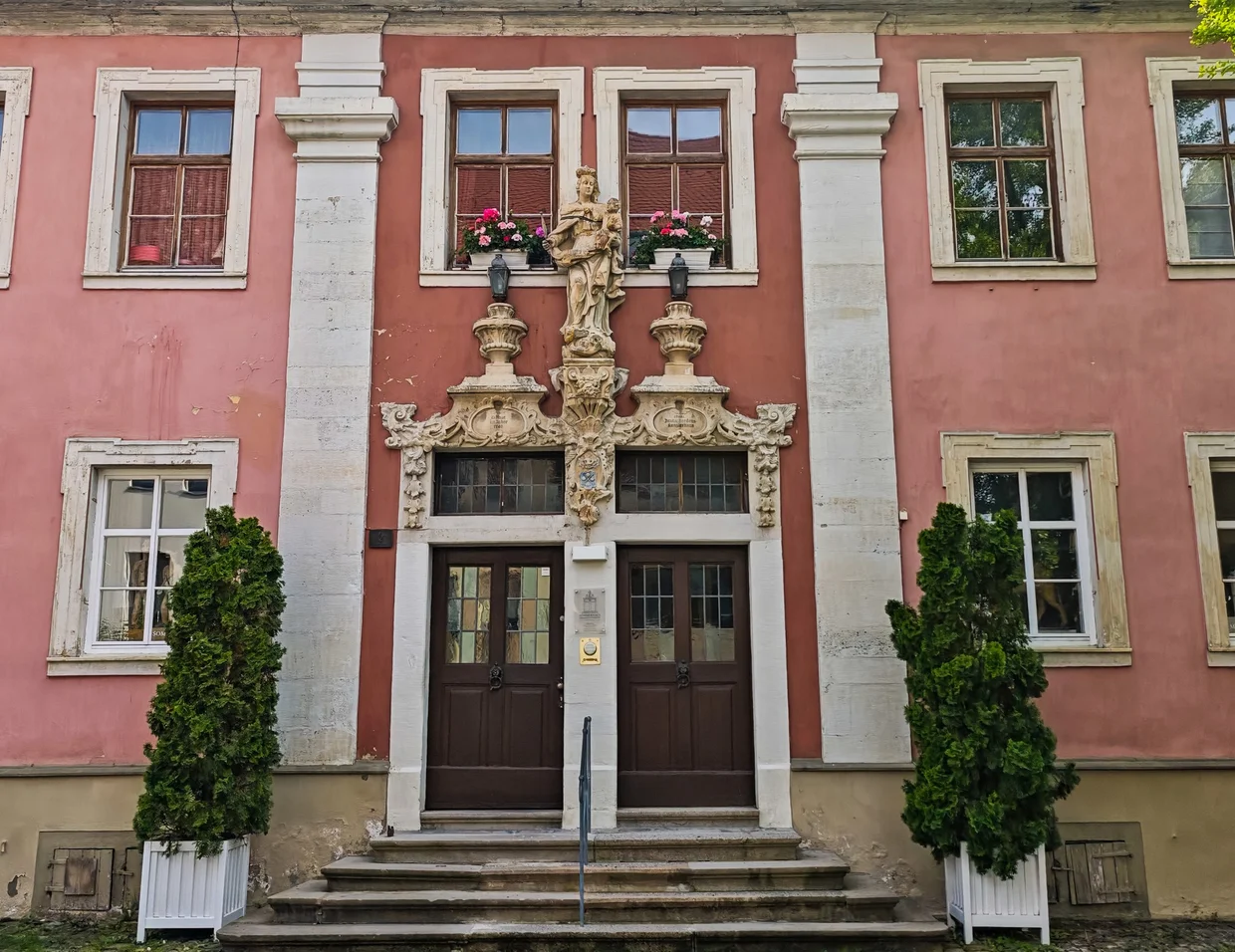
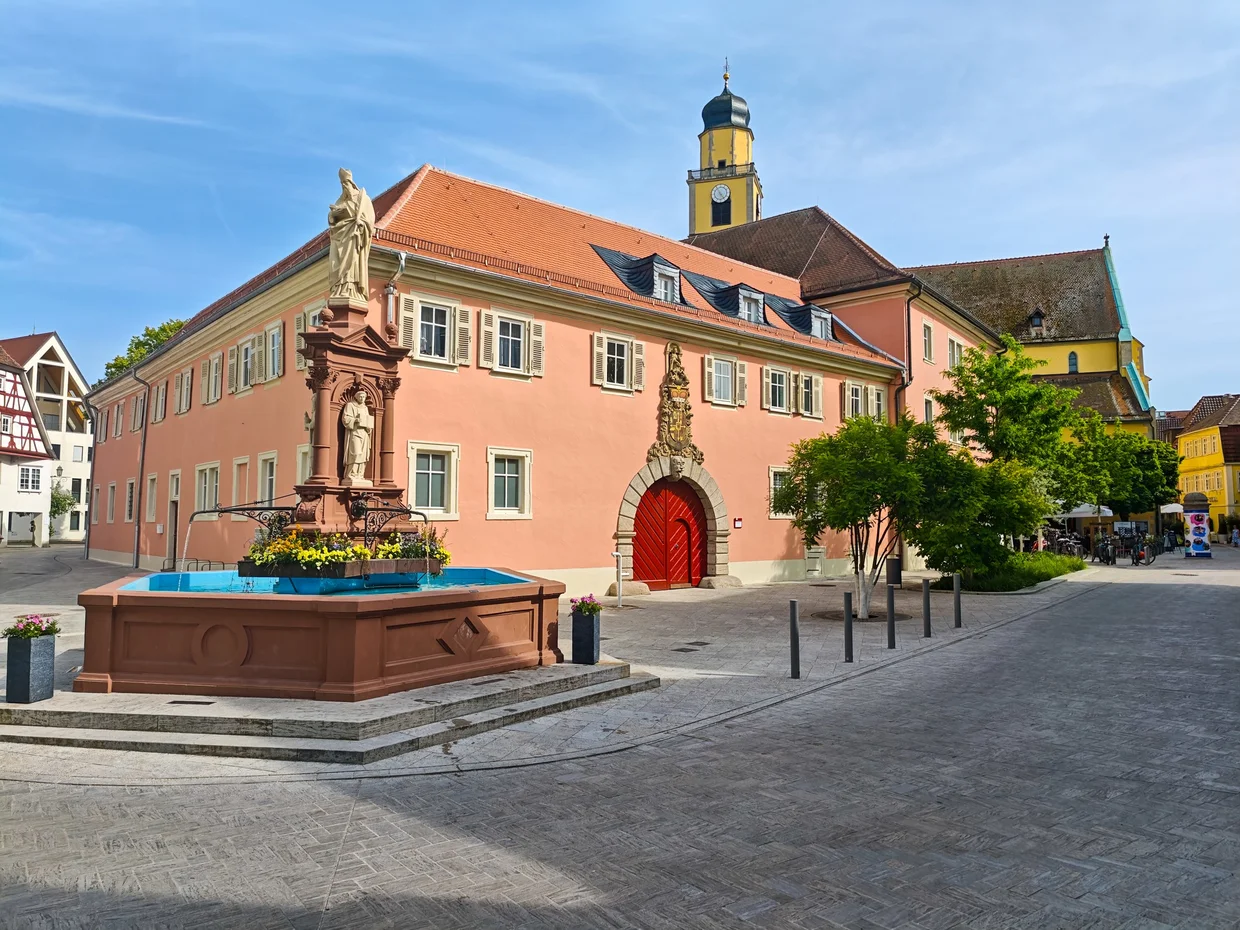
Verdict: worth a stop, especially for the Schloss interiors.
Weikersheim: The Surprise Schloss
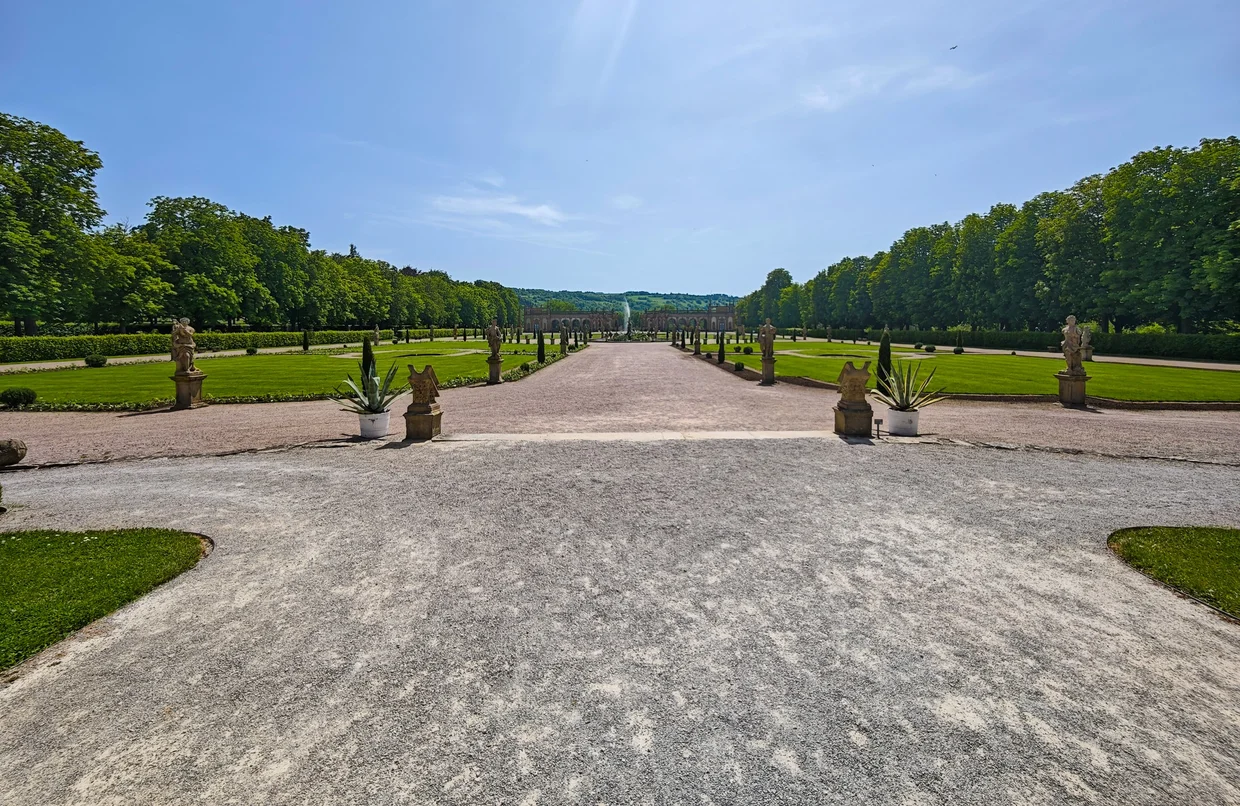
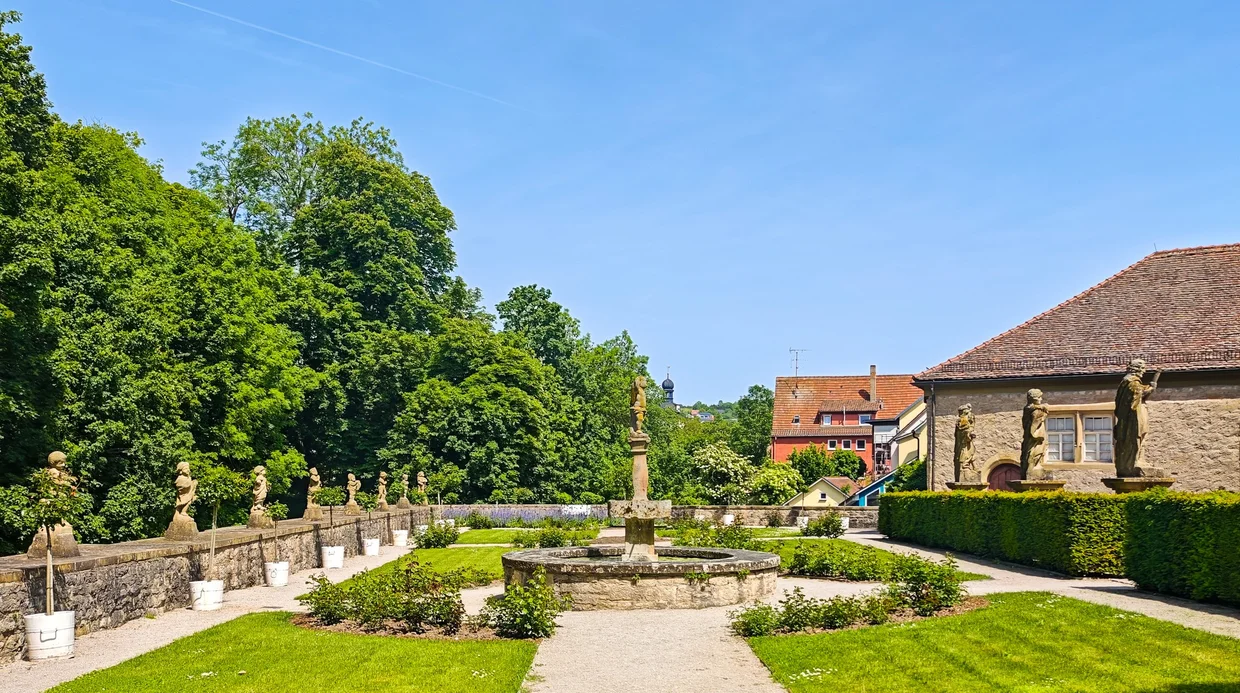
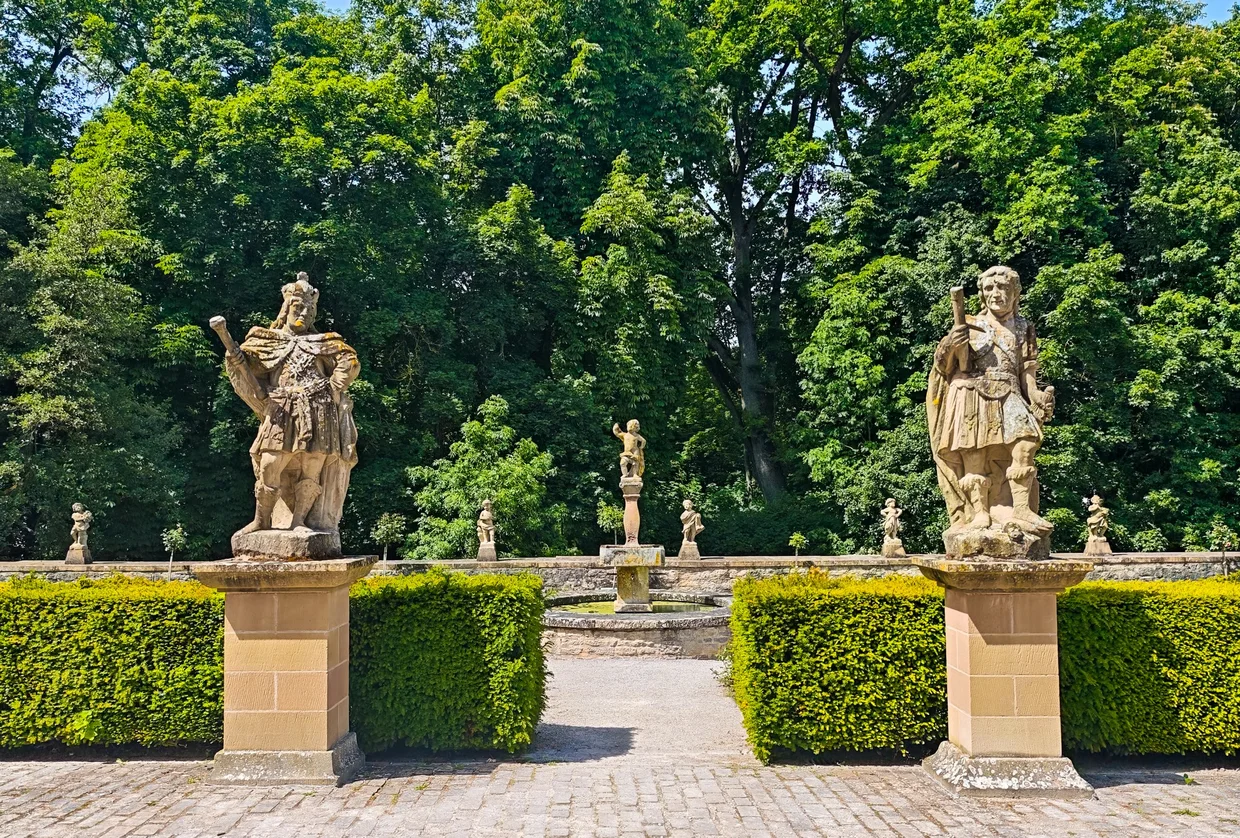
I didn't expect Weikersheim to land. The town is small, the Marktplatz is fine but not spectacular, and the place feels half-asleep on a weekday afternoon. Then you walk up to Schloss Weikersheim and getta one of the best Renaissance-into-baroque palace complexes in southern Germany, with a court of honour entered through a sandstone gate flanked by life-sized statues, a Knight's Hall preserved to a level that's genuinely rare, and a baroque garden behind that rolls out into a perfect symmetrical allee with obelisks, statues and an orangerie.
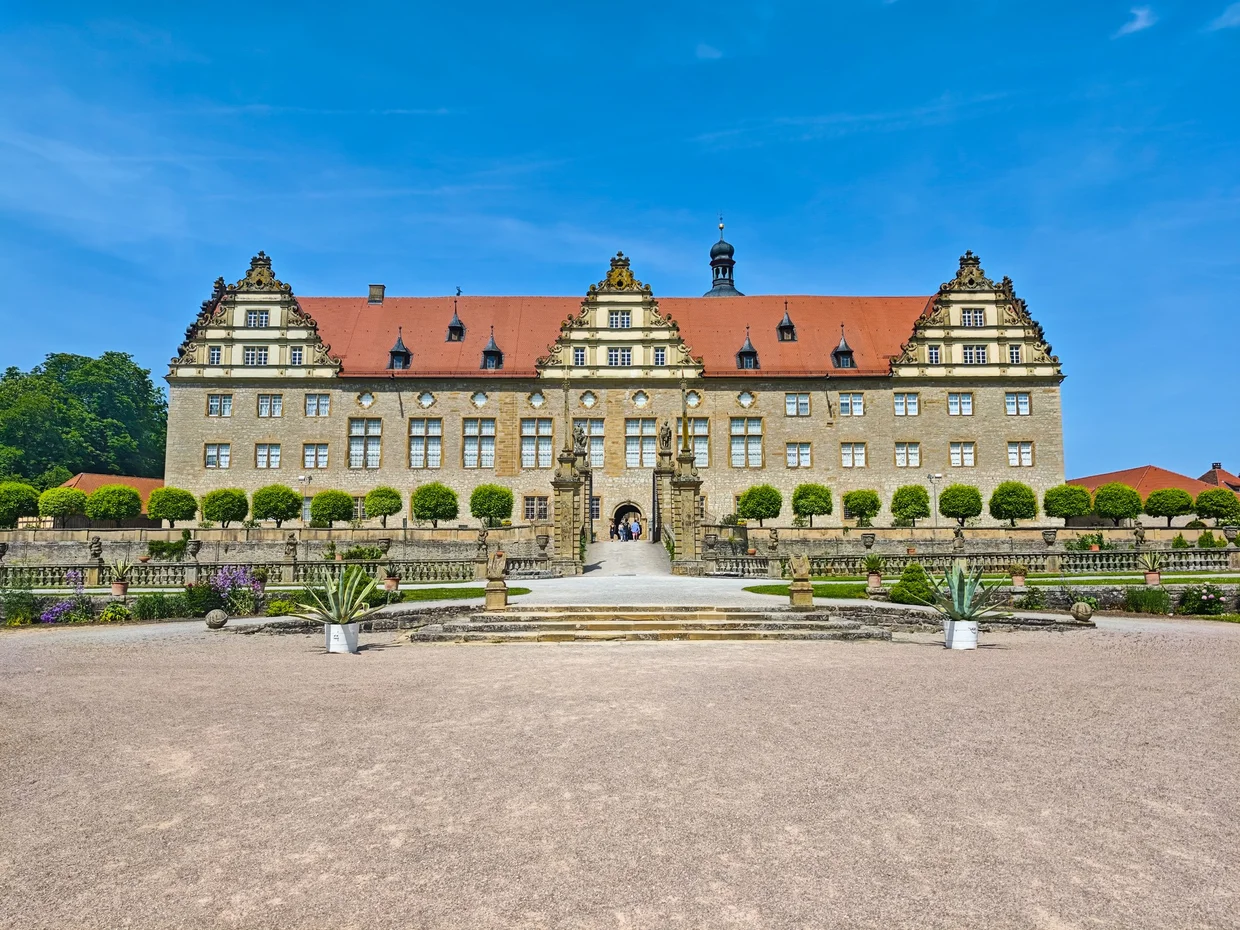
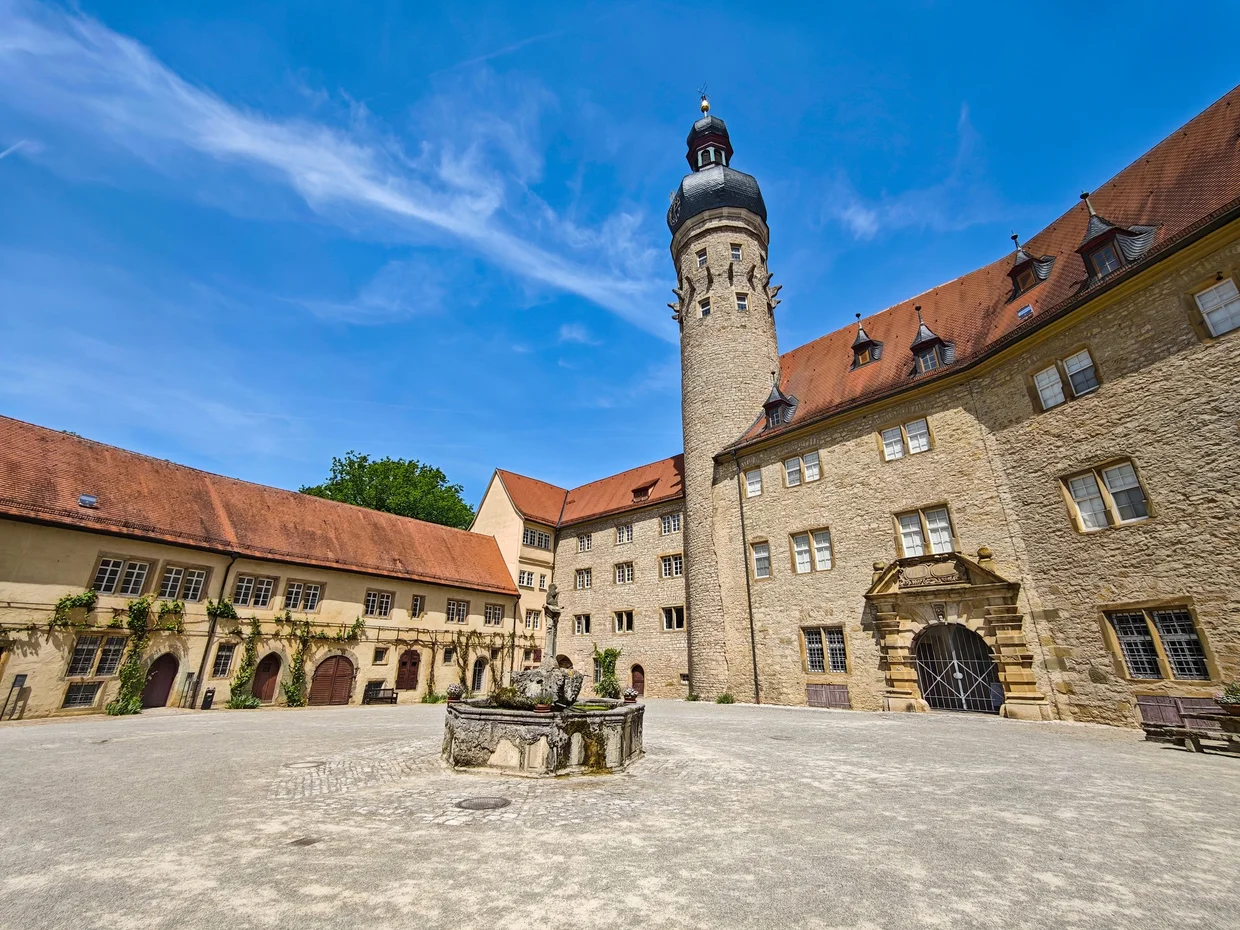
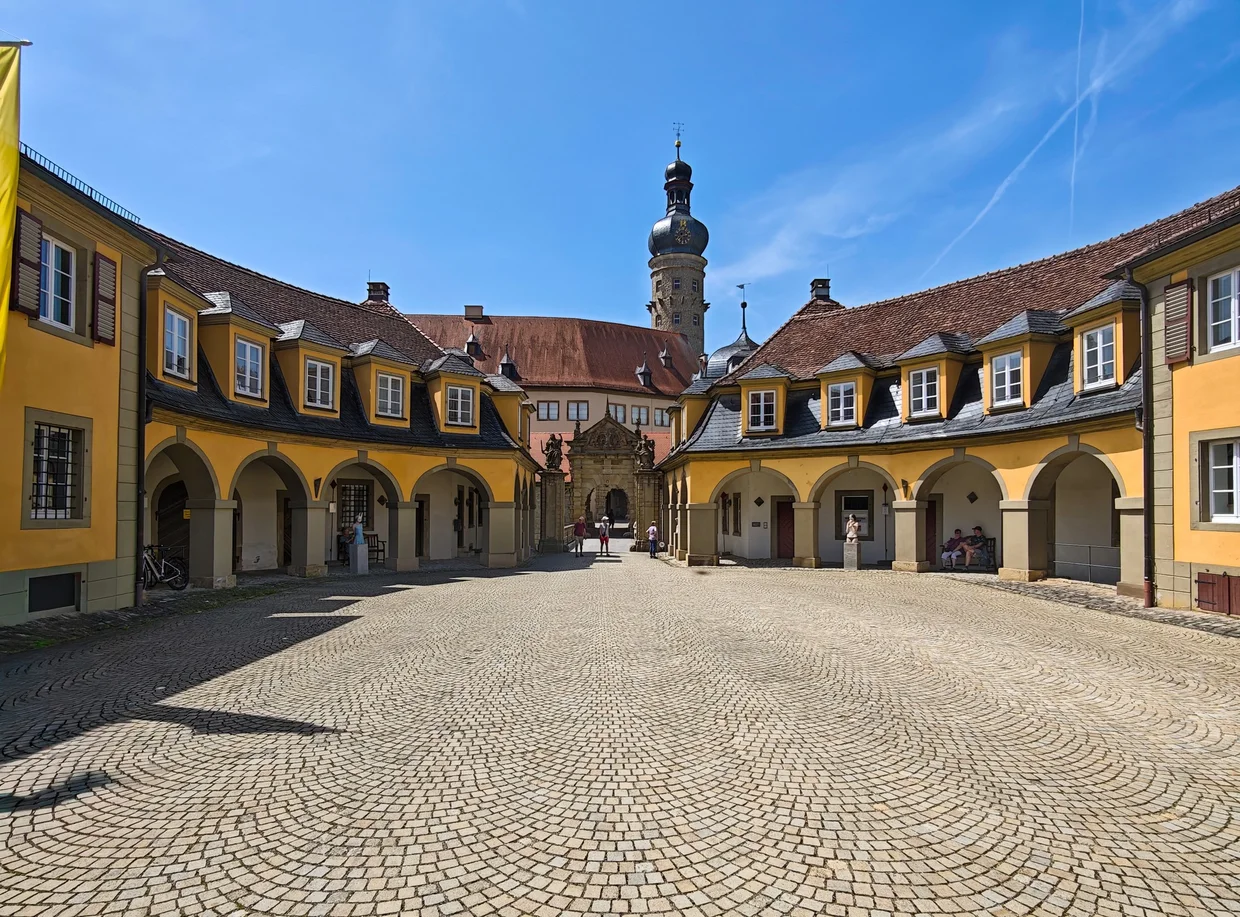
The garden alone is worth half an hour. You can walk the central alley, sit on the orangerie steps, and look back at the Schloss across an immaculate parterre. Important practical bit: the interior is only visitable on a guided tour, usually hourly during regular opening days, with shorter winter hours and occasional exceptions. Plan accordingly. In late spring and summer, the orangerie itself is empty because all the plants are out in the garden, so don't pay it a special visit if that's your aim. Most tourists never make it this far anyway. The town is on the road, but the Schloss isn't on the obvious checklist, and it deserves to be.

The garden is the part that won me over. Behind the palace it opens into a full baroque parterre, all clipped symmetry and gravel walks, lined with statues and closed off at the far end by the long arcaded orangery. The detail that stuck with me was the grotto fountain: a craggy heap of tufa rock with stone putti perched in it, water spitting from half a dozen spots at once, the whole thing half-swallowed by greenery. Hardly anyone walks this far back, and that's their loss.
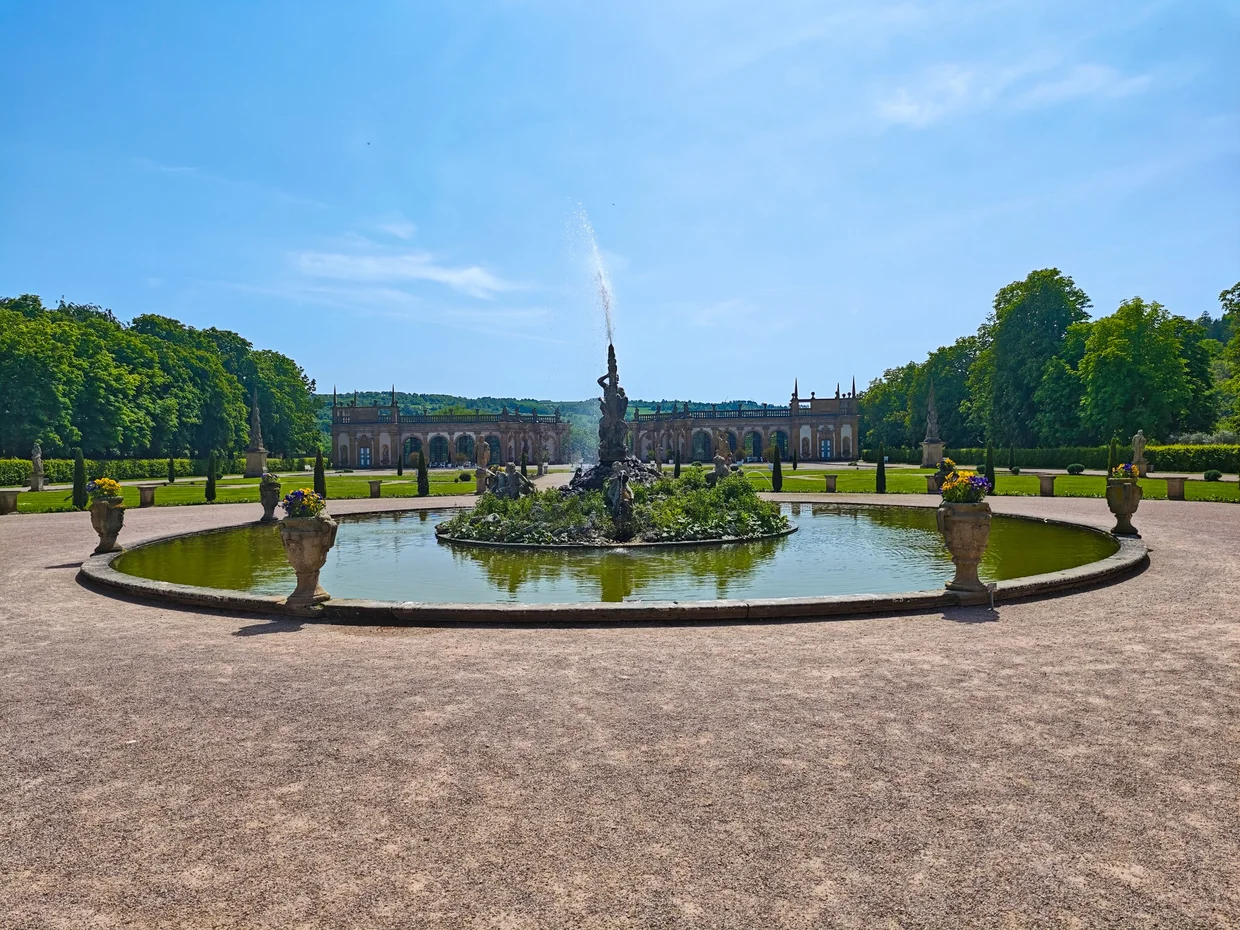
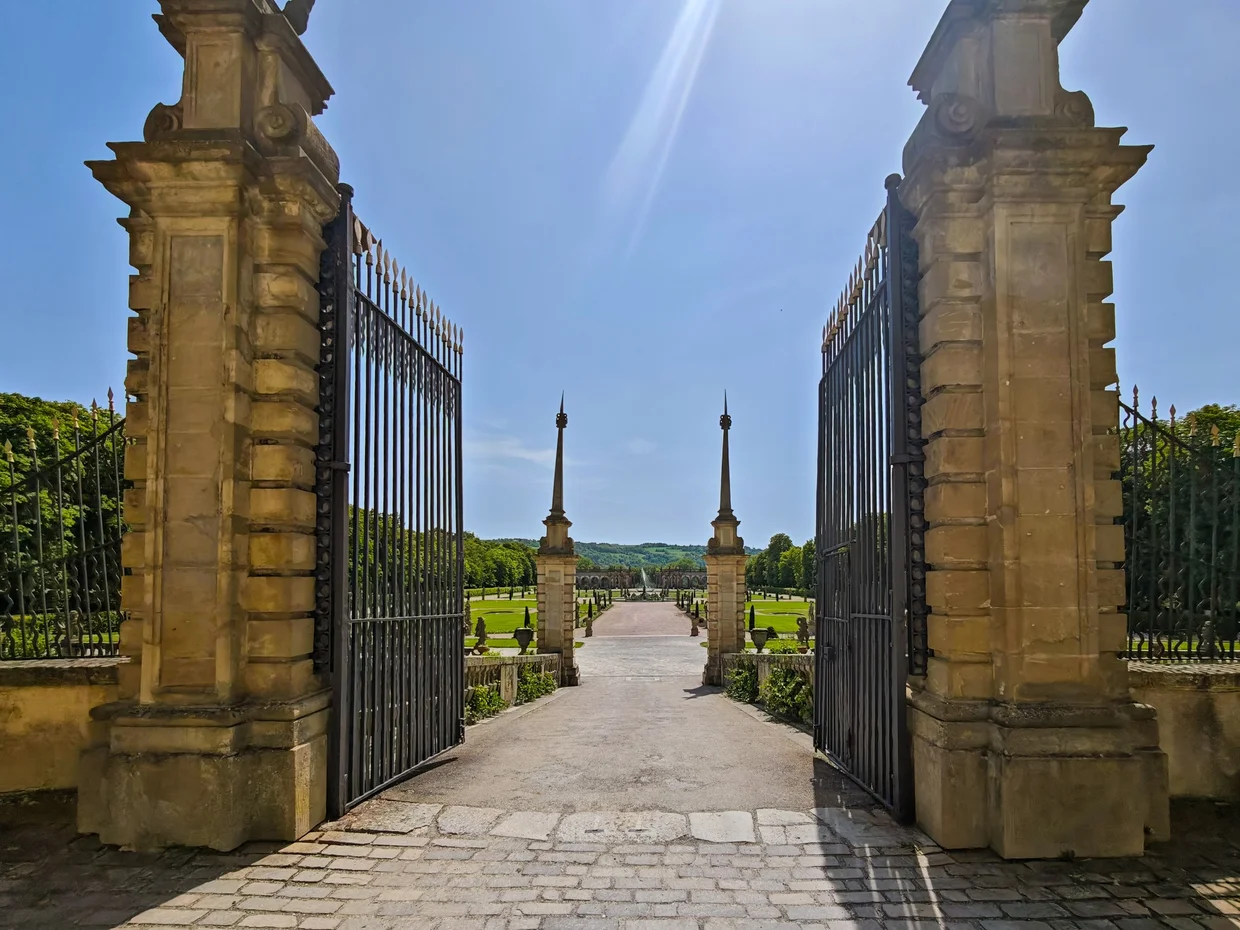
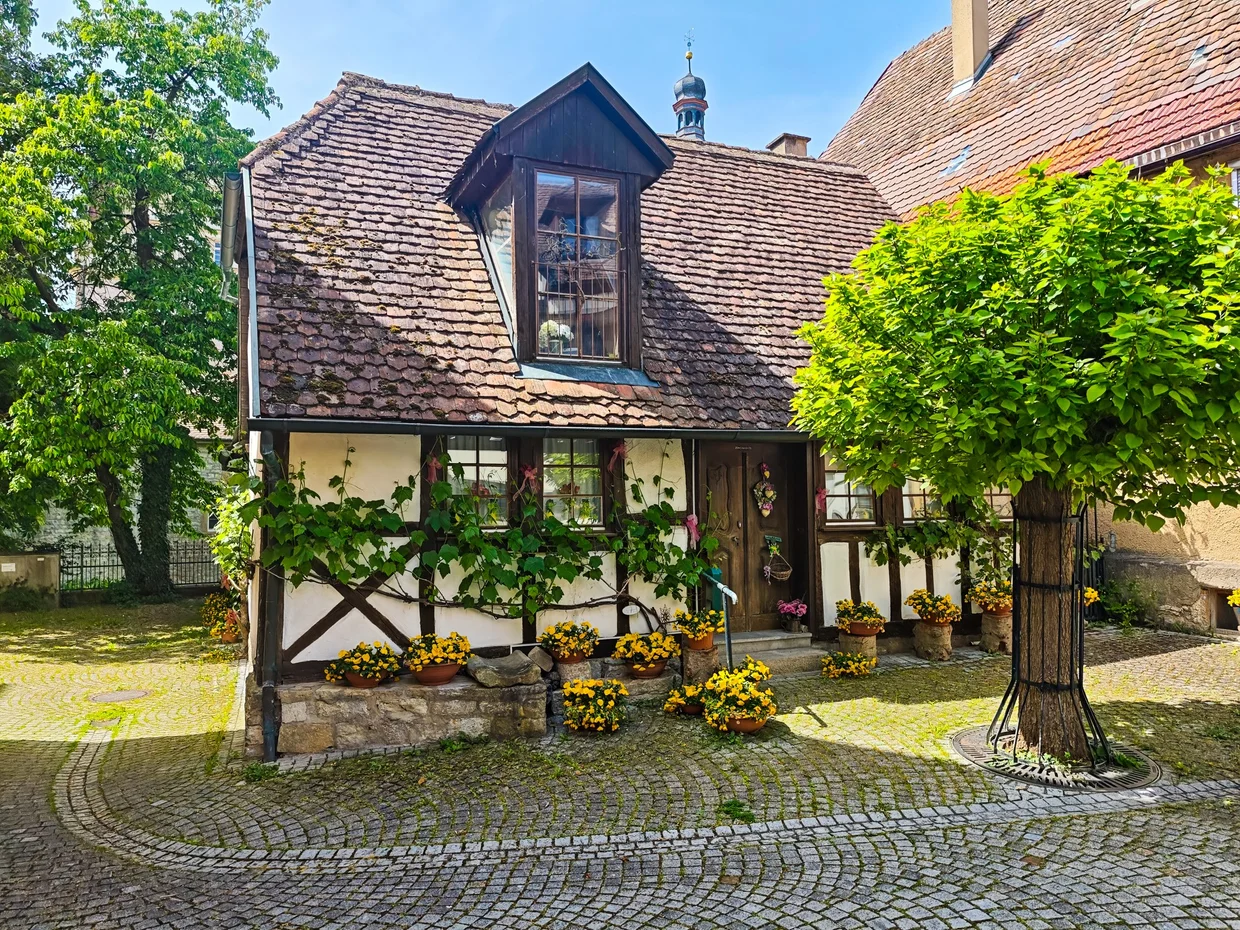
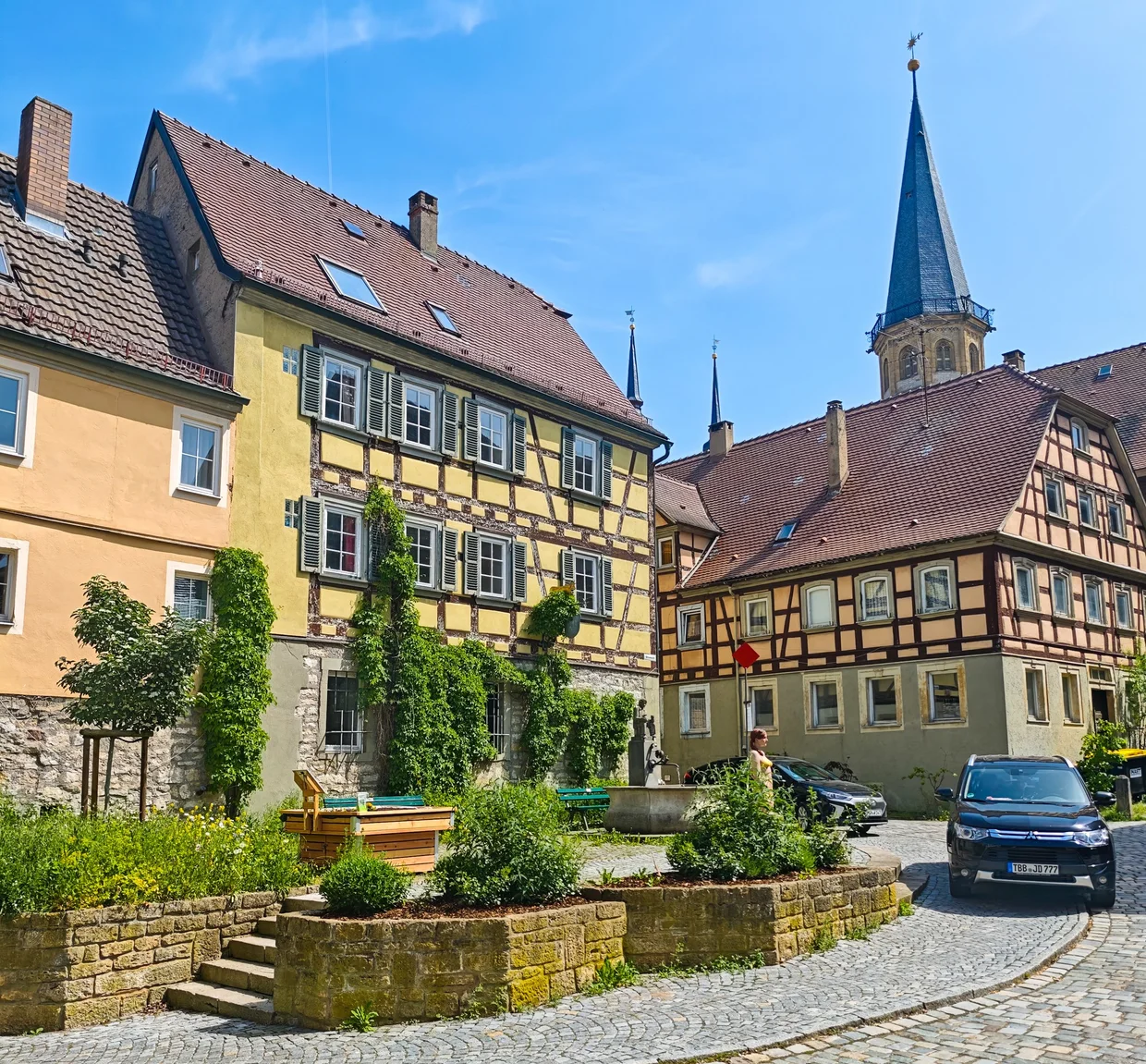
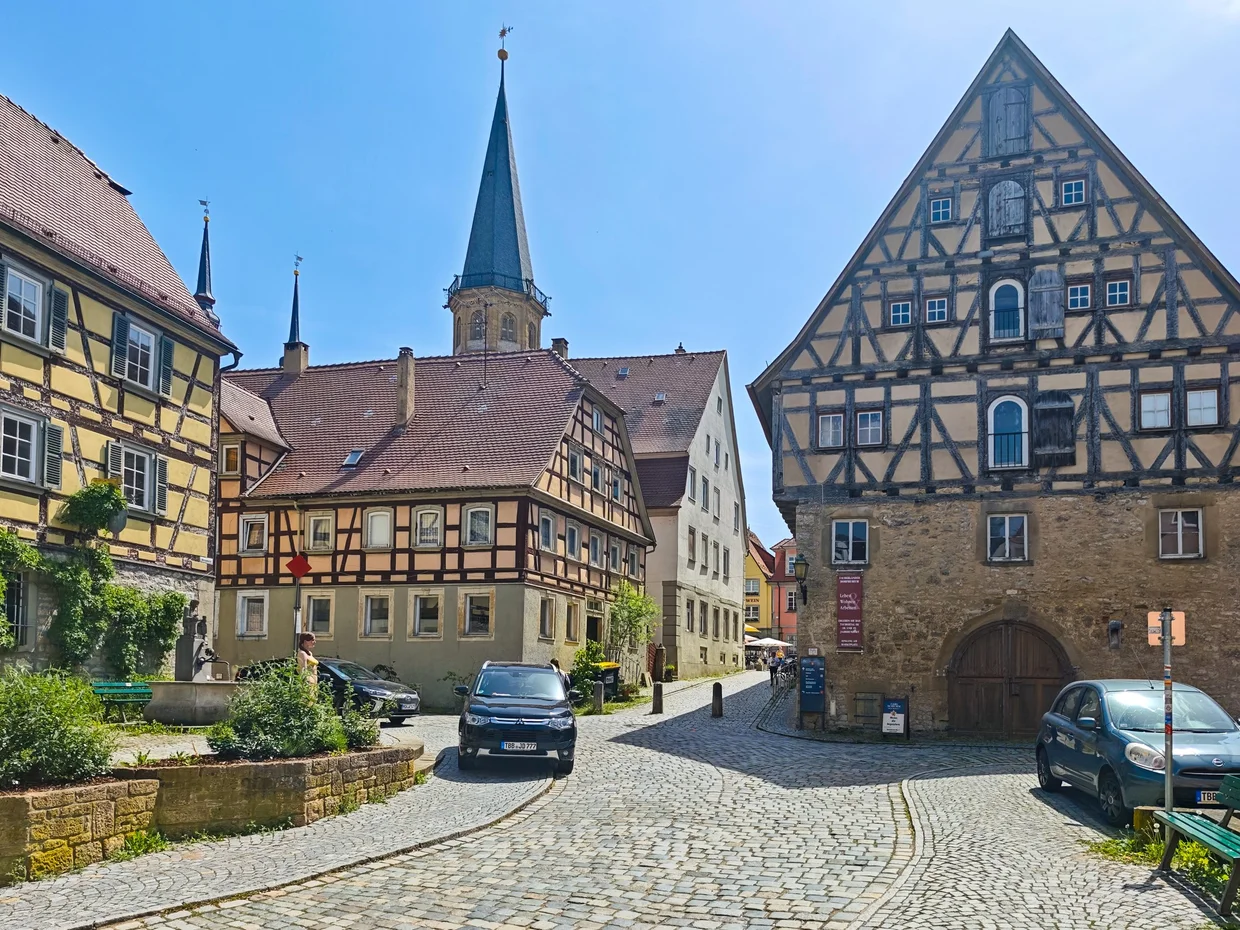
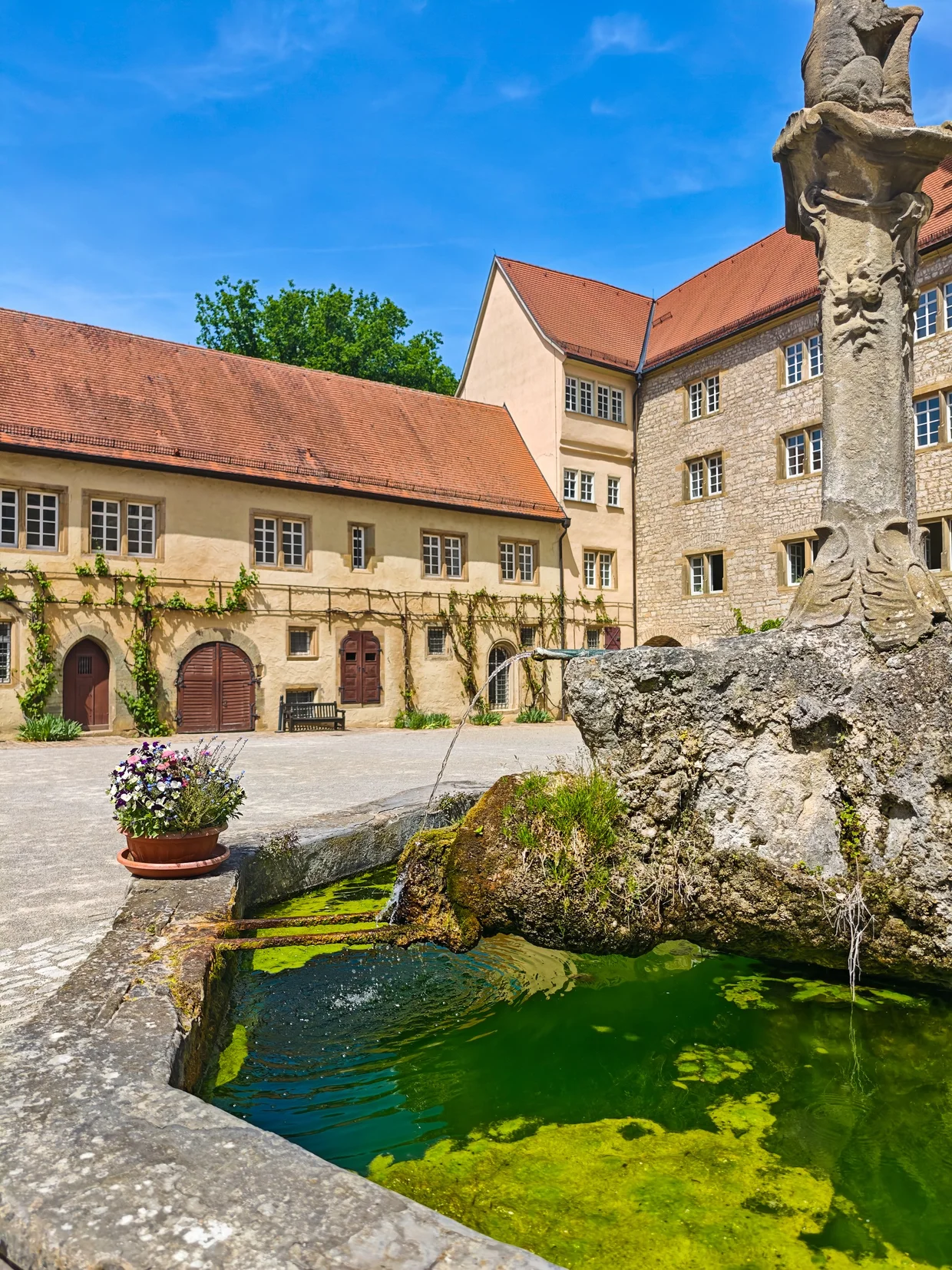
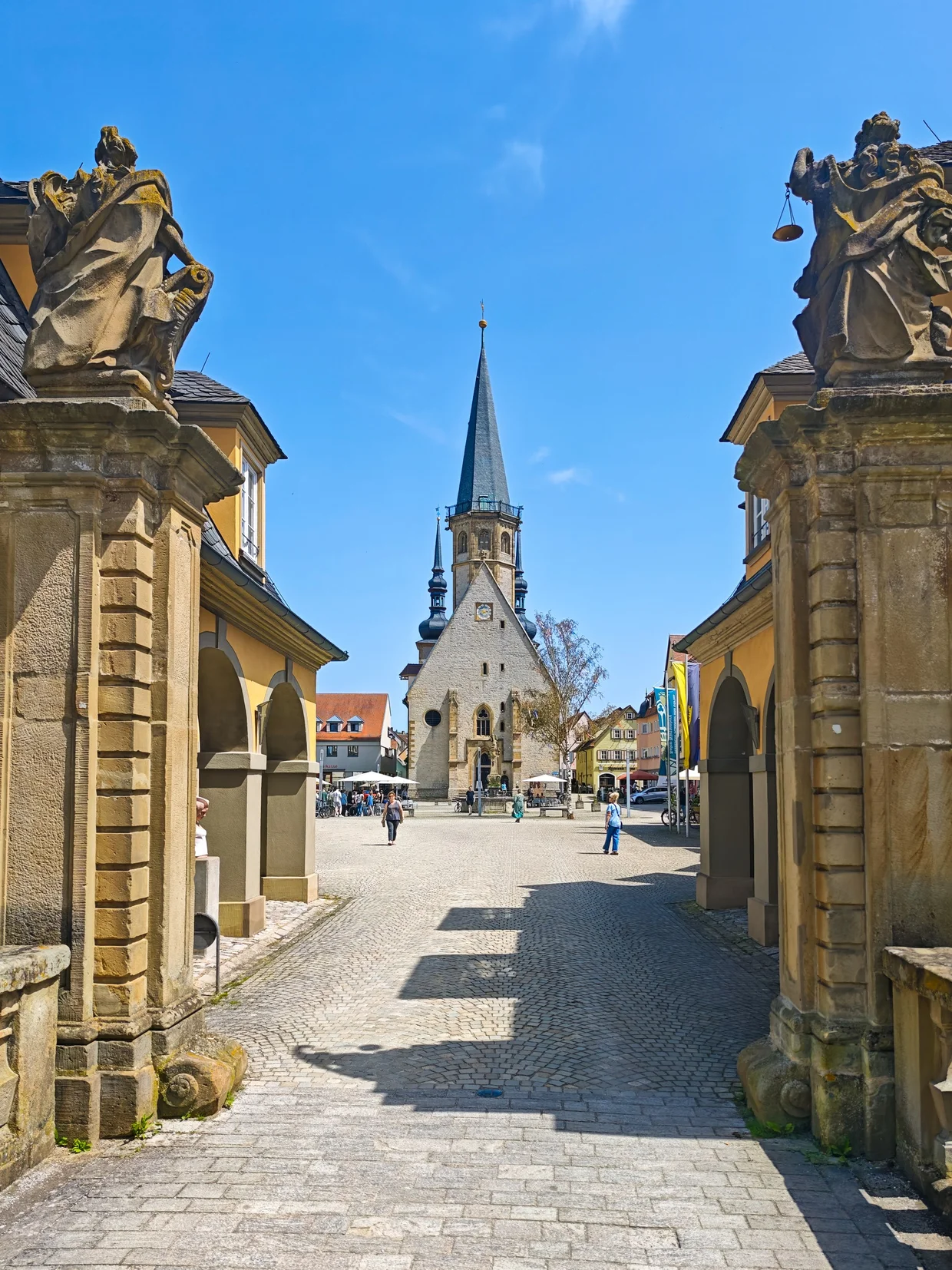
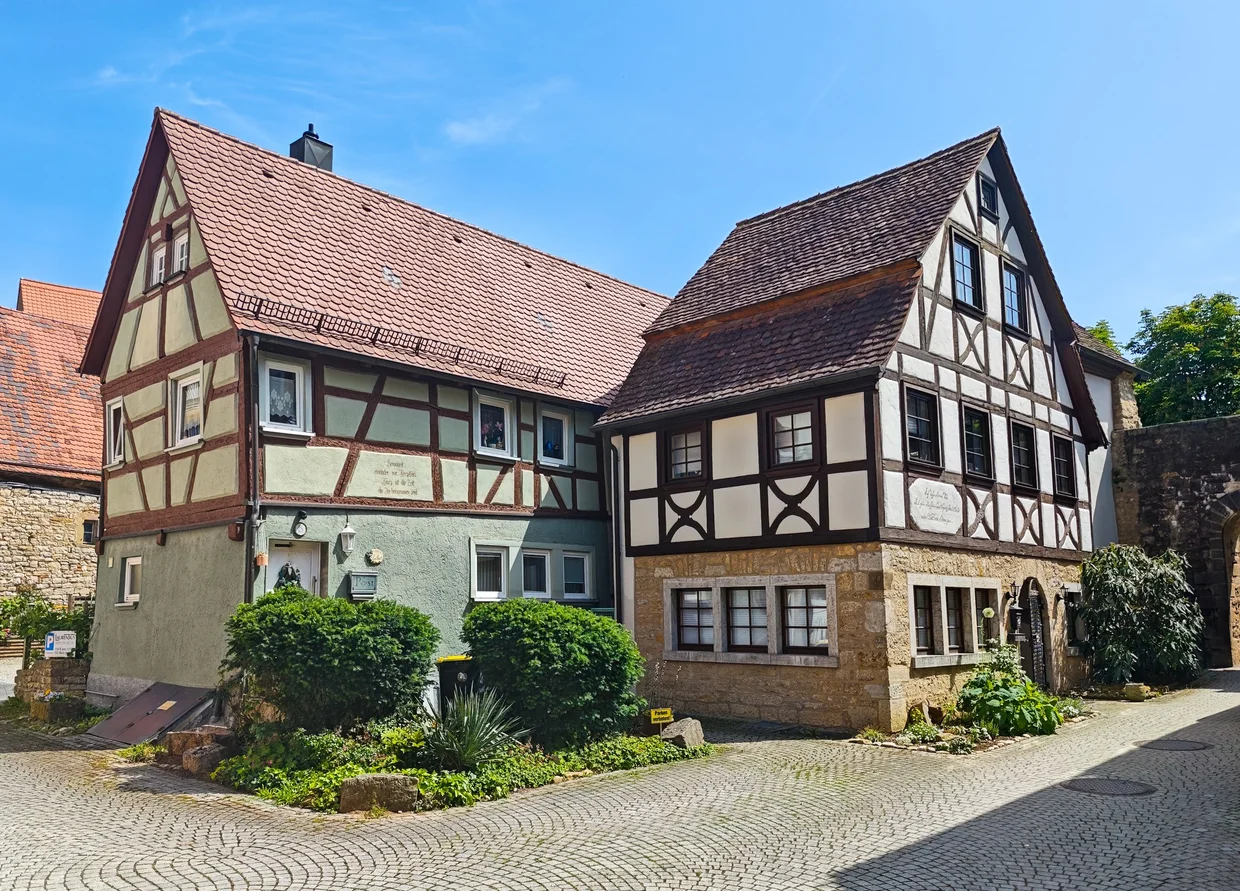
The town itself, around the Schloss, has its own little postcard corners; tiny half-timbered cottages with wisteria around the door, a quiet park inside the old wall, the Marktplatz framed by sandstone gate pillars. Not a stop on its own, but a really nice 60-90-minute extension to the Schloss.
Verdict: strong stop, especially if you like palace gardens.
Creglingen: The Riemenschneider Altar
If you skip Creglingen you're skipping one of Tilman Riemenschneider's masterpieces. The Herrgottskirche sits just outside town in the Tauber valley, and inside it there's a late-Gothic limewood altar carved around 1505-1510 that's basically a single 10-to-11-metre work of art. The figures are unpainted in the best way (Riemenschneider let the wood do the whole show), and the carving is the kind of detail that survives a 500-year stare.
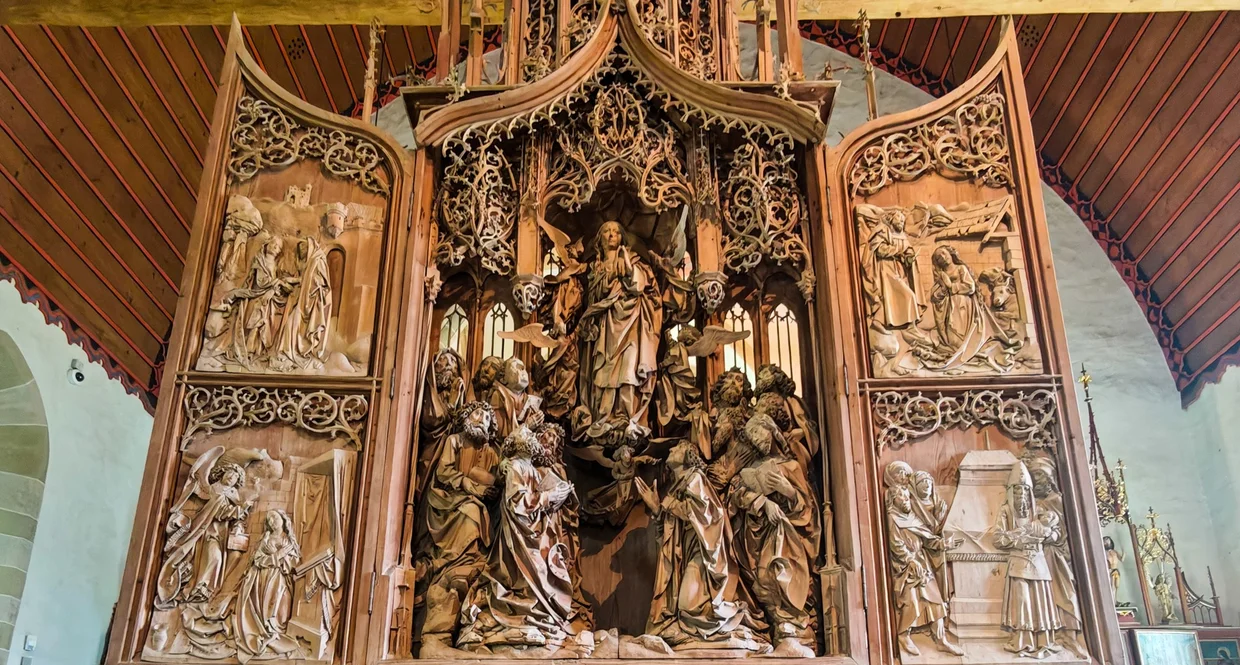
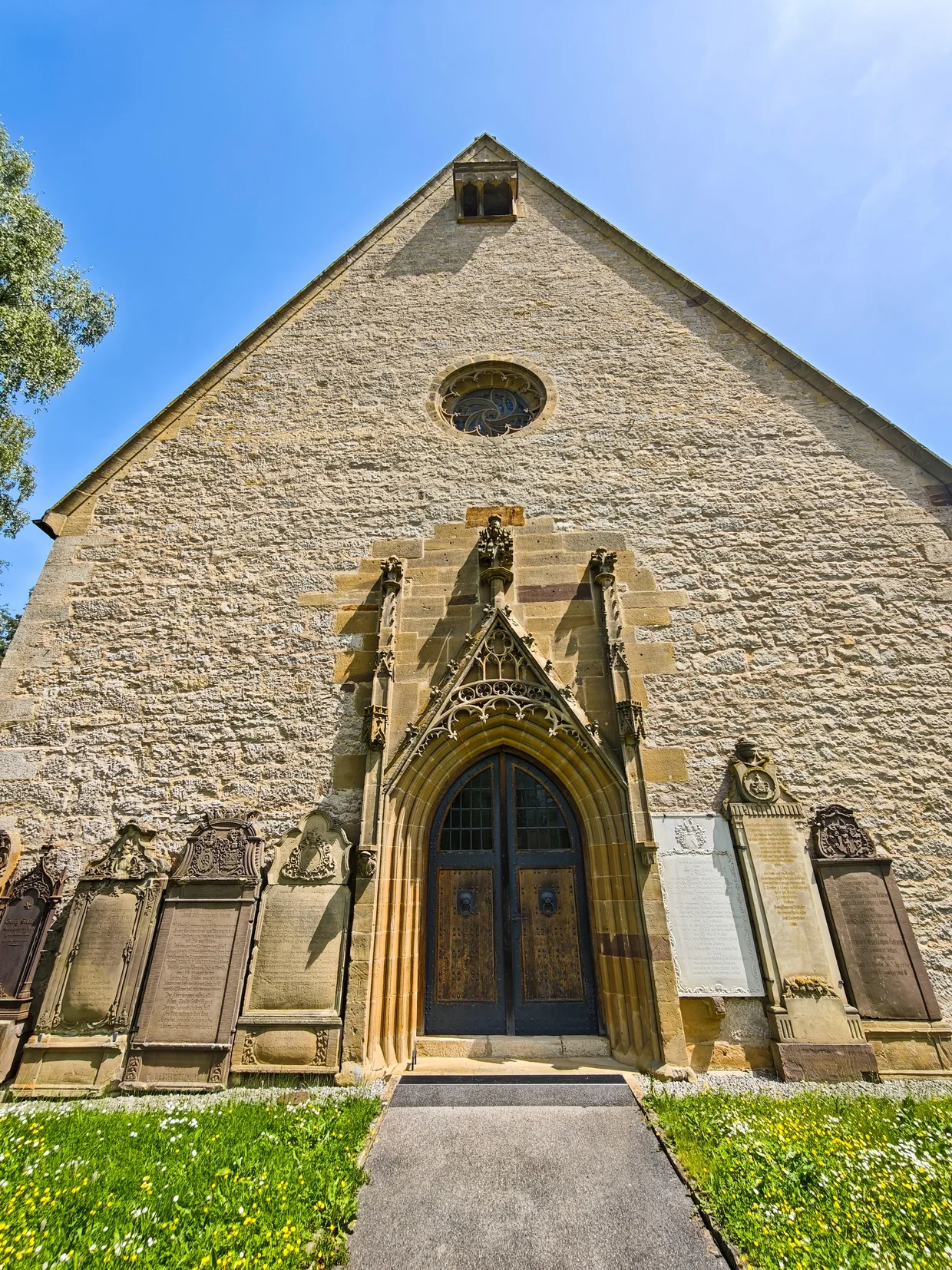
The church takes 20-30 minutes. You don't need anything else from Creglingen. Worth the quick hop out from the town centre if you're driving this part of the route.
Verdict: stop just for the altar. Skip the rest of the town.
Rothenburg ob der Tauber: The Heavyweight
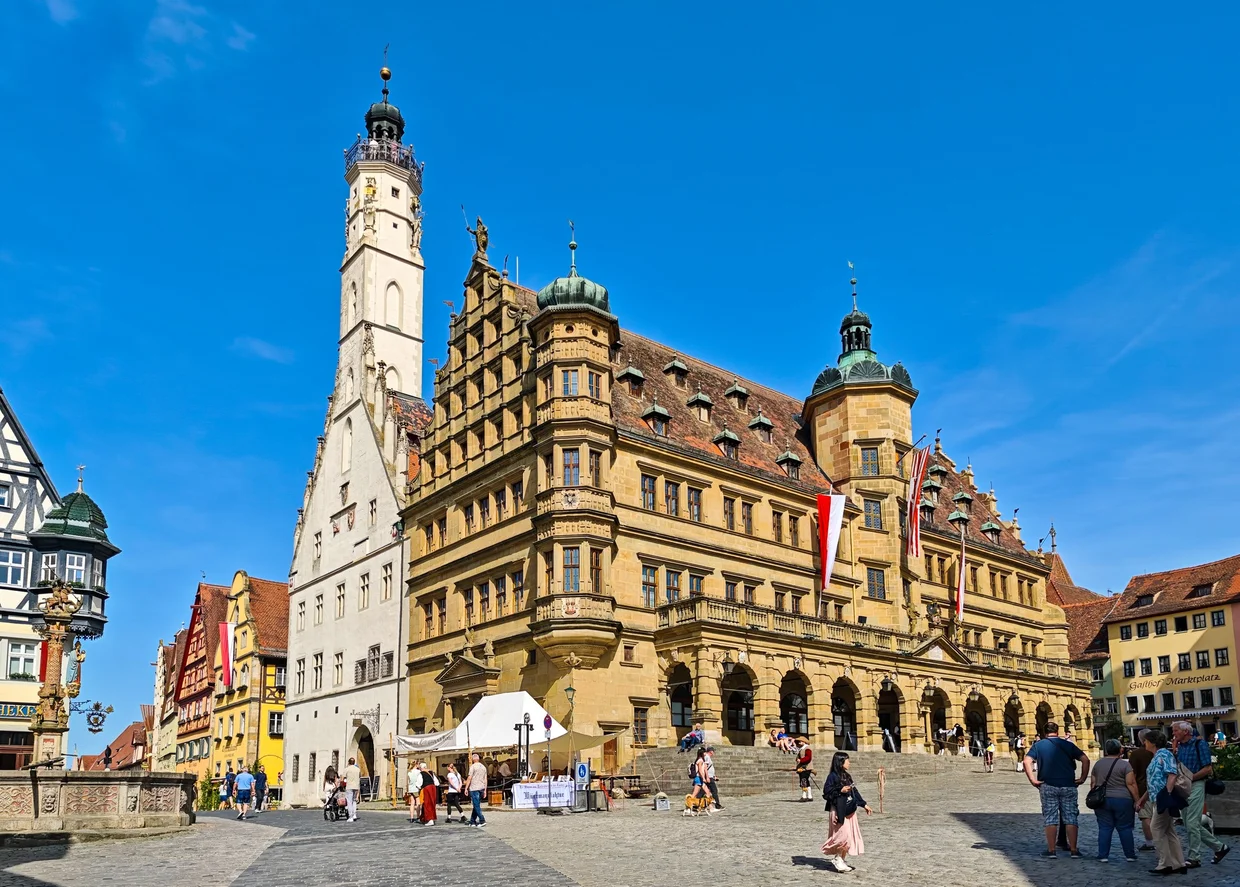
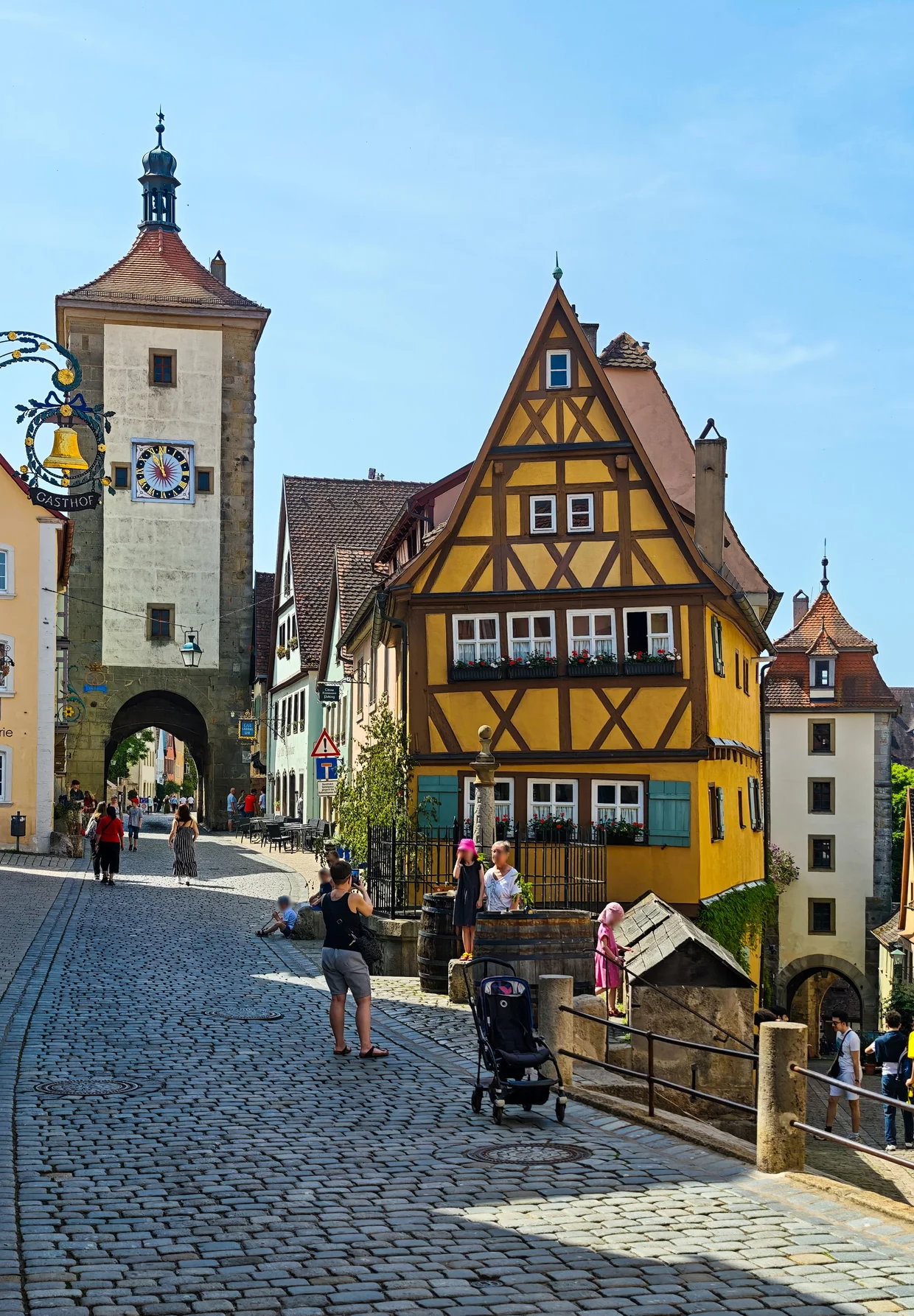
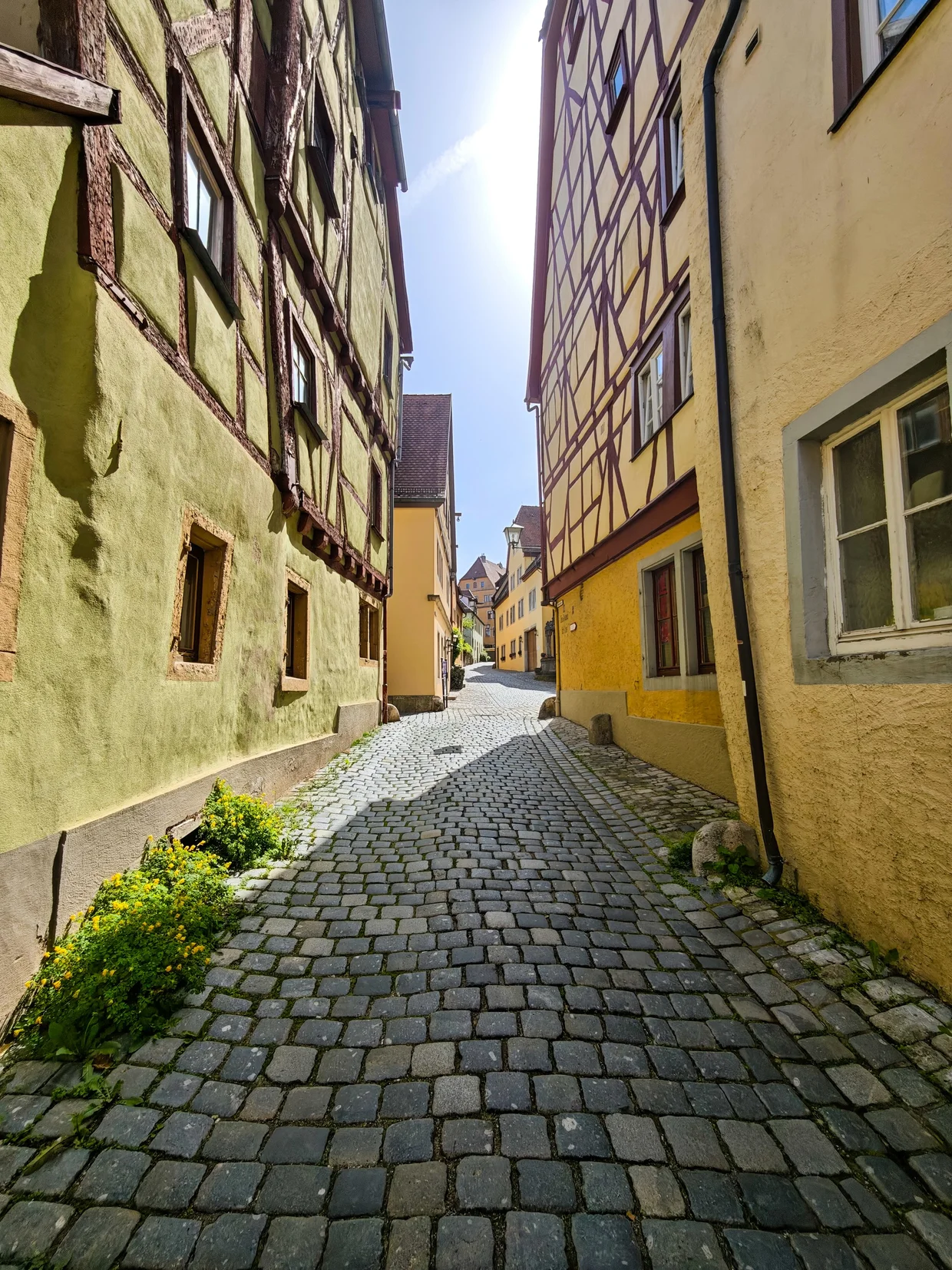
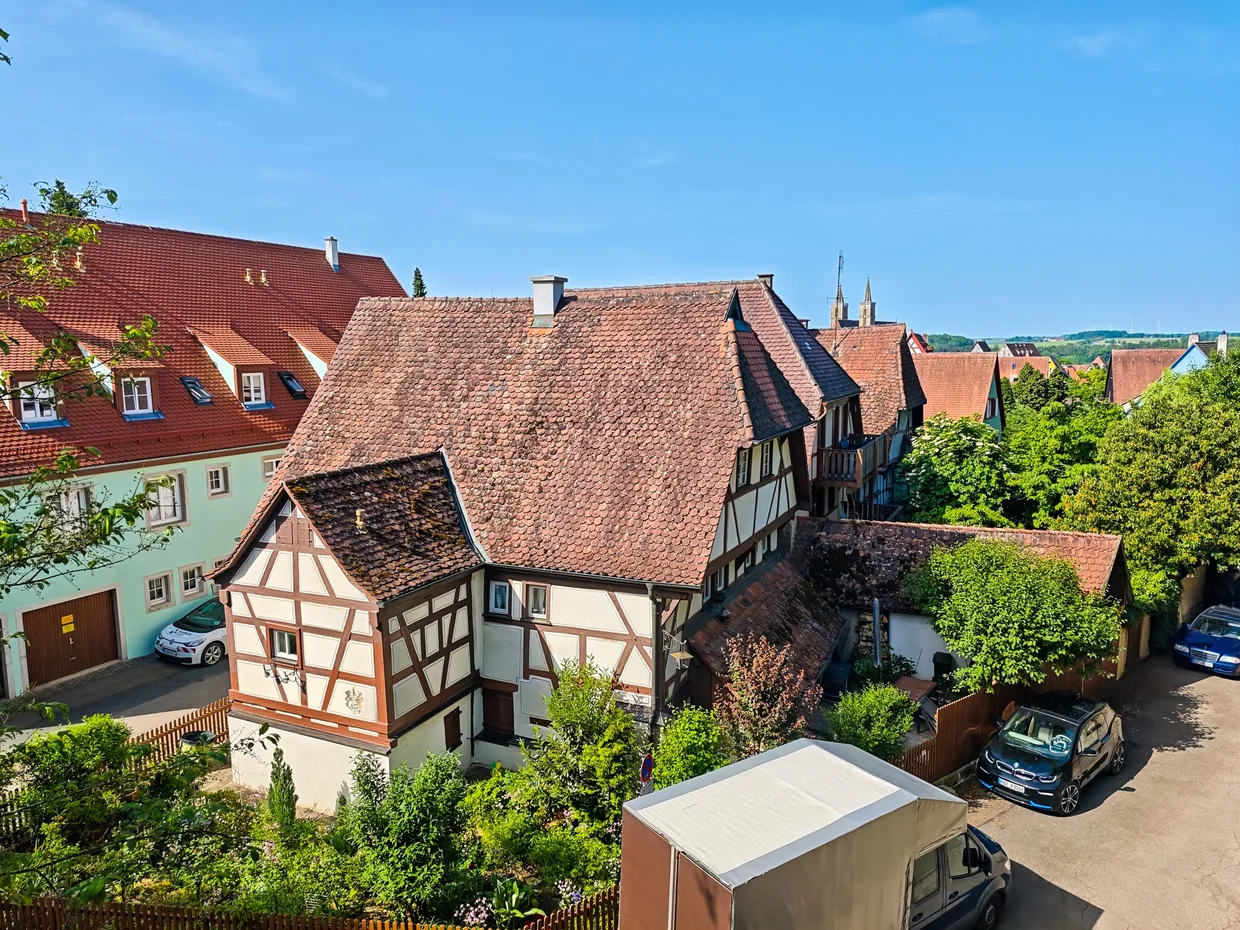
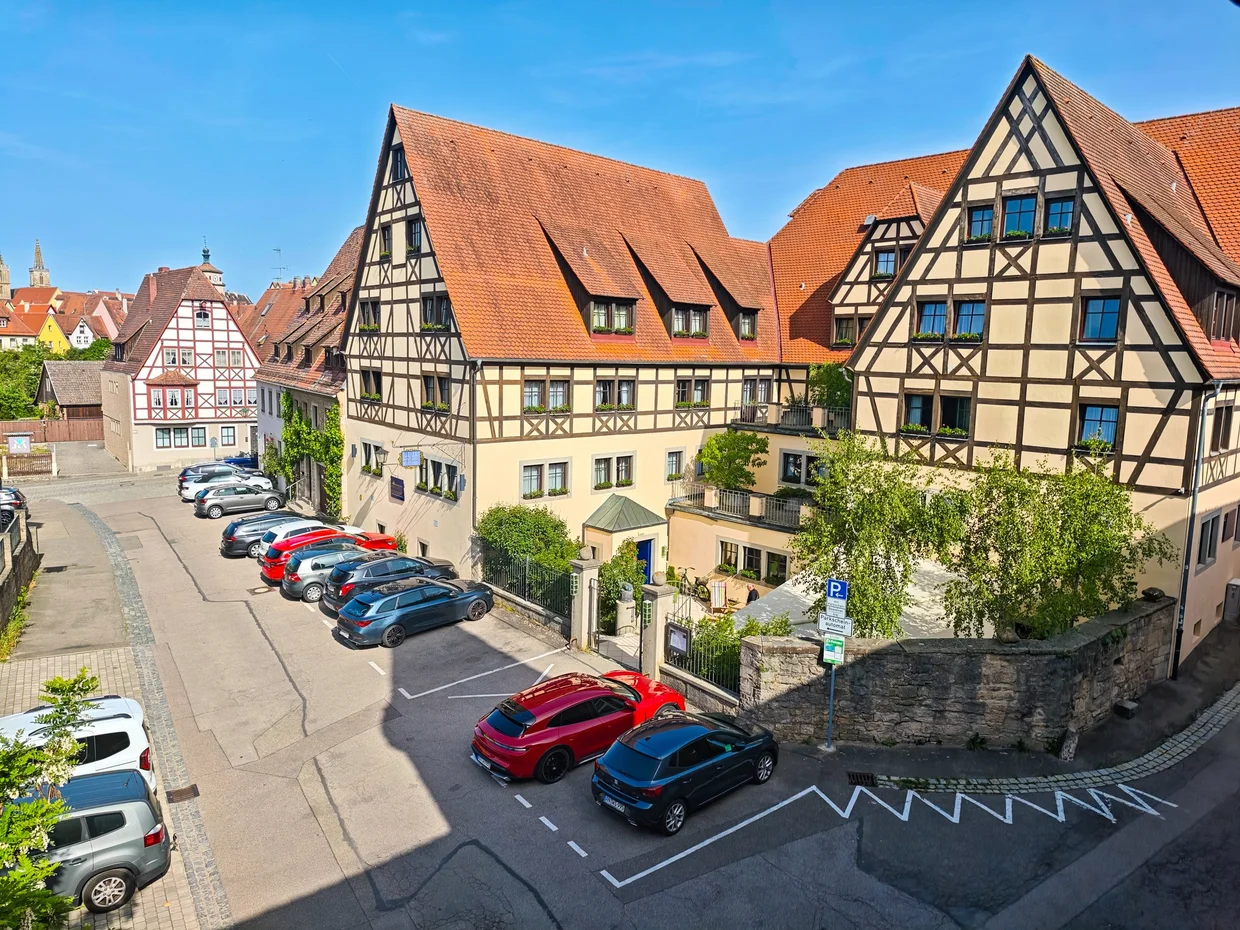
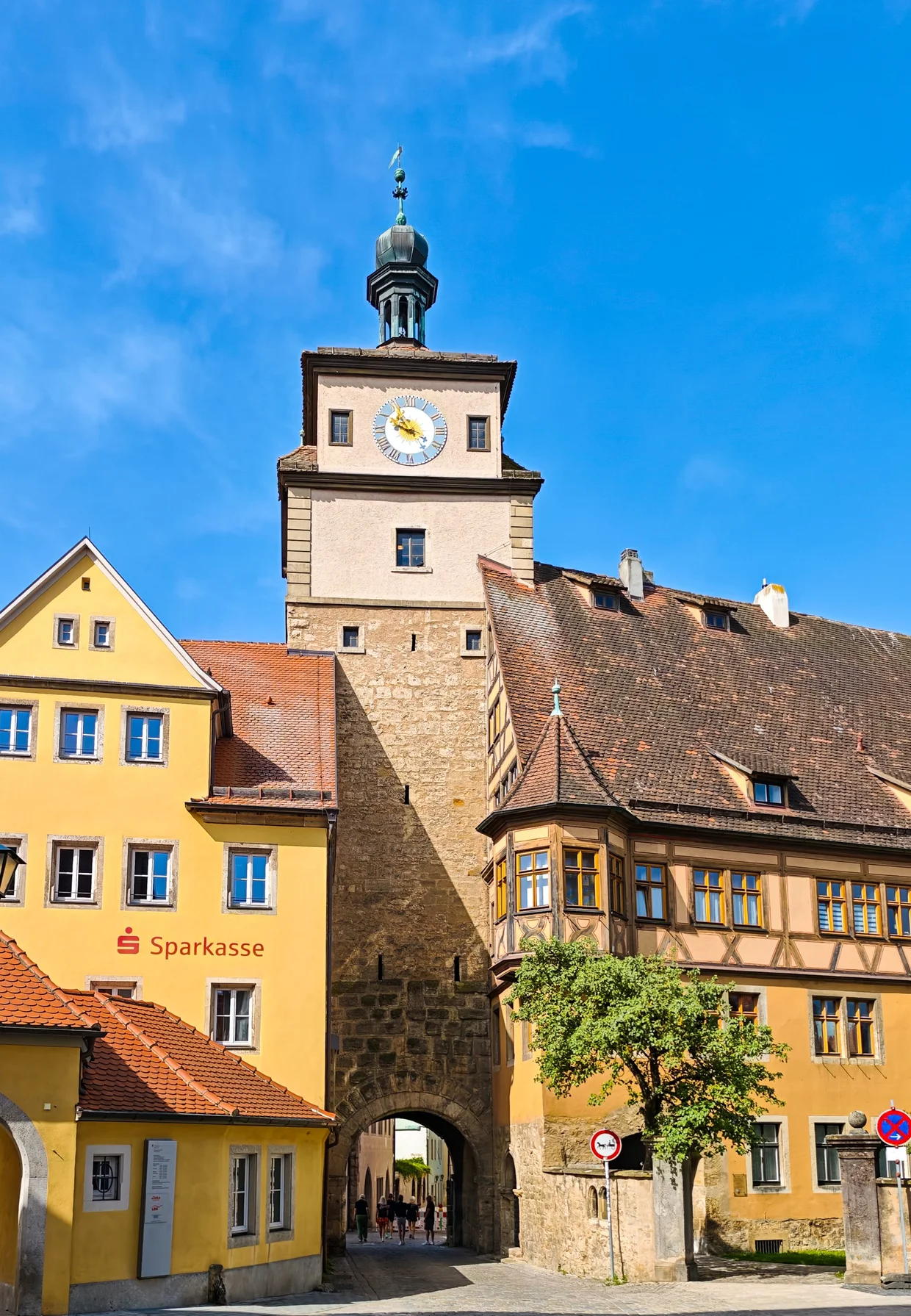
Rothenburg is the one. The walls, the gates, the half-timbered houses leaning into cobbled lanes, the Marktplatz with the Gothic Rathaus, the Plonlein corner that's been on a million postcards and is still pretty when you stand there yourself. It exceeded my expectations, which is rare for towns this hyped, and I wanna be careful with the next sentence: go early.
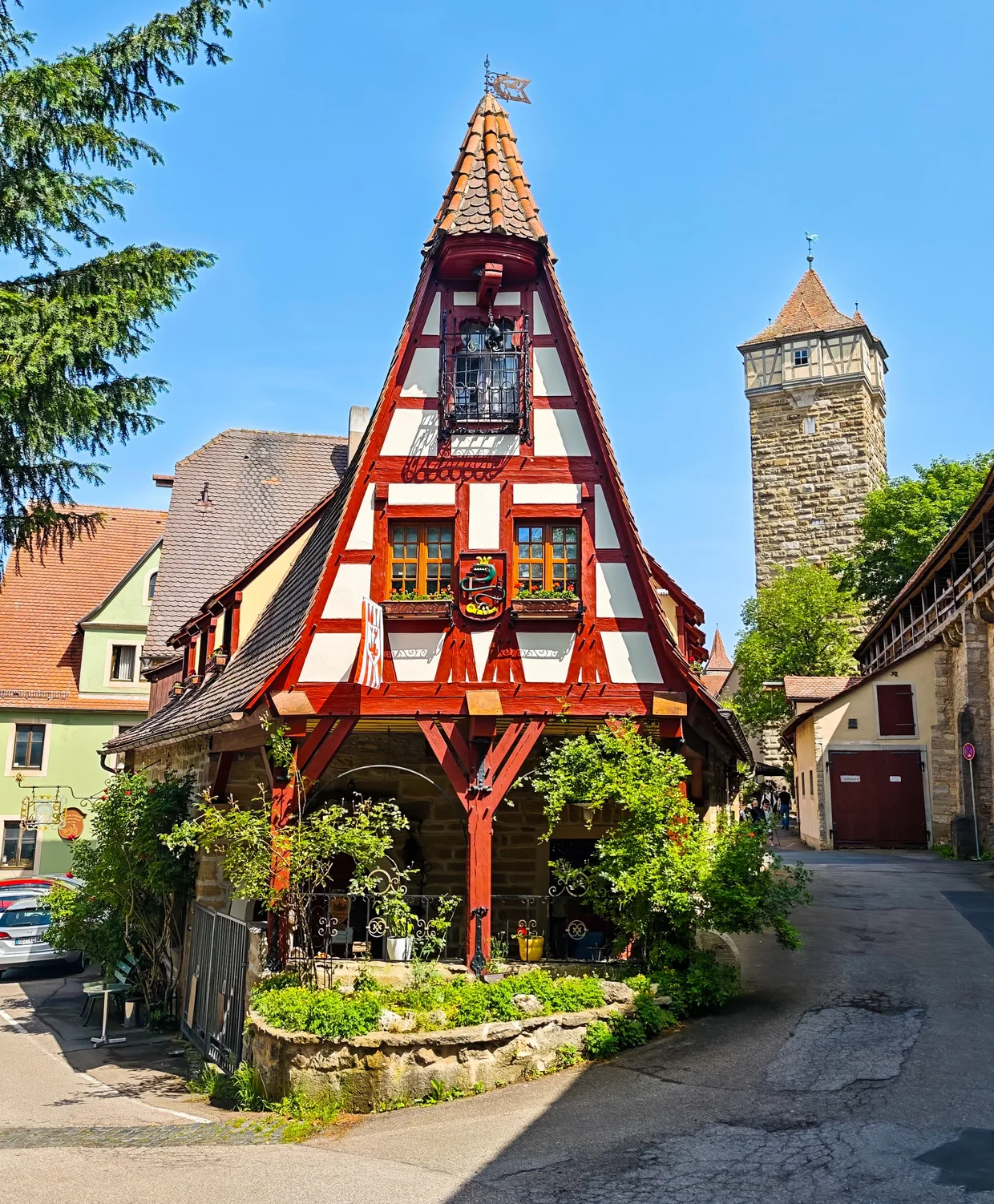
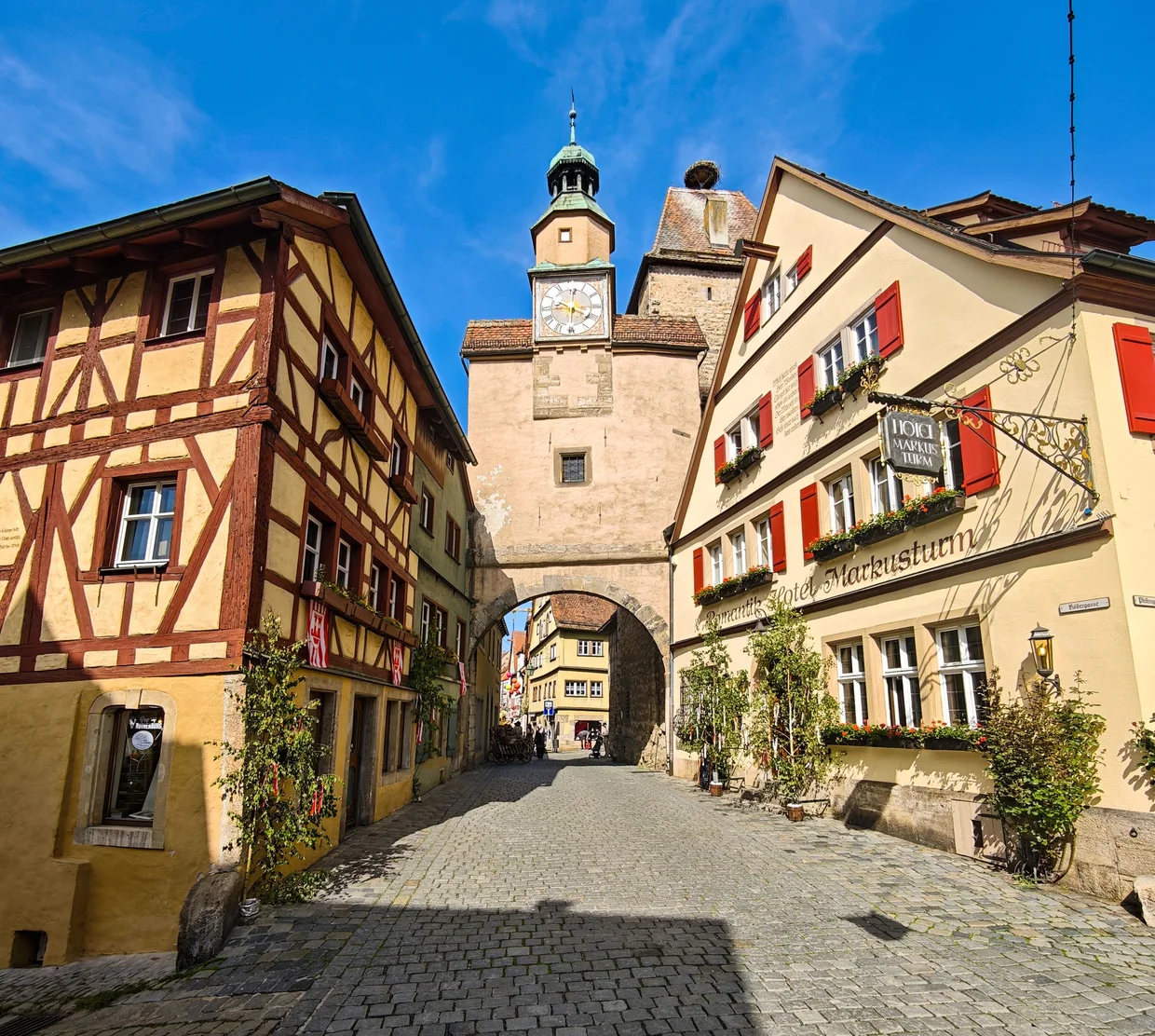
By "early" I mean be there by 09:00. I arrived at nine and there were already people about, but the streets weren't crowded, the light was still soft, the cafes hadn't filled up, and parking was no problem (the numbered lots P1-P5 just outside the city wall all had space, and I even found plenty of room on the roadside right at one of the gates). By 11:00 the tour buses arrive from Munich and Frankfurt and the town doubles in population. By mid-afternoon you're queueing for selfies at the Plonlein. Same place, completely different vibe.
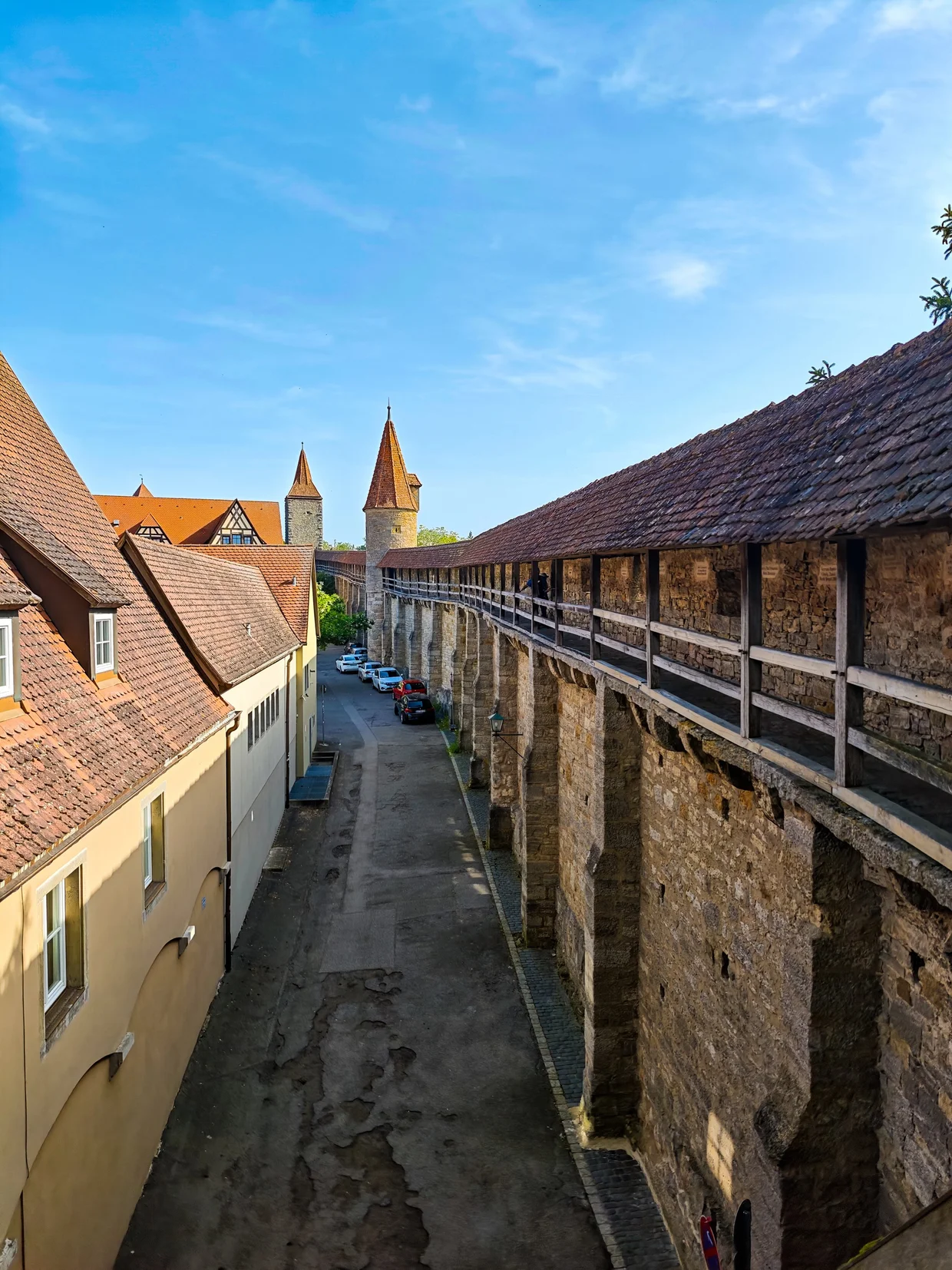
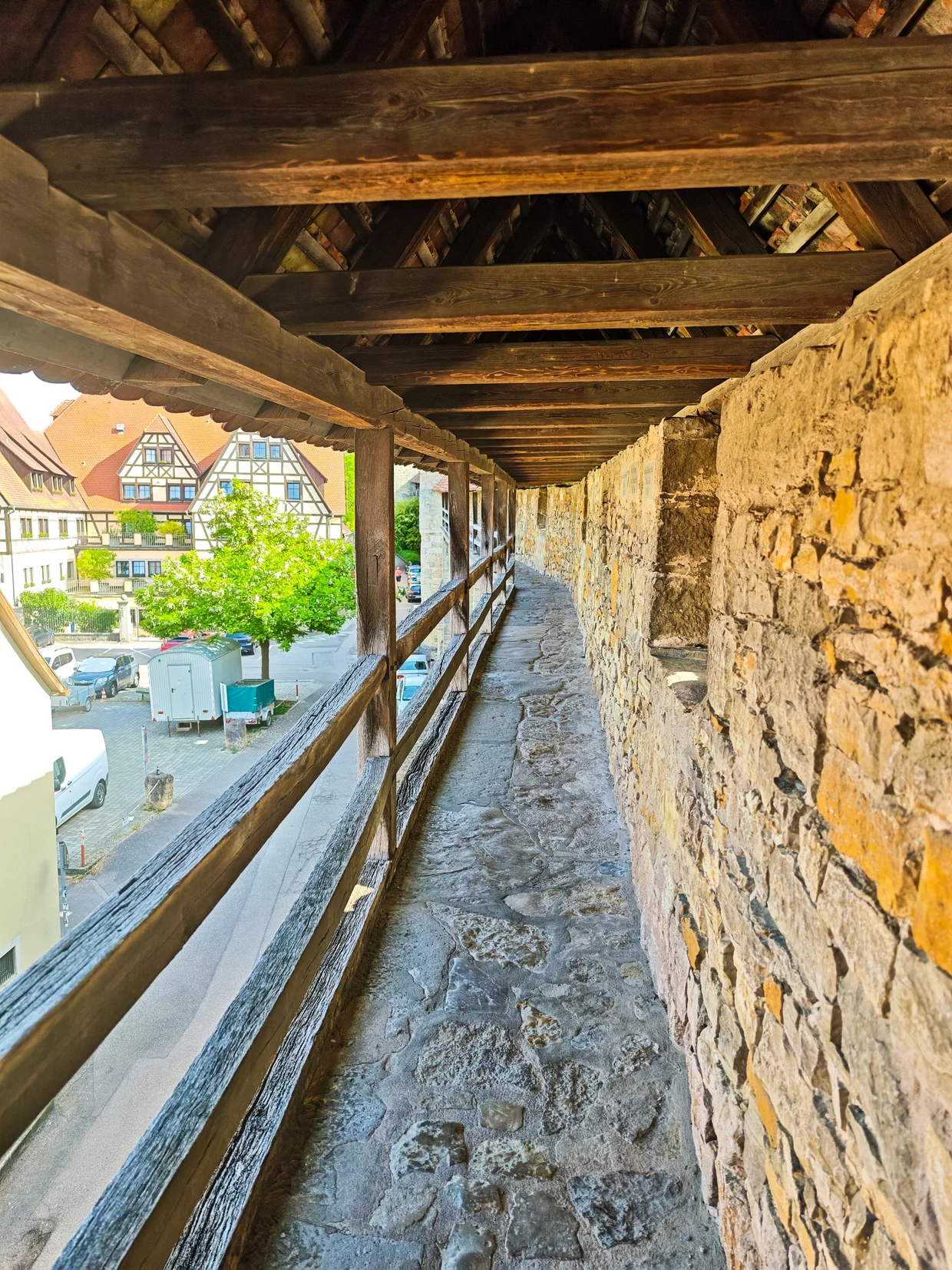
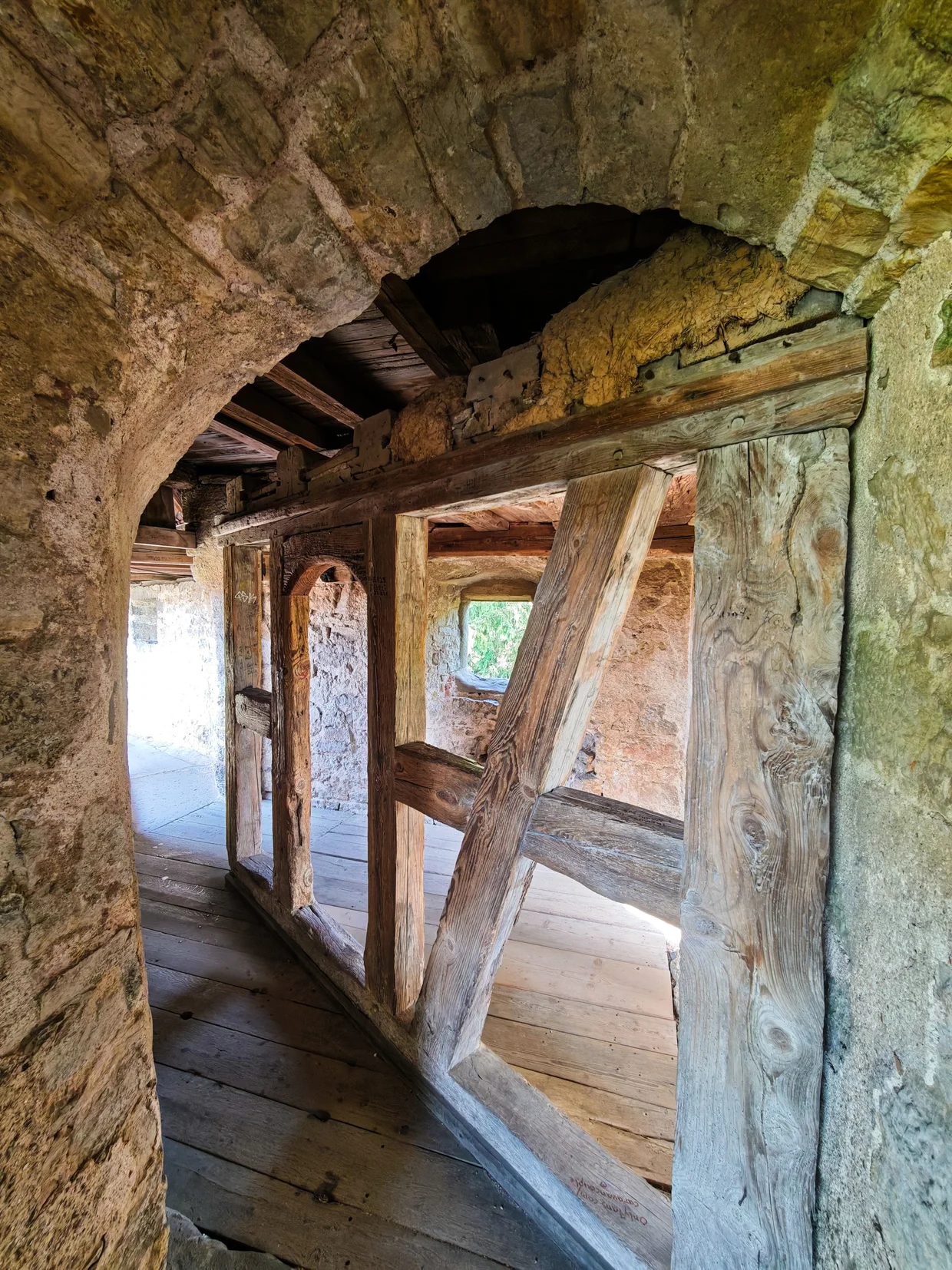
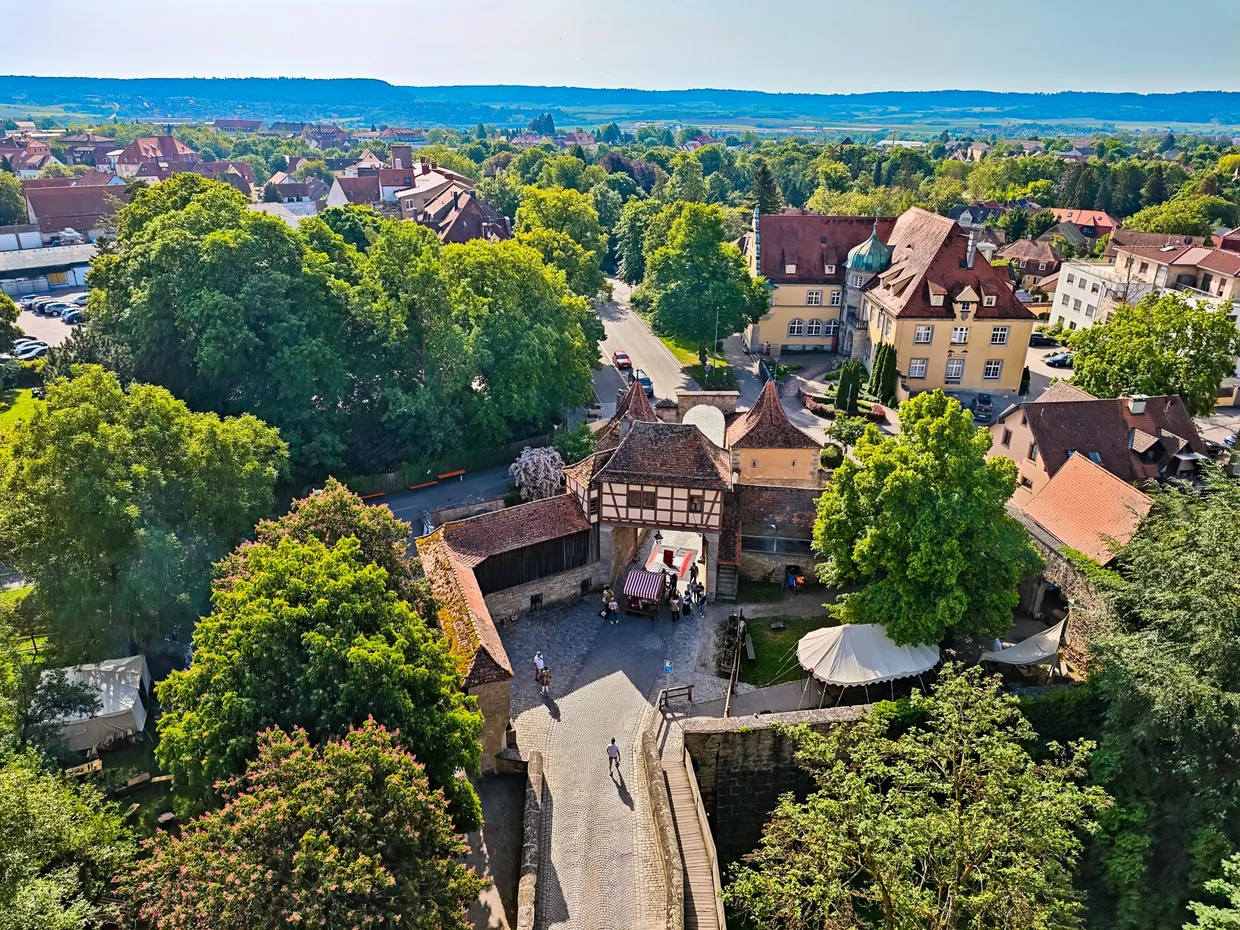
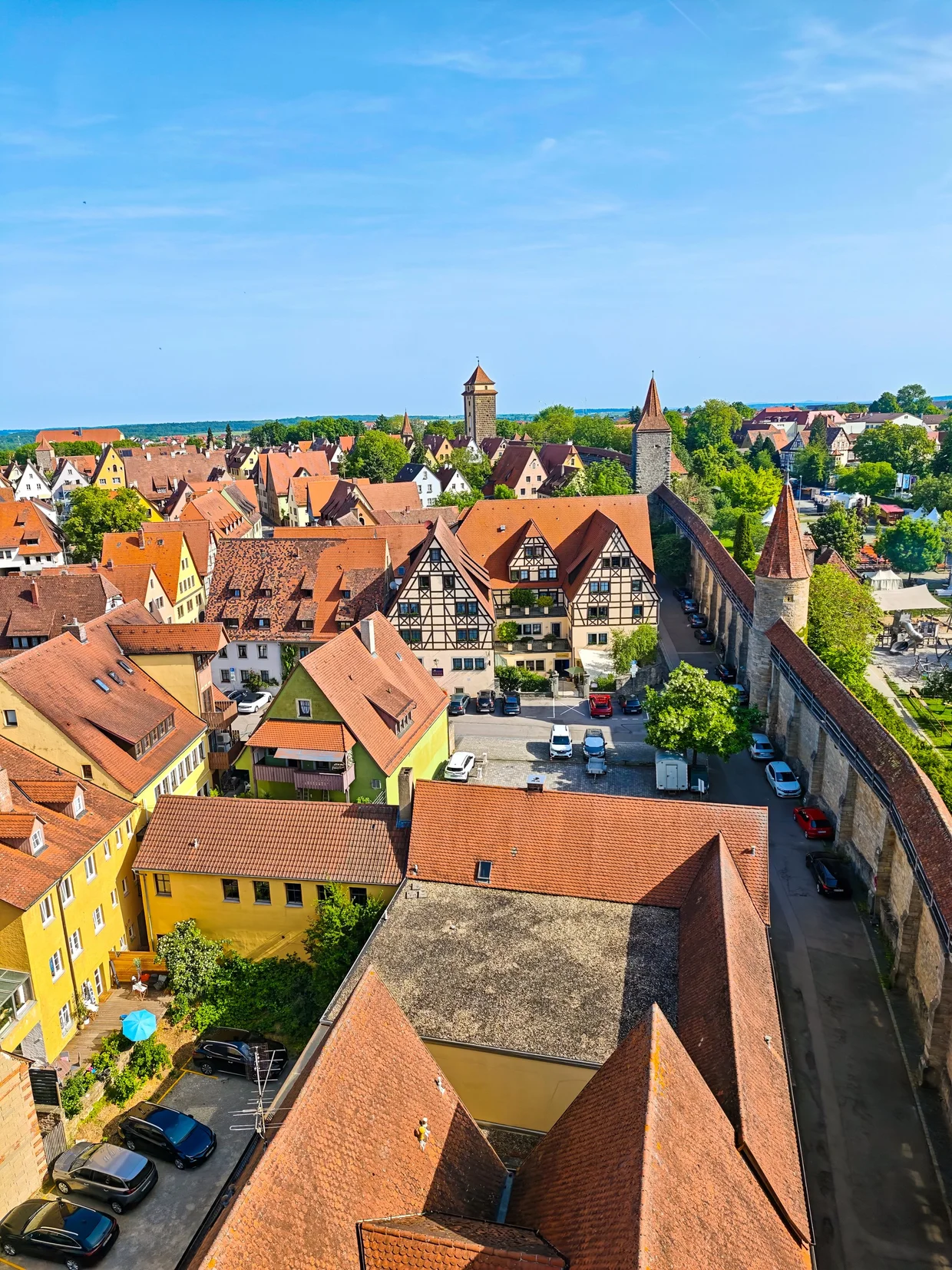
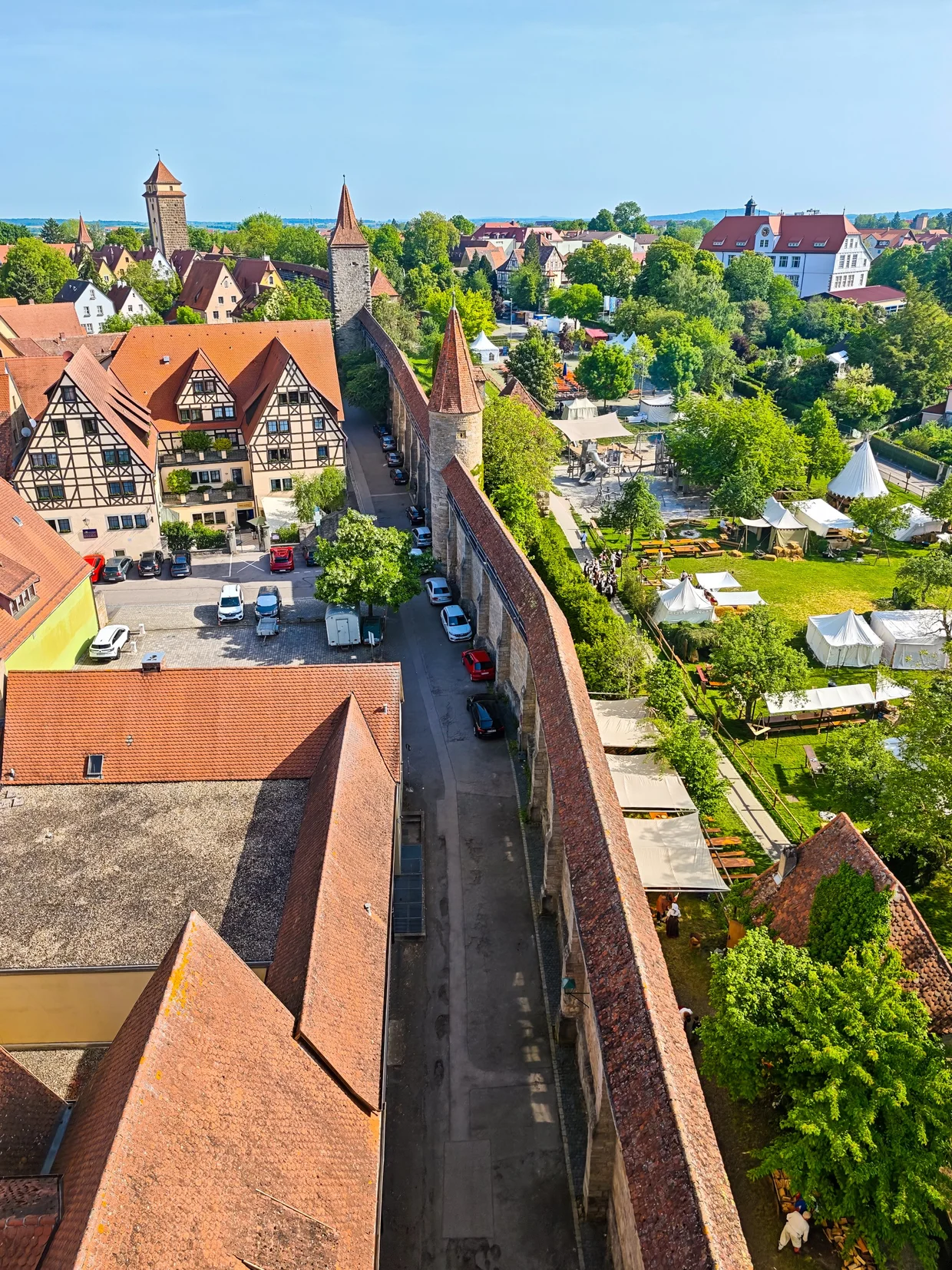
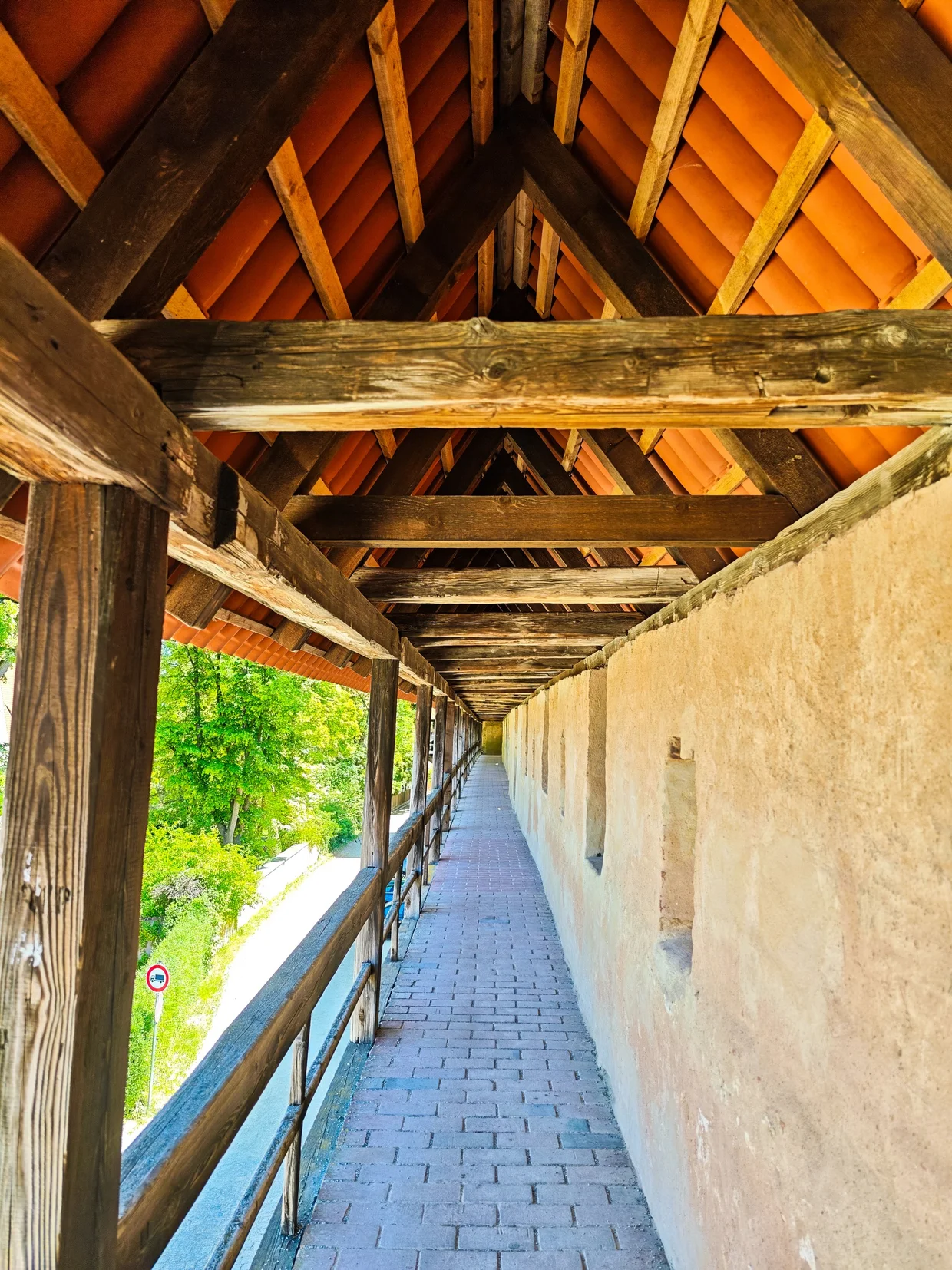
The city wall has long stretches of covered walk that are some of the best things to do here, although it isn't a single continuous loop; you'll join it in sections rather than walk the whole ring at once. You join it at signed staircases and gate sections (around the Burgtor and Roedertor are good starts), walk between roofs and treetops, and pop out wherever you fancy. Free. Heads up if you're over 180 cm (about 5'11"): some stretches force you to duck under low beams. Carry your camera, not your spine.
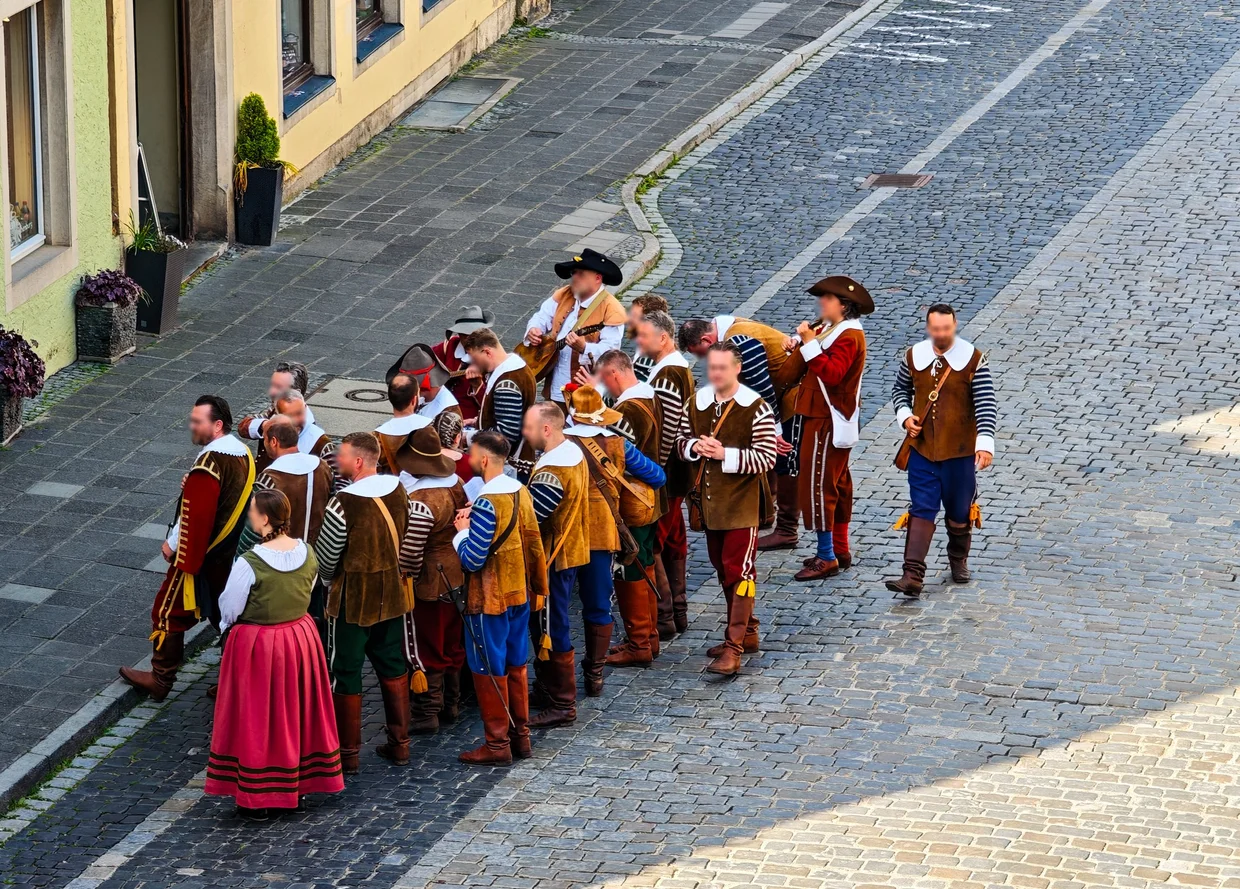
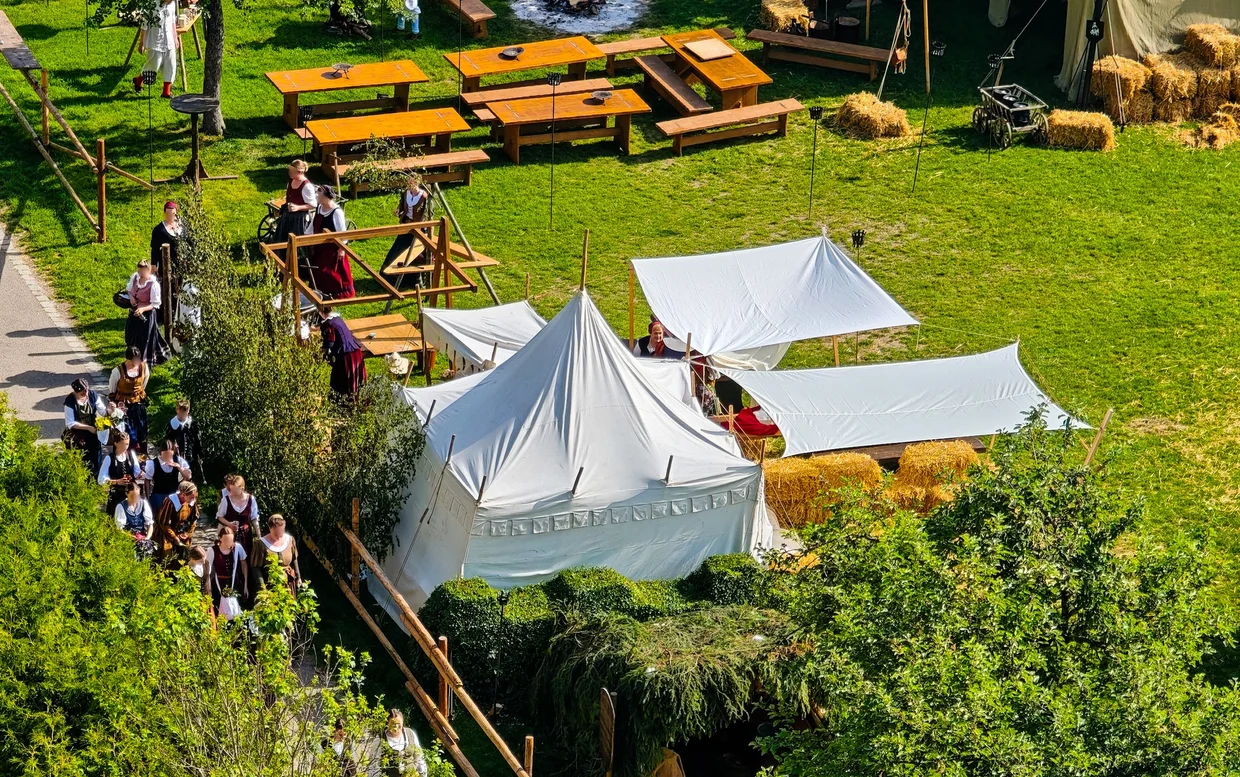
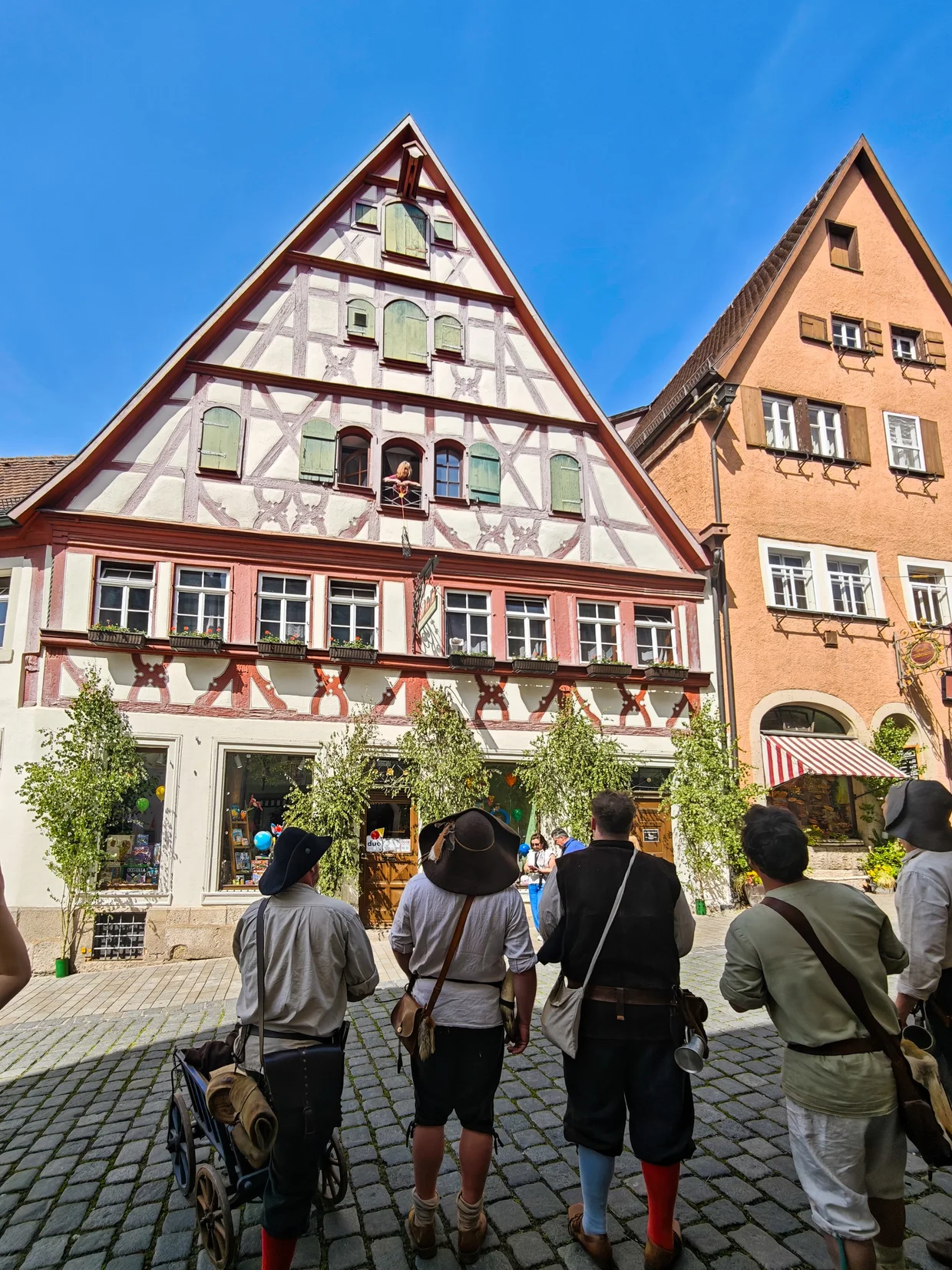
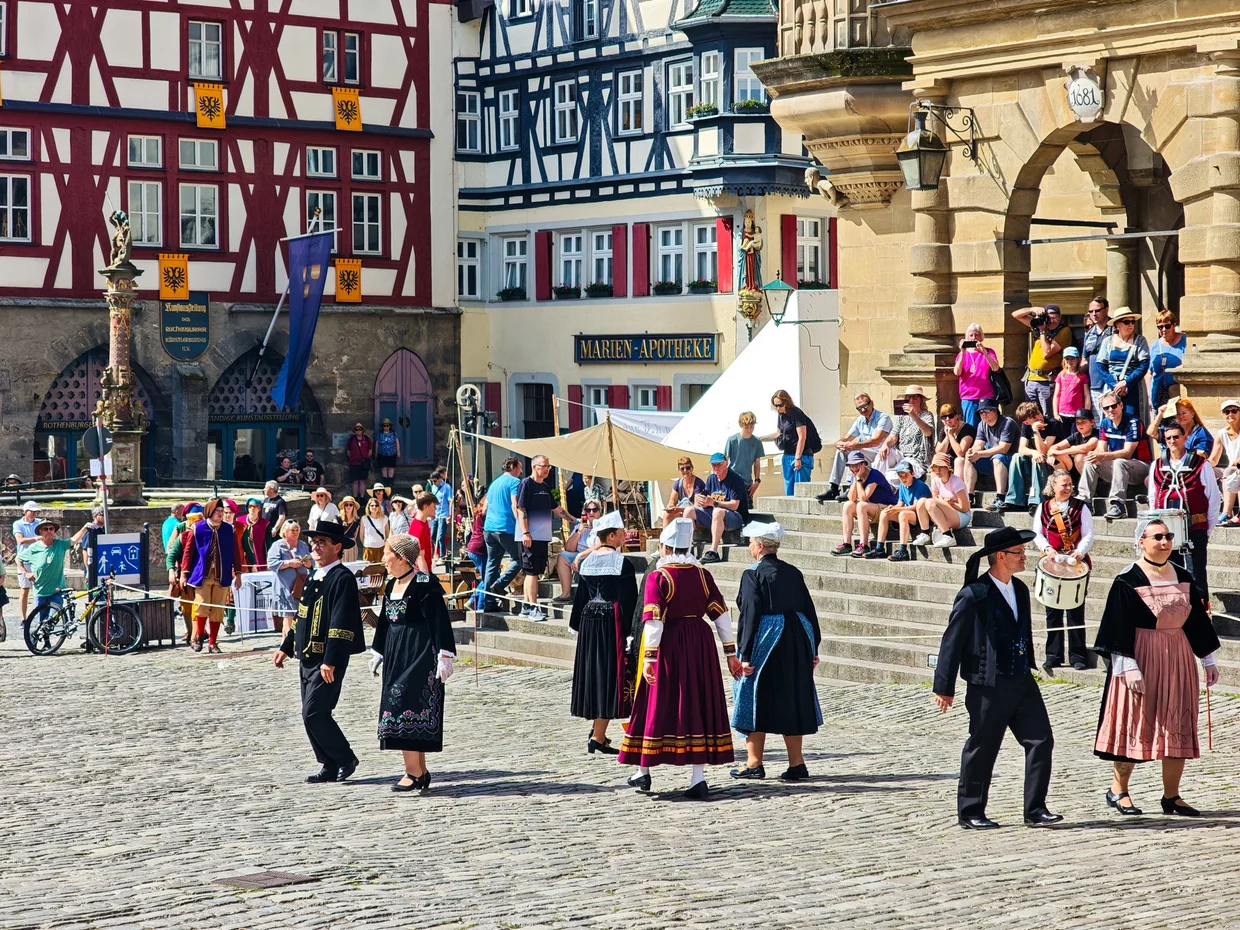
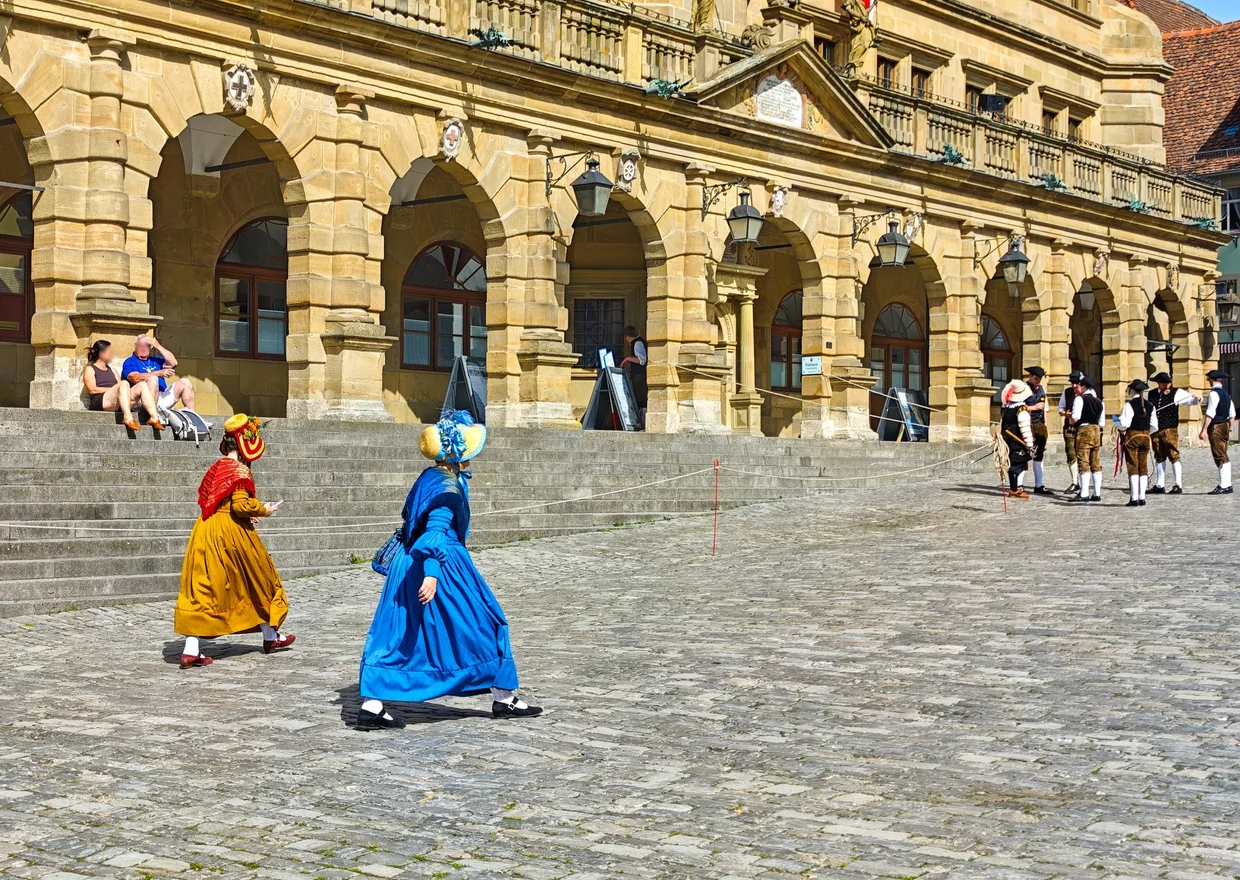
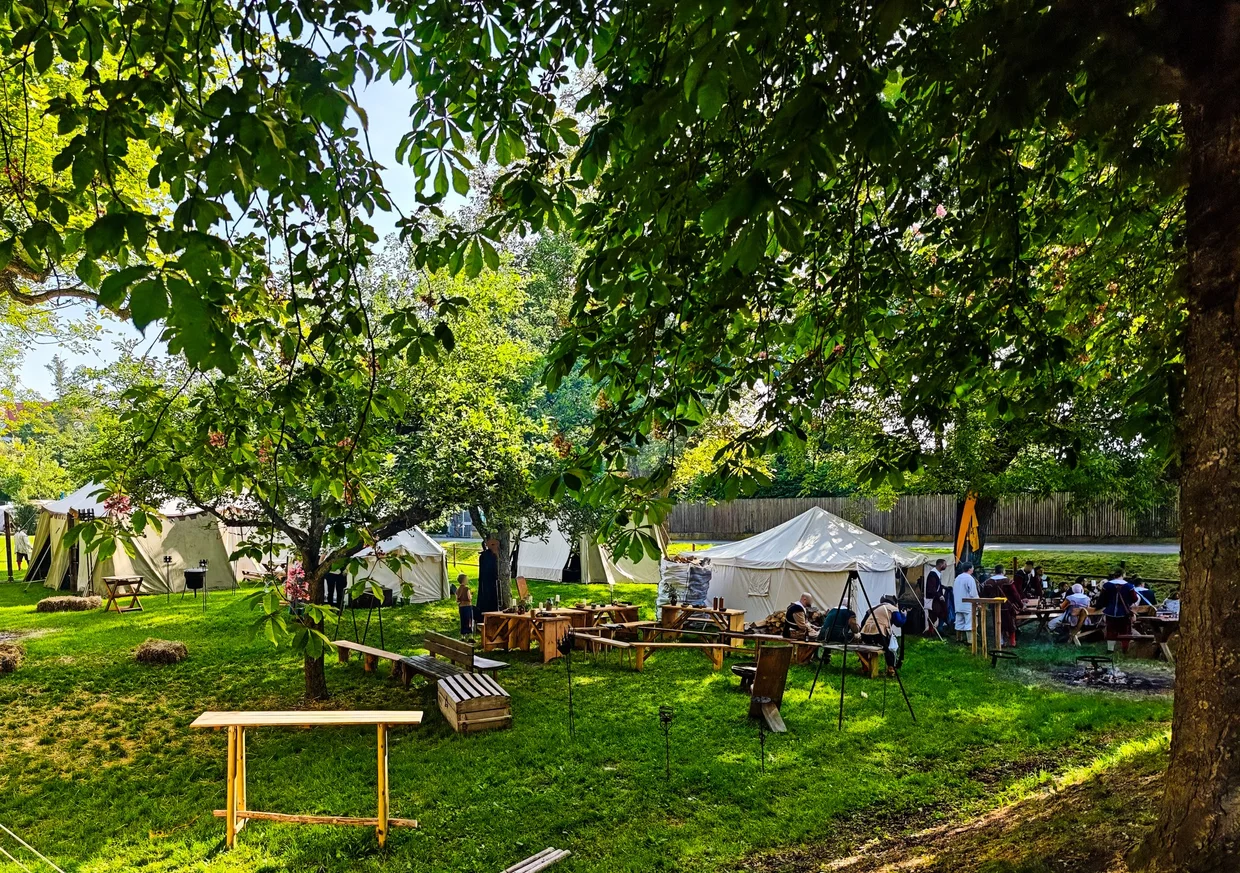
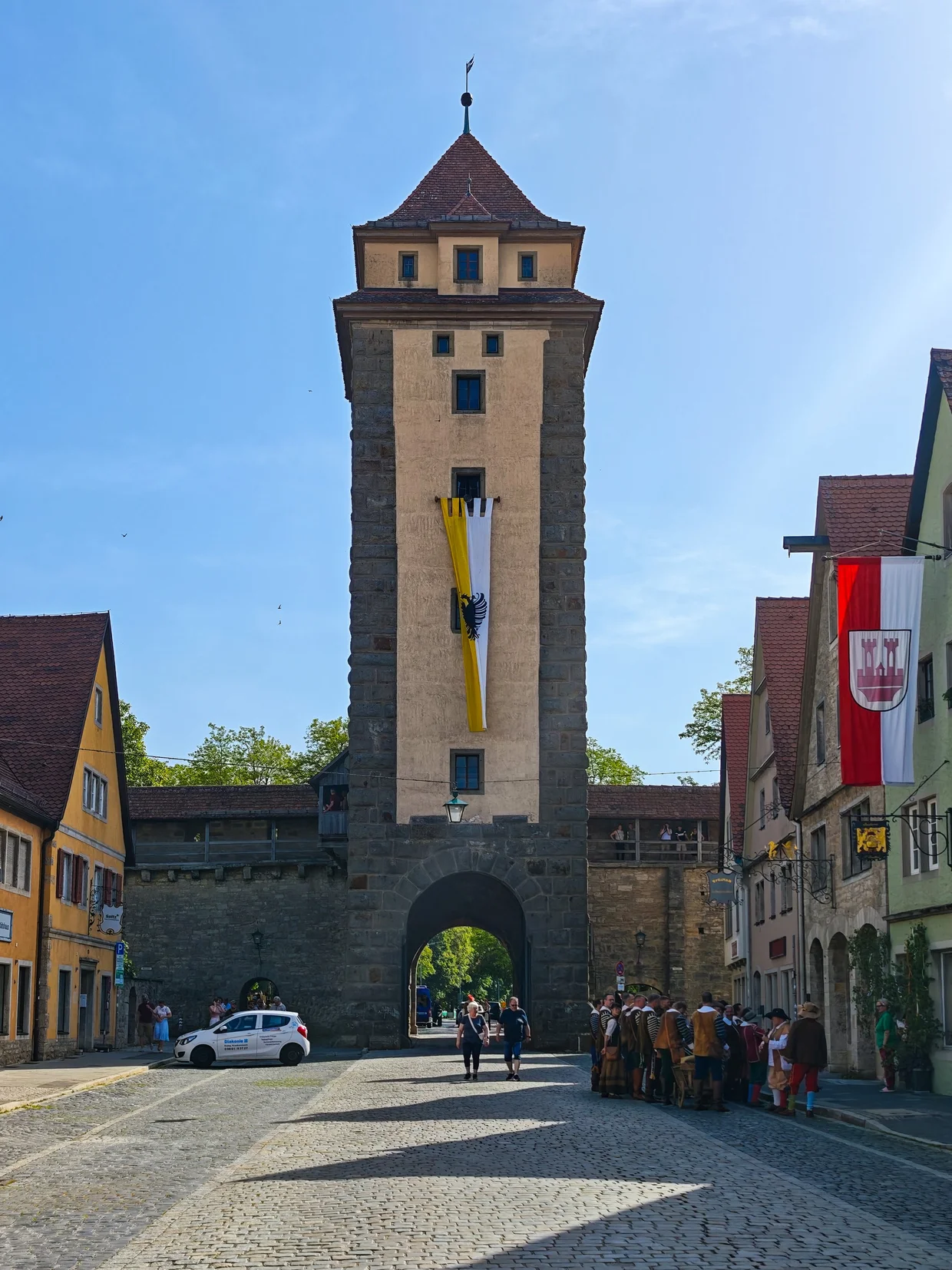
I caught the town during the Pfingstfestspiele Rothenburg, the medieval Whitsun festival, and it added a layer I didn't know I wanted: encampments outside the wall with proper canvas tents, blacksmiths actually hammering iron, parades of men in 16th-century leather doublets and feathered hats, women in big petticoated dresses crossing the cobbles like they'd just stepped out of a painting. It runs on the Pfingst-weekend every year (Pentecost, so the date moves with Easter), and if your trip lines up, the festival is a real bonus.
A few practical bits if you go during Pfingsten:
- The Altstadt is closed to cars for the festival. Residents seem to still get in; I'd assume hotel guests do too, but check with your hotel before you assume your parking is sorted.
- Some of the performances and the larger staged events are ticketed. A full weekend pass was €25 when I was there, with day tickets also available.
- At some of the main gates they collected a €5 "toll" in proper old-movie fashion, just to walk in. Slightly comical given that right next to the gate I entered, there was a path where people walked in without paying. I'm not sure what the point of the toll is, but if you want to skip it, look around the gate for an alternate way in.
Things that surprised me:
- The town is dead at night. I was there on a Sunday during a long weekend and at 22:00 the streets were empty, almost everything was closed including restaurants. Even with the festival on. It's a weird village vibe for a place this famous; everyone clears out, locals don't seem to come out much, and the city wall after dark is yours. Lovely actually, if you wanna enjoy Rothenburg without crowds, just stay overnight and walk it at 22:00.
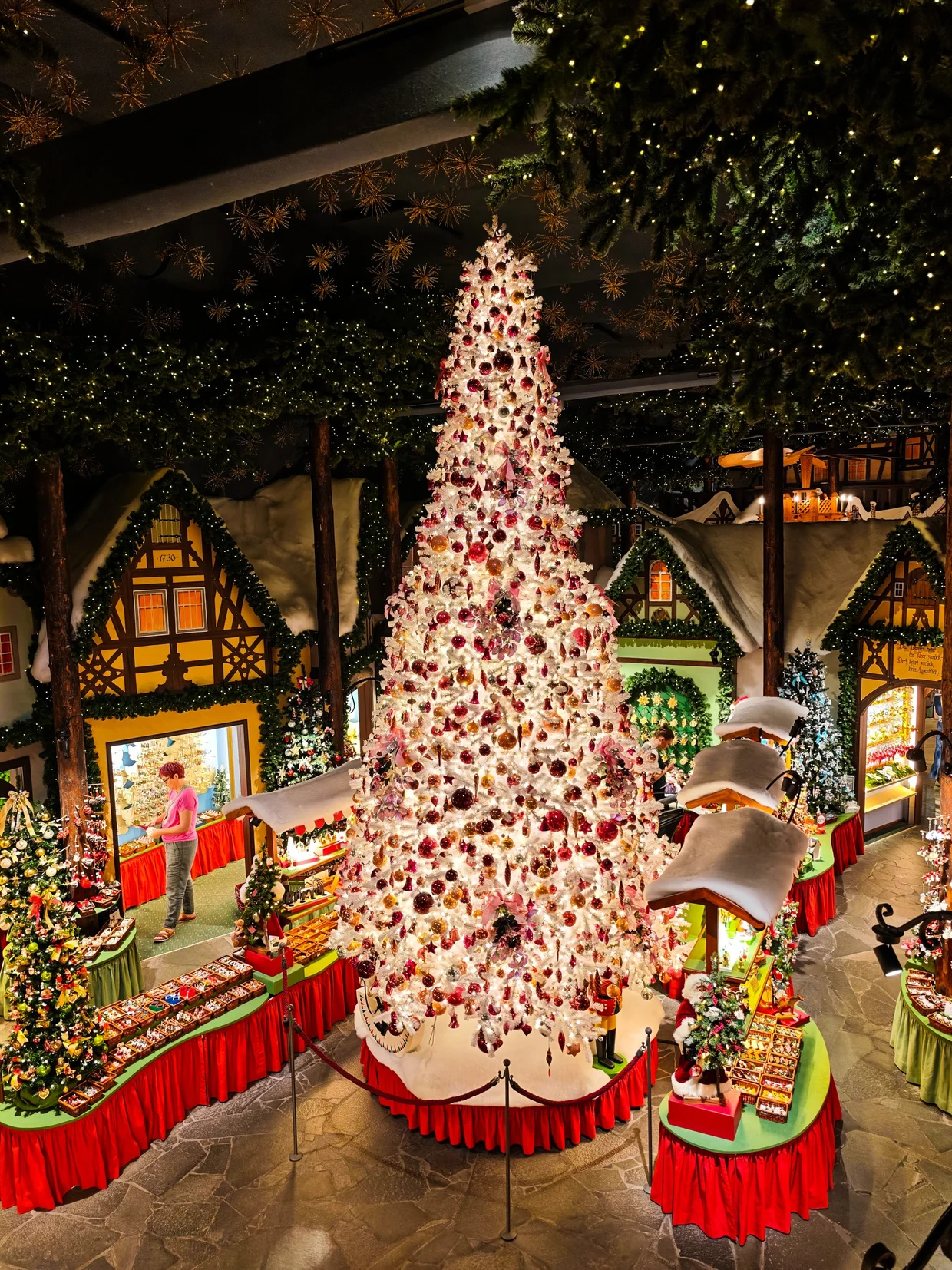
- Kathe Wohlfahrt's year-round Christmas megastore is a tourist trap and also an experience worth doing once. Giant tree, tens of thousands of glass ornaments, the smell of cinnamon all year. You don't have to buy anything (the prices in the store are, like... oh brother). The attached Christmas museum costs €5 and is overpriced for what it is, but I'll admit I liked it. Had no idea Christmas history could actually be interesting, and I learnt quite a few new things (that I will forget within a fortnight at latest). Worth the entrance if you're already in the store.
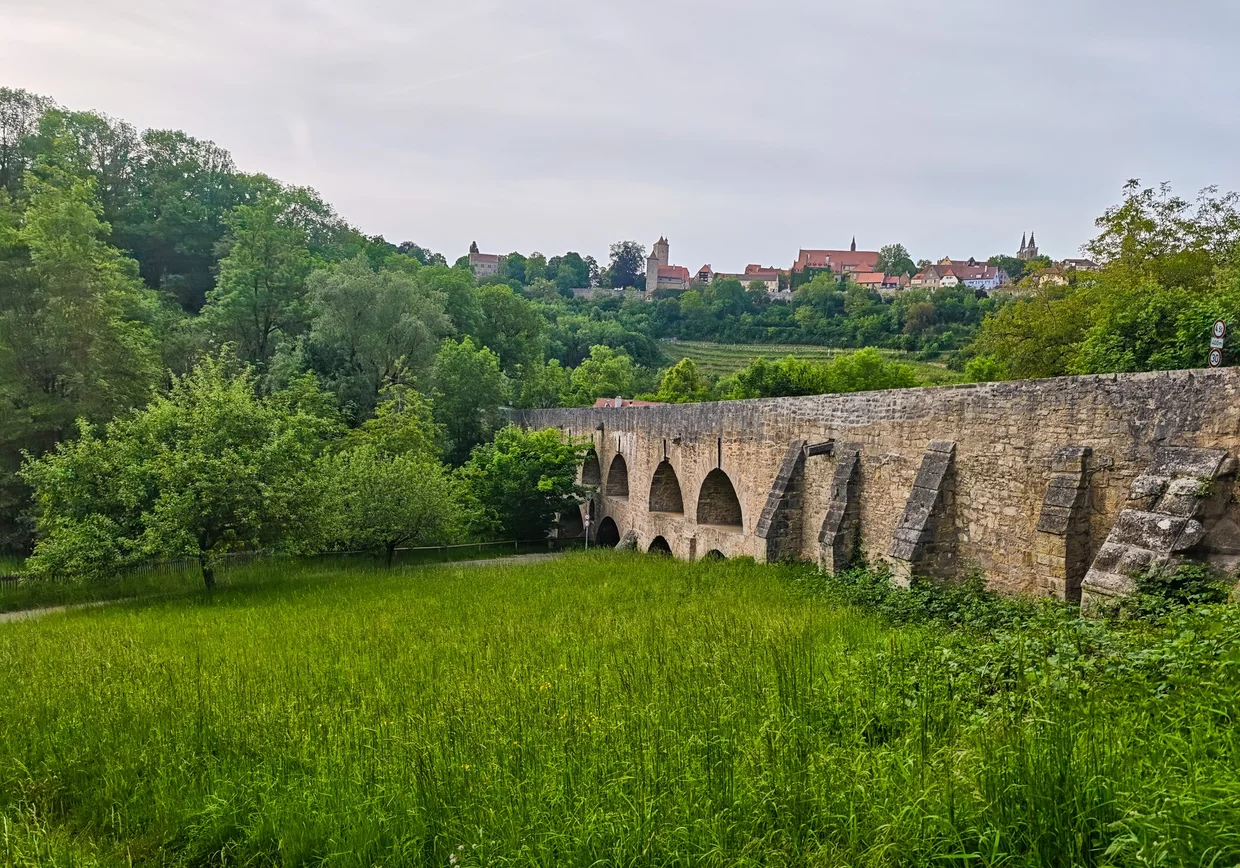
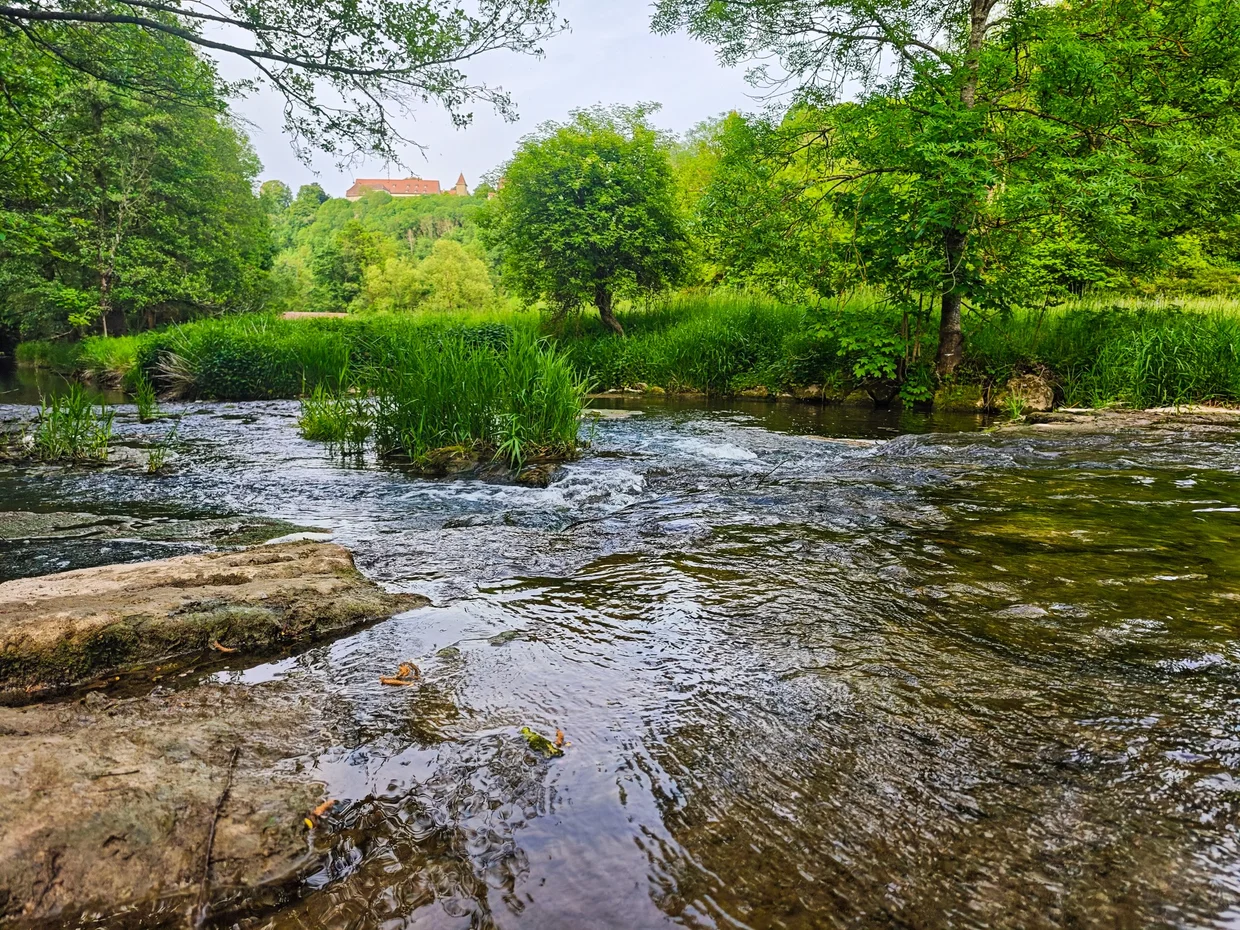
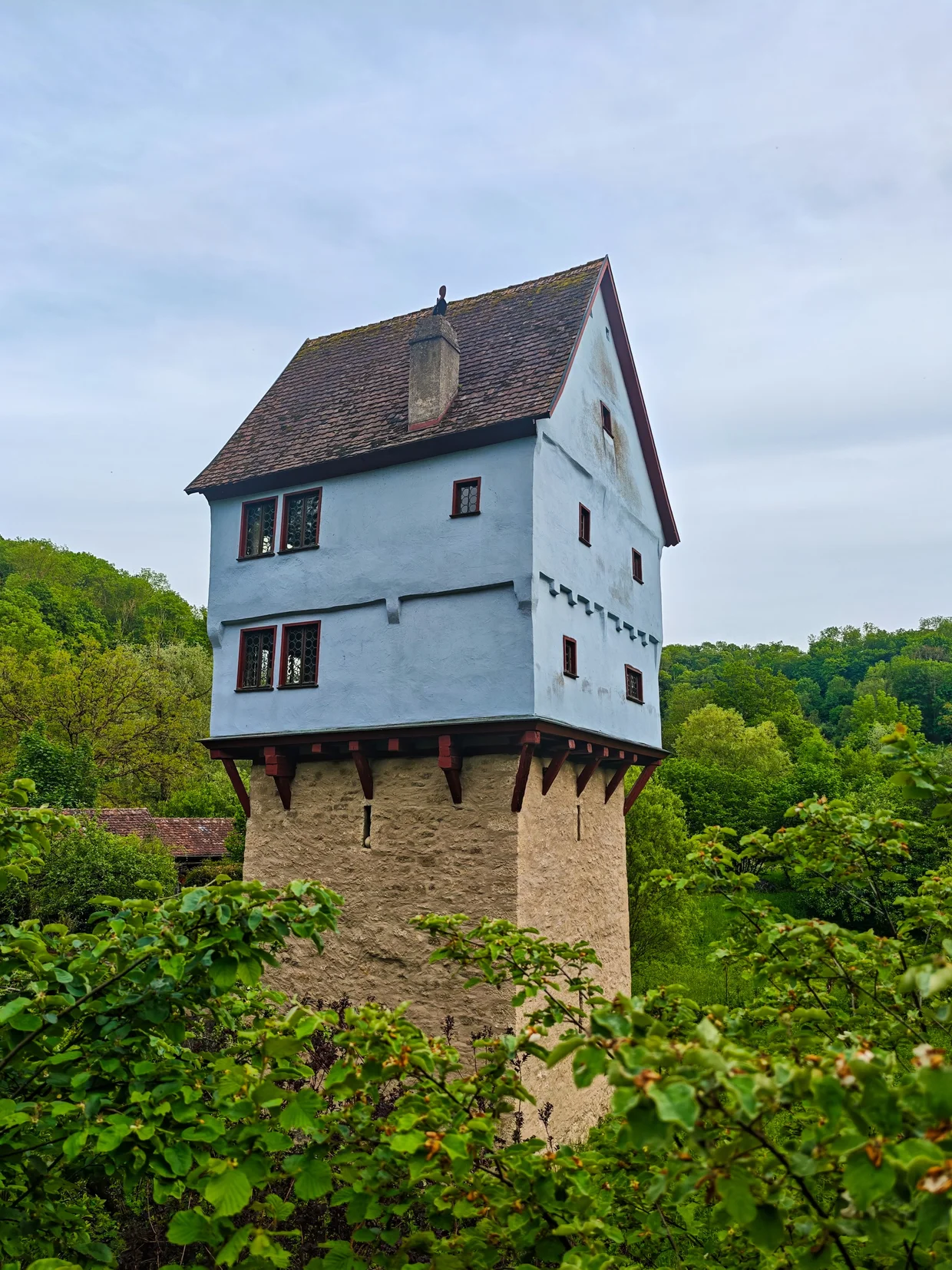
- The Doppelbruecke down in the Tauber valley, and the Topplerschloesschen tower-house next to it, are 15 minutes' walk from the Altstadt. People do go (on foot, by bike, by car), and you'll usually see a handful around. If you're driving, there's no real parking, just a strip of roadside that fits maybe two or three cars. There's also nothing to do down there: go, look, take the photo, leave. If you've got an hour spare or fancy the walk, do it; if you're tight on time, you're not missing much.
Plan a full day, or better, stay overnight. A morning walk before the buses, an afternoon nap, an evening city-wall loop after most of the buses have left.
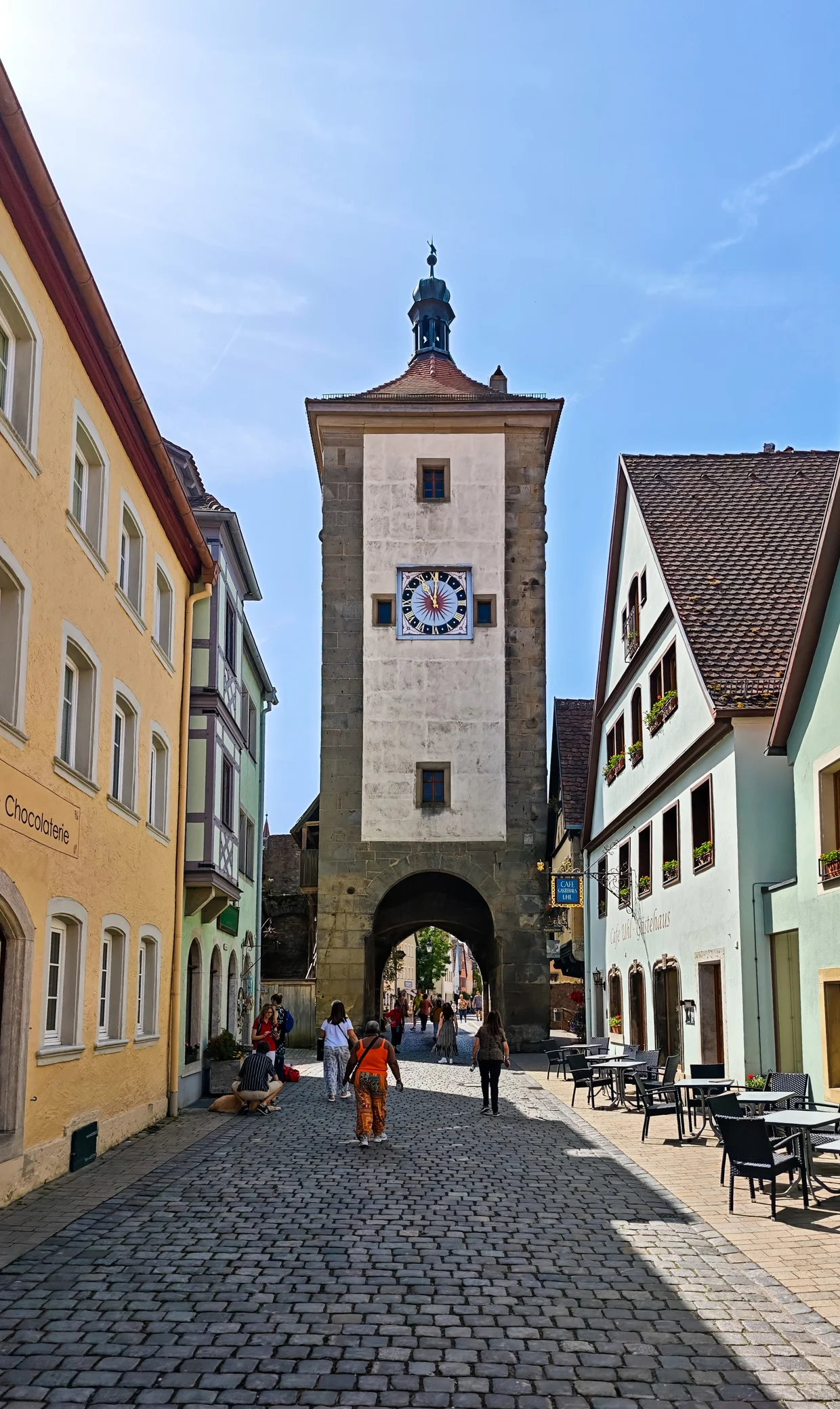
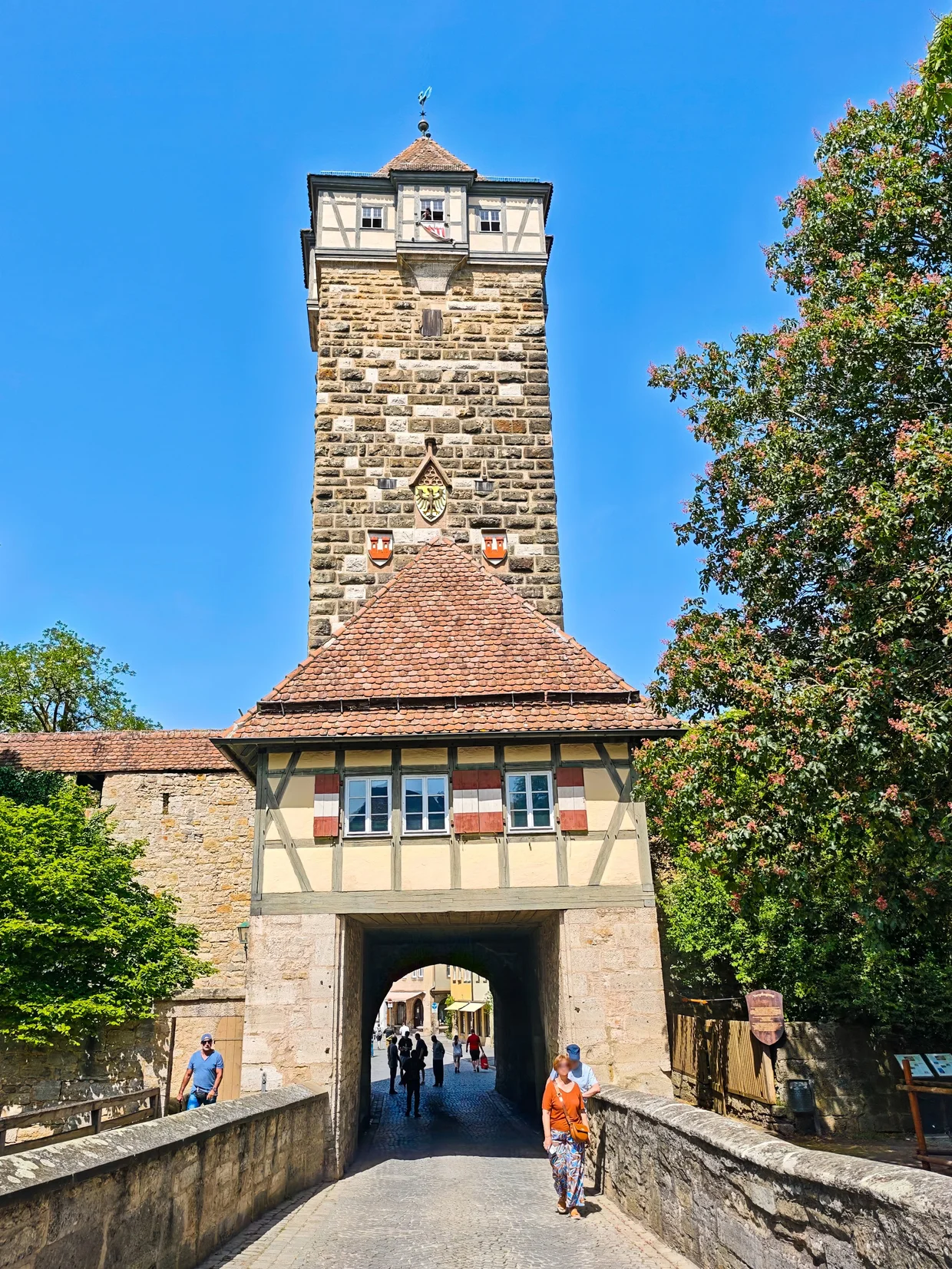
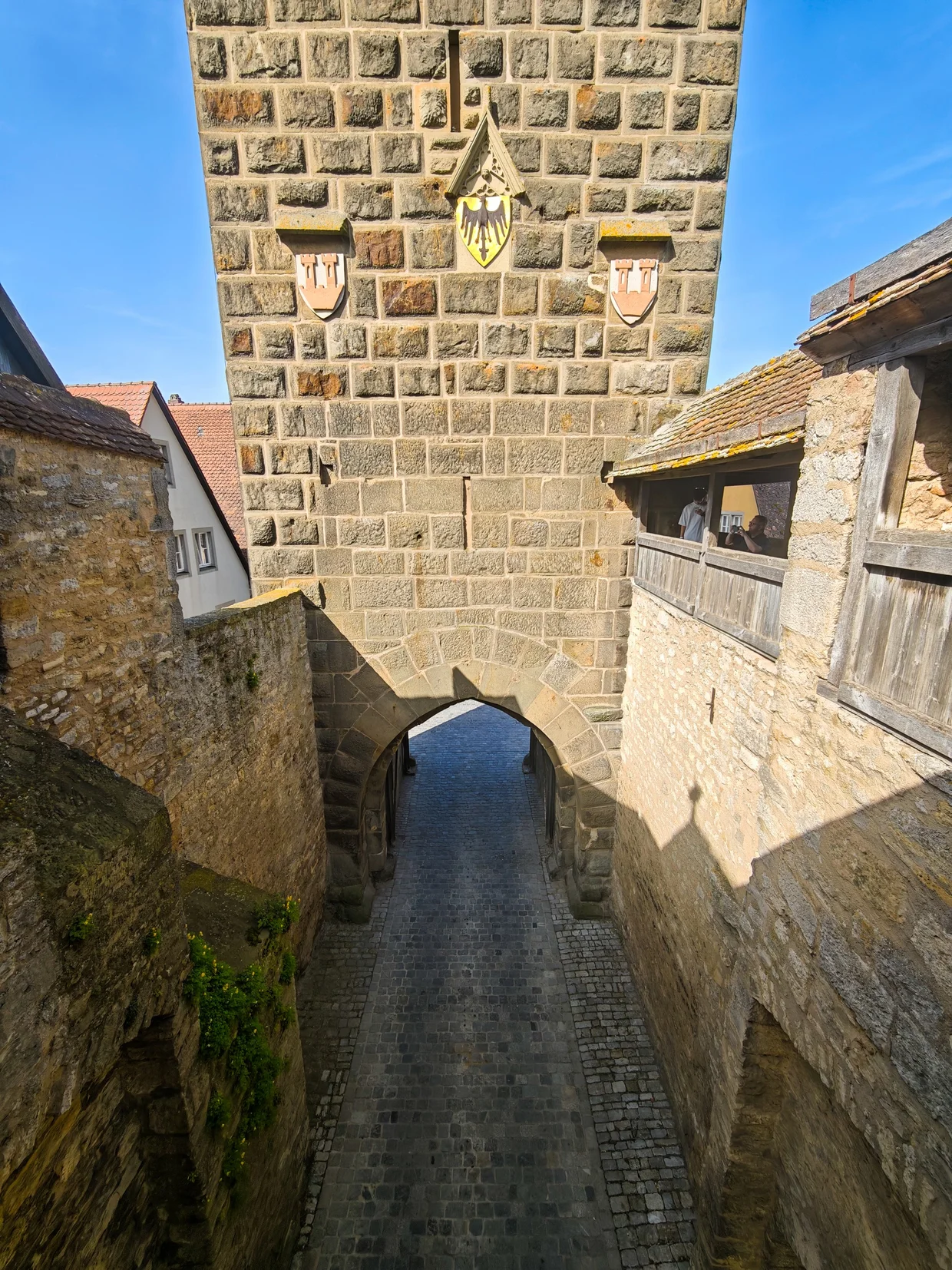
This is the reward for staying over. Once the light goes pink behind the Burgtor, the day-trippers are back on their coaches and the gate is just yours. The tall tower, the two little turreted guardhouses, the carved stone face set over the arch watching whoever walks in: at nine in the morning there's a shuffle of people through that archway, at nine at night there's one person and the sound of your own footsteps on the cobbles. Walk out through it, loop back along the wall, and you get the version of Rothenburg the postcards never quite manage, the empty one.


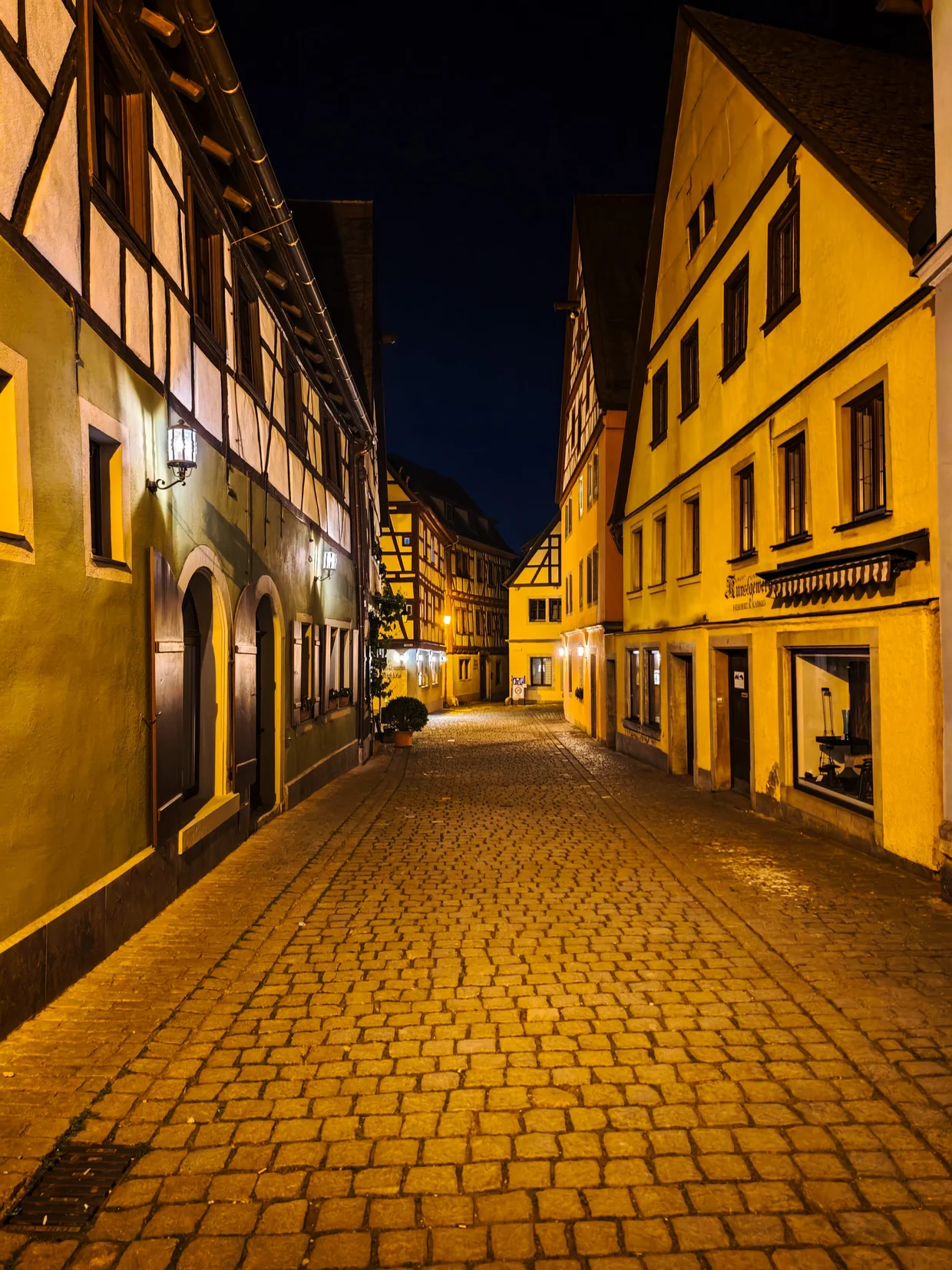
By ten the squares belong to nobody. I walked the town late one evening and had whole corners completely to myself: a fountain lit from below, one warm string of lamplight running off down a cobbled lane, every shutter closed, not another person in the frame. For a place that heaves with day-trippers by noon, the silence after dark is almost startling. The wet shine on the cobbles, the deep blue sky, the single lit window: this is the Rothenburg the coach crowds never get, because they're already an hour down the road by the time it looks like this.
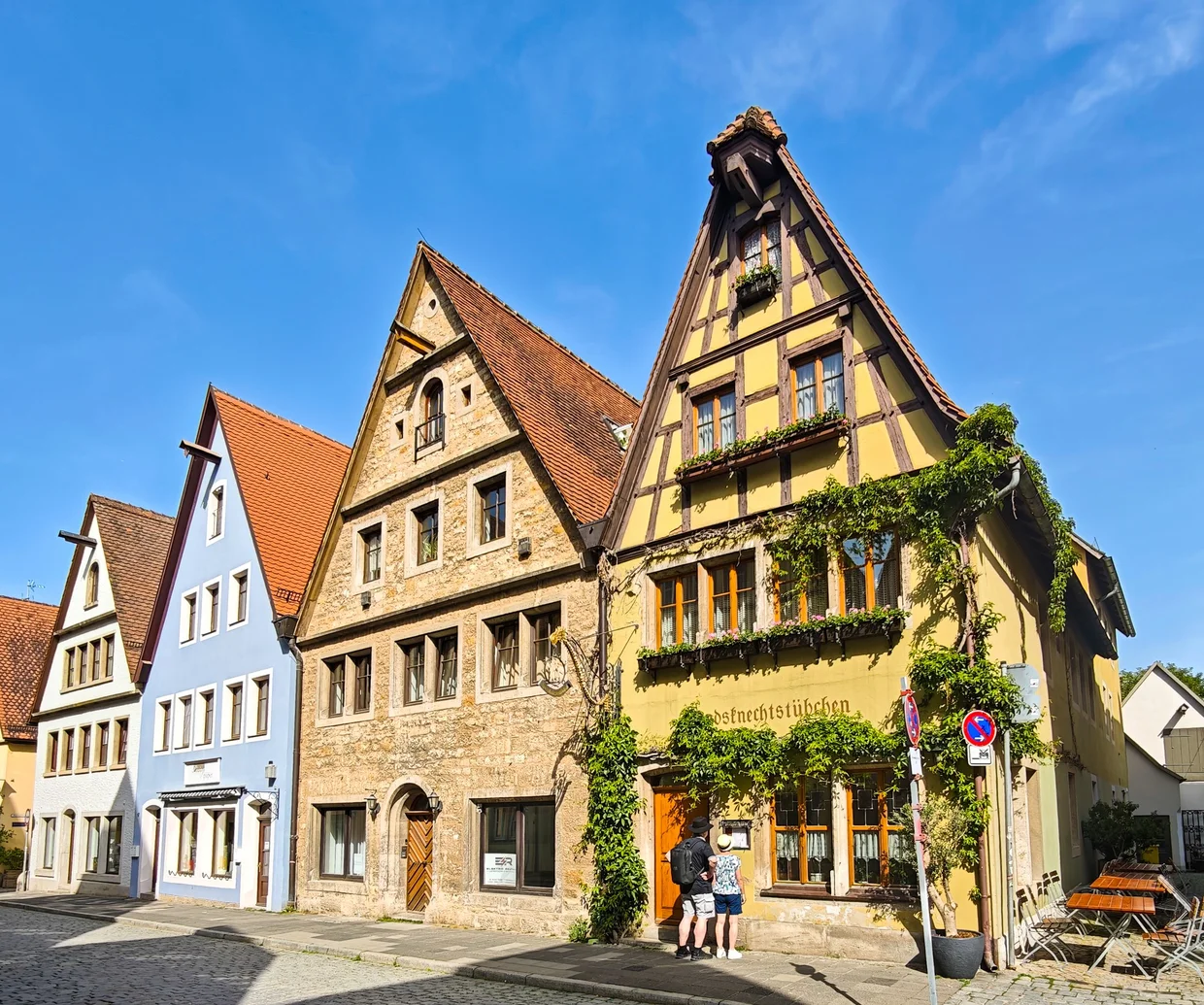
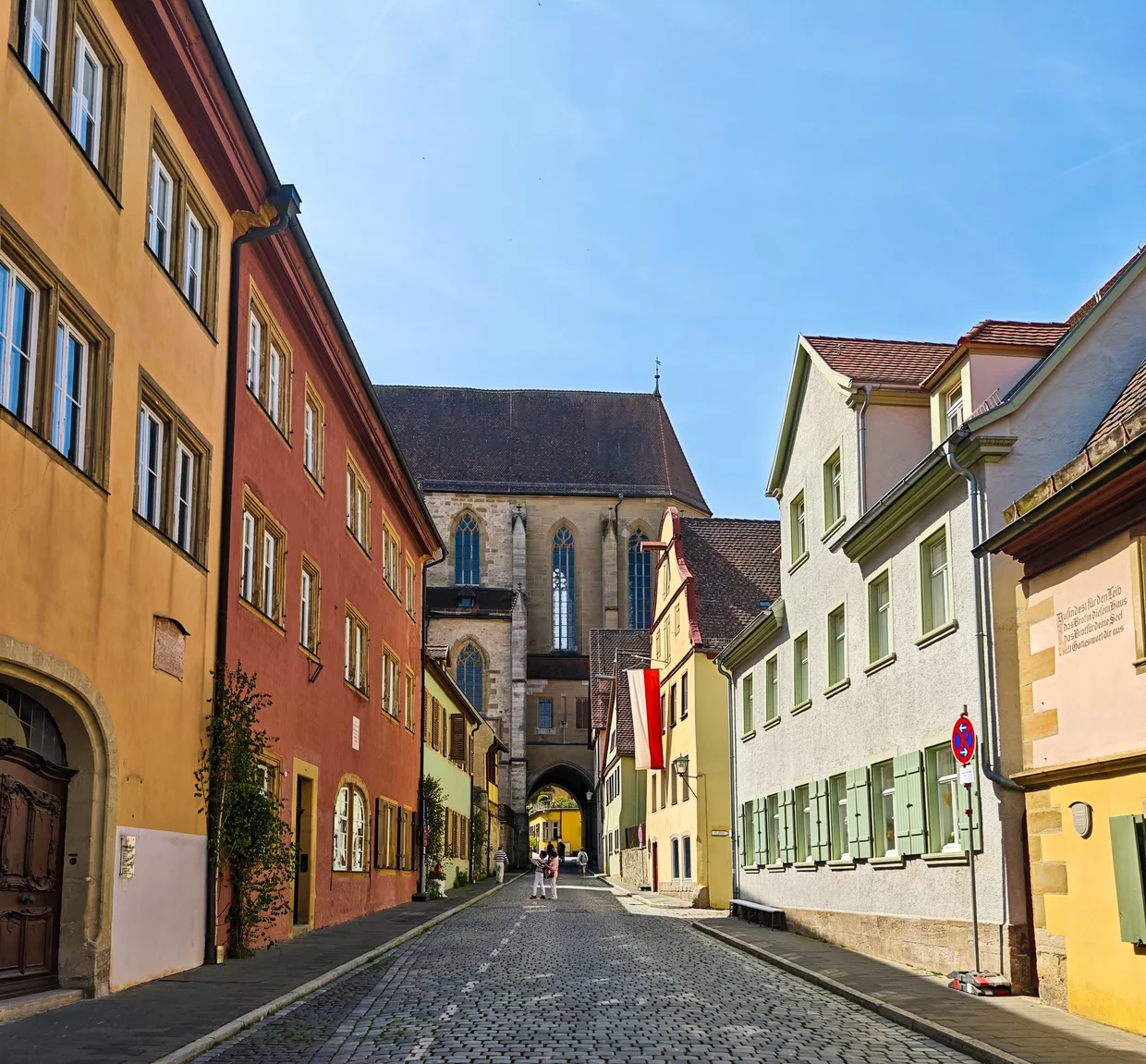
The hour before full dark is the prettiest of all. Catch the town in the blue minutes after sunset and the half-timbered fronts glow warm under their lamps while the sky behind them slides from pink to deep blue. The corner inns light up, wisteria and ivy soften the stonework, and the Gothic spire of St-Jakob pokes up over the rooftops. You get maybe twenty minutes of this before it tips fully into night, so don't be at dinner for it. Be out walking.

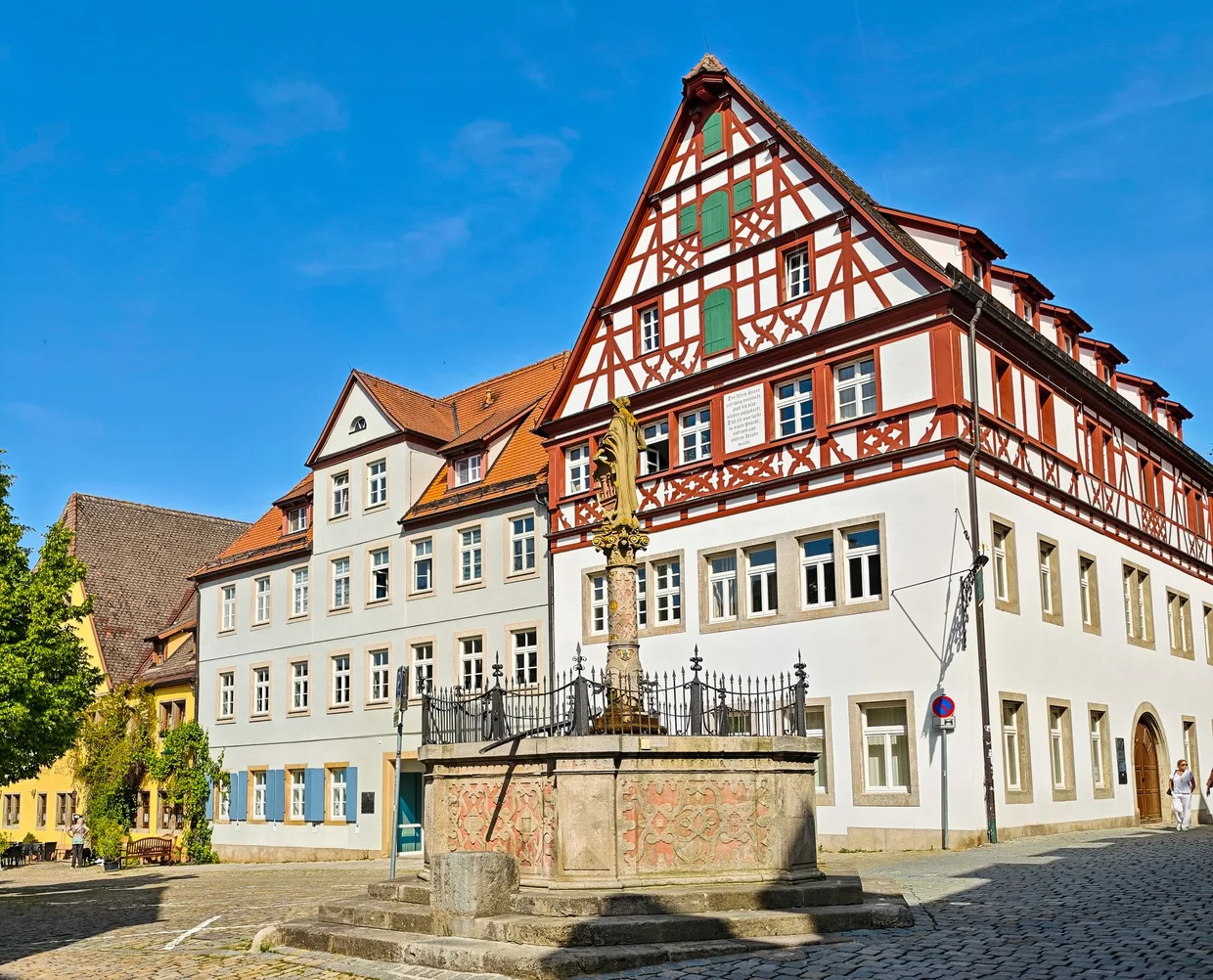
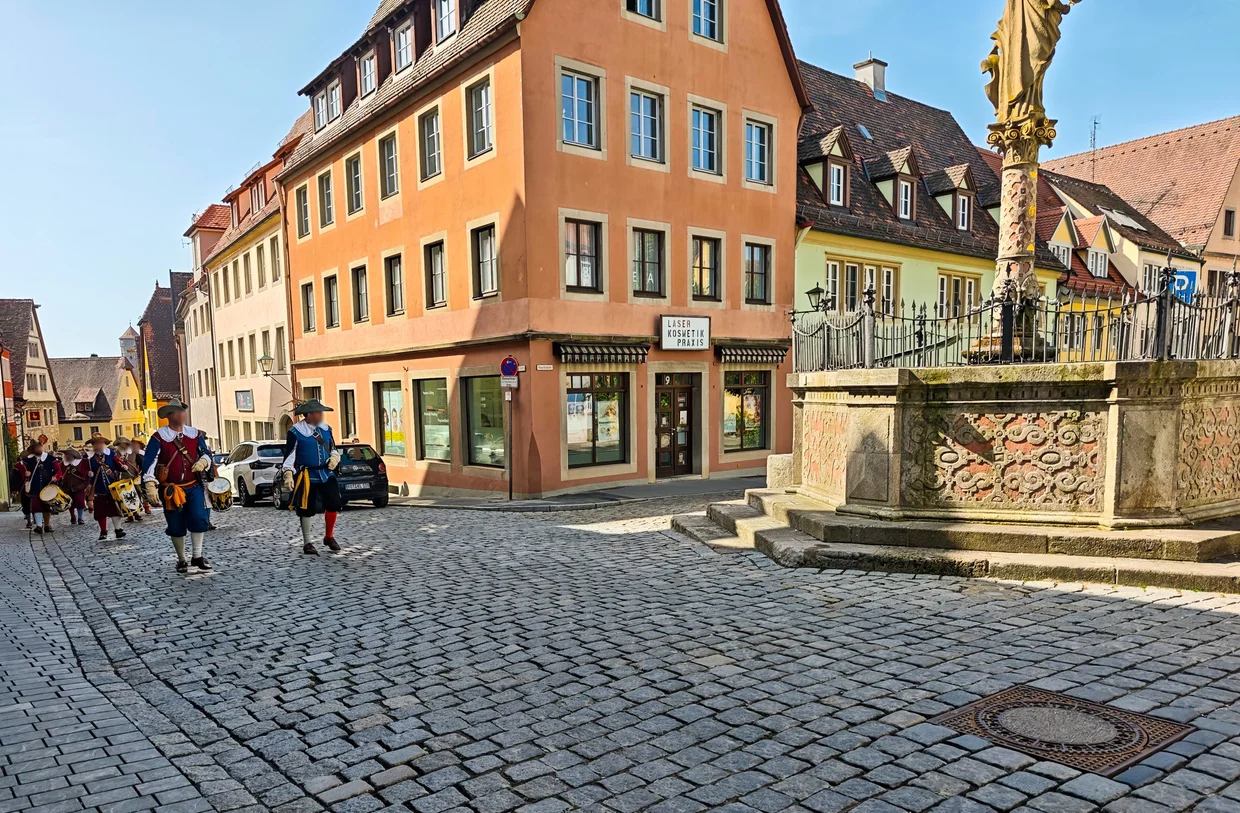
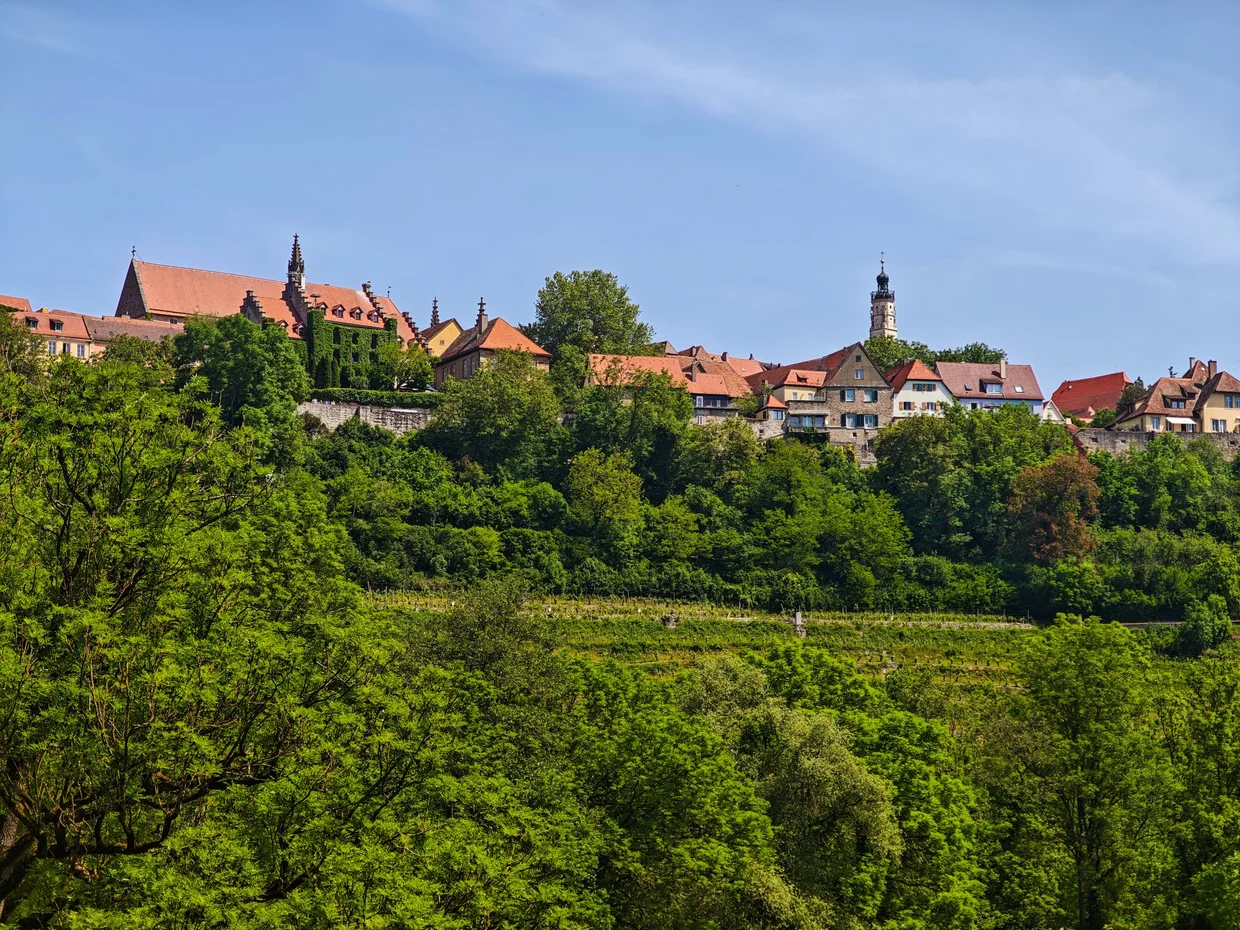
Verdict: the heavyweight of the whole road. Don't drive past.
The Night Watchman Tour: Skip It
I wanted to like it. Rothenburg's Night Watchman tour is the single most-recommended and top-rated thing in the town, you'll see it on every blog, and the watchman himself (cape, lantern, halberd) walks the streets at dusk dispensing tales. So I went.
It was a bit disappointing.
The tour is a sequence of stops where the watchman tells you historical tidbits that you'd get from scanning the Wikipedia page in five minutes, some of them paraphrased oddly enough that I'd call them inaccurate. Nothing was really "new". I was expecting nightly stories, legends about specific buildings, people, ghost-of-the-keeper stuff, the kind of thing a man holding a lantern in 2026 is well placed to deliver. I was also expecting that the watchman would take us inside places tourists usually can't access. We went inside nowhere.
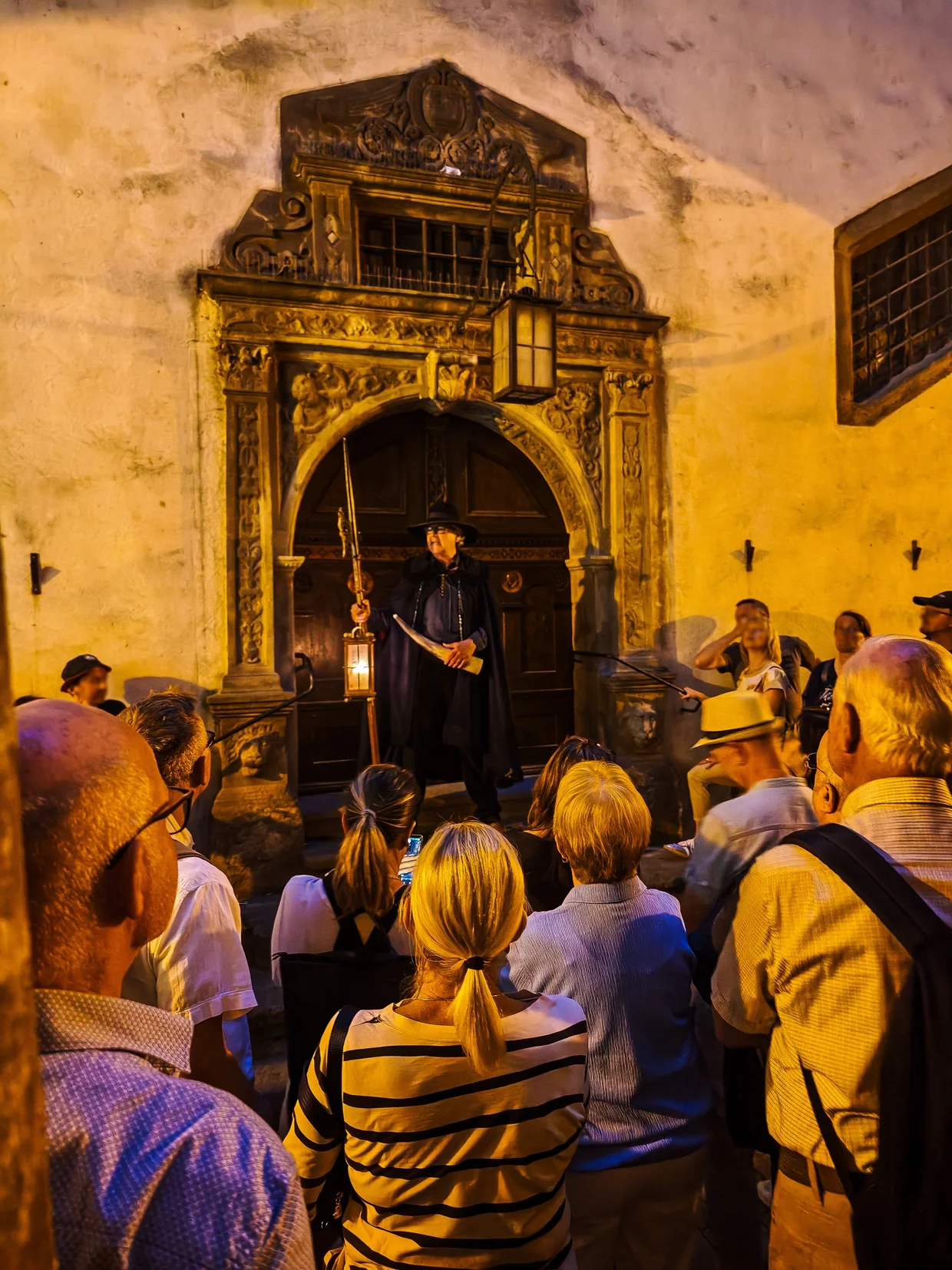
Maybe I had the wrong expectations. The tour isn't bad; it just isn't special. If you've got a spare hour and €10 and you're already in town, sure, join. But if you're choosing between this and a quiet walk on the city wall after dark with your own beer, take the walk. Half the price, more atmosphere, none of the queueing.
Feuchtwangen: The Pretty In-Between
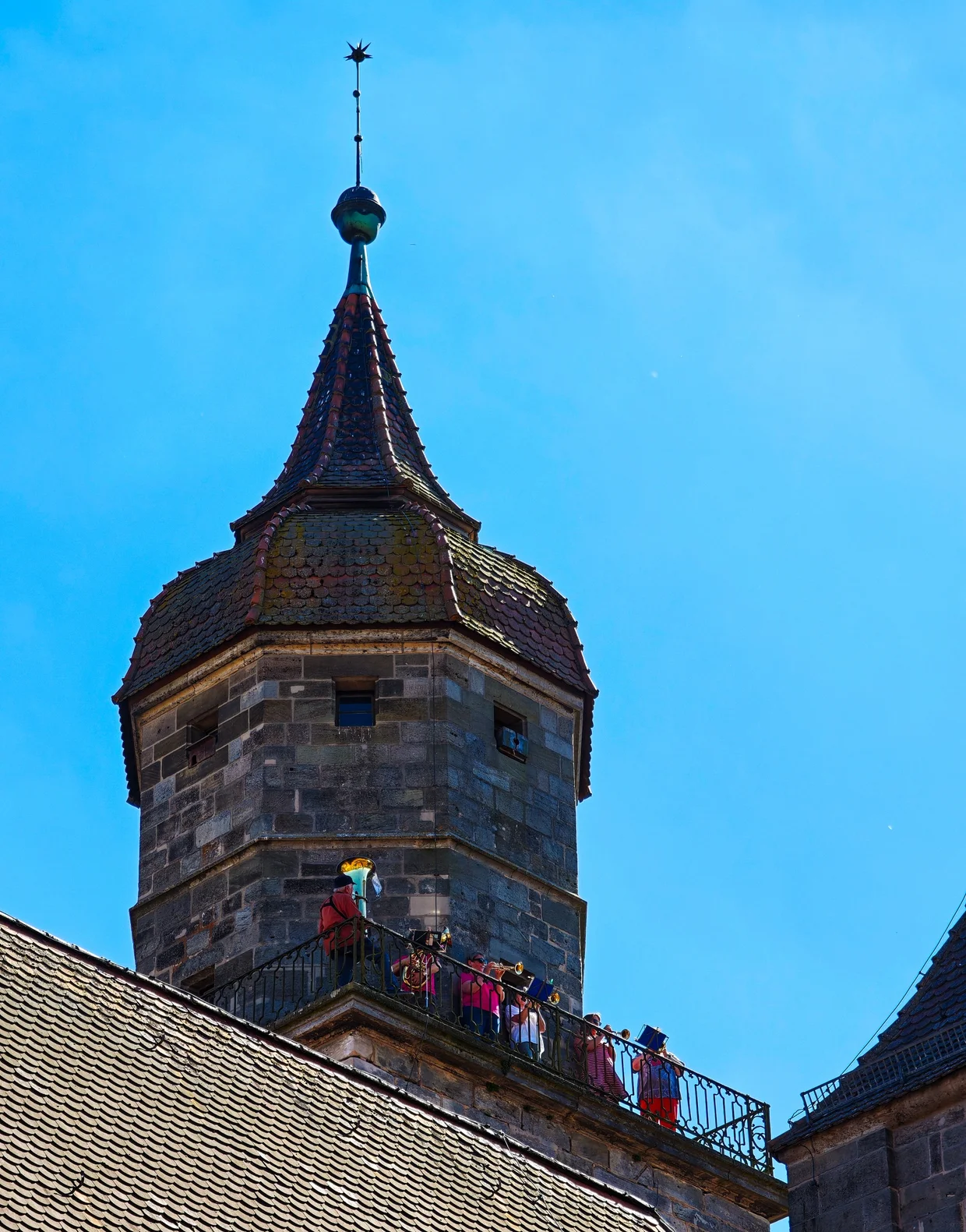
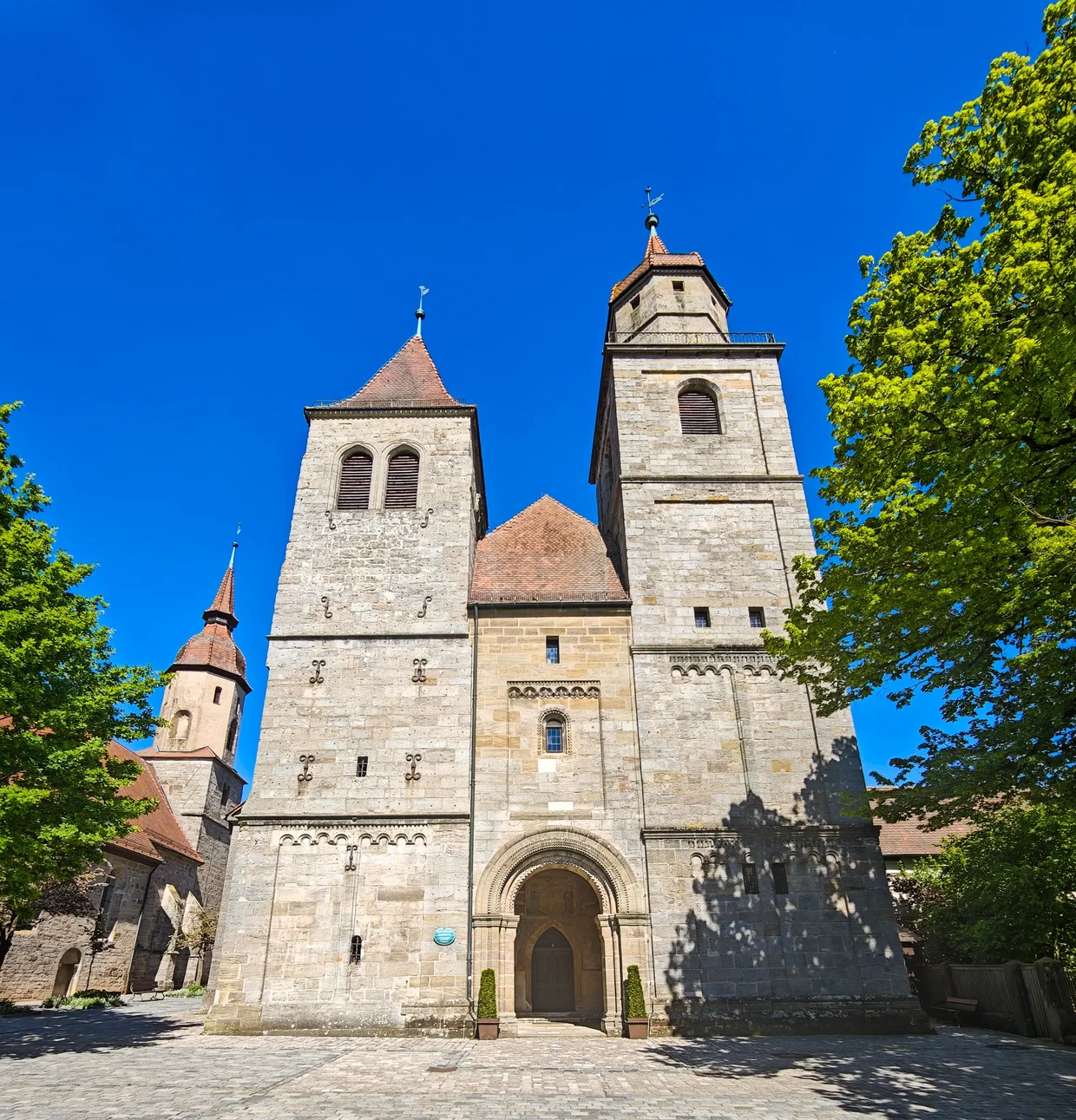
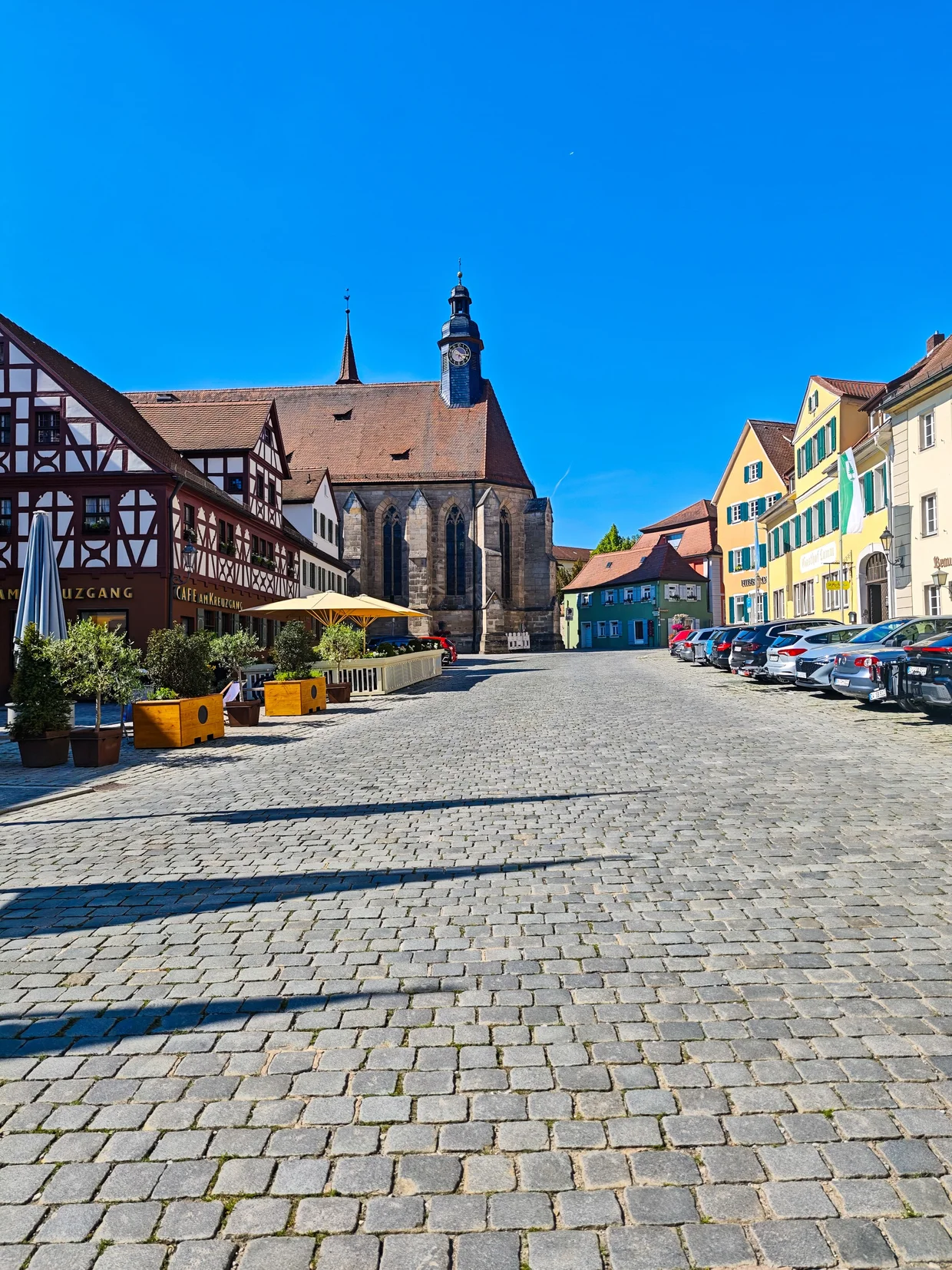
Feuchtwangen sits between Dinkelsbuhl and Rothenburg, and it's a pleasant 15-to-30-minute leg-stretcher rather than a destination. The Romanesque-Gothic Stiftskirche on the Marktplatz is genuinely lovely (twin towers, decent portal, much older than you'd guess from the outside), and the cloisters host a summer open-air theatre. If you're rolling through anyway, walk the square, photograph the church, and either keep going or stay for a coffee.
Verdict: stretch your legs, don't plan around it.
Dinkelsbuhl: The Quiet Show-Off
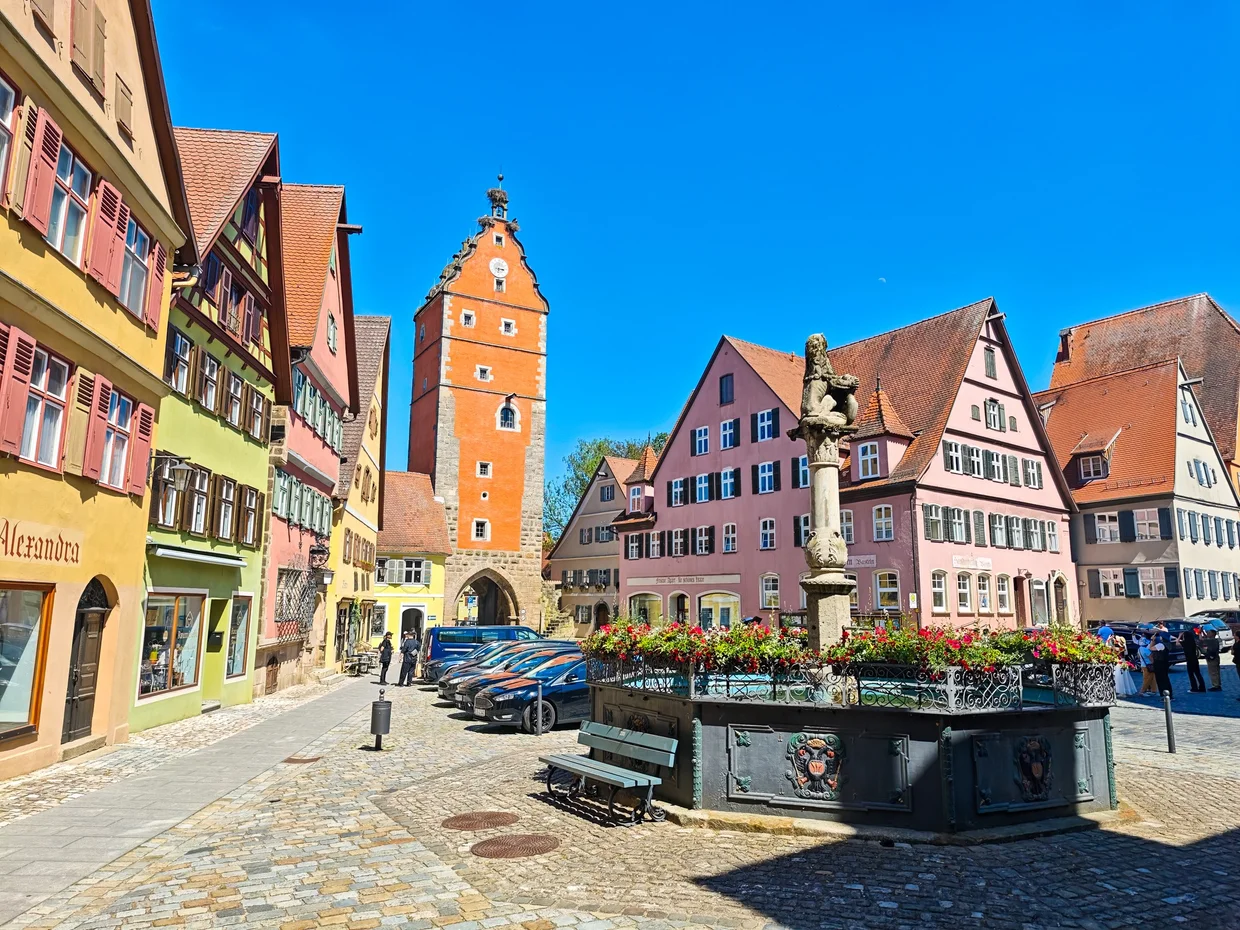
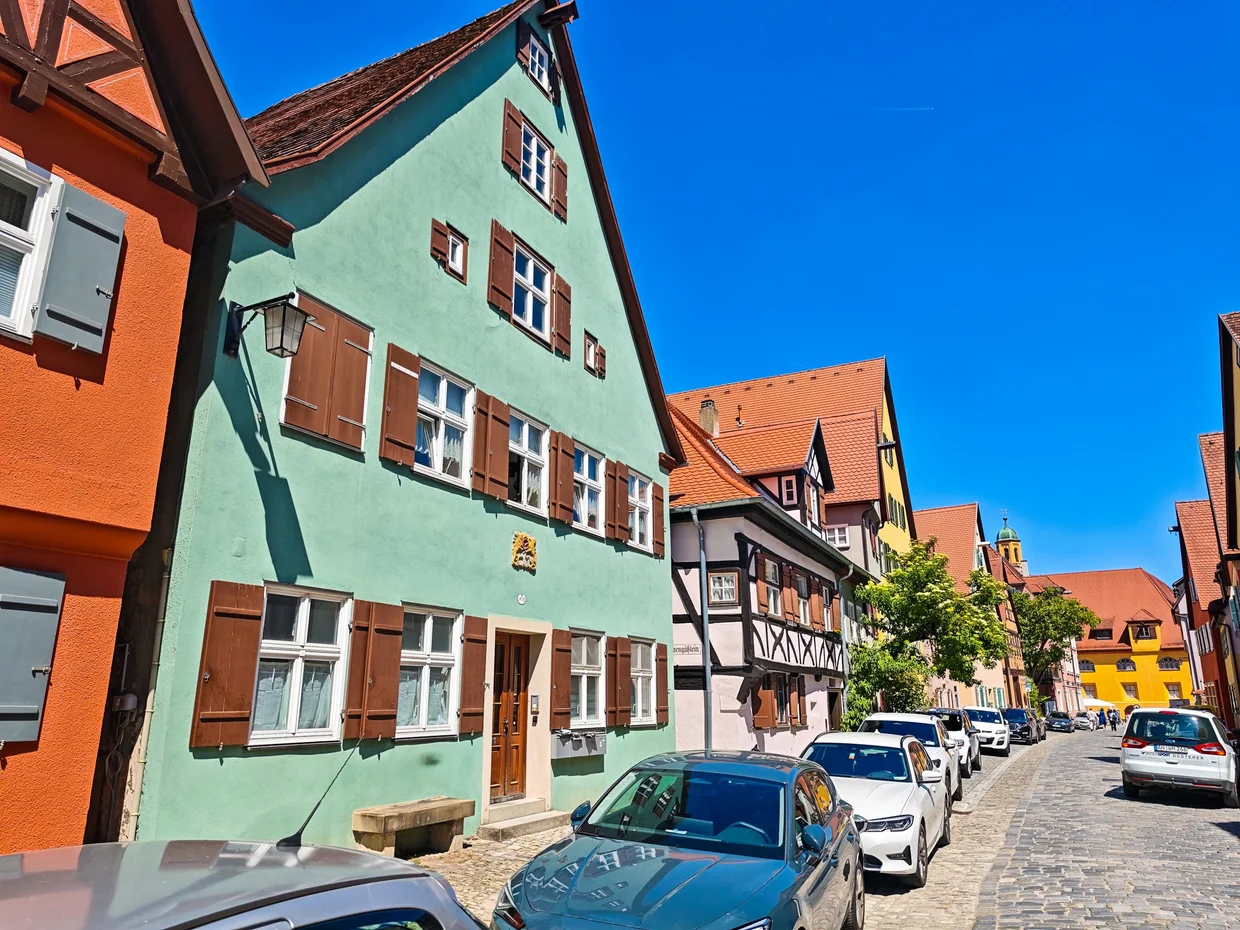
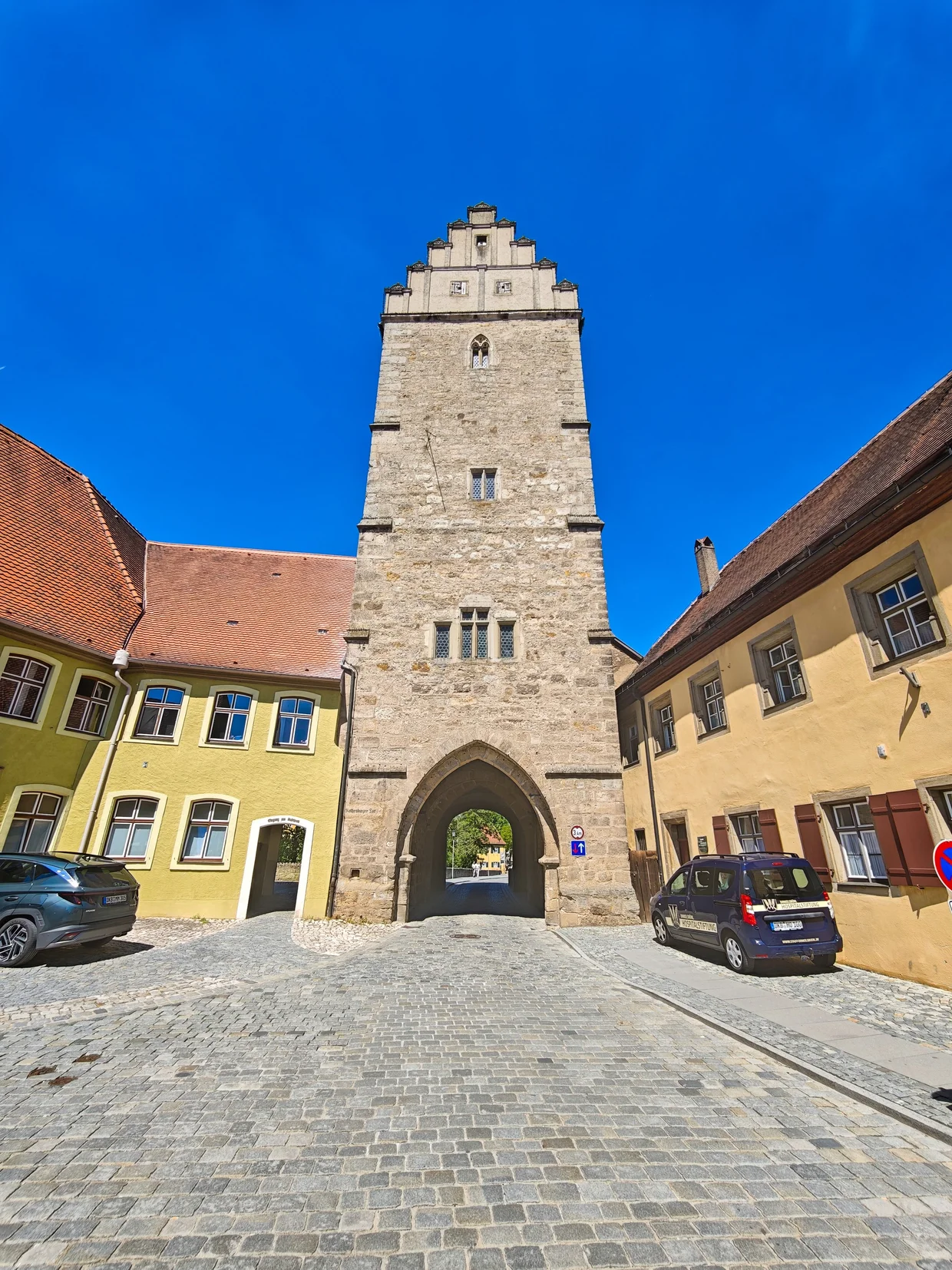
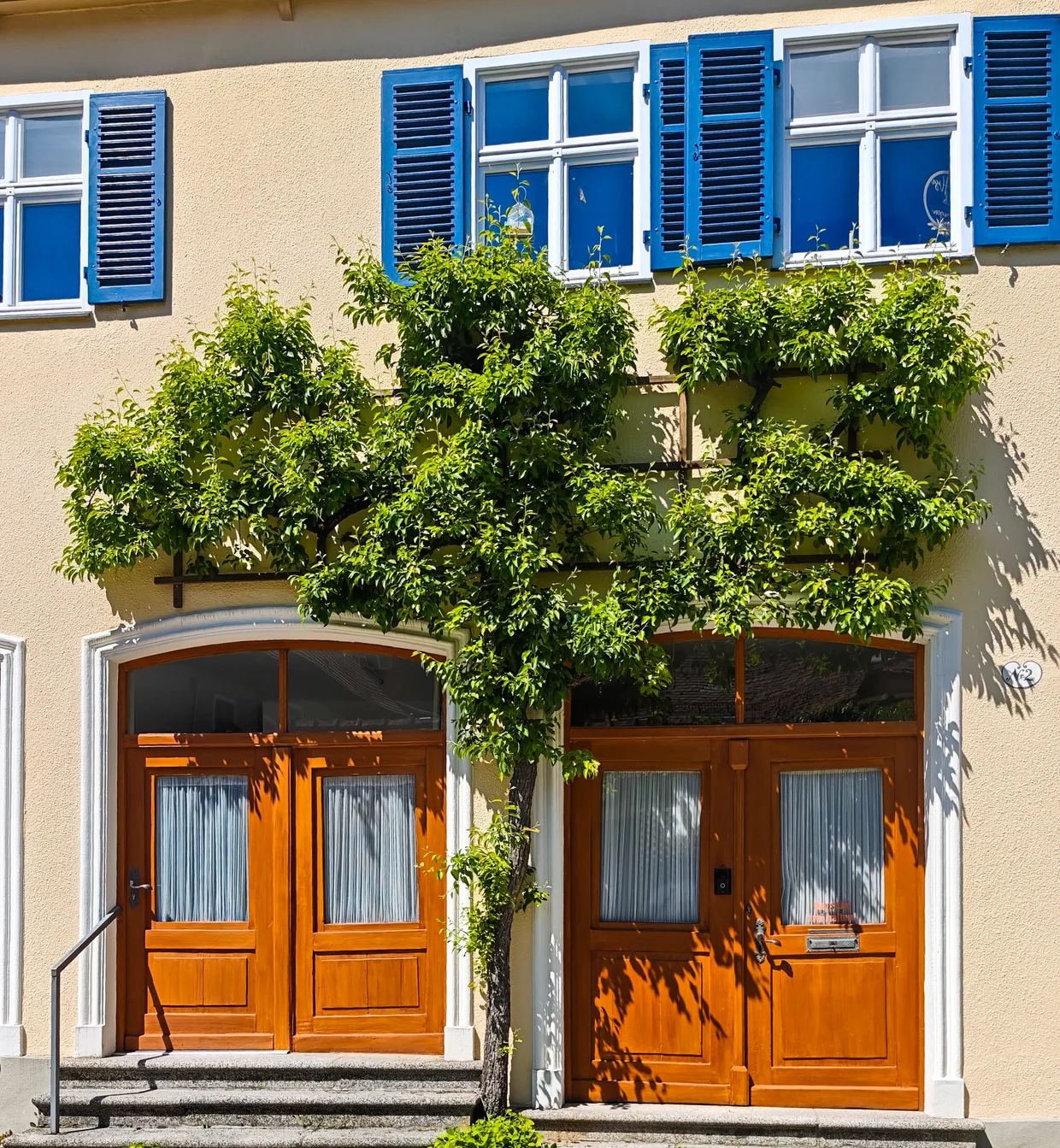
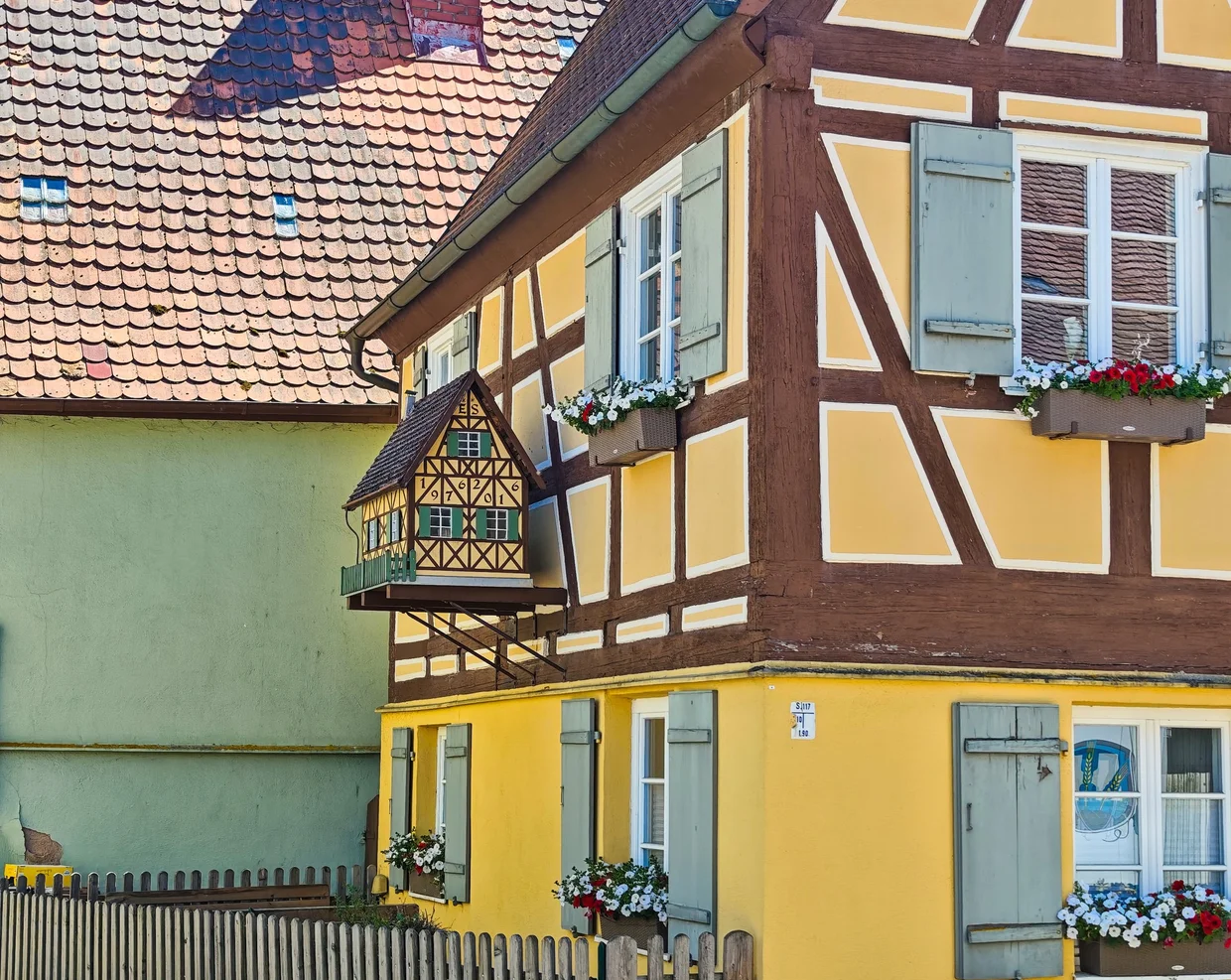
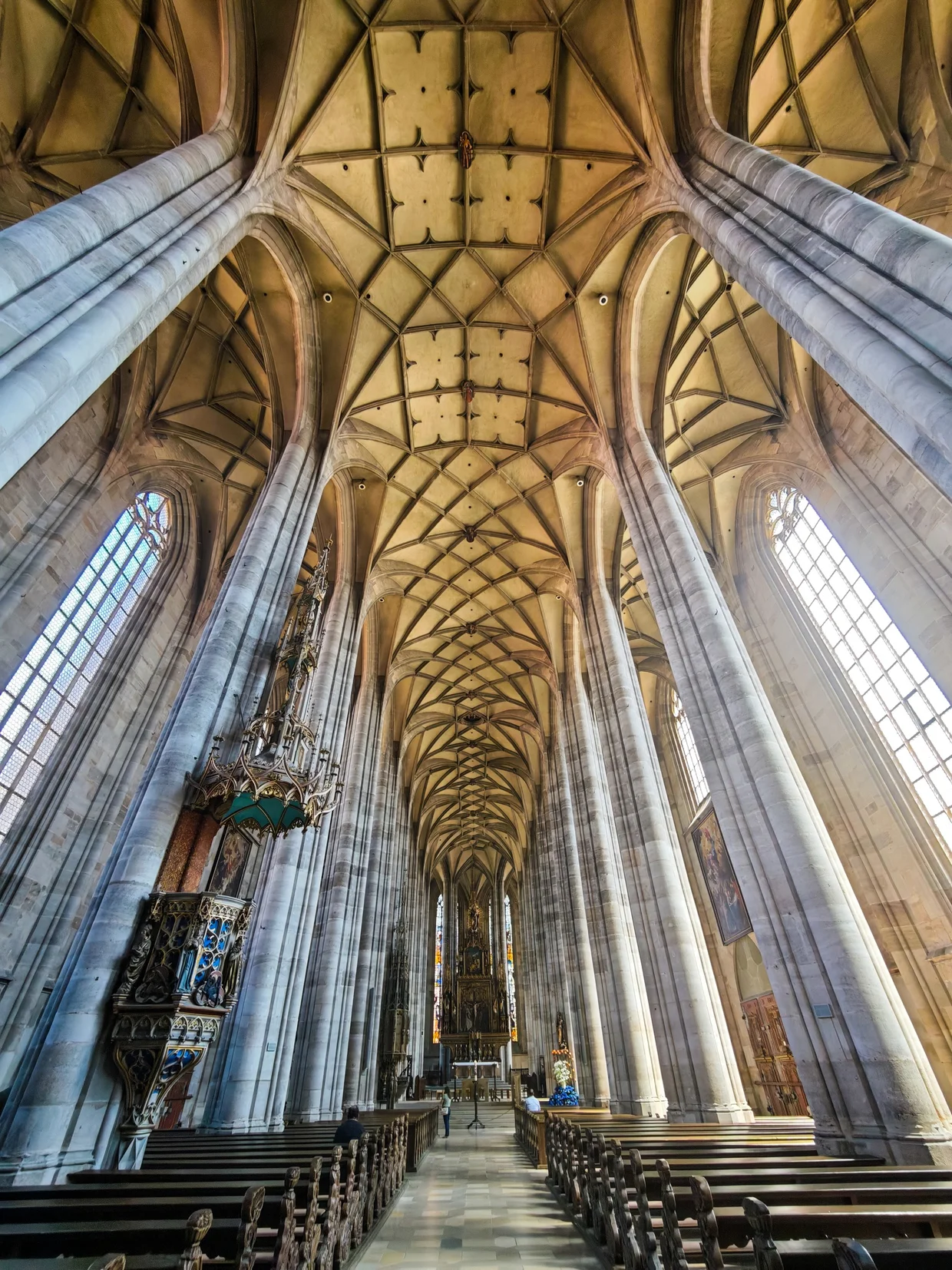
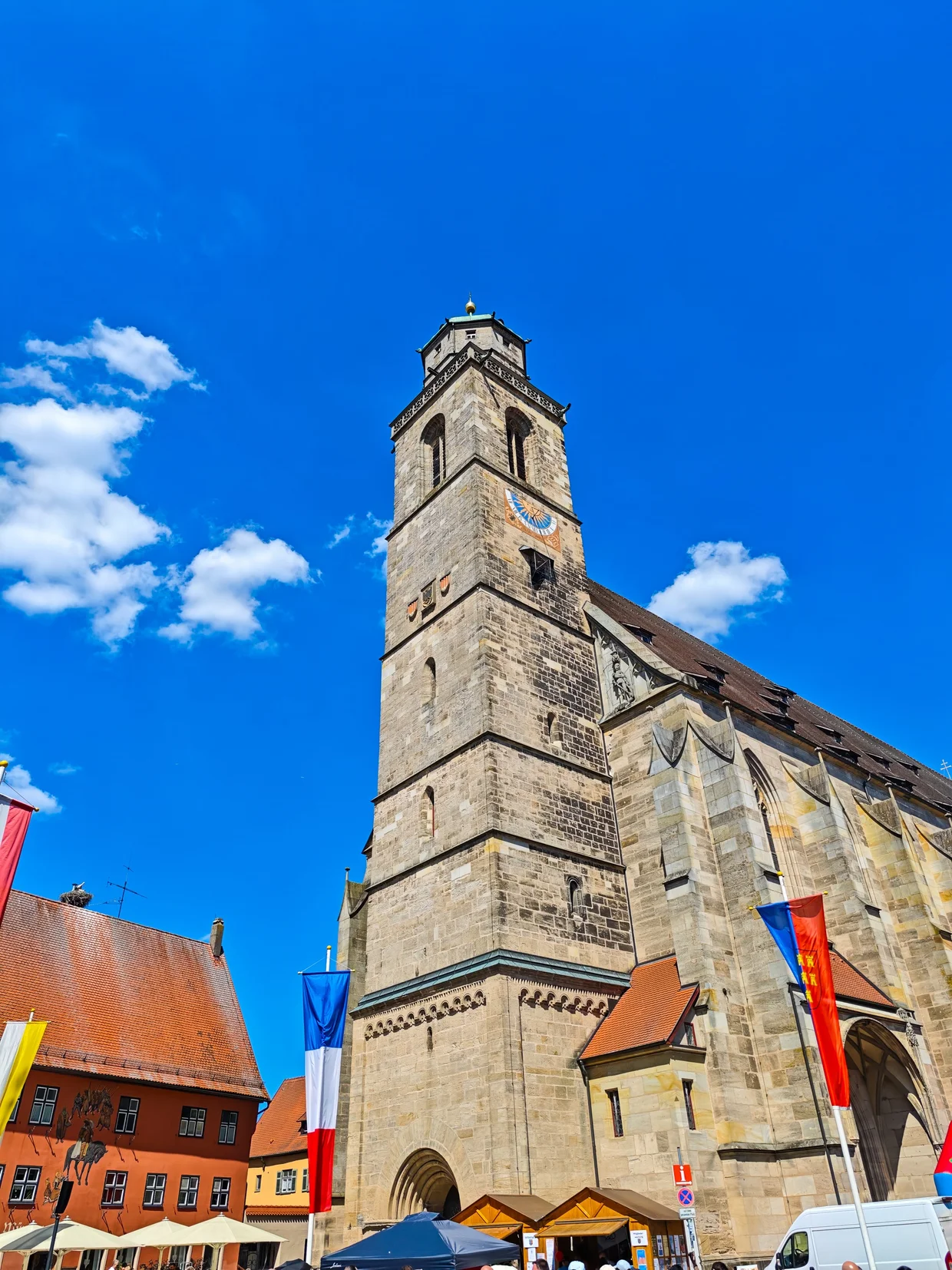
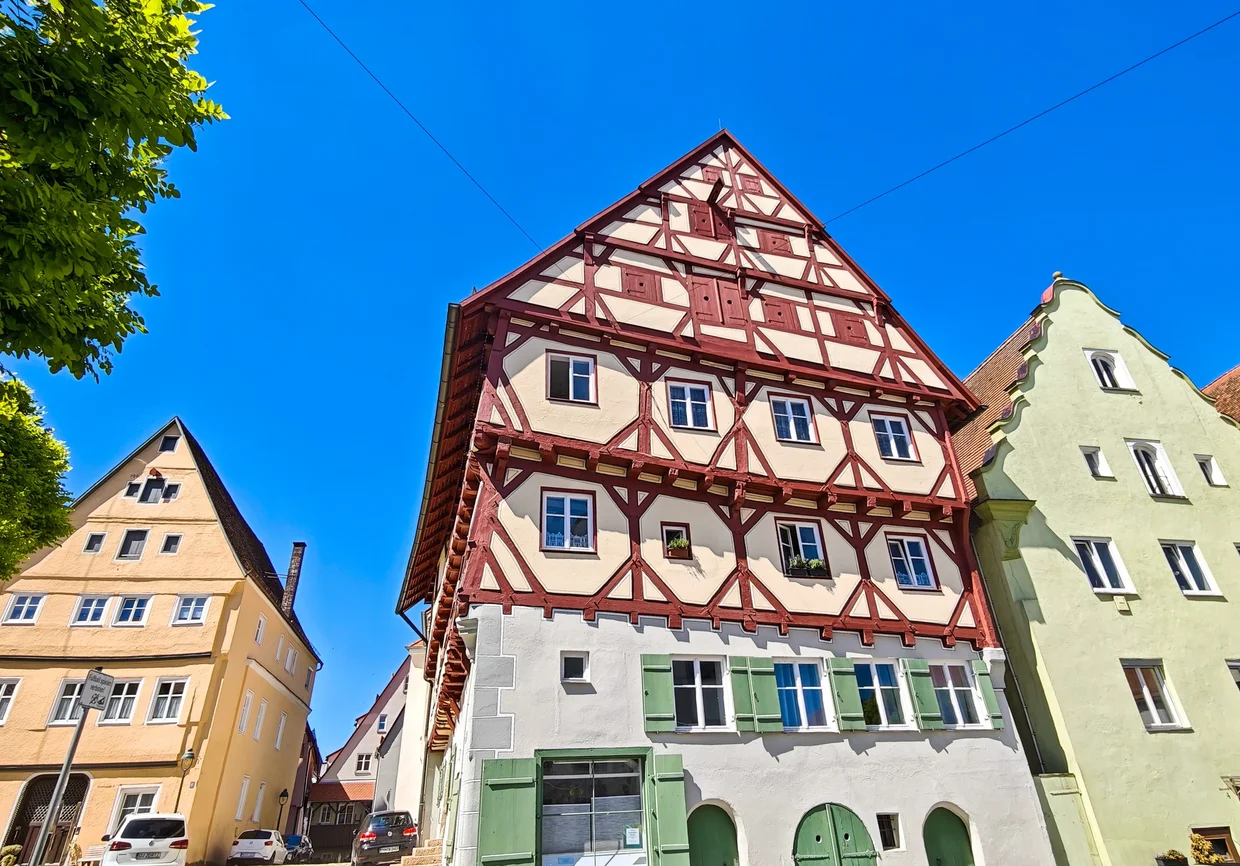
Dinkelsbuhl is the one that always seems to slip under people's radar between Nordlingen and Rothenburg, and that's a mistake. The Altstadt is almost completely intact, the Munster St-Georg has one of the finest late-Gothic vaulted interiors I've seen anywhere this side of Nuremberg, and the Weinmarkt with its row of mismatched gable houses is the kind of view that makes you stop walking and pull out your phone whether you wanted to or not.
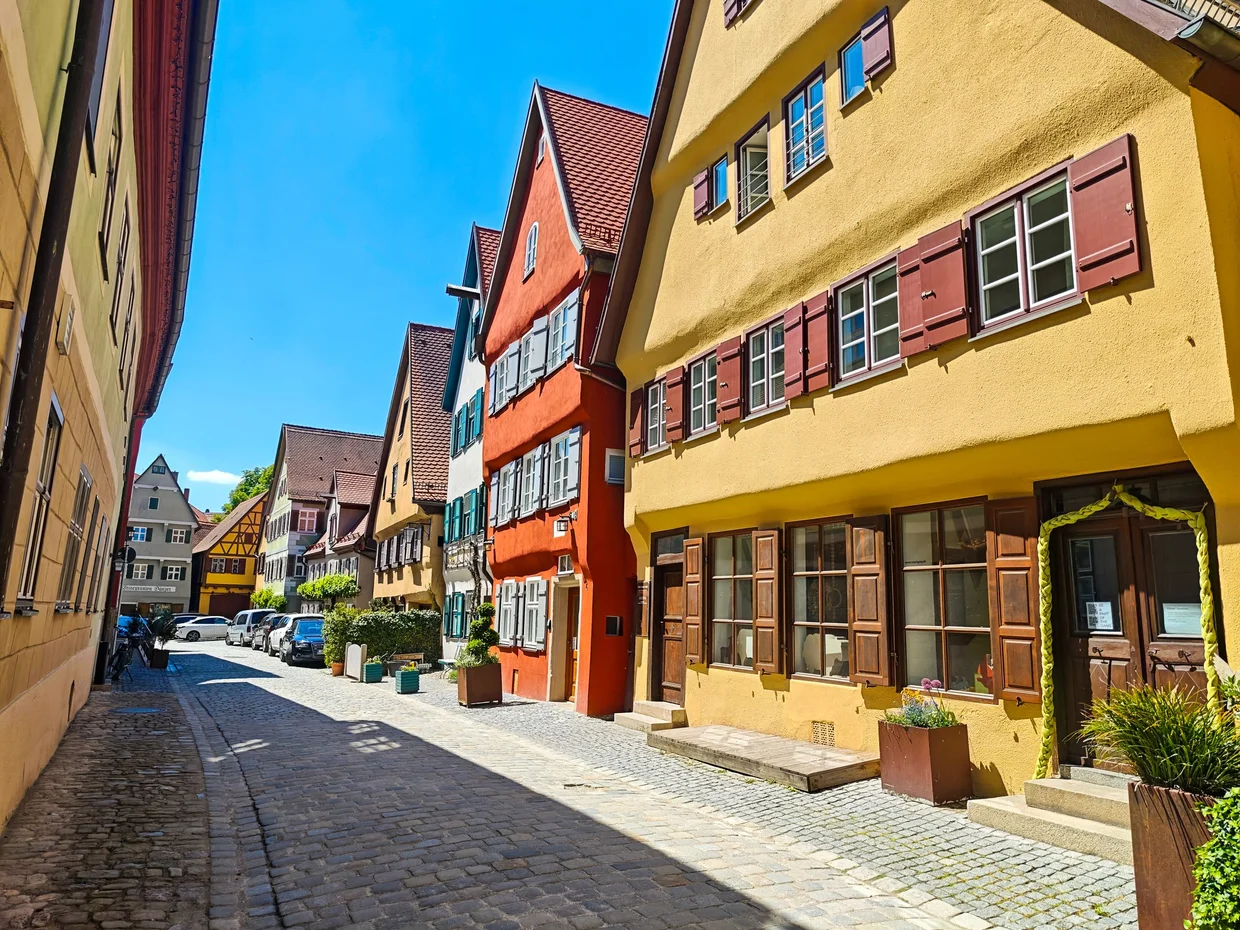
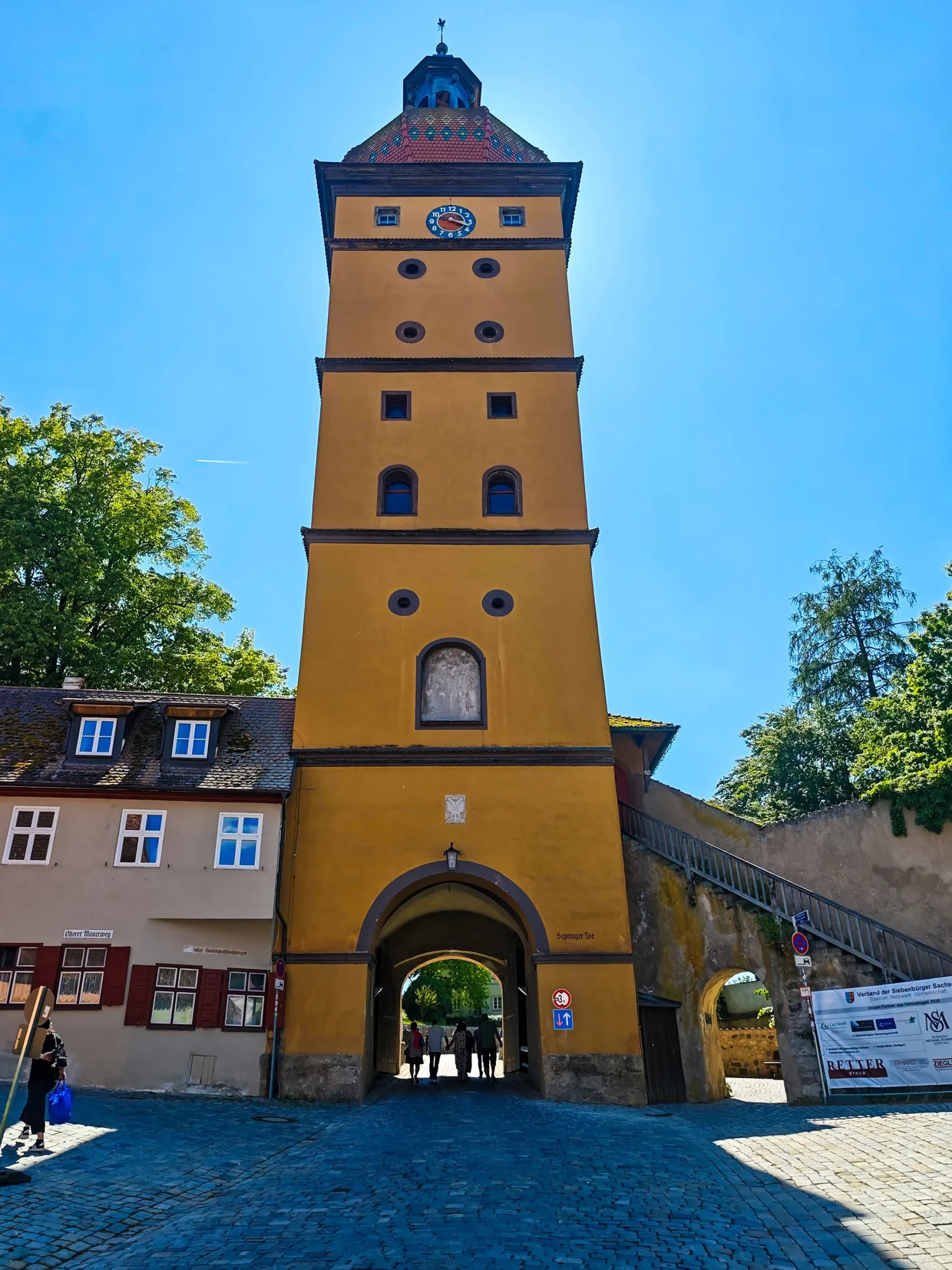
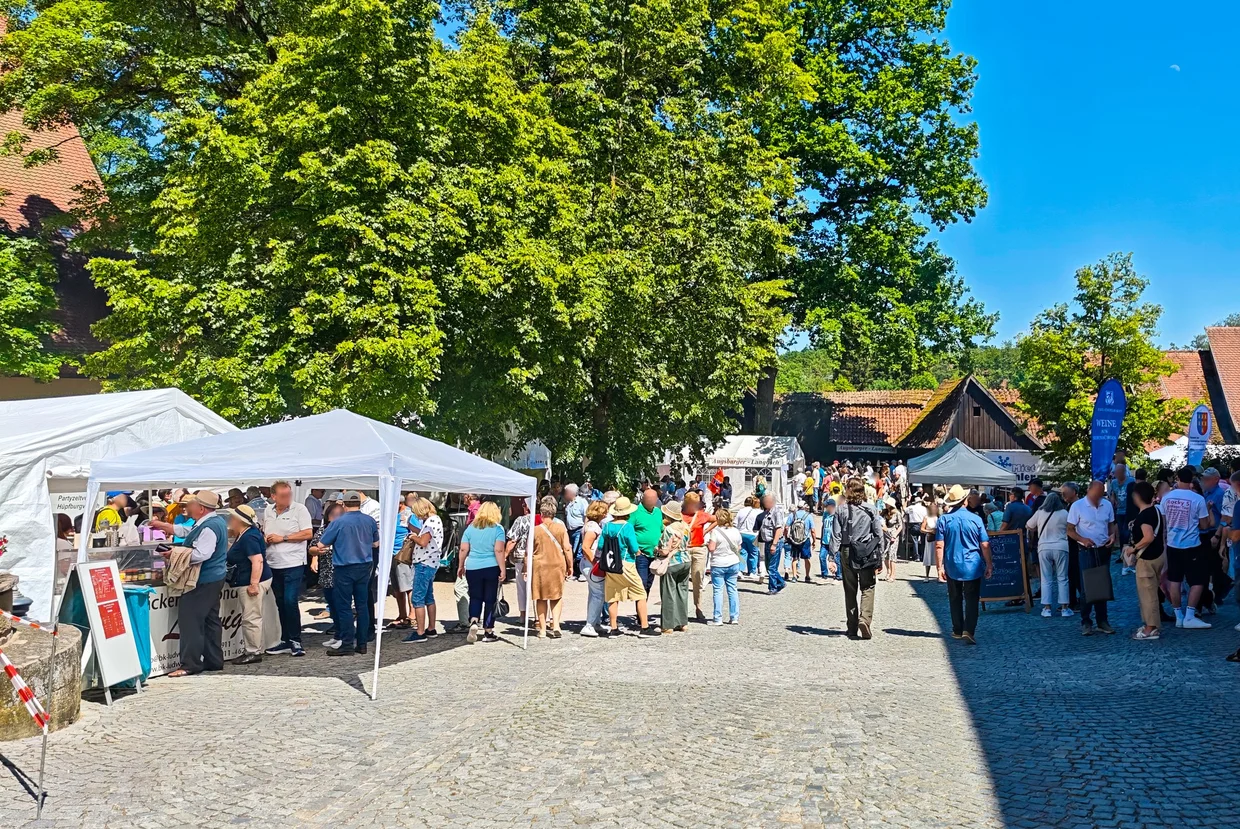
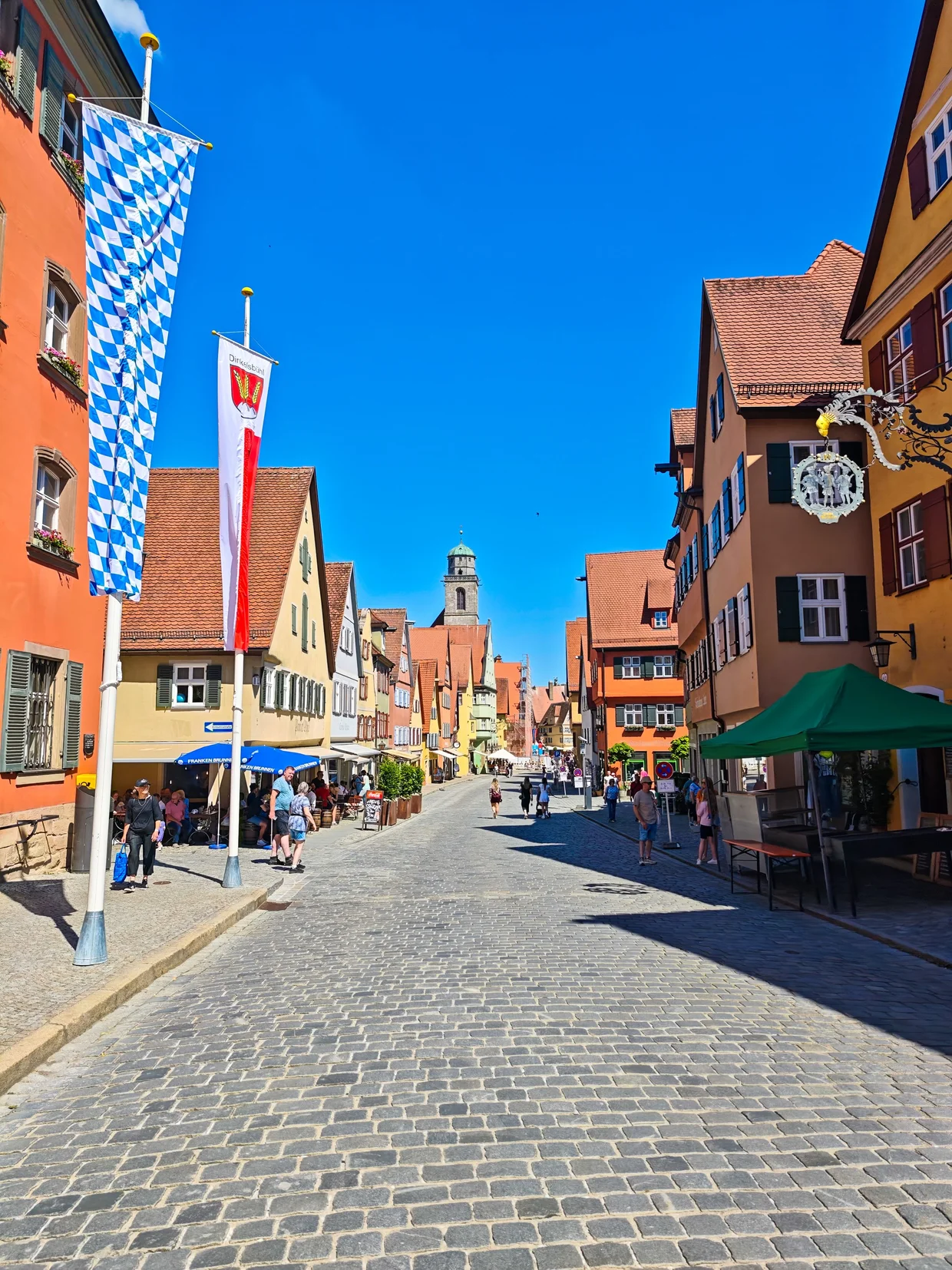
When I was there, the town was hosting the Heimattag der Siebenbuerger Sachsen, the annual gathering of Transylvanian Saxons (no, not vampires; German-speaking diaspora from what's now Romania). Wooden benches set up across the Marktplatz, flags everywhere, a procession of folk costume, lots of crowds. It made the town feel busier and more interesting than usual, but even without the festival the architecture would carry it.
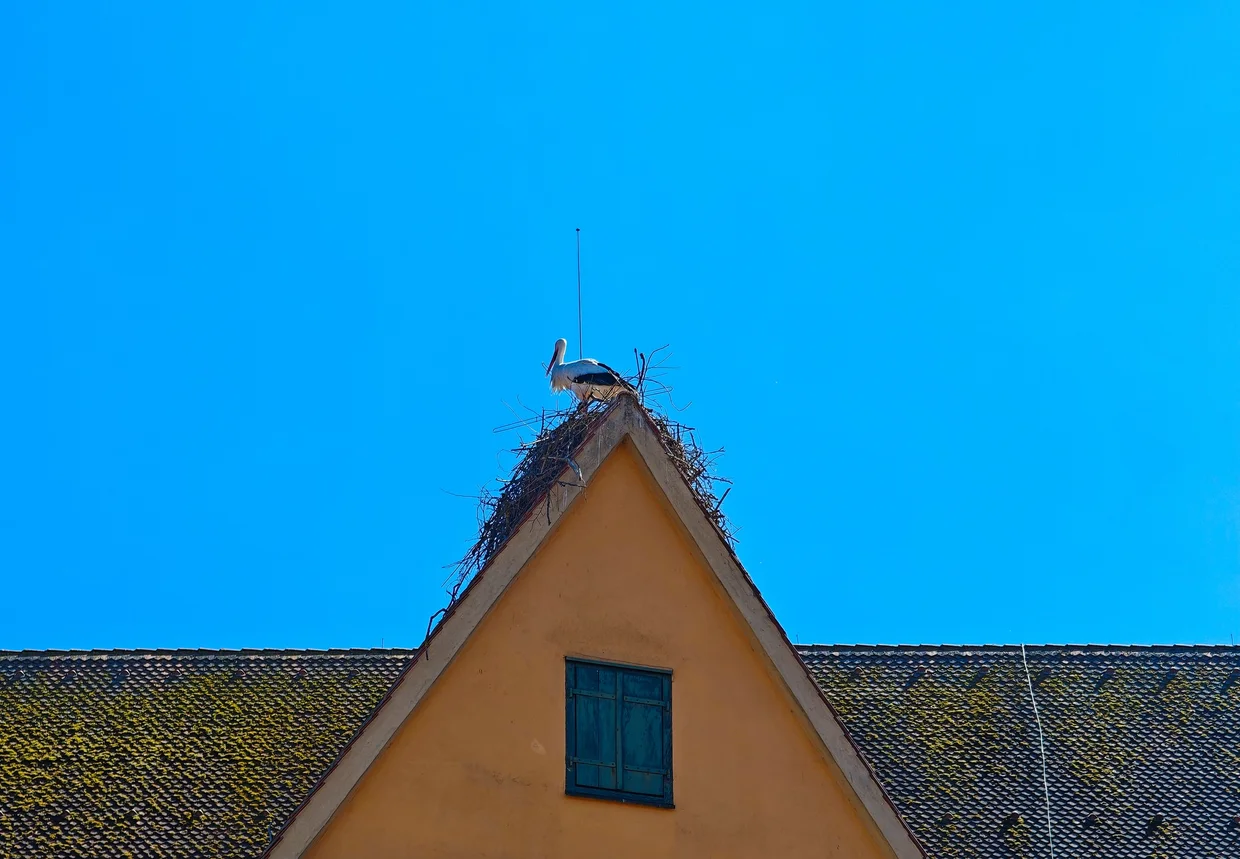
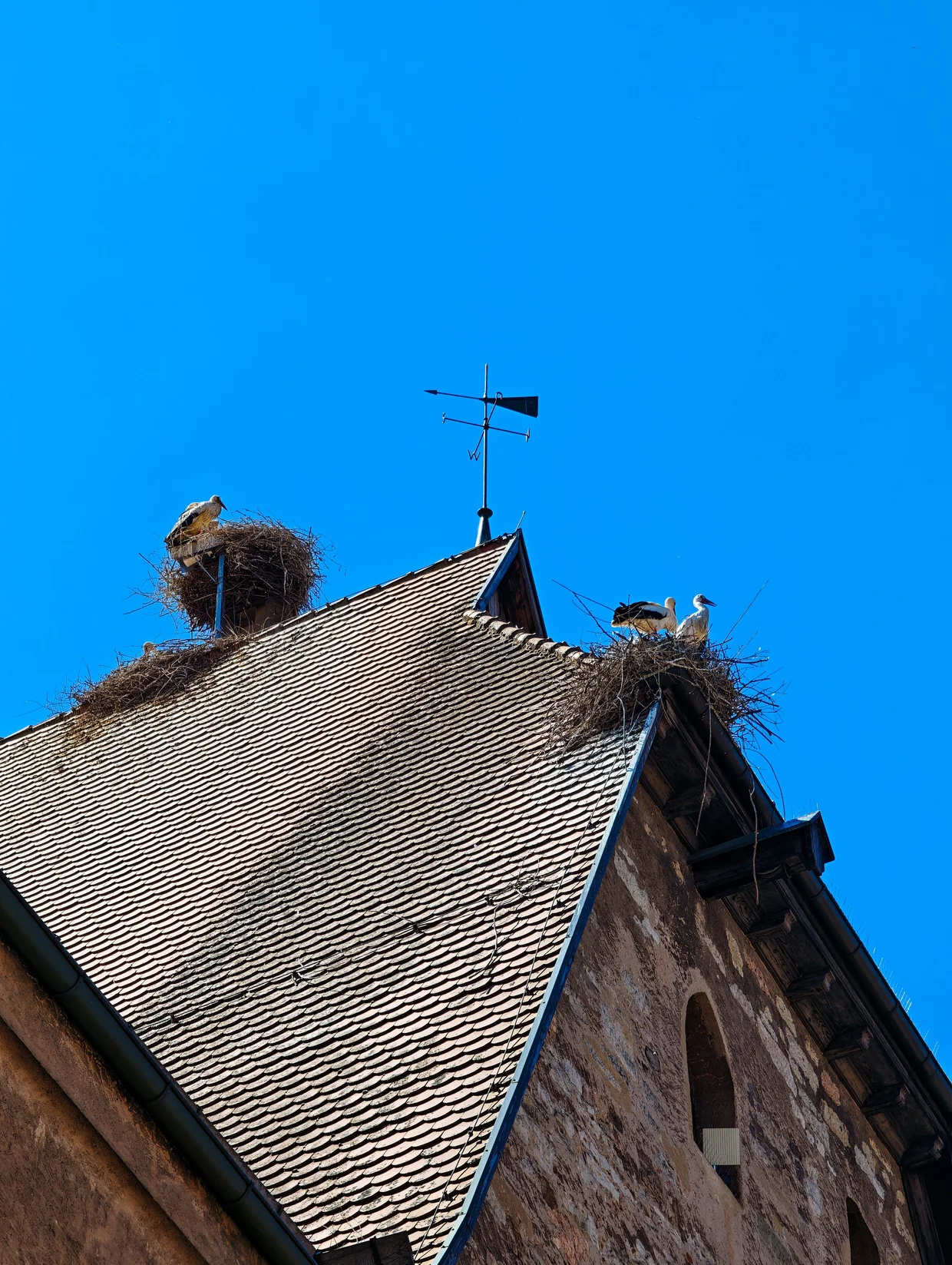
Look out for the storks. Dinkelsbuhl has multiple breeding pairs that nest on church roofs and chimney apexes every spring. They're easy to miss until someone points to a roofline and there's suddenly a giant white bird with a baby in its nest.
Plan 2 to 4 hours. The wall walk plus the Munster plus Weinmarkt plus a lunch on the square works out to about four; you can do it shorter if you skip the wall. Stay overnight if you wanna do the Romantic Road slowly; the town empties out after the day-trippers leave and it's lovely (but also kinda boring) in the evening.
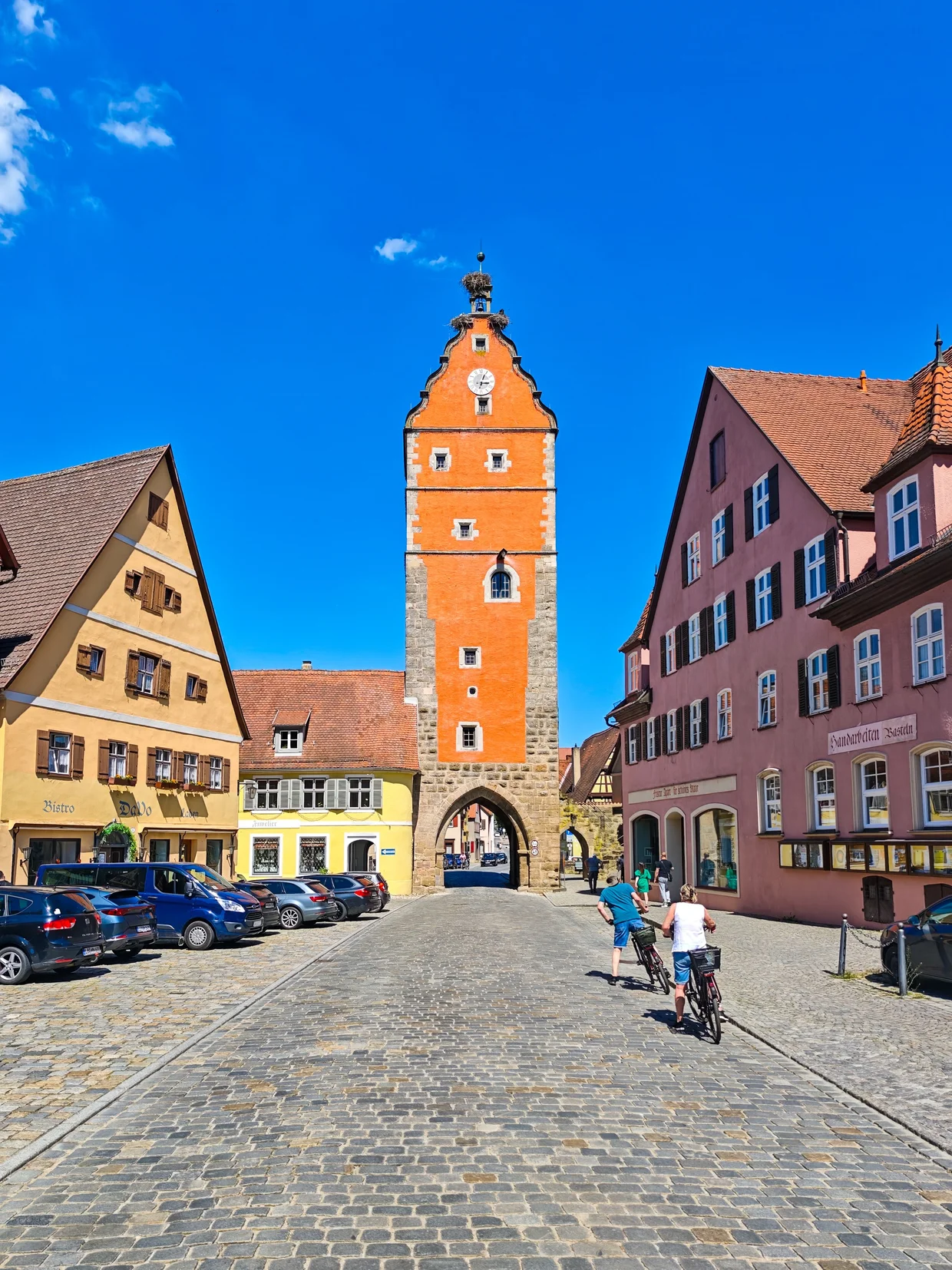
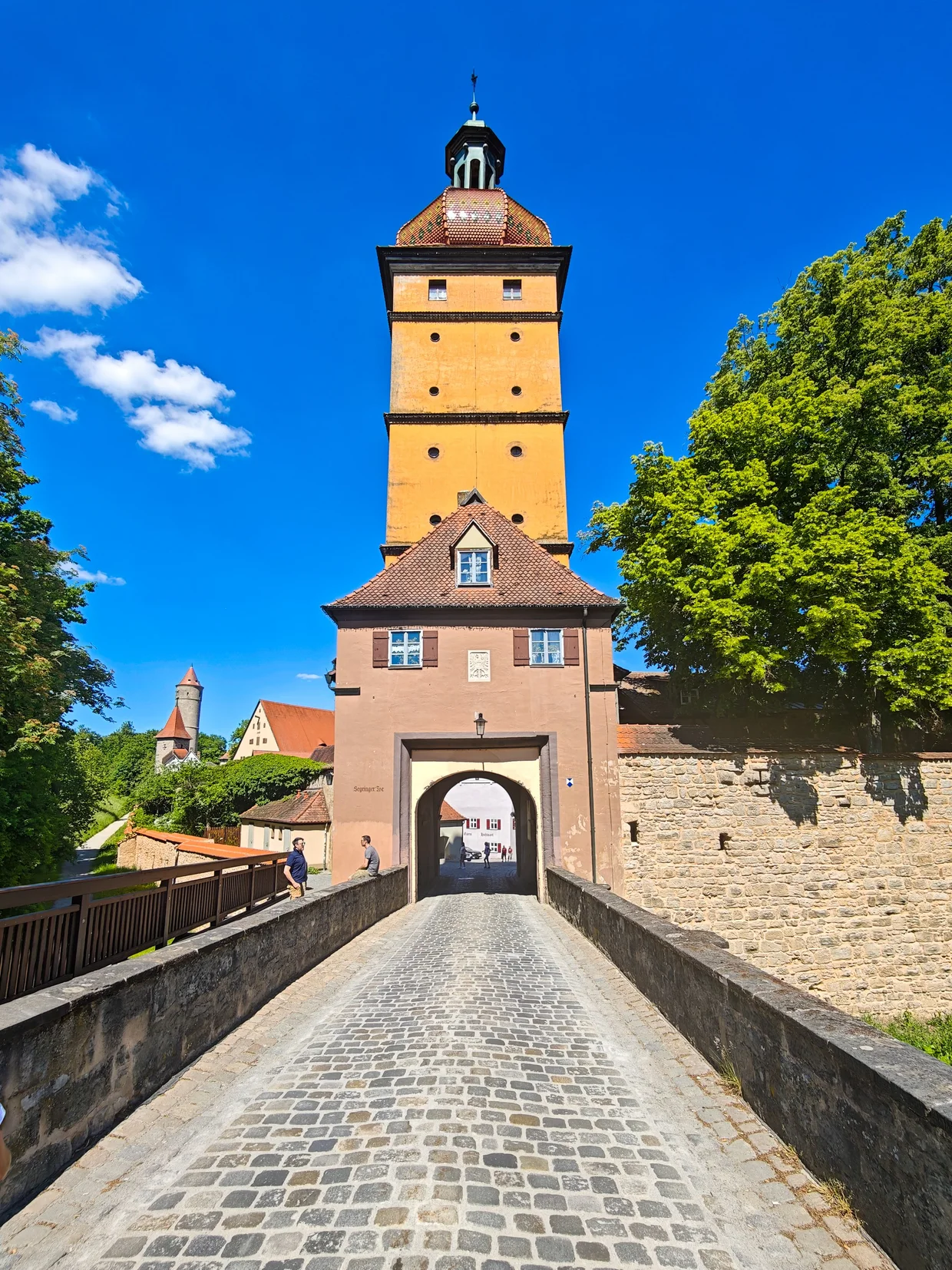
Verdict: must-stop. Pair with Nordlingen (and Harburg if you wanna add a third) for a really strong day. Don't try and combine Rothenburg with Dinkelsbuhl or Nordlingen in a single day; Rothenburg deserves a full day on its own. Dinkelsbuhl + Nordlingen + Harburg is a fine triple if no festival is on.

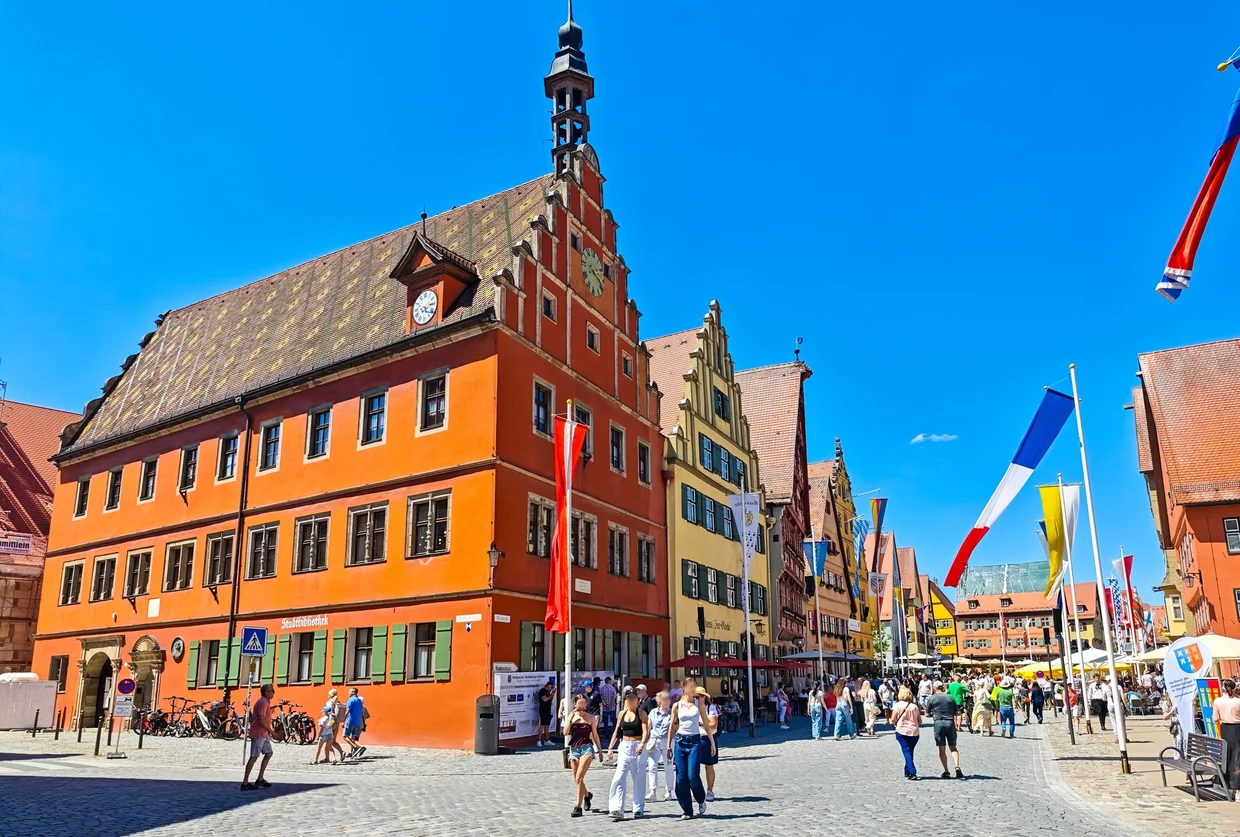
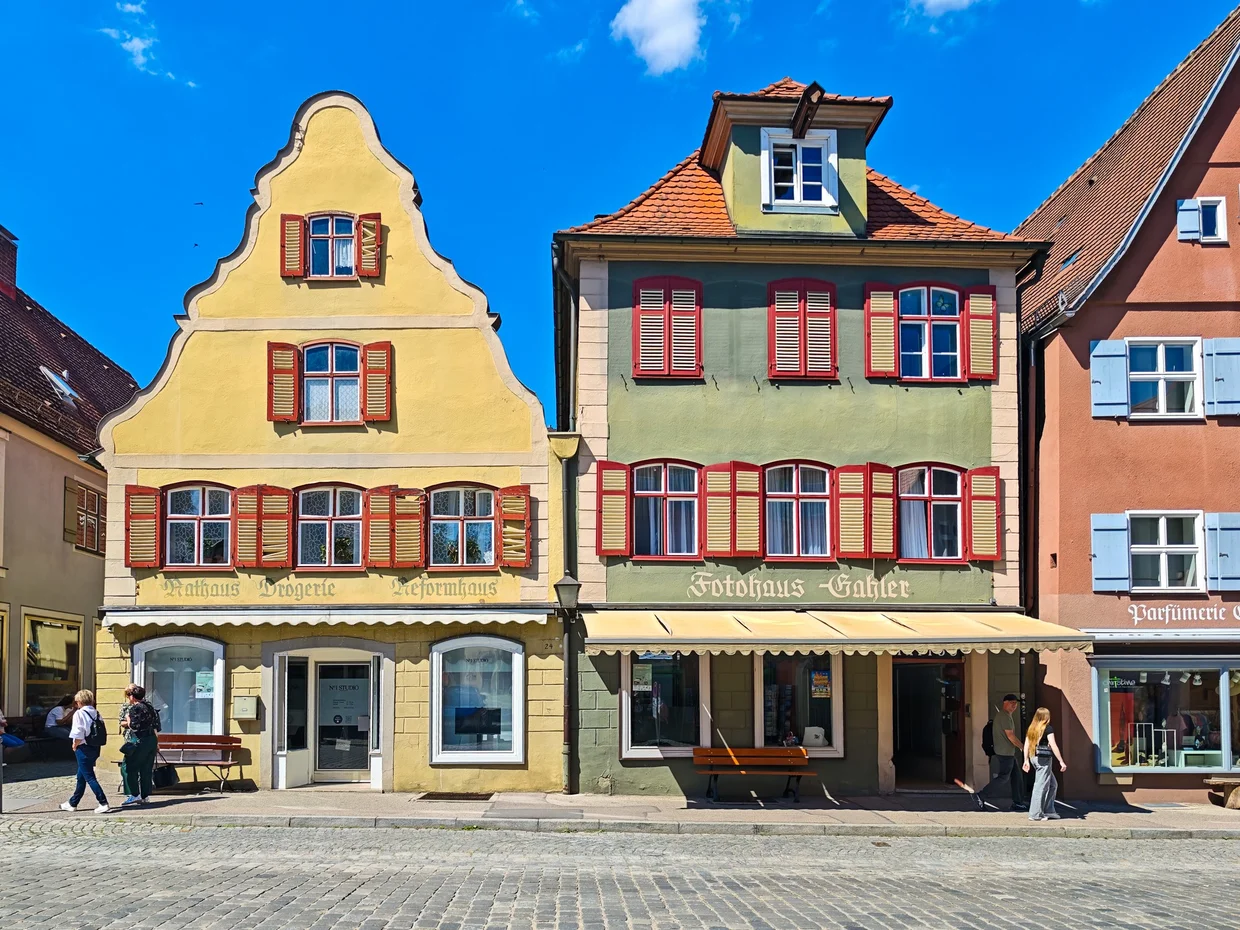
The town hall doesn't shout, it just stands there being perfect. The orange Rathaus on the Marktplatz carries an eagle over a spray of wheat sheaves in its pediment, the same wheat you'll spot on the town's arms on the flag out front. Painted figures stand between the upper windows, the shutters are that soft Bavarian green, and on a clear day the whole coral facade goes luminous against the sky. It's the kind of building that'd be the headline act in a lesser town, and here it's just one more thing you pass on the walk.
Nordlingen: The Town in an Asteroid Crater
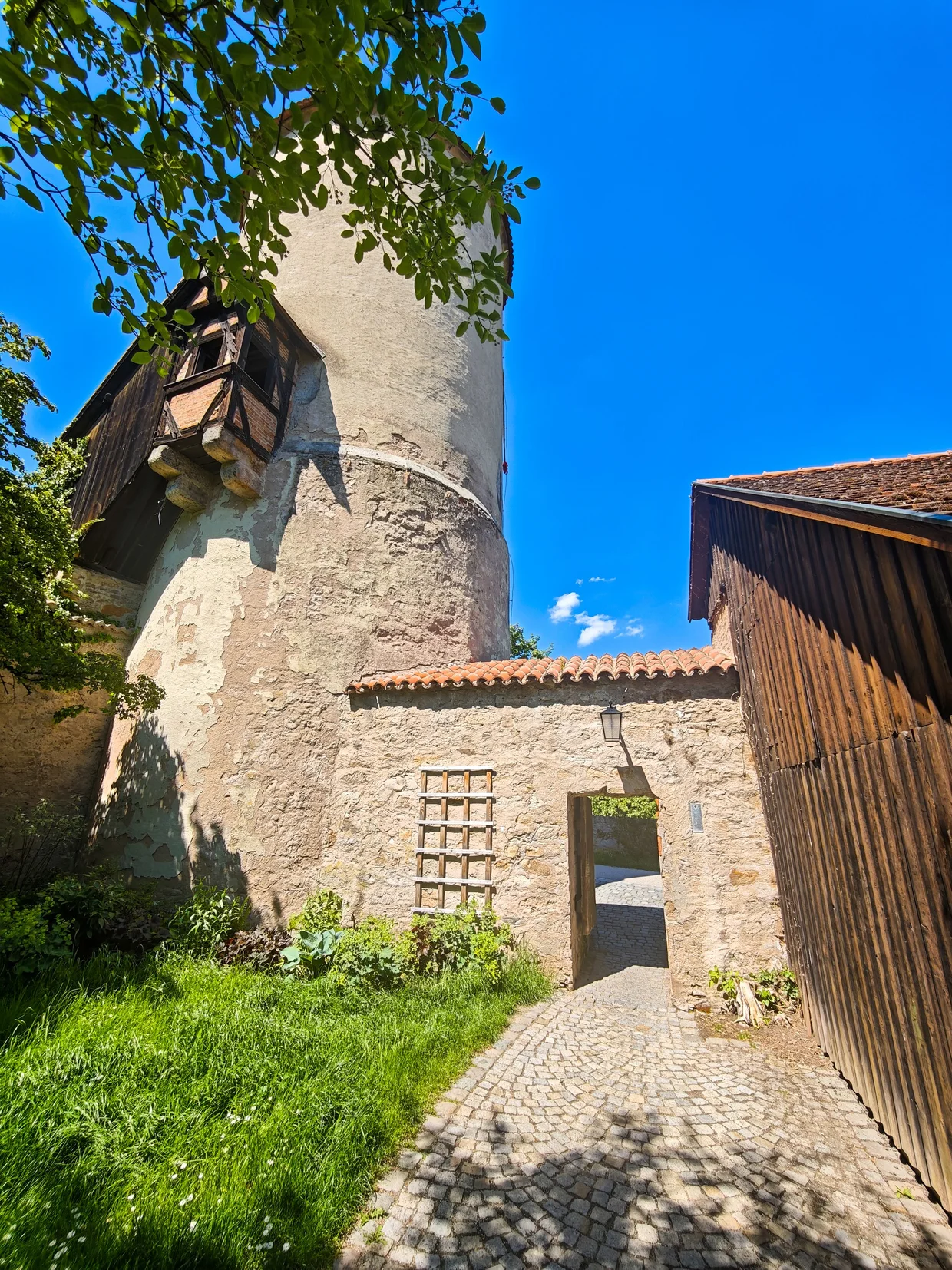
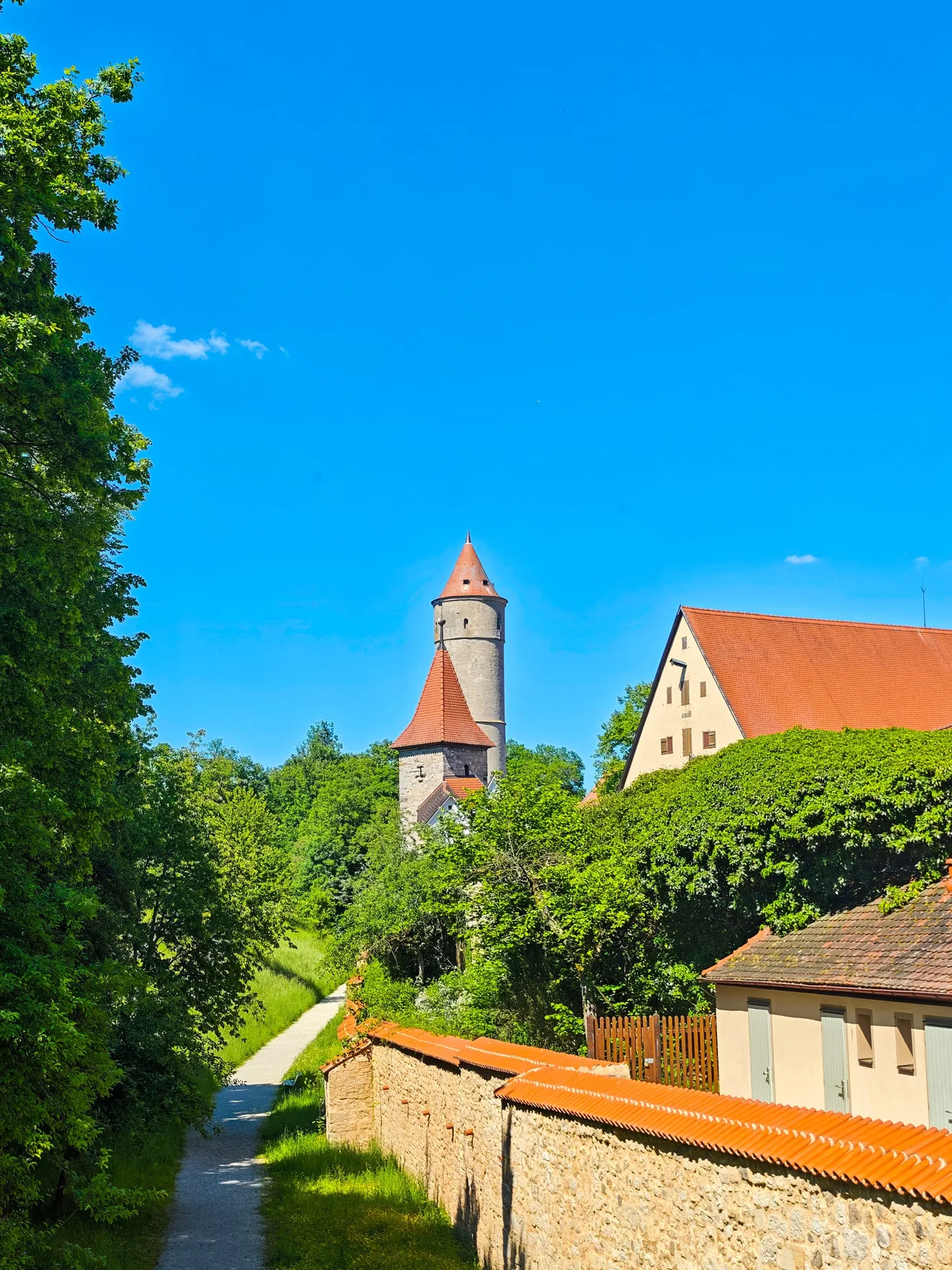
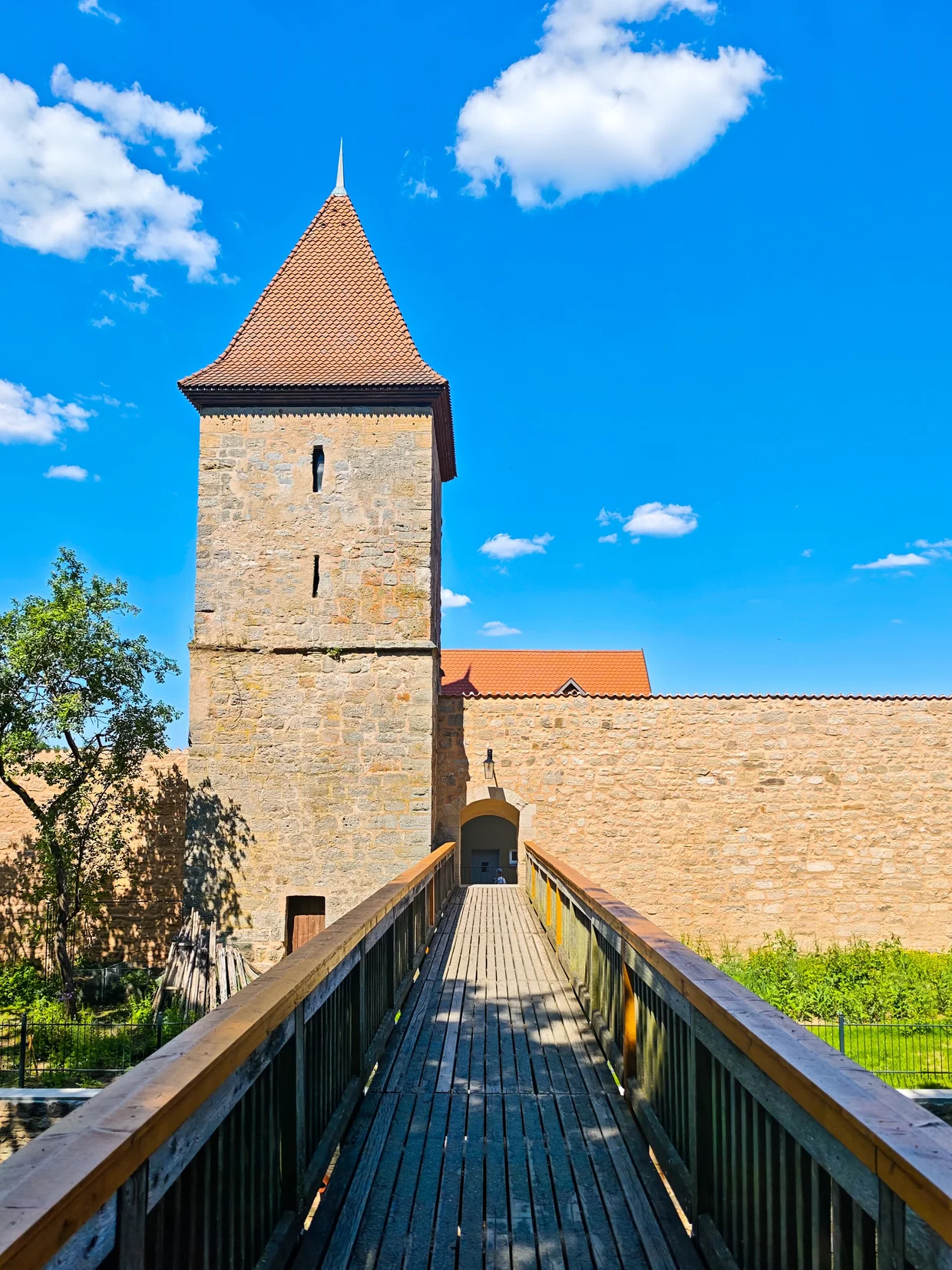
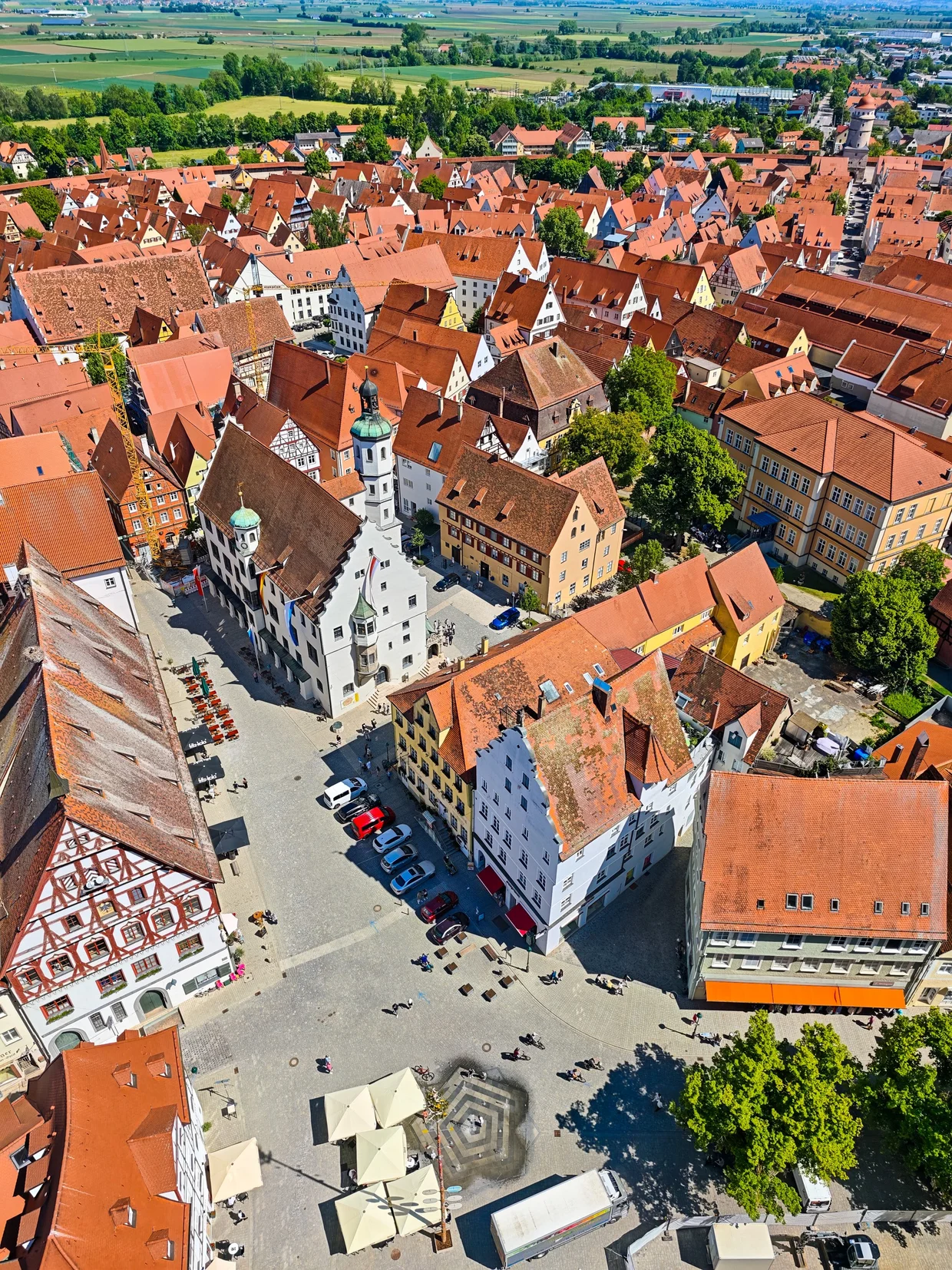
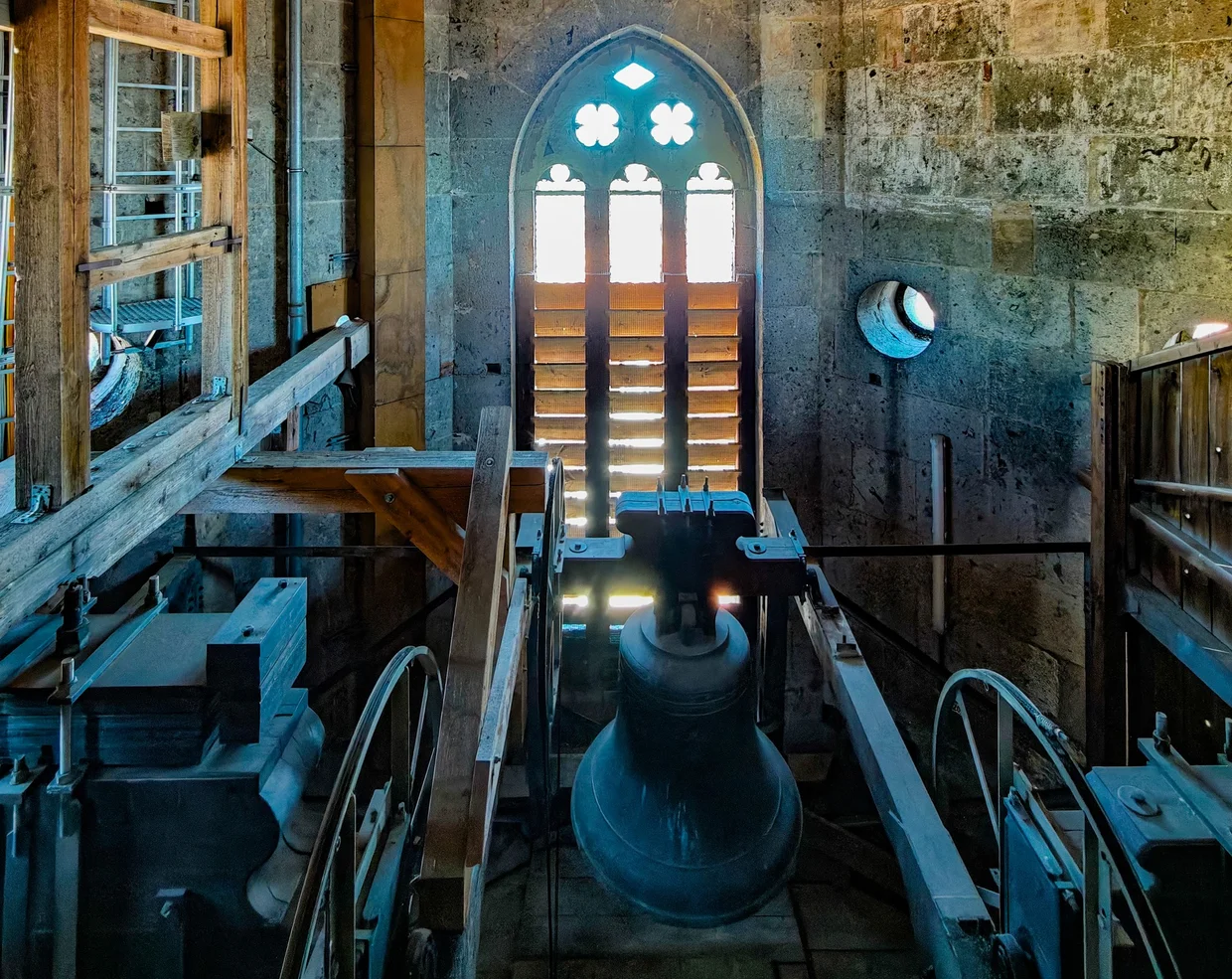
Nordlingen is one of Germany's classic fully walled towns, and the standout because you can walk the whole preserved ring. The wall's near-perfect circle is a town-fortification thing, not the crater rim (the crater is much bigger), but the bigger setting is the hook: Nordlingen sits inside a 15-million-year-old asteroid impact crater (the Ries), a bowl about 25 km across, and you can see the green rim of the crater on the horizon from the top of the Daniel, the church tower of St-Georg. The town has plenty going for it beyond the tower, but those 350 steps up are absolutely worth your time. Climb it.
Two practical bits: the entrance can be a bit hidden depending on which side of the church you approach from; it isn't through the main church entrance, so just walk a lap around St-Georg until you spot the tower door. And once you're up there, you're exposed to the elements, so check the sky before you go. The look down is great in a specific way: it reminded me of the bird's-eye perspective of games like Anno 1800, except the buildings down there really are that old or older.
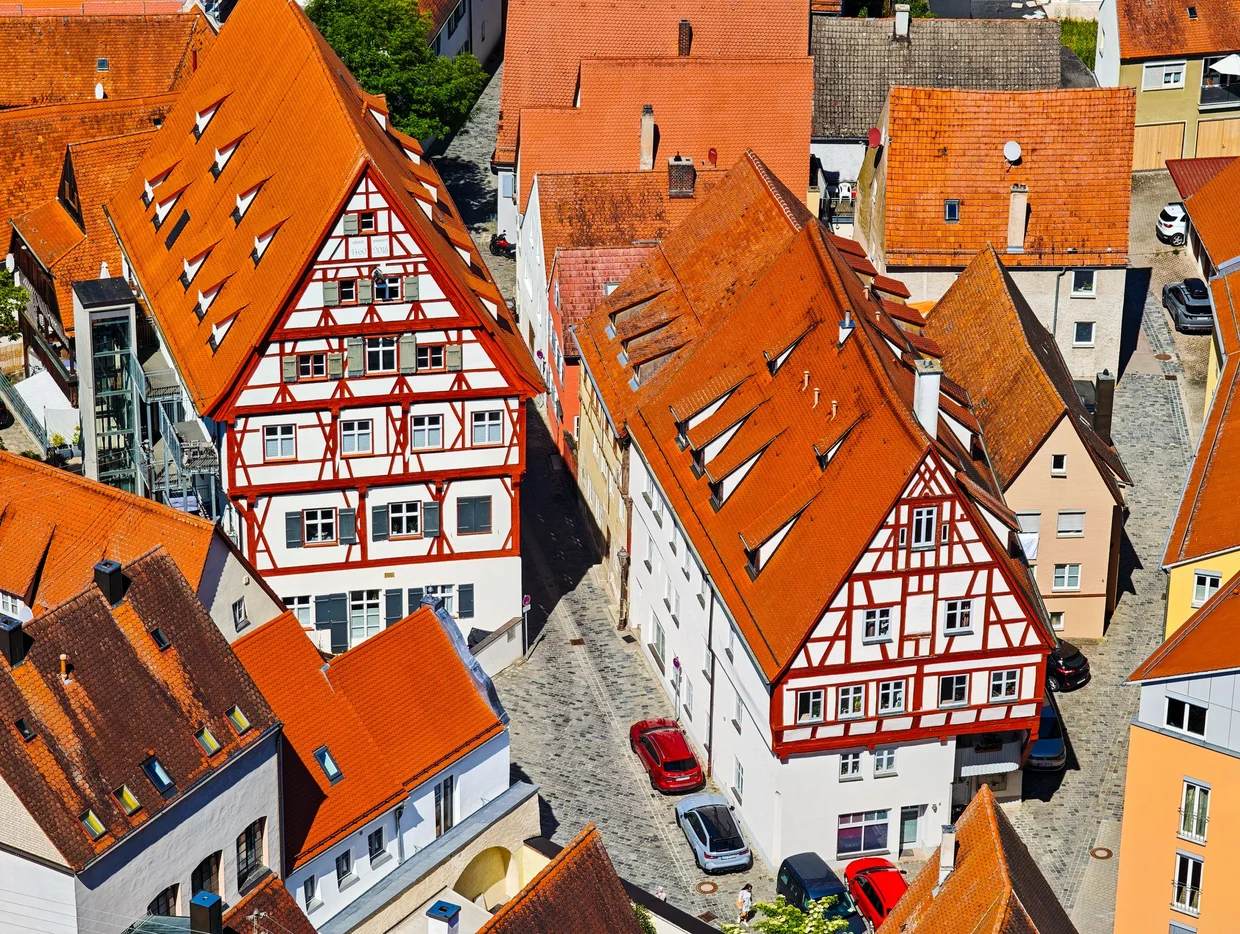
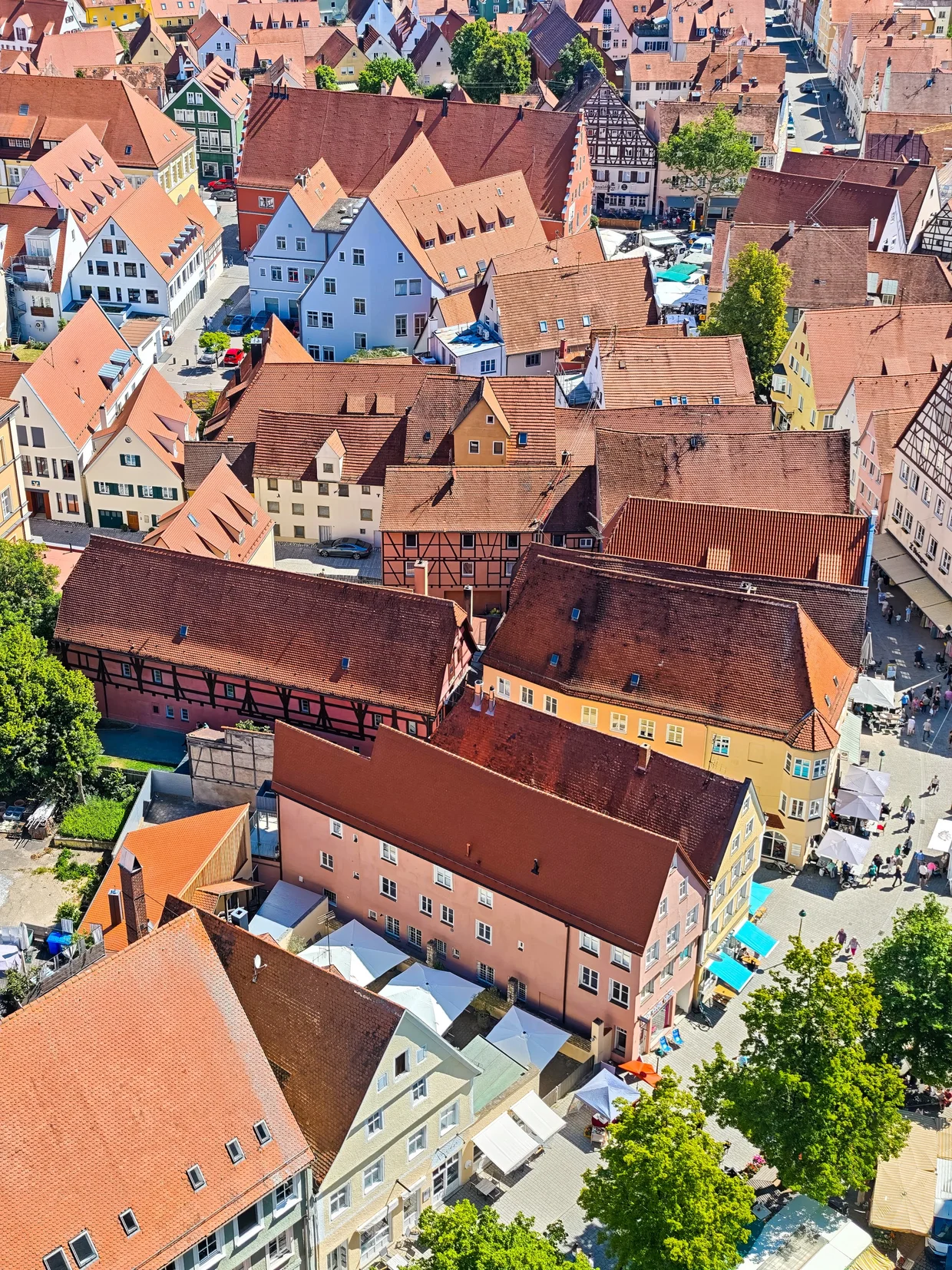
The climb pays off the second you turn around at the top. 350 steps inside the Daniel and the whole town drops away beneath you: a tight swirl of red tile roofs packed inside the old wall, then the fields, then that low green ridge on the horizon. That ridge is the rim of the crater, a 25 km bowl punched out of the landscape 15 million years ago, and from up here you can actually read its shape. It's the rare spot where the geology and the townscape land in the same frame.

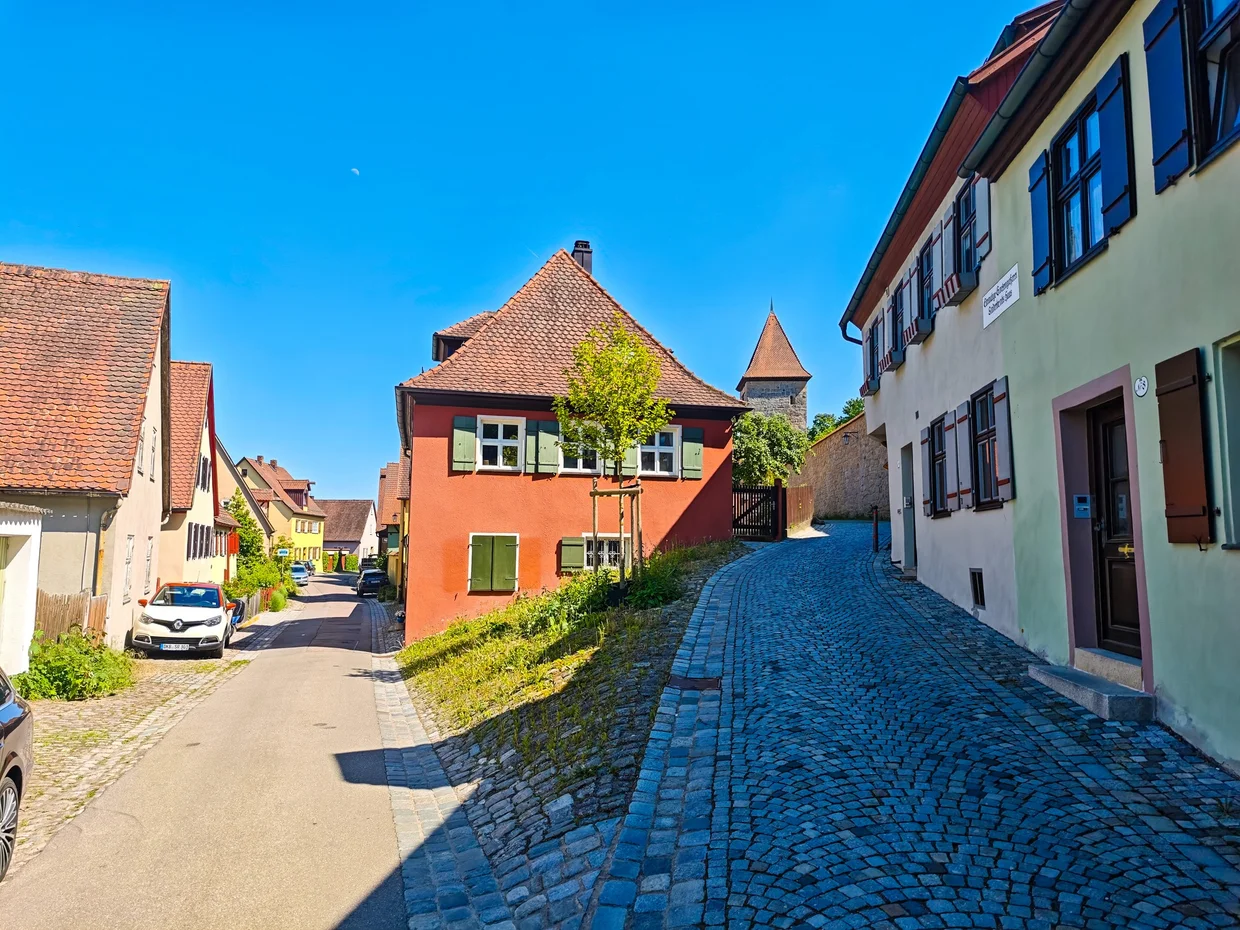
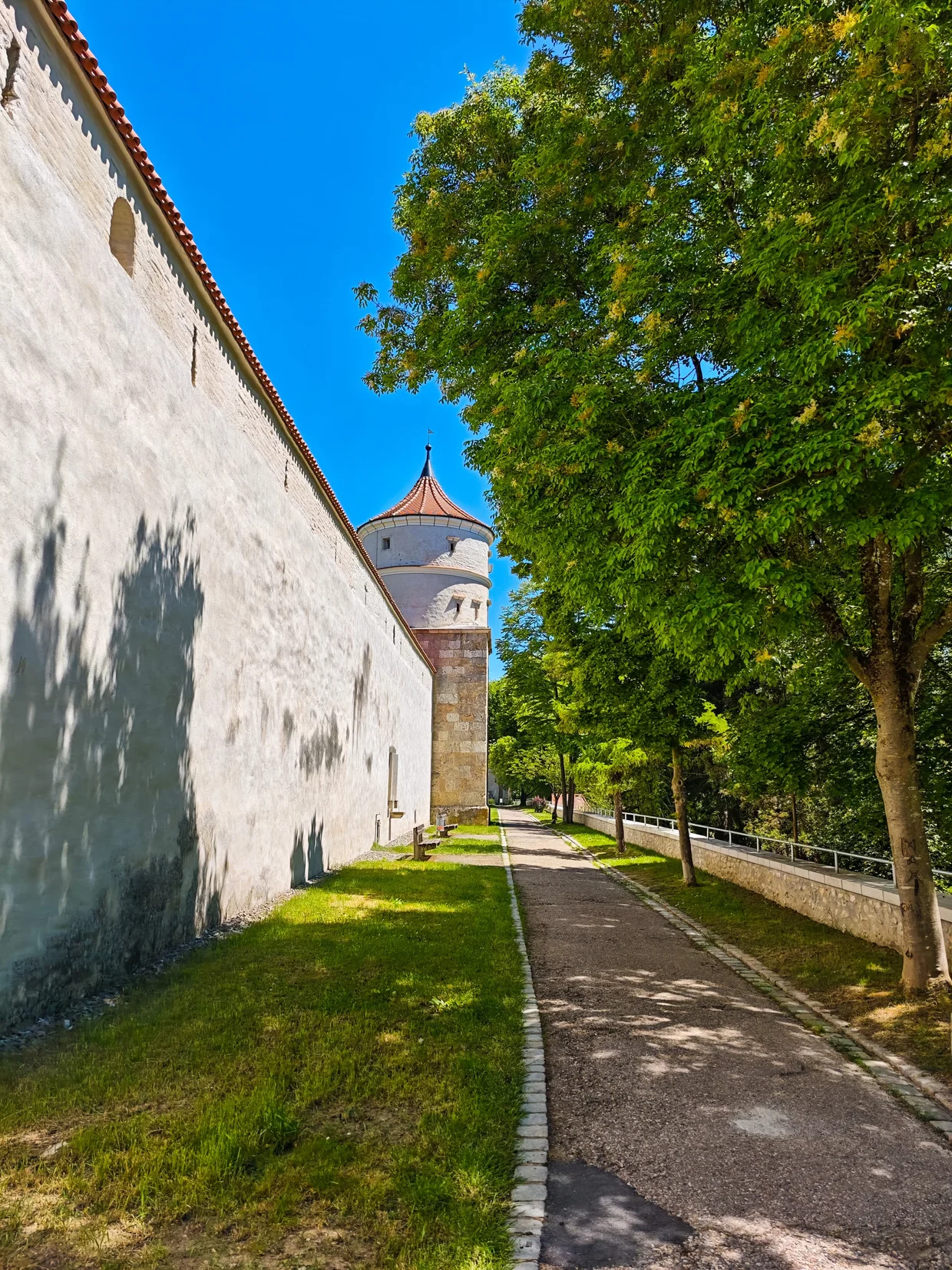
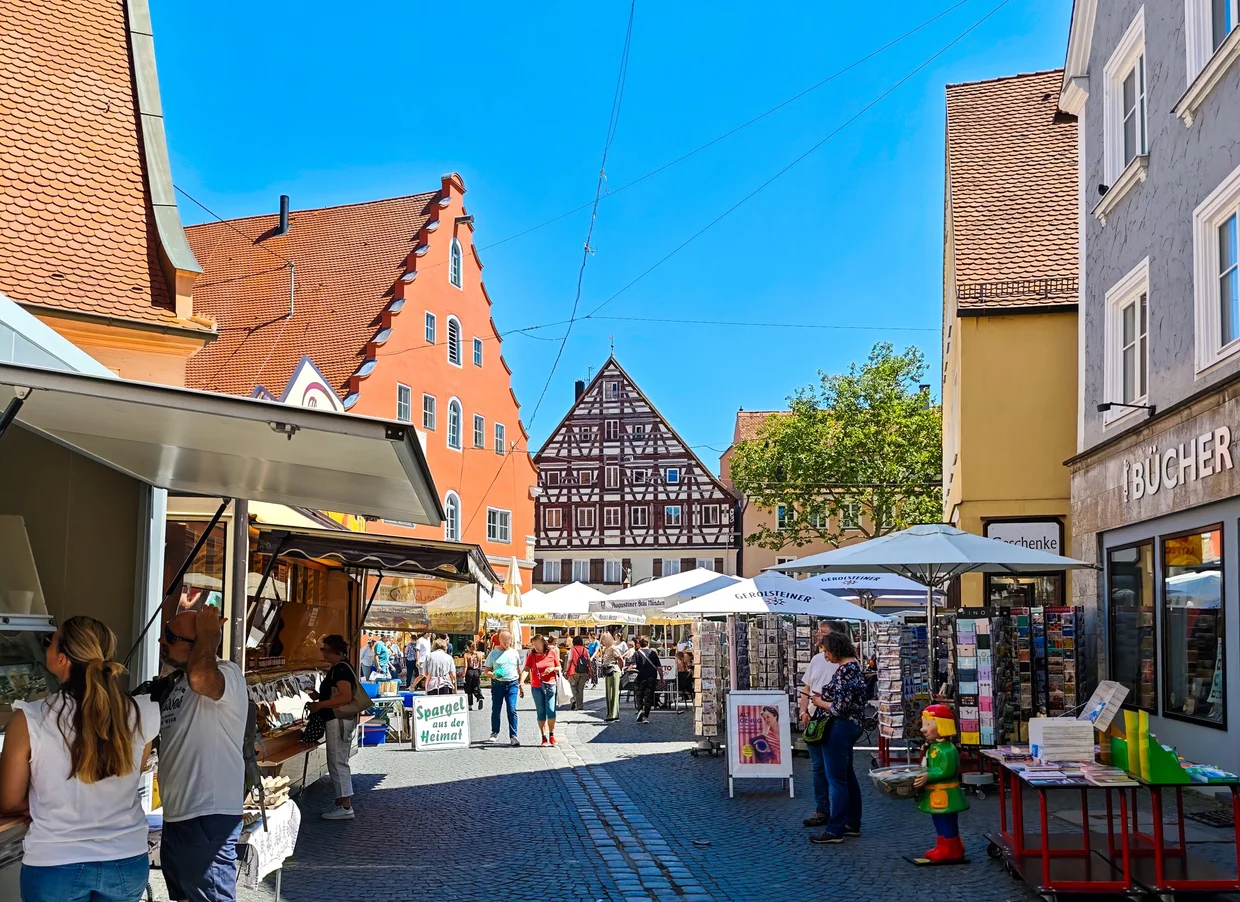
The town itself is small, lived-in, and noticeably less swarmed than Rothenburg. You can walk the wall (it's continuous, with covered Wehrgang and watchtowers), do the Marktplatz with the painted Hotel Sonne and the towering Daniel, and still have time for a lazy lunch in the Klostergarten. The architecture is solid late-medieval into Renaissance, with chunky half-timbered houses and a Rathaus that earns the postcard.
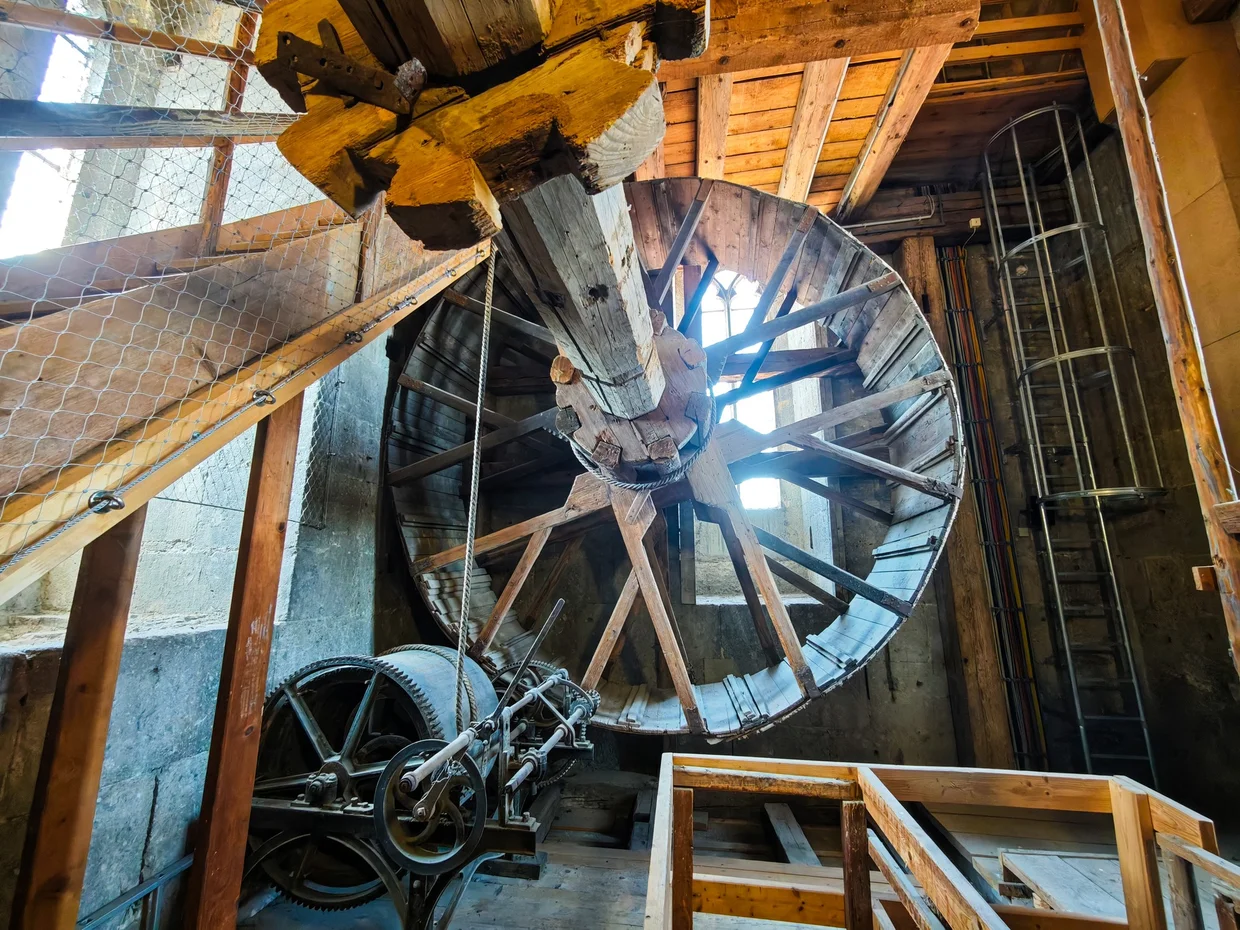
If you've got time to spare, the Rieskrater-Museum is a worthwhile 30 minutes. It's a science museum, not a town-history one, mostly about impact craters in general with some geology thrown in. Not a must-see, but it ties the whole "you're standing inside an asteroid crater" thing together if that hooked you on the way up the Daniel.
Plan at least two hours. Four to five is fine, especially if you wanna sit somewhere and eat. The Daniel tower charges a small entrance fee (currently €4 for adults) and it's bloody worth it; check the opening hours before you arrive though, because winter and shoulder-season hours are shorter.
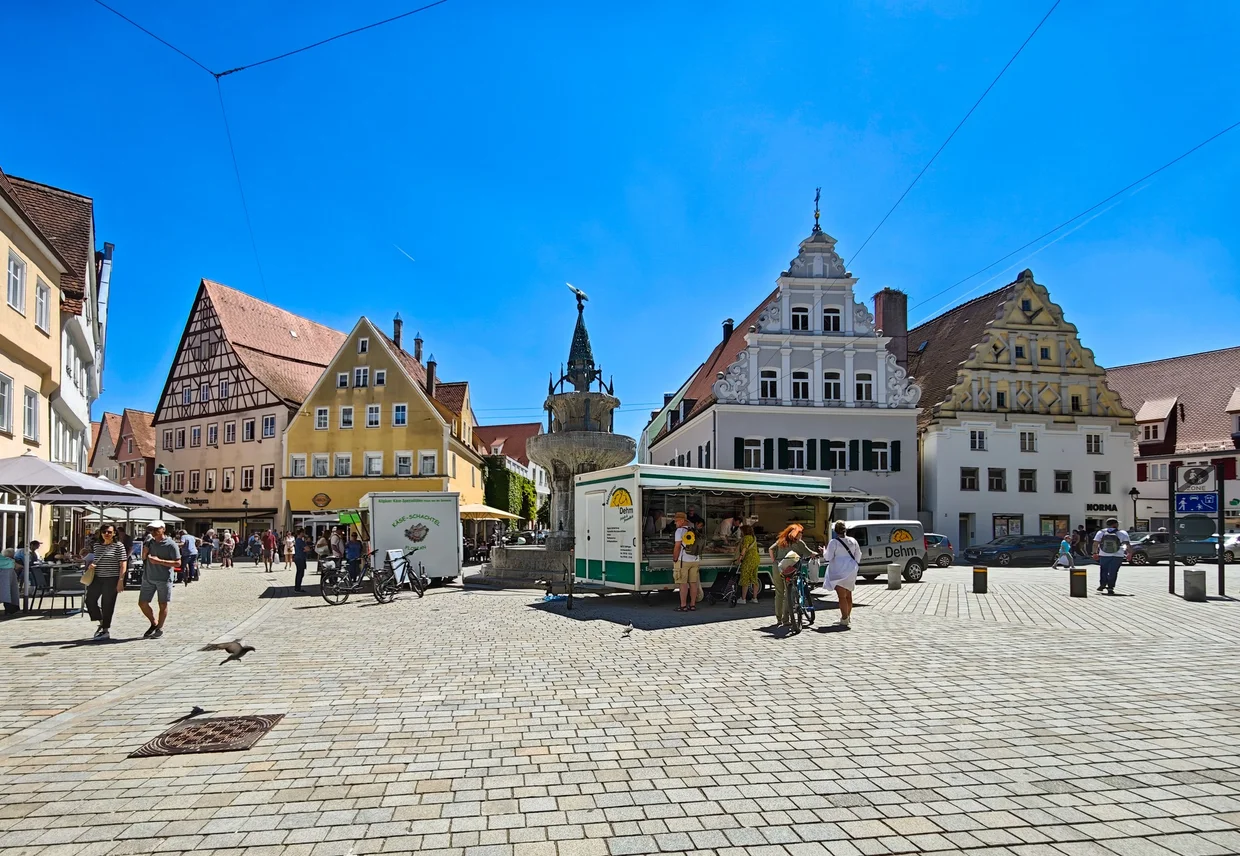
Verdict: strong stop. Combine with Dinkelsbuhl as your "two best small towns" day if you're tight on time.
Harburg: The Castle on the Hill
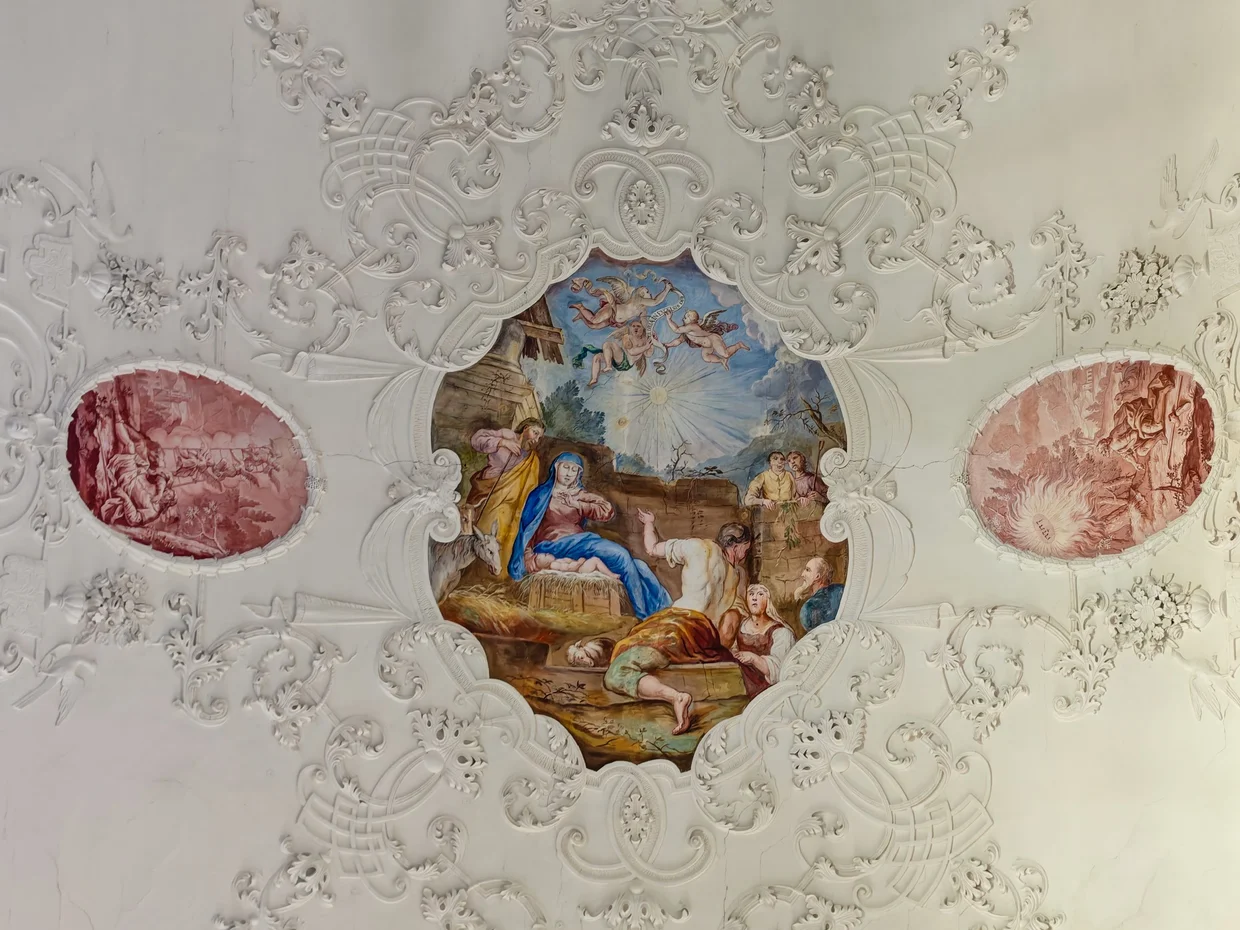
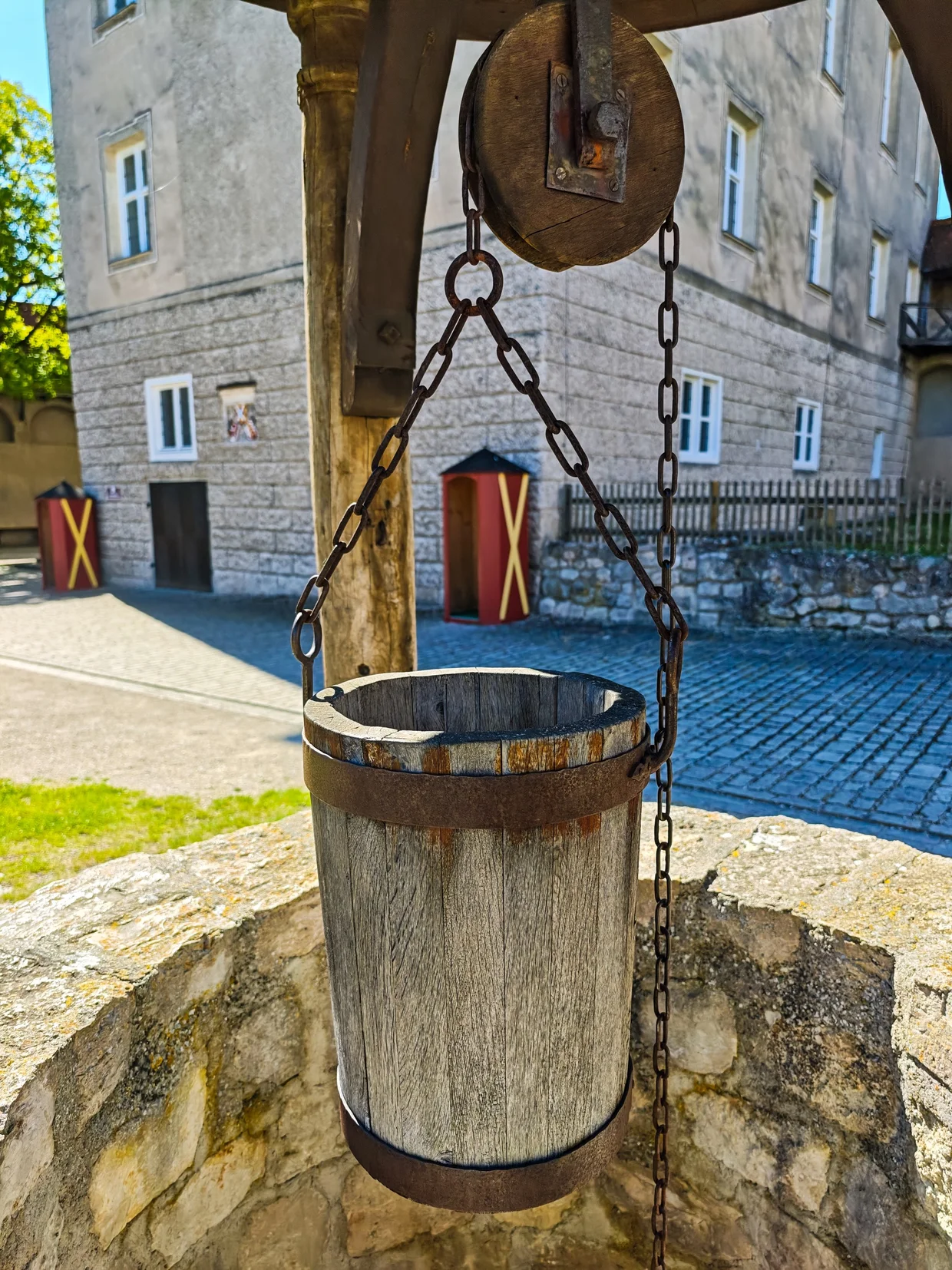
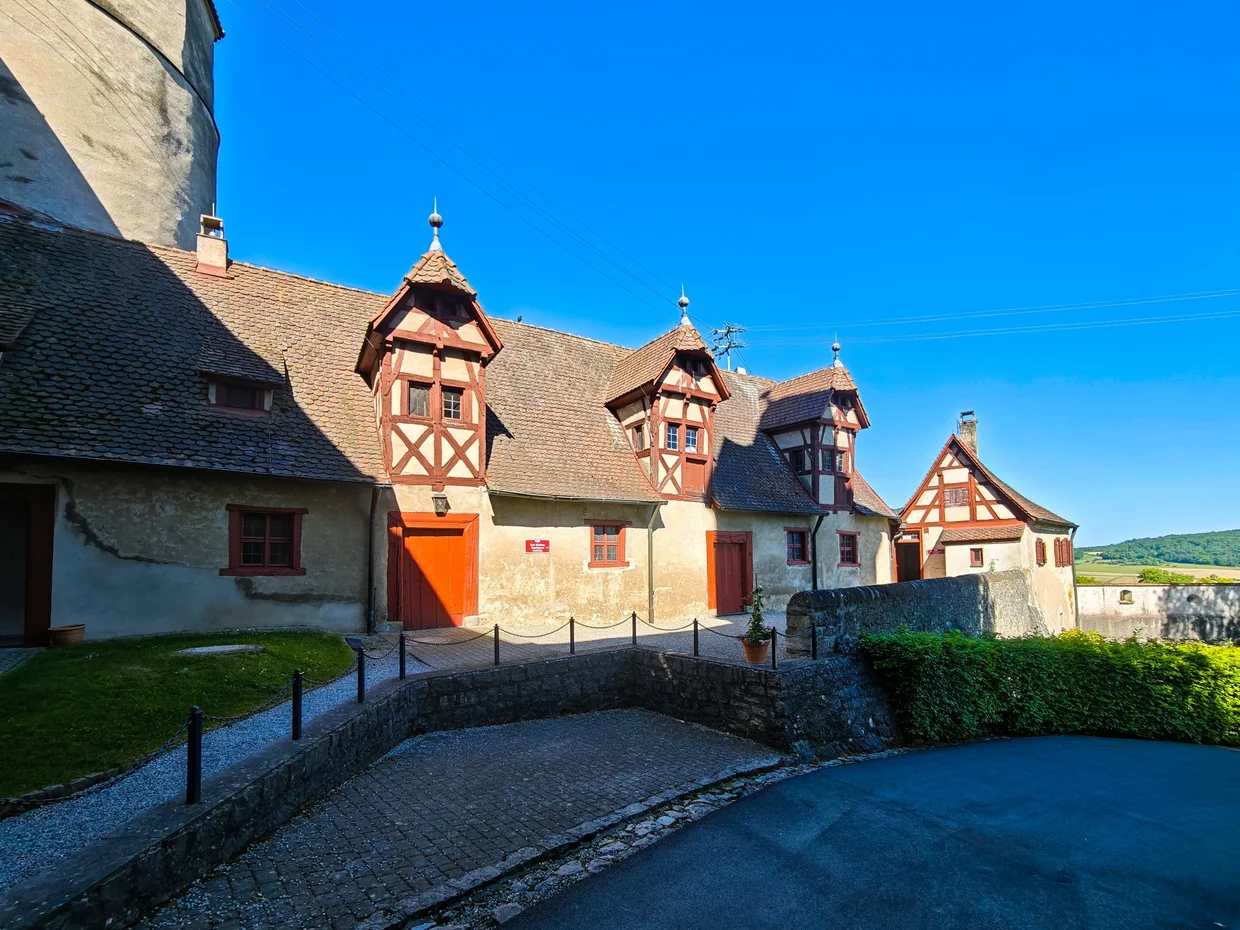
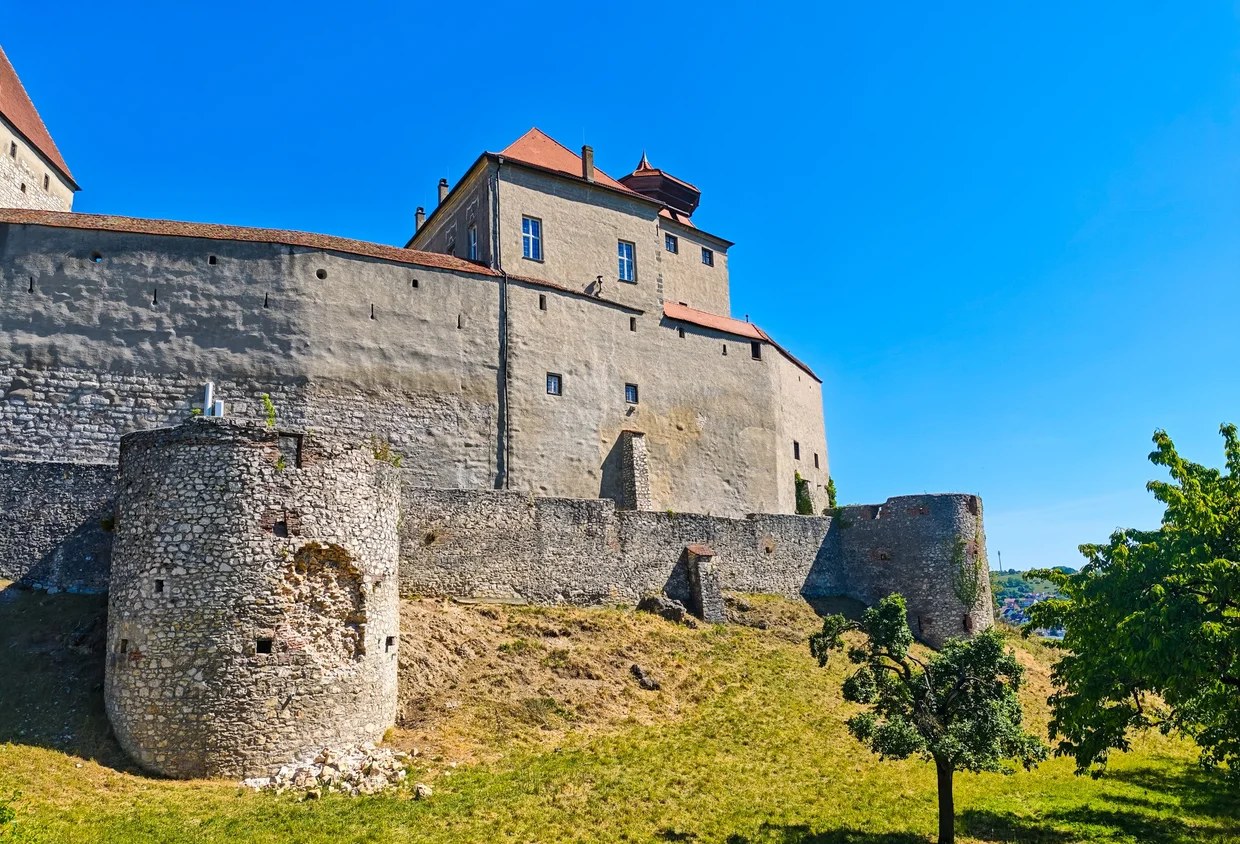
Schloss Harburg sits on a wooded ridge above the Wornitz, looking exactly like the kind of castle a tourism office would build if they had to invent one. Stepped gables, half-timbered staff quarters, a portcullis you can actually walk under, a deep well with a wooden bucket on a chain, and a chapel ceiling with a stucco Nativity that's worth the climb on its own. It's one of the largest, best-preserved medieval castle complexes in southern Germany; first documented in 1150, it came into the hands of the Counts of Oettingen in 1299 and now belongs to the nonprofit Fuerst zu Oettingen-Wallerstein cultural foundation.
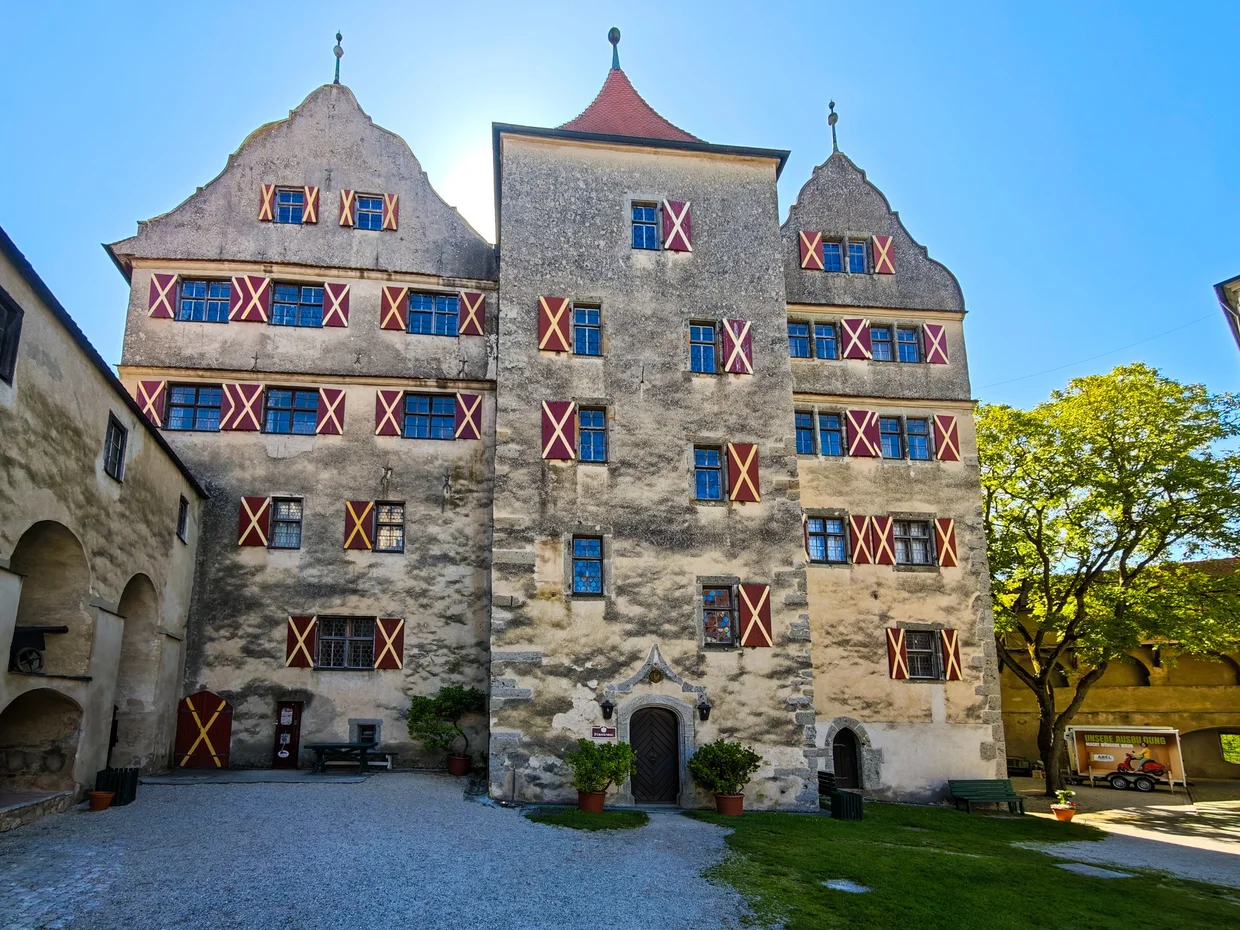
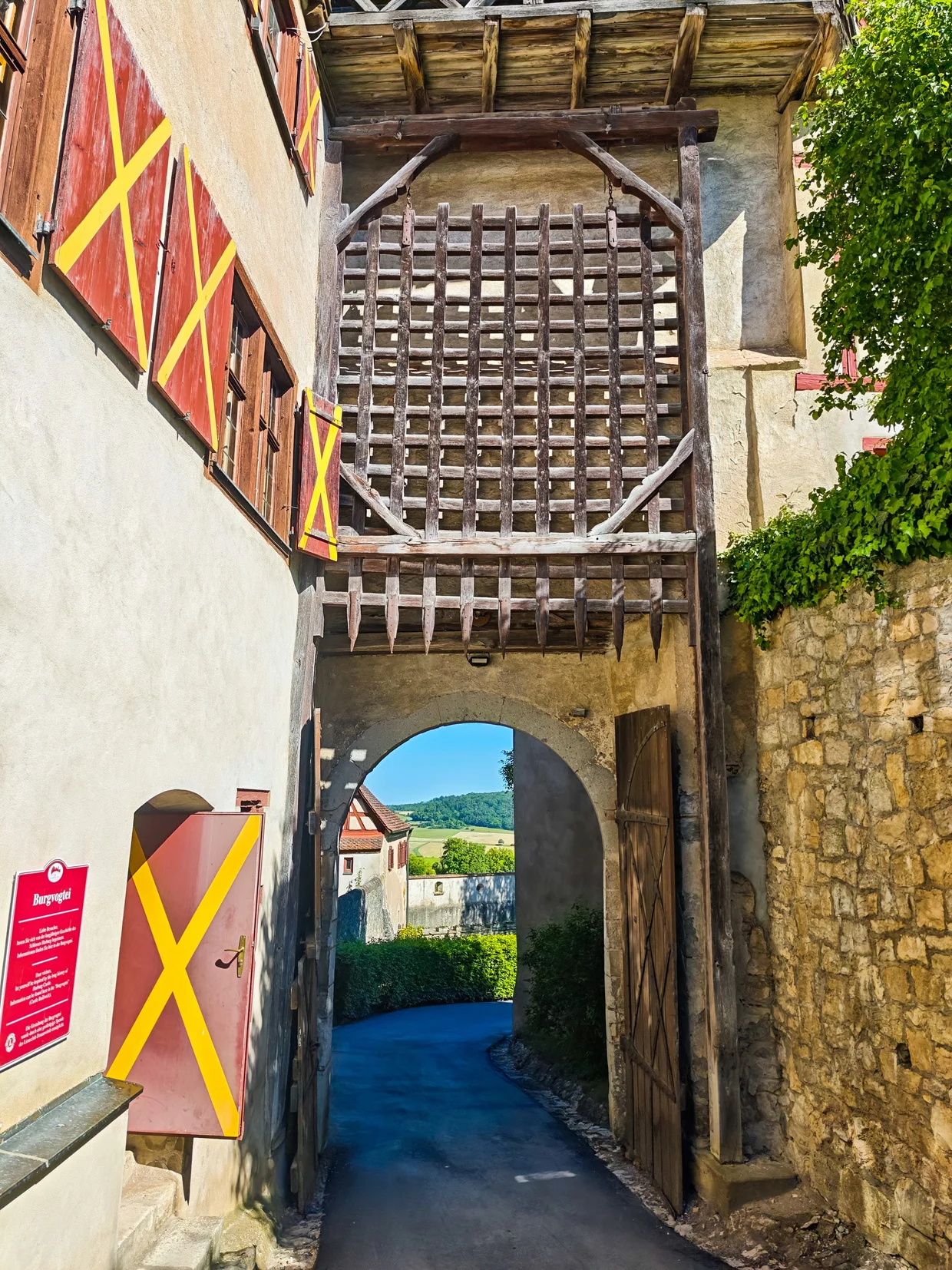
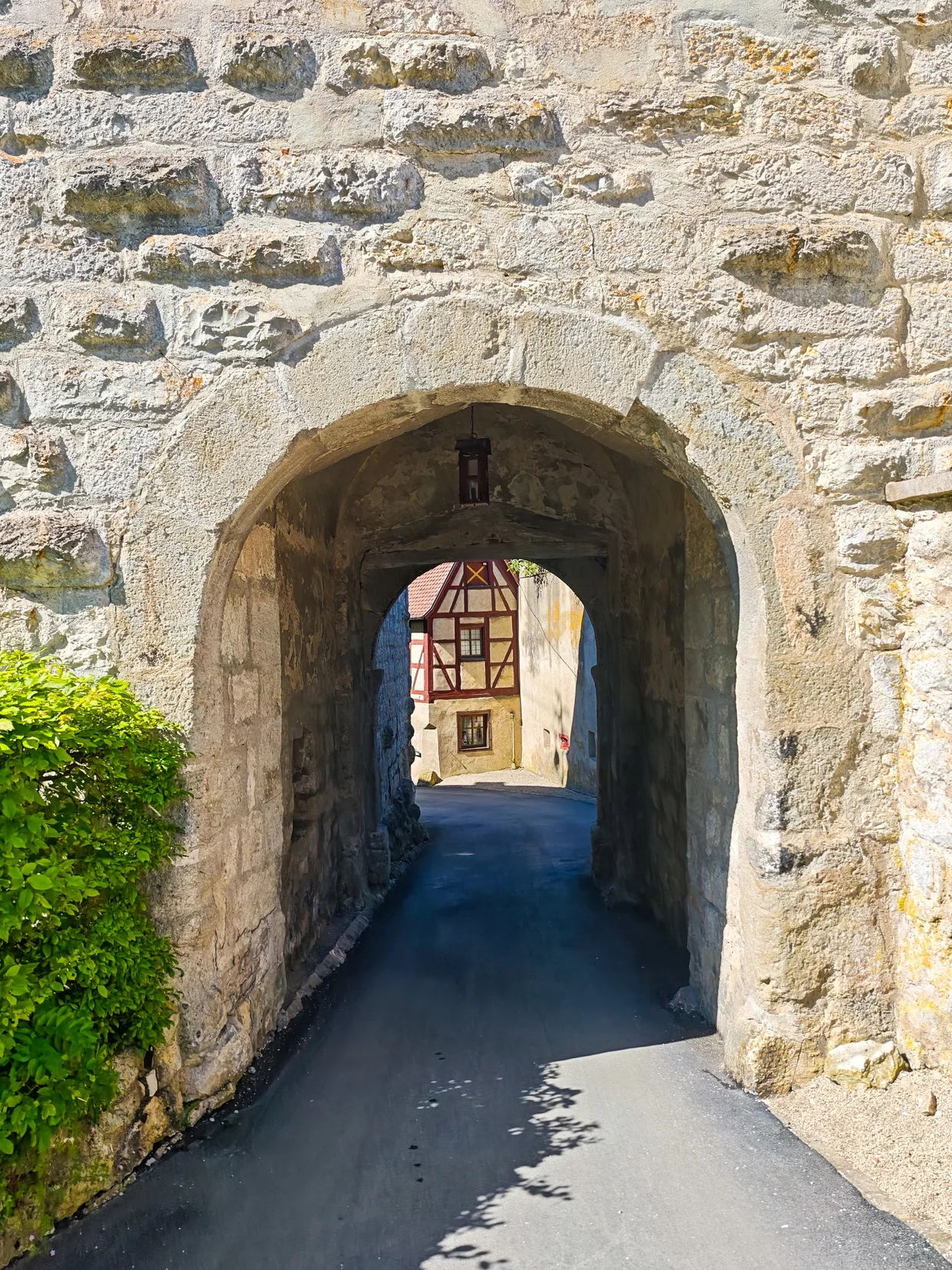
The interiors are only accessible on a guided tour, which runs every full hour. The chapel, the tin-soldier collection and a small gallery are visitable without the tour. Go early. When I arrived there were five other visitors and a small tour group; when I left an hour later there was a proper queue at the ticket office. Without the tour, 30 minutes are plenty for the courtyard, chapel, gallery and gate; with the tour, allow about 90 minutes total.
The little chapel with the stucco ceiling and the painted ceremonial figures in the staterooms is unusual; most "castle tours" you do across Bavaria are mostly empty rooms. Harburg actually has stuff in it.
Verdict: worth a stop, especially if you're already driving past. Not worth a special detour from far away.
Donauwoerth: Stop for Food, Drive On
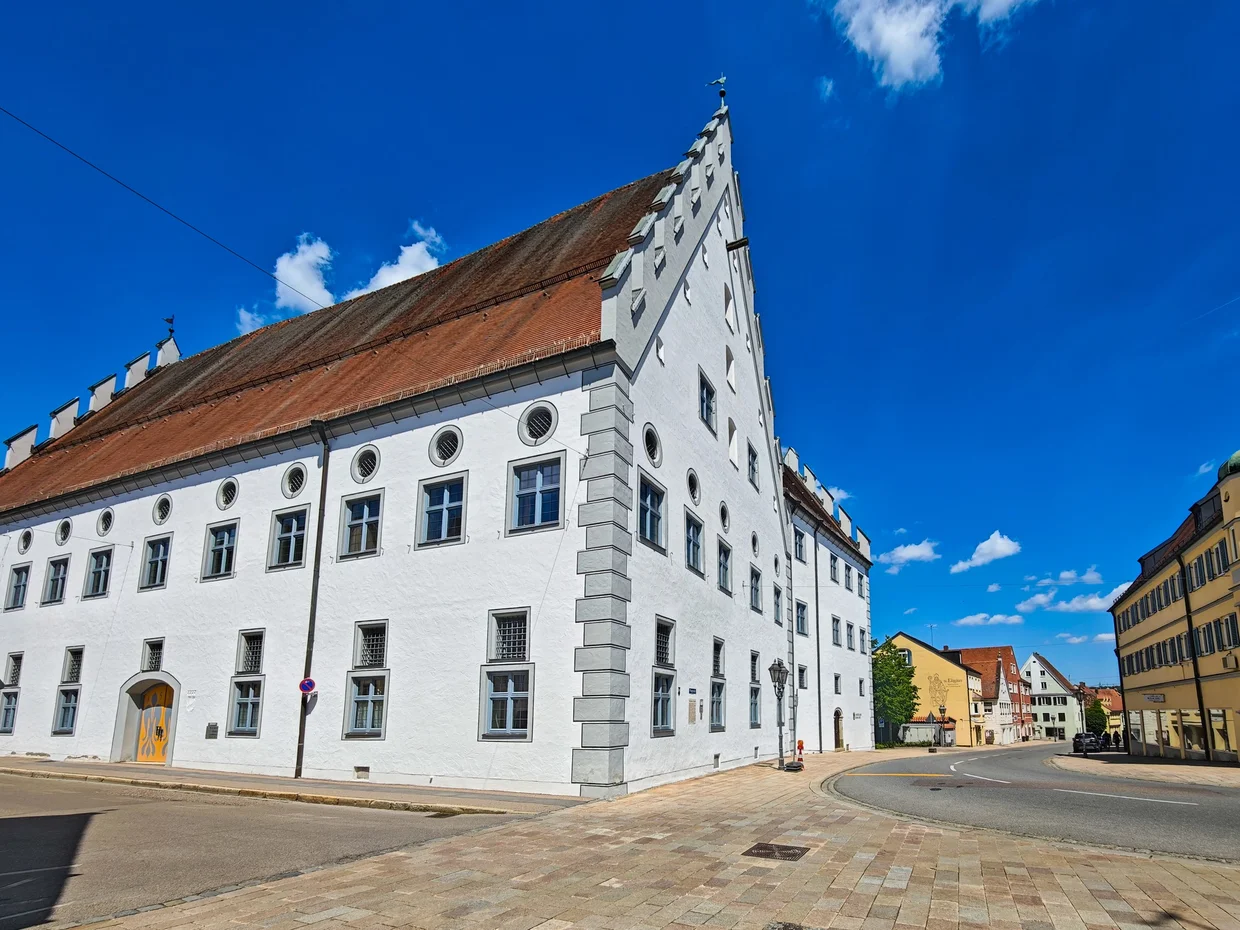
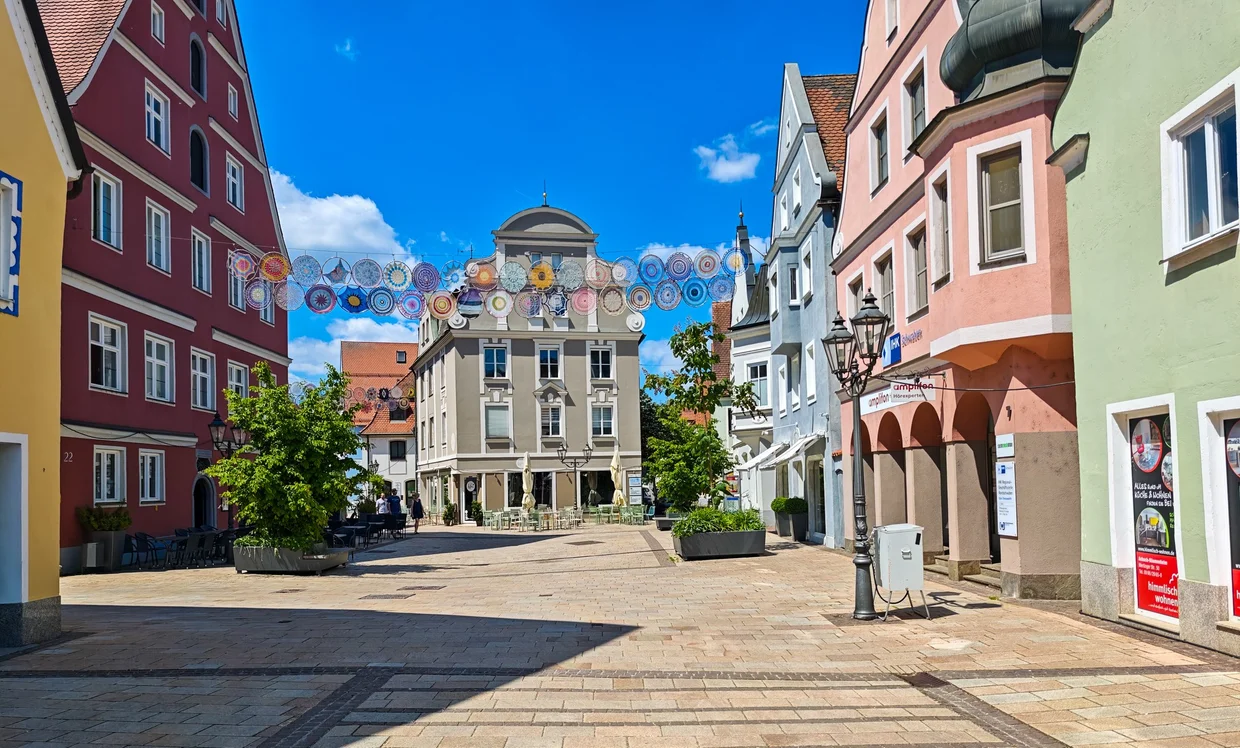
I've read in a few places that Donauwoerth's main street, the Reichsstrasse, is "one of Germany's prettiest streets". Nah. It wouldn't make my top 50, probably not even my top 100. It's a basic street with some nice buildings, but it's narrow, open to traffic, and there's nothing really going on along it. I don't know what the criteria were. Maybe they meant "in a 5-kilometre radius".
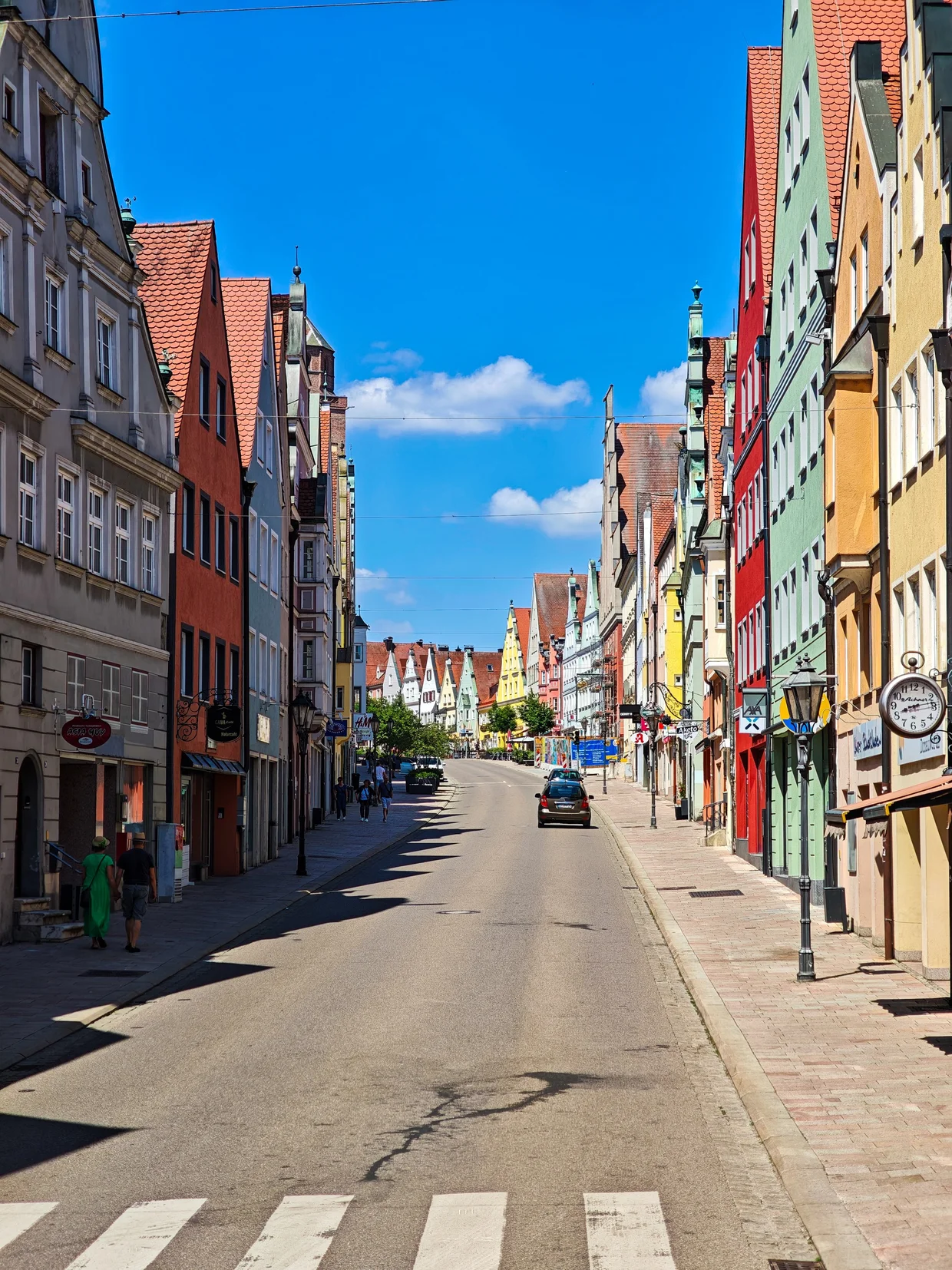

The one thing that genuinely lifts the Reichsstrasse is strung up over your head. Hundreds of crocheted discs, like giant lace doilies in every colour, hang on lines between the gable houses, so you look up from the plain cobbled street and find a whole ceiling of pink, blue, yellow and red mandalas catching the sun. It's a temporary display rather than a fixture, so it's the luck of the draw whether it's up when you pass, but when it is, it does more for the street than any of the buildings manage.
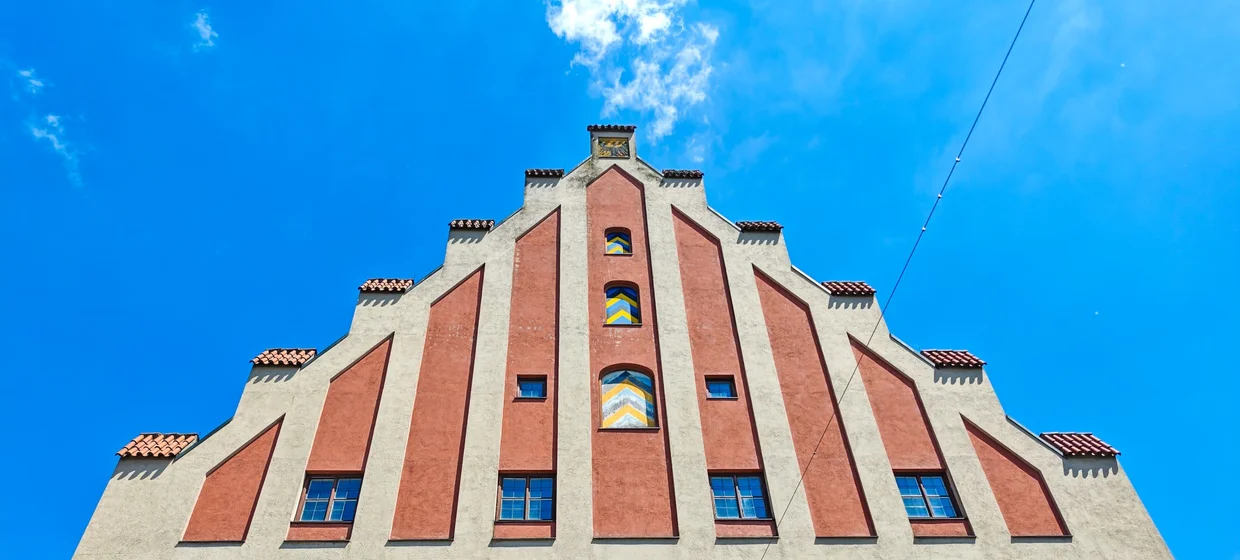
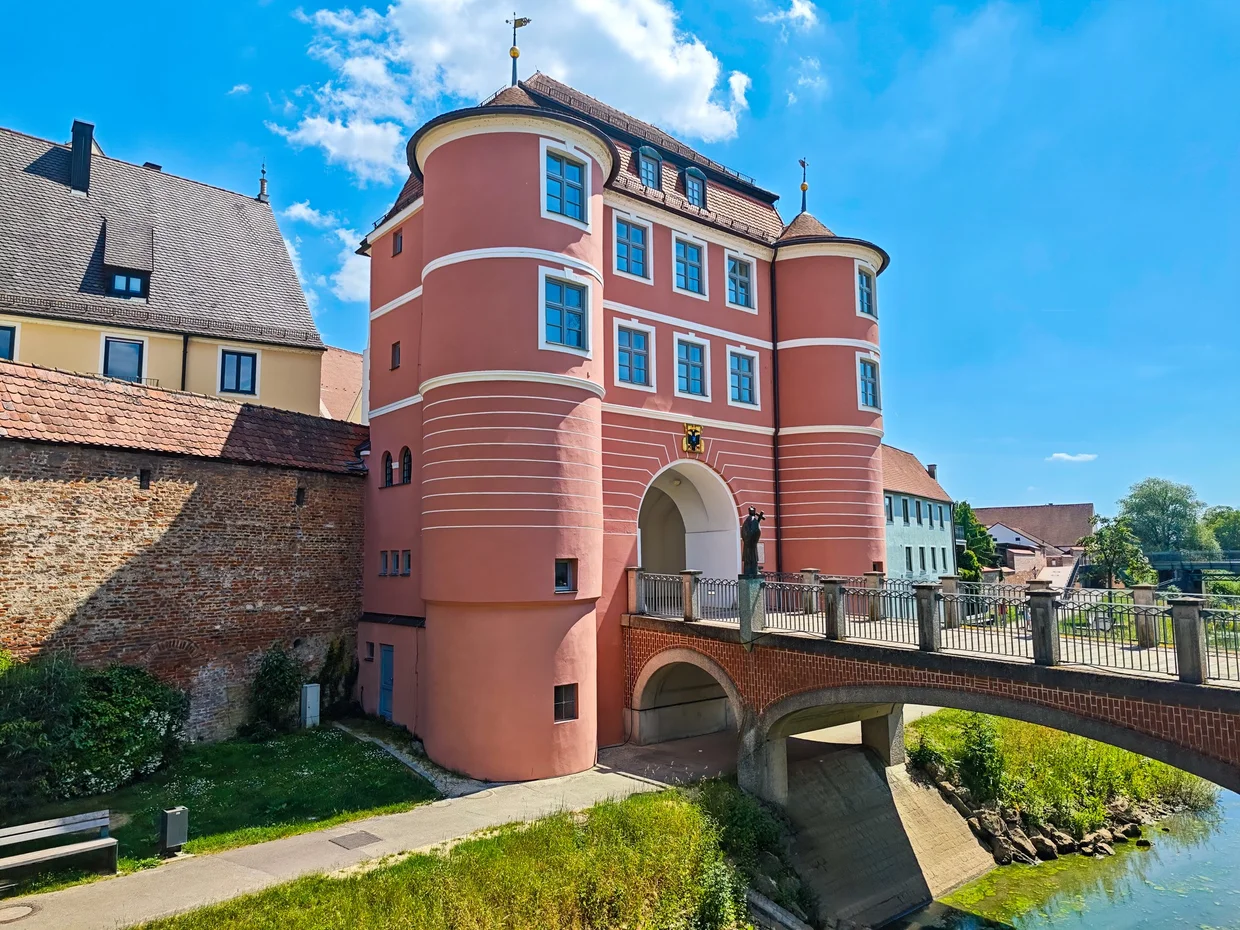
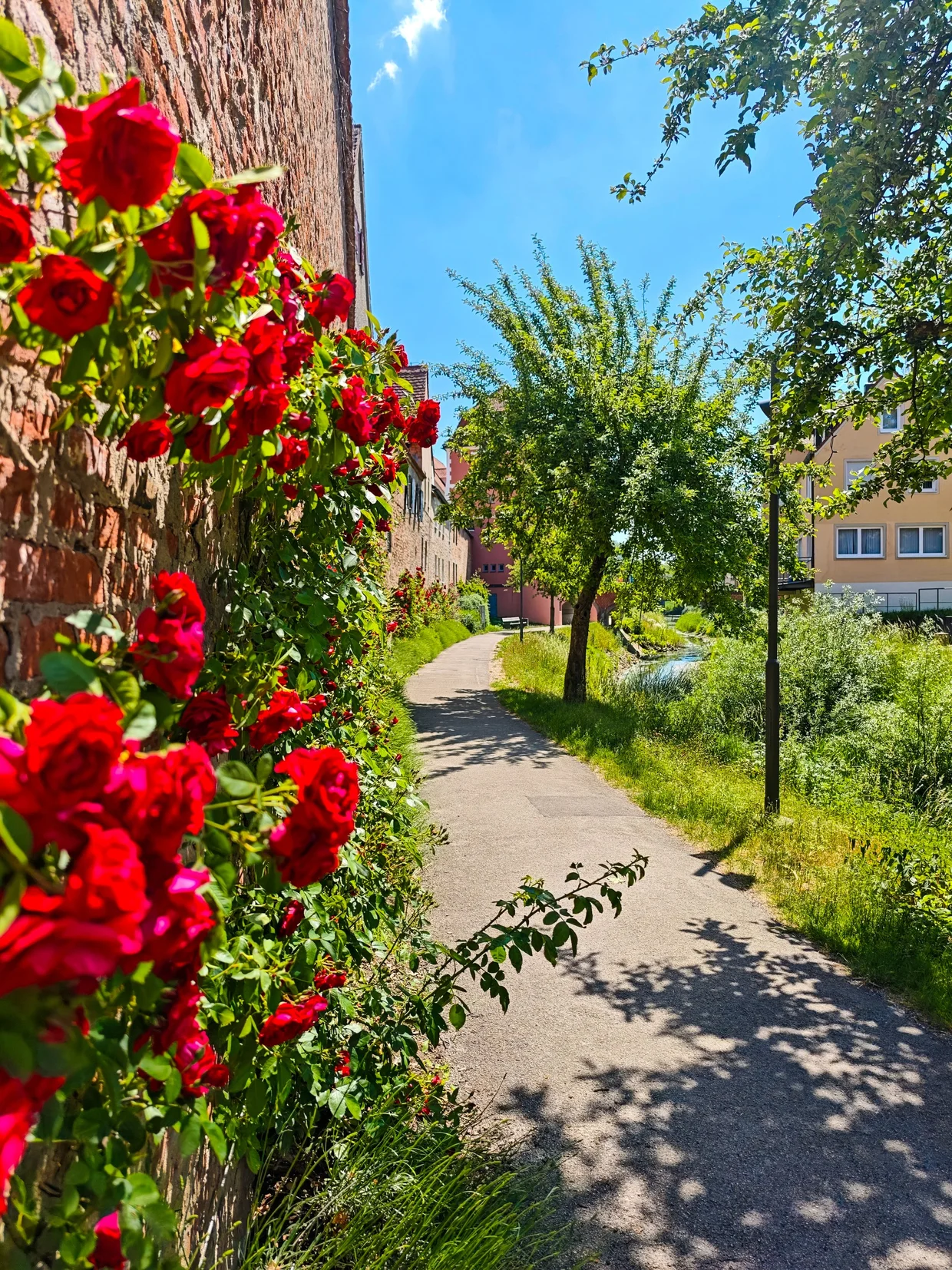
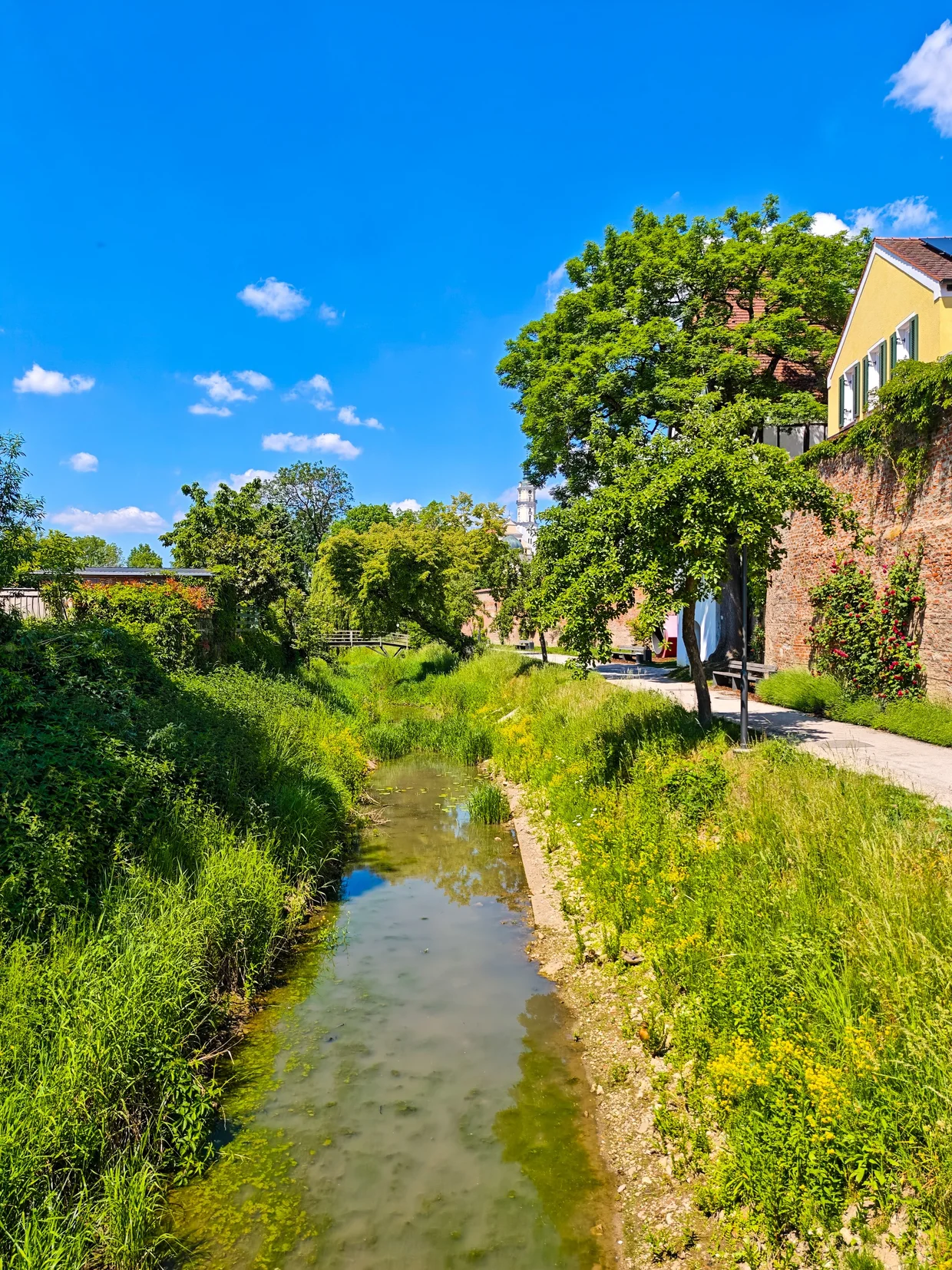
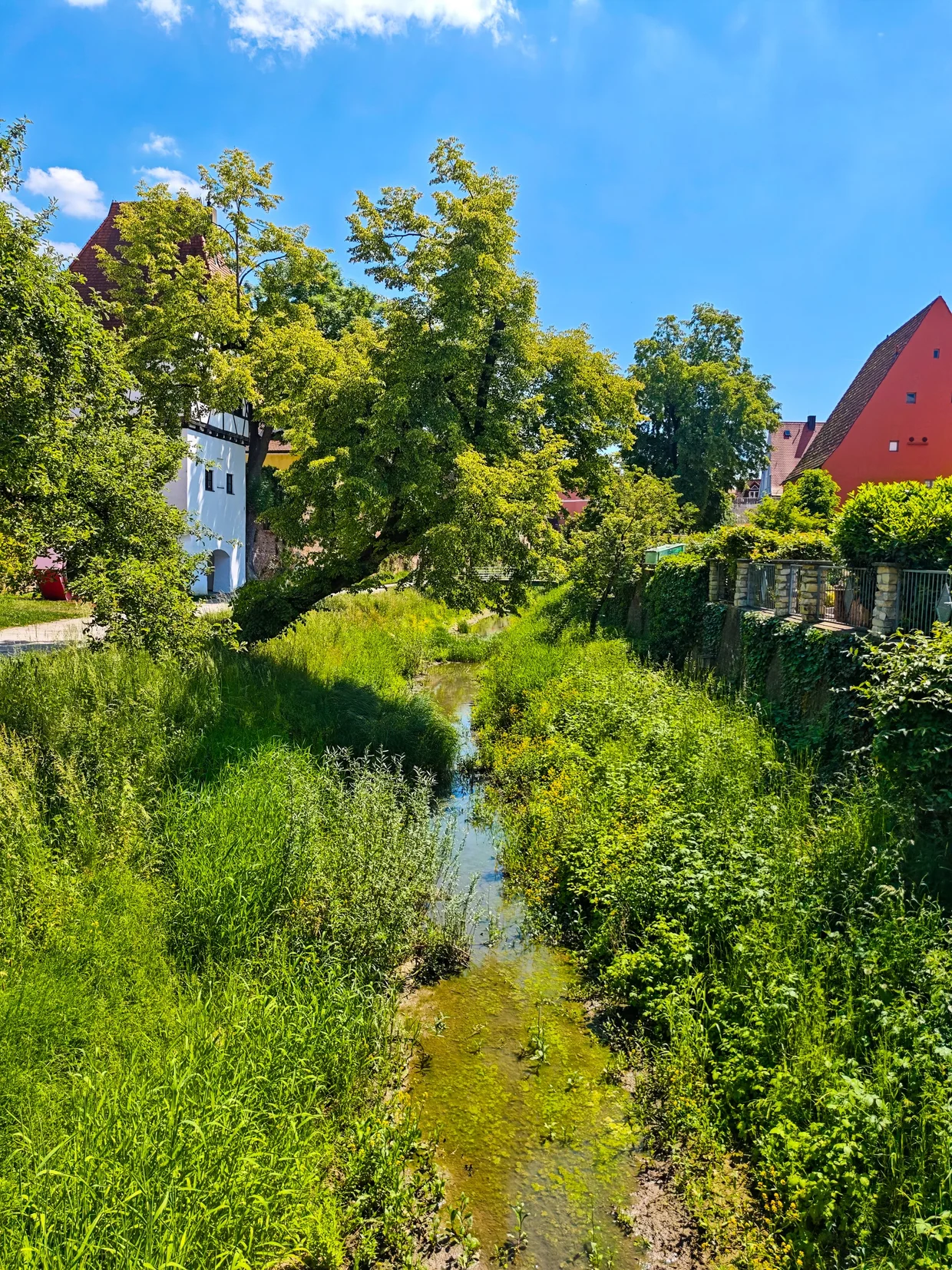
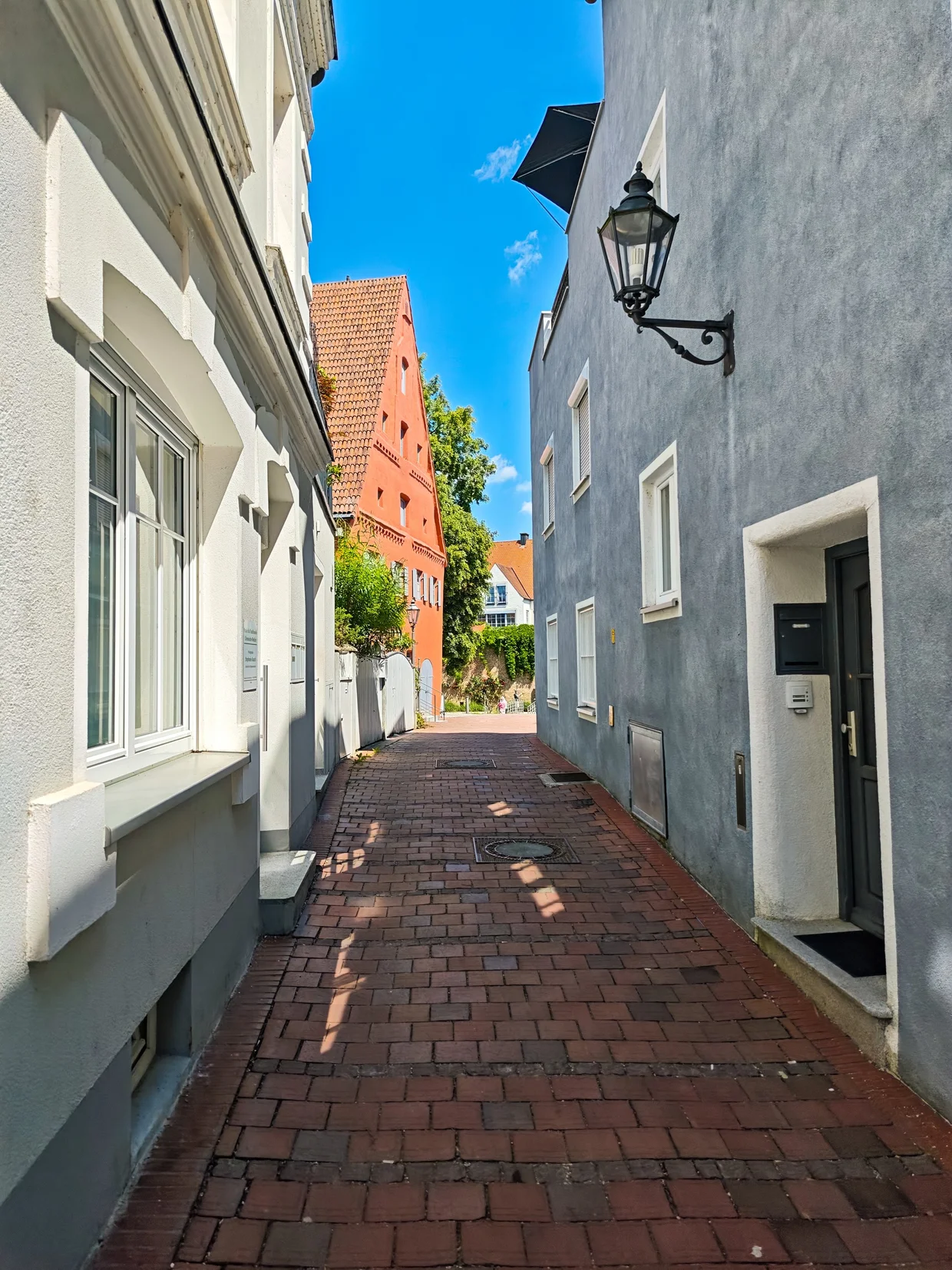
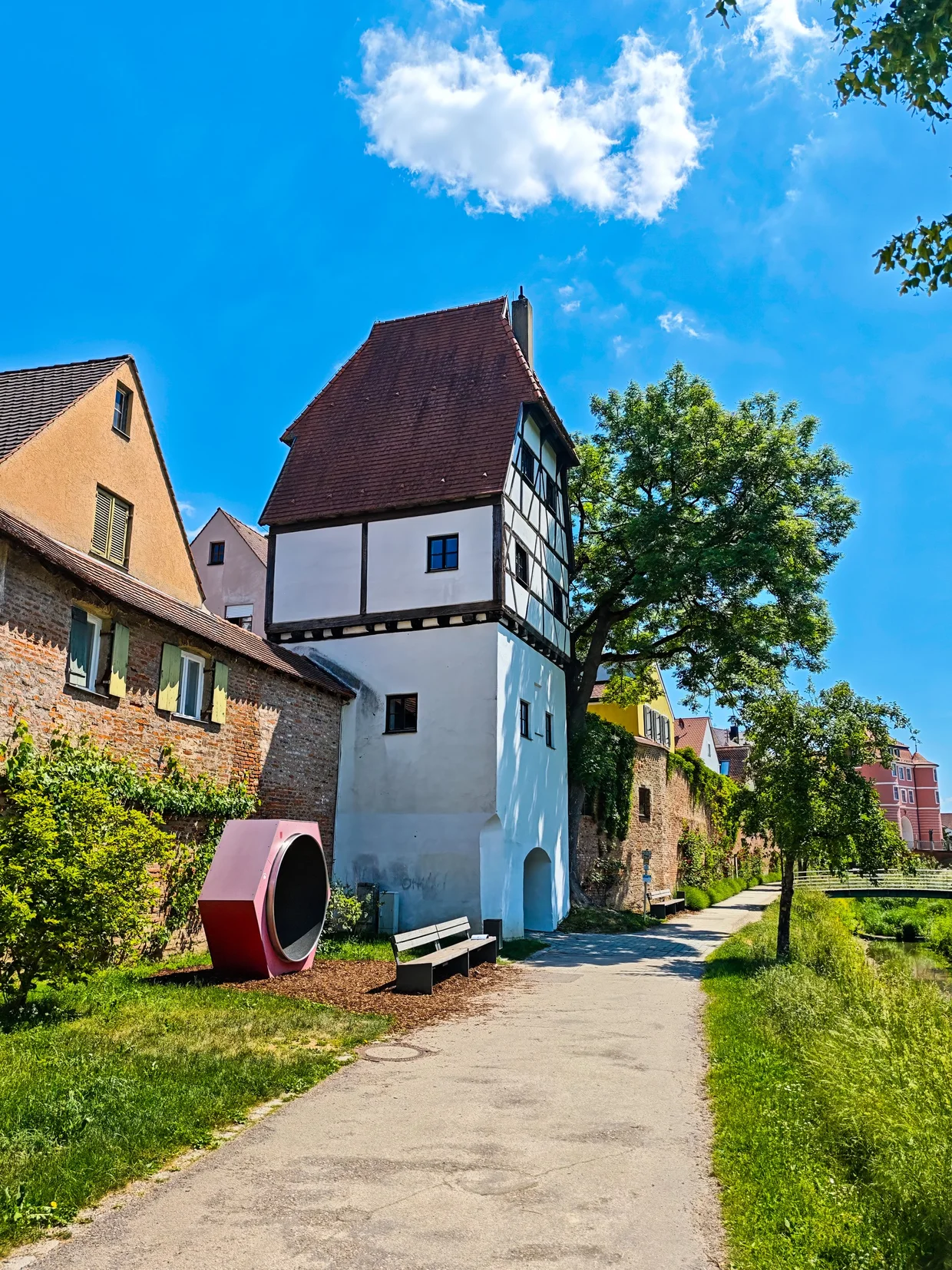
That said, the town has its moments. The Riedertor, a pink Renaissance gate-tower over the Wornitz bridge, is actually pretty. The Tanzhaus, a tall white Renaissance building with stepped gables and painted shutters, is genuinely good. The wall walk along the Stadtgraben has roses climbing the brick, and the Liebfrauenmuenster spire pops up at the right angles. The whole place is fine for lunch or dinner, with enough cafes and beer-garden options that you won't go hungry.
The Stadtgraben also surprised me with the amount of wildlife packed into a tiny strip. In about 20 minutes along the moat I saw a grey heron, frogs, lizards (could have been sand lizards) on the warm stones, a duck with ducklings, fish in the clearer pools, and these weird blue insects that looked like a cross between dragonflies and butterflies. Bring kids, slow down, and you'll find more.
Verdict: skippable. Stop for lunch on the way through.
Landsberg am Lech: The Hilly One
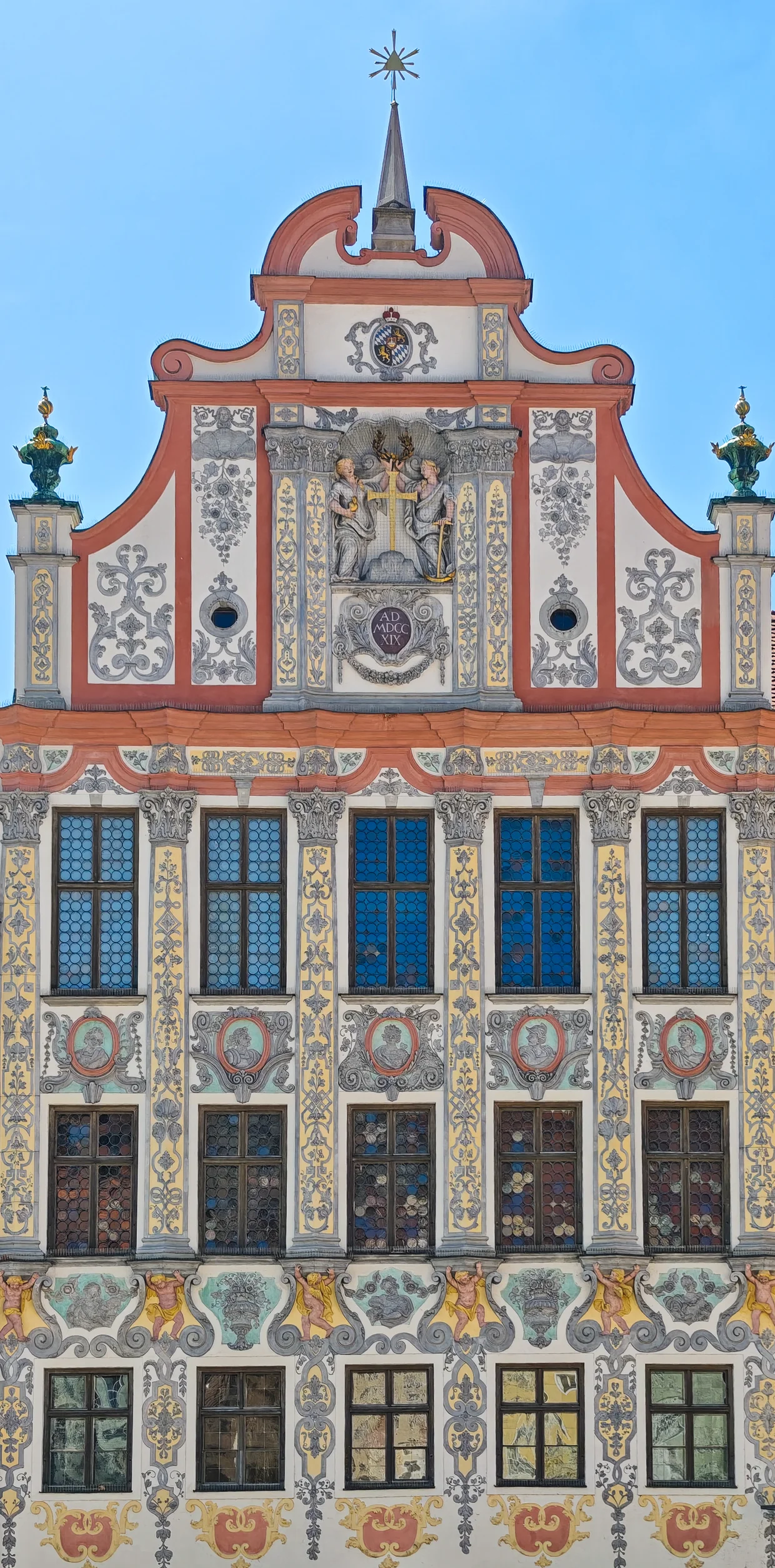
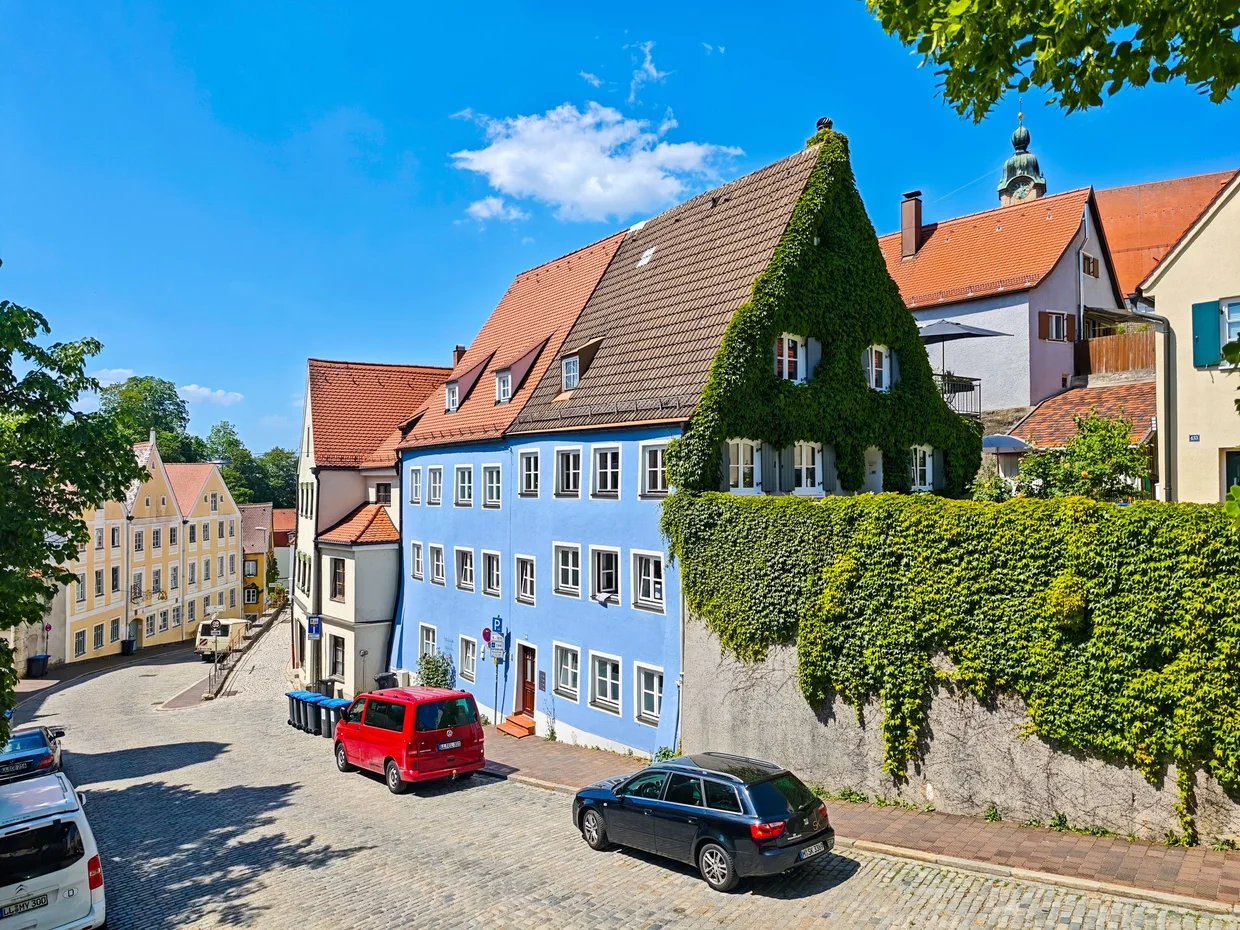
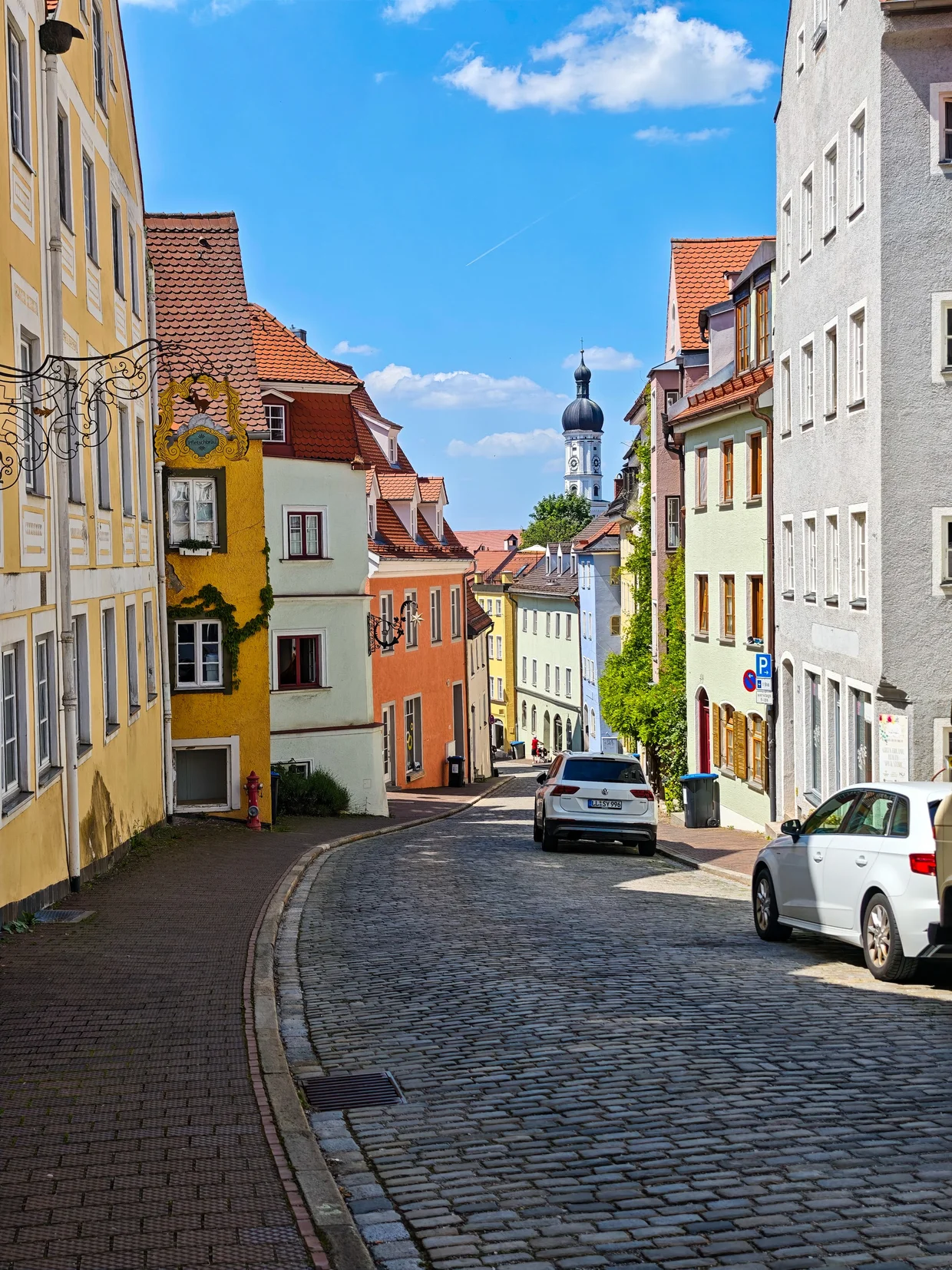
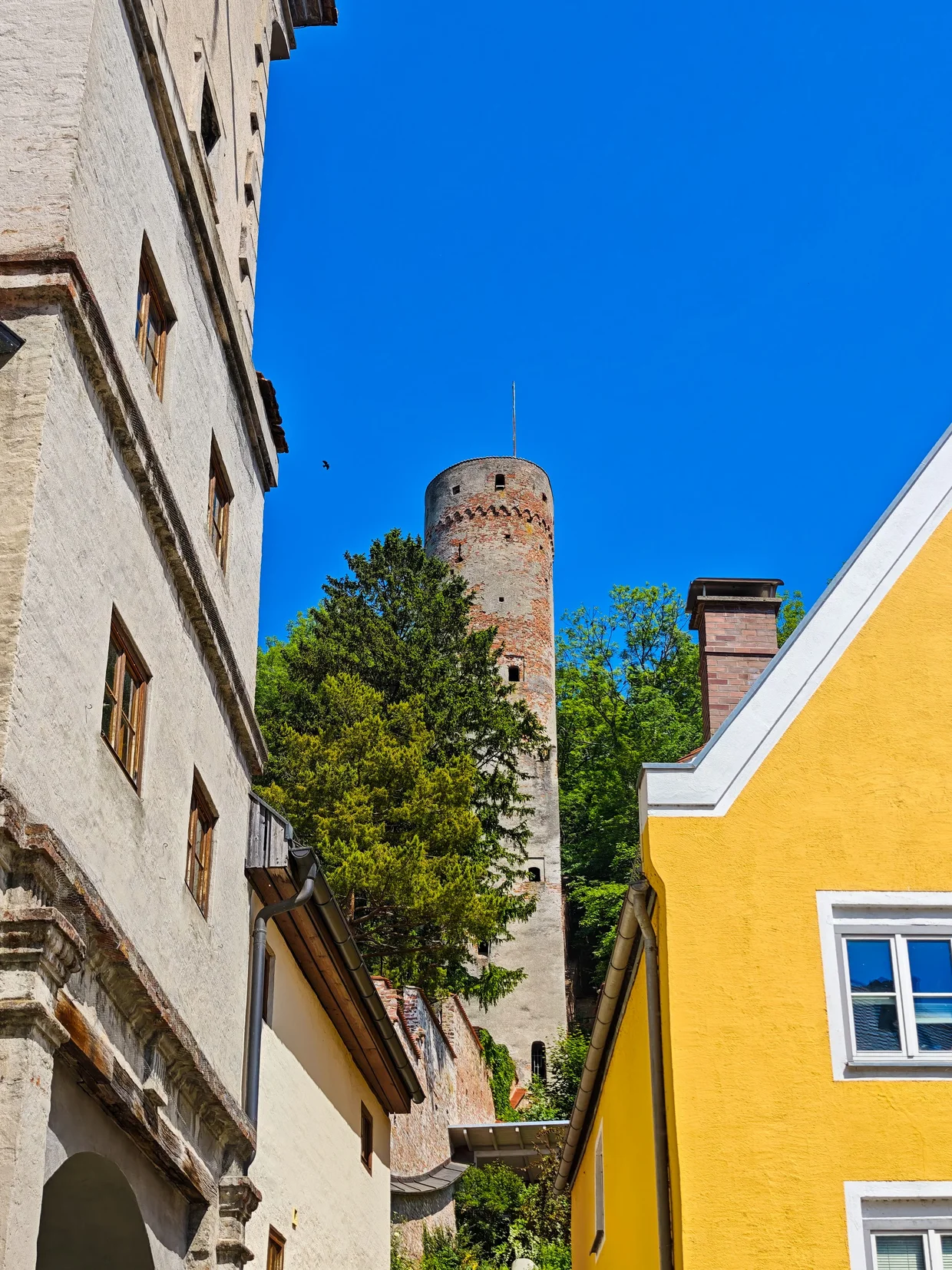
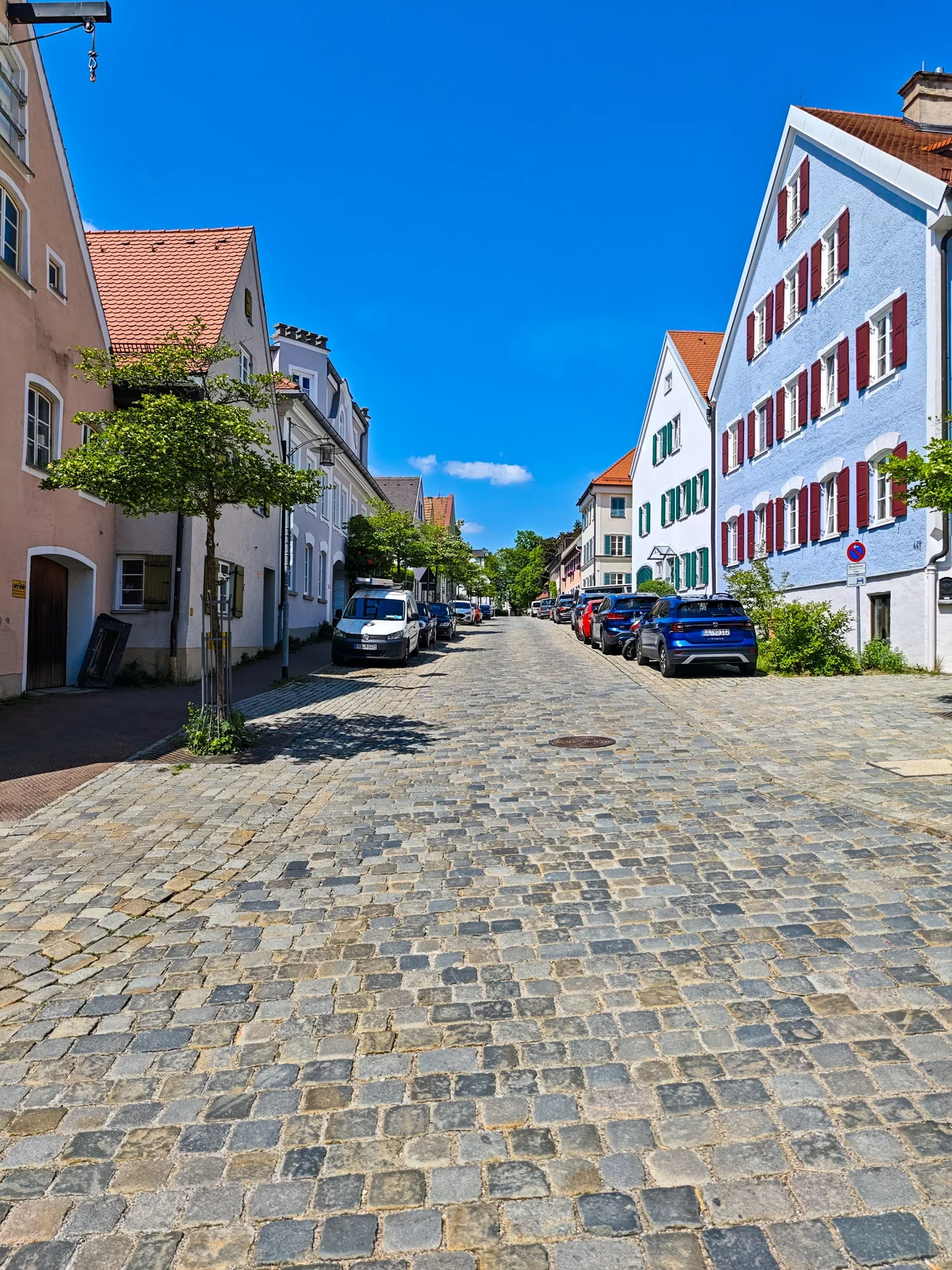
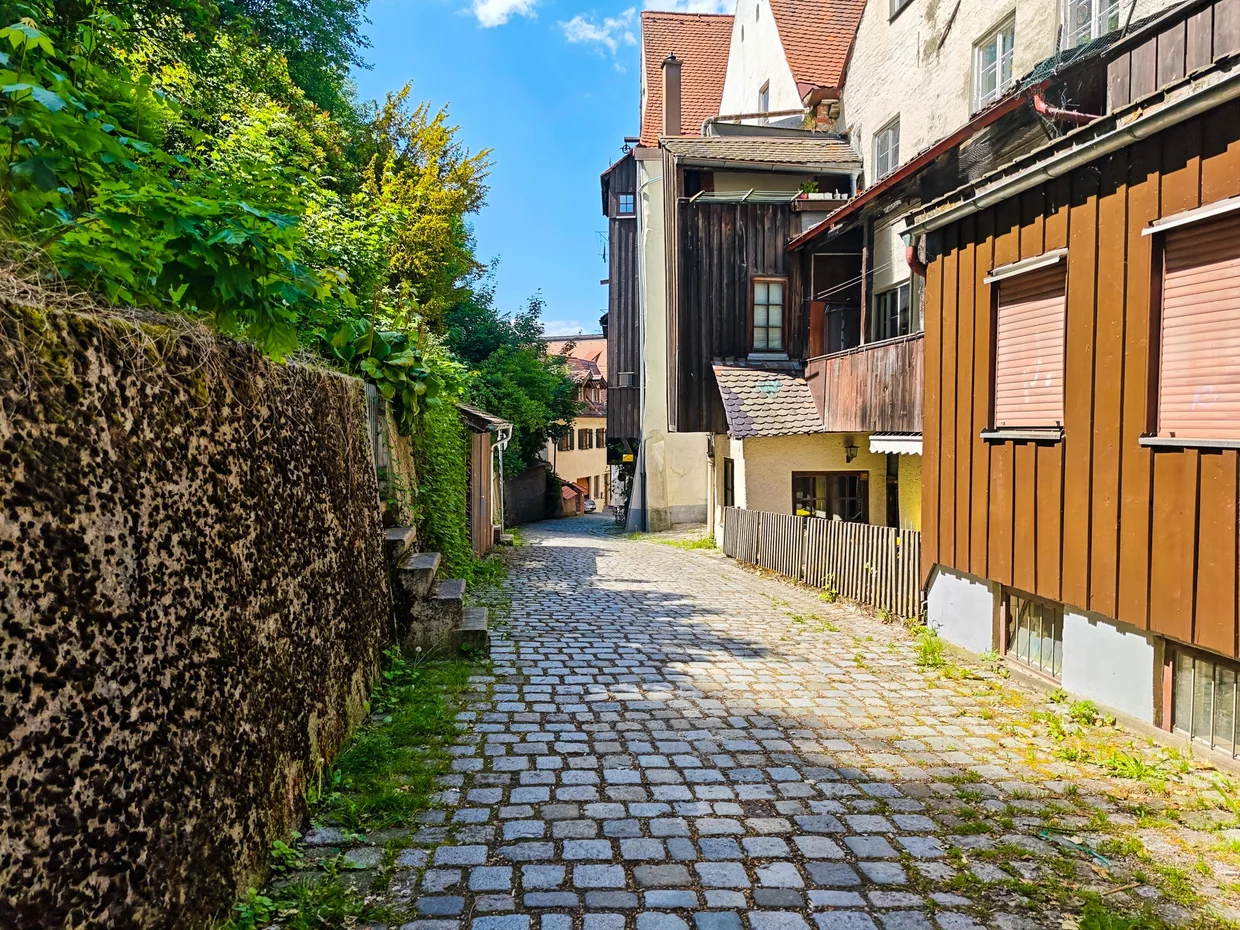
Landsberg is genuinely fine to walk around. The Schmalzturm and the painted Bayertor are good, the Rathaus has one of the most beautifully decorated rococo stucco facades I've seen (the work of Dominikus Zimmermann, of Wieskirche fame), and the hilliness of the town gives it a charm that most of these flat-river-valley towns don't have. The big parking garage carved straight into the Schlossberg drops you next to the Altstadt, which makes it one of the most convenient towns on the entire route to stop in.
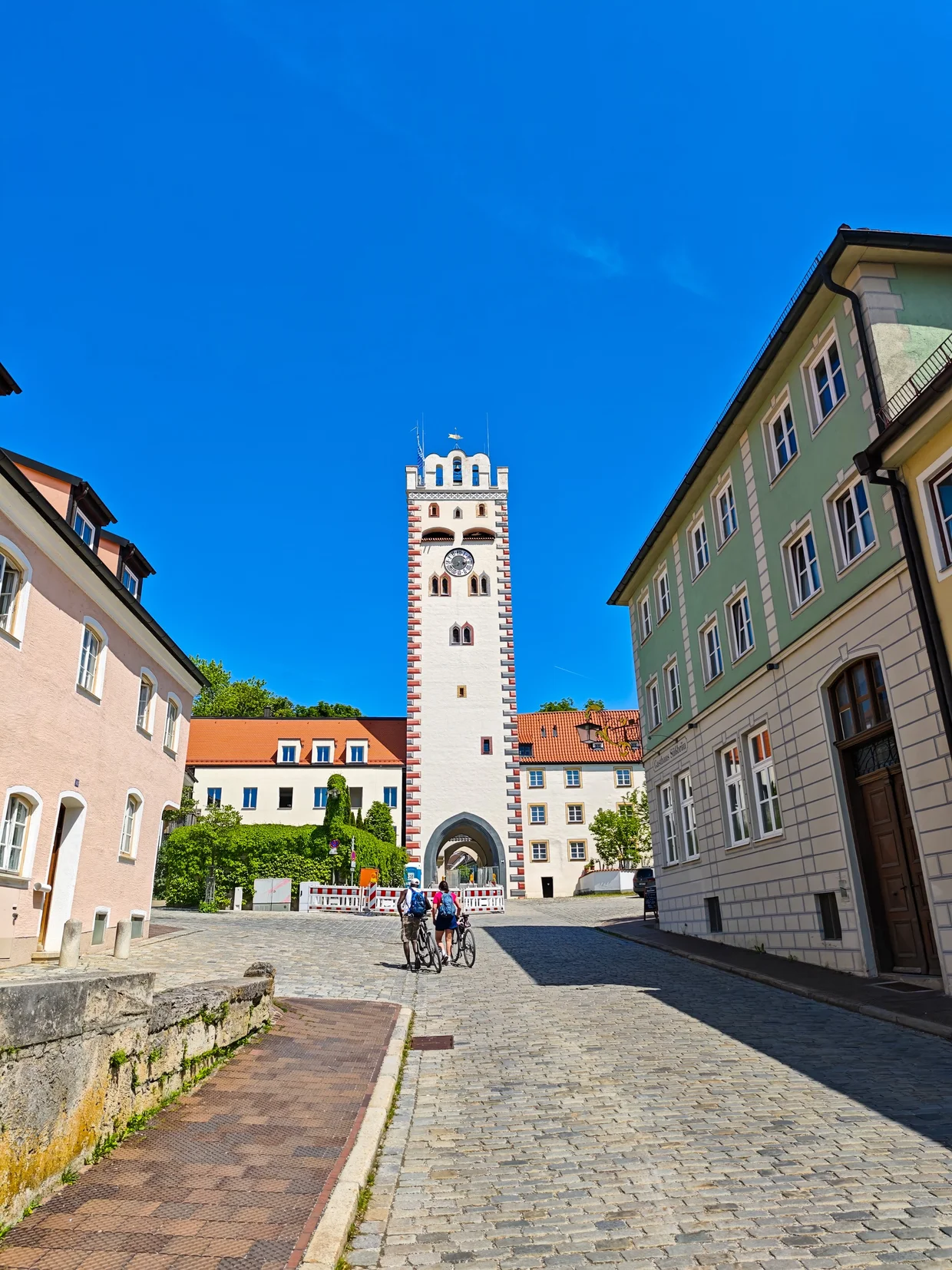
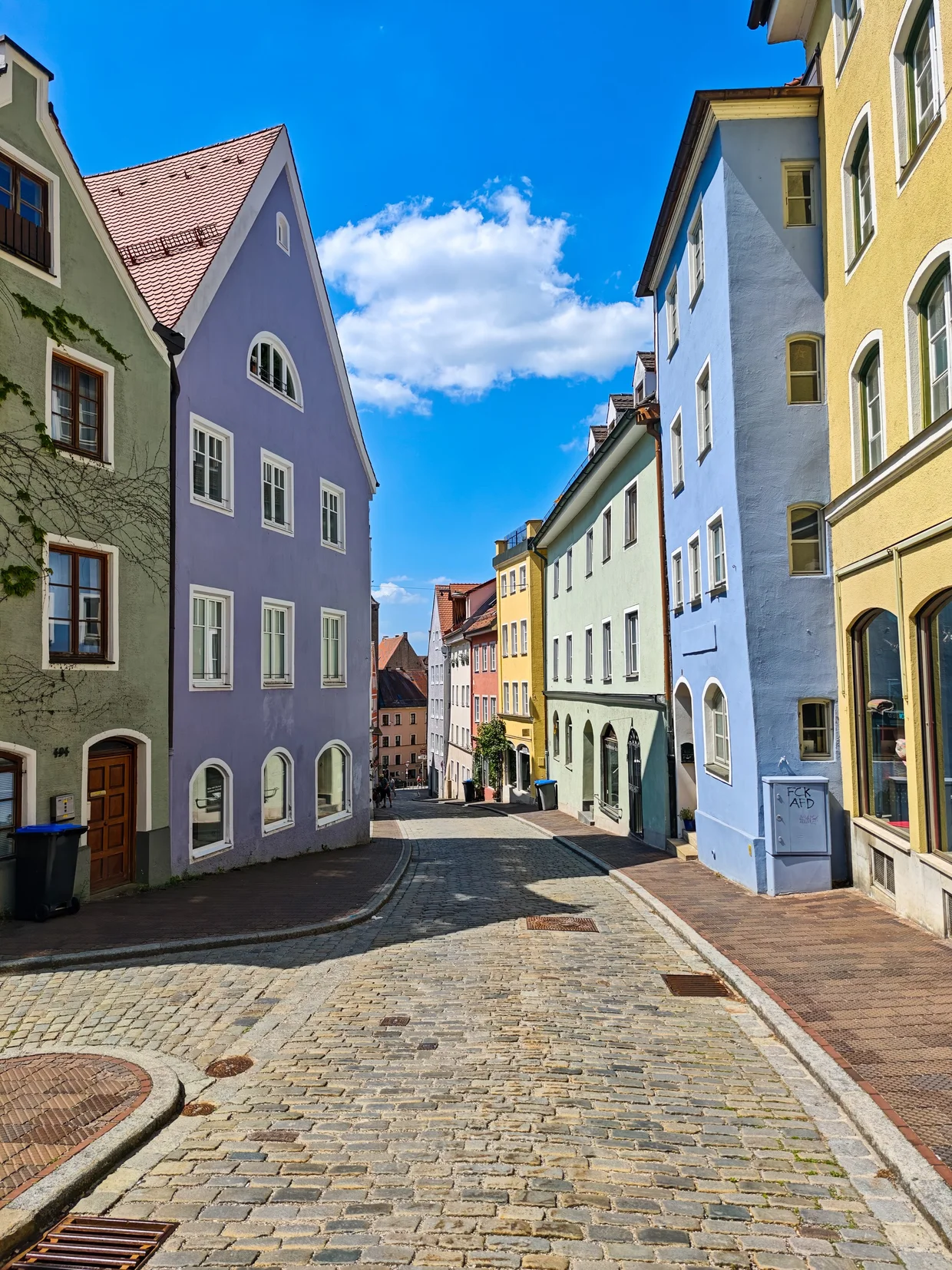
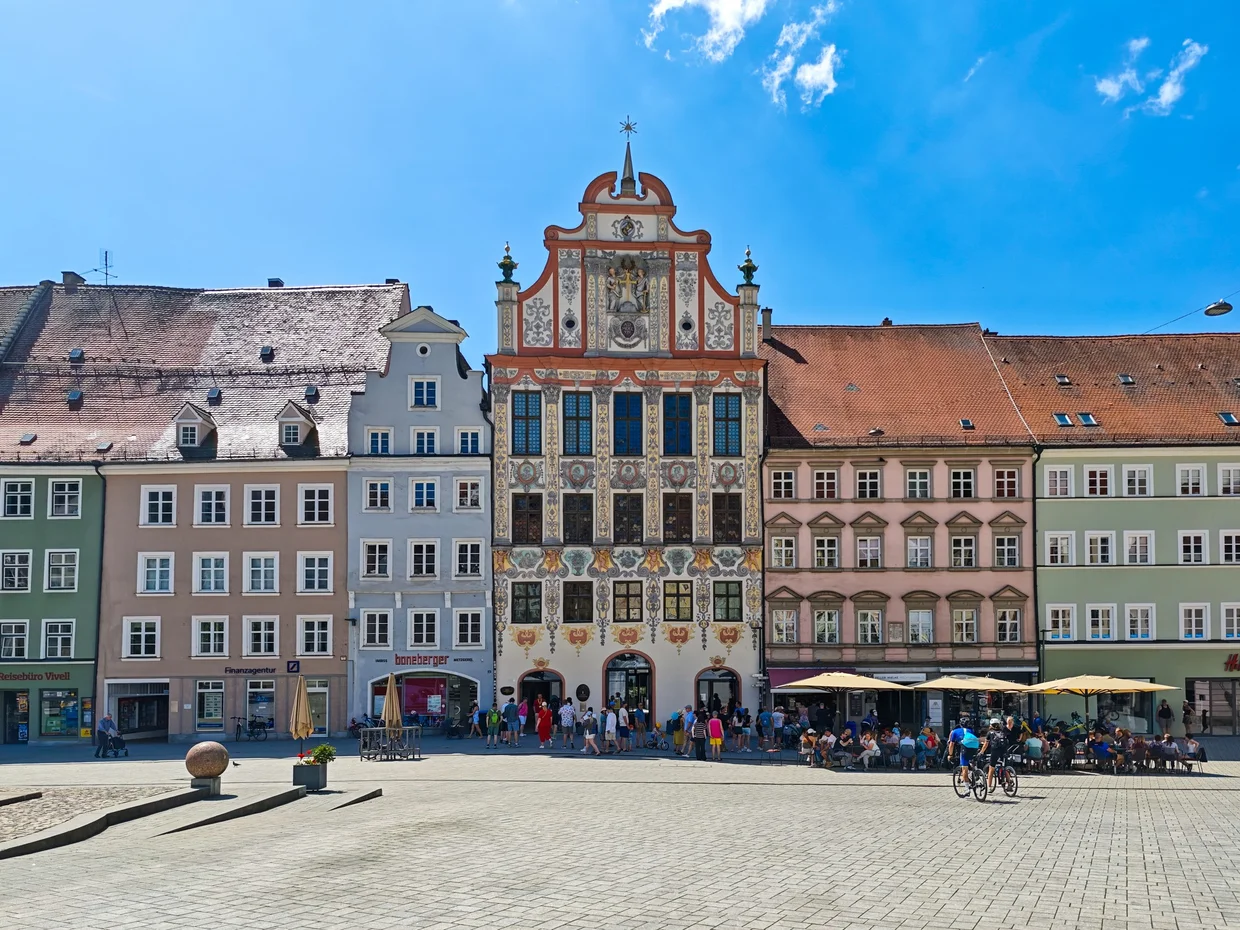
The Bayertor earns the visit on its own. Landsberg's eastern gate is a tall Gothic tower painted top to bottom: a striped red-and-white frame running up the corners, a coloured Crucifixion relief set into the front, coats of arms stacked below, and two little turreted guardhouses with dark conical caps flanking the archway you still walk through to reach the old town. It's one of the best known and best preserved medieval gate towers in Bavaria, and unlike a lot of these gates it's been kept loud and colourful rather than left as bare stone.

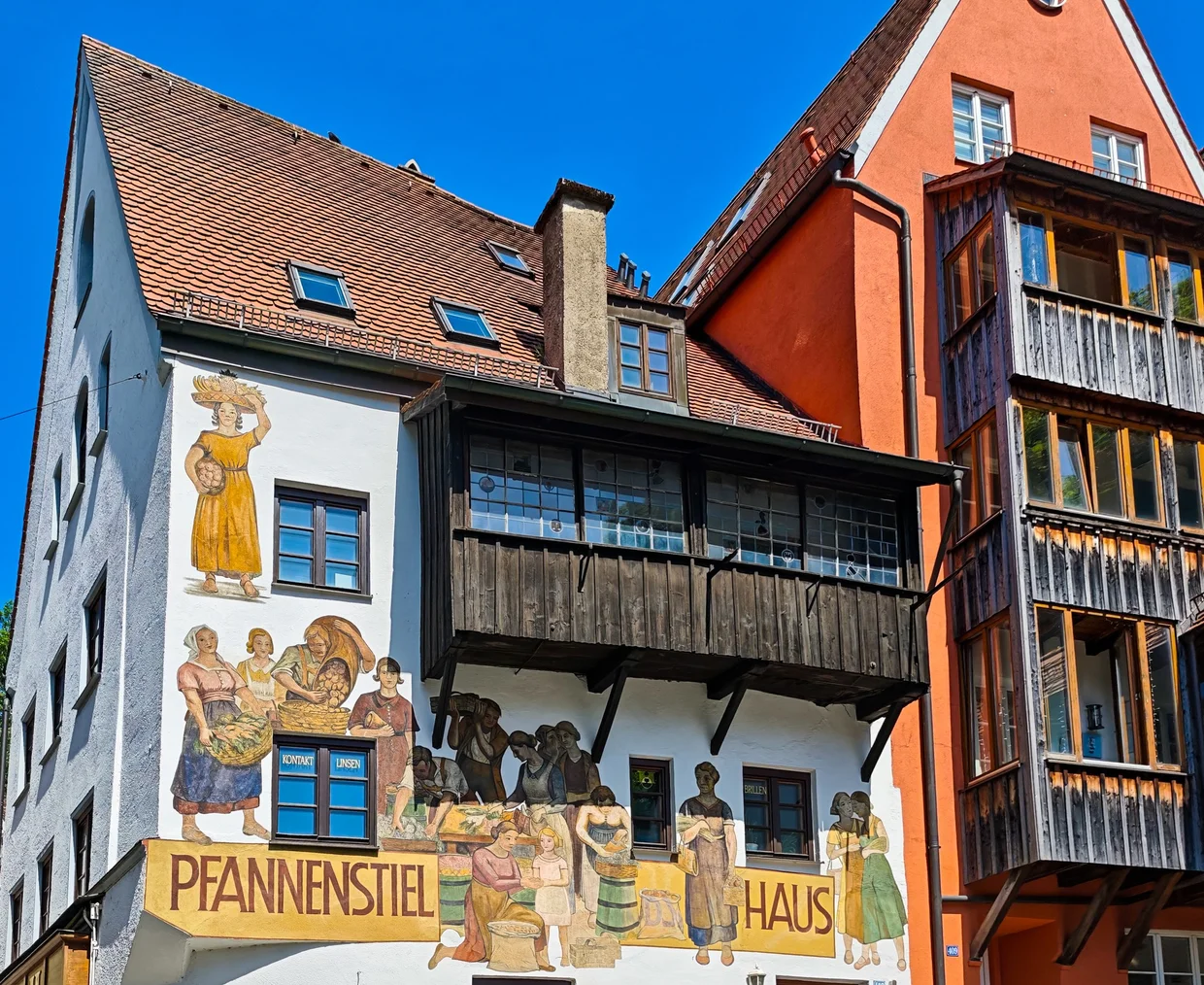
But here's the catch: it doesn't really pull you in for more than 90 minutes. You walk the Marktplatz, look up at the Bayertor, photograph the Schmalzturm from three angles, find the Pfannenstiel-Haus with its weird folk-art mural, and you're done. There's no single stand-out attraction to plan a day around.
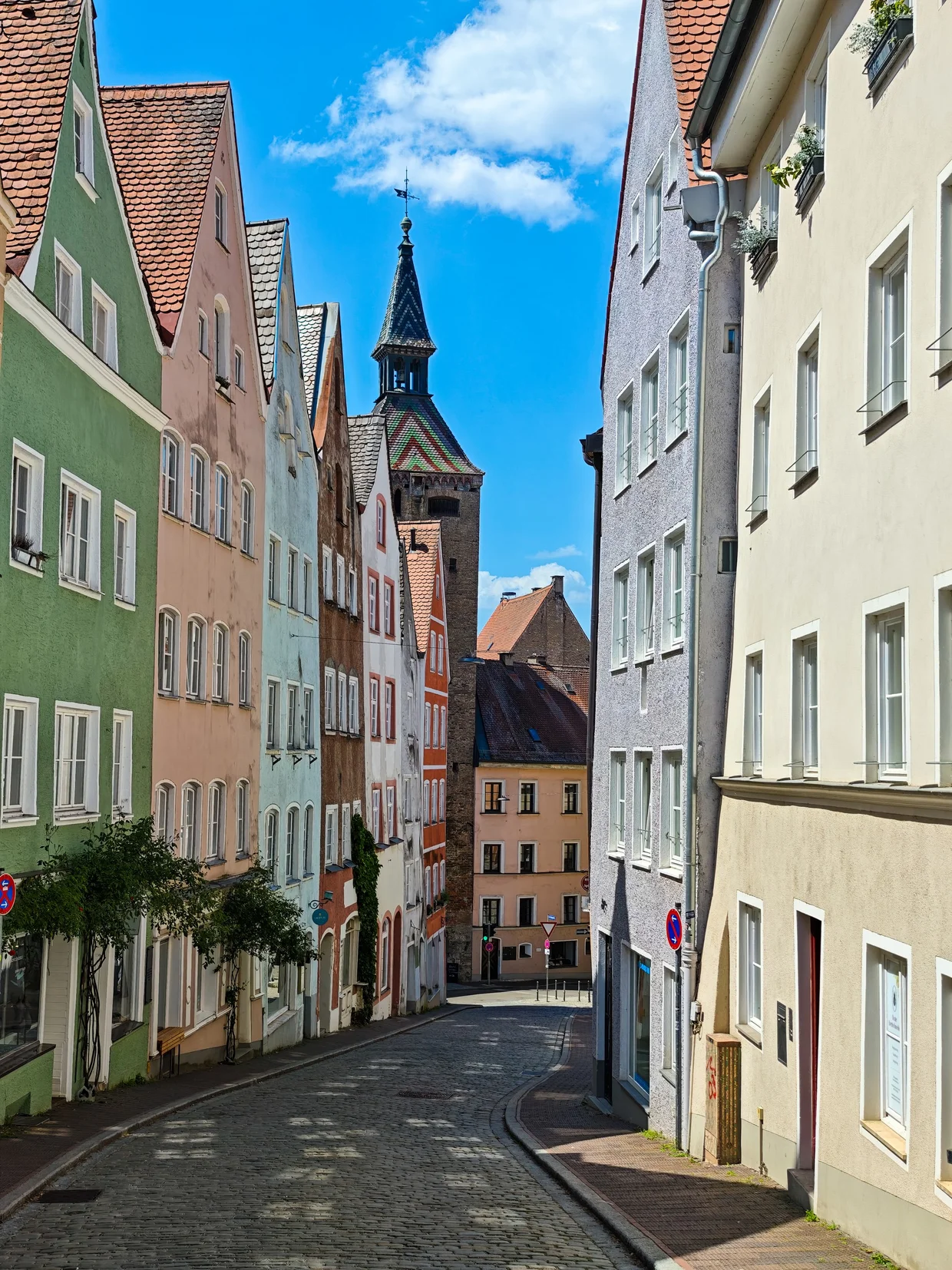
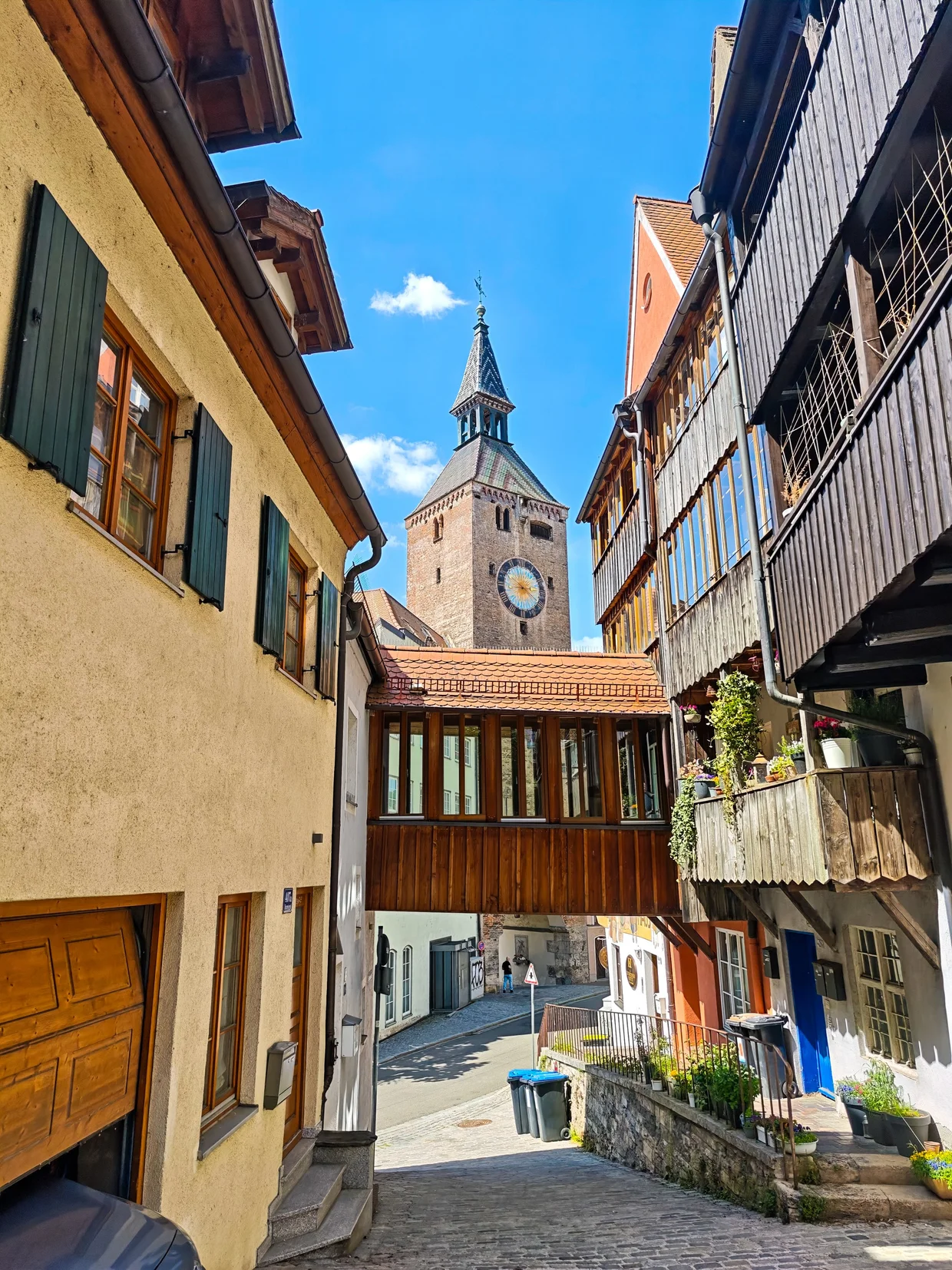
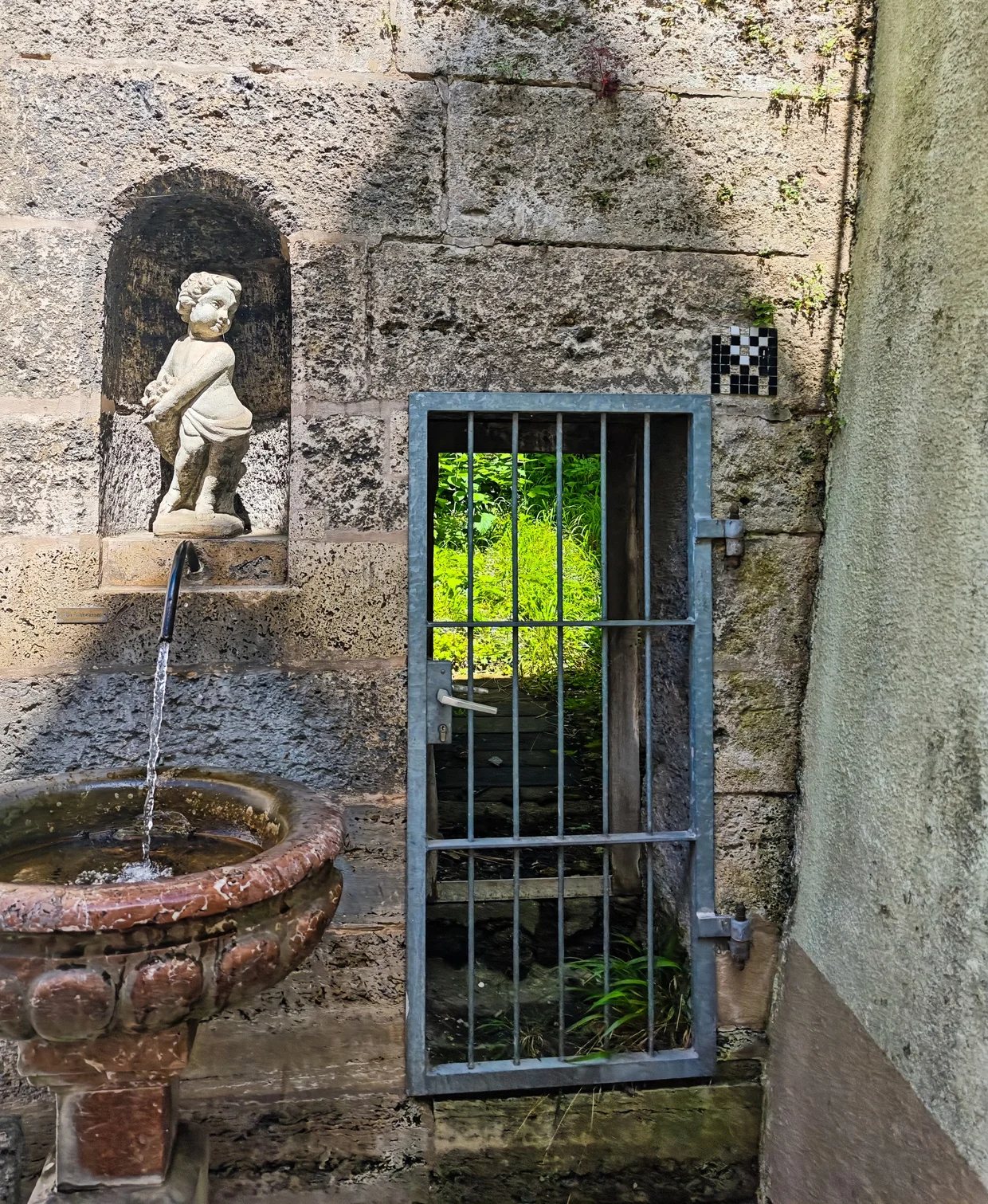
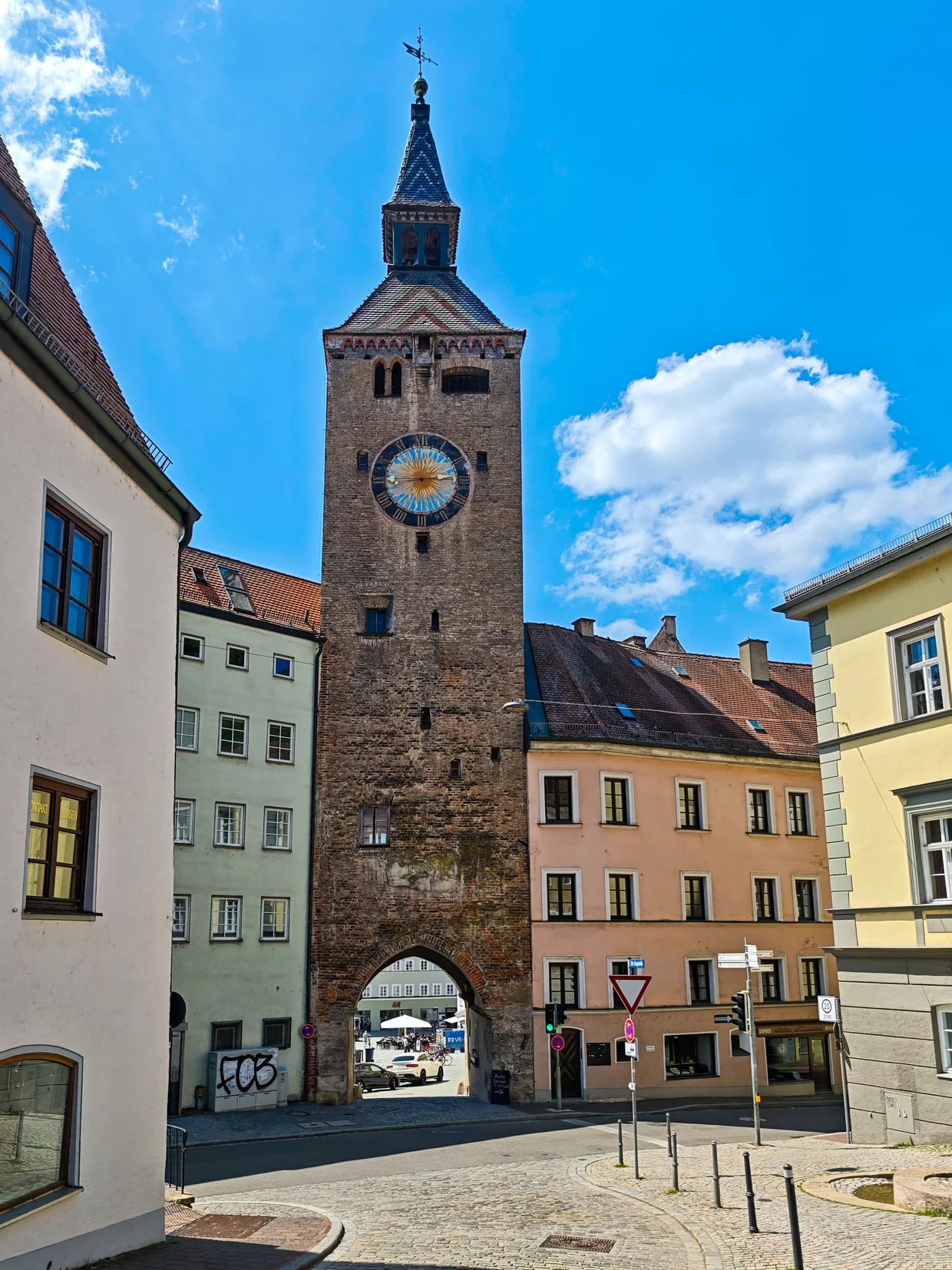
Verdict: skippable, but a great lunch-stop or overnight if you've got the time. The convenience of the parking and the walkable Altstadt mean it's a low-effort win.
Schongau: Unless You Collect Towers
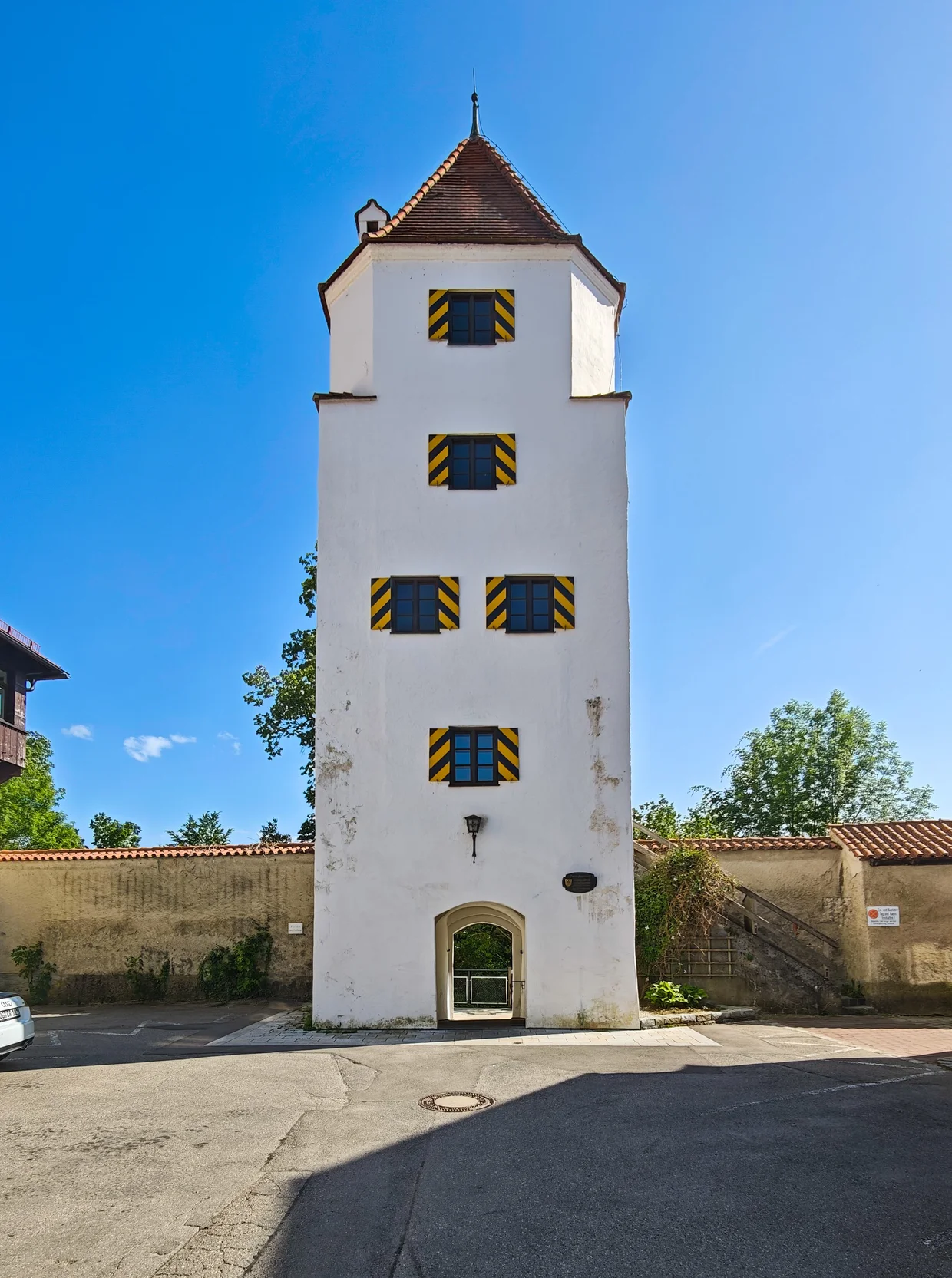
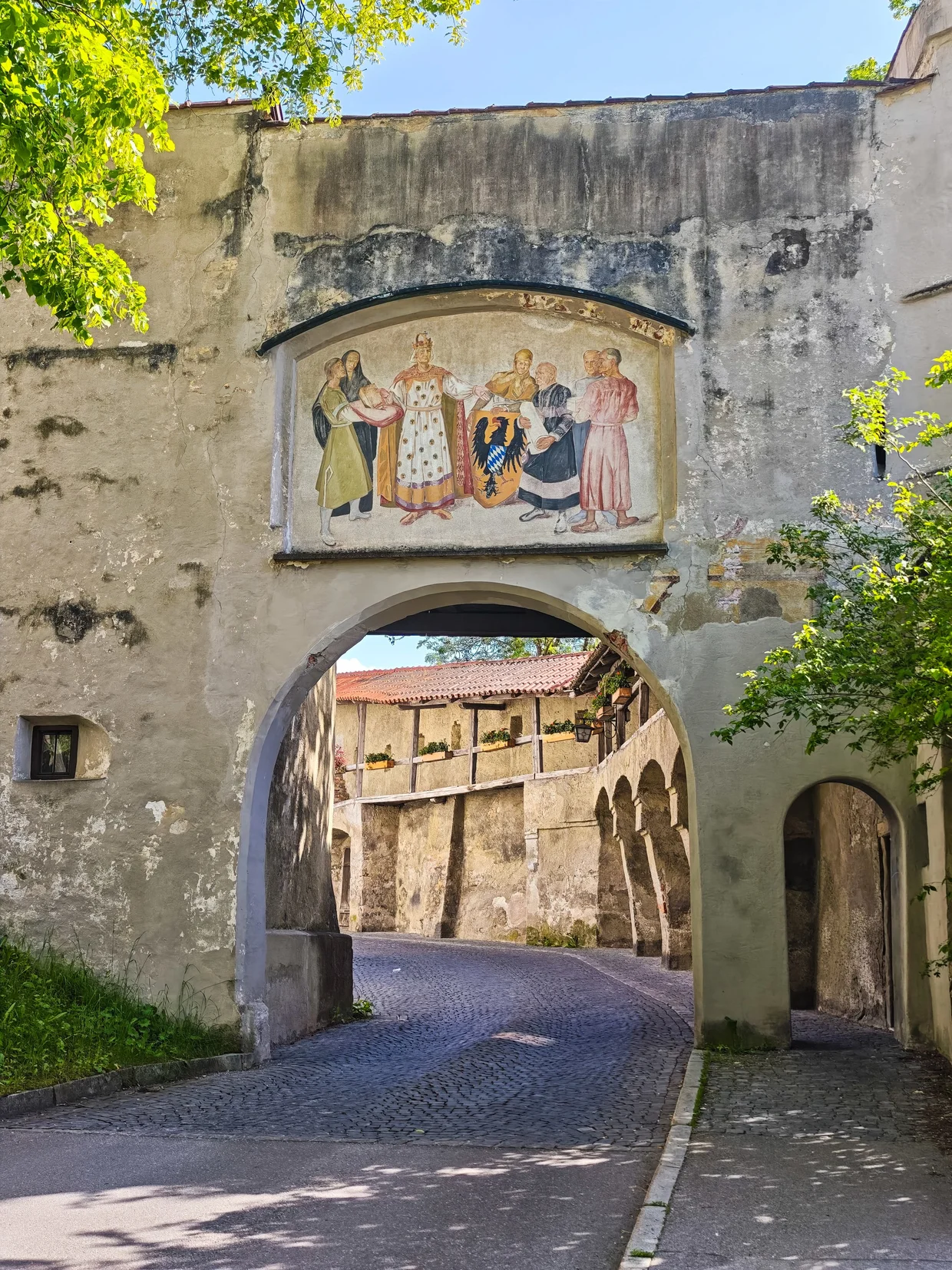
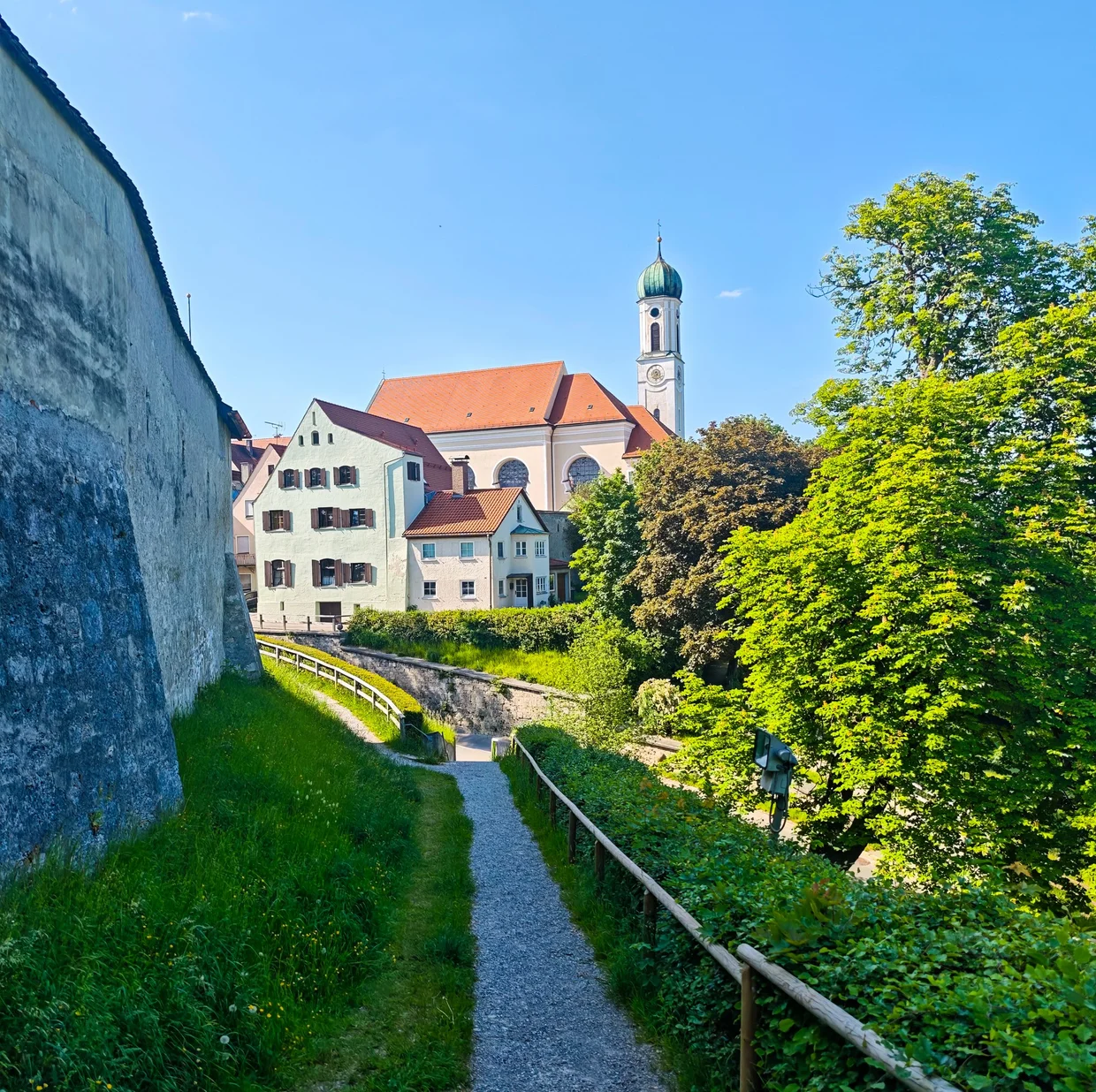
Schongau has city walls and the city walls have towers and that's basically it. The Pulverturm with the yellow-and-black checker windows is nice to look at, the Frauentor has a painted lunette of a royal couple, the Marktplatz is fine. There's a wall walk along the outside and the church spire (Maria Himmelfahrt, green dome) makes a nice silhouette from the path. None of it is a destination.
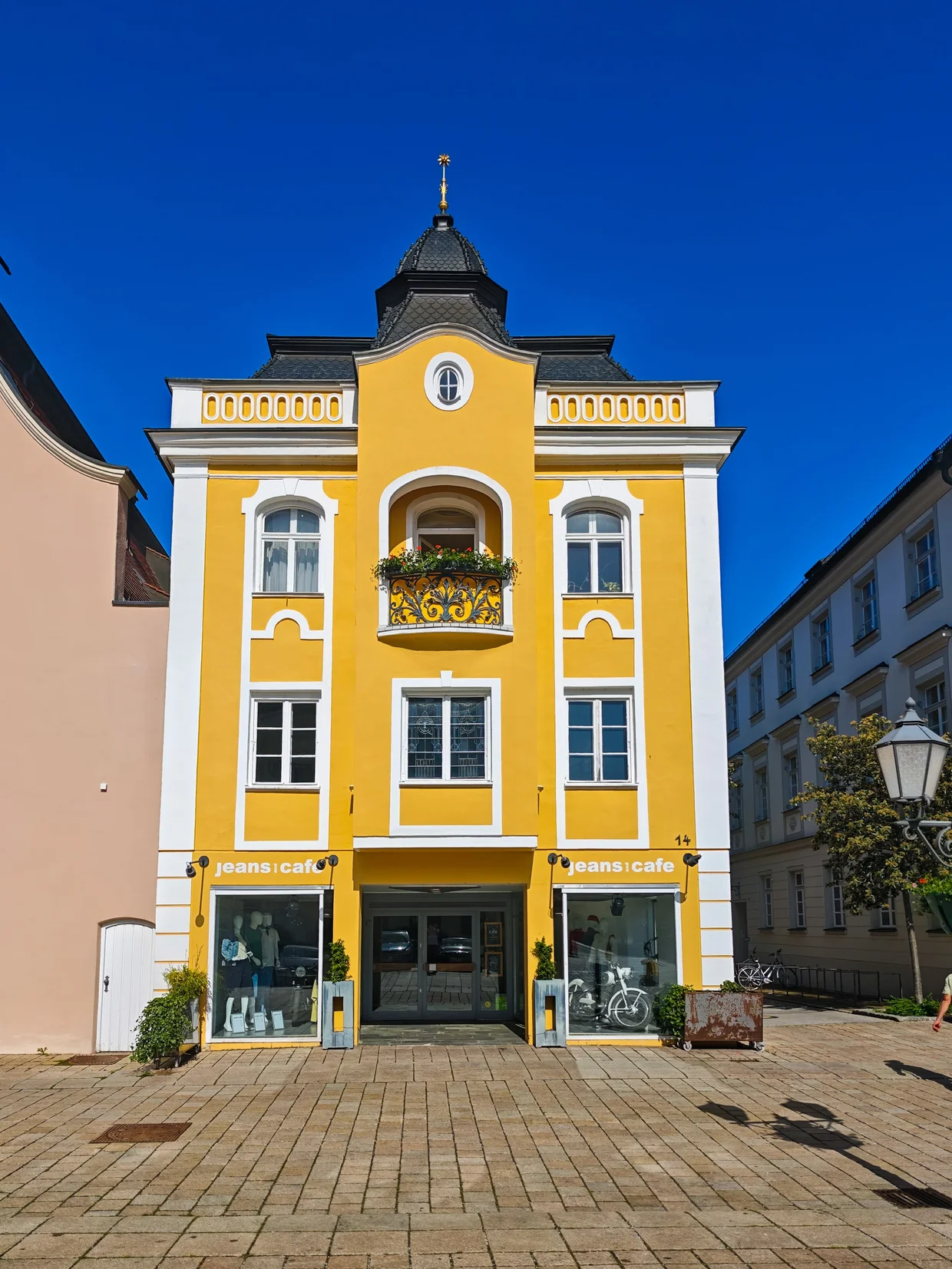
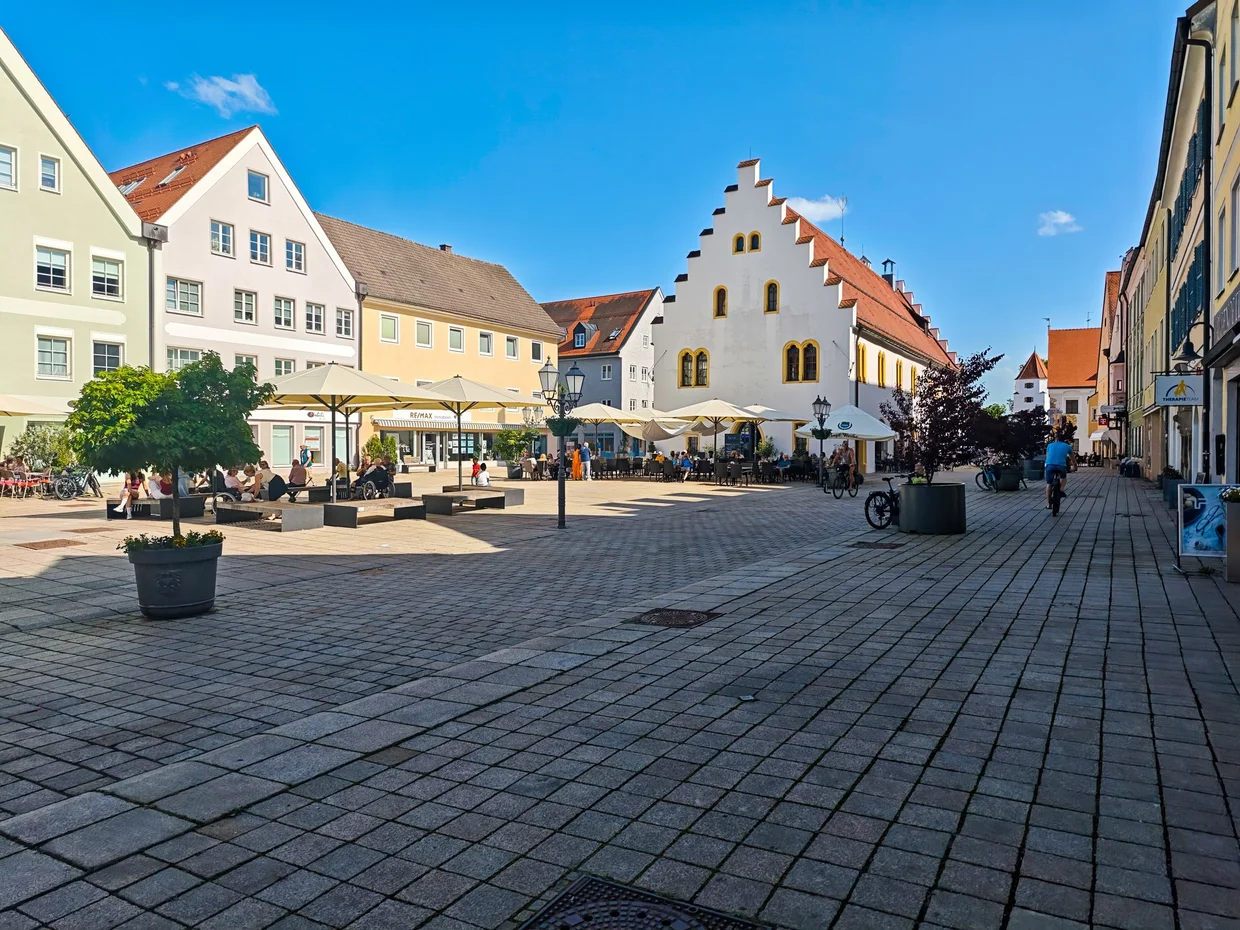
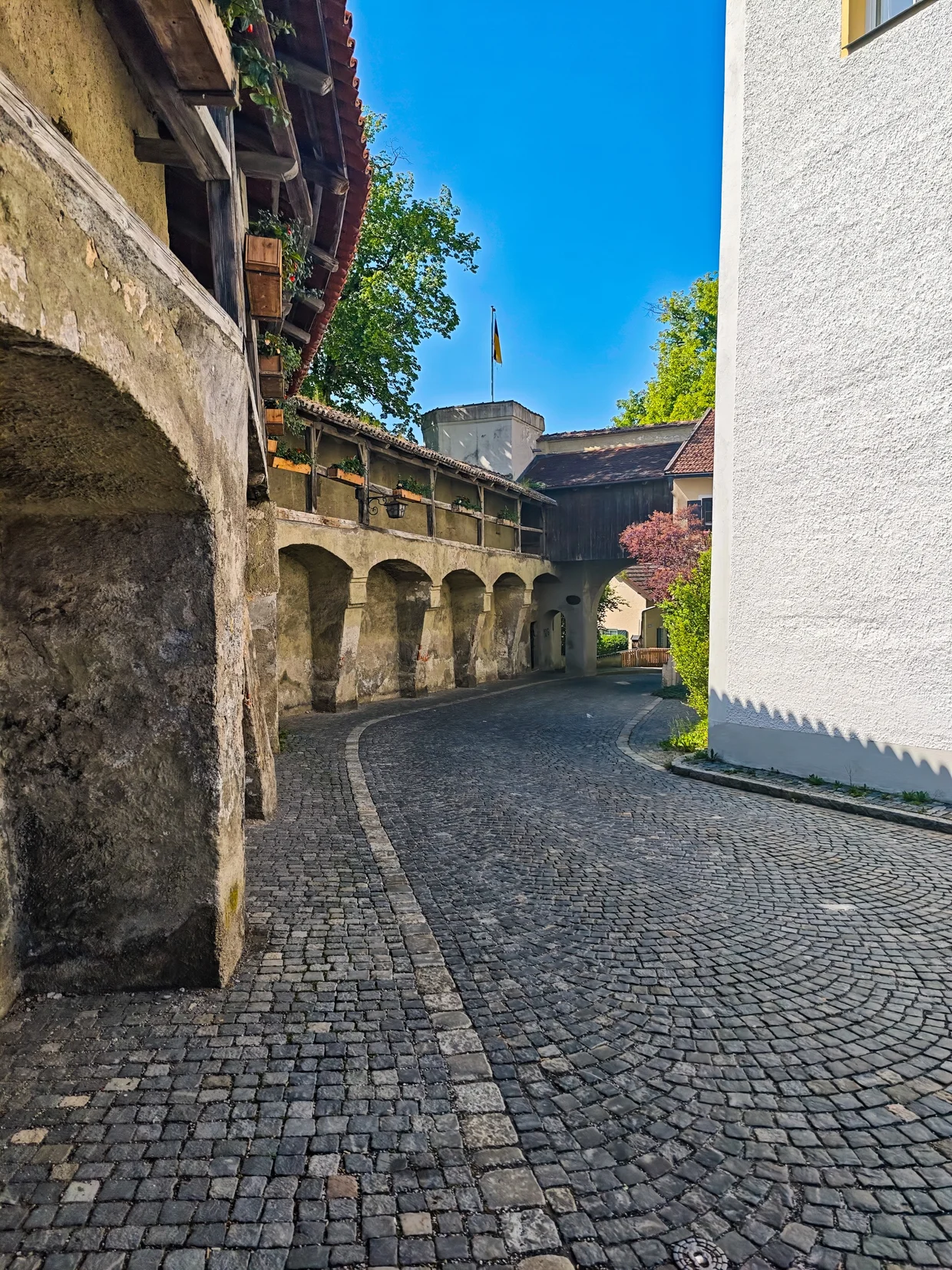
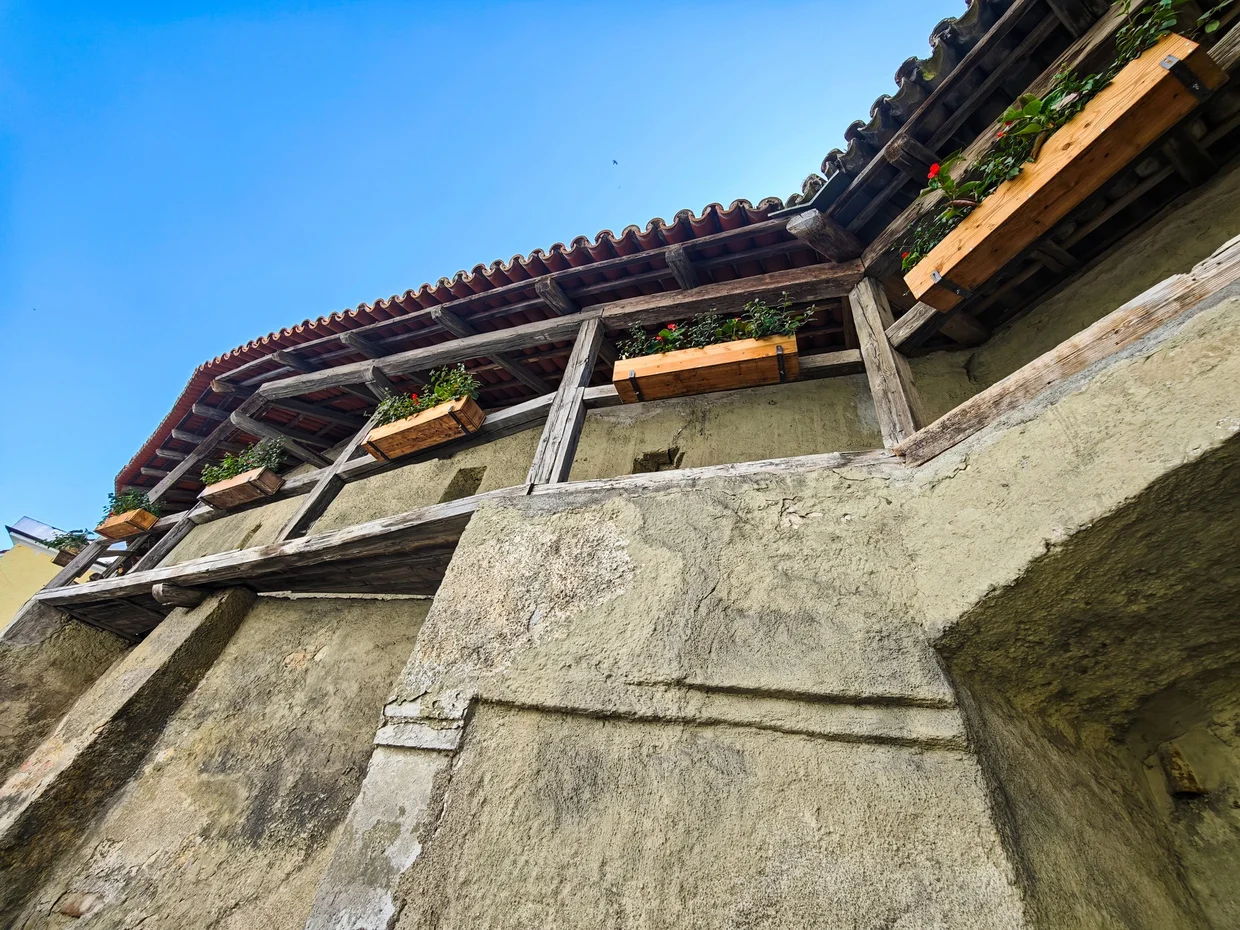
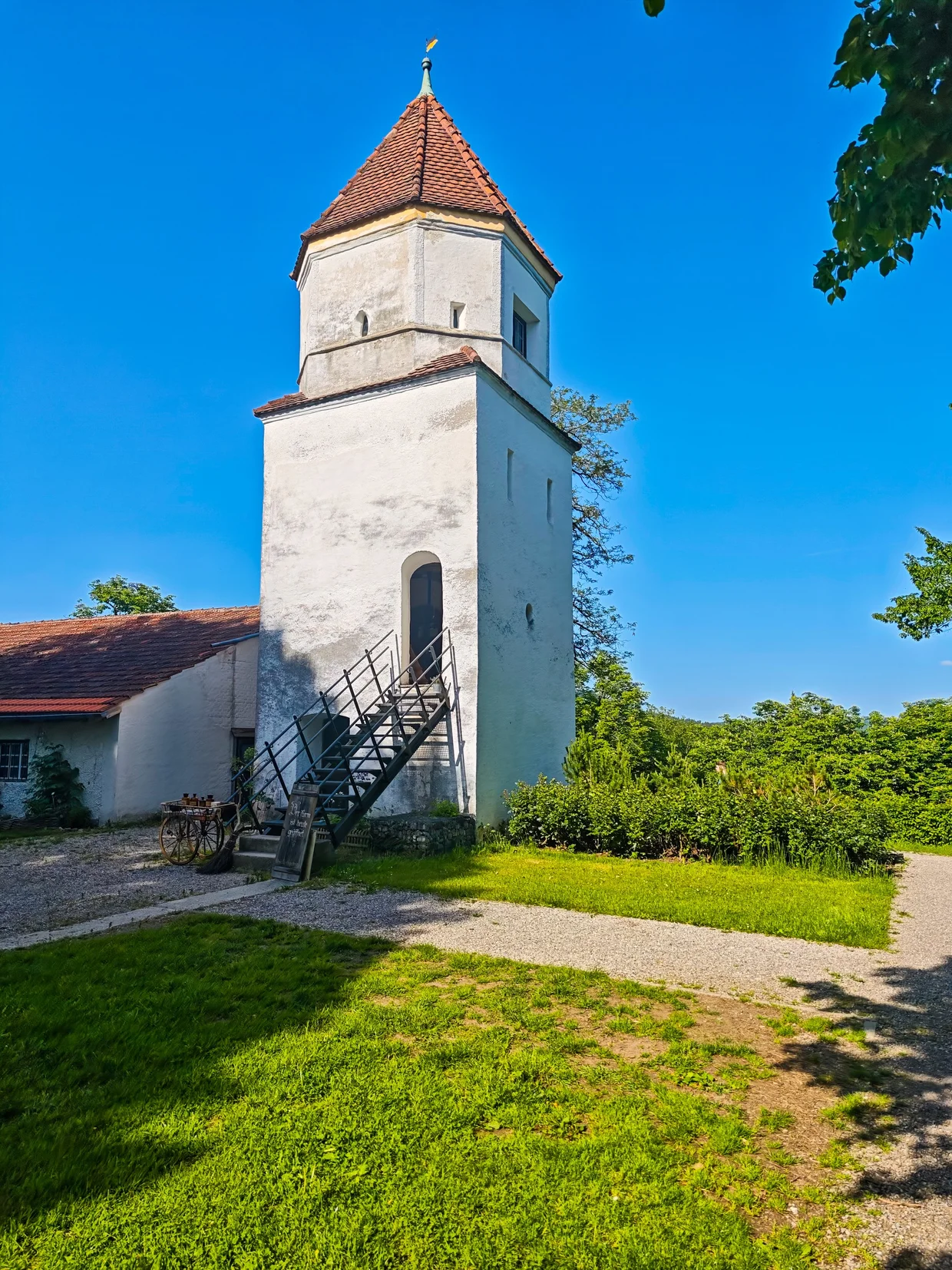
Verdict: skip unless you collect city walls and their towers. There are people who do, and Schongau is genuinely good for them; for everyone else it's the optional bit at the end of the day.
Fuessen: The End of the Road
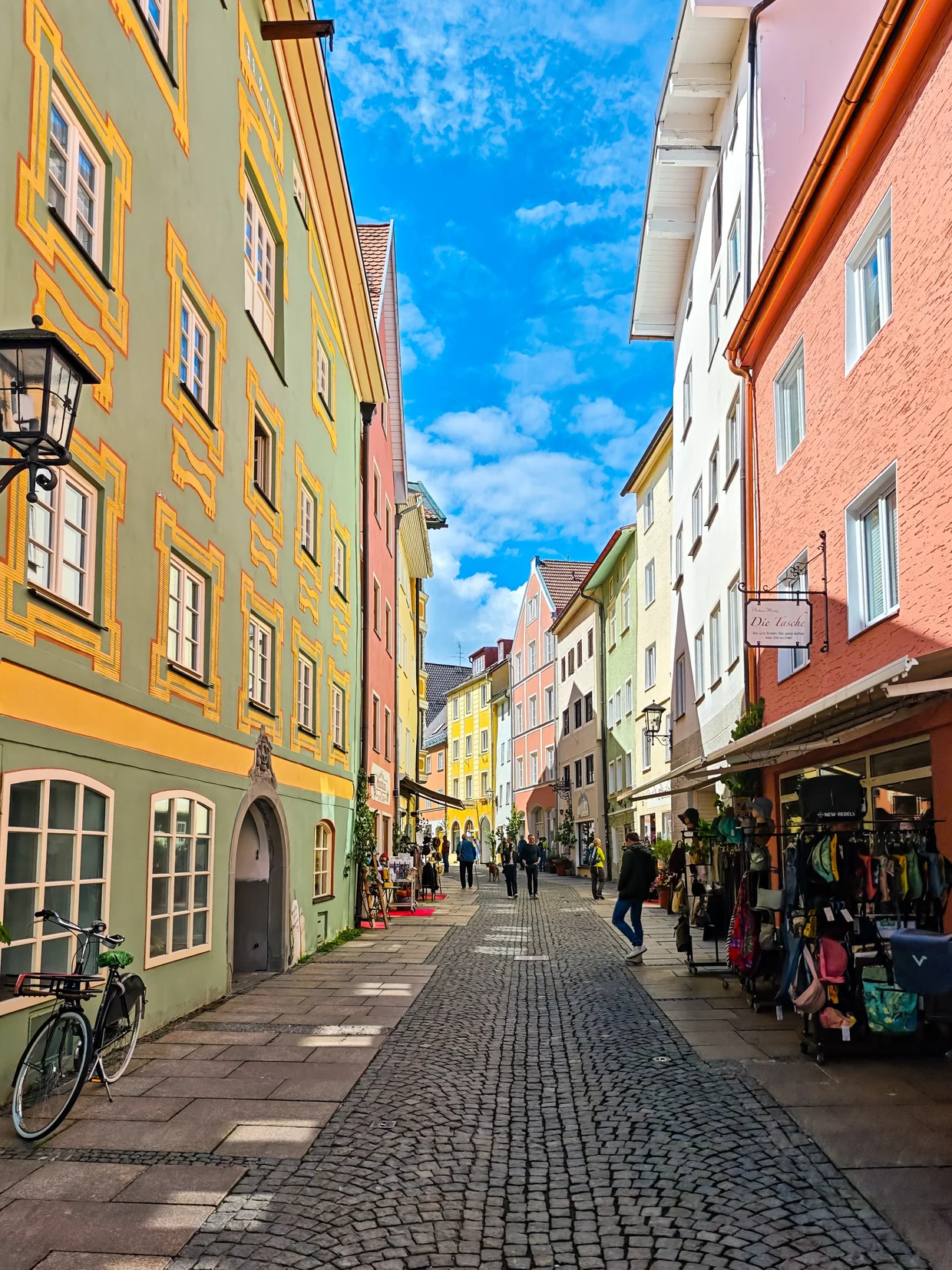
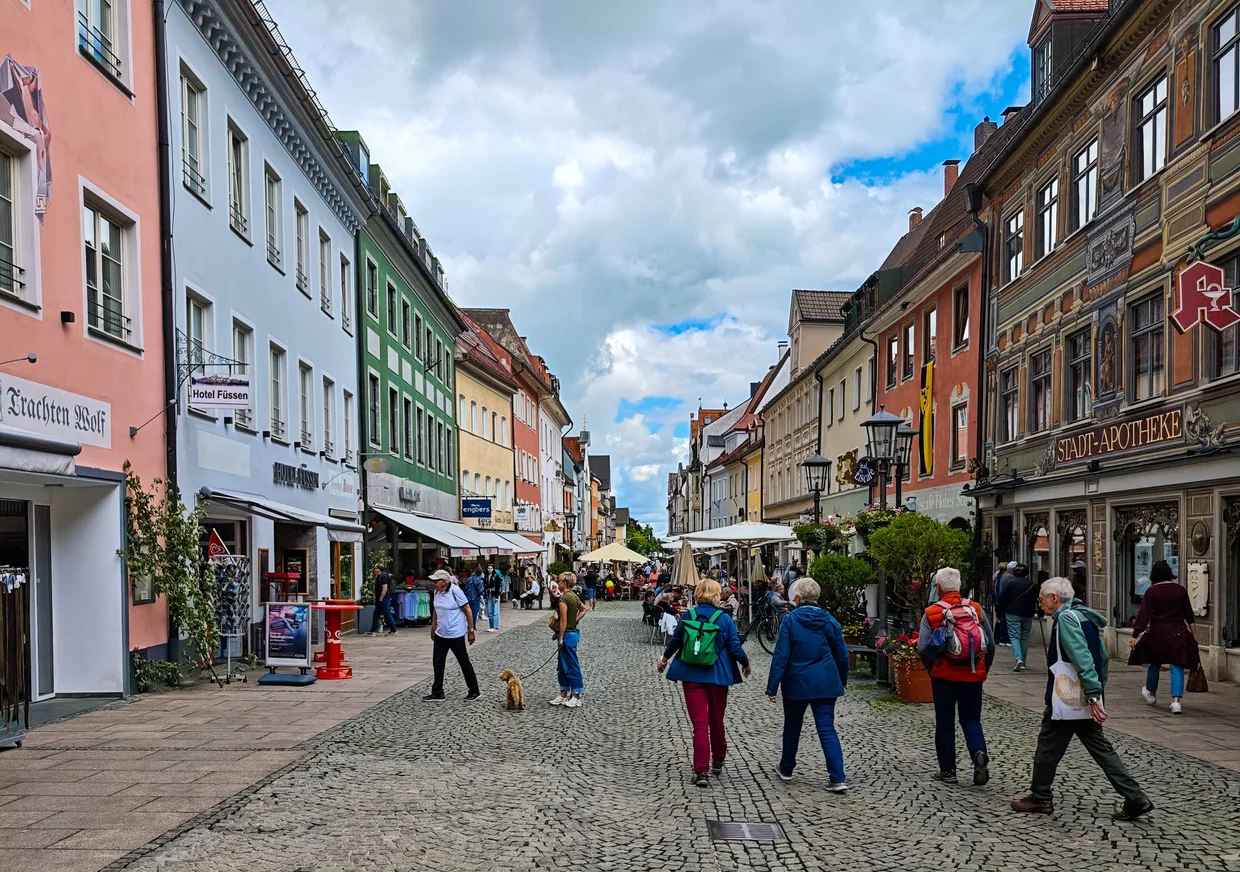
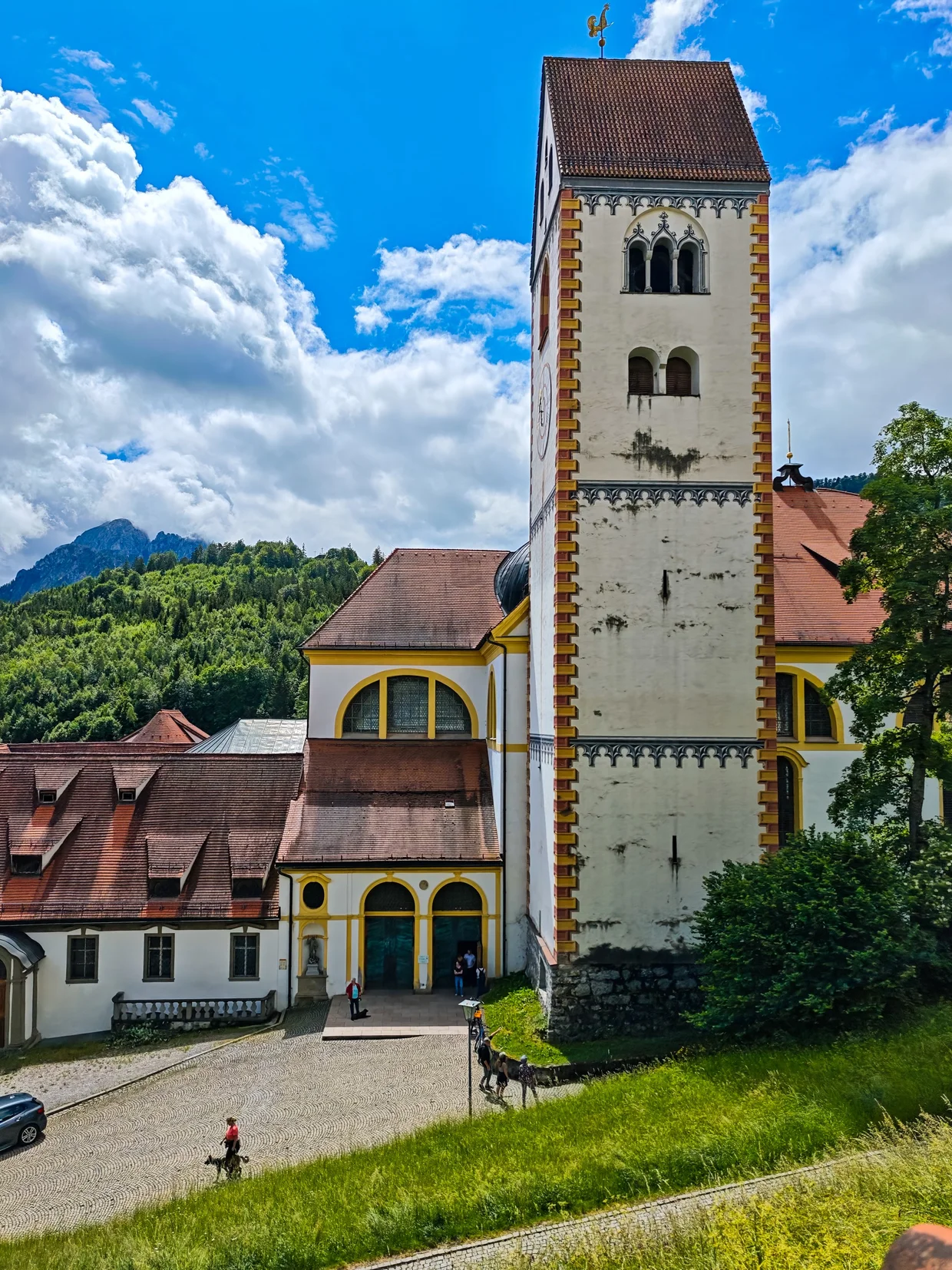
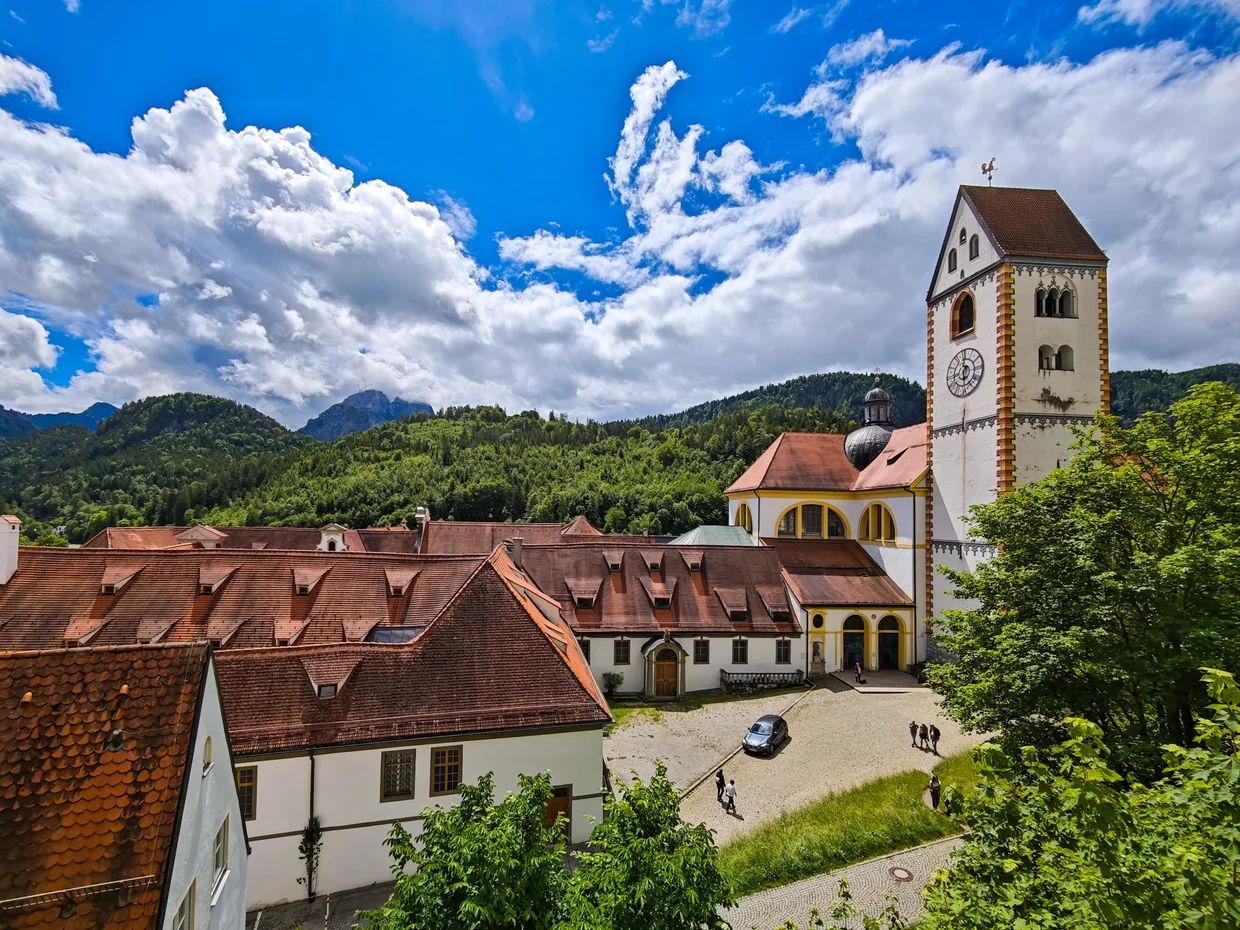
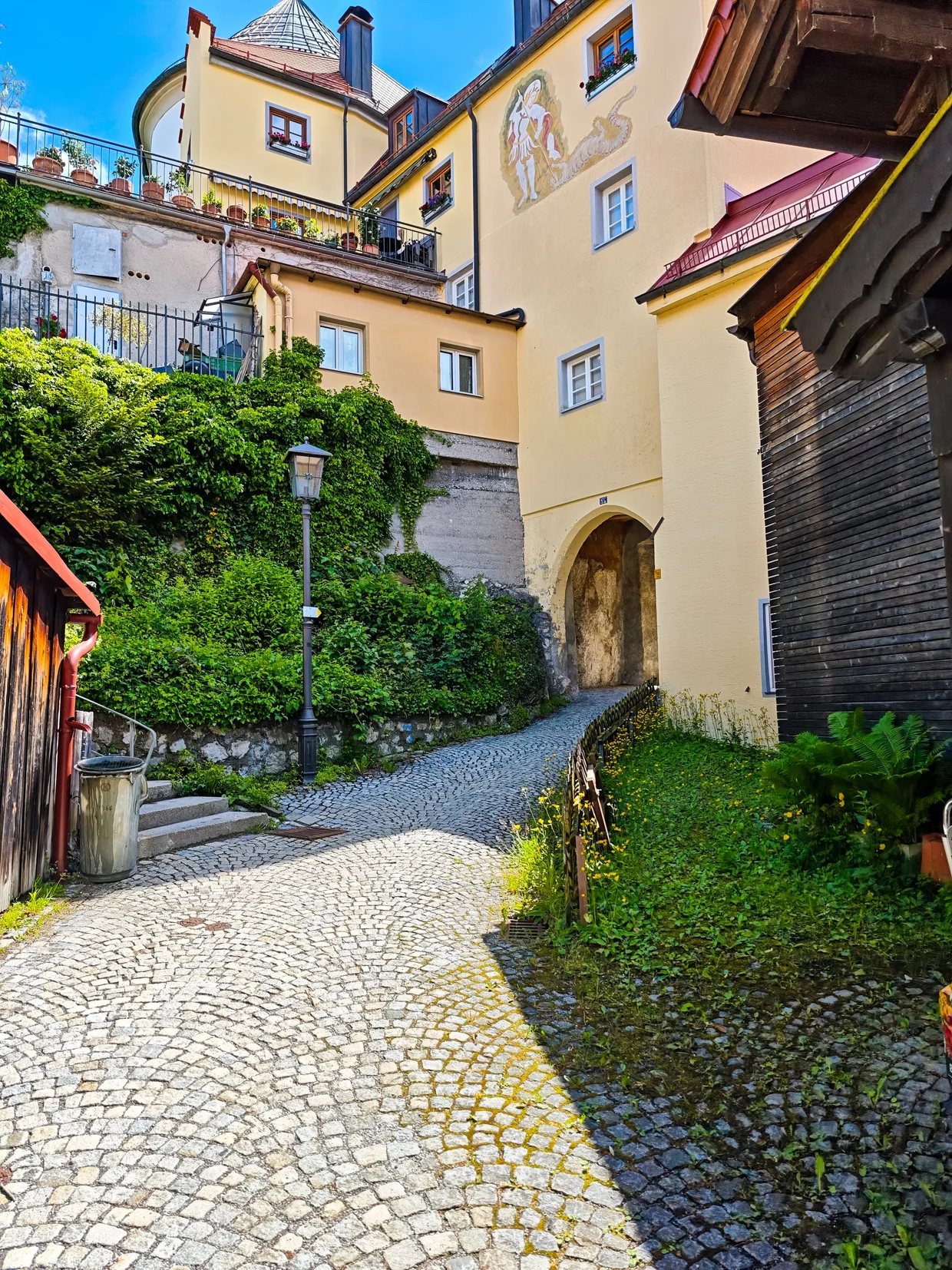
This is where the Romantic Road actually stops. Most people treat Fuessen as a car park for Neuschwanstein and never walk into the old town, which is a shame, because the Altstadt is one of the prettier ones on the whole route and it's pancake-flat to wander. Painted facades, a pedestrian shopping street (the Reichenstrasse), a Benedictine abbey, a bishops' castle covered in painted-on architecture, and the milky-turquoise Lech river running right past the edge of town. Give it a half-day and you won't regret it; rush it and you've basically driven the whole road to skip the last good town on it.
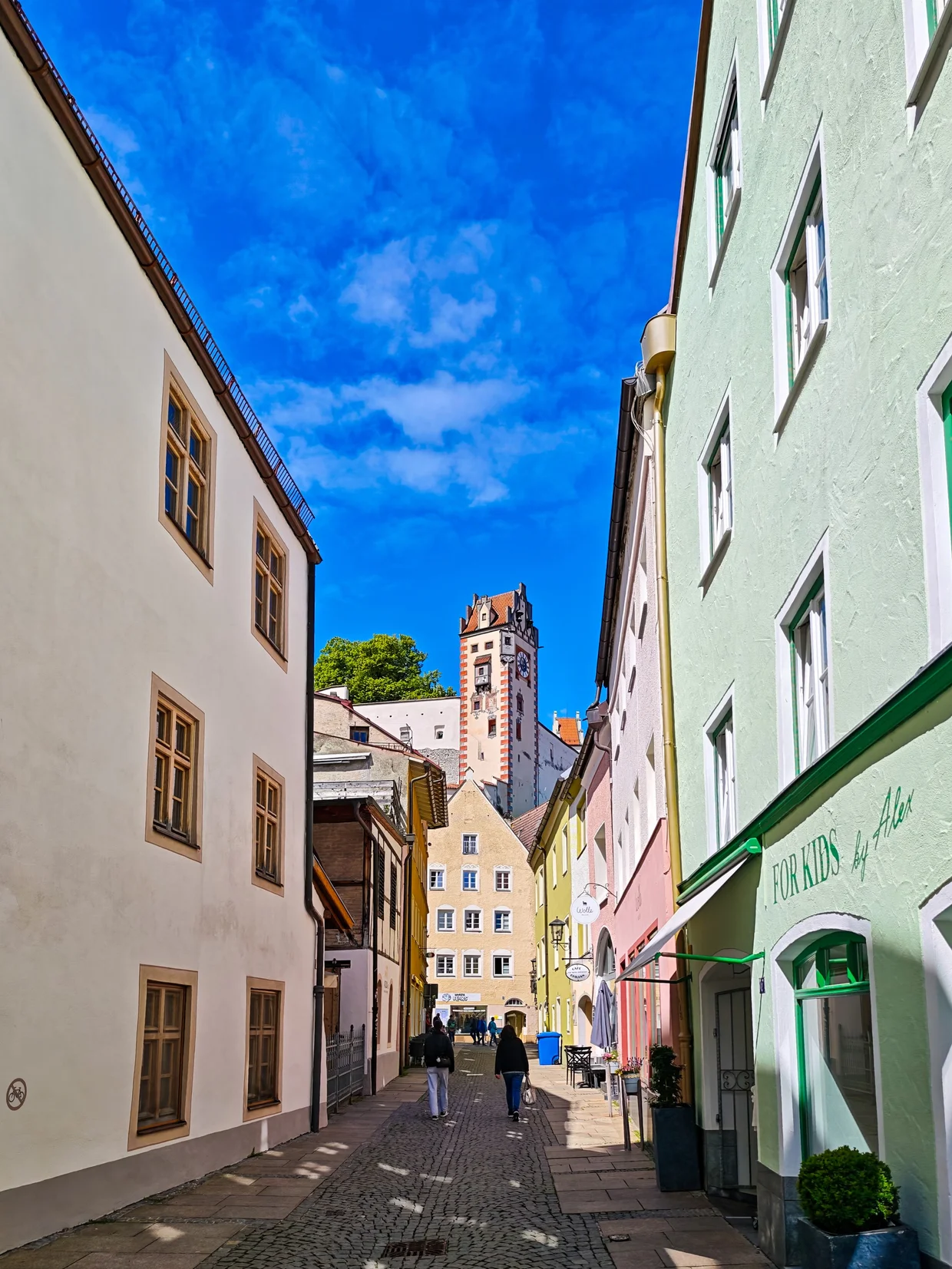
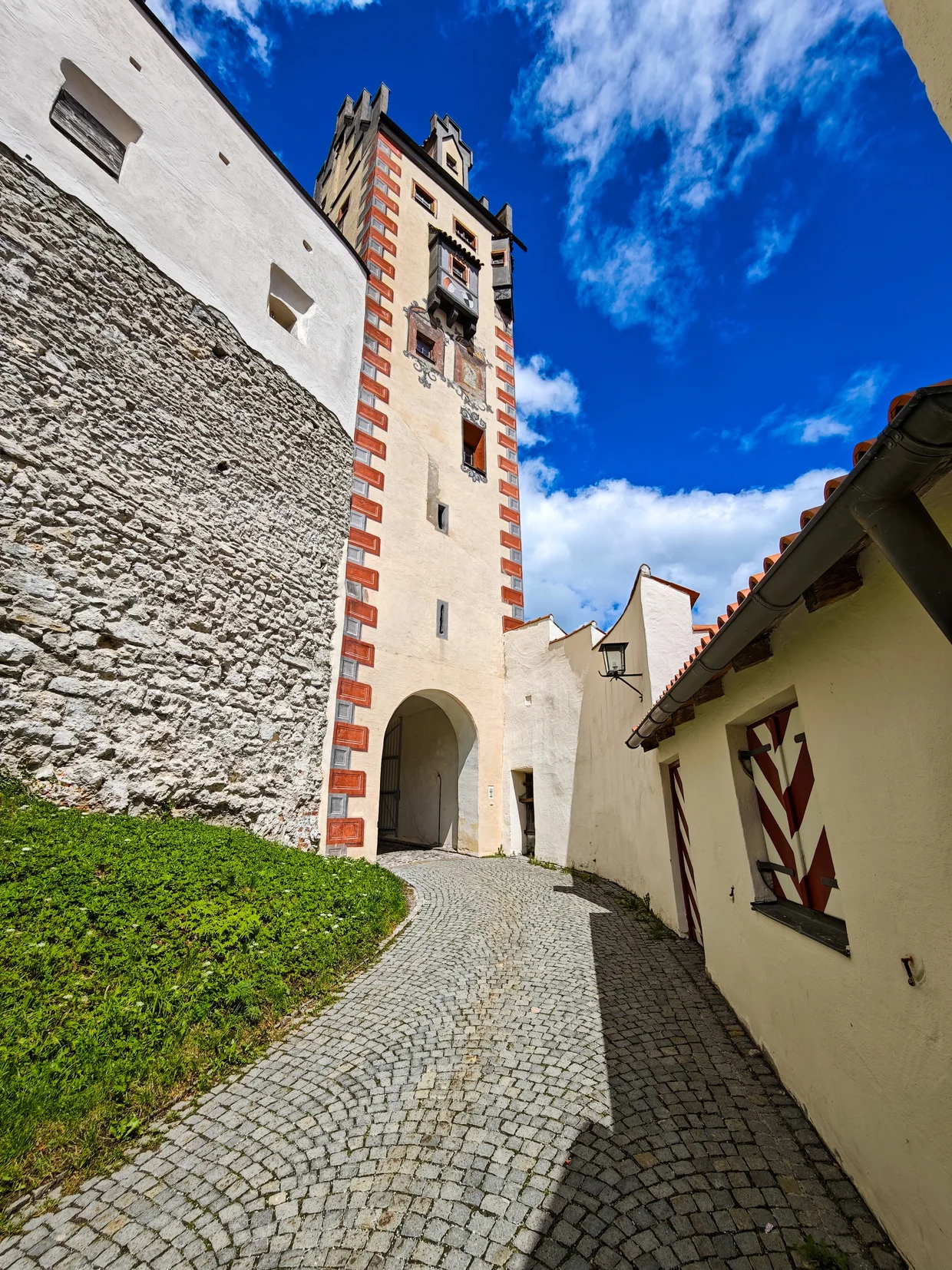
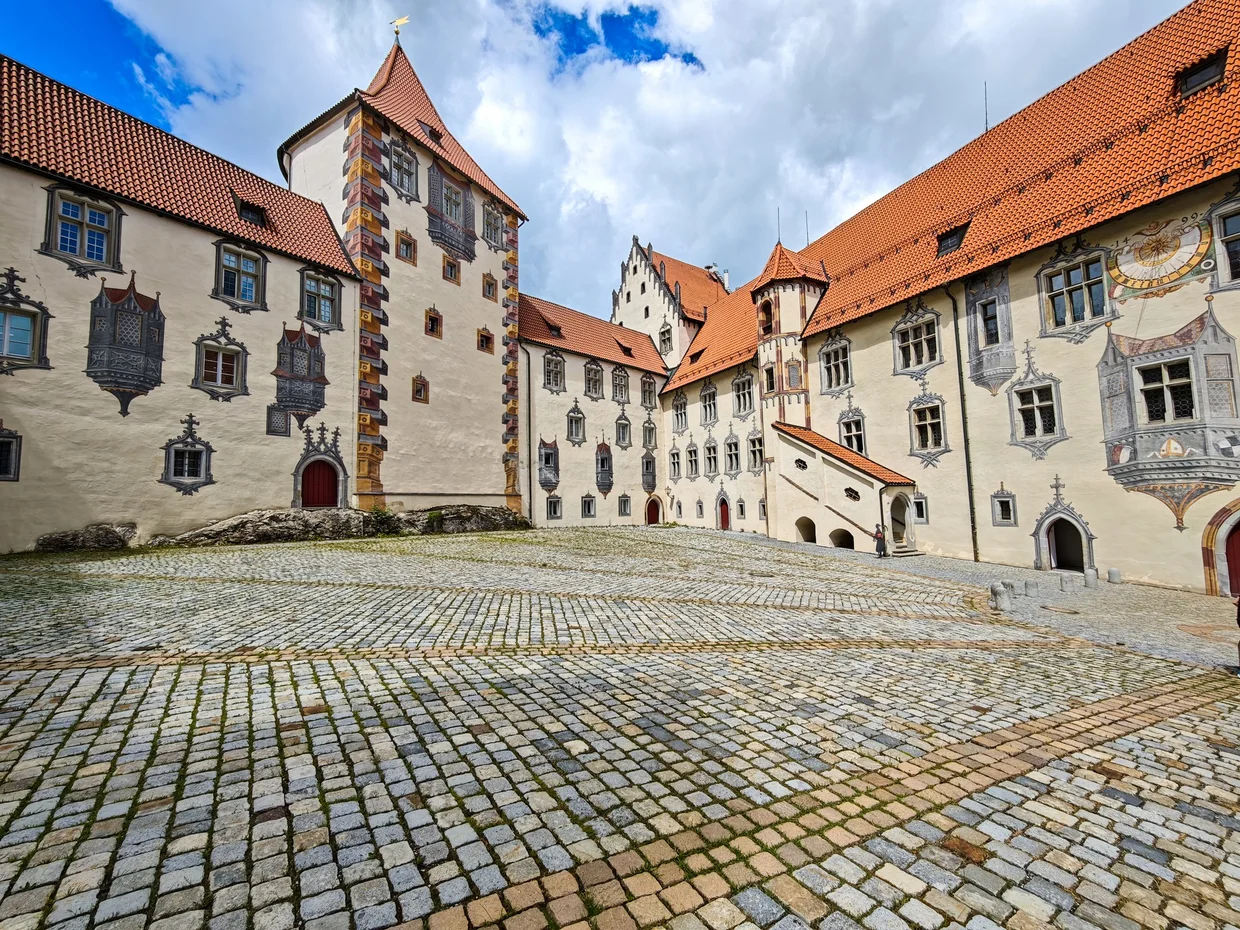
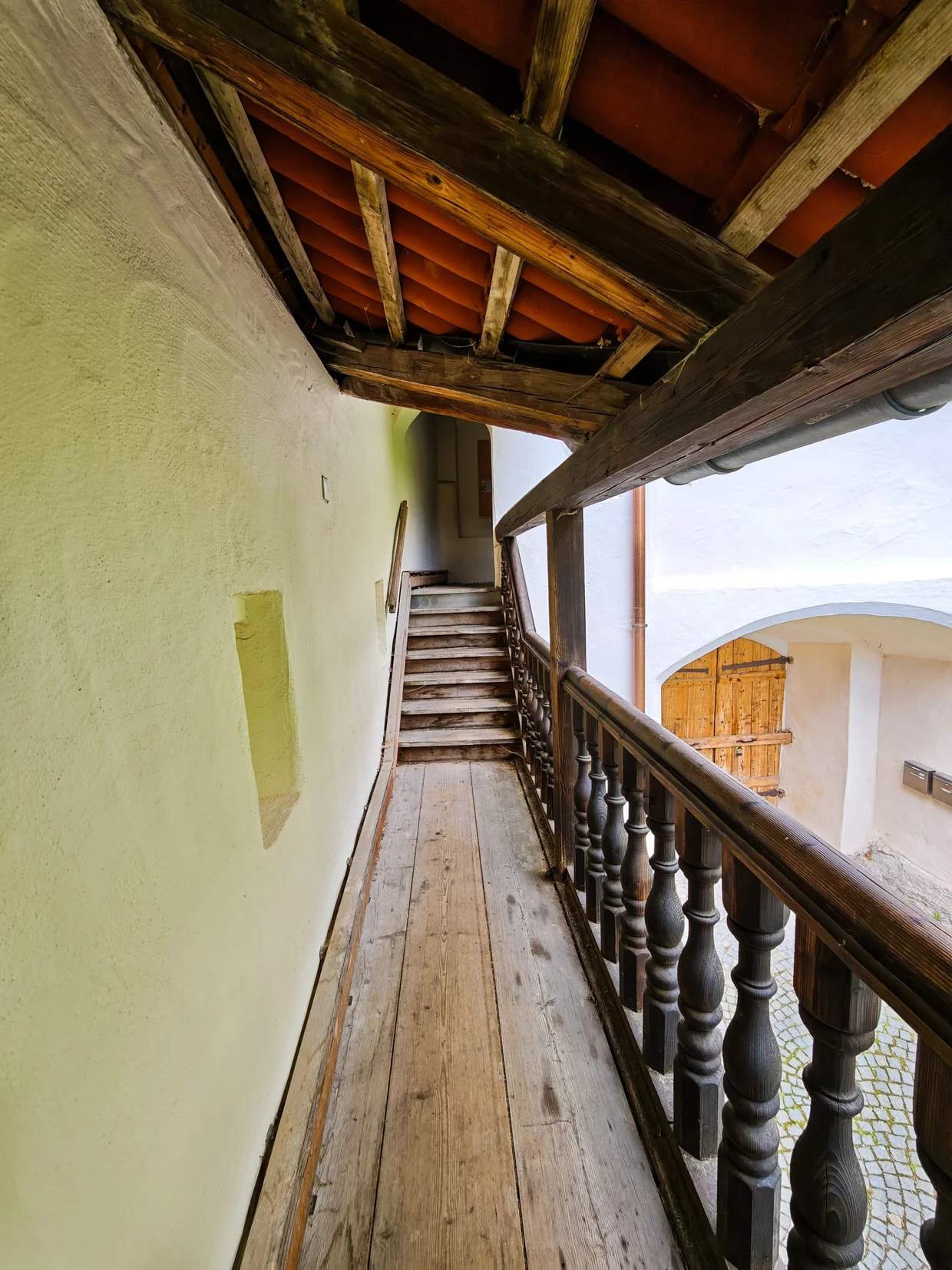
The Hohes Schloss, the old summer residence of the Augsburg prince-bishops, is nice but nothing special, and the one thing that makes it worth the climb is the trick it plays on you. Up close, much of what looks like windows, oriels and carved stonework is painted on: flat walls done up in trompe-l'oeil to fake a far grander castle than the one actually standing there. Stand in the courtyard and it takes a second to sort out what's real and what's a 500-year-old optical illusion. A covered wooden gallery runs around one side, a balustraded walkway under a tiled roof that looks straight down onto the cobbles. Entry to the courtyard is free; there's a gallery inside if you want the full visit.
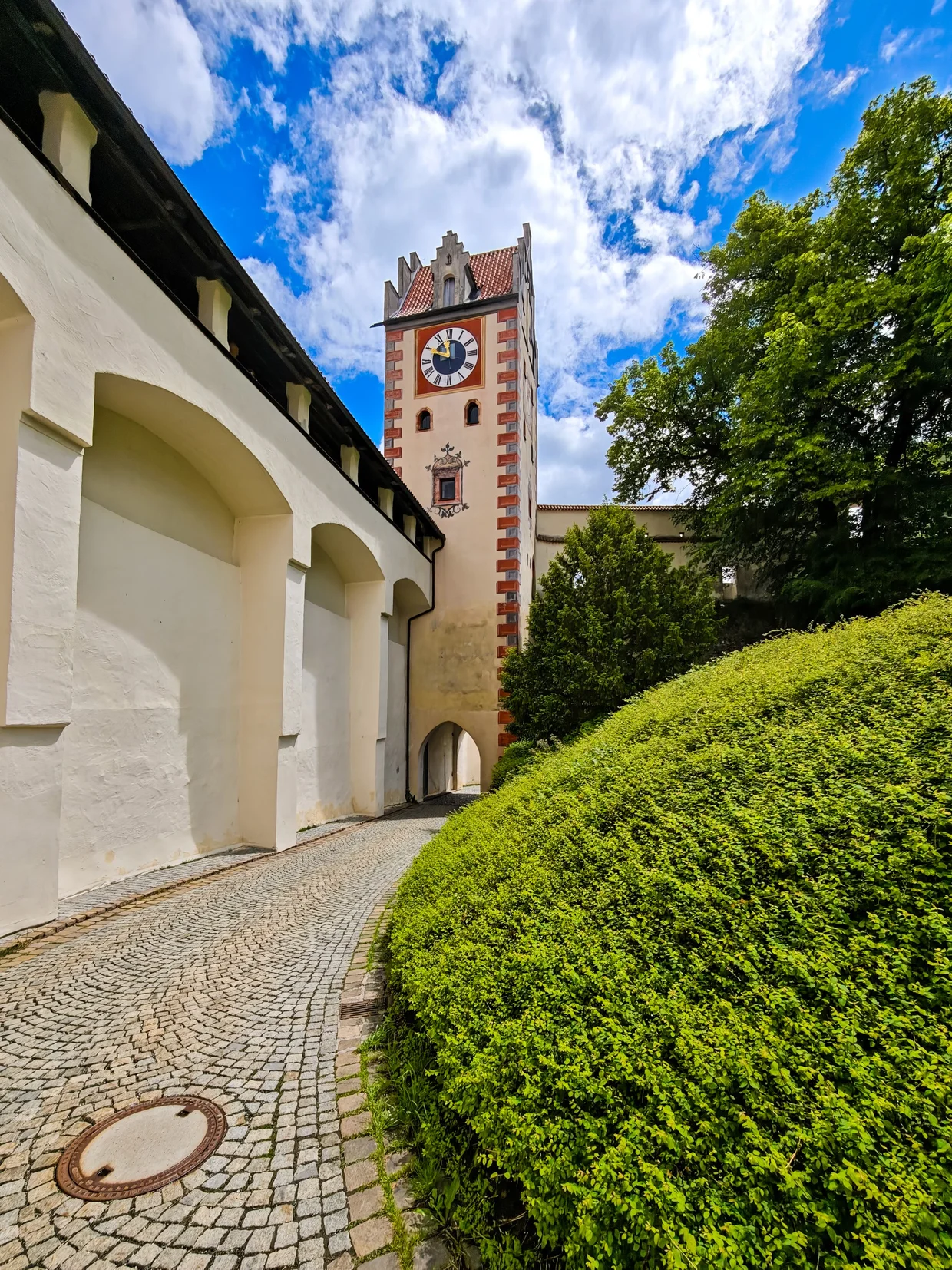
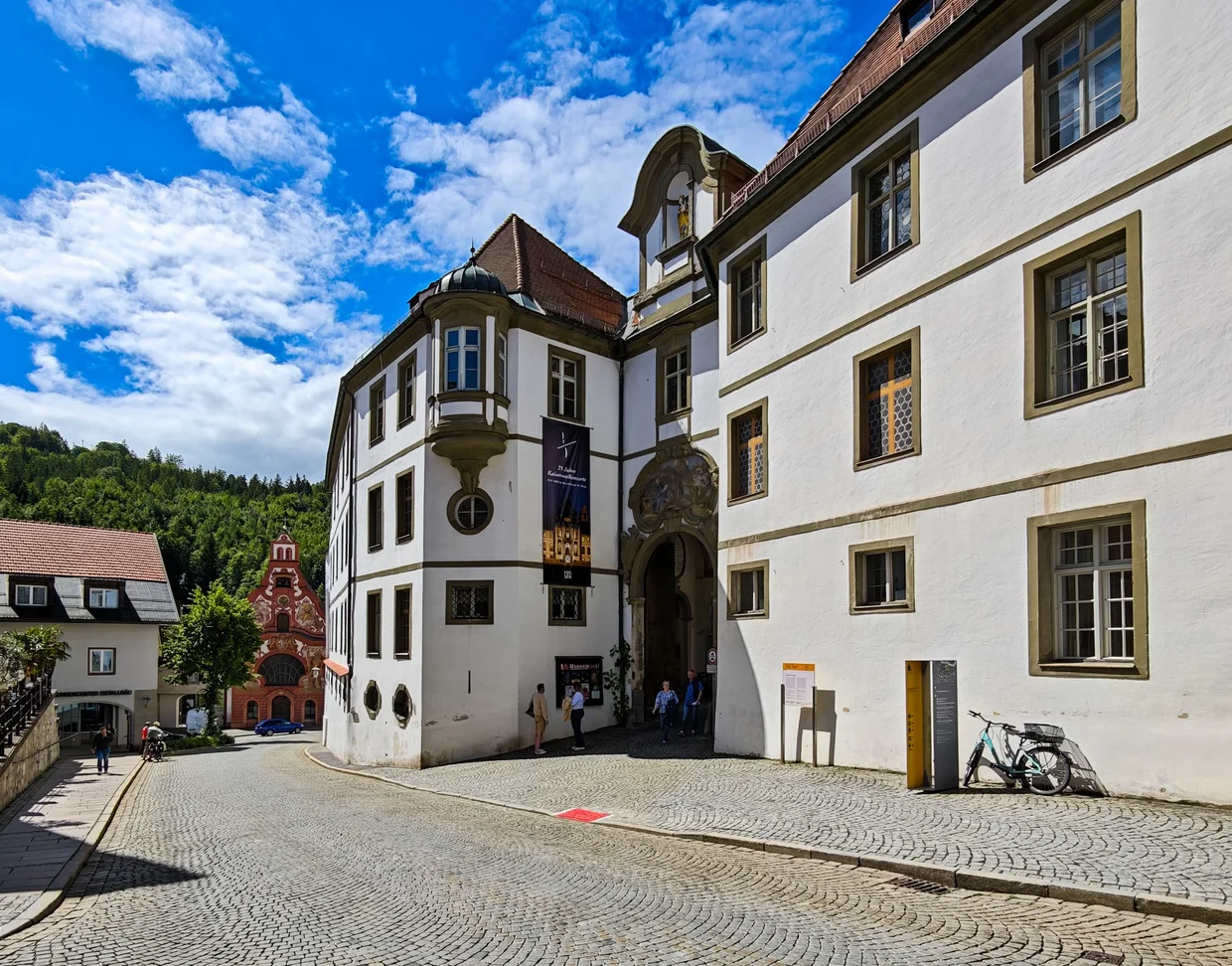
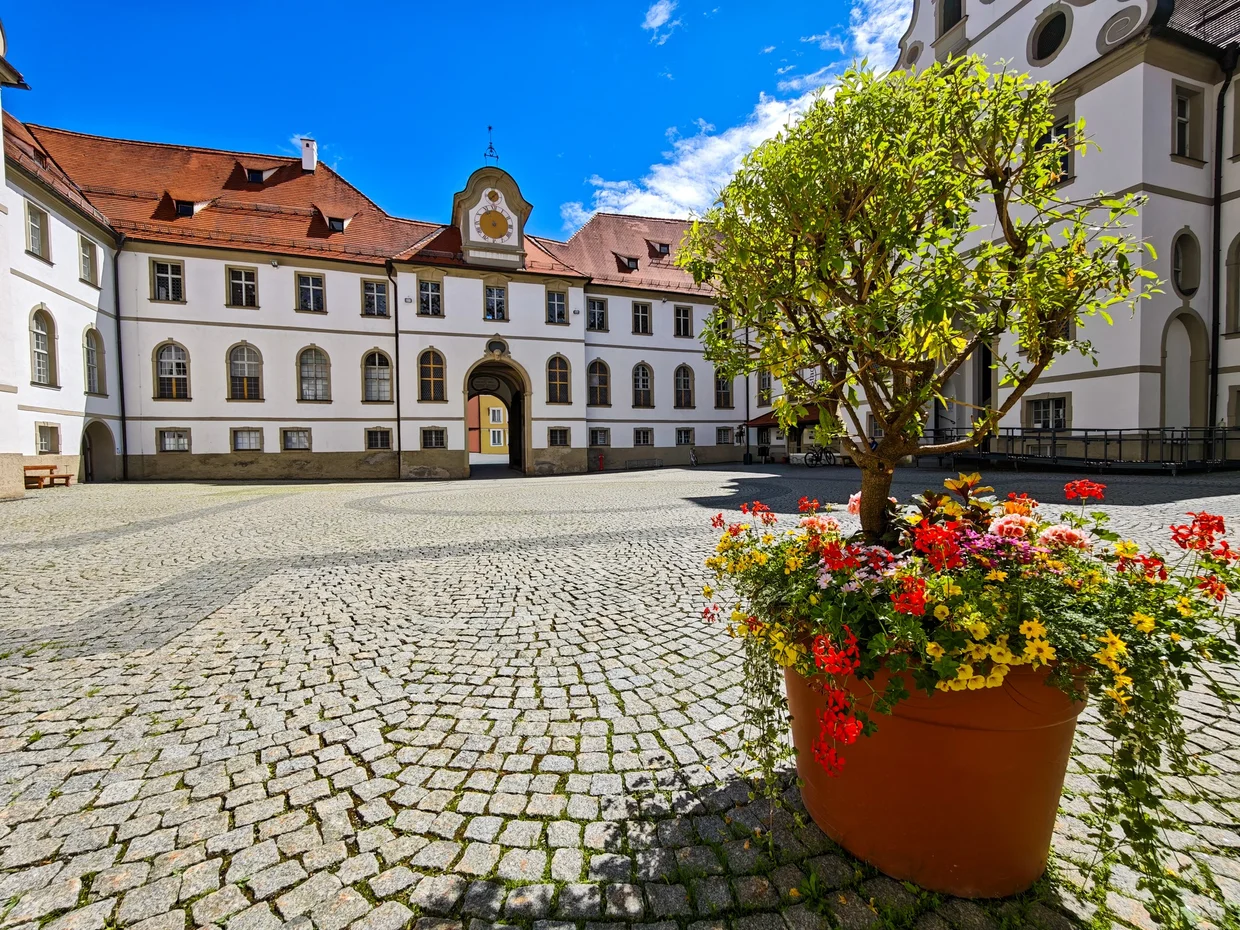
Right below the castle is St. Mang Abbey, a big baroque Benedictine monastery with a basilica tower that anchors the whole skyline. The courtyard is open to walk through, and from the terrace by the basilica you get a clean look over the monastery roofs to the Alps behind. The abbey also houses the town museum if you want to go in.
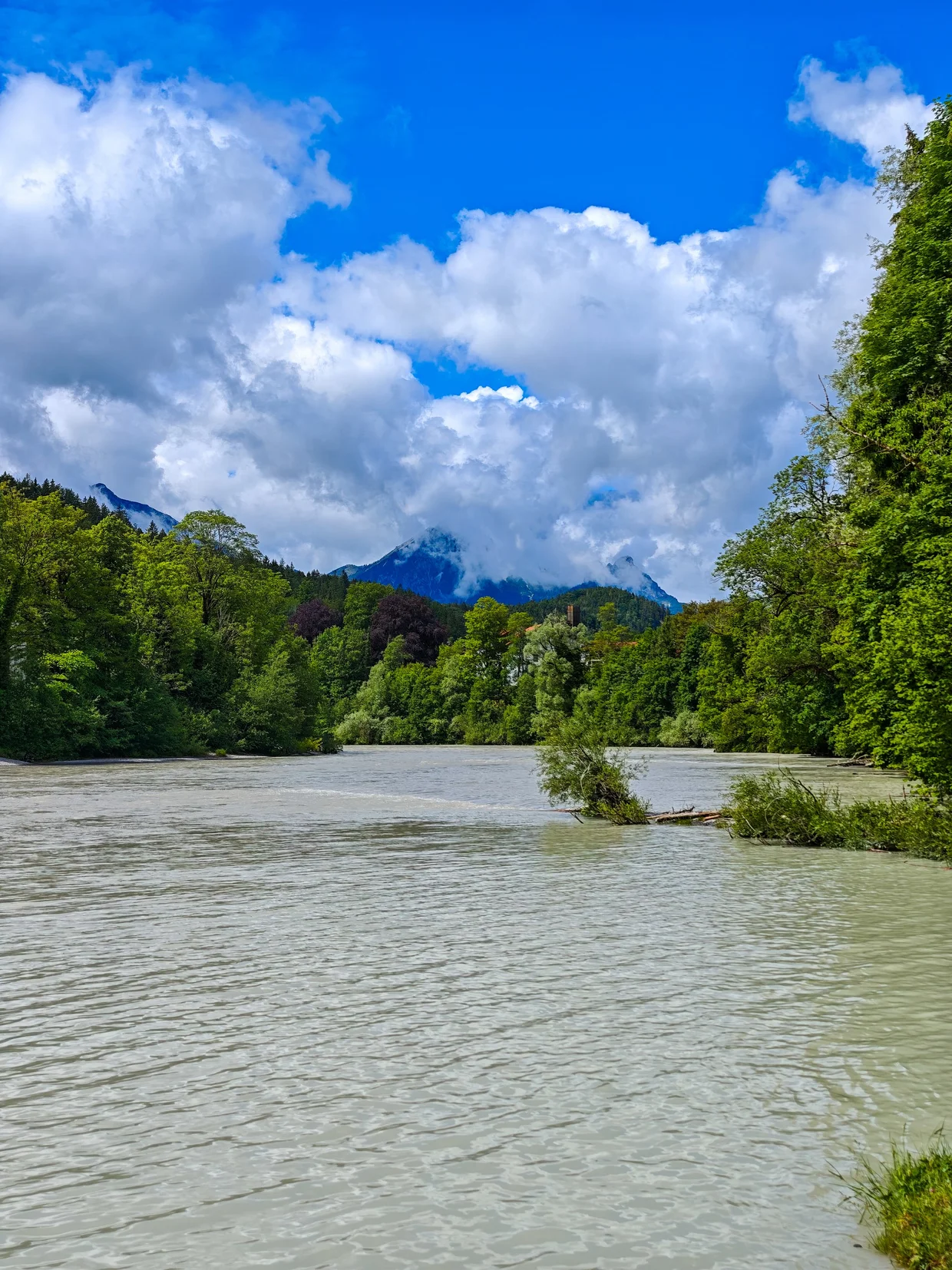
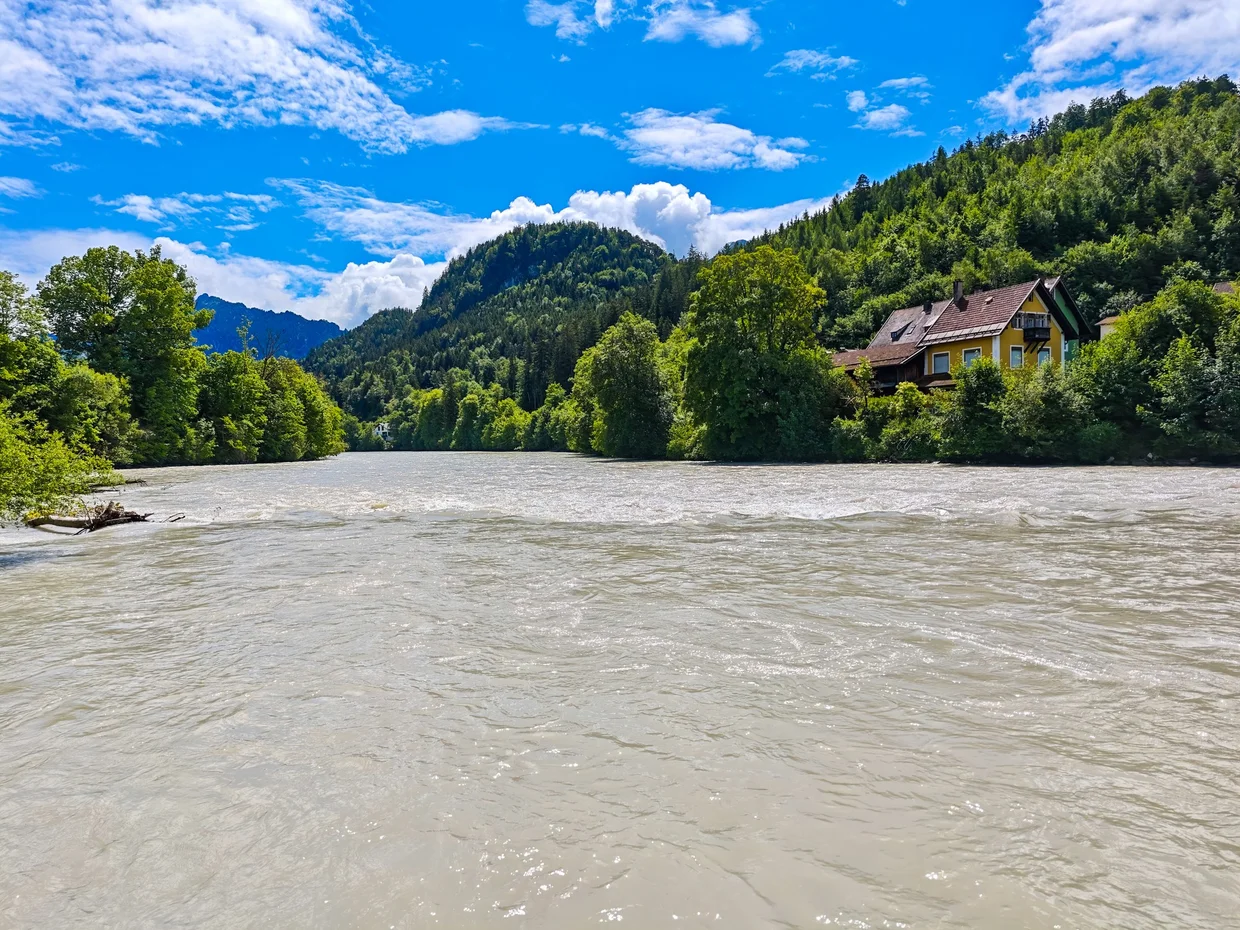
Wander down to the Lech. The river comes out of the mountains here a strange pale blue-green, and the path along the bank gives you the alpine peaks lined up upstream. It's a five-minute walk from the old town and it's the bit that reminds you you're properly in the Allgau now, not the flat farmland the rest of the road runs through.
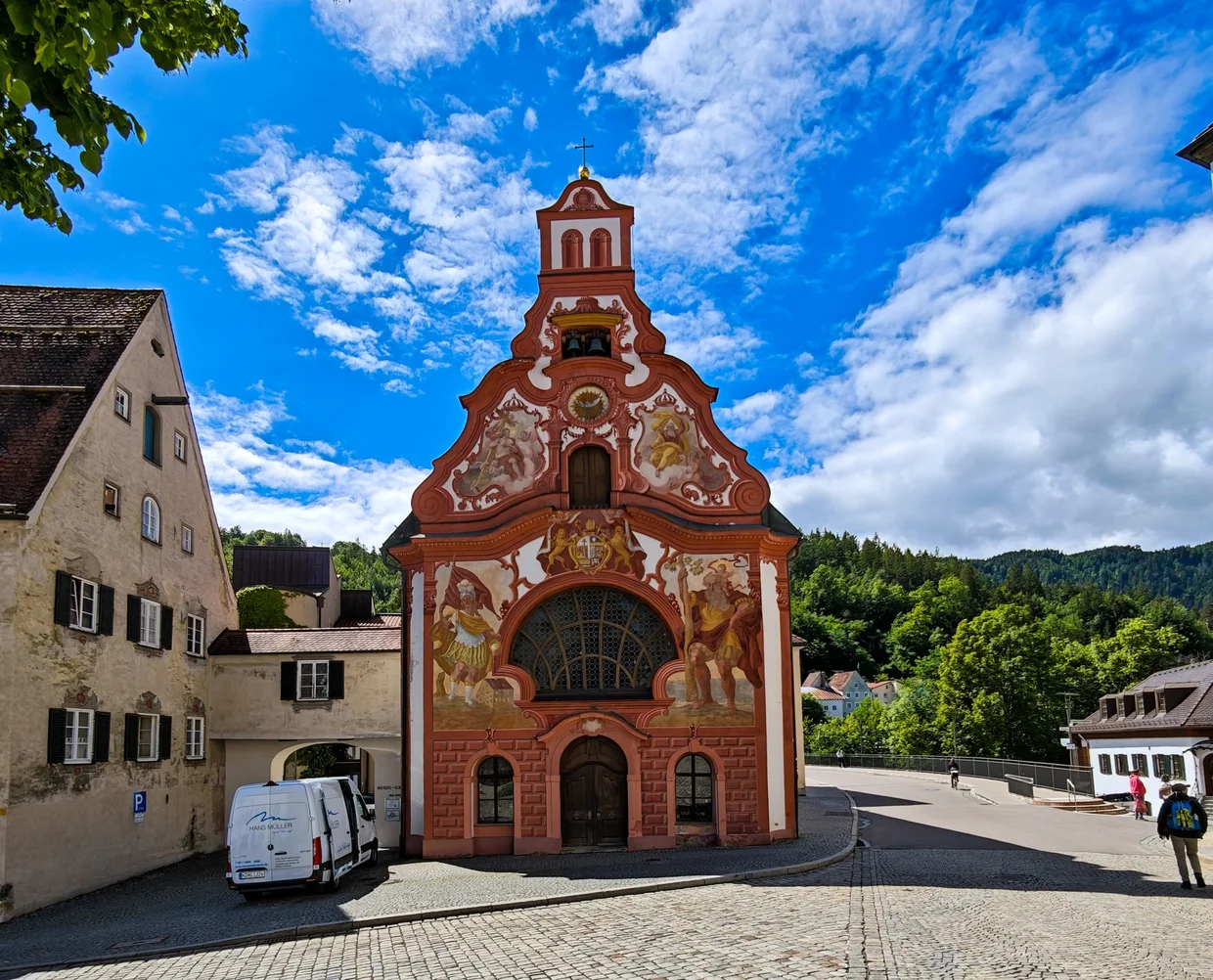
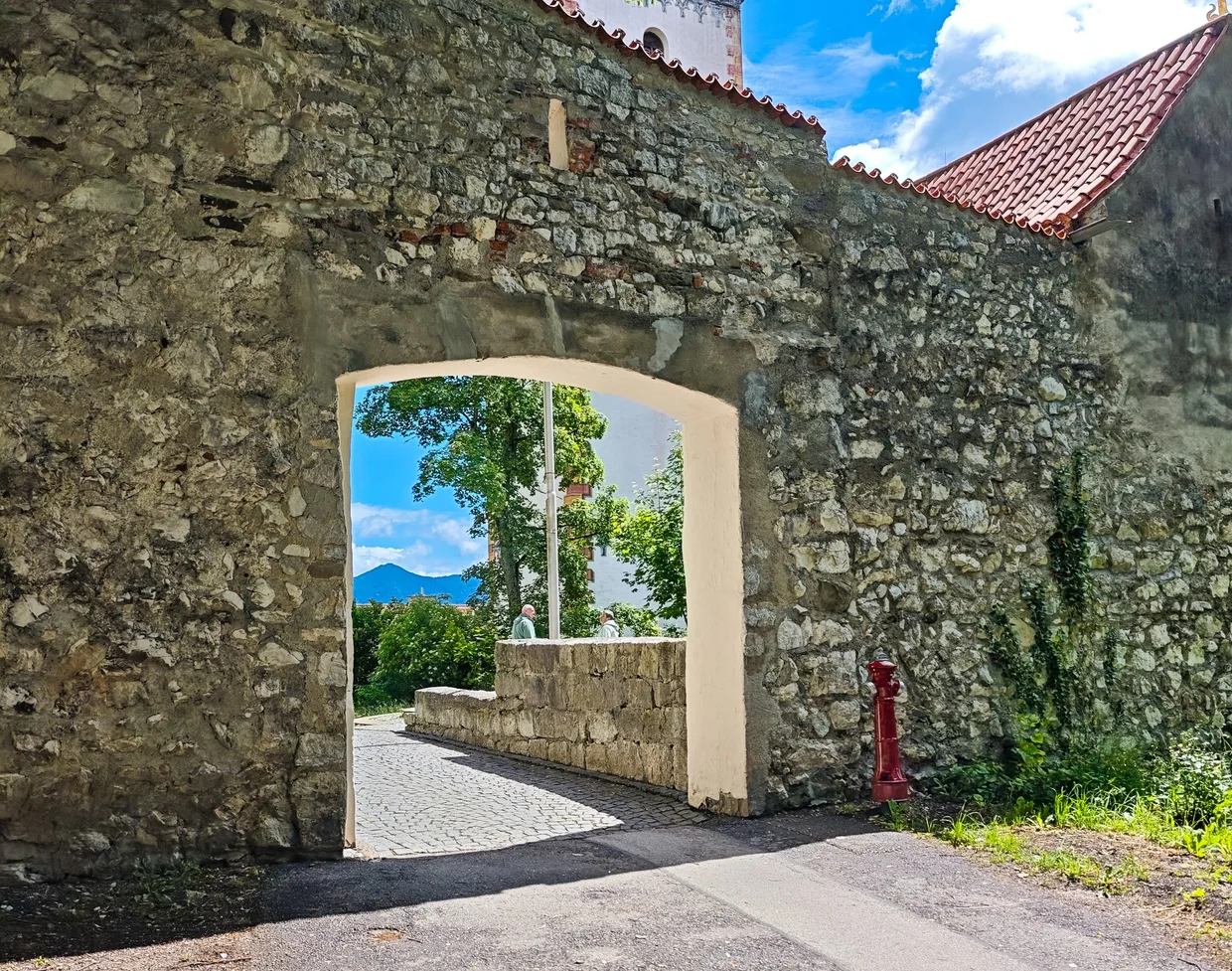
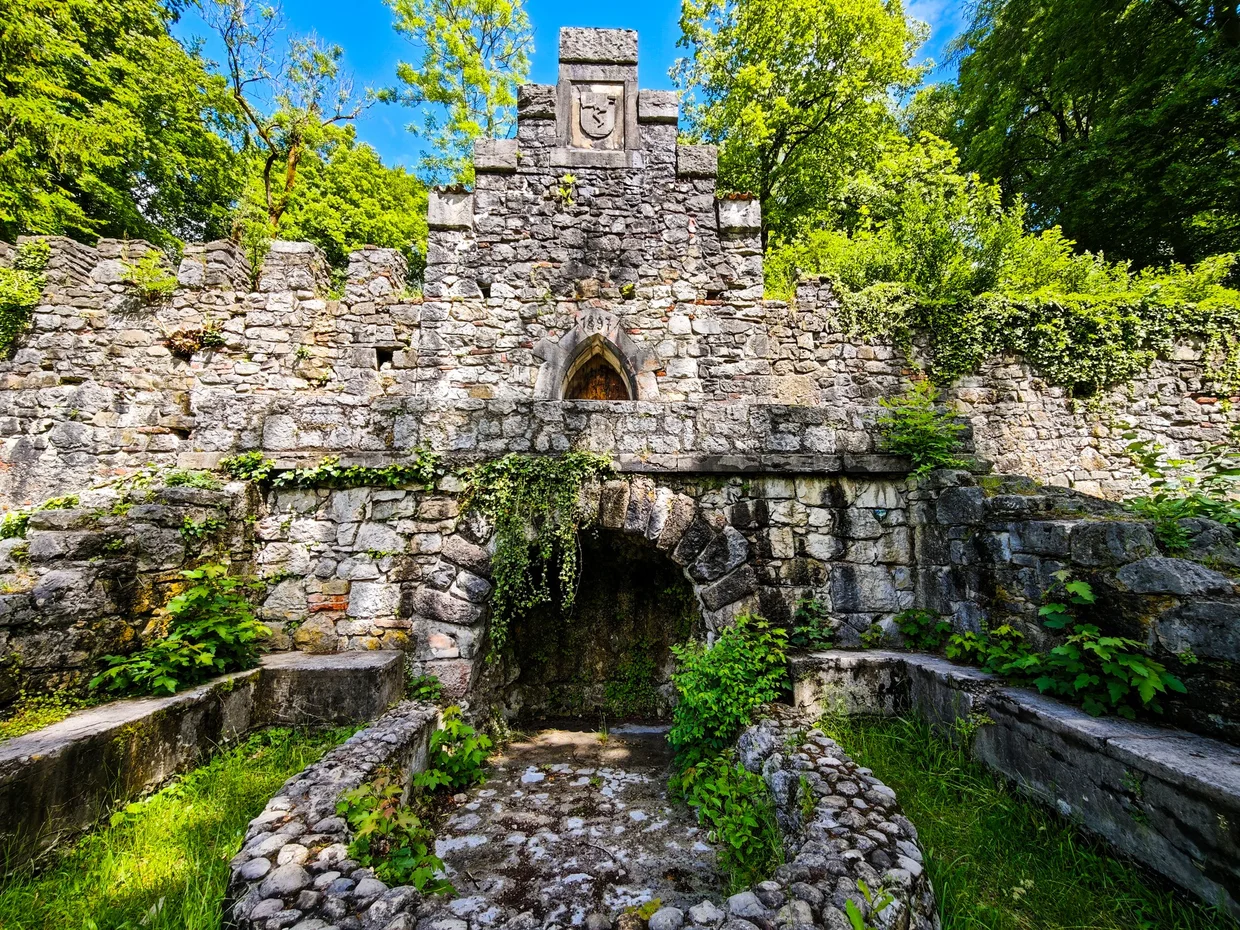
Other bits worth a look as you loop the town: the Heilig-Geist-Spitalkirche with its painted facade on a small square, the painted-oriel townhouses, the old grotto fountain, and a gate in the city wall that frames the mountains as you walk through it.

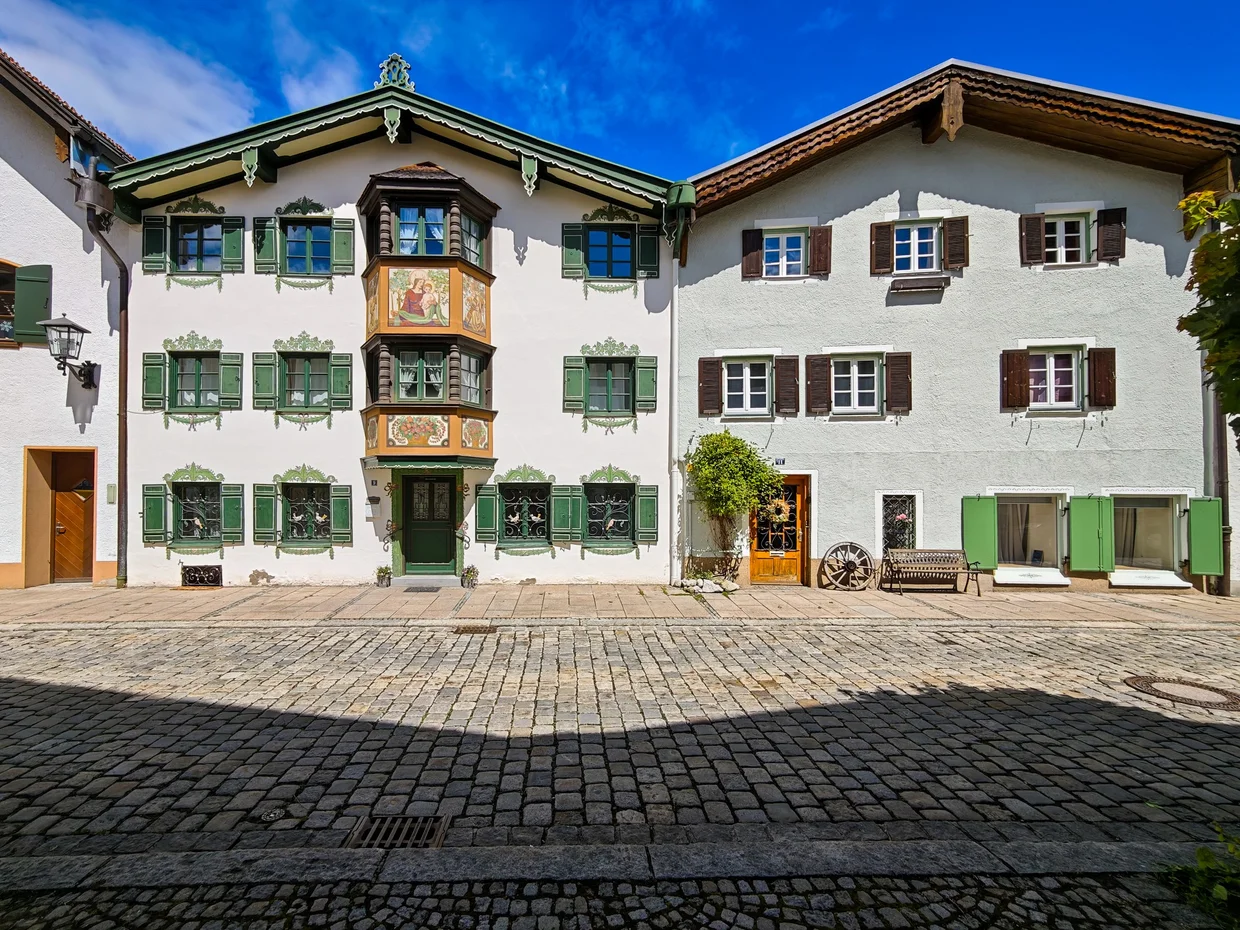
This is what people miss when they treat Fuessen as a car park. Walk two minutes off the main drag and you hit squares like this one: a stone fountain in the middle, cafe chairs spilling across the cobbles, painted gable houses in cream and burnt orange, a baroque gate arching through to the next lane. One of the guesthouses here even trades under the name "The Ugly Duckling". It's small, it's walkable, and almost nobody who drove in for the castles bothers to come and see it.
Verdict: stop and walk it. It's the natural end (or start) of the road, it's a genuinely nice old town, and you're going to be parked here for the castles anyway.
Schwangau: Neuschwanstein, Hohenschwangau and the Alpsee
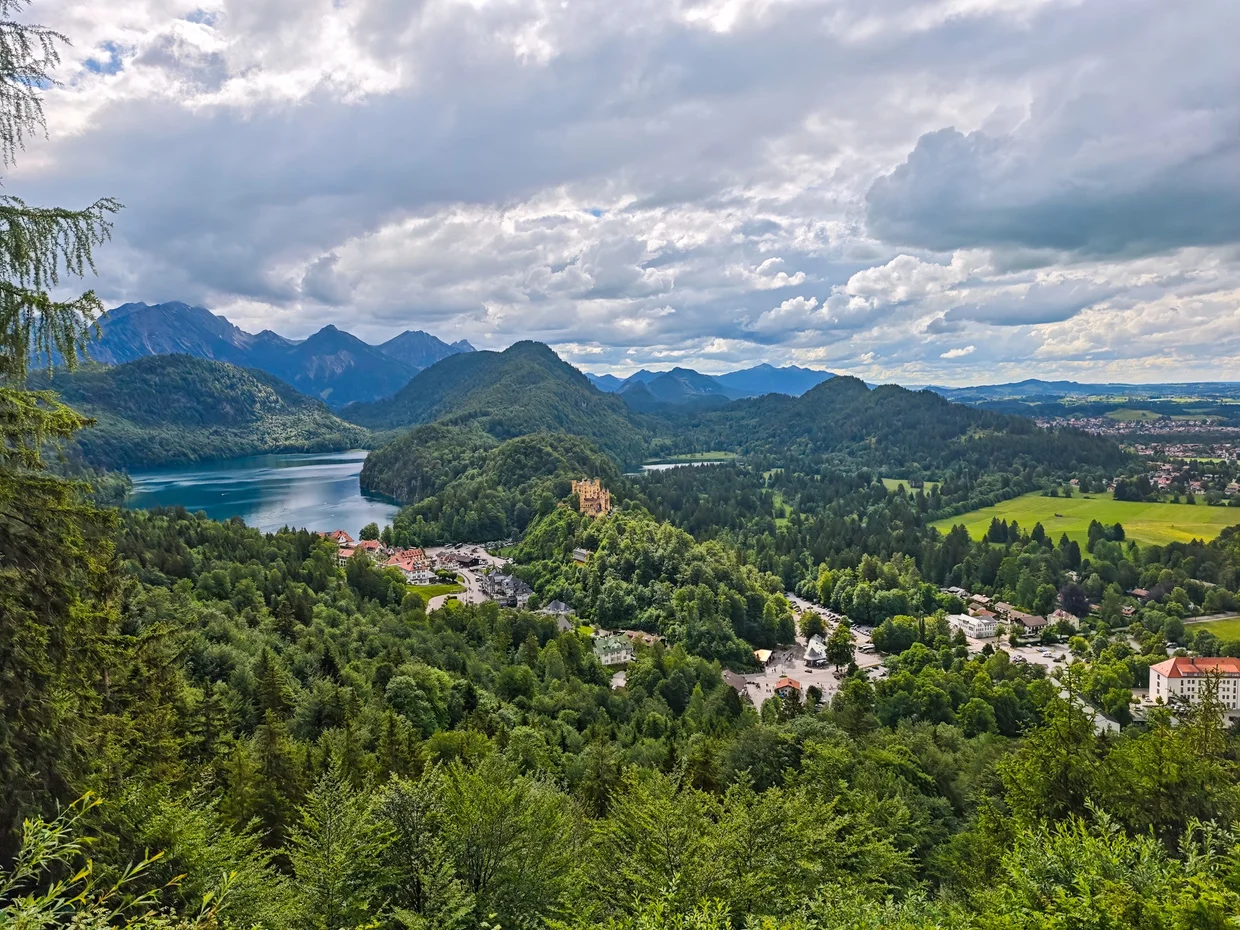
This is the postcard everyone actually came for, and it's about ten minutes from Fuessen. Two castles face each other across a small valley: Hohenschwangau, the honey-yellow castle where Ludwig II grew up, and Neuschwanstein, the fairy-tale pile he built on the crag above and barely got to live in. Between and below them sits the Alpsee, a turquoise lake you can walk right around. You can happily spend most of a day up here.
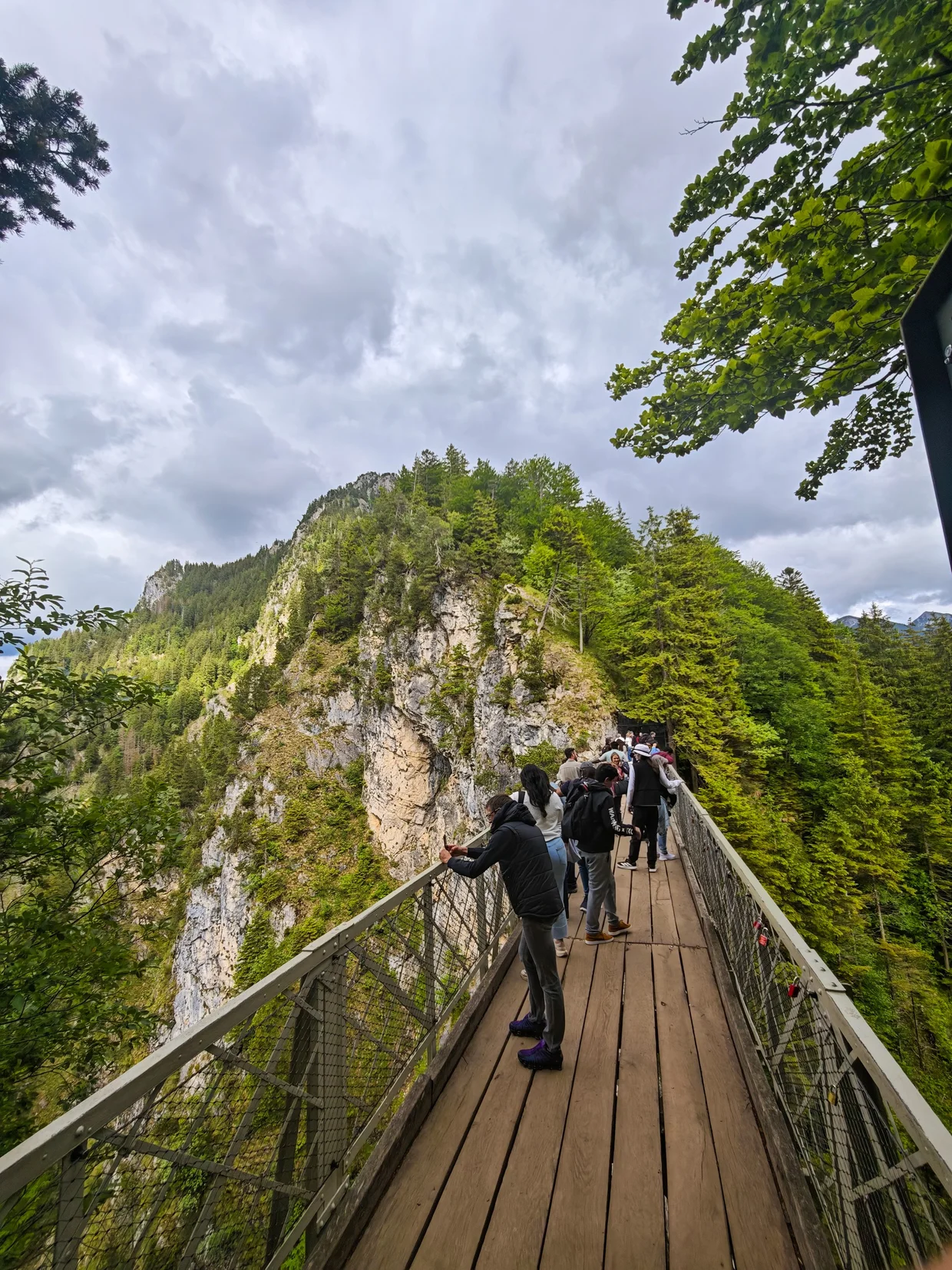
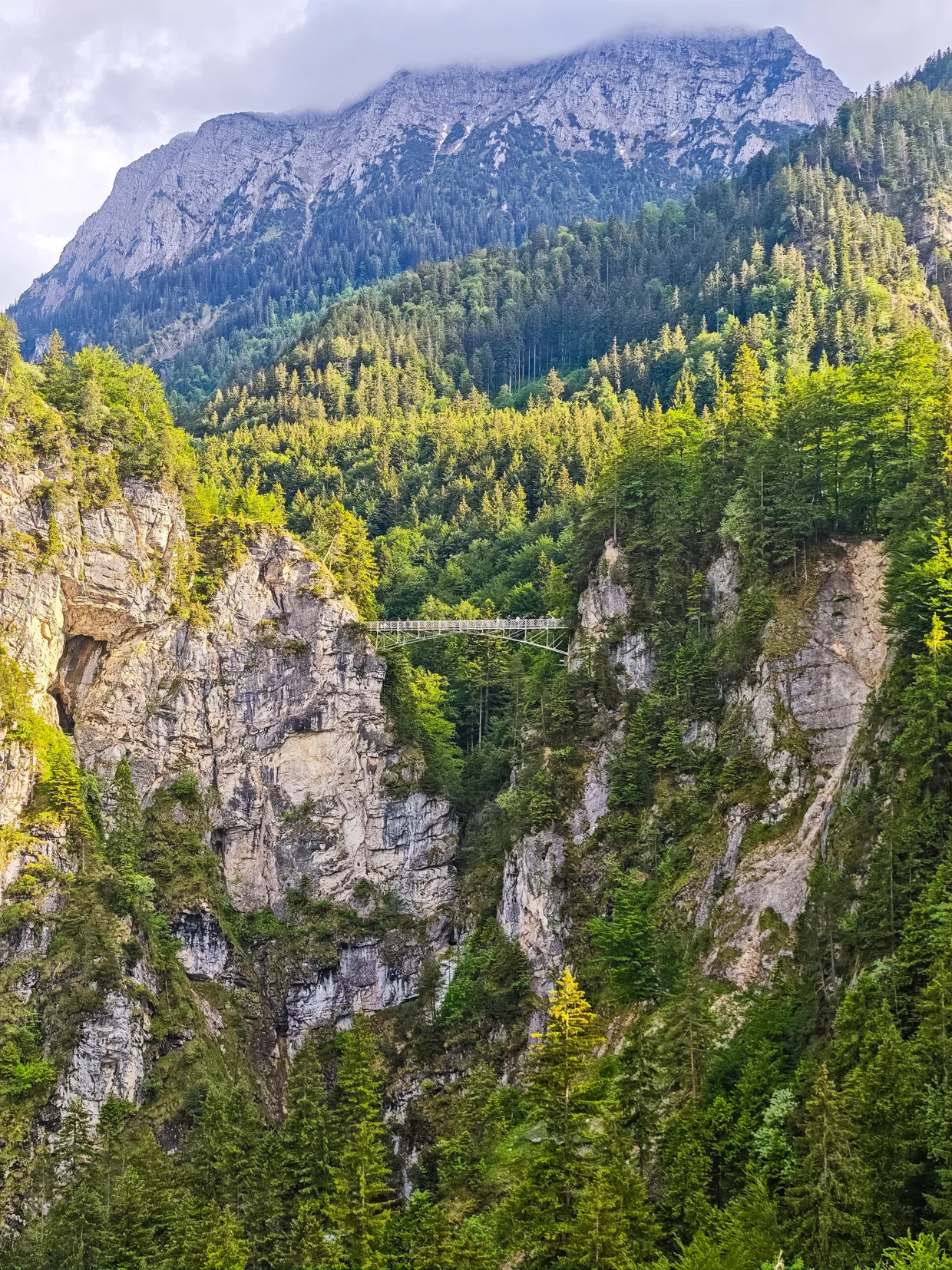
The classic Neuschwanstein shot is from the Marienbruecke, a footbridge slung across the gorge behind the castle. It's worth doing, but two warnings: it gets rammed, and it shuts in bad weather or for maintenance more often than you'd think, so check before you build your whole visit around it. If you only want the view and not the interior, you don't actually need a castle ticket at all; the bridge and the overlooks are free.
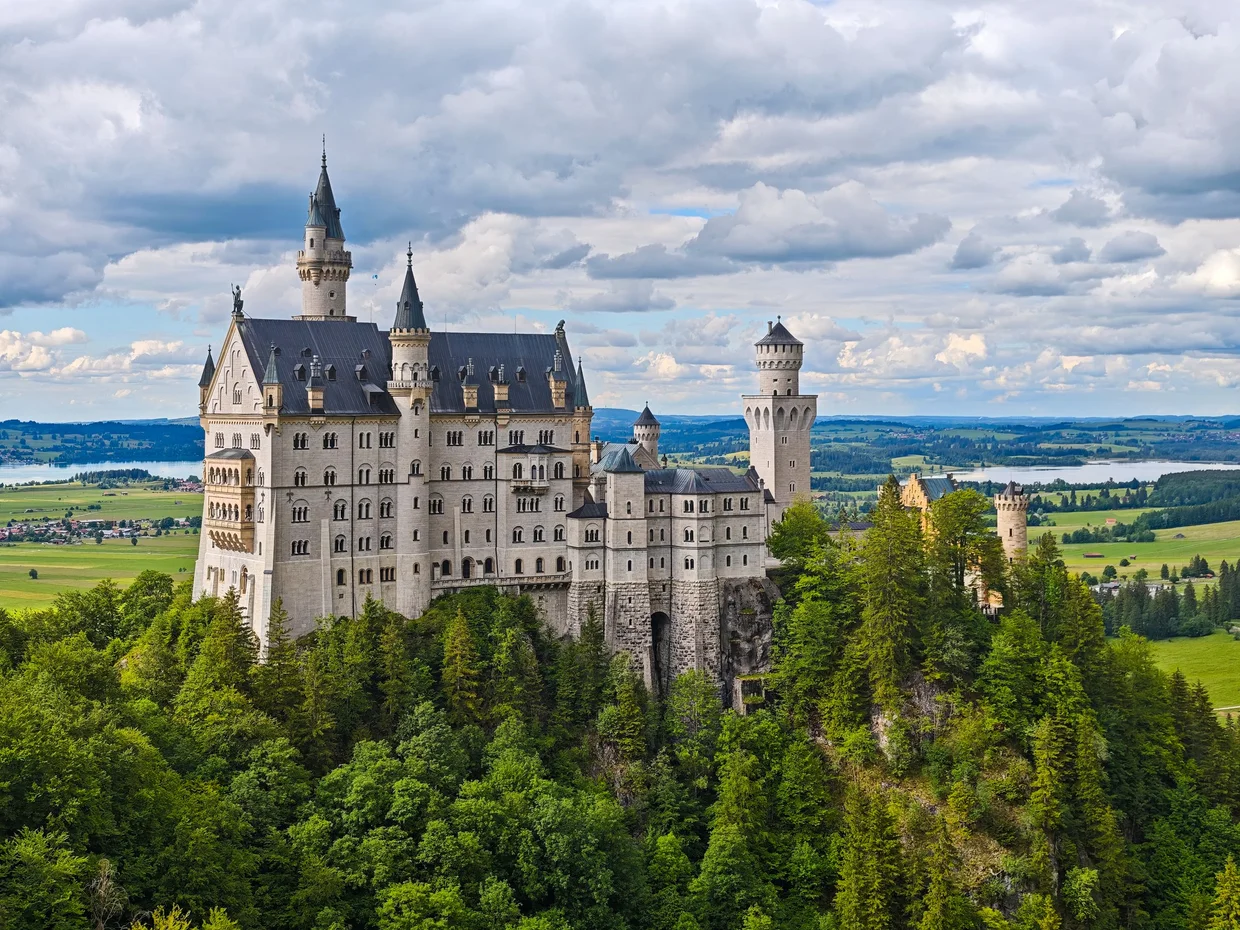
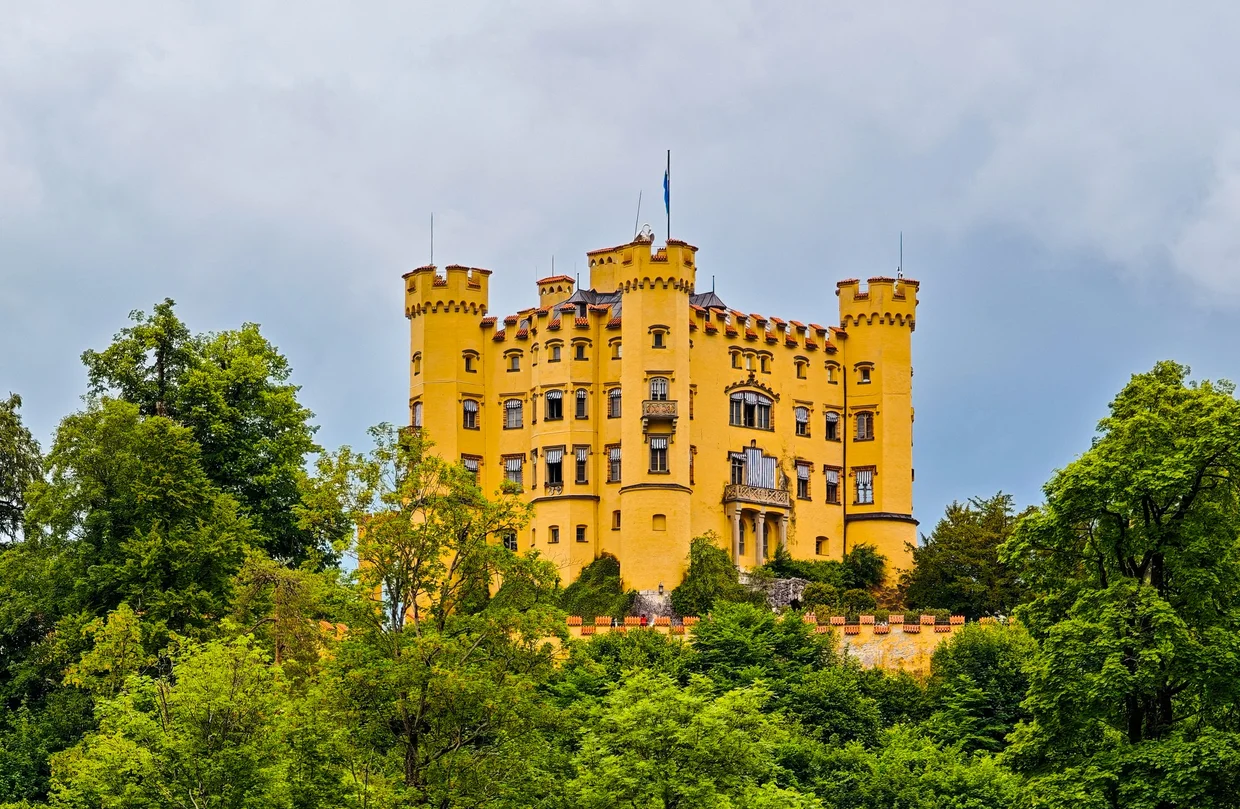
Big practical point: book castle tickets in advance. Interiors are guided-tour only, on timed slots, and the on-the-day queue at the ticket centre in the village can eat hours in summer. You'll hear that the outside is enough and the interior isn't worth it. I don't buy it. Only part of Neuschwanstein was ever finished, but that finished part is genuinely something to see, and it's worth going in for. The price is steep however you cut it, and there's no way around it, so just pay it. Hohenschwangau is the one to drop if you're only doing one. It's a lived-in castle, still privately owned by the family and kept much as it was, which makes it charming, but it isn't spectacular the way Neuschwanstein is.
The Alpsee is the part people skip and shouldn't. The loop around it is easy and quiet, the water is properly clear, and from the higher path you get the lake going turquoise with the mountains stacked behind. There's a forest cascade tucked in the woods nearby too if you go looking.
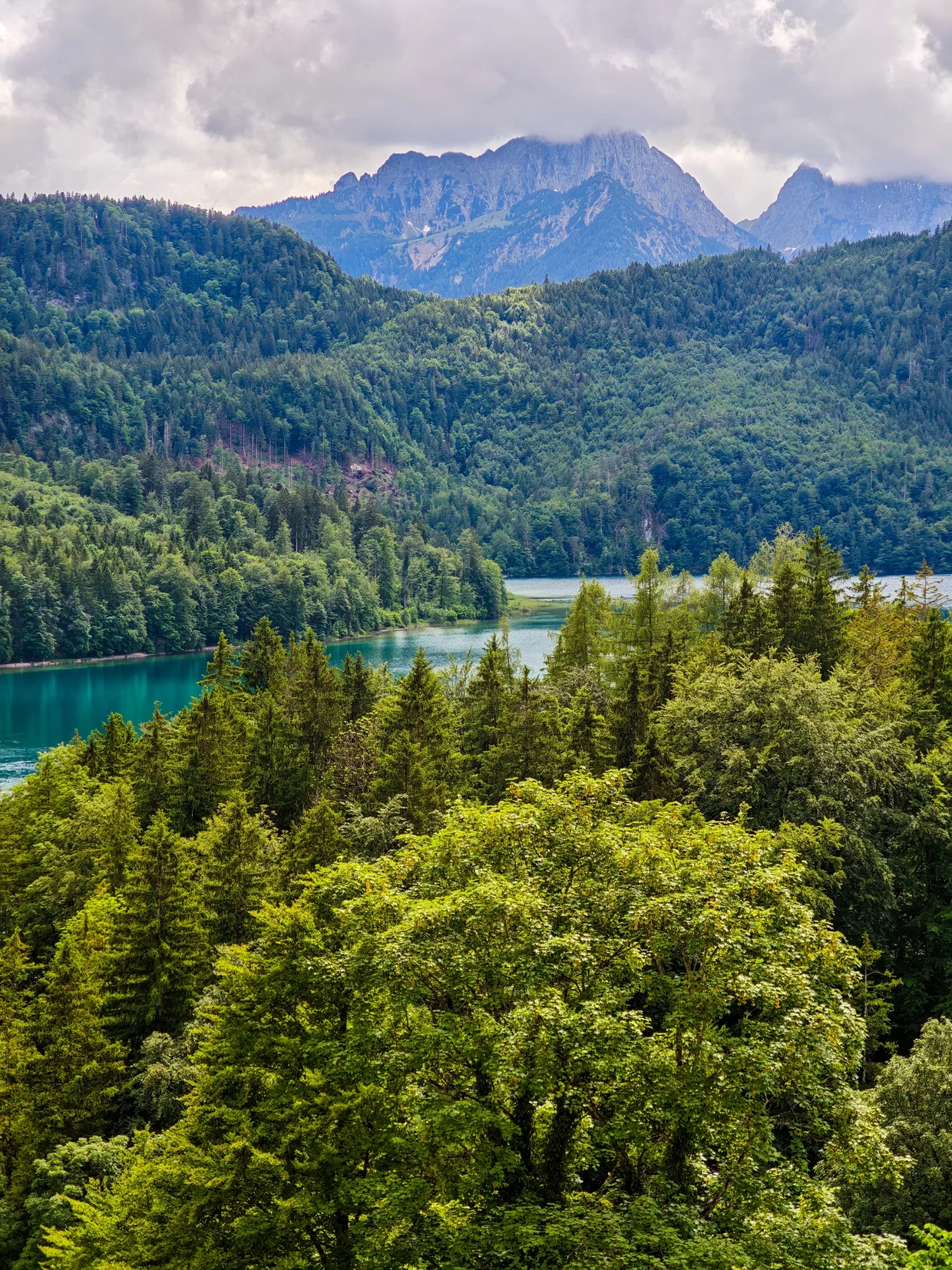
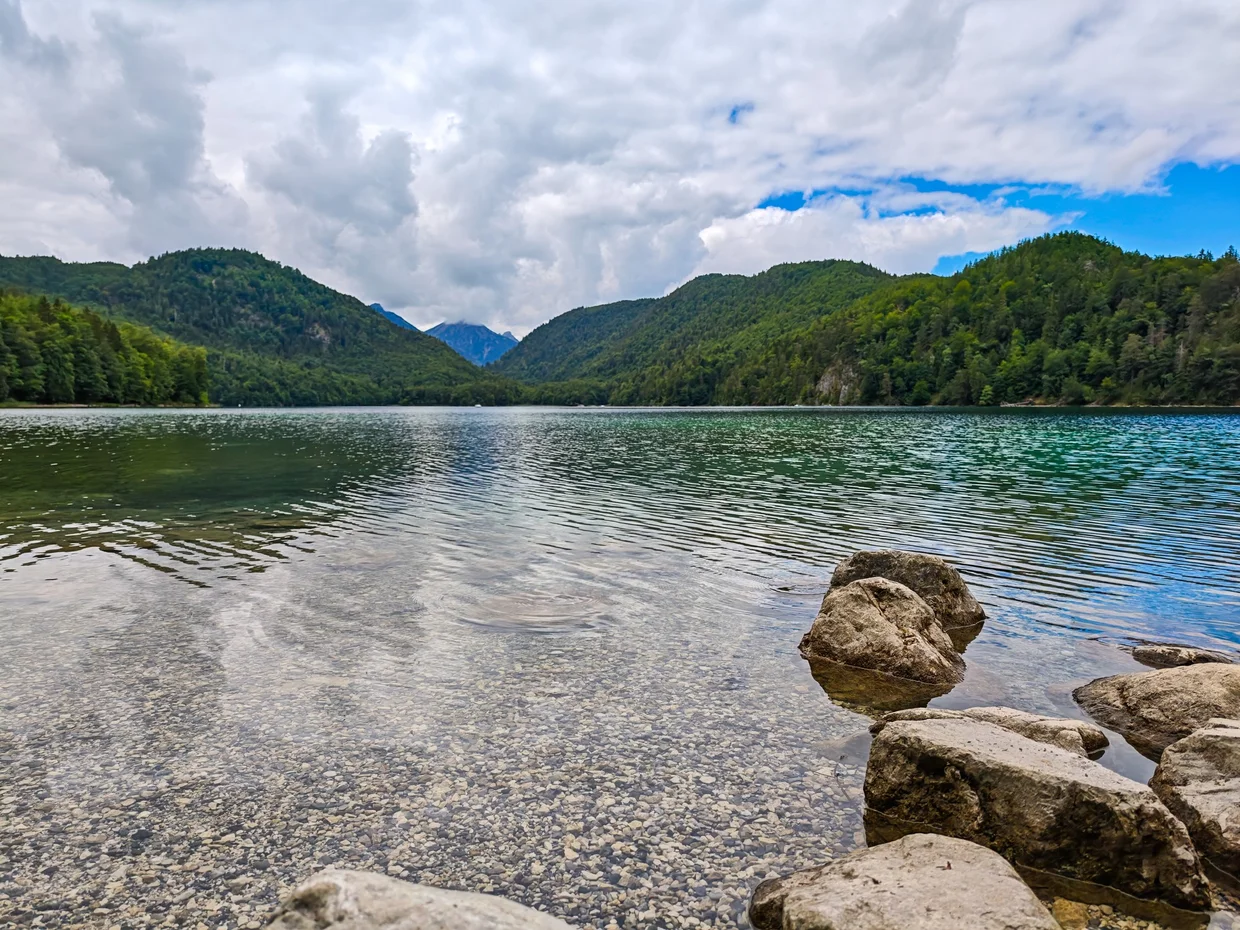
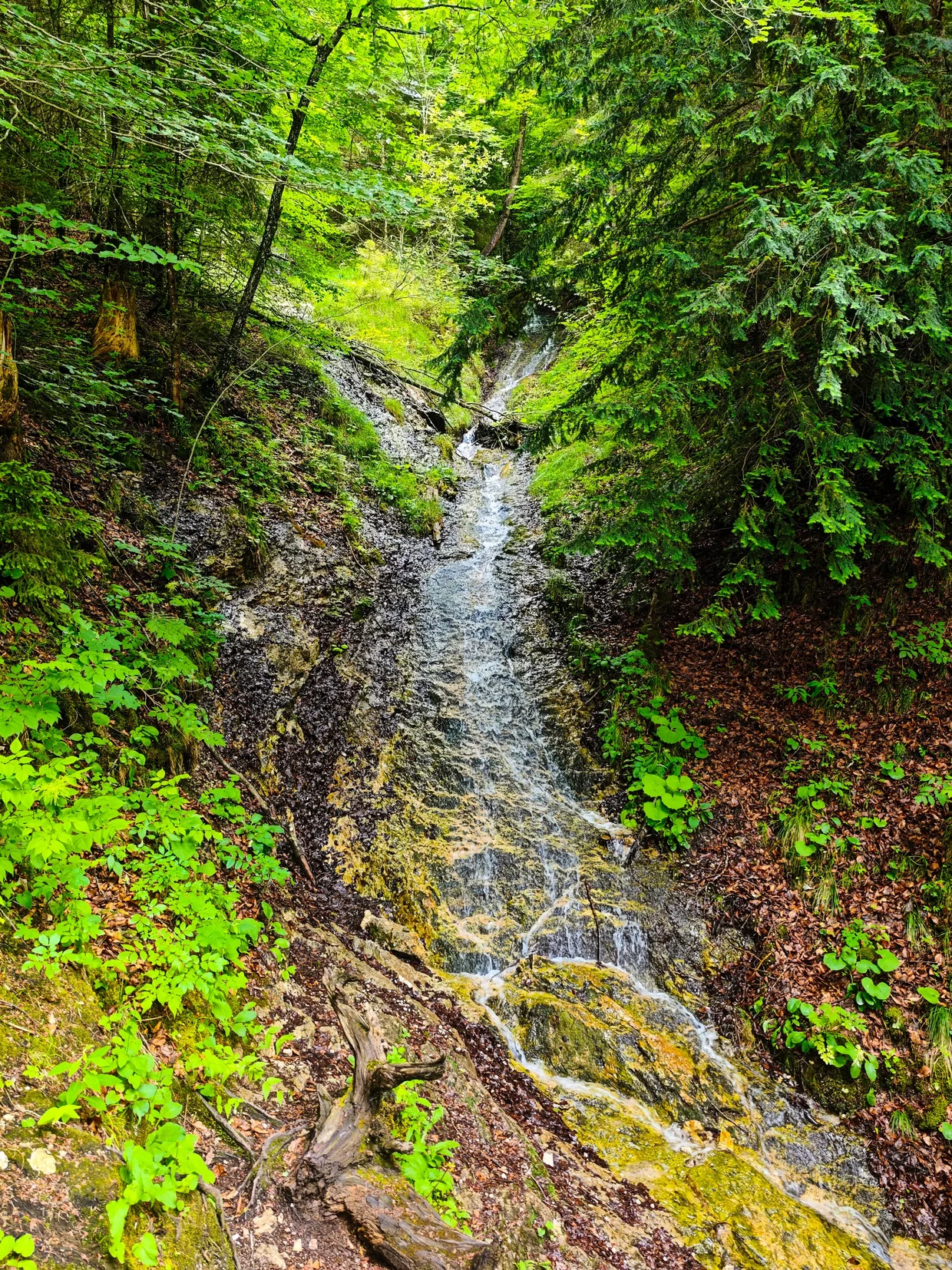
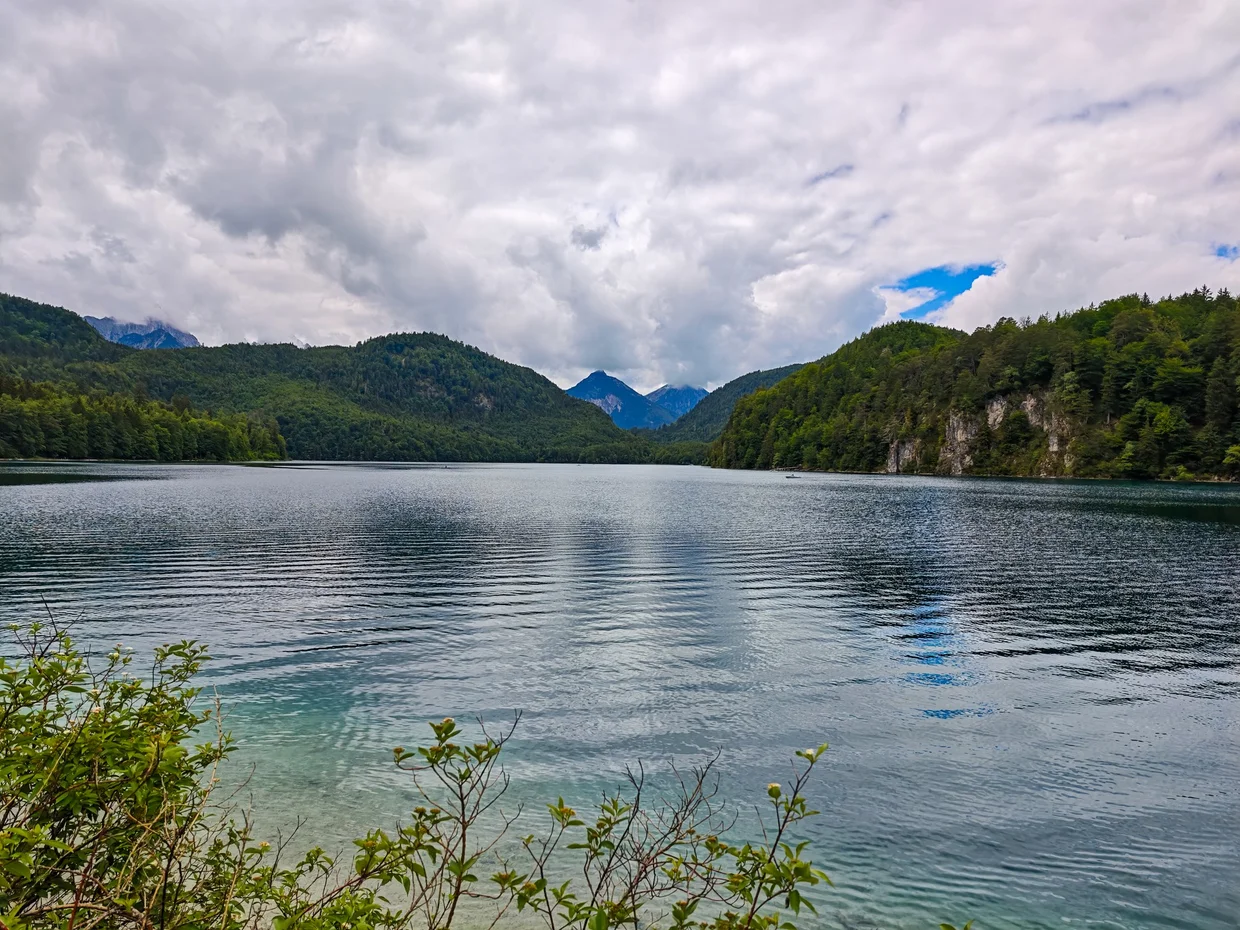
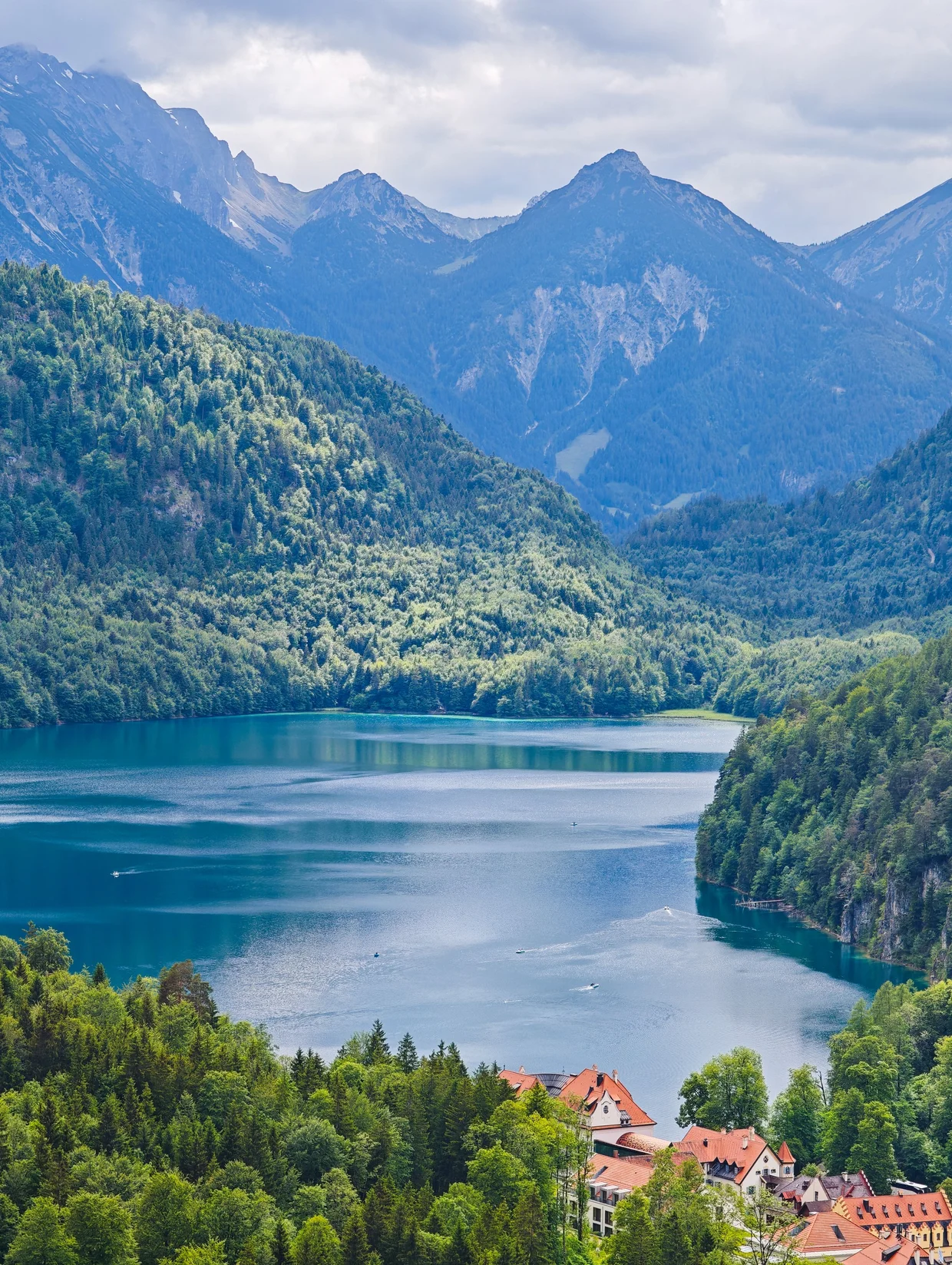
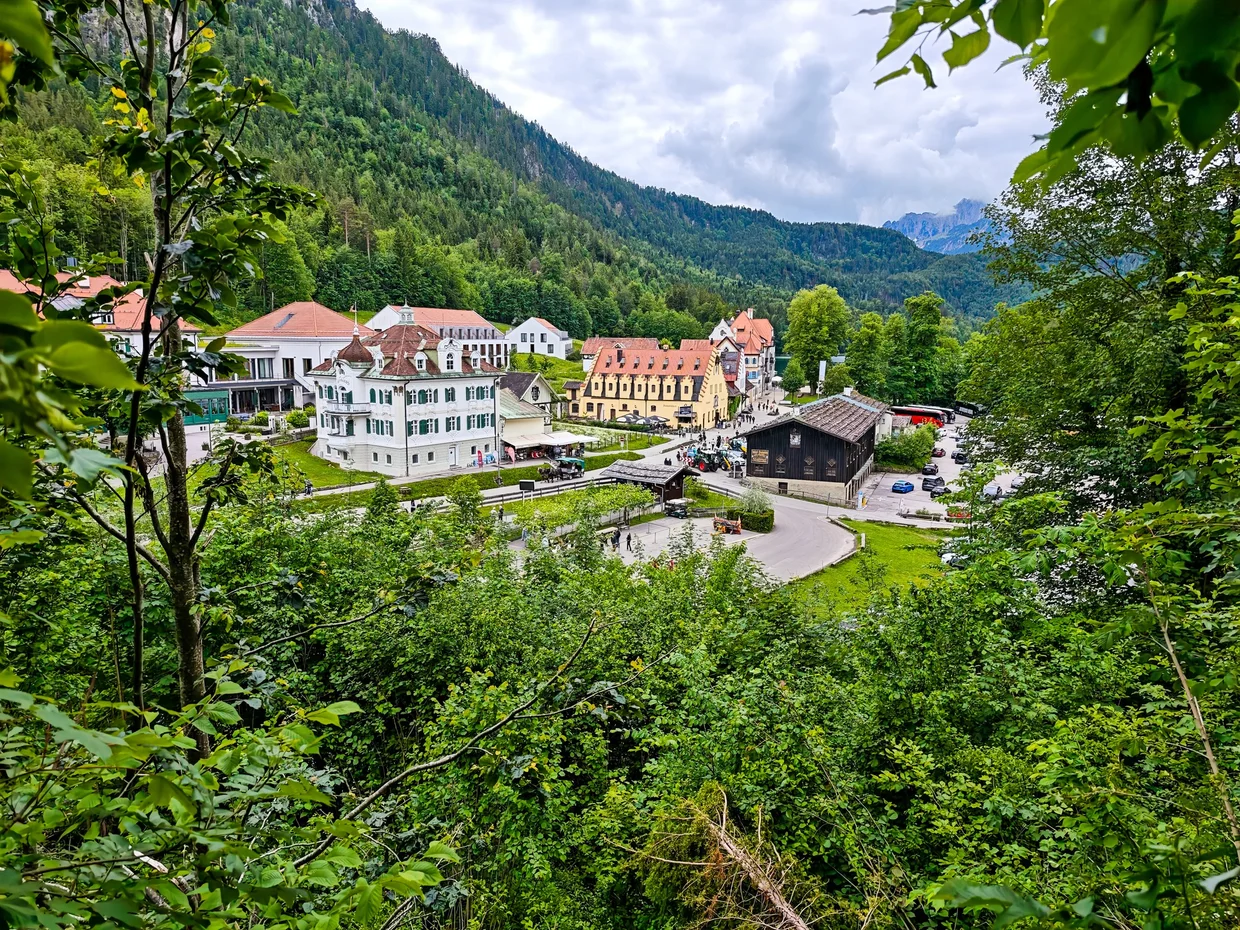
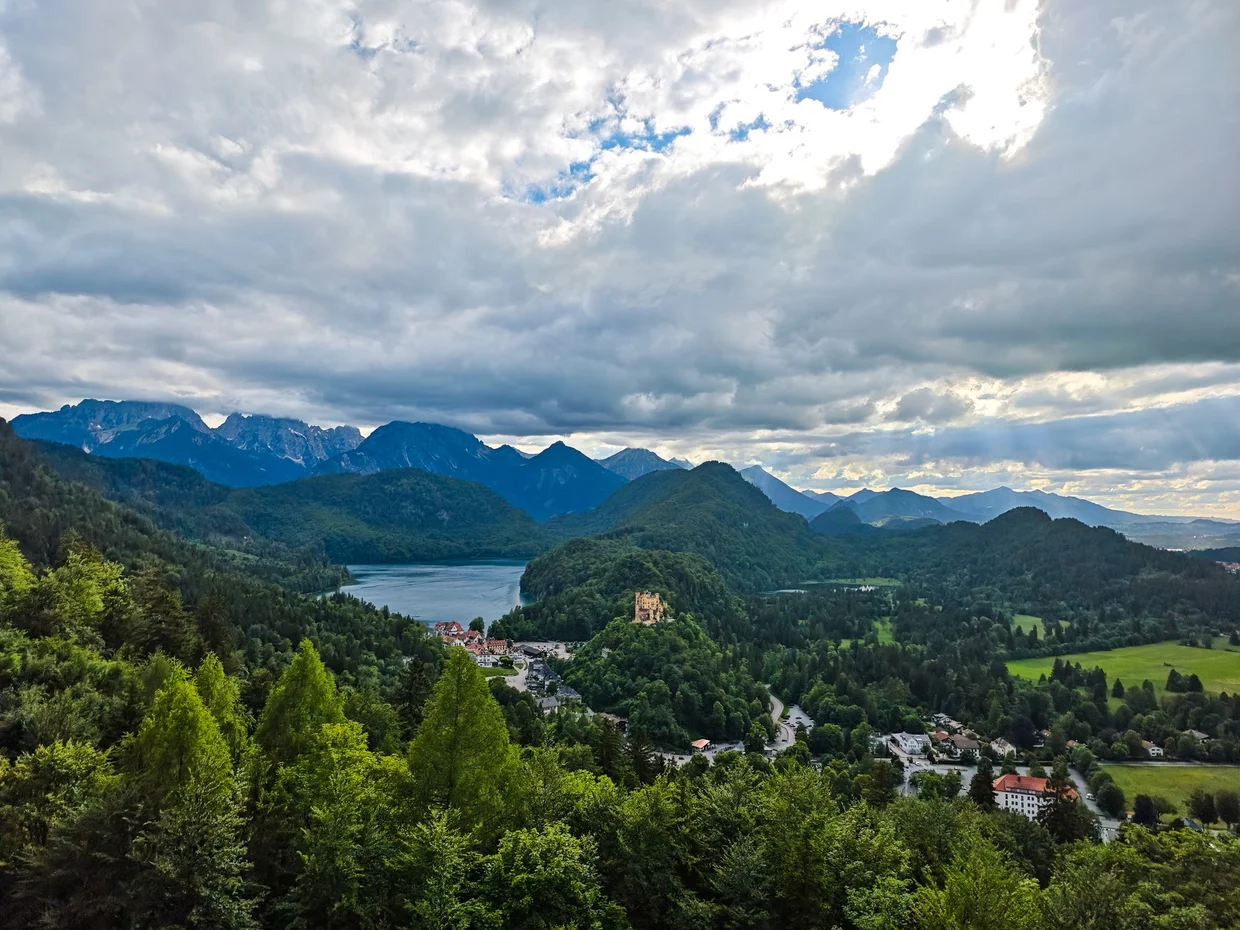
If you want to do it all in one go, here's the order that works: park in the village, walk the Alpsee first, then Hohenschwangau, then make the 20 to 30 minute climb up to Neuschwanstein on foot. Once you're up there, if you've got 30 minutes or more before your tour slot, carry on a few minutes to the Marienbruecke for the view before you go in. Don't take the signed "shortcut" on the way up; go to the castle first, check the clock, then decide on the bridge. The castle authorities tell you to book the two tours 2.5 hours apart. I had mine 2 hours apart and still fit the bridge in between, but that depends on how fast you climb. That timing maths only holds if you walk it. The moment you rely on the horse carriages (Pferdekutschen) or the shuttle buses to get you up the hill, all bets are off: they run with no fixed timetable and the queues can get long, so unless you get lucky you'll be quicker on foot. And neither the horses nor the buses drop you at the castle door anyway; both leave you with a walk on top of the wait, so you don't even save the legs.
Verdict: the grand finale of the road. Plan it as its own day, go early or late to dodge the worst of the crowds, and don't blow off the Alpsee for the sake of the castles.
Linderhof: The Detour That's Worth It
Linderhof isn't on the Romantic Road. It's about an hour east of Fuessen near Ettal, and it sits on a different scenic route, the German Alpine Road (Deutsche Alpenstrasse). I'm including it anyway, because if you're already down at Fuessen for the castles, the detour is an easy add and it's genuinely worth it. Think of it as a bonus, not a stop on the line.
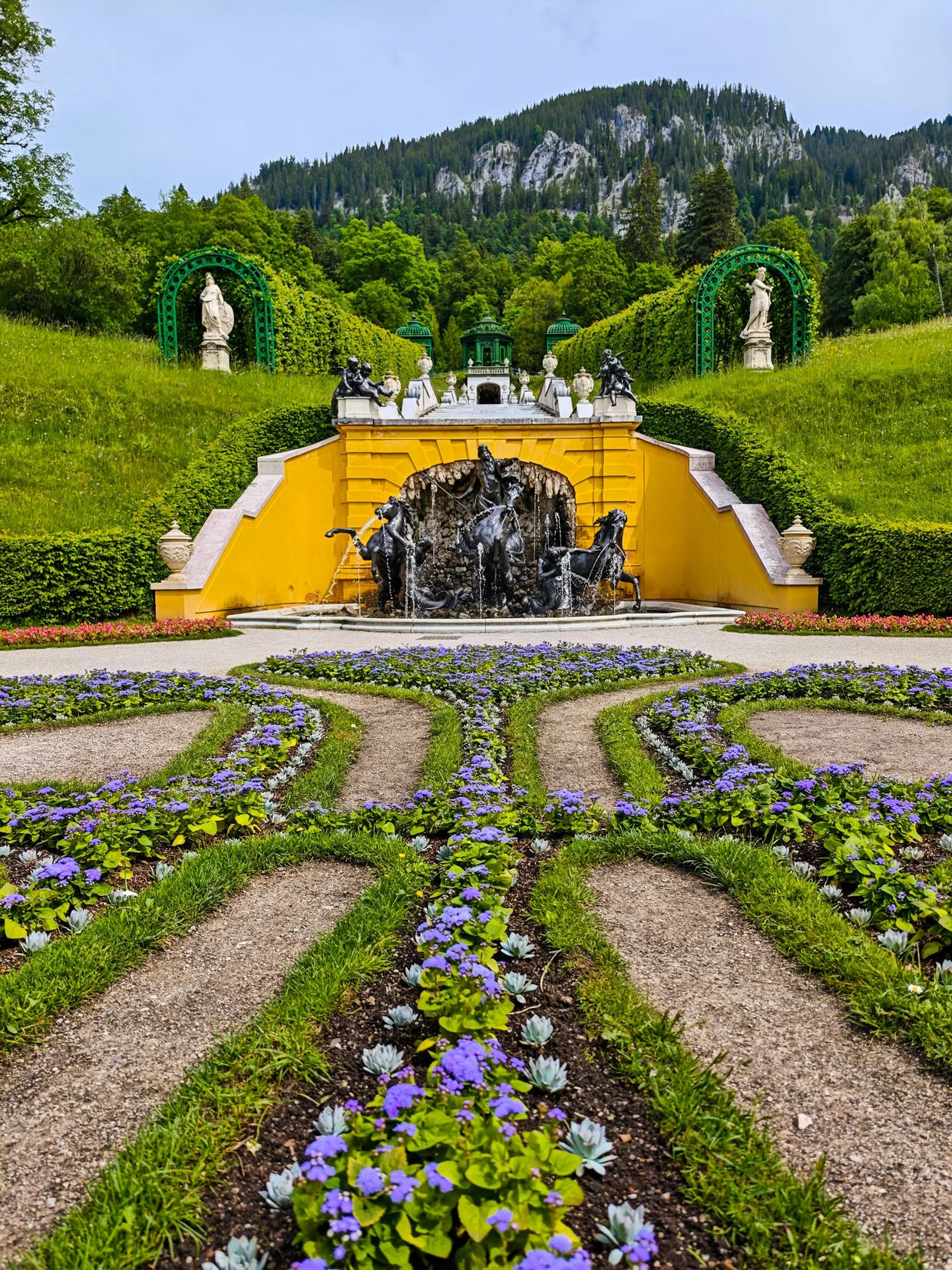
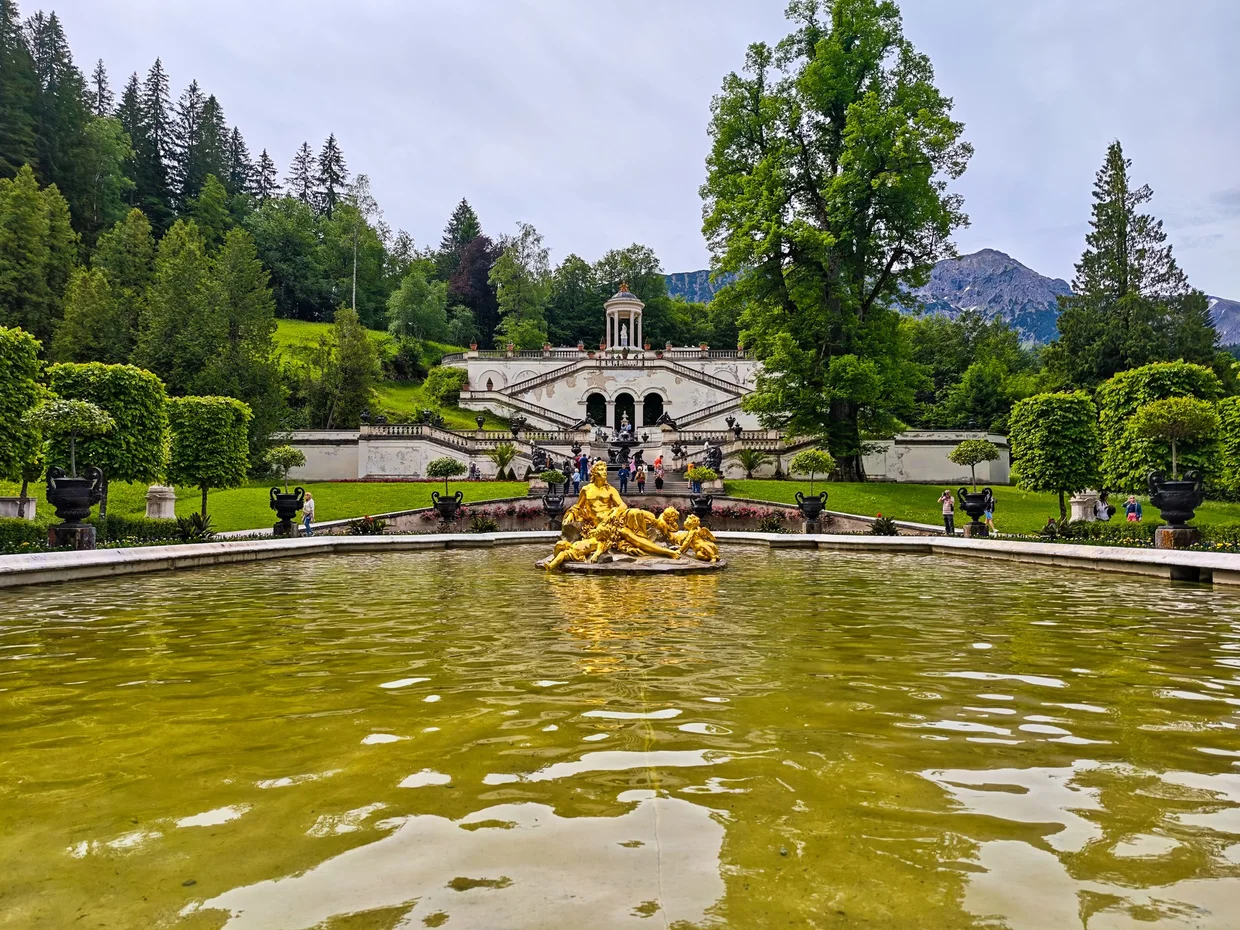
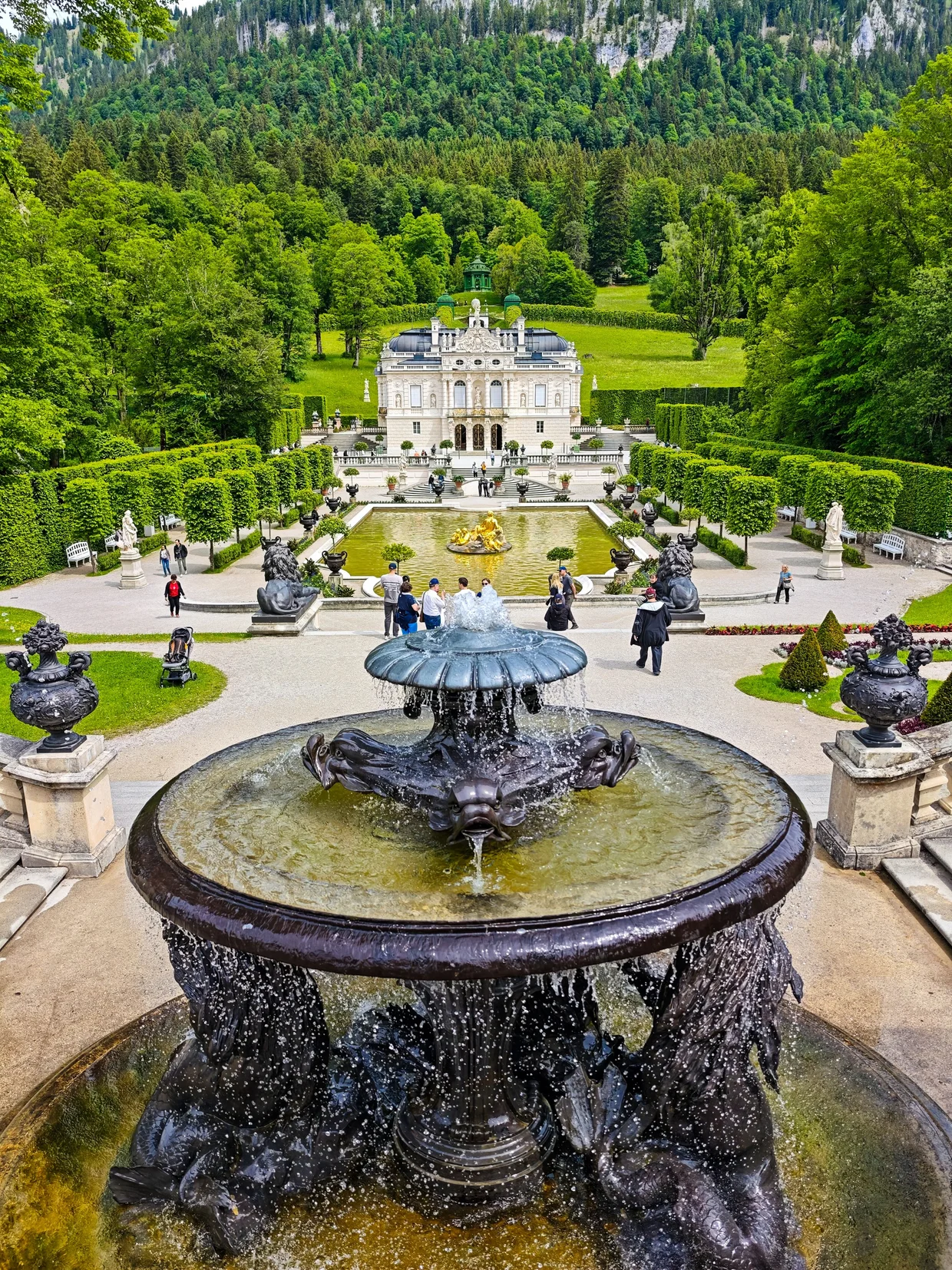
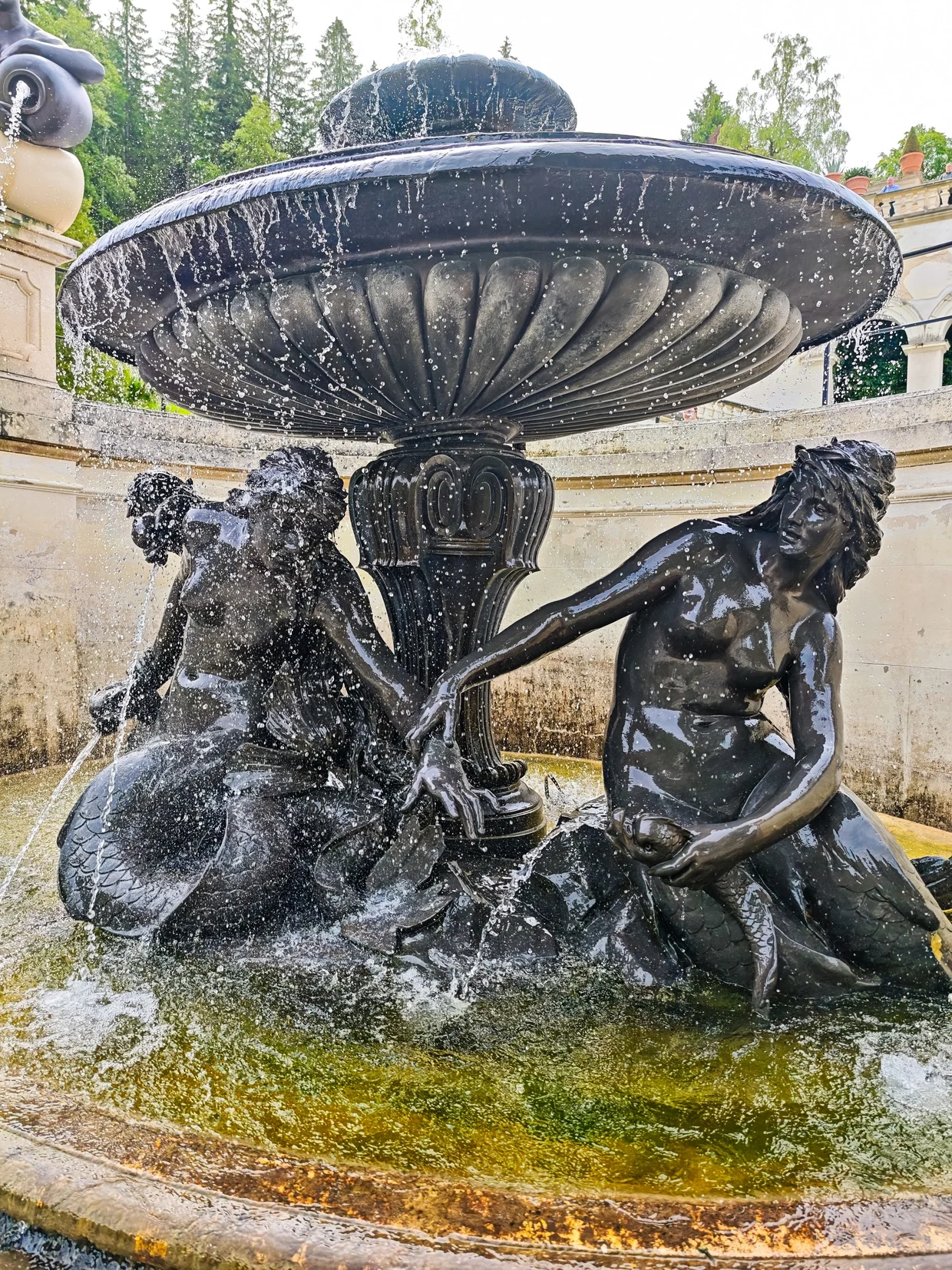
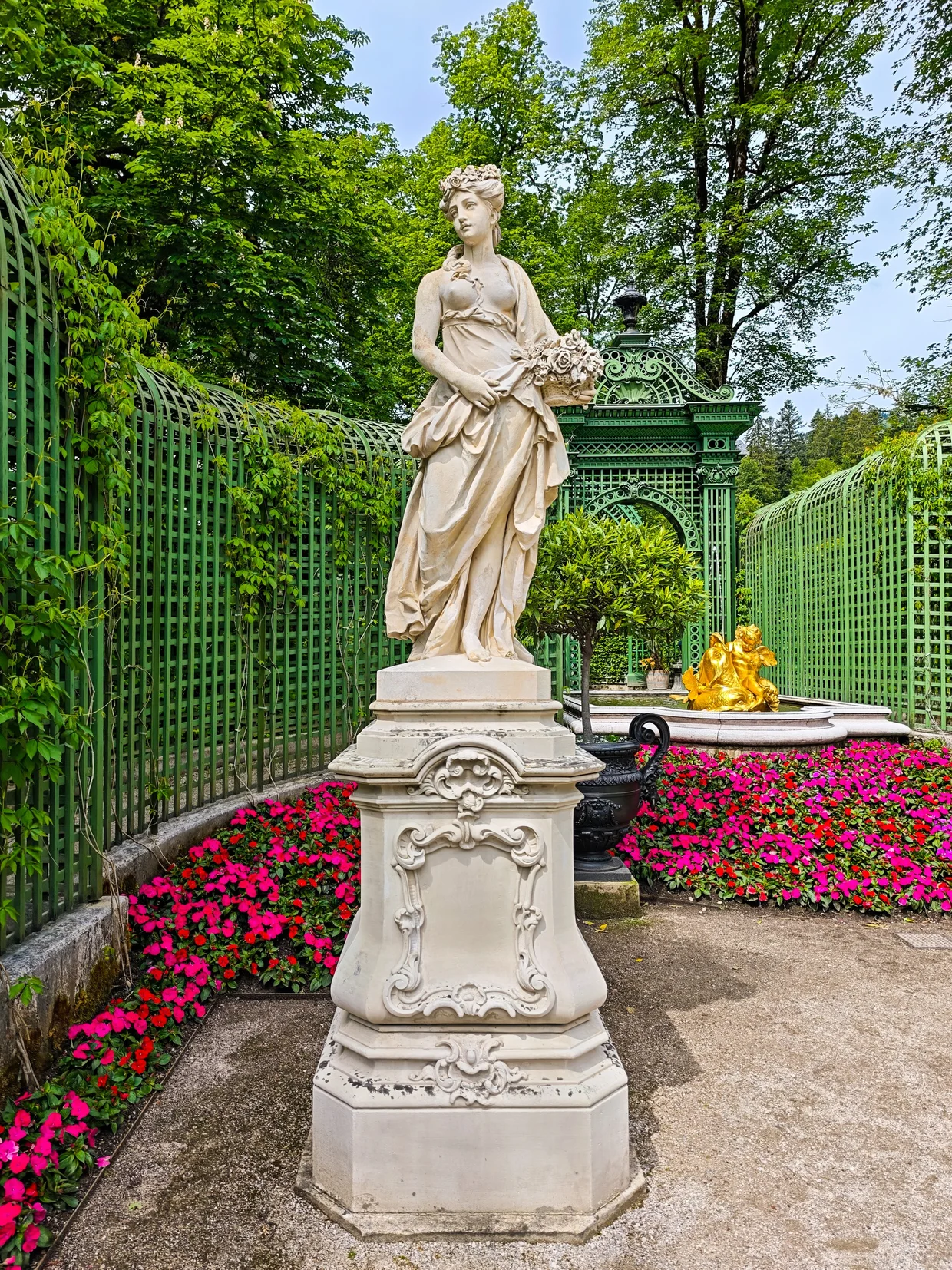
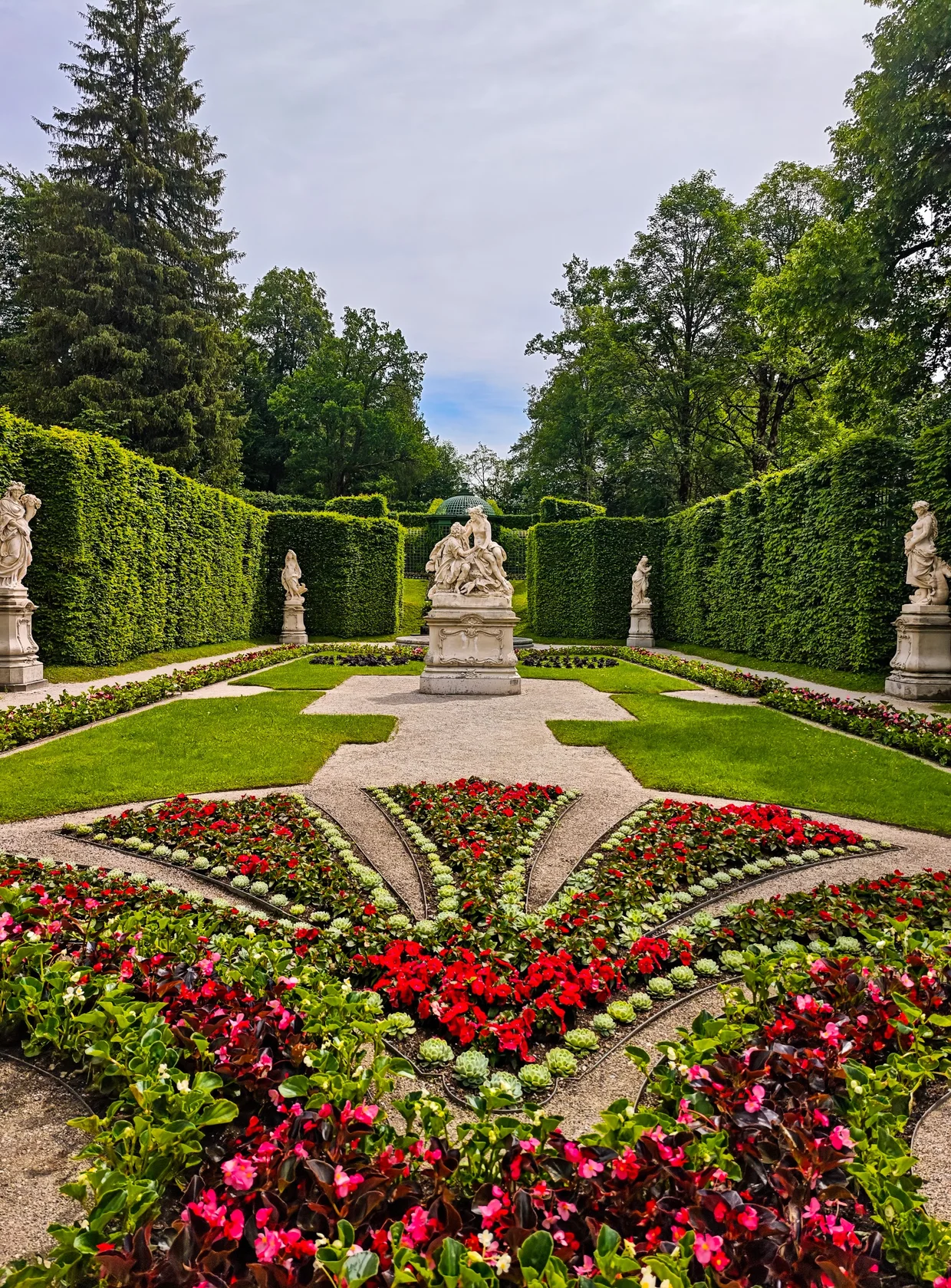
Linderhof was Ludwig II's smallest palace and the only one he actually finished and lived in. The building itself is compact; the gardens are the show. A formal parterre rolls down the slope, there's a gilded fountain group in the basin out front that shoots water high on a timed schedule, terraces climb the hillside to a little Temple of Venus, and a Music Pavilion sits across on the far rise. It's a lot of grandeur packed into a small footprint.
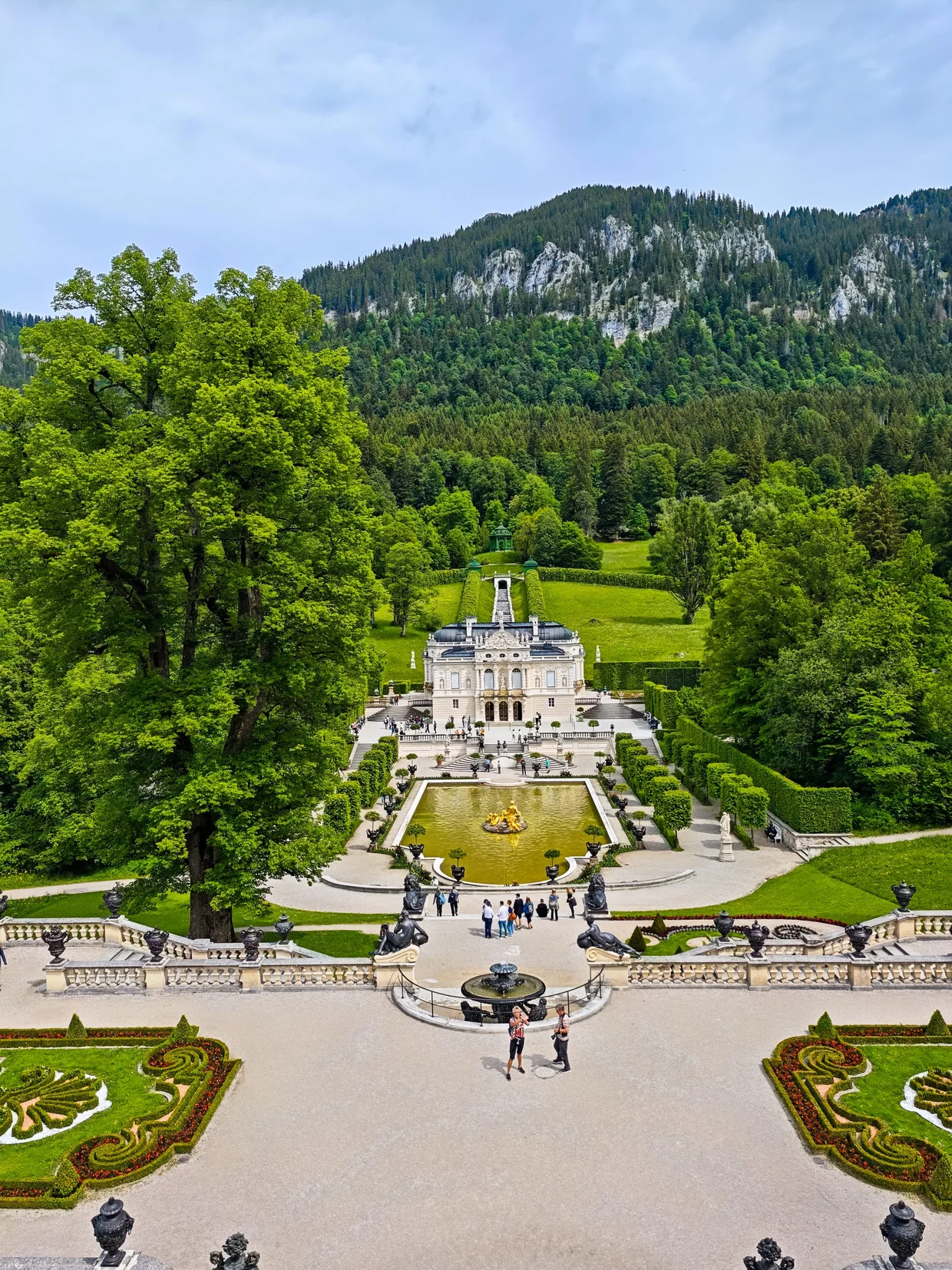
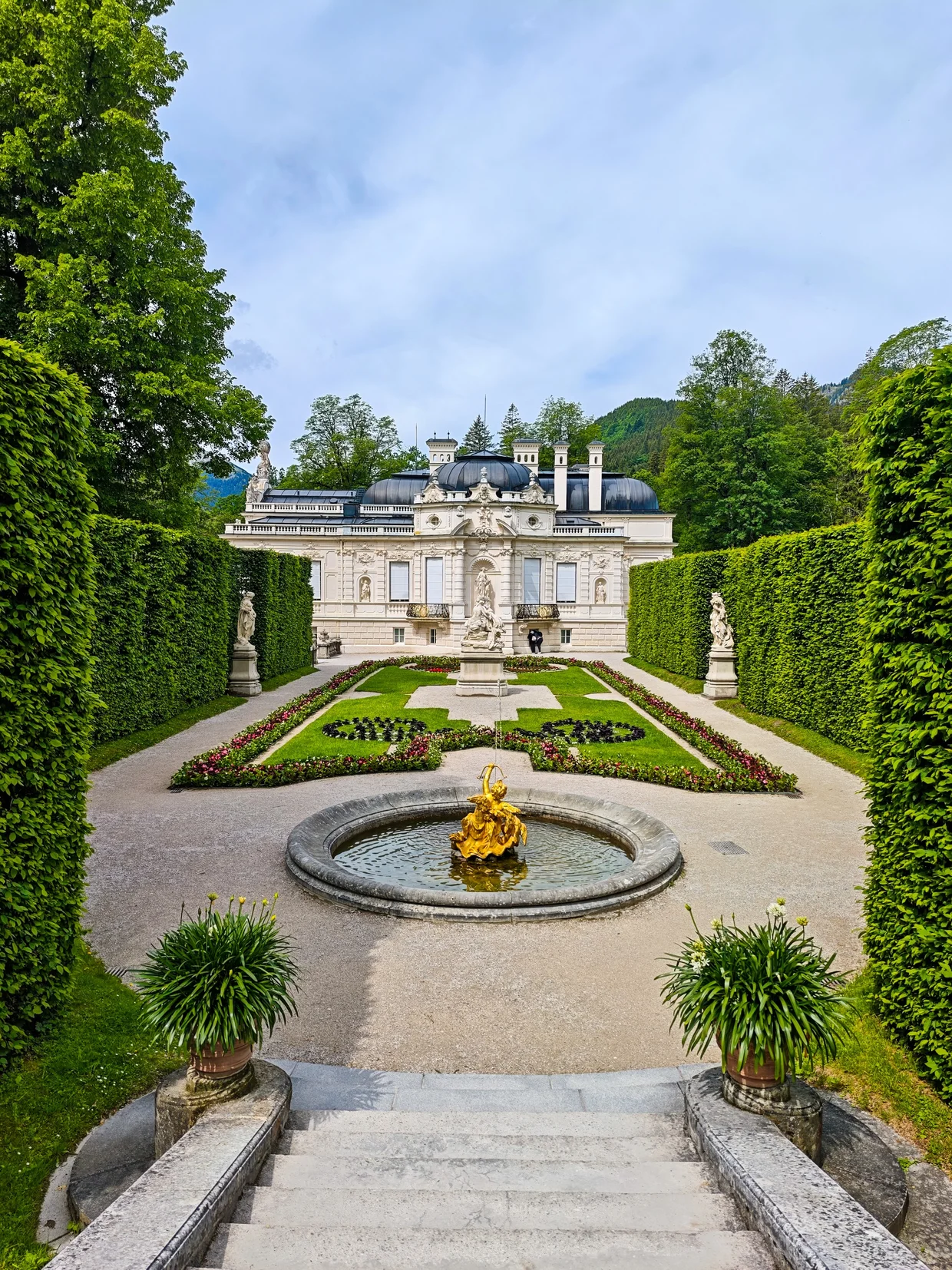
The fountain is the bit to time. It plays on a set schedule rather than constantly, the gilded figures and the jet are the centrepiece of the parterre, and from the upper terrace you look straight down the water at the palace. Walk up to the terraces for the high view; that's where the panorama comes from.
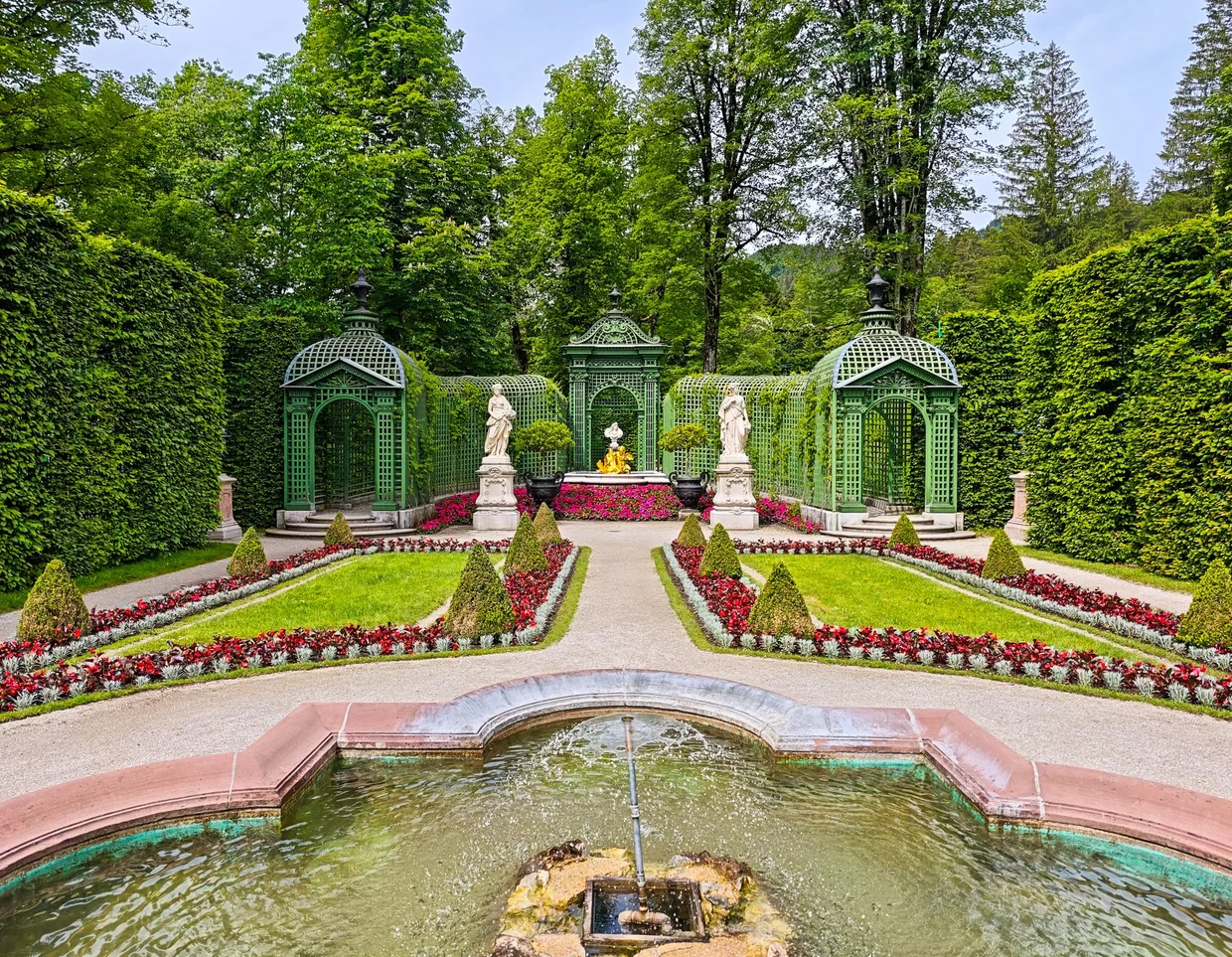
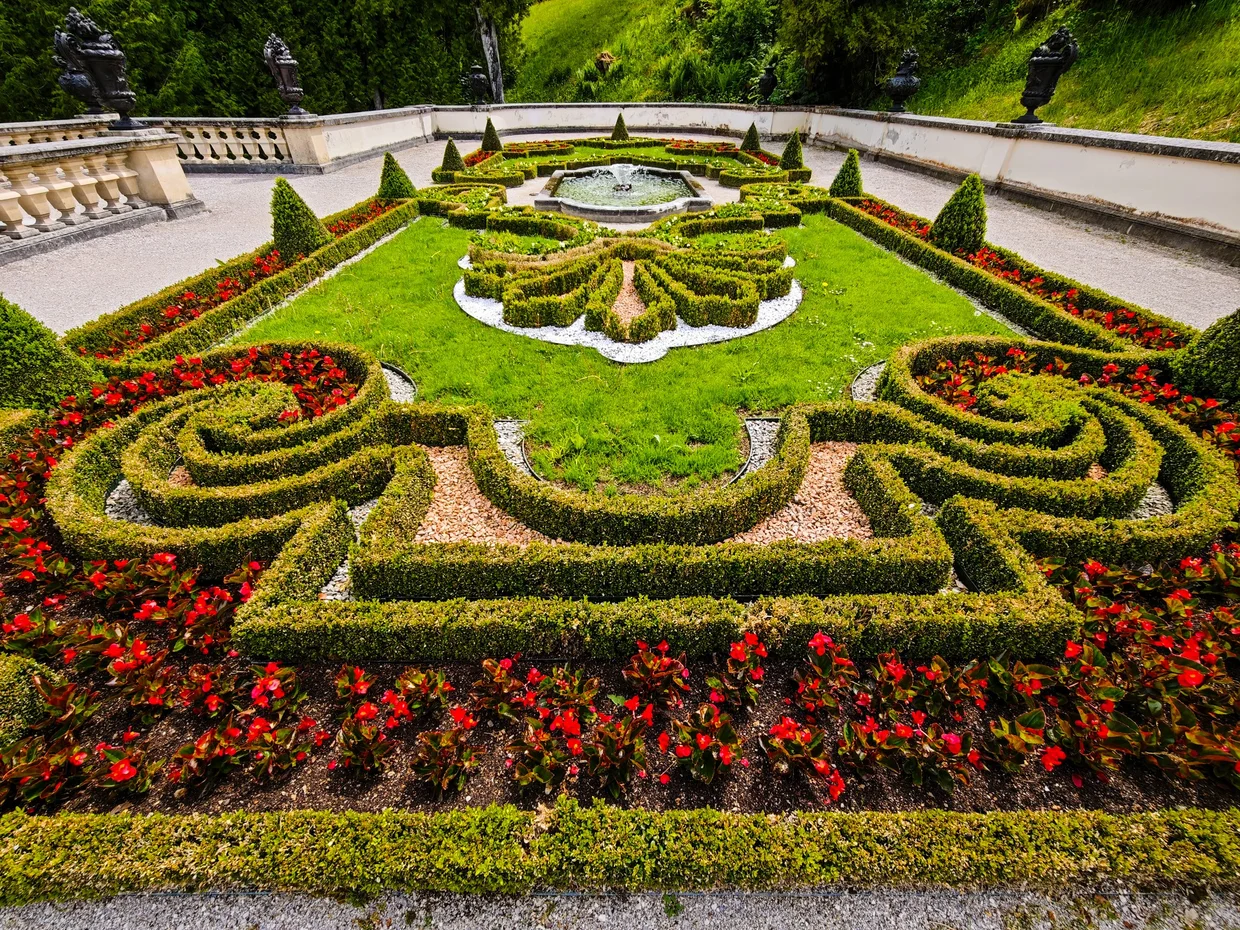
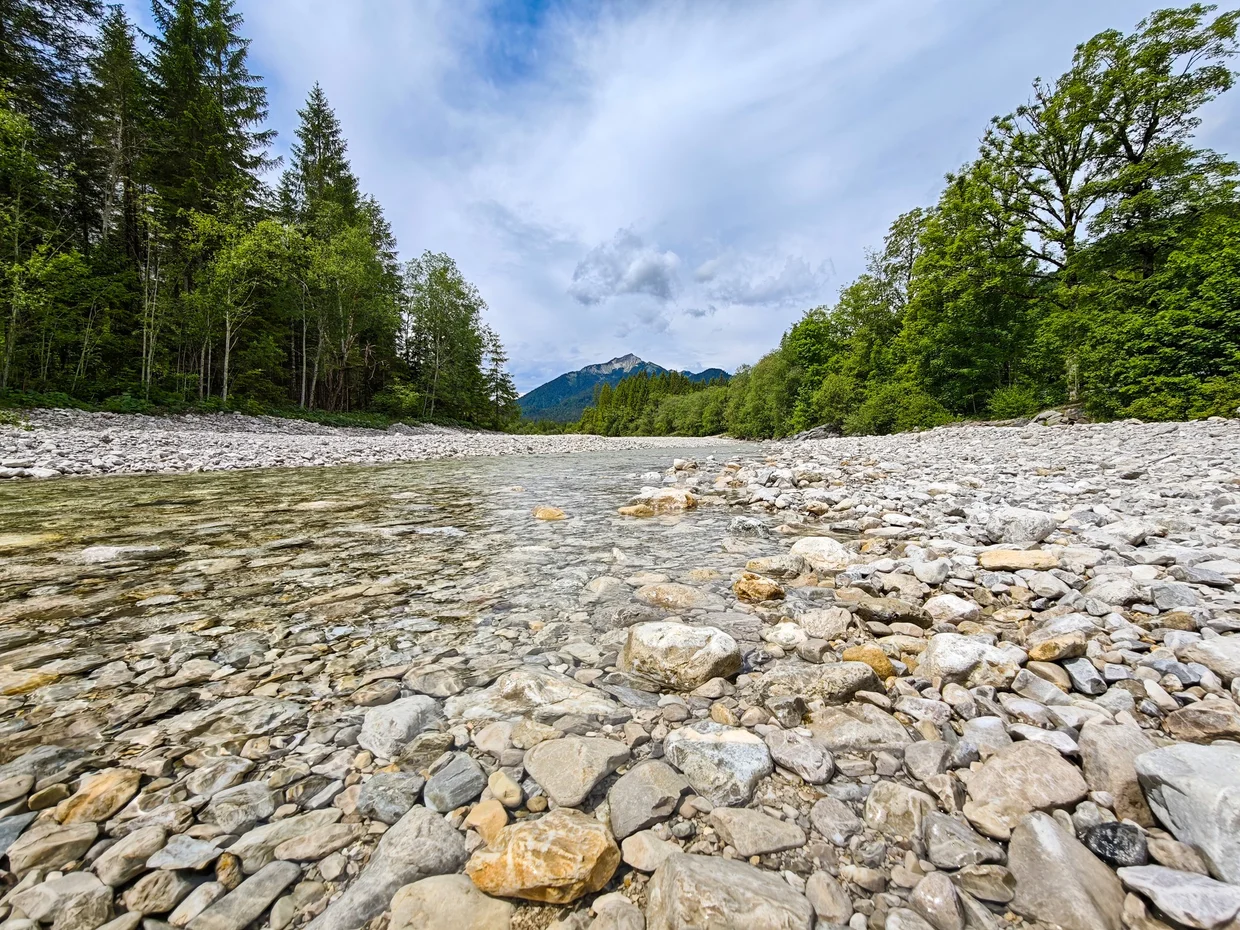
The garden detail is half the fun: a trellised pergola walk, marble statues on carved pedestals, neat embroidery-pattern flower beds, and hidden garden rooms tucked behind the hedges. The palace interior is guided-tour only, same as the royal castles, so the same advice applies: turn up with a plan for tickets rather than hope. As a solo traveller you'll often get lucky on site, since they'll try to squeeze a single into a slot, but it's not guaranteed, so don't bank on it. On the drive in and out, the Graswang valley is lovely in its own right, with a clear braided stream over white pebbles under the peaks.
Verdict: make the detour if you've got the morning. It isn't part of the Romantic Road, but it's a short hop from Fuessen and the gardens punch well above the size of the place.
Best Base
Where to Stay
Rothenburg ob der Tauber
This is the one base where staying over changes the trip instead of just saving you a drive. The day-trippers arrive around 11:00 and they're gone by early evening, and what's left is a walled town with empty cobbles, lit fountains and a city wall you can walk at 22:00 with nobody else on it. Sleep inside the wall if you can. The Altstadt is small enough that everything is a five minute walk, and the whole point is being able to step out at dusk without getting in the car. Practical bits: most hotels inside the wall let you unload at the door and then send you to the numbered lots (P1 to P5) just outside, which is fine, they're a few minutes' walk. It's the priciest base on the road and it books out fastest, so lock it in early for the Pfingsten weekend and the last two weeks of August. Don't expect a night out. By 22:00 almost everything is shut, so eat before 21:00 and treat the evening as a walking one.
Best Time to Drive It
May through September is the sweet spot. Long evenings, beer-garden weather, working storks in Dinkelsbuhl, the Pfingstfestspiele in Rothenburg (late May / early June), and reliable opening hours at the castles and churches. October is fine but light drops fast in the afternoons. April can be lovely but a lot of the smaller attractions (Schloss Harburg, the Daniel tower, smaller churches) run reduced hours.
Avoid Sundays for shopping but Sundays are actually great for the towns themselves: less traffic, fewer trucks, the streets feel cleaner. Avoid Mondays at smaller museums (closed). Avoid the last two weeks of August if you want any availability in Rothenburg; school holidays plus summer day-trippers fill it.
Winter on the Romantic Road is something else. Christmas markets in Rothenburg are world-famous, the Reiterlesmarkt in particular, and the whole town goes full snow-globe. Crowds, cold, expensive hotels, but a different trip entirely.
Know Before You Go
A few small things that make a trip to Romantic Road noticeably smoother. Here are the first four, the full list covers 11.
- 1
Rent a car. Don't try the train.
The train network skips Dinkelsbuhl entirely, makes Nordlingen awkward, and turns Rothenburg into a two-change trip from most cities. The... - 2
Be at Rothenburg by 09:00
Tour buses start arriving from Munich and Frankfurt around 11:00 and the town doubles in population by lunchtime. At 09:00 the streets are... - 3
Climb the Daniel in Nordlingen
St-Georg's tower (the Daniel) is the single best view on the road and surprisingly easy to miss because it's not the first thing the signage... - 4
Pair Nordlingen and Dinkelsbuhl
They're 30 minutes apart and they're the two best small towns on the route. If you've only got a day for the "Romantic" road outside...
Read the full know before you go Romantic Road guide.
Is It Safe?
Yes. The Romantic Road is very safe by normal travel standards. Rural Bavaria and Franconia, low crime, well-signposted, well-maintained. The only real "risks" are dull:
- Tour-bus traffic in Rothenburg and Dinkelsbuhl between 11:00 and 16:00. Buses on narrow streets, lots of foot traffic, slow going if you're driving.
- Strict speed limits through every village. 50 km/h drops to 30 km/h faster than you can read the sign, and the speed cameras don't bargain.
- Sleepy Sundays and Mondays. Restaurants closed, museums closed, towns half-asleep. Plan food accordingly.
- The kitsch creep. Rothenburg sells a lot of fake-medieval tat. You can ignore it. You don't have to buy a "knight's helmet for kids" outside the Plonlein.
- Sun and storms. Bavaria summers can swing from 30°C to a violent thunderstorm in 90 minutes. If you're up a church tower when one rolls in, get down.
No special vaccinations beyond routine. Tap water is fine. Tipping is round-up-or-5% if you're pleased. Cards work in most places but cash is still useful in smaller cafes and Biergartens.
Published June 2026.